
Vox clamantis in deserto



Don Pesci: Conn. truck tolls and searching for journalistic balance
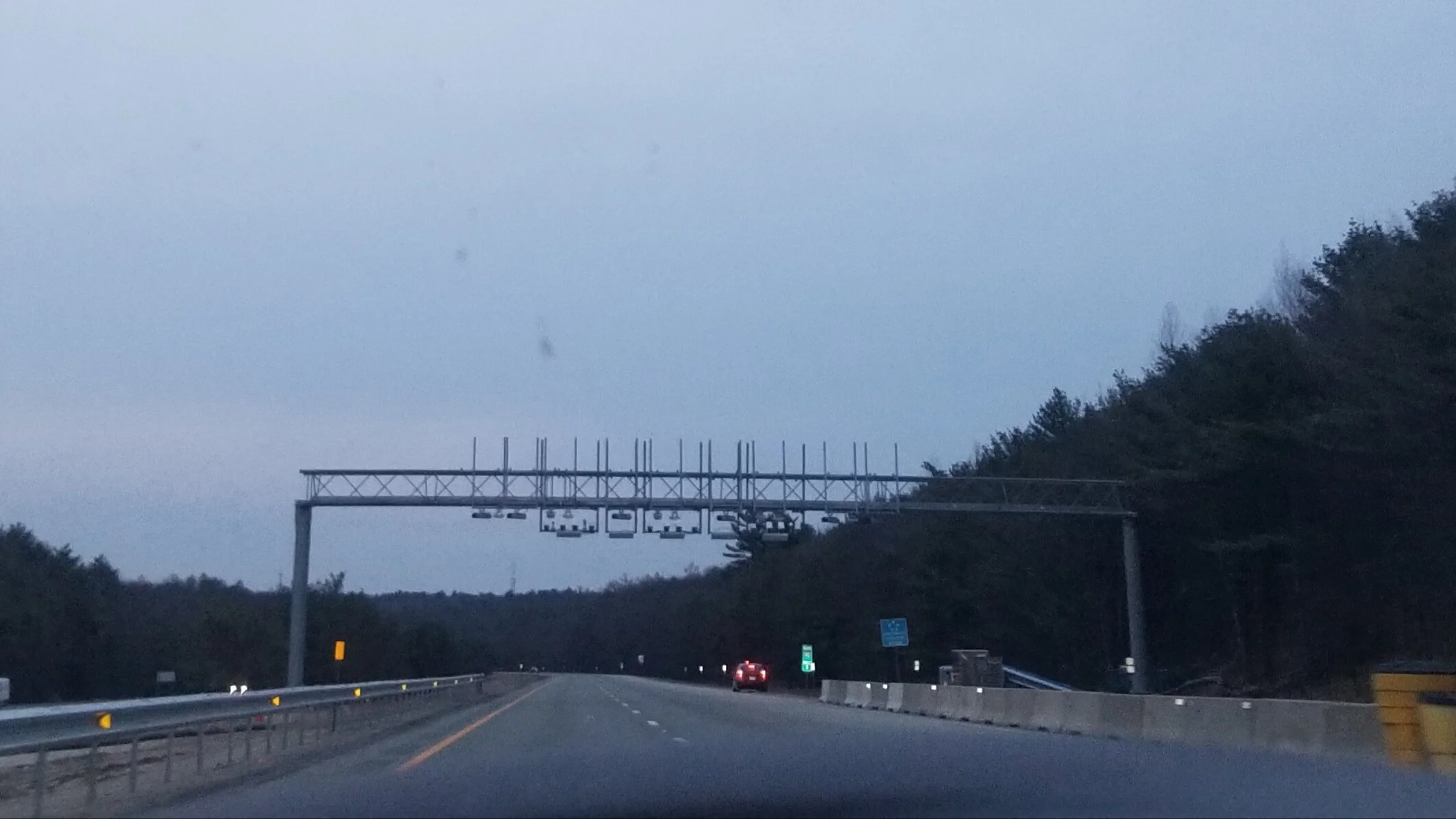
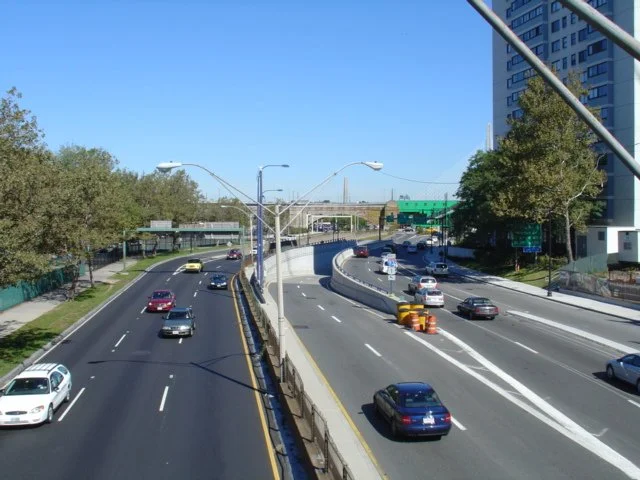
Truck tolls on Interstate 95 north in Rhode Island
Photo by Scientificaldan
Surely no one is surprised that Connecticut Gov. Ned Lamont has thrown his support to a trucks-only toll bill. {Rhode Island has already imposed truck tolls.}
Connecticut, according to a handful of media critics of the measure, needs a new source of revenue, pretty much for the same reason the prodigal’s son needed more dough from his dad. He overspent, drew down his allowance and took on debt, the way a sinking ship takes on water through a hole in its hull. If Dad can absorb the debt, there is no problem; he can in that case, quite literally, afford to be merciful. But if he himself has fallen on hard times, mercy comes at too dear a price. Connecticut is the prodigal’s father who has fallen on hard times.
The author of the new transportation initiative, we are given to understand from various news sources, is state Senate President Martin Looney, who seemed, only a short time ago, to have wrinkled his nose at the toll proposals then on the table for discussion, one of which was a trucks-only tolling scheme.
Democrats are now agreed that a new revenue stream is necessary and that Lamont’s rollout was defective. During his gubernatorial campaign, Lamont proposed truck only tolling; once elected, he proposed multiple gantries on major highways, about 58 gantries that would collect user fees from all road travelers. The new revenue source is necessary, Democrats continue to argue, because the Transportation Fund lock-box has been depleted – by legislators who, as it turns out, had diverted funds destined for the lock-box, dumping them into the General Fund so they might reduce the continuing budget deficits for which they absurdly do not claim responsibility.
This analysis barely scratches the surface, though it does point to the real problem. The real problem is that the ruling Democratic Party is disinclined to make long-term, permanent cuts in spending. Additional taxes, we all know, are always permanent and long term. If you raise taxes, you eliminate the disturbing need to cut spending. Additional ruinous taxation, at this point in Connecticut's descent into its three decades old death spiral, will help only politicians -- no one else.
Why are Democrats so averse to permanent, long-term cuts in spending?
They are operating, as we all do, on a pleasure-pain principle. All life on the planet tends to resist pain and welcome pleasure. Even a daisy raising its head to greet the morning sun operates on the pleasure-pain principle. So then, we should ask ourselves: which is more painful for the average Democrat legislator, incurring the displeasure of the many supportive special interests in his political universe, or incurring the much more defused displeasure of those people he claims to represent who will be adversely impacted by yet another tax?
Democrat legislators are supposed to represent the general good of the whole demos, not special interests such as state worker unions. That is the desideratum we find in textbooks on good government. If Connecticut could produce a Machiavelli and put him to work churning out editorials for most newspapers in the state, we should soon have a proper view of modern state politics. Chris Powell at the Journal Inquirer occasionally quotes Ambrose Bierce on this point. Bierce defined “politics” in his “Devil’s Dictionary as: “a strife of interests masquerading as a contest of principles. The conduct of public affairs for private advantage.”
If that seems cynical, it is. But perhaps the state could use a strong dose of cynicism, purely as an emetic. In the golden age of Athenian democracy, cynics were the world’s first hippies: They questioned all authority. It may seem cynical to say so, but a questioning and contrarian posture is proper to good journalism. In fact, it is indispensable to good journalism. How, without a touch of cynicism, should journalists go about comforting the afflicted and afflicting the comfortable? Journalism’s most deadly enemy is auto-pilot thoughtlessness and political sycophancy. There was a heroic journalist – whose name I have forgotten, so rare are instances of heroism in the field – who made it a habit of blowing his sources every five years or so because he feared falling into a slough of sycophancy.
Before we leave the question of cynicism, which is poorly understood, allow me to use the substitute term “contrarian.” We know a thing by contraries. If you want to know whether position A advances the common good, you cannot arrive at an adequate answer to the question without due consideration of position B -- B being “Not A.” Without a consideration of B, A will be accepted unreflectively without serious examination. In all areas of human life, we seek proportional balance. In Connecticut politics, we seek what has been called internationally a “balance of power.”
Indeed, I may observe parenthetically that both state and national constitutions provide a balance of power between three functions indispensable to democracy: the legislative power of writing laws, the executive power of executing laws, and the judicial power of judging laws. These powers should be separate and equal -- in a special sense. And they cannot be equal unless they are separate. Equality among the different departments is arrived at when each department is prevented from encroaching on the constitutional prerogatives of the other two departments. The powers are divided functionally so that each function may retain its integrity. That is constitutional balance. It is also good government.
The Sad Estate of Connecticut's Fourth Estate
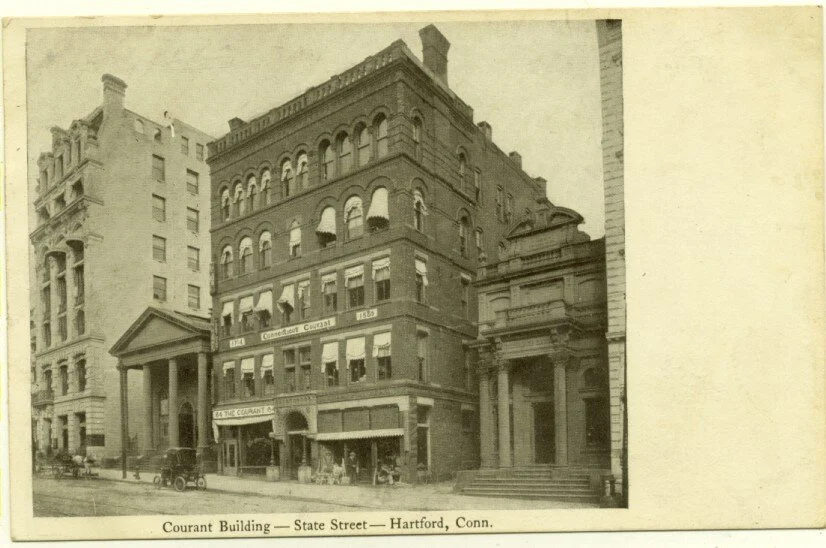
The old Hartford Courant Building circa 1900. The Connecticut Courant began as a weekly on Oct. 29, 1764, started by Thomas Green. The daily Hartford Courant, which remains after many decades state’s biggest newspaper, traces its existence back to the weekly, thus claiming the title of "America's oldest continuously published newspaper", and adopting as its slogan, "Older than the nation."
It is important to bear in mind an adversarial balance when discussing, say, the proper relationship between political parties or the proper relationship between government and the media.
There is universal agreement that the relationship between the Trump administration and the national media is an adversarial one. Some wonder, however, whether in this instance the adversarial relationship is too much of a good thing. A judicious journalistic balance weaves like a battered boxer between too much and too little. Moderation in all things -- though Trump seems to be unfamiliar with the concept -- is still the golden rule. Then too, the chief pursuit of good journalism is the objective, politically unadorned truth, which ought never to be sacrificed to a strife of interests. Was the relationship between the media and the Obama administration an adversarial one? The frisson as Obama did what some saw as him pledging to do -- remake the United States from the bottom up -- was, as many of us remember it, mild to non-existent.
Coming back to home plate, is the relationship between Connecticut’s media and what we perhaps should call the Weicker-Malloy-Lamont administration – all three administrations favoring tax increases over long-term, permanent cost reductions – an adversarial one? On important questions of the day, are Connecticut editorialists and commentators truly objective? How many editorials in Connecticut papers may be described as objectively conservative?
Don Pesci is a columnist based in Vernon, Conn.
'Metallic frankness'

“Winter walks up and down the town swinging his censer, but no smoke of sweetness comes from it, only the sour, metallic frankness of salt and snow.’’
— Mary Oliver (1935-2019), a famed poet who lived much of life in Provincetown, on the tip of Cape Cod.
Tracey L. Rogers: Plantation tours can helpfully lean us into discomfort
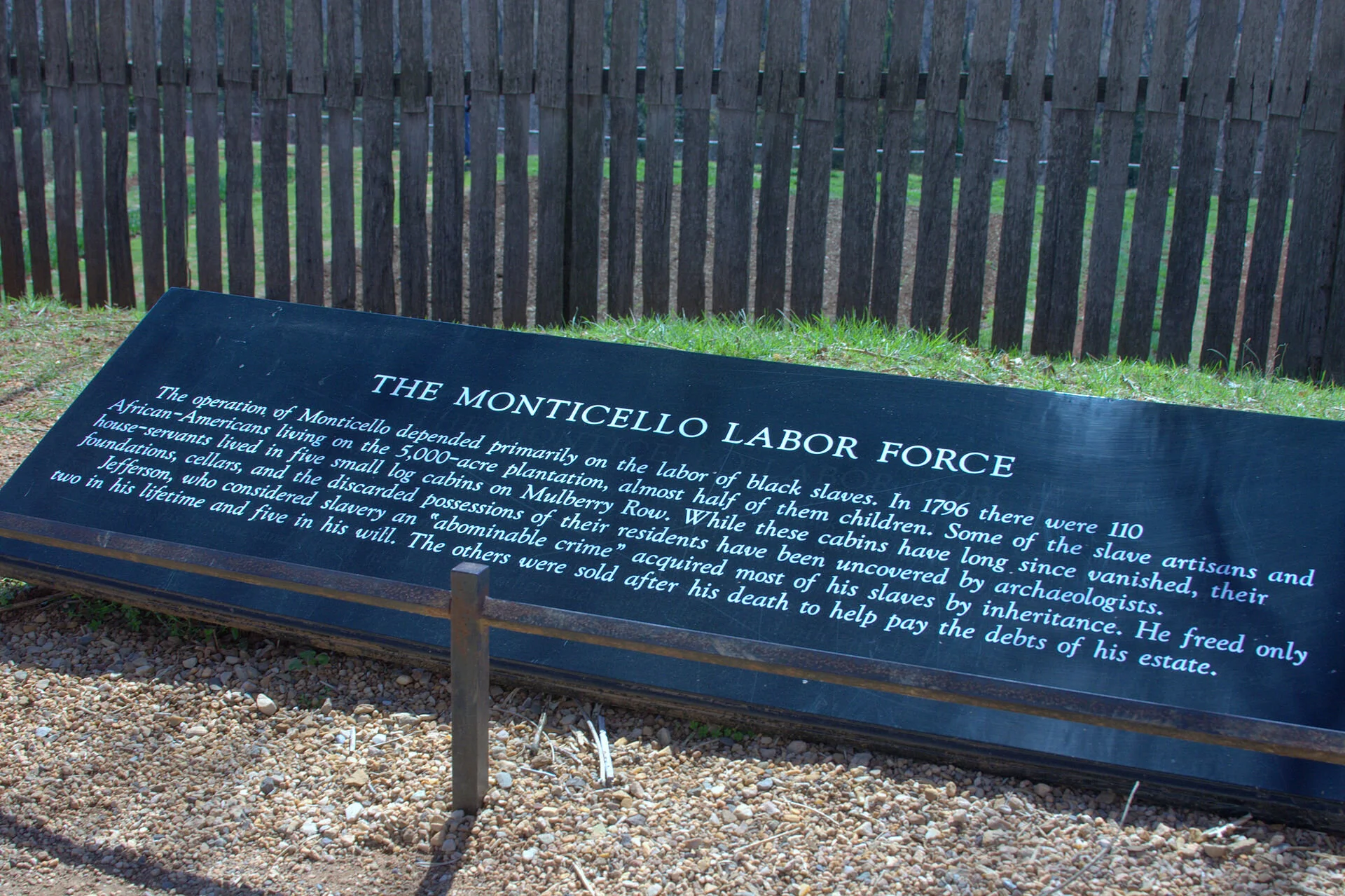
— Photo by Allspamme
Via OtherWords.org
Thomas Jefferson may have written that all men were created equal in the Declaration of Independence. But he, along with so many of his fellow plantation owners, was still complicit in the institution of slavery.
Jefferson’s famous Monticello plantation, in the foothills of Virginia’s Blue Ridge, a picturesque venue most popular today for hosting weddings and other special occasions, was a place of terror for those African captives who would never gain freedom in Jefferson’s lifetime.
During a recent visit to Monticello, I learned that Jefferson personally kept upwards of 600 people in bondage. It was ironic — the very man I was taught to revere in history class kept my ancestors as property.
My trip to the plantation was emotional. I had heard stories of the slave quarters along Mulberry Row, and the recent discovery of unmarked graves of enslaved people who died at Monticello. Seeing the place firsthand was an altogether heavy experience.
But I also felt something else on that trip — something surprising: relief.
I had been certain that the dark history of slavery would be watered down at a tourist destination like Monticello. But thankfully, that was not the case. Instead, I was impressed by the site’s thorough, honest, and critical depiction of slave life at Monticello.
Our tour guide shared the brutality endured by slaves along Mulberry Row. He spoke of how they lived, and how they were severely punished to the point of death.
Our tour guide retold the radical truth of what my ancestors experienced under the purveyance of Thomas Jefferson. I was simultaneously angered by what I learned and satisfied that this history was offered in a way that demanded compassion and understanding by those present.
Yet, I was also appalled by the comments and questions of some of the white people on the tour. One man asked if Thomas Jefferson had been a “kind slave owner,” to which our tour guide — himself a white man — responded there was no such thing.
Another woman commented that the slave quarters weren’t “so bad.” Our tour guide responded with a simple question: “Would you live there?”
Such questions are not uncommon, and reports abound of white visitors complaining about having to confront facts about slavery during plantation tours. All this makes it abundantly clear that the history of slavery needs to be taught with unwavering honesty, whether when visiting a plantation or developing school curricula.
White America needs to acknowledge that, like it or not, racism is alive and well today because of the horrors of our past that helped shape who we are as a society. Racism is as American as Apple pie; to shirk away from the awful details is as shameful as the details themselves.
After 250 years of chattel slavery, and another 100 years of Jim Crow, one can only imagine the trauma that Blacks have endured. Imagine our ancestors being bought, sold, beaten and separated from their families. Imagine the lynchings that took place in this country, and the justice that went unserved.
If it’s difficult for white Americans to discuss racism, how must Black Americans must feel?
In her book White Fragility, author Robin DiAngelo wrote that many white people lack the “racial stamina” to even engage in such conversations. As an activist, I would have to agree. But it’s hardly impossible, as the dedicated white tour guide at Monticello showed. And it’s worth it.
It’s been 400 years since the first enslaved Africans arrived on these shores, and that’s why we must talk about the history of race in America. In doing so, while bravely leaning into our discomfort, we heal. We reconcile our history. We’re no longer beholden to the guilt and shame of the past. Humanity is restored.
Tracey L. Rogers is an entrepreneur and activist living in Northern Virginia.

Connecting New England students and employers

Flag of the New England Governors Conference
From The New England Council (newenglandcouncil.com):
BOSTON
“The New England Council is pleased to share with you the third edition of ‘Partnerships for the Talent Pipeline: Directory of New England Higher Education & Industry Partnerships.’ This updated version of the directory, which was first released in the fall of 2016 and updated in 2018 – highlights nearly 100 programs affiliated with colleges and universities throughout New England which aim to connect students and employers in order to strengthen our regional workforce. As educators, employers and community leaders wrestle with how to best prepare students for a successful career, these innovative models are being put to the test around our region to ensure that education meets changing demands.
“For the New England economy to continue to grow and for our region’s businesses to compete globally, employers of all types and sizes are dependent on a skilled workforce. In addition to traditional classroom training, educators and employers alike have embraced partnerships that bring together industry and higher education to work collaboratively to prepare students for career success. The New England Council has worked with our members to collect information on partnerships that are designed to develop a skilled talent pipeline and provide a mutual benefit to both students and businesses. These partnerships go beyond the traditional internship model to provide a variety of experiential learning opportunities, to develop curriculum that will best prepare students for future job opportunities, and to develop pipelines for post-graduation employment.
“The Council hopes that this updated directory will continue to be a useful resource to policymakers and other stakeholders, and will encourage employers and educational institutions to continue to pursue and expand partnership initiatives that develop our region’s talent pipeline.’’
The directory is available on our Web site and will be updated periodically as we learn of new partnerships in the region. Hard copies are also available upon request. If you have programs that you think could be included in future versions of this directory, please contact Taylor Pichette at tpichette@newenglandcouncil.com
Dining on the rails
From Robert Whitcomb’s “Digital Diary,’’ in GoLocal24.com
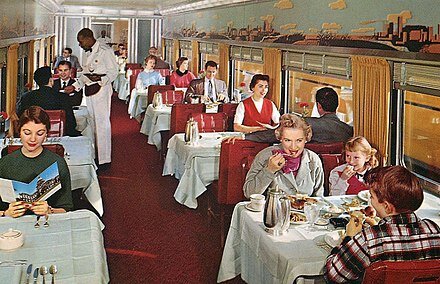
One of my fondest travel memories is eating in train dining cars, with most of my experience going way back to before Amtrak, on the likes of the New Haven, New York Central and Pennsylvania railroads. The food and service were remarkably good, considering the lines’ dubious finances and it was pleasant to watch the passing scenery through the window and brood. Compared to other modes of transportation, trains are good to eat on, read on, and, especially, brood on. And you can go for walks.
A drawback, or an allure, of the dining cars is that you sometimes have to share a table. Practiced train travelers learn how to determine whether the other person(s) wants to chat, or be left alone, and how to politely convey whether you want to talk. Decades later, I remember some of these conversations.
Sadly, Amtrak is ending traditional dining-car service on many overnight trains, starting with eliminating those east of the Mississippi, citing the desire by Millennials for more “flexible” and “contemporary’’ eating options. Another treasure of gracious living is derailed.
For a good overview of Amtrak’s current status, please hit this link.
Print against the tide

At the entrance of David R. Godine Inc.’s warehouse, in Jaffrey, N.H.. Godine is a small, high-end book publisher based in Boston and famed for both the content of its books and for their physical beauty.
— Photo by William Morgan
Night work

“The Music Pavilion at Versailles, Moonlight“ (oil on canvas), by Henri Eugene Le Sidaner, in the show “Highlights from the Permanent Collection: Nocturne ,’’ at the Art Complex Museum, Duxbury, Mass., through Jan. 12.
The museum says that "Nocturne paintings" were “originally defined as those that depict scenes evocative of the night, or portray subjects in a veil of light or at twilight. Nowadays, the term tends to refer to any paintings of nighttime scenes. Nocturne paintings are moody and alluring, capturing the unique tranquility that nighttime brings. Nocturne features works by a variety of artists across different countries and times.’’
Religion -- starting conflict and ending it

A common symbol of Christian ecumenicalism
To members and friends of The Providence Committee on Foreign Relations (thepcfr.org; pcfremail@gmail.com)
On Thursday, Dec. 5, The Providence Committee on Foreign Relations (thepcfr.org; pcfremail@gmail.com) will welcome as its dinner speaker, who directs the Initiative on Religion, Law, and Diplomacy, and is visiting associate professor of conflict resolution, at The Fletcher School of Law and Diplomacy at Tufts University. She titles her talk "God, Soft Power, and Geopolitics: Religion as a Tool for Conflict Prevention/Generation".
Dr. Prodromou is also a non-resident senior fellow and co-chair of the Working Group on Christians and Religious Pluralism, at the Center for Religious Freedom at the Hudson Institute, and is also non-resident fellow at The Hedayah International Center of Excellence for Countering Violent Extremism, based in Abu Dhabi.
Dr. Prodromou is former vice chair and commissioner on the U.S. Commission on International Religious Freedom and was a member of the U.S. Secretary of State’s Religion & Foreign Policy Working Group. Her research focuses on geopolitics and religion, with particular focus on the intersection of religion, democracy, and security in the Middle East and Southeastern Europe. Her current research project focus on Orthodox Christianity and geopolitics, as well as on religion and migration in Greece.
Schedule:
6:00 - 6:30 PM: Cocktails
6:30 - 7:30: Dinner (salad, entree, dessert/coffee)
7:30 - 8:30: Speaker Presentation
8:30 - 9:00: Q&A with Speaker.
Please let us know if you have any dietary restrictions.
For information on the PCFR, including on how to join, please see our Web site – thepcfr.org – or email pcfremail@gmail.com or call 401-523-3957

James P. Freeman: Cape Cod winter storms -- curiosity and ferocity


“Winter is begun here, now, I suppose. It blew part of the hair off the dog yesterday & got the rest this morning.”
-- Mark Twain (1892)
The old logs tell it all.
“Blizzard ’05 worst on Cape in my life…” reads the entry on Jan. 23, 2005 in the Weather Wizard’s Weather Diary. So hand-wrote meteorologist Tim Kelley. Indeed, it was epic.
That personal proclamation reflects a larger generational curiosity about the wicked winter weather on Cape Cod. For centuries, the unpredictable oscillations of nature’s fury have provoked vigorous debate about the worst storm to ravage the very exposed peninsula.
Hurricanes come and go. Blizzards stall and meander. Winter’s ferocity is more spellbinding than summer’s clemency. And so the lore and allure of the Cape’s cold-weather excitement – especially nor’easters, sometimes with whiteouts -- is a rich narrative of meteorology, history and geology. And some mythology. Let the debates begin…
“A storm in the fall or winter is the time to visit it…”
--Henry David Thoreau, Cape Cod (published in 1865)
A Cape native, Kelley radiates enthusiasm about the weather like loose electricity. His stacks of spiral, cardboard-bound, black-inked journals date back to March 3, 1992, when he first began broadcasting with then-start up New England Cable News (now sharing production facilities with NBC10 in Boston). With more than 10,000 daily reports, Kelley calls them “probably the most gratifying part of my career.” Reviewing them is an exercise in excavation: They are a captivating analog history, a sober juxtaposition against the blitzkrieg of digital noise emanating from today’s televisions, laptops and mobile phones. His entries about the Cape are particularly illuminating.
Take the Blizzard of Jan. 22-23, 2005, perhaps the most notorious blizzard in recorded Cape history. Kelley’s observations are stark and emphatic. He recalls that all of Nantucket was “without power,” “80 mph gusts” lashed the coast, and “31 inches” of snow buried Hyannis. (The Cape Cod Times reported 10-to-15-foot drifts and 27-foot swells.) Another entry reads “Benchmark.”
In New England meteorological lingo the benchmark is 40°N 70°W and helps identify the impacts that a winter storm might have on a region. When the center of an intense low-pressure area moves directly across those coordinates in the winter southeastern New England coastal communities can often expect a massive snow event, if it is cold enough. The Cape has been in the bull’s eye on many occasions.
“The very snow in the air had a character of its own…the snow of the outer Cape.…”
--Henry Beston, The Outermost House (1928)
Kelley brings an encyclopedic knowledge and perspective to storms big and small. Maybe surprisingly, then, he is not convinced that The Blizzard of 1978 warrants its place on a list of top winter tempests in Cape Cod history. In fact, he calls that one a “dud” – on Cape Cod. But one man’s dud is another man’s bomb.
Make that bombogenesis.
Don Wilding, a Cape Cod historian, writer and speaker, thinks otherwise. While other winter beasts certainly merit consideration, “nothing tops ’78,” he asserts. That storm (Feb. 6-7) did not qualify as a blizzard on the Cape, certainly not for the snow, which \changed to rain. Rather, this classic nor’easter was a severe wind (92 mph recorded in Chatham) and tidal event (14-½ foot tides measured in Provincetown). “It was a different experience on the Cape” than farther west, which got very deep snow, Wilding notes.
More of a winter hurricane (a definitive “eye” passed over the Outer Cape), the storm stalled out and hit at high tide on a new moon (astronomically high), when tides would have been “only” four feet above normal. More so, it ravaged the coast, most dramatically rearranging Coast Guard Beach in Eastham and Nauset Spit (later storms would inflict similar damage on Orleans and Chatham beaches).

Satellite view of the Blizzard of ‘78
“The storm had been terrific…”
-- Joseph C. Lincoln, Cape Cod Yesterdays (1935)
That blockbuster storm evoked an existential threat that presaged future peril. Its lasting legacy was less physical and more psychological. True, its coastal savagery surprised many forecasters at the time (grainy black and white images from space were still relatively new accessories, and there wasn’t much sophisticated computer guidance). But, more importantly, it shocked most sensibilities. When the storm swept Henry Beston’s long-revered “Outermost House’’ out to sea it affected Cape Codders’ psyche. The tiny structure was named “The Fo’castle,’’ was designated a literary landmark by the federal government in 1964, and was seen as a sturdy symbol of the new environmentalism of the 1970s. Tempests before that storm were recalled mostly for their maritime death and destruction. The shoreline was mere collateral damage.
Henceforth, the idea of coastal areas being routinely imperiled became front and center. Advances in climate-related technology and early-warning alerts probably fed that psychology. The ’78 monster became a psychological benchmark.
Still, before the days of Doppler radar and ensemble modeling, the most memorable Cape storms were chronicled by journalists, not in meteorologists. Old newspapers, magazines and books told the story, not the latest GOES satellite composites. And back then, words, not images or metrics, filled minds and bled hearts. That makes Kelley’s written work so compelling today.
Ironically, Thoreau, who wrote what may be the most memorable manuscript about Cape Cod, is not among the scribes who captured the exquisite cruelty of winter on the barred and bended arm; none of his four trips to the Cape in the mid-1800s occurred in winter.
“A winter-closed house gives the effect of mournfulness.”
--Gladys Taber, My Own Cape Cod (1971)
Henry Beston was more daring. His eyewitness accounts are riveting. During a year-long stay at the Outermost House, in Eastham, he wrote in January 1927, “So began the worst winter on the Cape for close upon fifty years, a winter marked by great storms and tides, six wrecks, and the loss of many lives.” He was enthralled by the fierce gale that hit on Feb. 19 and 20, describing a “convulsion of elemental fury.” Later, in March, he details the wreck of the three-masted schooner Montclair off Orleans. (Her bones still reappear after a good winter thrashing.)
Then there is the account of the terrible Portland Gale, in 1898. Much of Joseph C. Lincoln’s work was set in a fictionalized Cape Cod. But Lincoln remembered the Nov. 26 and 27 storm, so named for the sinking of the side-wheel steamer Portland, plying between Boston and the Maine city. Storm damage was catastrophic. There was tremendous damage to the Provincetown waterfront and its fishing fleet. Regionally, more than 400 people perished and 150 boats were destroyed. Nearly 200 people went down with The Portland off Cape Ann. The exact number isn’t known because the ship manifest was lost. Among the dead were a newly married couple of Lincoln’s acquaintance. Eerily, he memorializes, “… the young wife’s trunk, with all her bridal finery, was washed ashore at Orleans.” The bodies of the couple were never found.
The late-Noel Beyle, local author and agitator, relished winter weather. His black and white photo-essay booklets on all things Cape Cod are tinged with gallows humor. “The real test of wills,” he thought, “is whether the weather is hot or cold! That is the true contest on Cape Cod, regardless of the season, and it’s paramount most every winter.” April may be the cruelest month, he joked. Consider the April 6-7 blizzard that blanketed the Cape in 1982. Its “north-to-northwest gale” and full-moon tide caused “severe erosion along parts of the Bay shoreline.”
“It does get a bit rough at times… to tough out all these fun winter storms!”
--Noel Beyle, Cape Cod Weather Oddities (1982)
Of course, other storms deserve honorable mention. Some bloggers on americanwx.com rank the Jan. 26-27, 2015 blizzard (named Juno by The Weather Channel) right up there with the 2005 blizzard. (Sandwich recorded 34.4 inches of snow). The Feb. 8-9, 2013 “extreme nor’easter” Nemo bore resemblance to its 1978 ancestor (it was a benchmark storm too). Three notable storms from the last century weren’t the beneficiaries of the 24/7 news cycle or social-media promotion: the Feb. 17-18, 1952 nor’easter (S.S. Pendleton disaster); the March 2-5, 1960 blizzard (record Nantucket snowfall of 31.3 inches); the Feb. 9-10, 1987 storm (a rare Cape-only blizzard; at the time, said to be the worst blizzard in 30 years). Surely, over time, their standings will be diminished.
Much was made of the three roaring nor’easters that struck the Cape in March 2018 over the span of just 11 days. All three storms were essentially benchmark events. And the coastal erosion that the trio caused was depressingly brutal at such places as Nauset Beach in Orleans. Their formation and subsequent track was, weather.com reported, unusual but not unprecedented. The three potent systems that formed in early 2015 were of similar occurrence; they also passed near the benchmark. Storms, like history, can repeat themselves.
Before he became known as “Dr. Beach,” Stephen P. Leatherman wrote Cape Cod Field Trips, published in 1988. A geologist by training, his expedition underscores that the Cape is a relative geologic infant, a product of the last Ice Age, which ended about 12,000 years ago. He traces its origin and evolution from “yesterday’s glaciers” to “today’s beaches.” It is exclusive real estate.
The Cape’s location makes it a desirable target for storms. It’s on the edge of a continent and on the edge of an ocean. It also sits about half-way between the equator and the North Pole, and thus in a region where tropical and arctic air clash. Throw in a fluctuating jet stream and the Labrador Current and Gulf Stream, too. As a consequence, weather comes from all directions. Tim Kelley boasts that “Cape Cod has the most interesting weather on earth.” Especially the winter variety.
“This storm, it is true, had extraordinary credentials.”
--Robert Finch, The Outer Beach (2017)
In many ways Kelley himself bridges past and present -- yesterday’s journalist and today’s meteorologist. His state-of-the-art tools allow him unparalleled access to high-tech prediction but his old-school weather logs allow him deep access to recollection -- a key intangible that gives his on-air presentation the depth of soul. Something we need now. Even when the power goes out.
In a data-driven world, we also demand nontechnical, accessible explanations of events that just might be beyond our ability to explain and act on. Meanwhile, there’s the age-old drama/conflict: man vs. environment. In any case, Kelley reminds us, “Weather is a balance of extremes; ‘normal’ is abnormal.”
How will Boreas, Greek god of winter, and other divines manage the ferocity of storms not yet dreamed up? For those seeking comfort, take solace in Mark Twain’s universal exasperation. Trapped for days indoors during the Blizzard of 1888 and his wife unable to travel, he wrote Olivia the following:
“… a blizzard’s the idea; pour down all the snow in stock, turn loose all the winds, bring a whole continent to a stand-still: that is Providence’s idea of the correct way to trump a person’s trick.”
xxx
James P. Freeman is a New England-based writer, financial adviser and former banker. He is a former columnist with The Cape Cod Times and New Boston Post. His work has also appeared here as well as in The Providence Journal, The Cape Codder, golocalprov.com, nationalreview.com, and insidesources.com. A version of this essay has appeared in Cape Cod Life.
Boarding school art
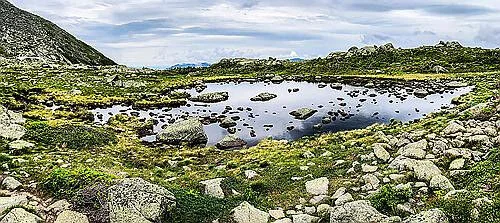
Kelly McGahie, “Star Lake’’ (digital photograph), by Kelly McGahie, in the show “Hidden Treasures 5,’’ at Phillips Exeter Academy’s Lamont Gallery through Dec. 14.
This exhibit features the work of Phillips Exeter Academy employees, faculty and students across departments. The pieces span media as well, including stained glass, watercolor, photography, fiber arts and more. The artists use their different media to reflect on exploration, expression and the role of the arts at the famous boarding school in Exeter, N.H.
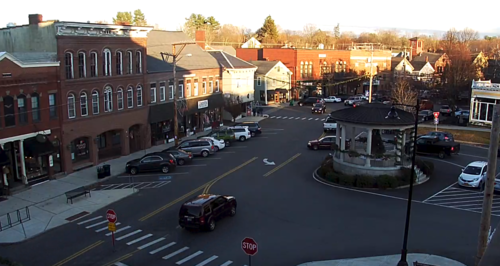
Water Street in downtown Exeter, an affluent town founded in 1638 and named after a town in Devon, England.

Llewellyn King: Homelessness in America at crisis point

The British call it sleeping rough. We call it for what it is: homelessness.
It starts the day when all the support systems -- fragile as they often are -- fail. When there is no home to go to; no bed to sleep in, no meal to eat, no toilet to use, no place to wash even a face -- just the hard, cold and often wet streets that offer no succor. The hospitality of a concrete sidewalk is scant.
That is what faces 4 million luckless children each year in the United States, according to Renee Trincanello, chief executive officer of Covenant House Florida, which operates shelters in Ft. Lauderdale and Orlando. Once they hit the streets, they are vulnerable to every horror that can happen to a child, including sex trafficking. “They also are used by drug dealers to inculcate a habit,” Trincanello told me.
In the United States, homelessness is at a crisis point. Cities are clogged with the homeless from coast to coast. If you travel a lot, as I do, you are aware of how homelessness is at its most conspicuous where there is prosperity -- a byproduct of high rents in cities like San Francisco, Austin, New York and Boston.
Very close to the Capitol in Washington, around Union Station, the homeless sleep on the sidewalks, sometimes with the barest needs met by charities -- needs like a sleeping bag, if they have been identified and are lucky. Train stations are a mecca for the homeless because they have public toilets and offer warmth. But Union Station has removed most of its seating to keep out the homeless.
To draw attention to the misery and extreme danger of children sleeping in the streets, and to raise money, Covenant House branches in the United States, Canada and Latin America organize sleep outs. Once a year, executives like my friend Jan Vrins, managing director and leader of Navigant’s global energy practice, takes a sleeping bag, puts it on top of a cardboard box and gets a hard night’s rest on a parking lot pavement.
Vrins says, “It isn’t fun to sleep in a concrete parking lot on a carton box with a sleeping bag. But the time we spend with these youths before we sleep out is wonderful. First, we have dinner with them and have sessions where they share their stories.” Afterward, the children are safely tucked up in the shelter and the adults repair to the parking lot.
In every case, Vrins says, something has happened to them. “Their families have broken up, sometimes because of addiction; there have been storms, as in Puerto Rico, and they end up in the shelters. So, climate change is leading to more kids on the street,” he says.
Vrins says that he was introduced to Covenant House by an executive from Florida Power & Light. “That was 11 years ago, and I got hooked,” he says. Now he is Covenant House Florida’s vice chairman.
Trincanello, who is married with two daughters, has spent her career with Covenant House. She told me that her father wanted her to be a lawyer; she pushed back and became a social worker.
If you sign up to sleep out with Covenant House, whether it is in chilly Toronto or as, as Vrins notes, more benign Florida, you will join some of the cream of America’s executive talent from Accenture and Black Rock, to Cisco, KPMG and other companies. In fact, prominent companies field “teams.”
Vrins, who is married with two sons, heads the Navigant team. Each sleeper is expected to raise $1,000 for Covenant House. This year, he laid down on the concrete in Ft. Lauderdale on Nov. 26. He says 130 people slept out there and raised $270,000.
A native of the Netherlands, Vrins is one of those gregarious people who puts his arms around you with his smile. He speaks with passion and love of the homeless children in their crises. Trincanello, whom I have not met, has a voice as warm as a winter hearth. I can imagine it melting fear in a scared child. Together they do work which is not a molecule short of noble.
Vrins says of sleeping out: “When you wake up in the morning, you feel blessed. When homeless kids must look for the next place to spend the night, you feel blessed.”
Llewellyn King is executive producer and host of White House Chronicle, on PBS. He’s based in Rhode Island and Washington, D.C.
On Twitter: @llewellynking2
What's historic in Newport?

Shops along Newport’s Thames Street near Waites Wharf
From Robert Whitcomb’s “Digital Diary,’’ in GoLocal24.com
The main owner of the western end of Waites Wharf, in Newport, and the owners of The Deck restaurant, Riptides bar and Dockside nightclub on the wharf, want to demolish those establishments to make way for a 150-room waterfront hotel. Some people want to block the demolition with the argument that the buildings are somehow historically significant, which seems a stretch to me.
The bigger issue is whether it’s a good idea that even more of downtown Newport’s storied waterfront be blocked off by hotels and condos. And a longer-term issue is what rising seas, which already imperil the city’s Point neighborhood, might do to the likes of Waites Wharf.
Please hit this link to read a good article in the Newport Daily News article on this.
Fragments but complete
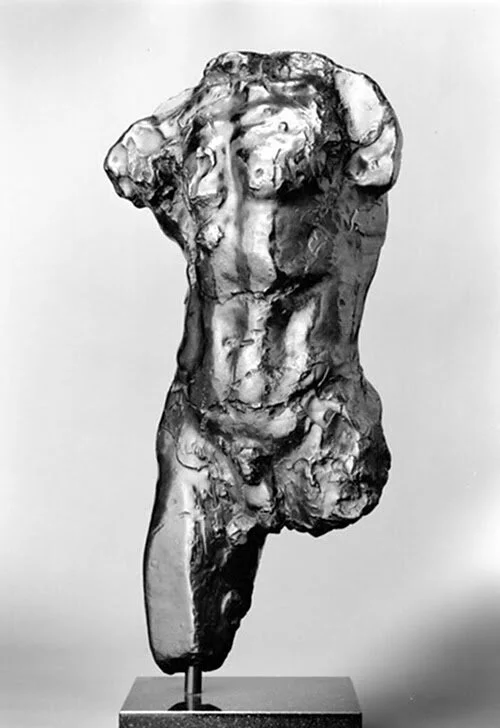
“Study for Torso of Walking Man,’’ by Auguste Rodin (1840-1917), in the show “Rodin: Truth, Form, Life,’’ through Dec. 21 at the Fairfield University Art Museum, Fairfield, Conn., through Dec. 21.
This exhibition displays 22 bronze sculptures by the renowned sculptor. The museum notes he used a variety of materials to create his sculptures, but all used modeling to emphasize his personal response to the subject. Many of his sculptures are meant to be fragments, with heads, hands and torsos lacking the rest of the body. Rodin saw these fragments as complete works in their own right. He heavily influenced the development of 20th-Century modernist sculpture.
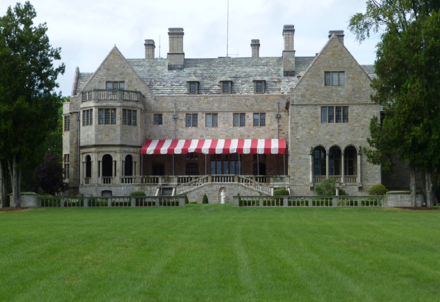
The museum is on the first floor of the renovated lower level of Bellarmine Hall, above, on the campus of Fairfield University, a Jesuit institution.
Plotting, not idling

“Two Idlers” (detail), by Robert Frederick Blum (1857-1903), in the show “For America: Paintings from the National Academy of Design,’’ in New York, at the New Britain (Conn.) Museum of American Art through Jan. 26.
(This image courtesy of the American Federation of Arts.)
The show features artist members of the National Academy of Design, such as Thomas Eakins, Winslow Homer and Andrew Wyeth, along with masterworks from genres of art such as the Hudson River School and American Impressionism.

The New Britain Knitting Co. factory shown in this set of directions for washing some of its products, about 1915. For many decades the city was a major manufacturing center.
Don't depend on one company; mill village in verse

Cleanup activity at one of the General Electric Pittsfield plant Superfund sites on the Housatonic River, which the company heavily polluted in its heyday.
One thing that any community —in New England or elsewhere — should avoid is over-reliance on one or two big companies. Pittsfield, Mass., found that out when General Electric, which once employed 14,000 people at its facilities in that little city, closed most of its operations there, leaving economic devastation. Now, Pittsfield (the capital of the Berkshires) seeks a diverse collection of much smaller firms and is having modest success in turning around the city.
Jonathan Butler, the president and CEO of 1Berkshire, a business development group, told New England Public Radio:
“If we were to have another employer with 10,000 or 15,000 jobs come in, {to Pittsfield} that would scare me. I think that would scare those of us [who] work in economic development.”
I have strong memories of covering the 1970 elections in Pittsfield for the old Boston Herald Traveler. It then still had a thriving downtown, though you could sense slippage.
To read more, please hit this link.
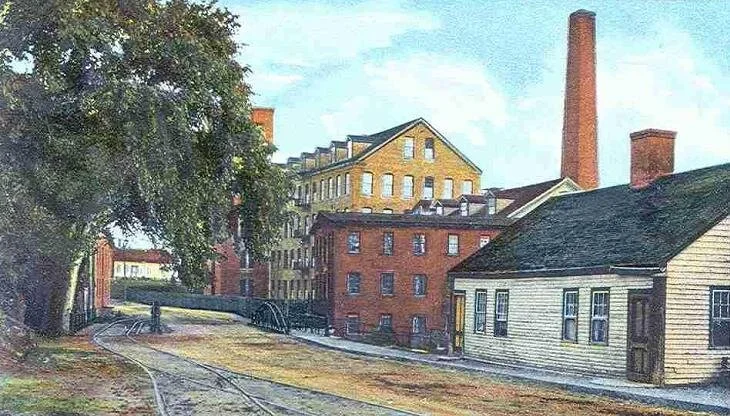
Assawaga Mill, Dayville, Conn., in 1909
Factory Town in Verse
Old New England mills (many of them beautiful, and built for the ages) and the towns that grew around them have become the subjects of a curious form of romance in recent years. So now we have poet, novelist, essayist, environmentalist and former Connecticut deputy environmental commissioner David K. Leff out with a verse novel, The Breach: Voices Haunting a New England Mill Town, which studies the decline of such a community facing economic and an environmental crises.
To hear Mr. Leff talk about his book, and read from it, please hit this link.
Grace Kelly: A lovely urban park over a brownfield
ecoRI News photos by Grace Kelly
From ecoRI News (ecori.org)
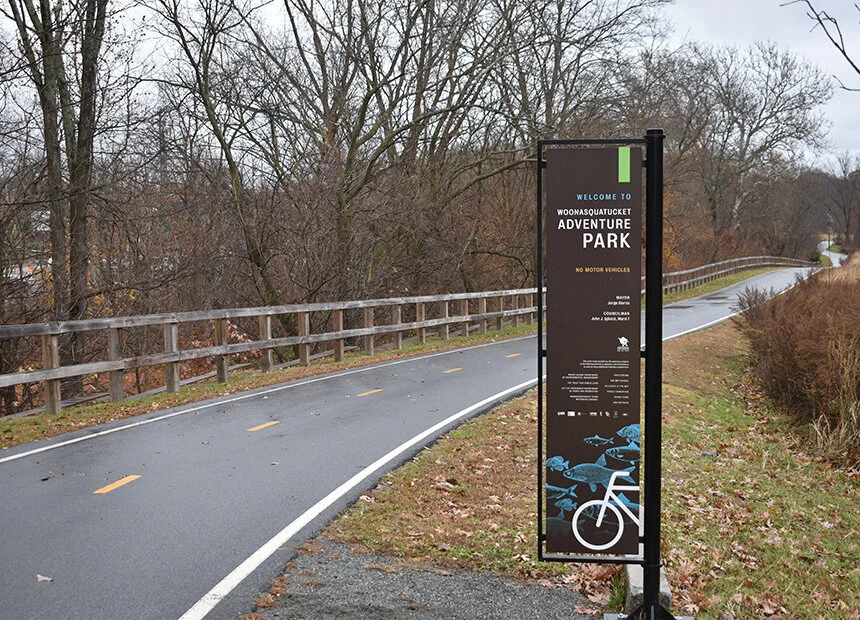
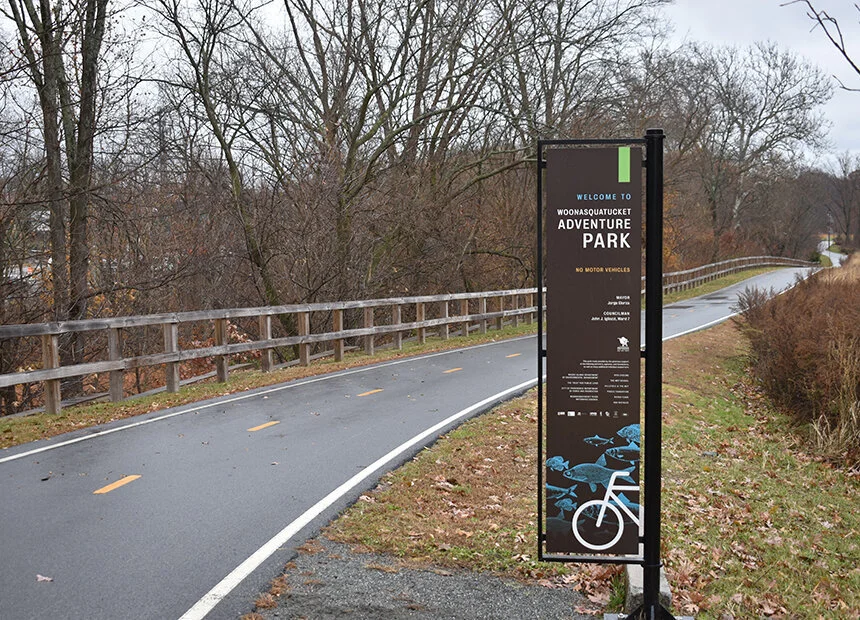
The Woonasquatucket River Greenway, in Providence, is an oasis wrapped around Route 6 and urban sprawl. And it recently officially opened its latest addition: the Woonasquatucket Adventure Park.
Blue jays and cardinals weave through browning tall grasses and perch on sumac trees, as Donny Green, bicycle-program director for the Woonasquatucket River Watershed Council (WRWC), and I trudge over rain-soaked ground to a large gray structure. A bike path cuts a line next to us.
“This is the pump track,” said Green, gesturing to the wave-like structure. “It’s really made for BMX bikes, and the idea is that you start in a high place, drop in with momentum, and pump the bike through and push through turns, using the body to keep momentum through the course.”
Next to the pump track is a parkour course and a field with off-road biking and walking trails that wind their way through wildflowers (jn season).
It’s not your typical playground. The idea is to provide access to alternative sports for kids who aren’t interested in soccer, football, baseball and the like.
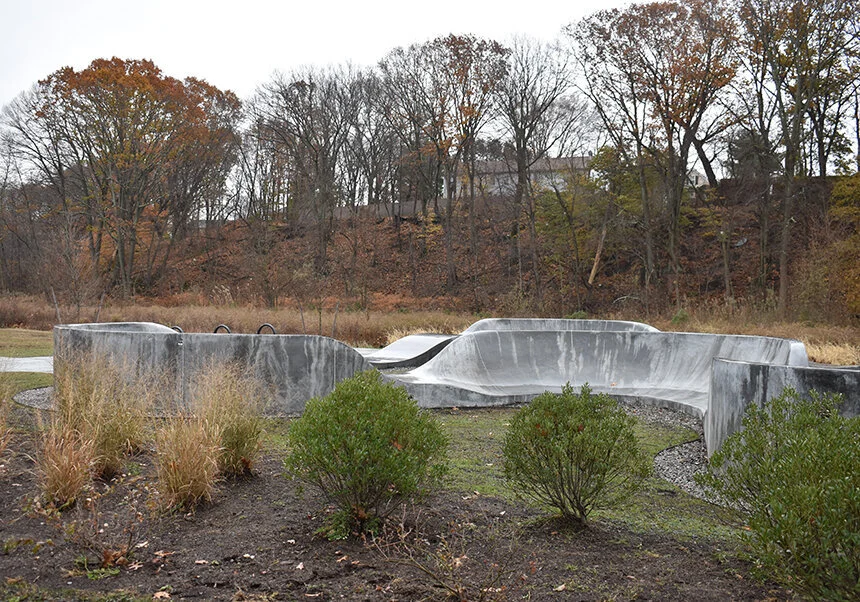
The park’s pump track is designed for BMX bicycles.
“I run a program called 1PVD cycling which is a high-school racing program that focuses on kids who don’t have access to what is a relatively exclusionary sport,” Green said. “And before this was all built, I was here with one of my students and we were looking at this space and we thought, ‘This is a perfect practice spot.’”
While this space is being used to bring alternative outdoor activity to an urban area, it’s also the cherry on the cake of a brownfield-reuse effort.
Once home to the Lincoln Lace and Braid mill, which burned down in 1994, the space was riddled with rubble and polluted soil. It was originally slated to be a passive vegetated area after remediation.
“Unfortunately, we had an issue with ATVs regularly using the area and potentially damaging the cap,” said Lisa Aurecchia, WRWC’s director of projects.
So when Green and some of his students came up with the bicycle/park idea, it provided a unique solution
“We kind of walked into an idea that everyone really ran with,” Green said.
But it wasn’t easy. To make the area safe for adventure activity took another three years, demolishing what was left of the mill, removing contaminated debris, covering contaminated soil with an impervious cap, and installing rain gardens and native plants to reduce flooding.
“It was always a struggle finding a use for this space because it was a brownfield, but you see this hidden space, and it’s a quiet space which is actually really beautiful,” Green said. “That sort of helped us decide to go forward with it, because yes it has these complications but this is a gem. We've got greenway already built onto it, we're connected to two other parks in this area, and there's neighborhoods around that could utilize it. We thought, it’s too good a space to leave alone, let's make something out of it.”
Grace Kelly is an ecoRI News journalist.
He only looks happy

““Wa

“Whale’’ (fine art print), by Cape Cod-based photographer Bobby Baker, in his “New Bedford Collection”.
© Bobby Baker Fine Art
Sam Pizzigati: Bloomberg could buy 2020 election and still make money

Via OtherWords.org
BOSTON
Gracie Mansion, the official residence of New York’s mayors since 1942, hosted billionaire Michael Bloomberg for three terms.
The first of these terms began after Bloomberg, then the Republican candidate for mayor, spent an incredible $74 million to get himself elected in 2001. He spent, in effect, $99 for every vote he received.
Four years later, Bloomberg — who made his fortune selling high-tech information systems to Wall Street — had to spend even more to get himself re-elected. His 2005 campaign bill came to $85 million, about $112 per vote.
In 2009, he had the toughest sledding yet. Bloomberg first had to maneuver his way around term limits, then persuade a distinctly unenthusiastic electorate to give him a majority. Against a lackluster Democratic Party candidate, Bloomberg won that majority — but just barely, with 51 percent of the vote.
That majority cost Bloomberg $102 million, or $174 a vote.
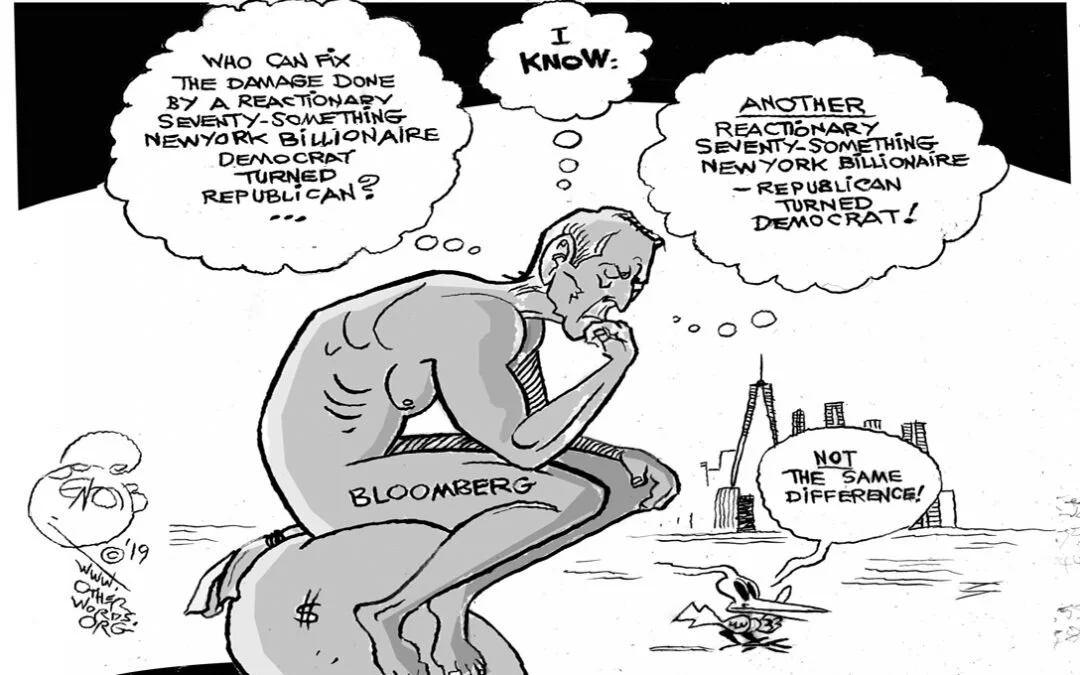
Now Bloomberg has announced he’s running for president as a Democrat, arguing he has the best chance of unseating President Trump, whom he describes as an “existential threat.” Could he replicate his lavish New York City campaign spending at the national level? Could he possibly afford to shell $174 a vote nationwide — or even just $99 a vote?
Let’s do the math. Donald Trump won the White House with just under 63 million votes. We can safely assume that Bloomberg would need at least that 63 million. At $100 a vote, a victory in November 2020 would run Bloomberg $6.3 billion.
Bloomberg is currently sitting on a personal fortune worth $52 billion. He could easily afford to invest $6.3 billion in a presidential campaign — or even less on a primary.
Indeed, $6.3 billion might even rate as a fairly sensible business investment. Several of the other presidential candidates are calling for various forms of wealth taxes. If the most rigorous of these were enacted, Bloomberg’s grand fortune would shrink substantially — by more than $3 billion next year, according to one estimate.
In other words, by undercutting wealth-tax advocates, Bloomberg would save over $6 billion in taxes in just two years — enough to cover the cost of a $6.3 billion presidential campaign, give or take a couple hundred million.
Bloomberg, remember, wouldn’t have to win the White House to stop a wealth tax. He would just need to run a campaign that successfully paints such a tax as a clear and present danger to prosperity, a claim he has already started making.
Bloomberg wouldn’t even need to spend $6.3 billion to get that deed done. Earlier this year, one of Bloomberg’s top advisers opined that $500 million could take his candidate through the first few months of the primary season.
How would that $500 million compare to the campaign war chests of the two primary candidacies Bloomberg fears most? Bernie Sanders raised $25.3 million in 2019’s third quarter for his campaign, Elizabeth Warren $24.6 million. Both candidates are collecting donations — from small donors — at a $100 million annual pace.
Bloomberg could spend 10 times that amount on a presidential campaign and still, given his normal annual income, end the year worth several billion more than when the year started.
Most Americans don’t yet believe that billionaires shouldn’t exist. But most Americans do believe that America’s super rich shouldn’t be able to buy elections or horribly distort their outcomes.
But unfortunately, they can — or at least, you can be sure they’ll try.
Sam Pizzigati, based in Boston, co-edits Inequality.org for the Institute for Policy Studies. His recent books include The Case for a Maximum Wage and The Rich Don’t Always Win.
A New England personality?
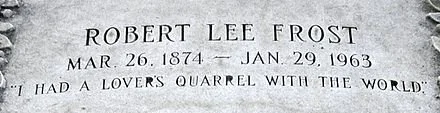
The poet resting place in the Old Bennington Cemetery, Bennington, Vt. While he is deeply associated in writing and temperament with New England, he was born in San Francisco and spent much of his winters in later life in Florida.
“People in the north-central Great Plains and the South tend to be conventional and friendly, those in the Western and Eastern seaboards lean toward being mostly relaxed and creative, while New Englanders and Mid-Atlantic residents are prone to being more temperamental and uninhibited,’’ according to a study published online by APA’s Journal of Personality and Social Psychology.
I think that there’s something to this, though I might add “irascible’’ for New Englanders. And what do they mean referring to “Eastern Seaboard”? Isn’t New England there? For the region with the most crooked folks, I vote for the South, with its sweet-talking con men.
These studies are lots of fun but of course have marginal utility. To read more, please hit this link.

'Planning with people'

Edward Logue, far right, presents some Boston redevelopment plans to Mayor John Collins and Cardinal Richard Cushing.
From Robert Whitcomb’s “Digital Diary,’’ in GoLocal24.com
Hearing of the publication of Lisabeth Cohen’s new book, Saving America’s Cities: Ed Logue and the Struggle to Renew Urban America in the Suburban Age, reminded me of cities I lived in or near over the decades, though it didn’t particularly remind me of Providence.
When I lived in Connecticut, in the early and mid ‘60s, Edward Logue (1921-2000) was already something of a national figure for his sometimes too confident efforts to push urban renewal in New Haven, where he was the city planner. He was determined to create a “slumless city’’ through assorted public-housing projects and a huge downtown mall. He did help save and/or improve some neighborhoods but overall he failed to turn around the city, home of very rich Yale University, of which he was an alumnus. Indeed, the city, run by the also “visionary” Mayor Richard Lee, continued to decline during their tenures, in part because of the destabilization caused by their tearing down of some lower-middle-class neighborhoods. Well aware of New Haven’s rising crime rate, I learned to walk fast through the city, whose train station I often used in the ‘60s.
In Boston, Ed Logue performed duties somewhat similar to what he handled in New Haven. He was an integral part of a huge effort to create what was called “The New Boston’’ in 1961-68. I worked in Boston as a reporter in 1970-71, when I saw much of his recent handiwork. The city, for so long down-at-the heels, was starting to look better – in general – though some of the new buildings were/are cold and sterile-looking.
While Mr. Logue undertook some actions that led to evisceration of some neighborhoods – some probably worthy of evisceration, such as honky-tonk Scollay Square -- he learned from the social damage he inadvertently helped create in New Haven not to willy-nilly tear down some beautiful old buildings that could be repurposed, and he consulted neighborhood leaders more than he had in New Haven. But he also was one of those pushing to create Government Center as a Scollay Square replacement whose unfortunate centerpiece is the hideous City Hall Plaza, which planners have been trying to “fix’’ ever since.
When I moved to New York, Mr. Logue was there, working on big redevelopment projects.
Mr. Logue had some big successes in reversing urban decline in some neighborhoods, along with some abject failures. He found that cities are more complicated than even the smartest and most well-meaning city planner can imagine, and that while there’s a role for top-down planning, even involving what may be unpopular decisions (if only in the short term), old cities have physical and social fabrics that are easier to tear apart than to repair. So his belated motto became “planning with people.’
What brought back some big cities, notably New York and Boston, more than planning and urban renewal, included the growing fatigue with car-based and “boring” suburbia, as well as demographic change, which brought lower crime rates and a growing percentage of single people. Then there were the multiplier effects of increasingly thriving industries in certain cities, such as technology in Greater Boston and finance in New York. Some cities became “hot’’ again.
As for Ed Logue, he spent the last part of his life happily living in rural, or maybe call it exurban, Martha’s Vineyard, amongst other refugees from urban angst.