
Vox clamantis in deserto
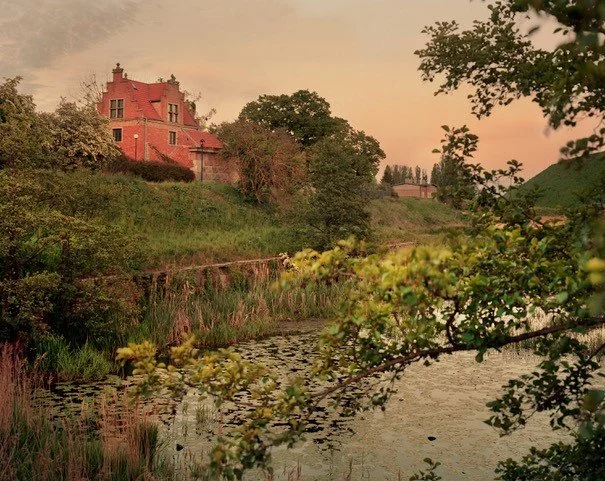
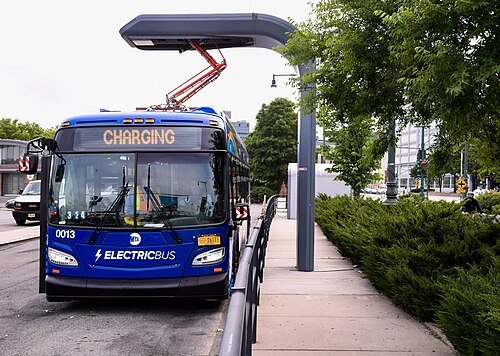
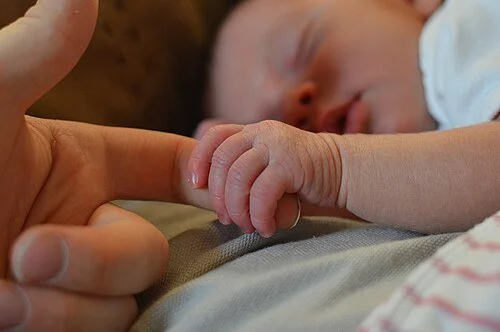
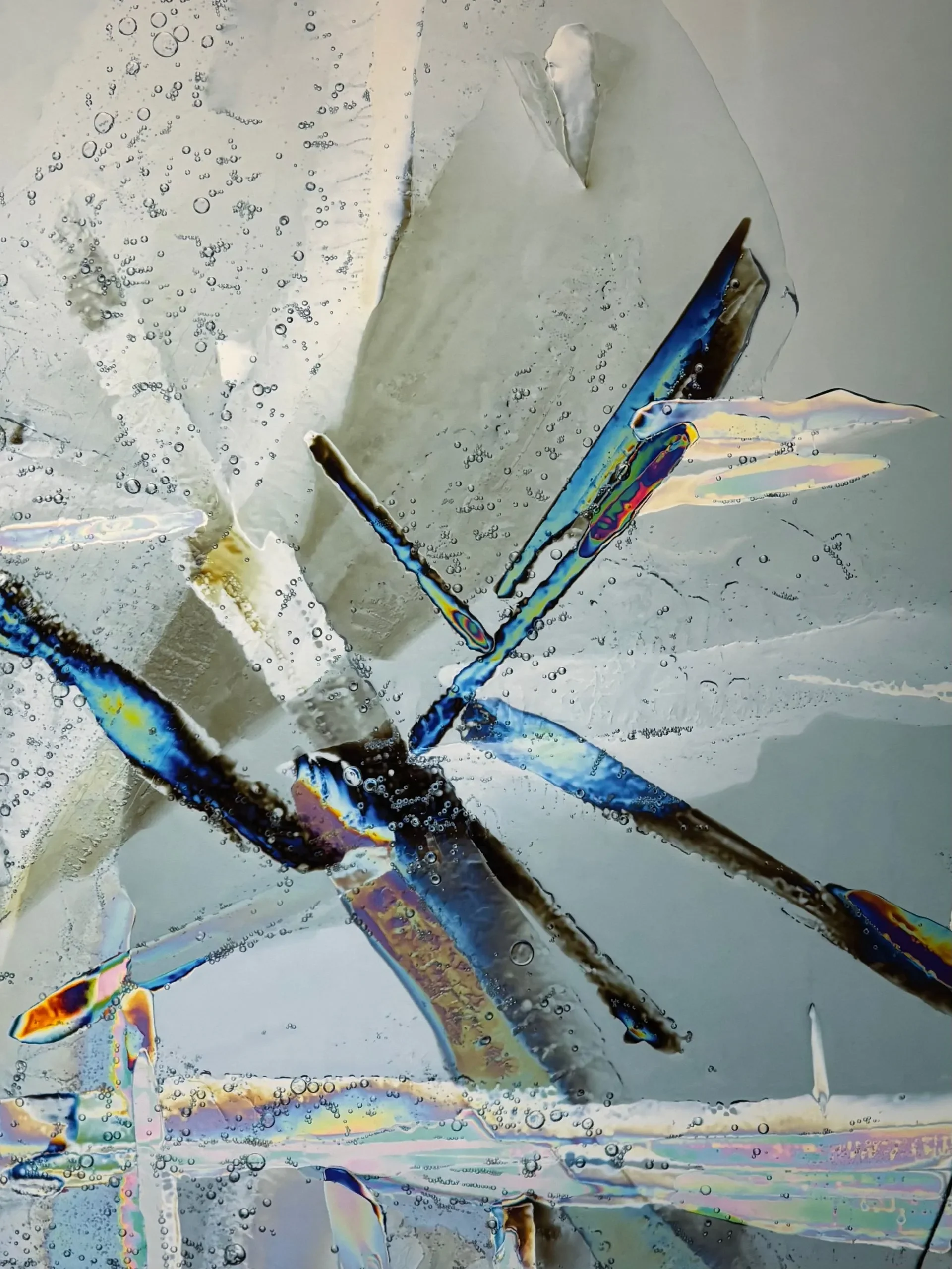

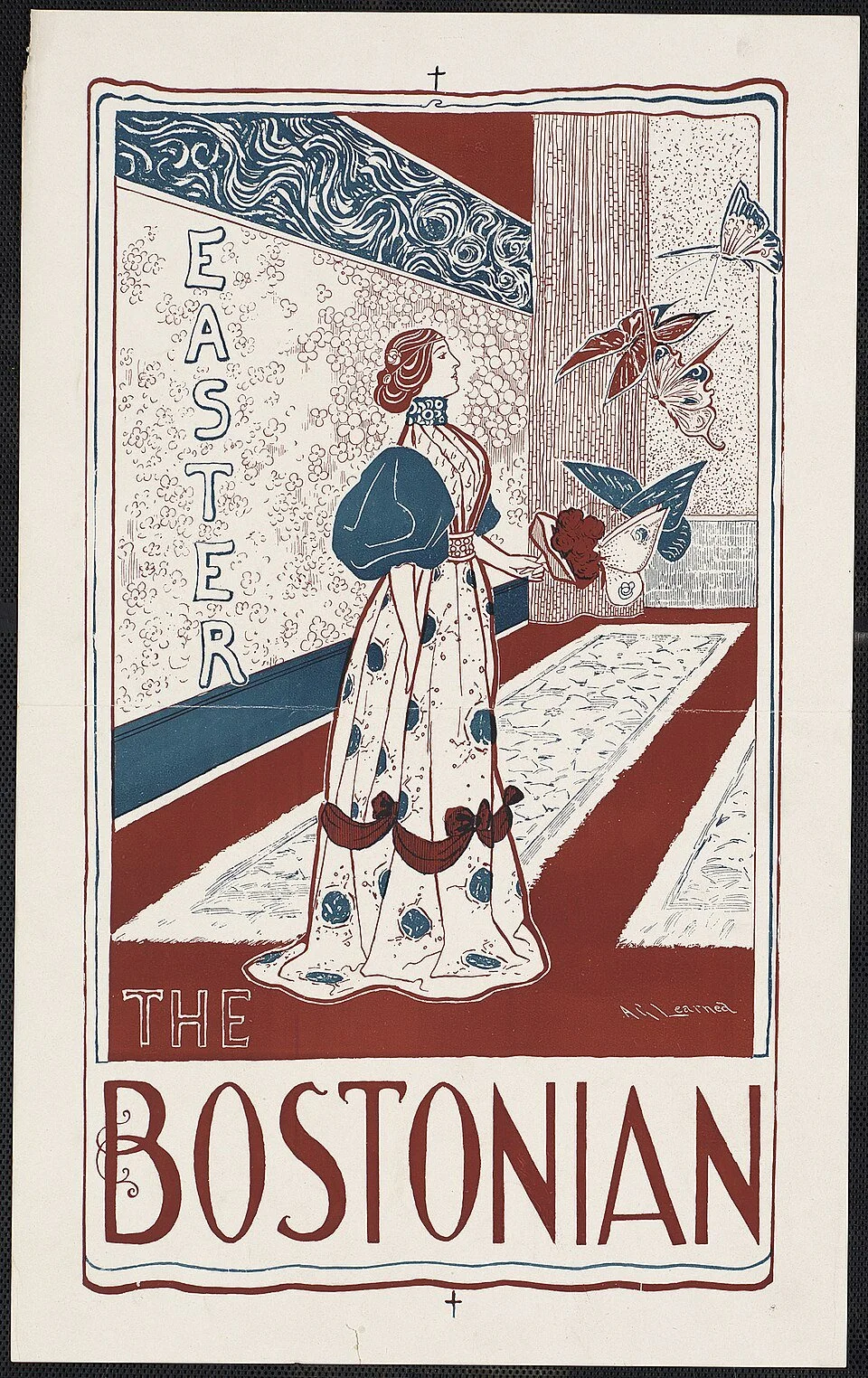
And ready for winter

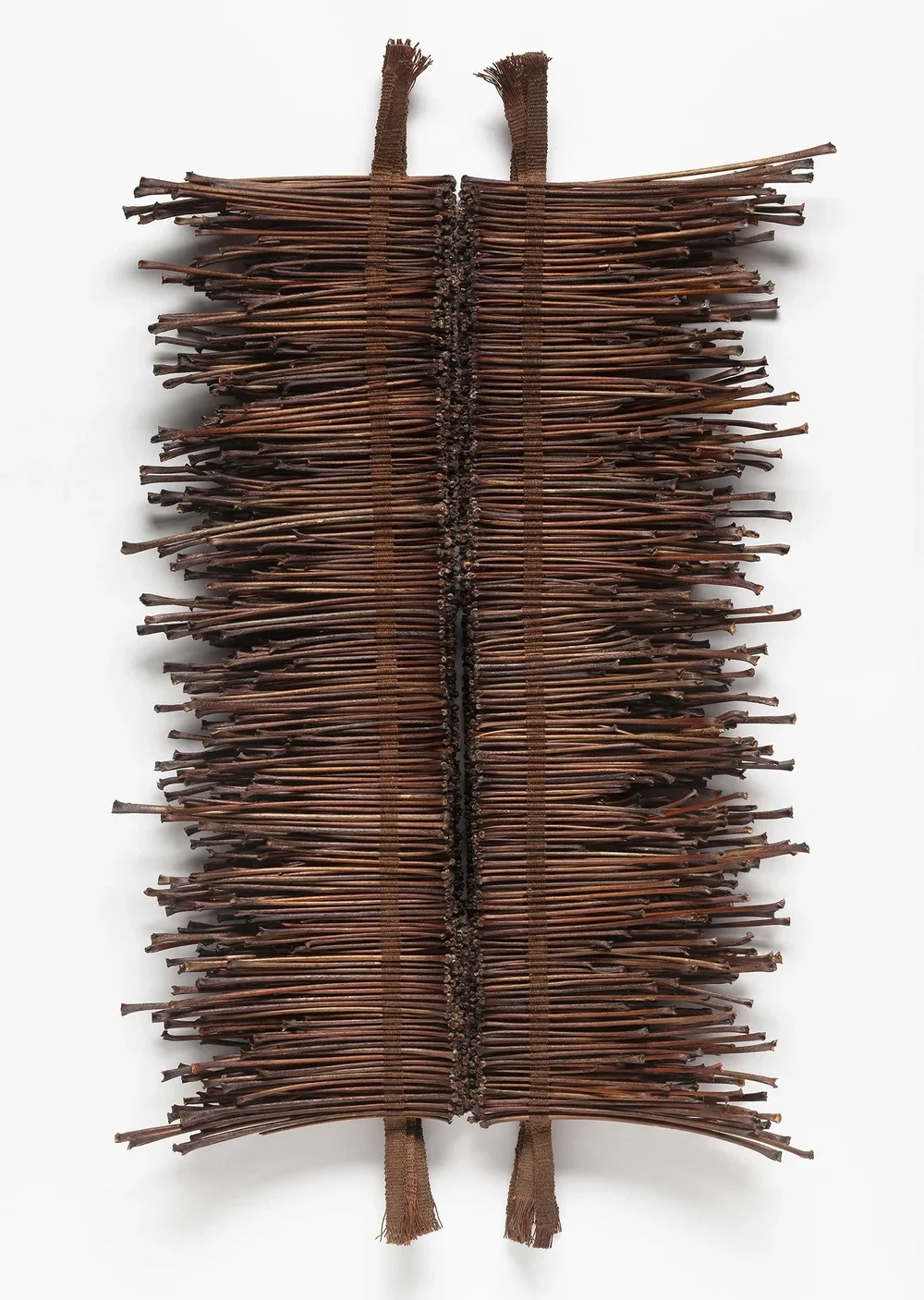
“Empty Nesters” (branch and gold leaf), by Karen Loomis, at Hampden Gallery, Amherst, Mass., through Dec. 6.
Paul Armentano: Beware unregulated CBD

An example of beverages said to contain CBD in a Los Angeles grocery store
Via OtherWords.org
One in seven Americans say they use CBD products, according to Gallup.
The rising popularity of these products — which range from oils and gummies to topical salves and most everything in between — is staggering, especially when one considers that much of the public had never even heard of CBD two or three years ago.
CBD stands for cannabidiol, one of over 100 distinct compounds found in the marijuana plant. Unlike THC, it is not significantly mood-altering. Instead, many consumers believe the compound helps treat pain, anxiousness, and other ailments.
But Americans’ exuberance for CBD could well be short-lived. That’s because many products currently marketed under the CBD banner are of low or variable quality.
Back in 2017, the Journal of the American Medical Association reported that only 31 percent of commercially available CBD products contained percentages of cannabidiol that accurately reflected the products’ labeling. Since then, little has changed.
An October 2019 analysis of 30 leading CBD products by the watchdog group LegitScript.com reported that two-thirds possessed significant deviations in CBD content from what was advertised. Typically, these products contained far lower percentages of CBD than the manufacturer promised — a finding that is woefully consistent with prior analyses.
Investigators also reported that some of the products evaluated in the LegitScript analysis tested positive for either solvent residue or elevated levels of heavy metals — findings that are also similar to those of prior reports.
Other analyses have identified even more problematic issues. Some CBD products, for instance, have tested positive for the presence of THC, the primary psychoactive constituent in cannabis, despite being advertised as “THC-free” — an oversight that could cost customers their jobs if they fail a drug test they expected to pass.
Most concerning, some CBD products have tested positive for added psychotropic adulterants — such as dextromethorphan or synthetic cannabinoid agonists. Exposure to these latter agents, typically found in illicit so-called “synthetic marijuana” products like Spice, can lead to serious health consequences.
All this is rapidly creating a “buyer beware” environment for consumers — and potentially placing them at risk.
This situation persists because the federal government — and the Food and Drug Administration in particular — doesn’t regulate either the manufacturing or testing of these products. Despite the presumption of most Americans, the commercial CBD market is entirely unregulated by the FDA.
This is because, until recently, federal law defined all cannabis-derived products as illicit. Now, the FDA and other agencies are playing catch up, with the federal regulators estimating it could take years before the FDA finalizes rules governing the commercial CBD market.
This intransigence is no longer acceptable.
Currently, the heavy burden of overseeing the CBD marketplace falls solely on state regulators in jurisdictions that have legalized cannabis use. But these regulations are not consistent from state to state, and are often far from comprehensive.
Further, state-specific regulations typically only govern CBD products that are sold in licensed dispensaries or retail outlets that exclusively sell cannabis products. They may not cover products sold online or at gas stations, which are subject to virtually no oversight.
Congress facilitated the growth of the commercial CBD market by passing legislation in 2018 that, for the first time, recognizes the production and distribution of certain hemp-derived CBD products. But without federal rules, standards, and oversight, this new market is a wild west — rife with questionable players hawking low-quality or even fraudulent products upon a largely unsuspecting public.
The tens of millions of Americans soliciting this market deserve better. It’s time for federal officials to set appropriate standards to govern this industry — so consumers can be assured, once and for all, they are getting what they pay for
Paul Armentano is the deputy director of NORML, the National Organization for the Reform of Marijuana Laws. He’s the co-author of Marijuana Is Safer: So Why Are We Driving People to Drink? and author of The Citizen’s Guide to State-By-State Marijuana Laws.
Creative CommonsExcept where otherwise noted, content on this site is licensed under a Creative Commons Attribution-No Derivative 3.0 License.
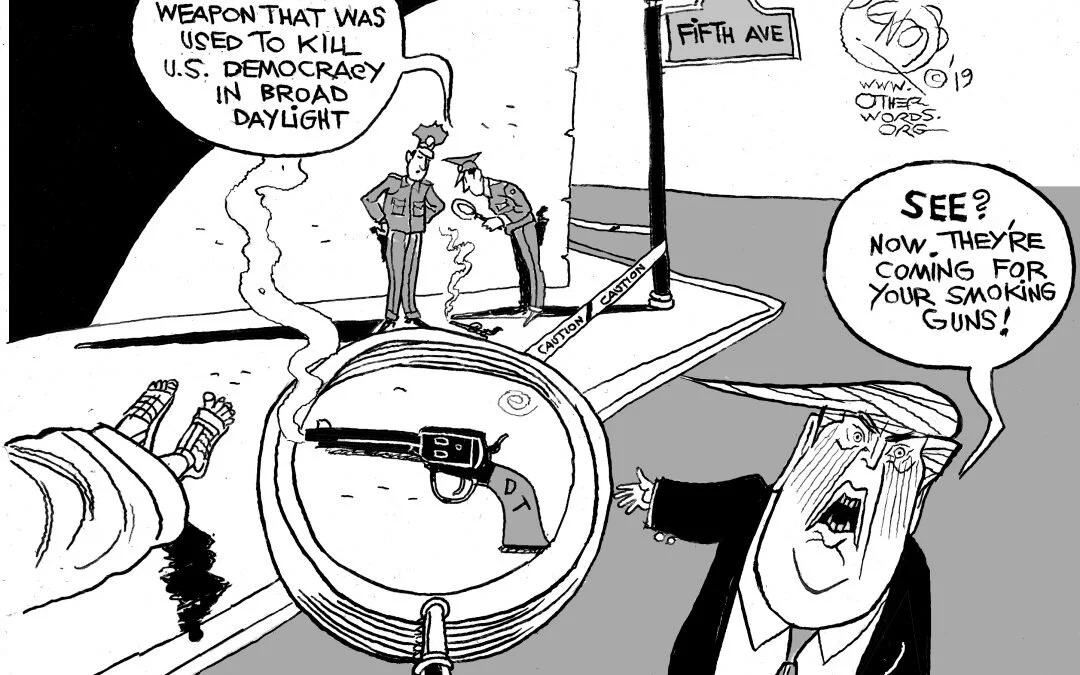
Now leave
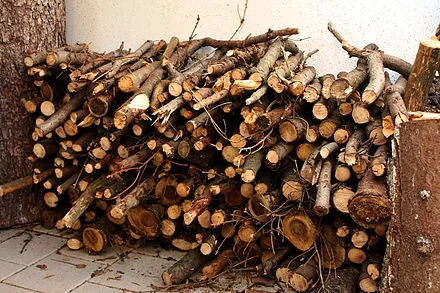
“...you don't actually have to go to Maine. And this is finally great news for me again, because I don't want to see you there. The spirit of Maine has infected me. I gave you your goddamned wood, now get the fuck out of here.”
― John Hodgman, from Vacationland: True Stories from Painful Beaches
What does it mean?

Historical coat of arms (1876)
“these days
sometimes you sleep
in a purple T-shirt
that says Massachusetts
which means something
in an older language
I can never remember.’’
— From “Poem for Massachusetts, by Matthew Zapruder
“Massachusetts’’ is an Algonquin word that roughly translates to “large hill place” or “at the great hill.”
The word refers to Great Blue Hill, in Milton, an ancient volcano last active over 400 million years ago. It’s now part of a park that includes a famous and historic weather observatory and a ski area.

Great Blue Hill

The weather observatory atop Great Blue Hill
— Photo jameslwoodward
— P{j
—
Organically screened

“Gathering #1” ( horse chestnut hulls & waxed linen thread), by Ann Wessmann, in her show at Kingston Gallery, Boston, through Dec. 1

Lauren Carson/Terri Cortvriend: R.I. must face the challenge of coastal erosion

From ecoRI News (ecori.org)
You may have heard about the Charlestown, R.I., man who is suing the town of South Kingstown and one of its police officers over his arrest in June on a trespassing charge while he was collecting seaweed along a beach.
The charge was dismissed, but the act itself was, in part, intended to call attention to unresolved questions about shoreline access here in Rhode Island, a right enshrined in our state constitution. A 1982 Supreme Court ruling attempted to clarify the issue by saying the public’s right ends at the mean high-tide line, but since that line is a calculation of averages over an 18.6-year cycle, there’s no way for a beachgoer to identify it.
Further complicating matters is that the line will continually move inland as sea level rises, most of the time gradually, but at times heaving large chunks off dunes and other coastal features. With sea rise, property owners and members of the public whose shoreline access is constitutionally guaranteed will continue losing ground.
After Hurricane Sandy destroyed properties along the coasts of New York and New Jersey, there was an uptick in discussion about whether some particularly at-risk coastal properties should even be rebuilt. Many were, in fact, abandoned there, because increasingly violent weather events and rising seas have rendered them too much of a risk for repeated loss.
As much as we value the right of landowners, there may well be properties in our state, too, that are similarly unjustifiable risks for flooding, destruction, and even loss of life.
As the Ocean State, we should be much more proactive when it comes to resiliency along our shores. We should be exploring the actual risk to each coastal community and each property using current technology that models expected risks. We must continue to train our municipal planning and zoning boards on the risks of sea rise so they have the tools they need to make sound decisions that don’t jeopardize property investments and keep the shoreline open to the public under their constitutional rights.
There’s little doubt that, in general, homeowners are less than ideally prepared for flood risks, particularly the increasing risks associated with rising seas in the coming decades. Only about 15,000 Rhode Island properties in the flood zones carry flood insurance, and only those with mortgages are actually required to have it. Those with enough cash to buy a beach home without a mortgage aren’t. While they may have the means to risk property destruction in the event of a major disaster, are they putting public assets and people’s lives at risk?
The risk isn’t limited to private property. Doubtlessly, many state and municipal assets are also in areas that are already prone to flooding, or whose risk is increasing. Stewards of public resources have a responsibility to understand and defend those assets from potential damage, and must face the reality that the most prudent step might be to move them elsewhere.
Our state needs a more robust action plan for protecting public and private properties from the ever-increasing risk of coastal flooding, and that plan must include an accounting of where the high-tide line is, and how it’s projected to move.
The creation of this plan should include an audit of properties to determine what the real risks are, and it should also bring in real-estate professionals, insurers, and lenders, because they help determine the price of ownership of such properties, and should be sure that those prices accurately reflect the real cost of ownership, including potential destruction.
The Ocean State must face the fact that the more of our state is becoming part of the ocean with each passing year. Leaders and property owners must take much more concrete steps to predict the encroachment and protect our assets from it.
Rhode Island state Rep. Lauren Carson is a Democrat who represents District 75 in Newport. Rep. Terri Cortvriend is a Democrat who represents District 72 in Portsmouth and Middletown.
New England still makes (expensive) things

Bright red locates Framingham
From The New England Council (newenglandcouncil.com)
“Sanofi opened the doors of its 100,000-square-foot digital bio-manufacturing facility in Framingham, Mass., on Oct. 15. The French drug-manufacturing company is one of Massachusetts’s largest life-science employers.
Sanofi’s new facility is among the first digitally enabled continuous manufacturing sites, making the building itself about a fifth the size of traditional facilities {in the sector}. The new building features state-of-the-art technology that connects the production process with research and development to better improve the commercialization of important medicines. The acceleration of their production capabilities is a key pillar in Sanofi’s ambition to establish “the gold standard in the bio-pharmaceutical industry.”
“‘We have been investing for some years to prepare for Sanofi’s future. Our Framingham facility leads the way in delivering the next generation of biologics manufacturing, leveraging intensified, continuous processing in a fully integrated digitally powered facility,’ said Philippe Luscan, executive vice president for global industrial affairs at Sanofi. ‘This opening demonstrates we are at the leading edge of innovation and manufacturing excellence, helping us to shape the future of both our company and the industry.”’
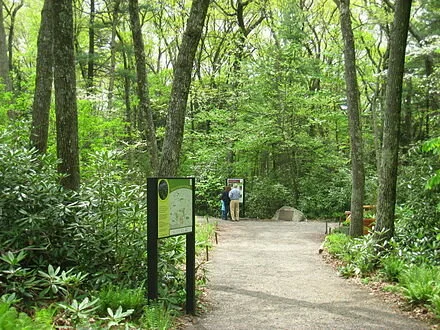
Garden in the Woods, overseen by the New England Wild Flower Society, features the largest landscaped collection of native wildflowers in New England. It is in Framingham’s Nobscot section, off Hemenway Road.
Religion and geopolitics

The Battle of White Mountain (1620) in Bohemia was one of the decisive battles of the Thirty Years' War that ultimately led to the forced conversion of the Bohemian population back to Roman Catholicism from Protestantism.
To members and friends of The Providence Committee on Foreign Relations (thepcfr.org; pcfremail@gmail.com)
On Thursday, Dec. 5, The Providence Committee on Foreign Relations (thepcfr.org; pcfremail@gmail.com) will welcome as its dinner speaker Dr. Elizabeth H. Prodromou, who directs the Initiative on Religion, Law, and Diplomacy, and is visiting associate professor of conflict resolution, at The Fletcher School of Law and Diplomacy at Tufts University. She titles her talk "God, Soft Power, and Geopolitics: Religion as a Tool for Conflict Prevention/Generation".
Dr. Prodromou is also a non-resident senior fellow and co-chair of the Working Group on Christians and Religious Pluralism, at the Center for Religious Freedom at the Hudson Institute, and is also non-resident fellow at The Hedayah International Center of Excellence for Countering Violent Extremism, based in Abu Dhabi.
Dr. Prodromou is former vice chair and commissioner on the U.S. Commission on International Religious Freedom and was a member of the U.S. Secretary of State’s Religion & Foreign Policy Working Group. Her research focuses on geopolitics and religion, with particular focus on the intersection of religion, democracy, and security in the Middle East and Southeastern Europe. Her current research project focus on Orthodox Christianity and geopolitics, as well as on religion and migration in Greece.
Schedule:
6:00 - 6:30 PM: Cocktails
6:30 - 7:30: Dinner (salad, entree, dessert/coffee)
7:30 - 8:30 (or less): Speaker presentation
8:30 - 9:00: Q&A with speaker.
For information on the PCFR, including on how to join, please see our Web site – thepcfr.org – or email pcfremail@gmail.com or call 401-523-3957
'Go play'
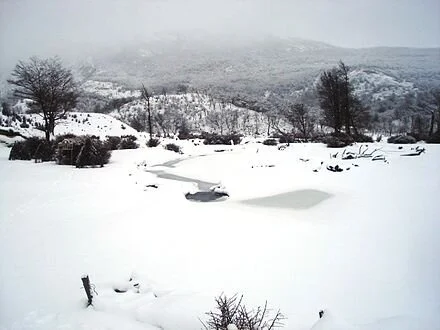
“Outside is the failure to stay in touch
or, really, to ever be in touch. I didn't
ever know them (my neighbors) well.
In winter you are handed a white tray
with a few tiny rock walls, short lines drawn with a ruler,
an indent for where a cellar hole could be
a hyperlink to once go once more to the lake
and told to go at it, go play.’’
From “Deconstructing New England,’’ by Alexandria Peary, a New Hampshire-based poet who grew up in Maine
Use your own materials
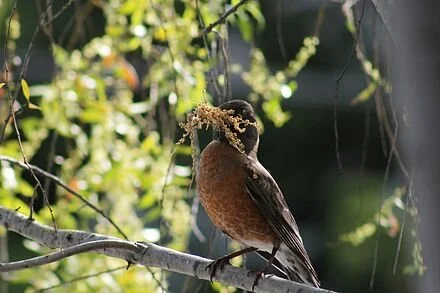
Robin with nest-marking material
“Eschew the skylark and the nightingale, birds that Audubon never found. A national literature ought to be built, as the robin builds its nest, out of the twigs and straws of one's native meadows.”
― Van Wyck Brooks, from The Flowering of New England
Memories of landscapes

“West Hill,’’ by Phil Young, in his joint show with Kimberly Stoney at Concord (Mass.) Center for the Visual Arts through Nov. 24. The gallery says:
“West Hill,’’ by Phil Young, in his joint show with Kimberly Stoney, at Concord (Mass.) Center for the Arts through Nov. 24. The gallery says Mr. Young uses “landscapes as inspiration for his paintings, exploring the various places he's been through color and form.’’ His bio says "he is a colorist and his work is more impressionistic and abstract than representational. His works are made from equal parts memory and imagination, creating a new world out of the familiar one.’’

The Old Manse, in Concord. The house was home to Ralph Waldo Emerson and later Nathaniel Hawthorne. Concord was a center of American literary and, more broadly, intellectual life in the 19th Century.
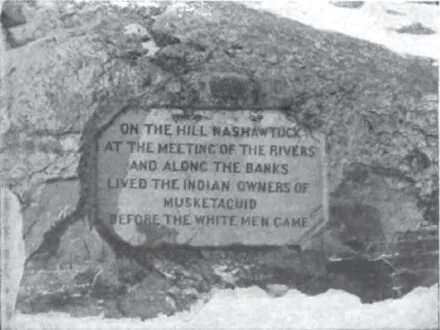
Marker on Egg Rock, in Concord
Who is stoned on the road?

From Robert Whitcomb’s “Digital Diary,’’ in GoLocal24.com
I’ve been worried a long time about the increasing number of people driving around here stoned on marijuana in varying degrees, with outlets selling “medical marijuana,’’ as well as illegal sales of “recreational” pot, in Rhode Island, and with recreational, as well as medical, marijuana legal in Massachusetts. (The Feds have some different ideas about all this.) A big problem is that unlike with alcohol, there seems to be no precise metric to measure when somebody might be impaired by pot.
The issue was front and center in a Nov. 6 Providence Journal story, “Judge ponders: Can impairment by pot be measured,” involving Marshall Howard, charged with driving under the influence, death resulting, in the 2017 death of David Bustin. Mr. Howard’s car hit Mr. Bustin after he had stepped into the street. A blood test showed that Mr. Howard had THC, the mind-altering ingredient in marijuana, in his system at the time. Mr. Howard also had fentanyl and heroin in his car; Mr. Bustin, for his part, was apparently drunk.\
Inebriated America? Are that many people in need of psychic or physical relief?
The story, by Katie Mulvaney, quoted the Superior Court judge in the case, Daniel Procaccini, as saying:
“We don’t have any way to correlate any amount of a substance {such as THC} in a person’s blood to impairment. With alcohol we do.’’ This is a national problem, which we’d better address as throngs hit the road after toking up.
Thank God cars themselves are much safer now than a few decades ago since drivers seem to be ever more distracted.
To read the Massachusetts angle on this, please hit this link.
Chris Powell: Latest Conn. immigration case reveals subversive goal
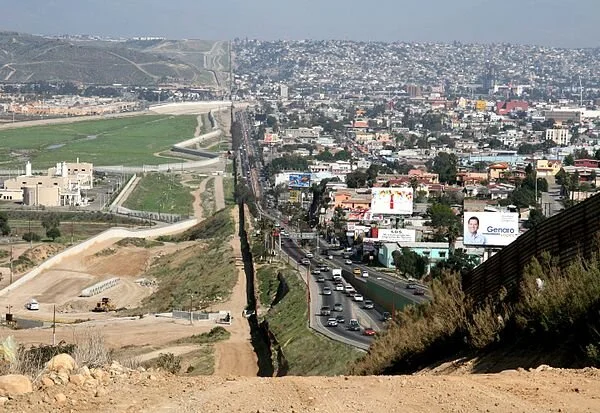
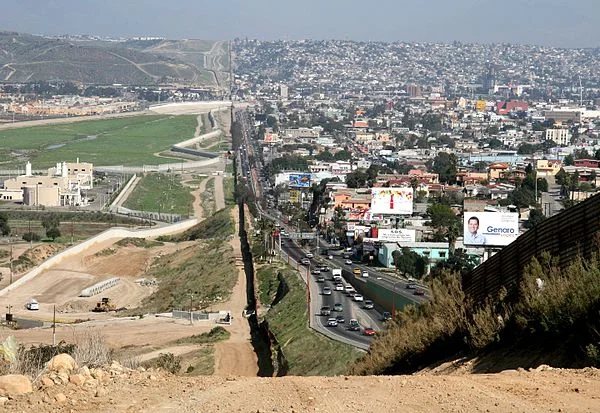
With the border wall separating them, to the left lies San Diego, Calif., and on the right Tijuana, Mexico.
Nobody denies that Domar Shearer, a 23-year-old man from Jamaica, is in the United States illegally, having overstayed a visa three years ago. Nobody denies that he was recently arrested in a domestic disturbance with his wife in Ansonia. Nor does anyone deny that he has been working illegally at a restaurant in Bridgeport.
But Shearer is the latest cause celebre of Connecticut's immigration law nullification movement, enjoying support not just from a New Haven-based organization of immigration law obstructors, Unidad Latina en Accion, but also the state Judicial Department, the state public defender's office, a U.S. senator, and newspapers.
Shearer became a cause the other day when federal immigration agents went looking for him at the courthouse in Derby as he arrived to resolve his criminal charges. The public defender's office let him hide there for hours until court closed and the agents left. Then the nullifiers escorted him to a "safe house" in New Haven, home to thousands of other illegal immigrants, many holding identification cards issued by the city to facilitate their lawbreaking.
The nullifiers portray as an injustice the pursuit of illegal immigrants at courthouses. They say it discourages illegals from seeking justice. But then the people being pursued aren't entitled to be in the country in the first place and the immigration agents would not pursue them at courthouses if those weren't good places to find them.
Of course the nullifiers' idea of justice has no room for federal immigration law. Their premise, which has been largely incorporated into Connecticut law, is that anyone who is in the country illegally and makes it to Connecticut should be exempt from immigration law enforcement unless he is a terrorist.
That is, the objective of the nullifiers is open borders, the end of the United States.
Thanks to the Shearer case, at least this objective must be admitted now. One of the newspapers celebrating Shearer's escape to the underground, the New Haven Independent, even published a photo of him with his rescuers holding revealing signs. One reads, "Erase all borders." Shearer himself holds a sign bearing, in Spanish, an obscenity about immigration agents.
Connecticut U.S. Sen. Richard Blumenthal, who issued a statement supporting Shearer against the agents, should contemplate those signs. Legalizing people who long have lived in the country illegally but productively and without committing offenses is a worthy objective of immigration law reform along with securing the borders. Both liberal and conservative presidents, including Ronald Reagan, have supported it. So is legalizing people who were brought into the country illegally as children and know no other home. But in assisting people who want to erase the country's borders and degrade immigration agents, the senator has forgotten his oath of office.
xxx
ABORTION COMES FIRST: The Connecticut Catholic Conference's annual report on abortion in the state, published this month, shows that Connecticut continues to nullify the law in another way.
That is, the report says Connecticut abortion clinics are attracting minors from states that require parental notification for abortions -- this state has no such law -- and that abortion clinics here increasingly violate state law's requirement to report the ages of abortion recipients.
That is, the report is a reminder that Connecticut law considers abortion more compelling than protecting children against rape.
Chris Powell is a columnist for the Journal Inquirer in Manchester, Conn.
Karen Gross: As school shootings continue, college students must ask if they're next

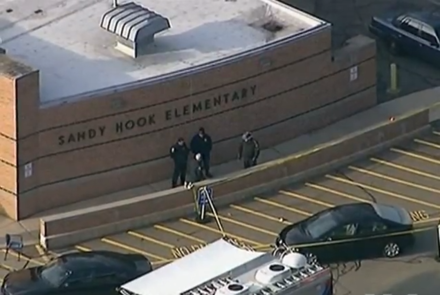
Scene at Sandy Hook Elementary School, in Newtown, Conn., on Dec. 14, 2012, when heavily armed 20-year-old Adam Lanza shot to death 26 people, including 20 children between six and seven years old, and six adult staff members. Before driving to the school, he shot to death his mother at their Newtown home. As first responders arrived at the school, Lanza committed suicide by shooting himself in the head.
From The New England Journal of Higher Education, a service of The New England Board of Higher Education (nebhe.org)
In a matter of seconds, a student at a high school in Santa Clarita, Calif., injured and killed a handful of his fellow students and then shot himself. He died shortly thereafter. We read about such incidents and lament their happening. We see television footage and peruse articles and social media postings. We mourn for the students injured and killed and worry about their families and friends.
And we wonder why this shooting happened. And we wonder why so many shootings happen.
Despite the usual outpouring of support for survivors and displays of empathy, those of us in higher education often don’t reflect on how all these K-12 shootings can and likely will affect us directly. We don’t consider how high school shootings will impact the college students we now have and the students we will have in the future—especially if we are geographically separated. It is as if we see the K-12 shootings as something that happens “over there” with “younger” students; meanwhile, we worry about a myriad of issues on our own campuses including potential shootings on campus, but also drug overdoses and sexual harassment.
The story that struck a chord
One particular story in the Los Angeles Times that got my attention. It was about how the shooting at the high school in Santa Clarita affected the students at a nearby elementary school. These younger students were preparing for a Thanksgiving pageant. The image of youngsters in their Pilgrim costumes crying upon learning of the shooting and being held in place at their school is fraught with irony: a supposed celebration of freedom and togetherness (even if sanitized by a retelling of our history with Native Americans) is disturbed by violence. No “Thanks” in this planned Thanksgiving pageant. While the emotions differed among the younger and somewhat older students at the elementary school, they were affected, as were their parents, according to the article and other reports.
Thinking about that story made me realize that many in higher education (with some exceptions of course) do not realize that trauma travels with a student forward in time. And it is as if trauma were in a suitcase and with the passage of time, that suitcase grows. As and when new traumas occur or there are new triggering events, the trauma suitcase expands and the holder of the suitcase experiences their autonomic nervous system on high alert.
As one author quoted in a recent article on student mental health stated, trauma sits in an invisible backpack that a student carries. What is in that suitcase/backpack affects not just the student him or herself; it affects those around the student, including those who teach them. That’s where secondary and vicarious trauma occur.
In sum, the reach of shootings is wide and deep and continuous.
Trauma and college students
The students who have experienced shootings will, one hopes, someday enter postsecondary education. But the institutions that will be serving them need to know that the trauma of the applicants, and later of enrolled students, does not get parked at the proverbial gate to higher education. And for those entering a residential college, with the transition into a dorm, the challenges are even greater: new roommate, new living situation, new location. For all new college students, there is a sense of disquiet when the new collegiate experience starts, and they are the “newbies,” even if they are enthusiastic, engaged and willing to learn.
We often use orientations at the start of college to inform students on a wide range of matters, including sexual policies, drug use, alcohol and mental health. We provide IDs, and paperwork is completed. We give out swipe cards. There are financial aid or bursar meetings. Residential assistants hold get-togethers. There are often placement tests.
And, sadly, we think students are absorbing all this, even when tempered with “get-to-know-you games.”
What is happening for many students is that their autonomic nervous systems are on high alert. They cannot really hear, absorb and process what they are being told. They are trying to find their way to the bathroom and are worried about their interpersonal and academic success. They may think they flunked the placement test. They didn’t really understand the financial aid repayment options. They wonder if there were people there who would like them. They may be lonely or feel separation anxiety.
While student life personnel may deal effectively with some of these issues, faculty tend to just launch right into their subjects as if being in college is anticipated, expected and everyone is ready to roll ahead in the disciplines of the courses they select. Then students receive a syllabus, which is often long and the name itself is off-putting for some. We assign massive reading and ask questions to which students don’t know the answers or are reluctant to answer.
And that’s just the first week.
Transitions are not our strong suit
Here’s my point: Going to college is a transition and if you have ever been traumatized in your past, that event was your first transition. You transitioned from not being traumatized to being traumatized. And, once traumatized, other transitions kick off negative signals since the first transition was bad, and tell the autonomic nervous system to be on high alert.
For students who have been traumatized in the past, who have experienced attachment disorders or other trauma symptomology, there is unease. Whether or not students recognize what is happening to them, something is happening inside of them. And those adults within the college (not the new students who are adults of which there are a growing number) are often unaware of or unable to recognize trauma symptomology. They attribute what they see to a myriad of other factors, including that the quality of students is declining with the need to have better high school preparation and the decline of values in a generation. Perhaps the students are too “snowflaky” and their parents too involved.
One shooting, many consequences for students
The students in Santa Clarita have been traumatized by the shooting; the impact of the shooting on each student will differ depending on their background in terms of family stability and family dysfunction, prior trauma from other events including death, illness, accidents and injuries. The degree of closeness to the deceased and injured and the shooter are all issues that will affect these students. How the trauma and its symptoms are handled by their school and within their community are issues too, particularly when the school reopens and the details of the events are disclosed.
And anniversaries will occur and recur. Those are inevitabilities.
I worry a lot about those students who will head off to college soon, whether from Santa Clarita or elsewhere. Will this tragedy change where they apply? Will it change how they feel about leaving home? And once they choose a school, how easy will it be to adjust? Do they need a year off to work and reflect and process? Will they feel safe in a new place and space? Will they feel cared about by some adult? Will they have an outlet in which to share how the memories of the shooting keep flooding back at different times of day and night? Will they want a seat at orientation near a door? Will they want a dorm room on a high floor or a low floor?
Then, consider these possible other reactions of the survivors. Will they not want to attend classes in the morning (around the time of the shooting)? Where will they sit in the classroom? Will they be looking for exits? How will they respond to dorm alarms and other loud sounds and future drills? Will these survivors be able to manage stress? What if a student on their new campus is injured or killed or becomes ill? When the shooting occurred, what were they doing actually and can they do whatever that was again? Will a quadrangle ever feel totally safe?
As to the elementary school students, they will proceed through the educational pipeline and hopefully, many will land in colleges at some point in the next decade or so. They will not have forgotten the shooting or if they have, they have only forgotten it in their conscious memory. What has happened to them in the decade between the shooting and entering college? Any more trauma? Yes, of course. There will be other school shootings and deaths and injuries and car accidents.
Our trauma suitcases travel with us
Here’s the point: The school shooting will eventually land on college campuses in the invisible backpacks of students. Regrettably, most colleges are not trauma-informed nor trauma-responsive. And folks will be shocked when these students struggle or barely stay in school or drop out or stop out. Their learning, their memories, their engagement can all be impacted.
It’s time to see the trauma around us and how it affects education. And we need educators who can and will be ready, willing and able to be trauma-responsive at the university level. Are you confident that will happen? I’m not. That’s why this shooting makes the need to address trauma across the educational pipeline not a luxury, but a necessity.
The time to start is now.
Karen Gross is former president of Southern Vermont College and senior policy adviser to the U.S. Department of Education. She specializes in student success and trauma across the educational landscape. Her new book, Educating for Trauma, will be released in June 2020 by Columbia Teachers College Press.
The life of Frank Lloyd Wright: Seeking light and harmony in the midst of personal disaster
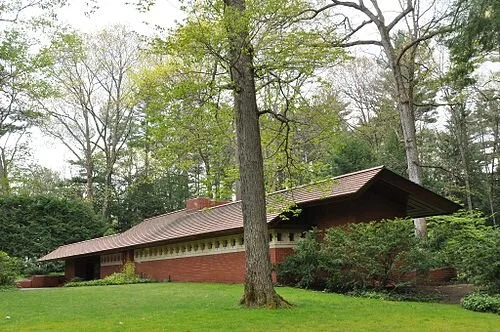
The Zimmerman House, in Manchester, N.H., one of only five houses in New England designed by Frank Lloyd Wright and the only one open to the public.
From Robert Whitcomb’s “Digital Diary,’’ in GoLocal24.com
Frank Lloyd Wright was arguably the greatest U.S. architect so far, designing natural-light-filled, “organic’’ buildings that fit in elegantly with their surroundings. He was also often a superb, if untrustworthy, writer. But his life – especially the first part of his adulthood, was rife with disasters, most horrifically murders and fires, as well as extra-marital scandals and financial bad behavior and distress. The central horror came on Aug. 15, 1914, when a crazed servant set Wright’s already famous Wisconsin residence, Taliesen, ablaze and murdered Wright’s mistress, Mamah Cheney, her two young children and four others with an ax.
Paul Hendrickson, in his new book Plagued by Fire: Dreams and Furies of Frank Lloyd Wright (1867-1959), a thickly researched, passionate and often deeply speculative -- and sometimes overly ruminative biography – brings this huge figure to life in all his genius, arrogance, reckless ambition, contradictions and doubts. Along the way, he also weaves in a great deal of American aesthetic, sociological (including racial) and even economic history. But then Wright got around as he designed more than 1,000 structures, of which 532 were completed. And his family and friends comprised a Shakespearean cast of characters.
Mr. Hendrickson summed up Wright’s gigantic life thus:
“If harmony and order were his great artistic ideals. Wright could find little of them in his own debt-plagued, scandal-wracked, death-haunted history.” We are fortunate that many Frank Lloyd Wright buildings are still around to marvel at.
William Morgan: The utilitarian and the romantic in the Granite State
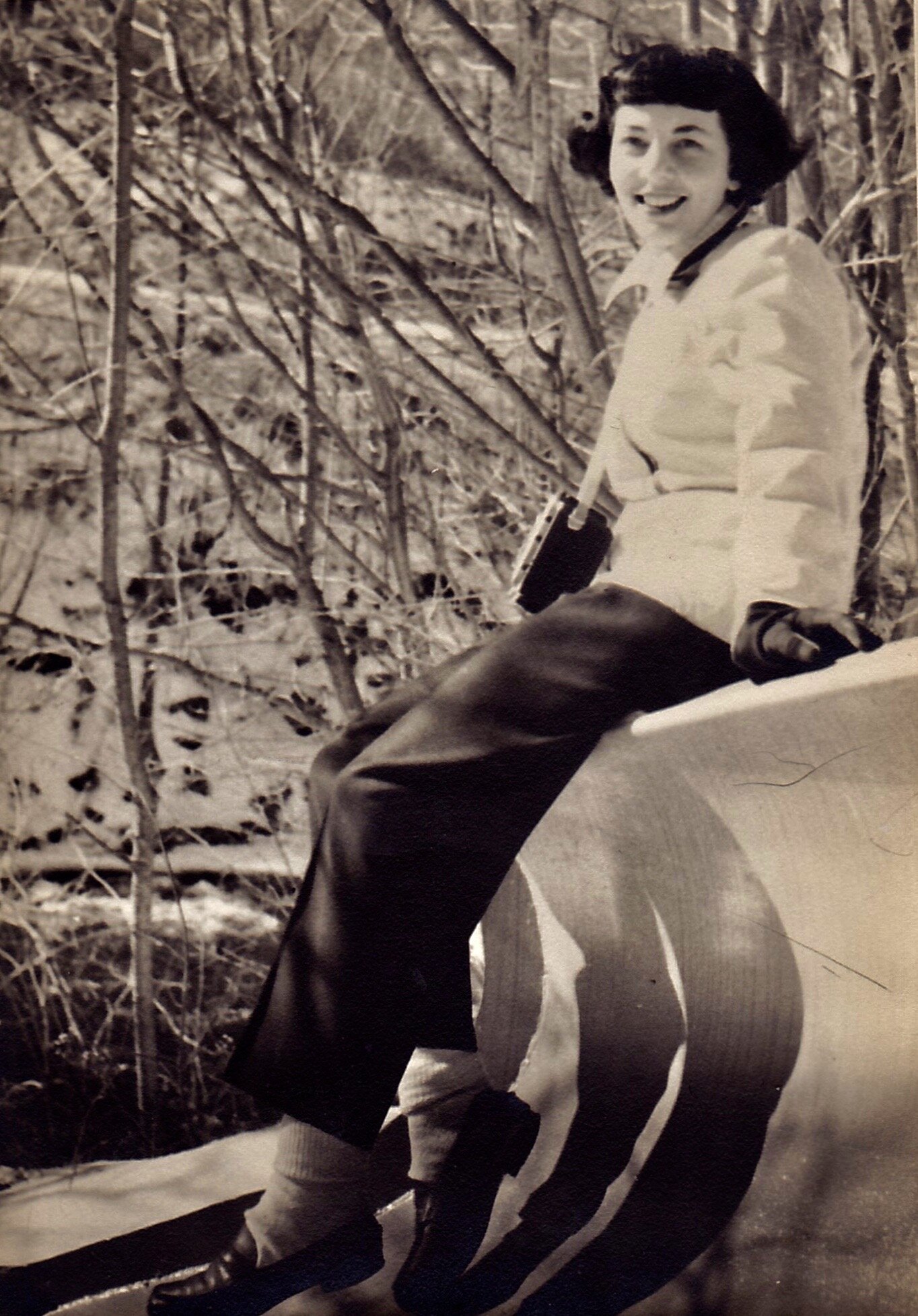
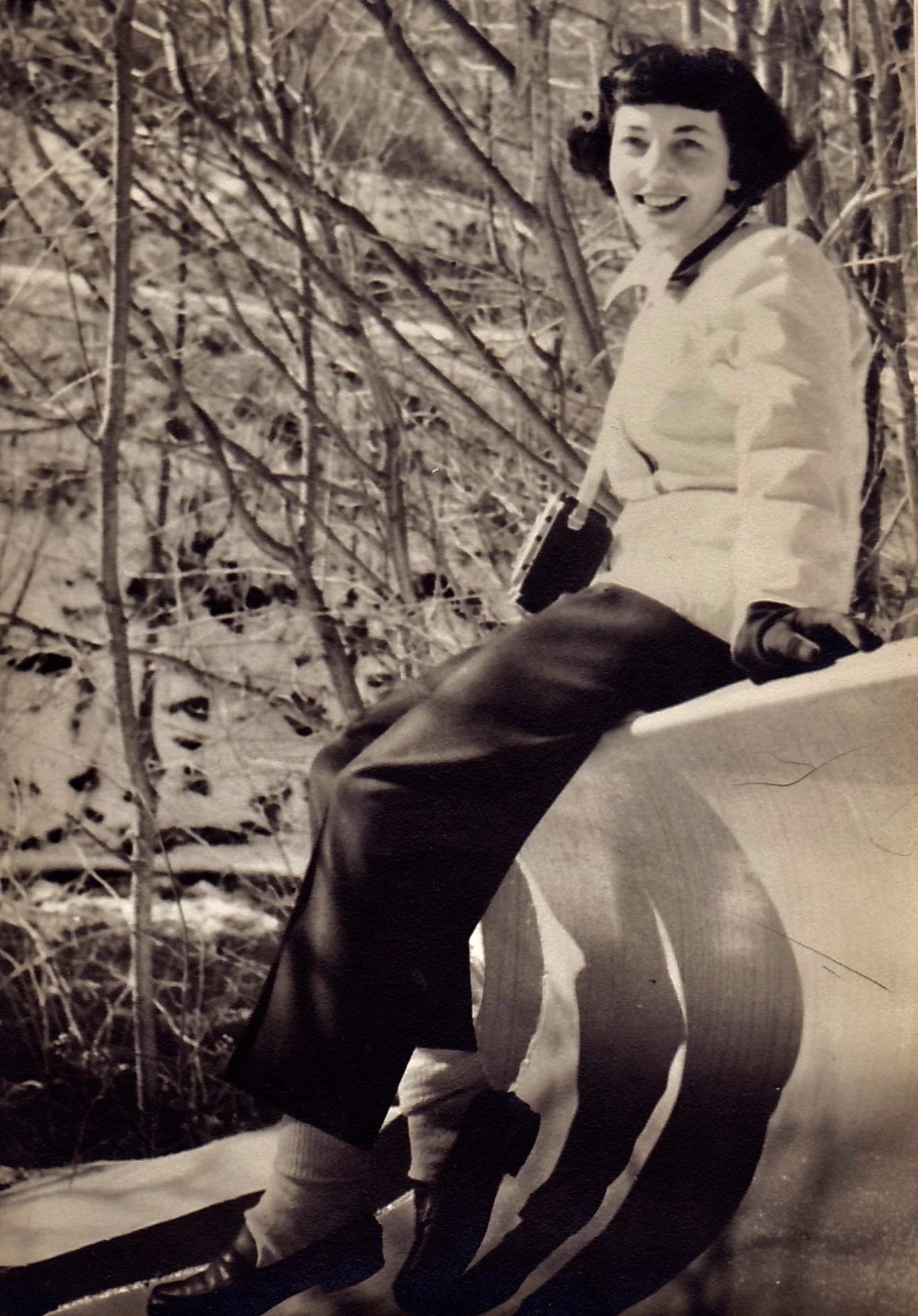
A 50-cent picture found in a junk store in Warren, R.I., is the ultimate Granite State winter pin-up. On the rear, penned in real ink, is the legend: “Sue Nardi on Snowplow/South Lyndboro, N.H./Feb. 12, 1950’’
Lyndeborough is a small upland village in southwestern New Hampshire, just above where Stony Brook joins the Souhegan River, which provided power for the 19th-Century textile mills at Wilton, N.H.
The image was printed in someone’s basement or in a school darkroom, as the edges of the image are not parallel. My guess is that this is probably a yearbook photograph.
It is more romantic, however, to imagine that the photographer was Sue Nardi’s adoring boyfriend. (Valentine’s Day was just two days away.)
The fetching Italian-American dressed up for this glamour shot. Despite the snow, she is wearing penny loafers and her trousers are seriously ironed. (Feb. 12 of that year was a Sunday, but surely Miss Nardi would have worn a dress to Mass?)
If still with us, Sue would be around 90 – perhaps still treasuring memories of posing against that essential northern New England implement, a snowplow.
William Morgan is an essayist and architectural historian. He is the author of Monadnock Summer: the Architectural Legacy of Dublin, New Hampshire. His next book, Snowbound: Dwelling in Winter, will be published next year by Princeton Architectural Press.
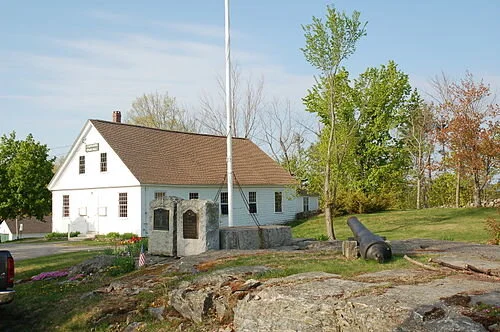
Lyndeborough Town Hall, built in 1846.
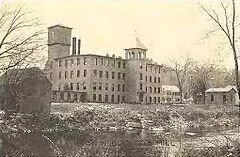
Wilton Woolen Co. mill in 1912. There were lots of woolen mills in New England, originally because it was prime sheep-raising country and New Englanders needed wool to keep warm in the region’s long cold season.
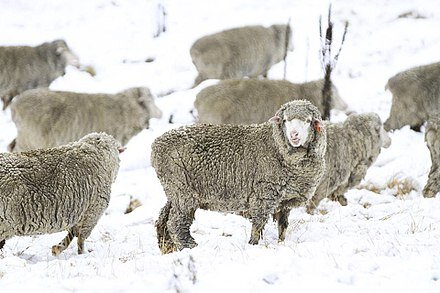
New England Merino sheep, famed for the quality of their wool. Merino sheep were introduced to Vermont in 1802. By 1837, 1 million sheep were in the state. But the price of wool dropped to 25 cents/pound in the late 1840s. The state could not handle more efficient competition from other states, and sheep-raising in the Green Mountain State collapsed. Still, it was a bonanza for decades.
Gray, or colorless?

“Thanksgiving,’’ by Jennie Augusta Brownscombe
If months were marked by colors, November in New England would be colored gray.
— Madeleine M. Kunin, diplomat, author and politician. She was the 77th governor of Vermont, from 1985 until 1991.
Jill Richardson: New EPA rule would undermine science

From OtherWords.org
The Trump Environmental Protection Agency wants to introduce a new rule: Its scientists can only use studies that make all of their data public.
The new proposal is crafted to sound like a win for transparency, which is supposed to be a good thing. In reality, the rule will significantly harm public health — and loosen the reins on polluters.
And that, of course, is the idea.
Let me explain. I am a graduate student in sociology, a social science. I study people, which means I collect some kind of data about them. For any scientist who studies people, transparency is important — but so is confidentiality.
Any basic research ethics class includes famous cases of unethical research on people that occurred in the not too distant past. So now, our institutions carefully review each study on people to ensure they are ethical.
Ethical research requires providing participants with enough information that they can give informed consent to participate. It means not taking advantage of vulnerable populations (like prison inmates or mental health patients), minimizing any risk of harm that might come to the people you are studying as much as possible, and disclosing any risk before they agree to participate.
In my case, that means that in any study I’ve done, I’ve promised my participants confidentiality.
With their permission, I might quote them in a publication using a fake name, but only if I can do so in a way that won’t allow anyone to identify them. I don’t want anything they tell me to be used to harm them back in their communities.
In the case of the new EPA rules, the information collected in public health studies can be even more intimate. When scientists study the effects of pollution on people’s health, they may confidentially review people’s private medical records. Obviously, these records should not be made public
When a researcher cannot promise confidentiality, the quality of their research suffers. Fewer people may be willing to participate, which might harm the reliability of the results. Those who do will be less open.
How can we trust studies in which all of the data is not made public? Often, some of the data is made public, or at least made available to others in certain circumstances (such as by request).
Additionally, science is not an individual endeavor. Communities of scientists in each field work together to advance the knowledge within that field. Any new study will be picked apart by everyone who reads it, because that’s what we do to each other. Others will try to replicate your findings — and if they can’t, your conclusions will be called into question.
It’s rough on the ego, but it’s good for science.
Dismissing any study that does not make its data public, on the other hand — particularly when that data has a good reason to remain confidential, like medical data — serves to harm science, not help it.
And when you can’t do good science, you can’t base your public health regulations — your pesticide bans, your pollution controls, your clean water rules, and whatever else — on good science.
Given the track record of the Trump administration on the environment so far, it’s far more plausible that this proposal is intended to eliminate necessary public health regulations, not to promote transparency.
OtherWords columnist Jill Richardson is pursuing a PhD in sociology at the University of Wisconsin-Madison.
But the mountains aren't high enough

In New Hampshire’s Franconia Range
I met a lady from the South who said
(You won't believe she said it, but she said it):
"None of my family ever worked, or had
A thing to sell.
" I don't suppose the work
Much matters.
You may work for all of me.
I've seen the time I've had to work myself.
The having anything to sell is what
Is the disgrace in man or state or nation.
I met a traveler from Arkansas
Who boasted of his state as beautiful
For diamonds and apples.
"Diamonds
And apples in commercial quantities?"
I asked him, on my guard.
"Oh, yes," he answered,
Off his.
The time was evening in the Pullman.
I see the porter's made your bed," I told him.
I met a Californian who would
Talk California—a state so blessed,
He said, in climate, none bad ever died there
A natural death, and Vigilance Committees
Had had to organize to stock the graveyards
And vindicate the state's humanity.
"Just the way Stefansson runs on," I murmured,
"About the British Arctic.
That's what comes
Of being in the market with a climate.’’
I met a poet from another state,
A zealot full of fluid inspiration,
Who in the name of fluid inspiration,
But in the best style of bad salesmanship,
Angrily tried to male me write a protest
(In verse I think) against the Volstead Act.
He didn't even offer me a drink
Until I asked for one to steady him.
This is called having an idea to sell.
It never could have happened in New Hampshire.
The only person really soiled with trade
I ever stumbled on in old New Hampshire
Was someone who had just come back ashamed
From selling things in California.
He'd built a noble mansard roof with balls
On turrets, like Constantinople, deep
In woods some ten miles from a railroad station,
As if to put forever out of mind
The hope of being, as we say, received.
I found him standing at the close of day
Inside the threshold of his open barn,
Like a lone actor on a gloomy stage—
And recognized him, through the iron gray
In which his face was muffled to the eyes,
As an old boyhood friend, and once indeed
A drover with me on the road to Brighton.
His farm was "grounds," and not a farm at all;
His house among the local sheds and shanties
Rose like a factor's at a trading station.
And be was rich, and I was still a rascal.
I couldn't keep from asking impolitely,
Where bad he been and what had he been doing?
How did he get so? (Rich was understood.)
In dealing in "old rags" in San Francisco.
Oh, it was terrible as well could be.
We both of us turned over in our graves.
Just specimens is all New Hampshire has,
One each of everything as in a showcase,
Which naturally she doesn't care to sell.
She had one President.
(Pronounce him Purse,
And make the most of it for better or worse.
He's your one chance to score against the state.
She had one Daniel Webster.
He was all
The Daniel Webster ever was or shall be.
She had the Dartmouth needed to produce him.
I call her old.
She has one family
Whose claim is good to being settled here
Before the era of colonization,
And before that of exploration even.
John Smith remarked them as be coasted by,
Dangling their legs and fishing off a wharf
At the Isles of Shoals, and satisfied himself
They weren't Red Indians but veritable
Pre-primitives of the white race, dawn people,
Like those who furnished Adam's sons with wives;
However uninnocent they may have been
In being there so early in our history.
They'd been there then a hundred years or more.
Pity he didn't ask what they were up to
At that date with a wharf already built,
And take their name.
They've since told me their name—
Today an honored one in Nottingham.
As for what they were up to more than fishing—
Suppose they weren't behaving Puritanly,
The hour bad not yet struck for being good,
Mankind had not yet gone on the Sabbatical.
It became an explorer of the deep
Not to explore too deep in others' business.
Did you but know of him, New Hampshire has
One real reformer who would change the world
So it would be accepted by two classes,
Artists the minute they set up as artists,
Before, that is, they are themselves accepted,
And boys the minute they get out of college.
I can't help thinking those are tests to go by.
And she has one I don't know what to call him,
Who comes from Philadelphia every year
With a great flock of chickens of rare breeds
He wants to give the educational
Advantages of growing almost wild
Under the watchful eye of hawk and eagle
Dorkings because they're spoken of by Chaucer,
Sussex because they're spoken of by Herrick
She has a touch of gold.
New Hampshire gold—
You may have heard of it.
I had a farm
Offered me not long since up Berlin way
With a mine on it that was worked for gold;
But not gold in commercial quantities,
Just enough gold to make the engagement rings
And marriage rings of those who owned the farm.
What gold more innocent could one have asked for?
One of my children ranging after rocks
Lately brought home from Andover or Canaan
A specimen of beryl with a trace
Of radium.
I know with radium
The trace would have to be the merest trace
To be below the threshold of commercial;
But trust New Hampshire not to have enough
Of radium or anything to sell.
A specimen of everything, I said.
She has one witch—old style.
She lives in Colebrook.
(The only other witch I ever met
Was lately at a cut-glass dinner in Boston.
There were four candles and four people present.
The witch was young, and beautiful (new style),
And open-minded.
She was free to question
Her gift for reading letters locked in boxes.
Why was it so much greater when the boxes
Were metal than it was when they were wooden?
It made the world seem so mysterious.
The S'ciety for Psychical Research
Was cognizant.
Her husband was worth millions.
I think he owned some shares in Harvard College.
New Hampshire used to have at Salem
A company we called the White Corpuscles,
Whose duty was at any hour of night
To rush in sheets and fool's caps where they smelled
A thing the least bit doubtfully perscented
And give someone the Skipper Ireson's Ride.
One each of everything as in a showcase.
More than enough land for a specimen
You'll say she has, but there there enters in
Something else to protect her from herself
There quality makes up for quantity.
Not even New Hampshire farms are much for sale.
The farm I made my home on in the mountains
1 had to take by force rather than buy.
I caught the owner outdoors by himself
Raking.
up after winter, and I said,
“I’m going to put you off this farm: I want it.’’
“Where are you going to put me? In the road?”
“I’m going to put you on the farm next to it.’’
“Why won't the farm next to it do for you?"
"I like this better.’’
It was really better.
Apples? New Hampshire has them, but unsprayed,
With no suspicion in stern end or blossom end
Of vitriol or arsenate of lead,
And so not good for anything but cider.
Her unpruned grapes are flung like lariats
Far up the birches out of reach of man.
A state producing precious metals, stones,
And—writing; none of these except perhaps
The precious literature in quantity
Or quality to worry the producer
About disposing of it.
Do you know,
Considering the market, there are more
Poems produced than any other thing?
No wonder poets sometimes have to seem
So much more businesslike than businessmen.
Their wares are so much harder to get rid of.
She's one of the two best states in the Union.
Vermont's the other.
And the two have been
Yokefellows in the sap yoke from of old
In many Marches.
And they lie like wedges,
Thick end to thin end and thin end to thick end,
And are a figure of the way the strong
Of mind and strong of arm should fit together,
One thick where one is thin and vice versa.
New Hampshire raises the Connecticut
In a trout hatchery near Canada,
But soon divides the river with Vermont.
Both are delightful states for their absurdly
Small towns—Lost Nation, Bungey, Muddy Boo,
Poplin, Still Corners (so called not because
The place is silent all day long, nor yet
Because it boasts a whisky still—because
It set out once to be a city and still
Is only corners, crossroads in a wood).
And I remember one whose name appeared
Between the pictures on a movie screen
Election night once in Franconia,
When everything had gone Republican
And Democrats were sore in need of comfort:
Easton goes Democratic, Wilson 4
Hughes 2.
And everybody to the saddest
Laughed the loud laugh the big laugh at the little.
New York (five million) laughs at Manchester,
Manchester (sixty or seventy thousand) laughs
At Littleton (four thousand), Littleton
Laughs at Franconia (seven hundred), and
Franconia laughs, I fear—-did laugh that night--
At Easton.
What has Easton left to laugh at,
And like the actress exclaim "Oh, my God" at?
There's Bungey; and for Bungey there are towns,
Whole townships named but without population.
Anything I can say about New Hampshire
Will serve almost as well about Vermont,
Excepting that they differ in their mountains.
The Vermont mountains stretch extended straight;
New Hampshire mountains Curl up in a coil.
I had been coming to New Hampshire mountains.
And here I am and what am I to say?
Here first my theme becomes embarrassing.
Emerson said, "The God who made New Hampshire
Taunted the lofty land with little men.
"
Another Massachusetts poet said,
"I go no more to summer in New Hampshire.
I've given up my summer place in Dublin.’’
"
But when I asked to know what ailed New Hampshire,
She said she couldn't stand the people in it,
The little men (it's Massachusetts speaking).
And when I asked to know what ailed the people,
She said, "Go read your own books and find out.’’
"
I may as well confess myself the author
Of several books against the world in general.
To take them as against a special state
Or even nation's to restrict my meaning.
I'm what is called a sensibilitist,
Or otherwise an environmentalist.
I refuse to adapt myself a mite
To any change from hot to cold, from wet
To dry, from poor to rich, or back again.
I make a virtue of my suffering
From nearly everything that goes on round me.
In other words, I know wherever I am,
Being the creature of literature I am,
1 sball not lack for pain to keep me awake.
Kit Marlowe taught me how to say my prayers:
"Why, this is Hell, nor am I out of it.’’
Samoa, Russia, Ireland I complain of,
No less than England, France, and Italy.
Because I wrote my novels in New Hampshire
Is no proof that I aimed them at New Hampshire.
When I left Massachusetts years ago
Between two days, the reason why I sought
New Hampshire, not Connecticut,
Rhode Island, New York, or Vermont was this:
Where I was living then, New Hampshire offered
The nearest boundary to escape across.
I hadn't an illusion in my handbag
About the people being better there
Than those I left behind.
I thought they weren't.
I thought they couldn't be.
And yet they were.
I'd sure had no such friends in Massachusetts
As Hall of Windham, Gay of Atkinson,
Bartlett of Raymond (now of Colorado),
Harris of Derry, and Lynch of Bethlehem.
The glorious bards of Massachusetts seem
To want to make New Hampshire people over.
They taunt the lofty land with little men.
I don't know what to say about the people.
For art's sake one could almost wish them worse
Rather than better.
How are we to write
The Russian novel in America
As long as life goes so unterribly?
There is the pinch from which our only outcry
In literature to date is heard to come.
We get what little misery we can
Out of not having cause for misery.
It makes the guild of novel writers sick
To be expected to be Dostoievskis
On nothing worse than too much luck and comfort.
This is not sorrow, though; it's just the vapors,
And recognized as such in Russia itself
Under the new regime, and so forbidden.
If well it is with Russia, then feel free
To say so or be stood against the wall
And shot.
It's Pollyanna now or death.
This, then, is the new freedom we hear tell of;
And very sensible.
No state can build
A literature that shall at once be sound
And sad on a foundation of well-being.
To show the level of intelligence
Among us: it was just a Warren farmer
Whose horse had pulled him short up in the road
By me, a stranger.
This is what he said,
From nothing but embarrassment and want
Of anything more sociable to say:
"You hear those bound dogs sing on Moosilauke?
Well, they remind me of the hue and cry
We've heard against the Mid -Victorians
And never rightly understood till Bryan
Retired from politics and joined the chorus.
The matter with the Mid-Victorians
Seems to have been a man named John L.
Darwin.
"Go 'long," I said to him, he to his horse.
I knew a man who failing as a farmer
Burned down his farmhouse for the fire insurance,
And spent the proceeds on a telescope
To satisfy a lifelong curiosity
About our place among the infinities.
And how was that for otherworldliness?
If I must choose which I would elevate —
The people or the already lofty mountains
I'd elevate the already lofty mountains
The only fault I find with old New Hampshire
Is that her mountains aren't quite high enough.
I was not always so; I've come to be so.
How, to my sorrow, how have I attained
A height from which to look down critical
On mountains? What has given me assurance
To say what height becomes New Hampshire mountains,
Or any mountains? Can it be some strength
I feel, as of an earthquake in my back,
To heave them higher to the morning star?
Can it be foreign travel in the Alps?
Or having seen and credited a moment
The solid molding of vast peaks of cloud
Behind the pitiful reality
Of Lincoln, Lafayette, and Liberty?
Or some such sense as says bow high shall jet
The fountain in proportion to the basin?
No, none of these has raised me to my throne
Of intellectual dissatisfaction,
But the sad accident of having seen
Our actual mountains given in a map
Of early times as twice the height they are—
Ten thousand feet instead of only five—
Which shows how sad an accident may be.
Five thousand is no longer high enough.
Whereas I never had a good idea
About improving people in the world,
Here I am overfertile in suggestion,
And cannot rest from planning day or night
How high I'd thrust the peaks in summer snow
To tap the upper sky and draw a flow
Of frosty night air on the vale below
Down from the stars to freeze the dew as starry.
The more the sensibilitist I am
The more I seem to want my mountains wild;
The way the wiry gang-boss liked the logjam.
After he'd picked the lock and got it started,
He dodged a log that lifted like an arm
Against the sky to break his back for him,
Then came in dancing, skipping with his life
Across the roar and chaos, and the words
We saw him say along the zigzag journey
Were doubtless as the words we heard him say
On coming nearer: "Wasn't she an i-deal
Son-of-a-bitch? You bet she was an i-deal.’’
For all her mountains fall a little short,
Her people not quite short enough for Art,
She's still New Hampshire; a most restful state.
Lately in converse with a New York alec
About the new school of the pseudo-phallic,
I found myself in a close corner where
I bad to make an almost funny choice.
"Choose you which you will be—a prude, or puke,
Mewling and puking in the public arms.’’
"Me for the hills where I don’t have to choose.’’
"But if you bad to choose, which would you be?"
1 wouldn't be a prude afraid of nature.
I know a man who took a double ax
And went alone against a grove of trees;
But his heart failing him, he dropped the ax
And ran for shelter quoting Matthew Arnold:
"'Nature is cruel, man is sick of blood':
There s been enough shed without shedding mine.
Remember Birnam Wood! The wood's in flux!"
He had a special terror of the flux
That showed itself in dendrophobia.
The only decent tree had been to mill
And educated into boards, be said.
He knew too well for any earthly use
The line where man leaves off and nature starts.
And never overstepped it save in dreams.
He stood on the safe side of the line talking—
Which is sheer Matthew Arnoldism,
The cult of one who owned himself "a foiled
Circuitous wanderer," and "took dejectedly
His seat upon the intellectual throne"—
Agreed in 'frowning on these improvised
Altars the woods are full of nowadays,
Again as in the days when Ahaz sinned
By worship under green trees in the open.
Scarcely a mile but that I come on one,
A black-checked stone and stick of rain-washed charcoal.
Even to say the groves were God's first temples
Comes too near to Ahaz' sin for safety.
Nothing not built with hands of course is sacred.
But here is not a question of what's sacred;
Rather of what to face or run away from.
I'd hate to be a runaway from nature.
And neither would I choose to be a puke
Who cares not what be does in company,
And when he can't do anything, falls back
On words, and tries his worst to make words speak
Louder than actions, and sometimes achieves it.
It seems a narrow choice the age insists on
8ow about being a good Greek, for instance)
That course, they tell me, isn't offered this year.
"Come, but this isn't choosing—puke or prude?"
Well, if I have to choose one or the other,
I choose to be a plain New Hampshire farmer
With an income in cash of, say, a thousand
(From, say, a publisher in New York City).
It's restful to arrive at a decision,
And restful just to think about New Hampshire.
At present I am living in Vermont.
— “New Hampshire,’’ by Robert Frost