
Vox clamantis in deserto
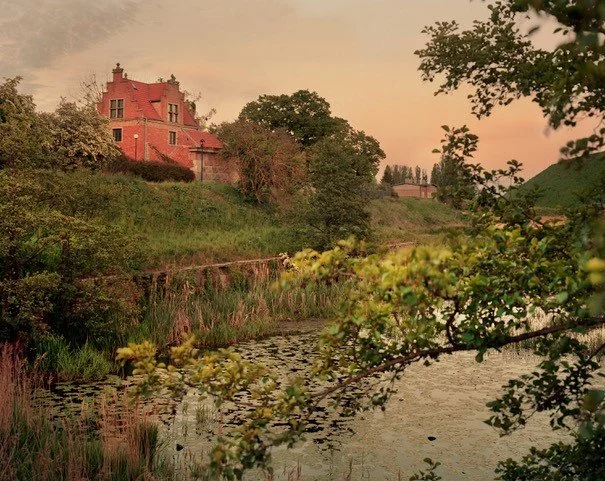



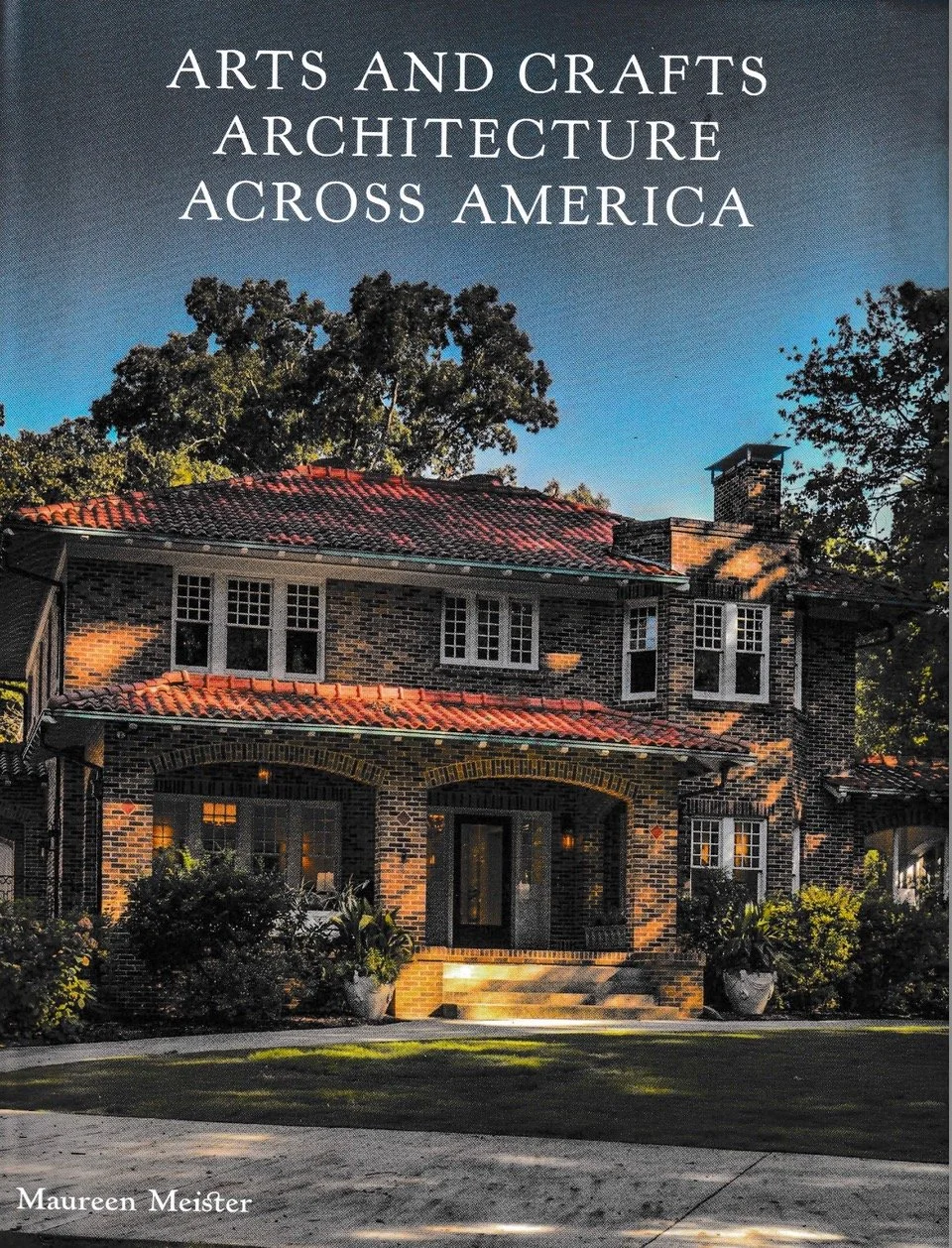
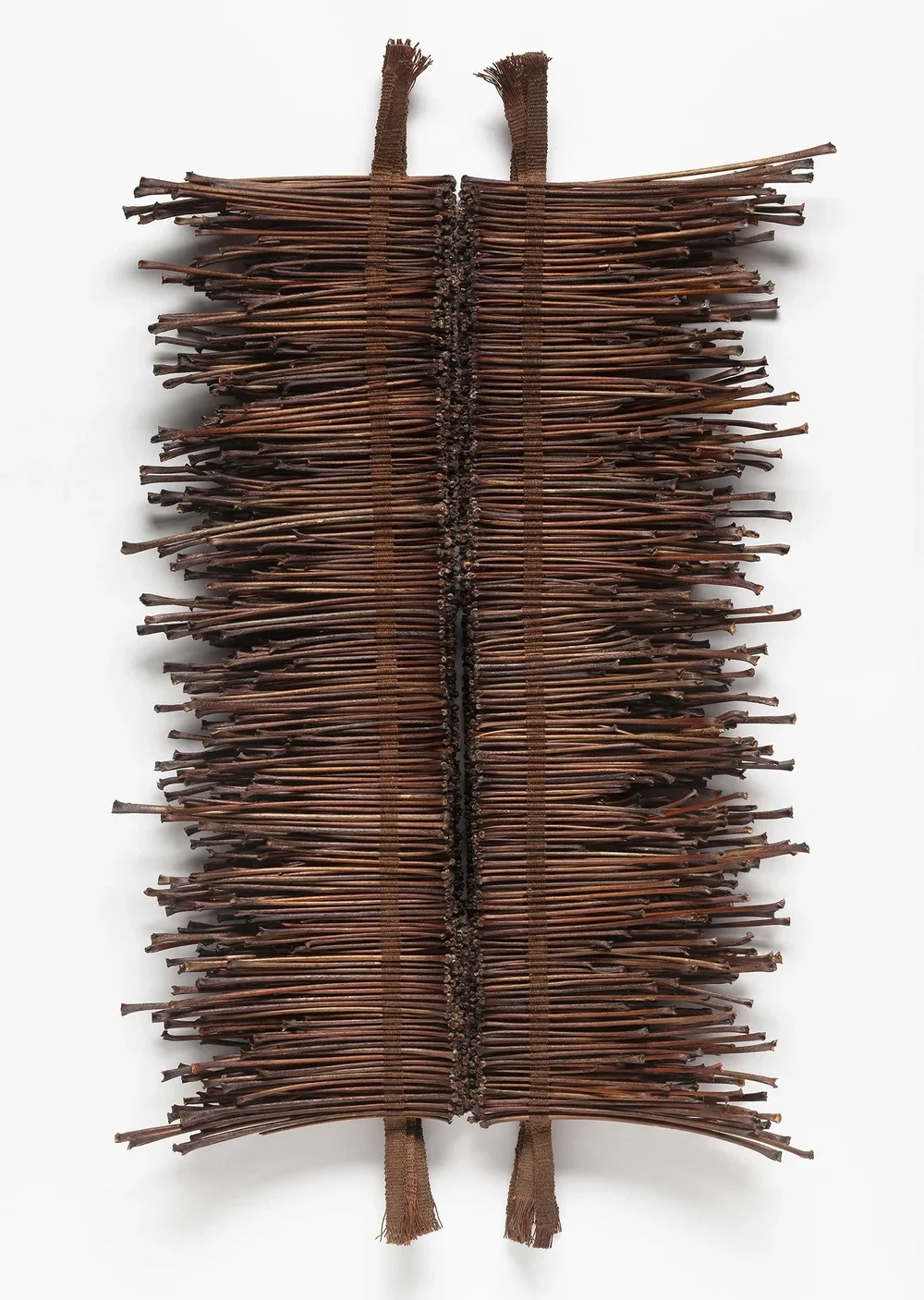

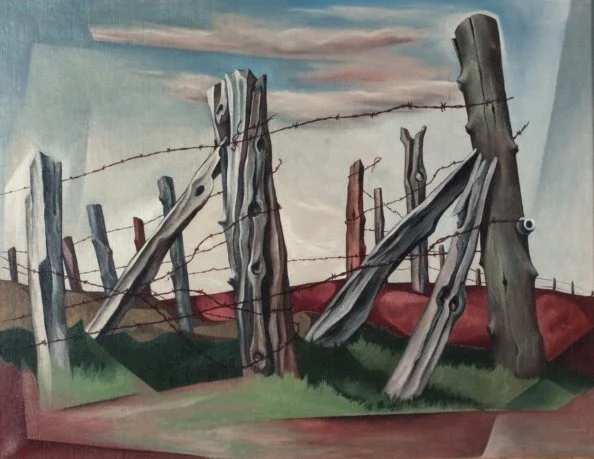
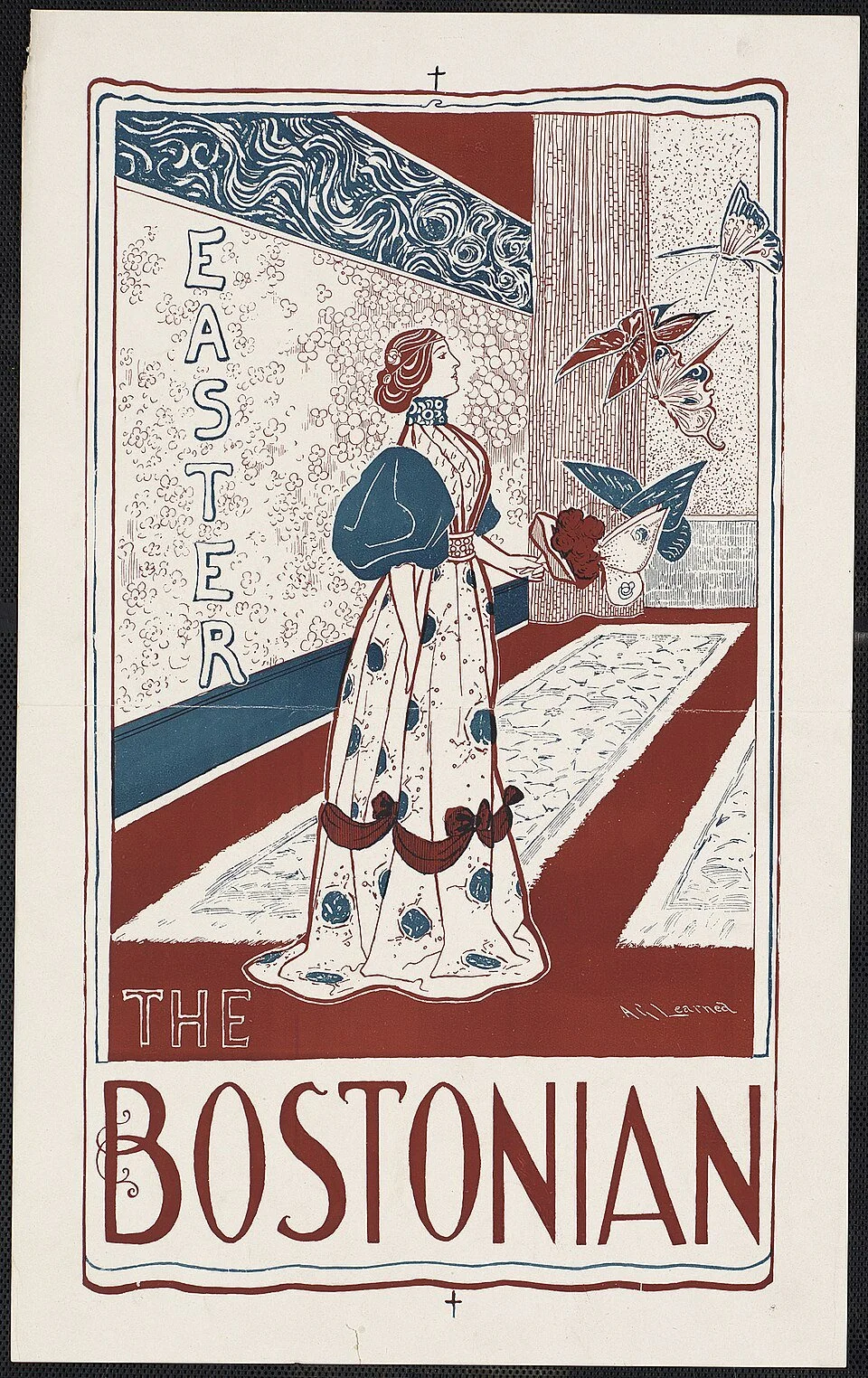
Write Rhode Island's exciting creative competition

This is a wonderful program!
Co-created by School One and Goat Hill, Write Rhode Island's annual short fiction competition is open to all Rhode Island students grades 7-12. Each fall, this flagship program offers students an opportunity to participate in workshops with a large creative community of writers throughout the state and to have their stories published in a high-quality print anthology. Winners are announced in March and honored at an awards ceremony at the Newport Art Museum.
End of a browsing heaven

The beloved Out of Town News in 2017
From Robert Whitcomb’s “Digital Diary,’’ in GoLocal24.com
The closing the other week of the beloved Out of Town News, in the middle of Harvard Square, Cambridge, testifies to the challenges of the print media in the World Wide Web age, even in such a center of worldly literacy as the neighborhood of America’s most famous university (and with mighty MIT down a few blocks). I remember happily browsing the emporium’s magazines and newspapers from around the world when I lived in Cambridge for a few months, in 1970-71. Sometimes I’d rush over there to get an early edition of The Boston Herald Traveler for which I had written a news story to see what the editors may have done to it. Often the ink was still wet. During my early months in the newspaper business, I’d get considerable pleasure from seeing my byline; the pleasure then faded. Who cared?\]
Happily, physical books are still doing well. It’s tough on the eyes to read a lot of pages on a screen. Please hit this link to read “On the Joy of Physical Books”.

Don Pesci: Praying an image into physical reality

Causeway to Enders Island
The Sacred Art Institute at Enders Island, in Stonington, Conn. has been in business now for nearly 25 years. The Institute, devoted in part to all things iconographic, opened its doors in 1995 and draws students from all over the United States. And no wonder. The institute offers extremely intimate classes, usually numbering a dozen or more students, in such disciplines as Gregorian Chant, Iconography, Medieval Manuscript, Mosaics, Painting, Photography and Stained Glass.
For those who suspect that art in the Western world did not begin with Picasso, the Iconic experience offers irresistible temptations. Those acquainted with Byzantine or Russian iconography will be familiar with the lure of Icons. For the rest of us, the excitement of writing an Icon or producing a Byzantine drawing may be compared with a child having two stomachs wandering hungrily through a candy store. Here at Enders Island, surrounded by the peace of the water, one is immersed in the methods and theology of an ancient art that preceded and gave rise to the splendor of the Renaissance. Classes usually last a week, though this one, under the direction of master iconographer George Kordis, lasted two short weeks and was broken into two parts, Byzantine drawing and icon painting. All courses at the institute are taught by master artists whose backgrounds in the history of their disciplines run leagues deep.
Over the course of two decades, this writer has taken at Enders Island courses in icon writing from the Russian Orthodox masters of the Prosopon School, fresco production and Illuminated Miniatures, taught by one of the few masters of the field from Chicago whose works, in the form of Stations of the Cross, adorns the small but intimate chapel at Enders Island, a repository of art works produced by – there is no other way to put this – people wrapped up in the mystery and wonder of Iconography.

Dr. Kordis with one of his drawings
On a first visit to the island more than two decades ago, I found myself seated beside a woman who, I knew, had taken multiple courses in Icon writing. “So then, what have I let myself in for?” I asked her.
“You are about to pray an image into wood.”
Dr. Kordis is assistant professor of iconography at the University of Athens. He teaches Icon painting at the Athens School of Art and the Eikonourgia Cultural Center. He is a visiting professor at the Yale Institute of Sacred Music’s summer program; at the University of Art and design in Cluj Napoca, Romania; at the School of Theology of Bucharest, Romania; at the School of Theology of Bucharest, Romania; and at the Pedagogical University of Odessa, Ukraine. More importantly for our purposes, he set himself to discover early in his career what he calls the “set” elements in Icon painting., those elements that remain the same throughout the various schools of Iconography.
“A good deal of study over several years was needed” Dr. Kordis tells us, “before I was able to perceive the unity within the variety” of the various schools of Icon painting. “Apart from the theory and theology of the Icon, and the meaning of Iconographic conventions” all important considerations, “teaching Icon painting is concerned primarily with fundamental artistic principles.” Those organizing principles are set forth persuasively in Dr. Kordis’s instructive book, Icon As Communion.
The title is by no means accidental. Communion implies a unity of understanding and purpose. Iconography is a medium of understanding, a language similar to that of music. As in music, the artist disappears unobtrusively into his art. The Icon speaks to the viewer by means of color, shape, line and harmony. The unvarying understructure of the Icon ties it to traditional modes of representation. Color and line infuse the Icon with form. Communion is a joining together of the viewer and the Icon, most impressive in churches such as St. Catherine Greek Orthodox Church in Braintree, Mass., where Dr. Kordis’s work may best be seen in a setting that speaks to the viewer through the eye of the heart. As in music or any other art form, harmony is created through the interplay of all the forces of energy mentioned above.
“How is it possible to tell when an Icon is successful?” I asked Dr. Kordis.
All the movement and forces in an Icon, he has said, are deployed to engage the spectator. Opposing forces within the Icon flow from the surface of the wall and create an optic cone in front of the Icon that engages and even depends upon the viewer. In Icons, light is not used to render form, as in a painting by, say, Caravaggio. Because there is no depth in an Icon, the image is directed outward by a movement from the surface of the Icon to the viewer though the motion and harmony of color, light and perspective that together produce the rhythm of the Icon and brings it into communion with the spectator. The Icon must always be a presence of the person depicted. The person depicted must be immediately recognizable by the faithful people. The Icon must invade the reality of the spectators and create an aesthetic bond with them. The spectators entering a painted church must feel the presence of the saints and have a taste of the qualities of Paradise. If the communion works, the Icon is good.
In the course of a week, Kordis provided to his students several Byzantine drawing demonstrations each day, personally advising each student on individual projects and, when necessary, correcting their drawings. “There, you see – easy.” It was not always easy, but it was always good. Life in an icon shop during the slow and beautiful flowering of iconography was much like our shop of a dozen people. We were apprenticing with an amusing and masterful iconographer.
Dr. Kordis generously fielded questions and on occasion returned some surprising answers. The difference between a movie and an Icon is simple. The movie, unlike a play which involves real people on a stage, is hyper real and therefore more artificial – actually more unreal. If you rush the stage, you might have a dialogue with an actor of your choice. Of course, you’ll be thrown out of the theater. But just try entering into a conversation with a film presence, however apparently real. The Icon in many ways is more real that the star imprisoned in celluloid. An Icon is what it is. And what is that? It is a portal of eternity – in direct communion with you. There is nothing more real than that, right?
Here is Dr. Kordis on reality and rhythm in an Icon: “Rhythm is the basic instrument the painters during the Byzantine period used in order to achieve communion between the beholder-believer and the person depicted. The main idea was that the Icon is not merely an image, a form on the wall of a church or on a surface of wood. The icon must be alive, must be a presence of the saint in the church. In this way, the Icon could demonstrate the belief that the Church is the living Body of Christ in time and space, where all members are embodied and live. In this perspective, the Icon should give the spectator the impression that whatever is depicted is alive, is present. More specifically they wanted to show that the person depicted comes to the dimensions of the spectator and is connected with him. So they had to create a system of painting principles that could serve this need. Rhythm was the basic instrument. Rhythm is a way of handling the movements and energies that exist on a painting surface. Any line or color is an energy. The painter could organize these movements or energies in order for the Icon to enter the reality of the spectator and meet him. So they followed the way ancient Greek painters used rhythm. All lines shape an X on the surface and everything in the composition follows this X axis. In this way everything in any Icon is organized properly, is united and creates a state of dynamic balance. There is always movement, indicating life and motion, and at the same time there is also stability that indicates eternity, a state of timeless reality. Through rhythm the Icon is projected to the reality of the spectator. Color, light and perspective, are also used as vehicles to create this projection. We could say that rhythm is a vehicle creating unity in any Orthodox Icon and contributes to fulfill its mission in the Church.”
Thelonius Monk and Marc Chagall would have had no difficulty parsing this passage. And icon painting, if I may put it so, is just such a passage – from image to reality.
Addressing the dozen people with whom I had spent a week in close communion at breakfast, lunch and dinner each day, most of the time in the studio, my wife, Andree, and I were bidding goodbye to the group . Through inveterate shyness, I get tongue-tied at such moments. I silently cursed myself on the way home for not having said what was in my heart. So many lives, so many ways through the twisting maze of our modern world, so many bruised hearts, so many words never said, I was lucky to have brought Andree along. To all present she said how grateful we were to have spent these few days with such open and honest soulmates, and she said of Kordis how kind and generously intellectual and good he was. He bowed his head modestly – one of those rare men who wear modesty and humility properly – and there was a faint twinkle in his eye.
For three days, the island, a too little visited jewel, had been storm swept, raked by rainy gales and fierce winds. But now, on this last day, and for the remaining week, the clouds had parted, the winds were docile as doves, the sun gleamed brightly on God’s handiwork – also on the icons these good people would paint in the following week. They would gratefully be praying their images into wood.
Don Pesci is a Vernon, Conn.-based columnist.
at November 10, 2019
Email This
BlogThis!
Share to Twitter
Share to Facebook
Share to Pinterest
Labels: Caravaggio, Enders Island, Kordis, Picasso
No comments:
Post a Comment
Links to this post
Setting up for summer of '20

“Summer Feeling” (mixed media paper collage), by Adam Langehough, in his show “New Landscapes,’’ at Paper Nautilus, in Providence, Jan. 21-March 2.
Look out below!

View of 200 Clarendon Street, in Boston’s Back Bay, a skyscraper known as the John Hancock Tower, and colloquially known as The Hancock, after the insurance company. The tower is 62 stories and 790 feet high, making it still the tallest building in New England.
It was designed by Henry N. Cobb of I. M. Pei & Partners and was completed in 1976. In 1977, the American Institute of Architects presented the firm with a National Honor Award for the building, and in 2011 its Twenty-five Year Award. But as it got close to completion it became infamous, for a time, for a materials flaw that led to some windows popping out and crashing to the street. Luckily, no one was killed.
The memoir industry

From Robert Whitcomb’s “Digital Diary,’’ in GoLocal24.com
“The Brat in Your Classroom,’’ Michael John Carley’s memoir of his troubled time at Moses Brown School, in Providence, in the ‘70s in the Oct. 27 Providence Journal, was often a good read, including sometimes quite funny, and I must assume much of it was accurate. (He includes pictures of teachers’ comments from the time.) The enthusiastically self-promotional Mr. Carley, who’s on the autism spectrum, identified himself as a “playwright, a diplomat, executive director of nonprofits,’’ along with having had other impressive roles. He described such nasty if usefully cinematic episodes as being beaten by the police. Was all this fact-checked? As my father used to say: “Remarkable, remarkable, if true.’’
The piece falls into the rapidly growing category of memoirs detailing the overcoming of tough problems of youth – presented in sort of made-for-TV-or-the movies narratives – and it speaks to Americans’ greater and greater obsession with themselves, as reflected in social media and elsewhere. Of course, we’re all at the center of our personal universes, but we’ve been taking that to extremes lately.
Eli Pariser, the chief executive of Upworthy, a Web site for "meaningful" viral content, has noted:
“We thought that the Internet was going to connect us all together. As a young geek in rural Maine, I got excited about the Internet because it seemed that I could be connected to the world. What it's looking like increasingly is that the Web is connecting us back to ourselves.’’
Perhaps in an age when promoting one’s “personal brand’’ is granted such economic importance this is inevitable. And naturally most of us have the desire, especially as we approach old age, to try to make sense of our messy histories and to control the narrative, if only for our children. And don’t underestimate the desire for revenge, expiation and, if the storyteller is a particularly strong writer, money.
Of course a major attraction to running such magazine-style pieces in The Journal (where I labored as an editor on and off for decades and that I still loyally read daily) is that you don’t need paid local reporters to fill up that space with news, of all things. Another, and to me stranger, thing is the increasing number of long tributes to the paper’s own remaining staffers in the paper – space that might otherwise be used for news, if only from other newspapers and news services. It comes under the heading of meta:
Definition: “Referring to itself or to the conventions of its genre; self-referential’’. This is happening in many other now very short-staffed newspapers, too.

Keith Combs: Honor vets by protecting the Postal Service
Via OtherWords.org
If you’re looking for a way to honor veterans, here’s one: Protect the U.S. Postal Service.
I’m a veteran from a family of veterans. After serving in the Marine Corps, I got a good-paying postal job that put me on a solid path to financial security. Now I lead the Detroit Area Local for the American Postal Workers Union. Our 1,500 members include many veterans, some of whom I served with myself.
Across the country, nearly 113,000 veterans now serve as postal workers. With former military members accounting for over 18 percent of our workforce, the Postal Service employs vets at three times their share of the national workforce.
Why? For one thing, military values include hard work, showing up on time, and taking pride in your work set you up perfectly for postal jobs.
For another, the USPS gives veterans like myself preferential hiring treatment. Disabled vets, like many I work with in Detroit, get special consideration too. And once they get here, they get generous medical leave and benefits, including wounded warriors leave, among other hard-earned benefits won by our union.
Unfortunately, these secure jobs for veterans are now under attack.
A White House report has called for selling off the public mail service to private, for-profit corporations. And a Trump administration task force has called for slashing postal jobs and services for customers.
In particular, they want to eliminate our collective bargaining rights, which would jeopardize all those benefits we’ve won for veterans and other employees. They also want to cut delivery days, close local post offices, and raise prices, which would hurt customers.
This cost-cutting could also threaten another valuable benefit for service members: deeply discounted shipping rates on packages they get overseas. Currently, shipping to U.S. military bases in other countries costs the same as a domestic shipment, and USPS offers cost-free packing supplies to the folks who send these care packages.
Instead of slashing and burning the USPS, we need to be expanding and strengthening it.
One idea is to let post offices expand into low-cost financial services. Veterans are four times more likely than the national average to use payday lenders for short-term loans, which typically charge exorbitant interest rates.
But if post offices could offer affordable and reliable check cashing, ATM, bill payment, and money transfer services, we could generate all kinds of new revenue — while protecting vets and their communities from predatory lenders.
From discounting care packages to employing disabled veterans, our Postal Service plays an important part in the lives of our service members. USPS does good by Americans who’ve dedicated a portion of their lives to armed service, and by the millions of Americans who rely on them.
I hope you’ll join me in applauding these veterans — and the postal service. Let’s build the USPS up, not tear it down.
Keith Combs is a 30-year postal worker and president of the Detroit District Area Local of the American Postal Workers Union.

At the PCFR, looking at religion, geopolitics, war and peace

The Islamic Cultural Center in Vienna
— Photo by Bwang
To members and friends of The Providence Committee on Foreign Relations (thepcfr.org; pcfremail@gmail.com):
On Thursday, Dec. 5, we’ll welcome as our dinner speaker Dr. Elizabeth H. Prodromou, who directs the Initiative on Religion, Law, and Diplomacy, and is visiting associate professor of conflict resolution, at The Fletcher School of Law and Diplomacy at Tufts University. She titles her talk "God, Soft Power, and Geopolitics: Religion as a Tool for Conflict Prevention/Generation". All PCFR dinner events are held at the Hope Club, at 6 Benevolent St., Providence.
Dr. Prodromou is also a non-resident senior fellow and co-chair of the Working Group on Christians and Religious Pluralism, at the Center for Religious Freedom at the Hudson Institute, and is also non-resident fellow at The Hedayah International Center of Excellence for Countering Violent Extremism, based in Abu Dhabi.
Dr. Prodromou is former vice chair and commissioner on the U.S. Commission on International Religious Freedom and was a member of the U.S. Secretary of State’s Religion & Foreign Policy Working Group. Her research focuses on geopolitics and religion, with particular focus on the intersection of religion, democracy, and security in the Middle East and Southeastern Europe. Her current research project focus on Orthodox Christianity and geopolitics, as well as on religion and migration in Greece.
Schedule:
6:00 - 6:30 PM: Cocktails
6:30 - 7:30: Dinner (salad, entree, dessert/coffee)
7:30 - 8:30: Speaker Presentation
8:30 - 9:00: Q&A with Speaker.
Please let us know if you have any dietary restrictions.
For information on the PCFR, including on how to join, please see our Web site – thepcfr.org – or email pcfremail@gmail.com or call 401-523-3957
Better than driving on Route 146, especially in winter
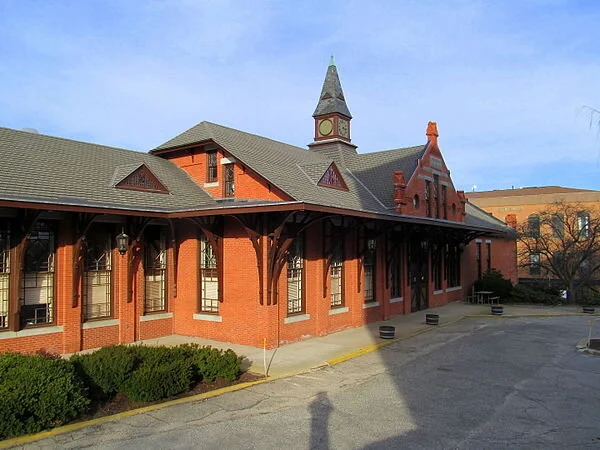
Woonsocket train depot
From Robert Whitcomb’s “Digital Diary,’’ in GoLocal24.com
Let’s hope that Boston Surface Rail Co. can settle its dispute with the Rhode Island Department of Transportation over the company’s use of the historic train depot (built in 1882!) in Woonsocket and be able to start passenger rail service (and bus service to supplement it) between that city and Worcester sometime next year. It would be one of America’s first private passenger rail companies since the creation of quasi-public Amtrak, in 1971.
The service would be a boon to those who want to stay off crowded Route 146, in the Providence-Worcester corridor, and serve an area now with very thin public transportation. And consider that huge CVS is based in Woonsocket; more than a few of its employees would be happy to use public transportation.
Remember that Greater Providence is the second-largest metro area in New England, after Boston, and Worcester proper the second-largest city; Providence proper is the third-largest.
Anything to get more people off the roads between Greater Providence and Worcester would he most appreciated! The service would be particularly appreciated in the winter: The area crossed by Route 146, being fairly high (by New England standards) and well inland, gets lots of snow most winters.
Boston Surface Rail asserts that the Rhode Island Department of Transportation has been difficult to deal with. RIDOT should prioritize improving non-car travel in this important corridor. Why is it that it seems so difficult to get new projects launched in the Ocean State?
To read GoLocal’s story on this, please hit this link.
xxx

Warhol, et al., in Worcester
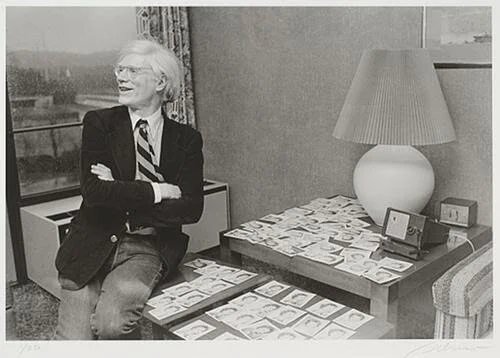
“Andy Warhol aside Polaroids of Caroline Ireland,‘‘ about 1979 (digital inkjet print), by Rowland Scherman. (Gift of Howard G. Davis, III A.K.A. David Davis, 2011.162.) © Rowland Scherman, in the Worcester Art Museum’s new show “Photo Revolution: Andy Warhol to Cindy Sherman,’’ which starts Nov. 16. The museum says the show “explores in depth the symbiotic relationship between photography and contemporary art and traces the work of iconic artists from the 1960s to the 1980s.’’
Llewellyn King: A big Warren weakness -- she always takes the bait


Sen. Elizabeth Warren
The Democratic deep state – it is not made up of Democrats in the bureaucracies, but rather those who make up the core of the party -- is in agony.
Solid, middle-of-the-road, fad-proof Democrats are not happy. They are the ones most likely to have thrown their support early to Joe Biden, and who now are eyeing Elizabeth Warren with apprehension and a sense of the inevitable.
Warren exhibits all the weaknesses of someone who, at her core, is not a professional politician. She blunders into traps whether they are set for her or not. She is vulnerable to the political equivalent of fatal attraction.
Biden lurches from gaffe to gaffe and is haunted by the positions he took a long time ago. Some of his social positions turn out to be like asbestos: decades ago, seen as a cure-all building material, now lethal.
Where Biden stumbles over the issues of the past, Warren walks into the traps of today. She is one of those self-harming politicians who shoots before she takes aim.
When Donald Trump mocked her claims of Native American ancestry, Warren took the bait and ended with a hook in her gullet. A more seasoned politician would not have been goaded by a street fighter into taking a DNA test, resulting in an apology. Ignorance met incaution and Trump won.
Warren also swallowed the impeachment bait of the left, ignoring the caution of centrists who worried about the outcome in an election year. If the Senate acquits, Trump claims exoneration.
Then there is the Medicare for All trap into which Warren not so much fell as she propelled herself. Because Bernie Sanders, who reminds me of King Lear, and his field commander Alexandria Ocasio-Cortez and others on the left favored it, Warren had to leap in, ill-prepared.
The prima facie logic is there, but the mechanism is not. It is easy to see that Medicare is a very popular program that works. It is also easy to see that the United States pays more than twice as much on health care as any other nation.
Those, like myself, who have experienced state systems abroad, as well a Medicare at home, know the virtues of the single-payer system with patient-chosen, private insurance on the top for private hospital rooms, elective surgery and pampering that is not basic medicine. But we also know that the switch to Medicare for All would be hugely dislocating.
Employer-paid health care is a tax on business but substituting that with a straight tax is politically challenging, structurally difficult, and impossible to sell at this stage in the evolution of health care. It likely will give a new Democratic president a constitutional hernia.
Warren seems determined to embrace the one thing that makes the left and its ideas electorally vulnerable: The left wants to tell the electorate what it is going to take away.
Consider this short list of the left’s confiscations which the centrists must negotiate, not endorse: We want your guns, we want your employer-paid health care, we want your gasoline-powered car, and we want the traditional source of your electricity. Trust us, you will love these confiscations.
Those are the position traps for Warren. To make a political sale -- or any sale – do not tell the customers what you are going to take away from them.
It is well known that Republicans roll their eyes in private at the mention of Trump, while supporting him in public. Democratic centrists -- that place where the true soul of a party resides, where its expertise dwells, and where its most thoughtful counsel is to be heard -- roll their eyes at the mention of all the leading candidates. They like Pete Buttigieg but think him unelectable. If elected, they worry that Warren would fall into the traps set for her around the world -- as Trump has with Vladimir Putin, Xi Jinping and Kim Jong-un.
Politics needs passion. “She is better than Trump,” is not a passionate rallying cry.
Llewellyn King is executive producer and host of White House Chronicle, on PBS. His email is llewellynking1@gmail.com and he’s based in Rhode Island and Washington, D.C.
Linda Gasparello
Co-host and Producer
"White House Chronicle" on PBS
Mobile: (202) 441-2703
Website: whchronicle.com
Patricia A. Marshall, Robert J. Awkward, Stephanie Teixeira: Mass. is examplar of getting free stuff for colleges

Via The New England Journal of Higher Education, a service of The New England Board of Higher Education (nebhe.org), on whose advisory board New England Diary editor Robert Whitcomb used to sit.
In just over a year, Massachusetts public colleges and universities have galvanized a statewide movement to adopt more comprehensive use of Open Educational Resources (OER). How did state and campus leaders achieve such momentum?
By way of background, OER includes teaching, learning and research materials in any medium—digital or otherwise—that reside in the public domain or have been released under an open license that permits no-cost access, use, adaptation and redistribution by others with no or limited restrictions.
There had been prior nascent efforts to increase the utilization of OER in Massachusetts including: the launch of the Open Education Initiative at UMass Amherst, the MA #Go Open Project funded by a TAACCCT grant and the creation of a MA Community College OER Hub.
These initiatives served as watershed moments in the journey to begin to make more faculty, staff, administrators and students aware of the utility of OER as a learning approach and as an effective way of reducing rapidly rising textbook costs. For example, the efforts at the University of Massachusetts Amherst have benefitted nearly 13,000 students and have resulted in $1.8 million in savings. The Go Open community college program involved 9,000 students and 115 faculty members resulting in savings of $1.2 million for students, and the launch of the MA Community College OER Hub brought a repository for newly created open educational resources.
However, these efforts were accelerated when the statewide Student Advisory Council (SAC) presented a resolution to the state Board of Higher Education (BHE) in April 2018 asking the board to recognize OER as an approach to generate textbook costs savings for students and calling on the state Department of Higher Education (DHE) to explore and identify opportunities for implementing OER on a broader scale. Further, SAC noted that it would continue its advocacy for and support of OER.
The equity angle
During this same timeframe, Higher Education Commissioner Carlos E. Santiago was nurturing the development of what is now known as the Equity Agenda for Massachusetts public higher education. The Equity Agenda, officially adopted by the BHE in December 2018, aims to significantly raise the enrollment, attainment and long-term success outcomes among underrepresented student populations.
The goals of OER to reduce student textbook costs align with the Equity Agenda to increase persistence and completion of underrepresented students by: having a positive impact on student learning, addressing increasing interest among key stakeholders (e.g., students, public higher education institutions and faculty), responding to rising costs since textbook costs have risen by 88% over the last decade (OER State Policy Playbook, 2018), and addressing increasing interest in the Legislature.
________________________________________
A Textbook Case of Unaffordability
In a Florida Virtual Campus Survey conducted in 2012 and again in 2016, 20,000 public students
were asked what the cost of required textbooks had caused them to do in their academic careers.
Here are some of the results:
• Not purchase the required textbook: Two out of three
• Not register for a specific course: One out of two
• Take fewer courses: One out of two
• Earn a poor grade: One out of three
• Drop a course: One out of four
• Fail a course: One out of five
________________________________________
OER performs
This led the DHE to increase its involvement in OER beginning with awarding two direct OER Performance Incentive Fund (PIF) grants of $150,000 to the Massachusetts OER Collaborative, comprising UMass Amherst, Worcester State University, Northern Essex Community College and Holyoke Community College; and $100,000 to the Viking OER Textbook Affordability Initiative at Salem State University. In addition, two indirect OER PIF grants were distributed to Northern Essex Community College for its Competency-Based Pathways in Early Education for $198,414 and to Massasoit Community College for its Early College Strategies to Enhance Learning for $59,525.
In late fall 2018, Commissioner Santiago established an OER Working Group to convene, study, evaluate and make recommendations to him and the BHE that addressed:
The need to identify lower-cost educational resources for students
The BHE’s goals of increasing access and affordability, closing performance gaps and increasing completion
The issue of addressing equity for underserved, low-income, and first-generation students, especially students of color
Enhancing instructor effectiveness while lowering costs for students.
The OER Working Group convened in November 2018, co-chaired by Marilyn Billings, who heads the Office for Scholarly Research Communications at UMass Amherst, and Susan Tashjian, coordinator of instructional technology at Northern Essex Community College. The OER Working Group was staffed by Robert Awkward and the work overseen by Patricia A. Marshall, both at the DHE and both authors of this NEJHE piece. The OER Working Group consisted of 21 members representing all higher education segments and geographic locations in Massachusetts and included faculty, librarians, administrators, students and external representatives, including union, bookstore and employer reps.
First, a survey
To begin this initiative, the DHE partnered with the Massachusetts OER Collaborative to create and distribute a statewide OER survey to establish a baseline on OER utilization. The survey response rate was 100% and it provided very useful information on the state of OER in Massachusetts. The following are highlights from the 2018 OER Prevalence Survey:
71% of Massachusetts public higher education institutions had some level of OER activity
Although there were higher and lower numbers of courses served, eleven to 20 was the most prevalent number of courses using OER, resulting in student savings of $10,000 to $100,000 for about half of the institutions (47%)
English, Math and Biology were the highest enrolled courses and the courses with the most OER use
Faculty select their textbook individually or as a common textbook
Most prevalent deterrents to faculty adoption of OER included:
Too hard to find what I need (25%)
Not enough resources for my subject (19%)
Not enough high-quality resources (17%).
The survey data was used not only to inform the work of the OER Working Group, but also to inform the Massachusetts OER Collaborative as it designed OER training for faculty across the state. Nearly 500 faculty attended five successful regional training sessions at UMass Amherst, Worcester State University, Northern Essex Community College, Roxbury Community College and Bridgewater State University.
After the kickoff meeting of the OER Working Group in November 2018, the work was divided into five subcommittees to fulfill the mission. The subcommittees included: Faculty Development, Infrastructure, Marketing Communications, Policy & Legislative, and Stakeholders. The subcommittees began meeting and working in December and met continuously until they submitted their subcommittee reports in April 2019.
Meanwhile, the Student Advisory Council continued its efforts to support and encourage greater utilization of OER across the state as it had promised, holding a Legislative Advocacy Day in January 2019, a Public Higher Education Advocacy Day in March 2019 and an OER Photo Campaign (during the international Open Education Week) in the spring of 2019.
A timeline
By April 2019, the five subcommittees had completed their work and submitted their reports to create a draft full report, which was reviewed and revised by the OER Working Group. The draft full report was used to provide an update on OER to the BHE’s Academic Affairs Committee. In addition to sharing the research and findings with the committee, it contained time-sequenced recommendations.
The short-term recommendations called for adopting a statewide OER definition, designating a statewide coordinator, establishing a statewide advisory council, encouraging and supporting continued student advocacy of OER and identifying OER courses in course management systems
The mid-term recommendations included: providing OER faculty professional development, actively promoting the use of OER for graduate and continuing education and expanding a unified OER repository to make the discovery of local content easier.
In the long term, it called for increasing funding to address campus technology challenges and encouraging the consideration of OER in faculty tenure and promotion.
During the summer, DHE staff finalized the full report and sent it to public higher education presidents and chancellors to obtain their insight, ideas and perspective on the findings and recommendations, and how they will impact their campuses. The feedback received was incorporated into the final full report to the commissioner. After his review, the commissioner recommended the full report and a motion being submitted to the BHE’s Academic Affairs Committee to accept the final report and to implement the recommendations at its Oct. 15 meeting. After a useful and engaged discussion, including active participation by the two student members on the Academic Affairs Committee, the motion was approved unanimously. The ACC brought the final report and motion to the BHE on Oct. 22, where it was again approved unanimously, including active support by the student voting member of the BHE.
This OER initiative has been an exciting, multipronged effort that has actively engaged stakeholders from the grassroots and actively partnered with students. The utilization of a broad, diverse, representative working group to develop thoughtful and useful recommendations for BHE consideration and action was key to achieving useful and effective outcomes. Finally, the opportunity to coordinate these efforts with other campuses and with PIF grantees, and to work with OER advocacy groups and other states, has been rewarding to everyone involved. Nicole Allen, director of education for Scholarly Publishing Alliance Resource Coalition (SPARC), a national OER advocacy organization, noted that “Massachusetts is an exemplar for state policy action.”
Ultimately, the largest beneficiaries of this work will be the students of Massachusetts for whom reducing the cost of textbooks and other ancillary learning materials will significantly reduce student direct, out-of-pocket expenses.
In addition, the quality of student learning will also increase. The national student success initiative Achieving the Dream conducted a study comparing the use of OER to traditional textbooks at 32 community colleges in four states. According to the study, “more than 60 percent of students reported that the overall quality of their learning experience in an OER course was higher than in a typical non-OER course.” This is the power of collective action focused on a shared goal. The Massachusetts DHE is proud to be an active participant in this institutional change effort on behalf of the students at our public colleges and universities.
Patricia A. Marshall is deputy commissioner for academic affairs & student success at the Massachusetts Department of Higher Education. Robert J. Awkward is director of learning outcomes assessment at the department. Stephanie Teixeira is former Massachusetts Student Advisory Council chair. Visit here to view the final OER report and recommendations.
Chris Powell: First frost and a blessing to be left alone

Over the weekend frost finally came down on the vegetable garden, killing off the plants that only a few weeks ago were triumphant in the harvest, leaving only the hardy greens, which bravely will keep producing until the frost comes every night and kills them off too. It's a sad time for those who know intimately from their own labor how supermarket vegetables can't come close to the snap of a freshly picked pole bean or pepper and how supermarket tomatoes imported from Florida, California, or a greenhouse somewhere resemble only in shape the tomatoes from a backyard garden or nearby farm.
Of course, the local apples, pears, and winter squash will be around through the end of the year, and the cognoscenti fortunate enough to live near a fruit farm that still dares to make and sell unpasteurized cider will celebrate every sip as they righteously disdain the brutalized pasteurized stuff that makes only health departments happy. There is no evening tonic like four or five parts unpasteurized Connecticut cider to one part Tennessee whiskey to a half part fresh lemon juice served over ice. It will cure anything, even the state's venal politics, at least for a few hours.
Sad as it always is, the first frost was right on schedule -- Halloween time -- and this year Connecticut's rather short growing season was a good one, with gentle but adequate rain and plenty of sun and warmth, a happy contrast with the floods in the Midwestern breadbasket and the South and the wind-stoked fires that have devastated California despite the state's reputation for temperate weather.
Indeed, old Connecticut can be surprisingly productive agriculturally. Almost any homeowner here with a sunny spot on his property and some chicken-wire fencing to discourage the rabbits, woodchucks and deer can impress family and friends with fresher and better-tasting vegetables as well as the quiet glory of nature -- and in the process can get some productive exercise and a healthy tan. No work on a treadmill at the gym can accomplish that.
Connecticut is too small, hilly, rocky, and developed for agriculture here to be consistently profitable or to make a national reputation, and farm work is too hard a career for most people, who never have to break a sweat to earn their livings at a computer screen or a cash register. The state's once-famous shade tobacco industry that not so long ago employed thousands of teenagers every summer is dying out, which may not be such a tragedy amid the unhealthfulness of smoking, though there may be worse things than a cigar after dinner on the deck or patio -- like television news and talk shows.
But as times and politics become so hateful and stupid, it can be a blessing to be overlooked and left alone like those who work Connecticut's soil on the farm or in the back yard. Now for a few months the soil will sleep and renew itself under the snow, the farmers and their helpers here and elsewhere having done their jobs for another year. They will reflect on what worked well and what didn't and plan to do better come spring. Once again the old hymn thanks them and, most of all, as distinguished writer and Connecticut Gov. Wilbur L. Cross (1862-1948) would say, the Creator and Preserver:
All is safely gathered in
Ere the winter storms begin.
Chris Powell is a columnist for the Journal Inquirer, in Manchester, Conn.
Torn politics
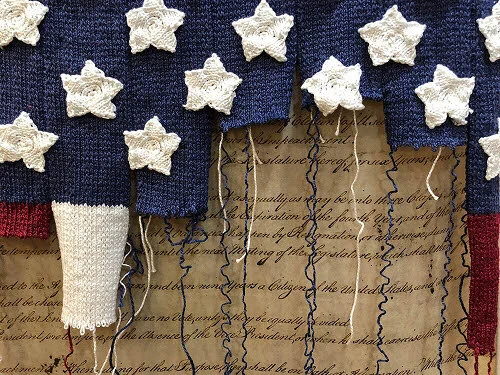
Detail from “The Unraveling” (cotton knit and polyester fabrics), by Adrienne Sloane, in her show “Topical Fiber Work” (responses to current politics), at Bromfield Gallery, Boston, through Dec. 1

Let’s join Atlantic Standard Time

From Robert Whitcomb’s “Digital Diary,’’ in GoLocal24.com
So Eastern Daylight Savings Time has ended for this year and we’re back on Eastern Standard Time. Too bad!
Still, I continue to hope that the New England states, with the possible exception of Connecticut, whose southwestern corner is tightly connected with New York City, will eventually adopt year-round Daylight Savings Time – or call it Atlantic Standard Time, which is used in Canada’s Maritime Provinces.
This will lengthen the light in the afternoon and address how far east New England really is. It would raise the spirits and productivity of most people.
Yes, many public and private school schedules now force many students (and their parents!) to get up when it’s still dark during Eastern Standard Time. But many studies have shown that students, and particularly teens, would do better with a later school opening time anyway. This would, of course, conflict with early hours at many businesses. Perhaps some employers could make things more flexible for parents – for instance letting them start work later and end later.
So now we enter what many, including me, find the dreariest month – sullen, gray and brown and getting darker and darker throughout – with only a good Nor’easter lending it some pizazz as it blows through the now open woods. But November can also have a sere, spare and quiet beauty.


'Among the dark pines'

Dunes atS andy Neck, in Sandwich, on Cape Cod Bay
“The thin, slant willows by the flooded bog,
The huge stranded hulk and the floating log,
Sorrow with life began!
“And among the dark pines, and along the flat shore,
O the wind, and the wind, for evermore!
What will become of man?’’
— From “Cape Cod, ‘‘ by George Santayana (1863-1952)
Digitizing Rhode Island's historic newspapers

From Robert Whitcomb’s “Digital Diary,’’ in GoLocal24.com
An exciting project I’ll be helping out with a bit: U.S. Sen. Jack Reed has announced that $250,000 in federal funding “will help support an ongoing partnership between Providence Public Library and the Rhode Island Historical Society (RIHS) to complete an extensive newspaper digitization project that will celebrate and honor Rhode Island’s rich history by preserving historic newspapers and converting their contents into digital files.
“The funds are being awarded as part of the National Digital Newspaper Program (NDNP), a partnership between the National Endowment for the Humanities (NEH) and the Library of Congress to create a national digital resource of historically significant newspapers published between 1690 and 1963 from all the states and U.S. territories available through the Library of Congress for the first time in history.’’
That Rhode Island’s history is so long and rich -- with so many striking and still controversial events and vivid personalities -- will make this project exciting and create a very useful new resource for historians and other citizens, even as physical newspapers continue to disappear.