
Vox clamantis in deserto





From hotel to dorm
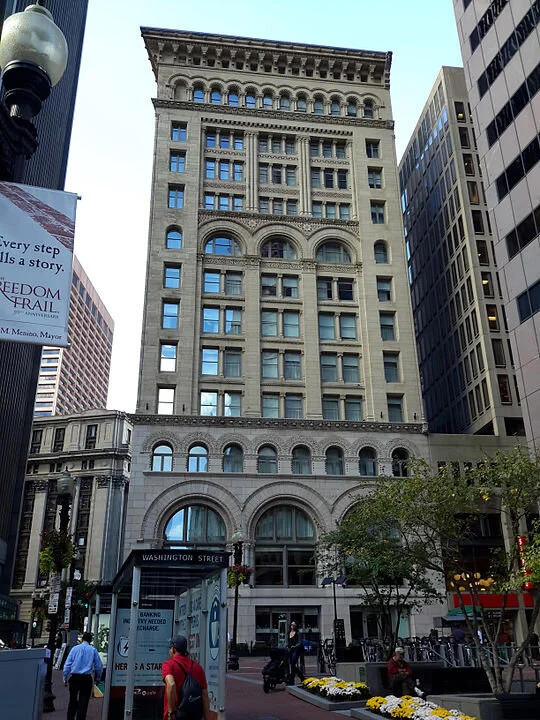
The Ames Building/Hotel, in downtown Boston. It was the tallest building in Boston from its completion, in 1893, until 1915, when the Custom House Tower was built. It’s considered to be Boston's first skyscraper. In 2007, the building was converted from office space to a luxury hotel.
From The New England Council (newenglandcouncil.com)
“Suffolk University has purchased the Ames Hotel in Downtown Boston with plans to turn it into a dormitory. The Boston-based university has a history of over 100 years in the city.
The university has shared its plans to turn the 114-room hotel property into student housing. Pending city approvals, Suffolk aims to open the dormitory in the fall of 2020. There has been a push from Mayor Marty Walsh’s administration to have universities build more student housing in an effort to keep students from occupying the city’s apartments. The hotel’s prime location and need for minimal renovation and construction made it a very attractive purchase for Suffolk. The university filed formal plans earlier this month with the Boston Planning & Development Agency to convert the building into a 266 to 280 bed dormitory.
“‘This is a great opportunity for Suffolk and an important investment in our future,’ said the university’s president, Marisa Kelly. “We look forward to working closely with the city and our neighbors as we move through the community process.”’
Art on the half shell

“Raw Bar’’ (acryllic on panel), by Del-Bourree Bach, in the “:Copley Masters Show,’’ at Copley Society of Art, Boston, through Nov. 7
The "Copley Masters" are those who have won a certain number of awards from the society over the years. Most of the works in this year's masters show are oil paintings, though there are also bronze sculpture and photography as well as watercolor, acrylic and encaustic paintings in the show. “Copley Masters Show “ is a part of Copley Society of Art's anniversary, celebrating 140 years of history.
For more information, visit copleysociety.org/copley-masters-show.
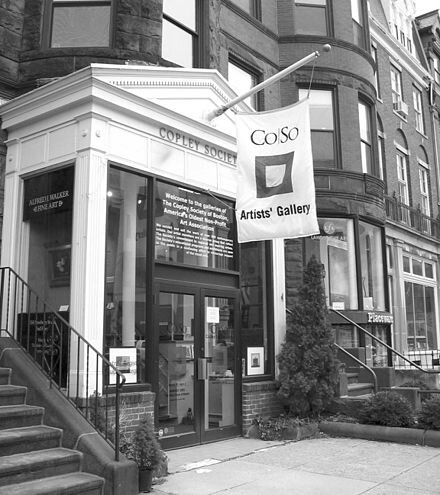
Copley Society of Art, at 158 Newbury St., in Boston’s Back Bay
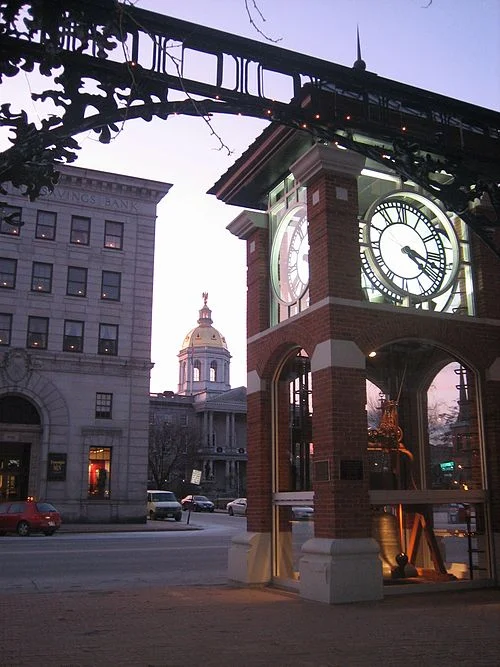
Martha Bebinger: On a Concord, N.H., street, is it meth or a mental-health problem?
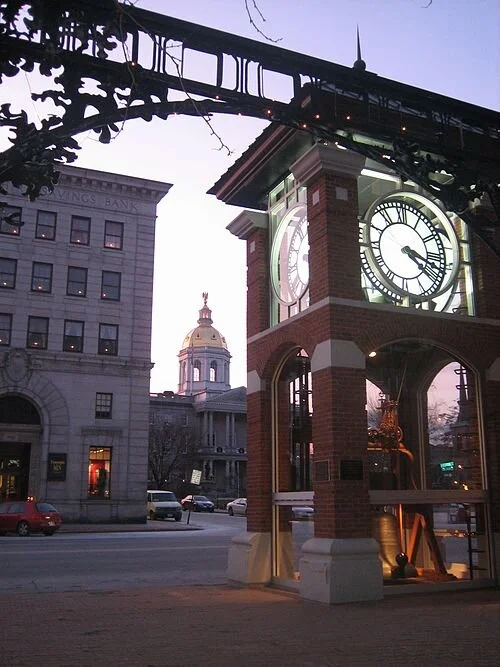
The New Hampshire State House as seen from Eagle Square, in downtown Concord
and WBUR
The dispatch call from the Concord, N.H., police department was brief. A woman returning to her truck spotted a man underneath. She confronted him. The man fled. Now the woman wanted a police officer to make sure her truck was OK.
“Here we go,” muttered Officer Brian Cregg as he stepped on the gas. In less than three minutes, he was driving across the back of a Walmart parking lot, looking for a man on the run.
“There he is,” said Cregg. The officer pulled to a stop and approached a man who fit the caller’s description. Cregg frisked the man, whose name was Kerry. NPR has agreed to use only Kerry’s first name because he may have serious mental health and substance use problems.
“Why were you lying on the ground under a truck?” Cregg demanded.
Kerry, head hanging, rocked back and forth, offering quiet one-line answers to Cregg’s questions. There’s a contest, Kerry said. The prize was a new pickup truck, and he just had to find the truck with a key hidden underneath. He said he had searched three so far.
“Kerry, did you take anything today?” Cregg asked. “You’re not acting right.”
“No, no,” said Kerry, shaking his head forcefully. “I’m just stressed out.”
Cregg watched Kerry, looking for signs — is this meth or a mental health problem? Over the past three or so years, as meth has surged in New Hampshire and across the U.S., it’s become hard to tell. Police in many areas of the country where meth has maintained a steady presence have more experience making an assessment, but in Concord and many parts of the Northeast, the onslaught of meth is new.
Concord police say they need to know whether they’re dealing with a mental-health issue or drugs — or both — because it can make a difference in determining the best response.
Concord may send six to eight officers to subdue someone darting through traffic who is high on meth. The calming techniques these officers learned during training for a mental-health crisis intervention don’t seem to work as well when someone is out of control on methamphetamine. Several officers are recovering from injuries sustained during meth-related calls
“Stay right there for me, all right?” Cregg told Kerry. “I like you too much — stay right there.”
Cregg walked a few steps away from Kerry to speak to one of two other officers called to the scene. It turned out this was the third time in the past few months that alarmed drivers had reported finding Kerry under their car. Cregg decided Kerry’s delusions were mental-health issues and didn’t call for more backup.
Kerry, now cuffed, climbed into the back of Cregg’s cruiser, and they headed for the station. Kerry’s suspected crime: prowling.
“Hey, uh, Kerry — man, you feel like you want to go up to the hospital to speak to somebody?” Cregg asked a version of this question four times.
“No, no,” Kerry said repeatedly, “I’ve been through that route years ago; don’t want to do it again.”
Kerry said later that getting stuck in a hospital emergency room — waiting days, maybe weeks for an opening in a psych treatment program — makes his anxiety much worse.
At the station, Cregg found something that changed his view of the day’s events.
“What is that, Kerry?” Cregg asked, pulling a tiny plastic bag of glistening white shards out of Kerry’s coin pocket. It appeared to be meth. “This explains a lot.”
Cregg said what he thought was psychotic behavior likely had more to do with meth.
But “on that call, they mimicked each other. I wasn’t able to tell at first,” Cregg said.
That may be because Kerry is one of the 9.2 million adults in the U.S. coping with both a mental-health problem and a substance-use disorder. In this particular case, not being able to tell what fueled Kerry’s delusions didn’t cause any problems for him or the police. Things never got out of hand. But Concord Police Chief Bradley Osgood said calls triggered by meth are often more challenging than this one.
“With somebody that’s high on methamphetamine, you want to treat them a little firmer and control them,” Osgood said, “because they often are very volatile and aggressive, and you just want to treat that hostility differently.”
With meth now accounting for 60% of drug seizures in Concord, police say they often default to that firmer approach. Some mental health advocates worry that may mean police are using too much force with their clients. Sam Cochran, a retired major in the Memphis Police Department who co-founded and now helps lead CIT International, a crisis intervention program that includes training for police, said officers aren’t making a diagnosis.
“The officer’s foremost [concern] is ‘How do I open up communications? How do I get compliance in order to accomplish safety?'” Cochran said.
There are visual signs of longer-term meth use that are less likely to show up among mental-health patients: skin wounds and scabs, rotting teeth, dilated pupils. But addiction medicine specialists agree it is difficult to determine what’s going on, at first glance, with someone who appears extremely agitated.
“The possession of methamphetamine may be a clue, but teasing out the acute effects of methamphetamine versus a long-standing mental illness may take a longer period of time,” said Dr. Melissa Weimer, an assistant professor of medicine at Yale School of Medicine. She noted that the effects of meth can last 72 hours or longer.
Surging meth use is relatively new in New England. On the police force, Cochran dealt for years with this issue of meth’s effects mimicking mental health issues. He said slowing things down and diffusing fear can work when dealing with people high on meth.
“But let’s be real, there are some individuals that are so sick,” Cochran said, that “officers find themselves having to act immediately to protect safety. Sometimes that may mean a hands-on approach.”
Cochran and another mental-health advocate, Dr. Margie Balfour, an associate professor of psychiatry at the University of Arizona, say the goal is to only use force as a last resort.
“And then, ideally,” Balfour said, “whether it’s meth or mental health or both … you’re going to be able to take that person to somewhere where they are going to get treatment — and not to jail.”
Balfour is also chief of quality and clinical innovation at Connections Health Solutions. The organization operates a network of psychiatric crisis centers in Arizona where, instead of making an arrest, police can drop off anyone 24 hours a day who is out of control on meth or who has a mental-health condition. Balfour said 20% of adults seen at Connections test positive for meth.
Kerry was due last week in a New Hampshire court where a judge could have ordered drug treatment or an evaluation. Kerry didn’t show up for that arraignment — but said he is trying to reschedule.
This story is part of a partnership that includes WBUR, NPR and Kaiser Health News.
Martha Bebinger, WBUR: marthab@wbur.org, @mbebinger

Llewellyn King: The long road to reducing fires sparked by utilities

California is burning. It was yesterday, it is today, and it will be tomorrow. The price in human life is enormous – in animal and plant life, too. The price in human suffering is gigantic, and the price in property damage is incalculable.
Even while unprecedented high Santa Ana winds are blowing devastation, electric utilities are looking for fixes that accord with the new realities brought about by global warming. Worse is yet to come, they fear.
In January the Edison Electric Institute, a Washington-based trade association, assembled a task force of electric utility CEOs to find solutions. The choices before them are not appealing.
The problem is California may be in the vanguard of fire-prone states, but it is not alone. Many states with heavy forest cover and long electric lines have reason to look to the future with apprehension. What amounts to a perfect fire storm in California could happen in states from Illinois to Louisiana, and from Virginia to Oregon.
Here are the options facing the electric utility CEOs:
Vegetation control. This is essential, as Rod Kuckro, a reporter for E&E News, points out. But vegetation control – simply cutting down trees near electric lines -- is easier said than done. Kuckro, an astute utilities journalist, says that Pacific Gas and Electric Company (PG&E), the utility that has borne the brunt of the blame and whose northern California service area is ground zero for fire, has 125,000 miles of power lines. These are threatened by millions of dead trees, plus the normal threat to power lines from falling trees, dead or alive.
Kuckro says the vegetation issue is complicated by a severe lack of manpower skilled in tree management. Trees must be cut and removed, or they will become fresh fuel for fires.
Surveillance technology. Long-term technology is going to be decisive. Utilities will need a great deal more real-time data about their lines. Line surveillance, always a utility priority, is becoming job number one, and they are looking to the digital frontier.
Surveillance by men on foot and horse gave way to men and women in helicopters and all-terrain vehicles. Now comes the age of drones and data.
Morgan O’Brien, CEO of Anterix, which offers secure broadband communications to utilities, says with broadband technology and judiciously placed sensors, “a utility control room could know about a falling line in 1.4 seconds.” Time enough to cut off the power and start a repair crew on its way.
But this kind of data solution will take time and, like all the solutions, money. This will be difficult for PG&E, which is already in bankruptcy because of fire claims from last year, and the year before.
Undergrounding. This sounds so reasonable, so logical. But in most places, it is not an option and not in earthquake-prone California. The cost of burying lines, where they can safely be buried on the PG&E system, is estimated to be as much as $3 million a mile for residential lines to $80 million a mile for high-voltage cables. It would take decades to bury even a few of its lines. And the cost is almost beyond contemplation.
Microgrids. These are often mentioned. These are autonomous entities usually serving a paper mill, a university, a shopping center or sometimes a whole community. Microgrids self-generate, mostly with gas or solar, and sell surplus power to the utilities; and, in some cases, they act as storage systems for their host utility. Their advantage in a fire-prone region is that they can be isolated from their host grid. Therefore, the lights stay on if the big grid is shut down prophylactically, explains Mike Byrnes, senior vice president of Veolia North America, an energy and environmental services company.
Recently Jacqueline Sargent, general manager of Austin Energy, told me that cybersecurity concerns keep her up at night. For many utility managers that threat is now joined by an existential threat from one of man’s oldest enemies: fire.
If you are the manager of a utility in a blue state, you might also worry whether the federal government will help in a fire disaster. To date, President Trump has let California burn: no federal declaration of a disaster and, accordingly, no federal disaster relief, no troops. Hell, not even a presidential flyover for beleaguered California.
This is not benign neglect. This is vengeful neglect. Remember Puerto Rico?
Llewellyn King is executive producer and host of White House Chronicle, on PBS. His email is llewellynking1@gmail.com and he’s based in Rhode Island and Washington, D.C.
Linda Gasparello
Co-host and Producer
"White House Chronicle" on PBS
\
Love your bats

Bat house
From Robert Whitcomb’s “Digital Diary,’’ in GoLocal24.com
Bats (often associated with Halloween and intimations of doom) are creatures that scare most people. And yet by eating many insects, they’re our allies. Bats are fascinating: With forearms that have evolved as wings, they’re the only mammals capable of sustained flight.
The deadly fungal disease called White Nose Syndrome has been killing off millions of them for more than a decade, very much including in New England. But scientists are finding signs of hope. Hit this link to read a fascinating WNPR article.
And for guidance on building a bat house (and cutting your local insect population), please hit this link.
'Labored Landscapes'

— Photo by Charles Sternaimolo
“Labored Landscapes (where hand meets ground)’’ (installation view), by Daniela Riviera, in her show at the Fitchburg (Mass.) Art Museum, through Jan. 12.
Left, “Donde el cielo toca la tierra #2” [“Where the Sky Touches the Earth #2”], 2019, oil on canvas, 12" x 30". Center: “Donde el cielo toca la tierra #1 “ {“Where the Sky Touches the Earth #1’’} 2019, oil on canvas, 12" x 20". Right: “Donde el cielo toca la tierra #3” [“Where the Sky Touches the Earth #3”] 2019, oil on canvas, 12" x 30".
The museum says:
{The show} “reflects on the relationship of labor, environment and cultural heritage. Explore innovative and immersive work that challenges traditional ideas of painting and drawing, as they relate to architecture and the viewer's body.’’
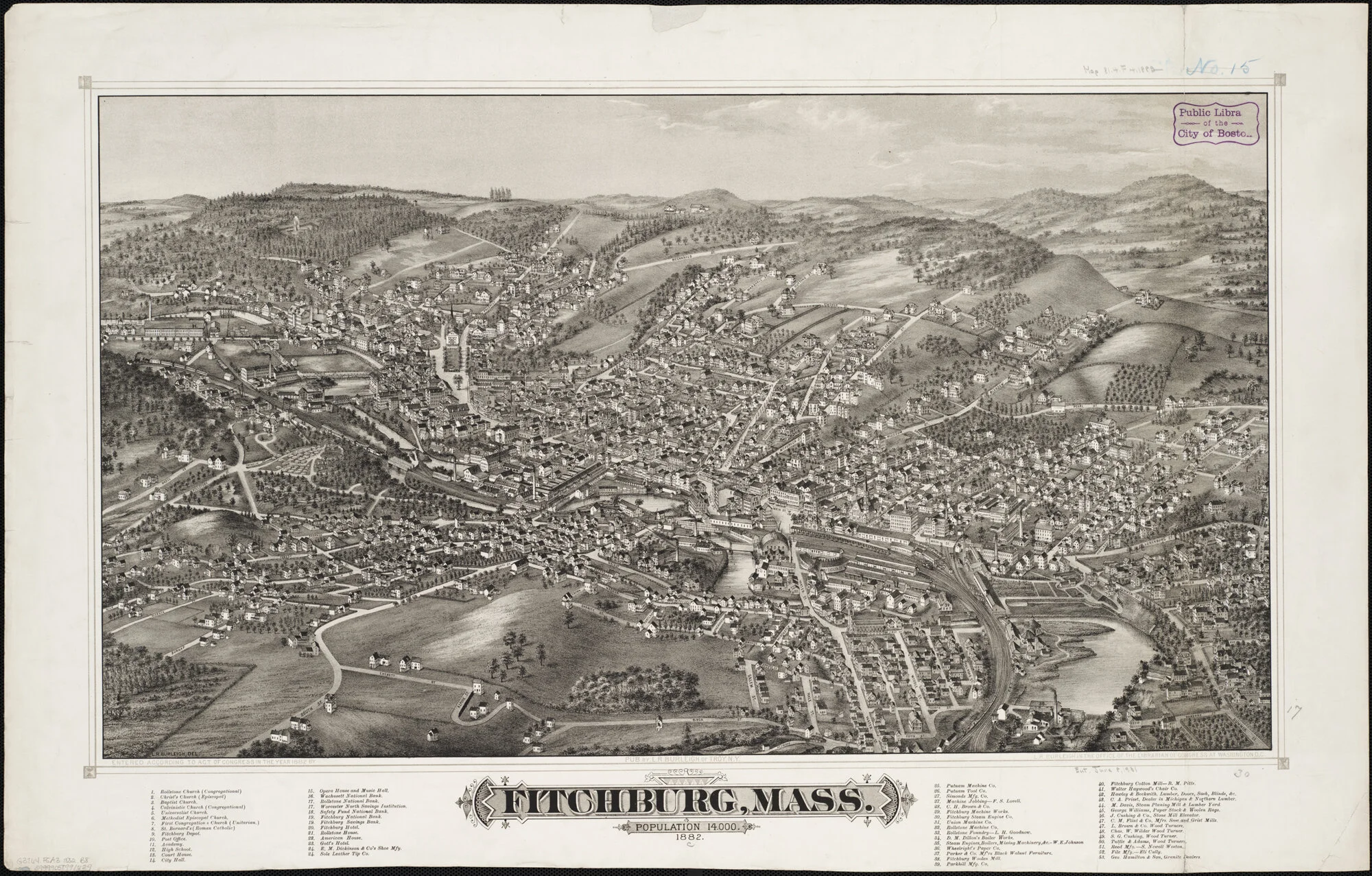
— Print of Fitchburg from 1882 by L.R. Burleigh with listing of landmarks
Fitchburg grew rapidly in the 19th Century as an industrial center, as did many New England communities. Importantly, the Nashua River runs through the city. Originally run by water power, large mills produced machines, tools, clothing, paper and firearms. The city is still known for its architecture, particularly in the Victorian style, built at the height of its mill town prosperity. A few examples: The Fay Club, the old North Worcester County Courthouse and the Bullock House.

'Depth and nostalgia'

”Field in Green’’ (oil on canvas) by Hannah Bureau’ in her show “Intersect,’’ opening in November at Edgewater Gallery, Boston. The gallery explains:
“Hannah Bureau's paintings lie at the intersection of landscape and abstraction. She is interested in creating space and distance that feels like the familiar world around us but is ambiguous, general, and abstracted. In Bureau's painted world she establishes visual plains and geometric shapes that intersect, overlap, pile-up, and ultimately create a sense of visual distance, depth and nostalgia.’’

Jill Richardson: California fires show why we need publicly owned utilities

Satellite view of Kincade Fire smoke in northern California on Oct. 24
Via OtherWords.org
Hundreds of thousands of Californians have been fleeing raging wildfires, while millions sit in the dark. And for-profit utilities may be to blame.
Pacific Gas & Electric — a private, for-profit utility in the state — has admitted that its equipment likely caused 10 wildfires this year alone. To avoid further damage, the utility has been shutting off its customers’ power when weather conditions cause increased fire danger.
Will this lower the risk of wildfires? Maybe. It will also leave blacked out hospitals choosing whether to refrigerate their vaccines or keep their medical records online.
As Vox environmental reporter David Roberts put it, giving customers a choice between blackouts or fires is a failure.
A popular theory says that businesses must be “efficient” in order to survive in a competitive marketplace. By contrast, the government — without such market pressure — is naturally “inefficient.”
But even in the best cases, for-profit utilities with state-sanctioned monopolies are not functioning in a competitive marketplace. And unlike public utilities, which simply have to cover the costs of operating, privatized utilities must generate something else: profits.
How do they do this? By cutting costs — including employee salaries and benefits, customer services, and equipment upgrades. In the case of PG&E, it’s meant failing to upgrade and maintain their aging infrastructure.
It would be one thing if PG&E’s grid used all of the latest, most up-to-date technology. But that’s not the case. Instead of making their grid more resilient, now they simply shut it off when the weather gets bad — and it may still be causing fires.
And if customers don’t like that, too bad. It’s a monopoly.
Prices and service aren’t the only things at stake. We also need to get power from sources that are reliable, safe, and environmentally clean.
A corporation with a profit incentive, which needs to provide shareholders with growth each quarter, may not invest in that. Upgrading and maintaining infrastructure cuts into profits, giving them a reason to sacrifice safety and eco-friendliness to cut costs.
Imagine a circumstance in which most consumers and businesses get their power from clean, rooftop solar panels.
Sounds great, but there’s a big problem for for-profit utilities: After the initial manufacturing and installation, there’s no profit in people getting their power from the sun.
It’s clean, it’s technologically sound, and yet it’s not available to most people. As long as private, for-profit corporations provide our power, cleaner solutions like rooftop solar will remain out of reach to many.
But what if we had publicly owned utilities?
The wildfires — and the climate crisis that’s making them worse — are public problems. The reliability of our power grid is a public need.
When we privatize our utilities, we limit the solutions we can choose from to those that are profitable to a corporation. We risk situations like the one we are in now, in which the public is suffering the consequences of decisions a private entity made to maximize its own profits.
The public interest, not private profit, should be priority No. 1. If there’s a silver lining to this mess with PG&E, it’s that more people will demand that
Jill Richardson, a sociologist, is a columnist for OtherWords.org.

Chris Powell: Stupidity and hypocrisy exceed racism at UConn
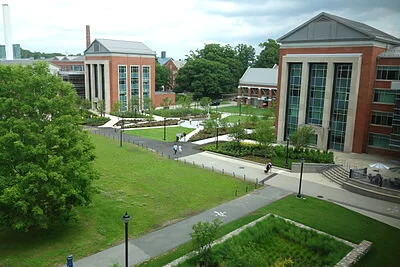
Main quad at the University of Connecticut’s flagship campus, in Storrs
Funny what gets people upset and what doesn't get them upset at the University of Connecticut these days.
A great scandal was contrived lately when two white students got drunk at a bar one night and, walking home across campus, played a game of shouting vulgar words to no one in particular. The vulgarities eventually included a racial slur that was heard by two people in a nearby apartment.
So scores of students marched and rallied in protest as if this disgraceful juvenility was not only a war crime but also representative of white students and university policy generally. Predictably cowed, the university's new president accused the two white drunks of doing "egregious harm." The two were tracked down and arrested on a charge of ...ridicule. They confessed and apologized.
Meanwhile, a member of the university's men's basketball team got drunk at a party, stole a car, sped off, crashed into a street sign and another car, and, when stopped by a police officer, smelled of liquor and ran away. He was tracked down and was charged with evading responsibility, interfering with an officer, driving too fast, and driving without a license. He, too, confessed and apologized. The woman whose car he stole decided not to complain.
But though the basketball player had damaged property and put lives at risk, no university official accused him of causing "egregious harm" and there were no protests and rallies about his misconduct. Instead his coach made excuses for him. He's black.
Yes, there may be some racism at UConn, as everywhere, but mostly there are stupidity, hypocrisy, and political correctness, and they afflict cowardly university administrators as much as politically opportunistic students.
xxx
Connecticut state government's primary purpose was revealed the other day by a Yankee Institute study of the gross insolvency of the state teacher pension system. The study reported that 22 percent of state revenue is used for funding pensions and medical insurance for retired state employees and municipal teachers, and that fully funding the pension and insurance systems would consume 35 percent.
The study recommended easing the teacher pension burden by encouraging private schools, whose staffs are paid less. But doing that would barely be noticed amid the deep hole into which Connecticut has fallen with its capitulation to the government employee unions.
Connecticut will be able to resume normal state government -- government whose purpose is serving the public, not its own employees -- only when it gets out of the pension business entirely, outlawing state-provided defined-benefit pensions and medical insurance for state and municipal government retirees. Even that remedy will take decades to produce results, since it could start only with new hires.
xxx
A spokeswoman for Connecticut Atty. Gen. William Tong confirmed last week that the attorney general will not intervene with antitrust law against the merger of People's United Bank and United Bank, whose operations overlap heavily. The attorney general concluded that the merger would not reduce competition enough to harm depositors or borrowers.
But competition levels provide lots of discretion for antitrust authorities, and the merger is likely to eliminate hundreds of jobs.
Oh, well -- at least the attorney general last week also appealed to the U.S. Department of Energy not to weaken energy-efficiency rules for dishwashers.
xxx
Chris Powell is a columnist for the Journal Inquirer, in Manchester, Conn.
Women and GOP governors

Rhode Island Gov. Gina Raimondo
From Robert Whitcomb’s “Digital Diary,’’ in GoLocal24.com
A recent poll showed that four of the 10 most unpopular governors are women, with Ms. Raimondo (who is very charming in person) the most disliked. How much of this is sexism, which played a role in Hillary Clinton’s loss in 2016, with its rhetoric of “that bitch,’’ etc.? Meanwhile, the two most popular governors are Massachusetts’s Charlie Baker and Maryland’s Larry Hogan, both Republicans in liberal states and known for their competence and integrity – all of which means that, unlike 50 years ago, they would not be qualified now to be GOP presidential candidates. Besides Mr. Baker, New England has two other very able GOP governors – Vermont’s Phil Scott (whom I’ve met) and New Hampshire’s Chris Sununu.
Many of the Republicans in Congress don’t actually do anything substantive (such as crafting legislation). They spend much of their time going on the likes of Fox “News’’ and denouncing such cooked up bogus ogres as the “Deep State’’ (meaning patriotic and often physically brave government officials, including diplomats, CIA officials and military officers, who might push back against the treason and other corruption of the Trump mob). And of course, as with most of their Democratic colleagues, they spend much of their time raising money from, and trying to please, their big donors – an activity that has intensified with the treasure trove of political money unleashed by the Citizens United Supreme Court ruling, in 2010 – one of the greatest producers of political corruption in American history.
But governors, for their part, have to actually govern in a real, fact-based world. The Republican Party on Capitol Hill is a cesspool of corruption. If there is a future for thoughtful center-right Republicanism it must come from the governors.
'Back to ourselves'

At Lincolnville, Maine’s centennial

Narcissus, by Caravaggio
“We thought that the Internet was going to connect us all together. As a young geek in rural Maine, I got excited about the Internet because it seemed that I could be connected to the world. What it's looking like increasingly is that the Web is connecting us back to ourselves.’’
Eli Pariser, the chief executive of Upworthy, a Web site for "meaningful" viral content. He hails from Lincolnville, Maine.

Lincolnville Beach in high summer
‘Fall falling on us’

— Photo by TomwoodO
“Suddenly feel something invisible and weightless
Touching our shoulders, sweeping down from the air:
It is the autumn wind pressing against our bodies;
It is the changing light of fall falling on us.’’
From “Fall,’’ by Edward Hirsch
70 years of arts patronage

— Photo Courtesy of Tom Grotta
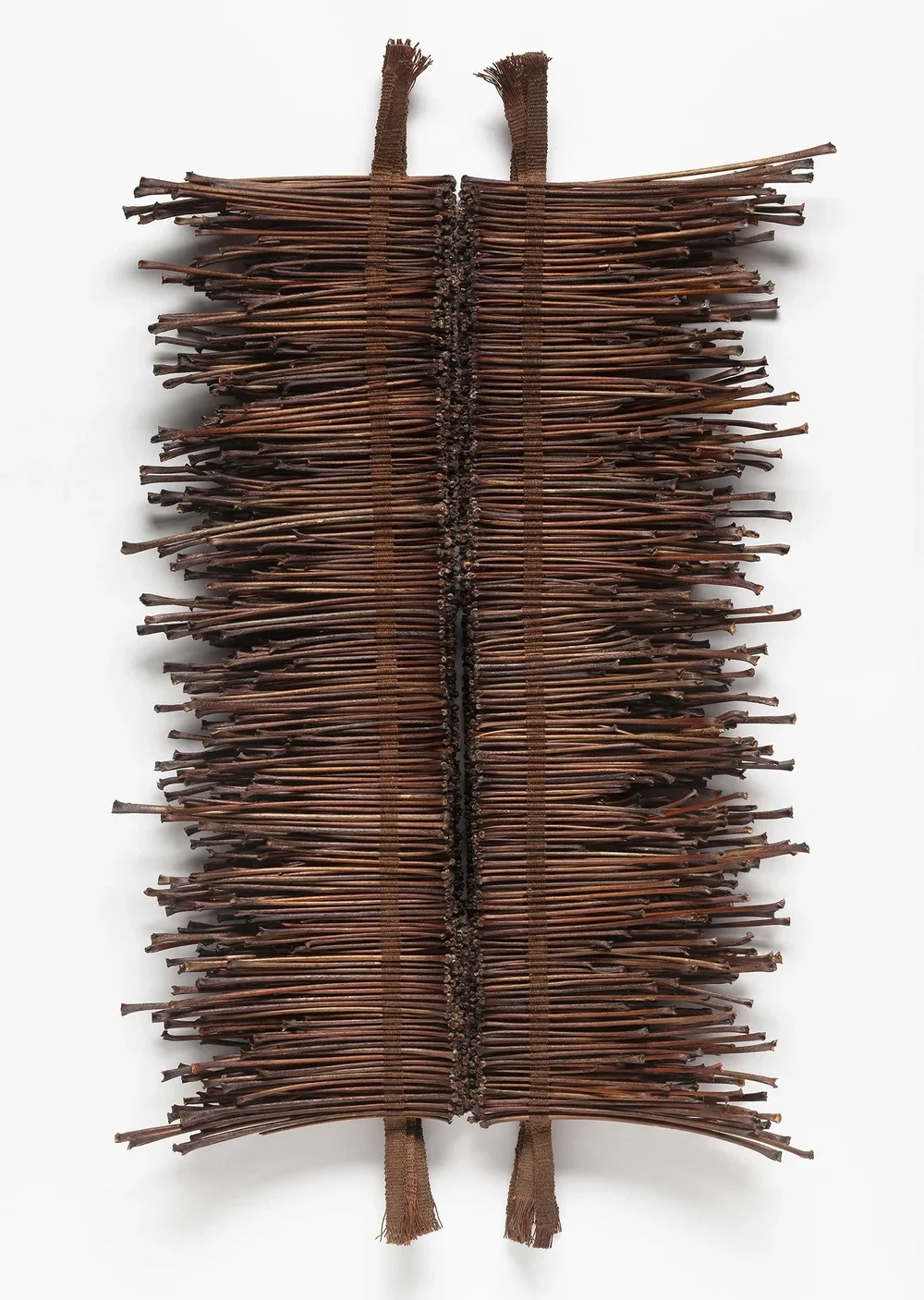
Work by Norma Minkowitz (top) and Mary Giles (bottom) in the show “Artists From the Grotta Collection,’’ at browngrotta arts, Wilton, Conn., Nov. 3-10 and open 10 a.m..-5 p.m.. daily. The show features important works of fiber and dimensional art, by more than 40 artists, collected by Sandy and Louis Grotta.
browngrotta arts explains: “Long-time patrons of the Museum of Arts and Design and the American Craft Museum of New York the Grottas’ collection represents 70 years of arts patronage as well as unique friendships fostered by the Grottas with pioneering contemporary craft makers in textile art, sculpture, furniture and jewelry.’’

J. Alden Weir’s studio at the Weir Farm National Historic Site, in Ridgefield and Wilton, Conn. The park honors the life and work of American impressionist painter J. Alden Weir and other artists who visited or lived there, including Childe Hassam, Albert Pinkham Ryder, John Singer Sargent and John Twachtman.
Weir Farm is one of two sites in the National Park Service devoted to the visual arts, along with Saint-Gaudens National Historic Site, in Cornish, N.H., named for the famous sculptor.
e pluribus unum

“One Legged Table,’’ by Mags Harries, at Boston Sculptors Gallery, Nov. 6-Dec. 8. The gallery reports: “Tackling themes ranging from global warming to the survival of humankind, Mags Harries's new solo exhibition will feature a reprise of her 2008 piece the “One Legged Table’’. The table, a symbol of community gathering and a place to plan action, is composed of parts from 13 different kitchen and dining tables. Each section is supported by just one leg, which when joined together create one large unified structure.’’
Tackling themes ranging from global warming to the survival of humankind, Mags Harries' new solo exhibition will feature a reprise of her 2008 piece the One Legged Table. The table, a symbol of community gathering and a place to plan action, is comprised of parts from thirteen different kitchen and dining tables. Each section is supported by just one leg, which when joined together create one large unified structure.
Harries' One Legged Table will serve as a site for discussion and action. During the run of the show, a series of brunches will be held addressing topics relevant to climate change. The invitees, each specializing in diverse disciplines, will come together in the gallery to create an action generated from their discussion. A series of thirteen iceberg sculptures, cast in metal and resin, will be shown alongside the One Legged
Table.
TR great-grandson to discuss president's legacy

Official White House portrait of Theodore Roosevelt, by the famed painter John Singer Sargent, who spent most of his life in Europe but came from an old New England family.
To members and friends of the Providence Committee on Foreign Relations (thepcfr.org; pcfremail@gmail.com):
Tweed Roosevelt, president of the Theodore Roosevelt Association and great-grandson of that president, will be our dinner speaker on Wednesday, Nov. 6. He’ll talk about how TR’s foreign policy, which was developed as the U.S. became truly a world power, affected subsequent presidents’ foreign policies.
In 1992, Mr. Roosevelt rafted down the 1,000-mile Rio Roosevelt in Brazil—a river previously explored by his great-grandfather in 1914 in the Roosevelt-Rondon Scientific Expedition and then called the Rio da Duvida, the River of Doubt. The former president almost died on that legendary and dangerous trip.
After graduation from Harvard, Mr. Roosevelt served for two years as a VISTA volunteer in Harlem, Bedford Stuyvesant, and the Lower East Side of New York City and went on to NYC’s Human Resources Administration. He subsequently earned his MBA and then taught for two years at Columbia University. A long career in management consulting and finance culminated in his becoming Chairman of Roosevelt China Investments, which, among other businesses, owns and operates the House of Roosevelt on Shanghai’s Bund.
Over the years, Mr. Roosevelt has done much to further the memory and ideals of Theodore Roosevelt. He has lectured and taught about TR at numerous institutions and schools around the world, including Harvard, Marshall, and Santa Clara Universities, ranging from single lectures to a 20-hour course that involved as guest speakers most of the well-known historians of TR.
He has also lectured on a wide range of other subjects, including conservation and the environment, hunting, politics, literature, history, mathematics, Japanese-American relations, and exploration, and has retraced many of TR’s adventures in the American West, Africa, and the Amazon. He has appeared on numerous television documentaries and radio programs and was awarded the prestigious Telly Award for his public service announcement on presidential log cabins.
Schedule:
6:00 - 6:30 PM: Cocktails
6:30 - 7:30: Dinner (salad, entree, dessert/coffee)
7:30 - 8:30: Speaker Presentation
8:30 - 9:00: Q&A with Speaker.
For information on the PCFR, including on how to join, please see our Web site – thepcfr.org – or email pcfremail@gmail.com or call 401-523-3957
Maybe go into another business?

From Robert Whitcomb’s “Digital Diary,’’ in GoLocal24.com
‘Maybe the owners of the gigantic and mega-glitzy Encore Boston Harbor casino, in the formerly industrial city of Everett, should get out of the saturated southern New England casino racket and stick to the bus and boat business. Instead of the originally projected $1 billion revenue for 2019, Encore appears headed for only $600 million. They must be praying there won’t be any big snow and ice storms between now and the end of the year. I wonder what will happen in the next recession. Maybe it will be good for casinos because suckers will become that much more desperate for a quick killing.
To drum up its business by waving the banners of bonanzas to cure their customers’ financial anxieties, Encore is now offering free parking, free bus trips to the palace on the Mystic River waterfront and very cheap boat travel. Its boat service is heartening – the more commuter boats the better on Boston Harbor.
xxx
With the long and confusing war between IGT and Twin River over the Rhode Island gambling business, one almost wants the state to get rid of these middlemen and go directly into the casino business itself, sort of like the liquor stores owned and operated by some states. Reduce the layers of corruption and cut operating costs!
Grace Kelly: Reef balls deposited to lure sport fish
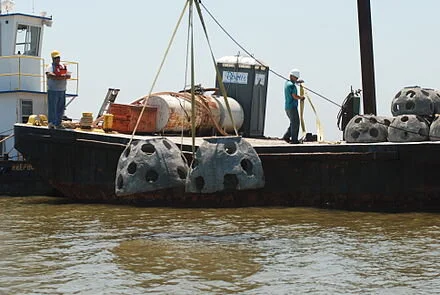
Reef balls being dropped into an area to lure fish in the Gulf of Mexico
From ecoRI News (ecori.org)
EAST PROVIDENCE, R.I.
The mayor, a slew of media members, and a group of residents celebrating a birthday — complete with cake and party hats — gathered Oct. 24 at Sabin Point here, at the head of Narragansett Bay, to watch not one, but 64 balls, drop.
But unlike the ball drop to kick off the New Year, these balls are more like dome-shaped mounds, flat on the bottom, made of concrete and silica and hollow, three feet high and four feet wide, and with large holes gouging their surfaces. Their purpose: bring sport fish to Sabin Point.
These balls will create an artificial reef, the first of its kind in Rhode Island, as a result of a partnership between The Nature Conservancy and the Rhode Island Department of Environmental Management (DEM).
“Part of this work began four years ago when DEM and The Nature Conservancy partnered up to start monitoring the upper bay, and through this we decided this location would be good for fish enhancement since it has access to fish by shore, not just by boat,” said Patrick Barrett, a DEM fisheries specialist. “The money used for this was raised and provided by taxes on fishing gear, so we’re trying to give back to the community.”
Specialty Diving transported the 64 reef balls via barge from Quonset Point to Sabin Point.
Many sport fish, specifically tautog, scup, and sea bass, like structured spaces, and, according to Tim Mooney of The Nature Conservancy, the reefs will allow minnows the security to grow into adulthood.
“The reefs should attract these fish and we’re hoping that it will increase their survival rate,” he said.
As part of the installation, DEM and The Nature Conservancy will monitor the progress in this location against other areas in the bay.
“We will be monitoring this area once a month, and every fall we’ll probably dive the reef as well,” Barrett said. “We’re interested to see what happens.”
Grace Kelly is an ecoRI News journalist.
Editor’s note: Supports for offshore wind turbines also attract fish.
A kind of resort

In the Waterloo Historic District, in Warren, N.H. It encompasses the site of one of the first mills on the Warner River.
“The seldom-traveled dirt road by their door
is where, good days, the Scutzes take their ease.
It serves as a living room, garage, pissoir
as well as barnyard. Hens scratch and rabbits doze
under cars jacked up on stumps of trees.’’
From the ‘‘Leisure’’ section of “Saga,’’ by Maxine Kumin (1925-14), a Pulitzer Prize-pwinning poet who from 1976 until her death lived with her she husband lived on a farm in Warner, N.H., where they bred Arabian and quarter horses.