
Vox clamantis in deserto






Face it: History can be awful
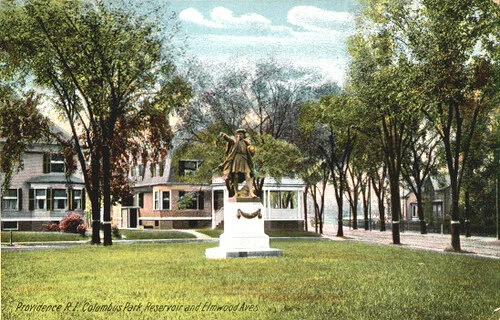
The Columbus statue in Providence, way before it was vandalized
From Robert Whitcomb’s “Digital Diary,’’ in GoLocal24.com
t would be briefly satisfying (but not legal) if Providence City Councilor Kat Kerwin could be removed from office for defending the vandalism involved in the splattering of red paint across the beautiful statue of Christopher Columbus, on Elmwood Avenue, with a sign “Stop Celebrating Genocide’’ placed against the pedestal, on which “Genocide’’ was also painted. She said: “I think the statue should be removed – I think healthy civil disobedience is really good for society.’’ Would she be willing to go to jail herself for such disobedience? I doubt it.
Education blogger Erika Sanzi had a good response, in a post entitled “Providence City Councilor is Wrong to Defend Vandalism."
“This is arrogant and dangerous talk from an elected official. First of all, she does not get to have the final word for other people on what does and does not oppress them.
“And secondly, vandalism and destruction of public property are not only against the law but can escalate quickly and turn dangerous. Taken to its logical conclusion, her argument could be used to justify vandalizing and destroying private property, including hers."
If the people’s representatives want to remove (and move to, say, museums) such statues, let them take a vote to do so.
On Columbus: The arrival of Europeans in the so-called New World brought much death to the Native Americans, mostly in the form of diseases for which they had no immunity but also in being killed directly by the far better armed Europeans. Colonialization brought huge technological advances – some good, some menacing -- to the Americas. And Native Americans showed themselves as sanguinary and brutal, indeed as “genocidal,’’ as the colonists, though they lacked the Europeans’ firepower. Indeed, “genocide’’ has long been a business model for groups around the world.
Which reminds me that the African slaves captured and brought to the Americas were purchased from – Africans. I suppose this should go under the heading “People are terrible.’’ And history can be very, very disturbing and complicated.
To read more, hit this link.
They know where they're going

“Night Journey,’’ Dancers from the Martha Graham Dance Company (dye sublimation print on aluminum), a picture in the solo exhibit at Lanoue Gallery, Boston, through Nov. 30, of photos from the new book The Style of Movement: Fashion and Dance, by Ken Browar and Deborah Ory
Invasive plants filling up New England's lakes and ponds

Purple loosestrife (whose leaves turn red in the fall) invade a pond.
From Robert Whitcomb’s “Digital Diary,’’ in GoLocal24.com
“When nature is overridden, she takes her revenge.’’
-- Marya Mannes (1904-1990), American writer
Kudos to WGBH for its story describing many lakes and ponds in Massachusetts (and by implication all over southern New England) being filled up/ruined by the growth in them of such invasive plants as Eurasian Milfoil, Water Chestnut, Curly-leaved Pondweed and Purple Loosestrife.
Their expansion is being intensified by the overuse of phosphorous-based lawn fertilizers as well as by polluted-water runoff. The environmental damage done by the American obsession with hyper-green lawns is immense; and the rainstorm flow from so many square miles of parking lots ain’t a happy thing either. The warming climate also speeds invasive-plant growth.
These invasive plants have ruined fishing and swimming in many ponds and lakes. The solutions, at least in preventing more lakes and ponds from being ruined, include better monitoring of boats that might be bringing in invasive species, creating more local nonprofit organizations to help monitor, and enforce, protections, including more rigorously limiting fertilizer use and runoff from roads and parking lots near lakes and ponds.
To see the WGBH report, please hit this link.
From to delicate to heavy
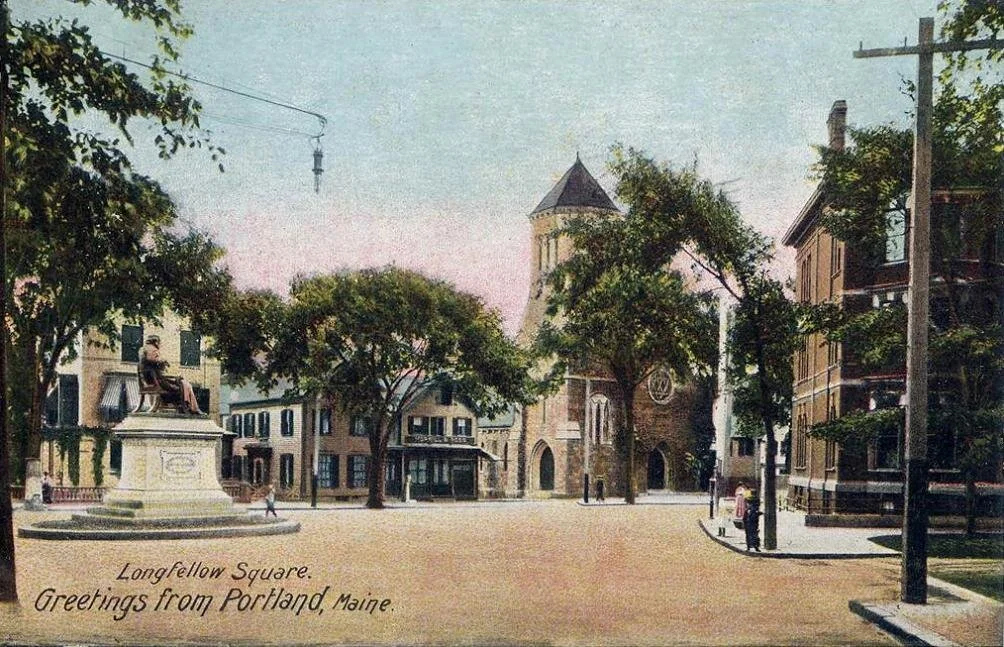
“I had loved Portland . It was a clean city, with weather so delicate that at night you had to look at the streetlights to tell whether it was raining or snowing. Everything was heavier near Boston: air, accents, women.”
― Elizabeth McCracken Boston-born writer, from her short-story anthology Here's Your Hat What's Your Hurry
'Water-painting' in Greenwich

“The End of Spring,’’ by Sun Wenzhang, in the show “Contemporary Artists/Traditional Forms: Chinese Brushwork,’’ through Dec. 8, at the Bruce Museum, Greenwich, Conn.
This exhibition shows 15 contemporary Chinese brushwork pieces for the first time in the U.S. The pieces, gifted to the Town of Greenwich through the 2019 U.S.-China Art and Culture Exchange, introduce viewers to the tools and concepts of brushwork. Chinese brushwork painting, also called water-painting, was developed in China during the Han Dynasty (220-589 A.D.) from calligraphy.

Sharon Jayson: The benefits and challenges of making your home a site for 'aging in place'

“Currently, a lot {of houses} do not have single-floor living — especially in certain parts of the country. There are lots of stairs and multistory homes when land is more valuable … and many households and homeowners don’t necessarily have the funds to do aging in place.”
— Abbe Will, associate project director of the Remodeling Futures Program at the Joint Center for Housing Studies of Harvard University
AUSTIN
Chris and Dennis Cavner, in their early 70s, are preparing to move less than two blocks away into a 2,720-square-foot, ranch-style house they bought this year. But first a renovation is underway, taking the 45-year-old property all the way back to its studs. When the work is completed, these baby boomers are confident the move will land them in their forever home.
“We wanted to find a house that we could live in literally for the rest of our lives,” he said. “We were looking specifically for a one-story house — and one that had a flat lot, to age in place.”
Aging in place is a major financial commitment, one that
may be at odds with retirees’ plans to downsize their lives and budgets and squirrel away cash in anticipation of rising health care costs. The Cavners are rebuilding this house — assessed at $700,000 around the time of the sale — from a shell. The updates will easily cost $300,000 in the hot Austin market.
Leaving nothing to chance, the Cavners are making a number of modifications they might never need. For instance, neither uses a wheelchair, but contractors are making all doorways 3 feet wide for accessibility throughout — just in case. The master bath roll-in shower, flat and rimless, will provide room to maneuver and the master bath vanity is also at wheelchair-accessible height. Kitchen drawers, rather than cabinets, will allow easy access in a wheelchair. The Cavners are closely watching details of the renovation, but it wasn’t a hard decision.
The Cavners are remodeling a guestroom with a private bathroom which could serve as caregiver quarters if they need assistance as they age.
For some seniors, aging in place might amount to simple home modifications, such as adding shower grab bars and handrails or replacing a standard toilet with one that sits taller. But many seniors anticipate a financial crunch as they try to plan for their future on a fixed income, uncertain their savings and retirement funds will last.
With an average 10,000 people a day turning 65, according to the U.S. Census Bureau, the 65-and-older segment of the population is the nation’s fastest-growing: By 2050, almost one-quarter of Americans will be at least 65. A host of surveys conducted over the past decade show that older adults overwhelmingly want to age in their homes. Two in 5 U.S. homeowners are baby boomers, according to a 2018 report released from Fannie Mae.
But for many people, aging at home isn’t in the cards. Abbe Will, associate project director of the Remodeling Futures Program at the Joint Center for Housing Studies of Harvard University, said that many houses aren’t suited to “aging in place.
“Currently, a lot do not have single-floor living — especially in certain parts of the country. There are lots of stairs and multistory homes when land is more valuable,” she said. And “many households and homeowners don’t necessarily have the funds to do aging in place.”
Home modifications and costs vary widely — starting with those simple safety features in the bathroom or lever doorknobs throughout the house — to more extensive changes, such as widening doorways to accommodate wheelchairs, replacing kitchen cabinets with drawers or lowering light switches to wheelchair height. Will said simple retrofits, such as grab bars and railings, “could be several hundred dollars,” but a “whole bathroom remodel would be in the thousands or tens of thousands.”
And a lot of people won’t have the money for extensive modifications. A new survey of 1,000 people age 65 and older by the California-based nonprofit SCAN (formerly the Senior Care Action Network) found 80% of respondents were concerned about their ability to age in place. The driver appears to be financial: About 60% said they have less than $10,000 in savings (including investments and retirement plans), while 28% reported minimal or no retirement savings.
A study in the journal Health Affairs published this spring illustrates the shaky situation for middle-class aging adults who can’t afford modifications to stay at home but who have too much money to qualify for federal housing assistance. Over the next decade, the researchers expect the number of middle-income seniors 75 and older to more than double to over 14 million. And, of that group, more than half (54%) won’t have the assets they will need to cover the projected average yearly cost of $60,000 for assisted living and other out-of-pocket medical costs.
“We don’t know what’s coming down the pipeline as we age,” said sociologist Deborah Thorne of the University of Idaho in Moscow, Idaho, lead author of a study that found skyrocketing bankruptcy rates among those 65 and older.
The research, recently published in the journal Sociological Inquiry, finds the share of older Americans filing for bankruptcy has never been higher. “And bankrupt households are more likely than ever to be headed by a senior — the percent of older bankrupt filers has increased almost 500 percent since 1991,” the study found.
The Harvard report also cited the burden of debt among those ages 65 to 79, with nearly half of those homeowners carrying a mortgage in 2016. And people are carrying substantially more student loan and credit card debt into retirement as well
James Gaines, an economist with the Real Estate Center at Texas A&M University, attributes the increase “to the labor market and employment downsizing and letting older people go first. It can force them into retirement whether they’re ready for it or not. Retirement income may not be enough to carry their debts, and they don’t have enough savings.”
“The leading edge of baby boomers has not hit 75 yet,” said Jennifer Molinsky, lead author of the Harvard report. “When you think about the next five, 10 or 15 years when they’re in their 80s, you’re really going to see the needs shift.”
Molinsky said just what financially challenged seniors should do about housing “is a good question and is a tough question.” Many states have loan and grant programs for home modifications if individuals have a documented disability, she said, yet “what we need more of are programs that help you do this before you need it.”
Molinsky said communities need to create housing near city centers so seniors don’t have to drive. And in the suburbs, communities need to offer more multifamily options, including condos and apartments to buy and rent.
“We just need options,” she said. “It’s important to think about housing options that help people stay in that community. Low-income people need housing that’s affordable. Some people want to trade that single-family home for a condo. Others want to reassess their money and sell their home for a rental. Not everybody wants the same thing.”
Don and Lynn Dille, both 75, built their Austin home with the intention of staying there for a long time. After living in California, Virginia and elsewhere in Texas, they moved to Austin in 2012 and, within a year, began drawing plans with an architect for an energy-efficient home to age in place. Their home was featured this summer in Austin’s annual Cool House Tour for its design making the most of natural light, cross-ventilation and solar panels, as well as wider-than-normal doorways and level floors for a wheelchair.
One key feature of the construction acknowledges that they might need live-in help down the road to avoid long-term nursing care. Just as the Cavners may convert a bedroom and bath on the opposite side of their new home into caregiver quarters, the Dilles constructed a second floor above their detached garage that could easily convert into living space.
“We think having a separate apartment where we could have a caretaker or part-time help to maintain our property makes us able to stay where we’d like to be and be independent,” said Don Dille, who retired from the federal government.
But, as adults consider whether to plunge ahead with simple modifications or undertake more extensive renovations, there are always unknowns.
Cavner, an investment adviser and co-founder of a new health care startup, said he believes what they’re spending to renovate the house for the years ahead will prove a sound investment. “The modifications we’re making are not going to make it less desirable. It will feel more spacious.
Sharon Jayson is a journalist with Kaiser Health News
Sharon Jayson: @SharonJayson

At the PCFR: What's next in the long Venezuela crisis?

Political protest in Altamira, Venezuela
From The Providence Committee on Foreign Relations (thepcfr.org; pcfremail@gmail.com)
Our next speaker, for our Wednesday, Oct. 23, dinner, will be Patrick Duddy, formerly the U.S. ambassador to Venezuela, under the title “Venezuela: A Regional Crisis With No End in Sight.’’ (He'll use PowerPoint.)
New England, by the way, buys a lot of oil from Venezuela for winter heating.
Mr. Duddy, currently director of Duke University’s center for Latin American and Caribbean Studies, served as American ambassador to Venezuela in 2007-2008, during the George W. Bush administration.
The late President Hugo Chavez expelled him but eight months later he returned as ambassador in the Obama administration. He finished that assignment in 2010.
Before his ambassadorships, Mr. Duddy served as Deputy Assistant Secretary of State (DAS) for the Western Hemisphere, responsible for the Office of Economic Policy and Summit Coordination, which included the hemispheric energy portfolio, as well for the Offices of Brazil/ Southern Cone Affairs and of Caribbean Affairs. During his tenure as DAS, he played a lead role in coordinating U.S. support for the restoration of democracy in Haiti.
Our venue is the Hope Club, at 6 Benevolent St., Providence. Members may bring guests.
Schedule: 6:00 - 6:30 PM -- Cocktails; 6:30 - 7:30 -- Dinner (salad, entree, dessert/coffee); 7:30 - 8:10ish – speaker, followed by Q&A with speaker. Evenings end no later than 9.
Please let us know if you're coming. You can register for the dinner on our Web site -- thepcfr.org -- or send an email to pcfremail@gmail.com
For all information on the PCFR, including on how to join, please see thepcfr.org and/or call (401) 523-3957
Exile on the beach
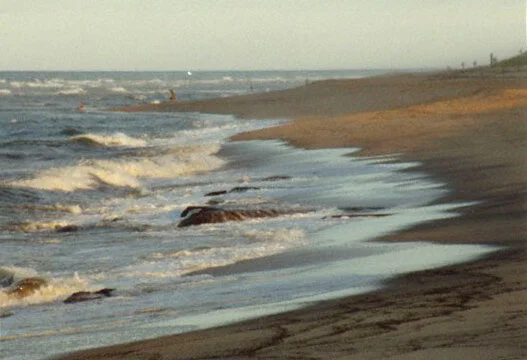
“I shall go back again to the bleak shore
And build a little shanty on the sand,
In such a way that the extremest band
Of brittle seaweed will escape my door
But by a yard or two; and nevermore
Shall I return to take you by the hand…’’
— From “I Shall Go Back,’’ by Edna St. Vincent Millay (1897-1950), a native of Maine
Building a Worcester theatre district
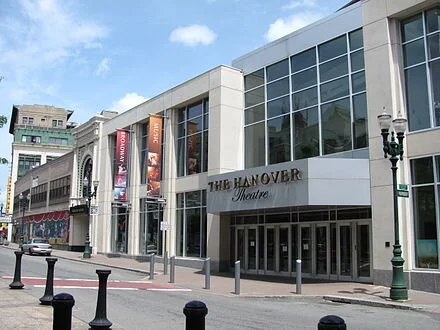
The Hanover Theatre entrance. Photo of interior below.
From The England Council (newenglandcouncil.com)
Bank of America has donated $250,000 to the Hanover Theatre for the Performing Arts, in Worcester, to build an outdoor theater. The bank has been a long time benefactor of the theatre and will have the honor of naming the new outdoor plaza next to it.
Bank of America’s generous donation brings the Hanover Theatre closer to achieving its goal of transforming its neighborhood into Worcester’s Theatre District. The $250,000 donation comes in collaboration with the City’s Main Street Reimagined project to restore the street’s public space, including new sidewalks, traffic lights, lighting fixtures and more. Hanover Theatre President and CEO Troy Siebels has prioritized a strong collaborative relationship with the City of Worcester and their respective downtown projects.
“The Hanover Theatre touches well over a quarter million patrons every year and is a staple in the local arts community,” said Ed Shea, Bank of America’s Central Massachusetts market president. “In addition to the positive impact that performing arts has on the community, the improvements to the theater also play an important role in the rebirth of downtown Worcester.”

Chris Powell: Prosecute kids for wearing blackface? Perpetual poverty in New Haven

Promotional poster for Spike Lee’s 2000 film Bamboozled, about a disgruntled black television executive who reintroduces the old blackface style in a series concept to try to get himself fired, and is instead horrified by its success.
Kids can be horrible -- stupid, cruel, hateful, sadistic, reckless, and worse. But in spite of the indignation lately contrived by the Connecticut chapter of the National Association for the Advancement of Colored People, wearing blackface is not high on the scale of youthful offenses.
The other week, at a press conference outside a middle school in Shelton, Conn., one of whose white students recently posted on the Internet a photo of herself wearing blackface, the NAACP suggested that kids deserve to be shot for that kind of thing or at least criminally prosecuted for a "hate crime."
On top of that, according to the Valley Independent Sentinel, the NAACP demanded that Shelton authorities account to the organization for the progress of the "investigation" of the incident and include the organization in a mandatory discussion with students and school staff about racial diversity.
Make wearing blackface a "hate crime"? That's fascism. For no matter how offensive the blackface-wearing student was, and no matter what she meant, if anything, she did it on her own time to her own looks in her own life. A school can disapprove of certain things that rise to public attention, and of course a school always should be teaching decent behavior, but First Amendment freedom of expression in one's personal life is and must remain inviolate. The government has no authority to punish it.
In peacefully protesting racial oppression in the segregationist South, the civil rights advocates of a half century ago struggled and even died for freedom of expression. The NAACP was part of that struggle. Now the organization wants 12-year-olds prosecuted for putting on makeup and making faces.
But it's even more ironic. Lately the NAACP has supported Connecticut's new laws increasing leniency for juveniles who commit crimes like car theft. So now in Connecticut juveniles can get caught stealing cars twice before a court can impose any punishment on them. Many of those juveniles are black. But the NAACP thinks wearing blackface is worse than car theft.
Most kids grow up. The premier of Canada wore blackface when he was young. So did the governor of Virginia. They lately were caught through old photos and repented. Blackface is not who they are now. Most of the kids in Connecticut who lately have advertised themselves wearing blackface have been reprimanded and likely will grow up too. With luck many of Connecticut's young and coddled car thieves will not only grow up but stay out of prison.
The NAACP should grow up as well. There are far more serious things to be indignant about.
* * *
WHY THE PERPETUAL POVERTY? Fresh from his victory in New Haven's Democratic primary for mayor, Justin Elicker has urged Yale University students to devote some time to civic life in the city. According to the Yale Daily News, one student snarked back, "We're a university, not a soup kitchen."
Elicker replied that some city residents "can't put food on the table" while Yalies enjoy an all-you-can-eat dining hall.
But despite that snarky student, Yale is not quite the bastion of privilege it once was. Now about half Yale's students receive the university's own scholarships under "need-blind" admissions policy so that even kids who grew up dining at soup kitchens and don't have much money can get into the university.
Also the other week CTNewsJunkie reported that Connecticut is the only state in which poverty recently increased. So Yale students and Elicker himself might perform a great civic service if they could ever determine why poverty and urban policies are failing so badly.
Chris Powell is a columnist for the Journal Inquirer, in Manchester, Conn.
Depends what you mean by 'hope'

“Hope, which lay at the bottom of the box, remained.’’ Allegorical painting by George Frederic Watts, 1886
“Do you have hope for the future?
someone asked Robert Frost, toward the end.
Yes, and even for the past, he replied,
that it will turn out to have been all right
for what it was, something we can accept,
mistakes made by the selves we had to be….’’
— From ‘‘Thanks, Robert Frost,’’ by David Ray
'Lighted on'

"There is no season when such pleasant and sunny spots may be lighted on, and produce so pleasant an effect on the feelings, as now in October."
— Nathaniel Hawthorne (1804-1864), one of New England’s greatest novelists.

Llewellyn King: The business case for national health insurance

WEST WARWICK, R.I.
The leading Democratic candidates for president want differing degrees of major surgery done on health insurance. During the Oct. 14 debate, they contrived only to cut themselves.
The smell of blood from Bernie Sanders, Elizabeth Warren and Joe Biden must have been a near-divine scent to Republican operatives who haven’t had an easy time of it lately.
Sanders and Warren have signed on to an idea favored by many on the left: Medicare-for-all. Joe Biden, seeking to carve out a position as the seasoned centrist, favors not surgery but Band-Aids all over the patient.
The problem with Medicare-for-all is money. Or, it is advertised as money.
Yet the reason for single payer — a national health insurance system — isn’t to spend more money but less.
Much less.
The United States spends about double what other countries spend, but the coverage is patchy and has non-medical consequences that are severe. One of these is the effect on the mobility of labor. Workers stay in dead-end jobs because they fear the loss of their health insurance.
A bigger effect is the burden on business of saddling it with health care. The price tag for business is huge. Transferring that expense to the government would have the effect of a big tax cut. A new Social Security tax designed to compensate for the loss of business support in health care would be reasonable. Business would be ahead, and the national misery of paying in multiple ways for health care would be ended. Simple is cheaper.
One benefit would be the leveling of the playing field for business and employees. The employer-provides-system is a burden on business as well as a distorter of society.
The Milliman Medical Index calculates the cost of health insurance for a family of four, on a standard plan, at $28,386. Unsurprisingly, many employers are now seeking to share health-care costs with employees. In 2019, according to Milliman, companies are paying 82 percent of employees’ health insurance premiums.
The current system costs everyone in every possible way. Doctors employ staff whose only job is to wrestle with health insurance companies, and hospitals have armies of people working on claims. An attorney working for a big city hospital told me that it has 150 people whose only job is to struggle with insurance claims.
The mistake the leading Democrats are making, especially those of the left, is just looking at health insurance from the humanitarian point of view. Sanders sounds off on the uninsured and the bankruptcies. Democrats are all heart and not enough numbers — or courage to suggest necessary tax adjustments.
What they should do is look at the business case against the sustained chaos that passes for health care. Businesses of all sizes should be enthusiastic about being relieved of the health care burden: a burden carried only by U.S. businesses.
Americans pay roughly twice as much of the Gross Domestic Product for health care — about 19 percent — as does any other advanced country. The driving issue should be to reduce that; to get the fat out, to curb profiteering, to end rent-taking by insurance companies, and to end the wasted effort in negotiations on nearly every claim. Patients and business would both be winners.
The business cavalry has an expeditionary force already saddled up with a group called Business for Medicare for All. Its chairman, Richard Master, says: “You don’t need to be a progressive to see why single-payer is a logical option for America. For a growing number of business leaders, including myself, transitioning to a single-payer, centrally financed health care system makes sense from a purely economic perspective.”
From the doctors’ corner, John Perryman, a Roscoe, Ill.-based pediatrician, says the leading Democrats missed out. “The system is chaotic and failing. The debate was very disappointing. Biden said it would cost $3.6 trillion a year to switch over — the amount we now spend on health care every year. But that is growing by 4 percent a year which means in 10 years, we will be spending $30 trillion, with 20 percent going to insurance companies. The only way to get that down is with a single-payer system,” he says.
Perryman is a member of Physicians for A National Health Program, a 23,000-strong group of doctors with offices in Chicago. A different prescription is being written.
On Twitter: @llewellynking2
Llewellyn King is executive producer and host of White House Chronicle ,on PBS. He’s based in Rhode Island and Washington, D.C.
Read this column on:
InsideSources
White House Chronicle
Watch the latest White House Chronicle:
How climate change is changing electric utilities, with Ernest Moniz, Paula Gold-Williams
She only looks simple

“Portrait of a Woman “ (oil and acrylic on linen and acrylic on cotton duck), by Ian McKeever, in his show “The Nature of Painting,’’ at Heather Gaudio Fine Art, New Canaan, Conn., through Nov. 16. The gallery says:
“Using different techniques to apply translucid layers of paint , McKeever {has gone on} to create beautiful lyrical abstractions on canvas….His paintings became more about the implicit light and suggestions of visual passageways to a space inside their surface. For McKeever, light is not something to be depicted per se, but rather conveyed through the inherent qualities of the medium, be they oil, acrylic or gouache.’’
'Last rosebud'

In my Autumn garden I was fain
To mourn among my scattered roses;
Alas for that last rosebud which uncloses
To Autumn’s languid sun and rain
When all the world is on the wane!
Which has not felt the sweet constraint of June,
Nor heard the nightingale in tune.
Broad-faced asters by my garden walk,
You are but coarse compared with roses:
More choice, more dear that rosebud which uncloses,
Faint-scented, pinched, upon its stalk,
That least and last which cold winds balk;
A rose it is though least and last of all,
A rose to me though at the fall.
— “An October Garden,’’ by Christina Rossetti (1830-1894)
Stream study

On The Pemigewasset River as it descends into the Basin in Franconia Notch
“Fishing the small streams of New Hampshire is a pastime that combines hiking, map reading, and bushwhacking -- plenty of it.’’
— Joseph Monninger, writer and English professor at Plymouth (N.H.) State University
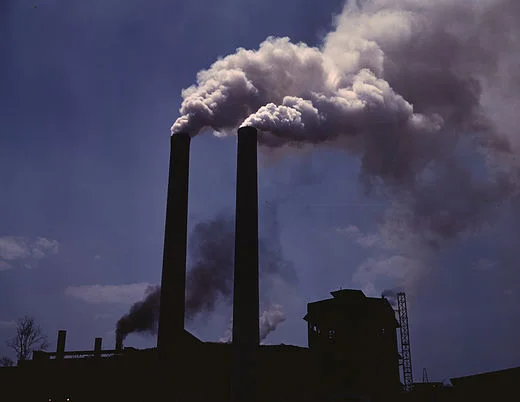
Charlie Simmons: Our tax system makes pollution worse

Schematic drawing, causes and effects of air pollution: (1) greenhouse effect, (2) particulate contamination, (3) increased UV radiation, (4) acid rain, (5) increased ground-level ozone concentration, (6) increased levels of nitrogen oxides.
— From Wikipedia
Via OtherWords.org
Greta Thunberg, the 16-year-old Swedish climate activist who sparked student protests across the globe, had this to tell the U.N .General Assembly in New York: “People are suffering. People are dying. Entire ecosystems are collapsing. We are in the beginning of a mass extinction. And all you can talk about is money and fairytales of eternal economic growth.”
As a retired businessman and engineer, I can’t help but look at Greta with admiration. Yet I shudder to think that my generation has abdicated our duties to such an extent that we are leaving the mess of climate change on the shoulders of high schoolers.
Lawmakers and business leaders in my generation have a responsibility to act today to mend our planet before these young people have to inherit it. Some of the most straightforward, yet least discussed solutions, lie in our tax system.
Unfortunately, the man-made crisis of climate change is made worse by our man-made tax system. In 2018, many of the biggest fossil fuel companies paid zero dollars in taxes — and actually received billions in rebates.
These shocking facts, uncovered by the Institute on Taxation and Economy Policy, flew under the radar of mainstream media.
In total, ITEP found that at least 60 of the biggest American corporations didn’t pay a cent in federal taxes in 2018. Of those, 22 are power utilities and oil and gas corporations, including famous names such as Chevron, Halliburton, and Occidental Petroleum — and that was only in 2018
How is this possible?
In part, it’s because there are a mind-boggling number of tax incentives offered to fossil fuel companies. There are deductions for domestic fossil fuel production, tax credits for vague “intangible drilling costs,” and deferred federal tax payments.
In 2016, The Wall Street Journal estimated that these provisions amounted to $4.76 billion per year given out to fossil fuel companies from the federal government.
That was before GOP corporate tax cuts worsened the problem in 2017 by slashing the industry’s already low tax rate and offering a new deduction for capital expenditures — while simultaneously opening up half a million acres of the Arctic National Wildlife Refuge to new drilling.
Companies like Chevron will tell you they’re committed to preventing climate change, pointing to their $100 million pledge to the Oil and Gas Climate Initiative, an industry-led organization allegedly dedicated to fighting climate change.
This is a paltry amount compared to the $4.5 billion in profit they made in 2018 — or even to the $955 million they avoided in taxes thanks to the Republican tax cuts. Chevron received a $181 million rebate on Tax Day.
Essentially, American taxpayers lost $955 million, funded a $100 million PR stunt, and paid $81 million directly to the corporation to fund more drilling and exploration our planet literally cannot afford. Chevron’s not unique, either — Occidental did the same thing.
While the current administration lets fossil fuel companies raid America’s natural resources and its coffers, the rest of us can’t sit back and wait for change. Greta certainly isn’t, and she’s only 16.
Tax incentives should encourage better behavior from corporations, not pay polluters to profit from environmental degradation.
Forcing our elected officials and 2020 candidates to introduce incentives for fixing climate change — and remove those that accelerate it — should be on the top of the agenda. our economy and the health of our environment ultimately go hand-in-hand, and it’s long past time our tax system reflected that.
Charlie Simmons is a retired tech executive from Silicon Valley and a member of the Patriotic Millionaires.
Enough, already, with the mobsters
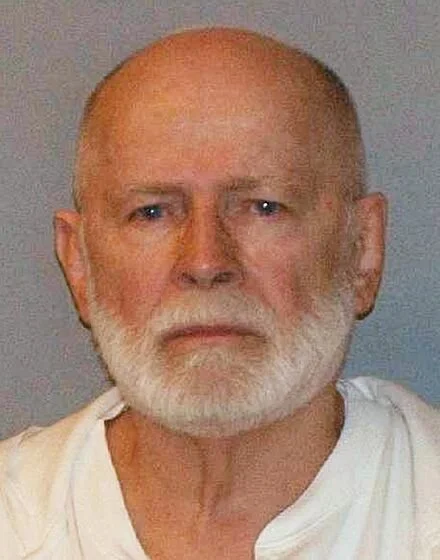
The late South Boston mob boss Whitey Bulger
From Robert Whitcomb’s “Digital Diary,’ in GoLocal24.com
Thank you, Scott Mackay, of the Public’s Radio, for urging folks to move on from the much-outdated cliches of dark, mob-ridden Boston and Providence. It’s been a long, long time since the Mafia has been a big force in either city, and Whitey Bulger’s Irish-American mob in South Boston has been gone for many years, too. I have worked and lived in both cities and am weary of the cartoon versions presented by the entertainment media.
Then there are the tedious – and associated with the Mafia obsession – reruns of the life of Buddy Cianci (whom I knew). His vaudeville act was stale well before he died, in 2016. But I’ll always be impressed by his genius for getting credit for other individuals’ and organizations’ contributions to the city and for his charming lack of interest in the city’s fiscal stability. Still, yes, to be fair, Buddy aroused a lot of interest, even excitement in cynical old Providence, and he could be very funny.
To read Mr. McKay’s essay, please hit this link
The woods move back

“Everywhere throughout New England you find old, tumbledown field walls, often in the middle of the deepest, most settled- looking woods - a reminder of just how swiftly nature reclaims the land in America.’’
— Bill Bryson, history and travel book author
'For the grapes' sake'

O hushed October morning mild,
Thy leaves have ripened to the fall;
Tomorrow’s wind, if it be wild,
Should waste them all.
The crows above the forest call;
Tomorrow they may form and go.
O hushed October morning mild,
Begin the hours of this day slow.
Make the day seem to us less brief.
Hearts not averse to being beguiled,
Beguile us in the way you know.
Release one leaf at break of day;
At noon release another leaf;
One from our trees, one far away.
Retard the sun with gentle mist;
Enchant the land with amethyst.
Slow, slow!
For the grapes’ sake, if they were all,
Whose leaves already are burnt with frost,
Whose clustered fruit must else be lost—
For the grapes’ sake along the wall.
— “October,’’ by Robert Frost