
Vox clamantis in deserto




Grand tour of grand New England houses
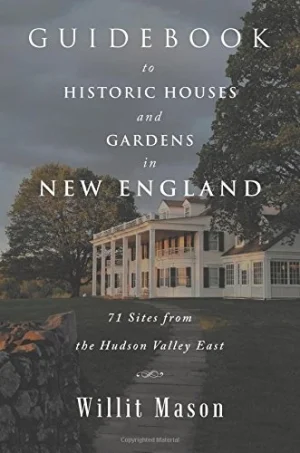
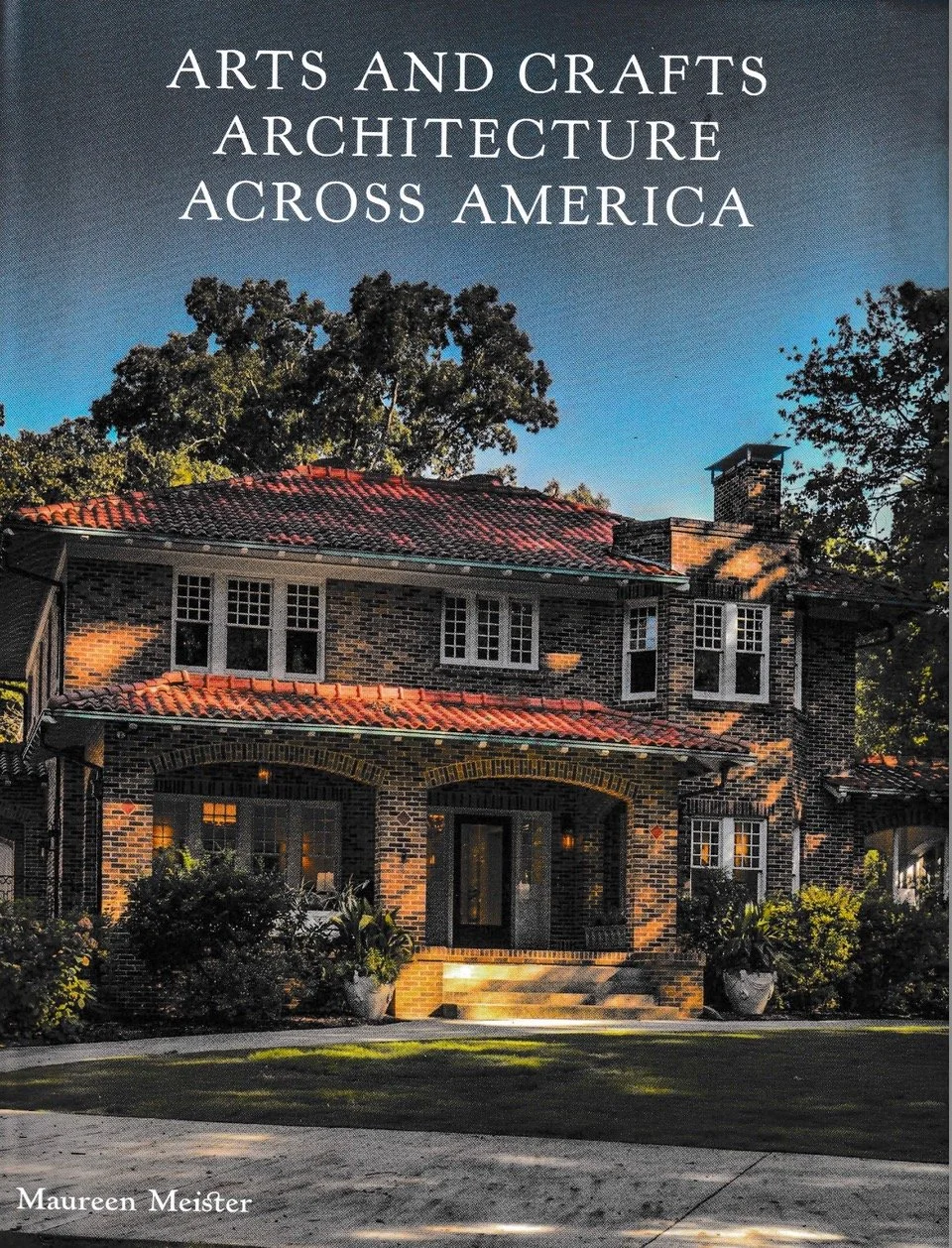
William (“Willit’’ ) Mason, M.D., has written has a delightful – and very handy -- book rich with photos and colorful anecdotes, called Guidebook to Historic Houses and Gardens in New England: 71 Sites from the Hudson Valley East (iUniverse, 240 pages. Paperback. $22.95). Oddly, given the cultural and historical richness of New England and the Hudson Valley, no one else has done a book quite like this before.
The blurb on the back of the book neatly summarizes his story.
“When Willit Mason retired in the summer of 2015, he and his wife decided to celebrate with a grand tour of the Berkshires and the Hudson Valley of New York.
While they intended to enjoy the area’s natural beauty, they also wanted to visit the numerous historic estates and gardens that lie along the Hudson River and the hills of the Berkshires.
But Mason could not find a guidebook highlighting the region’s houses and gardens, including their geographic context, strengths, and weaknesses. He had no way of knowing if one location offered a terrific horticultural experience with less historical value or vice versa.
Mason wrote this comprehensive guide of 71 historic New England houses and gardens to provide an overview of each site. Organized by region, it makes it easy to see as many historic houses and gardens in a limited time.
Filled with family histories, information on the architectural development of properties and overviews of gardens and their surroundings, this is a must-have guide for any New England traveler.’’
Dr. Mason noted of his tours: “Each visit has captured me in different ways, whether it be the scenic views, architecture of the houses, gardens and landscape architecture or collections of art. As we have learned from Downton Abbey, every house has its own personal story. And most of the original owners of the houses I visited in preparing the book have made significant contributions to American history.’’
To order a book, please go to www.willitmason.com
Matt Robinson: Legends and lore of the Ivy League

After over 20 years as a professional writer, editor, publisher and “pen for hire,” I have composed my new book Lions, Tigers, and…Bulldogs?: An unofficial guide to the legends and lore of the Ivy League. It was just published by Fighting Quaker Books. However, you can go to www.lionstigersbulldogs.com to order the book or respond to weekly trivia contests for a chance to WIN a copy.
In addition to tons of trivia about the Ancient Eight, the book and Web site offers interesting information about the history of academia and college sports in America, as well as a veritable Who’s Who of famous graduates (and almost graduates). So if your students or children need a bit of a boost to get them thinking about and striving for college, Lions, Tigers, and…Bulldogs? can be a fun way to start the conversation.
A book party is scheduled for Sept. 14 at the New England Mobile Book Fair in Newton, Mass.
Matt Robinson is a Boston area-based journalist, editor and educator. He graduated from the University of Pennsylvania in 1996.
Sun also dresses

“Yellow’’ (found dresser: plywood, maple wood and paint), by Sarah Braman, in a group show through Oct. 6 at Hampden Gallery, Amherst, Mass.
Chuck Collins: Make the very rich pay their fair share in taxes first

“The Worship of Mammon’’ (1909), by Evelyn De Morgan
Via OtherWords.org
BOSTON
Presidential candidates should take a pledge: The middle class should not pay one dollar more in new taxes until the super-rich pay their fair share.
Already candidates are outlining ambitious programs to improve health care, combat climate change and address the opioid crisis — and trying to explain how they’ll pay for it.
President Trump, on the other hand, wants to give corporations and the richest 1 percent more tax breaks to keep goosing a lopsided economic boom — even as deficit hawks moan about the exploding national debt and annual deficits topping $1 trillion.
Eventually someone is going to have to pay the bills. If history is a guide, the first to pay will be the broad middle class, thanks to lobbyists pulling the strings for the wealthy and big corporations.
Here’s a different idea: Whatever spending plan is put forward, the first $1 trillion in new tax revenue should come exclusively from multimillionaires and billionaires.
Four decades of stagnant wages plus runaway housing and health care costs have clobbered the middle class. In an economy with staggering inequalities — the income and wealth gaps are at their widest level in a century — the middle class shouldn’t be hit up a penny more until the rich pay up.
The biggest winners of the last decade, in terms of income and wealth growth, have not been even the richest 1 percent, but the richest one-tenth of 1 percent. This 0.1 percent includes households with incomes over $2.4 million, and wealth starting at $32 million.
They own more wealth than the bottom 80 percent combined. Yet these multi-millionaires and billionaires have seen their taxes decline over the decades, in part because the tax code favors wealth over work.
This richest 0.1 percent receives two-thirds of their income from investments, while most working families have little capital income and depend on wages. But our rigged system taxes most investment income from wealth at a top rate of about 24 percent — considerably lower than the top 37 percent rate for work.
One way to ensure that the wealthy pay first is to institute a 10 percent surtax on incomes over $2 million. This “multimillionaire surtax” would raise nearly $600 billion in revenue over 10 years, according to an upcoming study from the Tax Policy Center.
The surtax would apply to income earned from work (wages and salaries) and to investment income gained from wealth, including capital gains and dividends. So those with capital income over $2 million would not get a preferential tax rate.C
The multimillionaire surtax is easy to understand, simple to apply, and effective — because it covers all kinds of income, making it difficult for the wealthy to avoid.
And it is laser focused on the super-rich. Anyone earning below $2 million a year would not pay a dime.
As a nation, we will need to raise trillions to protect Social Security, Medicare and Medicaid, and to address urgent priorities such as health care, climate change, child care, higher education, opioid addiction, and more.
The middle class should have 100 percent confidence that they won’t be asked to pony up until Wall Street speculators and billionaires pay the piper. A multimillionaire surtax is a good first step.
Chuck Collins, based in Boston, directs the Program on Inequality at the Institute for Policy Studies.
'Fiber Fusions'

“Summer Planter, ‘‘by Sue Colozzi, in the show “Fiber Fusions: A Juried Quilt Exhibition,’’ through Oct. 26 at the Whistler House Museum of Art, Lowell, Mass. The show displays 60 quilts from more than 100 submissions from American and European artists. The building housing the museum was the birthplace of the famed painter James McNeill Whistler (as in “Whistler’s Mother”).
Tim Faulkner: Vineyard Wind delay holds up similar projects

The federal wind lease area for the first phase of the 84-turbine Vineyard Wind project.
— Vineyard Wind graphic
From ecoRI News (ecori.org)
The Vineyard Wind project is a major test of the offshore wind industry. The 84-turbine project is hailed as the first large utility-scale power source, after the five-turbine Block Island Wind Farm went on-line in December 2016.
As a pilot project, Block Island showed that the United States can profitably produce and deliver offshore wind energy, and create jobs. More than a dozen other proposals have followed, and new federal wind-lease areas are expected along the East Coast.
Vineyard Wind, with 800 megawatts of electric capacity, is presumed to clear the way for more than 10 gigawatts of power coming from the waters off southern New England.
The $2.8 billion project, backed by the Danish investment fund Copenhagen Infrastructure Partners and Avangrid Renewables of Portland Ore., has received most of the needed permits, including a power-purchase agreement from the Massachusetts Department of Public Utilities.
In Rhode Island, the project went through a bruising review to secure an agreement with commercial fishermen and seafood processors. In February, the state’s Coastal Resources Management Council approved a consistency certification.
The latest impasse, however, may be more difficult than reducing the number of turbines and bargaining over compensation, as Vineyard Wind did with the fishing industry. The delay issued by the Bureau of Ocean Energy Management (BOEM) on Aug. 9 presents a more formidable hurdle.
In its announcement, BOEM said it will take more time to review Vineyard Wind’s environmental impact statement (EIS), in part because of the influx of offshore wind proposals and state mandates for offshore wind energy.
Additional hearings will be held and public comment will be reopened to include input from federal, state, and local agencies, elected officials, and fishing communities. No dates have yet been announced.
BOEM expects to complete the supplemental EIS by the end of this year or in early 2020. Once the EIS is issued, permits can move forward from the Army Corps of Engineers and the Environmental Protection Agency.
Vineyard Wind said it was surprised and disappointed by BOEM’s announcement.
“Even though today’s decision will delay development of American offshore wind projects, Vineyard Wind remains deeply committed to the emerging industry’s success,” according to Vineyard Wind statement.
Vineyard Wind noted that it worked closely with BOEM to have the EIS completed by Aug. 16 and issued by Sept. 6, so that construction can begin by the end of the year. Further delay reduces a key federal investment tax credit the project is relying on.
BOEM has a reputation for rubber-stamping commercial projects. Some elected officials, however, have accuse the agency of thumbing its nose at renewable energy and favoring a fossil-fuel industry that wants to keep New England reliant on natural gas and oil.
BOEM, a division of the Department of Interior, is lead by David Bernhardt, a former lobbyist for the mining and fossil-fuel extraction industry. President Trump, meanwhile, has repeatedly besmirched the wind-energy industry despite its rapid growth and a trend of lower costs.
U.S. Rep. William Keating, a Democrat representing Martha’s Vineyard, said, “the Trump Administration has not dealt fairly with Vineyard Wind.”
“Taking this action, at this late stage, is another example of this Administration’s hostility toward those seeking to combat climate change, as well as its overall rejection of basic environmental values,” Keating is quoted in a statement.
Sen. Edward Markey, D-Mass., said BOEM’s delay “sends a clear and chilling message across this nascent industry that the Trump Administration will do everything in its power to cut corners for oil and gas projects while cutting the chord on the next frontier of clean energy deployment.”
Despite the setback, shareholders still back the project, according to Vineyard Wind.
Vineyard Wind, based in New Bedford, said the project is the lynchpin to the construction of thousands of offshore wind turbines.
“The project is poised to kickstart a new offshore wind industry that promises industrial growth along with new manufacturing and blue-collar employment across the United States from New England to Louisiana to Colorado and beyond,” according to project officials.
The BOEM setback hasn’t deterred Vineyard Wind from proposing up to two additional offshore wind facilities: a 400-megawatt proposal and an 800-megawatt project called Vineyard Wind 2, south of the first Vineyard Wind proposal and in the same federal wind-lease area located 15 miles south of Martha’s Vineyard.
The first Vineyard Wind is also appealing a decision by the Edgartown Conservation Commission to deny a permit to run power cables through the Muskeget Channel. The commission rejected the proposal in July for lacking a decommissioning plan, an absence of environmental research, and concern about the impact of future wind projects.
The Vineyard Wind project and perhaps the future of the offshore wind industry could face another potential obstacle: radar interference. An Aug. 21 story by the MV Times reported that offshore turbines potentially distort marine radar, thereby impairing boat navigation.
The Coast Guard raised the issue in a letter to BOEM in March and suggested that Vineyard Wind research the radar problem and pay for any remedies. The Coast Guard recently joined a federal task force that has been reviewing the issue since 2014. Earlier federal reports showed that wind turbines can interfere with military radar and weather instruments. Various technologies that reduce the problem are being researched.
Vineyard Wind said it answered the radar issue in the EIS and intends to work with the Coast Guard to address any problems. Vineyard Wind said it also will consider “mitigation measures” to compensate fishermen and other stakeholders if needed.
The target completion date for Vineyard Wind is 2022. If built, it will generate enough electricity to power 400,000 homes. According to the Department of Energy the offshore wind industry is expected to create 600,000 jobs by 2050.
Tim Faulkner is an ecoRI News journalist.

David Warsh: Was ending the draft a big mistake?

On June 5, 1917, young men in New York City registering for the draft during World War I .
SOMERVILLE, Mass.
The news was intriguing: billionaires George Soros and Charles Koch, polar opposites in much of their philanthropic activism, had joined forces to provide seed funding for a new foreign policy think-tank. The Quincy Institute for Responsible Statecraft is to be dedicated to promoting restraint in the use of American military power abroad. The initiative was first reported by Stephen Kinzer in The Boston Globe, enthusiastically if cautiously seconded by Daniel Drezner in The Washington Post, its plans described in some detail by David Klion in The Nation. The name comes from an 1821 speech by John Quincy Adams.
Wherever the standard of freedom and Independence has been or shall be unfurled, there will [America’s] heart, her benedictions and her prayers be. But she goes not abroad, in search of monsters to destroy. She is the well-wisher to the freedom and independence of all. She is the champion and vindicator only of her own.
The institute is expected to open its doors in November, with Andrew Bacevich, of Boston University, as president.
The news coincides with the appearance of a striking new account of the creation of an all-volunteer army, in 1973, to replace military conscription in the United States. Richard Nixon espoused the measure as part of his successful campaign for the presidency in 1968, against the backdrop of the Vietnam War.
In The Economists’ Hour: False Prophets, Free Markets, and the Fracture of Society, by New York Times reporter Binyamin Appelbaum writes:
The world changes and it’s hard to say why. The United States ended conscription in 1973 because an insecure man named Lyndon Baines Johnson doubled down on a losing hand and because it kept getting harder to teach recruits how to operate new military technology and because the voting age dropped to eighteen and because young men in an increasingly prosperous nation did not want to fight. But it is also true that the United States ended conscription because Milton Friedman persuaded [campaign adviser Martin] Anderson who persuaded Nixon, who won the 1968 election
Congress traditionally authorized a draft as part of a decision to fight a war, The Selective Service Act was passed in 1917, as America prepared to enter World War I. It served as a model for the Selective Service and Training Act of September 1940, the nation’s first peace-time draft, which was considerably extended after Pearl Harbor. The second peacetime draft, the Selective Service Act of 1948, was passed as the dimensions of the Cold War became apparent. It ceased to be operative after 1973 but was reinstated by President Jimmy Carter in July 1980, in response to the Soviet Union’s invasion of Afghanistan.
Since then, the volunteer army has been employed in Grenada, Panama, Kuwait, the Balkans, Afghanistan, Iraq and in countless small-unit actions in Africa and South America. Civilian contractors were employed in numbers roughly equal to the military in large-scale deployments in the Balkans, Iraq, and Afghanistan, according to Appelbaum.
Did a measure designed to remedy one quagmire by professionalizing the military lead to the creation of new quagmires in Afghanistan and Iraq, by making the armed forces easier to deploy? Wikipedia says that no one has been prosecuted for failure to register for the draft since 1986. Did the end of the obligation to serve weaken the bonds of civil society? The law is still on the books. Women aren’t required to register: here’s why.
Bacevich is the author of several powerful books critical of America’s interventionist tendencies, beginning, in 2007, with The New American Militarism: How Americans Are Seducd by War (Oxford). He says, “I long ago concluded that the creation of the all-volunteer force is the principal source of evil in contemporary American society.” Look for an increasing level of debate.
. xxx
Environmental economist Martin Weitzman’s splendid life and tragic death are related here by The New York Times, here by the The Washington Post, and here by The Economist.
David Warsh, an economic historian and veteran columnist, is proprietor of Somerville-based economicprincipals.com
Direct reparations for slavery won't work
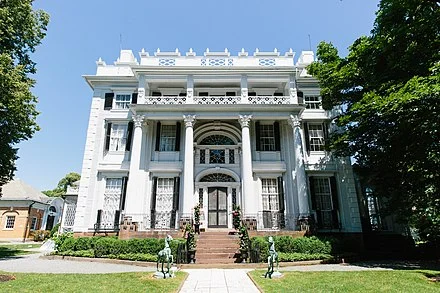
Linden Place, in Bristol, R.I., built in 1810 for the Rhode Island slave trader George DeWolf
From Robert Whitcomb’s “Digital Diary,’’ in GoLocal24.com
Some Democratic candidates -- intent on political suicide? -- continue to promote financial reparations for the slavery that ancestors of African-Americans endured. But this would be administratively impossible and unfair: No one alive in America has owned slaves and most African-Americans have some white blood. Do we believe in blood guilt for what some our distant ancestors may have done?
Apportioning blame for American slavery is sure tricky. The African slaves who were brought to North America (who were a small percentage of the slaves brought to the Caribbean and Central and South America) had been captured and sold to European slave traders on the West African coast by Africans. (Slavery continues in parts of Africa to this day.)
Thomas Sowell, the conservative economist, and an African-American, succinctly noted:
"The region of West Africa … was one of the great slave-trading regions of the continent - before, during, and after the white man arrived. It was the Africans who enslaved their fellow Africans, selling some of these slaves to Europeans or to Arabs and keeping others for themselves. Even at the peak of the Atlantic slave trade, Africans retained more slaves for themselves than they sent to the Western Hemisphere. Arabs were the leading slave raiders in East Africa, ranging over an area larger than all of Europe."
Most African-Americans still suffer, in varying degrees, from the socio-economic effects of slavery and segregation. The fairest and most effective way to deal with that is through public policies that help address income and education inequality.
Chris Powell: Lamont rightly acted fast to release vaccination data

No Connecticut governor may have ever rushed to the defense of the public's right to know faster than Gov. Ned Lamont did the other week when his public health commissioner, Renee Coleman-Mitchell, said she would not release school-by-school data on the vaccination of students. Within a few hours the governor overruled the commissioner. The governor's spokesman said the data will be released as soon as they are complete and verified, since Lamont "believes strongly that this is important information for the public and policymakers to have at their disposal."
Indeed, the growing number of parents claiming a religious exemption from vaccination for their children was a controversy in the General Assembly this year, causing concern that the old childhood diseases like measles, mumps, and rubella could return in epidemic size if "herd immunity" is not sustained by the traditional vaccination rate of 95 percent.
Last year's school-by-school vaccination data was released by the commissioner in May. But reversing herself last week, the commissioner claimed that the law gives her discretion to withhold the data. Her spokeswoman did not respond to a request to cite any such statute and the commissioner did not provide any argument for concealing the new data. She seemed not to have been vaccinated against bureaucratitis, which causes government officials to hallucinate that government information is proprietary.
But the governor immediately recognized that the vaccination and religious-exemption issues can't be evaluated by legislators and the public without disclosing the data.
The religious claim against vaccination is bogus. It figures in no denomination's theology and is being used as a pretext by parents who fear that vaccines or a chemical formerly used in them may cause autism. All authoritative studies have found no connection, but innumerable people have been demonstrably protected by vaccines since the autism scare was perpetrated.
Connecticut doesn't require that children be vaccinated, only that they be vaccinated if they are to attend school or day-care centers. That is enough parental choice, for vaccination is simply a small duty to society.
But this year the General Assembly was intimidated by the opponents of repealing the religious exemption. Their numbers were small but they were fierce and even hysterical, so the legislature failed to act. The new data from the Public Health Department will show not only the increasing use of the exemption but also the particular schools where use of the exemption is getting out of hand. That indication of danger may generate the pushback from the public that is necessary for the exemption's repeal. There is enough political hysteria these days, and legislators need to reject it in defense of public health. There is courage in information.
Now that the governor seems to be in a right-to-know mood, he would do Connecticut another favor to seek repeal of something else: the provision of the state budget that exempts the state's new educational grant agency from freedom-of-information and ethics rules.
The commission will dispense not only the $100 million gift from Ray and Barbara Dalio but another $100 million in state government money. No good reason -- indeed, no reason at all -- has been offered for the exemption. Apparently the Dalios want to avoid disclosing their connections to potential grant recipients. In that case they should donate their money privately without mingling it with state government's.
Chris Powell is a columnist for the Journal Inquirer in Manchester, Conn.

Llewellyn King: How an increasingly brutal Mugabe destroyed my homeland

Robert Mugabe
Zimbabwe’s former President Robert Mugabe, who stood head and shoulders above other awful African heads of state, has died aged 95. He may have directly killed more people, and caused more deaths through starvation, than even that other icon of African evil dictatorship, Uganda’s Idi Amin.
When Mugabe became the republic’s first president, in 1980, he was celebrated the world over as the face of the new Africa: a leader who would usher in a time of harmony, heal the wounds of war, and who was keen to assure the white minority he had overthrown that all would be well.
Mugabe spoke of the country that he inherited from Britain and the British settlers as kind of jeweled timepiece. He boasted of its sophisticated agriculture, its functional central bank and its vibrant stock exchange.
Initially, Mugabe’s partnership with the old, white-run regime appeared to be sincere. I met two white men who ran his security detail at that time who spoke well of him and said they had detected no bitterness. Early warnings, such as his takeover of the newspapers, were ignored. To miscreants, the media are always the problem.
I was born and grew up in Rhodesia, now Zimbabwe, as was my father. (The country was first known as Southern Rhodesia.) I, like my family, wanted to ignore Mugabe’s downside. The period from the granting of independence to Zimbabwe — with the Lancaster House agreements in London — in 1980 to the mid-1990s was sometimes promising.
True, my brother was forced from his farm by squatters whom the police refused evict. But even so, he and his wife were remarkably optimistic, if a little apprehensive, when I visited from my perch in Washington in 1996.
Old friends were keen to believe, as were people around the world, that Mugabe was the new face of enlightened Africa. There were signs that pointed to a troubled future, but the people loved their country and were loath to believe the worst.
More people worried about the communism that Mugabe and his allies in the local university spouted than what was to become vicious and overt racism directed against all people of European descent.
For a few years, Zimbabwe remained what it had been before independence: a peaceful place with racial respect, a thriving commercial sector, and farms that were so productive that they represented the regional breadbasket, feeding Zambia and Malawi as well as exporting to South Africa.
Some trace Mugabe’s descent into dictatorial insanity to the release of Nelson Mandela from detention in South Africa and Mandela’s usurpation of Mugabe as the darling figure in the capitals of the world. There was a sexual overlay as well.
Both Mugabe and Mandela sought the hand of Graca Machel, the widow of Mozambican President Samora Machel, in marriage. Mandela carried off the damsel, and Mugabe’s descent accelerated.
Mugabe seized the primarily white-owned farms, played games with the citizenship of people he didn’t like; rigged elections; used violence against political opponents; and ordered, or condoned, the security forces, in violation court orders, to beat and intimidate anyone who opposed him.
He began to espouse a kind of paranoid racism, where everything that was wrong was because of the colonialism and the evils of the white population. It was always someone else’s fault.
In the end, Mugabe smashed his jeweled-timepiece nation. The currency failed when inflation ran into the millions of percent and today, over two years since Mugabe fell, Zimbabwe still has no currency. Under the new president, Emmerson Mnangagwa, it continues to be beset with poverty and famine.
This is the message of Mugabe: Failure to stop the tendencies of those who get away with small constitutional infringements will lead to their getting away with massive wrongdoing.
Part of the dictator’s path is to buttress support by denigrating a particular group, and then persecuting that group.
Mugabe started by sending his dreaded Fifth Brigade into the south of the country, where he killed an estimated 25,000 of the Ndebele people who had supported the opposition party and fought colonialism separately under their leader, Joshua Nkomo.
Then it was on to seizing white property, white passports, and in the end driving out the commercial class. Hardly a white “Rhodesian” remains in what was Rhodesia.
There are those who shrug at governmental transgression in the belief that the pendulum will swing back. Maybe, but not if it has broken the clock and is on the floor. That is the lesson of Robert Mugabe and the tragedy of the land of my birth.
On Twitter: @llewellynking2
Llewellyn King is executive producer and host of White House Chronicle, on PBS. He’s based in Rhode Island and Washington, D.C.
Bummer! We have to freeze first?

“March Thaw’’ (pastel), by Jacob Aguiar, in the show “For Pastels Only,’’ at the Saco Museum, Saco, Maine, Sept. 11-Oct. 25
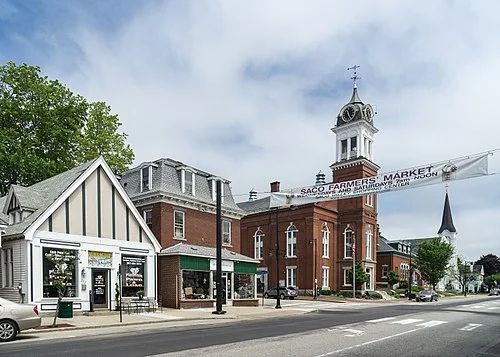
Main Street in Saco.
Saco, on the southern Maine coast, was once densely populated with Native Americans, but English colonists moved into the area in the 1630s and started to take over. With the arrival of the Portland, Saco and Portsmouth Railroad, in 1842, Saco’s Factory Island gradually became a major textile-manufacturing center, with very thick-walled brick mills coming to dominate the Saco waterfront. Other businesses included foundries, belting and harness making and machine shops. Local manufacturing, and especially the textile industry, faded in the 20th Century with competition from the South and abroad. But the prosperous mill town era left behind much fine architecture in the Georgian, Federal, Greek Revival and Victorian styles, with many buildings listed on the National Register of Historic Places.. Saco is now a popular Portland suburb and home to many artists. The Saco Museum is delightful.
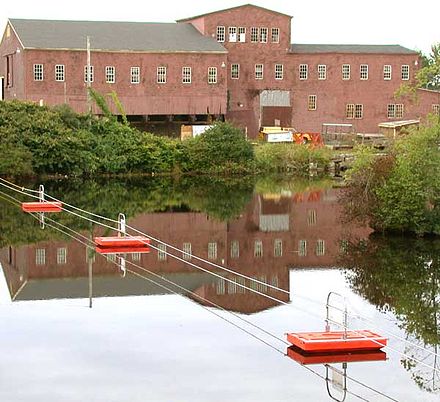
On the Saco River

Saco is a watery town.

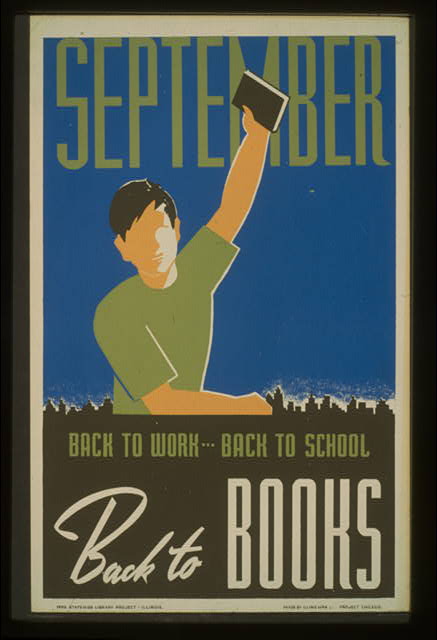
September secret

Asters
The golden-rod is yellow;
The corn is turning brown;
The trees in apple orchards
With fruit are bending down.
The gentian's bluest fringes
Are curling in the sun;
In dusty pods the milkweed
Its hidden silk has spun.
The sedges flaunt their harvest,
In every meadow nook;
And asters by the brook-side
Make asters in the brook,
From dewy lanes at morning
The grapes' sweet odors rise;
At noon the roads all flutter
With yellow butterflies.
By all these lovely tokens
September days are here,
With summer's best of weather,
And autumn's best of cheer.
But none of all this beauty
Which floods the earth and air
Is unto me the secret
Which makes September fair.
'T is a thing which I remember;
To name it thrills me yet:
One day of one September
I never can forget.
“September,’’ by Hilaire Belloc
'The landscape and the light'
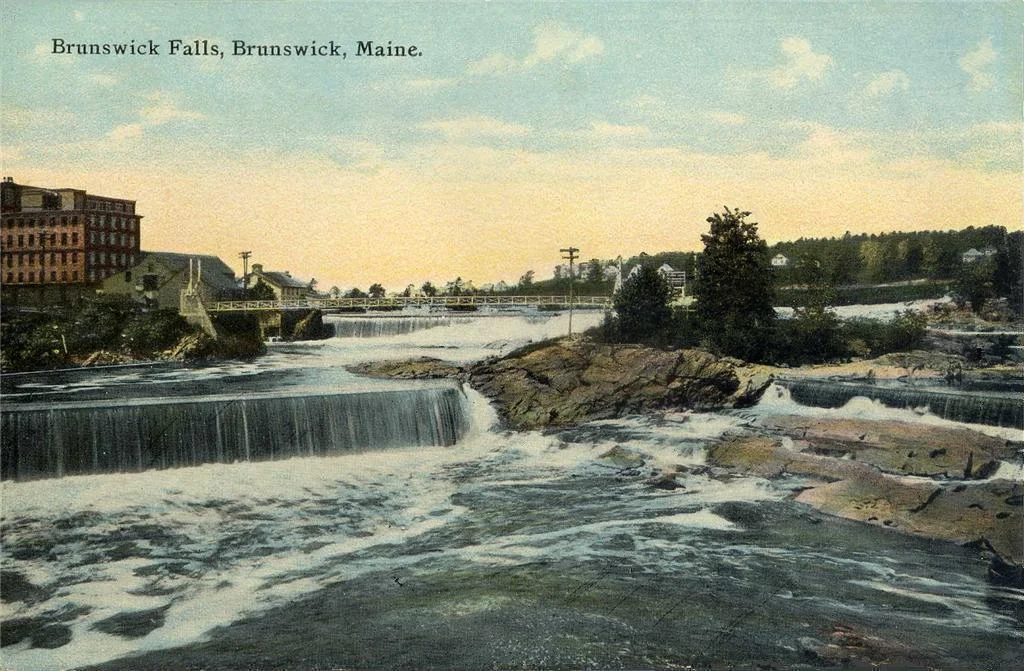
An old postcard from Brunswick, where Bowdoin College and Elizabeth Strout (when she’s not in her New York City home) reside.
“I'm drawn to New England because that's where my roots are, and I miss it. I come from many generations of New Englanders, and so, in my writing, I've been drawn back there to the landscape and the light and the type of personality that's revealed.’’
— Elizabeth Strout, novelist (Olive Kittridge, for which she won a Pulitzer. is her best-known book).
Longing for 'The Comet'
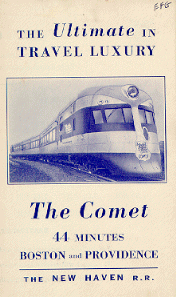
If only…
The old New Haven Railroad put a unique three-car articulated high-speed passenger train called “The Comet’’ into service between Boston and Providence during 1935. The radically streamlined train was designed and built by the Goodyear-Zeppelin Company using the latest aerodynamic methods and technologies. Unfortunately, the speedy Comet was a bit too successful on the Boston-Providence run. When the New Haven's passenger business picked up at the start of World War II, the small train couldn't handle the crowds of people who wanted to ride it. The Comet was taken off the Boston-Providence run and spent the remainder of its service life on short-haul commuter runs in the Boston area. It was scrapped in 1951.
From Robert Whitcomb’s “Digital Diary,’’ in GoLocal 24.com
It’s too bad that the Rhode Island Department of Transportation decided not to have a second set of tracks laid for the new Pawtucket commuter rail station and instead is building the station directly along Amtrak’s very busy Northeast Corridor tracks. As The Providence Journal’s Patrick Anderson reported in an Aug. 26 story (“Pawtucket station cost climbs to $51 million’’), “With the station directly on the Northeast Corridor, intercity or express trains couldn’t overtake trains stopping in Pawtucket.’’ That may well slow down traffic on that very heavily traveled Amtrak/MBTA line. And, Mr. Anderson noted, “ot building a second set of tracks could make it more difficult to create a Rhode Island-run rail shuttle.’’
The Transportation Department’s decision to forgo the tracks was done to save money but the project has included a hefty cost overrun -- $11 million so far -- at least in part because, Mr. Anderson reports, Amtrak rules (it’s their track!) “have forced the station work to be done at night and at other times of light traffic,’’ driving up costs. But the biggest false economy in this is for the long-term.
Of course, Amtrak itself needs more tracks to allow more and faster trains and help get as many vehicles as possible off the roads.
xxx
Kudos to Rhode Island Gov. Gina Raimondo and Massachusetts Gov. Charlie Baker for making a push for MBTA express trains between Boston and Providence. But this will require working it out with Amtrak, which runs on the same line. Again we need more tracks!! And an express train program may also require leasing electric-powered trains from Amtrak; the diesel trains now on the MBTA’s Providence-Boston route are less reliable than electric ones.
What could happen faster is having express highway lanes on highways in and around Boston that drivers would have to pay a toll to use. That would bring in money for transportation projects and encourage use of mass transit. Mr. Baker seems to like the idea, though many will yelp. But the region’s highway-congestion crisis has reached the point that strong, perhaps politically unpopular measures must be taken – and soon. (Some wags are calling the proposed express lanes “Lexus Lanes,’’ implying they’ll unduly favor richer folks who can more easily afford them.)
Michael Dukakis, the 1988 Democratic presidential nominee, former Amtrak chairman and now a Northeastern University political science professor, said at a Grow Smart RI meeting in April:
“The only way to solve this congestion problem is to have a first-class regional rail system not only for Massachusetts but for all of New England, with the six governors deeply and actively involved. It would take 60,000 to 70,000 cars off the road every day.”
Better take the elevator

“Spiral Staircase’’ (archival inkjet print), by Daniel Feldman, in the two-person show with Betsyann Duval entitled “More Light,’’ at Bromfield Gallery, Boston, through Sept. 29.
The gallery says:
“The famous last words uttered by Goethe on his deathbed, ‘More Light,’ has been interpreted imaginatively in this exhibition marking the beginning of autumn.’’

William Minter: How a Conn.-based firm uses a remote island nation to dodge U.S. taxes

A long way from Connecticut: A view of the Island of Mauritius, the main island in the Republic of Mauritius
Aircastle Ltd. is not a household name, but if you’ve flown on South African Airways, KLM, or any of more than 80 other airlines, you’ve probably traveled on an airplane that the Stamford, Conn.-based company owns and manages.
The company´s business model is based on buying, selling and leasing aircraft worldwide. Its corporate structure minimizes the payment of taxes by using a complex arrangement of subsidiaries, all managed from Connecticut, Ireland or Singapore.
These arrangements, recently highlighted in the #MauritiusLeaks investigation by the International Consortium of Investigative Journalists (ICIJ), are legal. But they have allowed the company to pay minimal taxes, including no corporate taxes in the United States on income from their aircraft leases.
Aircastle, of course, isn’t alone among large American companies in lowering their taxes through creative accounting. Such well-known giants as Amazon and Apple do so as well..
But the recent revelations on Aircastle’s use of the tiny Republic of Mauritius, a nation of four islands in the Indian Ocean, as a tax haven provide a helpful window into how such tax dodges can use offshore companies set up primarily for that purpose. Getting to zero with tax avoidance became even easier with the Republican tax cuts in 2017, but Aircastle was already well on the way to that objective.
For example, when Aircastle decided to do business in South Africa in 2010, as the ICIJ and Quartz Africa revealed in July 2019, it turned to a Bermuda-based law firm to help it set up six subsidiaries in Mauritius: Thunderbird 1 Leasing Ltd. along with five other companies named Thunderbird 2 through 6. As was Aircastle’s common practice, each company was to own a specific aircraft. South African Airways made their lease payments to the subsidiaries in Mauritius, each of which was owned in turn by an Aircastle subsidiary in Bermuda or Delaware.
Since South Africa and Mauritius have a tax treaty allowing this, Aircastle paid Mauritius at the low Mauritius rates on the income from the leases ($772,735 a month for the first A300-200 leased by South African Airways from Thunderbird 1 beginning in 2011). From 2011 through 2014, according to documents leaked to ICIJ, Thunderbird 1 paid a total of $382,600 in Mauritius taxes, a 1.59 percent tax rate on $24 million in operating profits.
Aircastle paid no taxes on these profits either in South Africa or in the United States.
According to ICIJ, “Had Aircastle’s Thunderbird 1 company alone reported the profits it made in Mauritius over four years in the U.S., it could have paid more than $5 million. Those taxes would just about cover the State of Connecticut’s current budget for domestic violence shelters.”
Including other Thunderbird companies as well, Quartz calculated, Aircastle paid $1.5 million in Mauritius taxes on profits of $53 million, at an effective rate of 2.87 percent — thus avoiding $14.8 million in taxes it would have owed if taxes had been paid to South Africa. This is equivalent to more than half the annual social-housing budget of Johannesburg.
Aircastle did not respond to queries from ICIJ or Quartz, and data for a more comprehensive analysis of its tax strategy were therefore not available. However, since the company is registered on the New York Stock Exchange and also traded on NASDAQ, its reports to the Securities and Exchange Commission (SEC) are public. Its annual report to investors for 2018, for example, incorporates the 10-K report to the SEC.
There we learn that Aircastle Ltd. is actually incorporated in Bermuda and thus pays no U.S. corporate income tax, except on the management services supplied by its U.S. subsidiary to the aircraft-owning companies. Bermuda has no corporate income tax. Thus the company notes in its 10-K report, under the heading “risks related to taxation”:
“If Aircastle were treated as engaged in a trade or business in the United States, it would be subject to U.S. federal income taxation on a net income basis, which would adversely affect our business and result in decreased cash available for distribution to our shareholders.”
Given the lack of transparency in corporate reporting, it is hard to tell how Aircastle’s strategies compare to those used by other companies. The Institute on Taxation and Economic Policy (ITEP) reported in April, based on 10-Ks submitted to the SEC, that 60 of the Fortune 500 had zero or negative federal income tax payments in 2018. But more detailed analysis or estimates of tax revenue lost, in the United States and other countries, require much more data than almost all such reports provide.
The fundamental step needed to make accountability feasible is public country-by-country reporting, whereby corporations would be required to provide for investors and the public a breakdown by country of revenues, profits, employees and taxes paid for every country in which they do business. Governments, investors, and even some businesses are increasingly accepting the need for such reports.
According to an April 2019 report from the U.S.-based Financial Accountability and Corporate Transparency (FACT) Coalition, however, the trend is in the right direction. “The evidence suggests we are quickly reaching a turning point,” said Christian Freymeyer, researcher and author of the report. “Investors see the value, policymakers see the benefits, and businesses see the inevitability of greater transparency. It’s only a matter of time before tax transparency is accepted and expected of financial disclosure.’’
Freymeyer´s analysis may well err on the side of optimism, given the continued opposition from those with vested interests in tax avoidance. But it is certainly true that the argument is now finding new supporters far beyond the circle of tax-justice activists who have been the leaders in demanding these reforms.
William Minter is the editor of AfricaFocus Bulletin.
May look gray but they're going green
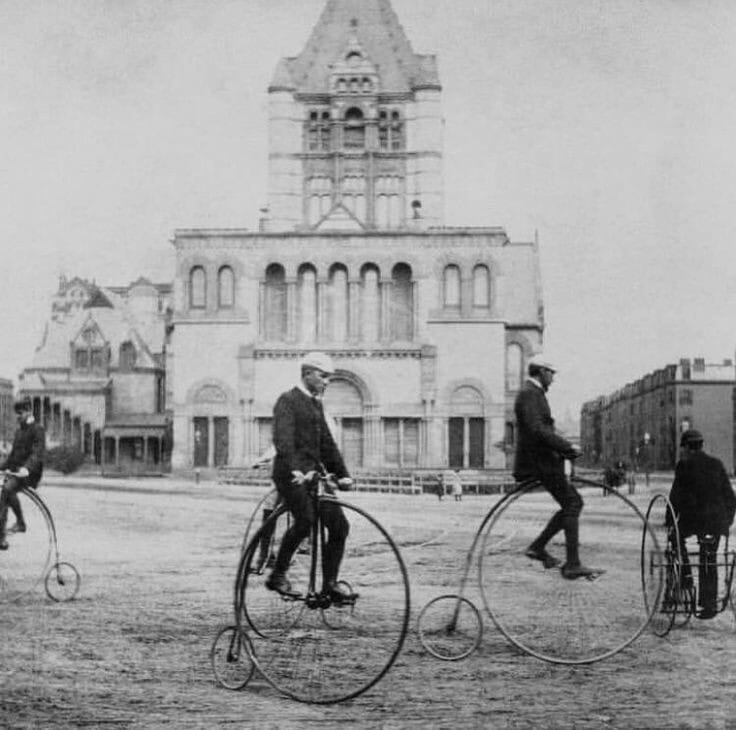
Pollution-free transportation in front of Boston’s Trinity Church in the 1890s.

David Warsh: 'The Economists' Hour' and its hangover

SOMERVILLE, Mass.
Books like The Economists’ Hour: False Prophets, Free Markets and the Fracture of Society (Little Brown, 2019), by Binyamin Appelbaum, of The New York Times, don’t come along very often. Tyler Cowen, the peripatetic George Mason University professor, says he read the whole thing in one sitting. It took me three days, but the impulse was the same. I picked it up every chance I got. When I had finished, I read its 90 pages of endnotes one after another, as if it were a second book, only slightly less interesting than the first.
Why? Well, Appelbaum is a careful reporter, a graceful writer, and a first-rate story-teller. He joined The Times’s Washington bureau in 2010 from The Washington Post, and, before that, The Boston Globe, and the Charlotte Observer, to cover monetary policy in the aftermath of the financial crisis. In the book he covers a much broader spectrum of policy developments. He did a good deal of first hand reporting, ingested a huge amount of secondary literature, and did some archival work himself. Mainly, though, I was impressed by his skill as a listener. He possesses a special gift for capsule biography.
Of necessity, the storyteller gets the upper hand. Appelbaum writes:
In the four decades between 1969 and 2008, a period I call ‘‘the Economists’ Hour,” borrowing the phrase from the historian Thomas McCraw, economists played a leading role in curbing taxation and public spending, deregulating large sectors of the economy, and clearing the way for globalization. Economists persuaded President Nixon to end military conscription. Economists persuaded the federal judiciary largely to abandon the enforcement of the antitrust laws. Economists even persuaded the government to assign a dollar value to human life – around $10 million in 2019 – to determine whether regulations were worthwhile.
Such a “biography” of a “trust-in-markets” revolution needs a central character, and Appelbaum chose his well. His subject is Milton Friedman, who concentrated on research in the first half of his career and became a public intellectual in the second half. In Capitalism and Freedom, which appeared in 1962, Friedman advocated most of the nostrums that were adopted in one degree or another in the coming decades: floating exchange rates instead of fixed one, an all-volunteer army instead of one based on conscription, draconian tax reductions, charter schools, industrial deregulation, shareholder hegemony in public corporations, and one measure that didn’t eventuate – a guaranteed annual income for all citizens, replacing the Social Security retirement system.
In fact all this was a counterrevolution, Appelbaum knows it, and says as much at several points in his story. But he was born in 1978. He wasn’t there during the four decades that ended in 1969: the New Deal; the Keynesian revolution; the economists’ triumph as architects of World War II logistics; the Marshall Plan; the “new economics” of the Sixties; and the record-breaking post-war boom of the industrial democracies.
This rise of the “modern mixed economy” after 1933 was viewed at the time as an alternative to the top-down government control that characterized Soviet and Chinese communism. It had plenty of dynamism, but retained enough of the communitarian ethos of wartime (such as fixed exchange rates under the Bretton Woods Agreement) as to seem, by the late 1960s, more than a little confining. Appelbaum knows all this because he has read widely; he even cites Tony Judt, the leading historian of the postwar decades, in an endnote. But, like many others, he gives short shrift to the period before his own.
Instead, he starts with something we all know, the Vietnam War. A brilliant first chapter traces the evolution of a plan for an all-volunteer army from a chance dinner-party conversation between economic professor Martin Anderson and a law partner of Richard Nixon, through its gradual adoption by Nixon 1968 presidential campaign, and its design by University of Rochester economist Walter Oi, to its eventual adoption under the guidance of economist George Shultz, then director of the Office of Management and Budget. A little extra time to end the war had been purchased. The basic inequity of conscription had been solved. A market for soldiering had been established. But, writes Appelbaum, “War, once an abnormal act of national purpose, has become a regular line of work.”
Appelbaum then works his way through chapters on inflation, taxation, antitrust enforcement, deregulation, cost-benefit analysis, exchange-rate regimes, globalization, and banking. any one of which could warrant an entire book. These are successively less satisfying. He is forced to take shortcuts: Robert Mundell wasn’t a baby-faced hero; antitrust enforcement isn’t dead; the story of Venezuela is as interesting as the very different one of Chile. But such are his skills as a storyteller that, by the time he introduces Albert Hirschman, author of Exit, Voice, and Loyalty, in the book’s final pages, Appelbaum’s central point has become indelibly clear: “[T]he defining feature of a market is the freedom to walk away.”
Appelbaum writes, “Friedman chose to see the role of individual initiative rather than the context of public support. He celebrated drivers and took roads for granted.” That’s very apt, as far as it goes. And in the end even he gets a sensitive hearing: “Friedman had as large a hand in the [2008] crisis as any man, but it is a mark of the complexity of his legacy that he also left effective instructions for limiting the damage.”
The problem is that plenty of economists have continued to celebrate roads during the last 40 years – as well as government-sponsored retirement systems, health insurance, unemployment insurance, capital budgets, trade agreements, counter-cyclical spending, environmental protection, and, in general, social and cultural entrepreneurship.
For a more balanced view of the stance of the economics profession towards society, you might read The Vital Few: The Entrepreneur and American Economic Progress (1986), by economist Jonathan Hughes. It is a highly readable history, couched in much the style Appelbaum has written. Hughes, of course, published his account in the halcyon period before the costs of late-stage globalization became apparent. The Economists’ Hour is a useful guide to those costs. Applebaum writes:
In the pursuit of efficiency, policy makers subsumed the interests of Americans as producers to the interests of Americans as consumers, trading well-paid jobs for low-cost electronics. This, in turn, weakened the fabric of society and the viability of local governance. Communities mitigate the consequences of local job losses; one reason mass layoffs are so painful is that the community, too, often is destroyed. The loss exceeds the sum of its parts.
It wasn’t obvious what would happen when Apple chose to manufacture its smartphones in China; or when IBM sold its laptop business to Lenovo. It was, however, clear enough to corporate executives and their government counterparts what would happen if they didn’t: Chinese companies would inevitably enter the product market themselves and catch up, albeit more slowly than otherwise would have been the case. American policy-makers have been caught flat-footed by the alacrity with which Chinese industry has grown toward the frontiers, and Appelbaum makes much of the ability of Asian nations to carefully manage their economies. But it’s much easier to know what to do when you are following a leader than when you are trying to stay ahead.
What comes after the Economists’ Hour? Appelbaum is clearly focused on inequality, and the extent to which money has gained power beyond its proper sphere. He is 41, and this is his first book. (He is now serving on The Times’s editorial board). It is a sensational debut. Here’s hoping The Times gets him back on the beat, preferably writing the Economic Scene column that Leonard Silk made famous in the ‘70s and ‘80s. Meanwhile, read his book, as a down payment on the next 30 years.
. . xxx
New on the Economic Principals bookshelf:
Transaction Man: The Rise of the Deal and the Decline of the American Dream, by Nicholas Lemann (Farrar, Straus)
Free Enterprise: An American History, by Lawrence Glickman (Yale)
Rethinking the Theory of Money. Credit, and Macroeconomics: A New Statement for the Twenty-First Century, by John Smithin (Lexington Books)
Crying the News: A History of America’s Newsboys, by Vincent DiGirolamo (Oxford)
David Warsh, an economic historian and veteran columnist, is proprietor of Somerville-based economicprincipals.com, where this column first ran.
Pictures in Providence

The Providence Art Club’s Fall Members’ Exhibition runs through Sept. 20. Some samples above: Clockwise from top left: David S Pinkham, Mimo Gordon Riley, Theresa Girard, Patricia Macko, Jack Hobbs, Richard King and Linnea Toney Leeming.