
Vox clamantis in deserto





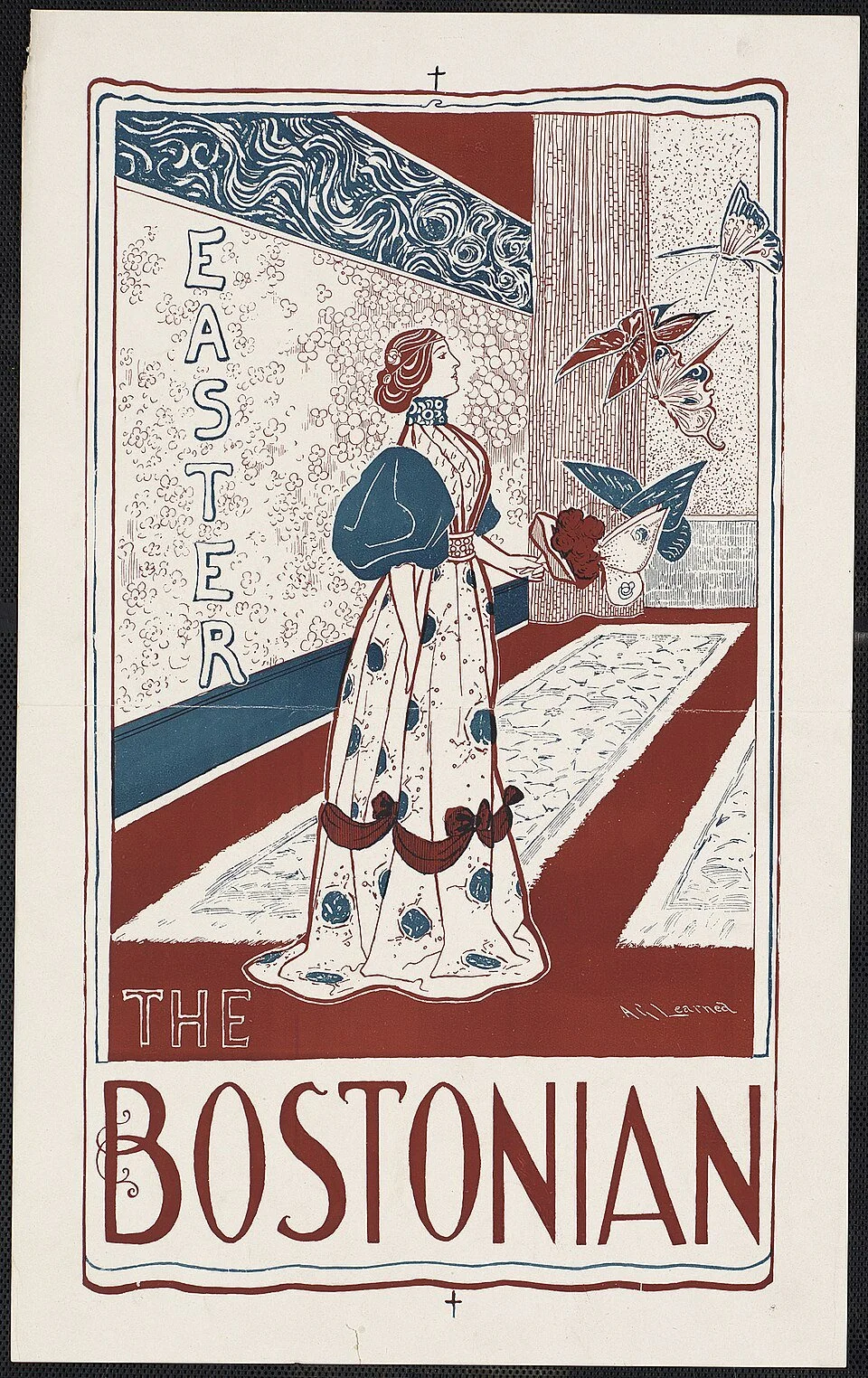
Dorm rooms and diversity
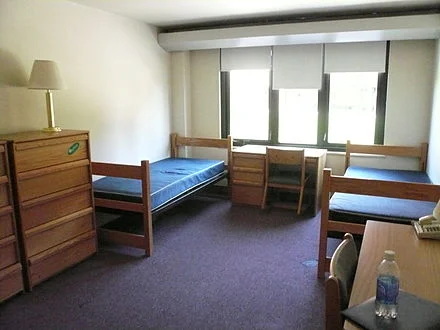
Who will it be?
From Robert Whitcomb’s “Digital Diary,’’ in GoLocal24.com
September song: Many college freshmen (or is it freshpersons or first-year students?) are understandably nervous about rooming with people they never knew before. But there’s much to be said for many colleges’ policy of not letting them choose dorm roommates their first year. Rather, these schools diversify dorm and room assignments to encourage students to get to know people with very different backgrounds. They strive to mix it up. The idea is to promote American higher education’s democratic mission of expanding students’ understanding of the wider society. Without the mixing policy, most rich preppy kids might mostly just choose to room with rich preppy kids, jocks with jocks, people of the same ethnicity with people who look like them, and so on, at least in the first year.
The dorm-diversification approach seems to work pretty well, with polls showing that college students appreciate learning about the experiences and perspectives of people who perhaps have had lives beyond their imaginations. Many choose to stay roommates of those whom their colleges had initially chosen for them. The research firm Skyfactor found in a 2015-2016 school-year survey of 20,000 students at 15 institutions that more than half were content with the first-year roommates the college had assigned them and only 10 percent asked for a roommate replacement that year.
Economist Bruce Sacerdote wrote last year: “Natural instincts do not always benefit us in the long run….As human beings we naturally gravitate towards our comfort zone and find peers who look a lot like ourselves.’’ But we get stronger if we’re put into situations where we connect with people and ideas that we’re not used to.
To read the Skyfactor survey, please hit this link.
http://skyfactor.com/wp-content/uploads/2017/06/2017-Room-Assignment-Research-Note.pdf]
To read Mr. Sacerdote’s study, please hit this link.
My own college roommate experience was fairly varied – for that less “diverse’’ time. I roomed one year with a “Latin lover’’ (from Venezuela) who “sexiled’’ me as he spent many nights with girlfriends in our room, forcing me to seek other accommodations. Others included two future physicians, one whose father was an AT&T executive, the other whose father was quartermaster general of the Marines. Then there was the plainspoken fellow from a small New Hampshire town, another from a small Illinois town and a Norwegian (in my fraternity, where I lived during my junior year). I learned something from all of them, though the only one I’ve kept in fairly frequent contact is one of the physicians, now a cancer surgeon in New York about to retire.
I am grateful that none of my roommates were heavy drinkers, well not after freshman year. They learned.
Elizabeth Rosenthal: How your nice hospital helps drive health costs into stratosphere

Main entrance of Massachusetts General Hospital, in Boston. MGH is the flagship of Partners HealthCare, which is well known for its very high costs.
From Kaiser Health News
As voters fume about the high cost of health care, politicians have been targeting two well-deserved villains: pharmaceutical companies, whose prices have risen more than inflation, and insurers, who pay their executives millions in salaries while raising premiums and deductibles.
Although the Democratic presidential candidates have devoted copious airtime to debating health care, many of the country’s leading health policy experts have wondered why they have given a total pass to arguably a primary culprit behind runaway medical inflation: America’s hospitals.
Data shows that hospitals are by far the biggest cost in our $3.5 trillion health care system, where spending is growing faster than the gross domestic product, inflation and wage growth. Spending on hospitals represents 44% of personal expenses for the privately insured, according to the Rand Corp.
A report this year from researchers at Yale and other universities found that hospital prices increased a whopping 42% from 2007 to 2014 for inpatient care and 25% for outpatient care, compared with 18% and 6% for physicians.
So why have politicians on both the left and right let hospitals off scot-free? Because a web of ties binds politicians to the health care system.
Every senator, virtually every congressman and every mayor of every large city has a powerful hospital system in his or her district. And those hospitals are as politically untouchable as soybean growers in Iowa or oil producers in Texas.
As hospitals and hospital systems have consolidated, they have become the biggest employers in numerous cities and states. They have replaced manufacturing as the hometown industry in a number of Rust Belt cities, including Cleveland and Pittsburgh.
Can Kamala Harris ignore the requests of Sutter Health, Kaiser Permanente, UCLA or any of the big health- care systems in California? Can Elizabeth Warren ignore the needs of Partners HealthCare, Boston’s behemoth? (Bernie Sanders may be somewhat different on this front because Vermont doesn’t have any nationally ranked hospitals.
Beyond that, hospitals are often beloved by constituents. It’s easy to get voters riled up about a drugmaker in Silicon Valley or an insurer in Hartford. It’s much riskier to try to direct their venom at the place where their children were born, that employed their parents as nurses, doctors and orderlies, that sponsored local Little League teams, that was associated with their Catholic Church.
And, of course, there’s election money. Hospital trade groups, medical centers and their employees are major political donors, contributing to whichever party holds power — and often to the out-of-power party as well. In 2018, PACs associated with the Greater New York Hospital Association, and individuals linked to it, gave $4.5 million to the Democrats’ Senate Majority PAC and $1 million to their House Majority PAC. Its chief lobbyist personally gave nearly a quarter of a million dollars to dozens of campaigns last year.
Sen. Sanders has called on his competitors for the Democratic nomination to follow his lead and reject contributions from pharma and insurance. Can any candidate do the same for hospitals? The campaign committees of all 10 candidates participating in the upcoming Democratic debate have plentiful donations linked to the hospital and health care industry, according to Open Secrets.
But the symbiosis between hospitals and politicians operates most insidiously in the subtle fueling of each other’s interests. Zack Cooper, a health economist at Yale, and his colleagues looked at this life cycle of influence by analyzing how members of Congress voted for a Medicare provision that allowed hospitals to apply to have their government payments increased. Hospitals in districts of members who voted “yea” got more money than hospitals whose representatives voted “nay,” to the collective tune of $100 million. They used that money to hire more staff and increase payroll. They also spent millions lobbying to extend the program.
Members who voted yea, in turn, received a 25% increase in total campaign contributions and a 65% increase in contributions from individuals working in the health care industry in their home states. It was a win-win for both sides.
To defend their high prices, medical centers assert that they couldn’t afford to operate on Medicare payments, which are generally lower than what private insurers pay. But the argument isn’t convincing.
The cost of a hospital stay in the United States averaged $5,220 a day in 2015 — and could be as high as over $17,000, compared with $765 in Australia. In a Rand study published earlier this year, researchers calculated that hospitals treating patients with private health insurance were paid, overall, 2.4 times the Medicare rates in 2017, and nearly three times the rate for outpatient care. If the plans had paid according to Medicare’s formula, their spending would be reduced by over half.
Most economists think hospitals could do just fine with far less than they get today from private insurance.
While on paper many hospitals operate on the thinnest of margins, that is in part a choice, resulting from extravagance.
It would be unseemly for these nonprofit medical centers to make barrels of money. So when their operations generate huge surpluses — as many big medical centers do — they plow the money back into the system. They build another cancer clinic, increase CEO pay, buy the newest scanner (whether it is needed or not) or install spas and Zen gardens.
Some rural hospitals are genuinely struggling. But many American hospitals have been spending capital “like water,” said Kevin Schulman a physician-economist at Stanford. The high cost of hospitals today, he said, is often a function of the cost of new infrastructure or poor management decisions. “Medicare is supposed to pay the cost of an efficient hospital,” he said. “If they’ve made bad decisions, why should we keep paying for that?”
If hospitals were paid less via regulation or genuine competition, they would look different, and they’d make different purchasing decisions about technology. But would that matter to medical results? Compared with their European counterparts, some American hospitals resemble seven-star hotels. And yet, on average, the United States doesn’t have better outcomes than other wealthy nations. By some measures — such as life expectancy and infant mortality — it scores worse than average.
As attorney general in California, Kamala Harris in 2012 initiated an antitrust investigation into hospitals’ high charges. But as a senator and presidential candidate, she has been largely silent on the issue — as have all the other candidates.
As Uwe Reinhardt, the revered Princeton health economist who died in 2017, told me, “If you want to save money, you have to pay less.” That means taking on hospital pricing.
So fine, go after drugmakers and insurers. And, for good measure, attack the device makers who profit from huge markups, and the pharmacy benefit managers — the middlemen who negotiate drug prices down for insurers, then keep the difference for themselves.
But with Congress returning to Washington in the coming days and a new Democratic debate less than two weeks away, our elected officials need to address the elephant in the room and tell us how they plan to rein in hospital excesses.
Elisabeth Rosenthal: erosenthal@kff.org, @rosenthalhealth
Elizabeth Rosenthal is a reporter at Kaiser Health News.
Llewellyn King: Smart cities need to be walkable, too

Gauchetiere Street, in very walkable Montreal.
— Photo by Gene Arboit
It is coming as surely as cars changed the way we live, as airplanes revolutionized transportation and as the cellphone has conquered all.
It is the smart city of the future.
While it will look much like today’s cities, it will in fact be a digital construct; a place where sensors, interactivity and hyper-electronic speeds replace what will come to be seen as today’s leisurely pace of city operation and communication.
Imagine a place where police cruisers know the location of gunshots before anyone has called 911. Or, as Morgan O’Brien, chief executive officer of Anterix, a creator of private telephone networks for utilities, says, “By using broadband private networks, utilities can know a transmission wire has snapped before it hits the ground.”
Electric utilities, sometimes seen as wedded to the old ways of generation and distribution, have already laid the groundwork for cities’ electronic refurbishment. The first wave of the future, the smart meter, is in more than 60 percent of homes, and deployment continues apace.
The home smart meter does much more than simply record electricity use and ready a bill. It generates data on the local demand and flow patterns in the neighborhood. The smart meter has become vital in helping people save money when electricity prices are low (such as the middle of the night in many jurisdictions), but also helping to integrate the diverse new sources of generation from solar farms, solar panels on rooftops and wind turbines. Keeping tabs on this intermittent generation requires very smart electronics.
“Interconnectivity is the future,” says Clinton Vince, chairman of the U.S. energy practice and co-chairman of the global energy sector at Dentons, the world’s largest law firm. Basically, he points out, electric utilities must be very nimble to deal with the new microgrids and with individual generators using rooftop solar. The same applies to wind turbines, where the flow of electricity can be cut off instantly with a wind drop and other sources have to pick up seamlessly.
Chris Peoples, founding and managing partner of the Baltimore-based innovation strategy firm PP&A, says all this hyperactivity in the smart city will be recorded and preserved by blockchain, the ledger system of the 21st century.
To come are electric vehicles and autonomous ridesharing — so important that the big tech companies Cisco, Google, Uber and Amazon have invested in smart cities technologies, and have high hopes for growth there.
The smart city will want an even more reliable electric supply than we have today. Rapid response has been the modus operandi of electric companies down through the decades. Outages are handled with speed and big outages, such as after hurricanes, are dealt with by mobilizing restoration crews from unaffected areas.
But that may not be enough with greater reliance on electricity for things like autonomous vehicles and electric-powered delivery drones. These will have self-sufficiency through their batteries, but they also will need to have control systems that can operate in a blackout.
Anterix, for example, will provide secure broadband communications to utilities, enabling them to communicate when all other systems have failed.
There are two existential threats to the electric grid and, therefore, to the electricity-hungry smart city. One is cyberattack by enemies known and unknown. The other is a magnetic pulse, generated by an act of God in the form of solar flares, or an act of evil in the form of a nuclear weapon detonated overhead. Either way, the grid must be hardened, as far as science allows, against such eventualities
I would submit that this amounts to a brave new world. But I would implore the designers to remember people also want simple things of their cities, like walkability and mobility.
If you get walkability you get livability and, yes, lovability. Think Paris, San Antonio and San Francisco. Get smart, smart city designers.
On Twitter: @llewellynking2
Llewellyn King is executive producer and host of White House Chronicle, on PBS. He’s based in Rhode Island and Washington.

Immigration and xenophobia

“Burden,’’ from “Migrant Series’’ (mixed media on canvas), by Mohammed Daoudi, in his show “Finding My Way Around Home: Art in the Times of Xenophobia,’’ Sept. 13-Dec. 16 at the Conant Gallery at Lawrence Academy, Groton Mass.
The gallery explains that the work stems from Mr. Daodi’s experiences with immigration and xenophobia. “Born in Tangier, Morocco, he came to New York to study what he calls ‘money-making subjects’ at Skidmore College and the Columbia University School of International Affairs. Between these experiences and his marriage to a Jewish woman, his background is a rich patchwork of cultural experience, giving him a unique perspective on humanity.’’’’
Lawrence is the 10th oldest boarding school in America.
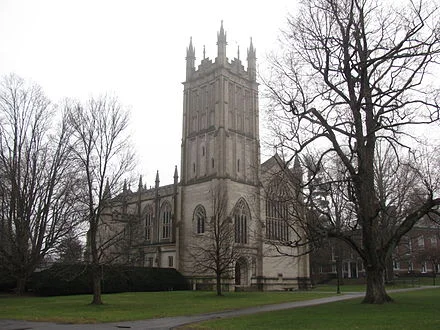
St. John’s Chapel at the Groton School, founded in 1884 and long a pillar of the old Eastern Establishment. Franklin Roosevelt, among other luminaries, graduated from the Episcopal school.

Lithograph of Groton from 1886 by L.R. Burleigh with list of landmarks

Gibbet Hill, in some of Groton’s beautiful countryside. The area is well known for its apples.
Tools for memory

‘‘Sextet” (oil on linen), by Kate Gridley, in her show this month at Edgewater Gallery, Boston.
The gallery says:
“Kate Gridley is known for her insights into human character, the quality of light in her work, and her skillful painting technique. She maintains a studio in Middlebury, Vt., where she has lived and painted full time since 1991.’’
“Gridley's paintings are championed for their attention to detail, convincing realism, and ethereal quality of light. Her still life subjects, often an assortment of vessels and kitchen tools, call upon history, memory and familial politics to set a reflective context for her paintings.’’
Jill Richardson: Get ready for unnatural disasters this hurricane season

Hurricane Dorian off George on Sept. 4
From OtherWords.org
Donald Trump discusses immigration as if the benefits of residence in the U.S. are a pie. When immigrants get more, the people who were already here get less.
In general, that’s not true. When immigrants come here, they don’t just take some jobs (often low-wage jobs U.S. citizens don’t want), they also create new jobs. They need housing, transportation, food, and clothes, and they buy all of those things, creating more jobs for other people in this country.
However, in one way, Trump is turning his viewpoint into a self-fulfilling prophecy: He’s using our finite government funds to pay for incarcerating immigrants in detention facilities, which means he’s shifting that money away from other uses that could benefit the American people.
In that sense, it’s not immigrants who are taking from us. It’s Trump
For example, disaster relief. Trump’s using over $100 million in federal disaster aid money to pay for detention centers for immigrants — even as hurricane season gets underway
Does that worry him? Apparently not.
When asked about Hurricane Dorian, which was then a category 5 storm nearing the Atlantic coast, Trump actually said: “I’m not sure I’ve ever even heard of a category 5.” He said the same thing last year about Hurricane Michael. And the same thing again the year before, about Hurricane Irma
Hurricanes, wildfires, and other natural disasters are threats that definitely harm Americans. Historically, we as a nation take care of one another by appropriating some of our tax dollars for federal disaster relief
Nobody plans to be the victim of a natural disaster, and we can’t predict which communities will be hit by them. We can prepare for them as a nation so that when they happen, we are as ready as we can be, and we have the resources to deal with the aftermath
While we can’t control whether or not we get hit by hurricanes or tornadoes, we can control whether we invest in being prepared — or whether we waste that money instead on locking up immigrants in taxpayer-funded detention facilities.
We don’t need to do that.
When we take money from disaster relief and use it to imprison people who pose no safety threat to the American people, we are also harming the victims of natural disasters who need aid they won’t receive=
By moving money within the Department of Homeland Security from other areas (the Coast Guard, FEMA, etc.) to pay for beds in detention centers for people who have crossed the border illegally but represent no safety threat to this country, the Trump administration could leave America open to other types of threats instead.
Rather than spending tax dollars needed for actual threats to national security on detaining immigrants, we need comprehensive and humane immigration reform that keeps families together. Then we can use our money on what we actually need, like disaster relief.
OtherWords columnist Jill Richardson is a sociologist.
Don Pesci: Weak political parties weaken politics
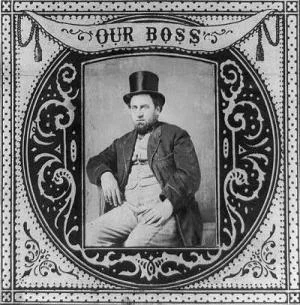
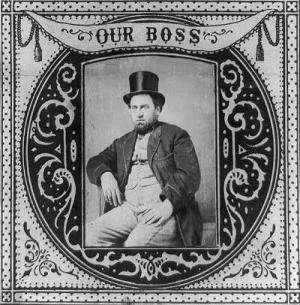
William Tweed, in 1869, the legendary boss of the Democrats’ Tammany Hall machine, in New York City, after the Civil War.
VERNON, Conn.
Even though no member of “the squad” – Democrat congressional Representatives Ilhan Omar of Minnesota, Alexandria Ocasio-Cortez of New York, Rashida Tlaib of Michigan and Ayanna Pressley of Massachusetts – is participating in the national Democrat presidential primary debate now underway, the drift of Democratic politics post primary has been set by them and, of course, Vermont socialist Bernie Sanders. Primaries bring out political extremists who, along with a 24-7 media, set the party narrative.
Before primaries became common in both parties, candidate selection was made by party bosses in smoke-filled back rooms, and eccentrics in the parties were allowed their 15 minutes of fame during national conventions. Party bosses disappeared long ago; more likely, they have gone underground. And national conventions are now regarded as prime-time political shows, essential for generating campaign funding and spreading political gospels through sympathetic media outlets. Over the years, party conventions have lost their sharks’ teeth.
If we are asked today who determines which presidents or governors will represent their parties in general elections -- who, in other words, are the real political bosses? – we are told the people rule through a democratic election process, a laudable goal but a laughable exaggeration. In both primaries and general elections, voters simply affirm choices made by other now shadowy figures operating behind sometimes opaque political veils.
When the sturm und drang of the primaries have abated, selected representatives of both parties, national and state, tend to drift once again towards normalcy, in popular parlance “the center.” We have developed a political language to describe this gyrating pendular motion. In primaries, political contestants are said to be appealing to “their base.” Democrats these days appeal to progressives, and Republicans appeal to conservatives, the devil take the hindmost. In general elections, convention nominees twist themselves into pretzel shapes to appeal to the “center” of the party, which today is in motion.
What happens when the center moves right or left? Mass hypocrisy and confusion ensues. The only political “sin” recognized the world over by media adepts is hypocrisy, usually punishable by a caustic few paragraphs in a quickly forgotten editorial. It used to be thought that hypocrisy is “the compliment vice pays to virtue.” Hypocrites of old doffed their hats to virtue – of course one should always tell the truth and shame the devil, but sometimes the greater good of the party requires one to explore a heavily nuanced path – in the very act of committing the only sin recognized by a diminishing media luxuriating in the pockets of some favored interest or arcane ideology.
“Trust nothing in politics,” said Otto von Bismarck, “until it has been officially denied.” That is a useful maxim for journalists to follow, but following it requires a politically imprudent break with “transactional journalism” as understood by Sheryl Attkisson, let go from her job at CBS because her employers had become the willing servants of ambitious politicians.
So then, the modern journalist is working within a system in which a now unfamiliar evil, the much misunderstood party boss, has been replaced by shadowy political elements: super PACs, Ivy League-educated political consultants, former “objective” reporters and commentators employed by powerful incumbents, bloggers of every stripe and hue, furious twitterers, masked Trotskyites, deep-pocketed billionaire short-traders whose personal fortunes prosper in the chaos and darkness they create in order to make their billions, ivy league professors who relish the destruction of their own universities, not to mention the foundational ideas that have sustained the good old USA through the Revolutionary war, the Civil War, World Wars I and II, a newly hatched progressive Democrat Party, eupeptic conservative Republicans and what Julian Benda used to call “La Trahison des Clercs,” the treason of the intellectuals.
There are lots of twists and turns in the political maze, more than a hatful of cogs and spinning wheels. Many of the Wizard-of-Oz-like backstage political shakers and movers mentioned above have learned how to manipulate the party system, primaries, the campaign-finance system, and even conventions. Political parties, especially in one-party hegemonic states, have sloughed off traditional functions such as the generating and dispersing of campaign funds, now performed by candidates themselves. Political parties are much weaker than they were when bosses ruled the roost. The most recent gubernatorial contest in Connecticut featured two millionaires, neither of whom have had deep roots in politics. Incumbents are able to generate massive campaign funding; their competitors, forced to rely on tax supplied funding, not so much. This is one of the many reasons incumbents, safely locked into gerrymandered districts, are, in the absence of term limits, so difficult to dislodge.
Don Pesci is a columnist based in Vernon, Conn.

Safe and empty high in the air
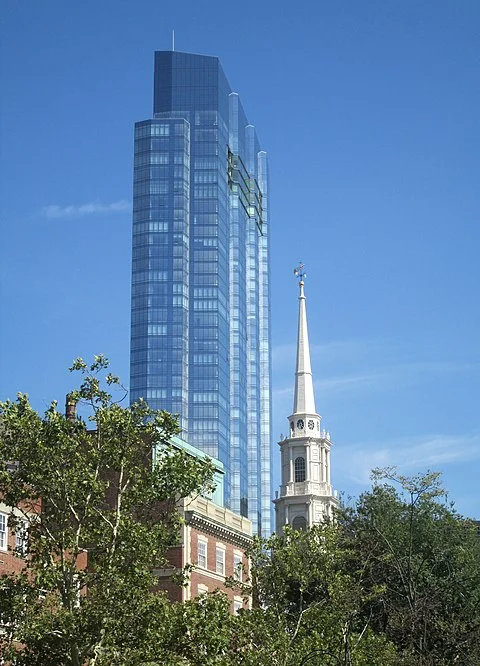
The 60 story Millennium Tower, in Boston, apparently a haven for flight capitalists from abroad.
From Robert Whitcomb’s “Digital Diary,’’ in GoLocal24.com
Will this happen in some of Providence’s new residential towers? Joe Walsh of The Boston Guardian (where I serve as unpaid president) reports that “downtown neighborhoods only added about 1,100 owner-occupied condos in the last 15 years, even as the total number of condos grew by nearly 6,000.’’ Much of this strange change can be explained by foreign buyers seeking a safe place to own real estate, as investments and/or as places to move to. Prosperous American cities such as Boston, San Francisco and New York are particularly attractive to rich people from nations that lack a rigorous rule of law that protects property rights. Consider Russia and China.
Owning a fancy condo in a rich U.S. city looks like a safe way to store wealth.
Consider that in at least one new Boston luxury building, Millennium Tower, three out of four units have owners who don’t claim owner-occupancy tax exemptions! That suggests why some of these buildings look remarkably dark at night. Some nearby store and restaurant owners complain that the near-empty buildings mean far fewer customers than you’d expect from proximity to such huge buildings.
You could see something like this happening in parts of downtown Providence and the East Side, particularly with rich parents of students at Brown seeking pied-a-terres. Jason Fane’s proposed 46-story Hope Point Tower, if the next recession doesn’t kill it, might lure a lot of these people.
Facing it day to day

This is from The New England Council (newenglandcouncil.com)
“New England Council member Takeda will host Selections from DISORDER: The Rare Disease Film Festival at Biotech Week Boston on Thursday, Sept. 12 from 4- 8 pm at Takeda’s ASPIRE Auditorium, in Cambridge.
“Presented in partnership with Biotech Week Boston and festival co-founders Bo Bigelow and Dan DeFabio, this inspiring event will showcase a curated lineup of films addressing the challenges and struggles patients and their families living with a rare disease face on a day-to-day basis. The selected films aim to build connections between the biopharma community, patient advocacy groups, patients, and those who are passionate about finding cures for rare diseases, which may ultimately lead to new paths for research.
“The evening will also feature a Fireside Chat with patients, caregivers, researchers, and industry partners who will discuss the community of hope that unites them and how to work together to propel cures.
Tickets for the event may be purchased here. Tickets grant attendees full access to the fireside chat, films, and reception.
For more information on Selections from DISORDER: The Rare Disease Film Festival at Biotech Week Boston, please visit the Web site here.

States of sloth?
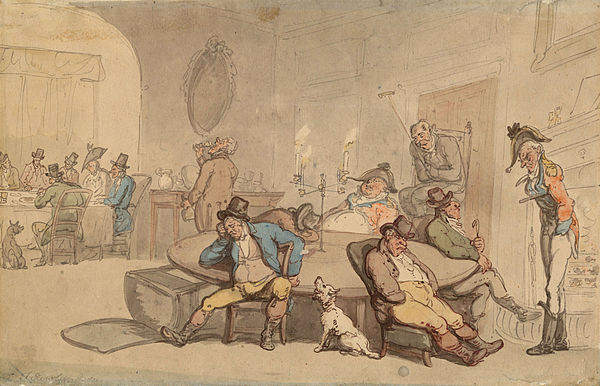
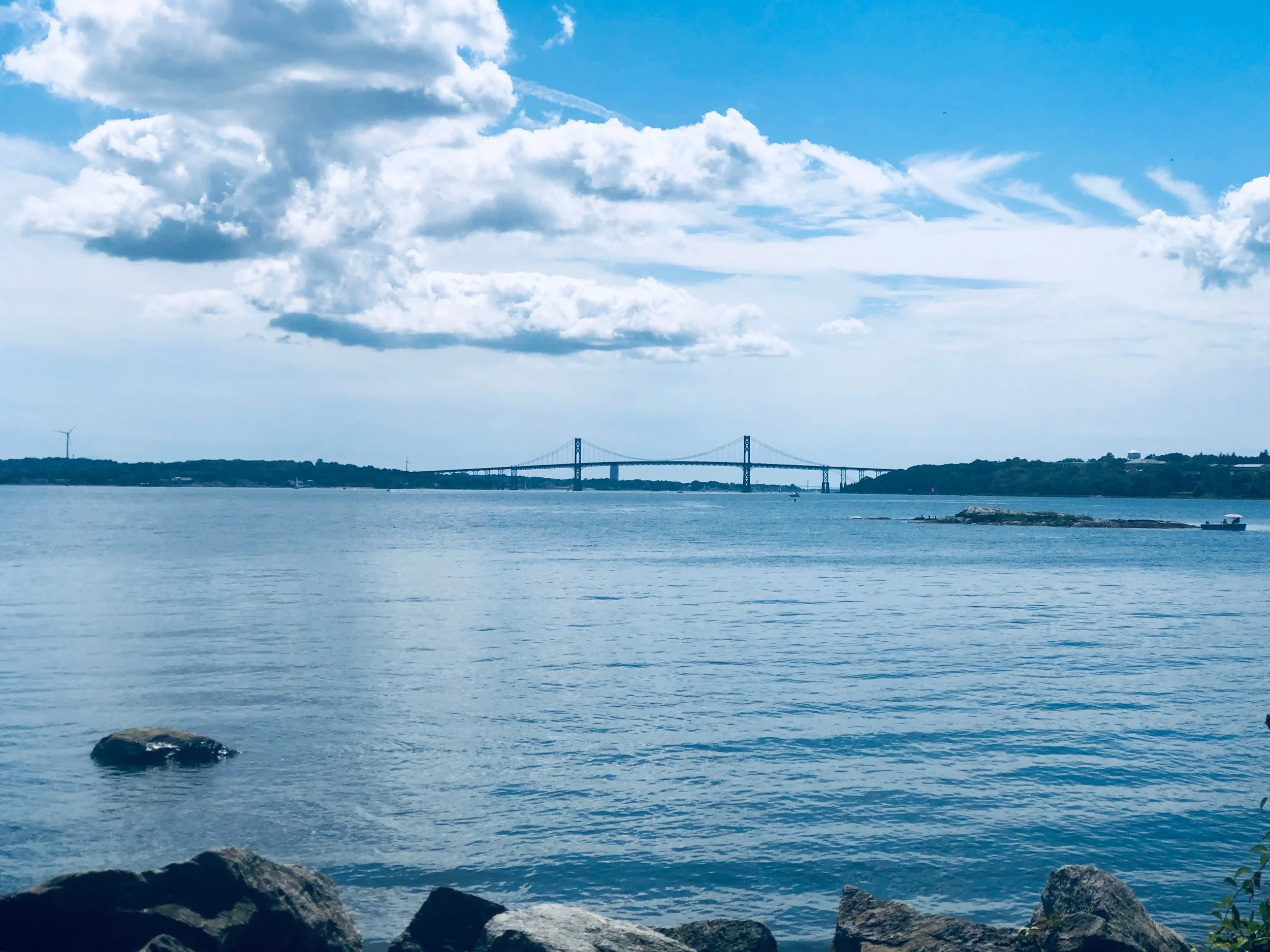
“Scene in Club Lounge,’’ by Thomas Rowlandson
From Robert Whitcomb’s “Digital Diary,’’ in GoLocal24.com
I’m not sure what a recent study by WalletHub seeming to rank Rhode Island 49th state in the country (with West Virginia 50th) in hard work means. (GoLocal ran a story on this on Aug. 26.) Does this mostly reflect the Ocean State’s aging population, its too slow transition from the old mill culture or its ancient and well-known negativity and surliness (see Facebook’s usual Tea Party-style comments below this column) or most likely a mix of them and many other factors, despite Rhode Island’s many beauties.
The survey includes as work time annual volunteer hours for charities, etc.\
On that, I’ve long noticed close up the state’s low level of participation in nonprofit civic organizations and in charitable giving (in a state ranked around 19th in per-capita income). I have served on several nonprofit boards over the years in Rhode Island and on several elsewhere. (I’ve lived and/or worked in Massachusetts, Connecticut, New Hampshire, New York, Pennsylvania, Delaware and France, and seen more volunteerism there than here.) Given the state’s compactness, dense population and all-around intimacy, this dearth of volunteerism in Rhode Island has always surprised me.
Comparative surveys are fun to read but there’s often less to them than meets the eye. I noted that very rich Massachusetts was ranked lazy, at 38th, and very rich Connecticut, even lazier, at 44th. Greater Boston and much of Connecticut are known for their work ethic – an ethic that has helped make them rich. North Dakota, heavy into oil and gas production and agribusiness was ranked the most hard-working.
To read the WalletHub study, please hit this link.
Gift from the sea

Work by Susan Lyman in her Boston Sculptors Gallery show “Washashore,’’ Oct. 2 to Nov. 3. She creates art from driftwood.
'America's Best Social Critic' looks at academia, civil society and democracy

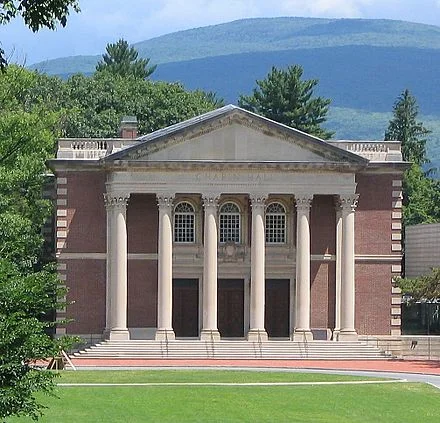
Chapin Hall, at Williams College, in Williamstown, Mass.
From The New England Journal of Higher Education, a service of The New England Board of Higher Education (nebhe.org)
“It’s time, as the phrase goes, to ‘take control of the narrative,’ or at least tell our story better than we have been doing—to convey how hard most faculty work, how modestly most are paid, how little job security they enjoy, and, most broadly, that higher education remains an indispensable public good in a democratic society.”
Andrew Delbanco is a professor of American Studies at Columbia University, author of several books, including 2012’s College: What It Was, Is, and Should Be, and president of the Teagle Foundation. His latest book, The War Before the War: Fugitive Slaves and the Struggle for America’s Soul from the Revolution to the Civil War, will come out in paperback in November. In the following Q&A, NEJHE Executive Editor John O. Harney asks Delbanco about the state of higher education and intellectual life today.
Harney: Among your many honors, Time Magazine several years ago called you “America’s Best Social Critic.” Are “social critic” and other kinds of “public intellectual” occupations missing from what we urge today’s college students to include among their aspirations?
Delbanco: I’ve been very lucky to be able to make a living by doing what I love—teaching, writing, speaking on issues that matter to me. I’m afraid that opportunities for all of the above are shrinking as academia, publishing and journalism are all going through severe economic turbulence. Still, there will always be young people determined to follow their passions. We need their voices more than ever, so let us hope they will find ways to be heard—in both traditional venues and through new media.
Harney: You’ve said the college classroom is a “rehearsal space” for democracy. Colleges should allow you to walk in with one point of view and walk out with another. How best to enhance that quality in an age of political correctness and backlashes against it?
Delbanco: I believe more than ever that under the guidance of sensitive teachers who know how to combine intellectual rigor with open inquiry, the classroom is more likely than social media or a public rally to foster civil discourse about charged issues. My guess is that relatively few classrooms fit the description promulgated by those who think academia is rife with intolerance and “political correctness.” The method practiced by good teachers since the beginning of time still works: Show passion for the material you are teaching and respect for the students to whom you are teaching it, and good things will follow—including civil debate about controversial questions to which there are no easy answers.
Harney: Teagle has supported NEBHE’s work to develop affordable options for community college students to attend an independent institution, develop and promote liberal arts transfer opportunities at independent colleges for community college graduates, and increase the number of community college transfer students who earn a bachelor’s degree at an independent institution. How does this fit with your worldview?
Delbanco: America’s community colleges are immensely important institutions. They are gateways for millions of first-generation, minority and “nontraditional” (that is, older students seeking marketable skills in a rapidly changing economy), who represent the future of our country. Yet community colleges are woefully underfunded, and often underappreciated by people for whom college means the pastoral residential campus offering amenities of which most community college students can only dream. Community colleges serve many constituencies who bring many different aspirations to their studies. Students who come out of community college with an associate degree are well-served by these institutions, as are others who attend not necessarily to obtain a degree but in order to gain a specific skill or perhaps a certificate signifying completion of a course or program. Still others hope to move on to a four-year institution to earn a bachelor’s degree. We owe it to them to support, encourage and help them realize their hopes by building bridges from two-year public to four-year private institutions. This will require improved advising, clearly articulated pathways, more rational portability of credits and generally better coordination among institutions with different structures and cultures. The Teagle Foundation wants to support these efforts, which are gaining momentum not only in New England but throughout the nation—in part because independent colleges, especially those that are less selective, are seeking new pipelines to fill seats in their classrooms.
Harney: What do you see as the future of collaboration between public and independent higher education institutions?
Delbanco: The future must include the kind of cooperation I just spoke about between two-year publics and four-year privates. But that is only one dimension of this question. For example, research universities (both private and public) must do a better job of preparing graduate students for teaching careers in public open-access institutions as well as in independent liberal arts colleges. We are in the midst of a full-fledged crisis of employment for Ph.D.’s, especially in the humanities, who are often unprepared for, and even unaware of, opportunities outside the kind of research universities that have trained them. In general, colleges and universities also must become more responsive to the needs of their local communities. I often find myself saying that there is really no such thing as a private college or university—in the sense that all institutions benefit from public subsidies in the form of tax exemption, tax-deductible donations and other forms of philanthropic support, as well as federal support for research and tuition-paying students. In short, taxpayers have a right to expect that the local college or university—whether public or “private”—will find ways to serve them as well as their own students, by engaging constructively with the public schools, for example. In this respect, community colleges are among the leaders of the higher education sector, while some of the best-endowed private universities are among the laggards.
Harney: You talked a bit about what used to be a cross subsidy from students who could afford college to those who couldn’t. Is that a reasonable system?
Delbanco: Well, I’ve suggested that the discounting system used by some institutions—those with “need-based” financial aid programs—might be thought of as a dash of socialism mixed into our capitalist system. By this I mean that differential pricing determined by the ability of families to pay is an outlier in a consumer society that generally sets prices by calculating what price the market will bear. Of course this analogy does not mean that discount pricing is always motivated by a “Robin Hood” impulse to take from the relatively rich in order to give to the relatively poor. For most private institutions, even those that are relatively well-endowed, discounting is necessary not only for reasons of equity or for the educational value of enrolling a class with some socioeconomic diversity, but also for the practical imperative of recruiting enough students who bring at least some tuition dollars with them. This complex system—where for one reason or another, the “sticker” price exceeds what many students actually pay—is under increasing stress and seems likely at some point to give way to something different. But I doubt that we will see fundamental change until and unless the federal government takes a larger role in financing higher education. Perhaps the current talk of universal “free” college—in some respects a regressive idea because it would increase subsidies without means-testing the beneficiaries—marks the start of a more serious discussion.
Harney: Public disinvestment is often viewed as a chief reason for rising college prices. Why is it so hard to argue for higher education funding?
Delbanco: Another complex question. Part of the answer is that the growing disparity between public resources and public obligations has squeezed the ability of state governments to maintain the subsidies on which public higher education depends (the left would cite such factors as the tax revolt that began in California in the 1970s and the privatization of services previously regarded as a public responsibility; the right would cite putatively excessive benefits granted to unionized public workers and the rising cost of Medicaid). But the distribution of resources is also partly a function of who makes the better arguments—and there is no doubt that public confidence in higher education has declined (even though competition has never been as fierce as it is now to gain admission to the most prestigious institutions). Unfortunately, we live in an age of sound-bites and platitudes disseminated by talk-show hosts and spread on social media—so while there are certainly ways in which higher education should strive to educate students better at lower cost, it’s hard to combat the perception that we are a wasteful, inefficient “industry” with little accountability. Much of this is a grotesque distortion. But overpaid presidents and coaches, admissions bribery scandals and stories of dissolute students don’t help. It’s time, as the phrase goes, to “take control of the narrative,” or at least tell our story better than we have been doing—to convey how hard most faculty work, how modestly most are paid, how little job security they enjoy, and, most broadly, that higher education remains an indispensable public good in a democratic society.
Harney: You’ve quoted Melville’s claim that a whale ship was his Yale and Harvard. What’s the application of that today?
Delbanco: Despite all our challenges, I still believe that college can be a place where students widen their horizons, learn to appreciate the wonder of the natural world and the complexity of the social world, and grow into a sense of human interconnectedness. Those are among the things that Melville learned by going to sea and opening himself to experiences he had never dreamt of on land.
Harney: You’ve mentioned the importance of “diversity.” How does the momentum toward online distance learning accommodate that?
Delbanco: I’m a “distance learning” skeptic—by which I don’t mean that there is no value in the efficient and economical delivery of information to students who cannot be personally present in a traditional classroom or who have reached a certain level of learning proficiency so they can make good use of online resources. But I worry that the new digital technologies may become another force for stratification: i.e., poor kids will be led toward the “virtual” classroom while rich kids will get the real deal. Of course it’s not that simple—and we should continue to experiment with new pedagogies and test their effectiveness, equity and potential value for cost control. But for now the evidence seems to suggest that the most vulnerable students, sometimes described as “unconfident learners,” need all the personal human attention they can get.
Casino cannibalization?

From Robert Whitcomb’s “Digital Diary,’’ in GoLocal24.com
The casino mania continues apace, with the latest scheme being a proposal to build a slots palace, and, incredibly, horse track, in Wareham, near the Bourne Bridge, the western road access to Cape Cod. If you think Cape traffic is bad now…. (I used to love horse tracks but not so much now that I know more about how some of the animals are treated.)
But wait! There’s more! A Chicago developer called Neil Bluhm continues to push for a casino in poor old Brockton, once “The Shoe Capital of the World’’; the Mashpee Wampanoag Indians still want to put up a casino in Taunton, once “The Silver City,’’ and the Aquinnah Wampanoag Indians continue to demand a gambling joint on Martha’s Vineyard near the famously colorful clay cliffs called Gay Head.
As our region continues to move toward casino cannibalization it looks like IGT, the gambling systems tech company, is a better, well, bet for Rhode Island than Twin River, more of whose suckers may decide to take their chances at the other nearby casinos to pop up. Of course, that’s already happening at the huge and glitzy Encore mega casino in the traditionally poor and gritty inner Boston suburb of Everett. Encore seems to have an especially potent allure for high rollers at its table games, and there are plenty of rich people in the region.
Still, I think a lot of the folks from southeastern New England flocking to Encore right now are going there mostly out of curiosity. When that fades, and winter weather arrives, making travel to Greater Boston even more unpleasant than it is now, I think that will fade a bit, even with such come-ons as the luxury bus service between Gillette Stadium and Encore.
Anyway, IGT, as an international tech company serving a wide customer base, would seem a sturdier reed for Rhode Island to lean on for economic development than one casino company – that is, if IGT actually stays in the Ocean State! Corporate promises about staying in localities and states that have offered companies assorted incentives such as tax breaks tend to evaporate remarkably often.
Meanwhile, we’ll see what the effects of online sports betting on casinos turn out to be….

Tim Faulkner: Searching for support for tidal and wave power
From ecoRI News (ecori.org)
Efforts to generate electricity from waves and tidal currents have slowed in southern New England, as offshore wind power takes a commanding lead in the renewable-energy portion of the so-called “blue economy.”
In recent years, tidal- and wave-energy programs at Brown University, University of Massachusetts atm Dartmouth and the University of Rhode Island have curtailed their research and commercial collaborations.
At Brown, the Leading Edge project has shifted from an academic and commercial venture to a school-based laboratory-research project. Engineering students designed oscillating hydrofoils that generate electricity from rectangular blades that lift and rotate in strong currents. Faculty leaders, however, have gone to other schools or are on sabbatical, thereby halting commercial partnerships.
The program was funded by the federal Advanced Research Projects Agency–Energy (APRA-E) program, which supports energy initiatives that private investors consider too risky.
Leading Edge partnered with Portsmouth, R.I.-based BluSource Energy Inc. to build and test underwater turbines in the Taunton River and at the Massachusetts Maritime Academy at the entrance of the Cape Cod Canal.
Tom Derecktor, CEO of BluSource, said the turbine succeeded in producing uninterrupted electricity, something wind and solar can’t promise. But he noted the challenges of scaling hydrokinetic power for commercial production. Large energy systems require open water or a river with a strong current, free from ship traffic and debris, conditions hard to find in the Northeast. Most currents with the desired speed of 4 knots or more are too far from population centers to host a permanent power system.
Still, Derekotor believes that tidal energy can achieve scale in other parts of the country.
“There’s a lot of potential there, but it requires a lot funding to take it to the next level,” he said.
Congress may help by increasing funding for the APRA-E program, but President Trump opposes the program and has tried, unsuccessfully, to eliminate its funding.
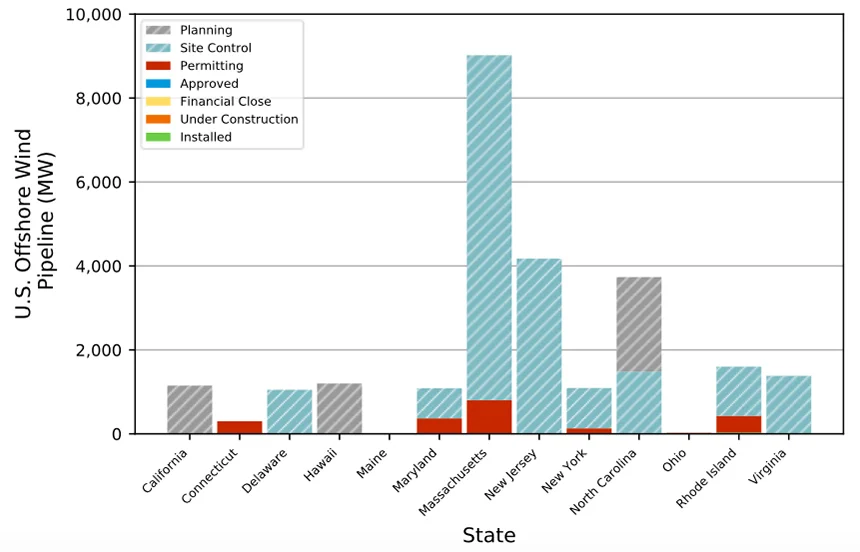
Offshore wind-energy development by state. (U.S. Department of Energy)
Meanwhile, offshore wind power is taking off, with some 25 gigawatts of projects proposed across the country, much of it in the Northeast, according to the Department of Energy. More then 10 gigawatts is planned for Massachusetts and Rhode Island waters, thanks to southern New England's large, windy, and relatively shallow offshore regions — all within range of millions of energy customers.
There is still hope for harnessing energy from currents and waves. In 2014, UMass-Dartmouth closed its Marine Renewable Energy Center, prompting the energy program to reorganize as the Marine Renewable Energy Collaborative (MRECo). The nonprofit switched from its academic initiative to focus on public outreach, promotion, and equipment testing.
MRECo’s executive director, John Miller, said there isn’t adequate financial support to make tidal and wave projects financially viable, especially as federal dollars have shifted to wave-energy testing on the West Coast, such as the PacWave project off the coast of Oregon.
“It’s a tough business,” Miller said. “The whole business is 10 to 15 years behind where offshore wind is.
Nevertheless, MRECo is testing a range of marine-industry products. The organization recently concluded a study that determined that current for the proposed Muskeget Channel tidal installation between Nantucket and Martha’s Vineyard lacks the velocity to support the latest tidal-energy systems.
In 2017, MRECo installed the Bourne Tidal Test Site (BTTS),. in the Cape Cod Canal. Miller noted that the $300,000 steel platform was a bargain to build compared to more elaborate facilities off the coast of Scotland and in the Bay of Fundy in Canada that cost $30 million apiece
Within a year, BTTS expects to test its first underwater turbine, a device for the start-up company Littoral Power Systems of Fall River, Mass. BTTS has hosted other marine equipment, including commercial fishing nets and soon will gather data for aquatic sensors that monitor microplastics and algae linked to toxic blooms.
MRECo is seeking $200,000 to upgrade the power and Internet capability of BTTS to accommodate testing of additional marine sensors and instruments.
At URI, the ocean-energy research labs and indoor wave tank have broadened their study areas to include the offshore wind industry.
Prof. M. Reza Hashemi said wave and tidal power are some of the oldest forms of energy but have yet to be proven commercially viable in New England, primarily because water currents aren’t strong enough.
“There is hope, but it needs a lot help,” Hashemi said.
Wave and tidal energy are more promising on the West Coast and in the United Kingdom, where the currents are much stronger, he said.
But local tidal- and wave-energy efforts haven’t stopped. The massive tides in the Gulf of Maine are drawing demonstration projects supported by research from URI and the University of New Hampshire, among others.
Hashemi also co-authored a textbook about wind, tidal, and wave energy. For now, he is conducting research on the impacts of hurricanes on wind turbines. But Hashemi and URI remain dedicated to hydrokinetic energy. The university recently received $148,000 from The Champlin Foundation for a new ocean-energy flume, a type of indoor wave tank designed for testing small-scale wave- and tidal-energy devices
“Wave and tidal energy are still at the early stages of development,” Hashemi said. “They are not yet at the commercial stage.
Tim Faulkner is an ecoRI News journalist.

In New Canaan: Bhutan and 'The Glass House'

“Bhutan PF23’’ (oil on canvas), by Ricardo Mazal, in the joint show “Ricardo Mazal & Paul Bloch: Refined Abstractions,’’ at Heather Gaudio Fine Art, New Canaan, Conn., through Oct. 5.
The gallery says:
Ricardo Mazal 's interest in the anthropological practices of diverse global cultures, their spiritual rites, rituals and sacred places comes to the fore in his artistic expression. Through the use of photography, print-making, and the latest digital and video technology, Mazal achieves transformational perspectives and brings formal principles of composition into his work. Rigid blocks of color, flatness, folds, ribbons, stillness and texture have evolved over the span of decades to become the recognizable aesthetic for which he is known. The exhibition will feature paintings from the “Bhutan Abstractions’’ series, geometric and organic compositions that resulted from a family trip he took in 2014. Referencing Bhutanese prayer flags billowing in the wind, some of these paintings are flowing arabesques while others follow more hardline interplays of tone, color and texture, interrupted by visual hints of the region's snow-capped vertiginous strata.’’

The Moreno Clock, at the intersection of Elm Street and South Avenue in New Canaan.

Linda Gasparello: Uzbeks transforming Old Silk Road cities into smart cities

Design for Tashkent City
Tashkent, the capital of Uzbekistan, is undergoing a transformation at a pace and scale almost comparable to Samarkand in 1370, when the Turco-Mongol ruler Timur, or, Tamerlane, as he is known in the West, made it his capital.
On the one hand, Tamerlane was a brutal conqueror who razed ancient cities to the ground and put entire populations to the sword. The empire he founded in 1370 and ruled until his death in 1405 (probably of a mid-winter cold, caught while on his way to change the Ming Dynasty in China) stretched from Russia to India and from the Mediterranean Sea to Mongolia.
But on the other hand, Tamerlane was a brilliant constructor. One of his signature achievements was Samarkand, which he strove to make the most splendid city in Asia.
“It’s not hard to see why the author of the 1001 Nights had Scheherazade spin her tales from a palace in Samarkand: The city was on the Silk Road, alive with people from different lands; it was a wonderland of Islamic architecture and a great center of learning,” Srinath Perur wrote in The Guardian newspaper.

The Registan, in Samarkand
But no place in Samarkand represents all three aspects as well as the Registan, the main square, three sides of which stand a blur-of-blue-tiled madrasas (Islamic colleges). In 1888 George Curzon, world traveler and future viceroy of India, called it “the noblest public square in the world.”
While most of the edifices seen around the square were built after Tamerlane’s death, they couldn’t have been built without his sacking Islamic brother cities (including Baghdad, Damascus and Khiva) and his sparing their artisans and craftsmen, who he brought back to Samarkand.
In 1399, just a year after reducing Delhi to rubble because he thought the Muslim sultan was too tolerant of his Hindu subjects, Tamerlane was back to building his sumptuous capital. A caravan of 90 captured elephants was employed to carry stones from quarries to erect a great mosque, according to Ruy Gonzalez de Clavijo, an envoy the Spanish kingdom of Castile dispatched to Samarkand. The Europeans rather liked Tamerlane because he roughed up their neighborhood bully, the Ottoman Turks
Tamerlane returned from his military conquests -- estimated to have wiped out 5 percent of the world’s population -- with architectural inspiration and plunder that could finance his appetite for building in Samarkand and other cities.
One of his monuments bears the proverb, “If you want to know about us, examine our cities.’’
That proverb could be driving Shavkat Mirziyoyev, who succeeded Islam Karimov as Uzbek president in 2016. His smart city projects in Tashkent, Samarkand and Bukhara, so it seems, are aimed at rebranding Uzbekistan as a country interested in political reform, economic investment and good relations with the rest of the world.
Javlon Vakhabov, Uzbekistan’s youthful new ambassador in Washington, discussed one smart city project, Tashkent City, in some depth at a summit on smart cities and communities organized by Dentons, the world’s largest law firm.
Construction of Tashkent City, a $1.7-billion international business and financial hub in the heart of the capital, started in 2018. The design includes an industrial park, eight business centers, a shopping mall, restaurants and a cultural center, as well as residential apartments on a 173-acre site
“The aim of this project,” according to the government, “is to create an architectural complex in the center of Tashkent, implemented by embedding the latest trends in world architecture and the application of environmentally friendly and energy-saving, smart technologies.”
Vakhabov enthused that Tashkent City projects have already received millions of dollars in loans from the Asian Development Bank, the European Bank for Reconstruction and Development and the World Bank.
But he added, “Uzbekistan is a 3,000-year-old country. We have four UNESCO World Heritage cities. We have 4,000 sites that are highly protected by UNESCO. We need to be sensitive to these historical sites and adapt them to smart cities.”
“A mass movement of people from the countryside to the cities has created stresses on the environment and infrastructure,” he said. Ultimately smart cities can alleviate those stresses, using information and communication technology to improve efficiency, sustainability and citizen welfare.
Meantime, smart city projects have been stressing out people. There have been news reports about protests and court cases in Tashkent over traditional housing demolitions and evictions.
“As for the resettlement of people living in houses built by their forefathers, we need to create more favorable conditions for people persuaded to move to other communities,” Vakhabov said reassuringly.
Linda Gasparello is producer and co-host of White House Chronicle, on PBS. Her email is whchronicle@gmail.com.
\
Trying to save Aquidneck Island's open space

Windmill (built around 1810) at Prescott Farm, in Middletown, R.I.., on Aquidneck Island, which still has some countryside, or at least rural-looking exurbia.
From Robert Whitcomb’s “Digital Diary,’’ in GoLocal24.com
‘EcoRI News’s Frank Carini had a good story on Aug. 18 about how Aquidneck Island could run out of its currently unprotected open space by 2050, and not because of a big increase in population but because of sprawl development, whose ugliness is all too apparent on the roads leading to Newport. This still unbuilt-on space includes farmland (vineyards, sweet corn, etc.), woods and other open space. There’s still considerable inland natural beauty left on the island that many tourists who head for, say, Newport’s spectacular Ocean Drive don’t notice.
How to protect the island’s remaining natural beauty? Encourage zoning changes that favor housing density and compact commercial development instead of housing subdivisions and malls, strip or otherwise. (Presumably the continuing rise of Internet shopping will continue to undermine the business model of malls, with their asphalt parking lot acreage mostly empty and wasted when the stores are closed and whose hard surfaces add to local flooding and water pollution.)
Also needed is a much, much denser public transportation network that would reduce car dependence and the sprawl it fosters.
Remembering that Aquideck is an island, albeit a big one by Northeast standards, should remind people of its fragility. To read Mr. Carini’s piece, which includes graphics, please hit this link.