
Vox clamantis in deserto









Frank Carini: Restoration plan for species hurt by 2003 Buzzards Bay oil spill

Common Loon
From ecoRI News (ecori.org)
State and federal environmental agencies have released a draft plan to help common loons and other birds in the wake of the 2003 Bouchard Barge No. 120 oil spill in Buzzards Bay, in both Rhode Island and Massachusetts waters.
The draft plan is available for public comment through Oct. 31. Written comments can be sent via email to molly_sperduto@fws.gov. The agencies are scheduled to hold an information meeting and webinar Sept. 12 at 1 p.m. at the Massachusetts Division of Fisheries and Wildlife office at 1 Rabbit Hill Rd, Westboro.
The plan is the first of two documents to address birds injured by the spill, both of which will be funded by a 2017 $13.3 million natural resource damages settlement from Bouchard Transportation Co. Inc. Of this total, $7.3 million is designated to plan, implement, oversee and monitor common loon restoration, while another $1 million will go toward other birds impacted by the spill. Another $5 million from the settlement will address injuries to common and roseate terns through a separate future plan
This plan describes the injuries resulting from the 98,000-gallon spill that oiled 100 miles of shoreline, including coastal habitats where birds feed, nest, and in some cases overwinter. An estimated 531 common loons and more than 500 other birds, including common eiders, black scoters, red-throated loons, grebes, cormorants, and gulls, were killed either through direct or indirect effects of the spill.
Common loons winter in large numbers in Buzzards Bay. Common eiders experienced the highest mortality of all other bird species, with 83 birds killed by the oiling. The ultimate goal of the damage assessment and restoration process is to replace, rehabilitate, or acquire the equivalent of injured natural resources and resource services lost because of the release of hazardous substances, at no cost to taxpayers.
“The trustees have carefully considered a number of options to restore birds killed by the 2003 oil spill, especially the common loons that are icons of our northern lakes,” said Tom Chapman, supervisor of the U.S. Fish & Wildlife Service’s New England office. “We invite people to learn about and provide feedback on these ideas, in hopes of soon starting restoration efforts benefiting birds throughout New England.”
The draft plan evaluates multiple restoration alternatives that were developed in coordination with loon and other bird experts. Based on factors to ensure successful restoration, as well as criteria established by federal regulations, the trustees recommend the following projects:
Release 63-84 common loon chicks from Maine and New York in historic Massachusetts breeding sites in Assawompset Pond Complex and the October Mountain Reservoir, in hopes of returning this species to more areas in the state ($3,185,000). In Massachusetts, common loons disappeared for decades until 1975, and have since primarily returned to breed in Quabbin and Wachusetts reservoirs, migrating offshore to winter.
Increase survival of nesting loons at breeding sites across New England ($3,185,000) through: creating artificial nesting sites on rafts that withstand fluctuating water levels and reduce disturbance from predators and people; adding signs and wardens to watch over nests to reduce disturbance; preserving land to protect breeding habitat; and reducing exposure to lead tackle through outreach and tackle exchange programs
The trustees’ preferred alternatives to restore other bird species are:
Permanently protect more than 300 acres of high-quality coastal habitats on Cuttyhunk Island off the coast of Massachusetts ($500,000).
Identify a similar habitat protection project in Rhode Island through a competitive grant process ($1,274,000)
Use signage, nest monitoring, and wardens to protect common eider nests in the Boston Harbor Islands and Cuttyhunk Island ($100,000).
Frank Carini is editor of ecoRI News.
Dangerous colors

“Cautionary Tale’’ (acrylic, oil and oilstick on paper), by Tracey Physioc Brockett, at the Augusta Savage Gallery, Amherst, Mass.

Campus of the University of Massachusetts at Amherst.

Mt. Norwottuck, straddlingh Granby and Amherst, in the Holyoke Range.
— Photo by Andy Anderson
Don Pesci: Anti-Muslim hatemongering or scholarly curiosity?

In early August, the Council on American Islamic Relations (CAIR) and the Southern Poverty Law Center (SPLC) jointly condemned E. Miles Prentice, the owner of the Single-A Connecticut Tigers, based in Norwich, Conn., and co-owner of the Double-A Midland (Texas) RockHounds. Prentice was assailed because of his association with the Center for Security Policy (CSP), a group, according to a story in the Norwich Bulletin, that has been identified by CAIR as an anti-Muslim hate group.
Immediately after the “hate” gauntlet had been thrown down, curious minds certainly wondered if the CFSP was indeed a Muslim hate group, which is to say a group that hates all Muslims because they are Muslims. In a story of this kind, it is important to know whether the CSP is inspired chiefly by hate or by something far less toxic -- scholarly curiosity: Is sharia law compatible with our constitutional and the common law? In addition, one would want to know whether Prentice himself hates Muslims simply because they are Muslims, or whether Prentice is being assailed because of his close association with the CSP, while he himself is free of the presumed taint of hatred. Prentice is chairman of the Center for Security Policy and appears to be far more interested in baseball than irrational hatred.
Unfortunately, none of these questions have been asked, still less answered, by those reporting on the matter. The charge of anti-Muslim hatred – like charges of racism and anti-Semitism – may be unanswerable in the absence of unambiguous definitions. No doubt racism, anti-Semitism and anti-Muslim hatred should be denounced from every pulpit in the nation, religious and secular, but the denunciations must be aimed at the thing itself, not an intimation of its shadow. And, in the absence of firm definitions, those who falsely charge others with hatred of Islam as such should be fervently denounced by men and women of good will much in the way Sen. Joe McCarthy was reviled when he sought to tag as Communists some people who were innocent of the charge. McCarthy did correctly identify some people as Communists, but he was painting with a very broad brush, and in some cases his manner of investigation proved insufficient.
In 1992, William F. Buckley Jr. brought out a book titled In Search of Anti-Semitism. The tightly reasoned book ran to 200 pages and Buckley appeared to have captured in its pages a proper context “to evaluate anti-Semitism and, at the same time, what is wrongfully thought of as anti-Semitic.” There is no such effort underway to narrowly define “Islamic hatred” in such a way that Prentice may be safely put behind its definitional bars. Neither Prentice nor the Center for Security Policy, founded in 2008.
Is it not possible that CAIR -- closely associated with the Muslim Brotherhood, a transnational Sunni Islamist organization founded in 1928 in Egypt by Islamic scholar and schoolteacher Hassan al-Banna, which itself is closely related to Hamas, a militant anti-Israeli terrorist organization -- may regard as hate what non-Muslim commentators in the United States choose to view as critical analysis?
The Council on American Islamic Relations should be wary of throwing stones from within glass houses. CSP is not an Islamic hate group. And if Prentice is to be judged an Islamic hater because of his association with a group found on the growing enemies list of the Southern Poverty Law Center, should not CAIR and the SPLC be judged according to the same standard applied in the case of Prentice? Prentice’ response to the charge that he is a hatemonger, not ventilated fully in news outlets that have carried the sensational charge, may be found here.
There is no reason to suppose that the members of CAIR should be familiar with Kant’s categorical imperative -- “Act as if the maxim of your action were to become by your will a universal law of nature." Or, to put the precept in Christian terms, do unto others as you would have them do unto you. That precept – that moral law – weighs heavily on the Christian conscience. But there is no reason to believe that violent jihadists, say, soiling their hands with the blood of innocent Christians, among others, think themselves under any obligation to submit to Kant’s moral law. Their submission is to Mohammed's precepts as expressed in the Koran, the hadiths and sharia law.
However, if you want to play ball in Dodd Stadium, Norwich, CT., USA, you’ll have to play by the rules. And the overarching rule is that there is a world of difference between proper scholarly activity, permitted under the U.S. Constitution’s First Amendment, and hate mongering of a kind that falls short of slitting the throats of those who disagree with you on nice theological questions.
Don Pesci is a columnist based in Vernon, Conn.
Last surf frolic of the season?

“Surf,’’ encaustic painting by Nancy Whitcomb. Don’t worry: Those pesky great white sharks avoid water less than five feet deep….
Miscellany

Honeybee swarm in the woods
From Robert Whitcomb’s “Digital Diary,’’ in GoLocal24.com
Eastern Equine Encephalitis, a rare but dangerous disease carried by mosquitoes, is popping up earlier than usual this year in southeastern New England because of our very warm and humid summer. So Massachusetts authorities have ordered spraying. Let’s hope they do it with as much precision as possible and don’t kill a lot of bees, which of course are essential for pollination, and which are already under a lot of environmental stress, much of it manmade.
xxx

Ferry docking area of downtown Block Island (town of New Shoreham.
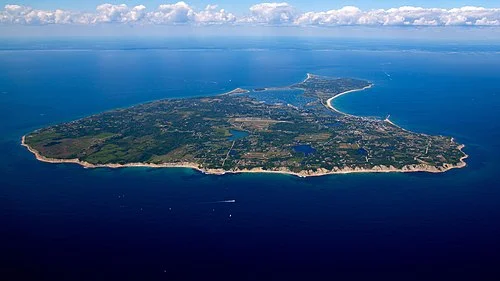
Looking north over the island.
Block Island includes a curious mix of very rich people who a decade or two ago would have been in the Hamptons but now have McMansions on the island and day trippers too many of whom seem more interested in getting drunk with their pals than in enjoying the little isle’s scenic grandeur.
Military history

Work by Michael Miller in the mixed-media group show “Unredacted,’’ at ReachArts, Swampscott, Mass., Sept. 7-Oc. 19.
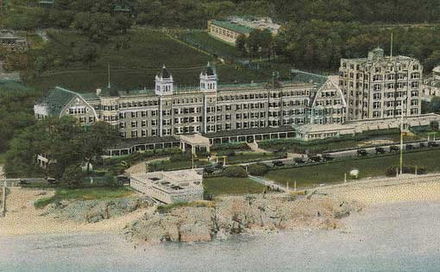
The former New Ocean House Hotel (circa 1920) on the Swampscott shore. Fire destroyed it in 1969.

The Boston skyline from Swampscott.
Rachel Bluth: Battling another surprise exorbitant medical bill
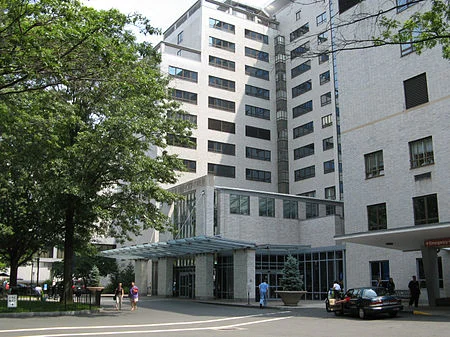
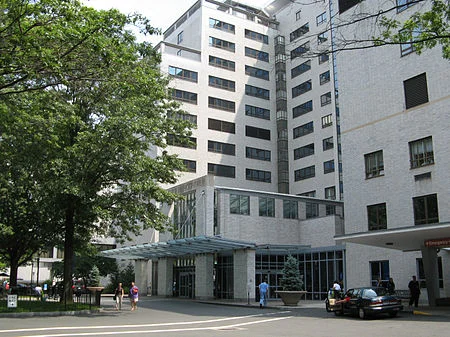
Main entrance of Hartford Hospital.
From a planning perspective, Wolfgang Balzer, of Wethersfield, Conn., is the perfect health-care consumer.
Balzer, an engineer, knew for several years he had a hernia that would need to be repaired, but it wasn’t an emergency, so he waited until the time was right.
The opportunity came in 2018 after his wife, Farren, had given birth to their second child in February. The couple had met their deductible early in the year and figured that would minimize out-of-pocket payments for Wolfgang’s surgery.
Before scheduling it, he called the hospital, the surgeon and the anesthesiologist to get estimates for how much the procedure would cost.
“We tried our best to weigh out our plan and figure out what the numbers were,” Wolfgang said.
The hospital told him that the normal billed rate was $10,333.16 but that Cigna, his insurer, had negotiated a discount to $6,995.56, meaning his 20% patient share would be $1,399.11. The surgeon’s office quoted a normal rate of $1,675, but the Cigna discounted rate was just $469, meaning his co-payment would be about $94. (Although the Balzers made four calls to the anesthesiologist’s office to get a quote, leaving voicemail, no one returned their calls.)
Estimates in hand, they budgeted for the money they would have to pay. Wolfgang proceeded with the surgery in November, and, medically, it went according to plan
Then the bill came.
The bill for Wolfgang’s surgery turned out to be $2,304.51, $800 higher than he and his wife, Farren, had budgeted for, based on the estimates. “That’s a huge hit,” Farren says.
Total Bill: The estimates the Balzers had painstakingly obtained were wildly off. The hospital’s bill was $16,314. After the insurer’s contracted discount was applied, the bill fell to $10,552, still 51% over the initial estimate. The contracted rate for the surgeon’s fee was $968, more than double the estimate. After Cigna’s payments, the Balzers were billed $2,304.51, much more than they’d budgeted for.
What Gives: “This is ending up costing us $800 more,” said Farren, 36. “For two working people with two children and full-time day care, that’s a huge hit.”
When the bill came on Christmas Eve, the Balzers called around, trying to figure out what went wrong with the initial estimate, only to get bounced from the hospital’s billing office to patient accounts and finally ending up speaking with the hospital’s “Integrity Department.”
They were told “a quote is only a quote and doesn’t take into consideration complications.” The Balzers pointed out there had been no complications in the outpatient procedure; Wolfgang went home the same day, a few hours after he woke up.
The couple appealed the bill. They called their insurer. They waited for collection notices to roll in.
Hospital estimates are often inaccurate and there is no legal obligation that they be correct, or even be issued in good faith. It’s not so in other industries. When you take out a mortgage, for instance, the lender’s estimate of origination charges has to be accurate by law; even closing fees — incurred many months later — cannot exceed the initial estimate by more than 10%. In construction or home remodeling, while estimates are not legal contracts, failure to live up to them can be a basis for liability or “a claim for negligent misrepresentation.”
In this case, Hartford Hospital produced an estimate for Balzer’s laparoscopic hernia repair, CPT (current procedural terminology) code 49650
Hope You’re Sitting Down: Hospital Charges $4,700 For A Fainting Spell JAN 28
The hospital ran the code through a computer program that produced an average of what others have paid. Cynthia Pugliese, Hartford HealthCare’s vice president of revenue cycle, said the hospital uses averages because more complicated cases may require additional supplies or services, which would add costs.
“Because it was new, perhaps the system doesn’t have enough cases to provide an accurate estimate,” Pugliese said. “We did not communicate effectively to him related to his estimate. It’s not our norm. We look at this experience and this event to learn from this.”
Efforts to make health care prices more transparent have not managed to bring down bills because the different charges and prices given are so often inscrutable or unreliable, said Dr. Ateev Mehrotra, an associate professor of health care policy and medicine at Harvard Medical School
“The charges on there don’t make any sense. All it does is, people get pissed off,” Mehrotra said. “The charge has no link to reality, so it doesn’t matter.”
Resolution: “Because I roll over more easily than my wife does, I’m of the mindset to pay it and get done with it,” Wolfgang said. “My wife says absolutely not.”
Investigating prices, dealing with billing departments and following up with their insurer was draining for the Balzers
“I’ve been tackling this since December,” Wolfgang said. “I’ve lost two or three days in terms of time.”
For the Balzers, there’s a happy ending. After a reporter made inquiries about the discrepancy between the estimate and the billed charges — six months after they got their first bill — Pugliese told them to forget it. Their bill would be an “administrative write-off,” they were told.
“They repeatedly apologized and ended up promising to adjust our bill to zero dollars,” Wolfgang wrote in an email.
Most patients aren’t as proactive as the Balzers in getting estimates for the cost of health care, and most wouldn’t know that the hospital, surgeon and anesthesiologist would each bill separately.
The Takeaway: It is a good idea to get an estimate in advance for health care if your condition is not an emergency. But it is important to know that an estimate can be way off — and your provider probably is not legally required to honor it.
Try to request an estimate that is “all-in” — including the entire set of services associated with your procedure or admission. If it’s not all-inclusive, the hospital should make clear which services are not being counted.
Having an estimate means you can make an argument with your provider and insurer that you shouldn’t be charged more than you expected. It could work.
Laws requiring some degree of accuracy in medical estimates would help. In a number of other countries, patients are entitled to accurate estimates if they are paying out-of-pocket.
Most patients aren’t as proactive as the Balzers, and most wouldn’t know that the hospital, surgeon and anesthesiologist would each bill separately. And most wouldn’t fight a bill that they could afford to pay.
The Balzers say they wouldn’t have changed their medical decision, even if they’d been given the right estimate at the beginning. It’s the principle they fought for here: “There’s no other consumer industry where this would be tolerated,” Farren wrote in an email.
Bill of the Month is a crowdsourced investigation by Kaiser Health News and NPR that dissects and explains medical bills. Do you have an interesting medical bill you want to share with us? Tell us about it!
Rachel Bluth is a journalist with Kaiser Health News.
Christine Owens: Democracy needs unions

1913 political cartoon showing organized labor marching towards progress, while a shortsighted employer tries to stop labor
Via OtherWords.org
Democratic rights in the workplace — including the right to form a union, and the power to speak up about workplace issues — go hand in hand with a democratic society. But for decades now, those rights have been under assault.
This Labor Day, it’s time we fight to restore them.
Make no mistake: By whittling away at workers’ right to a voice at work, right-wing corporate activists have also been able to curtail workers’ voices at the ballot box, too.
Unionized workers vote at higher rates than non-union workers. States that have adopted so-called “right to work” laws to undermine unions have seen a net decline in turnout.
That’s exactly why corporate lobbyists and their political cronies push such laws — it’s part of their strategy to weaken support for popular proposals that help working people, from higher minimum wages to stronger social insurance programs.
These efforts work hand in hand with voter suppression, gerrymandering, and other efforts to undermine voting rights — as well as with “carve-outs” to labor laws, which exclude categories of workers like farm and domestic workers. Together these abuses disenfranchise workers and lock in poverty wages.
We’ve seen what happens when huge corporations, and the politicians beholden to them, wield all the political power.
They roll back government oversight so companies can engage in dangerous — even deadly — workplace practices. They widen tax loopholes so that companies that operate in our backyards don’t contribute to the upkeep of our communities. And they make corporations “people” with democratic rights far greater than those of actual human beings.
Then they illegally retaliate against workers who try to join together for change. They threaten mass layoffs and the decimation of communities. From the moment a person is hired, she’s told she’s replaceable and compelled to sign away her rights, leaving her on her own against an all-powerful boss.
But increasingly, working people are fighting back
Around the nation, worker activists are urging lawmakers to prohibit employers from firing people in retaliation for trying to improve their own workplaces. They’re calling for an end to longstanding racist exclusions of caregivers and agricultural workers from labor protections. And, from poultry plants to commercial banks, they’re blowing the whistle on dangerous employer practices that hurt workers and consumers alike.
Working people are joining together to demand a more just economy in other ways, too
From Walmart workers walking off the job to protest guns sales following the El Paso massacre, to adjunct professors warning that poverty wages affect the quality in the classroom, workers are protecting our democracy.
When call center workers in Mississippi draw attention to low wages and high turnover in critical federal services, and employees of the furnishing company Wayfair walk out to protest the inhumane treatment of immigrants at the border, they’re reminding us of our civic responsibilities.
When teachers fill streets and statehouses to raise the specter of generational harm from underfunded schools, and museum employees lift the veil on pay inequality in arts institutions, they highlight the permanent damage to our country if worker voices are silenced.
Restoring worker power isn’t just about restoring the right to unionize. It’s about balancing one-sided corporate control with workplace democracy.
Labor Day and the Fourth of July may be separated by several weeks, but the values they embody are deeply intertwined. If we truly want justice, domestic tranquility, general welfare, and the blessings of liberty, we must allow democracy to flourish in the workplace as well as at the ballot box.
Christine Owens is executive director of the National Employment Law Project.

As union membership declined income inequality rose.
Thinking of the Amazon

“Moonlight Burning’’ (photograph), by Richard Alan Cohen, in a group show at Galatea Fine Art, Boston, through Sept. 1
Life on a wharf

Long Wharf in Boston, United States, 19th Century, jutting into Boston Harbor
From Robert Whitcomb’s “Digital Diary,’’ in GoLocal24.com
I’ve spent a lot of time on wharves, and I especially think of them in August, when their smells of salt water, fish, creosote, diesel and gasoline reach their greatest intensity. Standing there at the edge of water, maybe looking at the eelgrass wave in the water a few feet away, I think of how summer is waning as a back-door cold front replaces the sultry southwest wind with a salty breeze from the east that’s cool enough to remind me of fishing for smelt as a kid in October off the “floats’’ (wooden floating wharves) in the harbor near our house, using a bamboo pole and multiple hooks. (Smelts, by the way, are best fried in butter.) Or I remember the east wind coming off Boston Harbor and cooling off my summer work mates and me as we smoked on the loading platforms along the promiscuously polluted South Boston waterfront and I mulled the threats and opportunities involved in returning to college in a couple of weeks.
On the Cape’s West Falmouth Harbor, there’s a very old and small granite-block wharf in front of what used to be my paternal grandparents’ house, since torn down and replaced by a tall McMansion but, as the builder emphasized to angry neighbors, on the “same footprint.’’ The little wharf provided me with a couple of lessons in the passage of time:
Low tide now exposes sand and mud flats going right up to the front of the wharf (or “dock’’ as we called it, even though docks are more precisely the area between wharves).
So why was it built? It turns out that a little stream emptying into the harbor had silted up the water abutting the wharf. In the 19th Century the water in that part of the harbor (once famous for its shellfish, before a disastrous oil spill, in 1969) was much deeper. And the rather mysterious structure was apparently built to provide access for people coming in small boats to a fresh water spring a few feet up the slope from the wharf.
3 Boston hospitals partner to help low-income families with rent
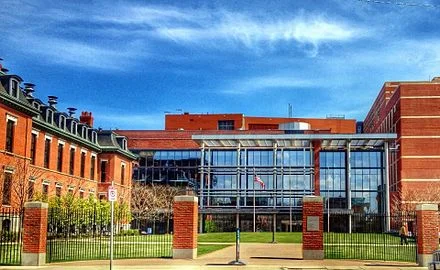
The Boston Medical Center’s Moakley Building
This is from The New England Council (newenglandcouncil.com):
BOSTON
“New England Council members Boston Children’s Hospital and Brigham & Women’s Hospital have partnered with Boston Medical Center (BMC) to launch a program to aid families struggling with rent. By joining forces on this initiative, the three major Boston hospitals are recognizing a substantive connection between stable housing and good health.
“Research conducted by BMC has shown that housing, alongside food and education, plays a critical role in an individual’s health and their health care costs. Children are especially vulnerable to health issues and developmental delays if they lack a stable housing situation. City officials found than over 4,600 eviction cases were filed in Boston Housing Court in 2016, the majority of which involved residents in subsidized housing. As rent continues to rise in Boston, the hospitals identified access to affordable, stable housing as a major concern for low income families and their health.
“The three hospitals plan to donate over $3 million over three years to fund housing programs and community grants. The first $1.5 million has be reserved for families behind on rent and at risk for eviction. Because of the hospitals’ financial commitment to this project, all three have also been granted state approval for construction plans at each of their campuses.
“‘The hospitals don’t think they’re going to fix the housing problem,’ said Dr. Shari Nethersole, executive director for community health at Boston’s Children’s. ‘We recognize this is a societal problem. We’re trying to help identify where we do have a role, where we can help.’
“The New England Council commends all three institutions for their commitment to support the health of low- income families.

John O. Harney: The latest in the N.E. 'free college' movement

2008–2012 bachelor's degree or higher (5-year estimate) by county (percent)
From The New England Journal of Higher Education, a service of The New England Board of Higher Education (nebhe.org)
The New England Board of Higher Education recently honored Hartford Promise and the Rhode Island Promise Scholarship with 2019 New England Higher Education Excellence Awards. And NEJHE has been paying close attention to innovations—and challenges—facing such “free college” programs.
In June, the Campaign for Free College Tuition (CFCT) lauded NEBHE delegate and Connecticut state Rep. Gregg Haddad for his work helping the land of steady habits become the 13th state to meet CFCT’s criteria for having a robust free college tuition program for its residents.
Under the budget signed by Connecticut Gov. Ned Lamont, eligible students at the state’s 12 community colleges will be able to attend without paying any tuition or fees starting in 2020. Haddad co-chairs the Legislature’s Higher Education and Employment Advancement Committee. He worked on the issue with Sen. Mae Flexer, Senate vice chairman of the Higher Education and Employment Advancement Committee, after the two heard of the enrollment success at Rhode Island Community College under its Rhode Island Promise program. Sen. Will Haskell and Rep. Gary Turco also helped make the legislation happen. Connecticut’s program will provide a “middle dollar” scholarship to all recent high school graduates with at least a 2.0 HS GPA who fill out FAFSA and take at least 12 credit hours each year. “If the student’s Pell Grant fully covers tuition, they will still get a $250 per semester grant to spend on other costs of attending college. The revenue to pay for this new program is expected to come from online lottery sales which have not yet been legally approved. But the budget directs the Governor and the State’s Board of Regents for Higher Education to find alternative sources of revenue should that idea not work out,” the CFCT reports.
Meanwhile, the 2019 Education Next Poll found 60% of Americans endorse the idea of making public four-year colleges free, and 69% want free public two-year colleges. “Democrats are especially supportive of the concept (79% approval for four-year and 85% for two-year). Republicans tend to oppose free tuition for four-year colleges (35% in support and 55% opposed) and are divided over free tuition for two-year colleges (47% in support and 47% opposed).”
A paper from the Institute for Women’s Policy Research explains that while college promise programs offer invaluable opportunities, “eligibility requirements and rules on whether funds can be used to cover non-tuition costs, can exclude students who are older, working, or who have children.”
Writing in The Conversation, William Zumeta, professor emeritus of public policy and governance and of higher education at the University of Washington, notes that “Washington state’s new college affordability initiative differs from the ‘free college’ efforts being undertaken by other states such as Tennessee and Oregon. In other states, such as these, Rhode Island and, soon, Massachusetts, the ‘free college’ initiatives are mostly limited to tuition-free community college for some students. But in Washington state, the Workforce Education Investment Act provides money for students to attend not only a community college, but four-year public and private colleges and universities.”
In a Chronicle of Higher Education piece titled “The Fight for Free College Is Your Fight Too,” Ann Larson, co-founder of the Debt Collective, called on academics to help win back the promise of college as a necessary and vital public good.
There are also critics of free college schemes. They include some families who had to scrimp and save for their children to earn degrees. And Bloomberg recently published this piece by Karl W. Smith, a former assistant professor of economics at the University of North Carolina, under the headline: The Hidden Cost of Free College.
More recently, College of William & Mary economics professor David H. Feldman and Davidson College visiting assistant professor of educational studies Christopher R. Marsicano wrote in USA Today: “While free college has its benefits, its simplicity makes it a regressive policy that will most help the wealthy.”
Feldman and Marsicano propose instead: increasing the maximum federal Pell Grant by 50%; partnering with states by offering a federal block grant for higher education if states appropriate at least a certain dollar amount per full-time student; offering nonprofit colleges and universities that work with significant numbers of lower-income students a small operating subsidy equal to a percentage of the Pell dollars their students receive; and tying any additional grant subsidies and student loan interest rates to accountability measures such as graduation rates and gainful employment for students upon graduation.
Two other key resource for the movement are The Campaign for Free College Tuition and the clearinghouse for College Promise Programs at UPenn.
Expect to hear more about free college as the 2020 elections approach and student indebtedness grows. U.S. Sen. Bernie Sanders’s campaigned for free college in 2016. Most of the other candidates now call for at least two years of free college.
John O. Harney is executive editor of The New England Journal of Higher Education.
Block JUMP Bikes for now

A JUMP Bike in Providence. The passenger here is a lot more benign than many of the riders.
From Robert Whitcomb’s “Digital Diary,’’ in GoLocal24.com
A couple of weeks ago I implied here that though we’re in the Wild West period of such rentable personal-transportation options as dockless JUMP Bikes, we shouldn’t worry too much about them.
But I grossly underestimated the potential for mayhem with these bikes in some parts of Providence, as seen in recent episodes of teens, almost all boys, stealing these things for out-of-control rides that have included scaring, and even assaulting, some hapless pedestrians. These punks also ignore all traffic rules and in so doing threaten to cause serious car and truck crashes.
JUMP is owned by scandal-ridden Uber.
What to do? First off, what Mayor Jorge Elorza announced last week: These dockless bikes are being pulled from service, at least for a while. He said:
“As part of a commitment to provide residents and visitors with convenient and equitable intermodal transportation options, a joint public safety effort will collect bicycles and explore options to enhance security mechanisms for the system and to promote responsible ridership.”
Let’s look for long-term solutions to the problem. Perhaps this will involve only allowing bikes that must be docked -- i.e., station-based. Station-based systems can obviously be better monitored by police than can systems in which bikes (and scooters) can be picked up and left willy-nilly all over place, most irritatingly in the middle of sidewalks. This limitation, of course, will make them less accessible to many people, but so be it. Further, the police and courts must crack down hard on wild riders and thieves who abuse shareable bikes and scooters -- and publicize the punishment. And Uber (not unfamiliar with scandal) must be compelled to improve JUMP’s anti-theft technology ASAP. That applies to other companies offering similar services, too.
It’s too bad that the actions of a few would deprive many of the opportunity to use this handy, nonpolluting and fun transport, but public safety demands it.
Grace Kelly: Bluefish -- sustainable and delicious

Bluefish
Via ecoRI News (ecori.org)
According to a recent report released by the United Nations, our meat-forward eating habits are having a big impact on the environment — and not in a good way.
Farm animals produce 25 percent to 30 percent of greenhouse gases, particularly methane, which traps heat 25 times more effectively than carbon dioxide. One small step we can take to reduce climate emissions is to eat less meat, and perhaps fill that protein void by eating more sustainably caught local fish.=
As New Englanders with access to plenty of ocean, our seafood options are vast and varied. But not all options are created equal. Some fish, like the local cod, are in dangerous waters (pun intended) when it comes to population decline. But fear not, there’s plenty of sustainable options that are just as, and arguably more, tasty. We’re going to highlight these choices in a new monthly feature called Go Fish.
To do so, ecoRI News is partnering with Kate Masury of Eating with the Ecosystem, a local organization dedicated to promoting a “place-based approach to sustaining New England’s wild seafood,” and Stuart Meltzer of the Fearless Fish Market in Providence.
The first time I had bluefish was at a local restaurant where it was basted in a pool of nutty brown butter and served with an herb-onion salad and fresh-made tortillas. Its signature purplish-blue flesh had tempered to white during cooking, and each bite was silky and rich.
Bluefish is a sustainable delight that is readily available in the summer, when it migrates to the New England coast after spending the colder months in the South Atlantic Bight. It’s a hardy predator whose active lifestyle requires more oxygen than most fish, turning its flesh the purplish-blue color that gives the species its name. Its great seared in a pan until the skin gets crispy and golden, or as the recipe below suggests, soaked in a soy-sauce citrus marinade and grilled until charred and smok
According to Seafood Watch, bluefish caught in the North Atlantic is a “best choice.” This means “the stock is healthy, and management is effective. In addition, bycatch and habitat impacts are a low concern.” When buying, look for fish that has been caught by handline or hand-operated pole and line.
Grace Kelly is a journalist with ecoRI News (ecori.org).
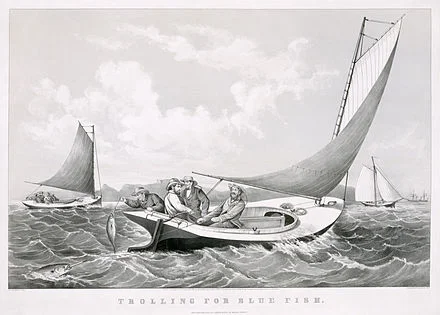
“Trolling for blue fish’’ (lithograph by Currier & Ives, 1866)
And you, too
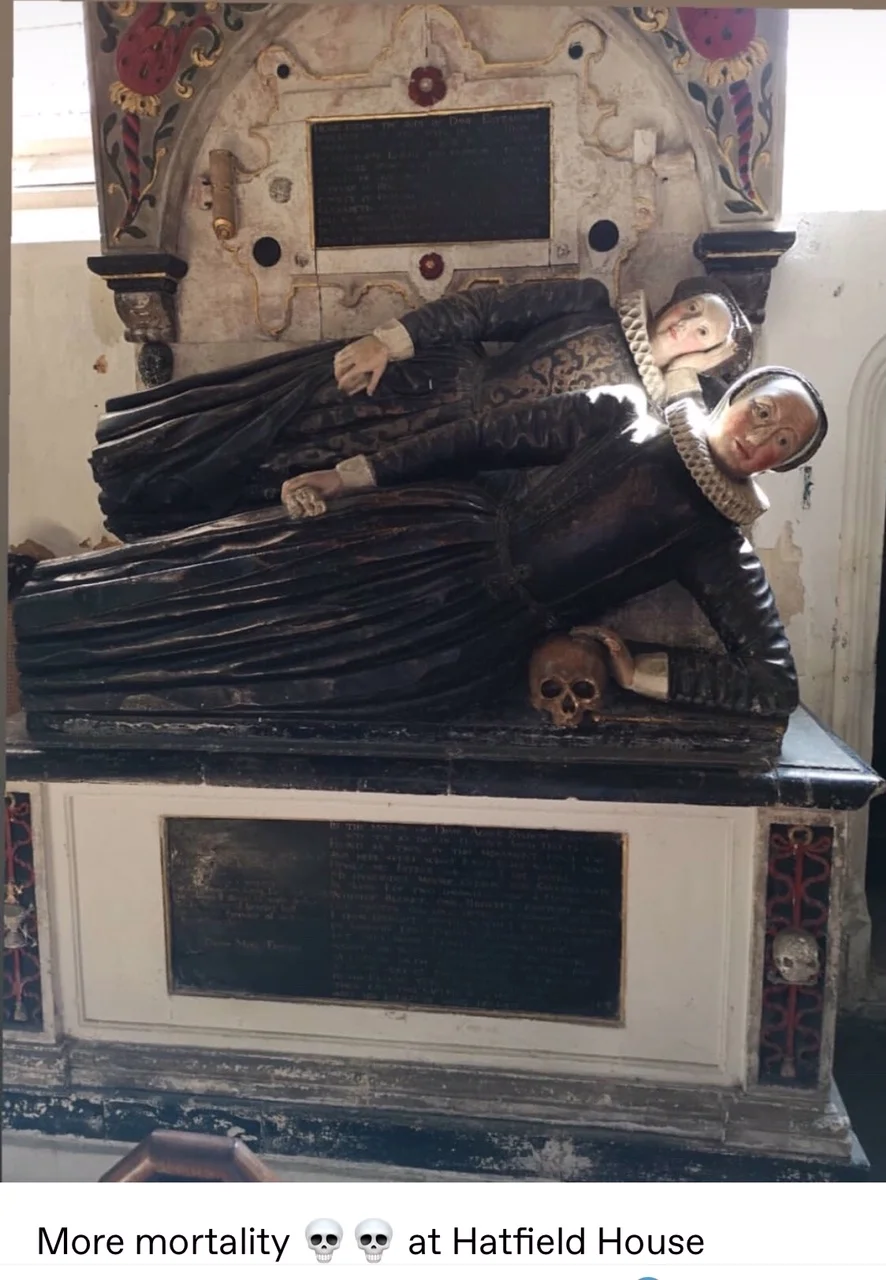
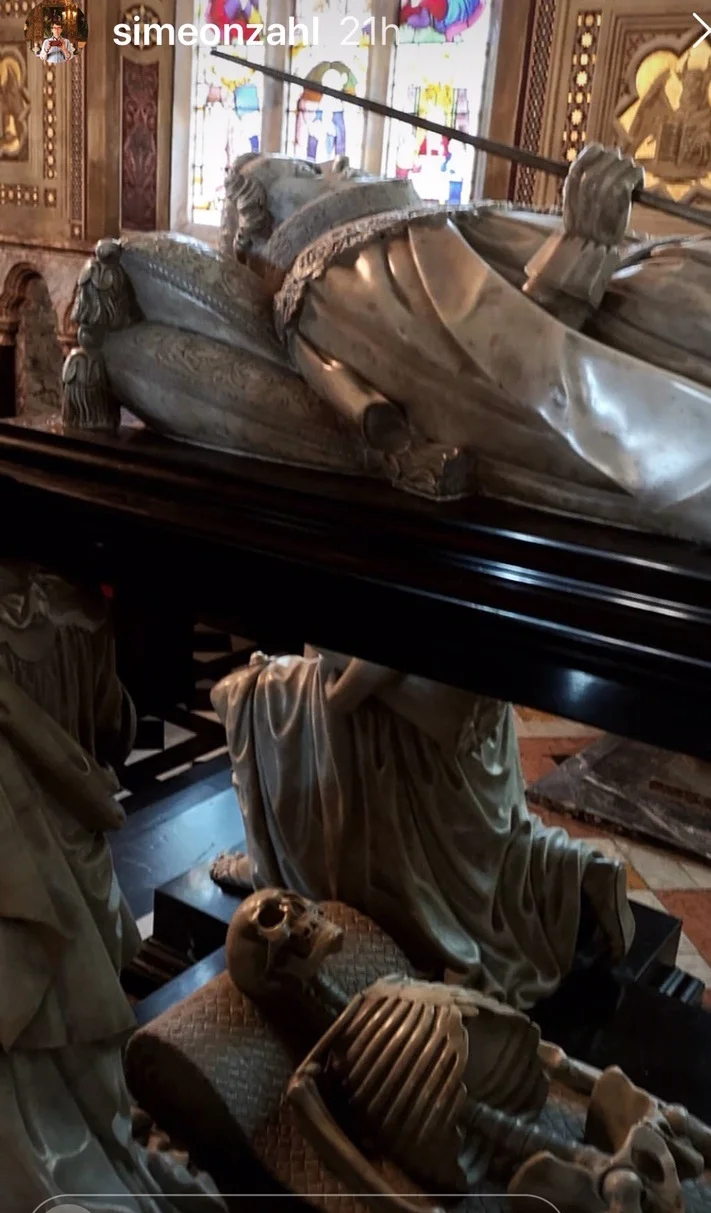
— Photos by Simeon Zahl of burial vaults at Hatfield House. Dr. Zahl is a theologian at Cambridge University.
Hatfield House is a country house in the town of Hatfield, in Hertfordshire, England. The present Jacobean house was built in 1611 by Robert Cecil, 1st Earl of Salisbury and chief minister to King James I, and has been the home of the Cecil family ever since. The estate includes extensive grounds and surviving parts of an earlier grand house. The house, now the home of Robert Gascoyne-Cecil, 7th Marquess of Salisbury, is open to the public.

Llewellyn King: A way to greater leisure with same number of work hours a week

The American Federation of Labor union label, circa 1900
Labor Day is almost here and with it another blessed, three-day weekend. Three days without work!
The best day, of course, is the middle one, when we can luxuriate in the time off without the knowledge that grips most of us on Sunday afternoons — that we must climb Monday’s escarpment.
The fact is that we Americans work too much. Not necessarily too hard, but too much. In the United States, workers’ vacations are mostly two precious weeks — and a third after long service. In Europe, they’re a month or, as in Germany, often up to six weeks — yet no one accuses the Germans of being idlers or not performing.
We won’t get more vacations, I think, until high-tech workers — those one might refer to as “the indispensables” — demand and get them. Some already have the choice of working in Europe and are looking at the “package” of their employment, not just the dollars in the paycheck. If they demand more, the idea will get around.
However, more vacation days won’t have the same benefit as those leisurely Sundays in a three-day weekend.
There is a way to greater leisure with the same number of work hours in a week. I have experienced it, and it does wonders in terms of employee happiness and creativity.
In the early 1960s, I was a writer for BBC Television News, and we worked a fabulous shift system: three days on and three days off. This system recognized that journalists could seldom finish what they had started in a procrustean eight hours.
The BBC 10-hour shift — three days on and three days off — accepted and accommodated the reality of the work rather than trying to squeeze the work into an arbitrary time frame, leaving it either unfinished or for someone else to try to finish — say a script for the late news broadcast or coverage of an ongoing parliamentary debate.
The social dimension of this work structure was even more interesting. Writers and editors became more productive in other ways: Some wrote novels, others worked on biographies or tried their hands at plays. They’d been given the gift of time.
Armed with this experience, when I worked at the Washington Post, where I was an assistant editor and also president of the Washington-Baltimore Newspaper Guild, one of the largest chapters of the American Newspaper Guild, the trade union that represented journalists and some other workers, I was appalled at the mess the Post had with its overtime.
There was a complicated system of overtime and something called “overtime cutoff,” which applied to people who were paid more than the Guild-negotiated salary. It led to fights, conscientious reporters and editors working overtime without compensation, and major altercations over weekend schedules. No winners, just unhappy people. The management knew it was a mess and would’ve liked to change it.
When I suggested the BBC system to the Washington Post Company, management was enthusiastic. They asked if the union would bring it forward as a formal proposal in the contract negotiations, then just beginning for a new three-year contract.
We had to have our proposal vetted by union headquarters, the International. They said, “No, no, no. Heresy.” The union had always fought for a shorter workday since the so-called “model contract,” written by Heywood Broun, the famous reporter, columnist and founder of the American Newspaper Guild, in 1935. It was dropped like a libelous story.
Well, the three-days shift won’t work in many places, but in journalism, manufacturing and retail, it’s worth a try. Hundreds of thousands, if not millions, of workers would have the joy of that middle day of rest and, maybe, creativity.
When you open another cold one on Sept. 1, think about how nice it would be if that happened all year. Three days on and three days off. Glorious!
On Twitter: @llewellynking2
Llewellyn King is executive producer and host of White House Chronicle, on PBS.

Taking them in

Here’s a brand-new watercolor by William Hall. There’s show of his watercolors at the Jessie Edwards Studio, on Water Street, Block Island, R.I., through Sept. 4.
The back story of the painting here is that Howard Milikin, a great-grandfather of Mr. Hall, was a navigational pilot from Block Island. He would be ferried from Block Island to meet incoming clipper ships and then pilot them into New England ports. His license was unlimited.
Cute but they eat songbirds

“Challenge 120: People and Their Pets: To Those I’ve Loved Before,’’ by Natasha Stoppel, in her show “Other Worlds of Now and Then,’’ at Art Up Front Street, Exeter, N.H., Sept. 6-28. The gallery explains that she’s a traveling artist who quit her corporate job in 2014 to launch Artist Explores the World, a blog and YouTube channel centered around her art and travels.’’

Water Street in downtown Exeter
— Photo by Rglowacky1
\
Not much in a name?
From Robert Whitcomb’s “Digital Diary,’’ in GoLocal24.com
New England has too many small private colleges; some of them are not financially viable. So some have decided to change their name to “university’’ to make themselves sound more important and alluring. Accrediting organizations require a certain minimum number of graduate courses for such nomenclature
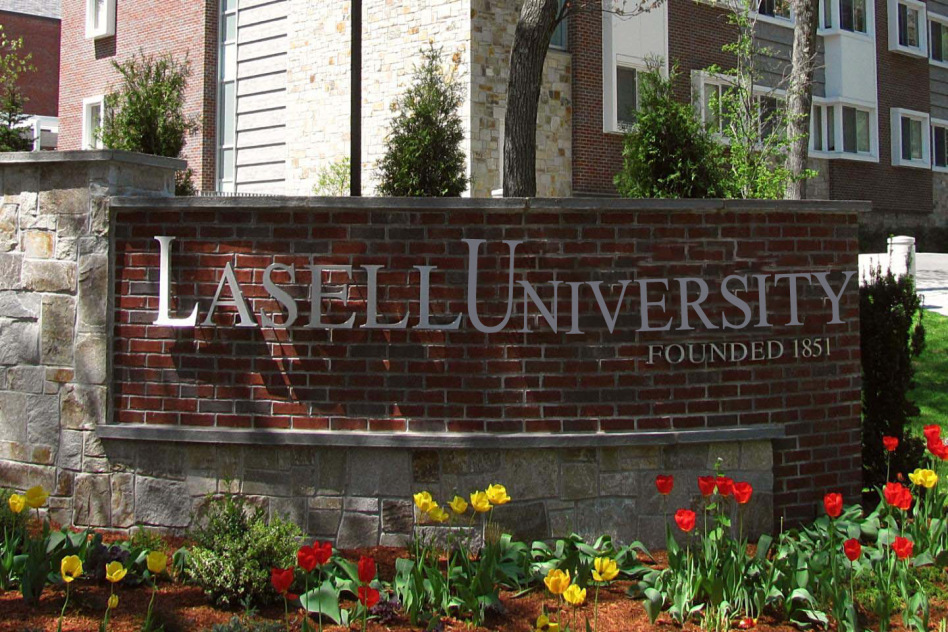
Lasell College, in Newton, Mass., is the latest New England college to decide to call itself a university; Assumption College, in Worcester, has done the same thing
Some of this is just the endless pursuit of status, though with so many little, and little known, institutions calling themselves “university’’ the alleged advantage must be getting a little thin.=
Two internationally known New England institutions – Boston College and Dartmouth College – are universities but for historical reasons – they started out and have remained devoted most strongly to undergraduate liberal arts education -- have refused to change their names. Admirable.