
Vox clamantis in deserto






'Look, don't touch' Snapping Turtles
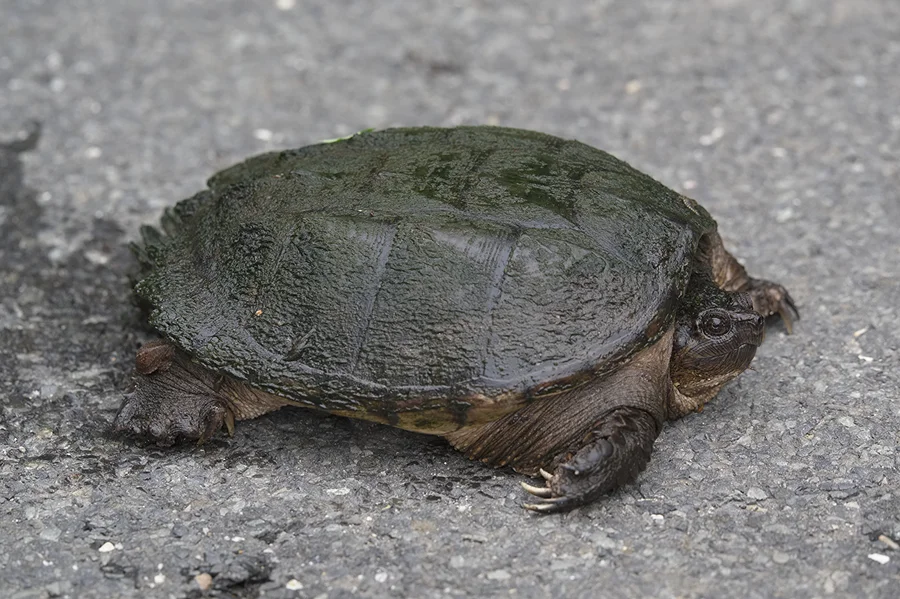

Photos and text from Thomas Hook, a veteran New England Diary correspondent
Driving in Woodbury Conn., I saw this Snapping Turtle in the road. I stopped to make sure that it crossed the road safely. I know better than to pick one up so I thought a stick might prod it toward the pond on the other side of the road.
But before helping the turtle, I wanted pictures.
By luck, the first car to come by was the animal-control officer for nearby Watertown. He was off duty visiting a friend and saw me with the turtle and camera. He was worried that I would pick up the creature and so decided to come to the rescue of both me and the turtle. He found a metal rod with a loop in his van, using it to lasso the turtle and drag it to the pond and release it. Subsequently, It entered the water and disappeared.
The officer explained that the turtle has a very long neck and can reach around more than halfway back the length of its shell and SNAP!
Having seen Snapping Turtles before that were much larger than this one, it was good to know specifically why you should leave them alone. You could injure (or lose) a finger or the better part of a hand, so "look but don’t touch" is good advice.
In Boston, MFA grads' marvels

From left, detail of works by Dennis Svoronos, Corinne Planche and Jeffery Nowlin in the July 17-Aug. 11 show at Boston Sculptors Gallery titled “MassArt Masters 2019’’
From Boston Sculptors Gallery: “Each summer Boston Sculptors Gallery hosts a special guest group exhibition, and this year we’re showcasing the work of 12 newly minted MFA {master of fine arts} grads from the Massachusetts College of Art & Design. It’s composed of individuals from three generations and four countries, and from across our nation and in our own backyard.’’
Image caption
From left to right:
Details of works by Dennis Svoronos, Corinne Planche, and Jeffery Nowlin
Tim Faulkner: Offshore wind boom continues, with snags
From ecoRI News (ecori.org)
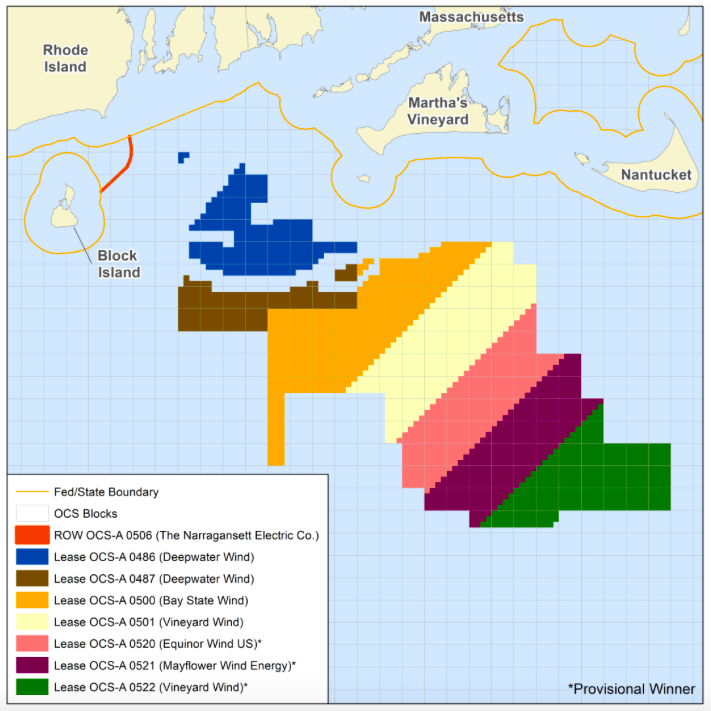
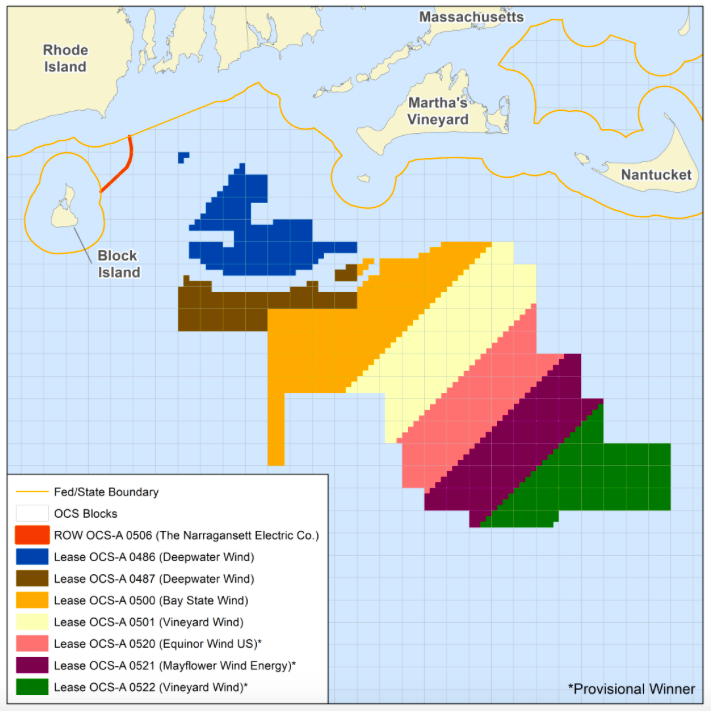
The demand for offshore wind continues, as the designated wind zones in waters south of Rhode Island, Martha’s Vineyard and Nantucket fill with projects.
At the June 11 meeting of the Rhode Island Coastal Resources Management Council (CRMC), Grover Fugate, executive director, recounted the growing pains to accommodate as much as 22,000 megawatts of offshore wind.
“This industry has literally exploded overnight,” said Fugate, as he highlighted issues confronting several projects.
The 800-megawatt Vineyard Wind facility, for instance, is deadlocked with the National Oceanic and Atmospheric Administration (NOAA) over the project’s environmental impact statement.
“That’s not something that’s been done before in the NEPA (National Environmental Policy Act) world,” Fugate said. “So we’re not quite sure where that is going to end up.”
The Nantucket Historical Commission is seeking $16 million from the Vineyard Wind developer, according to Fugate. The island town has sought funds to compensate for adverse visual impacts the 84 turbines may have on tourism.
Connecticut recently announced it wants to add 2,000 megawatts of offshore wind to the power grid but the state lacks approved offshore wind areas.
“Connecticut, of course, does not have any offshore sources,” Fugate said. “The closest ones to Connecticut are us (Rhode Island).”
Connecticut is already signed on for 300 megawatts from the Revolution Wind project located in one of four wind-lease areas that require CRMC approval.
Rhode Island has already signed up 400 megawatts from the same wind project managed jointly by Ørsted US Offshore Wind and the Massachusetts utility Eversource.
Massachusetts has a goal of 3,200 megawatts of offshore wind by 2035. It has already agreed to buy 800 megawatts from the Vineyard Wind project and the state has issued a request for proposal for an addition 800 megawatts that may come from the second half of the Vineyard Wind lease area.
Vineyard Wind went through a lengthy and contentious review for its initial wind facility and wants to meet with CRMC about a review of the second half of its wind-zone lease.
Bay State Wind, another Eversource and Ørsted project, is also moving forward with an 800-megawatt wind project in the same region. Fugate met with Bay State Wind’s CEO and discussed how the project fails to conform with a 1-mile spacing of turbines within its grid configuration.
Fugate said Bay State Wind is using a European design that doesn’t meet the fisheries requirement for U.S. projects.
“So they are taking that back under consideration,” Fugate said.
Vineyard Wind has filed a proposal to deliver 1.2 gigawatts of wind power to New York along a 95-mile transmission line from Vineyard Wind’s second wind zone, in the easternmost section of the federal wind-lease area. In all, New York is looking for some 9,000 megawatts of wind energy.
“If you add it all up it’s about 22,000 megawatts from New York to the Cape that's under consideration,” Fugate said.
He expressed frustration with the federal Bureau of Ocean Energy Management for not requiring an extended analysis of proposed offshore wind project sites.
“If you don't get two years of baseline data you have no way of measuring the impact,” Fugate said. “That may be intentional on their part, I don't know. But we have pushed for baseline data so that you can measure before and after, so that you know what you just did and how to adjust to it. But without that baseline, we don't know what we just did.”
Cable congestion
The surge in offshore wind development has created a need for transmissions lines and onshore connections to the electric grid. Wakefield, Mass.-based Anbaric Development Partners is creating a renewable-energy center on a leased site at the former Brayton Point coal-fired power plant in Somerset, Mass. Anbaric wants to install two high-voltage electric cables from Brayton Point to serve wind facilities off the coast of Massachusetts and Rhode Island. Ørsted would also like to run two cables from its Bay State Wind project to the mainland at Brayton Point.
The transmission lines would run through the the Sakonnet River along the easternmost channel of Narragansett Bay.
Fugate noted that the passage can only accommodate two power cables because of the narrow Stone Bridge corridor between Portsmouth and Tiverton. He said the activity at Brayton Point and other wind-facility operations within Narragansett Bay will be busiest during the summer, causing congestion along the East Passage, which runs between Newport and Jamestown.
“There’s a huge interference with a lot of existing uses down there,” Fugate said.
Federal review
NOAA officials will perform a three-day review of CRMC’s overall coastal program, including a public hearing scheduled for June 18. The review, required every seven years, will culminate with a report of findings that will offer suggested and required actions needed to adhere to federal grant requirements.
In a worst-case scenario, CRMC could face sanctions, which include a loss of federal funding for CRMC’s coastal programs. More than half of CRMC’s budget comes from federal sources.
NOAA’s last evaluation of CRMC was conducted in 2010.
The public hearing will be held at the Department of Administration building, conference room A, One Capital Hill, at 6 p.m.
Matunuck seawall
Hearings are expected in the fall for phase two of a seawall project on Matunuck Beach Road, in South Kingstown, R.I. The first phase was a highly controversial and meaningful case for the CRMC, as it confronts sea-level rise and shoreline erosion from climate change.
Tim Faulkner is an ecoRI News journalist.
Abstraction of liberty
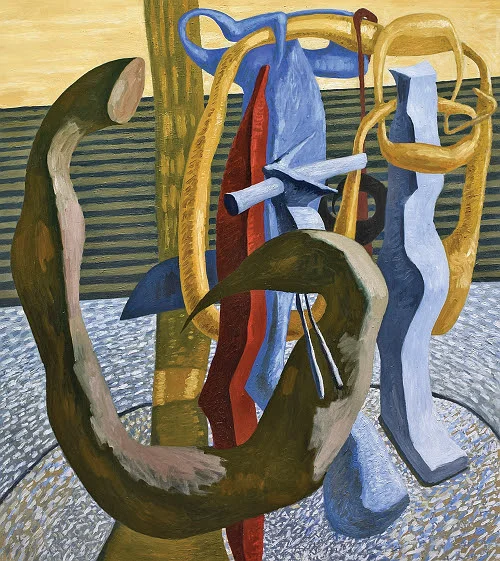
Oil on canvas from Carl Mehrbach’s ”Doctrine of Liberty’’ show at Bromfield Gallery, Boston, through June 30, It’s a collection of paintings of 3D abstractions.
States' addiction promotion


From Robert Whitcomb’s “Digital Diary,’’ in GoLocal24.com
As they did with gambling (which can be highly addictive), states, including Rhode Island, Massachusetts and Connecticut, are jumping into the marijuana business. Massachusetts (along with Maine and Vermont) has fully legalized pot use and Rhode Island and Connecticut have decriminalized its “recreational’’ use. Meanwhile, it’s full speed ahead for “medical marijuana,’’ which some truly sick people use, along with others who just want to get stoned.
For the states, it’s all about trying to find new ways of increasing government revenue without raising broad-based taxes, which is usually political poison. It’s a regressive way of doing it since those wanting to gamble and smoke pot tend to be in lower socio-economic levels. Some old-fashioned types might even call this addiction promotion immoral.
Pot promoters, for their part, have long asserted that it’s not a “gateway drug’’ – an assertion that has always struck me as dubious. Perhaps they should read a new paper, in the Proceedings of the National Academy of Sciences, in which researchers looking at states that enacted medical marijuana laws saw a 23 percent increase in opioid-overdose deaths. There are lots of people with addiction tendencies. And use of one drug leads, in many people, to a desire for stronger ones.
Other studies have shown a high incidence among opiate addicts of the use and abuse of other drugs, be they amphetamines, alcohol, nicotine or others.
To read the study, please hit this link.

Negin Owliaei: Medicare for all would save lives -- and money

From OtherWords.org
One night a few years ago, my partner woke up delirious with fever, a bright rash, and joint pain so bad he couldn’t get out of bed without help. I was scared — mostly for his health, but also for our financial situation, which weighed heavily on me during our 4 a.m. ride to the emergency room.
As a freelancer, his catastrophic health insurance plan had an outrageously high deductible, and every day he couldn’t work was a day he wouldn’t get paid. I’d lost my job — and my own health insurance — earlier that year, and was still piecing together a livelihood from gig to gig. I didn’t know what we’d do if something went seriously wrong.
We left the hospital several hours later after an IV and a couple of ibuprofens — and no diagnosis. Even after insurance kicked in, we were billed about $1,000 for the experience. My partner’s joints hurt for months afterwards, but the already hefty price tag scared him off following up.
It turns out he’s far from the only one who looked at a bank statement before considering a trip to the doctor.
A recent study found that 65 million Americans had a health issue in the last year that they didn’t treat because they were worried about the cost. And 45 percent of Americans — including a third of households making more than $180,000 a year — worry they could go bankrupt over a major health issue.
Nearly half of those survey respondents said they thought U.S. health care was either the best or among the best in the world. But our actual health tells another story.
By a long shot, the U.S. has the most expensive health-care system among the 36 mostly high-income countries that make up the Organization for Economic Cooperation and Development, or OECD. But for all that money, we rank just 28th in life expectancy and 31st in infant mortality.
Nothing about this system is healthy or caring. But it doesn’t have to be this way.
In 2014, the same year we worried about a $1,000 trip to the emergency room, our insurance company spent nearly $20 million executive compensation. More than $5 million went to the CEO alone.
What if our health care system didn’t allow people to make these exorbitant profits off our pain? What — and who — could we save?
By one assessment, a universal, single-payer system like Medicare for All could expand coverage to everyone while reducing the cost to American businesses and people by as much as $310 billion — primarily by cutting down on industry bloat and by negotiating fairer pharmaceutical prices.
While our monstrously expensive health care system is maddening, the harm done to people who can’t afford to participate in that system is what’s truly enraging.
Read the stories attached to the third of GoFundMes specifically devoted to crowdsourcing money for medical costs and I’m sure you’ll feel the same. Thousands of people in the United States die preventable deaths each year simply from lack of insurance.
Fortunately, there’s a groundswell of support for a publicly funded health care system. And researchers say one proposal — the Medicare for All Act of 2019 that’s in front of Congress right now — sets “a new standard for universally and equitably guaranteeing health care as a human right in the United States.”
No one should have to worry about bankruptcy before seeking out the treatment they need. Health care is a human right, and we deserve no less than a system that provides it universally and equitably.
Negin Owliaei is a researcher at the Institute for Policy Studies and a co-editor of Inequality.org.
Chris Powell: No state is big enough to hold back a big business
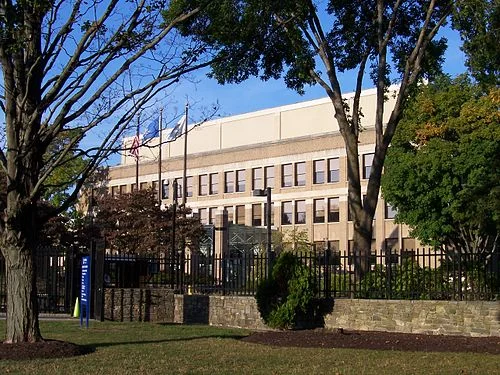
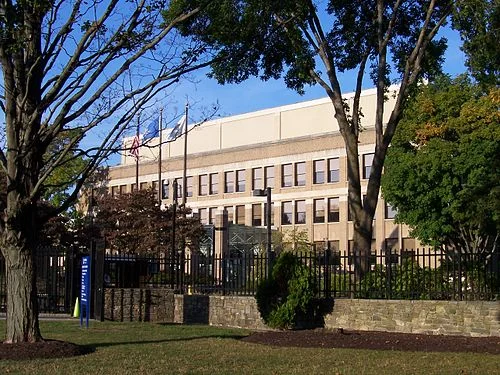
Headquarters of United Technologies Pratt & Whitney unit, in East Hartford, Conn.
Connecticut has been more surprised than it should have been by the announcement from United Technologies Corp. that upon its merger with Raytheon Co. it will move its headquarters from Farmington to Raytheon's outside Boston, in Waltham.
As much as some politicians feared and others hoped that the move was prompted by the state's awful economic conditions, it wasn't. Rather the move was just another natural step in the evolution of a company that began a century ago as the Pratt & Whitney machine tool shop in Hartford.
The tool shop became a manufacturer of aircraft engines, merged with the predecessor of Boeing to become United Aircraft and Transport Corp., started making airplanes as well as their engines, was broken up by New Deal-era antitrust legislation, kept growing anyway, and became a conglomerate -- United Technologies -- that was heavily dependent on government contracts. As such UTC came to need political support outside Connecticut, so it diversified operations into other states and even other countries.
As a result UTC's employment in Connecticut, around 19,000, has declined to a fraction of what it was a few decades ago, and state government could have done little to prevent it. For these days no conglomerates and big government contractors are going to stick to one state. It's not just their need for national political influence for securing federal government business. It's also to avoid becoming hostage to any one predatory state government.
So Connecticut's economic future does not depend on the big companies already here. For the same reasons motivating UTC, they are more likely to expand out of state. Instead Connecticut's economic future depends on growth by smaller companies already here and entry here by companies elsewhere.
But good luck drawing or keeping anyone here while the most important thing state government has to offer anyone is the duty to share the burden of $70 billion or so in unfunded state and municipal employee retirement obligations -- that is, the duty to pay more in taxes every year [ITALICS] forever [END ITALICS] to sustain a pension-and-benefit society.
xxx
SLUSH FUND MAY EXPLAIN IT: Maybe there's a good case for giving an exemption from state freedom-of-information and ethics laws to the Partnership for Connecticut, the entity just created by billionaires Ray and Barbara Dalio and state government in the name of improving public education. The Dalios are donating $100 million, state government is appropriating an equal amount, and more donations will be sought from other wealthy people.
But if there is a good case for the exemption, nobody is making it.
Spokeswomen for Governor Lamont and the Dalios insist that the partnership should be exempt from the accountability laws because it's not really a state agency. But it was created and funded by the new state budget, a majority of its board will be state officials, and it will dispense public money to public schools. Private entities don't need any provision in the state budget exempting them from FOI and ethics laws, since those laws apply only to government agencies.
So the budget writers thought the partnership would be considered a state agency subject to the accountability laws unless another law asserted, against the evidence, that it wasn’t a state agency.
Why did the budget bestow such an exemption and exactly who asked for it and why? The spokeswomen for the governor and the Dalios were asked about this more than a week ago but have declined to provide an answer. So here's a guess: The partnership will make a great slush fund.
Chris Powell is a columnist for the Journal Inquirer, in Manchester, Conn.
'Yearnings for wholeness'
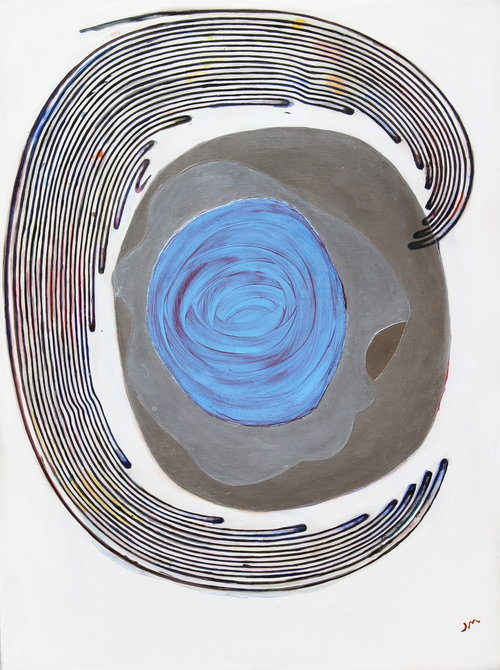
Work by Joel Moskowitz, in his joint show “Unspooled,’’ with Sylvia Sluis, at Fountain Street Fine Art, Boston, through June 30. The gallery says he “draws long, spiraling lines, mesmerized. He erases and revises over time, building up a shape that seems, finally, both loose and tightly wound. One end of the line typically hangs free, giving the viewer a way into the maze. Ink grows dense and looping like script. He blends minimalism and expressionism with a metallic sheen. His work, says Moskowitz, ‘is influenced by religious icons, yearnings for wholeness.”’
Why should Vermont grow?
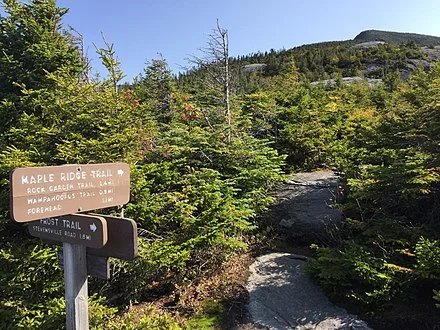
On Vermont’s Mt. Mansfield
From Robert Whitcomb’s “Digital Diary,’’ in GoLocal24.com
Vermont is doing what some other states with slow or nonexistent population growth, including Rhode Island, have talked about – bribing people to move there. In the Vermont plan, The Boston Globe reports, those who qualify get up to $10,000 over a two-year period to pay for their “moving and home-office costs, and in return, the state gets additional taxpayers to help fund schools and roads and social services.’’
Joan Goldstein, Vermont’s economic development commissioner, told The Globe: “The population needs to grow in order for the economy to grow.’’ It’s the mantra that everything must always grow.
Vermont, generally a very congenial state and one with an astonishingly low 2.3 percent jobless rate, would seem to already be doing quite well. I think that Ms. Goldstein is repeating the mantra that economic growth per se is the be-all and end-all of public policy. But economic growth per se doesn’t necessarily mean a higher quality of life.
To read The Globe’s story, please hit this link:
'Beauty of what they left behind;'
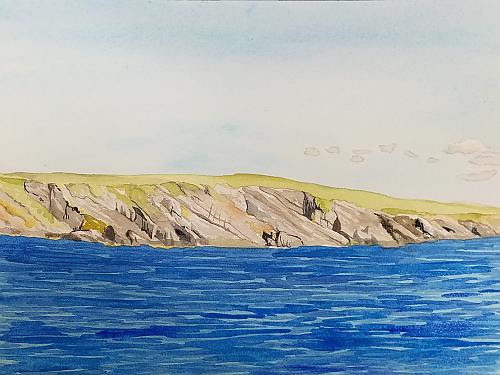
Watercolor by Joyce McJilton Dwyer in her show “Old Spaces, Ancient Places: Scotland & Ireland,’’ at 8 Bridges Gallery, Maynard, Mass., through June 29.
The gallery says: “Dwyer's watercolor paintings and pencil and ink drawings depict the landscapes, waterscapes, and archaeological sites of Scotland and Northern Ireland. She imagines what the settlement of Skara Brae and other villages might have looked like thousands of years ago in their prime. ‘Much is unknown about these cultures of so long ago, but the beauty of what they left behind caught me up,’ Dwyer says. She also replicates the land and water, putting them back in time with her watercolors. Her works create a time capsule, taking the viewer back in time to a younger, simpler world. ‘‘
Frank Carini: The uncertain future of 'the Yellowstone of the North Atlantic'
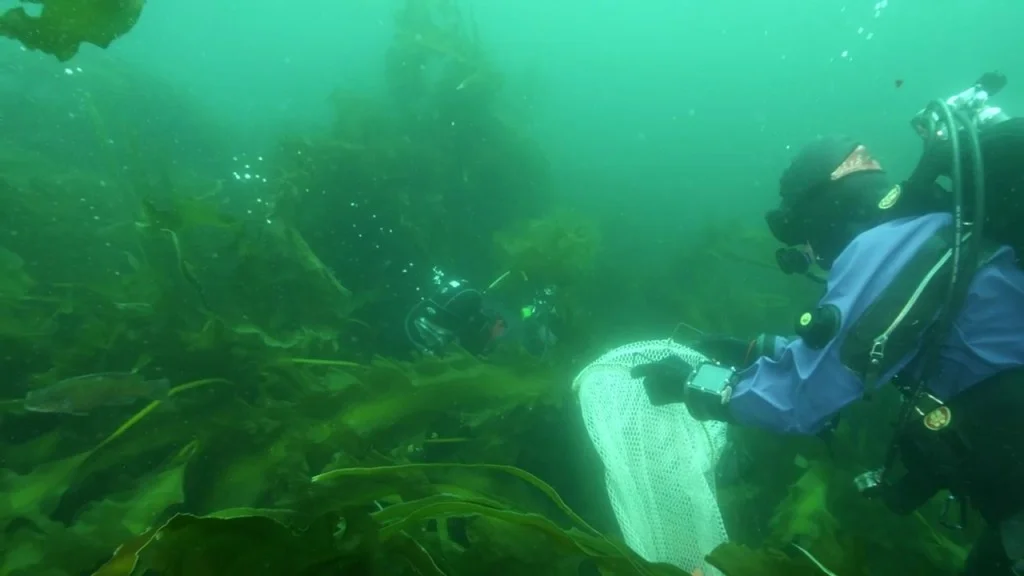
Kelp forest on Cashes Ledge
— Conservation Law Foundation photo
From ecoRI News (ecori.org)
Robert Lamb, as a Ph.D. student at Brown University, saw firsthand the “incredible diversity, breathtaking plant life, and healthy fish populations” that call Cashes Ledge home.
Lamb recently told ecoRI News that this pristine ecosystem is unlike anything else in the Gulf of Maine. That’s why he was part of a team that worked to permanently protect the 550-square-mile area that is 80 miles off the coast of Gloucester, Mass.
Led by Brown University Prof. Jon Witman, a team of divers from the Providence university, the Woods Hole Oceanographic Institution, the University of New Hampshire, and the National Park Service worked with the Conservation Law Foundation to document the bounty of marine life that exists at Cashes Ledge — a 22-mile-long underwater mountain range with average depths of 90 to 130 feet — and assess its vulnerability. This 4-minute video highlights some of that work.
The team’s efforts of four years ago, including holding roundtables and giving talks across the region, were undertaken in hopes that Cashes Ledge would be awarded a monument designation. The effort failed, but it did play a part in the creation, three years ago, of the Northeast Canyons and Seamounts Marine National Monument, the only national monument in the Atlantic Ocean.
Lamb, who now works with the Witman Lab and the Woods Hole Oceanographic Institution on various marine issues, believes that Cashes Ledge deserves the same protection, especially since the Gulf of Maine is one of the fastest-warming bodies of salt water in the world. He said the destruction of such an important underwater habitat would be devastating.
During the many dives the researchers and scientists took, censuses they conducted, and comparisons they made between Cashes Ledge and exploited coastal areas, such as the Isles of Shoals and Star Island, they found that fish biomass was about 500 times greater there than anywhere in the near shore and kelp biomass was also significantly greater, according to Lamb.
He noted that Cashes Ledge’s dense kelp forest is the most productive one in the North Atlantic.
The peaks and canyons of Cashes Ledge create nutrient- and oxygen-rich currents that support diverse habitats. The area is home to Atlantic wolffish, cod, cusk, sea stars, sea squirts, sea pens, horse mussels, anemones, rare sponges, and the largest continuous kelp forest along the Atlantic Seaboard. It also acts as a migratory pass for blue and porbeagle sharks, humpback and right whales, and bluefin tuna.
The value of Cashes Ledge has been recognized by the New England Fishery Management Council, as it has designated a large swath of the area as “essential fish habitat” for American plaice, Atlantic cod, haddock, halibut, monkfish, pollock, white hake, and witch flounder. The area is currently restricted, meaning most forms of fishing are prohibited.
Those protections, however, are “too little,” according to Lamb.
“It’s one of those places that is so unique and so beautiful … a treasure,” he said. “It merits protection for that reason alone, if not for the fisheries benefits. If you have a place where fish are allowed to grow unchecked and unimpeded by fishing, that creates a surplus of individuals that will swim, or disperses larvae, to other places that then can he caught, so it indirectly benefits fisheries.”
The partially protected area is also home to Ammen Rock, a peak so tall that it disrupts the Gulf of Maine current and creates upwellings of cold, nutrient-rich water which sustains the ledge’s vast variety of life.
Noted marine biologist Sylvia Earle has called Cashes Ledge “the Yellowstone of the North Atlantic.”
Modern commercial fishing technologies, however, make Cashes Ledge susceptible to damage. A bottom trawl, for example, could strip clear the kelp forest on Ammen Rock and completely alter the ecosystem, according to the Conservation Law Foundation. The Boston-based environmental advocacy organization has noted that some anemone populations could take up to 230 years to recover from a single drag of a bottom trawl.
Protected areas also have been shown to be more resilient to climate change, and provide sea life places to adapt to warming and acidifying waters.
See this video about Cashes Ledge.
Frank Carini is editor of ecoRI News.
Mountain in flames

“Sunset over Baxter Mountain’’ (oil on cardboard), by Harold Weston, in the show “Harold Weston: Freedom in the Wilds,’’ at the Shelburne (Vt.) Museum through Aug. 25.
Jeffrey Roy/Edward Lambert Jr.: Listen to Lowell students on expanding vocational opportunities
From The New England Journal of Higher Education, a service of The New England Board of Higher Education (nebhe.org)
A shared challenge for our higher education institutions and employers is the large number of students graduating high school unprepared for success in college and the workforce. It leads to lower-than-acceptable college completion rates, particularly for our most disadvantaged youth, and a broken workforce pipeline that threatens economic growth and opportunity.
The lack of skilled workers to fill open positions is a growing concern for our economy. The talent search firm Korn Ferry has estimated that the U.S. could face a deficit of 6.5 million highly skilled workers by 2030, and the skills gap could cost the country $1.75 trillion in revenue by that same year. More important, our failure to better connect k-12 education to college and workforce success translates into lost opportunities for students. Put simply, we need to do more to help young people seize the many excellent opportunities our economy creates.
A proposal we have introduced and are championing in Massachusetts aims to do just that. House Bill 567 would expand opportunities for high school students to earn industry-recognized credentials (IRCs) that data confirm are of high employment value. The proposal will fuel a diverse, highly skilled workforce pipeline that is the engine of growth and prosperity and provides students with opportunities for upward mobility.
Many students in our vocational technical schools are already earning IRCs in information technology, welding, construction, healthcare and other fields. We can and should make these available to students in our traditional high schools as well. IRCs certify the student’s qualifications and competencies and are often “stackable,” meaning they can be accumulated over time to build the student’s qualifications to pursue a career pathway or another postsecondary credential. Some IRCs also earn the student college credit.
For students going directly into the workforce from high school and for those who enter but never complete college, credentials can be the difference between low-wage positions and better paying jobs that offer opportunities for growth. Earning credentials in high school can also lead to stronger preparation for higher education. Students who earn them are exposed to career pathways before entering college and deciding on a major. In Florida, students earning credentials in high school were more likely to take Advanced Placement or dual-enrollment courses and to go to college.
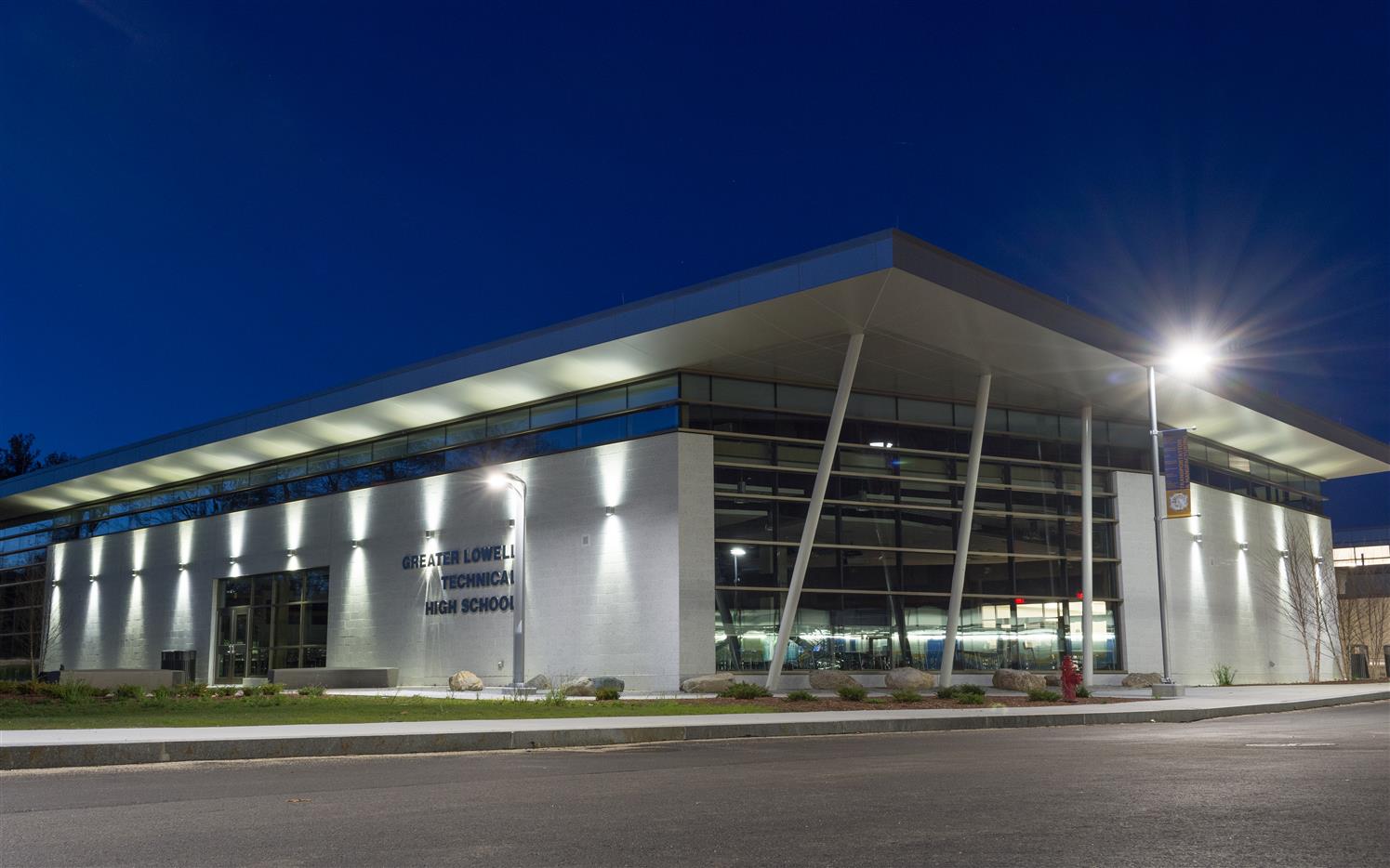
We heard from students at Greater Lowell Technical High School in Massachusetts who have earned multiple web development, programming and IT credentials that having those credentials will help them secure the higher paying jobs they need to help them afford their college education and in the fields they plan to ultimately pursue.
Our legislative proposal would require the state Executive Office of Labor and Workforce Development to provide the Department of Elementary and Secondary Education with an annual list of high-need occupations that require an industry-recognized credential, ranked by employment value. The top 20% of the list will be credentials that lead to occupations with annual wages at 70% of average annual wages in the Commonwealth. The idea is to ensure we’re sending the right signals to schools and students about where the opportunities lie. The district would get a financial award for each student who earns a credential that has high employment value, is recognized by higher education institutions and addresses regional workforce demands identified by the local MassHire Workforce Board. To ensure that all districts have equal opportunity to participate, the bill includes start-up funding for implementation to encourage less well-resourced districts to get the programs up and running. The funds can support teacher training or cover assessment costs or equipment needs.
This proposal dovetails and complements several state and regional initiatives already underway, including the New England Board of Higher Education’s High Value Credentials for New England initiative launched last summer that is identifying high-value credentials in key growth industries and making that information more easily accessible to the public. The ultimate goal is to enable students to make informed decisions about their course of study and future employment opportunities.
Several other states have adopted similar incentive strategies or integrate credentials into the school curriculum and career preparation activities like work-based learning and internships. In Ohio, students can earn industry-recognized credentials in one of 13 career fields with a choice of more than 250 in-demand credentials. Students in any district can sign up for an industry-recognized credential course. Florida, Wisconsin and Louisiana provide a financial incentive such as the one we propose. Students enrolled in the program in Florida demonstrated higher GPAs, graduation rates and postsecondary enrollment rates.
Massachusetts can provide these important opportunities to students in our traditional and comprehensive high schools by providing the right incentives to our schools. It is an important step in addressing our urgent need for a highly skilled workforce and ensuring our education system is creating pathways to economic opportunity and success.
Jeffrey Roy is a member of the Massachusetts House of Representatives and chairs the Joint Committee on Higher Education and the Legislature’s Manufacturing Caucus. Edward Lambert Jr. is executive director of the Massachusetts Business Alliance for Education.
New England Council pushes post-NAFTA agreement
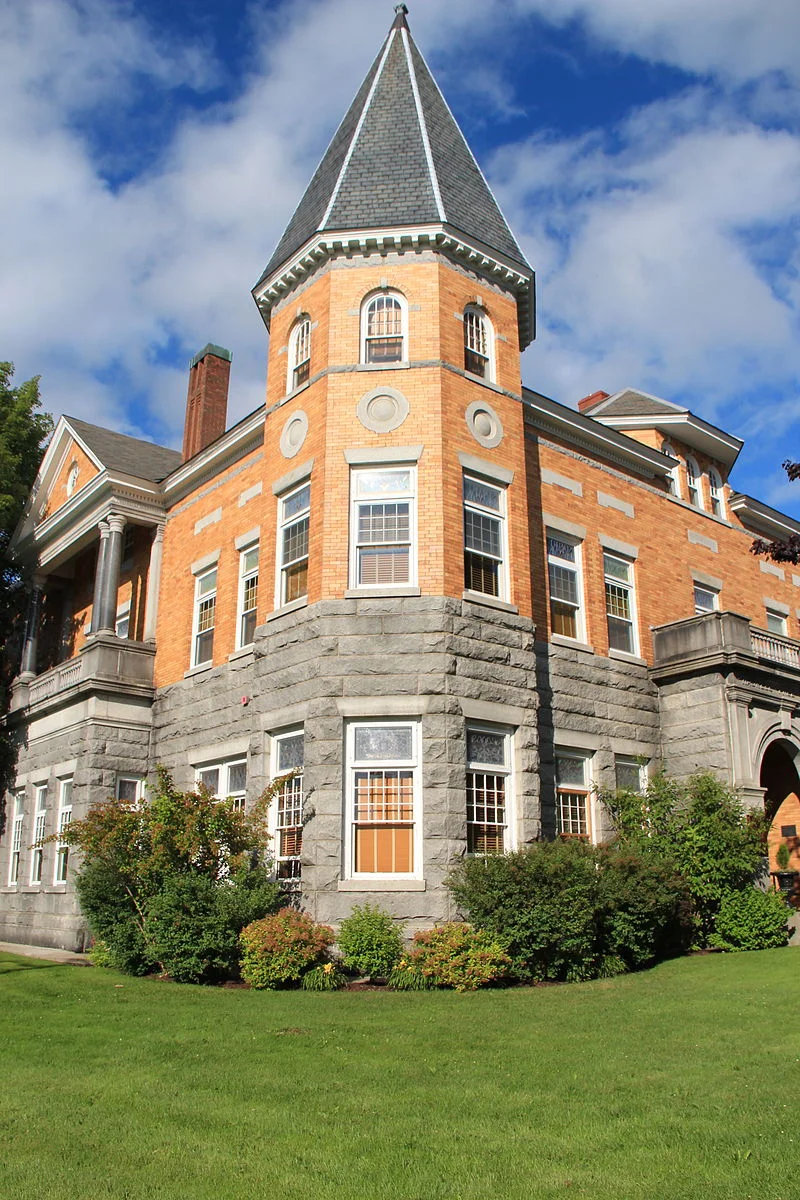
The Haskell Free Library and Opera House is a neoclassical building that straddles the international border in Rock Island, Quebec and Derby Line, Vermont.
This is from The New England Council (newenglandcouncil.com)
“The New England Council is calling on Congress to approve the US-Canada-Mexico Agreement (USMCA), a free trade agreement that makes critical updates to the North American Free Trade Agreement (NAFTA). In a letter sent on June 10, 2019, to members of the region’s House and Senate delegations, the Council stressed the importance of free trade with these two key trade partners for the region’s continued economic growth.
“Canada and Mexico are two of New England’s top trading partners, and it is vital to our region’s economic wellbeing that we continue to have free trade with our neighbors to the north and south,” said James T. Brett, President and CEO of The New England Council. “We have heard from Council members throughout the region, representing a wide array of industries, that they support the USMCA and the important updates it makes to NAFTA by addressing such issues as digital commerce and intellectual property protection. We are hopeful that Congress will take action to approve the agreement in the near future.”
In its letter, the Council noted that Canada is a top export market for New England businesses, with nearly $8.8 billion in goods exported in 2018 alone, plus another $3.3. billion in services exported. The letter also noted that and that more than 430,000 jobs in New England rely on trade and investment with Canada. With regard to Mexico, the Council noted in its letter that exports from the six New England states to Mexico totaled nearly $4.2 billion in 2018, and in five states Mexico is a “top ten” goods export market. The Council expressed its belief that these numbers will only be bolstered by the USMCA, as the U.S. International Trade Commission recently estimated the agreement will increase U.S. national employment by upwards of 176,000 jobs and raise U.S. real GDP by $68.2 billion.
The USMCA was signed by the three nations on November 30, 2018, following months of negotiations. On May 30, 2019, U.S. Trade Representative Robert Lighthizer sent a letter to Congressional leaders to begin the approval process and allow for the President to send the agreement to Congress within 30 days.
The New England Council has a long history of support for free trade. In recent years, the Council endorsed legislation to allow for Trade Promotion Authority, supported free trade agreements with such nations as South Korea, Panama, and Columbia, and called for multi-lateral trade agreements with important trade partners in Europe and Asia.’’

Tim Faulkner: Battle over 'canned hunting'

From ecoRI News (ecori.org)
Think of invasive species and Canada geese and knotweed come to mind. But wild boar and elk could join that list, if Rhode Island allows trophy hunting, according to critics of the practice.
Opponents of so-called canned hunting are worried that these and other popular hunting animals could be brought to Rhode Island to populate enclosed, private hunting areas. The animals may eventually escape and destroy wildlife and introduce disease.
“It has the potential to devastate the hunting community, as well as native wildlife populations,” said Arianna Mouradjian of the Wildlife Rehabilitators Association of Rhode Island, a wildlife rescue facility in Saunderstown.
A bill (H5849) that would allow canned hunting in Rhode Island was introduced by Rep. Stephen Ucci, D-Cranston, but a hearing scheduled for March was postponed. The bill was also introduced last year at the behest of the exclusive The Preserve at Boulder Hills Club & Residences in Richmond. The bill allows hunting of game animals and birds on shooting preserves of 500 acres or more.
Although the prospects for this year's bill are uncertain this late in the legislative session, a hearing was recently held in the Senate for a bill (S880) that would outlaw importing wild animals for the practice of captive hunting.
Mouradjian testified at the June 4 hearing. She said importing animal for trophy hunting only benefits the small number of wealthy people who own and visit game-hunting ranches.
Michael Woods a hunter and board member for the New England chapter of Backcountry Hunters & Anglers spoke about the devastation and millions of dollars other states have spent to mitigate the impact of imported wildlife, such as old boars, that have migrated from hunting facilities and started breeding.
“How are we going to come up with the resources to manage them and what are we going to do with a Department of Environmental Management that’s already strapped with financial resources and personnel?” Woods asked.
No one spoke against the bill.
Even importing native animals such as white-tailed deer can spread illnesses like chronic wasting disease (CWD), a contagious and fatal brain illness that infects deer, elk, reindeer, and moose. There are no treatments or vaccines. The disease first appeared in Colorado and Wyoming in 1967 and can be fund in 25 states. CWD hasn’t been found in New England but is endemic in New York. A new study found that the disease could spread rapidly in the Northeast.
Connecticut and Massachusetts have laws that prohibit importing wild and domestic game. Maine imposed new restrictions on wild game imports after CWD was discovered in the province of Quebec.
Members of the Senate Judiciary didn’t comment on the bill and held it for further study. A House version of the bill (H5130) had a hearing in February and was held for further study.
Tim Faulkner is an ecoRI News journalist.
'In the summer heaven'
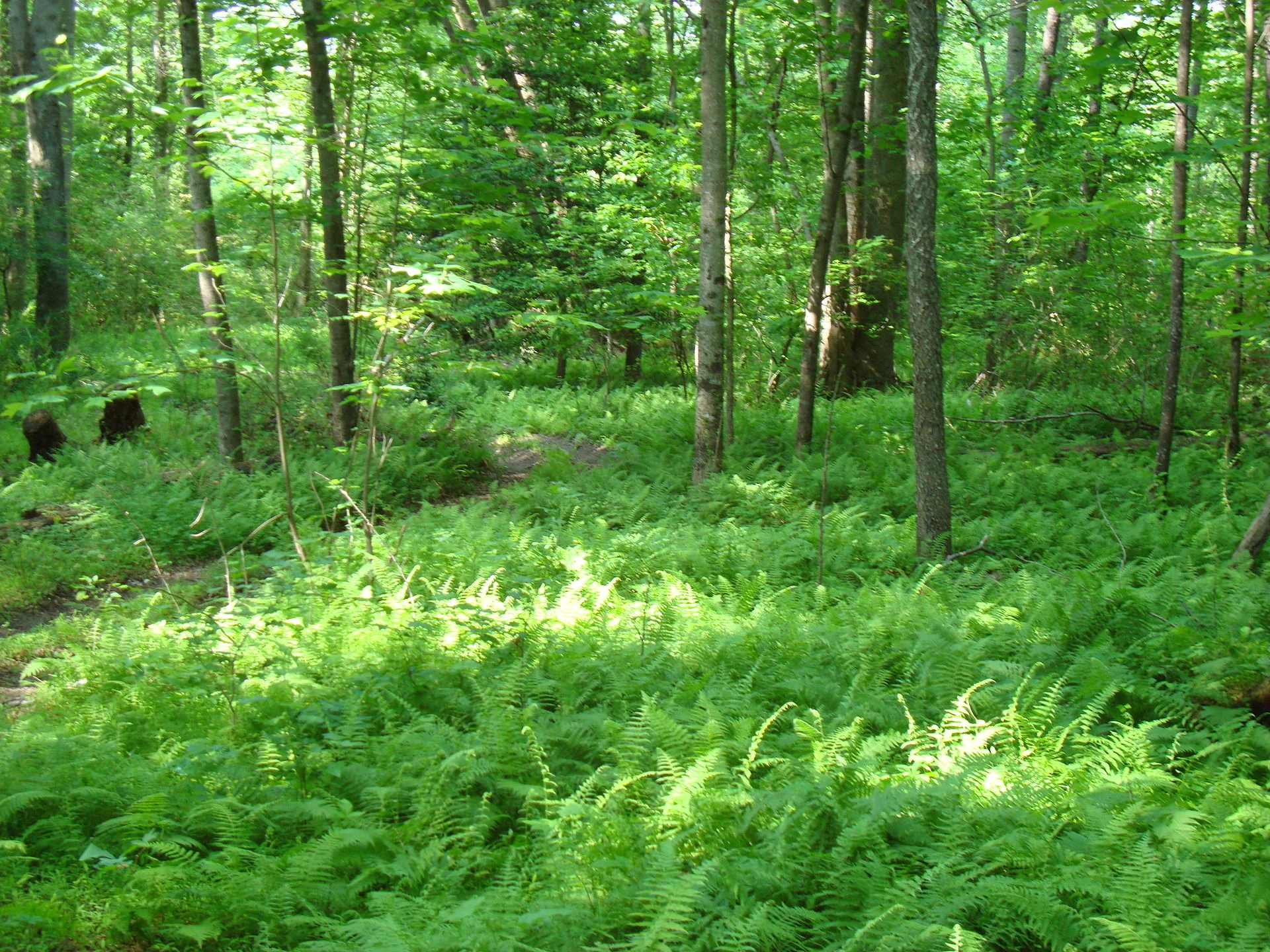
— Photo by Rlevse
Others taunt me with having knelt at well-curbs
Always wrong to the light, so never seeing
Deeper down in the well than where the water
Gives me back in a shining surface picture
Me myself in the summer heaven godlike
Looking out of a wreath of fern and cloud puffs.
Once, when trying with chin against a well-curb,
I discerned, as I thought, beyond the picture,
Through the picture, a something white, uncertain,
Something more of the depths—and then I lost it.
Water came to rebuke the too clear water.
One drop fell from a fern, and lo, a ripple
Shook whatever it was lay there at bottom,
Blurred it, blotted it out. What was that whiteness?
Truth? A pebble of quartz? For once, then, something.
— "For Once, Then, Something,’’ by Robert Frost
Chris Powell: Pandering with courses; local nullification of immigration law
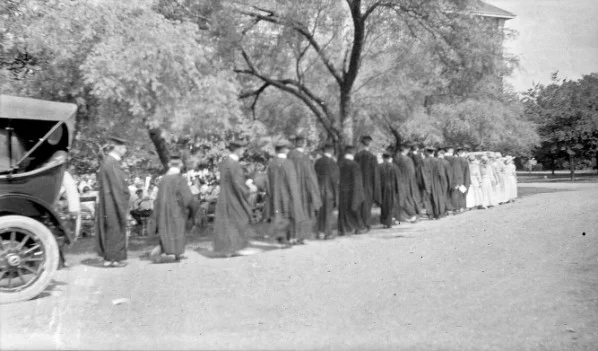
Year after year most Connecticut high school seniors are graduated and given diplomas without ever mastering high school math and English, and year after year most of those who are admitted to a community college or a regional state university have to take remedial high school courses. The problem is social promotion.
So what did the General Assembly do about public education in its session just concluded? Both houses appropriated more money for teacher salaries (called "aid to education"). They both passed legislation requiring high schools to offer a course in African-American and Latino history. The House passed a bill that would have required elementary schools to teach climate change.
State Sen. Douglas McCrory, D-Hartford, argued that minority students are discouraged in school by the supposed lack of attention to the history of their ethnic groups. But what of the discouragement they may suffer when they discover that they haven't learned to read and do math at an adult level?
As for the climate change bill, introduced by state Rep. Christine Palm, D-Chester, state Education Department standards already called for incorporating the subject in science curriculums, making the bill unnecessary. Further, this subject too can hardly be mastered if reading and math aren't mastered first.
Of course the objective of these bills wasn't to teach students anything but to let legislators strike politically correct poses and pander. After all, what legislator would be re-elected if he told his constituents that their kids are goofing off in school and if he scolded their teachers that they should stop being silent about it?
* * *
WHAT 'PRIORITY' FOR DEPORTATION?: Maybe it would be too punitive to deport Sujitno Sajuti back to Indonesia. Sajuti, 70, had been living in West Hartford but for 19 months until last week he claimed sanctuary in a church in Meriden because federal immigration authorities had told him to leave the country. Now, because many years ago he was the victim of an assault in Hartford, Sajuti has been granted a waiver and can stay indefinitely.
But the protests by Sajuti's supporters that he is the victim of the excessive zeal of the immigration authorities are also too much.
State Atty. Gen. William Tong declared, "There is something horribly broken with our immigration system when this 70-year-old man who has lived peacefully here for three decades was deemed a priority for deportation."
U.S. Sen. Richard Blumenthal called Sajuti "a man who spent decades in this country causing nobody any harm, doing nothing wrong, committing no violations of law."
A priority for deportation? No violations of law? But Sajuti has been living in the United States illegally for nearly 25 years after overstaying a visa.
Tong and Blumenthal imply that there should be no consequences for violating immigration law, that if one breaks it long enough, it should be forgotten -- and the news reporters who quoted them failed to ask them about that.
Nullification of federal immigration law and open borders seem to be state government's policy now that the General Assembly and Governor Lamont have enacted a law forbidding municipal authorities from cooperating with immigration authorities in almost any way.
While the Trump administration is deficient and sometimes hateful, controlling immigration is a crucial function of the federal government, and hindering it is a form of secession.
Chris Powell is a columnist for the Journal Inquirer, in Manchester, Conn.

'Invisible forces at work'

From Elizabeth Keithline’s site-specific installation, “(The Air) As It Moves,’’ at the University of Massachusetts at Dartmouth Art Gallery, in New Bedford, through Sept. 12. The gallery explains that Ms. Keithline uses “hanging wire objects to create a play of light and shadows as it moves in the air. These abstract shapes have a ‘memory’ of suspended skeletal, swaying wire beams and rafters that invite viewers to contemplate the invisible forces at work in our lives. We see these forces only because of their ancillary activity, never directly. Viewers are invited to move through the gallery and, by doing so, gently activate the installation.’’
The installation is one of four projects in the gallery connected to the theme of wind and inspired by the inaugural Design Art Technology Massachusetts (DATMA) festival, titled ‘‘Summer Winds 2019’’.
May 24 - September 12, 2019
Location: University Art Gallery, Star Store Campus, 715 Purchase Street, New Bedford, MA
Reception: Thursday, AHA! Night, June 13, 6-8.30 pm
7 pm: Artist Talk
7.30 pm: Summer Winds concert with musicians Laura Pardee Schaefer (oboe) and Daniel Beilman (bassoon) from New Bedford Symphony Orchestra
Interactive Shadow Drawing: July 11 & August 8, 6-8 pm
Closing Reception: Thursday, AHA! Night, September 12, 6-8 pm
Contact : Viera Levitt, Gallery Director and Exhibition Curator, gallery@umassd.edu
Hours: 9 AM to 6 PM daily, closed on major holidays. Open until 9 pm during AHA! Nights (the second Thursday of every month)
The UMass Dartmouth University Art Gallery presents four projects connected to the theme of wind throughout the Star Store Campus in Downtown New Bedford. Inspired by the inaugural Design Art Technology Massachusetts (DATMA) festival, titled Summer Winds 2019, visitors can experience various installations and video projects from different artists: Rhode Island's Elizabeth Keithline presents a site specific installation (The Air) As it Moves at the University Art Gallery; Spencer Finch, a well-known New York City artist exhibits Wind (Through Emily Dickinson's Window) in Gallery 244; videos by Renee Piechocki and Brandon Forrest Frederick play at the Bubbler Gallery. Lastly, a project Whispers by Canadian based Light Society will be projected on the Lecture Hall wall only during AHA! Nights, and is not to miss.
(The Air) As It Moves is a site-specific installation by Elizabeth Keithline that uses hanging wire objects to create a play of light and shadows as it moves in the air. These abstract shapes have a “memory” of suspended skeletal, swaying wire beams and rafters that invite viewers to contemplate the invisible forces at work in our lives. We see these forces only because of their ancillary activity, never directly. Viewers are invited to move through the gallery and, by doing so, gently activate the installation.
Throughout the sumer, the walls will become populated by additional shadow drawings, which will make it hard to distinguish the real shadows from their drawings, creating a disorienting and off balance feeling. On July 11 & August 8, there will be a family-friendly interactive shadow drawing from 6 to 8 pm.
Artist Elizabeth Keithline’s work focuses on human self-extension and its effects on contemporary society. Born in Connecticut in 1961, Keithline has been a weaver since she was 14 years old. In 1996, after moving to Rhode Island, she invented a sculpture technique wherein wire is woven around an object and then burned out, leaving behind a wire “memory”. As the installations grew, she began to cut away and re-mend parts of the wire, rather than burning it out. The “spines” that the repairs incorporated became part of the work's content area. She has installed public art projects in Boston, Paxton, and Oxford, MA. A current project, "The Shadow Tree" is installed in the Art & Nature Center at the Peabody Essex Museum through March 2021.
Keithline’s work has been reviewed in the New York Times, Sculpture Magazine, the Boston Globe, the Hartford Courant and others. She is also the consulting director for the Rhode Island State Council On the Arts Percent For Art Program and the State’s Cultural Facilities Grant and serves on the advisory committee of Public Art Review.
Fall in June

This from naturalist and photographer Thomas Hook, of Southbury, Conn.:
“Was driving up Old Sherman Hill Road in Woodbury (Conn.) today and saw these two leaves out of the corner of my eye and stopped to get a picture. I went home and got the right lens and came back to take another shot. These were the only two autumn leaves in an expanse of green.’’
In response to the picture, another New England Diary friend sent part of the first stanza of Maine native Edna St. Vincent Millay’s (1892-1950) poem “The Leaf and the Tree’’:
“When will you learn, my self, to be
A dying leaf on a living tree?
Budding, swelling, growing strong,
Wearing green, but not for long,
Drawing sustenance from air,
That other leaves, and you not there,
May bud, and at the autumn's call
Wearing russet, ready to fall?’’