
Vox clamantis in deserto









James P. Freeman: Noel Beyle, a brilliant, zany and workaholic Cape chronicler
This is a version of an article that first appeared in Cape Cod Life.

Noel W Beyle
He sold books and bravado. He relished humor and history. And he peddled curios and curiosity. He was one of Cape Cod’s most memorable characters.
Noel W. Beyle, who died on June 14, 2017 at 76, was a writer and historian. He was also husband to Sue, whom he always referred to as “my bride.” The self-proclaimed “Mayor of West Eastham” lived on a dune overlooking Cape Cod Bay in a home constructed of three one-story Army barracks during World War II and known to locals as West Eastham Town Hall; during the summer a sign warned passers-by of a poison ivy yet encouraged them to “pick what you want.” In his later years, he drove a white delivery truck bearing the custom-made corporate logo “Viagra Oyster Company.”
He was also a prolific collector and seller, ranging from vintage postcards (at one point he owned nearly 60,000)) and an eclectic collection of antiques -- not to mention calendar art, nostalgic signage and kitsch junk. Many likely knew him from his decades-long presence at the Wellfleet Flea Market, where, with a wool hat, purple crocs, glasses and mustache, he sold memorabilia by the boatload.
He was featured many times on Channel 5’s (in Boston) Chronicle program. In one memorable segment he was golfing on Cape Cod Bay ice in the middle of winter.

He wrote columns on local historical stories and for many years put together the Cape Cod Five Cent Saving Bank’s calendar of vintage photographs and commentary. He was a lover of dogs (he had one in the 1970s named -- of course! -- “Kitty Kitty,” just to see people’s reaction when they called “here, kitty, kitty…”) and a philanthropist. Many local charities benefited from his quiet generosity.
Foremost, though, he was a storyteller. For more than 40 years Beyle was a local fixture who scoured the peninsula in search of a good story. He canvassed, cultured and composed stories. Even when he sang, lectured and performed standup comedy, he was telling stories. Driving on Route 6A in the mid-1970s, he surmised once that “there is a story almost every four seconds here if you’re observant.”
Beyle seemed to many of us a member of a lost breed: a charming eccentric.
But his qualities– an intense love of history and a playfulness, combined with a strengths in marketing, moxie and mischief -- produced one of the greatest collections of publications about Cape Cod.
From 1976 (Entering Eastham) to 1987 (“Fishy” Stories of Cape Cod) and beyond 2000, (assorted cookbooks and photo-journal texts) Beyle published 40 booklets ranging from weather oddities to the old Target Ship and everything in between the Bourne Bridge and Race Point, including Nantucket, Martha’s Vineyard and the Elizabeth Islands.
In 2011, he estimated that he had sold nearly a million copies of his pamphlet-sized books, which ranged from 50 to over 100 pages. Editions from the 1980s sold originally for under $1. Today, however, virtually every edition is out of print and many are offered online for 25-50 times their initial sale price. Most of the work was published by the Beyle-conceived First Encounter Press. The Cape Cod Times believed that this was “probably (Eastham’s) first publishing firm.” Before “local sourcing’’ became synonymous with farming, Beyle was ahead of the curve. All of his booklets were printed on the Cape.

Today, reading and rummaging through the entire catalog is revealing and great fun.
The four booklets written in 1979 -- Cape Cod Off Season, 6A All The Way, The Cape Cod Lampoon and The State of Cape Cod -- are marvels of style, wit and personality. Beyle worked with a number of talented illustrators throughout the years, including James E. Owens and Kathryn M. Meyers. But the accompaniment of William Canty in Off Season (and others) is the hilarious literary equivalent of a Frank Sinatra/Nelson Riddle collaboration from their monumental concept albums during the early Capitol Records years.
There is a lyrical and luminescent quality to his writing. Take 6A All the Way, for instance. It is a kind of whimsical retrospective as Bob Dylan’s “Highway 61 Revisited” was a metaphorical one. Turn to page 53 and see the Brewster General Store over the course of over 150 years.
A hallmark of his work is that it reflects who we were and what we have become.
Beyle employed a trademark technique that creates a striking impression of time and space and emotion -- the recurring interaction of the silly and the serious; the flow of advertisements for local businesses that blend in seamlessly with pictures and graphics. In many ways they are part of the story itself. Evidence of this technique abounds in Cape Cod to the Rescue. This 1984 story about the grounded merchant ship Eldia (pages 24-25) showcases dramatic pictures of the crippled vessel along with recipes for shrimp scampi and ads for a dry cleaner and photography studio. Such an idiosyncratic presentation could have easily degenerated into a hopelessly tangled mashup. But it didn’t.
Stylistically, Beyle was slightly diabolical, if not contumacious. He wrote with a nod to the classic Cape novelist Joseph C. Lincoln combined with an attitude recalling Monty Python and Mark Twain. ]
He inhabited a retrospective universe of black and white images and silent history, but his unique storytelling brought Technicolor of insight and appreciation to the subject matter. That may explain his appeal. His stories talk back. And laugh back, too.
He took some time in late 1979 to reflect on his methods. In an interview of Beyle by Samuel Howe in The Register, Beyle said “the concept is simple: to make sure that some of the old and new about Cape Cod is caught and put down on high-quality paper -- whether it takes just the right typewritten word, an old scrapbook picture, or a catchy cartoon.” He didn’t have to go looking for humor. Invariably, it found him.
Given the efficiency of today’s digital world, the quality and prodigious output Beyle achieved in the analog world he worked in is hard to believe. He began writing in 1962 on a then state-of-the-art IBM Selectric typewriter and never looked back. He had an email address but rarely used it. He had a beguiling distain for cell phones. And Web site? -- not on your life!

Much of his success can be attributed to an old-fashioned idea: an indomitable work ethic.
In June 1979 he told The Cape Cod Times, “A lot of people don’t think I work… I run around trying to be funny -- I’ve been doing that all my life.” He was 38 then and worked 12-16-hour days. Back then, it was customary for him to type 150 or so personal letters to those on his “Friends” list, alerting them to new booklets and thanking them for their financial support. One letter, dated Feb. 24, 1982, wished the addressee a “much-belated new year.” That was quintessential Noel Beyle.
Pat Mikulak noted long ago in Cape Cod Life that “Beyle is zany…” and that his “forte is play on and with words, so if you’ve gotten to taking life too seriously, we’re sure he’d suggest that you go out and get a Beyle of his books.” =
Each quirky one of them is worth a reread or first read in 2019.]
James P. Freeman, a former banker, is a veteran New England-based writer, including as a former columnist with The Cape Cod Times and New Boston Post. His work has appeared in The Providence Journal, The Cape Codder, golocalprov.com, nationalreview.com and insidesources.com, as well as Cape Cod Life and New England Diary.

Sarah Anderson: America needs a real long-term-care system for elderly


From OtherWords.org
By 2035, seniors are projected to outnumber children in the U.S. population.
Maybe then we’ll look back and credit Washington State activists for being on the forefront of tackling America’s elder-care crisis. On May 13, the state became the first in the nation to adopt a social-insurance program for long-term care benefits.
“This is a huge victory for organizing and people power, for care and caregiving, and for older adults and people with disabilities,” said Josephine Kalipeni, of Caring Across Generations, one of more than 20 groups that formed Washingtonians for a Responsible Future to push the path-breaking legislation.
Nationally, our long-term-care financing “system’’ is broken. Medicare doesn’t currently cover home care or nursing facility care, while Medicaid coverage varies widely by state. To qualify, you have to meet poverty criteria, which requires people to spend down nearly all of their savings before getting coverage.
So what do people do?
For the richest 1 percent, there’s a growing market for luxury care communities. Vi Living, for example, has 10 facilities across the country that feature 24-hour valets, gourmet meals, indoor pools, and other amenities. At their Palo Alto development, in California, entrance fees run as high as $6.5 million.
Most families obviously can’t afford that. Even typical out of pocket costs for professional home care, which run about $46,000 per year, are often out of reach. Many people who need care end up relying on family members, primarily women.
In fact, an estimated 60 percent of unpaid caregivers in the United States are women, and they pay much higher economic costs for taking on this role than men. More than a quarter of women caregivers who work are forced to shift to less demanding positions, or else give up their jobs entirely.
Even with support from family and friends, the lack of a strong long-term care system leaves many elderly and disabled Americans suffering a severely reduced quality of life. One survey found that nearly 60 percent of seniors with seriously compromised mobility weren’t able to get out of their house. Another 25 percent said they often remained in bed, while 20 percent went without getting dressed.
The new Washington State program will use a paycheck deduction of 58 cents out of every $100 in income to pay for care in people’s homes or nursing facilities, as well as other services like wheelchair ramps and rides to the doctor. Starting in 2025, eligible participants will receive up to $100 per day, with a lifetime maximum benefit of $36,500.
Caring Across Generations, a national campaign co-chaired by Jobs With Justice and the National Domestic Workers Alliance, had already notched a long-term care victory in Hawaii.
While not an insurance trust like the Washington State model, the Kapuna Caregivers program, launched in 2017, provides subsidies of $70 per day for people who are both taking care of family members and working outside the home at least 30 hours a week. The funds can be used for services for the elderly, including professional home care.
At the national level, Senators Cory Booker, Kirsten Gillibrand, Kamala Harris, and Elizabeth Warren have all endorsed the Bernie Sanders Medicare for All plan. It includes long-term care coverage and provisions for assistance with daily activities, such as eating, bathing, preparing meals, and housekeeping, whether provided by nursing homes, professional home care workers, or a family caregiver.
Now Caring Across Generations aims to help build campaigns in more states for Washington-style insurance programs, as a way to help build momentum for federal reforms like these. As Kalipeni put it, “One state down, 49 to go!”
Sarah Anderson directs the Global Economy Project at the Institute for Policy Studies and co-edits Inequality.org, where an earlier version of this op-ed appeared. Fr

Tim Faulkner: The plastic straw struggle

From ecoRI News (ecori.org)
The Rhode Island Senate is likely to pass a so-called “straw law” that aims to cut plastic waste, but the bill isn’t getting much support from the environmental community.
The legislation simply requires a restaurant or other food-service establishment to offer single-use plastic straws upon request. A new version of the bill that includes a provision allowing businesses to offer plastic straws from a self-service dispenser was approved June 5 by the Senate Committee on the Environment and Agriculture.
Environmentalists don’t like the self-service qualifier, because it still makes plastic straws the preferred option for consumers and the eatery.
Another stipulation of the bill prevents cities and towns from passing stricter plastic straw laws. The preemption clause is seen as a gaping loophole that ensures the proliferation of plastics straws, according to critics.
“A straw bill, if enacted, that would keep lots & lots of single-use plastic straws in the Ocean State,” wrote Amy Moses of the Conservation Law Foundation in a Tweet. “It’s moving backwards on plastics.”
The bill includes a provision that preserves Barrington’s ban on plastic straws, which takes effect July 1. In February, the Barrington Town Council banned disposable food-service items such as plastic straws and polystyrene to-go containers.
Barrington Town Council vice president Kate Weymouth, the sponsor of the town’s plastic ban ordinance, called the preemption clause “specific and dangerous” because it keeps other communities from making similar strides to reduce plastic waste.
Weymouth is a member of Gov. Gina Raimondo’s Task Force to Tackle Plastics. The group’s feature initiative are bills to enact a statewide ban on plastic retail bags. Although less heralded, the group also recommended a “upon request” restriction straw law.
The House version of the straw law bill (H5314) doesn’t include the self-service provision or the preemption clause. The bill was heard Feb. 28. No other hearing has been scheduled. The House bill has broad support from environmental groups and the Rhode Island Department of Environmental Management.
The bill is opposed by the Theatre Owners of New England, Cinemaworld, and CW Lanes & Games in Lincoln. They argued that alternative straws aren’t long enough for their large soda cups. If straws aren’t given with the beverage, then moviegoers will suffer the inconvenience of leaving the theater if they forgot to take a straw, they claimed.
According to a report issued by the s, straws, shopping bags, and other single-use plastics account for 75 percent to 80 percent of marine debris in Rhode Island.
In a survey conducted by the Rhode Island Hospitality Association, eliminating plastic straws was the most popular waste-reduction act adopted by local restaurants and hospitality businesses.
Tim Faulkner is a journalist at ecoRI News.
Trying to rescue Alford
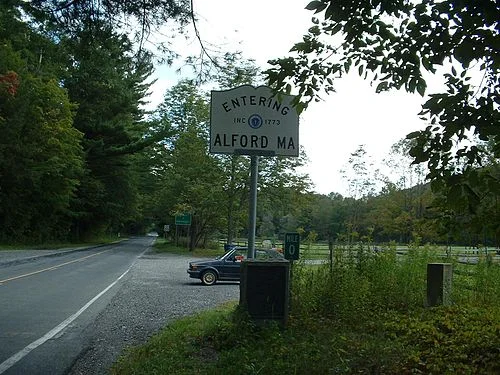
Alford, in hilly western Massachusetts
“Alford, Massachusetts: Mandy stood there with her old Nikon film camera, snapping photo after photo of the rural landscape. It was difficult to describe the wonderful feeling of there not being a single cell phone in sight; the only modern technology around was the faint blue glow of a cathode ray tube television in the window of a nearby house, and a few cars and trucks parked in crumbling gravel driveways. She was allowed to see this place, one that would likely be ruined by the 21st century as time went on… places like these were extremely hard to find these days. A world of wood-burning cookstoves and the waxy smell of Paraffin, laundry hung out to dry, rusty steel bridges over streams that reflected the bright blue skies, apple pies left out on windowsills… a world of hard work with very little to show for it aside from the sunlight beaming down on a proud community. And Mandy wanted to trap it all in her Kodak film rolls and rescue it from the future.”
― Rebecca McNutt, in Smog City

Alford Town Hall
Avian abstraction

“Breakfast Meeting With the Birds’’ (gouache mixed media on Yupo paper), by Gretchen Warsen, in her June show at Bromfield Gallery, “Some Assembly Required’’ — abstract paintings on paper that refer to nature and manmade structures.
'Perfect days'

Honeysuckle
And what is so rare as a day in June?
Then, if ever, come perfect days;
Then Heaven tries earth if it be in tune,
And over it softly her warm ear lays;
Whether we look, or whether we listen,
We hear life murmur, or see it glisten;
Every clod feels a stir of might,
An instinct within it that reaches and towers,
And, groping blindly above it for light,
Climbs to a soul in grass and flowers;
The flush of life may well be seen
Thrilling back over hills and valleys;
The cowslip startles in meadows green,
The buttercup catches the sun in its chalice,
And there's never a leaf nor a blade too mean
To be some happy creature's palace;
The little bird sits at his door in the sun,
Atilt like a blossom among the leaves,
And lets his illumined being o'errun
With the deluge of summer it receives;
His mate feels the eggs beneath her wings,
And the heart in her dumb breast flutters and sings;
He sings to the wide world, and she to her nest,
In the nice ear of Nature which song is the best?
Now is the high-tide of the year,
And whatever of life hath ebbed away
Comes flooding back with a ripply cheer,
Into every bare inlet and creek and bay;
Now the heart is so full that a drop overfills it,
We are happy now because God wills it;
No matter how barren the past may have been,
'Tis enough for us now that the leaves are green;
We sit in the warm shade and feel right well
How the sap creeps up and the blossoms swell;
We may shut our eyes but we cannot help knowing
That skies are clear and grass is growing;
The breeze comes whispering in our ear,
That dandelions are blossoming near,
That maize has sprouted, that streams are flowing,
That the river is bluer than the sky,
That the robin is plastering his house hard by;
And if the breeze kept the good news back,
For our couriers we should not lack;
We could guess it all by yon heifer's lowing,
And hark! How clear bold chanticleer,
Warmed with the new wine of the year,
Tells all in his lusty crowing!
Joy comes, grief goes, we know not how;
Everything is happy now,
Everything is upward striving;
'Tis as easy now for the heart to be true
As for grass to be green or skies to be blue,
'Tis for the natural way of living:
Who knows whither the clouds have fled?
In the unscarred heaven they leave not wake,
And the eyes forget the tears they have shed,
The heart forgets its sorrow and ache;
The soul partakes the season's youth,
And the sulphurous rifts of passion and woe
Lie deep 'neath a silence pure and smooth,
Like burnt-out craters healed with snow.
From “The Vision of Sir Launfal,’’ by Boston poet James Russell Lowell (1819-1891)

June, from the Très riches heures du duc de Berry
Busy woods

Top, “Wishing Circle,’’ by Chelsea Bradway; bottom, “Natural Consequences,’’ by Marie Craig, at Art on the Trails, Southboro, Mass.
Llewellyn King: Trump grabs U.K. third rail, then lets go fast

American conservatives hate it. Even the most passionate British conservatives support it. It was conceived by Winston Churchill as far back as 1908, mentioned again in 1924, and laid out as a plank for British reconstruction in his forward-looking “Plan for Postwar Britain” in 1943.
This toxic issue, which turns red blue and blue red when you cross the Atlantic, is Britain’s National Health Service (NHS).
Introduced in 1948 by the Labor Government of Clement Atlee, it is often thought of in the United States as a socialist idea. Churchill was, in fact, influenced greatly by William Beveridge, a liberal economist who played a key role in the formation of what came to be known as the welfare state, which combined national insurance (social security) with national health insurance.
The Brits, I can attest as a former Brit, love the NHS. They also love to criticize it. It is up there with the weather.
Also, it should be noted, the NHS is not perfect; it is and always will be a work in progress.
So large a system has its failures. Whenever there is one, conservative American friends are quick to send me the bad news -- as though a surgical mess-up in Birmingham was a harbinger of the collapse of the entire system.
The NHS has been described as the third rail of British politics.
Clearly, President Trump had never heard that and had the temerity to suggest that the NHS should be part of trade negotiations between the United States and Britain. No, a thousand times no, was the instant reaction of the conservative ministers and former ministers now jostling for election as prime minister.
Any suggestion that the NHS -- Britain’s most popular government program -- would be in any way subject to commercial interference would doom a British candidate for public office.
How it was that Trump thought he could grab the third rail and get away with it is unknown, but he walked that one back, as they say nowadays, quickly the next day.
Over the years, I have been asked innumerable times about how the Brits do things from public transport to creative theater; from the financing of the BBC to the hobby of racing pigeons. When it comes to the NHS I am never asked; I am told. Liberals tell me it is what we need in the United States: a single-payer system. Conservatives tell me that it is communism and that the Brits get terrible health care.
I am not sure the former is desirable, and I know the latter to be poppycock fed by a fury that is based on misinformation willingly received and willingly disseminated.
I have received care as a young man under the NHS and members of my family have been recipients through the years. I have spent long hours examining various health systems and a good deal of time taking to British doctors and professionals. I have also done the unlikely in this debate: talked to patients.
A dear relative was gravely ill a few years ago. I spent a week at her bedside in a large hospital in Kingston, just outside London. As she was sedated at the time, I had a lot of time to study the place.
It was big with wings specializing in everything from heart failure to eye surgery. It seemed to work pretty well, although the public wards were crowded.
But there were these takeaways: No one was refused, nor would be sent home early, and no surprise bill would come in the mail. My relative had a private health plan on top of the NHS standard and got a private room and good food.
The biggest difference is in cost. Health care spending accounts for 17.9 percent of GDP in the United States, whereas it accounts for just 9.7 percent of GDP in the United Kingdom. Germany, France and Canada all have different systems which come out in the same place as the UK, with service delivered for money spent.
Structural costs bring our bill up. All those women in your doctor’s office, arguing with insurance companies on the phone over “codes,” are not practicing medicine. They are engaged in a kind of health care roulette: Will they or will they not pay? Is it in the plan?
I am not sure the NHS is right for the United States, but structural overhaul is necessary. Wasted efforts and greed pervade the system.
By the way, I do not have a dog in this fight: I am on Medicare -- and that costs the taxpayer too much because of weak controls.
Llewellyn King is executive producer and host of White House Chronicle, on PBS. His email is llewellynking1@gmail.com. He’s based in Rhode Island and Washington, D.C.

Tim Faulkner: Providence's stunning new food-distribution center

Artist’s rendition of Farm Fresh Rhode Island’s coming food-distribution center in Providence.
Via ecoRI News (ecori.org)
PROVIDENCE
This city recently celebrated its designation as a food capital by recognizing three new food ventures and a book touting its success at making food a cultural, educational, and economic engine.
The businesses — all under different stages of construction — include the relocation of Farm Fresh Rhode Island’s food distribution center to a 60,000-square-foot building on a 3.2-acre site off Valley Road, the 110,000-square-foot greenhouse for Gotham Greens on Harris Avenue, and the Urban Greens Co-op, a tenant in a new commercial and residential space on Cranston Street.
All of the projects are being built on remediated brownfield sites. The three organizations use food to bring together culture, arts, and economic growth for a “a new green future,” Mayor Jorge Elorza said at the May 30 “Edible Providence” event. “It’s just a way to bring us together as a community.”
The mayor spoke of celebrating his Guatemalan heritage through traditional foods such as tortillas, black beans, carne asada, and guacamole — all of which have been enjoyed and adopted by other cultures.
“Food has such a transformative quality to it in Guatemalan culture and in every culture throughout the world,” Elorza said.
Providence also was profiled in a chapter of the United Nations book Integrating Food Into Urban Planning. The planning guide looks at food systems in 20 cities, including Toronto, New York, Bangkok, and Tokyo.
The book shows how food is used across municipal agencies to address a range of issues such as health, diet, recreation, education, planning, and waste management.
Providence was singled out for having the forethought to increase food security and nutrition through collaboration between businesses, residents, and government.
Bonnie Nickerson, director of the city’s Department of Planning and Development, said the creation of the Office of Sustainability brought together several independent initiatives and policies. Changes to zoning regulations advanced programs for beekeeping, urban farming, and backyard chickens.
Nellie de Goguel, of the city’s Office of Sustainability, said the city is in the early stages of launching a curbside food-scrap collection service within a single neighborhood. The city has a goal of having 100 restaurants divert their food scrap for compost by 2020. So far, 12 restaurants are onboard through the city’s composting program.
Ellen Cynar, director of the city’s Healthy Communities Office, said new programs such as Lots of Hope created access to vacant land for neighborhood gardens and urban farmers. The city has a goal of hiring a farmer to manage the public farming and garden areas at city parks. Thanks to a federal grant the city is developing a farm-to-school program.
Cynar said the program will help students learn about the relationships between the environment and food.
Tim Faulkner is an eco RI News journalist.
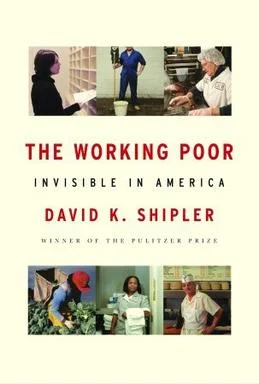
Chris Powell: Paid time off isn't what working poor need most
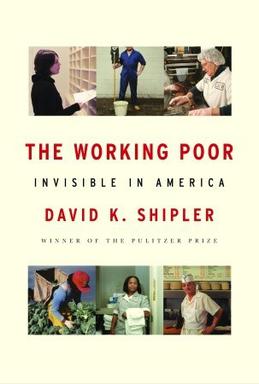
Now that the General Assembly is about to pass legislation that Connecticut Gov. Ned Lamont will sign establishing a state agency to arrange paid family leave insurance for all working people in the state, maybe its details will start getting critical examination.
After all, if, as the legislation's advocates say, the working poor can't afford to take time off to care for a sick relative, how well can they afford the half-percent pay cut they will endure with everyone else to finance the insurance program? While the state is raising its minimum wage in phases, even when it reaches $15 an hour or $600 a week in a few years it still won't be nearly enough to support a family, even with paid leave.
The big problem here is that with so many children being born to single women who are qualified only for menial work, family formation is overtaking education and job skills and thus income.
Family leave benefits will be 12 weeks paying as much as 95 percent of regular income for the lowest-paid people, less for higher-paid people. But higher-paid people don't need the insurance at all, since its benefits are limited enough that such people could insure themselves with ordinary savings without the tax increase. Indeed, the paid leave insurance program is mainly income redistribution to the poor, a way of making the state income tax more progressive.
That might have been a fair argument for it but its advocates don't seem to have made it, apparently having meant to fool the non-poor into thinking that they would gain from paid leave too.
Of course not all people paying the new half-percent tax will encounter circumstances allowing them to claim benefits -- unless there is no claim checking or claim checking is so lax that almost any claim is accepted and people come to realize that they can collect by finding or inventing relatives or friends who need care. Administration of the program remains a big question.
As with other forms of insurance, most people, including the working poor, won't need paid family leave very often. But paid leave is far from the insurance most people do need and would use more often if they had it -- that is, better medical insurance. Even many people who have medical insurance face deductibles so high that they defer treatment or are badly damaged financially by getting treatment. While state government provides medical insurance for the indigent and subsidizes it for the working poor, it is often deficient.
That's where all new money to help the working poor should go.
Paid family leave is a triumph of Democratic Party rhetoric that it's "not fair that people should have to choose" -- as between their jobs and caring for sick relatives, between medicine and food, between going to college and paying for college, and so on until it is possible to imagine that everything should be free.
The French economist Frederic Bastiat saw it coming two centuries ago. "Government," he wrote, "is the great fiction by which everybody tries to live at the expense of everybody else." And of course the Democratic Party is the party that can't choose between the social goods it advocates and the endless, stupid, and fantastically expensive war in Afghanistan.
What's really not fair is that Connecticut taxpayers who have only mediocre self-funded retirement plans are on the hook for at least $70 billion in unfunded obligations for the comfortable defined-benefit pensions enjoyed by state and municipal government employees. The governor and Democratic legislators are proposing to run up the pension debt still more. How progressive!
Chris Powell is a columnist for the Journal Inquirer, vin Manchester, Conn.
Deadly work
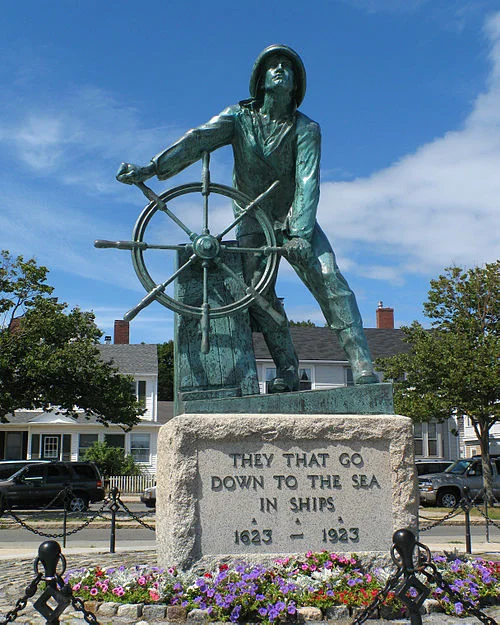
Man at the Wheel, Fisherman's Memorial Cenotaph, in Gloucester.
“There are houses in Gloucester where groves have been worn into the floorboards by women pacing past an upstairs window, looking out to sea….If fishermen lived hard, it was no doubt because they died hard as well.’’
— Sebastian Junger, in The Perfect Storm (1997)

“Gloucester Harbor”” (circa 1877), by Richard Morris Hunt
Reconstructing old books

“Slowpoke’’ (painted silk on vintage book paper collage), by Conny Goelz Schmitt, in her show “Neverending Stories’’ at Kingston Gallery, Boston, through June 30. The gallery explains: “Her geometric collage work channels stories from the vintage books she uses to create her work. The collages, assemblages and sculptures play with deconstruction, reconstruction, and changing dimensionality – often in one piece. Interactive sculptures offer different viewpoints of stories. Small work on vintage book boards invites the viewer to make up their own story and wall objects seemingly tell stories on another level. The work leads to new interpretations of past and present and opens up the viewer’s outlook to the future.’’
Her geometric collage work channels stories from the vintage books she uses to create her work. The collages, assemblages and sculptures play with deconstruction, reconstruction, and changing dimensionality – often in one piece. Interactive sculptures offer different viewpoints of stories. Small work on vintage book boards invites the viewer to make up their own story and wall objects seemingly tell stories on another level. The work leads to new interpretations of past and present and opens up the viewer’s outlook to the future.
Conny Goelz Schmitt, Slowpoke, 2018, painted silk on vintage book paper collage, 47" x 20" x 2"
In Mystic, art by Syrian child refugees

Painting from the exhibition “Dark to Light: A Syrian Child’s Journey,’’ through June 16 at the Mystic (Conn.) Museum of Art. This show is a traveling exhibition made up of the works of Syrian child refugees. The artwork comes from the children served by the Petersham, Mass.-based Polus Center for Social and Economic Development, which has been providing rehabilitation services to civilians affected by the Syrian war since 2010.
Amadi Anene: 'Enterprise zones' help investors, not the poor
Via OtherWords.org
Where some of us see distressed neighborhoods — where families endure poverty and homes fall into disrepair — others see dollar signs. In fact, the Trump administration now brands them “opportunity zones,” offering tax breaks to investors who invest capital there.
What remains unclear is this: Opportunity for whom? Big investors may stand to cash in, but many communities are saying they’re not getting the benefits they were promised.
This story goes back to the 1980s, when British Prime Minister Margaret Thatcher’s conservative government introduced 11 “enterprise zones” throughout the United Kingdom. Inspired, conservatives in the U.S. under President Ronald Reagan promoted the creation of these zones in 40 states.
Even many Democrats warmed to these zones as a viable pro-market approach to urban renewal. The idea resurfaced as “empowerment zones” under the Clinton administration in 1994.
Whatever you call them, they’re spaces where businesses can delay, reduce, or even eliminate taxes altogether on the money they invest.
The Trump administration has certified an estimated 8,700 census tracts as opportunity zones; the official list is 186 pages long. There are nearly 900 such zones in California, more than 600 in Texas, 500 in New York, and 300 in Ohio. The designated tracts in Puerto Rico account for nearly the entire island.
Advocates argue that these incentives encourage investors to direct money into distressed communities in ways that will lead to new jobs, better housing, and other businesses being willing to open up shop in the revitalized community.
There are at least two problems with that argument.
First, many distressed communities suffer from economic challenges that investment alone cannot address, including redlining and housing discrimination. These communities need systemic policy changes that get at the root of discrimination to set the stage for lasting economic change.
Second, studies across the country (as well as in the U.K.) offer little evidence that such incentives actually benefit neighborhoods in the long run.
An expansive study of 75 enterprise zones in 13 U.S. states concluded that tax incentives had “little to no impact on economic growth.” One study of a zone in New Jersey even concluded that increased economic activity within its zone came at the expense of non-zones in the nearby area — the kind of zero-sum economics that would discourage investments in the long run.
Amid all of this is the concern that opportunity zones will mean escalating housing costs, accelerating the process by which residents are displaced because they can no longer afford to live there.
There are ways opportunity zones can be made to work so that the people living in the zones benefit as well as investors.
One strategy is for investors to partner with anchor institutions — enterprises such as hospitals and universities that are anchored to the community by both location and mission. These institutions can play special roles in employing people in opportunity zones and supporting local small businesses through purchasing and contracting.
Even better, they should invest in employee-owned businesses.
A prime example for both strategies is the Evergreen Cooperatives in Cleveland, whose Cuyahoga County is home to 64 low-income “opportunity zones.”
Evergreen’s enterprises show the power of employee ownership to turn communities around and create economic opportunity. Employees who own parts of their place-based business have a long-term source of wealth and an incentive to stay and improve their neighborhoods, because doing so improves their businesses.
We also need to make more affordable housing available, especially through community land trusts, limited equity housing cooperatives, and other strategies that offer opportunities for resident equity building.
Under the Trump administration, opportunity zones — the rebranded “enterprise” and “empowerment” zones of the past — will have some new features but the same bottom line: investors stand to win, while residents lose.
Amadi Anene is a fellow at The Democracy Collaborative. He served as a senior adviser in the Small Business Administration during the Obama administration.
Should Newport go convention big time?

“The Breakers,’’ Newport’s most famous mansion: Big, but not big enough for a national convention.
From Robert Whitcomb’s “Digital Diary,’’ in Golocal24.com
In the summer, of course, Newport is packed, but not in the winter. As Bob Curley, writing in Newport Life, noted in an article about hotels in the City by the Sea: “Newport has a classic resort town problem: not enough hotel rooms in the high season — when hotel occupancy tops 90 percent — and not enough visitors to fill those rooms in the off-season, when occupancy drops to about 40 percent.’’
So some people have long pushed to have a really major (500 guestrooms and big meeting halls for plenary sessions, etc.) convention-center style hotel to draw major national and even international meetings, and so many more visitors, year round. (The Newport tourist season, has, it is true, been lengthening in recent years, in part because of the proliferation of events created at least in part to snare more tourists and other visitors year round.)
A convention center might make economic sense, but would most Newporters want a lot more people in the off-season?
Mr. Curley notes that Newport now has about 2,360 hotel rooms (though more are soon to come), while the subtropical old East Coast tourist cities of Savannah (with 10,000 rooms) and Charleston (with 13,000) have many more. But is tight little Newport set up to handle a huge increase, even if it can get it despite that little cold snap called winter? Maybe. It handled thousands of sailors back when it hosted the Navy’s destroyer fleet.
To read Mr. Curley’s article, please hit this link.

American spelled backward

“Revelation of the other world 2’’, by Toby Sisson, in her show “Toby Sisson: Nacarima,’’ at the David Winton Bell Gallery at Brown University, Providence, June 7 through July 7. The gallery says the show explores “a kind of bittersweet patriotism expressed by generations of American writers and artists of color. ‘‘
“Nacirema,” is a series of black and white prints created with pigmented beeswax, thin Japanese printmaking paper and a heated palette that acts as a printing press.
Nacirema ("American" spelled backwards) is a term used in anthropology and sociology in relation to aspects of the behavior and society of citizens of the United States.
The gallery says the show explores “a kind of bittersweet patriotism expressed by generations of American writers and artists of color. ‘‘
“Nacirema,” a series of black and white prints created with pigmented beeswax, thin Japanese printmaking paper and a heated palette that acts as a printing press. Nacirema ("American" spelled backwards) is a term used in anthropology and sociology in relation to aspects of the behavior and society of citizens of the United States of America.
Government as croupier

The Twin River site used to be this racetrack, also based on gambling
From Robert Whitcomb’s “Digital Diary,’’ in GoLocal24.com
In other addiction-promotion industry matters, there’s Trump’s intervention to try to stop a casino from being built in southeastern Massachusetts – a project long sought by the Mashpee Wampanoag Indians. Trump was trying to help limit competition for the Twin River Casino Management Group, which owns casinos in Lincoln and Tiverton, R.I.
Trump was doing a favor for Twin River lobbyist Matthew Schlapp, the chairman of the American Conservative Union, the husband of White House strategic communications director Mercedes Schlapp and a longtime Trump ally.
But then, all casino operations are, to a lesser or greater extent, heavily politicized because these cash machines are licensed, regulated and taxed by government. Of course, Trump himself was a failed casino operator in the famously corrupt city of Atlantic City, N.J. Casinos have tended over the years to be excellent sources of bribes to public officials.
By encouraging smoking and heavy drinking in casinos, which tend to fuel increased betting, they also hurt public health. Yes, it’s a legal business, but why should government be promoting these things?

Llewellyn King: Kazakhstan -- from the Silk Road to high-tech highway

Futuristic downtown Nur-Sultan, the capital of Kazakhstan
NUR-SULTAN, Kazakhstan
Want a world-class legal system known for its integrity? Then go to London and get one, judges and all. That’s what Kazakhstan has done.
When businesses are looking to invest abroad, the availability and dependability of legal redress is a critical consideration. Should things go wrong, companies and hedge funds want to know that they can resolve matters in court, and that their cases will be heard in an impartial and timely fashion.
Kazakhstan, the vast country that straddles the boundary between Asia and Europe, decided it would put its commercial legal system above reproach. In 2015, it imported a whole legal system from England, along with English common law, to deal with commercial issues. It also imported some English judges to sit on the bench.
Presiding over this remarkable court system is Lord Woolf, one of England’s most revered justices and, before that, one of its most eminent barristers.
Kairat Kelimbetov, governor of the Astana International Finance Center (AIFC), described this to me as a move to establish the “rule of law.” He said it was decisive in improving the investment climate. It’s also symptomatic of a desire here to “do what it takes” to move Kazakhstan to the first row of nations — in this case, to import a legal system complete with eminent jurists.
This sets Kazakhstan, a country still growing out of its years as a Soviet republic, apart from other emerging countries that seek the indigenous over the imported. In Africa, the desire to indigenize has often cost countries heavily.
This philosophy of going out and bringing in what you prize to Kazakhstan, like so much else in the country, reflects the vision of Nursultan Nazarbayev, who upon the Soviet Union’s dissolution in 1991, was elected president of the new country of Kazakhstan, which he led until his resignation this March.
Nazarbayev built this secular, economically thrusting and technologically ambitious country with an authoritative hand, but with a view to adopting and adapting. He was helped by plentiful oil revenues — Kazakhstan produces 1.9 million barrels a day.
The Kazakh managerial class reflects a diversity of elite education from Oxford to Cambridge, Harvard to Stanford, to Moscow, Singapore and Beijing universities. President Kassym-Jomart Tokayev, the constitutional successor to Nazarbayev, has heavy ties to China, and AIFC’s Kelimbetov was educated at Moscow State University and Georgetown University. The effects of that educational spread have informed policymaking and the country’s can-do culture.
Kazakhs go to the polls on June 9, in a presidential election widely expected to endorse the policies of Nazarbayev and to elect Tokayev, a former prime minister and close political ally of Nazarbayev.
In an interview, Tokayev told me that he’d have an increased emphasis on the environment, especially the Caspian Sea, the world’s largest inland waterway, which has been detrimentally affected by oil drilling, and he’d create an environment ministry.
Although Tokayev is expected to get a huge majority at the polls, he’s facing opposition from six rivals, ranging from a communist to a woman who wants to speak for small business. In fact, gender equality is, to an observer, remarkably well-achieved in Kazakhstan, at least in the capital.
Kazakhstan is challenged by its sheer size and its location. It’s larger than Western Europe, but its population is just 18 million. It’s the world’s 9th-largest country by land mass, and it’s land-locked. It has five contiguous and, at times, contentious neighbors: China, Russia, Kyrgyzstan, Uzbekistan and Turkmenistan. Governing Kazakhstan requires diplomatic agility.
Although oil has financed the growth and the building of this architecturally creative new capital, Tokayev told me he’s going to push energy diversification. Already, the electric sector has embraced solar and wind — a great resource in the country — and is increasing its exports to neighbors.
In short, Tokayev wants future development to embrace the unique size and resources of the country. So, he hopes to make it a transportation hub, an agricultural powerhouse and a technology leader. He also wants Kazakhstan, which, he told me, already accounts for 60 percent of the Central Asian GDP, to be an international financial center.
The country’s premier institution of higher learning, Nazarbayev University, emphasizes STEM, its president, Shigeo Katsu, told me. At the university, too, there’s diverse expertise: the faculty includes 50 nationalities and instruction is in English.
On Twitter: @llewellynking2
Llewellyn King is executive producer and host of White House Chronicle, on PBS. He’s based in Rhode Island and Washington. D.C.