
Vox clamantis in deserto






Reconstructing old books

“Slowpoke’’ (painted silk on vintage book paper collage), by Conny Goelz Schmitt, in her show “Neverending Stories’’ at Kingston Gallery, Boston, through June 30. The gallery explains: “Her geometric collage work channels stories from the vintage books she uses to create her work. The collages, assemblages and sculptures play with deconstruction, reconstruction, and changing dimensionality – often in one piece. Interactive sculptures offer different viewpoints of stories. Small work on vintage book boards invites the viewer to make up their own story and wall objects seemingly tell stories on another level. The work leads to new interpretations of past and present and opens up the viewer’s outlook to the future.’’
Her geometric collage work channels stories from the vintage books she uses to create her work. The collages, assemblages and sculptures play with deconstruction, reconstruction, and changing dimensionality – often in one piece. Interactive sculptures offer different viewpoints of stories. Small work on vintage book boards invites the viewer to make up their own story and wall objects seemingly tell stories on another level. The work leads to new interpretations of past and present and opens up the viewer’s outlook to the future.
Conny Goelz Schmitt, Slowpoke, 2018, painted silk on vintage book paper collage, 47" x 20" x 2"
In Mystic, art by Syrian child refugees

Painting from the exhibition “Dark to Light: A Syrian Child’s Journey,’’ through June 16 at the Mystic (Conn.) Museum of Art. This show is a traveling exhibition made up of the works of Syrian child refugees. The artwork comes from the children served by the Petersham, Mass.-based Polus Center for Social and Economic Development, which has been providing rehabilitation services to civilians affected by the Syrian war since 2010.
Amadi Anene: 'Enterprise zones' help investors, not the poor
Via OtherWords.org
Where some of us see distressed neighborhoods — where families endure poverty and homes fall into disrepair — others see dollar signs. In fact, the Trump administration now brands them “opportunity zones,” offering tax breaks to investors who invest capital there.
What remains unclear is this: Opportunity for whom? Big investors may stand to cash in, but many communities are saying they’re not getting the benefits they were promised.
This story goes back to the 1980s, when British Prime Minister Margaret Thatcher’s conservative government introduced 11 “enterprise zones” throughout the United Kingdom. Inspired, conservatives in the U.S. under President Ronald Reagan promoted the creation of these zones in 40 states.
Even many Democrats warmed to these zones as a viable pro-market approach to urban renewal. The idea resurfaced as “empowerment zones” under the Clinton administration in 1994.
Whatever you call them, they’re spaces where businesses can delay, reduce, or even eliminate taxes altogether on the money they invest.
The Trump administration has certified an estimated 8,700 census tracts as opportunity zones; the official list is 186 pages long. There are nearly 900 such zones in California, more than 600 in Texas, 500 in New York, and 300 in Ohio. The designated tracts in Puerto Rico account for nearly the entire island.
Advocates argue that these incentives encourage investors to direct money into distressed communities in ways that will lead to new jobs, better housing, and other businesses being willing to open up shop in the revitalized community.
There are at least two problems with that argument.
First, many distressed communities suffer from economic challenges that investment alone cannot address, including redlining and housing discrimination. These communities need systemic policy changes that get at the root of discrimination to set the stage for lasting economic change.
Second, studies across the country (as well as in the U.K.) offer little evidence that such incentives actually benefit neighborhoods in the long run.
An expansive study of 75 enterprise zones in 13 U.S. states concluded that tax incentives had “little to no impact on economic growth.” One study of a zone in New Jersey even concluded that increased economic activity within its zone came at the expense of non-zones in the nearby area — the kind of zero-sum economics that would discourage investments in the long run.
Amid all of this is the concern that opportunity zones will mean escalating housing costs, accelerating the process by which residents are displaced because they can no longer afford to live there.
There are ways opportunity zones can be made to work so that the people living in the zones benefit as well as investors.
One strategy is for investors to partner with anchor institutions — enterprises such as hospitals and universities that are anchored to the community by both location and mission. These institutions can play special roles in employing people in opportunity zones and supporting local small businesses through purchasing and contracting.
Even better, they should invest in employee-owned businesses.
A prime example for both strategies is the Evergreen Cooperatives in Cleveland, whose Cuyahoga County is home to 64 low-income “opportunity zones.”
Evergreen’s enterprises show the power of employee ownership to turn communities around and create economic opportunity. Employees who own parts of their place-based business have a long-term source of wealth and an incentive to stay and improve their neighborhoods, because doing so improves their businesses.
We also need to make more affordable housing available, especially through community land trusts, limited equity housing cooperatives, and other strategies that offer opportunities for resident equity building.
Under the Trump administration, opportunity zones — the rebranded “enterprise” and “empowerment” zones of the past — will have some new features but the same bottom line: investors stand to win, while residents lose.
Amadi Anene is a fellow at The Democracy Collaborative. He served as a senior adviser in the Small Business Administration during the Obama administration.
Should Newport go convention big time?

“The Breakers,’’ Newport’s most famous mansion: Big, but not big enough for a national convention.
From Robert Whitcomb’s “Digital Diary,’’ in Golocal24.com
In the summer, of course, Newport is packed, but not in the winter. As Bob Curley, writing in Newport Life, noted in an article about hotels in the City by the Sea: “Newport has a classic resort town problem: not enough hotel rooms in the high season — when hotel occupancy tops 90 percent — and not enough visitors to fill those rooms in the off-season, when occupancy drops to about 40 percent.’’
So some people have long pushed to have a really major (500 guestrooms and big meeting halls for plenary sessions, etc.) convention-center style hotel to draw major national and even international meetings, and so many more visitors, year round. (The Newport tourist season, has, it is true, been lengthening in recent years, in part because of the proliferation of events created at least in part to snare more tourists and other visitors year round.)
A convention center might make economic sense, but would most Newporters want a lot more people in the off-season?
Mr. Curley notes that Newport now has about 2,360 hotel rooms (though more are soon to come), while the subtropical old East Coast tourist cities of Savannah (with 10,000 rooms) and Charleston (with 13,000) have many more. But is tight little Newport set up to handle a huge increase, even if it can get it despite that little cold snap called winter? Maybe. It handled thousands of sailors back when it hosted the Navy’s destroyer fleet.
To read Mr. Curley’s article, please hit this link.

American spelled backward

“Revelation of the other world 2’’, by Toby Sisson, in her show “Toby Sisson: Nacarima,’’ at the David Winton Bell Gallery at Brown University, Providence, June 7 through July 7. The gallery says the show explores “a kind of bittersweet patriotism expressed by generations of American writers and artists of color. ‘‘
“Nacirema,” is a series of black and white prints created with pigmented beeswax, thin Japanese printmaking paper and a heated palette that acts as a printing press.
Nacirema ("American" spelled backwards) is a term used in anthropology and sociology in relation to aspects of the behavior and society of citizens of the United States.
The gallery says the show explores “a kind of bittersweet patriotism expressed by generations of American writers and artists of color. ‘‘
“Nacirema,” a series of black and white prints created with pigmented beeswax, thin Japanese printmaking paper and a heated palette that acts as a printing press. Nacirema ("American" spelled backwards) is a term used in anthropology and sociology in relation to aspects of the behavior and society of citizens of the United States of America.
Government as croupier

The Twin River site used to be this racetrack, also based on gambling
From Robert Whitcomb’s “Digital Diary,’’ in GoLocal24.com
In other addiction-promotion industry matters, there’s Trump’s intervention to try to stop a casino from being built in southeastern Massachusetts – a project long sought by the Mashpee Wampanoag Indians. Trump was trying to help limit competition for the Twin River Casino Management Group, which owns casinos in Lincoln and Tiverton, R.I.
Trump was doing a favor for Twin River lobbyist Matthew Schlapp, the chairman of the American Conservative Union, the husband of White House strategic communications director Mercedes Schlapp and a longtime Trump ally.
But then, all casino operations are, to a lesser or greater extent, heavily politicized because these cash machines are licensed, regulated and taxed by government. Of course, Trump himself was a failed casino operator in the famously corrupt city of Atlantic City, N.J. Casinos have tended over the years to be excellent sources of bribes to public officials.
By encouraging smoking and heavy drinking in casinos, which tend to fuel increased betting, they also hurt public health. Yes, it’s a legal business, but why should government be promoting these things?
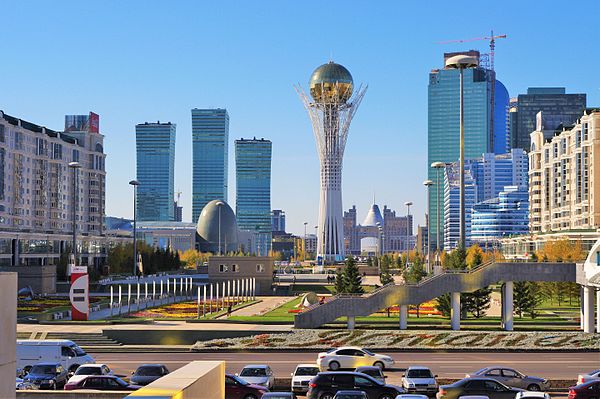
Llewellyn King: Kazakhstan -- from the Silk Road to high-tech highway
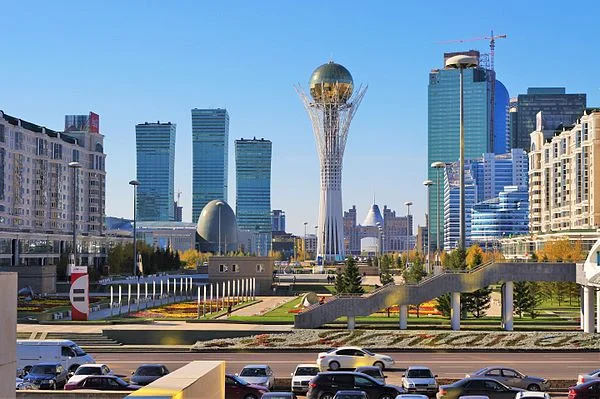
Futuristic downtown Nur-Sultan, the capital of Kazakhstan
NUR-SULTAN, Kazakhstan
Want a world-class legal system known for its integrity? Then go to London and get one, judges and all. That’s what Kazakhstan has done.
When businesses are looking to invest abroad, the availability and dependability of legal redress is a critical consideration. Should things go wrong, companies and hedge funds want to know that they can resolve matters in court, and that their cases will be heard in an impartial and timely fashion.
Kazakhstan, the vast country that straddles the boundary between Asia and Europe, decided it would put its commercial legal system above reproach. In 2015, it imported a whole legal system from England, along with English common law, to deal with commercial issues. It also imported some English judges to sit on the bench.
Presiding over this remarkable court system is Lord Woolf, one of England’s most revered justices and, before that, one of its most eminent barristers.
Kairat Kelimbetov, governor of the Astana International Finance Center (AIFC), described this to me as a move to establish the “rule of law.” He said it was decisive in improving the investment climate. It’s also symptomatic of a desire here to “do what it takes” to move Kazakhstan to the first row of nations — in this case, to import a legal system complete with eminent jurists.
This sets Kazakhstan, a country still growing out of its years as a Soviet republic, apart from other emerging countries that seek the indigenous over the imported. In Africa, the desire to indigenize has often cost countries heavily.
This philosophy of going out and bringing in what you prize to Kazakhstan, like so much else in the country, reflects the vision of Nursultan Nazarbayev, who upon the Soviet Union’s dissolution in 1991, was elected president of the new country of Kazakhstan, which he led until his resignation this March.
Nazarbayev built this secular, economically thrusting and technologically ambitious country with an authoritative hand, but with a view to adopting and adapting. He was helped by plentiful oil revenues — Kazakhstan produces 1.9 million barrels a day.
The Kazakh managerial class reflects a diversity of elite education from Oxford to Cambridge, Harvard to Stanford, to Moscow, Singapore and Beijing universities. President Kassym-Jomart Tokayev, the constitutional successor to Nazarbayev, has heavy ties to China, and AIFC’s Kelimbetov was educated at Moscow State University and Georgetown University. The effects of that educational spread have informed policymaking and the country’s can-do culture.
Kazakhs go to the polls on June 9, in a presidential election widely expected to endorse the policies of Nazarbayev and to elect Tokayev, a former prime minister and close political ally of Nazarbayev.
In an interview, Tokayev told me that he’d have an increased emphasis on the environment, especially the Caspian Sea, the world’s largest inland waterway, which has been detrimentally affected by oil drilling, and he’d create an environment ministry.
Although Tokayev is expected to get a huge majority at the polls, he’s facing opposition from six rivals, ranging from a communist to a woman who wants to speak for small business. In fact, gender equality is, to an observer, remarkably well-achieved in Kazakhstan, at least in the capital.
Kazakhstan is challenged by its sheer size and its location. It’s larger than Western Europe, but its population is just 18 million. It’s the world’s 9th-largest country by land mass, and it’s land-locked. It has five contiguous and, at times, contentious neighbors: China, Russia, Kyrgyzstan, Uzbekistan and Turkmenistan. Governing Kazakhstan requires diplomatic agility.
Although oil has financed the growth and the building of this architecturally creative new capital, Tokayev told me he’s going to push energy diversification. Already, the electric sector has embraced solar and wind — a great resource in the country — and is increasing its exports to neighbors.
In short, Tokayev wants future development to embrace the unique size and resources of the country. So, he hopes to make it a transportation hub, an agricultural powerhouse and a technology leader. He also wants Kazakhstan, which, he told me, already accounts for 60 percent of the Central Asian GDP, to be an international financial center.
The country’s premier institution of higher learning, Nazarbayev University, emphasizes STEM, its president, Shigeo Katsu, told me. At the university, too, there’s diverse expertise: the faculty includes 50 nationalities and instruction is in English.
On Twitter: @llewellynking2
Llewellyn King is executive producer and host of White House Chronicle, on PBS. He’s based in Rhode Island and Washington. D.C.
Brian Wakamo: Even for rich ballplayers, the drawbacks of contract work

From OtherWords.org
Major League Baseball has a problem on its hands: Teams are making record revenues thanks to massive regional cable deals. But more than ever, those teams aren’t signing players. They’re becoming cheapskates.
Take, for example, Craig Kimbrel and Dallas Keuchel.
Kimbrel is one of the greatest relief pitchers of all time — he’s the youngest player to reach 300 saves in MLB history — and as of today, he remains unsigned. Keuchel won the Cy Young award given to the best pitcher in the league in 2015, and won a World Series with the Houston Astros. But he too remains unsigned.
Even players like Bryce Harper and Manny Machado, the marquee free agents of this past year, got slightly shafted out of deals that would’ve truly paid them what they’re worth.
MLB teams waited and put off signing them to drive their price down — which might seem absurd, seeing as those two ultimately signed deals paying them $300 million or more. But their value to their teams is so high that they could’ve been paid more.
The MLB also has a problem with its young talent.
Teams wait to bring players up to the majors because of a “service time” rule. That rule says that if a league player is on a major league roster for 172 days out of the 187-day MLB regular season, he’s “earned” a year of service time. But that’s being manipulated to keep young players on cheaper contracts for longer periods of time.
Basically, teams won’t call up talented and valuable youngsters to the majors until enough days have passed that they can’t earn a year of service time. Therefore, that young player is forced to stay on a team for an extra year on a smaller contract. Past MVP Kris Bryant is an outspoken victim of this manipulation.
Vlad Guerrero Jr., the extremely talented son of famed slugger and bad ball hitter Vladimir Guerrero, is another, while Harper had a similar situation occur when he was still on the Washington Nationals.
What all of this does is deprive the fans of seeing their teams at their best.
Harper and Machado being signed late means they enjoyed less time acclimating to their new teams. Keuchel and Kimbrel remaining unsigned means that teams are actively worse because they don’t have those players. Postponing someone like Guerrero Jr. from playing prevents fans from seeing him make extraordinary plays, and from making an impact for their teams.
It also hurts the players themselves. They’re not getting the full benefits of their work because of the billionaires who own these teams seemingly colluding to prevent paying these players and to keep them tied down for longer.
Why should we care about the paychecks of millionaire athletes? Because they’re a highly public example of what many much lower-wage workers experience in their own lives.
In the broader economy, the rise of contract employment has allowed employers to avoid paying benefits and suppress wages. Other employers will manipulate part-time vs. full-time classifications for the exact same reason.
These baseball teams are acting like modern-day corporations, in other words.
But professional baseball players have a resource many other workers no longer enjoy: a powerful union. That union should step up to protect their players — and to show workers at all levels that they can do the same.
What can the fans do? Let your team know they need to splash the cash and build their best teams. And don’t forget: If corporations treat millionaire assets this way, imagine how they’ll treat you.
Brian Wakamo is a research assistant on the Global Economy Project at the Institute for Policy Studies.
Liberating art

“The Doctrine of Liberty’’ (oil on canvas), by Carl Mehrbach, in his show of 3D abstractions at Bromfield Gallery, Boston, through June.
Beware 'Fairy Circle'

Thomas Hook, the Southbury, Conn.-based photographer and naturalist who took this picture, explains: “This circle of mushrooms appeared on my lawn last evening and it’s the first I’ve seen in many years. It medieval times it was known as a ‘Fairy Circle,’ not to be stepped into for fear you would disappear into some supernatural realm or be faced with an early death were you to step in and then step out. In Germany it was called a ‘Witches’ Circle,’ wherein dancing occurred on Walpurgis Night. Whatever your belief system, it was exciting for me to find, as good as finding a Scarlet Tanager!
Quirky list of Mass 'bests'

An online news service called Your RV Lifestyle presents what it calls the best things to do in Massachusetts. It says the best is Boston’s Freedom Trail, seen above at Faneuil Hall. The list has some amusing factual errors.
— Photo by Mama Geek
Smaller and richer

The Berkshires from North Adams, Mass., once an important industrial city and source of several steam pollution.
— Photo by JBCurio
From Robert Whitcomb’s “Digital Diary,’’ in GoLocal24.com
Justin Fox, writing in Bloomberg, had a good piece on how some cities can shrink in population but yet get richer by reinventing themselves. Pittsburgh, which moved from steel and other manufacturing, to high tech, higher education and health care, is probably the best example.
Mr. Fox also cites among other cities Pittsfield, Mass., once heavily dependent on manufacturing, especially General Electric’s, but that has now positioned itself as a tourist, arts and college center in the middle of the Berkshires. Then there’s Barnstable County, Mass. (aka Cape Cod), another scenic area, which has become a favored retirement center for affluent older people. (That doesn’t seem a perfect recipe for long-term economic growth, if Cape Codders really want that growth.)
So once distressed cities can reinvent themselves. Still, it seems to me that truly long-term prosperity, with a strong middle class, is more likely with a highly diversified mix of services and manufacturing.
To Mr. Fox’s article, please hit this link.
https://www.crainscleveland.com/government/opinion-can-city-shrink-and-thrive-its-complicated
At PCFR, Taiwan diplomat to look at East Asian scene

Dragon boat in the annual Taiwan Dragon Boat Festival on the Blackstone River.
Taiwan Diplomat to Discuss East Asian Trade and Security Issues
The last dinner of the current season of the Providence Committee on Foreign Relations (founded in 1928) is scheduled for Tuesday, June 4, here at The Hope Club. The new season will open in September.
Please consult its Web site -- thepcfr.org -- and/or send queries to pcfremail@gmail.com for more information about the PCFR, including on how to join.
On June 4, Douglas Hsu, a senior diplomat who currently oversees Taiwan’s interests in New England as director general of the Taipei Economic and Cultural Office in Boston, will speak about current political and economic conditions in that nation (one of Rhode Island’s largest export markets), China’s military and other threats to Taiwan and the East Asian scene in general.
(Taiwan sponsors the annual Dragon Boat races on the Blackstone River and indeed just gave six of them to the City of Pawtucket!)
Mr. Hsu, who previously served two stints in Washington, may have some perspectives on the China-U.S. trade war. His work in Washington included being Taiwan’s liaison with Congress. (Meanwhile, a reminder that the official name of Taiwan is the Republic of China.)
Mr. Hsu has served in multiple positions in Taiwan’s Department of North American Affairs in the Ministry of Foreign Affairs, beginning as a desk officer in 1998. He was the department’s Deputy Director-General from 2016 to 2018, when he assigned to Boston.
The director general (effectively the consul general for New England) earned a B.A. and M.A. in International Relations from National Cheng-Chi University and has participated in the Diplomats Training Program at Oxford University (1998) and the Senior Executive Fellows Program at Harvard University (2009).
Art offsets the indignities of age

Phillip Evergood, “Dowager in a Wheelchair” (1952), by Phillip Evergood, in a traveling show from the Smithsonian American Art Museum titled “Modern American Realism: Highlights from the Sara Roby Foundation Collection’,’ through Oct., 14, at the Nantucket Historical Association.
The exhibition includes over 40 works of art by notable artists Will Barnet, Isabel Bishop, Edward Hopper and Wolf Kahn, among others.
nha.org/modern-american-realism

Chris Powell: Connecticut's self-destructive income tax and migration problems

On State Street, in the famous sanctuary city of New Haven.
Last week brought more evidence that Connecticut is paying successful and self-sufficient people to leave and paying poor and dependent people to stay or settle in the state.
The evidence came from Bloomberg News, which analyzed Internal Revenue Service and Census Bureau data about population movement among states in 2015 and 2016. The news service found that population movement was most costly to Connecticut, New York, and New Jersey, with Connecticut losing 1.6 percent of its population's annual adjusted gross income. The study found that the average income of people departing Connecticut was $122,000, the average income of people arriving was $97,000, and five people left the state for every four people arriving.
Many arrivals in Connecticut are illegal immigrants settling in the state's "sanctuary cities." They depress the income averages and tend to require government services. Poverty may be a virtue in religion but it is only a handicap in governance, and yet legislation pending in the General Assembly would establish "sanctuary" for illegals in all the state's 169 towns by prohibiting almost any cooperation with federal immigration authorities.
There is much dispute over whether raising Connecticut's taxes on the wealthiest, risking more income migration, would cost more tax revenue than it gained. But the data examined by Bloomberg News show that Connecticut already has plenty to worry about with the flight of its middle and upper-middle classes.
Florida may be the leading destination for people departing Connecticut and other highly taxed and declining states, in large part because Florida has avoided a state income tax. The study found that while Connecticut was losing 1.6 percent of its population's adjusted gross income, Florida was increasing its population's income by 3 percent. The average income of a Connecticut resident moving to Florida appears to be a whopping $253,000, but in recent years many people of all self-sufficient income levels have left Connecticut for the Sunshine State.
Of course Florida isn't heaven. Its mild winters are matched by oppressive summers. Away from the shore, Florida's geography is bland prairie. Florida real estate near the shore is more expensive than most real estate in Connecticut. The bears that increasingly annoy Connecticut's rural and suburban residents are cuddly pets compared to Florida's alligators, Burmese pythons, and year-round insects. Florida's hurricanes do far more damage than Connecticut's snowstorms.
Indeed, Connecticut has many natural advantages -- lovely, varied, but gentle geography, a temperate climate with three pleasant seasons, proximity to New York and Boston, and suburban convenience. But its cities continue to decline and the income-migration data is an indictment of the gross failure of state government policy to improve Connecticut's demographics, to do much more than sustain the government and welfare classes at the expense of the private sector. The more taxes are raised to perpetuate this policy failure, the more the most taxable people depart -- and taxes are about to be raised again.
Progressive taxation is good only insofar as it helps to deliver good government. It is not an end in itself but a means to that end. When it fails to deliver, the people it taxes most may wise up.
The income migration data argues against raising Connecticut's income tax rates as many Democratic state legislators want to do. But it also argues for challenging the premises of much state policy. If state government was improving rather than impoverishing Connecticut, people who pay more taxes might be inclined to stay anyway.
Chris Powell is a columnist for the Journal Inquirer in Manchester, Conn.
High-end coastal crops
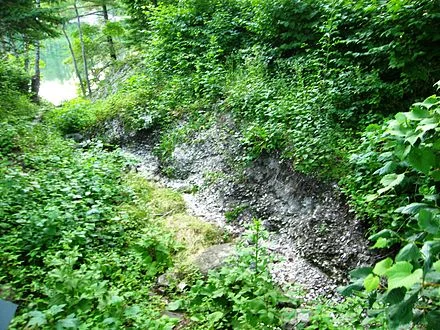
The Whaleback Shell Midden, in Damariscott, Maine, contains the shells from oysters harvested for food dating from 2,200 to 1,000 years ago

“Of all New England dishes, clam chowder probably evokes the strongest feelings. In 1939, for instance, a bill was introduced into the state legislature in Maine suggesting that to make a clam chowder with tomatoes be deemed illegal. Almost passed too.
-- From Inside New England (2010), by Yankee magazine’s Judson D. Hale
From Robert Whitcomb’s “Digital Diary,’’ in GoLocal24.com
The Maine Coast is becoming an international center of aquaculture, especially of oysters and other shellfish and edible seaweed, even as the warming of New England waters drives the lobster catch further north and east. The number of these salt water farms has increased rapidly in the Pine Tree State, with the epicenter in the Damariscotta area. It’s worth a trip up there by present and potential aquaculturalists from southeastern New England, although their crop mix might be a bit different from Maine’s because of our warmer water and different coastal geology.
For more information, please hit this link.
“Of all New England dishes, clam chowder probably evokes the strongest feelings. In 1939, for instance, a bill was introduced into the state legislature in Maine suggesting that to make a clam chowder with tomatoes be deemed illegal. Almost passed too.
-- From Inside New England (2010), by Yankee magazine’s Judson D. Hale
Todd McLeish: Amphibians and reptiles under stress in New England

A northern leopard frog, a species that has been disappearing
From ecoRI News (ecori.org)
When Scott Buchanan was hired as a wildlife biologist at the Rhode Island Department of Environmental Management last year, he became the first full-time herpetologist on the state payroll. It’s a sign, he said, that reptiles and amphibians are in need of management and conservation in the state.
“To be in herpetology is to be on the front lines of the global biodiversity crisis,” he said. “We’re at risk of losing, globally, roughly half of the reptile and amphibian species on Earth in the next 100 years. Turtles and frogs are in a neck-and-neck competition for the unfortunate title of being the most endangered wildlife taxa.”
While Rhode Island’s reptiles and amphibians haven’t experienced the level of habitat loss and disease that occurs in Southeast Asia or the tropics, Buchanan said “the crisis is very real in New England. The mission is very urgent, and we need to do everything we can here in Rhode Island.”
About 40 species of turtles, snakes, frogs, toads, and salamanders call the Ocean State home. All face issues of habitat loss, road mortality, and disease, but turtles are also faced with high demand from collectors for the pet trade.
While monitoring a rare population of wood turtles this spring, herpetologist Lou Perrotti, director of conservation at the Roger Williams Park Zoo, observed a small specimen he estimated to be 5 or 6 years old.
“I love to see the little ones,” he said, “but I worry that someone would put this one in their pocket and take it home.”
It’s such a concern that Buchanan is co-chair of a collaborative group of biologists, law enforcement officials, and legal experts from up and down the East Coast working to combat the illegal trade in native turtles. The objective, he said, is to raise the profile of the issue and encourage the law-enforcement community to be aware that a black market in native turtles exists in the region.
The illegal trade in wildlife is valued at about $19 billion annually, according to the World Wildlife Fund’s TRAFFIC program, a network of organization that monitors the trade.
“It’s something I worry a lot about,” said Buchanan, who conducted research on spotted turtles for his doctorate at the University of Rhode Island. “If you know where they are, turtles are pretty easy to pick up, take home, keep alive, and get them into the black market. All of our native species are vulnerable, though some are more prized than others.”
A Pennsylvania man was arrested last year for smuggling 3,500 rare diamondback terrapins from marshes in New Jersey and selling them online. Although no cases have been adjudicated in Rhode Island, Buchanan said there is evidence of the illegal turtle trade in the state.
Buchanan is also involved in region-wide efforts to study spotted turtles and box turtles, two species that are considered to be of significant conservation concern. He is conducting surveys of both species in Rhode Island this spring to gather as much data as possible about their distribution, abundance, demography, and population genetics.
In collaboration with Roger Williams Park Zoo and Brown University, he is also investigating the presence of disease in local populations of reptiles and amphibians.
“We need to improve our understanding of where the diseases are and what species are harboring them to get a sense of their susceptibility,” Buchanan said. “There’s chytrid [a common amphibian disease in the tropics] in our environment, though our frogs don’t seem to be susceptible, but there hasn’t been a lot of testing. And there’s a similar disease for salamanders that has had bad outbreaks in Europe, and we’re worried about it coming overseas.”
Two species of amphibian — the eastern spadefoot toad and northern leopard frog — are on the verge of disappearing from Rhode Island. Both have only one known population. The toad is only found at one site in Richmond, though efforts are under way to create habitat to establish additional populations.
The northern leopard frog is found only on the border of Bristol and Warren, and Buchanan said there is little that can be done to help it recover.
“The northern leopard frog might be the best example of a species that’s about to disappear from the state,” he said, noting that the species faces multiple threats from habitat loss, pollution, and invasive species. “It could happen this year, next year, or in five years, but all indications are it’s going to happen soon. And there’s not a tool in my toolbox at the moment that I can use to confront the situation.”
Rhode Island resident and author Todd McLeish runs a wildlife blog.

Ben Lilliston: Trump's trade fights expose fragility of the farm sector

From ecoRI News (ecori.org)
Over the last year, President Trump has taken farmers on a roller coaster ride that’s finally gone off the rails.
Escalating trade fights have kicked farmers, already mired in a five-year slump, in the gut. Now, the administration is working up a new trade aid package, while simultaneously opposing aid for farmers recovering from recent Midwest flooding.
What’s going on? If there’s a plan, it’s hard to see from here.
Just in the last few weeks, Trump tweeted a dramatic escalation in new tariffs on China, which immediately announced an escalation of tariffs on U.S. goods, including agriculture products.
A week later, without notice or explanation, Trump ended steel tariffs (based on dubious national security concerns) on close trading partners Mexico and Canada. Yet the same day, Trump signed an executive order threatening new auto tariffs on Japan and the European Union.
If the auto tariffs move forward, Japan and the E.U. will almost certainly retaliate with tariffs on, you guessed it, agricultural products.
In a hasty attempt to put a Band-Aid on these self-inflicted wounds, the Trump administration is proposing another round of trade aid for farmers. The new round comes after promising that a $12 billion trade aid package last year would be a one-time thing, because a China trade deal was just around the corner.
But, surprise surprise, it wasn’t. So the administration backtracked and recently unveiled another $16 billion aid package for farmers hurt by its policies.
The first aid package doesn’t appear to have focused on the mid- and small-sized farm operations that needed it most. The Financial Times found that half of the trade aid money went to just 10 percent of farmers, who used loopholes to elude payment caps.
Moreover, nearly 10,000 people and businesses based in cities — rather than the countryside, where you expect to find farms — accessed the aid. And it was multinational agribusiness firms like Tyson Foods, Cargill, and the Brazilian-owned JBS that benefited when the USDA made large purchases of pork, chicken, and beef.
Trump’s trade disruptions come amid much larger challenges in the agriculture economy. Rising farm bankruptcies, the loss of thousands of mid- and small-size dairies, farm lenders getting tighter with loans, and plummeting land values are all part of the current crisis.
And when it rains, it pours. A series of extreme, climate-related weather events — severe Midwest floods this year, wildfires and hurricanes last year — also hit farmers. Yet the Trump administration has opposed allowing farmers to access disaster aid from these events.
The drivers of our slumping farm economy are longstanding and structural.
We’re flooding the market — too much corn, soy, wheat, and milk. Meanwhile the government has approved a steady series of agribusiness mergers, leading to less competition and fewer choices for farmers.
Federal Farm Bill programs support this system, which precariously relies on expanding trade. If we don’t grow exports, the system collapses — at least for family farmers. It works just fine for the global agribusiness firms that operate in multiple countries and benefit from below-cost corn and soy.
Trump’s dizzying trade disruptions are inflicting real short-term damage, but they’re also exposing the frailty of an agriculture economy built for big business. Instead, we should be looking for ways to reduce overproduction, lift prices to fair levels that keep farmers on the land, and invest public money in climate resilient strategies on the farm.
A different farm economy is possible, but we must come to terms with past mistakes that created this roller coaster.
Ben Lilliston is a senior policy analyst for the Minnesota-based Institute for Agriculture and Trade Policy.
Living vertically

Lower Warner Meetinghouse, in Warner, N.H.
Where I Live
is vertical:
garden, pond, uphill
pasture. run-in shed.
Through pines, Pumpkin Ridge.
Two switchbacks down
church spire, spit of town.
From “Where I Live,’’ by Maxine Kumin (1925-2014). She lived in Warner, N.H., where she and her husband raised horses. She received the Pulitzer Prize for her book Up Country: Poems of New England.