
Vox clamantis in deserto








Chrysanthe Demetry/Elizabeth Long Lingo/Jeanine Skorinko: WPI helps lead way to more faculty diversity

Boynton Hall, the main administration building at Worcester Polytechnic Institution.
From The New England Journal of Higher Education, a service of The New England Board of Higher Education nebhe.org)
WORCESTER
The goals of higher education—engaging the hearts and minds of our next generation, advancing novel and pragmatic solutions to the most pressing local and global problems—call for great passion and skill. That’s not the whole formula, though. Diversity performs its own powerful role.
College faculties that represent a diversity of expertise, ideas and perspectives help create the kind of environment where learning, innovation and excellence thrive.
While much good work is being done to recruit female and minority faculty members and retain them through their first promotion to tenure, their advancement to the highest faculty ranks and to institutional leadership positions has remained elusive due to various systemic barriers.
Nationally, women account for only about 30% of college presidents and about 30% of the highest-rank full professors, a dynamic that has ripple effects on decisions made throughout institutions of higher education. The picture is even bleaker for female minority members in these upper echelons.
Further, while more women and minorities are being recruited, they are more likely to be hired for non-tenure-track (NTT) positions that typically have less advancement opportunity. These NTT faculty, the teaching workhorses, are often not supported with professional development opportunities or pathways to promotion.
So, how do universities diversify the ranks of those holding their field’s highest positions?
In 2014, our institution, Worcester Polytechnic Institute, undertook an overhaul of our associate-to-full professor promotion system after participating in a nationwide faculty satisfaction survey that many institutions conduct. Findings revealed high levels of satisfaction with the tenure process—but deep dissatisfaction among associate professors, women and NTT faculty about their promotion systems. Three years of hard work and messy internal politics later, our faculty governance body approved an associate-to-full promotion policy that draws on the work of the late educator Ernest L. Boyer and others to define and welcome multiple forms of scholarship.
Such policies are not new; decades ago, dozens of institutions put in place similar ones. However, what is becoming clear is that adopting new criteria and policies is only a first step. How schools implement the new policies is vital to success.
With the support of a three-year ADVANCE Adaptation grant from the National Science Foundation, we are tackling this challenge at our institution head-on, and we plan to share our findings with others in higher ed. We found three key areas that warrant specific focus:
Advancement for non-tenure-track faculty
Nationwide, a disproportionately large number of women and minorities hold non-tenure-track positions. At many universities, these faculty do not have a promotion pathway. While at WPI, non-tenure-track professors do have a path to promotion, both the criteria and process are perceived as unclear, and the criteria do not seem to recognize scholarly contributions. Moving forward, it is important for WPI and other institutions to provide clear promotion pathways and criteria to recognize the important and valuable work non-tenure-track faculty conduct.
A wider view of what’s valuable
Traditionally, promotion criteria are often interpreted too narrowly—emphasizing traditional peer-reviewed and externally-funded research, for example, rather than the broad array of interdisciplinary, teaching and community-engaged contributions that often distinguish scholarship portfolios and undergird universities’ missions. Broadening promotion criteria can help remediate the systemic biases that exist in traditional scholarship metrics—as women and minorities receive less funding, are cited less frequently and have more issues in the publication process. However, a wide range of faculty and academic leadership need to work together to ensure that new policies are interpreted and applied as intended and to make expectations and standards transparent. Moreover, it is also essential to engage colleagues in efforts to increase awareness of explicit and implicit biases about who’s a leader, who does what type of work and what high-quality scholarship looks like.
Tailored focus on mid-career faculty
A common misconception is that once faculty members reach tenure, they are well-positioned to take the next leap to full professor. Continued professional development and mentoring would benefit all mid-career faculty. Typical “fix-the-faculty” ideas that focus on enabling individuals (especially women) to say “no” to service and engagement requests, spend more time on their research and succeed in the traditional system fall short. Instead, a model for mentoring and professional development that prioritizes the creativity and passions of each individual in order to use their strengths in ways that advance themselves and the institution is needed. At WPI, we are introducing personally tailored professional development plans designed to become the centerpiece for conversations with mentors. We are also helping to activate department heads as catalysts for mid-career faculty innovation rather than as managers and arbiters of performance.
Throughout any examination of its promotion processes, a university must make choices that align with and bolster its core strengths and purpose. It is vital that the most distinctive elements of an institution are woven into the promotion pathways from associate-to-full for non-tenure-track and tenured faculty. It is just as vital to ensure that all faculty, regardless of their backgrounds, have the opportunity for advancement.
By aiming for systemic change rather than tinkering at the edges, reformed promotion policies can value and recognize more diverse faculty at all ranks. A flourishing diverse faculty body dedicated to the shared goal of excellence promises an innovative and stronger educational and scholarly environment for all.
Chrysanthe Demetry is an associate professor of mechanical engineering and director of WPI’s Morgan Teaching and Learning Center. Elizabeth Long Lingo is an assistant professor at WPI’s Foisie Business School. Jeanine Skorinko is a professor of psychological science and director of WPI’s Psychological Science Undergraduate Program.
'The Dignity of Trees'

Work by Renee Monteiro-Bernard, in the group show “The Dignity of Trees,’’ at the Dedee Shattuck Gallery, Westport, Mass., June 8-30.
Wider Cape highway bridges would bring more traffic

If only more people could take the train to Cape Cod, via the Cape Cod Canal Railroad Bridge, above, on such services as the CapeFLYER, seen below at Buzzards Bay.

From Robert Whitcomb’s “Digital Diary,’’ in GoLocal24.com
There are big plans afoot to replace the Bourne and Sagamore bridges, over the Cape Cod Canal, with wider ones, with the hope of easing the flow of traffic, especially, of course, in the summer, and making the crossings safer. There would be an additional third lane in each direction on each bridge. In fact, after a while the wider bridges would be as jammed as the current thrillingly narrow ones, which were built in the 1930s. More roads and lanes draw more cars.
If only there were daily, year-round train service to get more Cape-bound people off the road.
There is CapeFLYER’s Boston to Cape Cod passenger train service, over the canal’s railroad bridge, offered Friday evenings, Saturdays and Sundays from Memorial Day weekend to Labor Day. It goes from Boston’s South Station to Hyannis via Braintree, Brockton, Middleborough/Lakeville, Wareham Village, Buzzards Bay and Bourne, with scheduled travel time from Boston to Hyannis (the Cape’s Los Angeles) of 2 hours and 20 minutes. But much more train service is needed to reduce the traffic on and approaching the highway bridges.

Melissa Bailey: Bringing home dying children

Boston Children’s Hospital
From Kaiser Health News
Anne Brescia sat beside her only child, Anthony, as he lay unconscious in a hospital bed at age 16. Just a few months before, he was competing in a swim meet; now cancer was destroying his brain. Brescia couldn’t save her son. But she was determined to bring him home.
Anthony Gabriel Brescia-Connell was not conscious for his voyage from Boston Children’s Hospital to his home in Medford, Mass., where he died on March 3, 2011, surrounded by his family and beloved stuffed animals. He may not have heard the parting blessings before a doctor turned off his portable ventilator and let him die naturally.
But having the choice to take Anthony home, away from the beeping hospital monitors, “meant the world to me,” his mother said.
Anthony’s journey was made possible through swift and unconventional efforts by the hospital staff, including a critical-care transport team accustomed to rushing kids to the hospital to save their lives, not taking them home to die.
The experience galvanized Harriett Nelson, a nurse on that team who helped arrange the trip. It inspired her to conduct pioneering research on and advocate for “pediatric palliative transport” — a rare but growing practice that aims to give families choice, control and comfort at the end of life.
Palliative transport lets families move critically ill children from the hospital intensive care unit to their home or hospice, with the expectation they will die within minutes to days after removing life support.
It means “having parents go through the hardest thing they’ll ever know — in the way they want to do it,” Nelson said. Boston Children’s has sent 19 children to home or hospice through palliative transport since 2007, she said.
These final journeys — also offered by Mayo Clinic, Children’s Hospital of Philadelphia and Kentucky Children’s Hospital — can involve elaborate planning, delicate transfers and even long helicopter rides. In some cases, families took a child far from home for a last-ditch effort to save their lives.
At Mayo Clinic, in Rochester, Minn., palliative transport has helped culturally diverse families carry out end-of-life wishes for their dying children. In one case, a newborn girl rode 400 miles by ambulance to return to her Amish community, where she was extubated and died in her parents’ arms, in the company of her 11 siblings. In another, an 8-month-old Native American girl traveled 600 miles by air and ground ambulance to her rural tribal reservation, where she could participate in end-of-life rituals that could not be done in the hospital.
These trips, which can cost thousands of dollars, are typically offered free to families, paid for by hospitals or charities. Most children are taken home, where they transition to receiving care from hospice staff. Some go instead to hospice facilities.
Dr. Megan Thorvilson, a pediatrician and palliative care specialist at Mayo Clinic, said palliative transport aims to address a gap between families’ preference and reality. Most parents of terminally ill children would prefer that their child die at home, but most of these children die in the hospital, most commonly in the intensive care unit. Most pediatric ICU deaths happen in a controlled way, following the removal of life support, she noted. That means there may be time to move the child to an alternative location to honor a family’s wishes.
Transporting children on life support is risky. At a palliative care conference, a nurse from Children’s Hospital of Philadelphia described the difficulties staff faced in trying to fly a 10-year-old girl home to Michigan. After she was rolled on her side several times to be transferred between vehicles, the child died before the plane could take off.
And dying at home is not what every family wants.
“We do sometimes overly romanticize the death at home,” Thorvilson acknowledged. Some parents would much rather have a child die in the hospital, with familiar nurses at the bedside for medical and emotional support. Some would rather keep this traumatic experience away from where they live.
Brescia, however, said she couldn’t bear to return home without her son.
Brescia, a biologist who used to run an electron microscopy lab, wasn’t sure if she and her husband, Brian Connell, would ever have kids. Fertility treatments didn’t work. But on June 23, 1994, seven days before Brescia turned 44, she gave birth to a baby boy.
“Anthony is the love of my life,” said Brescia, who is now 68. “The OB-GYN put him on my chest and I really thought that my heart was going to burst.”
The mother-son bond was especially close: Brescia home-schooled her son for most of his life. Anthony grew to be 6 feet tall, full of curiosity. He loved identifying mushrooms, studied Arabic and oceanography, and aspired to go to MIT. He was an avid swimmer, competing on a team in Belmont, Mass.
One day in late 2010, while racing the backstroke, he became disoriented in the pool and was disqualified.
A neurologist prescribed rest. But over the next two weeks, Anthony grew only more tired and began to lose his balance. On Dec. 20, he was taken to Boston Children’s Hospital and diagnosed with a brain tumor.
The disease “came out of nowhere,” Brescia recalled. “He went from looking incredibly healthy and swimming like a healthy kid” to living at the hospital. At his bedside, she told him she’d bring him home to celebrate Christmas and eat stuffed shells.
His condition deteriorated very quickly. The tumor could not be surgically removed. Anthony pushed through radiation and chemotherapy with the hope of going home, but the treatments failed. By late February 2011, the tumor began pressing on his brain stem, and fluid was building up in his brain.
Anthony was unconscious, relying on a ventilator to breathe. Brescia connected with the hospital’s palliative care team.
“I want to bring him home tomorrow,” Brescia told the staff.
“I was scared to death he was going to have another incident,” she recalled. “I didn’t want them to do any more invasive procedures to reduce the pressure on his brain.”
Staff from the ICU, palliative care and transport teams scrambled to honor her request. The critical care transport team arranged for the use of its ambulance, a mobile ICU the size of a small bus.
The night before the trip, Brescia said goodbye in the privacy of Anthony’s hospital room.
“I don’t want to lose you,” she told him, holding his hands. “I’m going to let go. I want you to go where you need to be.”
On March 3, 2011, Brescia and her husband boarded the bus along with Anthony, a chaplain, two doctors, Nelson and a nurse from the ICU. They rode 10 miles to the family’s home, where Anthony was laid on a hospital bed in his living room, surrounded by his stuffed animals, on his favorite flannel sheets.
A pastor held a service for Anthony, and close family gathered to say goodbye. Then Brescia signaled for a doctor to disconnect the ventilator.
Anthony seemed to be at peace, Brescia said. After he died, she climbed into the bed with her son and held onto him for a while.
The death was still traumatic. But “it was really a gift to bring him home,” she said. “It was a significant act of compassion and kindness and love on the part of the Children’s staff.”
After Brescia’s experience, Nelson was inspired to offer the choice to more families. First, she interviewed Brescia and other parents about whether palliative transport had had a positive impact. All nine parents said it had. One family described holding a celebration when they brought their newborn baby home, even though he was about to die. They took family photos and used the nursery they had set up, establishing a brief sense of normalcy for four days before he died.
In her 14 years on Boston Children’s critical transport team, Nelson has found that parents benefit from palliative transport for various reasons: At home, they’re away from the noise of the hospital. They have control over who can visit. They feel more comfortable. And they don’t feel rushed after their child dies.
Nelson created a protocol that allows the hospital to offer palliative transport in a more routine way. Now, when children come to any of the hospital’s four ICUs, Nelson said, “we have the power to say, ‘You have a choice when it comes to the end of life.'”
The practice appears to be spreading.
After Dr. Lindsay Ragsdale, director of the palliative care team at Kentucky Children’s Hospita,l in Lexington, presented her protocol for palliative transport at a conference last year, staff from 20 hospitals asked her to share her checklist, she said.
Mayo’s Thorvilson, who has worked closely on a half-dozen palliative transports, said it’s possible these last-minute trips from ICU to home could be avoided by earlier referrals to hospice, which might get kids home sooner. But when children with complex illnesses get sick, she said, “sometimes it’s hard to know whether this is just another bump in the road, or whether this is the natural end of the child’s life.”
“There’s something really unique about a child dying,” she said. “Everyone’s heart breaks, and we want to be able to do all that we can to be able to support the family in the midst of the tragedy.”
Eight years after Anthony’s death, his bedroom remains unchanged. (KAYANA SZYMCZAK FOR KHN)
Eight years after Anthony’s death, his bedroom remains untouched, his socks still folded in his top drawer, swimming trophies on the cabinet, slippers under his chair. Pictures of him adorn every room in the house — on the fridge, the kitchen table, the living room stereo.
Looking through photos one recent morning of her son fishing and blowing out birthday candles, Brescia struggled to hold back tears.
“I couldn’t cure him,” she said. “I failed to protect him from a tumor — that’s how you feel. They did all they could. It wasn’t enough. Bringing him home was the best I could do.”
Melissa Bailey: mbailey@kff.org, @mmbaily
The Republic of Vermont

Mt. Mansfield
"I would like to give you my idea of a republic. My idea of a republic is a little State in the north of your great country — the smallest of the New England States — Vermont."
— What German Chancellor Otto von Bismarck is said to have said to visiting Americans in 1878.
Approach with care

“Splash,’’ by Joy Garnett, in the show “Dead Ringer,’’ at the Bristol Art (R.I.) Museum, June 7-July 14.

Frank Carini: N.E. coastal-property values don't reflect threat of rising waters

Coastal flooding in Marblehead, Mass., on Oct. 29, 2012 during Superstorm Sandy.
From ecoRI News (ecori.org)
Along the nearly 13,000 miles of coastline of the contiguous United States, hundreds of thousands of buildings lie in the path of rising waters. Long before these properties and accompanying infrastructure are underwater, though, millions living in coastal communities will face more frequent flooding, as the tides inch higher and reach further inland.
Property values in most coastal real-estate markets, including in southern New England, however, don’t reflect this risk. These properties are routinely more expensive, even though their future is likely to be wet.
Accelerating sea-level rise, primarily driven by human activity, is projected to worsen tidal flooding in the United States, putting as many as 311,000 coastal homes in the lower 48 states, with a collective market value of nearly $118 billion, at risk of chronic flooding within the length of a typical mortgage, according to the Union of Concerned Scientists (UCS). Those 300,000-plus homes generate some $1.5 billion annually in property-tax revenue.
Another 14,000 or so coastal commercial properties assessed at a value of nearly $18.5 billion also are at risk during the next 30 years.
Although the Industrial Revolution began more than two and a half centuries ago, some 60 percent of industrial carbon dioxide emissions have been released since 1980, according to the Cambridge, Mass.-based nonprofit. Emissions from the extraction, manufacturing, and burning of products produced by 90 corporate cement manufacturers and fossil-fuel goliaths, such as Chevron, ExxonMobil, and Shell, contributed to nearly half of the global rise in surface temperature and about 30 percent of the rise in global sea level between 1880 and 2010.
By the end of this century, thanks in large part to decades of unrelenting climate emissions, 2.4 million homes and 107,000 commercial properties currently worth more than a combined $1 trillion could be underwater, according to UCS projections.
Many of the at-risk waterfront communities in Connecticut, Massachusetts, and Rhode Island, most notably underserved and marginalized communities — the South Providence and Washington Park neighborhoods in Providence, for example — are underprepared to deal with the many challenges climate change presents.
Currently, according to a 2018 UCS report, 940 properties in Connecticut, 2,405 in Massachusetts, and 278 in Rhode Island are at risk. By 2030, under the organization’s high scenario, those numbers jump to 2,540, 3,303, and 419. The high scenario is where climate change is trending.
The UCS analysis combined property data from the online real-estate company Zillow with peer-reviewed methodology developed by the nonprofit for assessing areas at risk of frequent flooding. Using three sea-level-rise scenarios developed by the National Oceanic and Atmospheric Administration and localized for this analysis, UCS determined how many residential and commercial properties along the entire lower 48 coastline are at risk of becoming chronically inundated from high tides — flooding on average 26 times annually or more, or the equivalent of once every other week — in the coming decades even in the absence of major storms.
Shana Udvardy, a climate resilience analyst with the UCS who co-authored last year’s report, recently spoke with ecoRI News about sea-level rise and the growing risks of chronic inundation.
“We put this together because a lot of potential homebuyers don’t necessarily know that their home is at risk of tidal flooding,” she said. “Or that things like home insurance doesn’t cover flooding, so you need flood insurance.”
The core results in the 2018 report are from the high sea-level-rise scenario — an appropriately conservative projection to use when estimating risk to homes, according to Udvardy. This scenario projects an average of 1.9 feet of sea-level rise for Massachusetts in 2045 and 6.9 feet in 2100. The analysis also projects how many properties might avoid such flooding if sea-level rise is constrained through the achievement of the long-term temperature goals of the Paris Agreement and if ice loss is limited.
The results for Massachusetts, in particular, are sobering. The analysis found that without additional measures to adapt to rising seas that:
By 2045, about 7,000 of today’s residential properties, currently home to roughly 14,000 people, are at risk of chronic inundation. The total number of at-risk residential properties jumps to nearly 90,000 — home to about 178,000 people — by 2100. While Massachusetts has a network of shoreline stabilization structures along its coast, few of these are designed to keep out higher tides.
By 2045, more than $4 billion worth of residential property — based on today’s values — is at risk of chronic flooding. The homes that would face this flooding at the end of the century are currently worth roughly $63 billion — an amount that would rank the state fifth nationally in 2100 for value of residential properties at risk.
The Massachusetts homes at risk in 2045 currently contribute about $37 million in annual property-tax revenue. The homes at risk by 2100 currently contribute roughly $413 million collectively in annual property-tax revenue.
By 2045, five Massachusetts communities are projected to have 600 or more at-risk homes: Revere, Marshfield, Quincy, Hull, and Salisbury. In Salisbury and Hull, these homes represent more than 10 percent of the local property-tax base.
Homes valued below the state median are disproportionately at risk of chronic inundation in the next 30 years. Revere, Saugus, and Winthrop — all working-class suburbs of Boston — have large clusters of at-risk homes.
Massachusetts ranks fourth in the nation for the most commercial properties at risk by the end of the century. By 2045, nearly 500 of today’s commercial properties in Massachusetts, currently assessed at more than $1 billion, would experience chronic inundation. In 2100, this number jumps to roughly 8,000 properties — assessed at about $35 billion today.
Coastal flooding, as seen here in March 2014 on Main Street in Warren, R.I., is being caused by more frequent and intense rains and storms. (ecoRI News)
Market crash
Once market risk perceptions catch up with reality, the potential drop in coastal property values could have reverberations throughout the economy, according to the UCS, and could potentially trigger regional housing market crises.
Homeowners whose properties become chronically inundated may find themselves with mortgages that exceed the value of their homes, or face steeply rising flood insurance premiums. Lenders carrying large numbers of these risky mortgages could lose money or even become insolvent, with smaller banks concentrated in areas with high-flood risk being especially exposed. Coastal real-estate investors and developers may similarly experience financial losses in some coastal areas.
Udvardy noted that there are many federal, state, and local policies that, while originally well intentioned, mask risk and create incentives that reinforce the status quo or expose more people and property to risk. The market’s bias toward short-term decision-making and profits can also perpetuate risky development and investment choices. These flawed policies and incentives include incomplete or outdated flood-risk information, subsidized insurance, lax zoning and building codes, and incentives for business-as-usual development and rebuilding.
Identifying and improving the best policies and market drivers of risky coastal development is necessary to better protect communities, Udvardy said. She noted the importance of “climate-safe infrastructure.”
To use the UCS’s interactive mapping tool, click here. The map allows you to learn more about the impact of chronic inundation on properties, people, home values, and the tax base in specific states, communities, or ZIP codes. When you zoom in, the maps become more detailed. You can also click on a specific state or community for more details about it.
Udvardy encouraged municipal and state officials to use the report and UCS website as a climate-change tool.
“The need for action is now,” she said.
Frank Carini is ecoRI News's editor. Joanna Detz, an ecoRI journalist, contributed to this report.

Philip K. Howard: A plan to fix America's crumbling infrastructure?

The Crook Point {Railroad} Bridge over the Seekonk River, in Rhode Island.
Fixing America’s decrepit infrastructure enjoys rare bipartisan support. But the recent announcement of a $2 trillion plan by President Trump, Speaker Nancy Pelosi (D-Calif.) and Minority Leader Chuck Schumer (D-N.Y.) was quickly doused by reality. White House Chief of Staff Mick Mulvaney said the proposal would go nowhere without permitting reform. Leaders in Congress, including some Democrats, said they would not support any significant increase in gasoline taxes to fund it.
No one seriously doubts the need to modernize America’s infrastructure. The main stumbling block is broad distrust of Washington’s ability to deliver any large public works initiative. Getting past this impasse offers a unique opportunity to reboot the rules, cutting effective costs by over 50 percent. Here are three reforms that should be enacted as the foundation of any infrastructure bill:
Permitting reform: In 2009, Congress authorized $800 billion to stimulate the economy, promising to rebuild infrastructure. In the final tally, a grand total of 3.6 percent was spent on transportation infrastructure. Projects never got out of the gate, because, as President Obama put it, “There’s no such thing as shovel-ready projects.”
The red tape is also cripplingly expensive. The 2015 Common Good report, “Two Years, Not Ten Years,” found that a six-year delay in permitting more than doubles the effective cost of projects, and lengthy environmental reviews are generally harmful to the environment because they prolong polluting bottlenecks.
The reform needed is not to weaken environmental rules but to create clear lines of authority to make the decisions needed to adhere to deadlines. For example, a project with minimal environmental impact — such as raising the roadway of the Bayonne Bridge using existing foundations — does not need a 10,000-page analysis (plus another 10,000 pages of appendices). Common Good has a three-page legislative proposal that gives designated officials the job of deciding the proper scope of environmental review and resolving disagreements among different agencies.
Discipline in prioritizing and procuring projects: Cynics don’t have to look far to see the likelihood of wasting public funds on pork such as “the bridge to nowhere.” Just as most of the 2009 stimulus was distributed to states in block grants, so too it is likely that much of any large infrastructure initiative will end up being distributed for political purposes.
Nor should the price tag of infrastructure be inflated to meet unrelated social goals. The goal is modern roads, locks and electrical grids — not, as Pelosi and Schumer stated, an “imperative to involve women, veteran and minority-owned businesses.”
Congress should create an independent National Infrastructure Board, using the model of base-closing commissions, to set priorities for use of public infrastructure funds. That’s how Australia does it — it receives applications from states and then announces who gets federal funds.
A National Infrastructure Board could avoid pork barrel projects and avoid use of critical infrastructure as pawns in unrelated political disputes. The Trump administration early on highlighted the new Gateway rail tunnel into Manhattan as a critical need of the Northeast. This $30 billion project is vital not only for commuters and rail travelers, but also for vehicular traffic. Gridlock would extend for 25 miles if one of the two existing rail tunnels shuts down long term. Now that project is being held up because President Trump is using it as a political chip in a running dispute with Senators Schumer and Cory Booker (D-N.J.).
The National Infrastructure Board also could oversee contracting policies, to avoid waste of inflexible procurement practices and local featherbedding.
Funding infrastructure: User fees will only repay a small portion of the cost of most public infrastructure. Republicans are correct that Washington is filled with wasteful programs that can be cut. Democrats (supported by the Chamber of Commerce and Business Roundtable) are correct that gas taxes, last set in 1993, have not kept up with inflation. The obvious political compromise is for Congress to use both sources and create a funding plan that is half cuts and half new taxes. A 25-cent hike in gas taxes would raise about $40 billion each year. The 2010 Simpson-Bowles debt reduction plan offers a road map for cutting obsolete subsidies, such as New Deal farm subsidies.
Modernizing America’s infrastructure would be a boon to the economy — enhancing competitiveness and creating over a million jobs that cannot go offshore. It would result in a greener footprint. The case for funding is compelling if accompanied by streamlined permitting and a National Infrastructure Board to avoid waste. Abandoning the legacy bureaucracies that stifle infrastructure projects might be the most important change of all — rebooting the rules could demonstrate what’s needed to fix broken government.
Philip K. Howard is chairman of Common Good and author of the new book Try Common Sense. This piece first ran in The Hill.
Follow him on Twitter@PhilipKHoward.
40 years a college president!

Emmanuel College President Janet Eisner, left, with Emmanuel College honorary degree recipient and commencement speaker historian Doris Kearns Goodwin on May 17.
From The New England Council (newenglandcouncil.com)
“Sister Janet Eisner, president of Emmanuel College is celebrating her 40th year in that role, making her the longest serving female college president in the United States.
Under Sister Janet’s leadership, Emmanuel College, in Boston, has undergone significant growth. The school marks it centennial in 2019 with 2,000 full-time undergraduates and twice the full-time faculty it had in 2000. In 2000, when the school was facing an uncertain future, she arranged for the pharmaceutical company Merck to lease land on the campus for $50 million. This allowed the school to build new dormitories, which coincided with decision to admit male students.
Explaining what makes Emmanuel different from other schools, Sister Janet said, ‘Each year I ask the senior class: What would you never want to see changed about us? What would you like to see changed? And what are you going to take with you? Every year, the answer is: Never lose the strong sense of community that we feel here. We work together. We welcome others. We can talk about anything here.”’
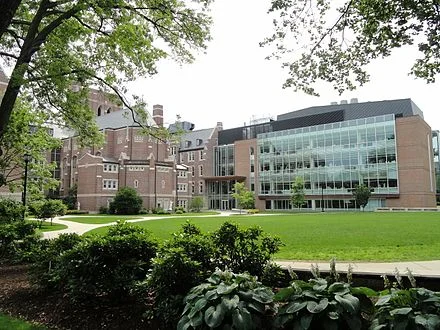
Science center at Emmanuel College.
A corporate move that worked for a state

From Robert Whitcomb’s “Digital Diary,’’ in GoLocal24.com
Massachusetts is making back the $87 million that it spent on Boston property connected with General Electric’s headquarters move there – plus $11 million in profit, helped by the city’s booming economy. (GE, however, has not been booming.) Also, the company has not taken the $25 million in tax breaks offered by Boston. GE will remain in the Seaport District, but with a considerably smaller footprint than foreseen when the company decided to move its headquarters from Connecticut.
So some government incentives to lure companies work out okay. That especially when you’ve got a highly competent governor such as Bay State Republican Gov. Charlie Baker and Boston’s able Democratic Mayor Marty Walsh who craft careful offers to protect taxpayers

Don Pesci: The moral deracination of the West

Members of Bound4LIFE in Washington, D.C., symbolically cover their mouths with red tape in anti-abortion demonstration.
Leftists are winning the culture war, the war on Western Civilization, because rootless politicians have shown themselves unwilling to enter the lists and do battle with the new morality.
For this reason, American culture is being redefined – reinvented, as the leftists would have it – by social anarchists with knives in their brains. It has become fashionable among New York leftist politicians to wink at, and even to publicly celebrate, infanticide. No assault on traditional sensibilities, it would seem, is beyond the pale.
Daniel Patrick Moynihan’s notion that third trimester abortion is too close to infanticide to be tolerated by men and women of conscience is now regarded as embarrassingly quaint by New York’s smart set, among whom are Gov. Andrew Cuomo and New York City Mayor Bill de Blasio, not his birth name.
Moynihan was a sociologist, the author of “The Moynihan Report,” a professor at Harvard University, a top adviser to President Nixon, and a four-term U.S. senator representing New York. He was also a proud liberal. Today, it is very nearly a philological sin to call the new moralists “liberal” in the sense in which liberalism had been embraced by Moynihan or, here in Connecticut, by such prominent governors as Abraham Ribicoff and Ella Grasso.
In Europe, the moral deracination – which, of course, marches under the banner of moral rectitude – has proceeded at an alarming rate. The Netherlands in 2005 stole a march on other morally backward-looking states by becoming the first country to decriminalize euthanasia for infants with presumed “hopeless prognosis and intractable pain. “ Nine years later, Belgium amended its 2002 Euthanasia Act to extend the rights of euthanasia to minors.
People living in the United Sates have always fancied that, though conjoined historically to Europe by history and ties of affection, there was an ocean separating us. Modern communications have removed this cultural prophylactic. Historical differences also have served as a barrier to disruptive ideas that in Europe plunged France into a bloody revolution centered on fatal utopian ideas.
Under Hitler, Mussolini and Stalin – socialists all – fascism and the totalist state were necessary and indispensable political instruments in creating what all three thought of as “the new man,” a mechanist free at last of a Western culture that had imprisoned humankind in religious and cultural chains. In a future shaped by mechanistic ideology, politics and brute force, the very nature of man would be irreversibly altered. This is, as Roger Scruton points out in his brief and indispensable history of the conservative movement in the Western world, Conservativism: an Invitation to the Great Tradition, the original sin of socialism, the absurd notion that the world may be made over anew by a transcendent state. For Mussolini, the fascist administrative state was a secular god clothed in omnipotence and omnipresence. “Everything in the state; nothing outside the state; nothing above the state” – such was the fascist definition of social bliss.
History, tradition, subsidiary political organizations such as family and church, a constitutional state, a media determined to declare the truth at all costs, modesty in politics, the good manners of polite society, respect for women, personal honor, the protections a state holds out to “the least among us” -- the infirm, the aged, the poor, victims of unfettered abortion – all these blessings were, in effect, walls and barriers that prevented a false god, the omnipotent and omnipresent state, from clawing away from us our God-given rights and responsibilities with its mechanical, inhuman talons.
U.S. Sen. Dick Blumenthal, for two decades Connecticut’s attorney general/regulator-in-chief, regards any limitation of abortion, however practical or reasonable, as proceeding from immoral premises, and he continues to insist falsely that regulations concerning third trimester abortion deprive women of a right to unfettered abortion. Limiting abortion to the first two trimesters of a pregnancy does not remove a presumed right to abortion; it simply designates the time frame in which an abortion may be legally appropriate.
At the end of May, Connecticut Gov. Ned Lamont and Lt. Gov. Susan Bysiewicz sent a missive to women who own businesses in Alabama, Georgia and Missouri pronouncing themselves “appalled at… actions that erode the ability of women to make informed decisions about their health and bodies” and inviting women who own businesses in such states “to relocate your operations to a state that supports the rights of women and whose actions and laws are unwavering in support of tolerance and inclusivity.” The carefully constructed sales pitch does not once mention the word “abortion.”
Indeed, any discussion of unregulated abortion on demand, at any time for any reason, is delicately dropped from the polite conversations of the political new moralists. But the euphemisms – “informed decisions” about “health and bodies” – serve to cinch the point without discomforting women, also concerned about their health and the bodies of their unborn children, whose birth decisions may have been informed by the prevalence of ultra-sound images that show late term fetuses bearing a striking resemblance to newly born children, Moynihan’s enduring point.
The new moralists have not yet raised abortion to the level of a new secular sacrament, but the Orwellian letter from Connecticut’s governor and lieutenant governor suggest that the state’s discarded motto “Still Revolutionary” may in the near future be replaced by a new sales pitch to states considering relocation – “Connecticut: The Abortion State.”
Don Pesci is a Vernon, Conn.-based columnist.
'Experiment of Green'

— Photo by Inajeep
Emily Dickinson (1830-1886)
A little Madness in the Spring
Is wholesome even for the King,
But God be with the Clown –
Who ponders this tremendous scene –
This whole Experiment of Green –
As if it were his own!
Poem 1333, by Emily Dickinson (1830-1886)
'Closer to bronze'

Green crab
''Not, exactly, green:
closer to bronze
preserved in kind brine,

something retrieved
from a Greco-Roman wreck,
patinated and oddly

muscular....''
— From “A Green Crab’s Shell,’’ by Mark Doty.
Editor’s note: Green crabs are devastating parts of the New England shellfish industry.

More strangeness in Providence

“Stages: Strange Familiar Worlds,’’ by Keri King, at AS220 Project Space, Providence, June 1-29
Doosan fuel-cell projects in Connecticut

Fuel cell
From The New England Council (newenglandcouncil.com)
Doosan Fuel Cell America,Inc. is demonstrating that fuel-cell companies can profitably operate and play an important role in the energy industry. With several projects in the pipeline, Doosan has seen revenues jump from $124.8 million in 2015 to $204.6 million in 2017.
One of Doosan’s upcoming projects in Connecticut is a state-awarded 20-megawatt development that will power a data center in New Britain and is expected to begin operation in 2020. Doosan will also provide fuel cells that will power water-treatment facilities in Bristol and Fairfield. The most active market for the technology is South Korea, where Doosan exports a significant amount of its products.
Speaking of the Korean market, Michael Coskun, Doosan’s general manager of sales and business development, said, “Most of the business is being driven by Korea sales. They have a very aggressive renewable portfolio standard, and I think we’re uniquely positioned to serve that market.”
3 New England states ranked in the 10 'best'
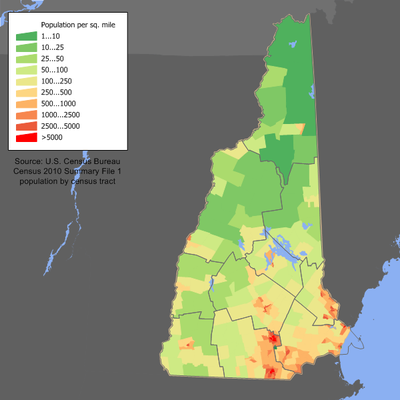
Population-density map of New Hampshire, ranked second-best state in the Union, with Washington State first.
From Robert Whitcomb’s Digital Diary, in GoLocal24.com
The sort of ratings done by the likes of U.S. News & World Report are flawed because they’re always comparing, in varying degrees, apples and oranges, but they can suggest some interesting things.
Consider, for instance, U.S. News’s latest rankings of the states, which evaluate the states’ economies, including business climate, health care, education, transportation infrastructures, environmental protection and so on.
The “best’’ were, in order: Washington, New Hampshire, Minnesota, Utah, Vermont, Maryland, Virginia, Massachusetts, Nebraska and Colorado. The “worst’’ were: Louisiana, Alabama, Mississippi, West Virginia, New Mexico, Arkansas, Alaska, Oklahoma, South Carolina and Pennsylvania (the middle of Pennsylvania topographically and socio-economically resembles West Virginia).
Note that despite the endless GOP promotion of the low-tax (except for regressive sales taxes), low-regulation mostly Southern states as wonderful places to move to, the 10 “best’’ were mostly dominated by Democrats. Exceptions are Mormon-dominated Utah and traditionally very Republican Nebraska. Then there are the moderate Republican governors of Massachusetts, New Hampshire and Maryland, with legislatures controlled by the Democrats. The 10 “best’’ states’ leaders tend to believe in strong social safety nets, well-funded education, hardy environmental protections and so on. Among the Republican-dominated 10 “worst’’ states, there are Pennsylvania and Louisiana, with GOP-run legislatures and Democratic governors, and New Mexico, with a Democratic governor and legislature. The “worst’’ states tend to favor big-business interests above all.
The 10 “best’’ generally have high per-capita incomes, the “worst’’ low ones.
Long Democratic-dominated (it would be better off with a vibrant two-party environment) and too-small Rhode Island, which lacks the great economic engines of such high-tech centers as Massachusetts and Washington State, was ranked 26th – second worst in New England. Maine, which was presided over by a right-wing Republican governor from 2011 to this year, was 32nd. Connecticut was ranked as 21st best; it’s sort of two states – rich along the coast and in Litchfield County, much poorer in other areas.
The Trump-loving Deep South remains the poorest part of America. Do many voters there vote against their own economic self-interest because of politicians’ use of such conservative social issues as gun rights and abortion?

Llewellyn King: Monetizing your home via selling electricity to neighbors

— Photo by Andrew Glaser
SAN MARCOS, Texas
Uber isn’t finished yet — or, to be precise, the technology that enabled ride sharing, Airbnb and bicycle and scooter sharing is on the march.
It’s a simple idea, yet fiendishly brilliant: central computer control of an archipelago of often personally owned objects. So it was that private cars were monetized, and spare rooms and vacant apartments started adding to the family income.
Next up may be your roof: It could work if you have a solar panel installed or plan to install one. Rather than, as at present, selling surplus power to the local utility, you may simply sell it to a neighbor or someone else in proximity. This is happening in Australia where electricity shortages have led to radicalization of old concepts of the generation and supply of electricity.
Uber roofs was one of many ideas about the future of electricity at the Digital 360 Summit here: a gathering of those hoping to have a role in the future of the urban and suburban space with transformative digital technologies. It all comes under the rubric of smart cities.
No one is quite sure how all this will work, but an awesome assembly of companies who gathered here on May 21 and 22, tells its own tale. They include AT&T, General Motors, Siemens, National Grid, Sempra Energy, Edison Energy, SAS, Cisco Systems and Oracle.
The event is the brainchild of Andres Carvallo, who heads the management consultants CMG, in collaboration with Texas State University, itself committed to incubating innovative technologies.
All in all, when the mighty gather, it’s reasonable to believe mighty things are afoot: American city infrastructure is in the early throes of change.
The key to it all is the electric supply and the future shape of utilities, and how they manage the changes coming at them. This even as they spend billions of dollars to upgrade their systems. Tom Kuhn, president of the Edison Electric Institute, says the infrastructure investment by the investor-owned electric utilities was nearly $1 trillion over the past decade.
Yet that doesn’t mean that the ground isn’t shifting. It is.
In the urban space, we’re seeing an extraordinary assemblage of disparate interests bent on having a piece of the action. Even activists from the Green New Deal see things going their way.
They applaud the emergence of dispersed generation and micro-grids. These are the result of carbon-free generation with wind and solar. It’s these microgrids which could make the Uber roof a possibility. Also, it’s these microgrids that the utilities must accommodate to make sure that if they generate, they pay their share of the electric grid through a standby fee. The grid is like the highway system: It’s there for us whether we drive or fly.
But green enthusiasm doesn’t end with dispersed generation. The Green New Dealers are passionate about smart buildings and making more of the old stock “smart” while having high standards for new buildings. So are the technologists, armed with sensors and data.
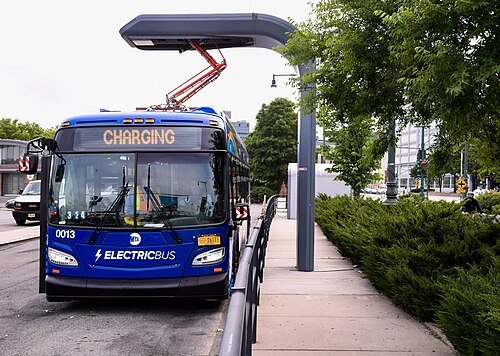
Another mighty upheaval is the electrification of transport. Everyone agrees it’s coming, but the issue of charging is still open: Will companies, already up and running, like ChargePoint, inherit that business? Will the utilities, as some have, move into charging or will municipalities, again as some have, get involved? Fast charging, which can fuel an electric car in 30 minutes with direct current, is expensive. Slower charging can take hours and doing it at home from the household supply can take all day or all night.
I was struck by an entrepreneurial startup in San Francisco, ChargeWheel, which offers a truck-mounted charger that will come to you if you’re stuck, or just want to avoid the hassle of finding a station and waiting.
The utilities with smart meters command a lot of vital data which will shape the digitization of the cities. But no firm can think its space in the digital future is reserved for it, including utilities.
Meanwhile some people will want to turn their roofs into generating stations and, who knows, suburbanites might want to offer charging in their driveways. Uberization knows no frontiers.
The scramble is joined.
Llewellyn King is executive producer and host of White House Chronicle, on PBS. His email is llewellynking1@gmail.com
'Anything But Flat'

“Do Women Need Support?’ ‘ (bras made of Encaustiflex and painted with encaustic paint.), by Nancy Whitcomb, in the “Encaustic Juried Show: Anything But Flat,“ at Truro Center of Castle Hill for the Arts, Truro, Mass., through June 6.
To see information on the show, please hit this link.
Maybe, May Mobility

From Robert Whitcomb’s “Digital Diary,’’ in GoLocal24.com
May Mobility’s year-long free shuttle small-bus service between the Rhode Island State House and Providence’s hip Olneyville neighborhood is getting underway. These vehicles have attendants who can override the vehicles’ computers, just to be super safe, but the buses are supposed to be self-driving – i.e., ‘’autonomous.’’ The company calls its “Little Rhody’’ pilot project the first attempt at autonomous public transit in the country; it will serve as a research project that will probably get a lot of national attention.
I assume that the ultimate plan is to have no attendants (or maybe call them emergency drivers) – perhaps another scary sign to people contemplating becoming bus, cab or Uber/Lyft drivers for want of other job options.
After all, how long could such a service continue if attendants must be paid to travel around with so few passengers per vehicle? These mini-buses carry only six passengers. I assume that there will eventually be a modest charge for these rides. But when will many passengers feel safe to travel in buses without attendants, even if data show that they’re much safer than vehicles driven by people?
In any event, it’s an exciting project. If people flock to it, it could revolutionize urban and even suburban travel by getting more people out of their cars, and it could be a boon to further redevelopment of Olneyville while reducing the necessity of having so many wind-swept parking lots.