
Vox clamantis in deserto




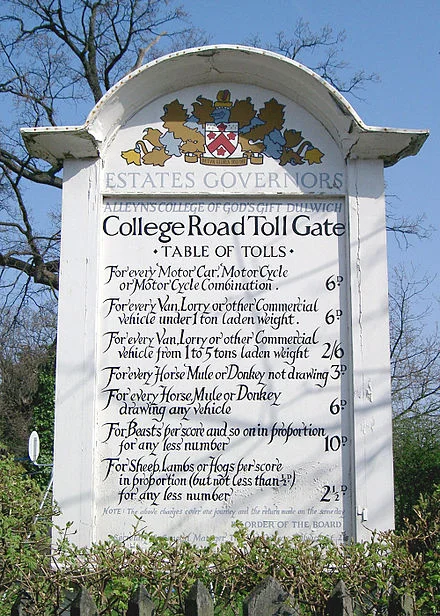
Don Pesci: On the trail of the Connecticut toll campaign

Tolling in Connecticut is what the advertising men would call a tough sell, and it helps in circumstances such as these to bring in some political spin doctors to assist in the delivery.
Many people in Connecticut, almost certainly a majority, do not want tolls. On May 9, No Tolls Connecticut delivered to the governor’s office a “No Tolls” petition signed by 100,000 people.
Candidate for governor Ned Lamont said during his campaign he would favor tolls only if people outside the state, truck drivers mostly, would be depositing their mites in Connecticut’s revenue collection basket. He said this several times while the TV cameras were rolling.
Later Lamont changed his mind, always the prerogative of pretty women and ambitious politicians. But Lamont’s reversal – which came shortly after he had won his gubernatorial campaign – could not be justified as a “misspeak.” He could have used the services of a good narrative builder right there, but Roy Occhiogrosso, former Gov. Dan Malloy’s flack catcher and narrative builder, perhaps was busy hauling in the dollars from his other clients.
According to Occhiogrosso’s Global Strategy Group bio, “Roy returned to GSG – where he was a partner from 2003 to 2010 – in 2013, after serving for two years as senior adviser and chief strategist to Connecticut Governor Dan Malloy. Roy believes that, at some level, everything is about communications. And that if you communicate proactively and properly – using traditional and new media, and social media, internally and externally – you can win your fights and avoid problems.”
Some elements of Occhiogrosso’s strategy on tolls have been activated by Lamont, and no doubt Occhiogrosso will be able to spin some profit from the toll contretemps. He is not alone in supposing that a well-constructed narrative – the bulk of American politics these days is narration, story building – can overcome not only populist opposition but reality itself.
Joining the tolls-are-good-for-you effort are, according to Jon Lender’s piece in The Hartford Courant, a number of Global Strategy Group strategists. The group has produced a “23-page document, entitled ‘Connecticut Campaign for Transportation, 2019 Legislative session,’” that fell into Lender’s hands, and he publicized the private communique; it’s what good investigative reporters do.
Part of the difficulty with tolling is that nearly everyone in Connecticut understands a toll to be a consumer tax. And, to put it in blunt non-narrative, populist terms, people in the state have had it up to their ears with taxes.
First there was the income tax -- necessary, people were told by political narrators, to bring backward Connecticut into the 21st Century. Prior to the income tax, the state relied on consumption taxes, which were, said the political narrators, regressive.
Then Malloy – and Occhiogrosso – came ambling down the road and increased both income taxes and consumption taxes to pay off debts incurred by General Assembly politicians, mostly Democrats, who had invested not a penny into the state employees’ seriously under-financed pension fund for about 30 years after the fund had been created. Numerous “lockbox” funds then were raided by the same cowardly politicians, the appropriated loot dumped into the General Fund. Naturally, Malloy and company were forced to raise taxes to pay off mounting debt. Malloy was followed by Lamont, a protégé of former Gov. Lowell Weicker, who called Weicker to ask himj how he had managed to get an income tax through a then moderate- Democrat opposition in the General Assembly.
The 24-page secret communique suggests remedies to overcome mounting and entirely predictable opposition to tolls, and there is reason to believe that Lamont already has adopted some suggestions: “To overcome resistance, a strategy would be developed ‘to drive legislative support for a tolling concept that will maximize revenue while holding CT citizens as harmless as possible (example: resident discount)… Convincing the legislature to vote for a comprehensive tolling bill — one that includes trucks and cars, albeit with a substantial discount for CT drivers, won’t be easy.
‘‘Opponents have already framed this in simple terms: ‘it’s another huge tax increase.’ In order to win this fight we’re going to have to first reframe the debate — so that’s about ‘jobs and economic development,’ and not just another tax increase… ‘ Government Relations Tactics’ would include: showing legislators ‘how money earned via tolls can significantly improve their specific districts — driving the correlation between tolls and local improvements to infrastructure; highlighting the ‘vs.’ factor by using ‘polling data to share statewide how CT residents feel when you compare tolls to an increase in gas taxes, property taxes, car taxes, etc.’ and providing ‘legislative leadership the necessary political data to ‘whip’ their caucuses’ into support for tolling.”
Getting an unpopular measure passed through the legislature requires an almost religious faith in the power of deconstructing and reconstructing emotion-based “narratives.” The palpable, ruinous consequences of further tax increases can always be buried in a coffin of fanciful – and costly – propaganda.
Don Pesci is a Vernon, Conn.-based columnist.
A quick read

“Point of Departure’ (mixed media box book), by Laurie Alpert, in the show “Obsessions on View,’’ at Bromfield Gallery, Boston all this month.
A 'well-regulated Militia'?
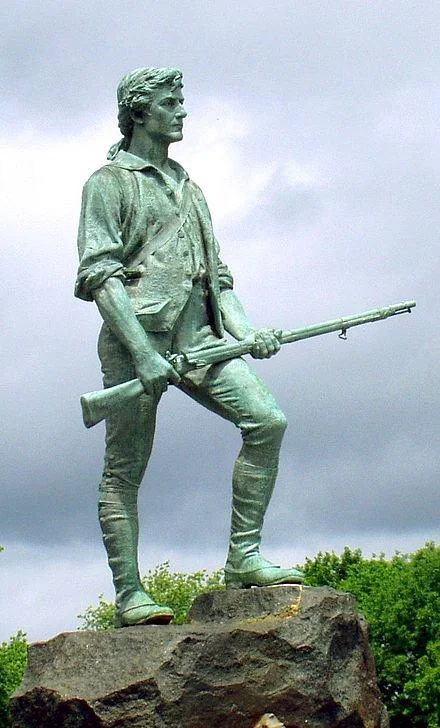
The Lexington Minuteman monument (1900), representing Massachusetts militia Captain John Parker in the Revolutionary War.
From Robert Whitcomb’s “Digital Diary,’’ in GoLocal24.com
‘In an increasingly divided America there’s been an unfortunate increase in the number of officials in a few localities refusing to enforce federal and state laws that they publicly oppose, in some cases as part of trying to curry favor with certain powerful constituencies. Thus, mayors of “sanctuary cities,’’ such as Providence, with large illegal-immigrant populations have taken it upon themselves not to cooperate, in some cases, with federal immigration officials. The Feds, not the states or cities, have final jurisdiction over immigration matters!
And then we have some officials in such towns as semi-rural Glocester and Burrillville, R.I., seeking to make their communities “Second Amendment Sanctuary Towns’’ in which the local police departments are, it is implied, not to enforce state gun-control laws that they don’t like. Such towns could exercise, in the words of the Burrillville Town Council, “sound discretion when enforcing laws impacting the rights of citizens under the Second Amendment.’’ In other words, they’ll enforce what they want.
Reminder: The towns and cities are legal children of the state, and their officials are required to follow state law.
Burrillville’s Town Council has already acted, promising, among other things, not to fund storage space in the town for firearms seized should the legislature enact a law that “unconstitutionally infringes upon the right of the people of the Town of Burrillville to keep and bear arms.’’ Glocester may soon follow. So the towns will determine what is “constitutional’’?
In other words, such towns would break state laws in order to have as little regulation as possible of guns. For some people these days, the Second Amendment is the only constitutional amendment they’re interested in.
Speaking of regulation, the Second Amendment reads:
“A well regulated Militia, being necessary to the security of a free State, the right of the people to keep and bear Arms, shall not be infringed.’’ (Italics mine.)=
For many years, the “regulated bit’’ was taken by both Republican and Democratic leaders in Washington to imply that careful gun control was both constitutional and necessary. But with the GOP’s rightward ideological march and the southward and westward direction of its votes, and Republican presidents’ selection of hard-right federal judges, amidst the growing lobbying power of the NRA and the gun-making trade, that changed.
Anyway, America’s federal system of laws will be gravely damaged if many more localities decide to only help enforce the state and federal laws they like. It’s not supposed to work that way.
David Warsh: Repudiation, not impeachment, should be the goal
SOMERVILLE, Mass.
A couple of weeks after the 2016 election, I argued that Donald Trump had become a president by accident. He hadn’t chosen his cabinet yet, and I was prepared to give him the benefit of at least some doubts. He was certainly smart enough to be president, I wrote, “but in one respect he is especially ill-equipped for the job’s most important requirement – that of narrator-in-chief.”
At best I was half right. The match-up was indeed an accident. The failure of either party to produce a suitable candidate in timely fashion permitted Trump to slip in. But once he gained the GOP nomination, Trump defeated Hillary Clinton on his own,.
Trump is a bully, a thug, a draft dodger, a tax cheat, a finagler. He is corrupt to his core. But one thing he’s not is stupid. His campaign positions – postures, really, like his television career – were sufficient to the win the states he needed. Any Democratic candidate who wants to be president is going to have to build on them – secure borders, more cautious with foreign wars, tougher on China, softer on Russia, more explicit concern for those left behind, and plenty of infrastructure spending.
I may have been mistaken, too, when a year later I wondered if Trump wouldn’t run again. It’s too soon to tell; it is still possible he’ll declare that he has done what he came to do and pull out. He could do that as late as the first quarter of next year. But today he seems more like a gambler who can’t quit while he’s ahead. “Jobless rate hits 50-year low!” Why not chance it again?
There’s been a lot of talk recently about impeachment – and the impossibility of gaining a conviction from the current Senate. (Never mind as-yet insufficient grounds.) House Speaker Nancy Pelosi is right. Impeachment is a red herring, at least for now. What is needed is something more than just beating him in an election. What’s required is repudiation, Something like this is what former Vice President Joe Biden has in mind when in his stump speech he refers repeatedly to Trump as an “aberration” And that’s just the beginning.
What would repudiation involve? It would be necessary to retake the Senate, for one thing. The traditionalist wing of the Republican Party would have to re-emerge, for another. A lengthy examination of the claims of Trump’s cheerleaders in the media would be required. And Trump himself would either have to be defeated at the polls in 2020, or impeached and convicted in the course of a second term. Something along these lines is what former Vice President Joe Biden has in mind when he refers in his stump speech to Trump an an “aberration.” And that is just the beginning of the path.
The alternative? Donald Trump joins Ronald Reagan in Valhalla, at least in the minds of his base, while America sinks deeper in discord.
A story in The New York Times the other day made clear how hard it will be for the Democratic Party to retake the Senate. Three strong potential candidates opted out last week: Stacey Abrams, in Georgia; Rep. Cindy Axne, in Iowa; and Rep. Joaquin Castro, in Texas. Four other potential candidates had previously decided not to contest competitive seats: John Hickenlooper, former governor of Colorado; Gov. Steve Bullock, of Montana; former Rep. Beto O’Rourke, of Texas; and Tom Vilsack, former governor of Iowa. Each had her or his reasons. Other candidates and other competitive races exist. But it may take a “wave” election before the Democratic Party controls the upper house again.
Then, too, the Democratic primaries have a great deal of sorting out to do. And primaries have a lot of sorting out to do before the often-fractious party nominates a candidate next year.
Meanwhile, there is much more reporting to be done, beginning with Justice Department Inspector General Michael Horowitz’s much-anticipated report of the underpinnings of the FBI’s counterintelligence investigation in the summer of 2016 – the role of the so-called Steele Dossier in particular. But that is only the beginning. There is also the FBI’s ongoing investigation of the Clinton Foundation, as reported by The Wall Street Journal, apparently predicated on a book bankrolled by Trump campaign adviser Steve Bannon. Unattended so far, too, is the story of a threatened mutiny by dissident FBI agents that forced Director James Comey to briefly reopen the Hillary Clinton email investigation a week before the election, only to close it again. Comey ordered an internal probe before he was fired.
The Mueller Report is a blueprint for repudiation – scrupulous and dispassionate. House committees could follow its example, inquiring carefully into matters of stewardship of various departments of government by the Trump administration, instead of badgering the President for his tax returns.
And as for the narrator-in-chief of the Trump presidency? There’s a good chance that it will turn out to be former FBI Director Comey. His book, A Higher Loyalty: Truth, Lies, and Leadership (Flatiron Books, 2018), was blunt: “The president is unethical, and untethered to the truth or institutional values. His leadership is transactional, ego driven, and about personal loyalty.”
The other week Comey was at it again, in an op-ed piece in the Times, “How Trump Co-opts Leaders like Barr.” How was it that that Attorney General William Barr, “a bright and accomplished lawyer,” found himself “channeling the president in using phrases like “no collusion” and “FBI spying?” Why did the Deputy Attorney General Rod Rosenstein feel it necessary to thank Trump for “the courtesy and humor you often display in our personal conversations” when the president had spent two years assailing the department that Rosenstein had helped lead?
“I have some idea from four months of working close to Mr. Trump and many more months of watching him shape others,” wrote Comey. “He’s the president and he rarely stops talking…. Speaking rapid-fire with no spot for others to jump into the conversation, Mr. Trump makes everyone a co-conspirator in his preferred set of facts, or delusions. I have felt it – this president building with his words a web of alternative reality and busily wrapping it around all of us in the room…. The web-building never stops.”
Comey, of course, spent the first part of his career prosecuting mob bosses in New York. He may yet have the satisfaction of leading a chorus of repudiation of the accidental president.
David Warsh, an economic historian and veteran economics, media and political columnist, is proprietor of economicprincipals.com, where this column first ran. He’s based in Somerville.
Llewellyn King: The Internet of Things will let cities reimagine infrastructure

The new World Trade Center, in Lower Manhattan
Why no jubilation?
You’d have thought the agreement between House Speaker Nancy Pelosi (D-Calif.), Senate Minority Leader Chuck Schumer (D-N.Y.) and President Trump to spend $2 trillion on infrastructure would cause wild celebration.
Why, then, didn’t the church bells ring out, the fire boats send arcs of water into the air and the stock of the construction companies, steel producers, asphalt purveyors and paint makers soar? It’s because nobody believed that we have the political coordination -- sometimes expressed as political will -- to do the deed and find the money.
Some money will be found eventually -- after some disaster like the collapse of a bridge on an essential highway, or the failure of one of the critical tunnels under the Hudson River, which carry people and goods up and down the East Coast.
It’s the equivalent of “I’ll mind what I eat after my heart attack” kind of thinking.
The infrastructure from airports to ports, roads to bridges is in parlous shape. We are a first-world nation, with third-world ways of moving ourselves and our goods.
Even if Congress found the money through acceptable taxes (an oxymoron) or acceptable program cuts (another oxymoron), years of squabbling will ensue between the states, between their congressional sponsors, with every locality on bended knee with its begging bowl raised high.
Yet the national infrastructure is due to get a powerful boost not from Washington, but rather from the Internet of Things.
Forces are amassing remake cities, and in so doing to reimagine the infrastructure.
These forces are the companies, academics and visionaries who see a future city where drones will deliver packages, automobiles will connect with each other and eventually will be driverless, as they speed down highways that’ve been modified for them.
WiFi will be available everywhere and traffic will flow better not because of new highways, but because its management will be outsourced to computers which will adjust traffic flows, change lights and direct interconnected cars to take the least-congested route. Think GPS navigation that can control the journey automatically.
Vehicles might suggest a route for you, warn you that the car, two spaces ahead, is weaving or that there’s an impending thunderstorm. This ability of cars and other vehicles to “talk” to each other is known as connectivity. Many of the features of this future conversation between vehicles and their environment are already being built into new cars.
It isn’t in use yet: Your car has a brain waiting to be engaged.
Potholes won’t vanish, but they’ll be identified as soon as they appear and near-automated machines will be dispatched to fill them.
The future of infrastructure is that it’ll be digitally managed to make it more efficient and to predict failures accurately. It won’t build bridges, tunnels, seaports or clear blocked canals. What it may do is move the needle in subtle ways.
More important will be the political impact of the big-company lobbies that will be unleashed across the political spectrum from the White House, to Congress, to the state capitals and the city halls. Big lobbies tend to get their way -- and they will when companies like Amazon, Google, IBM, Verizon, AT&T, Cisco, Uber and Lime are demanding upgrades to the infrastructure to accommodate their digitized world.
At present, infrastructure rejuvenation is a political wish list. Soon it will get teeth, tech teeth.
Most important for the future of cities -- from better lights and first responder systems to automated buses and ride-share vehicles -- will be the sense that things are moving.
History shows us that the public is hungry for the new, less so for repairs. Look at the history of Apple and how product after product, from tablets to phones to watches, has been snatched up. Now think of that hunger applied to a smart city which will have exciting new technology, making them more livable and, hopefully, more lovable.
Think of the coming infrastructure surge as the technological gentrification of cities.
It’s the tech giants and their lobbyists, abetted by public demand, who’ll redirect White House and congressional thinking about infrastructure in a world in which the invisible highways of the Internet will be controlling the old visible and familiar ones.
The Internet controls the vertical and the horizontal, so to speak.
Llewellyn King is executive producer and host of White House Chronicle, on PBS. His email is llewellynking1@gmail.com.
Boost for New England 'bluetech'
From Robert Whitcomb’s “Digital Diary,’’ in GoLocal24.com
The New England Aquarium, a major research institution as well as a big aquarium, and SeaAhead Inc., both based in Boston, have announced that they’re partnering to support the creation and growth of start-ups that “enhance sustainability and ocean conservation. The two groups believe that significant global impact can now be achieved by supporting new bluetech ventures.’’
The two organizations say they seek “to catalyze new business creation by providing … ‘first capital’ to entrepreneurs with a new ocean-related innovation that will have a strong impact on sustainability.’’
Sea-Ahead, which has strong ties with Rhode Island, says of itself: “Our ecosystem includes technologists, scientists, startups, corporations, governments and other ocean stakeholders that are coming together to create impact in areas including greener shipping and ports, aquaculture and fishery processes, offshore alternative energy and smart cities.’’
Todd McLeish: Rare Northeast turtles under threat

Diamondback terrapin
From ecoRI News (ecori.org)
Diamondback terrapins are among the rarest turtles in the Northeast, and the only ones that spend most of their lives in salt marshes and other quiet brackish waters. While populations are holding their own in many locations, nest predators are an increasingly serious threat.
Three researchers speaking at last month’s Northeast Natural History Conference in Springfield, Mass., said that in almost every year the eggs in most of the terrapin nests they monitor are consumed by predators.
“Raccoons are the most important predator,” said Russell Burke, a Hofstra University biology professor who has studied diamondback terrapins at the Jamaica Bay National Wildlife Refuge in New York City for 20 years. “Everyone who works on terrapins has had the experience of watching a terrapin put a nest in the ground, and you come back the next day and find a collapsed nest hole and broken eggs.”
Danielle Marston, a volunteer terrapin monitor with the New England Coastal Wildlife Alliance, said raccoons destroy most of the nests she has observed in Buzzard’s Bay, Mass. George Bancroft, who monitors terrapins in the lower Taunton River watershed, also indicated that nest predation rates are very high.
Burke worried that the tiny survey flags he placed to mark the locations of the nests he monitored could be a roadmap for raccoons to follow to terrapin nests, so he conducted a study to learn what method the raccoons use to find the nests. He placed survey flags of various colors where there were no nests, applied a human scent to other sites, dug artificial nests, and experimented with numerous other factors.
The raccoons ignored most of the sites.
“They seemed to be cued more into a disturbance of the sand than the flags,” he said. “Wherever we dug a hole, the raccoons were interested. If you dig any kind of hole in the nesting area, the raccoons were likely to dig it up.”
Burke believes that microbes in the sand become active and release a detectable odor when the sand becomes aerated by digging a hole. But the smell dissipates within about a day or two.
“We get essentially no predation after the second day after nesting,” he said. “If the nests make it through 48 hours, they make it all the way to hatching, and that’s probably due to olfaction.”
Burke noted that there is often increased nesting activity and decreased nest predation when it rains, perhaps because the rain hides the microbe odor.
“It seems to be one of the strategies that terrapins have evolved to minimize raccoon predation,” he said.
Those who monitor diamondback terrapin nests in Rhode Island have also found high rates of nest predation, but some are succeeding in combatting it.
At Hundred Acre Cove in Barrington, where Charlotte Sornborger has been monitoring the terrapins for nearly 30 years, between 200 and 300 nests were destroyed by predators each year during the first 15 years of her studies. In addition to raccoons, Sornborger confirmed that foxes, skunks, and coyotes also predated the nests. But when she began using wire mesh “excluders,” which prohibit scavengers from digging below the surface to reach the eggs, predation rates declined significantly.
Predation at a recently discovered terrapin nesting site at the mouth of the Hunt River in Warwick was very high during the first year of monitoring in 2015 — just three of 87 nests survived to hatch — with dogs being among the chief culprits. But recent surveys have indicated that predation may not be as high as originally thought, according to University of Rhode Island professor Laura Meyerson.
Two surprising new predators, however, have been added to the list of threats to diamondback terrapins: bald eagles and osprey. Neither disturbs the terrapin nests, but the birds have been found to prey on juvenile terrapins in Buzzard’s Bay and in the Palmer River near the Barrington population. According to Sornborger, a hunter reported empty terrapin shells under an osprey platform used by bald eagles along the Palmer River, and two nearby homeowners also observed empty terrapin shells on their lawns.
Another new threat to diamondback terrapin populations is also emerging: rising sea levels.
“For Rhode Island’s terrapins, sea-level rise is really worrisome,” said Scott Buchanan, a herpetologist for the Rhode Island Department of Environmental Management. “They live right at the margins of the coastal zone, and their habitat type is going to experience dramatic alterations and impacts from sea-level rise. We don’t know what that’s going to mean for terrapins.”
“The biggest issue for us in Buzzard’s Bay,” Marston said, “is that we’re losing ground to the big surge in tidal action at our nesting locations. The nesting area is going to disappear with the projected sea-level rise. Already we’re seeing that the nests that don’t fail from predation fail from an intrusion of water into the nests. The terrapins keep trying to nest where they used to, and the nests keep getting flooded.”
With little nesting habitat available inland of their present nesting sites, the combination of predators and rising seas makes the long-term outlook for the species uncertain.
Rhode Island resident and author Todd McLeish runs a wildlife blog.

Jill Richardson: Just because you're religious doesn't mean you can discriminate

An African-American child at a segregated drinking fountain on a courthouse lawn in North Carolina, in 1938.
Via OtherWords.org
A bill in Texas would allow professionals of all kinds — doctors, pharmacists, electricians — to deny services to LGBTQ customers on religious grounds.
This comes alongside the Trump administration’s rollout of a rule that would allow health-care providers to actually deny service to LGBTQ people on religious grounds.
I’m sorry, but I don’t care if you have a strongly held religious conviction that says I’m going to hell, or I’m not worthy of being treated like a human being, because I’m gay.
If that’s the case, you can go ahead and stay far away from me, and you can hate me all you want. Or you can love me and hate my “sin” of being myself and loving who I love, and then you have the right to tell yourself that’s not hateful.
But you don’t have a right to legally discriminate against me or anyone like me. At least, not outside of your own church — though even there, is it really necessary?
First off, several sources say the passages in the Bible that condemn homosexuality have been mistranslated and misinterpreted. A more accurate reading, they argue, finds that homosexuality isn’t an “abomination” after all.
Even if the Bible is the literal word of God, God didn’t give that word to humans in English. Humans translated it into English. Humans are fallible.
Second, even the most devout Jews and Christians don’t literally follow every single word in the Bible. They pick and choose. If one followed every commandment in the Leviticus to the letter, the result would be gruesome murders (a theme the book The Girl With the Dragon Tattoo explored in grisly detail).
For instance, Deuteronomy 21:18-21 says that children who disrespect their parents should be stoned to death. If anyone actually followed that, few children would live long enough to get their driver’s licenses.
But you know what? Nobody follows that. Because they shouldn’t.
And although our Constitution protects religious liberty, if someone stoned their disrespectful child to death out of sincerely held religious conviction, they would still go to prison for murder — rightfully.
I support religious freedom. But when religious people pick and choose which (possibly mistranslated) commandments they want to follow — and they choose the ones that discriminate against a group of people for the “sin” of loving — I don’t think it’s reasonable to say that their right to discriminate is more important than an LGBTQ person’s civil rights.
Go ahead and do what you want inside your own church. You have that right.
LGBTQ support groups are filled with the fallout of anti-gay church teachings — people who’ve lost their entire families, their friends, and their faith. Plenty believe they’re going to hell for being LGBTQ, while others even entered into doomed heterosexual marriages that fell apart when they couldn’t hide their true selves any longer.
Our community has a lot of trauma in it, but I suppose you have the religious freedom to keep heaping more of that trauma on us — within your own home and your own church.
I support religious freedom, which I guess means I support the right of any faith to exclude LGBTQ people based on a cherry-picked misinterpretation of scripture if they wish. But that right does not extend to discriminate in a non-religious workplace, emergency room, or anywhere else.
Half a century ago, some people claimed they had a deeply held religious conviction supporting racial segregation. Our government passed civil-rights laws prohibiting discrimination on the basis of race anyway,
Jill Richardson, a PhD candidate in sociology at the University of Wisconsin-Madison, is an OtherWords.org columnist. She lives in San Diego.
Heroic horse

“Brave” ([photographic print on aluminum), by Jacob Hessler, in the group show “Flux,’’ at the Corey Daniels Gallery, Wells, Maine, May 25-June 29.
I still glory in the light

Sun in fresco in Larbey, France, painted in 1610.
Lenore in the Sunlight
I wake at dawn and face the sun,
Whose rays caress my head.
I glory in the morning light,
Though I can’t leave my bed.
My will is strong, my body weak.
Please help me stay alive.
It’s much too soon for me to die;
I’m only ninety-five.
— Felicia Nimue Ackerman
Ecologically friendly burials

Adapted from Robert Whitcomb’s “Digital Diary,’’ in GoLocal24.com
Having long thought that expensive coffins and other accoutrements of human burials are a waste of money and not particularly good for the environment (I’ve had somewhat awkward arguments about this with relatives after family deaths) I applaud this week’s opening of “The Ellipse,’’ at beautiful Swan Point Cemetery, on Providence’s East Side. This will be an area for burials in which, the cemetery administration says, “a
process is followed by which all elements going into the earth are biodegradable, ‘’ most especially, of course, the corpses. Hold the preservatives and the metal coffin handles!
(But cremation is the neatest way to go.)
Of course, except in those rare families with strong genealogical interests, knowledge of, and interest in, our ancestors is pretty much nonexistent beyond our grandparents’ generation. We fade into the past remarkably fast.
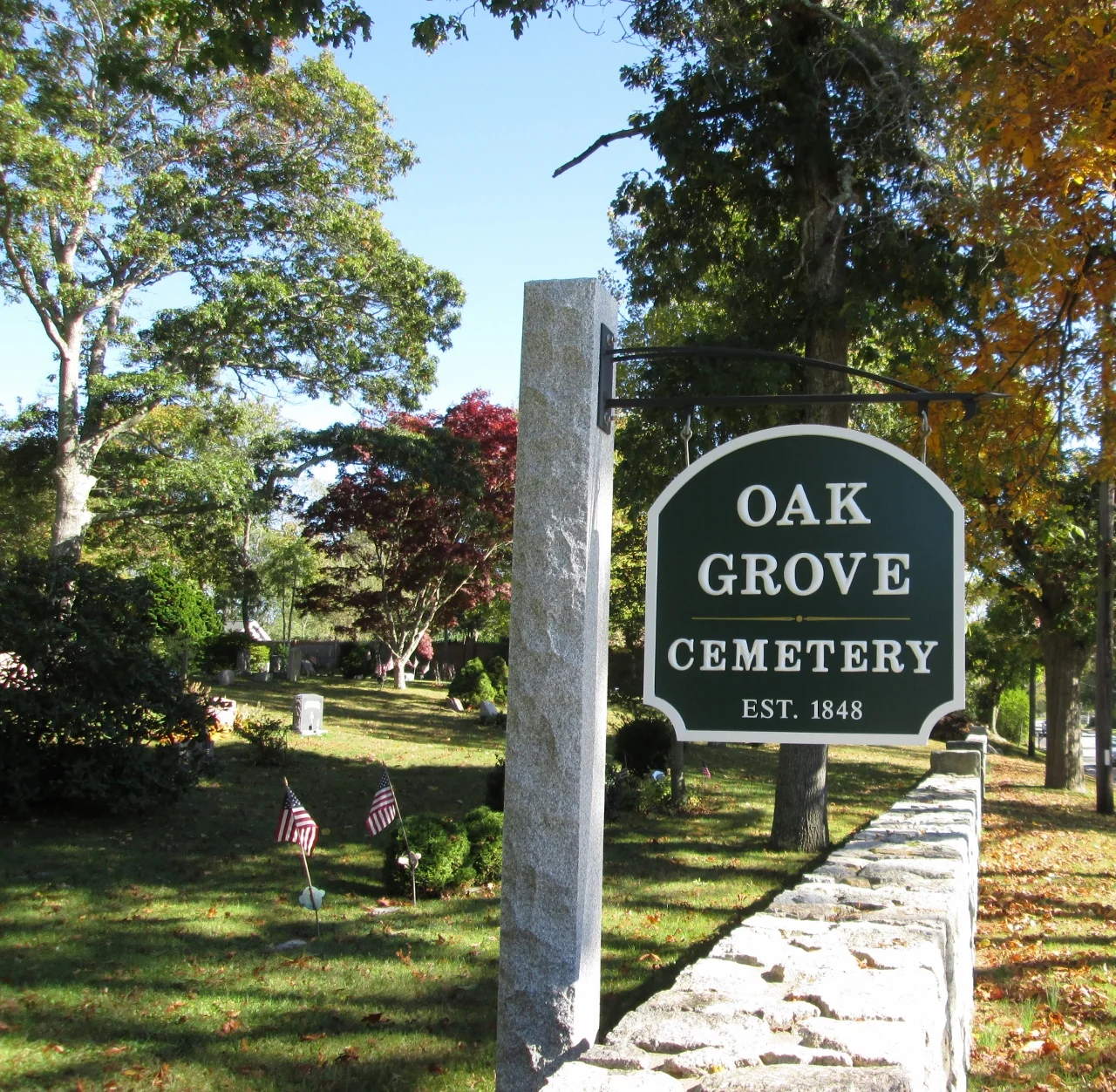
I do like visiting Oak Grove Cemetery in Falmouth, Mass., which was founded in 1848 but includes the remains of plenty of 18th Century (and maybe even late 17th Century) people moved there from family graveyards. In a sign of how stable small-town life was in those days, there are dozens of what’s left of my ancestors there, including some recent entrants. I was mildly disappointed to learn that there’s no room left for myself and my immediate family. But then I thought: Why take up room?
Katherine Lee Bates, who wrote the lyrics for “American the Beautiful,’’ is buried in Oak Grove.
'Diffidence,' not 'surliness'
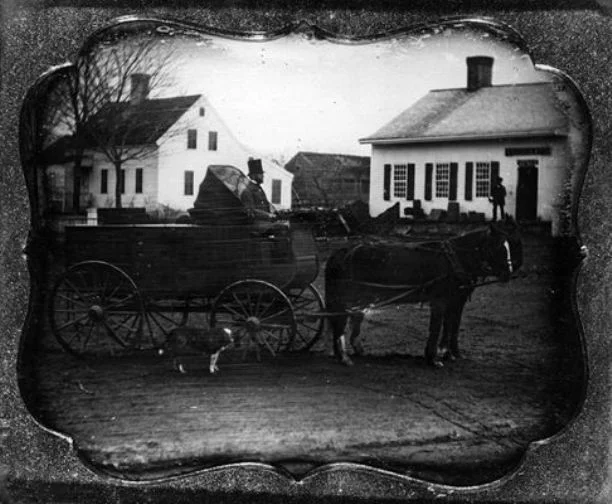
A “Yankee peddler’’ in Connecticut, circa 1850.
“In spite of all that is said, and more especially written, about the crabbed New Englander, New Englanders, like all ordinary people, are nice. Their manner of proffering a favor is sometimes on the crusty side, but that is much more often diffidence than surliness.”
― Louise Dickinson Rich, in We Took to the Woods
Advancing ballpark tech in Worcester

Rendering of Polar Park.
From The New England Council (newenglandcouncil.com):
Worcester Polytechnic Institute (WPI) and the Pawtucket Red Sox have announced a partnership to advance ballpark technology once the team moves to Worcester, in 2021. This partnership will provide the new Polar Park in Worcester with the latest technology.
WPI students will work on projects to modernize the game experience, such as mobile apps for ordering food, technology to assist with finding parking, or special seating for those with sensory challenges. The partnership will also make the school the team’s official academic technology advisor through the 2023 baseball season.
The president of WPI, Laurie Leshin, commented, “As Worcester’s hometown technological university, WPI shares the club’s vision and opportunity for Polar Park: to create a versatile regional sports venue that combines a traditional ballpark environment with modern, smart, and connect amenities.”
Larry Lucchino, principal owner and chairman of the Pawtucket Red Sox, said, “One of the many appealing assets in Worcester is WPI, a world-class technology leader. . . We have long sought this collaboration to help this ballpark be innovative as well as friendly and beautiful. We look forward to WPI’s participation on the key technology fronts.’
Al DeCiccio: Requiem for Southern Vermont College

Hunter Hall at Southern Vermont College.
From The New England Journal of Higher Education, a service of The New England Board of Higher Education (nebhe.org)
I was born in Lawrence, Mass., the first son of first-generation, working-class Italian-American parents—my mother, a nurse, and my dad, a shoe cutter in the old Everett Mills. The Everett Mills are across the street from the Holy Rosary Church. In that church, I walked barefooted down the aisle when I was 7 in an unsuccessful attempt to barter God for the sight back in my left eye, its cornea badly damaged by a direct hit from my then-best friend’s rock. His side won the battle that day a little more than 58 years ago.
I learned then, and I am re-learning yet again after the announcement that Southern Vermont College (SVC), would close at the end of the current semester,
that what the witches said about Macbeth’s approaching morphed into one of the important lessons my parents tried to teach me, “Never take anything for granted.”
I have always tried not to take things or people for granted. I am fortunate to have held faculty positions and administrative positions in my career. I have been humbled to hold the provost’s position at SVC, and I have been honored to work with special people, such as Greg Winterhalter, Sarah Nosek, Lynda Sinkiewich, Eric Despard and Jennifer Nelson.
Greg was a professor who studied with Howard Zinn and who cultivated in all of us a love for the fine arts. I saw Greg serve lunch he prepared to his first-year seminar students, and I benefited from his goodwill when he and his students helped in a project that garnered national recognition for SVC—establishing an exhibition for the Bennington Museum that displayed the genealogical histories of students following the methodology of Henry Louis Gates, Jr., and including DNA research.
I observed Sarah Nosek move through the probationary period while also advancing the research of her students (rare in an undergraduate institution) and the leadership talents of women in the social sciences (notwithstanding annoying obstacles like the time, one rainy semester, her office filled up with water).
I watched Lynda Sinkiewich, a long-time faculty leader, model professionalism for newer faculty members when she worked year after year after year to earn her doctorate while teaching a full course load and assuming all faculty responsibilities.
An adjunct faculty member and a noted musician, Eric Despard went above and beyond his contracted responsibilities by performing at every SVC event; SVC’s de facto musical director without a full-time contract, he even brought established, well-known musicians to its beautiful theater, showing his deep appreciation for and dedication to the college.
And I saw Jennifer Nelson, a mathematician with the sensibility and talent of an artist, work 36 consecutive hours every new student orientation weekend to place incoming students in appropriate foundational science and math courses, a task she gladly accepted in addition to her full teaching load, leading the division of natural sciences and mathematics, and making her Bennington home a welcoming place for all colleagues.
So, like the magnificent Mount Anthony that looms above SVC, all of you and your special colleagues will arise and rejoice in the many associations you enjoyed as part of the SVC family (past and present). Of course, I am fully aware of the loss you all feel. For all of you, certainly, “peace comes dropping slow,” as Yeats wrote in “The Lake Isle of Innisfree”). I can empathize with your loss, because I learned from Aristotle about how tragedy elicits daunting emotions. I also learned that, in the tragic experience, there can be catharsis, the purging of powerful emotions.
How might you have this catharsis?
Robert Frost, a poet who graduated from Lawrence High School as a co-valedictorian with his future wife, Elinor White, and who’s buried behind Bennington’s First Church, wrote this verse for the end of “The Tuft of Flowers”:
“’Men work together,’ I told him from the heart,/’Whether they work together or apart.’”
I know that, throughout the years, your colleagues and your students shared much wisdom and camaraderie with you. That can never be taken away. Though apart, you will indeed continue to work with those colleagues in the higher education enterprise of shaping women and men who will help our citizenry to lead happy and healthy lives. In the days to come before SVC’s commencement at which you will celebrate graduating students, you will work with non-graduating students to provide prospective academic opportunities. While these processes and possibilities unfold, you will experience catharsis.
Collaborating with your colleagues and working together with students, you built an SVC community.
When you worked with those at Bennington College, Williams College and the Massachusetts College of the Liberal Arts to bring in special guests like Anita Hill, you extended community. When you brought in dance groups and musicians and artists and writers such as the poet laureate of Vermont, you extended community. When you encouraged collaboration with the Oldcastle Theatre Company, with high schools, and with the Community College of Vermont, you extended community. When Tom Redden and Tracey Forrest used their spirituality to work with Bennington’s Interfaith Council to offer a community-based course on comparative religion, you extended community. When you secured money to support civic projects which your students selected for funding, as Jeb Gorham did for years, you extended community.
Community is essential so that we do not succumb to the illusion of scarcity and so that we appreciate the material reality of abundant talents. Just because SVC was small, essentially one building (the Everett Mansion) and less than 1,000 students, its stakeholders did not lament a lack of resources; they showed they could think and act as if they were big, buoyed by the many advocates they gained from the Bennington community. In Wendell Berry’s “A Jonquil for Mary Penn,” we learn that “It was a different world, a new world to [Mary Penn] … a world of … community.” Mary Penn started to heal when she saw the power of a caring community. Your healing has already started because the community you built has acknowledged your efforts. That is why newspaper story after story reports that so many in Bennington are dismayed by the decision to close and so supportive of your preparation of the area’s nurses, radiologic technologists, writers, researchers, statisticians and law enforcement agents.
Hosting talent
SVC hosted so much talent—Andre Dubus III, Megan Mayhew Bergman, Katherine Paterson, Edward Zlotkowski, to name some—and was home to magnificent artistic performances and exhibitions. SVC made the nationally known Carnegie Classification List for Community Engagement—an astounding feat for a small college. SVC is a leader in laboratory learning. I am so sad that a college that Henry Louis Gates Jr., acknowledged as a place of excellence for first-generation and underserved students is going to close. That’s wicked. Still, SVC has left an indelible mark on higher education and in all those who have played a role advancing its noble mission.
Al DeCiccio, now dean of the School of Arts, Sciences, and Education at D’Youville College in Buffalo, N.Y., is the former provost of Southern Vermont College.
'Postive and negative shapes'

Frank Capezzera, "Seated Woman (Green)" (mixed media on hardboard), by Frank Capezzera, his show “Form and Field: Humans and Gods in the Moment,’’ at Galatea Fine Art, Boston, July 3-28.
He tells the gallery:
"The depiction of the human and superhuman predates recorded written history, as found in cave wall paintings, rock face petroglyphs and talismans. It is human to be self-aware. It is human to conceive of gods.
This exhibit of acrylics/mixed media paintings represents a summing up of my recent exploration of figurative work.
My aim has been to treat the rendering of the field, or background in which the subject is found, with emphasis equal to that given the subject itself. I begin with preliminary line drawings and mark making, and, through addition, subtraction, deconstruction and reconstruction, search for suggestive images that are ambiguous, perhaps even unreliable in their narratives.
I work from live models, photographs and imagination. I am attracted, both, to figures in action and those in repose. I seek out positive and negative shapes as I compose the image. Some pieces allude to classical artistic forms, such as statuary of gods and goddesses and heroic figures, and others are derived from comic book figures.
My creative process is taken up with the search for solutions to the problems I, myself, create with each succeeding mark or application of pigment, including the decision of when the painting is finished."
When they flood your land
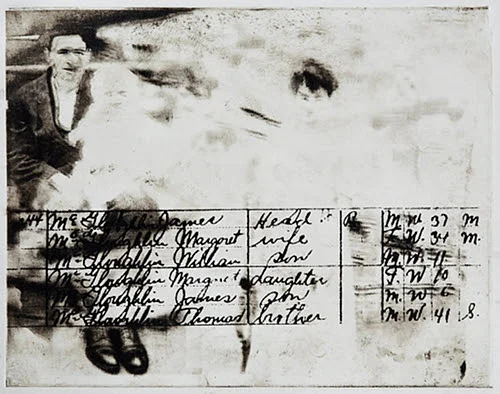
Print by Kate McGloughlin from her show “Requiem for Ashokan: Kate McGloughlin,’’ at Center for Contemporary Printmaking, Norwalk, Conn., through May 19. The gallery says the show is centered around the loss experienced by her ancestors due to the creation of the Ashokan Reservoir, in New York State. “The exhibition includes a handmade artist's book by McGloughlin as well as written text and audio files illustrating the story from the points of view of both the settlers and the immigrants. ‘‘
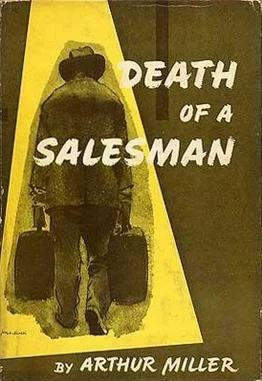
Don Pesci: Amazon strikes back at Willy Loman

"Sometimes...it's better for a man just to walk away. But if you can't walk away? I guess that's when it's tough.”
—- The Willy Loman character in Death of a Salesman
The old saying is “You can’t fight City Hall.” That is partly true. City Hall is huge and more powerful than you. The gods of government have resources denied to the little people, but then government is supposed to be on the side of the little people, as is the media, a presumed joint support that tends to even the perpetual battle between the lions of the market place and … let’s call him Willy, after Willy Loman, the chief character in Arthur Miller’s play Death of a Salesman.
The Willy of this piece is a Connecticut salesman – there are many of them – who do business with Amazon. And Willy has a problem that will not be settled by the usual white-hatted Attorney General of Connecticut or legislators who weep over the little guy or the media, afflicters of the comfortable and comforters of the afflicted. You can bet your house on that.
In the world of commerce, Amazon is bigger than God. It seems only hours ago that the equivalent of City Hall in Connecticut, state government – not only in Connecticut and its environs, but everywhere in the nation – was breathing heavy in strenuous attempts to lure Amazon into their beds, the better to ravish the e-commerce giant with taxes.
New York Gov. Andrew Cuomo was dashed when Amazon, searching for a place in the Northeast to locate part of its headquarters, kissed the state goodbye. Pummeled by progressives in New York -- among them Mayor of New York City Bill de Blasio (birth name Warren Wilhelm Jr.) and U.S. Rep. Alexandria Ocasio-Cortez -- for having considered the governor's crony-capitalist $3 billion tax break, the company withdrew an offer to plop a new facility in New York that might have generated $27 billion in revenue.
“What happened is the greatest tragedy that I have seen since I have been in government,” moaned a grievously wounded Cuomo.
Crony capitalist blood began to beat like a tom-tom in former Connecticut Gov. Dannel Malloy’s veins, and it still swells in Gov. Ned Lamont’s heart. Both Malloy and Lamont are crony-capitalist governors -- is there any other kind in the high-taxed Northeast? Wouldn’t it be grand to net such a massive leviathan? Malloy moved on, Lamont is fishing still.
But salesman Willy is dangling at the end of an economic rope, and he writes, somewhat desperately:
“If I sell something on Amazon, they take 15% as a referral fee. This covers marketing, customer acquisition, and credit card fees. If I use Amazon to warehouse and ship the item, they then charge a pick and pack fee. That is also taxed. So if I do $1M a year in gross sales, Amazon ends up taking about 33%."
Adding the cost of doing business with Amazon, Willy notes “$330,000 in fees, with 6.35% sales tax is almost $21,000 a year. You should understand that Amazon is half of e-commerce. Third party sellers [like Willy] represent over half of their sales. Connecticut, through its tax additions, just made it impossible for 25% of e-commerce to do business here.”
Along with his note to Connecticut Commentary, Willy enclosed the “Dear Willy” letter he had received from god:
The "Dear Seller" letter Willy received read in part:
“Amazon is required to collect taxes on Selling on Amazon fees in Connecticut, the District of Columbia, Hawaii, South Dakota or West Virginia, based on each state’s tax rates. Selling on Amazon Fees include the Referral Fee, Subscription Fee, Variable Closing Fee, Per-item Fee, Promotion & Merchandising Fee, Refund Commission Fee, Checkout by Amazon, and Sales Tax Collection Fee... If your business is located outside Connecticut, the District of Columbia, Hawaii, South Dakota or West Virginia, we will not collect sales tax on the Selling on Amazon fee you pay.
“Amazon is required to collect taxes on FBA Prep Services in Arizona, Connecticut, Illinois or West Virginia, based on each state’s tax rates. FBA inventory prep fees include the Labelling Fee, Polybagging Fee, Bubblewrap Fee, Taping Fee, and Opaque Bagging Fee...
“You will be able to view the sales tax collected on your fees in the transaction details page of your Payments reports.”
Willy is a Connecticut native with deep roots in the state. He’s married with young childern. And the blade of crony capitalism has fallen bloodily on Willy’s neck, because he is, in fact, an independent businessman who is expected to shut up and pay. Crony capitalism is a complex arrangement in which tax heavy states such as Connecticut and New York supply seed tax money to super-leviathans like Amazon as inducements to locate in the states; the companies then pass along to its customers and third party salesmen like Willy the costs they incur from their location in a high tax state like Connecticut. But the tax axe invariably falls on Willy’s neck. Large companies are tax collectors, not tax payers. The real taxpayers are those who consume the products and services of companies such as Amazon – and small businesses like Willy’s from whom Amazon recovers the additional costs incurred by tax increases.
It will not take long for Willy to realize “Sometimes...it's better for a man just to walk away.” No one profits when Willy walks. It would be well for legislators to remember the line in Willy’s letter. Connecticut, along with a handful of other states singled out in Amazon’s “Dear Seller” letter, has “through its tax additions,” Willy writes, “just made it impossible for 25% of e-commerce to do business here.”
Don Pesci is a Vernon, Conn.-based columnist.
Posted by Don Pesci at 2:04 PM
Labels: Cuomo, Lamont, Malloy, Willy Loman
Jordan Rau: Feds cracking down on short-staffed nursing homes
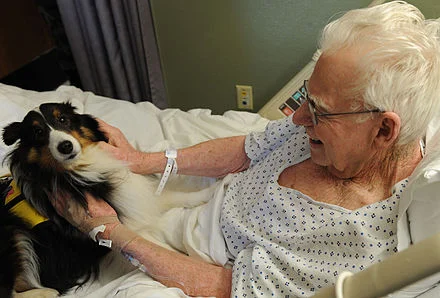
The federal government accelerated its crackdown on nursing homes that go days without a registered nurse by downgrading the rankings of a tenth of the nation’s homes on Medicare’s consumer website, new records show.
In its update in April to Nursing Home Compare, the Centers for Medicare & Medicaid Services gave its lowest star rating for staffing — one star on its five-star scale — to 1,638 homes. Most were downgraded because their payroll records reported no registered-nurse hours at all for four days or more, while the remainder failed to submit their payroll records or sent data that couldn’t be verified through an audit.
\
If you would like a copy of this data, please email elucas@kff.org
“Once you’re past four days [without registered nursing], it’s probably beyond calling in sick,” said David Grabowski, a health policy professor at Harvard Medical School. “It’s probably a systemic problem.”
It was a tougher standard than Medicare had previously applied, when it demoted nursing homes with seven or more days without a registered nurse.
“Nurse staffing has the greatest impact on the quality of care nursing homes deliver, which is why CMS analyzed the relationship between staffing levels and outcomes,” the agency announced in March. “CMS found that as staffing levels increase, quality increases.”
The latest batch of payroll records, released in April, shows that even more nursing homes fell short of Medicare’s requirement that a registered nurse be on-site at least eight hours every day. Over the final three months of 2018, 2,633 of the nation’s 15,563 nursing homes reported that for four or more days, registered nurses worked fewer than eight hours, according to a Kaiser Health News analysis. Those facilities did not meet Medicare’s requirement even after counting nurses whose jobs are primarily administrative.
CMS has been alarmed at the frequency of understaffing of registered nurses — the most highly trained category of nurses in a home — since the government last year began requiring homes to submit payroll records to verify staffing levels. Before that, Nursing Home Compare relied on two-week snapshots nursing homes reported to health inspectors when they visited — a method officials worried was too easy to manipulate. The records show staffing on weekends is often particularly anemic.
CMS’s demotion of ratings on staffing is not as severe as it might seem, however. More than half of those homes were given a higher rating than one star for their overall assessment after CMS weighed inspection results and the facilities’ own measurement of residents’ health improvements.
That overall rating is the one that garners the most attention on Nursing Home Compare and that some hospitals use when recommending where discharged patients might go. Of the 1,638 demoted nursing homes, 277 were rated as average in overall quality (three stars), 175 received four stars, and 48 received the top rating of five stars.
Still, CMS’s overall changes to how the government assigns stars drew protests from nursing home groups. The American Health Care Association, a trade group for nursing homes, calculated that 36% of homes saw a drop in their ratings while 15% received improved ratings.
“By moving the scoring ‘goal posts’ for two components of the Five-Star system,” the association wrote, “CMS will cause more than 30 percent of nursing centers nationwide to lose one or more stars overnight — even though nothing changed in staffing levels and in quality of care, which is still being practiced and delivered every day.”
The association said in an email that the payroll records might exaggerate the absence of staff through unintentional omissions that homes make when submitting the data or because of problems on the government’s end. The association said it had raised concerns that salaried nurses face obstacles in recording time they worked above 40 hours a week. Also, the association added, homes must deduct a half-hour for every eight-hour shift for a meal break, even if the nurse worked through it.
“Some of our member nursing homes have told us that their data is not showing up correctly on Nursing Home Compare, making it appear that they do not have the nurses and other staff that they in fact do have on duty,” LeadingAge, an association of nonprofit medical providers including nursing homes, said last year.
Kaiser Health News has updated its interactive nursing home staffing tool with the latest data. You can use the tool to see the rating Medicare assigns to each facility for its registered nurse staffing and overall staffing levels. The tool also shows KHN-calculated ratios of patients to direct-care nurses and aides on the best- and worst-staffed days.
Jordan Rau: jrau@kff.org, @JordanRau
RELATED TOPICS

'In the evening wind'

I put your leaves aside,
One by one:
The stiff, broad outer leaves;
The smaller ones,
Pleasant to touch, veined with purple;
The glazed inner leaves.
One by one
I parted you from your leaves,
Until you stood up like a white flower
Swaying slightly in the evening wind.
White flower,
Flower of wax, of jade, of unstreaked agate;
Flower with surfaces of ice,
With shadows faintly crimson.
Where in all the garden is there such a flower?
The stars crowd through the lilac leaves
To look at you.
The low moon brightens you with silver.
The bud is more than the calyx.
There is nothing to equal a white bud,
Of no colour, and of all,
Burnished by moonlight,
Thrust upon by a softly-swinging wind.
“The Weather-Cock Points South, ‘‘ by Boston’s Amy Lowell (1874-1925)
David Warsh: My search for narratives

Have you been in a bookstore recently? The front tables are full of stories of stories of personal transformations of one sort or another: columnist David Brooks (his own and others), Michelle Obama, Tara Westover (the daughter of survivalists who left home for university), television personality Chelsea Handler, Mayor Pete Buttigieg. Economists, too, write books about identity and transformation. Here are three good ones.
I picked up Spending Time: The Most Valuable Resource (Oxford, 2019), by Daniel Hamermesh, with considerable interest. I put it down thinking that it was the best book about self-management I had seen since Charles Duhigg’s Habit (2012). The ways we choose to spend our time are fundamentally interesting. Hamermesh provides a wise and thorough audit of the budget.
The Wealth of Religions: The Political Economy of Believing and Belonging (Princeton, 2019), by Rachel McCleary and Robert Barro: a tour of the history of world religions contemplated as economic clubs, conferring benefits and exacting costs on members. Religious identity can be understood as a market, the authors say; conversion or continuance as a choice like any other. The effects on conduct of belief is the important thing. A wide-ranging survey of the social science literature is leavened by occasional glimpses of the authors, a Methodist philosopher and a Jewish economists, traveling the world together as students of religion.
An Economist Walks into a Brothel: and Other Unexpected Places to Understand Risk(Portfolio/Penguin, 2019), by Allison Schrager. A financial economist and journalist for Quartz, Schrager examines a series of off-beat occupations through the prism of what has been learned about the analysis of risk, foursquare in the tradition of Freakonomics (2006) and The Undercover Economist (2006).
I find I read very little these days that’s not narrative – biography, history, current affairs, or fiction. It is an occupational hazard, I suppose. Happy to think that there is plenty of good writing about self-improvement available to those who haven’t given up!
David Warsh, a Somerville, Mass.-based economic historian and a veteran columnist, is proprietor of economicprincipals.com, where this column first appeared.