Vox clamantis in deserto






James P. Freeman: Mogul August Belmont Jr. and the digging of the Cape Cod Canal


The Bourne Bridge over the Cape Cod Canal, with the Canal Railroad Bridge in the distance.
This article first appeared in Cape Cod Life.
August Perry Belmont Jr. was a product of his age, in an age that needed his products.
The Gilded Age—a period roughly from post-Civil War Reconstruction (1865) up to the first Progressive Era (early 1900s) was marked by energetic entrepreneurship, industrial vitality, technical invention and innovation. Commerce was transformed by new developments in steel, petroleum, electrification, transportation and finance. Engineering advances produced the transcontinental railroad, the telephone and the light bulb. New technologies yielded elevators, skyscrapers, trolleys, subways, bridges and canals.
With little regulation and fierce allegiance to laissez-faire capitalism, vast monopolies and interlocking trusts were created by such titans as John D. Rockefeller, Andrew Carnegie, Cornelius Vanderbilt and J.P. Morgan.
Nearly forgotten is August Belmont Sr. Belmont was among the defining figures of the Gilded Age. He emigrated from Prussia in 1816 and later founded August Belmont & Company, a Wall Street firm. He was a fixture of New York’s high society and his lavish lifestyle reportedly was the inspiration for Edith Wharton’s The Age of Innocence (1920). By the time of his death, in 1890, he left the huge sum for the time of $50 million to his wife and four surviving children.
Belmont’s second son, August Belmont Jr., was a builder and financier. He built New York City’s first subway route (Interborough Rapid Transit) in 1904 and was a major figure in thoroughbred racing (New York’s Belmont Racetrack). He also served as a major in the U.S. Army during World War I, in his 60s. But, arguably, Belmont’s crowning achievement was the Cape Cod Canal.
In Images of America: Cape Cod Canal, Timothy T. Orwig wrote that the need to find a shortcut across Cape Cod was “ancient.” Given its treacherous currents and shifting shoals, passage around the Outer Cape was fraught with danger and known as the “Graveyard of the Atlantic.” Ever since the Sparrowhawk went down in 1626 off Orleans, over 2,700 wrecks and 700 lost lives have been recorded around the Cape, Martha’s Vineyard and Nantucket. Not to mention untold tonnage in cargo.
As early as 1623, Miles Standish, military leader of Plymouth Colony, advocated building a canal. In 1697, a Massachusetts General Court resolution called for “a passage [to] be cut through the land at Sandwich from Barnstable Bay.” Remarkably, in 1776, George Washington authorized the first of many surveys to consider the feasibility of such an undertaking. And by the late 1800s, President Chester Arthur saw the prospect of a canal as a military asset and considered coastal waterways among his highest priorities.
Nevertheless, nearly three centuries of legislative ineptitude combined with virtually no heavy industry, made the project impossibly impractical. That is until the early 20th Century saw a coalescing of financial power, industrial power and will power.
Technically, a crude canal had already sliced through the peninsula. That distinction belonged to what was known as “Jeremiah’s Gutter” (also known as “Jeremiah’s Dream” and “Jeremiah’s Drain”). It formed naturally after The Great Storm of 1717 and made travel between Orleans Town Cove (fed from the Atlantic Ocean) and Eastham’s Boat Meadow Creek (fed from Cape Cod Bay) possible. In 1804 a canal was first dug over this periodically flooding lowland owned by Jeremiah Smith. According to Robin Smith-Johnson, in Cape Cod Curiosities, “It was also used as an escape route by local boatmen in the War of 1812.” But by 1817, 100 years later, it was effectively impassable.
Belmont was perfectly suited for the gargantuan task at hand. Construction of the new canal was a personal as well as professional endeavor for him. Author and historian J. North Conway makes the connection in his wonderfully engaging book, The Cape Cod Canal: Breaking Through the Bared and Bended Arm.
While Belmont was motivated by profit—improving transport of raw materials and finished products in and out of New England via shipping through a toll canal—he had personal ties to the Cape, despite his New York roots. “Part of Belmont’s… reason for involving himself in the digging of the Cape Cod Canal,” writes Conway, “was due to his deep affection for his maternal grandfather, Commodore Matthew Perry, who lived on Cape Cod.” Perry is credited with opening trade with Japan to the West in 1854. So it was appropriate that the ceremonial first shovelful of earth marking the start of the Cape’s Big Dig occurred on June 22, 1909 at the Perry farm in Bourne.
The sheer scale of the undertaking and associated disruption was not without controversy. Harper’s Weekly in 1908 lamented that “the new conditions which must prevail on the peninsula will cause the disappearance of the simple and unaffected people.…” The magazine did recognize that “40,000 vessels pass around the Cape annually… while only between 3,000 and 4,000 ships traverse the Suez Canal during the same length of time.” A year and a half later, the same publication wrote more approvingly of “The Conquest of Cape Cod.” Shortening the trip by 74 miles between Boston and Southern ports, “it is in the saving of lives, ships and cargoes that the canal will be chiefly valuable.”
Belmont, like other businessmen of his day, insisted that the project not involve government intervention. His chief engineer, William Barclay Parsons (Belmont’s engineer for the New York subway and a member of the Panama Canal Commission), underscored such sentiments before the Boston Chamber of Commerce in May 1910. “This is a private enterprise,” Parsons said, “supported by private capital invested under a state charter… asking for neither federal, nor state, nor municipal aid.” And it should come as no surprise that Belmont employed Gilded Age financing structures to make the canal a reality. His Boston, Cape Cod and New York Canal Company bid out a contract to build the canal. Cape Cod Construction Company was the winner: a company controlled by Belmont.
The Bourne Bridge was finished in May 1911 followed by the Buzzards Bay Railroad Bridge (November 1911) and Sagamore Bridge (February 1913). An engineering and picturesque marvel spanning 13 miles, the new canal was 25 feet deep and roughly 125 feet wide. It cost over $11 million to build. Over 16 million cubic yards of sand, stone, clay and glacial boulders were removed. And six men lost their lives.
The new waterway opened to great fanfare in a ceremony on July 29, 1914. Among the dignitaries in attendance was Assistant Secretary of the Navy Franklin Delano Roosevelt. Even President Woodrow Wilson wrote a “hearty congratulations.”
World war and a new progressive direction in America changed everything. Just the day before the grand opening, Austria-Hungary declared war on Serbia, leading to World War I. At President Wilson’s direction, the United States Railroad Administration took control of the canal in July 1918. After the war, in April 1919, the government filed a petition to begin condemnation proceedings to formally acquire the canal.
August Belmont Jr. died in December 1924. After years of legal, political and financial haggling, the sale of the Cape Cod Canal took place in April 1928. The Belmont estate received a mere $4.5 million in proceeds. And based upon Belmont’s overall investment, J. North Conway estimates the estate lost nearly $5 million.
Congress gave authority to the United States Army Corps of Engineers to take over operation and maintenance of the canal. Work began to effect badly needed improvements: widening and deepening the canal, and constructing new bridges. The modernization of the Cape Cod Canal became a public-works program. Leisure would complement commerce. A sprawling federal government acted like a die grinder to temper the sharp edges of the Gilded Age. Power shifted away from unbridled titans to Washington bureaucrats.
The new and improved canal was squarely a byproduct of progressive policies put into place during the Great Depression. Such New Deal programs as the Public Works Administration, Emergency Relief Act and Rivers and Harbors Act in the mid-1930s helped finance the $37 million cost. Several hundred workers helped build the two distinctive vehicular bridges and unique vertical-lift Railroad Bridge, still standing and functioning 84 years later. Toll free.
Perhaps fittingly, a black and white postcard of the sparkling new Sagamore Bridge dated June 22, 1935 (the official dedication of the rebuilt canal) noted that “Mrs. August Belmont parted the ribbon.”
Mark Twain’s novel The Gilded Age: A Tale of Today was a biting satirical commentary about a by-gone age. His work exposed the appearance of gross materialism, political corruption, corporate greed and widening social inequality just beneath the surface of glossy, heady progress.
Twain actually traversed Cape Cod before Belmont’s canal became reality.
“‘This, gentlemen,’ said Jeff, ‘is Columbus River, alias Goose Run. If it was widened, and deepened, and straightened, and made, long enough, it would be one of the finest rivers in the western country.’”
James P. Freeman is a New England-based columnist and financial adviser and a former banker.

The drawbridge over the canal that was replaced by the Sagamore Bridge.

Chris Powell: Nursing-home workers have better claim than Stop & Shop's

Stop & Shop’s headquarters, in Quincy, Mass

Are all those Connecticut elected officials who have been joining the picket lines in the strike by the United Food and Commercial Workers union against Stop & Shop experts in the supermarket business? Or are the only numbers that matter to them the numbers of their constituents on strike as compared to the numbers of the supermarket chain's Dutch owners who can vote in Connecticut?
A few days ago U.S. Sen. Richard Blumenthal boasted that he had told Stop & Shop's president to do better by his employees. But the senator didn't say how he came to that judgment.
The supermarket business is high-volume, low-margin and extremely competitive. Most of its labor is not highly skilled and so is difficult to unionize. Organizing it and keeping it organized as the UFCW has done at Stop & Shop is an achievement.
But that doesn't make the company's contract offer unfair. Not being unionized, the company's competitors enjoy substantial advantages over Stop & Shop and more easily can offer better prices to their customers.
So what does anyone outside the business really know about who is right or wrong in the dispute, or if there is any right or wrong rather than mere self-interest?
Meanwhile, a far more compelling labor dispute is developing in the state.
Workers at 20 nursing homes, members of the New England Health Care Employees Union, are threatening to strike May 1, and their wages and benefits are largely matters of state government appropriation. That's because most nursing-home patients are welfare recipients and what the nursing homes pay their employees is determined mainly by how much state government pays the nursing homes.
The nursing-home workers are not highly skilled either and organizing them is as much a challenge as it is to organize supermarket workers. But the work of nursing home employees, caring for the infirm and disabled, can be much more tedious.
While state government treats its direct employees luxuriously because of their political mobilization, it always has treated the nursing-home workers poorly, controlling patient reimbursements so tightly that raises have been tiny and have badly lagged inflation.
The nursing-home workers union wants state government to appropriate enough for 4 percent raises in each of the next two years. While that may seem high, it is not when averaged with the meager raises of the last decade.
But it would be hard for state government to appropriate such raises for the unionized nursing homes and not for the scores of other homes. So big money is at issue here even as state government faces a budget gap of $1.5 billion or more.
Despite that gap, Gov. Ned Lamont’s administration and the Democratic majority in the General Assembly lately have been approving substantial raises for unionized state employee bargaining units and even approving the unionization of supervisors who should not be unionized at all. Further, the jobs and compensation of all state employees have been guaranteed for years to come by the Malloy administration's infamous long-term contract with the State Employee Bargaining Agent Coalition.
In these labor issues the nursing home workers are plainly far more deserving. But when fairness requires direct state appropriations for people who are not politically influential, the politicians are not as eager to be photographed.
Chris Powell is a columnist for the Journal Inquirer, in Manchester, Conn.
Charles Pinning: The Lotus of spring

Lotus Elan

Castle Hill Light, at the end of Ocean Drive, in Newport
Tony Rocha owned fishing boats working out of Newport and had a brand-new blue, 1962 Lotus Elan, the same shade and shape as a Jordan almond. Mr. Belmont, a tall, gentlemanly fellow, told me that he would arrange to have Tony Rocha take me for a ride in it on Easter Sunday.
The Belmonts and the Rochas lived next door to each other and that’s how I spied the Lotus. Sandy Belmont, the Belmont’s younger daughter, and I were fifth-grade classmates and secretly betrothed.
Never having spoken a word to Tony Rocha, I now smiled ingratiatingly in his direction whenever, with meaty fisherman’s hands, he yanked the car into his gravel drive.
“When we get married, if you find yourself temporarily short of funds, I’ll buy one for you,” Sandy told me.
“Good deal,” I said. Sandy and I had agreed to get married several months before, not long after we’d kissed for the first time. She was the first girl I’d ever kissed, and I, the first boy she’d kissed. There was a natural logic to it and we really did like being together.
It was Lent, and I did my best to suppress my Lotus lust, but one afternoon I slipped up. I asked Mr. Belmont if he’d talked to Tony Rocha lately, and he replied, “Don’t prod me, young man. You must be patient.” And with a big grin added, “Have faith! You’re a papist after all.”
I had no idea what this last comment meant, but his delivery gave me confidence. Little did I know what little I did know.
Easter morning came and Easter morning went, and nothing! After church (we were Catholic and the Belmonts Episcopalian) I bicycled over to Sandy’s. The family was getting ready to head out for a restaurant lunch. Amazingly, nothing was said about the Lotus ride. Sandy looked trapped in the backseat of the big, black Oldsmobile.
Returning home I went ballistic, ranting to my older brother.
“Her father told me he was going to take care of this!”
“Think,” commanded my brother. “Why would he arrange a ride on Easter? It’s just goofy. He must have been pulling your leg.”
“Why would he do something like that?”
My brother shrugged. “Self-amusement?”
“Sandy and I are getting married!” I screamed.
“Maybe he doesn’t care for the idea of that. Why don’t you just tootle over and ask Tony Rocha yourself for a ride. He’s a Portagee, like us; the mom half of us. He ain’t no WASP. The worst he can do is tell you to scram.”
“Raah!” I biked back to Sandy’s house and crossed the lawn to Rocha’s driveway. I scuffed the gravel until he came out the back door.
“Looking for your fiancé?” he asked.
“What?”
“Never mind. You’ve come for a ride in the Lotus, am I right?”
He threw the top down and took me for a ripping spin around the Ocean Drive. Wow! It was Grand Prix time flying through curves and blasting down the straightaways!
“It was sure good of Mr. Belmont to ask you to give me a ride,” I beamed.
“What? That stuffed shirt wouldn’t give me the time of day. You’ve been admiring this car ever since I got it. I was wondering when you were going to ask for a ride. I was a kid once too, you know.”
I thanked him and bicycled home standing on the pedals. A girl in a white dress ran in uncontrollable circles across her front lawn. Daffodils waved, the trees glistened bright green with new leaves. Nature was rising up and I was part of it. It was, at last, springtime!
Charles Pinning is a writer who lives in Providence.
Emily Robichaud: Notre Dame and why beauty matters

Notre Dame ablaze on April 15
I’ve been reading a lot on social media asking why we should care about the Cathedral of Notre Dame in Paris considering, for example, that three black churches burned last week, coral reefs are dying, and the Catholic Church is rich enough to fix the cathedral itself. (Worth noting-- the French government owns Notre Dame.) Some say that the news media’s focus on the story is further evidence of the West’s superiority complex and our devotion to dead white men.
Undeniably, though, we witnessed a collective emotional outpouring as Notre Dame’s wooden upper structures, including the spire, burned and collapsed. People mourned the vanished oak, which was already hundreds of years old when it was cut for the cathedral in the 12th Century. Some see this mourning as too ignorant of the real needs of the world. But what they miss in this puritanical resistance is that the beauty of such places as Notre Dame can encourage us to love others and the world.
Beautiful places lift us from the drudgery of everyday life -- the laundry, the kids fighting at bath time – and point us toward the divine. Whether or not you’re a person of faith, Notre Dame bestowed upon most people who crossed her threshold the great gift of feeling that there is something much bigger than themselves.
In my early twenties I lived in Paris and New York City. In both places, I used architectural landmarks as a compass to orient myself. I looked for the World Trade Center towers when I would exit an unfamiliar subway stop. Once I saw them, I knew if I was pointing north or south. In Paris, I would look for Notre Dame before turning right to walk up the hill of Boulevard St. Michel.
I wish I could say something poetic about the fact that I have now seen both of these places burn within 20 years of one another.
A few weeks before I turned 17, I made my first trip to Paris with my mother and grandmother. I had never been to Europe, never even been out of the U.S. save for a trip to Toronto at the age of five.
I returned again to Paris at 20. I had cut off much of my hair and was taking classes for a year at the Sorbonne and living with a French family in the 5th arrondissement. Notre Dame sat at the bottom of Boulevard St. Michel. That fall, there was a strike, whether it was the students or the teachers I can no longer recall, but I do remember that formal classes began scandalously late at the Sorbonne, not until late October. So there was a lot of time to wander the streets.
I considered Notre Dame my neighborhood church. Every time I would run down the hill to catch the Metro because I had missed the train at the less frequent RER train stop closer to my apartment, I would breathlessly bound down the steps and feel that she was just down the block and to the right. On days when I walked home from class at the Louvre, she would remind me to turn right up the hill of St. Michelle. If I had been out late on the Right Bank, usually in the Bastille or Rue Oberkampf neighborhoods, drinking cheap wine and eating mussels, and the Metro had closed for the night and I was out of francs -- there were still francs then -- I would walk home. Often I would detour slightly so that I could stroll through Notre Dame’s little park and glance at her at night. The pigeons cooed and the rose windows beckoned and I would stop for a moment and admire her in the quiet. Sometimes there were a few lovers tucked into a dark corner of the park. Occasionally someone from a darker corner would call to me and I would quickly move on.
On Sundays we were supposed to give our host families the day off. So I would roam the streets alone, often ending up at Notre Dame after moving from café to café in the Marais, and eating a stand-up dinner at the Finkelstein’s bakery, on the end of Rue de Rosiers. Notre Dame was a North Star in the foreign terrain I was aching to make my own. I would walk through her doors once a week, sometimes only for a moment, enough time to look up and take a breath. When I was feeling homesick I would stop and light a candle or say a prayer.
Why did so many people mourn Notre Dame as she burned? Of course, she has survived two world wars and many other disasters over 850 years. But more than that – in an era of fast fashion and cars that come from gigantic vending machines, dinner for your kids you ordered on the Internet a week ago that arrives frozen in a cardboard box— we crave the beauty in such a place, especially -- for many of us -- the beauty of devotion, sustained dedication to a goal to that one would not see completed in one’s lifetime, faith set to action.
Notre Dame was built with hand tools. It is the antidote to 3-D printed hearts and DNA markers and data mining. You feel time slow once you’re inside those doors.
She silently granted the gift of freedom from the tyranny of the self. You belonged to a metaphorical Greek chorus when you walked through those doors, one that had been singing its songs for many centuries. You sat in her pews and time collapsed, and the sense of the divine enveloped you.
Beauty is as essential to the human soul as air or water. The French philosopher Etienne Gilson wrote: “The pleasures of art are among the great consolations of life; man should not feel ashamed of what makes him happy.”
Notre Dame filled so many people with a divine joy. And that is enough.
Emily Robichaud is a Providence-based writer and design historian.
Don Pesci: Where Bernie Sanders's utopian dreams would end up
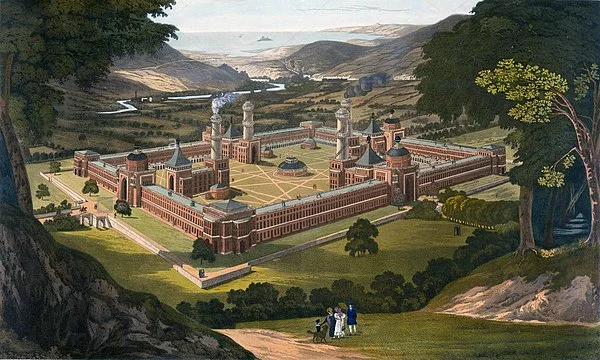
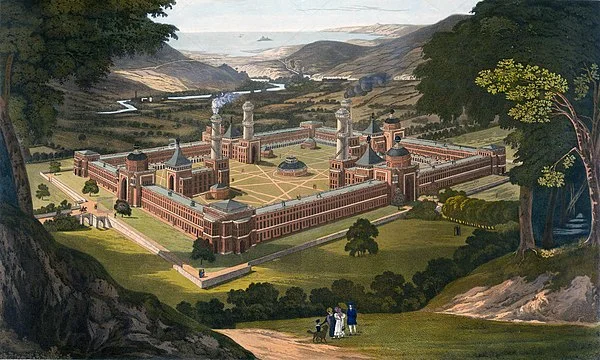
New Harmony, a utopian project in Harmony Township, Ind., as envisioned by Robert Owen. (1771-1858).

Empty shelves in a supermarket in Venezuela, which is led by socialist dictator Nicolas Maduro.
If you want a vision of the future, imagine a boot stamping on a human face – forever”
– George Orwell.
CBS News has announced that the "Medicare for All" bill of Vermont’s socialist senator, Bernie Sanders, would, according to Sanders himself, "get rid of insurance companies and drug companies making billions of dollars in profit every single year." The bill is a universal health care, one size fits all, tax financed, proposal. Connecticut's U.S. Sen. Dick Blumenthal, CTMirror reports, was one of 14 co-sponsors of Sanders’s bill.
“In my view,” Sanders said of his bill, “the current debate over 'Medicare for All' really has nothing to do with health care. It’s all about greed and profiteering. It is about whether we maintain a dysfunctional system which allows the top five health insurance companies to make over $20 billion in profits last year.”
But, of course, the Sanders bill has everything to do with health care. If adopted into law, it would effectively abolish insurance companies. Sanders himself has said that his "Medicare for All" scheme would "get rid of insurance companies and drug companies making billions of dollars in profit every single year.”
Reducing the insurance industry to rubble in an effort to curb profits that Sanders considers obscene is a bit like burning down the house to rid the living room of a mouse, or cutting off your nose to spite the fly on it.
For the thoroughgoing socialist however, all profits, exorbitant or not, are obscene.
The two socialist autocrats in Venezuela, Hugo Chavez and Nicolás Maduro, nationalized profits and, a few years after socialist hero Chavez had assumed room temperature, toilet paper in Venezuela disappeared, as did food and medicine. Disappearing products and services in perfected socialist states are replaced with armed soldiers, a disarmed populace, brown shirts and fists, not to mention draconian punishments for anyone who presumes to question an omnipotent and omnipresent state.
Sanders is a socialist by trade and inclination, and socialists abhor company profits, without which industries could not stay in business. Adolf Hitler, a white national socialist, solved the profit problem by incorporating businesses into his fascist program. Like communism, fascism is a perfection of the socialist idea. Both Hitler and Mussolini were socialists before they settled comfortably into fascism. Mussolini perfectly defined the fascist credo in the following terms: “Everything in the state, nothing outside the state, nothing above the state.”
He might easily have been describing Stalin’s Russia, or Maduro’s Venezuela, or the future utopia of Bernie Sanders. Mussolini certainly was not describing the average conservative/libertarian view of the proper role of government, which is to pursue policies that promote the general welfare – not the same thing as imprisoning the general populace in welfare penitentiaries.
The perfecting of Sanders’ s socialist scheme necessitates a hostile takeover of the insurance industry by the socialist administrative state. But this is only the beginning. If insurance profits are verboten to committed socialists, why should the energy industry, also profitable, survive the attentions of Sanders/Blumenthal, or the real estate industry, Blumenthal’s own golden goose? Indeed, why not nationalize every profitable industry?
It might be useful to attempt an understanding of why Blumenthal, a Greenwich millionaire many times over, supports a scheme of government that will run insurance companies out of Connecticut and the nation.
Theories abound. One holds that Blumenthal has never had a handle on how the private marketplace really works.
After marrying the daughter of a New York real-estate mogul – Blumenthal’s in-laws own the Empire State Building, in addition to other prime holdings – the Harvard/Yale graduate went directly into Connecticut politics. As attorney general of the state for two decades, Blumenthal used businesses as a foil to ingratiate himself with the voting public and a fawning state media, both equally indispensable to his acquisition of political position and power. Blumenthal is now schmoozing with Sanders, so the theory goes, to further his own political ambitions. Even Bill and Hillary Clinton, long-time friends of Blumenthal, had great difficulty keeping down Sanders’s elixir.
The second theory goes like this: The National Democrat Party is playing with the economic DNA of the United States – only for political (read: campaign) reasons. Seizing the profits generated by a still relatively free marketplace in the United States, encumbering it with unsupportable taxes and regulations, may not advance the general good, but it certainly helps to improve the lot of political destructors-elect. Socialist Maduros of the world live in opulent splendor, while the people who struggle under Maduro’s socialist rule in Venezuela, once a pearl of Latin America, are forced to search through garbage bins for their lunch.
In Blumenthal’s case, both theories may be true -- not that truth has anything to do with the daily operations of political shysters.
Don Pesci is a Vernon, Conn.-based columnist. Editor’s note: George Orwell was a democratic socialist.
The chowder mandate for marriage

Fish chowder
“Every New England girl who lived within the sound of the sea, four or five generations ago, counted a chowder kettle as an essential part of her “setting out.’’ When a bride left the family homestead, she carried with her a huge iron pot in which to make the hearty dish of fish, swimming in rich broth flavored with salt pork and onions.’’
-- Ella Shannon Bowles and Dorothy S. Towle, in their Secrets of New England Cooking (1947)
Llewellyn King: Democrats must avoid being tarred as 'socialists,' whatever that word actually means

Socialists in Union Square, New York City, on May Day 1912
Socialism is a toxic word in America, and so its happy adoption by some of the new stars of the Democratic left is to handle something that might blow up with lethal political consequences.
Words are the materiel of politics: its artillery, its infantry and its minefield, packed with unstable incendiary devices; hence the potency of one word, socialism.
Trouble is neither the opponents, who hold out anything to do with socialism as a plague that will engulf and destroy, nor the new wave of endorsers seem to have a clear idea of what socialism means. For the Democratic left it means the Nordic countries ,which, according to the old definitions of socialism, are not socialist. They are capitalist democracies with advanced social welfare.
Socialism, classic socialism, had at its bedrock a concept that is now curiously old and irrelevant, like a gas lamp. Socialism, in classic definition, states simply that the means of production should be owned by the workers -- understandable in the 19th Century and now an historical relic.
Karl Marx extended the struggle between workers and owners to embrace all of society as a great class battle between the workers and the owners; a struggle that embraced all aspects of endeavor.
Vladimir Lenin and the Bolsheviks seized on this as a means of total control. The state, representing the workers, would control everything and so a small cadre at the top could dominate as thoroughly and effectively as any emperor or monarch ever had, in fact more so.
Joseph Stalin dragged the idealism of the earlier communism down further and added a massive state apparatus of suppression and industrial-scale brutality.
In the hands of 19th-Century socialists, such as the Englishman Sidney Webb and his wife, Beatrice, who gave us the phrase “collective bargaining,” socialism was humanitarianism as a political system. Harsh events and evil men overtook them.
Communism failed in the botched Soviet Union, and even the word mostly came down with the Berlin Wall in 1989. Only Cuba and few other far, far left states clung to the appellation communist. China remains avowedly communist, but it has evolved into an autocratic mercantilism, far from Marx, Lenin and the rest. Venezuela tried communism and called it socialism.
All of Africa after the colonial withdrawal went for what they called socialist government and failed awfully. The new leaders were not so much attracted to the enlightenment of the Webbs or of the theories of Marx as to the lure of controlling everything. From the Limpopo River (South Africa’s northern border) to the Nile, they failed disastrously.
Those who cling to the word socialism, besides Sen. Bernie Sanders (I-Vt.), himself a durable anachronism, tempt to be tarred with the brush of the failed states, like Nicaragua and Venezuela.
Words play tricks with policy and they should be treated like munitions, useful in the battle but hazardous later. For example, whatever happened to the working class? They morphed into the middle class, and in so doing lost their old power base, the trade unions.
President Trump’s common-man populism is no substitute for a working union with its upward wage pressure, job security and healthcare. But unionism has lost its way, and the unions themselves have not found a new footing in the political firmament.
The Democratic left, which is in ascendancy, needs a new vocabulary to fit its goals. If it wishes, as it seems, to emulate the successful countries that lie along the Baltic Sea, it needs to define its goals outside of the old lingo of socialism. It should articulate its new tangible vision of a more equitable future, untainted with the toxic limitations of the past.
For the Republicans, though, socialism is the gift that has given and keeps on giving. It is the weapon of choice, made more potent by failures in countries which defined themselves as socialist.
In the battle of 2020, Venezuela is a conservative asset. If Sanders and the shining star of the left, Rep. Alexandria Ocasio-Cortez (D.-N.Y.) keep the appellation socialism alive, that is a laurel tied around the GOP’s best weapon.
Llewellyn King, based in Rhode Island and Washington, D.C., is executive producer and host of White House Chronicle, on PBS. His email is llewellynking1@gmail.com.
-
The Opioid Billionaire Sacklers at Tufts
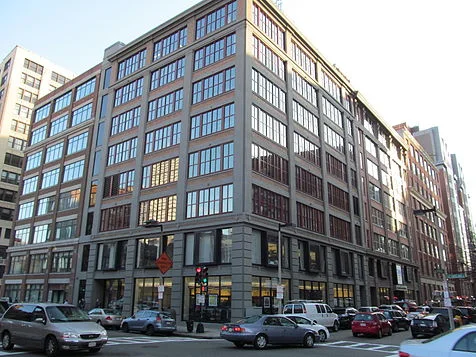
At the Tufts University School of Medicine, in Boston. Tufts’s main campus is in Medford.
From Robert Whitcomb’s “Digital Diary,’’ in GoLocal24.com
A disturbing story in the corrupting money chase in higher education has taken place at the Tufts University School of Medicine. There, the school acted from time to time in effect as a shill for Purdue Pharma. That’s the maker of opioid painkillers whose irresponsible (and worse) marketing of opioids at the relentless orders of the outstandingly greedy and status-obsessed Sackler family, which controls the company, has killed many thousands of patients. In what now seems incredible, people connected with Purdue had asserted for several years that their hugely lucrative drug OxyContin wasn’t addictive. All opioids are addictive.
STAT, the health-care news service, reported:
“A STAT review of court documents, two decades of academic papers, tax forms, and funding disclosures suggests that the family and company money that went to Tufts helped to advance their interests, generating goodwill for members of the family who were praised for their philanthropy and amplifying arguments about opioids that dovetailed with their business aims.’’
At one time, a Purdue executive, Dr. David Haddox, was a professor at the school, where he lectured on pain management.
A Massachusetts state lawsuit against Purdue said that the company’s and the Sacklers’ funding enabled it “to control research on the treatment of pain coming out of a prominent and respected institution of learning.’’
To read the STAT article, please hit this link.
Shefali Luthra: Planned Parenthood tries to revise its image

— Photo by S. MiRK
PROVIDENCE
The Trump administration is pushing ahead with its reproductive health agenda. It has rolled out changes to the Title X program, which funds family planning services for low-income people, that are designed to have a chilling effect on organizations that provide abortions or include this option in counseling. It also has nominated federal judges widely believed to support state-level abortion restrictions. (See visit to Providence clinic below.)
Against that backdrop, Planned Parenthood, known as a staunch defender of abortion rights, is working to recast its public image. Under its president, Dr. Leana Wen, who took office in November, the nation’s largest reproductive health provider is highlighting the breadth of care it provides — treating depression, screening for cancer and diabetes, and taking on complex health problems like soaring maternal mortality rates.
This strategy, analysts say, could buttress Planned Parenthood against the efforts by the White House and other abortion opponents. But it’s complicated. Even as the organization leans into its community health work, Wen isn’t abandoning the abortion-related services that have helped form the organization’s identity — and its opposition.
“We cannot separate out one of our services. That’s not how medicine works,” Wen told Kaiser Health News.
This effort to thread the needle could, if successful, change the public’s perception of Planned Parenthood. But if it backfires, it could make the organization even more vulnerable. Some people are skeptical of the payoff, given how polarizing abortion politics are.
“The minute you start talking about abortion, it’s a risky strategy,” said Karen O’Connor, a political scientist at American University who studies the politics of reproductive health care. It’s likely to attract strong reactions from people who see abortion providers not as reproductive health professionals but as “baby killers,” she said.
“If I was doing it — and this is as somebody who studies social movements and women’s organizations — I would take abortion out of the equation and talk about ‘reproductive health is health care.’”
Already, the new strategy is drawing fire from abortion opponents, who dismiss Planned Parenthood’s positioning as a frontline community health provider.
“This framing is simply a PR exercise,” said Mallory Quigley, vice president of communications at the Susan B. Anthony List, a Washington-based anti-abortion group. “I don’t think this campaign will be successful, and I don’t think it will last long.”
Reproductive health experts have a different view, saying Planned Parenthood’s effort to promote its array of health care offerings — including abortion — is consistent with reality and in line with top medical standards. To bolster this message, Wen, a former Baltimore health commissioner and the first physician to take the group’s helm, has embarked on a national listening tour.
“It’s who we are. We are a health care organization,” Wen said. “That’s what all of our affiliates do around the country, is meeting people where they are with the health services they need.”
So far, Wen and other Planned Parenthood officials have visited 17 affiliates in locations around the country. They plan to visit several more, Wen’s staff confirmed.
The idea is not to standardize what Planned Parenthood sites offer, Wen said, arguing that each clinic should take the lead in devising its own public health programs, based on its patients. Even so, the organization’s national leadership is working to identify the health programs that could be expanded and encouraging clinics around the country to consider implementing those best practices.
Recently, Wen and her team visited the organization’s Rhode Island clinic to investigate how it is planning to expand its primary-care offerings.
The clinic, a 10-minute walk from downtown Providence, serves patients of all genders and ages, its staff noted. It has upped its focus on things like wellness visits, along with its programs to make sure patients who want to have children are healthy before they get pregnant.
Wen also focused on the clinic’s efforts to reduce the area’s maternal mortality rates, a problem that afflicts low-income and black women at far greater rates. In 2018, 18.3 Rhode Island women per 100,000 births died from causes related to the pregnancy; for black women, the figure was 47.2 per 100,000, and for white women, 18.1. Planned Parenthood leadership touted proposed state legislation that would extend Medicaid coverage to doulas, non-medical birth coaches often seen as a valuable resource in reducing maternal deaths.
Wen tours a lab in the basement of a San Jose, Calif., clinic that processes tests for gonorrhea and chlamydia. “When I was in college, we did all the pipetting manually,” she told the staff.(ANNA MARIA BARRY-JESTER)
At a Planned Parenthood Mar Monte clinic in San Jose, Calif., staff members highlighted the facility’s mental health services — keeping behavioral health professionals in the building to help patients transition seamlessly into care — and its in-house testing center for sexually transmitted infections.
At both clinics, staffers talked about helping patients who face a threat of domestic violence find safe housing resources, and steering them toward available resources for things like healthy food.
Even while promoting that work — often overlooked by the public — Wen, a 36-year-old emergency doctor by training, emphasizes abortion services at each stop, trying to weave the message into the public health narrative.
In Providence, the Planned Parenthood team stopped by a news conference to talk about a local bill that, if the Supreme Court scales back Roe v. Wade, would explicitly legalize abortion protections in Rhode Island.
“Abortion is part of the spectrum of full reproductive health care, and we know reproductive health care is health care,” Wen said to applause. “And health care is a human right.”
But it’s unclear how the listening tour and messaging efforts will pan out politically. While a majority of Americans have positive opinions of Planned Parenthood, they are, polling suggests, evenly split on abortion.
“Planned Parenthood to some extent is taking a risky strategy by trying to thread these two. I see these as very different messages,” said O’Connor, the political scientist. “If you take out the ‘abortion is’ and go to reproductive health, you have a winning message that is very simple.”
In other ways, though, this branding effort perhaps comes at the right time, suggested Lucinda Finley, a law professor at the University at Buffalo. She ties the organization to what polling suggests is voters’ No. 1 concern, especially going into the 2020 election: health care.
Framing it as “‘Abortion is health care, health care is a human right’ links it to the larger debate about health care, and how we should provide health care to people in this country,” Finley said.
When asked if this messaging could politically insulate Planned Parenthood from conservative attacks — or win the organization new supporters — Wen suggested the community health emphasis is simply a response to medical needs.
“I don’t want people to think we are doing this because it’s politically the right thing to do,” she said. “It’s the right thing to do because that’s what our patients are requesting.”
Shefali Luthra: ShefaliL@kff.org, @Shefalil
Minnie's old Vermont

“Hairnet Drawer,’’ (hand-colored silver gelatin print; courtesy of the Vermont Folklife Center)., photographed by Neil Rappaport and colored by Susanne Rappaport, in the show “Up Home: Hand-Colored Photographs by Susanne and Neil Rappaport,’’ at the Bennington (Vt.) Museum, through June 11. The museum explains:
“Minnie Griswold died in 1952, at which time her sons locked up their mother's house in Pawlet, VT., and left all her belongings in place, untouched, unaltered. Thirty years later, Pawlet documentarians Susanne and Neil Rappaport were invited into the home and went on to produce a collection of hand-colored photographs of Minnie's home. This exhibition brings together the best in documentary work and artistic expression.’’

Ross E. O'Hara: Food insecurity at New England colleges
Via The New England Journal of Higher Education, a service of The New England Board of Higher Education (nebhe.org)
CAMBRIDGE, Mass.
Food insecurity—defined by the nationally respected Wisconsin HOPE Lab as the limited or uncertain availability of nutritionally adequate and safe foods, or the ability to acquire such foods in a socially acceptable manner—is a troubling trend on college campuses across the country, including in New England.
For example:
A 2016 survey by the Massachusetts Department of Higher Education found that 24 campuses operated or partnered with a food pantry, and a third saw an increase in the number of students utilizing that service.
A 2018 report by the HOPE Lab found that 44% of Massachusetts students at two-year colleges and a third of students at four-year universities were food insecure.
A 2018 study of nearly 1,000 students at the University of New Hampshire found 25% had experienced food insecurity in the past year, with first-generation students and students who receive financial aid at higher risk.
A 2017 study of several thousand students at the University of Vermont found up to 25% were food insecure, with significantly higher rates among students who identify as first-generation, persons of color, and transgender/queer/non-conforming.
As higher education becomes available to many who never before had access, more students than ever are forced to choose between meeting their basic needs and the costs of attending college. While institutions devise strategic solutions to avert this burgeoning crisis, one avenue of support that many students are not taking advantage of is the federal Supplemental Nutrition Assistance Program (SNAP).
In January, the U.S. Government Accountability Office (GAO) issued a report, titled Better Information Could Help Eligible College Students Access Federal Food Assistance Benefits, which acknowledges for the first time at the federal level the problem of college food insecurity.
The GAO goes on to recommend SNAP as a way to help many of these students cover their basic needs. Although a 1980 federal law bars college students from accessing SNAP—based on the outdated assumption that students’ parents will support them—it does grant exemptions for students who demonstrate need, for example, by working at least 20 hours per week or having dependent children. The GAO estimates that these criteria cover over 3 million low-income students nationwide, yet nearly two thirds of those eligible do not access SNAP benefits. How can we get more students who need assistance to sign up for SNAP?
The GAO puts its answer right in the title: Better Information. Many students are unaware of their eligibility, and many colleges are confused by the byzantine rules set forth by the federal Food and Nutrition Service (FNS). The GAO’s main recommendation to remedy this situation is for FNS to clarify the eligibility criteria on its website and make that information easier to find. While these steps will no doubt help, we now know too much about human psychology to think that better information is sufficient to solve this problem. We need to leverage behavioral science to nudge more students to access SNAP.
Behavioral science uses evidence-based strategies to frame and disseminate “better” information in a way that motivates action. These techniques are especially valuable when confronting food insecurity, a problem hidden by many students out of shame. Examples of these behavioral techniques include:
Social norms. The GAO reports that 80% of colleges surveyed struggled with “overcoming the stigma some students associate with accepting help for their basic needs.” Messaging that normalizes seeking help (e.g., “Many college students need help paying for food …”) can ameliorate that stigma by letting students know that they’re not alone in their challenge and move them to access needed resources.
Loss aversion. According to prospect theory, losing $10 is more painful than winning $10 is joyful. An MDRC study that leveraged loss aversion (e.g., “Don’t miss out! Ends April 29!”) increased attendance at an eligibility meeting for an income-supplement program by 73%. Messages that reframe SNAP as a benefit that can be lost, rather than something to be acquired, could motivate student uptake.
Removing hassle factors. Every step in applying for public benefits is a hurdle that can trip people up. A recent experiment by the U.S. Department of Health and Human Services showed that eliminating a prescreening form increased completed applications to adjust child-support payments by more than 12 percentage points. Colleges can remove hassle factors for students needing SNAP by housing related offices (e.g., financial aid; food pantry; counseling) within a single building, using student data already in their possession to automatically prescreen students for benefits, and streamlining application processes as much as possible.
Do techniques like these actually help students with food insecurity? Yes. My colleagues and I at Persistence Plus work with colleges across the country to enhance their student success initiatives through behavioral science. With regard to basic needs insecurity, colleges have witnessed firsthand how behavioral science increases the number of students who benefit from valuable campus resources, like food pantries and emergency aid. For example, an Ohio community college saw a 51% increase in use of the food pantry in just one month after students received a text message from us, such as “Some students miss meals due to $ but they’ve found help at the food pantry. Do you face this challenge?” Students who responded in the affirmative were provided with further social norming to reduce stigma and information on how to access emergency aid.
Behavioral science could enhance the impact of the myriad efforts of New England colleges to support students facing basic needs insecurity.
For example, Bunker Hill Community College, in Charlestown, Mass., has been a national leader in addressing food insecurity. Bunker Hill now houses New England’s first Single Stop location. This “one-stop shop” for connecting students to public benefits has been shown to increase persistence at U.S. community colleges by up to 11%. Bunker Hill is also evaluating a food voucher program that provides eligible students with $25 per week to spend at on-campus food service venues.
Many other colleges have now opened food pantries, such as the Magic Food Bus at Middlesex Community College, in Middletown, Conn. This renovated school bus (minus Ms. Frizzle’s pet lizard) has provided hundreds of students with non-perishable food, toiletries and other essentials. The University of Vermont this year piloted a meal-sharing program, operated by Swipe Out Hunger, where students with unlimited dining hall plans can donate meals to students with limited access. As these programs continue and expand, colleges should keep in mind how their messaging around basic needs insecurity could benefit from behavioral science to drive students to these resources.
The GAO’s recommendation to revamp the FNS website and make college students’ SNAP eligibility easier to understand is an important step, but behavioral science can take us further by enhancing the impact of better information using low-cost and evidence-based strategies. Stakeholders at the federal, state, and local levels should consider not only how to raise awareness of SNAP among colleges and students, but also how to leverage behavioral science to increase use of these funds so desperately needed by so many.
Ross E. O’Hara is a behavioral researcher at Persistence Plus. He shares his thoughts on behavioral science in higher education monthly in his blog, “Nudging Ahead.”
Todd McLeish: Running away from running bamboo

From ecoRI News (ecori.org)
Massachusetts and Connecticut keep a list of illegal and regulated invasive plant species and some nature groups want an updated one started in Rhode Island.
Invasives are plants and animals from a different country or region that reproduce quickly and spread on their own in a new habitat, often with harmful consequences.
They arrive in firewood, shipping containers, and ballast water, or on tire treads. They can be spread by birds or introduced unintentionally through scientific and agricultural research. Many invasive plants start as landscape and decorative plantings.
In Rhode Island, common land-based invasive plants, such as bittersweet, knotweed and multiflora rose, are easy to spot on roadsides throughout the state. These plants proliferate rapidly and are a stubborn nuisance to property owners and land trusts, killing trees and crowding out native species.
Legislation in the Rhode Island Senate (S411) would regulate running bamboo, a fast-spreading plant that quickly crosses property lines. It can penetrate asphalt and the siding of buildings. Many homeowners, not knowing the unintended consequence, plant running bamboo as a natural barrier that offers privacy and blocks out animals such as deer. But some invasive bamboo species can grow 40 feet high and their roots can travel 15 feet a year.
The Protection From Invasive Species Act would prohibit planting of running bamboo within 100 feet of a property line. The plants must otherwise be confined to a container or prevented from spreading roots.
Violators would be liable for the cost of removing the plant from a neighbor’s property, plus any damages. Retailers and landscapers would be required to provide customers written notice of the risks of running bamboo.
The Rhode Island Department of Environmental Management (DEM) would be granted authority to require the removal or destruction of running bamboo. A $100 fine would be imposed to first-time violators and up to $250 for repeat offenders.
Bittersweet vines are choking native plants and trees in southern New England. (Mass Audubon)
To address other invasives, the legislation requires DEM to create a list of invasive-plant species, regulate their sale, and enforce compliance. DEM, however, is opposed to the legislation because the state agency says it already regulates plant pests and can assess fines up $500 for transporting invasive aquatic plants.
DEM noted that it doesn’t allow federally designated noxious weeds to enter the state.
The Rhode Island Farm Bureau fears that the bill would lead to prosecution of farmers for invasive species that they didn’t plant. Bureau President Henry B. Wright III noted that the U.S. Department of Agriculture (USDA) gave multiflora rose to farmers in the 1950s as a control for erosion.
“The plant is now considered to be an invasive species by the USDA as it forms dense thickets that invade pastures and crowd out native species,” Wright wrote in a letter to the Senate Committee on the Environment and Agriculture.
Wright suggested that the state instead offer money to farmers and property owners for the removal of invasive plants.
In 2001, the Rhode Island Natural History Survey created a priority list of invasive plants through the Rhode Island Invasive Species Council.
“But our thinking on invasives has changed quite a bit,” said David Gregg, executive director of Rhode Island Natural History Survey. “There’s been a lot of change in the landscape and nursery industry in that time. And I think we need a new initiative.”
In 2003, Connecticut created a state list of invasives with enforceable rules. Massachusetts created a list of invasive plants in 2004.
Through the Natural History Survey, Rhode Island has been reducing invasives. Between 2010 and 2012, the state spent $300,000 of federal money to train professionals to remove invasive plants from state land and other natural habitat. Gregg noted that during that time the same invasive plants were being planted near these properties.
“In the survey’s opinion, it would be helpful to have an up-to-date list of noxious invasive plants supported by a public process and consensus,” Gregg said at an April 11 Senate committee hearing.
The bill is supported by the Rhode Island Land Trust Council.
The bill was held until a future hearing.
Todd McLeish is a journalist at ecoRI News.
MassMutual eliminating traditional job titles
From The New England Council (newenglandcouncil.com)
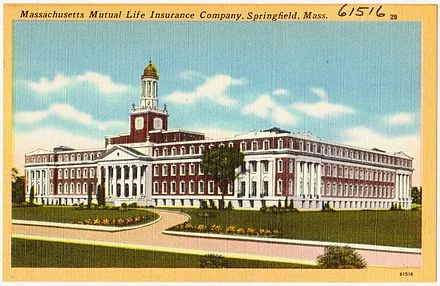
Springfield-based MassMutual, the insurance and other financial services company, has eliminated traditional job titles from their staff as part of a strategy aimed at creating a more agile and innovative environment for its employees. This approach comes from the idea that what you do is more meaningful than what you are called.
MassMutual began implementing these changes two years ago, starting with the executive titles at the assistant vice president level and above. As new hires were made, titles such as ‘head of’ or ‘lead’ were used instead of traditional descriptors. Rather than create more confusion, employees say that the new titles provide greater clarity around each employee’s role. Early employee feedback on the transition has been positive.
MassMutual’s head of Human Resources and Employee Experience, Susan Cicco, explained, “For us, it’s also about finding, attracting and retaining top talent that is intellectually curious and wants to work in a collaborative environment where they can continue to learn, gain experience, be empowered and valued for what they contribute.”
Boost employee stock ownership in Mass.
From Robert Whitcomb’s “Digital Diary,’’ in GoLocal24.com
‘Time and time again a local and highly successful small or medium-size business is bought by a much bigger enterprise from far away and then the jobs at the new local subsidiary are slashed, as are some of its other resources, such as charitable giving, that had benefited the host community.
One way to keep more of such companies locally based is to introduce employee stock-ownership plans, which tend to keep companies headquartered where many of their original employees live. Thus it was good to hear that the Massachusetts Office of Business Development plans to revive the state Office for Employee Involvement and Ownership (EIO); the agency was closed in the Great Recession.
Massachusetts and even Rhode Island are famous as birthplaces of dynamic companies, some of which grow to be very big but many of which end up being bought up by enterprises from far away that have little concern for the original loyal employees who helped get the firms off the ground.
There are various ways to launch employee-stock ownership plans, including bank loans to finance the creation of the plans. The plans could then buy a percentage of (or all of) these closely held companies’ stock, which in many cases would be owned by the founding entrepreneurs who want to retire or otherwise move on.\
Employee stock ownership can also address, in a small way, income inequality by spreading out profits earned by successful companies. In any case, it keeps more wealth in places where companies are founded, and is more likely to keep their morale, and thus productivity, high.
Communities are usually far better served with companies whose managers and other employees feel a commitment to their communities than with ones whose far-off owners just see their subsidiaries as pieces on a chess board.

Philip K. Howard: A radical centrist platform for 2020 --replace red tape with individual responsibility

Centrist politics don’t offer the passion of absolutist solutions. In the words of Rep. Alexandria Ocasio-Cortez (D-N.Y.): “Moderate is not a stance. It’s just an attitude towards life of, like, ‘meh.’”
But electoral success in 2020 likely will hinge on who attracts the centrist voters. One issue seems to unite most Americans: Frustration with how government works. Political scientist Paul Light recently found 63 percent of voters support “very major reform” of federal government, up from 37 percent 20 years ago.
For several decades, Americans have elected “outsider” candidates who promise some version of Barack Obama’s “change we can believe in.” Yet nothing much changes. The elections of Obama and Donald Trump can be viewed as symptoms of unrequited reform. When Obama’s promise of change got bogged down, 8 million Obama voters turned around and voted for Trump. Now Trump’s promise to “drain the swamp” is headed towards futility, amounting to little more than reversing Obama-era executive orders.
What’s missing is a governing vision that makes Americans part of the solution. Only then can leaders attract the popular mandate needed to overcome the resistance of Washington. Only then will there be a principled basis for officials and citizens to make practical choices going forward.
The best model for modern government is to revive the framework of democratic responsibility designed by the Framers: Replace red tape with human responsibility at all levels of society. This governing vision, though centrist, requires a radical simplification of Washington bureaucracies.
Over the past 50 years, almost without anyone noticing as it happened, the jungle of red tape in Washington has grown progressively denser — at this point 150 million words of detailed statutes and regulations (over 180,000 pages of the Code of Federal Regulations and over 40,000 pages of the U.S. Code). The effects of this build-up include bureaucratic paralysis and pervasive micromanagement of daily choices throughout society.
Bureaucracy is staggeringly costly. Common Good’s 2015 report, “Two Years, Not Ten Years,” found that a six-year delay in permitting infrastructure more than doubles the effective cost of projects. Twenty states now have more non-instructional personnel than teachers in their schools, mainly to comply with legal reporting requirements. The administrative costs of American health care are estimated to be as much as 30 percent — that’s about $1 trillion, or $1 million per physician.
Bureaucracy is a prime source of voter alienation. Many Americans today don’t feel free to be themselves — almost any decision, comment, joke, or child’s play activity can involve legal risk. Rule books tell us how to correctly run schools and provide social services. Small businesses are put in an almost impossible position of being regulated by multiple agencies with detailed requirements — a family-owned apple orchard in New York state, for example, is regulated by about 5,000 rules from 17 different regulatory programs. Fear of offending employees leads many companies to impose speech codes that, studies suggest, exacerbate discriminatory feelings.
Since Ronald Reagan’s tenure in the White House, the Republican mantra has been deregulation. Yet what frustrates most Americans is not public goals, such as safeguarding against unsafe work conditions, but micromanaging exactly how to organize a safe workplace with thousands of detailed rules. One-size-fits-all regulations often drive Americans to resistance, because rigid rules don’t honor tradeoffs, local circumstances, or a sense of proportion in enforcement.
This reform vision is simple: Focus regulation on goals and guidelines. Simpler codes will allow Americans to understand what is expected of them and will afford them flexibility to get there in their own ways. The reform is also radical: Legacy bureaucracies must be largely replaced with these simpler codes. Detailed rules would be limited to areas such as effluent limits where specificity is essential. The resulting regulatory overhaul would be historic, comparable in magnitude to the Progressive Era.
Area by area, recodification commissions would propose to Congress new codes. Public goals that require practical choices, such as overseeing safe and adequate services, would allow flexibility and local innovation. Instead of Big Brother breathing down our necks, Washington would be more like a distant uncle, intervening only when citizens or local officials transcended boundaries of reasonableness.
Not that long ago, that’s how government was organized. The Interstate Highway Act in 1956 was 29 pages long. Ten years later, over 20,000 miles of highway had been built. By contrast, the most recent highway bill was almost 500 pages long, and implemented by thousands of pages of regulations.
Law is more effective when people focus on goals. The Constitution is only 15 pages long, but its principles nonetheless are effective to protect our freedoms. Agencies where officials take responsibility for ultimate goals, such as the Centers for Disease Control and Prevention with its focus on disease reduction, accomplish more than those such as the Occupational Safety and Health Administration, which is organized around rote compliance with thousands of rules.
No one designed the current bureaucratic tangle. It just grew and grew more, as each ambiguity sprouted a new rule. Leaders can’t lead it, because the rules trump common sense. But that’s precisely why a new movement is needed. Legacy bureaucracies never fix themselves.
Philip K. Howard is chair of Common Good and author of the new book Try Common Sense (W.W. Norton, 2019). Follow him on Twitter@PhilipKHoward.
TAGS ALEXANDRIA OCASIO-CORTEZ DONALD TRUMP BARACK OBAMA POLITICS OF THE UNITED STATES DEMOCRATIC PARTY REPUBLICAN PARTY 2020 CAMPAIGN FEDERAL GOVERNMENT
Female-mannequin intimacy

Photo by Martine Gutierrez from her series “Girl Friends,’’ in her show “Life/Like: Photographs by Martine Gutierrez,’’ at the Mount Holyoke College Art Museum, South Hadley, Mass. through June 16. The museum notes that “Girl Friends’’ “depicts two same-dressed women in different places and poses, but despite their intimacy, one of the women is a mannequin, challenging the viewer's perception of reality.’’ Note that they’re both wearing wedding dresses.
.
Congestion pricing is coming

From Robert Whitcomb’s “Digital Diary,’’ in GoLocal24.com
So-called congestion pricing to control traffic is inevitable in Boston. It’s coming soon to Manhattan, where New York City officials plan to charge a toll, perhaps around $10 a day, for driving below 60th Street, at the southern end of Central Park. The idea, besides speeding traffic flow and reducing the emission of the greenhouse gases that cause global warming, is to use a lot of that money to fix up Gotham’s deteriorating mass-transit system.
Uber and Lyft, etc., already in effect engage in congestion pricing by charging higher prices during rush hours.
Nick Sifuentes, the executive director of the Tri-State (New York, New Jersey and Connecticut) Transportation Campaign, in a Boston Globe piece, notes that Boston’s traffic congestion is now America’s worst, with New York second. The cost of this, in lost productivity, pollution and mental and physical stress, is immense. Mr. Sifuentes reckons that congestion costs the average Boston commuter $2,291 a year and 164 hours (and growing) stuck in traffic.
And building yet more roads and/or widening the ones we have only helps briefly, before those two are filled, in a variant of the Parkinson’s Law “Expenditure rises to meet income.’’
He notes that: “The lesson is clear: Increasing road capacity only encourages more people to drive, creating more congestion, dividing neighborhoods, inviting sprawl, and polluting communities near and far from the new roadways. We also know it often isn’t enough simply to offer better public transportation; cities have to encourage drivers to change their habits — and as long as roads are free, there is little incentive for commuters to forego unnecessary trips or increase their use of public transit.’’
To read his piece in The Globe, please hit this link.
Through the green

One of Esther Pullman’s large-scale panoramic photographs in her show “Green Places/Green Spaces/Greenhouses,’’ at the Cape Ann Museum, Gloucester, through June 16. The museum says: “Shot over a 20-year period, these large-scale panoramic photographs of greenhouses explore such universal themes as the passage of time, the cycle of the seasons, death and rebirth, and have also unavoidably become a metaphor for our threatened planet.’’
'Shot heard round the world'
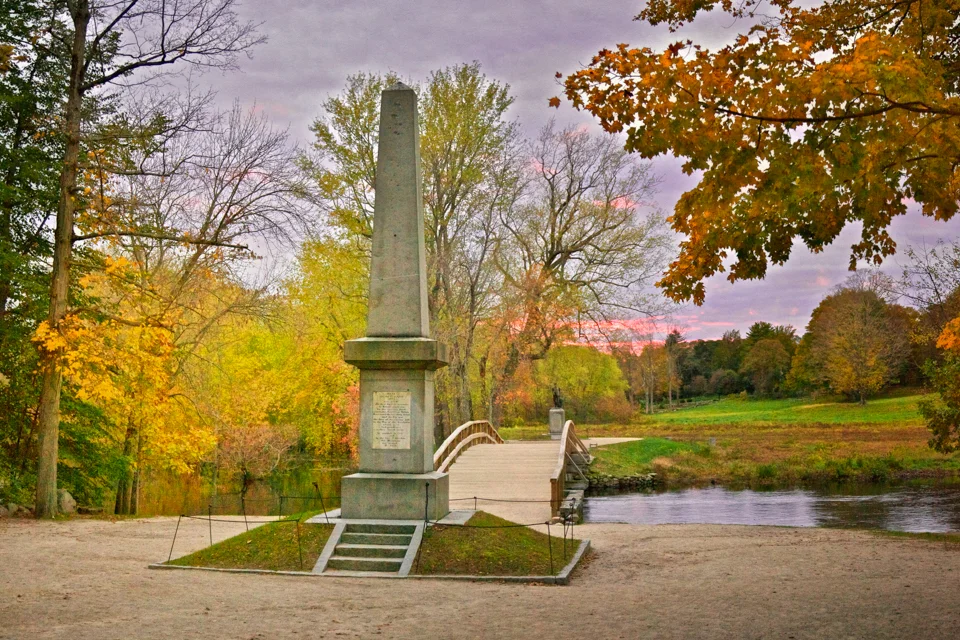
The current version of the Old North Bridge in Concord, site of the first major battle of the Revolutionary War, on April 19, 1775, the date once marked as Patriots Day in Massachusetts, though it is now set for “the third Monday in April.’’ There was a less important skirmish earlier that day in Lexington, down the road. The monument here celebrates that day, as does Emerson’s famous poem.
“Concord Hymn’’
Sung at the Completion of the Battle Monument, July 4, 1837
By the rude bridge that arched the flood,
Their flag to April’s breeze unfurled,
Here once the embattled farmers stood
And fired the shot heard round the world.
The foe long since in silence slept;
Alike the conqueror silent sleeps;
And Time the ruined bridge has swept
Down the dark stream which seaward creeps.
On this green bank, by this soft stream,
We set today a votive stone;
That memory may their deed redeem,
When, like our sires, our sons are gone.
Spirit, that made those heroes dare
To die, and leave their children free,
Bid Time and Nature gently spare
The shaft we raise to them and thee.
The art of fashion in Vermont

Fashion design by Natalia Martinez Sagan; photography by Nacho Lunadei, in the show “Unusual Threads: Stitching Together the Future of Fashion,’’ at the Southern Vermont Arts Center, Manchester, Vt., May 10-June 23. Manchester is an affluent vacation and weekend town, with a lot of high-end shops. Robert Todd Lincoln, son of the president, built his country estate there, called Hildene (picture of its mansion below). It’s now a museum. There are ski areas nearby.