
Vox clamantis in deserto







Put office workers on boats

An MBTA ferry arrives at Rowe’s Wharf, on the Boston waterfront. It’s named after a popular historian of the New England coast.
Adapted from Robert Whitcomb’s “Digital Diary,’’ in GoLocal24.com
Now, this is the way to get people to use mass transit: A bunch of companies in Boston’s Seaport District have arranged for a new ferry service between the district and North Station to only cost $5 for a one-way ticket instead of the $13 it costs now. The service is basically geared to the eight companies’ employees, though there will be space for other people, too. Now they’ll be able to avoid some of the headaches of ground transport in downtown Boston, and this will reduce the number of congestion-and-pollution-causing corporate shuttle buses carrying folks between North Station and the Seaport.
Meanwhile, Boston Harbor Now is promoting two new ferry routes to state officials: one linking some Boston Harbor wharves and the other connecting with Quincy. The more cars off the road the better, and most ferry travelers arrive at their destinations happier than if they drive or take a bus.
Llewellyn King: British exceptionalism and new realities

British Fantasyland
Confused about Brexit? Then let me tell you about my father. He was born when the British Empire was still in bloom and being British was to inherit a divine state of grace. It was an exceptionalism. You carried the long and varied history of Britain with you. It was your honor and your obligation.
My father was born in Southern Rhodesia (now Zimbabwe) and only visited Britain briefly. But he was quintessentially British and, more than that, English.
He was neither well-lettered nor well-travelled; he earned his living with his hands as a mechanic. But his commitment to “King and Country” was absolute. He believed in Britain as the source of all good things, from justice to innovation. That’s why when war broke out in 1939, he volunteered immediately for the Rhodesian regiment which was forming. He was rejected because he couldn’t fully straighten his left arm which he had broken as a child.
No matter. He sold all the family’s possessions and with my mother, my 3-year-old brother and me, just months old, we took a six-day train journey with very little money to the South African port of Durban. He figured that The Royal South African Navy would be less interested in medical status than the infantry. He was right and he went to sea. Hugely important to him: he could serve.
In London in 1962, I worked for Lord Beaverbrook, the Canadian press lord who had been a big part of the war effort, a close friend of Churchill, and a man violently opposed to Britain joining the precursor to the European Union, the Common Market. My job was to help the effort to keep Britain out with the help of the influential Beaverbrook press -- think Rupert Murdoch style media -- and to mobilize support against anything to do with the nascent European project.
The men and women I met were socially and intellectually far more accomplished than my father, but they had the same flame, the same basic belief in British exceptionalism. They believed in honor, duty, justice, but also that Britain, especially England, had an exceptional role in history: It was chosen. It’s a belief so deep that it’s primal, coming from a far place in the psyche.
The overt arguments we assembled were economic: Beaverbrook said, and I believed, the British farmer would be hurt, British trade would suffer and the precious empire -- now in its new non-imperial guise as the Commonwealth -- would be imperiled. Beaverbrook was wrong and, of course, I was wrong, and so were the Britain-first people we spoke for and sometimes recruited.
When Britain finally joined Europe, in 1973, the farmers, and the economy in general, were to bloom. Britain strengthened its position as Europe’s financial hub as well as the point of entry into Europe for global companies. Its own exports to Europe boomed: At one time, and perhaps still, half the pizza shells in Italy were made in Britain.
Now that economic order is to be disrupted, damaged or destroyed. Britain is going back to a glorious place that only existed in myth: the pre-European days when, without glory, it was still recovering from loss of empire and World War II.
When I try to imagine why this is happening, I find the arguments about “sovereignty, freedom and faceless bureaucrats in Brussels” even more empty than Beaverbrook’s fictions which I once peddled. I hear instead the brave music of a distant drum, the echoes of past victories, inventions and achievements, “Rule Britannia” in a minor key.
Winston Churchill said of the Seven Years War, “mankind was not to be spared the rigors of the human pilgrimage.” Neither, alas, it seems, is Britain.
As to my father, he lived many years in the independent African country Botswana teaching his trade and harboring in his home newborn African babies, who were fatherless and whose mothers had to work. He, unlike his sentimental compatriots, realized that times had changed, and that the Britishness of yesteryear was, well, of a time gone by and best left to BBC costume dramas such as Downton Abbey.
Llewellyn King is executive producer and host of White House Chronicle, on PBS. His email is llewellynking1@gmail.com and he’s based in Rhode Island and Washington, D.C.
Linda Gasparello
Co-host and Producer
"White House Chronicle" on PBS
Mobile: (202) 441-2703
Website: whchronicle.com
Franklin Institute, Boston announce tuition-free plan

Main building of the Benjamin Franklin Institute of Technology
This is from The New England Council (newenglandcouncil.com)
The Benjamin Franklin Institute of Technology (BFIT) and the City of Boston unveiled a new program that will provide tuition-free community college to incoming and enrolled students next year. This program targets those studying to obtain their associate’s degree within three years.
The institute is a non-profit private college of engineering and industrial technologies established in 1908 with funds bequeathed in Benjamin Franklin's will.
Students enrolled in the new program must be Boston residents who graduated from a high school within the Boston Public Schools system, graduated as a METCO student, or earned their HiSET or GED from a Boston institution. While some area schools are already participating in this program, such as New England Council member Bunker Hill Community College, BFIT is the first private institution to participate. These programs are funded by the Neighborhood Jobs Trust, which collects linkage fees on big sale commercial development in Boston.
Anthony Benoit, president of BFIT, explained, “A lot of kids leave high school saying ‘oh I’ll get back to that’ and then it turns into year after year where don’t go back so this is specifically designed to say ‘go right to school, don’t wait just keep going to school.’”
Boston Mayor Marty Walsh said, “The investments being made in our city by the people developing and building in our city and taking that money and putting it back into a program that offers education for people to move forward. . . That’s the best way to do it. . . We will continue to make college more accessible and affordable and that’s the way you make a better Boston.”
xxx
Editor’s note; The school recently announced plans to sell its three-building campus at 41 Berkeley St. and build a campus elsewhere that would be around 30 percent bigger.
The Benjamin Franklin Institute of Technology (BFIT) in Boston, Massachusetts, is a non-profit private college of engineering and industrial technologies established in 1908 with funds bequeathed in Benjamin Franklin's will.
The grandeur of the cartoon art
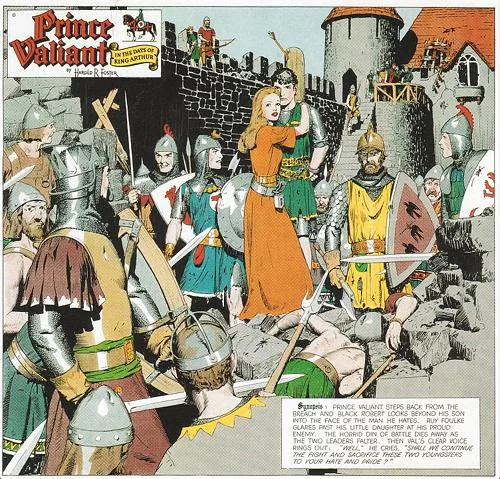
“Prince Valiant,’’ by Hal Foster (January 21, 1951 © King Features Syndicate, Inc.) in the show “Masterpieces from the Museum of Cartoon Art’’ at the Bruce Museum, Greenwich, Conn., through April 20.
This exhibition, the museum says, displays over 100 original works celebrating the history of the cartoon, with everything from comic strips and editorial cartoons to caricature and animation. These works are on loan from The Ohio State University Billy Ireland Cartoon Library and Museum, which received them as a donation from the original Museum of Cartoon Art. The museum, founded in 1974 in Greenwich, was the first museum dedicated to collecting, preserving and exhibiting cartoon art in America.
Warming up on Great Blue Hill

The famous weather observatory atop Great Blue Hill.
— Photo by jameslwoodward
Adapted from Robert Whitcomb’s “Digital Diary,’’ in GoLocal24.com
Observations at the famous Blue Hill Observatory, atop Great Blue Hill in Milton, Mass., show that over the past three decades there have been nearly six times as many daily records broken for heat as for cold. The hill, at 635 feet above sea level, is the highest one on the East Coast south of Maine.
Don McCasland, program director at the observatory, which has kept weather data since 1884, told The Boston Globe that the average annual temperature is, in The Globe’s words, “warming at Blue Hill much faster than in the past. Temperatures rose less than 1 degree from 1820 to 1919, but just over 2 degrees from 1920 to 2019.’’
“That is 3 degrees warmer in two centuries, and that is a large increase in a short amount of time,’’ he told The Globe.
To read The Globe’s story, please hit this link.
Blue Hill is famous for many dramatic weather events there, perhaps most notably for the 186 mph gust recorded there in the Sept. 21, 1938 hurricane.
The hill is also a cute ski area, and I have happy memories of the inexpensive fun it provided. It has snow-making machinery; it couldn’t be in business without it, especially as winters get shorter.

Yves Salomon-Fernandez: College completion and the new world of work

Logo of Greenfield Community College.
From The New England Journal of Higher Education, a service of The New England Board of Higher Education (nebhe.org)
GREENFIELD, Mass.
For Massachusetts—a state that ranks third highest in the nation for cost of living—a local educated workforce is critical. A tight labor market exists for a competitively skilled workforce across vocational/technical and professional positions. The future of work in the era of the Fourth Industrial Revolution is disruptive and paying attention to it is a strategic imperative for Massachusetts.
Recently, the Massachusetts Department and Board of Higher Education made “equity” a priority for the public higher education sector. This is potentially a game-changer. Over the past three decades, the racial wealth divide in the U.S. has grown significantly. Black and Latino families are more likely to have zero to negative wealth. A 2015 report of the Federal Reserve Bank of Boston showed that the trends in wealth disparities hold true in Massachusetts.
Community colleges in Massachusetts enroll more than 45% of students matriculating at public higher education institutions. As income and wealth disparity grow in our state and as we become increasingly diverse, a focus on equity of access and outcomes, like college completion, becomes imperative for the continued economic vitality of the state. More than 80% of community college graduates remain in Massachusetts. Investing in completion for community college students is a very safe bet.
Managing completion expectations
A focus on college completion is essential for our state. However, the public discourse on completion rates at community colleges generally reveals a very superficial understanding of community college students and the resources available to colleges to address the impediments to student success. For starters, 65% of students who enroll at community colleges in Massachusetts are not ready to undertake college-level work. Getting them ready for college-level work as they matriculate part-time and manage the complexity of their lives means added time to completion. The barriers to college completion are not rooted in problems that can be solved with simple performance and accountability—although both are needed.
Community colleges have the most comprehensive mission in the higher education sector. Our students come with the most complex assets and deficits. We serve the most academically gifted and the least prepared. We are “open access.” Students come directly from high school and come as adults who never enrolled or finished their postsecondary education. They may take a few courses to help them build the confidence to matriculate in bachelor’s degree programs and transfer without graduating. In rural communities, we know that community colleges are even more crucial for the local economic vitality. In a longitudinal study of more than 2,000 rural communities in 44 states, Washington State University scholars Andrew Crookston and Gregory Hooks found that job growth rates were significantly greater in rural areas with a community college versus those without one.
To understand the challenges related to completion at community colleges, one needs to fully grasp the profile of students attending these open-access institutions. A 2018 study by the Georgetown University Center on Education and the Workforce showed that low-income students, who predominantly attend community colleges, struggle to balance work, secure food and housing for themselves and their families, attain good grades and ultimately graduate. Many also struggle to find reliable child care.
Implications of the Fourth Industrial Revolution
Change is here. More than prior periods of technological advance, the Fourth Industrial Revolution is marked by its rapid and unparalleled change. Significant advancements in technology are leading to unprecedented displacements of workers, especially in the lowest-skilled and lowest-paid jobs. Technology, knowledge, talent and industries are converging in ways that demand that our academic and workforce programs be more interdisciplinary and more integrated. Nanotechnology, genetic engineering, biocomputers, media, 3D printing and other technologies have radically changed information technology, telecommunications, agriculture, healthcare, manufacturing and so many other industries.
We need new approaches to workforce development—a change in paradigm for the mid-21st century and beyond. Moreover, Massachusetts should equitably manage its growth in ways that relieve congestion in parts of the state and intentionally address population declines in areas that also happen to have lower cost of living.
Where do we go from here?
If we wish to achieve a Massachusetts where residents have more disposable income, can afford to live in the state—and where we are preparing students for jobs that are being created but don’t yet exist—we must make significantly increasing community college completion rates a statewide priority. Below are some considerations for state policymakers:
1. Coordinate statewide investment in high-impact practices that lead to completion across the board, not as competitive annual contests where funding is not guaranteed.
2. Give community colleges the autonomy to decide how best to invest funding for high-impact and innovative practices. This also assumes that funding is adequate enough and is sustained over multiple years.
3. Understand that rural areas have more socioeconomic diversity than racial diversity. Formulas that emphasize population density and define diversity only in terms of race and ethnicity limit higher education opportunities for the rural poor.
4. Expand early college high school in ways that benefit both K-12 school districts and community colleges (especially in rural areas).
5. Develop a statewide assessment of preparedness for jobs of the future, identify key industries for regional investments, and align funding and accountability with workforce and equity goals identified through this process.
Yves Salomon-Fernandez is president of Greenfield Community College, in the Pioneer Valley, in western Massachusetts. She sits on the Federal Reserve Bank of Boston’s Community Development Advisory Council. Her Twitter handle is @PrezYves.
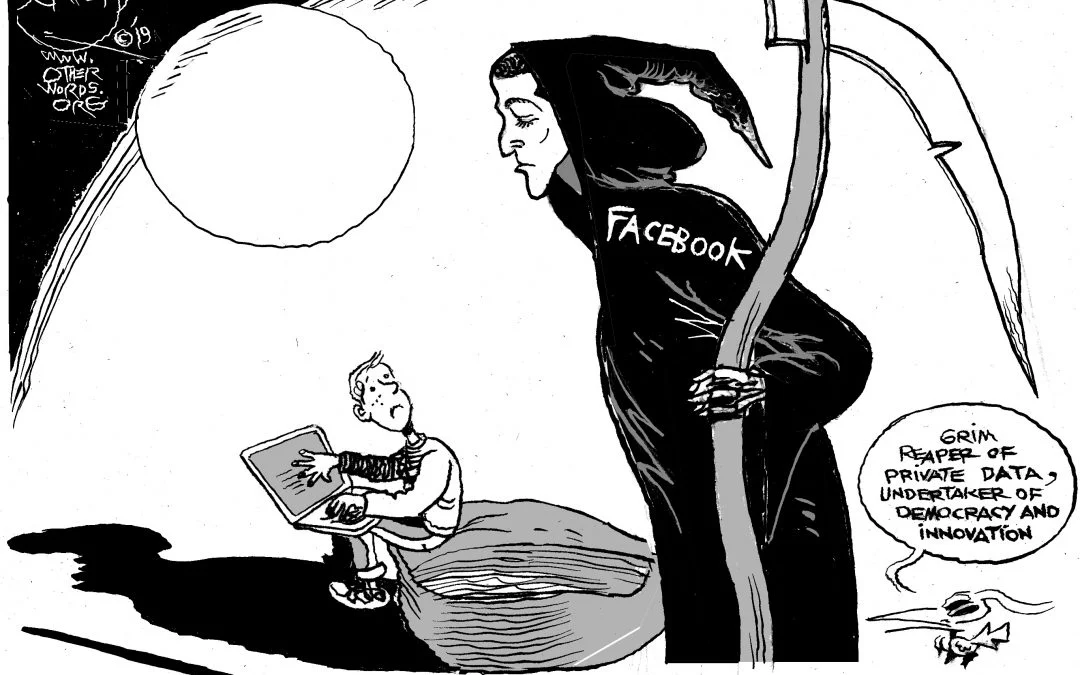
Joshua Adams: We all practice 'identity politics'
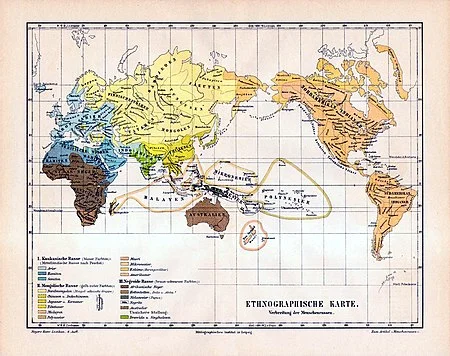
The “three great races” according to Meyers Konversations-Lexikon of 1885-90. The subtypes of the Mongoloid “race’’ are shown in yellow and orange tones, those of the Caucasoid “race’’ in light and medium grayish spring green-cyan tones and those of the Negroid “race’’ in brown tones. Dravidians and Sinhalese are in olive green and their classification is described as uncertain. The Mongoloid “race’’ has the widest distribution, including all of the Americas, North Asia, East Asia and Southeast Asia, and the entire inhabited Arctic as well as most of Central Asia and the Pacific Islands.
Via OtherWords.org
SALEM, Mass.
As the 2020 presidential campaign lurches to a start, get ready to hear a lot about “identity politics.”
If a candidate mentions or draws attention to her race, gender, or sexuality, some people say, she’s making our country “more divided.” We need to stop engaging in identity politics and start appealing to the “average” American, they say.
Which raises the question: Just who is “average”?
To be blunt, I’m convinced the charge of “identity politics” is mostly cynical. It’s a rhetorical whip used to guilt women, queer folk, and minorities into not advocating for their specific political needs. It’s as divisive as the division it claims to combat.
I was born in raised in Chicago — a microcosm of our country’s immense diversity as well as its segregation. Being a black man from the south side of Chicago, I have experiences that are different from someone who lives in a majority-white town in southern Illinois.
Why is mentioning this difference divisive? How does remaining silent about the specific issues that affect me help?
Politicians can’t talk to “average” voters. They have to persuade real people — voters with different backgrounds, who share most of the same concerns, but sometimes different ones. People accused of practicing “identity politics” are often just people fighting for the particular issues that affect them.
People who are critical of this are often blind to the ways that ordinary politics center their own (real or imagined) identity. Politicians direct “identity politics” to them all the time — they just can’t see it.
For example, when white people in Appalachia demand jobs, better health care, and a public health response to drug addiction, politicians in both parties scramble to promise all of those things and more. When black Chicagoans ask for the same resources, the response is often: “No, what you need is more police.”
It would be hard to imagine Donald Trump going to a small town in Ohio and making only one comprehensive appeal to white voters there: “What do you have to lose?” Obviously those voters would feel they deserve a more detailed pitch than a dice roll. So why did we find it acceptable when he offered exactly that — political crumbs — to African-American voters in 2016?
When Republicans come to African -American communities and historically black colleges, often the very first thing they do is “remind” the audience that the GOP is “the party of Lincoln.” These same conservatives often blast identity politics as a distraction from policy issues, yet bring up oversimplified history that has no relevance to the present black experience instead of policy.
Pundits on Fox News often suggest that residents of the “heartland” are “more” American than those who live in major cities or on the coasts. What is that other than identity politics, appealing to people’s sense of “we deserve more” and “they deserve less”?
When people blame “illegal immigrants” for “taking their jobs” but never critique the businesses and corporations that exploit workers of all races, that’s identity politics, too.
All communities have the right to accurately, clearly, and genuinely state what they want — not to be told what they need. When we accept underlying ideas about who “deserves” help and who doesn’t, that’s based on two identities: who we think “we” are and who we think “they” are.
That’s called “identity politics.” The trick is that we don’t see it as “politics” when it appeals to our own identities.
Joshua Adams is a writer, journalist and assistant professor at Salem State University.
Jobs from wind; needed nuclear
From Robert Whitcomb’s “Digital Diary,’’ in GoLocal24.com
Best of luck to public officials and some businesses in Southeastern Massachusetts who are trying to get a bigger emphasis on onshore investment –- e.g., building more port infrastructure – in state negotiations with offshore wind farm companies on the price of power generated by their turbines. Their central argument is that more of what may well become a major industry should include considerably more direct local jobs.
But the main economic benefit of these wind farms will not be in direct jobs to install and service the wind farms but in making New England less dependent on polluting fossil-fuel from outside the region, and, as wind-power technology continues to improve, eventually lowering electricity costs for business and everyone else.
Meanwhile, Connecticut’s new governor, Ned Lamont, has helped the environment by backing an agreement to keep open the largest nuclear-power plant in New England, the two Millstone reactors, in Waterford.
He said: “The shutdown of the plant would have exposed the New England region to a nearly 25 percent increase in carbon emissions, increased risk of rolling blackouts, billions of dollars in power-replacement costs, and the loss of more than 1,500 well-paying jobs.”
We will need at least some nuclear power to keep the lights on during the long transition off fossil fuel.
The biggest challenge of nuclear power is where to store the radioactive waste; though there are geologically safe places to store it, such as Yucca Mountain, in Nevada, politicians hear the cries of constituents and keep rejecting proposals to store the stuff.
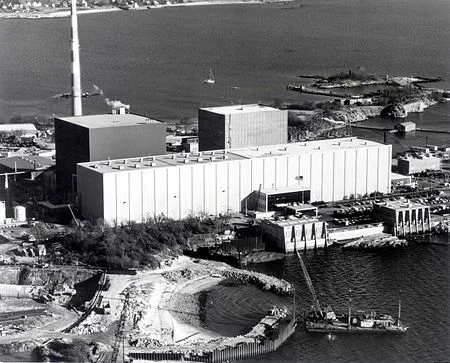
The Millstone Nuclear Power Plant, on Long Island Sound
Before Fenway Park

The Huntington Avenue American League Baseball Grounds in Boston, home of the Red Sox in 1901-11. They moved to the newly built Fenway Park in 1912. The first perfect game in the modern era was thrown here by Cy Young, in 1904. Oh yes, the Red Sox were then owned by the son of the publisher of The Boston Globe.
— Thanks to our Boston Guardian colleague David Jacobs for forwarding this.
At PCFR: Why they flee to our border; Brazil's right turn; Indian castes here & there; tense Taiwan Straits

Mayan Civilization stela in Honduras
Next at the PCFR: Central American challenge; Brazil’s new boss; Indian caste system there and here and PRI foreign correspondence; Plucky Taiwan
Herewith some upcoming talks at the Providence Committee on Foreign Relations (thepcfr.org; pcfremail@gmail.com), which are held at the Hope Club. Please consult thepcfr.org for information on how to join the organization and other information about the PCFR.
We much enjoyed the March 14 talk by Miguel Head, who spent the past decade as a senior adviser to the British Royal Family!
At the next meeting, on Thursday, April 4, James Nealon, the former U.S. ambassador to Honduras, will talk about Central America in general and Honduras in particular, with a focus on the conditions leading so many people there to try to flee to the United States – and what the U.S. can and should do about it.
A career Foreign Service officer, Ambassador Nealon held posts in Canada, Uruguay, Hungary, Spain, and Chile before assuming his post as Ambassador to Honduras in August 2014; Nealon also served as the deputy of Gen. John F. Kelly, while Kelly was in charge of the United States Southern Command.
After leaving his ambassadorship in 2017, Mr. Nealon was named assistant secretary for international engagement at the Department of Homeland Security by Kelly in July. During his time as assistant secretary, Ambassador Nealon supported a policy of deploying Homeland Security agents abroad. He resigned his post on Feb. 8, 2018, due to his disagreements with the immigration policy of Donald Trump, and, specifically, the withdrawal of temporary protected status for Hondurans.
xxx
Then, on Wednesday, April 10, the speaker will be Prof. James Green, who will talk about the political and economic forces that have led to the election of Brazil’s new right-wing president, Jair Bolsonaro – and hazard some guesses on what might happen next. Professor Green is one of the world’s leading experts on that huge country – 208 million people and eighth biggest economy.
Professor Green, who teaches at Brown, is the Carlos Manuel de Céspedes Professor of Latin American History and director of Brown’s Brazil Initiative, Distinguished Visiting Professor (Professor Amit) at Hebrew University, in Jerusalem, and the Executive Director of the Brazilian Studies Association (BRASA), which is now housed at the Watson Institute at Brown.
Green served as the director of the Center for Latin American and Caribbean Studies at Brown from 2005 to 2008. He was president of the Brazilian Studies Association (BRASA) from 2002 until 2004, and president of the New England Council on Latin American Studies (NECLAS) in 2008 and 2009.
xxx
Then on May 16 comes Phillip Martin, senior investigative reporter for WGBH News and a contributing reporter to Public Radio International’s The World, a co-production of WGBH, the BBC and PRI -- a program that he helped develop as a senior producer in 1995. Basing his comments on his recent reporting for PRI, he’ll talk about the Indian caste system and how it extends into the Indian immigrant community in the U.S. He’ll also talk about the very challenging role of foreign correspondents in contemporary journalism. Many PCFR members have probably often heard his resonant voice on public radio.
Mr. Martin is the recipient of the Society of Professional Journalists 2017 Sigma Delta Chi award for Best Investigative Reporting and the 2014 national Edward R. Murrow Award for Best Investigative Reporting(large-market radio ). He also was honored with 2013 New York Festivals and United Nations UNDPI Gold Awards. He was part of a team of reporters that was honored in 2002 with a George Foster Peabody Award to NPR for coverage of the September 11th terrorist attacks in the U.S. He has received numerous other journalism and civic engagement honors over the course of his career.
He earned a master's degree in law and diplomacy from the Fletcher School of Law and Diplomacy at Tufts University and studied international protection of human rights law at Harvard Law School.
xxx
On Tuesday, June 4, Douglas Hsu, a senior Taiwanese diplomat who currently oversees that nation’s interests in New England, will speak to us about current political and economic conditions in that nation (one of Rhode Island’s largest export markets), and China’s military and other threats to Taiwan.
Frank Carini: Newport Dinner Train cited for herbicide use

The Newport Dinner Train back in 2009.
From ecoRI News (ecori.org)
PORTSMOUTH, R.I.
Last fall the Newport & Narragansett Bay Railroad Co. was cited by the Rhode Island Coastal Resources Management Council for spraying herbicide within 200 feet of coastal features without approval.
The unauthorized spraying of poison by the North Kingstown-based operation, which runs the Newport Dinner Train, along railroad tracks that run along the West Passage of Narragansett Bay, including through coastal wetlands and people’s backyards, caused “vegetative alterations,” according to the Coastal Resources Management Council (CRMC).
The spraying was in violation of the Rhode Island Coastal Resources Management Program, which notes that the indiscriminate use of herbicides or the clear-cutting of vegetation is prohibited.
The Sept. 20, 2018 notice of violation noted that failure to comply would result in a cease-and-desist order.
In January, a railroad representative signed a consent agreement, agreeing to clean up the dead vegetation from the rail corridor over the winter. The Newport & Narragansett Bay Railroad Co. paid an administrative fine of $250, which is common practice when a violator agrees to sign a consent agreement to resolve a violation.
It was also agreed that the company would submit a long-term vegetation management plan, as company officials told CRMC that regular maintenance of the vegetation would be needed.
The deadline for the company’s vegetation plan was March 30. As of April 1, no plan had been received, according to a CRMC official. She said enforcement will likely do a site inspection this week to see if the company is in compliance.
“Buffer zones along the perimeter of coastal water bodies can be effective in trapping sediments, pollutants … and absorbing nutrients (particularly nitrogen) from surface water runoff and groundwater flow,” according to CRMC. “The effectiveness of vegetated buffers as a best management practice for the control of nonpoint source runoff is dependent upon their ability to reduce the velocity of runoff flow to allow for the deposition of sediments, and the filtration and biological removal of nutrients.”
Coastal buffer zones also provide habitat for native plants and animals.
“Vegetation within a buffer zone provides cover from predation and climate, and habitat for nesting and feeding by resident and migratory species,” according to CRMC. “Some species which use coastal buffer zones are now relatively uncommon, while others are considered rare, threatened or endangered. These plants and animals are essential to the preservation of Rhode Island’s valuable coastal ecosystem.”
Frank Carini is editor of ecoRI News.


Don Pesci : Long after 'The Little Pink House' outrage, a rectification bill

“The Little Pink House’’ in New London was moved to another location after a long, unsuccessful protest by its owner, property-rights advocate Susette Kelo. The property upon which it rested was seized by eminent domain so that it could be made available to Pfizer Inc. It was a rare seizure. Usually, property seized under eminent domain is made available for some public purpose. In the Kelo case, the Fort Trumbull Property was transferred from one private owner to another private owner to further economic development. The property was seized by the state because New London wished to induce Pfizer to set up shop on the property. Pfizer moved on; nature soon reclaimed the vacant property.
Kelo lost her battle when the U.S. Supreme Court shamelessly decided in favor of the City of New London, in Kelo v. City of New London, 545 U.S. 469 (2005).
The case produced two notable dissents, one written by Justice O'Connor, joined by Chief Justice Rehnquist and Justices Scalia and Thomas, and a separate, originalist dissent written by Thomas.
Noting that the taking represented a reverse Robin Hood intent – taking from poor householders and given to a wealthy company – O’Conner argued that the majority decision eliminates "any distinction between private and public use of property — and thereby effectively delete[s] the words 'for public use' from the Takings Clause of the Fifth Amendment… Any property may now be taken for the benefit of another private party, but the fallout from this decision will not be random. The beneficiaries are likely to be those citizens with disproportionate influence and power in the political process, including large corporations and development firms.”
Thomas argued that the court had relied upon false precedents, and he accused the majority of replacing the Fifth Amendment's "public use" clause with a very different "public purpose" test. “This deferential shift in phraseology,” Thomas noted, “enables the Court to hold, against all common sense, that a costly urban-renewal project whose stated purpose is a vague promise of new jobs and increased tax revenue, but which is also suspiciously agreeable to the Pfizer Corporation, is for a 'public use’… Something has gone seriously awry with this Court's interpretation of the Constitution. Though citizens are safe from the government in their homes, the homes themselves are not.”
Pfizer is gone, “The Little Pink House’’ has been moved, the stinging dissents have lost their sting, but there are two Connecticut legislators who are not in the habit of forgetting grievous wrongs: State Rep. Tami Zawistowski, who has produced a rectification bill that has been co-sponsored by Rep. Gail Lavielle. Both women are work-horse legislators rather than tinsel-top show-horse representatives pushing the latest enticing snake oil legislation.
“I find it problematic,” Zawistowski said, "that opponents would like to have available other people's property for economic development or transit-oriented development unfettered by protections of private property rights. If they're building a highway or rail line for public use - fine, but a shopping mall or apartments near a rail line where someone is going to make money? No. I get it if properties are blighted or abandoned - but there are other statutes that will allow that.”
On the question of property rights, the right and left in the Supreme Court converged, if only in dissent; in so doing, the dissenters were reaffirming the views of Thomas Jefferson on the preeminence of the right to own and dispose of property:
“The right to procure property and to use it for one's own enjoyment is essential to the freedom of every person, and our other rights would mean little without these rights of property ownership. It is also for these reasons that the government's power to tax property is placed in those representatives most frequently and directly responsible to the people, since it is the people themselves who must pay those taxes out of their holdings of property… Charged with the care of the general interest of the nation, and among these with the preservation of their lands from intrusion, I exercised, on their behalf, a right given by nature to all men, individual or associated, that of rescuing their own property wrongfully taken."
Zawistowski's bill would right a wrong, reaffirm a masterful dissent that brought together both Justices O’Connor and Thomas in a stirring defense of the right of property holders, and ring loudly Jefferson’s liberty bell in defense of a right “admitted by all” – even “before the establishment of government.”
Committee Bill No. 5123 affirms that “No real property may be acquired by a redevelopment agency by eminent domain pursuant to section 8-128 under a redevelopment plan under this chapter for the purpose of producing income from such real property to a private entity or for the primary purpose of increasing local tax revenue.”
Any bill that brings together in agreement Supreme Court justices of the right and left, that is affirmed by the founders of the Republic, and that protects the natural free rights of all the citizens of Connecticut against predatory corporations allied with unconstitutional political interests, must be affirmed by legislators of good will acting in a non-partisan manner for the greater good of the people of Connecticut.
This one should proudly pass through the Connecticut General Assembly with its banners unfurled.
Don Pesci is a Vernon, Conn.-based columnist.
i
'What has to be there'

— Photo by Alice Abbott Kimball
To make do, making a living:
to throw away nothing,
practically nothing, nothing that may
come in handy:
within an inertia of caked paintcans,
frozen C-clamps, blown strips of tarp, and
pulling-boat molds,
to be able to find,
for whatever it's worth,
what has to be there:
From “Eaton’s Boatyard’’ (in Castine, Maine), by the late Philip Booth

David Warsh: Of Brexit and Czechoslovakia

“Chaos,’’ by George Frederic Watts.
SOMERVILLE, Mass..
Is anything more worth saying about the analytics underlying Britain’s options with Brexit? I think so – in this case, by an expert on the fate of the socialist economies of Eastern Europe when they moved from plan to market, leaving the old Comecon treaty tying them to trade within what had been the Soviet bloc .
Peter Murrell, an East Anglian, cast his last vote in England in 1975, in the referendum on whether Britain should remain in Europe. He voted to leave, for many of the same reasons that Brexiters cite today. He believed that Europe was too culturally diverse to expect integration to work well with Britain, especially open borders. Free trade agreements would have been enough to further a close relationship, he reasoned then.
But in 1975, 64 percent of the electorate voted; two-thirds of them preferred to remain. Murrell left for the United States. Today he is professor of economics at the University of Maryland, and the author, 30 years ago, of an unparalleled study of the difficulties facing the socialist economies’ transition.
In The Nature of Socialist Economies: Lessons from Eastern European Foreign Trade ( Princeton, 1990), Murrell offered a detailed empirical study of patterns of trade of nine socialist countries. He found that the determinants of the most important differences between capitalism and socialism lay outside the scope of the standard neoclassical model. He adopted a Schumpeterian or evolutionary view instead, emphasizing innovation and the information-sharing that takes place within multinational corporations. He predicted that transition policies based on the standard view might end badly. By then it was too late, of course, but in general he was right.
In 1975, Murrell says, the cost of Britain leaving what was then called the European Economic Community would have been trivial. The cost of leaving the European Union today will be enormous. Tennyson was wrong when he wrote “Tis better to have loved and lost than never to have loved at all,” Murrell says. In the case of institutional integration, it would have be better to have never entered a relationship than to have been in one and have to leave.
It could, however, be worse – much worse – if Britain crashes out of the European Union without an agreement. Murrell is, he says, “quite optimistic” about the long-term future of Britain. The problem now is to limit the damage to be wrought in the short-run. It is here, he says, that the official studies are badly wrong.
When I asked Murrell to expand on this, he jotted down his thoughts.
The formal analysis about the economic effect of a hard Brexit relies on the theory that exiting a set of institutional arrangements simply has an effect that is of the same size and opposite sign of entering the arrangements. The Bank of England’s analysis assumes the magnitude of the effects of integration and de-integration are symmetric. The Treasury’s analysis simply ducks the issue: “This analysis focuses on the long-term impacts of the UK’s exit from the E.U.…the impact on the U.K. economy after it has adjusted to the change in economic relationship. Therefore, the analysis cannot incorporate or attempt to forecast any potential short-term disruption or any associated long run impacts.”
This assumption that exit equals negative entry cannot hold. In a slow evolutionary process, businesses adapt to a specific set of institutional relationships. At the same time, they form relationships with other businesses on whom they can depend, in which trading relationships are supported by a history of trustworthy behavior and the personal trust that can only come from deep knowledge of one’s trading partner.
After a set of rules have been in place for many years, businesses have built up a large amount of productive organizational and relationship capital. Day-to-day operations are dependent on that capital. This capital is also a means by which businesses can be confident that their opportunities in the future will look similar to those in the past, allowing them to plan and invest for the future.
That organizational and relationship capital is destroyed when politicians radically change a set of rules, thereby foreclosing possibilities for trade that go with these rules. There is a resultant drop in productivity in the short-term, a fall that has no long-term relevance. There is “deer in the headlights” phenomenon as well: future-oriented actions are not being taken because of the huge uncertainty about what the future will look like.
(A nuance here is often overlooked: Why does opening up possibilities not do the same thing as the foreclosing of possibilities, since that opening up immediately changes the types of competitors a firm will have? The answer is that when possibilities are opened up, the effect on firms will happen only slowly, as other firms adapt. In the foreclosing of possibilities by government fiat, that change must happen overnight.)
So how might economists forecast the effects of such exiting? Well the standard procedure would be to look at similar instances in the past, and if there are sufficient instances use them in a statistical analysis. However, to quote the Bank of England “There is no precedent of an advanced economy withdrawing from a trade agreement as deep and complex as that which the UK has with the EU.”
But this is not quite right. The appropriate precedent is one where a society has chosen to change a large proportion of the rules under which its economy functioned, literally overnight. The EU is not only about trade but also about the very rules that set the framework for the economy.
What is the closest precedent of a society overthrowing the rules for its economy in very short order, including asking firms to reorient their trading relationships very quickly? The closest is the transition in Eastern Europe, beginning in 1989 after Soviet President Mikhail Gorbachev let those countries determine their own futures.
The general picture that emerged from those times was one of economic chaos in the first years, with production and sales deeply damaged by the loss of suppliers cut off by the new arrangements. In turn, with sales declining, firms could no longer pay their debts and this led to crisis for all their trading partners. Supply-side recessions resulted, leading to large falls in national income, and in many countries political reactions that even questioned the turn away from communism.
For a specific parallel to Brexit, consider Czechoslovakia.
Of all the countries in Eastern Europe, Czechoslovakia would be surely the one that was able to make an immediate success of the transition process. The country had been the best managed of all the Eastern European countries during the socialist era. It entered the transition as the richest, without any legacy of foreign debt to stymie its progress. After its Velvet Revolution in 1989, there was near unanimity on the general goal of creating a market-capitalist-democracy.
Bordering the richest part of Europe, the country could expect a huge array of trading opportunities to become easily available. A group of competent technocrats took charge of the economic transition process.
They decided to take their time, to plan for change, rather than to rush headlong into the process. A year was devoted to planning, with the dramatic change of system to occur on Jan. 1 1991. That year of planning was a period of economic stability.
Initially, the auspices were good. Strong in 1990, under the soon-to-be demolished old system, GDP grew by more than 5%, buoyed by very strong retail sales. Therein lies a first lesson for Brexit. The anticipation of problems ahead leads to behavior that might temporarily boost the economy, with the hoarding of supplies and the desire to buy objects that might no longer be available once the changes hit.
In Czechoslovakia, this indeed was the calm before the storm. During 1991, GDP dropped by 20 percent, retail sales by 14 percent, construction output by 35 percent, the number unemployed went from under 10,000 in the beginning of 1990 to over 500,000 by the end of 1991. And the list could go on…
What happened to all those marvelous new opportunities in Western Europe, not much more than 100 miles from Prague? Trade to the West expanded slowly during 1991, and foreign direct investment in Czechoslovakia remained at paltry levels. Of course, this situation dramatically changed in just a few years, but the fact is that new opportunities do not lead to immediate results. New knowledge has to be developed and new relationships forged.
There we have the most important lesson from transition. The route to the Promised Land begins with a steep downhill section. Despite its huge inefficiencies and woeful institutions, the old system could provide much more well-being in the short-term than the chaotic move to what would turn out to be a much better world in the long-run.
And remember that Czechoslovakia was changing to a system that all knew would be more productive in the long-term. This is a very dubious proposition in the case of Brexit. And the political support for the changes in Czechoslovakia was very strong. Any Brexit will begin with half the country deeply opposed.
A third lesson about the dangers may be learned from Czechoslovakia: The country no longer exists. As always in times of great change, there are those who lose more and those who lose less. In Czechoslovakia, reflecting differential links to the old and new, the eastern part was hit much harder than the western part.
These two parts are now the independent countries of Slovakia and the Czech Republic, separating from each other on Jan. 1 1993. For sure old enmities played a part, but so too did the tensions brought about by the widening disparities between the two regions, disparities that could not be addressed in the swift move to the new system.
In Britain 56 percent of voters in Northern Ireland and 62 percent of voters in Scotland voted against Brexit. If Brexit occurs and it brings new hardships, there is no doubt then Brexit will be regarded as yet another instance of “Perfidious Albion’’. A break with Scotland and the renewing of the ‘‘troubles’’ in Northern Ireland are distinct possibilities.
Mervyn King, former governor of the Bank of England, ventured a much more optimistic opinion last week, contradicting his successor, Mark Carney. Six months of planning would be enough to mitigate dislocation costs, King said. “The more wild, exaggerated view that somehow we’re going to have queues of lorries on the M20 for five years or more is pretty absurd.”
Murrell told me, “He’s quite right that it is absurd. After six months, the lorry drivers will give up and exports to the E.U. will be down by a half!”
In Richard II, Murrell notes, John of Gaunt laments over the decline of “this royal throne of kings, this scepter’d isle”, observing that “That England, that was wont to conquer others, Hath made a shameful conquest of itself”. That’s it in a nutshell, he says. Shakespeare had it right.
David Warsh, a veteran economics and political columnist, and an economic historian, is proprietor of economicprincipals.com, where this piece first ran. He is based in Somerville,
Vertigo in downtown Providence; stripes in Namibia

Above, painting by Jim Bush in his joint show with Paul Murray (below), “From Providence to Namibia, ‘‘ at the Providence Art Club through April 19.

By Paul Murray
The chaining of a student strip

On Thayer Street
Photo by Rhododendrites
From Robert Whitcomb's "Digital Diary,'' in GoLocal24.com
On March 18, GoLocal had a story about how national chains have taken over Providence’s Thayer Street, heavily populated by students from Brown and RISD. It reminded me of how much quieter the retail strip was in our first stretch in Providence, in the late ‘70s. Then, the restaurants, with the exception of the International House of Diabetes, ah I mean Pancakes, and all the shops were one-off local establishments. The street had a kind of quaintness, such as little gift shops run by genteel blue-haired ladies.
All long gone, and the street could now be almost anywhere, with a few exceptions, most notably The Avon, the old art deco-ish movie theater, Andrea’s restaurant and Spectrum India. To me the biggest disaster was the closing, in 2004, of the College Hill Bookstore, with its eclectic, even inspired collection of books and magazines. It was far more interesting than the still very bland Brown Bookstore. The College Hill Bookstore was the hub of the street, killed by the Internet, as with so many local shops. (Spectrum India was on Thayer Street before moving into the College Hill Bookstore’s site.)
That Brown has grown, and become more of a national and international school, is another reason that the quirky New England aspects of Thayer Street have mostly disappeared. The Thayer Street retail strip could now be almost anywhere, which may be quite all right with most of the college community that now uses it.
I sort of like the much more crowded, city-like (including bigger, taller buildings) and perhaps more dynamic Thayer Street of today, although I and many neighbors also miss the often sleepy charm of 40 years ago.
Then you have the city’s other big student neighborhood – the one that has developed in downtown Providence, with the expansion there of Johnson & Wales University, RISD, URI and Roger Williams University bringing remarkable change. Now there are many more people downtown day and night than three decades ago, and it’s become much more of a residential as well as commercial neighborhood. This has offset much or all of the effects of the exit of many big companies from downtown over the past few decades. It may be hard to believe now but Providence used to be a major corporate-headquarters town.
Anyway, the recent transformation of downtown has been very heartening considering how abandoned it looked, especially after office hours, not so many years ago.
To read the GoLocal story, please hit this link.
Sneaky month

The sun was warm but the wind was chill.
You know how it is with an April day
When the sun is out and the wind is still,
You're one month on in the middle of May.
But if you so much as dare to speak,
A cloud comes over the sunlit arch,
A wind comes off a frozen peak,
And you're two months back in the middle of March.
— From “Two Tramps in Mud Time,’’ by Robert Frost
The past isn't past

“George Nugent grave, Somme, France, ‘‘ by Bonnell Robinson, in her joint show with photographer Richard Zauft at Lesley University’s VanDernoot Gallery, Cambridge, Mass. through April 7.
Robinson shows photographs of World War I fronts, which she's been photographing for over a decade. "What amazed me was how much remains in evidence of that conflict," she told the gallery. "Unusual contours of wheat fields, undulating hillsides too regular to be natural, occasional debris or rubble, unexploded and rusting shells left by farmers by the roadside to be picked up by demolition teams. …The scars are still visible, haunting and deeply disturbing."