
Vox clamantis in deserto










William Morgan: The door guy of Brooklyn, Conn.
Twenty years ago, we were restoring our newly acquired house, a 1915 vicarage in Providence, and needing a front door. My wife, Carolyn (who was our contractor), phoned Rudy Rzeznikiewicz in Brooklyn, Conn., and asked him if had a 42-inch wide, six-panel door. "I have one," replied the man who has over a thousand doors for sale.

Rudy Rzeznikiewicz and Carolyn Morgan
Rudy's operation, Brooklyn Restoration Supply, is centered in two former chicken houses. One holds the doors, mantles and balusters from three centuries, along with salvaged hardware, while the other is filled with old wood–boards and beams. Spread across a large yard in between is a serendipitous collection of all sorts of architectural bits and pieces spared the wrecking ball or the landfill, plus dozens of granite millstones.

Some of Rzeznikiewicz's 1,000 doors
There's nothing fancy about Rudy's place: there is no computerized inventory, no refreshments, no place to sit, and you cannot pay with a credit card. Yet people in the antiques and home-restoration business know about this treasure trove and come from all over to this most rural part of Connecticut

Just a fraction of the flooring and paneling available
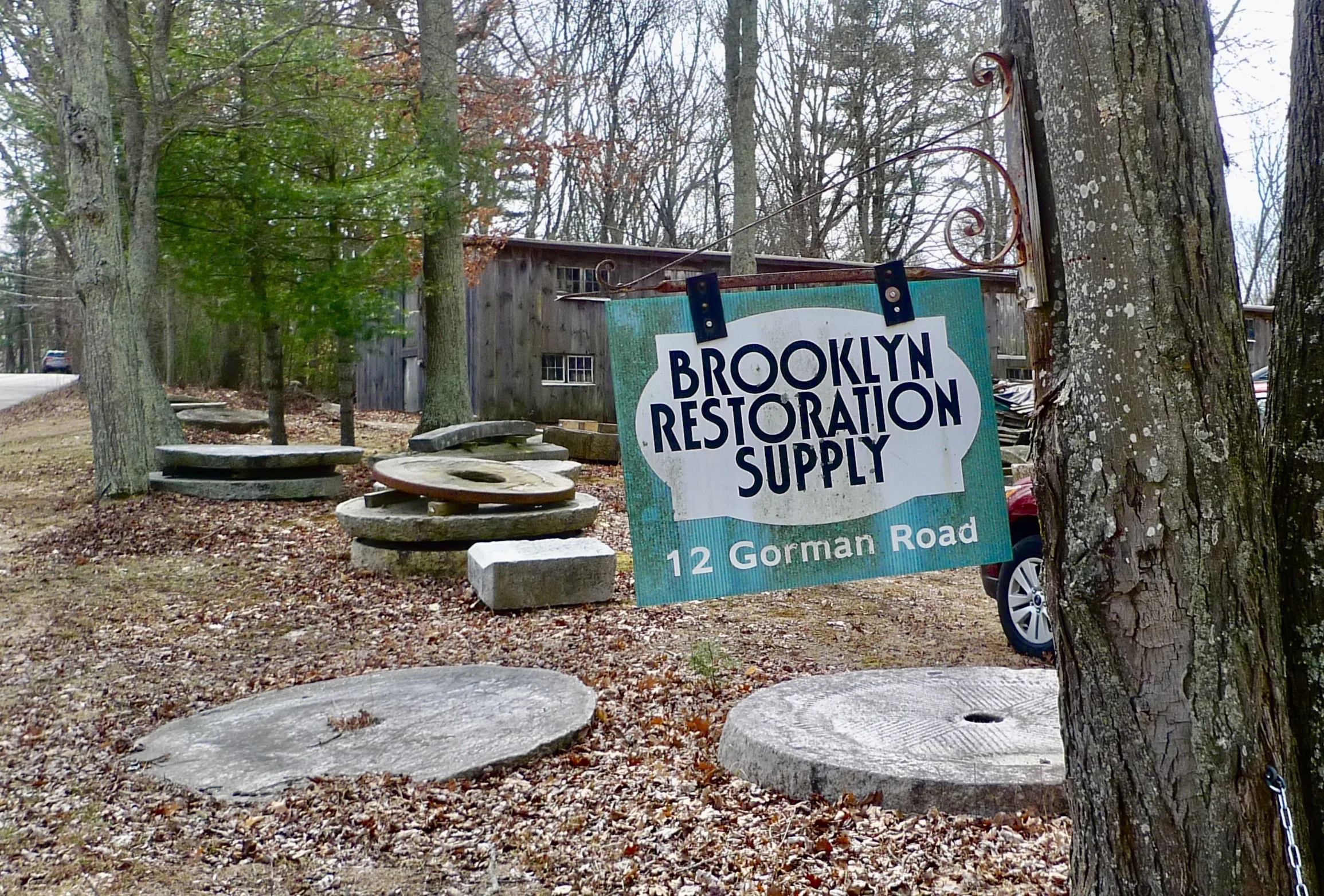
Some of the many millstones
But the best thing about Rzeznikeiwicz's operation is Rudy himself. Even if we are not in search of a specific board or piece of hardware, we like to go to Brooklyn just to spend time with this knowledgeable, fascinating, and honest antiquarian. (Rudy was a valuable source when I was researching books about early American houses and churches.)

Rudy Rzeznikiewicz
Rudy looks much the same as when we first met him two decades ago, although he will be 90 his next birthday. Half of that span has been spent guiding those fixing up houses by rescuing and recycling the superior materials of pre-Home Depot days. He started dairy farming here as a teenager. And, typical of so many rural New Englanders, Rudy has patched together a life of all sorts of jobs – assessor, bus driver, postman, firefighter – that has let him stay on the family farm where he was born.
Providence-based writer William Morgan has a degree in restoration of historic architecture from Columbia University. He is the author of, among other books, The Cape Cod Cottage and American Country Churches.
A matter of priorities

After the Visitor Spoke
After the visitor spoke at my high school about climate change,
I could not stop crying.
“Do you want to talk about it?” a counselor asked.
I shook my head.
I did not want her in my life.
Besides, she would never believe
I was crying because Matt twirled Steffie’s hair during the lecture
And I heard him ask her to the prom.
— Felicia Nimue Ackerman
Judith Graham: More joint-replacement patients rehabbing at home

Hip- joint replacement.
Older adults and their families often wonder: Where’s the best place to recover after a hip or knee replacement — at home or in a rehabilitation facility? A Brown University-linked study addresses that issue.,
Increasingly, the answer appears to be home if the procedure is elective, friends and family are available to help and someone doesn’t have serious conditions that could lead to complications.
This trend is likely to accelerate as evidence mounts that recuperating at home is a safe alternative and as hospitals alter medical practices in response to changing Medicare policies.
The newest data comes from a March study in JAMA Internal Medicine of 17 million Medicare hospitalizations of people from 2010 to 2016. All the patients were older adults and went home or to a skilled nursing facility after a medical procedure or a serious illness. Knee and hip replacements were the most common reason for these hospitalizations.
People who were sent home with home health care services demonstrated the same level of functional improvement as those who went to a skilled nursing facility (assessments examined their ability to walk and get up and down stairs, among other activities), the study found. And they were no more likely to die 30 days after surgery (a very small percentage in each group). Overall, costs were significantly lower for patients who went home, while hospital readmissions were slightly higher — a possible signal that home health care services needed strengthening or that family caregivers needed better education and training.
“What this study tells us is it’s certainly safe to send people home under many circumstances,” said Dr. Vincent Mor, a professor of health services, policy and practice at Brown University’s School of Public Health who wrote an editorial accompanying the study.
The new report expands on previous research that came to a similar conclusion. In 2017, experts from New York City’s Hospital for Special Surgery published a study that examined 2,400 patients who underwent total knee replacements and were discharged home or to a skilled nursing facility for rehabilitation between May 2007 and February 2011. There were no differences in complication rates at six months or in functional recovery and patient-reported outcomes at two years.
“As a result of these findings, we are encouraging all of our patients to consider home discharge after TKA [total knee replacement],” the authors wrote.
The year before, researchers at New York University reported in JAMA Internal Medicine that from 2009 to 2012 and 2013-14, discharges to rehabilitation facilities fell from 68 to 34 percent for patients undergoing hip and knee replacements, from 71 to 22 percent for patients with cardiac valve replacement surgeries, and from 40 to 30 percent for patients who’d had spinal fusion surgery. Instead, more people were sent home to recover. During this period, NYU Langone Medical Center assumed financial responsibility for “episodes of care” for joint replacements that include the post-hospital recovery period — a policy that Medicare is now promoting.
Diane Rubin, 67, who lives on Long Island, had a hip replacement at the NYU medical center in January. Before the surgery, she got a list of things she’d need to do to prepare for her recovery; afterward, a nurse and physical therapist visited her at home regularly for about three weeks. “I was more comfortable recuperating at home and I’ve had absolutely no complications,” she said.
How do physicians decide where to send patients? “In general, we tend to send patients to skilled nursing facilities who are older, sicker, more deconditioned after surgery, and who have no spouse or caregiver, fewer resources and little social support,” said Dr. Leora Horwitz, a co-author of that study and associate professor of population health and medicine at New York University School of Medicine.
Though it’s widely believed that people who live alone might not do well going home, last year researchers at The Rothman Orthopaedic Institute at Thomas Jefferson University in Philadelphia published research showing that isn’t necessarily the case. At their institution, patients are assigned a nurse navigator who provides assistance before and after hip or knee replacements. Patients who lived alone stayed in the hospital longer and received more home health care services than those who lived with others.
When they recuperated at home, the Rothman Orthopaedics patients didn’t have higher rates of medical complications, returns to the hospital or emergency room visits than those who went to rehabilitation facilities. Nearly 90 percent of people who lived alone said they’d again choose a home discharge.
Dr. William Hozack, a co-author of the study and professor of orthopedic surgery at Thomas Jefferson University Medical School, acknowledged that patients who go to rehabilitation are probably sicker and more debilitated than those who go home, potentially biasing research results. Still, practices have changed considerably. Today, he and his colleagues send 95 percent of patients who get hip and knee replacements home to recover, instead of directing them to institutions.
People shouldn’t underestimate how much help they may require at home, especially in the first few weeks after surgery, said Carol Levine, director of the United Hospital Fund’s families and health care project, who has had two hip replacements. The potential downsides to going home include a greater burden on caregivers and the possibility that complications won’t be identified as quickly, needs will go unmet if friends and family can’t pitch in, and people won’t follow through on recommended rehabilitation regimens. And outcomes may not be as favorable if services that support people at home aren’t readily available
Utah’s Intermountain Healthcare, a health system that operates 23 hospitals and nearly 170 medical clinics, is bringing an array of services — palliative care, dialysis, primary care and hospital care — into the home through its new Intermountain at Home program. Recovering at home after a hospital procedure is also a focus, and Intermountain has created standardized procedures for hip and knee replacements over the past few years, according to Rajesh Shrestha, the system’s chief operating officer of community-based care.
Every joint-replacement patient going home after surgery now gets a thorough assessment to determine the resources that are needed. A care plan is created and a case manager, usually a registered nurse, makes sure that physical therapy, durable medical equipment and home health care are supplied. The case manager also coordinates postoperative care with orthopedic surgeons and makes sure that patients reconnect post-surgery with their primary care physicians. And a team of providers is available 24/7.
During the past few years, discharges to rehabilitation facilities have declined by half at most of Intermountain’s Utah facilities, with no notable increase in complications or hospital readmissions, Shrestha said. During 2018, 85 percent of knee replacement patients and 88 percent of hip replacement patients went home after surgery, respectively.
At Kaiser Permanente, a health plan with more than 12 million members, a substantial number of patients who get elective hip and knee replacements are skipping a hospital stay altogether and going home the same day. In Kaiser’s Southern California region, same-day joint replacement home discharges now total about 50 percent, according to Dr. Nithin Reddy, who oversees joint replacements for the region. (Kaiser Health News is not affiliated with Kaiser Permanente.)
Kaiser Permanente has made this possible by changing how procedures are done (an anterior approach for hip replacements, for example), introducing new protocols for pain management (opioids are used less frequently), altering anesthesia protocols (less general anesthesia and more regional anesthesia), reducing blood transfusions and hiring “total joint coordinators” (typically nurses) to help with the transition from the hospital to home. All patients go home with home health care, receive two outreach calls the week after surgery and get comprehensive handbooks with checklists of what to do before and after surgery and common concerns to look out for.
“We have very robust discharge criteria: Patients have to have well-managed pain and be able to get in and out of bed by themselves and in and out of the restroom by themselves. And they need to be able to walk 50 to 75 feet unassisted, using a walker,” Reddy said. “If they can’t do those things, they aren’t safe for a home discharge and [rehabilitation at] a skilled nursing facility would come into play.”
Magdalena Ritayik, 66, one of the doctor’s patients, had a knee replacement last September after cortisone shots stopped working and pain became a constant companion. Six years before, her husband had both knees replaced, separately, and stayed in the hospital three days each time. By contrast, Ritayik went home the afternoon after her surgery, only to find a nurse and physical therapist waiting there for her.
“The nurse went over all the medications, when to take them and how much. The physical therapist showed me how to do bending and stretching with a chair in the living room and to raise [my leg] while I was lying on the bed,” Ritayik said. “The first week you have to stay home. After the second week, I was walking almost like regular. A month after the surgery, I was at full extension and full bending.”
We’re eager to hear from readers about questions you’d like answered, problems you’ve been having with your care and advice you need in dealing with the health care system. Visit khn.org/columnists to submit your requests or tips.
Judith Graham is a Kaiser Health News reporter.
Judith Graham: @judith_graham
Layers of light and shadow

“Slow Autumn’’ (mixed media on paper), by Sabrina Garrasi, in her show at Lanoue Gallery, Boston, through April 27.
The gallery says:
“Through Garrasi's deft handling of watercolor, gouache, ink, acrylic, tempura and 22kt gold leaf, she creates translucent layers with ethereal qualities of light and shadow.’’
The fire this time

From the Rev. Bill Comeau’s show “Learning From the Masters,’’ opening March 31 at the Providence Art Club.

Llewellyn King: Don't let autonomous-transport developers rush to market

A WestJet Boeing 737 MAX 8 on final approach. The model is now grounded.
A shadow has fallen across the future of autonomous transportation, one of the key aspects of the city of the future and of the widespread use of artificial intelligence. It comes from Boeing in the form of the computer problem that has grounded the world’s fleet of 737 Max 8 aircraft.
No definitive cause of the crashes of Lion Air Flight 610, in the Java Sea, which killed 189 people, and Ethiopian Airlines Flight 302, en route from Nairobi to Addis Ababa, which killed 157 people, has been established yet. But the everything points to the computerized stall-avoidance system.
In terms of computing in aircraft, this is no more than an embarrassment. In terms of loss of life, it is ghastly. In terms of the public confidence in the growing role of computing in everything, it is grave.
These crashes have stimulated public fear, and public fear hangs around. So does institutional fear -- even when the problem has been identified and remediated.
Consider these events, which have left a long-lasting residue of fear:
Thalidomide was a drug developed in Germany and first marketed there to pregnant women as an anti-depressant.. Use spread around the globe and the results were devastating: More than 10,000 babies were born without one or two major limbs, like arms and legs.
I am told, although it is never mentioned, thalidomide haunts the drug industry. It has affected both the development of new drugs and the regulation of drugs to this day. The long delays and exhausting trials new drugs go through are partly due to something that happened in the late 1950s.
The Three Mile Island nuclear-power plant accident, in Pennsylvania in 1979, has affected nuclear design and regulation of nuclear plants ever since, although no life was lost. There was a partial meltdown of the core and the result fed the anti-nuclear movement which, ironically, pushed utilities back to coal -- now under attack because of its environmental impact.
The Max 8 problem, in terms of computing in aircraft, is no more than a glitch, possibly the result of a rush to market. But the loss of life is terrible and the loss of confidence immeasurable.
A whole array of high-tech companies is hoping to bring autonomous transportation to the streets within a decade or not much longer. These include Uber, Lyft and Google. Tesla would like to see autonomous electric trucks handling intercity deliveries.
This push to the driverless has huge energy and resources behind it. It is a part of what has come to be known as the smart city revolution. It also is part of what has been described as the Fourth Industrial Revolution.
Early autonomous cars have depended on sensors to guide them. The car in front slows and the car behind picks this up from its sensors. When autonomous vehicles are fully developed, these cars and all the others on the road will be in constant communication with each other. Car A will tell Car B, “I am breaking” and so on down through a line of traffic. It is coming.
The message from Boeing’s catastrophe is: Get it right or you will scare the public off, as happened with Three Mile Island. Some willing propagandists scared the public off nuclear — our best way of making a lot of electricity without carbon.
The technology in aircraft is very sophisticated. Almost all passenger airliners have been able to land themselves once they intercept a radio signal, called the glide slope, at an advanced airport. They are packed full of computers operating all sorts of wondrous systems.
If all the computers on the fatal Max 8s had been talking to each other, as traffic will have to in the coming era of autonomous vehicles, they might well have shut down the stall avoidance system that was mis-sensing an imminent stall.
The neo-Luddites will try to exploit the Boeing catastrophe into slowing smart city development. The challenge for autonomous technology is to get it right. Not rush to market.
Llewellyn King is executive producer and host of White House Chronicle, on PBS. His email is llewellynking1@gmail.com and he’s based in Rhode Island and Washington, D.C.

Didn't love that dirty water
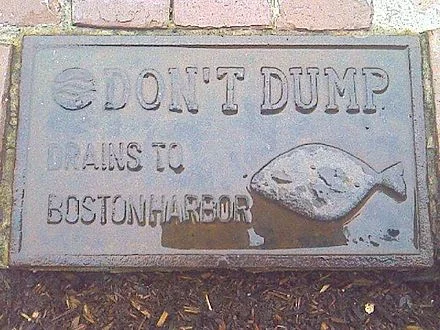
From Robert Whitcomb's "Digital Diary,'' in GoLocal24.com
“Well, I love that dirty water (I love it, baby)
I love that dirty water (I love Baw-stun)’’
From “Dirty Water,’’ (1965) by the Standells, a tribute to the polluted waters of Boston Harbor and the Charles River, which of course flows into it.
As the Trump administration continues to weaken the understaffed Environmental Protection Agency, I think of Boston Harbor before the EPA and the great Boston Harbor cleanup, which the creation of the EPA (1970) and the Clean Water Act (1972) helped set in motion. I had summer jobs on the Boston waterfront in the ‘60s and well remember how rank the harbor was. My workmates and I would sometimes take the lunch boat, which offered many scenic attractions, but on a hot day, the smell was foul enough to make us put down our sandwiches.
The cleanup was a great social, aesthetic and economic boon for our region, as has been the gradual cleanup of Narragansett Bay.

Don Pesci: The real cost of Connecticut's tax increases
Arguing against a legislatively imposed minimum wage increase, Brian Jessurun, co-owner of four northeastern Connecticut restaurants, writes in an op-ed in The Hartford Courant that “By all accepted accounting metrics, this state is virtually bankrupt. Reputable estimates place Connecticut’s unfunded liability debt at $70,000 per taxpayer, more than many of them have set aside for their own retirements. The only chance we have of getting out from under that burden is a burst of prolonged prosperity, which would increase state revenues without significantly increasing the taxes that are already driving away job creating businesses and tax paying residents.”
At last, some readers of the paper in which the op-ed appeared might exclaim – light!
We all know that artificial – read, political -- increases in the cost of labor are attended by predictable but unwanted consequences. Whatever the state taxes tends to disappear, and the anti-free market boost in the minimum wage can only be regarded as a tax on the diminishing earnings of Jessurun’s businesses.
Very large businesses may be able to absorb such expensive mandates by passing the increase in the cost of labor to its customers – or not. There is more than one way, especially for large mobile businesses to slip the noose, sometimes by moving operations out of state, sometimes by reducing hours for its full-time staff. When a large company moves out of state, the business takes with it the taxes it might have surrendered to the state, and the tax-milking by thirsty, spend-thrift legislators comes to a stop.
Small businesses that cannot move operations will shut down, thus depriving the state of expected revenues it might have reaped had the state not imposed an artificial increase in the cost of labor that businesses could not absorb.
Connecticut has yet to recover the job losses that recessions always bring. While the rest of the nation pulled itself out of the Great Recession, which lasted from December 2007 to June 2009, almost 10 years ago, Connecticut has prolonged its recession by straining an overburdened economic engine with unsupportable tax increases and needless regulations.
So then, one might suppose that the new governor,
Ned Lamont, and its General Assembly, top-heavy with Democrats, nearly half of them progressives, would be loathed to heap taxes and regulations on a state that is still recovering from a recession that ended elsewhere in the nation nearly a decade ago.
Not a bit of it. Former Gov. Lowell Weicker saddled Connecticut with an income tax after he had cautioned during his fraudulent campaign for governor that imposing such a tax in the midst of a recession would be like “pouring gas on a fire.” The two Republican governors who followed Weicker, John Rowland and Jodi Rell, were imperfect firewalls unable to curb the appetite for spending of a Democratic-dominated General Assembly. Gov. Dannel Malloy boosted taxes twice and then, as Weicker had done before him, lit out of town rather than stand for re-election to a third term in office, after having achieved an approval rating of 25 percent.
The election of Lamont heralded a new day. He was a business man who possibly understood the importance of a flourishing economy, a man who might hasten an epoch of “prolonged prosperity that would, in Jessurun’s words, “increase state revenues without significantly increasing the taxes that are already driving away job creating businesses and tax paying residents.”
Here is a PARTIAL list supplied by the Yankee Institute of additional taxes proposed by Democrat legislators: $652 million in sales tax increases, which is projected to be up to $1.1 billion by 2022; $515 million increase in healthcare provider taxes, which are passed on to patients through higher insurance costs and payments for medical care; $480 million in toll revenue, 60 percent of $800 million in expected revenue by 2024; $340 million raised by a new 0.5 percent payroll tax to pay for paid FMLA; $163 million soda tax; $71.5 million property-tax increase by 2022, to pay for teacher pension payments; $70 million income tax increase, mostly from canceled exemptions; $50 million corporate tax increase (average of two years), includes offset for elimination of the Business Entity Tax; $41.6 million in license and fee increases; $30.2 million plastic bag tax; $17.8 million in other miscellaneous tax increases, including on vaping, a real estate conveyance tax increase on homes over $800,000, and an increase in the movie ticket tax; $9 million for the gift tax repeal…
"A fool,” the old adage has it, “learns only from his own mistakes. A wise man learns from the mistakes of others."
People inside and outside of Connecticut may be forgiven for being unable to distinguish whether the new administration is foolish or stupid.
Don Pesci is a Vernon, Conn.-based columnist.
John L. Lahey: Make curricula faster, cheaper and better
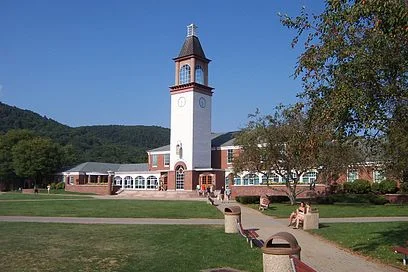
Quinnipiac University’s Arnold Bernhard Library and clock tower, the focus of main campus quadrangle, in Hamden, Conn. Sleeping Giant Mountain is in the background. The author of this essay is a former president of the university.
From The New England Journal of Higher Education, a service of The New England Board of Higher Education (nebhe.org)
During my 40-plus years working in higher education I have witnessed a remarkable transformation in a wide range of industries – telecommunications, computing, transportation, media, publishing, manufacturing and retailing, to name a few. In almost every case these transformations have resulted in an improved product and/or service that is more responsive to consumer needs, more efficient and effectively produced, and offered at lower and lower cost to the consumer. The most obvious exception to all of these industry transformations is higher education.
Every year for the past 10 years I’ve made it a point to attend a futuristic conference in Silicon Valley having nothing to do with higher education. I was more interested in learning how high-tech Silicon Valley entrepreneurs viewed the world and the culture that attracted and produced these innovators and their startup companies. I was truly amazed at the extent to which these Silicon Valley entrepreneurs believed they were just one algorithm away from radically changing a long-established industry, its product or services, or creating an entirely new one. The mantra for these entrepreneurs and Silicon Valley generally is: faster, cheaper, better.
Using these same standards of faster, cheaper, better, let’s apply them to higher education and the changes that it has witnessed over my 50-plus years dating back to 1964. For starters: The bachelor’s degree that I earned in 1968 took me 120 credit hours, eight semesters, and four years to achieve. The per-credit-hour charge back then was $21. That same degree today costs about $1,200 per credit (both based on private university tuition costs). With respect to “better,” I’m willing to accept that today’s undergraduate education is at least as good as it was when I was a student, although frankly I’m hard-pressed to say that it is significantly better. And with respect to “faster,” the same bachelor’s degree that I earned in 1968 still today takes 120 credit hours, eight semesters, and four years to complete.
In short, the degrees that higher education awards today versus 50 years ago are neither faster nor better and certainly not cheaper. Earning a degree today costs about 57 times more than what it did five decades ago. All of which leads me to an opportunity for efficiency which has largely been overlooked in higher education, namely the curriculum. And the beauty of this opportunity is that it offers the best if not the only hope for higher education to satisfy all three of the Silicon Valley goals of faster, cheaper and better.
Seven years ago, at my urging, Quinnipiac University developed a number of accelerated dual-degree bachelor’s/master’s programs (originally called 3-plus-1 programs). The first one we developed was a bachelor’s in business combined with an MBA. The second was a bachelor’s in communications combined with a master’s degree in communications/journalism. These two combined offerings already existed at Quinnipiac as separate degree programs that required five years or 10 semesters to complete at the cost of five years or 10 semesters of tuition.
Our newly developed accelerated dual-degree programs offered these same two degrees in four years or eight semesters at a cost of four years or eight semesters of tuition. This accelerated program reduced by one full year both the time of completion and the cost of tuition yielding a savings or cost reduction of 20% or approximately $40,000. In addition, shortening the time of completion by one year allowed the graduates of these programs to enter the workforce one year earlier, offsetting the cost even further depending on the salary earned that first year after graduation. For example, a net income from a first-year take-home salary of $60,000 combined with $40,000 in reduced tuition effectively reduces the cost of dual degrees by 50% from $200,000 for the traditional five years of tuition to $100,000 with four years of tuition payments of $160,000 reduced to $100,000 by earning $60,000 net income in the fifth year.
These accelerated dual-degree programs have been expanded to other schools and colleges at Quinnipiac and now include additional 3-plus-1 programs, as well as 3-plus-2 programs and 3-plus-3 programs for dual degrees that traditionally required six or seven years to complete at a cost of six or seven years of tuition.
The common thread for all of these dual-degree programs is that they shorten the traditional amount of time required by one year, reduce the cost of the dual degrees by one year’s tuition and allow the graduate to enter the workforce one year earlier, earning an extra year’s salary. The popularity of these programs has grown such that over 20% of the Quinnipiac freshmen entering in the fall of 2018 were enrolled in one of these dual-degree programs.
The key element in the success of these programs both academically and financially is the curriculum and specifically the elimination of duplication within the curriculum for a bachelor’s and a master’s in the same program, such as business or communication. Most people believe the cost of higher education has gone up dramatically in large part because we are a personnel intensive industry. But I submit that the reason we need so many faculty and other personnel is because the curriculum has expanded and expanded over the years with little effort to eliminate unnecessary duplication of content among many bachelor’s degrees and their corresponding graduate degrees.
To end on a positive note: If we do indeed expand our focus on the curricula and eliminate unnecessary duplication within degree programs, we will not only lower the cost of higher education, but unlike with traditional cost reduction efforts, we will not compromise quality. Reasonable class sizes and full-time faculty-to-student ratios can be maintained for optimal learning. At the same time, more efficient curricula will more effectively engage and challenge today’s students who are far ahead of educators in their desire for all things faster, cheaper, better.
John L. Lahey is president emeritus and professor of logic and philosophy at Quinnipiac University, in Hamden and North Haven, Conn.. He served as president from 1987 to 2018.
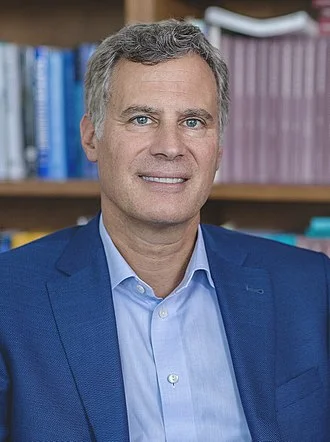
David Warsh: Labor economist Alan Krueger and the 'methods revolution'
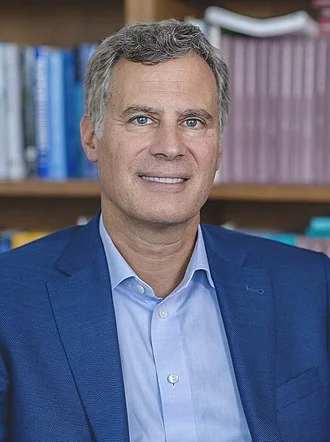
The late labor economist Alan Krueger.
SOMERVILLE, Mass.
Stanley Karnow had it right when he said many years ago that a reporter’s toolkit consists of two main things: background knowledge and skepticism. He might have added that a good supply of shoe leather helps as well.
I was reminded of Karnow’s maxim by the death on March 14 of Alan Krueger, 58, of Princeton University. I was sad to think I hadn’t seen Krueger or spoken to him since 2011, when he became chairman of President Obama’s Council of Economic Advisers, succeeding Austan Goolsbee.
At first I thought the lapse must have been a function of my having left newspapering for the Web a decade earlier. Then I decided it had more to do with the life cycle. I was spending more time writing books and less time covering the beat.
My sense of loss was nothing compared to the grief expressed in the community of labor economists, which recognized that the irony that a man who had spent much of his career studying the ill-effects of reversal on others, mostly economic, had died by his own hand. Catherine Rampell, of The Washington Post, reviewed his career.
Krueger was born in 1960. That meant he was 21 in 1981, the year IBM began running those Charlie Chaplin ads for its new “microcomputers.” The age of highly adaptable personal computers was just getting underway.
He graduated from Cornell University’s School of Industrial and Labor Relations, in 1983, then did his graduate work at Harvard University, getting his Ph.D. in 1987. Princeton University hired him and put him in the office next to Prof. David Card, four years his senior.
By then, a broad movement in empirical economics was underway. Card thinks some part of it started with Robert LaLonde’s work on the evaluation of competing methodologies. I have often heard that Joshua Angrist’s study of the effects of the Vietnam draft lottery on the lifetime earnings of draftees was especially influential. Princeton’s Orley Ashenfelter was the dissertation adviser of each, and Card as well. Harvard Prof. Richard Freeman’s search for natural experiments is often mentioned.
Krueger brought with him to Princeton a subscription to the New England Journal of Medicine, each of its articles prefaced with a description of the particular”methods” and “research design” by which the result was obtained. Card , laughing, recalled in an interview, ”[It] would come in every week, so there was a lot of stuff to read…. And if you’d never seen that before, and you were educated as an economist in the 1970s or 1980s, that just didn’t make any sense. What is research design? And I remember one time I said, ‘I don’t think my papers have a research design.’ ”
Card and Krueger contributed a widely cited study and subsequent book about what happened in the fast food industry when New Jersey raised its minimum wage and Pennsylvania didn’t. They concluded that raising the minimum wage had relatively little impact on employment. (Their finding generated both controversy and further research.) Randomized controlled trials soon followed in development economics, and field experiments of various sorts, and, eventually, the application of machine learning to big data.
Financial Times columnist Tim Harford noted the other day that Krueger liked to call all this “the credibility revolution.” Nobel awards haven’t begun to be awarded to economists in the movement yet, but they will. Card was recognized with the John Bates Clark Medal in 1995 as an especially influential economist of his generation before the age of 40
I have long thought that there is a good book to be written about the methods revolution. That was the biggest thing going on in economics for many years after 1990. I’m not the man to do it; my shoe leather budget shrank dramatically after I left the Boston Globe. When that book is done, it will assign a prominent position to Alan Krueger.
David Warsh, a veteran political and economics columnist, is an economic historian and proprietor of economicprincipals.com, where this essay first ran. He is based in Somerville.
Cooperating trees

“Woolroot (driftwood, cooper, wool and oil pastel), by Leslie Wilcox, in her show “Enrootables,’’ at Boston Sculptors Gallery, April 3-May 5.
The gallery says:
“Inspired by evidence of trees’ underground social network known as the
‘wood wide web,’ Wilcox shrouds sea-distressed deadwood
with twisted metal screening to explore earthbound similarities and shared connections between
human forms and life-sustaining, mutually communicative arboreal forests.
Supplanting human bones with driftwood tree roots, Wilcox creates organic skeletal forms tightly
encased in copper and bronze screens, referencing bark or sapwood or skin. ‘Enrootables’ cultivates a
glimpse beneath the forest floor to reveal shared alliances through communication and care among
multiple species. And while mimicking our own modern behavior, themes of cooperation for mutual
benefit are discovered, including human dependence on trees’ filtration of carbon dioxide. Evidence of
trees living among their parents, siblings and offspring growing twice as tall and living twice as long
fosters this transfer of knowledge and expertise to future generations, thus safeguarding the existence
of thriving forest biospheres. Can what we learn from these strategies ensure the same for the future of
humankind? (Companion reading: The Hidden Life of Trees, by Peter Wohlleben).’’
'A finished place'

“New England is a finished place. Its destiny is that of Florence or Venice, not Milan while the American empire careens onward toward its unpredicted end. . . . It is the first American section to be finished to achieve stability in the conditions of its life. It is the first old civilization, the first permanent civilization in America.’’
— Bernard DeVoto (1897-1955), historian and essayist
I'll keep roaring

“Una and Lion,’’ by Briton Lumiere
Mina Says No to Hospice
I entered the world with a blast:
Triumphant and ever so loud.
The room was engulfed by my cries.
My mother was weary but proud.
And now, although 90 and failing,
I still want to live as I am.
They said I came in like a lion --
I'll never go out like a lamb.
— Felicia Nimue Ackerman

Brian Wakamo: Past time to unionize the NCAA!

From OtherWords.org
When Zion Williamson’s foot broke through the sole of his Nike shoe on Feb. 20, the sporting world stood still.
The consensus number one player in college basketball was playing in the biggest game of the season — North Carolina versus Duke — and suffered his startling injury in the opening minute. Williamson’s sprained knee cost Nike $1.1 billion in stock market valuation the next day.
The injury came on the doorstep of March Madness, the National Collegiate Athletic Association’s most profitable event of the year — to the tune of $900 million in revenue.
Despite the billions riding on his performance, the NCAA insists that athletes like Williamson are “amateurs” — student-athletes there only for the love of the game. It forbids them to make money off their performance, even as they support an industry worth billions. Duke alone makes $31 million off its basketball program.
Williamson has been a force of nature this season, captivating audiences and NBA scouts alike. Enticing those NBA scouts is the only way this 18-year-old can build his own future career — and any sort of injury imperils that future.
High-level “student-athletes,” after all, don’t get to spend much time being students.
They’re supposed to only spend 20 hours a week on sports-related activities. In reality, they spend around 40 hours on practice alone. Schoolwork falls by the wayside, so many schools have outside tutors do the players’ schoolwork and by create classes-in-name-only where the only requirement is to turn in a paper.
A few years ago, some former athletes at the University of North Carolina sued the school and the NCAA, claiming they’d been denied a meaningful education. It’s hard to argue with that.
The athletes, in exchange for scholarships, give these schools their lives and put their health at risk. Concussions of football players have sparked lawsuits, and an injury like Williamson’s could cost a player millions in the professional leagues. If they can’t go pro — and their education didn’t do them any favors — what option do they have?
That risk is where the travesty lies. These thousands of athletes who play in the NCAA are often not allowed to enjoy the benefits of the schools they attend (and enrich). If they’re not able to make use of their education, they should be paid for the work they put in.
When college sports revenues are as high as they’ve ever been, the failure to pay the athletes is absurd — but not surprising.
Inequality of all kinds is on the rise, and the gap between the top and bottom of the pay scale is the highest since the Gilded Age of the late 1800’s and early 1900s. The NCAA not allowing athletes to be paid — or even sign autographs for money! — is an extension of an economy where unions are busted and people have to work three jobs to make ends meet.
It needs to change. College basketball players are on average worth $212,080 to their program, much more than the cost of their scholarships.
Schools should pay these athletes a share of the revenue their sport brings in. And the NCAA needs to, at the very least, allow for these people to make money selling autographs or appearing at sports camps.
Just as importantly, athletes should be allowed to unionize their teams and fight for their own rights.
Billions of dollars are going to be spent on betting on March Madness games. CBS and Turner paid around $19 billion for the television rights to the tournament. And over $1 billion in advertising is spent on the tournament.
This event is all about the money. We should spread it around to the people who make it worthwhile.
Brian Wakamo is a researcher on the Global Economy Project at the Institute for Policy Studies.
Robert Whitcomb: But forget the Yankee pot roast
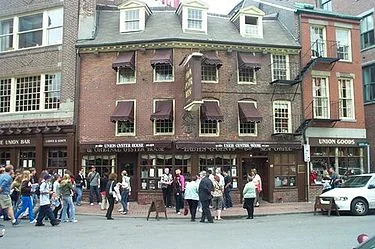
At least the Union Oyster House, near City Hall, in Boston, is still open, at it has been since 1826.
Despite the city’s prosperity, lots of Boston restaurants have been closing recently. But then, lots of restaurants close every year as new ones pop up. Indeed, while the Internet continues to kill brick-and-mortar stores, our busier (but to what end?) lives, smaller families and swelling numbers of retirees and single people mean that restaurants are occupying more and more of what had been stores.
Durgin-Park and L’Espalier are but two of the long-established eateries that have closed, along with several highly regarded but much newer places, such as Cultivar and Erbaluce.
Since most Boston nonchain restaurants are closely held, it’s usually hard to find out all the reasons that they’re closing. But don’t underestimate chef-and-owner exhaustion. Food preparation and presentation are intense – with numerous stringent health regulations, the need to constantly revise menus and coping with unpredictable and sometimes obnoxious customers. It’s a tough, tough business, at the mercy of changing demographics and consumer tastes and the regional economy. That last profoundly affects rents. Boston’s multi-year boom has let landlords extravagantly jack up rents, driving many eateries from their long-established venues.
Consider the huge changes in cuisine preferences, especially from heavy “New England cuisine,’’ such as Yankee pot roast, to a plethora of lighter dishes, often of Mediterranean and Asian origin. This diversification is particularly intense in increasingly internationalized and “sophisticated’’ cities such as Boston.
A few decades ago, if you wanted Chinese food, you pretty much had to go to, well, Chinatown. If you wanted Greek food there was Athens Olympia and ….?
Back into the ’70s, Boston had far fewer fancy restaurants than now. I’d guess that the long-closed Locke-Ober and Maison Robert were the snobbiest. How exotic they seemed. Serving cold soup (vichyssoise) of all things! That the dining room at the old Ritz-Carlton Hotel served unsalted butter was memorable, too.
My own precious memory is of Dini’s Sea Grille (1926-1990), near the State House. Delicious food and filled with deal-making politicians.
With today’s richer, bigger and more globalist Boston, there are plenty of first-class establishments, representing a range of cuisines from every continent except Antarctica.
It used to be fairly easy to choose a restaurant in Boston based on its reputation, the ethnic food you favored and so on. Now it’s tough because there are so many good ones.
But I wish that Boston had a higher number of reliable, friendly, locally owned, non-fast-food places with their own unique neighborhood atmospheres that middle-income people can afford to frequently patronize -- inexpensive cafes that let people linger with their coffee, pastries and sandwiches – like Starbucks but cheaper and less standardized! With rents in Boston so high, many people are forced to live in apartments that aren’t much bigger than walk-in closets. They need more “third places’’ where they can meet friends, write an unpublishable novel or just watch the world go by.
Robert Whitcomb is editor of New England Diary.
Red Sox sets partnership with MGM casino

From The New England Council (newenglandcouncil.com)
The Boston Red Sox have announced a new casino partnership with MGM Resorts International. This new deal will make MGM Resorts the official and exclusive resort casino of the baseball club.
This deal follows a multi-year partnership announced late last year between MGM Resorts and Major League Baseball. Fans will notice the new collaboration around the ballpark, including MGM’s roaring lion’s head logo on the Green Monster at Fenway Park, as well as behind home plate. Additionally, the Red Sox’s annual Winter Weekend will be hosted in Springfield at the MGM Springfield casino.
Sam Kennedy, president and CEO of the Red Sox, said, “This is such a natural partnership for our two brands. MGM has set the standard in the hospitality and entertainment industry and their recent expansion into the Commonwealth makes them a clear partner. We are thrilled to welcome them to the Red Sox family and look forward to a long collaboration.”
Life snaps back

A tiny but tough crocus.
From Robert Whitcomb’s “Digital Diary,’’ in GoLocal24.com
.comThe resilience of life shows itself with a flourish in the frustrating two-steps-forward-one-step back of late winter/early spring in New England. The early flowers – crocuses, snow drops, etc. – bloom in a thaw, then get frozen solid, then thaw out again and bloom again. A yearly wonder. Then there’s the sometimes amazing adaptability to living close to humans of some wild animals from the countryside. I thought of that when being told of yet another coyote on Providence’s Blackstone Boulevard. Its diet presumably includes cats.

Llewellyn King: America needs presidential press conferences

In August 2006, President George W. Bush hosted seven White House Press Secretaries before the James S. Brady Press Briefing Room underwent renovation. From left, Joe Lockhart, Dee Dee Myers, Marlin Fitzwater, Bush, Tony Snow, Ron Nessen and James Brady (seated) with his wife, Sarah Brady.
White House press secretary Sarah Sanders’s disinclination, with approval from President Trump, to hold daily press briefings represents a serious setback of the public’s right to know. The briefings aren’t enshrined in the Constitution and she isn’t violating it -- except in its broad regard for freedom of the press.
But press briefings have become part of the lore of our governance. It’s the opportunity where, through the media, the public can ask, “What is going on?” And, as important, “What’ve you got to hide?”
Like many things in a democracy, the system of questioning the administration at the daily briefings is imperfect, cantankerous, open to abuse, and unfair to smaller news organizations.
But the briefings are a small, frequently foggy, window into the White House and the administration of the day. The briefings are how the public, through the media, peers in. Presidents should be worried about what will be asked and how it will play. That’s in their long-term interest.
From time to time, some politician or commentator says we need something equivalent to the British House of Commons’ Prime Minister’s Questions (PMQ).
Actually, we did have it for quite a long time, and now we don’t: It was those daily briefings.
Some press secretaries haven’t been forthcoming, but there’s always the palliative effect of simply raising an issue. A small pebble unearthed, as with a small secret, can set in motion a landslide, revealing truths, identifying mendacities and adding to the hygiene of a democracy.
Much depends on the character of the press secretary and the relationship he or she has with the president. A good press secretary is one we, the media, trust and one who’s also trusted by the president -- not to lie for him, but to advance his interests while informing the press of the president’s thinking.
Most press secretaries aren’t asked to lie, but to work around awkward truths.
I recall, particularly, when I was in the press party which accompanied President Bill Clinton to China. Mike McCurry, the press secretary, a favorite of Clinton and the press, did his best to eschew the Monica Lewinsky scandal. For example, McCurry manipulated the exit press conference in Hong Kong. I heard him arrange for an Irish correspondent to get a question in because McCurry knew that correspondent wouldn’t ask about Lewinsky.
Another press secretary who was liked and admired by the president he served, George W. Bush, was Tony Snow. He’d been a member of the press corps and we trusted him through contentious times to brief fairly and answer questions to the best of his knowledge. There was plenty that was debatable, but the three-way trust between the media, Snow and the president, was preserved. The same could be said of his successor, Dana Perino, who is now a Fox News host.
A president tweeting isn’t a president being open. It’s a harangue. It’s a version of my way or the highway. Likewise, questions answered or avoided at the end of a photo opportunity in the Oval Office or on the South Lawn on the way to the helicopter aren’t a press conference. It’s a hit-and-run where the president drives off unscathed.
The Trump administration got off on a bad footing with the media not because of preexisting bias but because of initial preemptive lying. When Sean Spicer, Trump’s first press secretary, maintained, despite incontrovertible photographic evidence, that Trump had larger crowds at his inauguration than Barack Obama had had at his, the back story was that lying in defense of the president was okay, part of the job. It shouldn’t be; lying undermines the veracity of every factual answer to come.
On Sept. 8, 1974, Jerry terHorst, President Gerald Ford’s press secretary, resigned when he found that he’d been kept in the dark of Ford’s plan to pardon Richard Nixon and had, as a result, misled the press. The press corps revered Jerry for what he did; for what appeared to a be a blow for the truth. He got a long, standing ovation when he spoke at the National Press Club.
Despite what the Trump administration says, the facts are journalism’s bread and butter. Honest.
Llewellyn King is executive producer and host of White House Chronicle, on PBS. His email is llewellynking1@gmail.com and he’s based in Rhode Island and Washington, D.C.
Inside job

“Outside From Inside,’’ by Emily Murdock, in the group show “Interior Spaces,’’ at Maud Morgan Arts Chandler Gallery, in Cambridge, Mass., March 25-April 19.