
Vox clamantis in deserto








It's better that way

Plaque in Concord, N.H.
— Photo by Billy Hathorn
“New Hampshire polling data are unreliable because, when you call the Granite State's registered Republicans and independents in the middle of dinner and ask them who they're going to vote for, they have a mouth full of mashed potatoes and you can't understand what they say.’’
— P.J. O’Rourke
'Too much dwelling on what has been'

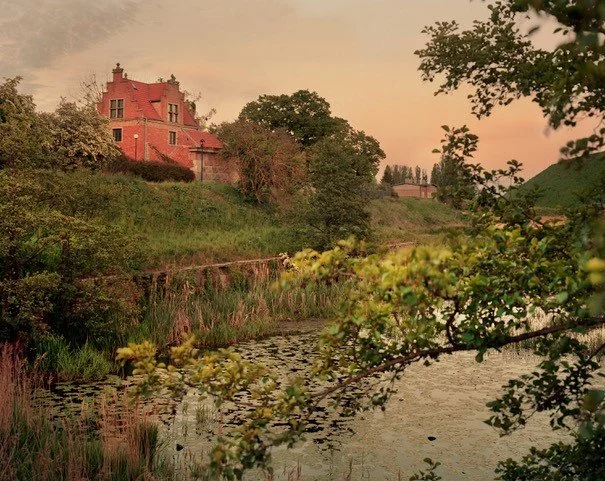
The house had gone to bring again
To the midnight sky a sunset glow.
Now the chimney was all of the house that stood,
Like a pistil after the petals go.
The barn opposed across the way,
That would have joined the house in flame
Had it been the will of the wind, was left
To bear forsaken the place’s name.
No more it opened with all one end
For teams that came by the stony road
To drum on the floor with scurrying hoofs
And brush the mow with the summer load.
The birds that came to it through the air
At broken windows flew out and in,
Their murmur more like the sigh we sigh
From too much dwelling on what has been.
Yet for them the lilac renewed its leaf,
And the aged elm, though touched with fire;
And the dry pump flung up an awkward arm;
And the fence post carried a strand of wire.
For them there was really nothing sad.
But though they rejoiced in the nest they kept,
One had to be versed in country things
Not to believe the phoebes wept.
“The Need of Being Versed in Country Things,’’ by Robert Frost
Progress toward power line in Maine

From Robert Whitcomb's "Digital Diary,'' in GoLocal24.com
Good for new Maine Gov. Janet Mills and some environmental groups for backing, against, among other interests, fossil-fuel providers and some local renewable-power providers, a $1 billion project by Central Maine Power to bring some of Quebec’s copious hydro-electric power to Massachusetts along a route in the mountainous and lightly populated western part of the Pine Tree State. This ought to reduce New England’s dependence on gas and oil being used to generate electricity.
Happily, the powerful and well-heeled Conservation Law Foundation supports the project.
Of course, the power line’s construction would disrupt some wildlife and some other environmental elements along the power line route but not nearly as much as burning gas, oil and coal does.
To read more, please hit this link:
https://nenc.news/mills-2-environmental-groups-back-cmps-1-billion-western-maine-transmission-project/
Mountain view

From the show “Alaska in Two Weeks,’’ by Ernest Stonebraker, at 6 Bridges Gallery, Maynard, Mass., through April 6. He is mostly a painter, but he took stunning photos on a recent two-week land and sea trip.
'Master of winds'

"Ere frost-flower and snow-blossom faded and fell,
and the splendor of winter had passed out of sight,
The ways of the woodlands were fairer and stranger
than dreams that fulfill us in sleep with delight;
The breath of the mouths of the winds had hardened on tree-tops
and branches that glittered and swayed
Such wonders and glories of blossom like snow
or of frost that outlightens all flowers till it fade
That the sea was not lovelier than here was the land,
nor the night than the day, nor the day than the night,
Nor the winter sublimer with storm than the spring:
such mirth had the madness and might in thee made,
March, master of winds, bright minstrel and marshal of storms
that enkindle the season they smite."
”March: An Ode,’’ by Algernon C. Swinburne

Llewellyn King: Electrifying news about airplanes

The electric Pipistrel Taurus G4 taking off from the Sonoma County Airport, in California
The case for electric airplanes is overwhelming.
The problems of today’s aircraft are well-known: noise and pollution. Homeowners may hate the noise, but pollution is the bigger issue.
While jet aircraft account only for a small part of the greenhouse gas releases worldwide, it is where they release them that makes them especially damaging. Nasty at sea level; at 30,000 feet and above, they are potent contributors to the greenhouse problem.
The answer is to begin to electrify aviation.
The need has not escaped the big air frame makers. Boeing in the United States and Airbus in Europe both have electric airplane programs. Tech giants Uber, Google and Amazon all want to develop electric vehicles to use as ride-sharing cars, pilotless air taxis and delivery drones.
A raft of small companies worldwide is working on new electric airplanes, usually just two-seaters. Some are flying but batteries limit their airborne endurance to one to two hours.
Already, there is an experimental, pilotless air taxi system in Abu Dhabi. Frankfurt airport is about to announce a system as is Singapore.
Enter André Borschberg: a Swiss innovator, pilot, entrepreneur and passionate environmentalist. He may know more about electric propulsion than anyone else and is a great believer in the electric future of flying.
Borschberg, along with Swiss balloonist Bertrand Piccard, built and flew the solar-powered electric airplane, Solar Impulse 2, around the world, landing triumphantly in Abu Dhabi on July 26, 2016.
Flying the first aircraft they built, Solar Impulse 1, Borschberg eclipsed all records for endurance by staying aloft alone for 117 hours. He holds 14 world flying records.
Borschberg and Piccard created the Solar Impulse Foundation that is seeking to identify and assist 1,000 technologies that help the environment. Those listed so far range from a plastic recycling system to self-contained toilets to village-scale desalination plants.
“They have to be able to make a profit,” Borschberg told me in a telephone interview. He believes the dynamics of the free market must be put in play to solve the growing global environmental crisis.
In his latest undertaking, Borschberg has spun off a company, H55, to develop systems for electric aircraft and to help electric aircraft manufacturers with H55 know-how. The company has developed a single-seat, acrobatic aircraft with an hour’s endurance. They hope to make a two-seater which can stay aloft longer.
In February, Silicon Valley venture-capital firm Nanodimension signed on for a first round of financing. H55 has turned onto the runway and is beginning to accelerate.
Borschberg is a pilot for all seasons. He learned to fly in the Swiss Air Force and is rated in fighter jets and helicopters. For fun he does aerobatics, as does Piccard.
Borschberg graduated with a degree in engineering and aerodynamics from the Federal University of Technology in Lausanne, Switzerland, and with a management degree from the MIT Sloan School of Management.
It is not only the environmental aspects of electric flight that charm Borschberg, but also the incredible efficiency. He says electric-powered airplanes are 60 percent more efficient than those with fossil-fueled engines and can be very precisely tuned because of the immediate availability of torque when the current is flowing.
That same efficiency with appropriate software, extends to the control of the aircraft. “A simple electric drone, which you can buy in any store, is more stable in wind turbulence than a helicopter,” Borschberg says. These properties will make vertical takeoffs and landings a reality for many new aircraft, he says.
The airplane of the future will be at an airport near you soon -- and it may not need to use the runway.
John Gillespie Magee’s poem “High Flight,” loved by aviators, begins, “Oh! I have slipped the surly bonds of Earth/And danced the skies on laughter-silvered wings.”
A new generation of engineers from Boeing to Borschberg to backyard tinkerers wants to slip the surly bonds of petroleum.
Llewellyn King is executive producer and host of White House Chronicle, on PBS. His email is llewellynking1@gmail.com. He’s based in Rhode Island and Washington, D.C.
ReplyReply allForward
Let managers manage; watch the rowers from a fixed-up ‘Red Bridge’

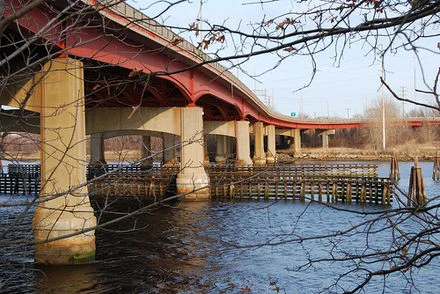
The Henderson Bridge (aka “Red Bridge”) over the Seekonk River.
Adapted from Robert Whitcomb’s “Digital Diary,’’ in GoLocal24.com
Some good and bad news in Rhode Island the past few days.
Let’s start with the bad news. The well-regarded and reformist Providence schools superintendent, Christopher Maher, has decided to step down. And while he gave a frequently used explanation for exits – to spend more time with his family – another reason seems to be that he’s frustrated by the bureaucratic limits on his ability to get things done to improve the city’s schools – improvement they urgently need.
The fact is that the superintendent needs far more freedom to improve the system. World War II Adm. Chester Nimitz famously said: “When you’re in command, command,’’ but the Providence schools chief is remarkably hamstrung. As Hillary Salmons, executive director of the Providence After School Alliance, told The Providence Journal in the Feb. 27 article “Another schools chief is leaving”:
“When the City Council controls any {expenditures} over $5,000 how can anyone manage his resources? It’s going to be hard to attract leadership with a district hamstrung by these structural impediments.’’
People in authority should be given, well, authority to do what needs to be done and of course be held accountable for their decisions. I keep citing my friend Philip K. Howard’s books on red tape and bureaucratic paralysis, the latest entitled Try Common Sense. It seems very appropriate here.
There need to be changes to enable future Providence school superintendents to actually manage their department.
xxx
On a happier note is news that the nearly crumbling Henderson Bridge (aka “Red Bridge”), connecting the East Side of Providence with East Providence, will be rebuilt in a fashion to make it more of a public asset.
The new version will be narrower, with only two lanes instead of the current unnecessary four lanes (put in for a superhighway that never happened), but will include bike/pedestrian paths in both directions. Thus the bridge will offer people in our area yet another way to enjoy the views up and down the Seekonk River as it enters Narragansett Bay, and get exercise while doing it. It will be a fine place from which to watch the Brown crew and other rowers on the river,
Kudos to the Rhode Island Department of Transportation for this plan.
By the way, my favorite writer about bridges and other transportation infrastructure is Henry Petroski – e.g., see his book The Road Taken: The History and Future of America’s Infrastructure.
Smiling welcome

“Coming to America” (pigment print on canvas), by Siddharth Choudhary, in his show “Of No Fixed Address,’’ at Artspace Maynard (Mass.) through April 5.
The gallery says: “The show is a collection of digital works. The artist has spent the past decade living in Mumbai, Paris and Hong Kong before finally arriving in New England. He draws upon his memories of travel to create works that explore relationships that transcend borders, and works of art that defy labels.’’
Connecticut's long-sluggish economy has turned a corner.

The train station in Stamford, which is closely connected with the Manhattan money machine.
— Photo by Noroton
The economy of Connecticut, still the richest state on a per-capita basis, is looking up after a long sluggish time, reports Bloomberg. To read about it, hit this link.
'Slip to silence'

‘March days return with their covert light,
and huge fish swim through the sky,
vague earthly vapors progress in secret,
things slip to silence one by one.’’
— The late Pablo Neruda (but since he lived in the Southern Hemisphere, in Chile, he would have seen March as the start of winter, not spring!)
As usual, favoritism for rich kids
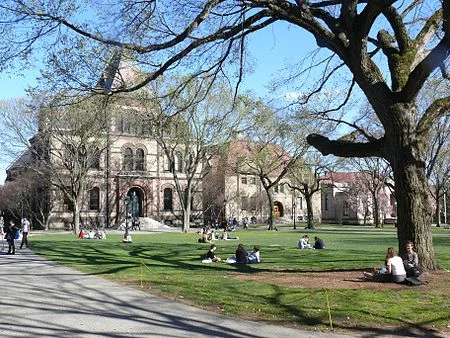
On the Brown campus in spring.
From Robert Whitcomb’s “Digital Diary,’’ in GoLocal24.com
Does Brown University tend to suck up to rich applicants and rich current students, and their parents, and sometimes give them preferential treatment? Yep. Does this help perpetuate the privilege and power of the richest people? Yep.
But most, maybe all American “elite institutions’’ do this sort of thing. That’s just one of many reasons that wealth-and-status-obsessed America has become among the most socio-economically stratified Western nations, with among the lowest rates of social mobility.
There are few signs that the preferences, varying by country, given to those born on third base will change, in America and elsewhere. Complaining about it is a little like complaining that rocks are hard.
Tim Faulkner: Bill would open R.I. state land to wild-mushroom foraging

From ecoRI News (ecori.org)
Wild-mushroom picking is a growing hobby in Rhode Island and a new bill would open up state land to foraging.
Wild mushrooms are typically found growing on decaying organic matter in cool, moist areas such as forests. And Rhode Island is running low on this habitat, prompting a request for access to land owned or managed by the Department of Environment (DEM).
The bill (H5445) allows the taking of mushrooms but only for personal use and personal consumption, with rules and regulations set by DEM.
The bill was introduced by Rep. David Place, D-Burrillville, at the request of an unnamed wild mushroom picker in his district. DEM, so far, hasn’t taken a stance on the legislation, but Place explained that DEM adheres to the Leave No Trace principles of conservation. The seven tenets include the rule “leave what you find” and avoid the removal of natural items.
Robert Burke, owner of the downtown restaurant Pot au Feu, said the interest in mushroom foraging is an extension of the farm-to-table and locavore movement. He noted that harvesting mushrooms is like picking apples and that taking the fruit does not harm or inhibit future growth.
“It’s a natural process. The fruit has to be shed by the organism. It has to detach from it,” Burke said. “And if it’s not done by someone foraging it will happen naturally with the mushrooms dying within a period of days or weeks anyway.”
Burke also noted that Rhode Island’s founder, Roger Williams, was a forager and therefore mushroom picking should be a right much like harvesting seaweed. DEM should regulate mushroom hunting the same way it issue licenses for fishing and quahogging, he said.
Although DEM doesn’t issue mushroom-hunting licenses, it does offer tips for cultivating wild mushrooms. According to the University of Rhode Island, chicken of the woods and honey mushroom are the most common edible wild mushrooms in the state. They suggest mushroom hunters bring an identification book or an experienced forager to avoid poisonous mushrooms.
The hearing was the first for the bill and therefore held for further study.
Tim Faulkner is a journalist with ecoRI News.

Chris Powell: Pot legalization and expanding gambling refute concern for health


Connecticut Gov. Ned Lamont and some state legislators are proposing a 75 percent tax on vaping products and a punitive tax on sugary soda on the grounds that they are harmful to health, especially that of young people. Meanwhile the governor and some of the same legislators are advocating legalization of marijuana for recreational use in the hope of raising a lot of tax revenue. They also want to put state government into the sports betting business and expand the state lottery's keno game -- as if marijuana and gambling don't also harm health.
Decades of drug criminalization have shown that contraband laws don't work, and as a practical matter marijuana long has been close to legal in Connecticut anyway, so pervasive that the police and courts stopped taking it seriously long ago. So it is hard to argue too much against legalizing marijuana. But legalizing marijuana is also an argument for leaving vaping and sugary soda alone.
Besides, punitive taxes on vaping products and sugary soda are less likely to discourage their use than to create lucrative black markets in them and make them seem even more fashionable to the young. Further, expecting a revenue bonanza from legalizing and taxing marijuana may be unrealistic, since if the tax is disproportionate, it will create a black market there too, as there already is with cigarettes.
Public health is nice but state government right now much prefers to get its hands on more money. It should drop the pretense.
Advocating tolls on Connecticut's highways, the governor and leading legislators also pretend that they want to improve the state's transportation system. But tolls have nothing to do with transportation, for if left alone, the transportation fund will have plenty of revenue from the gasoline tax and the sales tax on automobiles, which is scheduled to flow entirely to the transportation fund in the next few years.
But the governor proposes to divert auto sales taxes back to the general fund, robbing the transportation fund to cover state government's ordinary operating expenses.
That is, tolls actually will sustain collective bargaining and binding arbitration for state and municipal employees, social promotion in education, welfare policy that only perpetuates poverty, more political corruption in the cities, and the status quo of state and municipal government generally.
So what happened to the Ned Lamont whose campaign commercials declared, "Change starts now"?
xxx
SCHOOL DISCIPLINE ISN'T SO RACIST: Congratulations, Manchester teachers. Your superintendent, Matthew Geary, suspects you're racist because far larger proportions of local black and Hispanic students are being disciplined than white and Asian students.
But those proportions only match the ethnic proportions of poverty and criminal justice everywhere. Blacks and Hispanics tend to be poorer and come from more disadvantaged households and thus more prone to misconduct.
While there is some racism in most large systems, it cannot explain much of the disparities in criminal justice and school discipline, especially now that Connecticut's courts and schools, paranoid about racial and ethnic disparities, strive for less punitive discipline and tolerate more disruption in school and society generally.
Indeed, pinning on racism the disproportions in student discipline just distracts from the real problem. As Ronald Reagan said, the United States had a war on poverty and poverty won. It's still winning because racial and ethnic disparities and welfare policy can't be talked about honestly, and now Manchester's school superintendent has gone over to the other side.
Chris Powell is a columnist for the Journal Inquirer, in Manchester, Connecticut.
'In The Kitchen With Dinah'

Stages of Freedom, a bookstore at 10 Westminster St. in downtown Providence, presents “Someone’s in the Kitchen with Dinah: An Exhibit of African Kitchen Collectibles’’.
The exhibit, which is free and open to the public, runs through Saturday, March 30. Stages of Freedom’s hours are Tuesdays-Fridays 10 a.m. to 5 p.m. and Saturdays and Sundays 12-5 p.m.
The exhibit spans 100 years of collectibles depicting African Americans in both negative and
positive images. Drawn from Onna Moniz-John’s collection, the exhibit includes dishes, advertising, food containers, dish towels and much more.
Known now as Black memorabilia, many of these items were created in Japan, Germany and the United States for nationwide markets.
The items are a physical reminder of entrenched racism in our country and how African Americans have been denigrated through such stereotypical images as watermelon-eating, pitch-black complexions and exaggerated features.
Stages of Freedom is dedicated to presenting African American events for the entire community.
Contact is Ray Rickman (401) 421-0606; stagesoffreedom@aol.com
Dems should pray for a moderate
From David Warsh, proprietor of economicprincipals.com
To describe Martin F. Nolan, former Washington bureau chief and editorial page editor of The Boston Globe, as “an American journalist” is like calling Cyrano’s nose ‘big,’ though the rest of Nolan’s Wikipedia page gives a pretty good sense of the man. He wrote last week to say,
“I agree that Nancy Pelosi is fully qualified to run and win a presidential race. But several things, historical and personal:
“Speakers do not flourish in the Electoral College. Ask Henry Clay, Schuyler Colfax and John Garner. Old Cactus Jack did become FDR's VP, thanks to a delegate deal worked out at the 1932 Dem convention by William Randolph Hearst.
“Nancy is not interested in VP. Also, she has been so successful as Speaker that her likely successors resemble the junior varsity. Take Steny Hoyer and Jim Clyburn, please.
“Nancy is my Congresswoman and I've known her a long time. She is a protégé of the Burton family – Phillip, Sala and John – as powerful in SF as the D'Alesandros in Baltimore [Pelosi’s father, Thomas d’Alesandro Jr. was mayor of that city]. In 2016, she worked hard for Hillary perhaps hoping that her happy reward would be the US Embassy in Rome.
“If the Dems are lucky, a plethora of socialist lefties will allow a traditional moderate to prosper. Sherrod Brown won in Ohio, which bodes well for Dem success in Pennsylvania and Michigan, states taken for granted in 2016 by the Clinton campaign.
“Warning: a President Pence will not be easy to defeat,"
Llewellyn King: Penn. school may be nurturing new kind of lawyer

SAN ANTONIO
Disruption equals opportunity. That was the message that came across loud at a conference here organized by CPS Energy, the local gas and electric utility, on smart cities — a revolution that is underway and surging.
Simply, smart cities are convergence of digital technologies, from street lights to driverless vehicles. Cities — there are more than 19,000 of them in the world — represent a great new vista of business opportunity for new entrepreneurs.
Coincidentally, a small but distinguished law school in Carlisle, Pennsylvania, is, in its way, seeking to upend the traditional expectations of law students by teaching them law plus innovation and entrepreneurism.
Dickinson Law, founded in 1834 and is now part of The Pennsylvania State University, but operates autonomously, is seeking to turn out a new kind of lawyer: One who is interested in becoming an entrepreneur rather than simply practicing law.
The program is the concept of Samantha Prince, assistant professor of legal writing and entrepreneurship, who had been an entrepreneur as well as a lawyer. She told me that she wanted the Dickinson Law students to realize what a useful and versatile tool a law degree is, and how it can offer those who have one a wide range of opportunities beyond the traditional practice of law.
Prince, with the energetic support of dean Gary Gildin, told me many students have not come to Dickinson Law straight out of college but have had work experience, which makes them more open to a wider range of possibilities.
A partner at one of the large law firms in Washington told me that she wishes her education at one of the nation’s top law schools had been just a little less academic and broader. She said the curriculum was fascinating, but much of it was arcane and directed to the study of the history of law and its seminal turning points. No thought was given to the idea that she might want to use her legal knowledge in any other way than to practice law, probably in a big firm. That she has done.
Lawyers, of course, have always been entrepreneurial. But Prince says that has been in the confines of the profession.
Prince wants her students to think about — at least some of them — how they can use their legal knowledge to start a business, pulling together investors, creators and visionaries.
The faculty at Dickinson Law wants to see some students take their chances and test their mettle in the marketplace. One problem: The study of law is a study of what can go wrong, and new business is a belief in what might go right.
Prince’s students have something of an advantage as they tend to be older and to have had real-life experience. Already some of them are thinking of law differently: Zachary Gihorski wants to use his legal training to lead and shape the future of agriculture; Christian Wolgemuth wants to enter cybersecurity practice and eventually become an entrepreneur; and Ana Anvari wants to serve health care businesses by advising them on health care regulation and helping them to start up or expand their businesses.
Those who are thinking of self-employment may find the new vitality in cities a place of opportunity. The cities are going to be wide open to everything from better electric vehicle charging to automated garbage collection, to repair and maintenance of the automated systems, to restaurants delivering meals by drone. If you can think of it, it will probably be needed.
Although the big tech companies, from Google to Tesla, AT&T to Verizon and Amazon to IBM, are salivating over the new smart city opportunities. History teaches that great fortunes are made by new players when, so to speak, the ground shifts.
The ground is shifting in cities like San Antonio, Chula Vista, Calif., Boston and Houston.
Smart cities represent a huge entrepreneurial chance for smart people — lawyers and otherwise.
On Twitter: @llewellynking2
Llewellyn King is executive producer and host of White House Chronicle, on PBS.
And the unreality of 'reality'

From Kathryn Geismar’s show “The Myth of Gravity’’ at Bromfield Gallery, Boston, through March 31. The paintings explore the relationship between beauty and loss.
Mass. takes careful approach to luring sexy companies

“The Amazon Spheres’’ at the company’s headquarters, in Seattle.
Adapted from Robert Whitcomb’s “Digital Diary,’’ in GoLocal24.com
Amazon already has thousands of employees in tech center Greater Boston and will probably add several thousands more, perhaps mostly along the South Boston waterfront, in the wake of the apparent demise of an Amazon “second headquarters’’ in New York City. But this won’t be due to the sort of massive incentives the “populist’’ reaction to which blew up the Amazon-New York deal.
As seen in the deal crafted by Massachusetts Gov. Charlie Baker (a highly successful former businessman and top-notch numbers cruncher) and the generally economically reality-based Boston Mayor Marty Walsh to lure General Electric headquarters, Massachusetts has been quite conservative in crafting incentive packages. Shirley Leung had an interesting column on the GE deal. To read it, please hit this link.
Rhode Island might also get some Amazon jobs — probably design-related — because of the New York news.
Sam Pizzigati: Economic Inequality helps launch helicopter parents
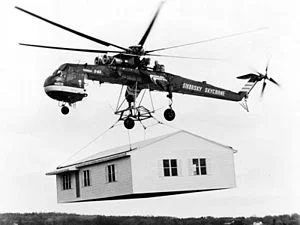
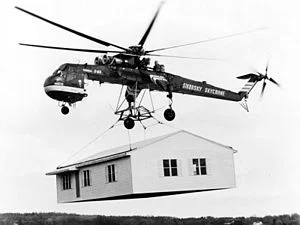
Anxious parents taking the family house to their kids college?
Via OtherWords.org
A good many of us aging Baby Boomers are having trouble relating to the “helicopter parents” of our modern age — those moms and pops constantly hovering over their kids, filling their schedules with enrichment activities of every sort, worrying nonstop about their futures.
Back in the middle of the 20th Century, Baby Boomers didn’t grow up like that. We lived much more “free-range” childhoods. We pedaled our bikes far from hearth and home. We organized our own pick-up games. We spent — wasted! — entire summers doing little bits of nothing.
We survived. So did our parents. So why do parents today have to hover so much?
The standard explanation: Times have changed. Yes, today’s parents take a more intense approach to parenting. But they have no choice. The pressures of modernity make them do it.
Economists Matthias Doepke of Northwestern University and Fabrizio Zilibotti of Yale have followed all the debate over helicopter parenting, and they’re not jumping on this blame-modernity bandwagon. If the pace and pressures of our dangerous digital times are driving parents to hover, the pair points out, then we ought to see parents helicoptering across the developed world.
We’re not.
In fact, researchers have found significant differences in parenting styles from one modern industrial nation to another. Parents in some nations today have parenting styles as relaxed as anything aging baby boomers experienced back in the 1950s. In other nations, by contrast, parents seem as intense as today’s helicoptering norm in the United States.
How can we account for these differences?
Doepke and Zilibotti have a compelling explanation. Levels of helicopter parenting, they note, track with levels of economic inequality. The wider a society’s income gaps, the more parents hover.
The two countries most notorious for their helicopter parenting, China and the United States, just happen to sport two of the world’s deepest economic divides. And those more relaxed parenting days of mid-20th century America? They came at a time when the United States shared income and wealth much more equally than the United States does today.
What’s going on here? Why should economic inequality have any impact on parenting styles?
In severely unequal nations, the evidence suggests, childhoods have become high-stakes competitions. Only the “winners” go on to enjoy comfortable lives when they grow up. You either make it into the ranks of your nation’s elite or you risk struggling on a treadmill that never ends.
In more equal societies, you don’t have to matriculate at the “best” schools or score a high-status internship to live a dignified life. In societies with income and wealth more evenly distributed, broad swatches of people — not just elites — live comfortably. That leaves parents, as Doepke puts it, “more room to relax and let the kids just enjoy themselves.”
Parents in highly unequal nations can’t afford to relax. They have too much to do. They have to shape their kids into winners. But the competition their children face will always be rigged, because the already affluent in deeply unequal societies have more time and money to invest in that shaping.
Researchers Doepke and Zilibotti call for greater public investments in social services — like quality child care — to narrow the competitive advantage that wealth bestows upon affluent American families.
The investments they recommend would certainly help ease the pressure on working households. Would they be enough to get our parents more relaxed? Not likely, not so long as rewards keep concentrating in the pockets of the few at the expense of the many.
Our helicopter parents, in short, don’t need fixing. Our economic system does.
Sam Pizzigati is an associate fellow at the Institute for Policy Studies and a co-editor Inequality.org, which ran an earlier version of this piece. His latest book is The Case for a Maximum Wage.
At PCFR: The Royals; Fleeing Central America; Brazil's new strongman; Threatening Taiwan

"A Good Riddance" cartoon from Punch, Vol. 152, 27 June 1917, commenting on King George V’s order to relinquish all German titles held by members of his family.
Mark your calendars for some exciting upcoming talks at the Providence Committee on Foreign Relations (thepcfr.org; pcfremail@gmail.com). Consult thepcfr.org for information on how to join the organization and other information about our organization.
Our speaker on Thursday, March 14, will be Miguel Head, now a fellow at Harvard’s Shorenstein Center. He spent the past decade as a senior adviser to the British Royal Family. He joined the Royal Household as Press Secretary to Prince William and Prince Harry before being appointed in 2012 as their youngest ever Chief of Staff.
Previously, Mr. Head was Chief Press Officer at the UK Ministry of Defense, and worked for the Liberal Democrat party in the European Parliament. While at the Shorenstein Center, Mr. Head is doing research into how social inequalities in Britain are fomenting the politics of division (which helped lead to the Brexit vote) and how non-political leadership, working collaboratively with traditional and digital media, can play a role in bringing disparate communities together. At the PCFR, he’ll talk about those things as well comment on the past and current role of the Royal Family, and, indeed, life with the Royals.
xxx
At the April 4 Providence Committee on Foreign Relations (thepcfr.org) dinner, James Nealon, the former U.S. ambassador to Honduras, will talk about Central America in general and Honduras in particular, with a focus on the conditions leading so many people there to try to flee to the United States – and what the U.S. can and should do about it.
A career Foreign Service officer, Nealon held posts in Canada, Uruguay, Hungary, Spain, and Chile before assuming his post as Ambassador to Honduras in August 2014; Nealon also served as the deputy of John F. Kelly, while Kelly was in charge of the United States Southern Command.
After leaving his ambassadorship in 2017, Nealon was appointed assistant secretary for international engagement at the Department of Homeland Security by Kelly in July. During his time as assistant secretary, Nealon supported a policy of deploying Homeland Security agents abroad. He resigned his post on Feb. 8, 2018, due to his disagreements with the immigration policy of Donald Trump, and, specifically, the withdrawal of temporary protected status for Hondurans.
xxx
Then, on April 10, the speaker will be Prof. James Green, who will talk about the political and economic forces that have led to the election of Brazil’s new right-wing president, Jair Bolsonaro – and hazard some guesses on what might happen next.
Professor Green is the Carlos Manuel de Céspedes Professor of Latin American History, director of Brown’s Brazil Initiative, Distinguished Visiting Professor (Professor Amit) at Hebrew University, in Jerusalem, and the Executive Director of the Brazilian Studies Association (BRASA), which is now housed at the Watson Institute at Brown.
Green served as the director of the Center for Latin American and Caribbean Studies at Brown University from 2005 to 2008. He was president of the Brazilian Studies Association (BRASA) from 2002 until 2004, and president of the New England Council on Latin American Studies (NECLAS) in 2008 and 2009.
Additional speakers for the season will be announced soon. They will include a June event on Taiwan’s tense relations with expansionist China.