
Vox clamantis in deserto










Expectation and prognostication

In New Britain, Conn., after the Great Blizzard of March 11-14 1888.
"March is the month of expectation,
The things we do not know,
The Persons of Prognostication
Are coming now.
We try to sham becoming firmness,
But pompous joy
Betrays us, as his first betrothal
Betrays a boy."
- Emily Dickinson, XLVIII
UMass Boston to lease Accordia space for mixed-use development
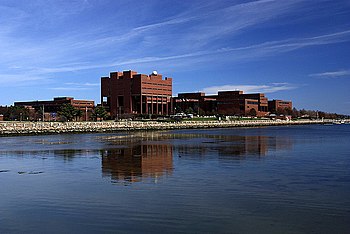
View of part of the UMass Boston campus, which is on Boston Harbor.
This is from The New England Council (newenglandcouncil.com)
“UMass Boston announced that its board of trustees and building authority have unanimously agreed to lease the Bayside Expo Center site to Accordia Partners. This deal will see the 20-acre site developed into 3.5 million square feet of mixed-use space.
“At $235 million, the partnership between UMass Boston and Accordia Partners will provide funding for the school as well as the opportunity to develop the space. The university will engage its community to determine the priorities for the development of the site. The space will include academic, life-science, residential, and retail space, and will create public access to the waterfront.
“Interim Chancellor Katherine Newton said, ‘Part of what I hope we can do is to see what kinds of industries arrive at Bayside and then build academically toward them, so that there’s a natural bridge between our students, faculty and those industries. . . We’re not going to make any decisions right now about what’s going to be teed up.”’
Bygone colleges

From Chantal Zakari’s show “Congent Message,’’ at the Kingston Gallery, Boston, through March 31
The gallery says that her show “hails from the future with nostalgic postcards of defunct colleges. Through the use of a rough halftone pattern the images of a bygone era blur and disintegrate into painterly abstraction. This collection of postcards includes stories about Alliance College, now a state prison, Virginia Intermont College, whose campus has been bought by a Chinese university, and Mt. Ida College, in Newton, Mass.,embroiled in a feud about how public funds should be spent.
“‘Cogent Message’ is also the title of an encyclopedic photobook in the show, where idyllic images retrieved from schools’ marketing campaigns emerge from the white background of corporate letterheads. Interspersed with school logos we see part time faculty who barely make ends meet, students starting life in debt and staff suddenly finding themselves unemployed.’’
Trying to get college kids to love downtown Worcester

In downtown Worcester. City Hall, built in 1898, during the city’s industrial heyday.
From Robert Whitcomb’s “Digital Diary,’’ in GoLocal24.com
‘The Worcester Telegram ran a story Feb. 16 headlined “Area college students shy away from downtown, other city attractions’’.
A big problem for Worcester is that its colleges are not virtually downtown, unlike in Providence, most notably with Brown University and the Rhode Island School of Design. And Johnson and Wales University is actually downtown, as are some URI and Roger Williams University units. This long-term presence has helped prop up Providence’s core even as some big old companies left town. The city’s very scenic location at the head of Narragansett Bay helps, too. And Worcester’s altitude and inland location make winter walking and driving there more problematical than in Rhode Island’s capital.
Worcester’s colleges are more on the periphery, making excursions to the old industrial city’s (sort of the Pittsburgh of New England) downtown more daunting. It will take a lot more marketing to get a lot more college kids in downtown Worcester, even as Providence’s downtown remains crowded with them.
It's too bad that “Downcity’’ Providence is no longer the company-headquarters place it was decades ago, but at least its college students are there in droves, spending money making the downtown safer. Crowded cities are usually safer cities.
I doubt that the arrival of the soon-to-be named something-else Pawtucket Red Sox will draw many college students, though maybe more than the terrific Worcester Art Museum.
To read The Telegram’s story, please hit this link.
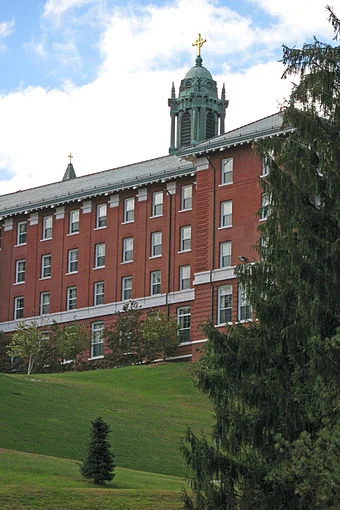
Alumni Hall, on the hilly campus of the College of the Holy Cross, in Worcester.

Chris Powell: Trump's border wall beats Conn. AG's demagogic posturing

President Trump looking at new border wall prototypes in San Diego, in March 2018.
Connecticut Atty. Gen. William Tong has joined a lawsuit with 15 other states against President Trump's declaration of a federal emergency, which the president plans to use to justify spending otherwise-appropriated money to complete a wall across the Mexican border. Tong says that he aims to protect the U.S. Constitution and the state, but, accusing the president of "racism and hate," he is engaging mainly in the demagogic posturing that characterized his recent campaign.
Tong notes that Congress has refused to authorize spending for the wall and that diverting funds to build it could hamper federal projects in Connecticut. Further, the attorney general and other Democratic officials in Connecticut and nationally argue that illegal immigration is not really an emergency.
But federal law authorizes such money transfers upon an emergency declaration and leaves the president to define emergencies. So even legal analysts who disdain Trump expect the lawsuit against the declaration to fail at the Supreme Court.
Besides, those who object to Trump's emergency declaration long have gotten far too comfortable with illegal immigration.
Illegal immigration was supposed to have been stopped by the Simpson-Mazzoli Act of 1986, which bestowed a grand amnesty on illegal immigrants in exchange for more border security, but the border security never materialized. So today the foreign-born proportion of the U.S. population is higher than ever; the country's illegal population is estimated at 11 million; most illegals intercepted at the border enjoy the government's hapless practice of "catch and release"; most of those released never appear for court proceedings, instead disappearing into the ever-growing communities of illegals throughout the country, like New Haven, one of the first "sanctuary cities"; and there is less assimilation and more separatism by immigrants.
While Tong postures against "racism and hate," his party's legislators in the General Assembly are advancing legislation to require medical insurers to sell policies to illegal immigrants, which will be more facilitation of illegal immigration and more nullification of federal law on top of the driver's licenses and tuition discounts Connecticut already offers illegals.
Yes, there may be better measures than a wall for stopping illegal immigration -- like requiring all employers to use the "e-Verify" system of confirming eligibility for employment, and imposing serious penalties on employers of illegals.
But most Democrats oppose such measures and anything that might substantially reduce illegal immigration. And while Democrats in Congress complain about the cost of Trump's wall, every month they happily sneeze away far more money on the futile 18-year military adventure in Afghanistan. Trump's wall won't be perfectly effective, but it will be far more effective and humane than what the Democrats condone in Afghanistan.
Despite the attorney general's demagoguery, there is nothing racist or hateful in controlling immigration so the country knows what it is getting -- whether it is getting people of decent character and skills, people who want to live in a democratic and secular society rather than a totalitarian and theocratic one, people who want to become Americans and help build the country, or people who just want to undercut wages in menial work and wire the money back across the border or exploit the country's generous welfare system.
So even if illegal immigration isn't an emergency, at least Trump sees it as a problem. His wall beats the Democrats' nullification.
Chris Powell is a columnist for the Journal Inquirer, in Manchester, Conn.
Newport event on smart cities and the Fourth Industrial Revolution

Street lamps in Amsterdam have been upgraded to allow municipal councils to dim the lights based on pedestrian use.
From Llewellyn King, long-time contributor to New England Diary and host of White House Chronicle, on PBS
Dear Friends,
I will be speaking about smart cities and the Fourth Industrial Revolution at The Pell Center, Salve Regina University, Newport, RI, at 10 a.m. on Friday, April 5.
There is no charge, and refreshments will be served before the lecture. You are most welcome to bring a guest/s.
Here is the registration link, please feel free to share it:
https://www.eventbrite.com/e/smart-cities-gateway-to-the-fourth-industrial-revolution-tickets-57413347869

The Pell Center for International Relations and Public Policy building, in a former Gilded Age mansion.
I would be honored and delighted if you would attend.
Cheers,
Llewellyn
Executive Producer and Host
White House Chronicle, on PBS;
Columnist, InsideSources Syndicate;
Commentator, SiriusXM Radio;
Founder/Host, ME/CFS Alert on YouTube

Larry Ellison High School?

Larry Ellison’s Beechwood estate, in Newport.
From Robert Whitcomb’s “Digital Diary,’’ in GoLocal24.com
Jim Gillis of the Newport Daily News created a bit of a flap in his Feb. 14 column, headlined “Spare Change: Here’s an idea for moneybags Larry Ellison’’. Mr. Gillis was responding to news that the Oracle mogul Ellison, ranked the fifth-richest person in America, with a fortune of over $62 billion, has bought a fourth estate in the City by the Sea, this one called Seacliff. His most important Newport property is the old Astor estate called Beechwood, on which he’s spent $100 million to turn it into an art museum.
Mr. Gillis suggests -- partly in jest? -- that a better use of Mr. Ellison’s money would be for him to spend $120 million to build a new high school to replace Newport’s aging Rogers High School. He writes:
“Heck, lots of multi-billionaires own mansions. How many build their own schools? Sure, the city would operate the place. All you need do is bankroll construction. Hey, maybe other local celebrity rich folk like Jay Leno and Judge Judy might chip in a few shekels.
“The high school has been named for William S. Rogers since before any of us were alive, predating the current location.
“We love tradition here. But for $120 million, I suppose Larry Ellison High School sounds pretty good.’’
To read Mr. Gillis’s column, please hit this link:
https://www.newportri.com/news/20190214/spare-change-heres-idea-for-moneybags-larry-ellison
Well, Larry Ellison and other new and long-entrenched Newport celebrities do pay lots of property taxes. And, God bless ‘em, the three folks whom Mr. Gillis mentioned at least made made their own money rather than being the beneficiaries of inheritance (what the late, crude Providence Mayor Vincent Cianci called “the lucky sperm club’’). And they can spend their money any damn way they want.
But wouldn’t it be nice if more very rich people contributed to public services rather than seeming to want to wrap themselves more tightly in glamour and prestige by giving money to, say, already rich museums and private colleges?
For example, MarketWatch reported that “20 colleges {most of them elite private institutions} that received the most money in donations during the last fiscal year accounted for about 28% of the total $46.73 billion donated to universities during that period. They serve just 1.6% of the nation’s 19.9 million undergraduate students. That’s based on an analysis of the annual Voluntary Support for Education survey, published by the Council for Advancement and Support of Education, a membership association for professionals working in development, alumni relations and related fields for educational institutions.’’
Drawing out emotions

“In Trouble’’ (drawing), by David Andrews, in his show “David Andrews: Feelings of…’’ at the Augusta Savage Gallery, at UMass Amherst, through March 28. The drawings are said to confront rage, fear and confusion with hope, forgiveness and liberation.
25 'healthy food' groups get grants

From The New England Council (newenglandcouncil.com)
Harvard Pilgrim Health Care has awarded 25 ‘‘healthy food’’ nonprofit organizations with grants to support their programs. The Harvard Pilgrim Health Care Foundation, which issued the grants, has awarded nearly $620,000 to groups in Connecticut, Maine, Massachusetts and New Hampshire.
In 2016, Harvard Pilgrim Health Care Foundation launched the Healthy Food Fund program, and has since awarded grants totaling $4.6 million across New England. These funds support volunteer-based community food programs that bring fresh, local food to low-income families. These organizations include Gardening the Community, Healthy Acadia, New Hampshire Food Bank, and New Haven Farms.
Karen Voci, president of Harvard Pilgrim Health Care Foundation, outlined, “Our goal for this next phase of the Harvard Pilgrim Healthy Food Fund is to mobilize the energy of local community members and corporate volunteers to grow, glean and provide more free, fresh produce for low-income families across New England, creating a movement of ‘neighbors feeding neighbors.’’’

Former adviser to British Royal Family and scholar of the sociology of what led to Brexit will speak at March 14 PCFR

British Royal Family Coat of Arms.
Mark your calendars for some exciting upcoming talks at the Providence Committee on Foreign Relations (thepcfr.org; pcfremail@gmail.com). Consult thepcfr.org for information on how to join the organization and other information about the organization.
Our speaker on Thursday, March 14, will be Miguel Head, now a fellow at Harvard’s Shorenstein Center. He spent the past decade as a senior adviser to the British Royal Family. He joined the Royal Household as Press Secretary to Prince William and Prince Harry before being appointed in 2012 as their youngest ever Chief of Staff.
Previously, Mr. Head was Chief Press Officer at the UK Ministry of Defense, and worked for the Liberal Democrat party in the European Parliament. While at the Shorenstein Center, Mr. Head is doing research into how social inequalities in Britain are fomenting the politics of division (which helped lead to the Brexit vote) and how non-political leadership, working collaboratively with traditional and digital media, can play a role in bringing disparate communities together. At the PCFR, he’ll talk about those things as well comment on the past and current role of the Royal Family, and, indeed, life with the Royals.
xxx
At the Thursday, April 4 ,Providence Committee on Foreign Relations (thepcfr.org) dinner, James Nealon, the former U.S. ambassador to Honduras, will talk about Central America in general and Honduras in particular, with a focus on the conditions leading so many people there to try to flee to the United States – and what the U.S. can and should do about it.
A career Foreign Service officer, Nealon held posts in Canada, Uruguay, Hungary, Spain, and Chile before assuming his post as Ambassador to Honduras in August 2014; Nealon also served as the deputy of John F. Kelly, while Kelly was in charge of the United States Southern Command.
After leaving his ambassadorship in 2017, Nealon was appointed assistant secretary for international engagement at the Department of Homeland Security by Kelly in July. During his time as assistant secretary, Nealon supported a policy of deploying Homeland Security agents abroad. He resigned his post on Feb. 8, 2018, due to his disagreements with the immigration policy of Donald Trump, and, specifically, the withdrawal of temporary protected status for Hondurans.
xxx
Then, on Wednesday, April 10, the speaker will be Prof. James Green, who will talk about the political and economic forces that have led to the election of Brazil’s new right-wing president, Jair Bolsonaro – and hazard some guesses on what might happen next.
Professor Green is the Carlos Manuel de Céspedes Professor of Latin American History, director of Brown’s Brazil Initiative, Distinguished Visiting Professor (Professor Amit) at Hebrew University, in Jerusalem, and the Executive Director of the Brazilian Studies Association (BRASA), which is now housed at the Watson Institute at Brown.
Green served as the director of the Center for Latin American and Caribbean Studies at Brown University from 2005 to 2008. He was president of the Brazilian Studies Association (BRASA) from 2002 until 2004, and president of the New England Council on Latin American Studies (NECLAS) in 2008 and 2009.
Speakers for May and June will be announced soon.
Work ethic

‘‘Well, while I'm here, I'll do the work’’ (ALEPH) (acrylic/rag paper), by Tasha Robbins. (Photo by James Stark.) This is in her show “Malachim, Coming Out of Darkness,’’ at the Hampden Gallery at University of Massachusetts at Amherst.
The gallery says that Robbins's work is “an abecedarian adventure in paint and a personal meditation on the letters of the Hebrew Alphabet.’’

Review of the mid-term elections in New England

From The New England Journal of Higher Education, a service of The England Board of Higher Education (nebhe.org)
Editor’s Note: New England and the nation have long suffered from an underrepresentation of women and people of color in higher elected offices. In the 2018 midterms, that began to change. Below, Carolyn Morwick, director of government and community relations at NEBHE and former director of the Caucus of New England State Legislatures, takes a state-by-state look at New England elections and some key issues. Also see From the Corner Office: New England Governors Budgets and Turning Points: Reflections on What the Historic 2018 Midterm Elections Could Mean for New England and Electing a Reflection of America. — John O. Harney
Connecticut
Four of Connecticut’s five U.S. House members easily won re-election in their respective districts, while voters in Connecticut’s 5th congressional district elected Jahana Hayes, a 2016 “Teacher of the Year” award recipient to replace Elizabeth Esty who resigned last year. Hayes is the first African-American to represent Connecticut in the U.S. House. A native of Waterbury, she enrolled at Naugatuck Valley Community College, earned her four-year degree at Southern Connecticut State University and eventually her masters’ and advanced degrees from the University of Saint Joseph and University of Bridgeport while working to support her young family.
U.S. Sen. Chris Murphy, a Democrat, easily won his second six-year term.
Under Connecticut law, there is no term limit on the office of governor. Outgoing Gov. Dannel Malloy was eligible to run for a third term but chose not to. Malloy will be succeeded by Democrat Ned Lamont who edged out Republican Robert Stefanowski by 40,000 votes.
In the Connecticut General Assembly, the balance of power has shifted slightly with House Democrats gaining seats in the November elections. Democrats control the House with a 92-59 margin. In the Senate, Democrats now have a 23-13 majority. House and Senate leaders are in agreement that the agenda for 2019 will likely address paid family medical leave, an increase in the minimum wage and implementing tolls including a proposal by Lamont to impose a toll on out-of-state trucks.
In other election news, William Tong became the first Asian-American elected to serve as attorney general. Tong is a native of Connecticut, born to Chinese immigrant parents. He served in the Connecticut House and was House chair of the Judiciary Committee. He is the first Asian-American elected to a statewide office.
Democrat Shawn Wooden was elected state treasurer. He will replace Denise Napier who served for 20 years in that post. Wooden is a partner in the law firm of Pitney Day and heads the firm’s public pension plan investment practice.
In the Legislature, the Senate re-elected Martin Looney as Senate president and Bob Duff as Senate majority leader, while the House re-elected Rep. Joseph Aresmowicz speaker and Rep. Matthew Ritter as House majority leader. Republicans re-elected Len Fasano the post of Senate minority leader and House Republicans chose Rep. Themis Klarides as House minority leader
Connecticut voters approved two amendments to the state constitution by wide margins. In Connecticut, the only way voters can ask the state to do something is by amending the state constitution. One amendment would create a transportation “lockbox,” which would protect funds for highway and mass transit. The other amendment would protect public lands.
Maine
In Maine’s 1st congressional district, Democratic Rep. Chellie Pingree easily won re-election with 59% of the vote. In the 2nd congressional district, Jared Golden, also a Democrat, won a very close race. For the first time in Maine, “rank choice voting” determined the outcome of this election, giving the edge to Golden.
So far, Maine is the only state in the U.S. to use rank choice voting. If one candidate receives an outright majority of the votes, he or she wins. Ranked choice voting lets voters rank their choices based on individual preference. First choices are counted, and if no candidate has a majority of the vote, an “instant runoff” occurs in which the candidate with the least support is eliminated. Voters that picked the eliminated candidate as their first choice have their vote counted for their next choice. In a three-person race, the winner is the candidate with the majority of support in the final round of tabulation. In a race with more than three candidates, the process is repeated until one candidate has a majority.
U.S. Sen. Angus King, an Independent, won re-election with 54% of the vote.
Former Attorney General Janet Mills defeated Republican Shawn Moody to become Maine’s first woman governor with 51% of the vote. In addition, Democrats swept both branches of the Maine state Legislature. A record 60 women will now serve in the 151-member House of Representatives.
Lawmakers re-elected Rep. Sara Gideon to a second term as speaker of the House. Rep. Matt Moonen was elected House Majority Leader and Rep. Kathleen Dillingham was elected House Minority Leader. In the Senate, where Democrats now outnumber Republicans 21 to 14, Troy Jackson was elected Senate president with Sen. Nate Libby chosen to be majority leader. Sen. Dana Dow was elected to be Senate minority leader.
With a new Democratic governor in place, Jackson and Gideon are optimistic about bipartisan support for rural broadband network initiatives, finding ways to allow local communities to pursue a local option sales tax and increasing ways to work together on the opioid crisis. Jackson is interested in addressing student debt reform by establishing incentives for out-of-state students to attend one of Maine’s public higher education institutions. Students would receive student debt relief by staying in Maine and becoming part of Maine’s workforce.
Jackson would also like to see a Medicaid buy-in option to provide low-income Mainers with access to affordable health care. He also wants to build a prescription drug importation plan to give Mainers and local pharmacies the ability to purchase
Among ballot questions, Maine voters defeated a question to adopt payroll and non-wage income taxes for home care program initiative.
Voters passed a wastewater infrastructure bond issue for $30 million general obligation bonds, a transportation bond issue for $106 million in general obligation bonds, a University of Maine System bond issue for $49 million in general obligation bonds for construction and remodeling of existing and new facilities within the University of Maine System, and a Maine Community College System bond issue for $15 million renovation and expansion of instructional laboratories, information technology infrastructure, and heating and ventilating systems at Maine’s seven community colleges.
Massachusetts
While all members of the Massachusetts delegation to the U.S. House easily won re-election, the big news was the election of the first African-American from Massachusetts to serve in the U.S. House of Representatives. In the September primary election, Ayanna Pressley, a Democrat and former member of the Boston City Council, defeated long-time Democratic Congressman Michael Capuano of Somerville. Next year will be the first time that Massachusetts will send three women to the U.S. House of Representatives.
U.S. Sen. Elizabeth Warren, a Democrat, cruised to a big win with 60% of the vote, defeating Republican state Rep. Geoff Diehl. Warren also declared herself a candidate for the 2020 presidential election, along with another New Englander, Independent U.S. Sen. Bernie Sanders of Vermont.
Voters gave Gov. Charlie Baker the nod for a second term by a margin of 67% in defeating his Democratic challenger, Jay Gonzalez, former secretary of administration and finance to former Gov. Deval Patrick.
The Massachusetts Legislature continues to have a supermajority with Democrats in control. Women made some gains in the midterm elections and hold 29% or 57 of the 200 seats in the House and Senate. Prior to the November election, members of the Massachusetts state Senate elected Democratic Sen. Karen Spilka to be Senate president. Robert DeLeo was re-elected House speaker.
Massachusetts voters defeated a question to change patient-to-nurse limits. Voters approved a question establishing a 15-member citizens’ commission to advocate for certain amendments to the U.S. Constitution regarding political spending and corporate personhood and approved a question prohibiting discrimination based on gender identity in public places.
New Hampshire
In New Hampshire’s 2nd congressional district, Rep. Annie Kuster easily won re-election for a fourth term with 55% of the vote. In the 1st congressional district, voters elected their first LGBTQ representative, Democrat Christopher Pappas, who beat Republican Eddie Edwards 54% to 45%. Pappas replaces Carol Shea Porter who decided not to seek re-election. He formerly served three terms as an executive councilor.
Despite the strong showing of Democrats in down-ballot races, Republican Gov. Chris Sununu was easily re-elected for a second term, besting state Sen. Molly Kelly, 52% to 45%.
In addition to the Blue wave that upended the majority in both the House and Senate, the race that generated the most interest was the election of secretary of state. Bill Gardner eventually won his 22nd term in office by just four votes. Both Gardner and his opponent, Colin Van Ostern, are Democrats. Van Ostern, a former gubernatorial candidate, ran a campaign based on modernizing the Secretary of State’s Office. The nation’s longest secretary of state, Gardner will begin his 42nd year overseeing New Hampshire elections.
Democrats swept out Republicans in the House and Senate. Democrats hold a 233 to 167 majority. Rep. Steve Shurtleff was elected to be the new speaker. Rep. Douglas Ley is the new house majority leader and Rep. Dick Hinch is the new house minority leader. In the Senate where Democrats now have a 14-10 majority, Sen. Donna Soucy was chosen to be the new Senate president. Sen. Dan Feltes was elected Senate majority leader and former Senate President Chuck Morse was chosen as the new Senate minority leader.
Shurtleff’s top priority as speaker is the opioid crisis. His other priorities include aid for school construction, preventing downshifting to local property taxpayers and strengthening the state’s mental health system. He also says he wants to work with the governor on passing a paid family medical leave bill.
Senate President Soucy’s priorities are part of her “Opportunity Agenda” which includes property tax relief, mental health, behavioral health, the opioid crisis and making sure people have the skills they need. She also mentioned a state version of pre-existing conditions, a new bill for paid family leave and a Senate redistricting bill.
New Hampshire voters approved a question, authorizing residents to sue their state, county or local governments, including their school boards, and another authorizing individuals to live free from governmental intrusion regarding private or personal information.
Rhode Island.
Democratic U.S. Sen. Sheldon Whitehouse won a third term, beating back a challenge from Republican Robert Flanders. Both Democratic congressmen, David Cicilline and James Langevin, won their re-election bids. Cicilline holds among the highest positions on the Democrats leadership team.
Gov. Gina Raimondo easily won re-election with a decisive 53% of the vote. She beat her opponent Cranston Mayor Alan Fung for the second time with a well-organized get-out-the- vote effort. She is also the new chair of the Democratic Governors Association for 2019. Her leadership was key in establishing tuition-free access at Rhode Island Community College.
In the Rhode Island General Assembly, Democrats picked up four more seats in the House while the Senate essentially stayed the same. Speaker Nicholas Mattiello was re-elected speaker and Sen. Dominick Ruggerio was re-elected as Senate president. Peter Neronha, a former U.S. attorney in Rhode Island, is the new attorney general.
Rhode Island voters approved a school buildings bond measure.
Vermont
The state’s sole member of Congress, U.S. Democratic Rep. Peter Welch, also coasted to victory. Independent U.S. Sen. Sanders easily won re-election for another six-year year term.
In the race for governor, Phil Scott earned a second term, beating Democratic challenger Christine Halquist, who became the first transgender woman to win the primary.
Despite Scott’s win, Republicans in the Vermont General Assembly took a big hit. They lost 10 seats in the House and, as a result, lost their ability to uphold the governor’s veto. Republicans now have 43 seats in the House, while Democrats and Progressives hold 102 seats. In the Senate where Democrats and Progressives already held a big majority, they now hold 24 of the 30 seats.
The veto-proof majorities of Democrats and Progressives in both branches bode well for their legislative agenda, which includes paid family medical leave, a $15 minimum wage and funding for clean-water projects. Up for debate will be forced mergers in Vermont’s school districts and a pro-choice amendment to the state constitution and establishing a state cannabis market.
Exhaustion

“Guardian’’ (ceramic), by Kyungmin Park, in the show “Ceramic Sculpture Culture,’’ at the Heftler Visiting Artist Gallery, at Endicott College, Beverly, Mass. through May 24.
David Warsh: Pelosi might be Democrats' strongest presidential candidate in 2020

SOMERVILLE, Mass.
The Mueller report seems ready to take over the headlines for the next month or so. However much we learn of whatever it contains, the special counsel’s report is a distraction from the main event on America’s calendar, which is the 2020 election.
President Trump’s war on the FBI will be an issue for many years to come, whether or not he is re-elected. But the path of events going forward, including the incumbent’s decision whether or not to run again, depends above all on who the Democrats nominate to run against him.
The Washington Post’s quarterly list of the top 15 Democratic presidential candidates, published Saturday was not encouraging, at least to those who consider Trump’s presidency to have been a disaster. Reporter Aaron Blake ranked Sen. Kamala Harris first among contenders, Sen. Bernie Sanders second, Sen. Elizabeth Warren third, Sen. Cory Booker fourth, former Vice President Joe Biden fifth and former Congressman Beto O’Rourke sixth.
Former New York City Mayor Michael Bloomberg ranked tenth; Hillary Clinton, who has not said whether she is running or not, ranked eleventh.
The list thus contains seven young and/or inexperienced legislators, four of them women; two governors, Gov. Jay Inslee, of Washington (ranked thirteenth), and former Gov. Terry McAuliffe, of Virginia (fourteenth); and four elderly veterans – Biden, Bloomberg, Clinton and Sanders.
So it seems a good time to point out that the Democrats have a candidate who has already beaten Trump once, and who. leading their ticket, would almost certainly thrash him again.
House Speaker Nancy Pelosi is not on The Post’s list. Maybe the political pros know more than I do. Only those close to Pelosi can gauge her stamina. Were she to run and win, she would be, at 80, the oldest president ever elected, and unlikely to serve more than a single term. That in itself might be a virtue, in that it would give voters four years to assess the current crop of hopefuls.
The conventional wisdom seems to be that the Democratic nominee will have to stand toe to toe with Trump and punch it out. Lingering over Trump’s El Paso rally the other week, Wall Street Journal columnist Daniel Henninger described what he saw as “political performance art at a high level.” He concluded, “Progressives and their media affiliates can produce all the Trump fear and loathing they want. If their candidate can’t hold a stage with him, they won’t win.” Pelosi, who has little to prove, could run a front porch campaign.
As a candidate, Pelosi would represent a more businesslike future. She would also represent the durable past – Congress’s 75-year record of legislative achievement in cooperation with the executive branch, for one thing. The long ascent of women to positions of great responsibility, always against long odds, for another. For all the talk of new social programs costing hundreds of billions, the two most pressing items on the domestic agenda are to shore up Social Security and tackle health insurance once again. An experienced consensus-builder could lay the groundwork for both.
Pelosi’s single biggest asset as a candidate would be that her campaign would be the least divisive. She wouldn’t need to dismiss the concerns of Trump voters. with questions of border security, she could embrace many of his positions and put them in perspective. Nobody is going to be able to intone the fateful sentence for a second time – “our long national nightmare is over.” Pelosi, better than anyone else, could at least begin the healing.
It may not happen. Clearly the country is ready for a new generation. Might voters delay the turning of the page for four years in exchange for a pattern-setting woman president? This much seems clear: a back-room deal wouldn’t be possible once the primaries have begun. The possibility of Pelosi’s candidacy should undergo a careful thinking over at the highest levels of the Democratic Party, whatever that means, and in the press.
David Warsh, a veteran columnist and an economic historian, is proprietor of economicprincipals.com, where this essay first ran. He’s based in Somerville.

Tim Faulkner: Deal between fishermen and Vineyard Wind nears completion

From ecoRI News (ecori.org)
A deal between fishermen and Vineyard Wind is nearly approved, but the revised agreement won’t give fishermen much more than what was originally offered by the developer.
Lanny Dellinger, chairman of the Fishermen’s Advisory Board (FAB), and Grover Fugate, executive director of the Rhode Island Coastal Resources Management Council (CRMC), admitted that Vineyard Wind had the leverage in negotiations and that agreeing to a slightly improved compensation offer is better than no deal at all.
“Just open your eyes and see what you are up against,” Dellinger told the fishermen crowded in a hotel banquet hall on Feb. 23. “That’s the bottom line. That's what we had to weigh and look at as a group. There is no choice here.”
Dellinger explained that federal agencies such as the National Oceanic and Atmospheric Administration, nongovernmental organizations, and environmental groups were pushing for the approval of the Vineyard Wind project.
“It’s this (fishing) industry against the world,” Dellinger said.
Fugate elaborated, saying that President Trump accelerated the approval process for energy development so that decisions on proposals must be reached within a year of the filling of an environmental impact statement. All other permits must be issued within two years.
“Never been done before, but we are all scrambling to try to do this at this point,” Fugate said. “So these are the limitations that we’re operating under and why the process has not been able to go in a much more relaxed and thoughtful process. We’re under these time constraints where if we don't make these decisions they escape us.”
FAB member Chris Brown blamed the federal Bureau of Ocean Energy Management (BOEM).
“We have so much invested in our fisheries and none of that matters to BOEM,” Brown said. “They are in an inexhaustible search for the next energy source. Years ago it was ‘drill baby drill.’ Now it’s ‘spin baby spin.’ It’s the same thing. They value nothing and we have no way to rein them in.”
FAB member Mike Marchetti said much more research is needed on fisheries impacts caused by the proposed 92-square-mile wind project other planned offshore wind facilities.
“We have five more projects coming at us, at least,” Marchetti said. “You wanna talk squid? You wanna talk scallop? You wanna talk ocean quahog? We have a lot coming at us. So I think, unfortunately, this is the best we are gong to get, and we worked hard on your behalf. I have zero self-interest in this other than to keep the ship afloat for all of us.”
In the end, the six-member FAB unanimously approved a financial package that is about the same as the original $30 million offer made Jan. 16. In the new agreement some of the money will be dispersed upfront. Instead of $6.2 million paid over 30 years, a fishermen’s compensation fund will receive $2.3 million over 30 years but with a $1 million initial payout.
A second payment stream goes to a new RI Fishermen’s Future Viability Trust. In the first offer, this fund was controlled by the state and paid for fisheries-related research. The new fund will receive $2.5 million annually for five years and will be controlled by an independent board of trustees. The board and CRMC staff will determine how the money will be spent.
FAB member Rick Bellevance noted that giving the fishermen control over the money instead of the state was a big benefit, even though the amount of money might be inadequate.
“The FAB feels strongly that this agreement is not precedent setting in the way that we determine the value of the fisheries in this area,” he said.
Many of the commercial fishermen gathered at the Holiday Inn on Route 1 were displeased with the agreement. Dockside buyers of seafood felt excluded from the process and wanted compensation for the loss of squid and other seafood moving through their fish houses.
Meghan Lapp, fisheries liaison for Seafreeze Ltd., which owns four fishing boats and two processors at Davisville Pier, in North Kingstown, said the new offer was only made known two days earlier and the fishing industry needs to comment.
“There has been no public meeting that has heard public comment on the proposal that is before the FAB today,” Lapp said before Dellinger cut her off.
Dellinger told her the meeting was public but that comments would only be taken at the CRMC meeting on Feb. 26.
At that meeting, the agreement will go before the CRMC board as it decides whether the proposed 84-turbine offshore wind project is consistent with regulations. The meeting is scheduled for 6 p.m. at the University of Rhode Island Bay Campus in Narragansett.
Tim Faulkner is a journalist with ecoRI News.
'Traced in the shadow'

A male Red-Winged Blackbird.
I
Among twenty snowy mountains,
The only moving thing
Was the eye of the blackbird.
II
I was of three minds,
Like a tree
In which there are three blackbirds.
III
The blackbird whirled in the autumn winds.
It was a small part of the pantomime.
IV
A man and a woman
Are one.
A man and a woman and a blackbird
Are one.
V
I do not know which to prefer,
The beauty of inflections
Or the beauty of innuendoes,
The blackbird whistling
Or just after.
VI
Icicles filled the long window
With barbaric glass.
The shadow of the blackbird
Crossed it, to and fro.
The mood
Traced in the shadow
An indecipherable cause.
VII
O thin men of Haddam,
Why do you imagine golden birds?
Do you not see how the blackbird
Walks around the feet
Of the women about you?
VIII
I know noble accents
And lucid, inescapable rhythms;
But I know, too,
That the blackbird is involved
In what I know.
IX
When the blackbird flew out of sight,
It marked the edge
Of one of many circles.
X
At the sight of blackbirds
Flying in a green light,
Even the bawds of euphony
Would cry out sharply.
XI
He rode over Connecticut
In a glass coach.
Once, a fear pierced him,
In that he mistook
The shadow of his equipage
For blackbirds.
XII
The river is moving.
The blackbird must be flying.
XIII
It was evening all afternoon.
It was snowing
And it was going to snow.
The blackbird sat
In the cedar-limbs.
— “Thirteen Ways of Looking at a Blackbird,’’ by Wallace Stevens (1879-1955), the Hartford-based poet, lawyer and insurance executive.

Mike Ferner: New masterpiece of a documentary film shows what war is really like

Via OtherWords.org
Newspapers on the other side of the world are calling it “the biggest U.S. cinema event of all time.”
Critical acclaim has poured in from all corners for the BBC production They Shall Not Grow Old, a technical and emotional masterpiece on the First World War — the war Woodrow Wilson said would “make the world safe for democracy.”
The way the film brings old footage, and therefore the soldiers, to life is almost magical and powerfully moving. But because of how director Peter Jackson defined his film, a critical element is virtually invisible: the wounded.
Jackson distilled the stories of 120 veterans who spoke on some 600 hours of BBC audio tape done in the 1960s and ‘70s. His goal was to have “120 men telling a single story…what it was like being a British soldier on the Western Front.” He artfully presents it, using no narration other than the archive of BBC interviews.
But since dead men tell no tales, nor do the severely wounded often live into their 70s and 80s, the film narrows its focus to the camaraderie and adventures of young men growing up with shared experiences of tinned rations, trench life, and rats. The dead flit across the screen in graphic but limited numbers of colorized photos of corpses.
The wounded receive mute witness with brief footage of gas attacks, and a classic photo of seven British troops carrying one wounded comrade through the knee-deep mud of Passchendaele.
Jackson’s team brilliantly turned herky-jerky, silent, monochrome youths into breathing, talking, living color, with compelling stories. But because of his cinematic goal, this assured award-winner misses the depth of feeling and realism it could have projected by giving similar treatment to the agony of the wounded.
Among the neglected images that failed to benefit from Jackson’s alchemy is footage of shell-shock victims filmed at Britain’s Netley Hospital in 1917. The footage would have retained its halting, jerking properties not from erratic frame speeds, but because the young men were tormented with nerve damage.
Nor did Jackson include footage of amputee veterans exiting Queen Mary’s Workshop, dozen upon dozen upon dozen, hobbling in rapid succession.
He might’ve added one or two photos from New Zealand doctor Major Harold Gillies’ groundbreaking book Plastic Surgery of the Face, showing how red-hot shrapnel can carve bone and muscle into monstrous forms.
My own experiences revealed the side of war that Jackson left out.
Ever since nursing GIs returning from Vietnam, I’ve firmly believed that no member of Congress should be allowed to vote on war funding until working for a month in the back ward of a VA hospital.
Let them vote only after emptying urine bags, turning sallow bodies, and daubing the bed sores of formerly healthy youths who will never move on their own again. Or after offloading wounded young people from a passenger jetliner with the seats removed and four vertical rows of stretcher hooks extending all the way down both sides of the aisle.
They Shall Not Grow Old allows the reminiscences of 70-year-old veterans to breathe life into the determined, youthful images Jackson shows us on screen. In so doing, we gain a much greater appreciation of “being a British soldier on the Western Front.”
But it could also have given movie-goers a glimpse into the part of war so rarely seen. It might then have been named, They Shall Suffer Horribly and Die Before Their Time. Hardly a formula for box office success… which is perhaps why war movies never go there, and why the next generation always signs up when their leaders beat the drum.
Mike Ferner, a former president of Veterans for Peace, served as a corpsman on the neurosurgery and psychiatric wards of the Great Lakes Naval Hospital, in Chicago, during the Vietnam war. He lives in Toledo.
Chris Powell: Hiding criminal records doesn't help ex-cons

Most people who go to prison in Connecticut, even for a short time, will have a hard time rebuilding their lives. At best they will be considered damaged goods, necessarily inferior to job and housing applicants who have not been in prison. At worst they will be considered criminals still, since within a few years most former convicts are sent back to prison for one reason or another.
An ex-convict who can't obtain housing and a job soon upon his release is almost compelled to return to crime. So the solutions being advocated by leading liberals in the General Assembly are to conceal criminal records, at least for nonviolent offenses, and to forbid landlords from refusing to rent to former offenders solely on the basis of their criminal history.
But the problem with convicts returning to society goes far beyond the accessibility of criminal records. For most former offenders lack education and job skills and had terrible upbringings, and many suffer learning disabilities. This is why many turned to crime and especially drugs in the first place, and just as much as their criminal history, if not more so, their lack of job skills is why they are considered undesirable employees and tenants.
By contrast, anyone returning from prison after a drug conviction who nevertheless has some education and job skills -- say, an engineer, meat cutter, plumber, or computer programmer -- won't have nearly as much trouble finding a job and a home. Employers and landlords will be far more receptive with someone who has the skills to support himself by honest work.
Keeping employers and landlords ignorant of criminal records won't confer education and job skills on ex-cons. If they come out of prison no more employable than when they went in, enforcement of ignorance about their criminal records will do them little good. Even if they find an apartment, without a job paying enough to sustain it they may be back to crime and prison soon enough anyway.
So rather than demonstrate contempt for the public by enforcing ignorance of criminal records, state government should pursue several other policies with former offenders.
First, the state should repeal drug criminalization, which ensnares most young offenders and has proven futile anyway. Second, the length of criminal sentences should be tied to an offender's gaining education and job skills. And third, state government itself should provide basic jobs and rudimentary housing to former offenders as long as they can't get them on their own.
Of course the latter policy would cost some money, but then current practice -- to release prisoners without job skills and housing and watch haplessly as most go back to prison in a few years -- already is more expensive.
xxx
A REFERENDUM ON TOLLS?: Republicans suddenly have received a great opportunity to give meaning to the five special elections being held Tuesday to fill five vacant seats in the General Assembly, three in the Senate and two in the House. All the districts are so heavily Democratic that their occupants felt comfortable abandoning them soon after their re-election so they might accept appointment to executive positions by Governor Lamont.
That is, can the Republican candidates turn the elections into referendums on the governor's reversing his campaign position and endorsing general tolling on state highways?
Are even voters in Democratic districts upset enough by how fast the governor repudiated what he told them during the campaign?
Chris Powell is a columnist for the Journal Inquirer, in Manchester, Conn.

Llewellyn King: Head's up! Delivery drones are on the way.

A delivery drone.
Here a drone, there a drone. Everywhere a drone. Drones, the light ones, not the big military ones that chase bad guys around the Middle East and elsewhere, are beginning to do heavy lifting.
Consider: Packages are already being delivered by drone in Canberra, Australia’s capital. In Rwanda — unsophisticated Rwanda, known more for its genocide in 1994 — drones are delivering life in the form of emergency blood supplies. I am told the blood is dropped where it is needed in the landlocked East African country by little parachutes. In Europe, soon drones will deliver packages between Helsinki, Finland’s capital, and Tallinn, the capital of neighboring Estonia.
If you need it quickly and cheaply, call a drone. They are the new frontier of delivery.
When the new age of unmanned civilian aircraft dawned (thanks to better batteries, cheaper computer chips and, most important, good, cheap gyroscopes), the sky became the limit. The sky is big, but not that big, and it is going to become a jungle of drones.
Enter AirMap, a Santa Monica, Calif.-based company. It is working with aviation authorities all over the world to design air traffic systems for drones, which allow them free range in the most crowded airspace.
The platform offered by AirMap, according to chairman and co-founder Ben Marcus, is the system that is being incorporated into drone control systems 85 percent of the time around the world. He tells me that Switzerland is a leader in the drone regulatory interface.
Marcus talks about drones passionately, as though they are a good cause. He wants to enable more drones to fly safely. Millions of them.
The drone control system, which is under development, is like the air traffic control system that allows small private airplanes to fly along with commercial jumbo jets. AirMap is a system that has been designed to welcome all flyers, according to Marcus.
AirMap works with air management agencies, like the Federal Aviation Administration and its equivalent in other countries, to make the drone future safe and effective for all the players who would like to enter the drone market, including recreational flyers; post offices; retailers like Amazon, an early air advocate; Google, a big proponent of the automated future; and Uber, which has big plans for its role in the cities of tomorrow. Can FedEx and UPS afford to be behind?
There is scarcely anyone who delivers anything, who does not dream of the time when drones will take it to the front door, and where you will retrieve the cargo by varying methods, including taking it from a string, as is happening in Australia, according to Marcus.
Early entrants into the commercial use of drones have been electric utilities for line inspections, broadcasters for remote photography, and police departments for a variety of their work.
“That is just beginning,” Marcus told me.
Another drone company seeking to make a place for itself in the drone space, San Francisco-based Starship Technologies, promotes how clean-and-green and quiet drones are. Certainly, as they run on electric batteries, they avoid all the noise and mess of internal combustion.
Last Christmas, the world was reminded of the need for systems of control of drones around airports when Gatwick, London’s second airport, was closed for more than a day on news of the sighting of a drone.
Marcus points out that, as practical matter, aircraft deal with birds all the time and they are not subject to the kind of control — control not limitation, advocates are keen to emphasize — take the randomness out of drone flying and the use of airspace for other things.
When you buy a drone in the United States, you must register it — and more than a million are registered. Control system technology will keep track of each drone and who is responsible without the “turn left, head 130 degrees” control that aircraft have. The control systems will keep drones at safe distances and altitudes from runways, other drones and physical objects. Delivery drones will use sensors to skip over power lines and stay away from other drones on the same mission.
You do not want your new shoes tangling with a pizza, as drones bearing both head for your door.
On Twitter: @llewellynking2
Llewellyn King, based in Rhode Island and Washington, D.C., is executive producer and host of White House Chronicle, on PBS. His email is llewellynking1@gmail.com.
Accepting imperfection and transience

“Kintsugi Plate,’’ by Christine Palamidessi, in the “Wabi-Sabi’’ show at Atlantic Works Gallery, Boston, through March 2.
This exhibition features the work of Palamidessi and Bo Petran in their experiments with classic Japanese aesthetic of Wabi-Sabi, which is based on an acceptance of imperfection and transience. Artscope says that Palamidessi calls the work "irregular, intimate, unpretentious, earthy, murky, [and] simple." Palamidessi's works include broken ceramic plates repaired via the Japanese art of kintsugi, and Petran has created a suspended wax-and-paper angel sculpture called "Siddhartha’’.