
Vox clamantis in deserto





More states requiring that physicians 'co-prescribe' naloxone

A naloxone kit.
In a growing number of states, including in New England, patients who get opioids for serious pain may leave their doctors’ offices with a second prescription — for naloxone, a drug that can save their lives if they overdose on the powerful painkillers.
New state laws and regulations in California, Virginia, Arizona, Ohio, Washington, Vermont and Rhode Island require physicians to “co-prescribe” or at least offer naloxone prescriptions when prescribing opioids to patients considered at high risk of overdosing. Patients can be considered at high risk if they need a large opioid dosage, take certain other drugs or have sleep apnea or a history of addiction.
Such co-prescribing mandates are emerging as the latest tactic in a war against an epidemic of prescription and illegal opioids that has claimed hundreds of thousands of lives over the past two decades.
The Food and Drug Administration is considering whether to recommend naloxone co-prescribing nationally (an FDA subcommittee recently voted in favor), and other federal health officials already recommend it for certain patients. And the companies that make the drug are supportive of the moves. It’s not hard to see why: An FDA analysis estimated that more than 48 million additional naloxone doses would be needed if the agency officially recommended co-prescribing nationally.
Most states have limited the volume of opioids doctors can prescribe at one time and dramatically expanded access to naloxone. In California, for example, pharmacists can provide naloxone directly to consumers who are taking illegal or prescription opioids or know someone who is.
In the states with co-prescribing rules, patients aren’t required to fill their naloxone prescriptions, and those with cancer or who are in nursing homes or hospice typically are exempted.
Kristy Shepard of Haymarket, Va., was surprised to find a naloxone prescription waiting for her recently when she went to the pharmacy to pick up her opioid meds. Her first instinct was not to fill it. She did so only after the nurse in her doctor’s office pressured her to. The doctor had never talked to her about Virginia’s new co-prescribing law, she said.
“It’s so silly. I didn’t feel like I needed it. Unless I plan to hurt myself, I’m not likely to overdose,” said Shepard, 41, a registered nurse and hospital administrator who can no longer work and has applied for disability benefits.
But it may not be as difficult as some people think to overdose on prescription painkillers.
“You can take pain meds responsibly, and you can be at risk for an accidental overdose even when you’re doing everything right,” said Dr. Nathan Schlicher, an emergency medicine physician in Washington state and a member of the state hospital association’s opioid task force.
Two million Americans have an addiction to prescription painkillers, according to the FDA. And nearly 218,000 people in the U.S. died from overdosing on them from 1999 to 2017, according to the Centers for Disease Control and Prevention. During that same period, prescription opioid deaths rose fivefold, the CDC data show.
In California, doctors wrote nearly 22 million opioid prescriptions in 2017 and 1,169 people died that year from overdosing on prescription opioids. Common prescription opioids include Vicodin, OxyContin, Percocet, morphine, codeine and fentanyl.
To counter this trend, “states are scrambling for any policy lever they can find,” said Kitty Purington, senior program director at the National Academy for State Health Policy.
Even before the state mandates, pain specialists considered it good practice to prescribe naloxone along with opioid painkillers for some patients, particularly those with a history of substance abuse.
Doctor lobbying groups typically resist government rules regarding their practice, but medical associations in some states supported or at least remained neutral on naloxone co-prescribing mandates.
The companies that make the drug have spent hundreds of thousands of dollars collectively lobbying for their interests at the state level.
Kaléo, which makes the naloxone auto-injector Evzio, spent $77,200 in 2017-18 lobbying California lawmakers on bills expanding access to naloxone, including the state’s co-prescribing law, which requires doctors to offer prescriptions for naloxone to high-risk patients who get opioids.
In December, Kaléo introduced a lower-cost generic version of the injector after a Senate investigation found the company had raised the price of its branded version 600 percent from 2014 to 2017, to $4,100 for two injectors.
Adapt Pharma, which makes the naloxone nasal spray Narcan, spent $48,000to lobby California lawmakers on the co-prescribing legislation.
One advantage of the co-prescribing rules is that they foster important doctor-patient conversations about the risks of opioids, said Dr. Farshad Ahadian, medical director at the University of California San Diego Health Center for Pain Medicine.
“Most providers probably feel that it’s better for physicians to self-regulate rather than practice medicine from the seat of the legislature,” Ahadian said. “The truth is there’s been a lot of harm from opioids, a lot of addiction. It’s undeniable that we have to yield to that and to recognize that public safety is critical.”
But some doctors — not to mention patients — have reservations about the new requirements. Some physicians say it will be nearly impossible for states to enforce the mandates. Others worry that prescribing naloxone to patients who live alone is useless, because it typically must be administered by another person — ideally one who has been trained to do it.
Patients fear that naloxone prescriptions could unfairly stigmatize them as drug addicts and cause life insurers to deny them coverage.
Shepard, the disabled Virginia nurse and a mother of four, said she worries that her naloxone prescription could affect her chances of getting additional life insurance — a pressing question, she said, as her lupus worsens over time.
Katie O’Leary, a pain patient in Los Angeles, is wary of state mandates requiring doctors to prescribe the antidote naloxone along with opioid painkillers to reverse the effects of overdosing. “So many patients already jump through so many hoops to get their meds,” she says.
And a Boston-area nurse who worked at an addiction treatment program was turned down by two life insurers simply because she carried naloxone for her patients.
The decision to prescribe naloxone “is something that should be between a doctor and a patient, because every situation is unique,” said Katie O’Leary, a 31-year-old movie production company office manager who lives in Los Angeles and was diagnosed with complex regional pain syndrome about five years ago.
“So many patients already jump through so many hoops to get their meds,” O’Leary said. “And if you live alone and don’t have family or friends to take care of you, the naloxone might not be something that could actually help.”
Opioid addiction and overdoses are a complex problem, and naloxone is just one part of the solution, said Dr. Ben Bobrow, a professor of emergency medicine at the University of Arizona College of Medicine.
“In the past, pain was the fifth vital sign; we thought we were doing a bad job if we were undertreating pain,” Bobrow said. “Inadvertently, we were harming people. We ended up getting all these people hooked. Now it’s our job to help them find other [ways] of treating their pain.”

Stoned in Vermont

“The Shelf Life of Stones’’ (mixed media), by Paul Katz, in his show ‘‘Vermont Folk Sculpture: A Recent Acquisition, Works on Paper: A Decade of Collecting, and The Mind's Eye: Paintings, Sculpture, and Books by Paul Katz,’' at the Bennington Museum through May 27.

Sarah Anderson: A bill to start cleaning up campaign finance

“Big Sweep’’ sculpture at the Denver Art Museum.
Via OtherWords.org
Amy Klobuchar could’ve waited for the temperature to rise above 15 degrees before launching her 2020 presidential bid. Instead, she chose to risk frostbite and make her pitch in the middle of a snowstorm — all for an election more than 600 days away.
The Minnesota senator is just one of around a dozen Democrats who’ve already thrown their hats into the presidential ring or hinted they intend to soon.
What’s the big rush?
People in other countries think that we’re insane for having such long political races. By one count, in the timeframe of the 2016 U.S. election, you could’ve fit about four elections in Mexico, seven in Canada, 14 in the United Kingdom and 41 in France.
If lengthy campaigns boosted voter education and turnout, I’d be all for them. But there’s scarce evidence of that. The United States ranks 26th out of 32 industrialized countries in the share of the voting age population that shows up at the polls.
So what can we do to avoid contests that shift politicians’ focus away from governing to endless campaigning?
We could try to compress our interminable primary process. But that wouldn’t make much difference when candidates are launching their bids a full year before the Iowa caucus.
A more effective step would be to slash the cost of competing for higher office. Candidates bolt out of the gates because they know it takes a long time to raise the mega-millions required for a White House run.
Imagine how many phone calls and fundraisers went into amassing the $6.5 billion spent on the 2016 election. A quarter of that huge sum came from donors who contributed at least $100,000.
Unfortunately, the U.S. Supreme Court ruled in 2014 that it was unconstitutional to place overall limits on federal campaign contributions. But we’re seeing a rise in candidates who voluntarily rebuff deep-pocketed donors.
“We need to end the unwritten rule of politics that says that anyone who wants to run for office has to start by sucking up to a bunch of rich donors on Wall Street and powerful insiders,” Massachusetts Sen. Elizabeth Warren told the crowd at her own frigid campaign launch. She won’t be taking a dime from political action committees (PACs).
Sen. Bernie Sanders showed in 2016 that it’s possible to raise large sums from individual donors. His total haul: $228 million.
A proposal by House Democrats would go a long way towards boosting small contributions as a counter to the mega-donors.
As part of a sweeping anti-corruption initiative, H.R. 1 would grant tax credits for contributions of no more than $50. Candidates could also volunteer for a public financing option through which the federal government would put $6 into their coffers for every $1 raised in small donations (of no more than $200).
The Democratic proposal would also force Super PACs, which can raise unlimited sums to advocate for or against candidates, to make their donors public. This might discourage some of the shadiest forces from attempting to buy elections.
The bill includes a number of other important pro-democracy proposals. It would crack down on partisan gerrymandering of congressional districts and corrupt lobbying practices. It would also make Election Day a holiday for federal employees, hoping private sector businesses would also give their workers the day off.
None of these changes, I’m afraid, would have an immediate impact on the duration of U.S. election campaigns. But by making the process more equitable, these reforms might make the 600-plus days at least seem shorter.
Sarah Anderson directs the Global Economy Project and co-edits Inequality.org at the Institute for Policy Studies. She tweets at @Anderson_IPS. D
Mysterious stuff in Boston

From Woomin Kim’s show “Mulgeon,’’ at Boston Sculptors Gallery, Feb. 27-March 31. The gallery says:
‘‘Mulgeon’’ is a Korean word “that refers to specific objects but also often implies an element of mystery or secrecy, provoking our curiosity. A line commonly used in Korean movie dialogue is, ‘Did you bring the mulgeon (the stuff)?’
“‘Mulgeon’’ is filled with the stuff of everyday life, such as toilet paper, packing tape, soap, kitchen tiles, cosmetic products, and kitty litter. Now barely recognizable, these objects have been transformed to mimic rocks and minerals, revealing their materiality and resembling their original states. Inspired by a visit to Harvard Museum of Natural and History's mineral collection, ‘Mulgeon’ seeks to reveal the gap between the artist's experience of materials as products and their natural origins before they were extracted and neatly manufactured.’’

David Warsh: Two developments in big newspapers economic drama

In The New York Times newsroom.
SOMERVILLE, Mass.
Like most people, I am forever curious about what constitutes the baseline narrative of our times – all the more so for being the news business. My routine for some years now has been to skim the front pages of four newspapers when I get up, then when I come home at night read the three newsprint editions I received in the morning — The New York Times, The Wall Street Journal, and the Financial Times. The Washington Post I read on the Web.
I don’t watch any television, except when I travel, but I listen to NPR for half an hour in the morning. I subscribe to four magazines (The Economist, Bloomberg Businessweek, The New Yorker and Science). I look at Politico’s Web site once or twice a day. And last week I read most of Merchants of Truth: The Business of News and the Fight for Facts (2019), by Jill Abramson, former executive editor of The New York Times.
The daily newspapers are definitely where I get my news. I often think that entering the worlds of their news pages is like listening to a quartet: the Times is a daily violin, exciting and emotional; The Post resembles a viola, warmly supportive of The Times’s themes, but less jittery; the WSJ is something of a cello, understated and lower-pitched; and the FT, a different voice altogether, is more like a piano.
As in any quartet, each institutional player seems well aware of what the others are doing, at least as a daily matter. Long term, I am not so sure. At least in my experience, two developments stand out.
The first is purely local. After some years of disruption, my three papers are always there on the porch in the morning. It is dispiriting to see, as I walk to work, how few houses take delivery of one or the other national papers, compared to 15 years ago – never mind the precipitous decline of The Boston Globe, my local newspaper. But the evidence is of a newsprint-delivery service that once again takes itself seriously as a going concern, after several years of disruption.
The other development has to do with the price that readers pay for their annual print subscriptions: the Times, $1,092; the WSJ, $540; the FT, $406; and The Post, $150 for digital access, plus second subscription to the paper to give away, a month at a time.
Is the print edition of The Times really worth twice what the WSJ charges for its own? If I could read only one newspaper, which would I choose? I understand that the Times’s pricing policy is, in essence, a branding device, the Tiffany among newspapers, and all that. The Times’s cultural and science reporting has been without peer, though cultural reporting is definitely in decline.
Abramson’s book supports that strategy. The tradition of its former staffers burnishing the paper’s reputation goes back to Gay Talese’s The Kingdom and the Power (1969), about The Times; The Powers That Be (1979), by David Halberstam; and The Trust: The Private and Powerful Family behind The New York Times (1999), by Susan Tifft and Alex Jones.
Halberstam weaved together The Times’s story with four other organizations that had assumed the mantle of media royalty: Henry Luce’s Time Inc.; William Paley’s CBS; Katharine Graham’s Post and the Chandler family’s Los Angeles Times. Forty years later, CBS News and Time are ghosts of their former selves, and the LA Times has a new owner.
Abramson intertwines the tale of her paper’s recent ups and down with the story of the Graham family’s sale of The Post to Amazon magnate Jeff Bezos, and the tales of two all-digital up-and-comers that The Times perceives as threats, BuzzFeed and Vice Media. Neither organization has yet delivered on its early promise. Web-based news start-ups Axios and Quartz may pose more serious challenges, not to mention well-established competitors, such as Reuters and Bloomberg News.
Meanwhile, the New York Times Co. reported earlier this month that digital ad revenue had surpassed print ad revenue in the quarter that ended Dec. 31 for the first time in the company’s history. Digital ad sales were up 23 percent, as opposed to 5 percent increase in advertising revenues overall in the period.
That’s good news, surely, except that the surging growth in The Times’s digital-only subscribers may disguise shrinking circulation of its costly newsprint edition, where a full page of advertising costs more than $100,000, according to Abramson. It’s been conventional wisdom for years that print editions are doomed – that it is only a matter of time before they disappear.
Yet print ads have continued to keep newspapers afloat. It’s not the majority of consumers of news who prefer print to digital devices – just a relatively small audience of elite readers for whose attention some kinds of advertisers are willing to pay, all the more so once they see print editions culturally supported by, among others, the papers themselves.
The contest between the very different print and digital pricing strategies of The Times, on the one hand, and the WSJ and the FT on the other, has implications for the long-term narrative of American politics. Who will call the tune? (Because I don’t see the print edition of The Post, I have no real idea what’s going on there.) Those books by Times authors scarcely mention the biggest Times competitor for influence since the 1960s, the WSJ.
Today’s contest between the Murdoch and Sulzberger families deserves more attention than it has been getting. It has implications for the rest of the newspaper industry as well. How many more copies of the big regional newspapers – LA Times, Chicago Tribune, Boston Globe – would flop up on front porches if subscriptions were priced more like the WSJ instead of The Times? In their golden era, before the advent of search advertising, American newspapers resembled symphonies. If the industry paid more attention to the importance of price, perhaps newspapers might become chamber orchestras again.
David Warsh, an economic historian and veteran columnist, is proprietor of economicprincipals.com, where this essay first ran.
Chris Powell: Abortion measure assumes that women are stupid

Judging from the dishonorable and irresponsible men by whom they become pregnant, many women in Connecticut are not very smart. But are they really so stupid that they need more than a minute to distinguish an abortion clinic from a "crisis pregnancy center" that opposes abortion?
That is the presumption of legislation causing controversy in the General Assembly, as it has done in other states, to punish anti-abortion shops for deceptive advertising. Abortion advocates accuse the anti-abortion shops of posing as abortion clinics to lure pregnant women and dissuade them from having abortions. The anti-abortion shops and their supporters deny deceiving anyone, but the anti-abortion shops and the abortion clinics are in brutal competition with each other.
Connecticut's Unfair Trade Practices Act already authorizes the state Department of Consumer Protection to sue businesses that have caused loss to customers through deception, so the proposed legislation might be redundant if what the anti-abortion shops do is construed as trade and commerce. But the U.S. Supreme Court has ruled that a California law compelling anti-abortion shops to make certain statements to clients is probably an unconstitutional violation of the First Amendment.
In any case the proposed legislation in Connecticut is largely a mechanism by which the pro-abortion side aims to intimidate the anti-abortion side and to frighten legislators into striking pro-abortion poses. The claim that a woman's visit to an anti-abortion shop may critically delay her access to medical treatment is hardly persuasive when, if she is seeking an abortion, all she has to do is ask if the shop will provide or facilitate one.
The proposed legislation is part of the political left's larger campaign against freedom of speech generally. But the more the left practices intimidation here, the less it may persuade the country that there is nothing questionable about abortion, not even abortion of late-term, viable fetuses and infanticide. Indeed, the Democratic Party, the party of the left, is already giving the impression that it considers abortion the highest social good.
This is crazy fanaticism.
xxx
Connecticut Gov. Ned Lamont's open letter to the state, published last week, was a welcome preface to his budget proposal, due this week. But it invited questions.
The governor called attention to the problem of "fixed costs" -- pension, salary, and other commitments set by law and contract that already consume more than half the state budget. Saving the state will require unfixing them, returning them to the democratic process. Will the governor have the courage to propose that?
The governor also suggested repeal of some sales-tax exemptions. Altogether sales-tax exemptions cost state government an estimated $3 billion every year. But while fairness might argue for repeal of some exemptions, any expansion of the sales tax would remove more money from the private economy unless the overall tax rate is reduced. So fairness alone here will not be cause for celebration.
In remarks to business leaders, the governor said that he would propose sharply curtailing state government's bonding, restricting it to necessities. Indeed, for many years the bonding package has been the political pork barrel, with both parties feasting on inessentials to buy votes.
Only the details of the governor's budget will establish where he aims to take Connecticut. But in his campaign he promised change, and change can mean only restraint.
Chris Powell is a columnist for the Journal Inquirer, in Manchester, Conn.
Shouting down is un-American
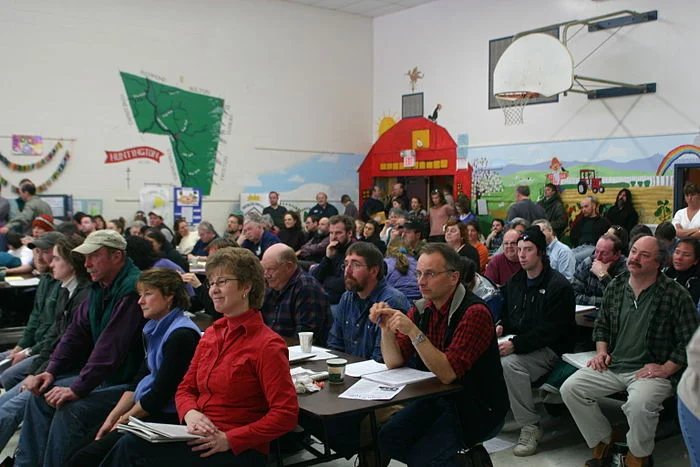
At a town meeting in Huntington, Vt.
“Shouting down and intimidating someone from speaking their mind is not exactly a Vermont town meeting value, nor should it be an American town meeting value.’’
— Vermont Sen. Bernie Sanders
2 Maine schools announce new marine-law program

Portland waterfront and skyline.
This is from The New England Council
“New England Council member the University of New England (UNE), in Biddeford, Maine, has announced a partnership with the University of Maine School of Law (Maine Law), in Portland, that offers marine-science students a faster track to a law degree. This new arrangement will enable students to earn a bachelor’s degree in marine science and a law degree in only six years, one year faster than is typical.
UNE is one of only four schools in the country that offer a bachelor’s degree in marine affairs, while Maine Law is one of six law schools in the country that specialize in marine and maritime law. Under this new arrangement, students can save time and money by enrolling in what will be known as the UNE Marine Affairs – Maine Law 3+3 Pathways Program. This will allow UNE marine affairs students to enroll in Maine Law after their junior year.
James Herbert, president of UNE, said, “Marine affairs is a fast-growing discipline, and law plays an increasingly important role in the field. This partnership between UNE and Maine Law will give strong and highly motivated college applications incentive to come to Maine or stay in Maine for their education and their careers.”
'I am not afraid'

“The February road to the river is mud
and dirty snow, tire tracks and corncobs
uncovered by the mildness. I think I am
living alone and that I am not afraid.’’
— From “To Be Here,’’ by Linda Gregg, sometimes of Northampton, Mass.

Llewellyn King: Utopian dreaming and environmental brio

There are hopes that electric-powered airplanes will help advance the move away from carbon-based fuels. Mr. King writes: “Boeing, for one, is working hard on electric airplanes. Electric air taxis are being experimented with in Dubai and about to be tried in Frankfurt.’’
The newly seated Democrats in the House have lessons to learn, but none more than not to tell people what you’re going to take away from them.
That was the great mistake that Alexandria Ocasio-Cortez made when she laid out her Green New Deal. It sounds like big stick from big government.
She said everything should be done, from rebuilding the entire stock of American housing (which can’t be done) to phasing out air transport (which would never happen) to tackling cow flatulence (which is a smelly challenge). Dreamy nonsense is nonetheless nonsense, and nonetheless has a political price.
It is a bad posture to say to people that you’re going to take things away from them — whether it’s their money in taxes or their way of life — to achieve environmental goals.
The problem with Ocasio-Cortez’s statements is that she’s seen, wrongly, as the new face of the new, far-left Democratic Party. Come the election, Democrats will have to spend time distancing themselves from the Ocasio-Cortez brand of utopian dreaming while capitalizing on their environmental brio.
Foolish extreme suggestions neither woo those who are going to decide the next election nor are they in the dynamic tradition of successful politics. You tell people you are going to fix things, not take them away.
Underlying the Ocasio-Cortez argument, which was codified in a non-binding joint resolution, is the basic idea that the only way to save the planet is to cut all carbon emissions in a very short time and to substitute solar, wind and hydro energy.
Omitted from the statements by Ocasio-Cortez and her Senate collaborator, Edward Markey, D-Mass., is any mention of nuclear, which is still the largest carbon-free source of electricity and hardly scars the face of the earth compared to wind and solar. Maybe that is because Markey has spent his whole career in public life trying to shut down nuclear.
In fact, the environmental movement spent long years fighting nuclear. When I would ask, in conferences in the 1980s, what they would use in lieu of a robust nuclear regime, they would answer coal. But to make it sound environmentally acceptable, they said it should be burned in circulating fluidized bed boilers. These offer some advantage, using limestone to precipitate out sulfate.
Missing from the Green New Deal is any sense of the new, i.e. how technology can help.
Take aircraft. They are in the early stages of development, but an electric airplane is in the sights of the big airframe manufacturers. Boeing, for one, is working hard on electric airplanes. Electric air taxis are being experimented with in Dubai and about to be tried in Frankfurt.
The Green New Deal, which is short on details, only endorses one technology outside of wind and solar: high-speed rail. Unfortunately, Ocasio-Cortez is boosting it at a time when California is drastically cutting back on the U.S. entry into the high-speed rail game. The United States sat that one out, and it may be too late to get into the game.
But there is hope.
The success of Amtrak’s electrified Northeast Corridor points the way: People will use regular trains if they are available and the track is good enough for them to travel at a reasonable speed of about 150 mph. The immediate answer is better track allowing more express trains, like Washington to Boston or Los Angeles to San Francisco without stops.
Nearly all the problems of the climate are amenable to technological solutions. The new fusion of high technology across the board in smart cities will, among other things, reduce the carbon footprint through efficiency and electrified transportation.
Ocasio-Cortez is a fresh voice in the nation: brave and as yet unbeholden to special-interest groups. If she can grasp that we are on the threshold of a brave new world of technology, called the Fourth Industrial Revolution, she’ll see how it can solve many problems, including those it seems to create in climate. Then she’ll have a political product to sell that people will buy.
The one place where technology seems to offer no solutions is with cows and the challenge of Flatulence Arriving Regularly Today (FART).
On Twitter: @llewellynking2
Llewellyn King is executive producer and host of White House Chronicle, on PBS. He is based in Rhode Island and Washington, D.C.

It's out there

Over the winter glaciers
I see the summer glow,
And through the wild-piled snowdrift
The warm rosebuds below.
— “Beyond Winter,’’ by Ralph Waldo Emerson (1803-1882), perhaps New England’s most famous sage.
Feb. 20 PCFR speaker to address U.S. challenges in the warming Arctic

The dots identify human population centers in and around the Arctic.
The speaker at the Feb. 20 dinner meeting of the Providence Committee on Foreign Relations (thepcfr.org) will be Prof. Walter Berbrick, founding director of the Arctic Studies Group at the U.S. Naval War College. He'll talk about future U.S. policies and programs for that region, which is increasingly affected by great power politics.
For more information and to sign up, please hit this link.
Abstractly representational
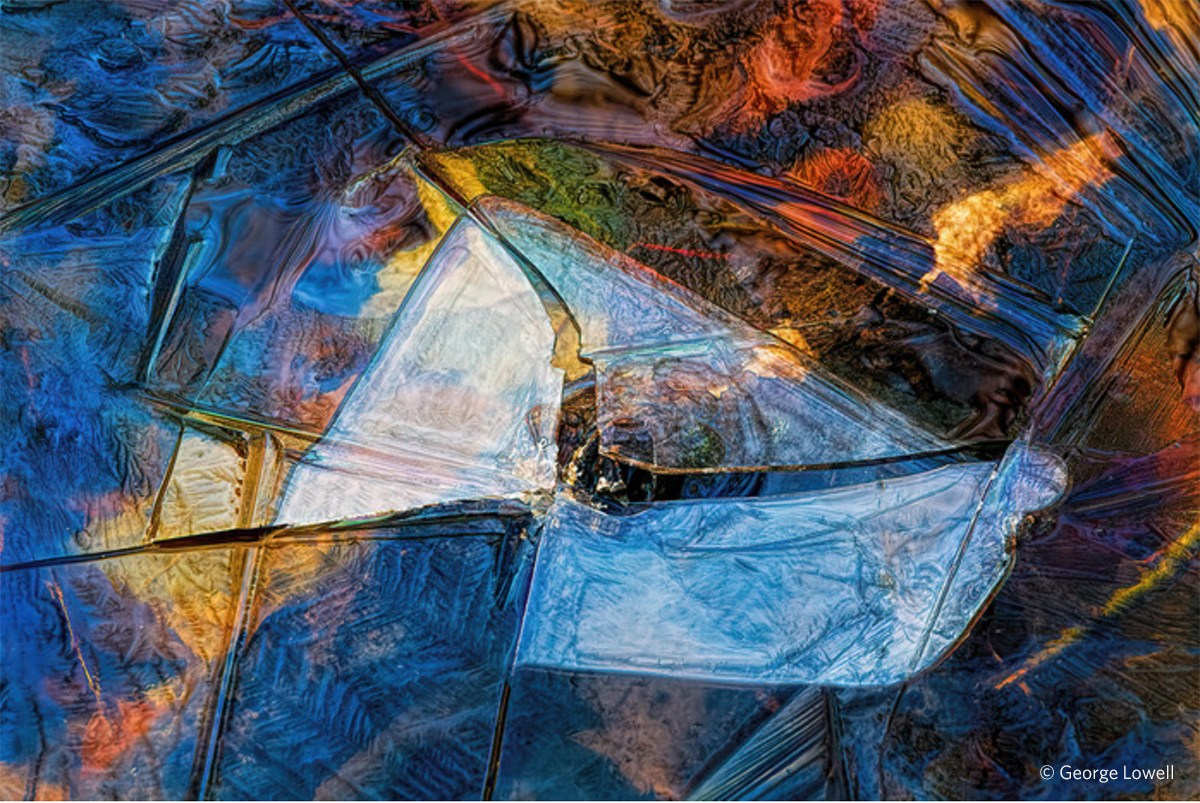
“Shattered,’’ by George Lowell, of Moosup, Conn., in the show “6th International Open Call,’’ at the Rhode Island Center for Photographic Arts, Providence, Feb. 21- March 15.
A cozy sport for a region with strenuous winters
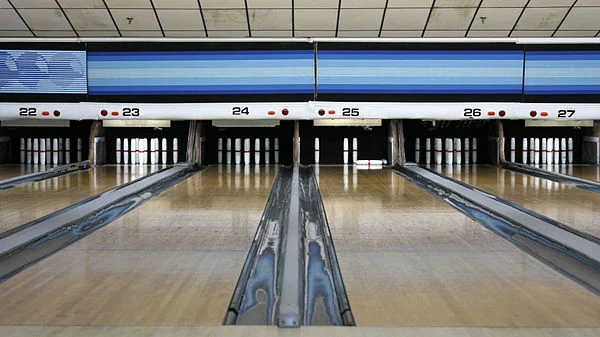
Candlepin bowling alley in Woburn, Mass.
From Robert Whitcomb’s “Digital Diary,’’ in GoLocal24.com
Bowling, and especially candlepin bowling, used to be very popular in New England but has been in a decline since its heyday in the ‘50s and ‘60s. Tough to compete with the Internet….
It’s easy to play, and of course it’s played inside -- a big attraction considering New England’s climate. For some reason candlepin, not tenpin bowling, became dominant in our region. And there once were many bowling leagues, for adults and kids. And you’d have to have been a world-historical klutz not to win some sort of trophy in your youth bowling career. This is not a scary sport. A pulled muscle, or dropping a ball on a foot, are the greatest dangers. Good physical condition is not a prerequisite.
Besides the bowling itself, snacks and beverages (including beer in some bowling allies) have almost always been served in these establishments, and some have had such additional attractions as pinball machines. I still remember the scent of popcorn, hot dogs, beer, cigarette smoke, floor wax, rental shoes and maybe a little sweat in these businesses, which pushed up like mushrooms in shady wet earth in the suburbanization of the ‘50s.
Elizabeth McCracken’s Feb. 5 piece in Slate, “In Praise of Real Bowling: I grew up playing …candlepin bowling. This New England variant is harder than tenpin bowling, and it’s better, too’’ reminded me of how popular this inexpensive recreation used to be, in some small towns operating almost as unofficial town halls. Local politicians would cruise them to chat up voters.
Her piece reminded me of Robert D. Putnam’s famous 2000 book, Bowling Alone: The Collapse and Revival of American Community, about the fact that many people have become disconnected from their families and neighbors since the ‘60s. It’s worse now, whatever the promotions of social-media companies. You can see signs of it in the opioid-addiction epidemic and even some election results in what sometimes seems the United States of Anomie.
To read Ms. McCracken’s piece, please hit this link.
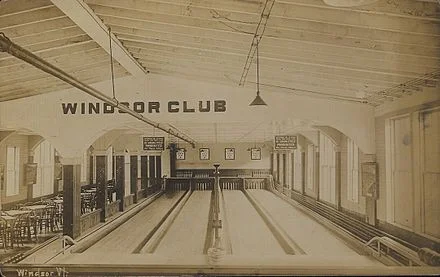
A four-lane candlepin alley in Windsor, Vt., around 1910.

Eversource and Orsted to partner in 2 offshore wind projects

From The New England Council (newenglandcouncil.com):
Eversource and Ørsted have announced a partnership in two offshore wind projects off the coast of Massachusetts and Rhode Island. This partnership marks Eversource’s entrance into offshore wind energy.
Eversource is purchasing a 50 percent stake in two projects being developed by Ørsted — the Revolution Wind and South Fork Wind Farm. In addition to the wind projects themselves, the wind-power industry and state governments have committed to investing in the State Pier in New London, Conn., which will be used as a transit point for turbines and parts. The Revolution Wind partnership will deliver enough energy to power 420,000 homes and businesses in Rhode Island and Connecticut. The South Fork Wind Farm will provide electricity for more than 70,000 homes on eastern Long Island.
Executive Vice President of Enterprise Energy Strategy at Eversource Lee Olivier, commenting on on wind energy, said “We think it’s the future in this region. . . We think when you look at the proximity where much of offshore wind will be developed, it’s a good opportunity to bring the future into New London. It’s a real advantage for developing wind in the Northeast.”
“We are excited to have Eversource join us as we embark on the creation of the strongest U.S. offshore wind platform,” added Thomas Brostrøm, CEO of Ørsted U.S. Offshore Wind and president of Ørsted North America.
The New England Council applauds this new partnership between Eversource and Ørsted, and the impact it will have on expanding access to renewable energy in New England.
Todd McLeish: He caught the bug bug
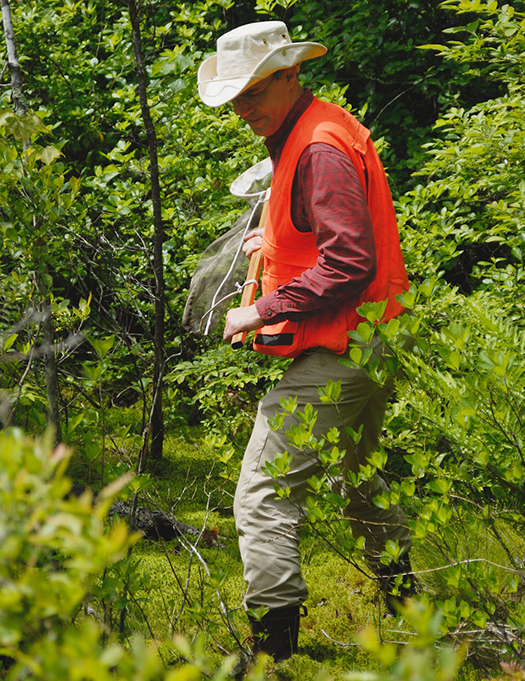
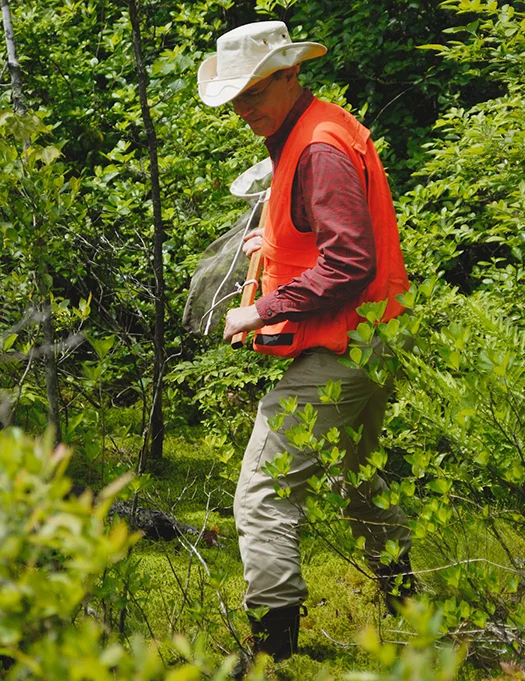
David Gregg at work.
From ecoRI News (ecori.org)
KINGSTON, R.I.
The artifacts scattered around David Gregg’s office provide a good idea of what he does for a living. Among the items are a crayfish preserved in a jar of alcohol, two coyote skulls, numerous large dead moths awaiting identification in a plastic container, framed invasive insects, a deer head hanging on a wall, illustrations of butterflies, and a foot-long, 8-inch diameter tree stump he quizzes visitors to identify. (Spoiler alert: the stump is bittersweet, an invasive vine that apparently grows much larger than most people think it does.)
Gregg is the executive director of the Rhode Island Natural History Survey, and what he calls his “cabinet of curiosities” represents many of the issues, programs and challenges he regularly addresses as one of the Ocean State’s leading voices for the study and conservation of Rhode Island’s wildlife and other natural resources.
He describes the Natural History Survey as somewhat of a social organization where “people who have been bitten by the bug of natural history” can connect with like-minded individuals.
“There are many ways to discover things about the world around you, but for people who are oriented toward identifying animals and plants and learning about them, the survey is an excuse to get together,” he said. “And that makes it valuable, because otherwise we would never get together and talk about what we know.”
The organization was founded following a 1994 ecological research conference at the University of Rhode Island, when many of those in attendance recognized how productive a gathering it had been and wanted to keep the exchange of information going. Based at URI’s East Farm, the survey is celebrating its 25th anniversary this year with a fall conference on “Climate Change and Rhode Island’s Natural History Future” and monthly citizen science events.
Gregg caught the natural history bug — literally – as a young teenager in Falmouth, Mass., when he tried to capture a butterfly that had landed on his shoe. He had already been somewhat interested in nature, but that moment led him to start a butterfly collection using a net he made out of cheesecloth.
David Gregg has been interested in studying and protecting the natural world since he was a kid. (Courtesy photo)
After collecting as many butterfly species as he could find around town, he switched to moths.
“I got all the colorful moths in my collection, and all the rest were brown and I couldn’t make heads or tails of them,” he recalled. “So then I switched to beetles, then to grasshoppers.”
The lure of insects was their endless variety and interesting physiological adaptations, Gregg said.
But he also had a curiosity about archaeology, and when he was considering a career, archaeology eventually won out. He said archaeology “is about discovering a mystery and finding out what it means. I also liked the outdoors-ness of it, the expedition aspect, the cadre of people thrown together in remote locations and having to stay focused on what they do. It’s the same thing in natural history.”
Gregg ended up earning graduate degrees in archaeology at Oxford University and Brown University, then worked at Brown’s Haffenreffer Museum of Anthropology before becoming director of the Spellman Museum of Stamps and Postal History.
By then he had rekindled his interest in entomology and joined the survey’s board. He accepted the leadership post at the survey in 2004.
He described the job as a balancing act between gathering information about rare and invasive species to support conservationists’ need for scientific information — a mission “that doesn’t pay very well,” he noted — and administering complex ecological monitoring projects involving multiple partners and numerous funding agencies.
“The state can build a highway or an airport, but it can’t do a project with six funders and lots of partners,” Gregg said. “We can do that.”
For instance, the Rhode Island Department of Environmental Management used federal money to hire the survey to implement a project to assess the health of salt marshes and freshwater wetlands around the state. The survey is also leading a coyote-ecology research project with numerous partners and funding from the U.S. Fish & Wildlife Service.
“These are the kind of projects that wouldn’t get done unless we did them,” Gregg said. “These are the projects that are every other organization’s fourth priority.”
Along the way, Gregg still finds time for insects. He has shifted his attention during the past two years to ants, as a leader of a statewide effort to document all of the species of ants found in Rhode Island.
“I’ve been working on moths since I was 14, and I think I have a better understanding of ants after two years than I do of moths after 40,” he said.
In the coming year or two, Gregg’s focus at the survey will be on the establishment of a new database of everything known about the biodiversity of Rhode Island, preparing an updated publication of the state’s vascular plants, and ensuring the group’s finances are stable.
But his favorite activity is the survey’s annual BioBlitz, which brings together as many as 200 biologists, naturalists, and volunteers for a 24-hour period to document every living organism at a particular property. This year’s event is a return to Roger Williams Park, where the first BioBlitz was held 20 years ago.
“BioBlitz is an expedition to discover things in a particular place, and you bring together people with all of the different skills and talents you need to look at all of the different aspects,” Gregg said. “But they’re not just random people. They’re really nice people having a great time because this is what they love. BioBlitz is social — it’s not just science — and that’s the key. You get to meet people that can show you the cool things you don’t notice the rest of the year.”
Todd McLeish is an ecoRI News contributor.
'Mellow and mature'
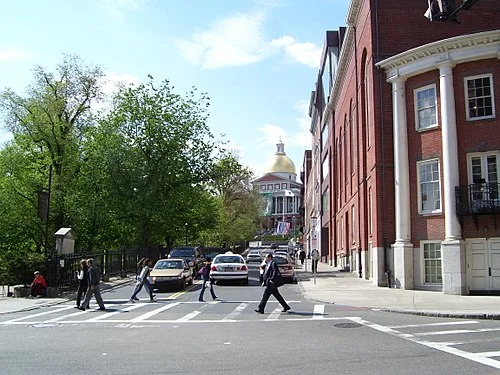
Park Street, Boston, looking toward the State House.
"Boston does not represent the quintessential excellence of all the world's cities synthesized into a paradigm of urban beauty and virtue, but it is a place at once characteristic, mellow and mature, and possessed of many qualities not entirely divorced from charm."
— Lucius Beebe (1902-1966), historian, columnist, travel writer, gourmand and inventor of the phrase “Cafe Society.’’ He was a native of Wakefield, Mass., where his remains are buried, but made his national name as a journalist in New York City and California. He became America’s most famous railroad expert/writer.