
Vox clamantis in deserto






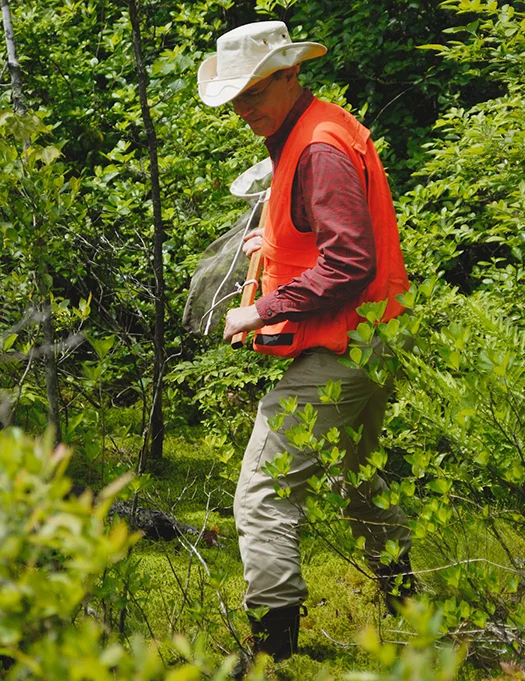
Todd McLeish: He caught the bug bug
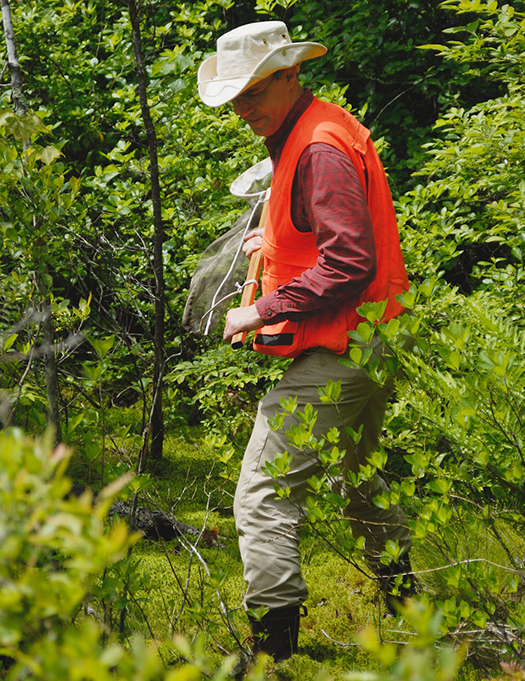
David Gregg at work.
From ecoRI News (ecori.org)
KINGSTON, R.I.
The artifacts scattered around David Gregg’s office provide a good idea of what he does for a living. Among the items are a crayfish preserved in a jar of alcohol, two coyote skulls, numerous large dead moths awaiting identification in a plastic container, framed invasive insects, a deer head hanging on a wall, illustrations of butterflies, and a foot-long, 8-inch diameter tree stump he quizzes visitors to identify. (Spoiler alert: the stump is bittersweet, an invasive vine that apparently grows much larger than most people think it does.)
Gregg is the executive director of the Rhode Island Natural History Survey, and what he calls his “cabinet of curiosities” represents many of the issues, programs and challenges he regularly addresses as one of the Ocean State’s leading voices for the study and conservation of Rhode Island’s wildlife and other natural resources.
He describes the Natural History Survey as somewhat of a social organization where “people who have been bitten by the bug of natural history” can connect with like-minded individuals.
“There are many ways to discover things about the world around you, but for people who are oriented toward identifying animals and plants and learning about them, the survey is an excuse to get together,” he said. “And that makes it valuable, because otherwise we would never get together and talk about what we know.”
The organization was founded following a 1994 ecological research conference at the University of Rhode Island, when many of those in attendance recognized how productive a gathering it had been and wanted to keep the exchange of information going. Based at URI’s East Farm, the survey is celebrating its 25th anniversary this year with a fall conference on “Climate Change and Rhode Island’s Natural History Future” and monthly citizen science events.
Gregg caught the natural history bug — literally – as a young teenager in Falmouth, Mass., when he tried to capture a butterfly that had landed on his shoe. He had already been somewhat interested in nature, but that moment led him to start a butterfly collection using a net he made out of cheesecloth.
David Gregg has been interested in studying and protecting the natural world since he was a kid. (Courtesy photo)
After collecting as many butterfly species as he could find around town, he switched to moths.
“I got all the colorful moths in my collection, and all the rest were brown and I couldn’t make heads or tails of them,” he recalled. “So then I switched to beetles, then to grasshoppers.”
The lure of insects was their endless variety and interesting physiological adaptations, Gregg said.
But he also had a curiosity about archaeology, and when he was considering a career, archaeology eventually won out. He said archaeology “is about discovering a mystery and finding out what it means. I also liked the outdoors-ness of it, the expedition aspect, the cadre of people thrown together in remote locations and having to stay focused on what they do. It’s the same thing in natural history.”
Gregg ended up earning graduate degrees in archaeology at Oxford University and Brown University, then worked at Brown’s Haffenreffer Museum of Anthropology before becoming director of the Spellman Museum of Stamps and Postal History.
By then he had rekindled his interest in entomology and joined the survey’s board. He accepted the leadership post at the survey in 2004.
He described the job as a balancing act between gathering information about rare and invasive species to support conservationists’ need for scientific information — a mission “that doesn’t pay very well,” he noted — and administering complex ecological monitoring projects involving multiple partners and numerous funding agencies.
“The state can build a highway or an airport, but it can’t do a project with six funders and lots of partners,” Gregg said. “We can do that.”
For instance, the Rhode Island Department of Environmental Management used federal money to hire the survey to implement a project to assess the health of salt marshes and freshwater wetlands around the state. The survey is also leading a coyote-ecology research project with numerous partners and funding from the U.S. Fish & Wildlife Service.
“These are the kind of projects that wouldn’t get done unless we did them,” Gregg said. “These are the projects that are every other organization’s fourth priority.”
Along the way, Gregg still finds time for insects. He has shifted his attention during the past two years to ants, as a leader of a statewide effort to document all of the species of ants found in Rhode Island.
“I’ve been working on moths since I was 14, and I think I have a better understanding of ants after two years than I do of moths after 40,” he said.
In the coming year or two, Gregg’s focus at the survey will be on the establishment of a new database of everything known about the biodiversity of Rhode Island, preparing an updated publication of the state’s vascular plants, and ensuring the group’s finances are stable.
But his favorite activity is the survey’s annual BioBlitz, which brings together as many as 200 biologists, naturalists, and volunteers for a 24-hour period to document every living organism at a particular property. This year’s event is a return to Roger Williams Park, where the first BioBlitz was held 20 years ago.
“BioBlitz is an expedition to discover things in a particular place, and you bring together people with all of the different skills and talents you need to look at all of the different aspects,” Gregg said. “But they’re not just random people. They’re really nice people having a great time because this is what they love. BioBlitz is social — it’s not just science — and that’s the key. You get to meet people that can show you the cool things you don’t notice the rest of the year.”
Todd McLeish is an ecoRI News contributor.
'Mellow and mature'
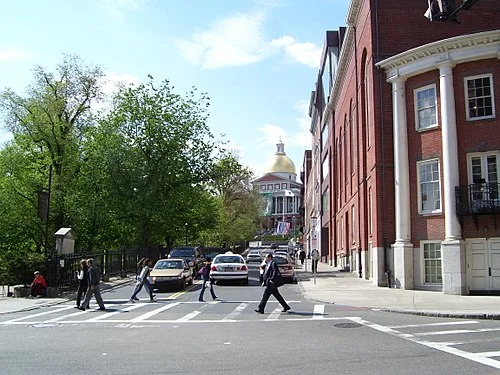
Park Street, Boston, looking toward the State House.
"Boston does not represent the quintessential excellence of all the world's cities synthesized into a paradigm of urban beauty and virtue, but it is a place at once characteristic, mellow and mature, and possessed of many qualities not entirely divorced from charm."
— Lucius Beebe (1902-1966), historian, columnist, travel writer, gourmand and inventor of the phrase “Cafe Society.’’ He was a native of Wakefield, Mass., where his remains are buried, but made his national name as a journalist in New York City and California. He became America’s most famous railroad expert/writer.
Vermont finding it tough to meet green goals

Here, in Vernon, on the Connecticut River, is the Vermont Yankee nuclear power plant, which was shut down in 2014. Vermont had for many years the highest rate of nuclear-generated electric power in America — at almost 75 percent. Vermont is one of only two states with no coal-fired power plants.
From Robert Whitcomb’s “DIgital Diary,’’ in GoLocal24.com
A Jan. 28 story in The Boston Globe, “In Vermont, a progressive haven, emissions spike forces officials to consider drastic action,’’ contained some irony: The Green Mountain State, long associated with environmentalism and progressive politics in general, has failed by a long shot to meet its stated aims of slashing carbon emissions. Indeed, these emissions have risen 16 percent from 1990!
Part of the challenge is the high percentage of ownership of aging, energy-inefficient pickup trucks, which, as in many mostly rural states, are sort of the official state vehicle. Further, cheap gasoline during the past few years has encouraged even more driving in a state whose residents are accustomed to traveling long distances every day.
Another problem in the heavily forested state is the heavy use of wood as fuel for heating. You can see smog in some river valleys from the many wood stores and furnaces. (I remember back when I lived in the Upper Connecticut Valley in the late ‘60s that wood (a carbon-based fuel!) was promoted as the wonderfully natural way to help wean ourselves off that nasty Arab oil.)
And while transportation is the largest single source of emissions – 43 percent – the closing of Vermont’s only nuclear-power, in 2014, made the state more dependent on fossil-fuel power plants. Global warming may make promoting nuclear power easier.
The administration of Gov. Phil Scott, a moderate Republican whom I’ve met and like, has come up with a detailed program to cut admissions, which includes, The Globe reports:
“{P}rograms to help improve energy efficiency in homes, financial incentives for electric vehicles, and protections for the state’s forests, which are in decline for the first time in a century.’’
In any event, it will take a long time for The Green Mountain State to get as
“green’’ as the rest of the country might think it is.
To read The Globe’s story, please hit this link.
Mandatory makes it heartless

Oh, won't you be my valentine?
I hope that you'll refuse.
If I could pick a valentine,
You're not the one I'd choose.
But won't you be my valentine?
I have to ask, alas.
They're making us give valentines
To each kid in the class.
-- "Third Graders' Valentine,’’ by Felicia Nimue Ackerman
'Snow Flurry'
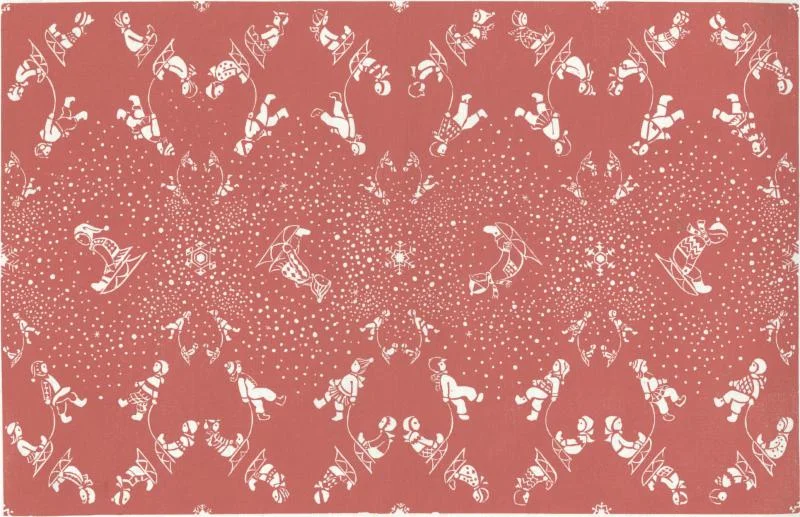
“Snow Flurry’’ (linoleum block print), by Mary Maletskos (1918-1983), in the Folly Cove Designers Collection, at the Cape Ann Museum, Gloucester, Mass.
'Go play'
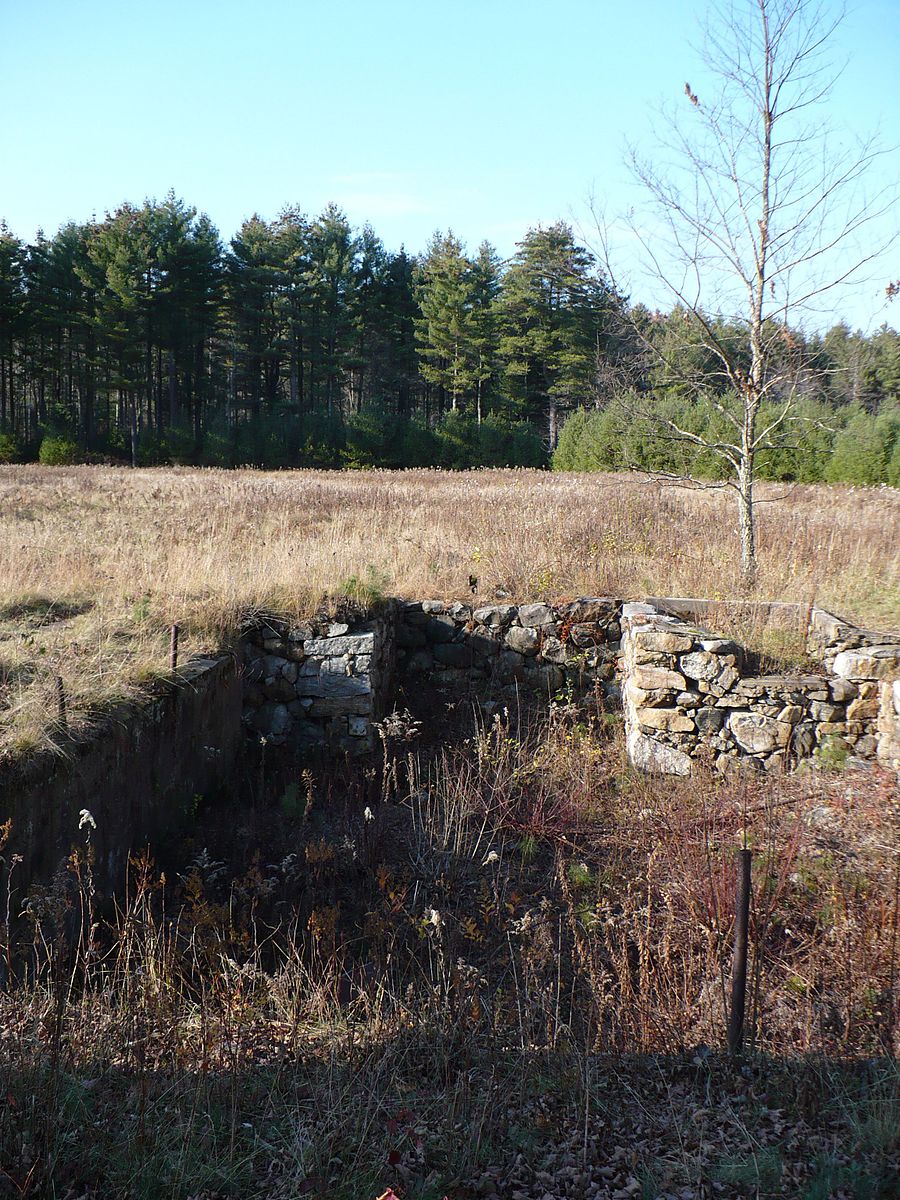
Cellar hole in Dana, Mass.
“Here's the fallen-in deer stand
and the apple tree among maples making fruit for deer.
Outside the woods, the puff of dust on the road
where the school bus used to stop.
Outside is the failure to stay in touch
or, really, to ever be in touch. I didn't
ever know them (my neighbors) well.
In winter you are handed a white tray
with a few tiny rock walls, short lines drawn with a ruler,
an indent for where a cellar hole could be
a hyperlink to once go once more to the lake
and told to go at it, go play. ‘‘
— From “Deconstructing New England,’’ by Alexandria Peary, New Hampshire-based poet. Her parents owned a country store in central Maine.

Frank Carini: Some property owners battle bikes in downtown Providence
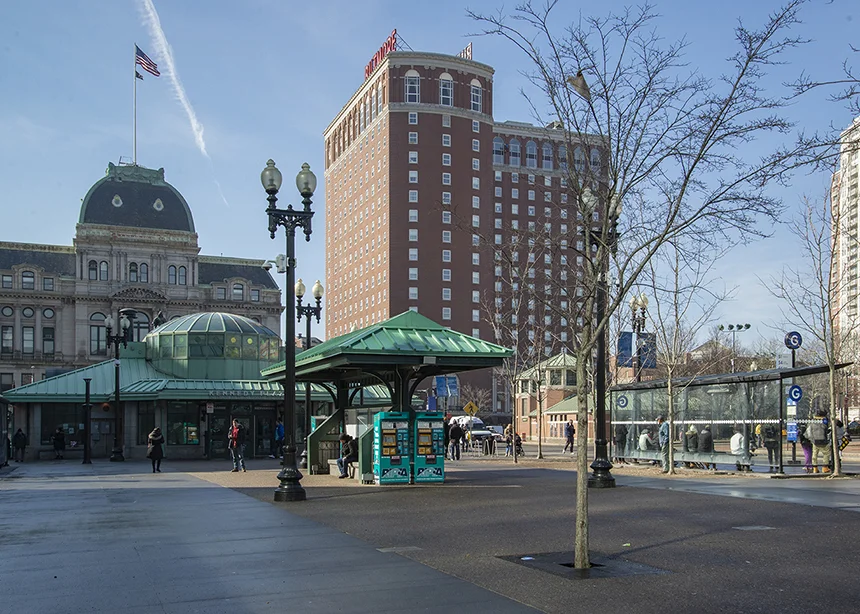
Kennedy Plaza
— Photo by Joanna Detz/eco RI News
From ecoRI News (ecori.org)
PROVIDENCE
A group of downtown property owners has gone to court to halt a series of city and state projects designed to, among other things, improve bus service, including changing traffic patterns and making Washington Street open to buses only.
Kathleen Gannon, vice chair of the Rhode Island Bicycle Coalition’s board of directors, said the Providence-based advocacy group is also alarmed by the lawsuit’s contention that “increased bicycle traffic” will be a negative byproduct of the plaza’s redesign.
“Bringing more bicycles to the center of Providence is a good thing,” she said. “We believe that diversifying transportation modes in the city and increased bicycle use benefits all residents. Further, it is self-serving and backward looking to attempt to thwart an effort to improve the city’s transportation infrastructure.”
Fellow Rhode Island Bicycle Coalition board member Christian Roselund said he can’t believe the lawsuit’s plaintiffs are complaining that the redesign will bring more bicyclists and public transit commuters downtown. He called such concern “nuts,” especially by “anyone who cares about economic development.”
“It’s been shown in city after city after city around the world that if you want to bring people to your downtown areas, if you want them to spend money there, bicycles are a great way to do it,” he said. “This is really regressive thinking. Alternative transportation is not a nuisance.”
The plaintiffs claim that the Kennedy Plaza redesign could impact their quality of life and bring down property values.
In the lawsuit filed in Superior Court last month, the plaintiffs, including entities controlled by former Mayor Joseph Paolino, claim that a bus hub at the Providence train station and the dedicated bus corridor being built through Kennedy Plaza could impact their quality of life and bring down property values.
“The Kennedy Plaza Project and specifically the re-routing of the bus routes, alteration of bus stops and alteration of traffic patterns on Fulton Street and Washington Street stands to cause property damage, property devaluation, inconvenience, annoyance and an interference with the Plaintiffs’ quiet enjoyment of their Properties,” according to the lawsuit filed by Concerned Citizens of Capital Center LLC, a recently created nonprofit that includes about a dozen commercial and residential owners and partnerships that own three downtown buildings — 100 Westminster Partners LLC, 30 Kennedy Partners LLC, and Exchange Street Hotel LLC.
The suit names the city of Providence, the Rhode Island Department of Transportation, and the Rhode Island Public Transit Authority, among others, as defendants.
Joe Mancini, who is representing the Concerned Citizens of Capital Center, told ABC 6 News last month that his clients will lose access to parking and garage spaces and that the changes don’t address current issues and concerns in Kennedy Plaza.
Gannon said the redesign’s overarching intent — a truly intermodal transportation hub in the center of Providence — is promising. She noted that an emphasis on cars to the near-exclusion of other transportation options hasn’t served downtown Providence well. In fact, she believes the car-orientated downtown design has led to a loss of retail activity and jobs and lower property values.
“We have a choice to make about the kind of city Providence will be,” she said. “If we want a thriving, successful downtown area, with a higher quality of life and inclusion for all residents, we must embrace changes that will bring a full range of transportation options to the city center and not retreat into failed models.”
The Rhode Island Bicycle Coalition isn’t the only group troubled by the recent court action. The RIPTA Riders Alliance is concerned that a “few wealthy real estate firms in downtown Providence have filed a lawsuit attempting to halt improvements to our state’s public transit system.”
“Instead of trying to work cooperatively with the people who actually rely on the bus system and with other stakeholders, developer Joseph Paolino and his allies have opted to go to court to stop state and local plans to improve bus service in the center of Providence,” according to Barry Schiller, a RIPTA Riders Alliance member.
The transit advocacy group said the Concerned Citizens of Capital Center lawsuit will needlessly delay implementation of downtown projects and will increase their costs. The group called the lawsuit shortsighted, as “good transit access to downtown is one of center city’s principal advantages.”
“Those bringing this lawsuit fail to recognize that public transit — and bicycle ridership — is essential in combating the pollution and traffic congestion that contribute to climate change,” according to the RIPTA Riders Alliance.
Frank Carini is editor of ecoRI News.
Just ignore it

Welcome home.
“I grew up in the Boston suburbs and inherited a stubborn New England refusal to acknowledge frigid temperatures. “
-- Josh Gondelman (comedian)
Paranoia Parkway

The eastern terminus of the Massachusetts Turnpike.
From Robert Whitcomb’s “Digital Diary,’’ in GoLocal24.com
I’d guess that many readers have seen the video of some of the infamous road-rage incident on Jan. 25, apparently originating in some sort of minor sideswipe, on the Massachusetts Turnpike near Boston.FfrojFro
The video footage showed 65-year-old Richard Kamrowski hanging on for dear life on the hood of 37-year-old Mark Fitzgerald’s car as it careened down the turnpike. Then we see Army veteran Frankie Hernandez leaping out of his car and pointing his gun at Fitzgerald.
Now both Messrs. Fitzgerald and Kamrowski face criminal charges in the incident, which provided too much excitement for other drivers and could have easily resulted in one or more deaths.
Highways can be very scary places because you never know the mental and emotional state of your fellow drivers, who are, like you, operating large, fast and potentially lethal machines. And the drivers in and around Boston are particularly aggressive, impatient (and outpatient) and rude. Stay away from people who are driving fast and/or erratically or better yet, if you can, take public transportation. And pull over and call 911 if you see dangerously bad driving.
To watch the video, please hit this link.
Our psyches in the weather

‘‘Out of the Blue,’’ by Nancy Selvage, in her show “Intemperate Zone,’’ an installation created in collaboration with poet Ros Zimmerman to be shown at the Boston Sculptors Gallery, Feb. 27- March 31.
The gallery says: “Selvage’s sculptures vibrate with visual energy, evoke atmospheric conditions, and respond to the impact of weather on our psyche. Layers of perforated metal animate illusive surfaces, fracture light, and ephemeral spaces. Featured in this exhibition are suspended sculptural lights, ‘cloud’ formations….’’
“Real and imagined atmospheric conditions and states of mind unfold as do the perceptions of our role in the process.’’
“Words, punctuation marks, and international meteorology symbols burn, freeze, bleed, and blow within a collection of sculptural objects.’’
'Our world may be a little narrow'

The Custom House Maritime Museum in Newburyport.
“The mood is on me to-night only because I have listened to several hours of intelligent conversation and I am not a very brilliant person. Sometimes here on Pequod Island and back again on Beacon Street {Boston}, I have the most curious delusion that our world may be a little narrow. I cannot avoid the impression that something has gone out of it (what, I do not know), and that our little world moves in an orbit of its own, a gain one of those confounded circles, or possibly an ellipse. Do you suppose that it moves without any relation to anything else? That it is broken off from some greater planet like the moon? We talk of life, we talk of art, but do we actually know anything about either? Have any of us really lived? Sometimes I am not entirely sure; sometimes I am afraid that we are all amazing people, placed in an ancestral mould. There is no spring, there is no force. Of course you know better than this, you who plunge every day in the operating room of the Massachusetts General, into life itself. Come up here and tell me I am wrong.”
― John P. Marquand (1893-1960), from his satirical novel The Late George Apley, about a Boston Brahmin. Mr. Marquand came from (and died in) Newburyport, Mass., which got rich on the China Trade, whaling, fishing and other maritime activities in the 18th and 19th centuries.
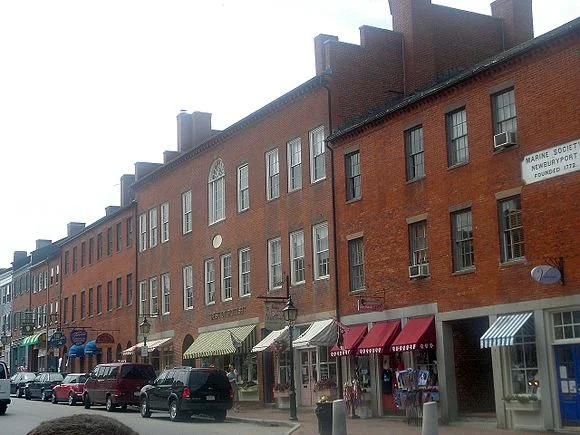
State Street in Newburyport, with its many 19th Century buildings.
Heroic sculpture in Worcester
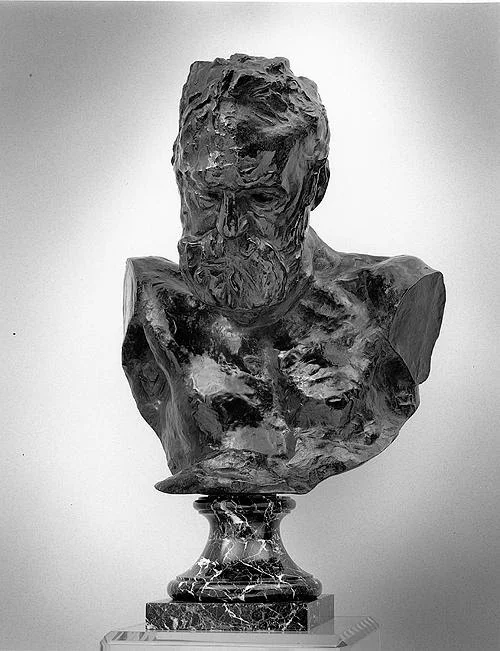
“Heroic Bust of Victor Hugo’’ (1802-85 and author of Les Miserables, etc.), by Auguste Rodin (1840-1917), in the show “Rodin: Truth, Form, Life,’’ through April 7 at the Iris and B. Gerald Cantor Art Gallery at Holy Cross College, whose campus looms over the old industrial city of Worcester, which is enjoying a downtown revival. Meanwhile, the surprisingly extensive Worcester Art Museum merits multiple visits.
Scholar proposes new statutes to protect biodiversity

This aerial photo shows deforestation and road-building in the Amazon Rainforest, which threatens the biodiversity of the ecologically rich region, sometimes called “The World Lungs’’.
Adapted from Robert Whitcomb’s “Digital Diary,’’ in GoLocal24.com
John Charles Kunich, a professor at the Roger Williams University School of Law, in Bristol, R.I., has written a very useful, if highly technical, book called Ark of the Broken Covenant: Protecting the World’s Biodiversity Hotspots. Professor Kunich proposes a new statutory program to help stem the wave of extinctions, deforestation and other human-caused ecological devastation.
David Warsh: The past and future of nationalism

A postcard from 1916 showing national personifications of some of the Allies of World War I, each holding a national flag.

SOMERVILLE, MASS.
“The Trump era could last another thirty years.” That was the headline last week on a widely discussed column by Gideon Rachman, principal foreign-affairs commentator of the Financial Times. In the three years since Brexit and Trump, Rachman observed, a global populist movement has gathered momentum: Jair Bolsonaro, in Brazil, Victor Orban, in Hungary, Matteo Salvini, in Italy, not to mention Xi Jinping, in China, Vladimir Putin, in Russia, and Recep Tayyip Erdogan, in Turkey. The bad news, he wrote, is that such movements tend to last around 30 years.
Rachman was right about the cycle, I thought, wrong about the nature of the underlying movement – nationalism, not populism, is the dominant theme. Especially in the United States, the clock on the “populist era” is running down. If the path to re-election grows steeper, the likelihood grows that Trump will simply walk away.
Supporters hope that a buoyant economy will keep Trump in office. I doubt that it will, whatever the averages say. More firmly based authoritarian (not populist) governments elsewhere will last longer, depending on local circumstances, but time is not on their side. The nationalist turn, on the other hand, is here to stay, at least for the next 25 years.
Rachman identifies three distinct eras in postwar Western politics. The period of rebuilding economies and extending welfare states that followed World War II, 1945-1975 – “les trente glorieuses,” as they were called in France; a period of rapid globalization followed, 1978-2008, “neo-liberalism,” to its critics; before giving way to whatever is going on now. He dates this new era from the global banking crisis of 2008. I would have said it began with Vladimir Putin’s election in 2000.
A fourth such 30-year sequence of events remains present in living memory, at least for a little while longer: 1915-1945, the decades of the Great War, the League of Nations, the Great Depression, and the cataclysm of World War II. The period is often simply labeled “the interwar years,” Historian Adam Tooze’s title “the Deluge” evokes the years 1916-1931 pretty well; historian Tony Judt’s description of the rise of a state religion of “Planning” in the years after gets at the response.
Then the Cold War, a contest between the market democracies and the centrally planned communist states dominated the years 1945-1975, before giving way to a Market Turn (a better term, perhaps, than “neo-liberalism”) in the 30 years after that. Beginning in the Oughts, the present nationalist era emerged. Rachman thinks that “emulation followed by overshoot” drives the cycle. I think the zig-zag pattern is generated by shared experience.
Thus the Market Turn began out of a desire to throw off top-down central planning by administrative states. It showed up first in the Iberian world: Chile, Spain, Portugal, and Mexico. After Mao Zedong died, in 1976, China jailed his heirs and set out to emulate Japan. The USSR lost control of its European satellites and collapsed. India, Indonesia, Argentina, and Brazil followed suit. Margaret Thatcher and Ronald Reagan often get the credit for initiating the Market Turn, but the parade was well underway by the time they arrived.
After Rachman got me thinking, I read, on the advice of a friend, The Nationalist Revival: Trade, Immigration, and the Revolt against Globalization, by John Judis. It is a short book, 157 pages, five chapters packed with learning. It took less than half a day to get through.
Judis is a public intellectual, a journalist determined to stay on top of the story. He was a child in the 1950s, in Elgin, Ill., when his father lost his dress-manufacturing business to Asian competition – an early casualty of the General Agreement on Tariffs and Trade. His first book, William F. Buckley, Jr.: Patron Saint of the Conservatives, appeared in 1988. It was followed by a string of imaginative reports: Grand illusion: Critics and Champions of the American Century (1992); The Paradox of American Democracy: Elites, Special Interests, and the Betrayal of the Public Trust (2000); The Emerging Democratic Majority [with Rudy Teixeira] (2002); The Folly of Empire: What George W. Bush Could Learn from Theodore Roosevelt and Woodrow Wilson (2004); Genesis: Truman, American Jews, and the Origins of the Arab/Israeli Conflict (2014); The Populist Explosion: How the Great Recession Transformed American and European Politics (2016).
I thought that Judis presented his argument backwards. The penultimate chapter, about American expansionism after 1989, should have been first, followed by the one on the European experiment with federation, and then a chapter on the U.S. experience with periodic waves of immigration and free trade. His introductory chapters, “Understanding Nationalism,” and “Why Nationalism Matters,” are especially good. I came away with a better understanding of the extent to which the centralizing tendencies of the last thirty years had sought to override centuries of pluralism.
The argument of the book, Judis writes, is that
national identity is not just a product of where a person is born, or emigrated to, but of deeply held sentiments that are usually acquired during childhood. Nationalism is not simply a political ideology, or a set of ideas, but a social psychology. Nationalist sentiment is an essential ingredient of a democracy, which is based on the assumption of a common identity, and of a welfare state, which is based on the acceptance by citizens of their financial responsibility for people whom they may not know at all, and who may have widely different backgrounds from theirs.
The nationalist revival, I think, thus must have had its roots in the need to govern. China retained its system of political control and prospered. Russia abandoned its own system and lost heart for a time, before re-establishing a new sort of order under Putin. The message was not lost on the leaders of other nations threatened by the burst of globalization that followed the end of the Cold War.
The European Union was already having difficulty absorbing eight former members of the Warsaw Pact when the sovereign debt crisis threatened its monetary union. Then a massive wave of immigration, from the Middle East and North Africa, threatened its political stability.
Meanwhile, the United States, which had been experiencing a widening gyre since 1992, when H. Ross Perot garnered 19 percent of the popular vote in the presidential election, put Donald Trump in the White House, albeit by the narrowest of margins. Trump may not be re-elected, but his concerns – trade, immigration, less interventionism, except, perhaps, in the Western Hemisphere – are here to stay.
The task now, Judis writes, “is to identify and reclaim what is valid in nationalism – and of the liberal internationalism of the post-World War II generation – from both the cosmopolitan liberals who believe in a borderless world and from the right wing populists who have coupled a concern for their nation’s workers with nativist screeds against outgroups and immigrants.”
It sounds like an altogether fitting agenda for the next quarter century. Walter Russell Mead put it this week last week in the WSJ, “Whatever comes after Mr., Trump, it won’t be a simple return to the Republican or Democratic version of the post-Cold War consensus.”
David Warsh, an economic historian and a veteran economic and political columnist, is proprietor of Somerville-based economicprincipals.com, where this piece first ran.


Marisa Taylor: A fountain of youth if you're a mouse

BOSTON
Renowned Harvard University geneticist David Sinclair recently made a startling assertion: Scientific data shows that he has knocked more than two decades off his biological age.
What’s the 49-year-old’s secret? He says his daily regimen includes ingesting a molecule his own research found improved the health and lengthened the life span of mice. Sinclair now boasts online that he has the lung capacity, cholesterol and blood pressure of a “young adult” and the “heart rate of an athlete.”
Despite his enthusiasm, published scientific research has not yet demonstrated the molecule works in humans as it does in mice. Sinclair, however, has a considerable financial stake in his claims being proven correct, and has lent his scientific prowess to commercializing possible life extension products such as molecules known as “NAD boosters.”
His financial interests include being listed as an inventor on a patent licensed to Elysium Health, a supplement company that sells a NAD booster in pills for $60 a bottle. He’s also an investor in InsideTracker, the company that he says measured his age.
Discerning hype from reality in the longevity field has become tougher than ever as reputable scientists such as Sinclair and pre-eminent institutions such as Harvard align themselves with promising but unproven interventions — and at times promote and profit from them.
Fueling the excitement, investors pour billions of dollars into the field even as many of the products already on the market face fewer regulations and therefore a lower threshold of proof.
“If you say you’re a terrific scientist and you have a treatment for aging, it gets a lot of attention,” said Jeffrey Flier, a former Harvard Medical School dean who has been critical of the hype. “There is financial incentive and inducement to overpromise before all the research is in.”
Elysium, co-founded in 2014 by a prominent MIT scientist to commercialize the molecule nicotinamide riboside, a type of NAD booster, highlights its “exclusive” licensing agreement with Harvard and the Mayo Clinic and Sinclair’s role as an inventor. According to the company’s press release, the agreement is aimed at supplements that slow “aging and age-related diseases.”
Further adding scientific gravitas to its brand, the Web site lists eight Nobel laureates and 19 other prominent scientists who sit on its scientific advisory board. The company also advertises research partnerships with Harvard and U.K. universities Cambridge and Oxford.
Some scientists and institutions have grown uneasy with such ties. Cambridge’s Milner Therapeutics Institute announced in 2017 it would receive funding from Elysium, cementing a research “partnership.” But after hearing complaints from faculty that the institute was associating itself with an unproven supplement, it quietly decided not to renew the funding or the company’s membership to its “innovation” board.
“The sale of nutritional supplements of unproven clinical benefit is commonplace,” said Stephen O’Rahilly, the director of Cambridge’s Metabolic Research Laboratories who applauded his university for reassessing the arrangement. “What is unusual in this case is the extent to which institutions and individuals from the highest levels of the academy have been co-opted to provide scientific credibility for a product whose benefits to human health are unproven.”
The Promise
A generation ago, scientists often ignored or debunked claims of a “fountain of youth” pill.
“Until about the early 1990s, it was kind of laughable that you could develop a pill that would slow aging,” said Richard Miller, a biogerontologist at the University of Michigan who heads one of three labs funded by the National Institutes of Health to test such promising substances on mice. “It was sort of a science fiction trope. Recent research has shown that pessimism is wrong.”
Mice given molecules such as rapamycin live as much as 20 percent longer. Other substances such as 17 alpha estradiol and the diabetes drug Acarbose have been shown to be just as effective — in mouse studies. Not only do mice live longer, but, depending on the substance, they avoid cancers, heart ailments and cognitive problems.
“Until about the early 1990s, it was kind of laughable that you could develop a pill that would slow aging,” says University of Michigan biogerontologist Richard Miller. “It was sort of a science fiction trope. Recent research has shown that pessimism is wrong.”
But human metabolism is different from that of rodents. And our existence is unlike a mouse’s life in a cage. What is theoretically possible in the future remains unproven in humans and not ready for sale, experts say.
History is replete with examples of cures that worked on mice but not in people. Multiple drugs, for instance, have been effective at targeting an Alzheimer’s-like disease in mice yet have failed in humans.
“None of this is ready for prime time. The bottom line is I don’t try any of these things,” said Felipe Sierra, the director of the division of aging biology at the National Institute on Aging at NIH. “Why don’t I? Because I’m not a mouse.”
The Hype
Concerns about whether animal research could translate into human therapy have not stopped scientists from racing into the market, launching startups or lining up investors. Some true believers, including researchers and investors, are taking the substances themselves while promoting them as the next big thing in aging.
“While the buzz encourages investment in worthwhile research, scientists should avoid hyping specific [substances],” said S. Jay Olshansky, a professor who specializes in aging at the School of Public Health at the University of Illinois at Chicago.
Yet some scientific findings are exaggerated to help commercialize them before clinical trials in humans demonstrate both safety and efficacy, he said.
“It’s a great gig if you can convince people to send money and use it to pay exorbitant salaries and do it for 20 years and make claims for 10,” Olshansky said. “You’ve lived the high life and get investors by whipping up excitement and saying the benefits will come sooner than they really are.”
Promising findings in animal studies have stirred much of this enthusiasm.
Research by Sinclair and others helped spark interest in resveratrol, an ingredient in red wine, for its potential anti-aging properties. In 2004, Sinclair co-founded a company, Sirtris, to test resveratrol’s potential benefits and declared in an interview with the journal Science it was “as close to a miraculous molecule as you can find.” GlaxoSmithKline bought the company in 2008 for $720 million. By the time that Glaxo halted the research in 2010 because of underwhelming results with possible side effects, Sinclair had already received $8 million from the sale, according to Securities and Exchange Commission documents. He also had earned $297,000 a year in consulting fees from the company, according to The Wall Street Journal.
At the height of the buzz, Sinclair accepted a paid position with Shaklee, which sold a product made out of resveratrol. But he resigned after The Wall Street Journal highlighted positive comments he made about the product that the company had posted online. He said he never gave Shaklee permission to use his statements for marketing.
Sinclair practices what he preaches — or promotes. On his LinkedIn bio and in media interviews, he describes how he now regularly takes resveratrol; the diabetes drug metformin, which holds promise in slowing aging, and nicotinamide mononucleotide, a substance known as NMN that his own research showed rejuvenated mice.
Of that study, he said in a video produced by Harvard that it “sets the stage for new medicines that will be able to restore blood flow in organs that have lost it, either through a heart attack, a stroke or even in patients with dementia.”
In an interview with KHN, Sinclair said he’s not recommending that others take those substances.
“I’m not claiming I’m actually younger. I’m just giving people the facts,” he said, adding that he’s sharing the test results from InsideTracker’s blood tests, which calculate biological age based on biomarkers in the blood. “They said I was 58, and then one or two blood tests later they said I was 31.4.”
InsideTracker sells an online age-tracking package to consumers for up to about $600. The company’s website highlights Sinclair’s support for the company as a member of its scientific advisory board. It also touts a study that describes the benefits of such tracking, which Sinclair co-authored.
Sinclair is involved either as a founder, an investor, an equity holder, a consultant or a board member with 28 companies, according to a list of his financial interests. At least 18 are involved in anti-aging in some way, including studying or commercializing NAD boosters. The interests range from longevity research startups aimed at humans and even pets to developing a product for a French skin care company to advising a longevity investment fund. He’s also an inventor named in the patent licensed by Harvard and the Mayo Clinic to Elysium, and one of his companies, MetroBiotech, has filed a patent related to nicotinamide mononucleotide, which he says he takes himself.
Sinclair and Harvard declined to release details on how much money he — or the university — is generating from these disclosed outside financial interests. Sinclair estimated in a 2017 interview with Australia’s Financial Review that he raises $3 million a year to fund his Harvard lab.
Liberty Biosecurity, a company he co-founded, estimated in Sinclair’s online bio that he has been involved in ventures that “have attracted more than a billion dollars in investment.” When KHN asked him to detail the characterization, he said it was inaccurate, without elaborating, and the comments later disappeared from the website.
Sinclair cited confidentiality agreements for not disclosing his earnings, but he added that “most of this income has been reinvested into companies developing breakthrough medicines, used to help my lab, or donated to nonprofits.” He said he did not know how much he stood to make off the Elysium patent, saying Harvard negotiated the agreement.
Harvard declined to release Sinclair’s conflict-of-interest statements, which university policy requires faculty at the medical school to file in order to “protect against any faculty bias that could heighten the risk of harm to human research participants or recipients of products resulting from such research.”
“We can only be proud of our collaborations if we can represent confidently that such relationships enhance, and do not detract from, the appropriateness and reliability of our work,” the policy states.
Elysium advertises both Harvard’s and Sinclair’s ties to its company. It was co-founded by Massachusetts Institute of Technology professor Leonard Guarente, Sinclair’s former research adviser and an investor in Sinclair’s Sirtris.
Echoing his earlier statements on resveratrol, Sinclair is quoted on Elysium’s website as describing NAD boosters as “one of the most important molecules for life.”
Supplement Loophole?
The Food and Drug Administration doesn’t categorize aging as a disease, which means potential medicines aimed at longevity generally can’t undergo traditional clinical trials aimed at testing their effects on human aging. In addition, the FDA does not require supplements to undergo the same safety or efficacy testing as pharmaceuticals.
The banner headline on Elysium’s website said that “clinical trial results prove safety and efficacy” of its supplement, Basis, which contains the molecule nicotinamide riboside and pterostilbene. But the company’s research did not demonstrate the supplement was effective at anti-aging in humans, as it may be in mice. It simply showed the pill increased the levels of the substance in blood cells.
“Elysium is selling pills to people online with the assertion that the pills are ‘clinically proven’” said O’Rahilly. “Thus far, however the benefits and risks of this change in chemistry in humans is unknown.”
“Many interventions that seem sensible on the basis of research in animals turn out to have unexpected effects in man,” he added, citing a large clinical trial of beta carotene that showed it increased rather than decreased the risk of lung cancer in smokers.
Elysium’s own research documented a “small but significant increase in cholesterol,” but added more studies were needed to determine whether the changes were “real or due to chance.” One independent study has suggested that a component of NAD may influence the growth of some cancers, but researchers involved in the study warned it was too early to know.
Guarente, Elysium’s co-founder and chief scientist, told KHN he isn’t worried about any side effects from Basis, and he emphasized that his company is dedicated to conducting solid research. He said his company monitors customers’ safety reports and advises customers with health issues to consult with their doctors before using it.
If a substance meets the FDA’s definition of a supplement and is advertised that way, then the agency can’t take action unless it proves a danger, said Alta Charo, a former bioethics policy adviser to the Obama administration. Pharmaceuticals must demonstrate safety and efficacy before being marketed.
“A lot of what goes on here is really, really careful phrasing for what you say the thing is for,” said Charo, a law professor at the University of Wisconsin. “If they’re marketing it as a cure for a disease, then they get in trouble with the FDA. If they’re marketing it as a rejuvenator, then the FDA is hamstrung until a danger to the public is proven.”
“This is a recipe for some really unfortunate problems down the road,” Charo added. “We may be lucky and it may turn out that a lot of this stuff turns out to be benignly useless. But for all we know, it’ll be dangerous.”
The debate about the risks and benefits of substances that have yet to be proven to work in humans has triggered a debate over whether research institutions are scrutinizing the financial interests and involvement of their faculty — or the institution itself — closely enough. It remains to be seen whether Cambridge’s decision not to renew its partnership will prompt others to rethink such ties.
Flier, the former dean of Harvard Medical School, had earlier heard complaints and looked into the relationships between scientists and Elysium after he stepped down as dean. He said he discovered that many of the board members who allowed their names and pictures to be posted on the company website knew little about the scientific basis for use of the company’s supplement.
Flier recalls that one scientist had no real role in advising the company and never attended a company meeting. Even so, Elysium was paying him for his role on the board, Flier said.
Caroline Perry, director of communications for Harvard’s Office of Technology Development, said agreements such as Harvard’s acceptance of research funds from Elysium comply with university policies and “protect the traditional academic independence of the researchers.”
Harvard “enters into research agreements with corporate partners who express a commitment to advancing science by supporting research led by Harvard faculty,” Perry added.
Like Harvard, the Mayo Clinic refused to release details on how much money it would make off the Elysium licensing agreement. Mayo and Harvard engaged in “substantial diligence and extended negotiations” before entering into the agreement, said a Mayo spokeswoman.
“The company provided convincing proof that they are committed to developing products supported by scientific evidence,” said the spokeswoman, Duska Anastasijevic.
Guarente of Elysium refused to say how much he or Elysium was earning off the sale of the supplement Basis. MIT would not release his conflict-of-interest statements.
Private investment funds, meanwhile, continue to pour into longevity research despite questions about whether the substances work in people.
One key Elysium investor is the Morningside Group, a private equity firm run by Harvard’s top donor, Gerald Chan, who also gave $350 million to the Harvard School of Public Health.
Billionaire and WeWork co-founder Adam Neumann has invested in Sinclair’s Life Biosciences.
An investment firm led by engineer and physician Peter Diamandis gave a group of Harvard researchers $5.5 million for their startup company after their research was publicly challenged by several other scientists.
In its announcement of the seed money, the company, Elevian, said its goal was to develop “new medicines” that increase the activity levels of the hormone GDF11 “to potentially prevent and treat age-related diseases.”
It described research by its founders, which include Harvard’s Amy Wagers and Richard Lee, as demonstrating that “replenishing a single circulating factor, GDF11, in old animals mirrors the effects of young blood, repairing the heart, brain, muscle and other tissues.”
Other respected labs in the field have either failed to replicate or contradict key elements of their observations.
Elevian’s CEO, Mark Allen, said the early scientific data on GDF11 is encouraging, but “drug discovery and development is a time-intensive, risky, regulated process requiring many years of research, preclinical [animal] studies, and human clinical trials to successfully bring new drugs to market.”
Flier worries research in the longevity field could be compromised, although he recognizes the importance and promise of the science. He said he’s concerned that alliances between billionaires and scientists could lead to less skepticism.
“A susceptible billionaire meets a very good salesman scientist who looks him deeply in the eyes and says, ‘There’s no reason why we can’t have a therapy that will let you live 400 or 600 years,’” Flier said. “The billionaire will look back and see someone who is at MIT or Harvard and say, ‘Show me what you can do.’”
Despite concerns about the hype, scientists are hopeful of finding a way forward by relying on hard evidence. The consensus: A pill is on the horizon. It’s just a matter of time — and solid research.
“If you want to make money, hiring a sales rep to push something that hasn’t been tested is a really great strategy,” said Miller, who is testing substances on mice. “If instead you want to find drugs that work in people, you take a very different approach. It doesn’t involve sales pitches. It involves the long, laborious, slogging process of actually doing research.”
KHN senior correspondent Jay Hancock contributed to this report.
Vortex of thought

This show, will be Maud Morgan Arts Chandler Gallery, in Cambridge, Mass., Feb. 19-March 15. The gallery describes it:
’’Thoughts and dreams don't simply appear in our heads, though they often feel sudden and random. Instead, they travel from one part of our brains to another, creating a path of neurons and reactions that ends in our consciousness.’’
"‘The title refers to both my central interest in the mind, particularly memory, and to my materials,"‘ she explained.
This show, will be Maud Morgan Arts Chandler Gallery, in Cambridge, Mass., Feb. 19-March 15. The gallery describes it:
’’Thoughts and dreams don't simply appear in our heads, though they often feel sudden and random. Instead, they travel from one part of our brains to another, creating a path of neurons and reactions that ends in our consciousness.’’
"‘The title refers to both my central interest in the mind, particularly memory, and to my materials,"‘ she explained.
Wired for art

“On Point, ‘‘ by Ariel Matisse, in the show “Generations,’’ at the Hopkinton (Mass.) Center for the Arts, through March 15.
”Generations’’ is the first joint exhibition of artists Linda Hoffman and Ariel Matisse, who are mother and daughter. Ms. Matisse got into art a couple of years ago, when she was helping her mother prepare an art piece by joining tree branches with copper wire, which Matisse now uses as one of her key elements.
Hopkinton, an old shoe and boot making town that now has some high-tech, is best known as the starting place for the Boston Marathon, which takes place on the third Monday of April — on Patriots Day, which commemorates the American Revolution, which started in the Boston area. Patriots Day is only officially observed as a holiday in Suffolk County, Mass.
Rejoicing in Rutland

“Rutland Postcard,’’ by Susan Weiss, in the show “Rutland: Real and Imagined,’’ at Alley Gallery, Rutland, through March 9. The show, created by curator Stephen Schaub, has brought eight distinguished photographers to look at the history, geography and people of the small central Green Mountain State city. Alley Gallery says: "in the hands of an artist, a photograph can do more than tell you what a place looks like. It can tell you how a place is."

Map of Rutland in 1885, when marble quarries were making it very prosperous.
'Can't keep a house'

Photo by Schnobby
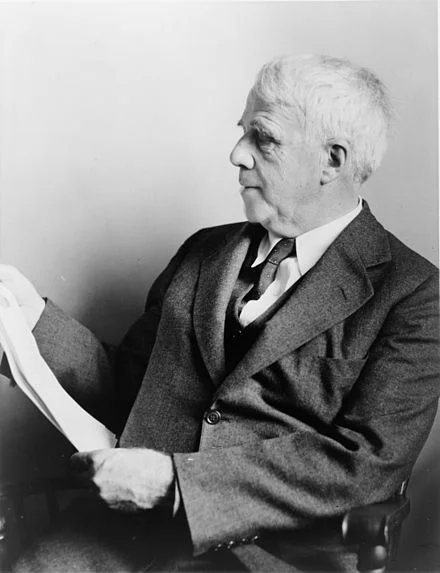
Robert Frost in 1941.
“All out of doors looked darkly in at him
Through the thin frost, almost in separate stars,
That gathers on the pane in empty rooms.
What kept his eyes from giving back the gaze
Was the lamp tilted near them in his hand.
What kept him from remembering what it was
That brought him to that creaking room was age.
He stood with barrels round him -- at a loss.
And having scared the cellar under him
In clomping there, he scared it once again
In clomping off; -- and scared the outer night,
Which has its sounds, familiar, like the roar
Of trees and crack of branches, common things,
But nothing so like beating on a box.
A light he was to no one but himself
Where now he sat, concerned with he knew what,
A quiet light, and then not even that.
He consigned to the moon, such as she was,
So late-arising, to the broken moon
As better than the sun in any case
For such a charge, his snow upon the roof,
His icicles along the wall to keep;
And slept. The log that shifted with a jolt
Once in the stove, disturbed him and he shifted,
And eased his heavy breathing, but still slept.
One aged man -- one man -- can't keep a house,
A farm, a countryside, or if he can,
It's thus he does it of a winter night.’’
— ‘‘An Old Man’s Winter Night,’’ by Robert Frost