
Vox clamantis in deserto









Films informed by Apartheid

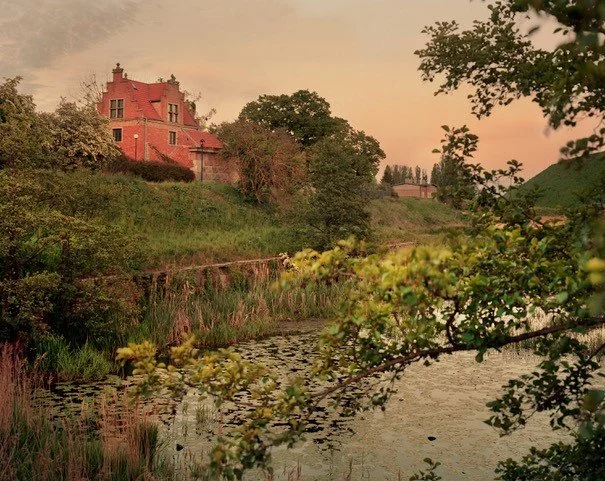
A sequence from Stereoscope, an animated short film with sound, by William Kentridge. Courtesy of the artist and Marian Goodman Gallery, New York. The film will be shown at the Newport Art Museum through March 10. This is the eighth installment of Mr. Kentridge’s decade-long film series about the character Soho Eckstein, who represents the archetypal white South African businessman of the post-Apartheid era, and is also often interpreted as an alter ego of Mr. Kentridge, who says, "I have never tried to make illustrations of Apartheid, but the drawings and films are certainly spawned by and feed off the brutalized society left in its wake. I am interested in a political art, that is to say, an art of ambiguity, contradiction, uncompleted gestures and uncertain endings."
Tim Faulkner: Fishermen want more time to negotiate with Vineyard Wind

From ecoRI News (ecori.org)
Lanny Dellinger, a Newport, R.I.-based lobsterman and chairman of the Fishermen’s Advisory Board (FAB), said fishermen are being rushed to accept a compensation offer for the harm they say will be caused by the Vineyard Wind offshore project.
“It’s like being pushed into the (real estate) closing without seeing the appraisal,” Dellinger said.
There’s no doubt that the project developer is in a hurry. Vineyard Wind needs approval from the Rhode Island Coastal Resources Management Council (CRMC) soon so that construction can begin on the 84-turbine project and qualify for a federal tax credit. Any changes to the layout of the project or the compensation offer will add weeks or months to the application process, and delay pending permits from Massachusetts.
Vineyard Wind has received three extensions from the CRMC since its application was submitted last April 6. The latest was granted Jan. 25, when the CRMC postponed its final vote until Feb. 19.
It wasn’t until Jan. 16, however, that Vineyard Wind sent its compensation plan to the Fishermen’s Advisory Board (FAB). At the time, the FAB had no attorney or financial expert to review the $6.2 million compensation offer.
Noting a Jan. 27 opinion letter by Vineyard Wind CEO Lars Pedersen in the Providence Journal, Dellinger said fishermen are being labeled as obstructionist for calling for more time. But Dellinger said safety for fishing in and around the 92-square-mile offshore wind project must be given thorough consideration by the FAB and local fishermen.
“We do not want to become collateral damage,” he said.
In a Jan. 30 letter to the CRMC, FAB’s attorney, Tricia Jedele, said the fishermen need to review the economic analysis used by Vineyard Wind before negotiations can continue. According to the letter, Vineyard Wind rejected a proposed negotiation schedule, prompting the CRMC to seek an extension beyond the Feb. 19 deadline.
“Despite its best intention, the FAB cannot possibly complete its review of the proposal within the next week,” Jadele said.
Environmental groups such as Climate Action Rhode Island and the Conservation Law Foundation are urging support for Vineyard Wind. In an e-mail to likely supporters, Climate Action Rhode Island noted that the wind energy generated will displace emissions equivalent to 325,000 cars. It also highlighted a recent promise by Vineyard Wind to limit pile driving, boat speeds, and construction during the migration of North Atlantic right whales.
The e-mail also notes that the fishermen’s concerns are valid but that the FAB has been negotiating with Vineyard Wind since 2017 and the wind developer has already made compromises, such as reducing the number of turbines.
“The concerns of FAB are valid, but so is the acidification of the ocean which makes it noticeably warmer every year, is changing migration patterns, and threatening the survival of ocean life and therefore the fishing industry,” according to the Climate Action Rhode Island e-mail.
Upcoming meetings
In Massachusetts, the wind project is being reviewed by the state’s Energy Facilities Siting Board and the Environmental Policy Act Office.
The Bureau of Ocean Energy Management (BOEM) has extended the online comment period on a draft of the environmental impact statement until Feb. 22. Public meetings hosted by BOEM were postponed because the federal government shutdown, but new meetings have been scheduled now that federal offices have reopened.
Feb. 11
Nantucket Atheneum
1 India St.
Nantucket, Mass.
Open house 5-7:30 p.m.
Presentation and questions at 5:30 p.m.
Feb. 12
Martha’s Vineyard Hebrew Center
130 Center St.
Vineyard Haven, Mass.
Open house 5-8 p.m.
Presentation and questions at 6 p.m.
Feb. 13
Double Tree Hotel
287 Iyannough Road
Hyannis, Mass.
Open house 5-8 p.m.
Presentation and questions at 6 p.m.
Feb. 14
Fairfield Inn Waypoint Event Center
185 MacArthur Drive
New Bedford, Mass.
Open house 5-8 p.m.
Presentation and questions at 6 p.m.
Feb. 15
Narragansett Community Center
53 Mumford Road
Narragansett, R.I.
Open house 5-8 p.m.
Presentation and questions 6 p.m.
Tim Faulkner is an ecoRI News journalist.
Editor’s note: Tricia Jedele is the part-time development director for ecoRI News.

Llewellyn King: The digital takeover of cities

Varieties of lighting circa 1900.

Representation of a “smart” (digitized) city.
Benjamin Franklin was the first to deploy street lighting. He put candles in a four-sided, glass case for his lights. The engineering took a giant leap forward in England, when William Murdoch lit his home with coal gas lights in 1792.
Today street lighting is taken as a given, like sewage systems. But it’s also one of the building blocks for the cities of the future, known as “smart cities.”
In Bedford, Mass., a company called CIMCON Lighting has developed a controller node, which is the size and shape of a brioche loaf of bread and sits atop a light pole. The node isn’t big, but it packs a lot of functions beyond controlling the LED light. It’s Wi-Fi-equipped and is in constant wireless communications with its own network and with the city or county management structure. It has a camera, which can be used for crime control; more apps can be added.
Smart city advocate Pete Tseronis, formerly chief technology officer at the Department of Energy, says that in today’s context “smart” means connected; things that speak to other things.
By that measure the CIMCON Lighting device, or controller, is mighty talkative. The company calls it NearSky and says it enables “the internet of outdoor things.”
To me, it’s an outlier of things to come. Smart cities are the precursor to big changes in everything from transportation to entertainment, from food delivery to garbage control.
CIMCON Lighting believes that its technology is a gateway to the smart cities concept which cities around the world are headed toward, some with accelerated political involvement.
In fact, the race to be smart is on and cities from San Antonio to London, and Boston to Singapore are already out of the blocks. It’s going to get giddy.
Old controllers on lights turn them on and off, and sometimes dim them. CIMCON Lighting and the new generation of controllers are little Napoleons, controlling everything they see and much that they don’t. The controller sitting modestly on a street light will be in the vanguard of the revolution which will encompass the whole city.
The electric utilities, the technology companies (like Google, Amazon and IBM) and the telephone giants (like AT&T, Verizon and T-Mobile) all are interested in seizing the lead in the new city space. Their interest goes way beyond things like street lighting to the very command-and-control of cities, from routine police dispatch to disaster management. The old-line companies are wary of what Amazon, Google and Facebook might do in the smart city space.
These big techs are looking past simply managing old infrastructure through digitization, to a new world of automated cars, remote home deliveries, intercity trucking and charging electric vehicles.
The telephone companies are hinging their participation on their 5G networks, which they are rolling out in fits and starts. The electric utilities believe that they have something of a leg up because they’ve been working on making the electrical grid smart for a decade and that it’s now far-advanced with a lot of demand controlled by the customer, not the vendor: a smart city selling point.
Morgan O’Brien, a co-founder and chairman of Nextel Communications, and himself a giant in the telecommunications industry, says the current telephone standard, LTE (Long-Term Evolution), is strong enough to start the revolution and in due course 5G will fit in.
O’Brien is now vice chairman of pdvWireless, which has developed a private system for electric utilities’ communication with a dedicated spectrum to secure it. This has evolved from a suite of workplace wireless communications tools. O’Brien told me he believes you must look to companies -- possibly post-merger ones -- which have the technology, capital and ambition to conquer the smart cities market to identify the likely movers and shakers. Of course, pdvWireless hopes to be in there, he said.
Retired Air Force Maj. Gen. Robert Wheeler describes 5G as a “huge pipe” that will have such capacity for communications and handling vast amounts of data that it’ll itself bring about a mini-revolution. Wheeler worked on getting and keeping the military up to speed on evolving digital technology.
There are more than 19,000 cities and counties that operate as cities in the United States, and more than 50,000 in the world. So the companies are salivating over a gigantic market, almost unimaginably tempting.
Llewellyn King is executive producer and host of White House Chronicle, on PBS. His email is llewellynking1@gmail.com. He is based in Rhode Island and Washington, D.C.
Mass. eyes ‘congestion pricing’ and Conn. bringing back tolls

Electronic Road Pricing gantry in Singapore, the first city in the world to implement an urban cordon area congestion pricing scheme.
From Robert Whitcomb’s “Digital Diary,’’ in GoLocal24.com
Connecticut will likely reimpose highway tolls (on trucks or trucks and cars) in the next couple of years. (The state had tolls on the “Connecticut Turnpike,’’ aka Route 95, until 1985.) Meanwhile, Massachusetts is mulling jacking up tolls for people driving in rush hours in Greater Boston – the sort of “congestion pricing’’ now used in some cities in Europe and in Singapore. Both programs would probably speed traffic by taking a lot of people off the roads and onto expanded mass transit, which the new tolls should help pay for, along with road repairs. And user fees seem to me the fairest form of taxation.
Chris Powell: Time to open intrinsically corrupt casino business to competitive bidding

The Mohegan Sun casino, in Uncasville, Conn.
— Photo by JJBers
Connecticut's two casino Indian tribes complained last week to a General Assembly committee that their rival MGM, operator of the new casino just over the Massachusetts line in Springfield, had unfairly induced the U.S. Interior Department not to approve the tribes' plan for an "interceptor" casino just south of Springfield in East Windsor.
It sure looks like MGM is a little too well-connected with the Trump administration. But the tribes are laughably hypocritical to complain about someone else's political influence. For the casino duopoly the tribes enjoy in Connecticut is itself the result of the worst sort of political corruption.
In 1993 and 1994 Gov. Lowell P. Weicker Jr. awarded the duopoly to the tribes and in return one of the tribes donated $2 million to a charity the governor chaired and controlled, the Special Olympics. Then the Special Olympics hired several of Weicker's assistants, giving them comfortable places to land as their administration ended. Since that crooked deal everyone else has been locked out of the casino business in Connecticut.
Built on licensing and government grants of monopoly that are seldom put out to bid, the casino business is the most politically corrupt in the country. Of course this nurtures arrogance, since from their testimony last week the tribes seem to resent that they're not the only ones who can buy and twist politicians, that their monopoly doesn't extend that far.
It's another reason to enact the bill proposed by Bridgeport legislators to open Connecticut's casino business to competitive bidding.
xxx
CAN AIRPORT BE RENAMED?: Bradley International Airport, in Windsor Locks, has been improving because of the creation of the Connecticut Airport Authority to operate it independently of the state Transportation Department and because state government has put a lot more money into the airport, recognizing its potential for economic development.
Now the airport authority is thinking of changing the name of the airport to convey better its growing reach with more long-distance flights -- maybe something like "Southern New England International Airport" or, more candidly, "Avoid the New York and Boston Crush International Airport."
But the airport authority should note that an attempt to change Bradley's name back in 1981 was a disaster.
Gov. Ella T. Grasso, a Windsor Locks's native daughter, had just died, and her town's state representative, Cornelius P. O'Leary, suggested renaming the airport in her honor. Military veterans groups quickly objected, noting that the airport had been named for an Army Air Force fighter pilot, Lt. Eugene M. Bradley, who had been killed in a plane crash near the airport when it was an air base in 1941.
Windsor Locks's local newspaper, the Journal Inquirer, demolished the renaming idea when it located Bradley's widow in Texas and she visited Connecticut to assist the veterans. They greeted her triumphantly at the airport named for her late husband, and O'Leary, realizing he was beaten, graciously withdrew his proposal.
All Grasso got named after her in her hometown was a street and a conference room.
O'Leary moved up in politics anyway, becoming state senator and a state college dean, perhaps in part because he was politic enough to restrict to friends his brilliantly ironic insight about the airport affair: that, in remarrying, Lieutenant Bradley's widow had changed her name too.
Chris Powell is a columnist for the Journal Inquirer, in Manchester, Conn.
Josh Hoxie: How the age of billionaires ends

Avarice (2012), by Jesus Solana
From OtherWords.org
Every month or so there’s a stunning new headline statistic about just how stark our economic divide has become.
Understanding that this divide exists is a good start. Appreciating that a deeply unfair and unequal economy is problematic is even better. Actually doing something about it — that’s the best.
As 2020 presidential hopefuls start trying to prove their progressive bona fides, serious policies to take on economic inequality are at the forefront. These ideas don’t stand much of a shot of becoming law in the Trump era, of course. But if the balance of power shifts, so too does the potential for these paradigm-shifting new programs.
Let’s take a closer look at the problems they’ll have to address.
A new billionaire is minted every two days, according to a recent Oxfam study. As a result, the top 0.1 percent owns a greater share of the nation’s wealth than the bottom 90 percent combined.
The richest dynastic families in the United States have seen their wealth expand at a dizzying pace. The three wealthiest families — the Waltons, the Kochs and the Mars — increased their wealth by nearly 6,000 percent since 1983.
In other words, the rich in the United States have accumulated a metric crap ton of money. And what are they doing with this immense wealth and power?
Dan Gilbert (#71 on the Forbes 400) just bought the world’s first mega-yacht, with an IMAX theater on it, for $100 million. Hedge-fund billionaire Kenneth Griffin (#45) just broke the record for the highest price ever paid for a house — $238 million — for an apartment in Manhattan’s “Billionaires’ Row.”
Add in a few private jets, a couple of absurd presidential runs, and those Trump tax cuts, and you get a pretty accurate depiction of the priorities of billionaire spending.
Meanwhile, the rest of the country isn’t shopping for yachts and jets. Most families are forced to work longer hours for lower wages.
Despite massive increases in GDP and productivity, the median family saw their wealth go down over the past three decades, not up. The proportion of families with zero or negative wealth (meaning they owe more than they own) jumped from 1 in 6 to 1 in 5.
Relatedly, our roads and bridges our crumbling and our public schools are desperately underfunded.
It doesn’t take an economist to tell you this isn’t sustainable. So what about those policies to do something about it?
Sen. Bernie Sanders has proposed a robust addition to the federal estate tax. Billionaires under his plan would pay a top rate of 77 percent on whatever they bequeath to their heirs over $1 billion. Far from a new idea, Sanders is merely proposing reinstating the top rate that was in place from 1941 to 1976.
Sen. Elizabeth Warren, not to be outdone, has proposed a direct tax on concentrated wealth targeting modern day wealth hoarders. Her plan would impose a progressive annual tax starting at 2 percent on assets over $50 million and rising to 3 percent on assets over $1 billion.
And at least one member of Congress who isn’t running for president, Rep. Alexandria Ocasio-Cortez, has gotten in on the action. She’s proposed raising the top marginal tax rate to 70 percent (only on income over $10 million, contrary to what you might hear on Fox News).
Three bold ideas to stem our skyrocketing economic inequality, three ways to tax the ultra-rich, three policies unlikely to become law given the current administration.
Yet these ideas are more than mere platitudes. Poll after poll shows big majorities of Americans ready to see the rich pay their fair share — and worried about the economic and political power consolidating in the upper echelons.
When the political moment arrives, we won’t have to wonder what’s coming.
Josh Hoxie directs the Project on Taxation and Opportunity at the Institute for Policy Studies.
George McCully: The importance of 'Reshaping MIT'
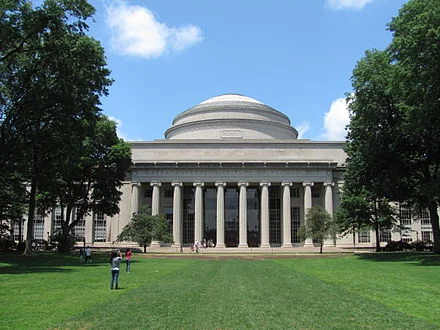
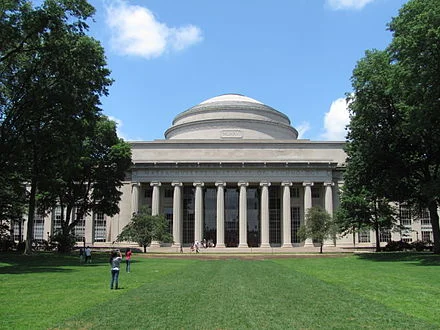
On the Massachusetts Institute of Technology campus, in Cambridge, Mass.
Via The New England Journal of Higher Education, a service of The New England Board of Higher Education (nebhe.org)
A review of The New Education: How to Revolutionize the University to Prepare Students for a World in Flux, by Cathy N. Davidson (New York, Basic Books, 2017); a summary of the recent announcements of a major restructuring of MIT, and a synthesis of other relevant developments.
It is increasingly obvious that we are living in one of the greatest ages of paradigm-shifts in Western history, comparable to the Renaissance and the fall of Rome. As with Gutenberg in the Renaissance, today’s is driven by revolution in information technology—the rise of computers, the internet, and now artificial intelligence (AI). The pace has dramatically accelerated—previously such momentous shifts took centuries to be resolved; ours is taking decades. Higher education, which is certainly information-intensive, is being so rapidly transformed that, whether we know it or not, every institution is in crisis. Leaders need urgently to mobilize their faculties, staffs and boards to face facts and respond. Problem-solving innovations are everywhere; strategic overview is needed.
In 1869, Charles W. Eliot lost a competition for the endowed chair in chemistry at Harvard ( surprisingly, considering that he was a Boston Brahmin and a deeply connected alumnus); he then joined the faculty at MIT and, funded by a modest inheritance from his grandfather, toured European and particularly German universities and technical institutes, returning to write an article in The Atlantic Monthly titled “The New Education,” in which he argued that higher education at the time needed urgently to be modernized, to prepare future managers of industrialization and urbanization. He was shortly thereafter chosen to be president of Harvard at age 35, where for the next four decades his reforms played a top-down leading role in setting the model for twentieth-century American scholarship and higher education.
Now comes Cathy Davidson—a prominent strategist in higher education, longtime professor at Duke University and its vice provost for interdisciplinary studies, currently director of The Futures Initiative at the City University of New York (CUNY)—who has explicitly invoked Eliot’s title and spirit to declare that today, we are at a similar inflection point in the history of higher education, and for the same reason: that it no longer adequately prepares students for the world in which they will live. In response, she has provided a compendium of exemplary institutional innovations, useful as a guide for reformers elsewhere.
The governing paradigm of scholarship and higher education has been the modern multiversity, in which knowledge and skills of separate and exclusively specialized conventional academic disciplines were passed on in lecture and reading courses to receptive students, to equip them for their future professional careers. This system she says, and many agree, is obsolete and actually counter-productive. As a result, the future of higher education is this time being led from the ground up, all across the country, in myriad kinds and levels of institutions, especially including community colleges where fully half of the nation’s undergraduates now matriculate.
Disruptively innovative experiments in curricula, teaching and participatory learning are burgeoning, led by “smart” faculty who have given up on the inherited models and are pioneering new pathways that are public problem-oriented and “student-centered” rather than discipline centered. Their common denominator, she says, is teaching students how to teach themselves— “learning how to learn” for real-world problem-solving in volatile “gig” job markets, using rapidly advancing new information technology in practical situations and terms—in short, the opposite of the traditional paradigm of conventional multiversity academicism.
She does not mince words. She says today’s students are being swindled, not getting what they’re in any case paying far too much for, and that there needs now to be “a revolution in every classroom, curriculum, and assessment system … To revolutionize the university, we don’t just need a model. We need a movement [that] seeks to redesign the university beyond the inherited disciplines, departments, and silos, by redefining the traditional boundaries of knowledge and providing an array of intellectual forums, experiences, programs, and projects that push students to use a variety of methods to discover comprehensive and original answers.”
Building a movement
Her book addresses the need to build the desired “movement” by calling attention to the fact that it is already underway on “almost every college and university campus right now” where “smart educators—sometimes a handful of visionaries, sometimes a substantial cohort—are working on new models for higher education.”
The structure and style of her book is, accordingly, anecdotal—necessarily so, given the novelty of the movement, its innumerable and widespread expressions, and therefore the paucity of systemic historical data. But she is an excellent storyteller, vividly conveying the personalities and characters of the diverse people and institutions involved in new experiments. She presents the “new education” as “student-centered” also faute de mieux—because today’s excessively high-cost and -loan-financed conventional classrooms are not helping today’s students to obtain reliable credentials for predictable future careers. The world is changing too rapidly, driven by technological revolutions in every field.
Her argument is in general carefully and intelligently laid out—this book certainly deserves wide readership by everyone interested in the future of higher education at their own and other institutions. There are chapters on students in crisis, on excessive “technophobia” and “technophilia,” the failures of higher education business models, the reductionism of quantification and grading, the unfairness of elitism and the deleterious effects of all these on American society.
An essential aspect which could only be alluded to, however, is how they relate to the substantive issues of scholarship and research. The multiversity strategy and structure of exclusive specialization by conventional disciplines—the content of higher education that was long the focus of the academy—has been increasingly criticized as inadequate in addressing complex real-world problems such as climate change, environmental degradation, disparities of wealth, overpopulation, energy needs, technological revolutions, etc., which are not organized in the separate parts of the disciplines. This discord has been exacerbated by technological revolutions—rapidly unfolding, accelerating and increasingly powerful, especially in information technology, big data and data science. Although Davidson’s focus is on “student-centered” innovations, a number of her examples involve extra-disciplinary research by the faculty as well.
The College of Computing at MIT
The content of scholarship and pedagogy is the focus of a truly revolutionary new transformation in higher education—the “College of Computing” introduced last October at MIT and certain to be widely influential on the future of technology and of career-training in STEM and all other related fields. While there is no book or even widely published report on it yet, we may summarize its rationale from MIT’s official public statements, to help place Davidson’s book in its most up-to-date and concrete context.
MIT has been structured in five Schools: Science, Engineering, Architecture and Planning, Management, and Humanities/Arts/Social Sciences. The College of Computing is a self-financed addition to that mix, conceived as a “connective tissue for the whole Institute,”in which all faculty and students in all “Schools” will participate. Its “central idea” is that this new “shared structure can help deliver the power of computing, data science, and especially AI, into all disciplines at MIT; lead to the development of new disciplines; and provide every discipline with an active channel to help shape the work of computing itself.”
This “new approach [is] necessary because of the way computing, data, and AI are reshaping the world.” Here computing will be “baked into the curriculum, rather than stapled on.” Students and researchers will be “bi-lingual” and thus of immense value to their employers—taught to use AI in their disciplines from first principles, instead of dividing their time between computer science and other departments, predicated by the fact that “Computing is … everywhere, and it needs to be understood and mastered by almost everyone.” “AI in particular is reshaping geopolitics, our economy, our daily lives and the very definition of work. It is rapidly enabling new research in every discipline and new solutions to daunting problems. At the same time, it is creating ethical strains and human consequences our society is not yet equipped to control or withstand … In response, we are reshaping MIT.”
“Reshaping MIT” is of immense strategic importance to the future of higher education because MIT is in a unique position to assume a global leadership role. AI itself originated there in the 1950s, with the work of Marvin Minsky and others. The Turing Award, computing’s highest honor, so far awarded to 67 scholars worldwide, is held by 10 current MIT faculty. The largest laboratory at MIT is the Computer Science and Artificial Intelligence Lab, established in 2003. Electrical Engineering and Computer Science (EECS) is by far MIT’s largest academic department. U.S. News and World Report cites MIT as No. 1 in six graduate engineering specialties, and 17 disciplines and specialties outside of engineering, from biological sciences to economics.
From that exalted platform, this innovation begins with clear and powerful advantages: impetus from technology both within and outside MIT, and the inexorable rise of AI; MIT itself, as a highly extraordinary and well-resourced stage; an initial investment of $650 million already in-hand, including the launching gift of $350 million from a single donor, anticipating a $1 billion total investment; increasing pressure from students, 40% of whom at MIT are already majors or joint majors in Computer Science; and bold, thoughtful, leadership consensus from both administration and faculty.
Startup funding will enable immediate commencing of student enrollments in 2019; begin construction of an already-sited major new building centrally located on the MIT campus; endow 50 new faculty appointments within five years—half located within the College and half jointly with other departments across MIT, for which jockeying has begun—a 5% growth in total faculty, nearly doubling MIT’s academic capability in computing and AI.
The College will develop new curricula connecting computer science and AI with other disciplines; host forums to engage national leaders from business, government, academia and journalism, to examine the anticipated outcomes of advances in AI and machine learning, and to shape policies around the ethics of AI; encourage scientists, engineers, and social scientists to collaborate on analyses of emerging technology and on research that will serve industry, policymakers, and the broader research community; and offer a seed-grant program for faculty, and a fellowship program to attract distinguished leaders from universities, government, industry, and journalism.
The College’s influence will be reciprocal with all other entities, encouraging the future of computing and AI to be shaped by insights from other disciplines, as well as vice-versa. It will “foster breakthroughs in computing, particularly artificial intelligence—actively informed by the wisdom of other disciplines.” It will deliver the power of AI tools to researchers in every field and advance pioneering work on AI’s ethical use and societal impact.
Its educational aim is to generate “new integrated curricula and degree programs in nearly every field, to equip students to be ‘bi-lingual’—as fluent in computing and AI as they are in their own disciplines and ready to use these digital tools wisely and humanely to help make a better world.” MIT President Rafael Reif says, “Society has never needed the liberal arts—the path to wise, responsible citizenship—more than it does now. It is time to educate a new generation of technologists in the public interest.”
This momentous innovation is intended to strengthen MIT’s position as a key international player in “the responsible and ethical evolution of technologies that are poised to fundamentally transform society. Amid a rapidly evolving geopolitical environment that is constantly being reshaped by technology, the College will have significant impact on our nation’s competitiveness and security.”
The lead donor, Stephen A. Schwarzman, founder of Blackstone, the investment firm, hopes that the College of Computing “will constitute both a global center for computing research and education, and an intellectual foundry for powerful new AI tools. … With the ability to bring together the best minds in AI research, development, and ethics, higher education is uniquely situated to be the incubator for solving these challenges in ways the private and public sectors cannot. Our hope is that this ambitious initiative serves as a clarion call to our government that massive financial investment in AI is necessary to ensure that America has a leading voice in shaping the future of these powerful and transformative technologies.”
Two complementary approaches
We have, then, two complementary approaches to the future of higher education: Davidson’s focus is mainly procedural, broadly based and especially concerned with higher education’s role in creating upward mobility for all students, for the health of American society; MIT’s focus is mainly substantive, initially centered on this single though world-leading institution, and aimed at clarifying, strengthening and refining the force and impacts of today’s revolutionary research and technology. Each of these approaches needs the other—MIT’s will influence the content of future research and teaching across the whole of Davidson’s movement; it would also help if Davidson’s concern for the upward social mobility of all students found special and explicit “multi-lingual” expression in guaranteeing the broadest possible student input to our national future.
Both are happening amid a cascade of powerful and mutually conducive developments. The New York Times recently reported that student demands for computer science are exploding far faster than faculties can adequately supply now or in the foreseeable future. The number of undergraduate majors more than doubled from 2013 to 2017, while tenure-track faculty ranks rose 17%, and graduate student enrollments rose 13%. Part of the problem is that corporate demand for computer scientists is also exploding, so businesses are poaching faculty and new PhD’s away from academia at much higher salaries, forcing universities to make diluting dual appointments. While the multiversity featured cross-fertilization between corporate and academic activities, this current further blending of the two realms may intensify to combine them at both faculty and student levels, further undermining strictly academic disciplines and even producing new ways of organizing research and teaching.
Maldistributions in societal structures further exacerbate those in higher education. Extreme and worsening imbalances of wealth and income are well-known, but less familiar are their damaging effects on public education and training. Re-tooling skills of the lowest-income workers for higher-paying jobs is already a crisis, but add to that, the conservatively estimated 1.37 million U.S. workers who will lose their jobs to automation in the next decade alone, increasing rapidly thereafter, and “upskilling” them would cost $34 billion, 86% of which would have to be covered by government, which has been steadily reducing its support of higher education for several decades.
Globally, China presents another challenge—owing to the massive investment its government is making in AI technological development and the huge numbers of scientists being trained. A recent survey asked Chinese and American executives whether they thought AI would have a larger impact than the internet; 84% of the Chinese said yes, while 38% of Americans agreed. Currently 25% of Chinese business leaders say AI is used on a wide scale at their firms, whereas only 5% of U.S. executives said the same. In June, the Pentagon announced that it was establishing a Joint Artificial Intelligence Center that will spend $1.75 billion over six years, but that is a small fraction of what the Chinese are spending.
In the realm of values, the Pentagon’s initiatives are widely regarded with ethical apprehensions both within and outside the high-tech industry. In response, the Defense Innovation Board last October launched an AI Principles Project to create an ethics framework for artificial intelligence in national defense. The initiative’s first major public meeting took place this January at Harvard, where Pentagon officials met with about a dozen AI experts, some of them strong critics. Similar expert gatherings are planned at Carnegie Mellon University in March and Stanford University in April, after which the Board will release draft principles for public comment. While it is significant that this discussion is taking place on university campuses, we may hope that this fact will focus increased scholarly involvement in these issues.
The subject of values brings us back to where we started. Davidson says, from her social science perspective, that “The goal of higher education is greater than workforce readiness. It’s world readiness.” There is an additional (not alternative) consideration: that another and equally worthy goal of higher education is to prepare students for their personal maturity as human beings, in any future world, especially given as we have seen that their rapidly unfolding future world is highly unpredictable. That broader and deeper pedagogical framework is commendably included in MIT’s explicit interest in humanistic liberal education.
Liberal education, of course, invokes the deepest traditional—in fact, Classical—values of self-development and -fulfillment, as well as the newer hypermodern models increasingly dependent on artificial intelligence for a more comprehensive forward-looking synthesis. The obvious advantage of that more capacious perspective would be to ground what always and increasingly rapidly changes—history—on what never changes—fundamental human nature.
So our current Age of Paradigm Shifts is posing fundamental challenges to traditional higher education and all its institutions, which are being met by a nationwide ground-level movement searching for solutions. Several features of the movement stand out, all driven by necessity: first, that the Old Paradigm of 20th-century multiversity academicism is toast; second, that the direction of future higher education is toward more explicit commitment to students’ personal and professional development; third, that research and teaching will be much more engaged extramurally in external communities and real-world practical problem-solving; fourth, that higher education as a whole will become more explicitly responsible socially, involving more widely inclusive constituencies than ever before; fifth, that government support of higher education must increase substantially, as emergent issues compel political attention; and finally, that leaders in every institution of higher education—administrators, boards and faculty members—must now assume responsibility for guiding their institutions forward along these lines, encouraging fresh and innovative thinking and experimenting now more than ever before.
George McCully is a historian, former professor and faculty dean at higher education institutions in the Northeast, then professional philanthropist and founder and CEO of the Catalogue for Philanthropy.
Hope in black and white

“Outside The Light,’’ in Watch Hill, R.I., by Bobby Baker. Copyright Bobby Baker Fine Art.
Battered along the road

“It’s a motley lot. A few still stand
at attention like sentries at the ends
of their driveways, but more lean
askance as if they’d just received a blow
to the head, and in fact they’ve received
many, all winter, from jets of wet snow
shooting off the curved, tapered blade
of the plow….’’
— From “Mailboxes in Late Winter,’’ by Jeffrey Harrison, a Dover, Mass., poet and teacher.
We don't want you here

Log jam at Ripogenus Gorge, in Maine. during 1870s log driving.
“...you don't actually have to go to Maine. And this is finally great news for me again, because I don't want to see you there. The spirit of Maine has infected me. I gave you your goddamned wood, now get the f… out of here.”
―From John Hodgman’s Vacationland: True Stories from Painful Beaches
Fewer cold waves

Old Man Winter may be gradually losing his breath.
— Drawing by Etamme
From Robert Whitcomb’s “Digital Diary,’’ in GoLocal24.com
A Jan. 31 article in Bloomberg News, “Dangerous Cold Snaps Feel Even Worse Because They’re Now So Rare,’’ puts last week’s arctic attack in perspective. The authors write: “Temperature data since 1970 suggest that sudden freezes used to be much more normal, and the U.S. hasn’t had a good, old-fashioned cold streak in more than two decades.’’ Well, that assertion is debatable, but they usefully cite the work of Ken Kunkel, a researcher at North Carolina State University and the National Oceanic and Atmospheric Atmosphere who for two decades has maintained a “cold wave index’’ record. Bloomberg explains that the index tracks “how often multi-day wintry blasts descend on the U.S.’’ Mr. Kunkel’s chart clearly shows a decline in the frequency of cold waves.
Rapid warming of the Arctic, linked to fossil-fuel burning, has screwed up the jet stream, which in turn sometimes lets big pockets of extremely cold air from Siberia and Canada move into the Mideast and Northeast, even as western North America gets much warmer than “normal’’. Ah, the “polar vortex’’. I love the hysteria that phrase creates!
Then the jet stream waviness changes and Mideast and Northeast turn much milder than normal, which has happened this week. To read the Bloomberg piece and chart, please hit this link.
Dana-Farber gets big grant to study microbe-cancer links

A cluster of Escherichia coli bacteria magnified 10,000 times.
From The New England Council (newenglandcouncil.com)
Boston’s Dana-Farber Cancer Institute was recently awarded a $25 million grant to conduct research about how specific microbes in the body may lead to colorectal cancer. The grant from Cancer Research UK was awarded to Dana-Farber alone out of 130 teams who had applied for the funding.
With this funding, Dana-Farber will research the difference between healthy microbiomes and those related to cancer. The researchers will also attempt to manipulate the microbiomes to prevent and treat cancer. The National Cancer Institute estimates that colorectal cancer will be the third-most common cancer diagnosed in 2018.
Dr. Matthew Meyerson, one of the investigators on the new project, said “Microbiome research has already thrown up a range of unexpected findings. With new genomic technologies, we can map the microbiome in incredible detail, so now is the right time to be investigation the phenomenon of cancer.”

The Marcotte Center for Cancer Research, at Dana-Farber.
— Photo by Addi.ez.chemin
David Warsh: 3 big things to know about Michael Bloomberg
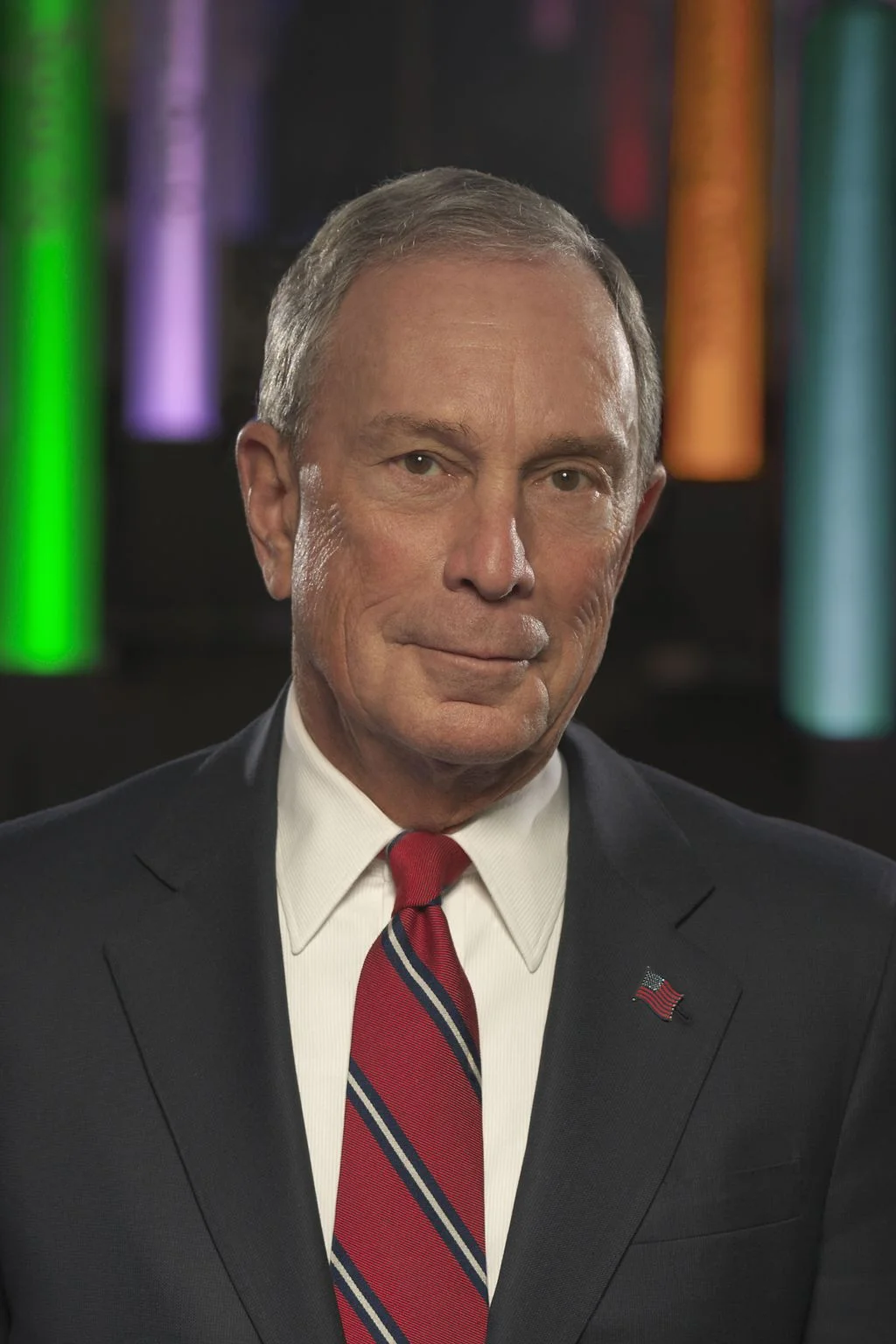
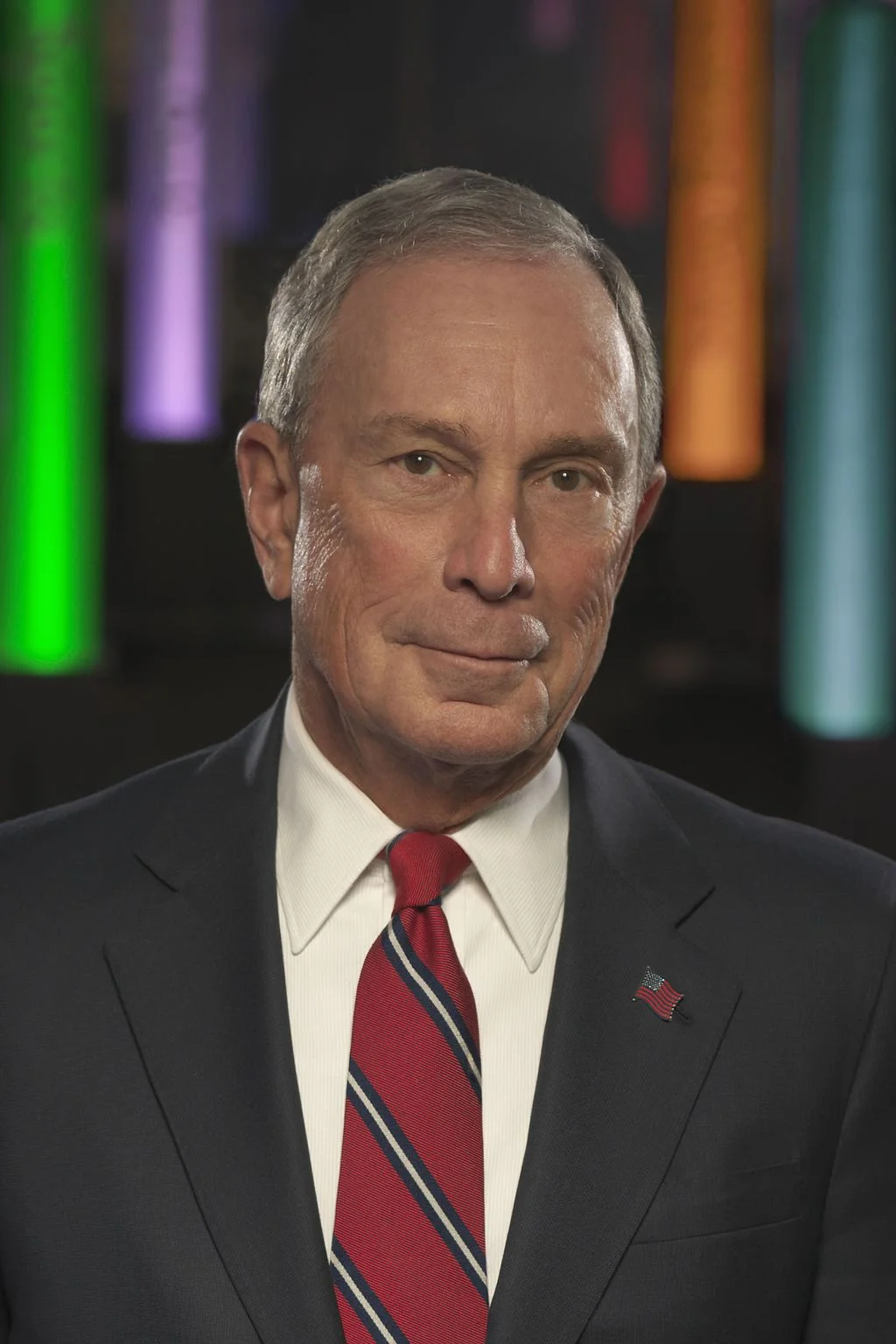
Michael Bloomberg.
SOMERVILLE, Mass.
If it weren’t for the intricate machinery of party governance, former New York City Mayor Michael Bloomberg, 76, might be the odds-on favorite to be the Democratic nominee in 2020 and president in 2021. He is sensible and seasoned.
His major drawback is that he is a billionaire, like the incumbent, though far richer than Donald Trump. My favorite odds-maker puts Bloomberg’s chances at about 4 percent. Starbucks entrepreneur Howard Schultz, another billionaire, is going fold his bid sooner or later, just as asset-manager Tom Steyer did his last month, but Bloomberg isn’t going away. He hasn’t declared yet, so it’s much too soon to speculate about possible pathways to the nomination. Therefore, invest a few minutes in a little background.
Bloomberg’s biography is the first thing. Lengthy profiles will be written. I’ve read a few in the past, including Joyce Purnick’s 2009 biography, and I look forward to reading more. But meanwhile, I took advantage of the January thaw to visit his boyhood home in Medford, Mass. It is not far over the Mystic River and through the woods from my office in Somerville.
The Bloomberg family moved to a modest two-story colonial house at 6 Ronaele Rd., in 1945, when he was 3. His father, an accountant for a dairy company, born in Chelsea, Mass., bought the deed from his lawyer in order to circumvent a tacit ban on sales to Jews in the newly developed subdivision.
William Bloomberg died in 1963, at 57. Charlotte Bloomberg lived there until she died in 2011, at 102. Her son visited her frequently, and paid for a redesign of her synagogue, but Bloomberg himself left Medford in 1960 for Johns Hopkins University, Harvard Business School and Manhattan. His loose ties with the little city in which he grew up were nicely explored in 2012 by New York Times reporter Michael Grynbaum.
A second thing worth knowing about Bloomberg has to do with some changes last year in his business. You may remember how be got into the news business, by reverse engineering it. With the $10 million severance payment he received after Phibro Corp. acquired Salomon Brothers in 1981, Bloomberg – who had previously been banished to the firm’s back office – founded a bond-data business of his own. The real-time databank he assembled, equipped with a steadily growing battery of analytic tools, was vastly superior to the tables that newspapers offered in their financial pages. Bloomberg was able to sell subscriptions to his desk-top terminals for prices eventually reaching $20,000 a year.
In 1990, he hired Matthew Winkler, a Wall Street Journal reporter and editor, to build a staff for the brand-new Bloomberg News. The newsroom grew at an astonishing pace, until it had become one of the world’s largest news organizations, with 2,700 editors, reporters and commentators, arrayed in 150 bureaus around the world. The company put much of its news reports on the Web for free, but access to the whole remained the privilege of the high-paying few.
In 2009, Bloomberg bought the venerable BusinessWeek magazine from McGraw Hill, reorganized its coverage, and put his name on the cover. In 2015. he hired John Micklethwait, editor-in-chief of The Economist, to oversee all of Bloomberg News, and shape up a staff that had grown in ramshackle fashion. Last summer, the company took another important step towards becoming a proper news business, placing its previously free consumer news behind a metered paywall, offering full-access subscriptions at $35 a month, and slightly more content for $40 a month.
That strategy – It’s-Worth-What-You-Pay-for-It – brought Bloomberg News more nearly in line with the practices of The New York Times, The Washington Post, the WSJ and the Financial Times. It also made Bloomberg himself seem more of a newspaper publisher, complications and all, than a technocrat. (Bloomberg’s Rich List doesn’t mention the boss; Forbes pegs him at around $48.5 billion.)
What’s the third thing about Bloomberg? It is the observation with which I began. If he were 10 years younger, a good deal less wealthy, and fresh out of office, he’d likely be the front-runner in the presidential race now taking shape – ahead of four inexperienced senators, a former vice president and a thoroughly tarnished incumbent.
True, Bloomberg’s negatives are high with some traditional Democrats – stop-and-frisk policies as mayor, intimate ties to Wall Street, and a proudly prickly personality. Can the party leadership swallow their pride long enough to win an election? Bloomberg is old – 77 this month. Can the rising generation continue to work the ‘tweendecks of politics for another few years? What if Beto O’Rourke, 46, endorsed him? Would he enter the race if Joe Biden decided to run? (Perhaps not. Here, from The Atlantic last week, is Edward-Isaac Dovere’s well-informed account of Bloomberg’s planning.)
A term or even two of a Bloomberg presidency would give the nation intelligent and even-handed leadership. The major parties would have time to groom a new generation of leaders and narrow their differences somewhat. However unlikely it may be to succeed, Bloomberg’s candidacy is worth taking seriously.
David Warsh, a veteran columnist and an economic historian, is proprietor of economicprincipals.com, where this piece first ran.

'Fire and Light' in Fitchburg

“Plusquamperfect’’ (‘‘Past Perfect Participle’’) ( oil and fire on canvas), in the show “Fire and Light: Otto Piene in Groton, 1983-2014,’’ at the Fitchburg Art Museum, Feb. 9-June 2.
— Photograph © Ante Glibota.
The gallery says:
“‘Fire and Light’ presents the work of the late internationally renowned artist, Otto Piene (1928-2014) , focusing on artworks created when the German-borne artist lived in Groton, Mass.
“Piene's relentless exploration of light, fire and air led to groundbreaking achievements in art and technology. ‘Fire and Light’ offers a rare opportunity for visitors to experience Piene's immersive artworks and contemplate Piene's vision and practice.’’
Peter Certo: The huge U.S. hypocrisy about Venezuela

Anti-government protests in Caracas.
For some months now, Venezuela’s socialist government has lurched through a series of escalating crises — hyperinflation, mass protests, political violence — while both the government and its opposition have flirted with authoritarianism.
It isn’t pretty — and to hear the right wing tell it, it’s the future the U.S. left wants for our own country. As if to prevent that, the Trump administration is now fomenting a coup in Venezuela.
They’ve publicly recognized an unelected opposition leader as president, discussed coup plans with Venezuela’s military, and sanctioned oil revenues the country needs to resolve its economic crisis. They’re even threatening to send U.S. troops.
They’ll tell you this about restoring “democracy” and “human rights” in the South American country. But one look at the administration officials driving the putsch perishes the thought.
Take Secretary of State Mike Pompeo, who recently spoke at the United Nations calling on countries to stand “with the forces of freedom” against “the mayhem” of Venezuela’s government.
This fall, the same Pompeo shared a photo of himself beaming and shaking hands with Saudi Arabia’s crown prince — just as the prince’s order to kill and dismember a U.S. resident journalist was coming to light. The same prince is carrying on a U.S.-backed war in Yemen, where millions are starving.
Does this sound like a man who gives one fig for democracy, or against mayhem?
Or take Pompeo’s point man on Venezuela, the dreaded Elliott Abrams. Pompeo said Abrams was appointed for his “passion for the rights and liberties of all peoples.” More likely, it was Abrams’ history as Reagan’s “Secretary of Dirty Wars” (yes, that’s a real thing people called him).
A singularly villainous figure, Abrams vouched for U.S. backing of a genocidal Guatemalan regime and Salvadoran death squads in the 1980s. And when a UN report cataloged 22,000 atrocities in El Salvador, Abrams praised his administration’s “fabulous achievement” in the country.
Abrams was convicted of lying to Congress about U.S. support for Nicaragua’s brutal Contras, but that didn’t prevent him from serving in George W. Bush’s State Department — which backed not only the Iraq war but an earlier coup attempt in, you guessed it, Venezuela.
“It’s very nice to be back,” Abrams told reporters. I bet!
Finally there’s National Security Adviser John Bolton, who recently took a cute photo with the words “5,000 troops” written on a notepad. Bolton still thinks the Iraq war was a good idea, and he’d like one with Iran too. Do we think it’s bread and roses he wants for Venezuela?
For all its faults, Venezuela achieved tremendous things before the current crisis — including drastic reductions in poverty and improvements in living standards. Mismanagement and repression may have imperiled those gains, but that’s no justification at all for the U.S. getting involved. In fact, U.S. sanctions have worsened the economic crisis, and U.S. coordination with coup plotters has poisoned the country’s political environment even further.
The future of Venezuela’s revolution is for Venezuelans to decide, not us. All that can come of more intervention now is more crisis, and maybe even war.
Instead of regime change, the U.S. — and especially progressive politicians (looking at you, Nancy Pelosi) — should back regional dialogue and diplomacy. While Democratic Party leaders appear to back Trump, a few representatives — such as Ro Khanna (D-CA) and Ilhan Omar (D-MN) — are bravely backing a diplomatic course.
For all the right’s warnings that the left wants to “turn the U.S. into Venezuela,” we should pay careful attention to what the people who gave guns to death squads and destroyed the Middle East want to do with it. Because unlike the left, they’re already running our own country
Peter Certo, OtherWords.org’s editor ,Froworked as a researcher for Right Web, an Institute for Policy Studies project that studies neoconservative foreign policy figures.

Don Pesci: In defense of the cardinal virtues and Catholic orthodoxy

An image personifying the four virtues (Ballet Comique de la Reine, 1582).
VERNON, Conn.
“The act of defending any of the cardinal virtues has today all the exhilaration of a vice”
-- “A Defense of Humilities, The Defendant’’ (1901), G.K. Chesterton
Small “o” orthodox Christians of a certain age will be familiar with the cardinal virtues. They are: prudence, temperance, fortitude and justice – all under attack by a secular culture that, judging by Hollywood or Washington, D.C., standards, appears to have won the battle. But, never fear, the four cardinal virtues form the breastplate of a church against which, its founder once proclaimed, the gates of Hell shall not prevail.
The cardinal virtues, St. Augustine tells us, better enable us to pursue the good life: “To live well is nothing other than to love God with all one's heart, with all one's soul and with all one's efforts; from this, it comes about that love is kept whole and uncorrupted (through temperance). No misfortune can disturb it (and this is fortitude). It obeys only [God] (and this is justice), and is careful in discerning things, so as not to be surprised by deceit or trickery (and this is prudence).”
Peter Wolfgang is the executive drector of the Family Institute of Connecticut (FIC). His helpmeet is his wife, Leslie, the mother of seven children. A born-again Catholic, Wolfgang is on speaking terms with the members of FIC’s Clergy Advisory Council, which include the Rev. LeRoy Bailey, Jr., senior pastor, The First Cathedral, Bloomfield; Rabbi Yehoshua S. Hecht, Beth Israel Synagogue, Norwalk; and Rev. Earl M. Inswiller, Jr., Living Waters Fellowship Church, Windsor Locks. A member of the Connecticut Bar, Wolfgang holds a juris doctorate from University of Connecticut School of Law and sports a bachelor's degree in International Studies from The American University in Washington, D.C., all of which helps when he finds himself locking horns with a variety of secularized Jews and Christians and practical atheists. As defined by Jacques Maritain, practical atheists are those who believe that “they believe in God and... perhaps believe in Him in their brains but... in reality deny His existence by each one of their deeds." Wolfgang is not a practical atheist.
Q: I don’t think you will dispute that we live in a secular age, a time in which religious proscriptions – and, perhaps more importantly, the Judeo-Christian view of things – has been bleached from the public square. Prayers, except those said very privately in a closet, are discouraged in public schools. I’m old enough to recall a time when contraception was frowned upon in Catholic circles; it still is, but in the religiously bleached wider society, contraception is an unquestioned given. Abortion too – even late-term abortion -- is defended by “Catholic” legislators and Jewish public officials.
Here in Connecticut, Planned Parenthood counts among its most fervent proponents U.S. Sen. Dick Blumenthal, who is Jewish, and Rosa DeLauro and John Larson, both of whom are Catholic. For a half century and more, we have witnessed a moral army in full retreat. Many Christians keep asking themselves “Where are the red lines?” Dostoyevsky used to say that for those who have shucked off religion, everything is possible. He was echoed by Nietzsche, who wondered what the future would look like in a world that had buried the Hebraic-Christian God.
That appears to be our world – of cringingly obliging Christians, practical atheists, moral libertines, and phony Christian politicians who have colluded, along with practical atheists, to imprison Christianity in what the French used to call “the little ease,” a cell so small that, while in it, the prisoner could neither stand nor sit nor lie prone. Let me ask you, where are the red lines in our culture, and are they still informed by the Judeo-Christian faith? Before answering, you might want to explain what a born-again Catholic is.
A: “I don’t know if ‘born-again Catholic’ quite captures it but I appreciate what you are trying to convey. I am someone who believes in and tries to live according to the Catholic faith. Not always successfully, as my pastor could tell you if he were not under the seal of confession. But the point of your question, I think, is that there are Catholics who are trying and there are Catholics who seem not to be trying. We should all try, and harder.
“The red lines of our culture have shifted at a dizzying speed. Judeo-Christian faith seems to be, at best, a bystander in that shift and at worst, road kill. Consider as one example the vulgar play The Vagina Monologues. Catholic watchdog groups had for years complained whenever it was shown on a Catholic college campus, to little effect. Only when transgender persons objected —because, it was claimed, the play was offensive to ‘women without vaginas’ —did it begin to be banned. That says something about who really sets the red lines in our society—and what is the real faith of those colleges.
Q: “Yeah, it’s difficult to parody that sort of behavior. Who is it – or perhaps what is it – that establishes the real ‘red lines’ in a community, if it is not valued tradition? Not to beat the Chesterton drum too often, but he was brought late in life to the Catholic faith. And the world against which he persuasive inveighed was very much like our own. He defined tradition as the democracy of the dead: ‘Tradition means giving a vote to most obscure of all classes, our ancestors. It is the democracy of the dead.’ Many moderns appear to be making up tradition – even history is fungible – as they go along their merry way. It seems to me that a tradition undefended from assault is a tradition abandoned. In law, as you know, and in politics as well, silence signifies assent. The opposite of silence may not be reasoned speech; it may be the chatter of cultural assassins. How should faithful Christians oppose such forces?
A: “Some demons can only be cast out through prayer and fasting. We must, first of all, attend to both. St. Joan of Arc made her soldiers go to confession before they went into battle. Christians should strive for holiness, to model in our own lives the better world we hope to bring about.
“Secondly, we must engage in the public sphere: education, lobbying and, yes, politics. Not to do so is to shirk our duty as citizens in a democratic republic. Very few Christians in the history of the world have lived in a society as free as ours. To not take advantage of that freedom is to be like the unprofitable servant who buried his one talent in the ground. No Christian should want to be that guy.
“And - I can’t emphasize this enough - our adversaries are using every means at their disposal to win the day. It pains me to say that Cultural Marxism has more fervent believers than does Jesus Christ. But that is what I often see.’’
Q: Well, yes, Marx announced rather volubly that religion is the opiate of the people. In our day, opioids have become the opium of the people – that and a politics from which the religion of the people appears to have fled from hearts and minds of nominally Catholic politicians. Some Catholics appear not to be disturbed by what we might call a return to the catacombs, Christianity in a closet. It is all very well to say that besieged Catholics should not retreat from the public square, but we are living in a time in which prominent politicians such as Sen. Dianne Feinstein feel free to say unblushingly that 7th Circuit Court of Appeals nominee Amy Coney Barrett may not be fit for service on the court because of her Catholic faith. Let me quote her exactly: “You are controversial,” Feinstein said to Barrett. “You have a long history of believing that your religious beliefs should prevail. When you read your speeches, the conclusion one draws is that the dogma lives loudly within you. And that’s of concern when you come to big issues that large numbers of people have fought for years in this country.” Only yesterday, New York Gov. Andrew Cuomo, a cultural Catholic, joyously signed a bill that would allow late term abortion. Are we losing the battle? If so, where is the cavalry? In past times, the church had been reinvigorated by both the clergy and, more importantly, the laity.
A: “There are still more examples that could be cited. Senators Kamala Harris (Calif.) and Mazie Hirono (Hawaii) recently attacked a Trump judicial nominee’s membership in the Knights of Columbus because the Knights are pro-life and for traditional marriage—positions held by any faithful Catholic—and asked if he would resign in order to be confirmed. That is where we are at. Faithful Christians are being told that they are not full citizens under the law and that they have no place in the public square.
”In the short term, yes, we are losing the battle. The Family Institute of Connecticut regularly gets call from state residents in big corporations who tell us their performance review hinges on their acceptance of anti-Christian agendas that are contrary to their faith. This was almost unheard of before the judicial imposition of same-sex marriage.’
”If there is to be a cavalry to save the day, it will not be the institutional Church. Demographic decline, clergy sex abuse and increasing hostility from the centers of power in our society have put the Church in survival mode. At best, the Church is focused on protecting the liberty of its own institutions. At worst, as we saw in the initial reactions to the boys from Covington Catholic High School, some Church leaders throw their own most faithful followers under the bus.
”But it is wrong for the laity to expect the clergy to do what ought to be our job. The Church ought to equip us and support us but it is the role of the laity to defend faith and morals in the public square. My biggest concern is a clericalism of the laity, that the most devout Catholics become so obsessed with the various crises of the Church that they are not focused on fulfilling the responsibilities of their state of life: educating themselves on the attacks on faith and family, lobbying their elected representatives and volunteering to help elect candidates who share their values and to defeat candidates who attack those values.]
“The cultural Left, particularly in Connecticut, is heavily invested in these things. Politics is their faux-religion. Catholics—and adherents of other orthodox faiths--should not let it be said that our secular adversaries believe in their fake religion more than we believe in our real one. Catholics—and the faithful of the Protestant and Jewish communities—must get involved in the public defense of faith and family.’’
Don Pesci is an essayist who lives in Vernon
E-mail: donpesci@att.net
Absolut urbanity

Photo by C. Davis Fogg, a Rhode Island-based novelist, essayist, photographer and business consultant. A show of his photos, taken around the world, continues through Feb. 5 at Java Madness, in Wakefield, R.I.
To some, New York City, where this picture was taken, is much better with a drink.

PCFR dinner speaker to look at America in the Arctic

The speaker at the Feb. 20 dinner meeting of the Providence Committee on Foreign Relations (thepcfr.org) will be Prof. Walter Berbrick, founding director of the Arctic Studies Group at the U.S. Naval War College. He'll talk about future U.S. policies and programs for that region, which is increasingly affected by great power politics.
For more information and to sign up, please hit this link.
Todd McLeish: Hawks feasting on songbirds at your feeders

Cooper’s hawk.
From ecoRI News (ecori.org.)
For at least two decades, many people who provide seed to feed the songbirds in their backyard have provided anecdotal evidence of an increase in the number of bird-eating hawks that visit their feeders. Now, an analysis of 21 years of data collected by Cornell University has confirmed those observations by noting that Cooper’s and sharp-shinned hawks, which prey primarily on songbirds, have been colonizing urban and suburban areas during winter because of the availability of prey at bird feeders.
According to Jennifer McCabe, a postdoctoral researcher at the University of Wisconsin-Madison whose study focused on birds in the Chicago area, many hawk species had declined significantly by the middle of the 20th Century because of hunting and pesticide use. Populations of most hawks, including the Cooper’s and sharp-shinned, have rebounded since then — largely because of legal protections and the banning of particularly harmful pesticides — enabling the birds to colonize areas that they had previously ignored.
In a research paper published in November in the Proceedings of the Royal Society B, McCabe found that the two hawk species, which look similar and are collectively called accipiters for their genus name, occupied about 26 percent of the area in and around Chicago in the 1990s. Two decades later they were found in nearly 67 percent of the area.
Birders in Rhode Island have also reported anecdotal evidence of an increase in accipiter numbers in recent decades, especially Cooper’s hawks. Rachel Farrell, a member of the Rhode Island Avian Records Committee, has noted several Cooper’s hawks nesting in Providence in recent years, and she calls their presence at feeders in winter “commonplace, unremarkable, and therefore not generally reported [any more] from suburban areas.”
“In the beginning years of our study, sites were occupied around the fringe of the city, and through time they moved into the inner city,” said McCabe of her study site in Chicago. “The main driver for this colonization is prey abundance. They seem to be cuing in on feeders that have a lot of birds. That’s the driver that keeps the hawks there: prey abundance at feeders.”
Her findings were initially counterintuitive, because accipiters nest in forested habitats. Their narrow wings and long tail enable them to maneuver quickly through densely forested landscapes and chase down small birds, a behavior the larger soaring hawks such as the common red-tailed hawk can’t do. The soaring hawks typically feed on slower-moving rodents.
“We did our study in winter, so the birds weren’t concerned about finding the perfect tree for nesting,” McCabe said. “They were more concerned about survival.”
The relative absence of tree cover in urban areas and the abundance of pavement and other impervious surfaces didn’t seem to discourage the hawks from colonizing cities, she said. In fact, the more tree cover a site had, the less likely it was to attract accipiters in winter. The key factor was prey availability. As long as there were bird feeders attracting an abundance of small songbirds to the area, the hawks moved in.
The data for the study comes from Project FeederWatch, a citizen science project in which participants periodically count the birds and bird species at their feeders. Sponsored by the Cornell Lab of Ornithology and Bird Studies Canada, the program began in 1987 and now includes more than 20,000 volunteers from across North America.
Since bird feeding is among the most popular pastimes in the United States, with some surveys finding that more than 40 percent of households participate, it’s likely that the accipiters that have colonized urban and suburban areas will not go hungry.
The impact the hawks are having on the population of common feeder birds such as sparrows, chickadees, titmice, and nuthatches hasn’t been measured, but it’s unlikely they will be impacted in the long term. They may even receive a boost, since other studies have found that urban accipiters primarily target invasive birds such as pigeons, starlings, and house sparrows, potentially easing competitive pressures on native species.
A study of the recolonization of Britain by sparrowhawks, which also feed on birds, provides additional insights. When sparrowhawks were extirpated from Britain, it became less necessary for their primary prey, house sparrows, to be vigilant for the predators.
“Over 30 years, they lost this anti-predator behavior,” McCabe said, “and when the hawks came back, they ended up decimating the house sparrow population.”
Whether North American feeder birds’ vigilance for predators declined following the eradication of hawk populations half a century ago is uncertain. But even if they did, it’s not likely to last long.
“If the birds lost their anti-predator behavior, they’ll regain it pretty quickly now that the hawks are back,” McCabe said. “People’s backyards won’t be picked clean by hawks.”
Rhode Island resident and author Todd McLeish runs a wildlife blog.
Slow it down

February, from the ‘‘Très riches heures du Duc de Berry.’’
“February... Now more than ever one must remind oneself that it is wasteful folly to wish that time would pass, or - as the puritanical old saying used to have it - to kill time until it kills you.’’
— Joseph Wood Krutch (1893-1970), a naturalist, scholar and writer who lived in the semi-countryside of Redding, Conn., before moving to Arizona. He famously wrote about the song of the spring peepers as a sound of spring coming on, and so of hope. Mark Twain also lived in Redding.
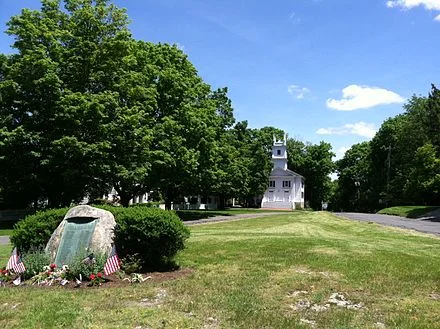
The center of Redding, Conn.

A spring peeper.

“Mother Bear and Cubs,’’ in Huntington State Park, Redding.