
Vox clamantis in deserto










Frank Carini: Some property owners battle bikes in downtown Providence

Kennedy Plaza
— Photo by Joanna Detz/eco RI News
From ecoRI News (ecori.org)
PROVIDENCE
A group of downtown property owners has gone to court to halt a series of city and state projects designed to, among other things, improve bus service, including changing traffic patterns and making Washington Street open to buses only.
Kathleen Gannon, vice chair of the Rhode Island Bicycle Coalition’s board of directors, said the Providence-based advocacy group is also alarmed by the lawsuit’s contention that “increased bicycle traffic” will be a negative byproduct of the plaza’s redesign.
“Bringing more bicycles to the center of Providence is a good thing,” she said. “We believe that diversifying transportation modes in the city and increased bicycle use benefits all residents. Further, it is self-serving and backward looking to attempt to thwart an effort to improve the city’s transportation infrastructure.”
Fellow Rhode Island Bicycle Coalition board member Christian Roselund said he can’t believe the lawsuit’s plaintiffs are complaining that the redesign will bring more bicyclists and public transit commuters downtown. He called such concern “nuts,” especially by “anyone who cares about economic development.”
“It’s been shown in city after city after city around the world that if you want to bring people to your downtown areas, if you want them to spend money there, bicycles are a great way to do it,” he said. “This is really regressive thinking. Alternative transportation is not a nuisance.”
The plaintiffs claim that the Kennedy Plaza redesign could impact their quality of life and bring down property values.
In the lawsuit filed in Superior Court last month, the plaintiffs, including entities controlled by former Mayor Joseph Paolino, claim that a bus hub at the Providence train station and the dedicated bus corridor being built through Kennedy Plaza could impact their quality of life and bring down property values.
“The Kennedy Plaza Project and specifically the re-routing of the bus routes, alteration of bus stops and alteration of traffic patterns on Fulton Street and Washington Street stands to cause property damage, property devaluation, inconvenience, annoyance and an interference with the Plaintiffs’ quiet enjoyment of their Properties,” according to the lawsuit filed by Concerned Citizens of Capital Center LLC, a recently created nonprofit that includes about a dozen commercial and residential owners and partnerships that own three downtown buildings — 100 Westminster Partners LLC, 30 Kennedy Partners LLC, and Exchange Street Hotel LLC.
The suit names the city of Providence, the Rhode Island Department of Transportation, and the Rhode Island Public Transit Authority, among others, as defendants.
Joe Mancini, who is representing the Concerned Citizens of Capital Center, told ABC 6 News last month that his clients will lose access to parking and garage spaces and that the changes don’t address current issues and concerns in Kennedy Plaza.
Gannon said the redesign’s overarching intent — a truly intermodal transportation hub in the center of Providence — is promising. She noted that an emphasis on cars to the near-exclusion of other transportation options hasn’t served downtown Providence well. In fact, she believes the car-orientated downtown design has led to a loss of retail activity and jobs and lower property values.
“We have a choice to make about the kind of city Providence will be,” she said. “If we want a thriving, successful downtown area, with a higher quality of life and inclusion for all residents, we must embrace changes that will bring a full range of transportation options to the city center and not retreat into failed models.”
The Rhode Island Bicycle Coalition isn’t the only group troubled by the recent court action. The RIPTA Riders Alliance is concerned that a “few wealthy real estate firms in downtown Providence have filed a lawsuit attempting to halt improvements to our state’s public transit system.”
“Instead of trying to work cooperatively with the people who actually rely on the bus system and with other stakeholders, developer Joseph Paolino and his allies have opted to go to court to stop state and local plans to improve bus service in the center of Providence,” according to Barry Schiller, a RIPTA Riders Alliance member.
The transit advocacy group said the Concerned Citizens of Capital Center lawsuit will needlessly delay implementation of downtown projects and will increase their costs. The group called the lawsuit shortsighted, as “good transit access to downtown is one of center city’s principal advantages.”
“Those bringing this lawsuit fail to recognize that public transit — and bicycle ridership — is essential in combating the pollution and traffic congestion that contribute to climate change,” according to the RIPTA Riders Alliance.
Frank Carini is editor of ecoRI News.
Just ignore it

Welcome home.
“I grew up in the Boston suburbs and inherited a stubborn New England refusal to acknowledge frigid temperatures. “
-- Josh Gondelman (comedian)
Paranoia Parkway

The eastern terminus of the Massachusetts Turnpike.
From Robert Whitcomb’s “Digital Diary,’’ in GoLocal24.com
I’d guess that many readers have seen the video of some of the infamous road-rage incident on Jan. 25, apparently originating in some sort of minor sideswipe, on the Massachusetts Turnpike near Boston.FfrojFro
The video footage showed 65-year-old Richard Kamrowski hanging on for dear life on the hood of 37-year-old Mark Fitzgerald’s car as it careened down the turnpike. Then we see Army veteran Frankie Hernandez leaping out of his car and pointing his gun at Fitzgerald.
Now both Messrs. Fitzgerald and Kamrowski face criminal charges in the incident, which provided too much excitement for other drivers and could have easily resulted in one or more deaths.
Highways can be very scary places because you never know the mental and emotional state of your fellow drivers, who are, like you, operating large, fast and potentially lethal machines. And the drivers in and around Boston are particularly aggressive, impatient (and outpatient) and rude. Stay away from people who are driving fast and/or erratically or better yet, if you can, take public transportation. And pull over and call 911 if you see dangerously bad driving.
To watch the video, please hit this link.
Our psyches in the weather

‘‘Out of the Blue,’’ by Nancy Selvage, in her show “Intemperate Zone,’’ an installation created in collaboration with poet Ros Zimmerman to be shown at the Boston Sculptors Gallery, Feb. 27- March 31.
The gallery says: “Selvage’s sculptures vibrate with visual energy, evoke atmospheric conditions, and respond to the impact of weather on our psyche. Layers of perforated metal animate illusive surfaces, fracture light, and ephemeral spaces. Featured in this exhibition are suspended sculptural lights, ‘cloud’ formations….’’
“Real and imagined atmospheric conditions and states of mind unfold as do the perceptions of our role in the process.’’
“Words, punctuation marks, and international meteorology symbols burn, freeze, bleed, and blow within a collection of sculptural objects.’’
'Our world may be a little narrow'

The Custom House Maritime Museum in Newburyport.
“The mood is on me to-night only because I have listened to several hours of intelligent conversation and I am not a very brilliant person. Sometimes here on Pequod Island and back again on Beacon Street {Boston}, I have the most curious delusion that our world may be a little narrow. I cannot avoid the impression that something has gone out of it (what, I do not know), and that our little world moves in an orbit of its own, a gain one of those confounded circles, or possibly an ellipse. Do you suppose that it moves without any relation to anything else? That it is broken off from some greater planet like the moon? We talk of life, we talk of art, but do we actually know anything about either? Have any of us really lived? Sometimes I am not entirely sure; sometimes I am afraid that we are all amazing people, placed in an ancestral mould. There is no spring, there is no force. Of course you know better than this, you who plunge every day in the operating room of the Massachusetts General, into life itself. Come up here and tell me I am wrong.”
― John P. Marquand (1893-1960), from his satirical novel The Late George Apley, about a Boston Brahmin. Mr. Marquand came from (and died in) Newburyport, Mass., which got rich on the China Trade, whaling, fishing and other maritime activities in the 18th and 19th centuries.
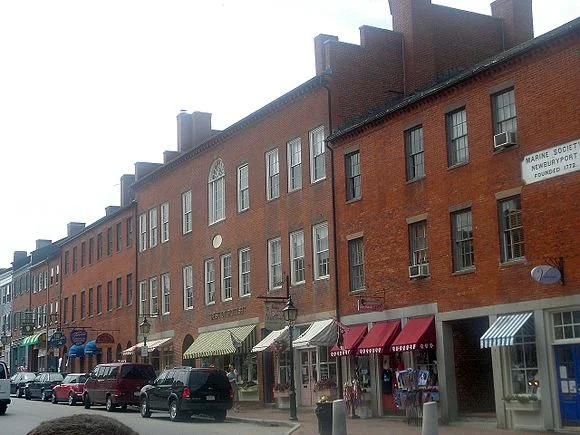
State Street in Newburyport, with its many 19th Century buildings.
Heroic sculpture in Worcester

“Heroic Bust of Victor Hugo’’ (1802-85 and author of Les Miserables, etc.), by Auguste Rodin (1840-1917), in the show “Rodin: Truth, Form, Life,’’ through April 7 at the Iris and B. Gerald Cantor Art Gallery at Holy Cross College, whose campus looms over the old industrial city of Worcester, which is enjoying a downtown revival. Meanwhile, the surprisingly extensive Worcester Art Museum merits multiple visits.
Scholar proposes new statutes to protect biodiversity

This aerial photo shows deforestation and road-building in the Amazon Rainforest, which threatens the biodiversity of the ecologically rich region, sometimes called “The World Lungs’’.
Adapted from Robert Whitcomb’s “Digital Diary,’’ in GoLocal24.com
John Charles Kunich, a professor at the Roger Williams University School of Law, in Bristol, R.I., has written a very useful, if highly technical, book called Ark of the Broken Covenant: Protecting the World’s Biodiversity Hotspots. Professor Kunich proposes a new statutory program to help stem the wave of extinctions, deforestation and other human-caused ecological devastation.
David Warsh: The past and future of nationalism

A postcard from 1916 showing national personifications of some of the Allies of World War I, each holding a national flag.

SOMERVILLE, MASS.
“The Trump era could last another thirty years.” That was the headline last week on a widely discussed column by Gideon Rachman, principal foreign-affairs commentator of the Financial Times. In the three years since Brexit and Trump, Rachman observed, a global populist movement has gathered momentum: Jair Bolsonaro, in Brazil, Victor Orban, in Hungary, Matteo Salvini, in Italy, not to mention Xi Jinping, in China, Vladimir Putin, in Russia, and Recep Tayyip Erdogan, in Turkey. The bad news, he wrote, is that such movements tend to last around 30 years.
Rachman was right about the cycle, I thought, wrong about the nature of the underlying movement – nationalism, not populism, is the dominant theme. Especially in the United States, the clock on the “populist era” is running down. If the path to re-election grows steeper, the likelihood grows that Trump will simply walk away.
Supporters hope that a buoyant economy will keep Trump in office. I doubt that it will, whatever the averages say. More firmly based authoritarian (not populist) governments elsewhere will last longer, depending on local circumstances, but time is not on their side. The nationalist turn, on the other hand, is here to stay, at least for the next 25 years.
Rachman identifies three distinct eras in postwar Western politics. The period of rebuilding economies and extending welfare states that followed World War II, 1945-1975 – “les trente glorieuses,” as they were called in France; a period of rapid globalization followed, 1978-2008, “neo-liberalism,” to its critics; before giving way to whatever is going on now. He dates this new era from the global banking crisis of 2008. I would have said it began with Vladimir Putin’s election in 2000.
A fourth such 30-year sequence of events remains present in living memory, at least for a little while longer: 1915-1945, the decades of the Great War, the League of Nations, the Great Depression, and the cataclysm of World War II. The period is often simply labeled “the interwar years,” Historian Adam Tooze’s title “the Deluge” evokes the years 1916-1931 pretty well; historian Tony Judt’s description of the rise of a state religion of “Planning” in the years after gets at the response.
Then the Cold War, a contest between the market democracies and the centrally planned communist states dominated the years 1945-1975, before giving way to a Market Turn (a better term, perhaps, than “neo-liberalism”) in the 30 years after that. Beginning in the Oughts, the present nationalist era emerged. Rachman thinks that “emulation followed by overshoot” drives the cycle. I think the zig-zag pattern is generated by shared experience.
Thus the Market Turn began out of a desire to throw off top-down central planning by administrative states. It showed up first in the Iberian world: Chile, Spain, Portugal, and Mexico. After Mao Zedong died, in 1976, China jailed his heirs and set out to emulate Japan. The USSR lost control of its European satellites and collapsed. India, Indonesia, Argentina, and Brazil followed suit. Margaret Thatcher and Ronald Reagan often get the credit for initiating the Market Turn, but the parade was well underway by the time they arrived.
After Rachman got me thinking, I read, on the advice of a friend, The Nationalist Revival: Trade, Immigration, and the Revolt against Globalization, by John Judis. It is a short book, 157 pages, five chapters packed with learning. It took less than half a day to get through.
Judis is a public intellectual, a journalist determined to stay on top of the story. He was a child in the 1950s, in Elgin, Ill., when his father lost his dress-manufacturing business to Asian competition – an early casualty of the General Agreement on Tariffs and Trade. His first book, William F. Buckley, Jr.: Patron Saint of the Conservatives, appeared in 1988. It was followed by a string of imaginative reports: Grand illusion: Critics and Champions of the American Century (1992); The Paradox of American Democracy: Elites, Special Interests, and the Betrayal of the Public Trust (2000); The Emerging Democratic Majority [with Rudy Teixeira] (2002); The Folly of Empire: What George W. Bush Could Learn from Theodore Roosevelt and Woodrow Wilson (2004); Genesis: Truman, American Jews, and the Origins of the Arab/Israeli Conflict (2014); The Populist Explosion: How the Great Recession Transformed American and European Politics (2016).
I thought that Judis presented his argument backwards. The penultimate chapter, about American expansionism after 1989, should have been first, followed by the one on the European experiment with federation, and then a chapter on the U.S. experience with periodic waves of immigration and free trade. His introductory chapters, “Understanding Nationalism,” and “Why Nationalism Matters,” are especially good. I came away with a better understanding of the extent to which the centralizing tendencies of the last thirty years had sought to override centuries of pluralism.
The argument of the book, Judis writes, is that
national identity is not just a product of where a person is born, or emigrated to, but of deeply held sentiments that are usually acquired during childhood. Nationalism is not simply a political ideology, or a set of ideas, but a social psychology. Nationalist sentiment is an essential ingredient of a democracy, which is based on the assumption of a common identity, and of a welfare state, which is based on the acceptance by citizens of their financial responsibility for people whom they may not know at all, and who may have widely different backgrounds from theirs.
The nationalist revival, I think, thus must have had its roots in the need to govern. China retained its system of political control and prospered. Russia abandoned its own system and lost heart for a time, before re-establishing a new sort of order under Putin. The message was not lost on the leaders of other nations threatened by the burst of globalization that followed the end of the Cold War.
The European Union was already having difficulty absorbing eight former members of the Warsaw Pact when the sovereign debt crisis threatened its monetary union. Then a massive wave of immigration, from the Middle East and North Africa, threatened its political stability.
Meanwhile, the United States, which had been experiencing a widening gyre since 1992, when H. Ross Perot garnered 19 percent of the popular vote in the presidential election, put Donald Trump in the White House, albeit by the narrowest of margins. Trump may not be re-elected, but his concerns – trade, immigration, less interventionism, except, perhaps, in the Western Hemisphere – are here to stay.
The task now, Judis writes, “is to identify and reclaim what is valid in nationalism – and of the liberal internationalism of the post-World War II generation – from both the cosmopolitan liberals who believe in a borderless world and from the right wing populists who have coupled a concern for their nation’s workers with nativist screeds against outgroups and immigrants.”
It sounds like an altogether fitting agenda for the next quarter century. Walter Russell Mead put it this week last week in the WSJ, “Whatever comes after Mr., Trump, it won’t be a simple return to the Republican or Democratic version of the post-Cold War consensus.”
David Warsh, an economic historian and a veteran economic and political columnist, is proprietor of Somerville-based economicprincipals.com, where this piece first ran.


Marisa Taylor: A fountain of youth if you're a mouse

BOSTON
Renowned Harvard University geneticist David Sinclair recently made a startling assertion: Scientific data shows that he has knocked more than two decades off his biological age.
What’s the 49-year-old’s secret? He says his daily regimen includes ingesting a molecule his own research found improved the health and lengthened the life span of mice. Sinclair now boasts online that he has the lung capacity, cholesterol and blood pressure of a “young adult” and the “heart rate of an athlete.”
Despite his enthusiasm, published scientific research has not yet demonstrated the molecule works in humans as it does in mice. Sinclair, however, has a considerable financial stake in his claims being proven correct, and has lent his scientific prowess to commercializing possible life extension products such as molecules known as “NAD boosters.”
His financial interests include being listed as an inventor on a patent licensed to Elysium Health, a supplement company that sells a NAD booster in pills for $60 a bottle. He’s also an investor in InsideTracker, the company that he says measured his age.
Discerning hype from reality in the longevity field has become tougher than ever as reputable scientists such as Sinclair and pre-eminent institutions such as Harvard align themselves with promising but unproven interventions — and at times promote and profit from them.
Fueling the excitement, investors pour billions of dollars into the field even as many of the products already on the market face fewer regulations and therefore a lower threshold of proof.
“If you say you’re a terrific scientist and you have a treatment for aging, it gets a lot of attention,” said Jeffrey Flier, a former Harvard Medical School dean who has been critical of the hype. “There is financial incentive and inducement to overpromise before all the research is in.”
Elysium, co-founded in 2014 by a prominent MIT scientist to commercialize the molecule nicotinamide riboside, a type of NAD booster, highlights its “exclusive” licensing agreement with Harvard and the Mayo Clinic and Sinclair’s role as an inventor. According to the company’s press release, the agreement is aimed at supplements that slow “aging and age-related diseases.”
Further adding scientific gravitas to its brand, the Web site lists eight Nobel laureates and 19 other prominent scientists who sit on its scientific advisory board. The company also advertises research partnerships with Harvard and U.K. universities Cambridge and Oxford.
Some scientists and institutions have grown uneasy with such ties. Cambridge’s Milner Therapeutics Institute announced in 2017 it would receive funding from Elysium, cementing a research “partnership.” But after hearing complaints from faculty that the institute was associating itself with an unproven supplement, it quietly decided not to renew the funding or the company’s membership to its “innovation” board.
“The sale of nutritional supplements of unproven clinical benefit is commonplace,” said Stephen O’Rahilly, the director of Cambridge’s Metabolic Research Laboratories who applauded his university for reassessing the arrangement. “What is unusual in this case is the extent to which institutions and individuals from the highest levels of the academy have been co-opted to provide scientific credibility for a product whose benefits to human health are unproven.”
The Promise
A generation ago, scientists often ignored or debunked claims of a “fountain of youth” pill.
“Until about the early 1990s, it was kind of laughable that you could develop a pill that would slow aging,” said Richard Miller, a biogerontologist at the University of Michigan who heads one of three labs funded by the National Institutes of Health to test such promising substances on mice. “It was sort of a science fiction trope. Recent research has shown that pessimism is wrong.”
Mice given molecules such as rapamycin live as much as 20 percent longer. Other substances such as 17 alpha estradiol and the diabetes drug Acarbose have been shown to be just as effective — in mouse studies. Not only do mice live longer, but, depending on the substance, they avoid cancers, heart ailments and cognitive problems.
“Until about the early 1990s, it was kind of laughable that you could develop a pill that would slow aging,” says University of Michigan biogerontologist Richard Miller. “It was sort of a science fiction trope. Recent research has shown that pessimism is wrong.”
But human metabolism is different from that of rodents. And our existence is unlike a mouse’s life in a cage. What is theoretically possible in the future remains unproven in humans and not ready for sale, experts say.
History is replete with examples of cures that worked on mice but not in people. Multiple drugs, for instance, have been effective at targeting an Alzheimer’s-like disease in mice yet have failed in humans.
“None of this is ready for prime time. The bottom line is I don’t try any of these things,” said Felipe Sierra, the director of the division of aging biology at the National Institute on Aging at NIH. “Why don’t I? Because I’m not a mouse.”
The Hype
Concerns about whether animal research could translate into human therapy have not stopped scientists from racing into the market, launching startups or lining up investors. Some true believers, including researchers and investors, are taking the substances themselves while promoting them as the next big thing in aging.
“While the buzz encourages investment in worthwhile research, scientists should avoid hyping specific [substances],” said S. Jay Olshansky, a professor who specializes in aging at the School of Public Health at the University of Illinois at Chicago.
Yet some scientific findings are exaggerated to help commercialize them before clinical trials in humans demonstrate both safety and efficacy, he said.
“It’s a great gig if you can convince people to send money and use it to pay exorbitant salaries and do it for 20 years and make claims for 10,” Olshansky said. “You’ve lived the high life and get investors by whipping up excitement and saying the benefits will come sooner than they really are.”
Promising findings in animal studies have stirred much of this enthusiasm.
Research by Sinclair and others helped spark interest in resveratrol, an ingredient in red wine, for its potential anti-aging properties. In 2004, Sinclair co-founded a company, Sirtris, to test resveratrol’s potential benefits and declared in an interview with the journal Science it was “as close to a miraculous molecule as you can find.” GlaxoSmithKline bought the company in 2008 for $720 million. By the time that Glaxo halted the research in 2010 because of underwhelming results with possible side effects, Sinclair had already received $8 million from the sale, according to Securities and Exchange Commission documents. He also had earned $297,000 a year in consulting fees from the company, according to The Wall Street Journal.
At the height of the buzz, Sinclair accepted a paid position with Shaklee, which sold a product made out of resveratrol. But he resigned after The Wall Street Journal highlighted positive comments he made about the product that the company had posted online. He said he never gave Shaklee permission to use his statements for marketing.
Sinclair practices what he preaches — or promotes. On his LinkedIn bio and in media interviews, he describes how he now regularly takes resveratrol; the diabetes drug metformin, which holds promise in slowing aging, and nicotinamide mononucleotide, a substance known as NMN that his own research showed rejuvenated mice.
Of that study, he said in a video produced by Harvard that it “sets the stage for new medicines that will be able to restore blood flow in organs that have lost it, either through a heart attack, a stroke or even in patients with dementia.”
In an interview with KHN, Sinclair said he’s not recommending that others take those substances.
“I’m not claiming I’m actually younger. I’m just giving people the facts,” he said, adding that he’s sharing the test results from InsideTracker’s blood tests, which calculate biological age based on biomarkers in the blood. “They said I was 58, and then one or two blood tests later they said I was 31.4.”
InsideTracker sells an online age-tracking package to consumers for up to about $600. The company’s website highlights Sinclair’s support for the company as a member of its scientific advisory board. It also touts a study that describes the benefits of such tracking, which Sinclair co-authored.
Sinclair is involved either as a founder, an investor, an equity holder, a consultant or a board member with 28 companies, according to a list of his financial interests. At least 18 are involved in anti-aging in some way, including studying or commercializing NAD boosters. The interests range from longevity research startups aimed at humans and even pets to developing a product for a French skin care company to advising a longevity investment fund. He’s also an inventor named in the patent licensed by Harvard and the Mayo Clinic to Elysium, and one of his companies, MetroBiotech, has filed a patent related to nicotinamide mononucleotide, which he says he takes himself.
Sinclair and Harvard declined to release details on how much money he — or the university — is generating from these disclosed outside financial interests. Sinclair estimated in a 2017 interview with Australia’s Financial Review that he raises $3 million a year to fund his Harvard lab.
Liberty Biosecurity, a company he co-founded, estimated in Sinclair’s online bio that he has been involved in ventures that “have attracted more than a billion dollars in investment.” When KHN asked him to detail the characterization, he said it was inaccurate, without elaborating, and the comments later disappeared from the website.
Sinclair cited confidentiality agreements for not disclosing his earnings, but he added that “most of this income has been reinvested into companies developing breakthrough medicines, used to help my lab, or donated to nonprofits.” He said he did not know how much he stood to make off the Elysium patent, saying Harvard negotiated the agreement.
Harvard declined to release Sinclair’s conflict-of-interest statements, which university policy requires faculty at the medical school to file in order to “protect against any faculty bias that could heighten the risk of harm to human research participants or recipients of products resulting from such research.”
“We can only be proud of our collaborations if we can represent confidently that such relationships enhance, and do not detract from, the appropriateness and reliability of our work,” the policy states.
Elysium advertises both Harvard’s and Sinclair’s ties to its company. It was co-founded by Massachusetts Institute of Technology professor Leonard Guarente, Sinclair’s former research adviser and an investor in Sinclair’s Sirtris.
Echoing his earlier statements on resveratrol, Sinclair is quoted on Elysium’s website as describing NAD boosters as “one of the most important molecules for life.”
Supplement Loophole?
The Food and Drug Administration doesn’t categorize aging as a disease, which means potential medicines aimed at longevity generally can’t undergo traditional clinical trials aimed at testing their effects on human aging. In addition, the FDA does not require supplements to undergo the same safety or efficacy testing as pharmaceuticals.
The banner headline on Elysium’s website said that “clinical trial results prove safety and efficacy” of its supplement, Basis, which contains the molecule nicotinamide riboside and pterostilbene. But the company’s research did not demonstrate the supplement was effective at anti-aging in humans, as it may be in mice. It simply showed the pill increased the levels of the substance in blood cells.
“Elysium is selling pills to people online with the assertion that the pills are ‘clinically proven’” said O’Rahilly. “Thus far, however the benefits and risks of this change in chemistry in humans is unknown.”
“Many interventions that seem sensible on the basis of research in animals turn out to have unexpected effects in man,” he added, citing a large clinical trial of beta carotene that showed it increased rather than decreased the risk of lung cancer in smokers.
Elysium’s own research documented a “small but significant increase in cholesterol,” but added more studies were needed to determine whether the changes were “real or due to chance.” One independent study has suggested that a component of NAD may influence the growth of some cancers, but researchers involved in the study warned it was too early to know.
Guarente, Elysium’s co-founder and chief scientist, told KHN he isn’t worried about any side effects from Basis, and he emphasized that his company is dedicated to conducting solid research. He said his company monitors customers’ safety reports and advises customers with health issues to consult with their doctors before using it.
If a substance meets the FDA’s definition of a supplement and is advertised that way, then the agency can’t take action unless it proves a danger, said Alta Charo, a former bioethics policy adviser to the Obama administration. Pharmaceuticals must demonstrate safety and efficacy before being marketed.
“A lot of what goes on here is really, really careful phrasing for what you say the thing is for,” said Charo, a law professor at the University of Wisconsin. “If they’re marketing it as a cure for a disease, then they get in trouble with the FDA. If they’re marketing it as a rejuvenator, then the FDA is hamstrung until a danger to the public is proven.”
“This is a recipe for some really unfortunate problems down the road,” Charo added. “We may be lucky and it may turn out that a lot of this stuff turns out to be benignly useless. But for all we know, it’ll be dangerous.”
The debate about the risks and benefits of substances that have yet to be proven to work in humans has triggered a debate over whether research institutions are scrutinizing the financial interests and involvement of their faculty — or the institution itself — closely enough. It remains to be seen whether Cambridge’s decision not to renew its partnership will prompt others to rethink such ties.
Flier, the former dean of Harvard Medical School, had earlier heard complaints and looked into the relationships between scientists and Elysium after he stepped down as dean. He said he discovered that many of the board members who allowed their names and pictures to be posted on the company website knew little about the scientific basis for use of the company’s supplement.
Flier recalls that one scientist had no real role in advising the company and never attended a company meeting. Even so, Elysium was paying him for his role on the board, Flier said.
Caroline Perry, director of communications for Harvard’s Office of Technology Development, said agreements such as Harvard’s acceptance of research funds from Elysium comply with university policies and “protect the traditional academic independence of the researchers.”
Harvard “enters into research agreements with corporate partners who express a commitment to advancing science by supporting research led by Harvard faculty,” Perry added.
Like Harvard, the Mayo Clinic refused to release details on how much money it would make off the Elysium licensing agreement. Mayo and Harvard engaged in “substantial diligence and extended negotiations” before entering into the agreement, said a Mayo spokeswoman.
“The company provided convincing proof that they are committed to developing products supported by scientific evidence,” said the spokeswoman, Duska Anastasijevic.
Guarente of Elysium refused to say how much he or Elysium was earning off the sale of the supplement Basis. MIT would not release his conflict-of-interest statements.
Private investment funds, meanwhile, continue to pour into longevity research despite questions about whether the substances work in people.
One key Elysium investor is the Morningside Group, a private equity firm run by Harvard’s top donor, Gerald Chan, who also gave $350 million to the Harvard School of Public Health.
Billionaire and WeWork co-founder Adam Neumann has invested in Sinclair’s Life Biosciences.
An investment firm led by engineer and physician Peter Diamandis gave a group of Harvard researchers $5.5 million for their startup company after their research was publicly challenged by several other scientists.
In its announcement of the seed money, the company, Elevian, said its goal was to develop “new medicines” that increase the activity levels of the hormone GDF11 “to potentially prevent and treat age-related diseases.”
It described research by its founders, which include Harvard’s Amy Wagers and Richard Lee, as demonstrating that “replenishing a single circulating factor, GDF11, in old animals mirrors the effects of young blood, repairing the heart, brain, muscle and other tissues.”
Other respected labs in the field have either failed to replicate or contradict key elements of their observations.
Elevian’s CEO, Mark Allen, said the early scientific data on GDF11 is encouraging, but “drug discovery and development is a time-intensive, risky, regulated process requiring many years of research, preclinical [animal] studies, and human clinical trials to successfully bring new drugs to market.”
Flier worries research in the longevity field could be compromised, although he recognizes the importance and promise of the science. He said he’s concerned that alliances between billionaires and scientists could lead to less skepticism.
“A susceptible billionaire meets a very good salesman scientist who looks him deeply in the eyes and says, ‘There’s no reason why we can’t have a therapy that will let you live 400 or 600 years,’” Flier said. “The billionaire will look back and see someone who is at MIT or Harvard and say, ‘Show me what you can do.’”
Despite concerns about the hype, scientists are hopeful of finding a way forward by relying on hard evidence. The consensus: A pill is on the horizon. It’s just a matter of time — and solid research.
“If you want to make money, hiring a sales rep to push something that hasn’t been tested is a really great strategy,” said Miller, who is testing substances on mice. “If instead you want to find drugs that work in people, you take a very different approach. It doesn’t involve sales pitches. It involves the long, laborious, slogging process of actually doing research.”
KHN senior correspondent Jay Hancock contributed to this report.
Vortex of thought

This show, will be Maud Morgan Arts Chandler Gallery, in Cambridge, Mass., Feb. 19-March 15. The gallery describes it:
’’Thoughts and dreams don't simply appear in our heads, though they often feel sudden and random. Instead, they travel from one part of our brains to another, creating a path of neurons and reactions that ends in our consciousness.’’
"‘The title refers to both my central interest in the mind, particularly memory, and to my materials,"‘ she explained.
This show, will be Maud Morgan Arts Chandler Gallery, in Cambridge, Mass., Feb. 19-March 15. The gallery describes it:
’’Thoughts and dreams don't simply appear in our heads, though they often feel sudden and random. Instead, they travel from one part of our brains to another, creating a path of neurons and reactions that ends in our consciousness.’’
"‘The title refers to both my central interest in the mind, particularly memory, and to my materials,"‘ she explained.
Wired for art

“On Point, ‘‘ by Ariel Matisse, in the show “Generations,’’ at the Hopkinton (Mass.) Center for the Arts, through March 15.
”Generations’’ is the first joint exhibition of artists Linda Hoffman and Ariel Matisse, who are mother and daughter. Ms. Matisse got into art a couple of years ago, when she was helping her mother prepare an art piece by joining tree branches with copper wire, which Matisse now uses as one of her key elements.
Hopkinton, an old shoe and boot making town that now has some high-tech, is best known as the starting place for the Boston Marathon, which takes place on the third Monday of April — on Patriots Day, which commemorates the American Revolution, which started in the Boston area. Patriots Day is only officially observed as a holiday in Suffolk County, Mass.
Rejoicing in Rutland

“Rutland Postcard,’’ by Susan Weiss, in the show “Rutland: Real and Imagined,’’ at Alley Gallery, Rutland, through March 9. The show, created by curator Stephen Schaub, has brought eight distinguished photographers to look at the history, geography and people of the small central Green Mountain State city. Alley Gallery says: "in the hands of an artist, a photograph can do more than tell you what a place looks like. It can tell you how a place is."

Map of Rutland in 1885, when marble quarries were making it very prosperous.
'Can't keep a house'

Photo by Schnobby
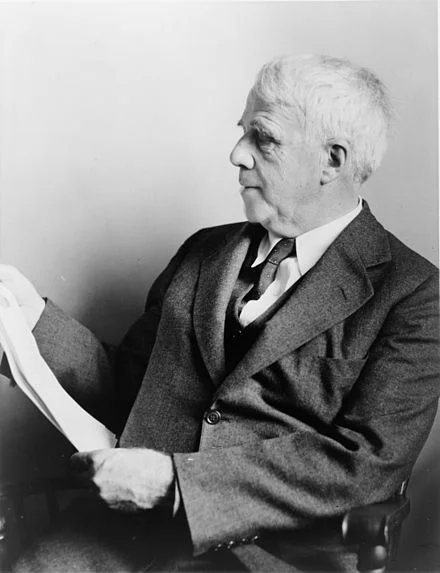
Robert Frost in 1941.
“All out of doors looked darkly in at him
Through the thin frost, almost in separate stars,
That gathers on the pane in empty rooms.
What kept his eyes from giving back the gaze
Was the lamp tilted near them in his hand.
What kept him from remembering what it was
That brought him to that creaking room was age.
He stood with barrels round him -- at a loss.
And having scared the cellar under him
In clomping there, he scared it once again
In clomping off; -- and scared the outer night,
Which has its sounds, familiar, like the roar
Of trees and crack of branches, common things,
But nothing so like beating on a box.
A light he was to no one but himself
Where now he sat, concerned with he knew what,
A quiet light, and then not even that.
He consigned to the moon, such as she was,
So late-arising, to the broken moon
As better than the sun in any case
For such a charge, his snow upon the roof,
His icicles along the wall to keep;
And slept. The log that shifted with a jolt
Once in the stove, disturbed him and he shifted,
And eased his heavy breathing, but still slept.
One aged man -- one man -- can't keep a house,
A farm, a countryside, or if he can,
It's thus he does it of a winter night.’’
— ‘‘An Old Man’s Winter Night,’’ by Robert Frost
Films informed by Apartheid

A sequence from Stereoscope, an animated short film with sound, by William Kentridge. Courtesy of the artist and Marian Goodman Gallery, New York. The film will be shown at the Newport Art Museum through March 10. This is the eighth installment of Mr. Kentridge’s decade-long film series about the character Soho Eckstein, who represents the archetypal white South African businessman of the post-Apartheid era, and is also often interpreted as an alter ego of Mr. Kentridge, who says, "I have never tried to make illustrations of Apartheid, but the drawings and films are certainly spawned by and feed off the brutalized society left in its wake. I am interested in a political art, that is to say, an art of ambiguity, contradiction, uncompleted gestures and uncertain endings."
Tim Faulkner: Fishermen want more time to negotiate with Vineyard Wind

From ecoRI News (ecori.org)
Lanny Dellinger, a Newport, R.I.-based lobsterman and chairman of the Fishermen’s Advisory Board (FAB), said fishermen are being rushed to accept a compensation offer for the harm they say will be caused by the Vineyard Wind offshore project.
“It’s like being pushed into the (real estate) closing without seeing the appraisal,” Dellinger said.
There’s no doubt that the project developer is in a hurry. Vineyard Wind needs approval from the Rhode Island Coastal Resources Management Council (CRMC) soon so that construction can begin on the 84-turbine project and qualify for a federal tax credit. Any changes to the layout of the project or the compensation offer will add weeks or months to the application process, and delay pending permits from Massachusetts.
Vineyard Wind has received three extensions from the CRMC since its application was submitted last April 6. The latest was granted Jan. 25, when the CRMC postponed its final vote until Feb. 19.
It wasn’t until Jan. 16, however, that Vineyard Wind sent its compensation plan to the Fishermen’s Advisory Board (FAB). At the time, the FAB had no attorney or financial expert to review the $6.2 million compensation offer.
Noting a Jan. 27 opinion letter by Vineyard Wind CEO Lars Pedersen in the Providence Journal, Dellinger said fishermen are being labeled as obstructionist for calling for more time. But Dellinger said safety for fishing in and around the 92-square-mile offshore wind project must be given thorough consideration by the FAB and local fishermen.
“We do not want to become collateral damage,” he said.
In a Jan. 30 letter to the CRMC, FAB’s attorney, Tricia Jedele, said the fishermen need to review the economic analysis used by Vineyard Wind before negotiations can continue. According to the letter, Vineyard Wind rejected a proposed negotiation schedule, prompting the CRMC to seek an extension beyond the Feb. 19 deadline.
“Despite its best intention, the FAB cannot possibly complete its review of the proposal within the next week,” Jadele said.
Environmental groups such as Climate Action Rhode Island and the Conservation Law Foundation are urging support for Vineyard Wind. In an e-mail to likely supporters, Climate Action Rhode Island noted that the wind energy generated will displace emissions equivalent to 325,000 cars. It also highlighted a recent promise by Vineyard Wind to limit pile driving, boat speeds, and construction during the migration of North Atlantic right whales.
The e-mail also notes that the fishermen’s concerns are valid but that the FAB has been negotiating with Vineyard Wind since 2017 and the wind developer has already made compromises, such as reducing the number of turbines.
“The concerns of FAB are valid, but so is the acidification of the ocean which makes it noticeably warmer every year, is changing migration patterns, and threatening the survival of ocean life and therefore the fishing industry,” according to the Climate Action Rhode Island e-mail.
Upcoming meetings
In Massachusetts, the wind project is being reviewed by the state’s Energy Facilities Siting Board and the Environmental Policy Act Office.
The Bureau of Ocean Energy Management (BOEM) has extended the online comment period on a draft of the environmental impact statement until Feb. 22. Public meetings hosted by BOEM were postponed because the federal government shutdown, but new meetings have been scheduled now that federal offices have reopened.
Feb. 11
Nantucket Atheneum
1 India St.
Nantucket, Mass.
Open house 5-7:30 p.m.
Presentation and questions at 5:30 p.m.
Feb. 12
Martha’s Vineyard Hebrew Center
130 Center St.
Vineyard Haven, Mass.
Open house 5-8 p.m.
Presentation and questions at 6 p.m.
Feb. 13
Double Tree Hotel
287 Iyannough Road
Hyannis, Mass.
Open house 5-8 p.m.
Presentation and questions at 6 p.m.
Feb. 14
Fairfield Inn Waypoint Event Center
185 MacArthur Drive
New Bedford, Mass.
Open house 5-8 p.m.
Presentation and questions at 6 p.m.
Feb. 15
Narragansett Community Center
53 Mumford Road
Narragansett, R.I.
Open house 5-8 p.m.
Presentation and questions 6 p.m.
Tim Faulkner is an ecoRI News journalist.
Editor’s note: Tricia Jedele is the part-time development director for ecoRI News.

Llewellyn King: The digital takeover of cities

Varieties of lighting circa 1900.

Representation of a “smart” (digitized) city.
Benjamin Franklin was the first to deploy street lighting. He put candles in a four-sided, glass case for his lights. The engineering took a giant leap forward in England, when William Murdoch lit his home with coal gas lights in 1792.
Today street lighting is taken as a given, like sewage systems. But it’s also one of the building blocks for the cities of the future, known as “smart cities.”
In Bedford, Mass., a company called CIMCON Lighting has developed a controller node, which is the size and shape of a brioche loaf of bread and sits atop a light pole. The node isn’t big, but it packs a lot of functions beyond controlling the LED light. It’s Wi-Fi-equipped and is in constant wireless communications with its own network and with the city or county management structure. It has a camera, which can be used for crime control; more apps can be added.
Smart city advocate Pete Tseronis, formerly chief technology officer at the Department of Energy, says that in today’s context “smart” means connected; things that speak to other things.
By that measure the CIMCON Lighting device, or controller, is mighty talkative. The company calls it NearSky and says it enables “the internet of outdoor things.”
To me, it’s an outlier of things to come. Smart cities are the precursor to big changes in everything from transportation to entertainment, from food delivery to garbage control.
CIMCON Lighting believes that its technology is a gateway to the smart cities concept which cities around the world are headed toward, some with accelerated political involvement.
In fact, the race to be smart is on and cities from San Antonio to London, and Boston to Singapore are already out of the blocks. It’s going to get giddy.
Old controllers on lights turn them on and off, and sometimes dim them. CIMCON Lighting and the new generation of controllers are little Napoleons, controlling everything they see and much that they don’t. The controller sitting modestly on a street light will be in the vanguard of the revolution which will encompass the whole city.
The electric utilities, the technology companies (like Google, Amazon and IBM) and the telephone giants (like AT&T, Verizon and T-Mobile) all are interested in seizing the lead in the new city space. Their interest goes way beyond things like street lighting to the very command-and-control of cities, from routine police dispatch to disaster management. The old-line companies are wary of what Amazon, Google and Facebook might do in the smart city space.
These big techs are looking past simply managing old infrastructure through digitization, to a new world of automated cars, remote home deliveries, intercity trucking and charging electric vehicles.
The telephone companies are hinging their participation on their 5G networks, which they are rolling out in fits and starts. The electric utilities believe that they have something of a leg up because they’ve been working on making the electrical grid smart for a decade and that it’s now far-advanced with a lot of demand controlled by the customer, not the vendor: a smart city selling point.
Morgan O’Brien, a co-founder and chairman of Nextel Communications, and himself a giant in the telecommunications industry, says the current telephone standard, LTE (Long-Term Evolution), is strong enough to start the revolution and in due course 5G will fit in.
O’Brien is now vice chairman of pdvWireless, which has developed a private system for electric utilities’ communication with a dedicated spectrum to secure it. This has evolved from a suite of workplace wireless communications tools. O’Brien told me he believes you must look to companies -- possibly post-merger ones -- which have the technology, capital and ambition to conquer the smart cities market to identify the likely movers and shakers. Of course, pdvWireless hopes to be in there, he said.
Retired Air Force Maj. Gen. Robert Wheeler describes 5G as a “huge pipe” that will have such capacity for communications and handling vast amounts of data that it’ll itself bring about a mini-revolution. Wheeler worked on getting and keeping the military up to speed on evolving digital technology.
There are more than 19,000 cities and counties that operate as cities in the United States, and more than 50,000 in the world. So the companies are salivating over a gigantic market, almost unimaginably tempting.
Llewellyn King is executive producer and host of White House Chronicle, on PBS. His email is llewellynking1@gmail.com. He is based in Rhode Island and Washington, D.C.
Mass. eyes ‘congestion pricing’ and Conn. bringing back tolls

Electronic Road Pricing gantry in Singapore, the first city in the world to implement an urban cordon area congestion pricing scheme.
From Robert Whitcomb’s “Digital Diary,’’ in GoLocal24.com
Connecticut will likely reimpose highway tolls (on trucks or trucks and cars) in the next couple of years. (The state had tolls on the “Connecticut Turnpike,’’ aka Route 95, until 1985.) Meanwhile, Massachusetts is mulling jacking up tolls for people driving in rush hours in Greater Boston – the sort of “congestion pricing’’ now used in some cities in Europe and in Singapore. Both programs would probably speed traffic by taking a lot of people off the roads and onto expanded mass transit, which the new tolls should help pay for, along with road repairs. And user fees seem to me the fairest form of taxation.
Chris Powell: Time to open intrinsically corrupt casino business to competitive bidding

The Mohegan Sun casino, in Uncasville, Conn.
— Photo by JJBers
Connecticut's two casino Indian tribes complained last week to a General Assembly committee that their rival MGM, operator of the new casino just over the Massachusetts line in Springfield, had unfairly induced the U.S. Interior Department not to approve the tribes' plan for an "interceptor" casino just south of Springfield in East Windsor.
It sure looks like MGM is a little too well-connected with the Trump administration. But the tribes are laughably hypocritical to complain about someone else's political influence. For the casino duopoly the tribes enjoy in Connecticut is itself the result of the worst sort of political corruption.
In 1993 and 1994 Gov. Lowell P. Weicker Jr. awarded the duopoly to the tribes and in return one of the tribes donated $2 million to a charity the governor chaired and controlled, the Special Olympics. Then the Special Olympics hired several of Weicker's assistants, giving them comfortable places to land as their administration ended. Since that crooked deal everyone else has been locked out of the casino business in Connecticut.
Built on licensing and government grants of monopoly that are seldom put out to bid, the casino business is the most politically corrupt in the country. Of course this nurtures arrogance, since from their testimony last week the tribes seem to resent that they're not the only ones who can buy and twist politicians, that their monopoly doesn't extend that far.
It's another reason to enact the bill proposed by Bridgeport legislators to open Connecticut's casino business to competitive bidding.
xxx
CAN AIRPORT BE RENAMED?: Bradley International Airport, in Windsor Locks, has been improving because of the creation of the Connecticut Airport Authority to operate it independently of the state Transportation Department and because state government has put a lot more money into the airport, recognizing its potential for economic development.
Now the airport authority is thinking of changing the name of the airport to convey better its growing reach with more long-distance flights -- maybe something like "Southern New England International Airport" or, more candidly, "Avoid the New York and Boston Crush International Airport."
But the airport authority should note that an attempt to change Bradley's name back in 1981 was a disaster.
Gov. Ella T. Grasso, a Windsor Locks's native daughter, had just died, and her town's state representative, Cornelius P. O'Leary, suggested renaming the airport in her honor. Military veterans groups quickly objected, noting that the airport had been named for an Army Air Force fighter pilot, Lt. Eugene M. Bradley, who had been killed in a plane crash near the airport when it was an air base in 1941.
Windsor Locks's local newspaper, the Journal Inquirer, demolished the renaming idea when it located Bradley's widow in Texas and she visited Connecticut to assist the veterans. They greeted her triumphantly at the airport named for her late husband, and O'Leary, realizing he was beaten, graciously withdrew his proposal.
All Grasso got named after her in her hometown was a street and a conference room.
O'Leary moved up in politics anyway, becoming state senator and a state college dean, perhaps in part because he was politic enough to restrict to friends his brilliantly ironic insight about the airport affair: that, in remarrying, Lieutenant Bradley's widow had changed her name too.
Chris Powell is a columnist for the Journal Inquirer, in Manchester, Conn.
Josh Hoxie: How the age of billionaires ends

Avarice (2012), by Jesus Solana
From OtherWords.org
Every month or so there’s a stunning new headline statistic about just how stark our economic divide has become.
Understanding that this divide exists is a good start. Appreciating that a deeply unfair and unequal economy is problematic is even better. Actually doing something about it — that’s the best.
As 2020 presidential hopefuls start trying to prove their progressive bona fides, serious policies to take on economic inequality are at the forefront. These ideas don’t stand much of a shot of becoming law in the Trump era, of course. But if the balance of power shifts, so too does the potential for these paradigm-shifting new programs.
Let’s take a closer look at the problems they’ll have to address.
A new billionaire is minted every two days, according to a recent Oxfam study. As a result, the top 0.1 percent owns a greater share of the nation’s wealth than the bottom 90 percent combined.
The richest dynastic families in the United States have seen their wealth expand at a dizzying pace. The three wealthiest families — the Waltons, the Kochs and the Mars — increased their wealth by nearly 6,000 percent since 1983.
In other words, the rich in the United States have accumulated a metric crap ton of money. And what are they doing with this immense wealth and power?
Dan Gilbert (#71 on the Forbes 400) just bought the world’s first mega-yacht, with an IMAX theater on it, for $100 million. Hedge-fund billionaire Kenneth Griffin (#45) just broke the record for the highest price ever paid for a house — $238 million — for an apartment in Manhattan’s “Billionaires’ Row.”
Add in a few private jets, a couple of absurd presidential runs, and those Trump tax cuts, and you get a pretty accurate depiction of the priorities of billionaire spending.
Meanwhile, the rest of the country isn’t shopping for yachts and jets. Most families are forced to work longer hours for lower wages.
Despite massive increases in GDP and productivity, the median family saw their wealth go down over the past three decades, not up. The proportion of families with zero or negative wealth (meaning they owe more than they own) jumped from 1 in 6 to 1 in 5.
Relatedly, our roads and bridges our crumbling and our public schools are desperately underfunded.
It doesn’t take an economist to tell you this isn’t sustainable. So what about those policies to do something about it?
Sen. Bernie Sanders has proposed a robust addition to the federal estate tax. Billionaires under his plan would pay a top rate of 77 percent on whatever they bequeath to their heirs over $1 billion. Far from a new idea, Sanders is merely proposing reinstating the top rate that was in place from 1941 to 1976.
Sen. Elizabeth Warren, not to be outdone, has proposed a direct tax on concentrated wealth targeting modern day wealth hoarders. Her plan would impose a progressive annual tax starting at 2 percent on assets over $50 million and rising to 3 percent on assets over $1 billion.
And at least one member of Congress who isn’t running for president, Rep. Alexandria Ocasio-Cortez, has gotten in on the action. She’s proposed raising the top marginal tax rate to 70 percent (only on income over $10 million, contrary to what you might hear on Fox News).
Three bold ideas to stem our skyrocketing economic inequality, three ways to tax the ultra-rich, three policies unlikely to become law given the current administration.
Yet these ideas are more than mere platitudes. Poll after poll shows big majorities of Americans ready to see the rich pay their fair share — and worried about the economic and political power consolidating in the upper echelons.
When the political moment arrives, we won’t have to wonder what’s coming.
Josh Hoxie directs the Project on Taxation and Opportunity at the Institute for Policy Studies.
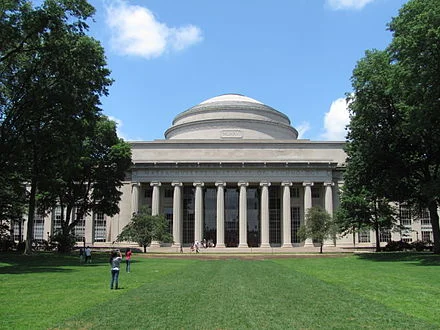
George McCully: The importance of 'Reshaping MIT'
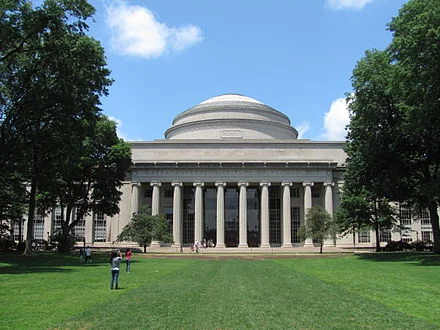
On the Massachusetts Institute of Technology campus, in Cambridge, Mass.
Via The New England Journal of Higher Education, a service of The New England Board of Higher Education (nebhe.org)
A review of The New Education: How to Revolutionize the University to Prepare Students for a World in Flux, by Cathy N. Davidson (New York, Basic Books, 2017); a summary of the recent announcements of a major restructuring of MIT, and a synthesis of other relevant developments.
It is increasingly obvious that we are living in one of the greatest ages of paradigm-shifts in Western history, comparable to the Renaissance and the fall of Rome. As with Gutenberg in the Renaissance, today’s is driven by revolution in information technology—the rise of computers, the internet, and now artificial intelligence (AI). The pace has dramatically accelerated—previously such momentous shifts took centuries to be resolved; ours is taking decades. Higher education, which is certainly information-intensive, is being so rapidly transformed that, whether we know it or not, every institution is in crisis. Leaders need urgently to mobilize their faculties, staffs and boards to face facts and respond. Problem-solving innovations are everywhere; strategic overview is needed.
In 1869, Charles W. Eliot lost a competition for the endowed chair in chemistry at Harvard ( surprisingly, considering that he was a Boston Brahmin and a deeply connected alumnus); he then joined the faculty at MIT and, funded by a modest inheritance from his grandfather, toured European and particularly German universities and technical institutes, returning to write an article in The Atlantic Monthly titled “The New Education,” in which he argued that higher education at the time needed urgently to be modernized, to prepare future managers of industrialization and urbanization. He was shortly thereafter chosen to be president of Harvard at age 35, where for the next four decades his reforms played a top-down leading role in setting the model for twentieth-century American scholarship and higher education.
Now comes Cathy Davidson—a prominent strategist in higher education, longtime professor at Duke University and its vice provost for interdisciplinary studies, currently director of The Futures Initiative at the City University of New York (CUNY)—who has explicitly invoked Eliot’s title and spirit to declare that today, we are at a similar inflection point in the history of higher education, and for the same reason: that it no longer adequately prepares students for the world in which they will live. In response, she has provided a compendium of exemplary institutional innovations, useful as a guide for reformers elsewhere.
The governing paradigm of scholarship and higher education has been the modern multiversity, in which knowledge and skills of separate and exclusively specialized conventional academic disciplines were passed on in lecture and reading courses to receptive students, to equip them for their future professional careers. This system she says, and many agree, is obsolete and actually counter-productive. As a result, the future of higher education is this time being led from the ground up, all across the country, in myriad kinds and levels of institutions, especially including community colleges where fully half of the nation’s undergraduates now matriculate.
Disruptively innovative experiments in curricula, teaching and participatory learning are burgeoning, led by “smart” faculty who have given up on the inherited models and are pioneering new pathways that are public problem-oriented and “student-centered” rather than discipline centered. Their common denominator, she says, is teaching students how to teach themselves— “learning how to learn” for real-world problem-solving in volatile “gig” job markets, using rapidly advancing new information technology in practical situations and terms—in short, the opposite of the traditional paradigm of conventional multiversity academicism.
She does not mince words. She says today’s students are being swindled, not getting what they’re in any case paying far too much for, and that there needs now to be “a revolution in every classroom, curriculum, and assessment system … To revolutionize the university, we don’t just need a model. We need a movement [that] seeks to redesign the university beyond the inherited disciplines, departments, and silos, by redefining the traditional boundaries of knowledge and providing an array of intellectual forums, experiences, programs, and projects that push students to use a variety of methods to discover comprehensive and original answers.”
Building a movement
Her book addresses the need to build the desired “movement” by calling attention to the fact that it is already underway on “almost every college and university campus right now” where “smart educators—sometimes a handful of visionaries, sometimes a substantial cohort—are working on new models for higher education.”
The structure and style of her book is, accordingly, anecdotal—necessarily so, given the novelty of the movement, its innumerable and widespread expressions, and therefore the paucity of systemic historical data. But she is an excellent storyteller, vividly conveying the personalities and characters of the diverse people and institutions involved in new experiments. She presents the “new education” as “student-centered” also faute de mieux—because today’s excessively high-cost and -loan-financed conventional classrooms are not helping today’s students to obtain reliable credentials for predictable future careers. The world is changing too rapidly, driven by technological revolutions in every field.
Her argument is in general carefully and intelligently laid out—this book certainly deserves wide readership by everyone interested in the future of higher education at their own and other institutions. There are chapters on students in crisis, on excessive “technophobia” and “technophilia,” the failures of higher education business models, the reductionism of quantification and grading, the unfairness of elitism and the deleterious effects of all these on American society.
An essential aspect which could only be alluded to, however, is how they relate to the substantive issues of scholarship and research. The multiversity strategy and structure of exclusive specialization by conventional disciplines—the content of higher education that was long the focus of the academy—has been increasingly criticized as inadequate in addressing complex real-world problems such as climate change, environmental degradation, disparities of wealth, overpopulation, energy needs, technological revolutions, etc., which are not organized in the separate parts of the disciplines. This discord has been exacerbated by technological revolutions—rapidly unfolding, accelerating and increasingly powerful, especially in information technology, big data and data science. Although Davidson’s focus is on “student-centered” innovations, a number of her examples involve extra-disciplinary research by the faculty as well.
The College of Computing at MIT
The content of scholarship and pedagogy is the focus of a truly revolutionary new transformation in higher education—the “College of Computing” introduced last October at MIT and certain to be widely influential on the future of technology and of career-training in STEM and all other related fields. While there is no book or even widely published report on it yet, we may summarize its rationale from MIT’s official public statements, to help place Davidson’s book in its most up-to-date and concrete context.
MIT has been structured in five Schools: Science, Engineering, Architecture and Planning, Management, and Humanities/Arts/Social Sciences. The College of Computing is a self-financed addition to that mix, conceived as a “connective tissue for the whole Institute,”in which all faculty and students in all “Schools” will participate. Its “central idea” is that this new “shared structure can help deliver the power of computing, data science, and especially AI, into all disciplines at MIT; lead to the development of new disciplines; and provide every discipline with an active channel to help shape the work of computing itself.”
This “new approach [is] necessary because of the way computing, data, and AI are reshaping the world.” Here computing will be “baked into the curriculum, rather than stapled on.” Students and researchers will be “bi-lingual” and thus of immense value to their employers—taught to use AI in their disciplines from first principles, instead of dividing their time between computer science and other departments, predicated by the fact that “Computing is … everywhere, and it needs to be understood and mastered by almost everyone.” “AI in particular is reshaping geopolitics, our economy, our daily lives and the very definition of work. It is rapidly enabling new research in every discipline and new solutions to daunting problems. At the same time, it is creating ethical strains and human consequences our society is not yet equipped to control or withstand … In response, we are reshaping MIT.”
“Reshaping MIT” is of immense strategic importance to the future of higher education because MIT is in a unique position to assume a global leadership role. AI itself originated there in the 1950s, with the work of Marvin Minsky and others. The Turing Award, computing’s highest honor, so far awarded to 67 scholars worldwide, is held by 10 current MIT faculty. The largest laboratory at MIT is the Computer Science and Artificial Intelligence Lab, established in 2003. Electrical Engineering and Computer Science (EECS) is by far MIT’s largest academic department. U.S. News and World Report cites MIT as No. 1 in six graduate engineering specialties, and 17 disciplines and specialties outside of engineering, from biological sciences to economics.
From that exalted platform, this innovation begins with clear and powerful advantages: impetus from technology both within and outside MIT, and the inexorable rise of AI; MIT itself, as a highly extraordinary and well-resourced stage; an initial investment of $650 million already in-hand, including the launching gift of $350 million from a single donor, anticipating a $1 billion total investment; increasing pressure from students, 40% of whom at MIT are already majors or joint majors in Computer Science; and bold, thoughtful, leadership consensus from both administration and faculty.
Startup funding will enable immediate commencing of student enrollments in 2019; begin construction of an already-sited major new building centrally located on the MIT campus; endow 50 new faculty appointments within five years—half located within the College and half jointly with other departments across MIT, for which jockeying has begun—a 5% growth in total faculty, nearly doubling MIT’s academic capability in computing and AI.
The College will develop new curricula connecting computer science and AI with other disciplines; host forums to engage national leaders from business, government, academia and journalism, to examine the anticipated outcomes of advances in AI and machine learning, and to shape policies around the ethics of AI; encourage scientists, engineers, and social scientists to collaborate on analyses of emerging technology and on research that will serve industry, policymakers, and the broader research community; and offer a seed-grant program for faculty, and a fellowship program to attract distinguished leaders from universities, government, industry, and journalism.
The College’s influence will be reciprocal with all other entities, encouraging the future of computing and AI to be shaped by insights from other disciplines, as well as vice-versa. It will “foster breakthroughs in computing, particularly artificial intelligence—actively informed by the wisdom of other disciplines.” It will deliver the power of AI tools to researchers in every field and advance pioneering work on AI’s ethical use and societal impact.
Its educational aim is to generate “new integrated curricula and degree programs in nearly every field, to equip students to be ‘bi-lingual’—as fluent in computing and AI as they are in their own disciplines and ready to use these digital tools wisely and humanely to help make a better world.” MIT President Rafael Reif says, “Society has never needed the liberal arts—the path to wise, responsible citizenship—more than it does now. It is time to educate a new generation of technologists in the public interest.”
This momentous innovation is intended to strengthen MIT’s position as a key international player in “the responsible and ethical evolution of technologies that are poised to fundamentally transform society. Amid a rapidly evolving geopolitical environment that is constantly being reshaped by technology, the College will have significant impact on our nation’s competitiveness and security.”
The lead donor, Stephen A. Schwarzman, founder of Blackstone, the investment firm, hopes that the College of Computing “will constitute both a global center for computing research and education, and an intellectual foundry for powerful new AI tools. … With the ability to bring together the best minds in AI research, development, and ethics, higher education is uniquely situated to be the incubator for solving these challenges in ways the private and public sectors cannot. Our hope is that this ambitious initiative serves as a clarion call to our government that massive financial investment in AI is necessary to ensure that America has a leading voice in shaping the future of these powerful and transformative technologies.”
Two complementary approaches
We have, then, two complementary approaches to the future of higher education: Davidson’s focus is mainly procedural, broadly based and especially concerned with higher education’s role in creating upward mobility for all students, for the health of American society; MIT’s focus is mainly substantive, initially centered on this single though world-leading institution, and aimed at clarifying, strengthening and refining the force and impacts of today’s revolutionary research and technology. Each of these approaches needs the other—MIT’s will influence the content of future research and teaching across the whole of Davidson’s movement; it would also help if Davidson’s concern for the upward social mobility of all students found special and explicit “multi-lingual” expression in guaranteeing the broadest possible student input to our national future.
Both are happening amid a cascade of powerful and mutually conducive developments. The New York Times recently reported that student demands for computer science are exploding far faster than faculties can adequately supply now or in the foreseeable future. The number of undergraduate majors more than doubled from 2013 to 2017, while tenure-track faculty ranks rose 17%, and graduate student enrollments rose 13%. Part of the problem is that corporate demand for computer scientists is also exploding, so businesses are poaching faculty and new PhD’s away from academia at much higher salaries, forcing universities to make diluting dual appointments. While the multiversity featured cross-fertilization between corporate and academic activities, this current further blending of the two realms may intensify to combine them at both faculty and student levels, further undermining strictly academic disciplines and even producing new ways of organizing research and teaching.
Maldistributions in societal structures further exacerbate those in higher education. Extreme and worsening imbalances of wealth and income are well-known, but less familiar are their damaging effects on public education and training. Re-tooling skills of the lowest-income workers for higher-paying jobs is already a crisis, but add to that, the conservatively estimated 1.37 million U.S. workers who will lose their jobs to automation in the next decade alone, increasing rapidly thereafter, and “upskilling” them would cost $34 billion, 86% of which would have to be covered by government, which has been steadily reducing its support of higher education for several decades.
Globally, China presents another challenge—owing to the massive investment its government is making in AI technological development and the huge numbers of scientists being trained. A recent survey asked Chinese and American executives whether they thought AI would have a larger impact than the internet; 84% of the Chinese said yes, while 38% of Americans agreed. Currently 25% of Chinese business leaders say AI is used on a wide scale at their firms, whereas only 5% of U.S. executives said the same. In June, the Pentagon announced that it was establishing a Joint Artificial Intelligence Center that will spend $1.75 billion over six years, but that is a small fraction of what the Chinese are spending.
In the realm of values, the Pentagon’s initiatives are widely regarded with ethical apprehensions both within and outside the high-tech industry. In response, the Defense Innovation Board last October launched an AI Principles Project to create an ethics framework for artificial intelligence in national defense. The initiative’s first major public meeting took place this January at Harvard, where Pentagon officials met with about a dozen AI experts, some of them strong critics. Similar expert gatherings are planned at Carnegie Mellon University in March and Stanford University in April, after which the Board will release draft principles for public comment. While it is significant that this discussion is taking place on university campuses, we may hope that this fact will focus increased scholarly involvement in these issues.
The subject of values brings us back to where we started. Davidson says, from her social science perspective, that “The goal of higher education is greater than workforce readiness. It’s world readiness.” There is an additional (not alternative) consideration: that another and equally worthy goal of higher education is to prepare students for their personal maturity as human beings, in any future world, especially given as we have seen that their rapidly unfolding future world is highly unpredictable. That broader and deeper pedagogical framework is commendably included in MIT’s explicit interest in humanistic liberal education.
Liberal education, of course, invokes the deepest traditional—in fact, Classical—values of self-development and -fulfillment, as well as the newer hypermodern models increasingly dependent on artificial intelligence for a more comprehensive forward-looking synthesis. The obvious advantage of that more capacious perspective would be to ground what always and increasingly rapidly changes—history—on what never changes—fundamental human nature.
So our current Age of Paradigm Shifts is posing fundamental challenges to traditional higher education and all its institutions, which are being met by a nationwide ground-level movement searching for solutions. Several features of the movement stand out, all driven by necessity: first, that the Old Paradigm of 20th-century multiversity academicism is toast; second, that the direction of future higher education is toward more explicit commitment to students’ personal and professional development; third, that research and teaching will be much more engaged extramurally in external communities and real-world practical problem-solving; fourth, that higher education as a whole will become more explicitly responsible socially, involving more widely inclusive constituencies than ever before; fifth, that government support of higher education must increase substantially, as emergent issues compel political attention; and finally, that leaders in every institution of higher education—administrators, boards and faculty members—must now assume responsibility for guiding their institutions forward along these lines, encouraging fresh and innovative thinking and experimenting now more than ever before.
George McCully is a historian, former professor and faculty dean at higher education institutions in the Northeast, then professional philanthropist and founder and CEO of the Catalogue for Philanthropy.