
Vox clamantis in deserto




A take on being working class in the 21st Century

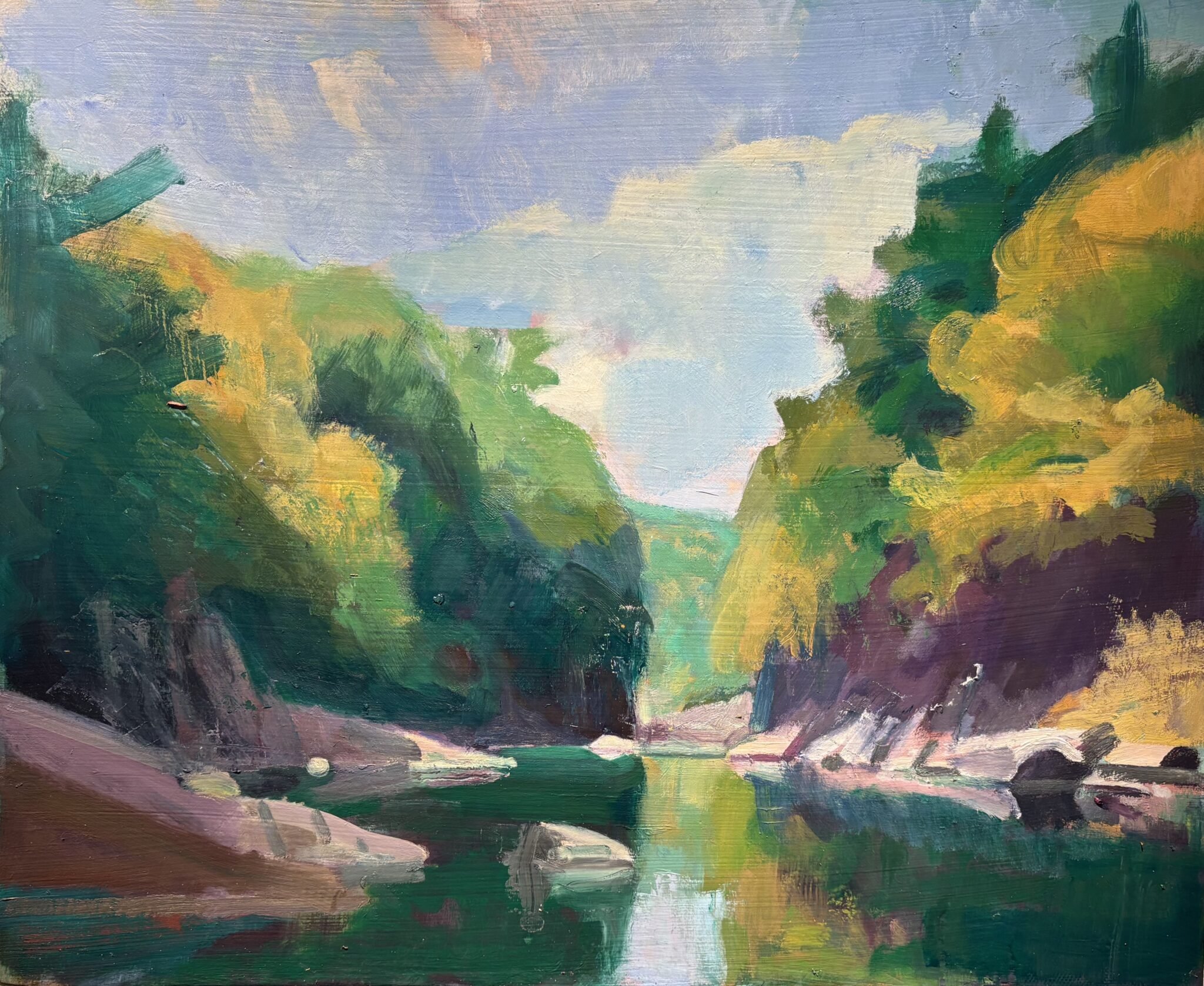
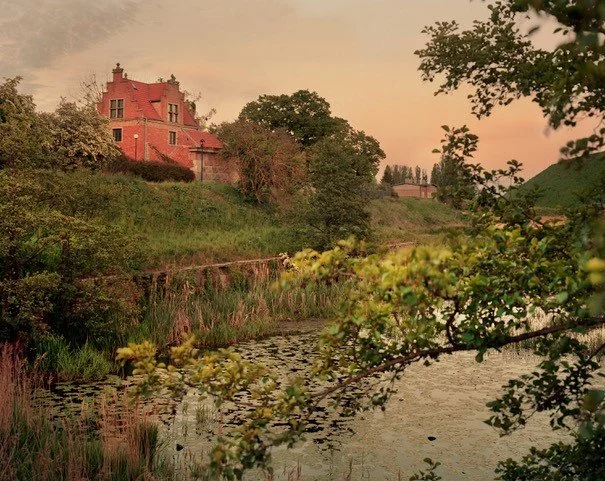
Painting by Sam Belisle in his group show with Teddy Benfield, Laurence Cuelenaere and Kenson Truong called “Forward Thinking: Four Young Artists’ Take on the 21st Century,’’ at the Adelson Galleries, Boston, Feb. 1-24.: The gallery says “Mr. Belisle’s paintings highlight the working class and specifically aim to show dualities in perceptions of the environment and space created by socioeconomic upbringings.’’
If only I had written it down too
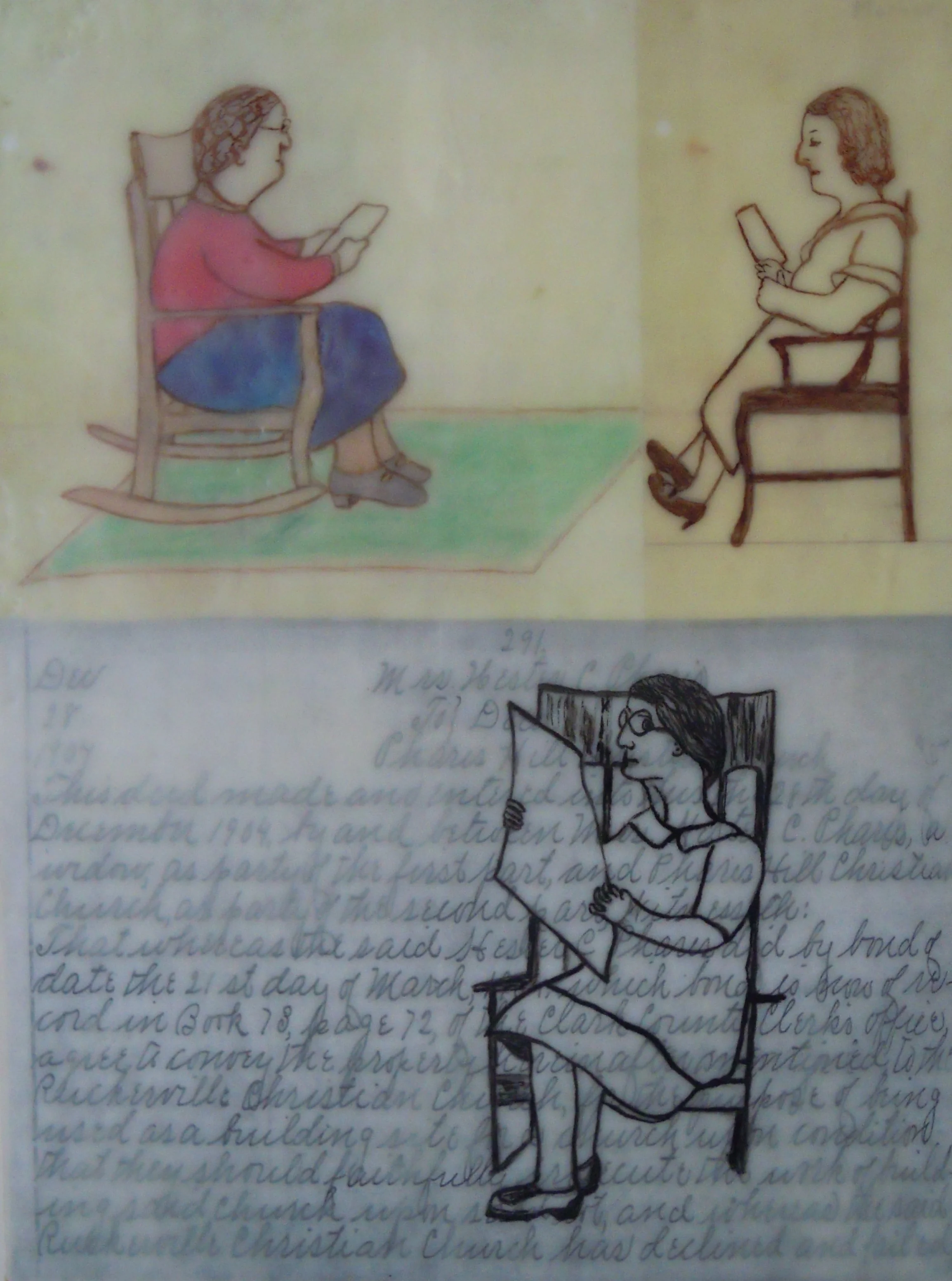
“My Young Father’s Drawings’’ (encaustic), by Nancy Whitcomb, now showing at the Providence Art Club.
What we see and don't see
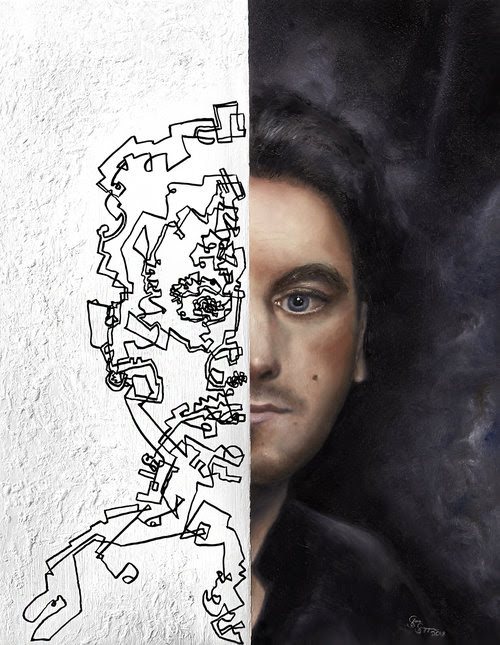
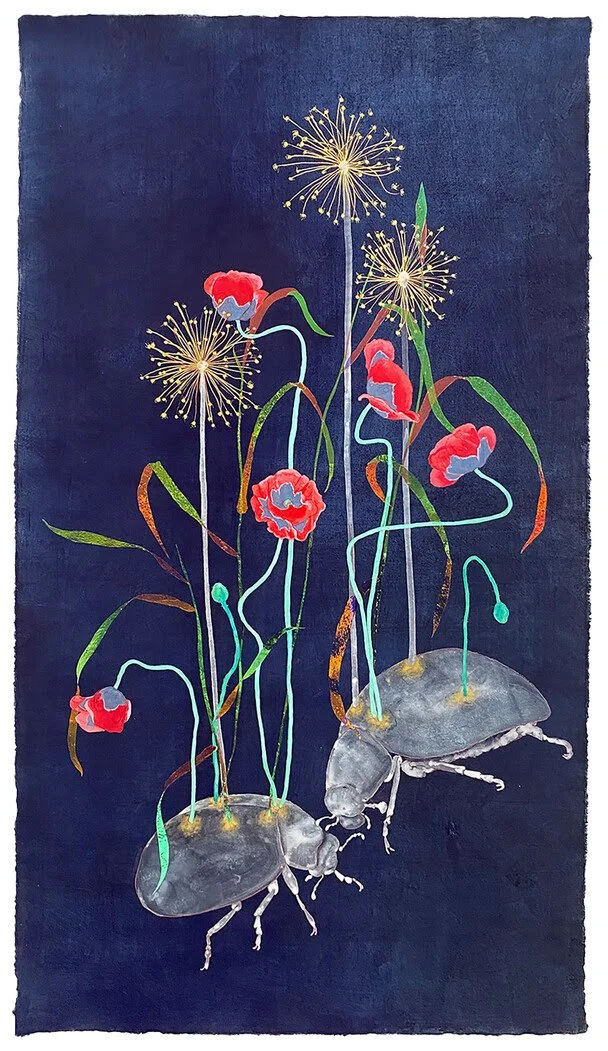
“Collapse: Of the Self ‘‘ (oil and ink on wood panel), by Steve Sangapore, as part of a group show with Lydia Kinney and Casey Stanberrry from Jan. 30 through Feb. 24 at Fountain Street Gallery’s Annex, Boston.
Mr. Sangapore's works address the idea that consciousness creates the universe. His pieces are split down the middle, with one side showing what we perceive, and the other the quantum world that we can't see
On Abolition Row


Images from the show “Black Spaces Matter: Celebrating New Bedford’s Abolition Row,’’ at the UMass Dartmouth Art Gallery, New Bedford. The exhibition features the story of Abolition Row in New Bedford, where African-American historical figures such as Frederick Douglass and other abolitionists resided. The show includes virtual reality neighborhood tours, documentary films, 3-D printed models, artistic illustrations, student projects, historic maps and photographs.
‘Dear old New England’
![Stereographic card showing an MIT mechanical drafting studio, 19th ]Century (photo by E.L. Allen, left/right inverted).](https://images.squarespace-cdn.com/content/v1/561446cce4b094b629347f8d/1548450436565-Q5EP7YY77QZY83EE4E3V/440px-MIT_Boston_19th_c_byEdward_L_Allen_BPL_2351553844_%28cropped%29.jpg)
Stereographic card showing an MIT mechanical drafting studio, 19th ]Century (photo by E.L. Allen, left/right inverted).
“I never fully realized how much a New England birth in itself was worth, but I am happy that that was my lot. I have felt it so keenly these last few days. Dear old New England, with all her sternness and uncompromising opinions; the home of all that is good and noble.”
― Matthew Pearl, in the novel The Technologists, set in 19th Century Greater Boston and involving the early days of MIT.

Don Pesci: Trump replenishes Connecticut's treasury as state's cultural reinvention continues
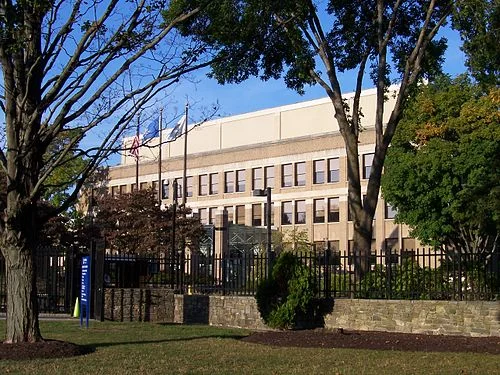
Airline plane engine maker Pratt & Whitney’s headquarters in East Hartford. Its sales have surged with, among other things, government contracts.
While Connecticut Democrats were busying themselves thumping President Trump during the recently concluded elections – the state’s all Democrat U.S. congressional delegation would not shed a tear if U.S. Sen. Dick Blumenthal, Speaker of the House Nancy Pelosi and Sen. Chuck Schumer were to succeed in impeaching him – Trump has delivered the goods to The Provision State.
The state’s underperforming economy may finally join the rest of the nation, much of which had recovered from the Great Recession many moons ago, in a splendid recovery – just in time too. Economists in Connecticut have not titled the coming jobs boom The Trump Bump, although a recent Hartford Business Journal (HBJ) report, “UTC’s 4Q profits jump 73%; CEO Hayes airs separation plans HBJ” comes dangerously close.
Here is the good news: “Farmington conglomerate United Technologies Corp., which plans to split into three separate companies, on Wednesday said its fourth-quarter profits soared 72.7 percent on booming aerospace sales and a favorable U.S. corporate tax rate.
UTC CEO Gregory Hayes, a smile lighting his face, noted that profits were up and "2018 was a transformational year for United Technologies."
HBJ reported, “The thriving aviation market drove UTC's fourth-quarter surge, Hayes said in a conference call Wednesday morning, with newly acquired Rockwell Collins leading sales growth with $4.9 billion in revenues during the quarter, up 29 percent year-over-year. East Hartford's Pratt & Whitney posted $5.5 billion in sales, up 24.2 percent.”
A rising economic tide, President Kennedy once said, lifts all the boats. And this rising tide, the result chiefly of Trump’s new military procurements, will water Connecticut's parched treasury. A larger employment pie allows state government to engorge itself with new revenue – without raising taxes. It is a win-win for both anti-Trump Democrats in Connecticut like Congressman John Larson and tax-weary citizens of the state still reeling from former Gov. Dan Malloy’s crippling tax increases.
Republicans already are ringing the tocsin: Maybe if we wait a bit, we won’t need those tolls after all. Also, is it possible we may be fondling too often the third rail of New England’s social issues?
Prior to the progressive take-over of Connecticut, the state was prepared to go its own way, luxuriating in its own unique character. Connecticut was for much of its history a refuge from New York’s predatory politics and brutal taxation. All this changed with the advent of former Sen. Lowell Weicker’s successful gubernatorial bid in 1991. Weicker forced an income tax through the General Assembly; the playing field having been leveled, the state found itself in competition with New York City and Boston.
It was no contest, and Connecticut “got its clock cleaned,” a favorite expression of Weicker’s. How, for instance, can Connecticut compete with New York in job poaching?
Connecticut is now in a race to the bottom on so called “social issues.” Bad political models make for bad cultural dives to the bottom. New York Gov. Andrew Cuomo, a nominal Catholic, has now begun a scuffle with his wounded Catholic Church. “Andrew Cuomo,” Fox News reports, “is under fire from faith leaders after he signed a bill into law that legalizes abortion up until birth in many cases.”
Cuomo will have no problem in a fisticuffs contest with his church’s faith leaders. In much of New England, it pays politically to scuff up Catholic doctrine. His real problem will be with pregnant mothers – they are women too – who have consulted ultrasound images and found that late-term fetuses bear a striking resemblance to born babies. But New York, in any case, has taken a great social leap forward, and Connecticut, a national leader on progressive social issues, has a bit of catching up to do. Progressives do not believe in definitional lines – fetus or baby? -- whatever science and common sense suggests.
Connecticut’s own Senator from Planned Parenthood, Dick Blumenthal, has yet to tell us, perhaps because no one has put the question to him publicly during one of his frequent highly scripted media availabilities, why his most cherished industry should be the only one in the United States that remains unregulated. The suit-prone Blumenthal was, for more than two decades as Connecticut’s attorney general, the state regulator-in-chief.
Connecticut’s cultural reinvention is well underway, and the political map has changed as well, mostly owing to the inattention of Republicans and the approval of the state’s left-of-center media. Culture is an Archimedean lever: Give me a place outside the world where I can place my lever, said Archimedes, and I will move the world. This is the progressive order of business; first change the culture and politics will meekly follow in its train.
Don Pesci is a Vernon, Conn.-based columnist.
Bring it on
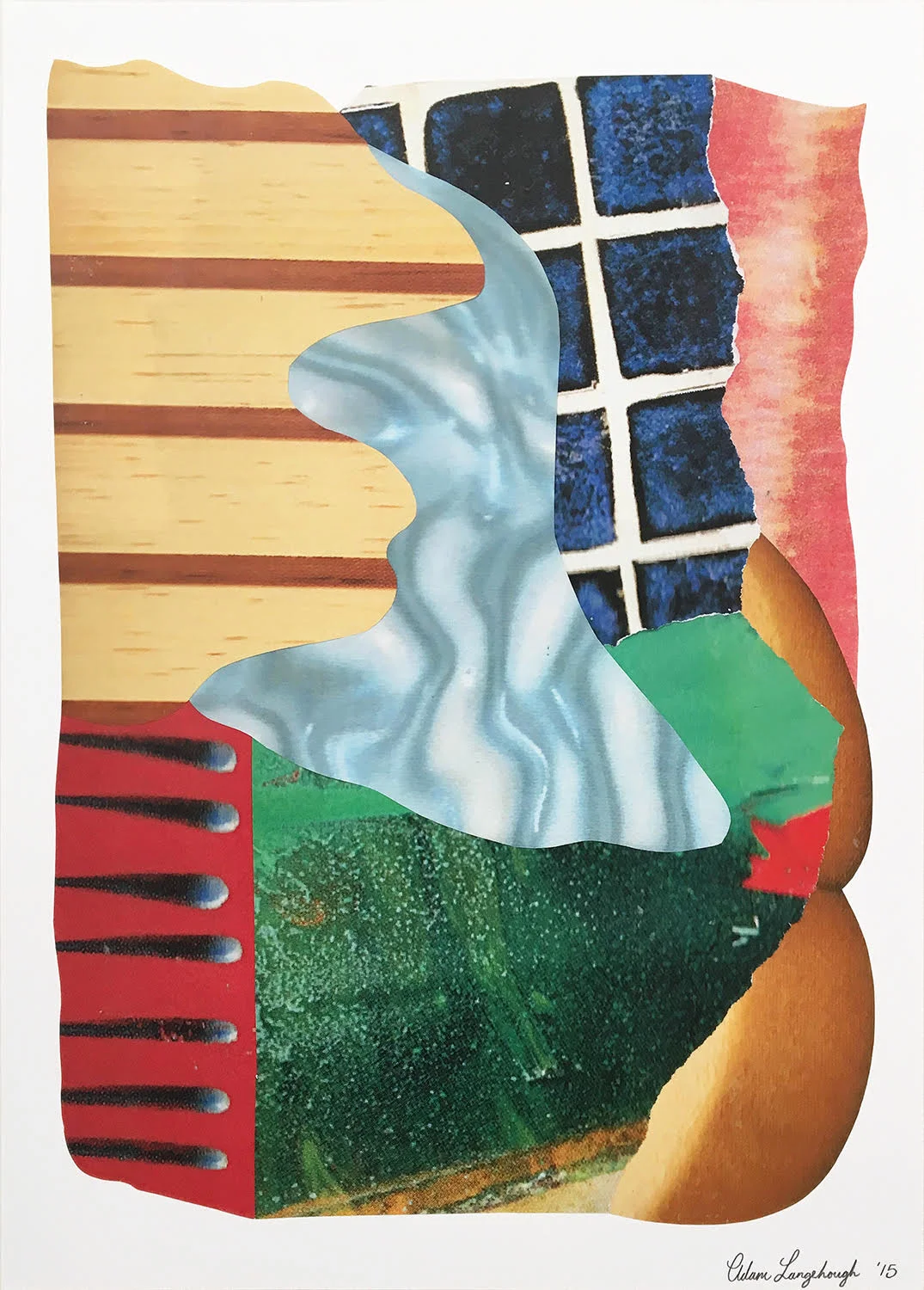
“Summer Feeling” (mixed media paper collage), by Adam Langehough, in his show “New Landscapes,’’ at Paper Nautilus, Providence, through March 2.
Collared and leashed nature
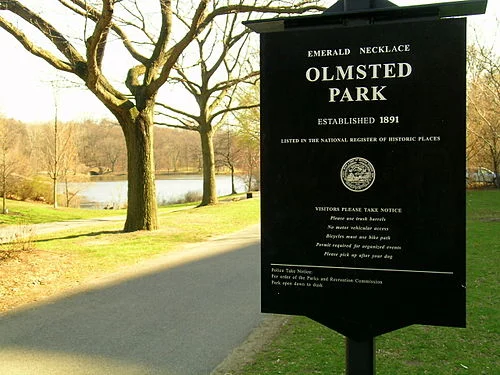
Walkway in the “Emerald Necklace’’ — a string of parks in Boston and Brookline conceived by Frederick Law Olmsted, who also designed Central Park. (See below.)

“Early Spring Afternoon — Central Park’’ (1911), by Willard Leroy Metcalf.
“Such strangers will have to hide
and take cover before the caretakers
of the trail arrive tomorrow.
They will efficiently find all wildness
from the storm and make sure that
it is all discarded and hauled to the dump.
“Perhaps I am looking for nature
in all the wrong places.
Here it has been collared and leashed
and rendered docile.
Still it fights back.
My hopeful dog directs my attention to the stream
and points to an otter that sinks when I look.
‘Maybe this time, boss?’ he implores.
Overhead, three noisy geese, free as you please,
as insolent as if they were twenty,
announce their imminent landing
at the county water control pond.
Not all of us are on a leash yet.’’
— From “Down the Urban Trail,’’ by Ahellas Alixopulos
Trying to get their attention

A Prius hybrid car. You tend to find them in affluent suburbs.
GoLocal reported Jan. 12 that a “new study finds that less than fifty percent {43 percent to be precise} of Rhode Islanders are willing to make significant ‘lifestyle changes’ in order to combat climate change.’’ That would include such things as driving their cars less. I’m surprised that the percentage willing to help address the scientific fact of global warming is that high. It takes a disaster to park over their heads to get the attention of many, probably most people when it comes to big issues, especially global ones. Rhode Islanders, says the study, are the least likely in New England to make changes because of fear of climate change. Maybe a big hurricane would change their minds.
Two-thirds of Massachusetts people in the research are willing to make such lifestyle changes, but that probably mostly reflects the higher percentage of well-educated people there, as well as its affluence, especially in the densely populated eastern part of the state. Obviously, the more affluent you are, the more likely you are to buy an electric car, etc.
To read the GoLocal article, please hit this link.
Addressing the analog-to-digital transition

“The Last Selfie’’ (acrylic), by Michael Spillers, in the “2019 International Juried Show’’ at Beacon Gallery, Boston, through Feb. 24.
This exhibition features works by 23 artists from across the United States who, the gallery says, “were asked to show how the analog-to-digital transition that technology has gone through has affected them as artists. The selected works reflect a wide range of opinions and ideas, both positive and negative. However the viewer feels about the transition, they will find works that both empathize with their opinions and that show them a different perspective. ‘‘
Or bumper cars
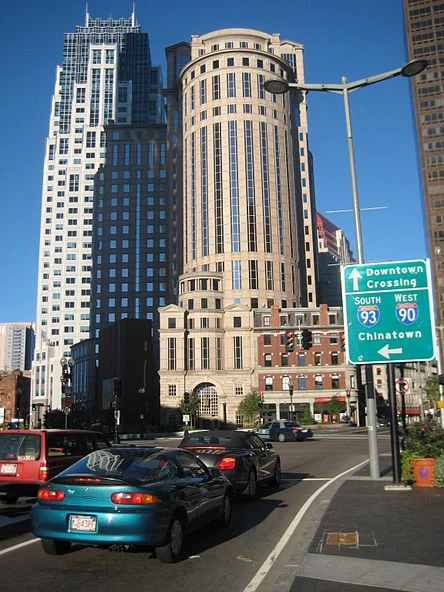
In Boston’s Financial District.
“Boston's freeway system is insane. It was clearly designed by a person who had spent his childhood crashing toy trains.’’
— Bill Bryson, travel writer, including his hilarious A Walk in the Woods, about a misbegotten hike on the Appalachian Trail.
Challenging your perceptions

By Nancy Jenner. in her show “World News: Alternate Views,’’ Jan. 31-March 1, at BabsonART’s (part of Babson College) Hollister Gallery, in Wellesley, Mass.
Her two installations challenge the perceptions of environmental pollution and how political turmoil affects families. She works with different media, such as archival paper and gouache, to build a visual narrative on each topic. Today's media-rich culture allows a person to consume only the news media that confirm their own biases, and Jenner's installations aim to offer a new perspective for the viewer to challenge those biases.
Mapping stone walls from above
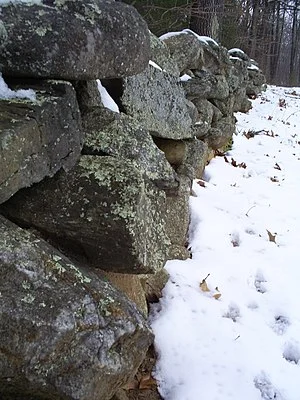
Stone wall at what had been Robert Frost's farm in Derry, N.H., a wall he describes in his famous poem "Mending Wall".
From Robert Whitcomb’s “Digital Diary,’’ in GoLocal24.com
The Concord (N.H.) Monitor ran an intriguing story on Jan. 15 headlined “Crowdsourcing New Hampshire’s love affair with stone walls’’. Stone walls, built mostly by English colonists and their descendants, most of them farmers, from the 17th to the early 19 centuries, are one of our region’s most beloved features – and a reminder of how hard earlier New Englanders had to work to wrest a living from a rocky soil.
The Monitor’s David Brooks reports how an aerial mapping system called LIDAR has eased the mapping old stone walls, many hidden in woods that have long since enveloped open fields. “The state has uploaded a zoomable image of most of New Hampshire taken by airplanes using LIDAR, which operates like sonar but uses light waves and produces a more detailed image,’’ even from a mile in the air.
“Members of the public can search through the black-and-white image and if they find what appears to be a stone wall, notable for unnatural straightness amid meandering hills or streams, they can mark it with a drawing tool that creates a thin pink line. These lines will create a map and database of the state’s stone walls. The online map includes a ‘progress to date’ link keeping a running tally of how many miles of walls have been marked.”
The project could improve our understanding of land-use patterns that developed since Europeans started to move en masse into New England. It’s always useful to know where we’ve been, which can help tell us where we’re going.
To read Mr. Brooks’s story, please hit this link.

Llewellyn King: The women who would be president

Good morning class, draw near and listen ever so closely.
So, you all want to be president of the United States, arguably the most difficult and demanding job in the world?
Clearly, you feel that you have unique talents which will promote peace and prosperity and block injustice, racism and men hitting on women.
You are sure that you will be able to curb, gently, the imperial instincts of China and its canny leader, Xi Jinping.
And you have a sure-fire plan to contain Russian President Vladimir Putin’s ambitions in eastern Europe, Asia and the Middle East and to persuade our shaken allies that it is worth standing firm with us.
You might want to know what to do about Africa’s soaring population and declining prospects.
You, also, I trust have given thought to the future as the so called Fourth Industrial Revolution unfolds with huge consequences for the future of work (artificial intelligence taking away jobs); the future of transportation (autonomous vehicles, ships and airplanes); and remote farming (farms operated from city desks).
If you are all set on those things, we can get down to the ones which may decide the election: the social issues, including abortion, education, gender equity and gender equality, gun control, access to healthcare, immigration and income inequality.
You might want to tell people how you will turn back the tides and solve global warming. Rich people are starting to worry about their oceanfront homes; that means it will become a fashionable topic with those who have been indifferent screaming for action
Now, ladies, step forward for little individual tutelage.
Elizabeth Warren: You have the pole position as the racers line up, but already there are troubling things. Ms. Warren, you must stop taking President Trump’s bait. How the devil did you get into getting your DNA analyzed? Bad move. Lead the debate, do not join it.
Kamala Harris: A few good notices and you are off and running. Just wait until the opposition research pulls apart the cases you prosecuted when you were a district attorney in San Francisco -- and the things you said in court. Two former prosecutors, Rudy Giuliani and Chris Christie, have tarnished the brand.
Kirsten Gillibrand: The announcement on The Late Show with Stephen Colbert was, well, weak. It looked like you were there because you had just published a children’s book called something like Snuggles the Rabbit.. Bold statesmanship was not to be heard. It is hard to look presidential on a comedy program. Looking presidential is worth a lot in the polls, especially at the beginning. Now to those giant flip-flops on guns and abortion. Were you not a darling of the NRA? What about your switching from pro-life to pro-getting-elected? Explain your double epiphany.
Tulsi Gabbard: Step forward and salute. Major, you are the only declared candidate with military service: the only candidate in sight who has worn your country’s uniform and seen active duty. Bravo! That is going to be a huge credential, but not quite enough to outweigh the fact that you are too exotic: born in American Samoa, raised in Hawaii and a Hindu. At 38, you have got time, lots and lots of it. Beware hopefuls. This lady may not be for turning.
To the whole class of four: Have you ever run a large organization? Have you a big scandal you think you can keep hidden (you cannot)? Do you know enough people to staff the cabinet? Do you know how you will find 1,200 people to fill the positions that must be confirmed by the Senate? How is your golf game?
Three of you are senators, Gillibrand, Harris and Warren, and Gabbard is a member of the House. Hard to run against Washington when you already have contracted Potomac Fever.
Suggestion: Get a big idea and run with that. Keep out of the granular social stuff, it will bring you down. Prepare to be vice president and bide your time.
House, Senate, White House, America’s women are on the move, and may the best woman win.
Llewellyn King is executive producer and host of White House Chronicle, on PBS. His email isllewellynking1@gmail.com. He’s based in Rhode Island and Washington, D.C.

'Wings of fright'

In downtown Chelsea.
“The refugee’s run
across the desert borderlands
carved wings of fright
into his forehead,
growing more crooked
with every eviction notice
in this waterfront city of the north.’’
— From “Mi Vida: Wings of Fright
Chelsea, Massachusetts, 1987,’’ by Martin Espada
Chelsea is a gritty old manufacturing town next to Boston.
Mr. Espada, an English professor at the University of Massachusetts at Amherst, lives in very bucolic Leverett, Mass., well known for its Buddhist New England Peace Pagoda and the many babbling brooks coursing down its hills.

The New England Peace Pagoda, in Leverett.

Saw Mill River Falls near Rattlesnake Gutter, in Leverett.
The January thaw

Slush in January.
Adapted from Robert Whitcomb’s “Digital Diary,’’ in GoLocal24.com
January obviously sometimes has a bleak beauty, but….
When I lived in New Hampshire some of the locals, to sort of justify living in a place with a, well, rigorous climate, noted that you were much more likely to get sick down south, where the year-round warmth helps bacteria and viruses to thrive far more than in New England. It reminds me of my former colleague Sam Abt, who smoked a couple of packs of Pall Malls every day and yet who never seemed to get sick even as everyone around him was coughing and sniffling. “No bugs can live down there’’ (in his lungs), he asserted.
To me January is about slowly lifting darkness and taking people to hospitals on roads covered with black ice. So bring on the January thaw, the seed catalogs and the annual beach-pass dues.
The New England Weather Book, by David Ludlum and the editors of the now long-departed Blair & Ketchum’s Country Journal, wrote of the thaw: “{R}esearch has demonstrated that the thaw is a reality and most frequently occurs between January 20 and 26….Although the thaw does not come every year, it has put in an appearance often enough to establish its place as a singular factor of the New England climate.’’
Apparently our January thaw this year will come on Jan. 23-24, unfortunately with rain.
We’ll take it!
Climate change complicating global marine governance

From ecoRI News (ecori.org)
KINGSTON, R.I.
The international governance of marine areas beyond national jurisdictions is an issue of growing importance as temperatures increase, sea levels rise, islands become submerged and artificial islands are built. As territorial boundaries change, conflicts are arising that no one envisioned in the 1970s and ’80s when the United Nations Convention on the Law of the Sea was negotiated.
It’s a complex subject to which Elizabeth Mendenhall is paying close attention. The assistant professor of marine affairs and political science at the University of Rhode Island said the United States could play a crucial role in how the Law of the Sea is interpreted under changing circumstances. But the United States is one of very few nations that hasn’t ratified the agreement, and it doesn’t appear likely to do so any time soon.
“The Law of the Sea is a big agreement that still prevails as the legal framework for managing the ocean, but at the time it was negotiated we didn’t know anything about global warming, ocean acidification, or sea-level rise,” said Mendenhall, a native of Kansas who joined the URI faculty in 2017. “How did anyone think it would work when it was negotiated before we really understood the ocean we were trying to govern?”
Mendenhall studies how international law and international institutions succeed or fail as the global environment changes.
“As I see it, we created this regime of norms and principles of governing the oceans, but it’s a static law in a changing world,” she said. “How can that law be built in such a way that it’s flexible and adaptive? And if it’s built that way, how can we make sure those features are being used? Right now, we’re being reactive to the changes taking place, and we’re reacting very slowly.”
A major focus of Mendenhall’s work is examining the legal implications of sea-level rise on the 200-nautical-mile exclusive economic zones of nations when islands become submerged and coastlines change. When an island disappears, a nation may lose economic control of the maritime territory around the island.
“What happens legally as sea levels rise impacts our ability to achieve peace, stability, and sustainability in the century to come,” she said during a TEDx Talk at URI last February.
The question becomes even more complex now that technology enables nations to build artificial islands, which China and other nations are doing in the South China Sea, either to expand their control over a wider swath of the sea or to defend their legal claims.
“China doesn’t legally get to claim that maritime space,” Mendenhall said. “I believe the U.S. should better utilize legal arguments to challenge China’s maritime claims. We could easily make a positive contribution to the interpretation of the Law of the Sea by making declarations and getting other nations to make similar declarations that territorial claims around artificial islands should not be respected.”
Mendenhall is also closely following U.N. negotiations for a treaty to address how biodiversity is managed beyond national jurisdictions in the middle of the oceans. She and a group of colleagues attend all of the negotiations in New York City and interview the delegates.
“The hot-button issue is the question of marine genetic resources,” she said. “There are rules for patenting genetic sequences on land and in coastal waters, but there are no rules that apply to the middle of the ocean. If you go to a hydrothermal vent in the middle of the ocean and sequence the DNA of a creature living there, can you patent it? Previous agreements say that all nations control those resources together. So who gets the profits? That has taken up a lot of conversational space.”
Mendenhall is also being encouraged to get into the middle of the public debate about the growing problem of plastic debris in the oceans. She has already published a paper that catalogs scientific research about the topic and lists questions in need of answers before effective policies can be made.
While the media has reported extensively on the effort by The Ocean Cleanup to create a technology that can autonomously extract plastics from the oceans, Mendenhall believes the project is the wrong approach.
“That approach is all about cleaning up at the end of the chain, rather than fixing the problem at its beginning,” she said. “First, it’s a nonprofit funded by donations, which is allowing governments to say that the nonprofit world is handling the problem so they don’t have to do anything about it. I also fear it will be a green-washing for the plastics producers so they don’t have to address their role in the problem.
“It’s a real challenge internationally because the source of the problem is in sovereign national territory while most of the consequences are in shared space in the middle of the ocean. It’s hard to come up with an international agreement that tells you what you have to do domestically.”
The URI professor hopes to address other issues in what she calls “the global commons” as well, including territorial disputes in the Arctic.
‘An old year thrown off’

“A January thaw, country
roads turned chocolate pudding
our boots with sucking sounds
clambering over the still-
intact oak leaves
pages of an old diary
an old year
thrown off.’’
— From “January Thaw,’’ by Marge Piercy