
Vox clamantis in deserto

David Warsh: Addition by subtraction in climate debate
SOMERVILLE, Mass.
An op-ed in The Wall Street Journal last week, “Economists’ Statement on Carbon Dividends,’’ appeared under a headline reflecting the latest conventional wisdom on how to frame the issue of coping with atmospheric pollution (don’t call it a “carbon tax”). The bipartisan endorsement called for a revenue-neutral tax on carbon emissions, its proceeds to be returned to citizens in equal quarterly rebates, ensuring a progressive structure, administered by the Social Security Administration as an entitlement.
The proposal was signed by 27 laureates, including Robert Solow, Robert Lucas, Amartya Sen and Thomas Sargent; all four living chairs of the Federal Reserve Board (Paul Volcker, Alan Greenspan, Ben Bernanke, and Janet Yellen), and fifteen former chairmen of the Council of Economic Advisers, including Michael Boskin, Martin Feldstein, N. Gregory Mankiw, Glenn Hubbard, Jason Furman, Austan Goolsbee, Christina Romer, and Laura Tyson. Former Treasury Secretary Lawrence Summers signed on as well.
Too fresh from their recognition last month to join in (or too obvious) were William Nordhaus and Paul Romer, both supporters. The signatories thus joined forces with a blue-ribbon group of multinational corporations and public interest organizations formed last summer as a Climate Leadership Council.
The economists’ list naturally invited a search for the missing.
Conspicuous by their absence among laureates were Joseph Stiglitz and Paul Krugman. Krugman earlier explained that he favored more salable policies. That the plan for carbon taxation was devised by George Shultz, Secretary of State under Ronald Reagan, and James Baker, who succeeded him under George H. W. Bush, may also account for some of their lack of enthusiasm.
A little less obviously missing were laureates James Heckman (absorbed in early childhood investment), and Vernon Smith (energy saving and CO2 sequestration, per the recommendation of the Copenhagen Consensus Center). Oliver Williamson, approaching 90, is less of a force than formerly. Christopher Pissarides and Jean Tirole stayed away from the issue, Tirole because he favors regulation by systems of cap-and-trade.
That leaves Robert Mundell, of Columbia University, recognized in 1999 for his work on exchange rates regimes and currency areas; and Edward Prescott, of Arizona State University and the Federal Reserve Bank of Minneapolis, who shared the economics prize in 2004 for work on business cycles. Both are favorites of the WSJ, having often expressed the view that raising taxes discourages economic growth, but neither has been involved to any great extent in the climate controversy. That leads in turn to WSJcolumnist Holman W. Jenkins, Jr., who has taken on the job of skeptic-in-chief.
Jenkins, 59, is a dependably lively presence on the editorial pages, a frequent skirmisher against views on climate change he considers wooly-headed or worse. Last week he was at it again, under the headline Big Names Bake a Climate Pie in the Sky. He disparaged the view that carbon emissions pose an immediate threat to global well-being; expressed skepticism of the motives of politicians and corporate lobbyists alike; and hinted at the existence of a proposal for tax reform, including a carbon tax, “to replace taxes that depress work, saving,” such that new technologies would develop to do things in less carbon-intensive ways. Presumably that is the subject of a future column.
At the moment, the editorial board of the WSJ is pretty much the only voice among the mainstream press, of skepticism about climate change in general; in opposition to carbon tax proposals in particular. In The Global Tax Revolt last month, the editorialists took note of the rejection of various attempts to impose a local carbon tax – in France, in Canada, in Washington State – and concluded,
[A]fter decades of global conferences, forests of reports, dire television documentaries, celebrity appeals, school-curriculum overhauls and media bludgeoning, voters don’t believe that climate change justifies policies that would raise their cost of living and hurt the economy.
On its weekly show on Fox New, editorial page editor Paul Gigot went further: he acknowledged elliptically that that “some of our friends” think that strong measures are required to address atmospheric pollution, “and even in theory, if you think about it from a free market point of view, a carbon tax would be the most efficient way of trying to actually slow down carbon emissions… but that seems to be something that the public really isn’t buying.” There is, he said, “a disconnect between elites and average voters that don’t trust the elites”
As usual, editorial page columnist Kimberly Strassel went further still. “Yes, intellectually, from a very wonky point of view,” she said, a carbon tax “may be an efficient way of raising revenues. But no one buys that you are actually get rid of other taxes if you institute a carbon tax, so they see it as an additional tax … There also not a belief that money raised from such a tax would actually be put into any kind of renewable energy or investment strategy for a smarter climate; they know it going to get redistributed and be a new pot for the Washington spenders to put into their own priorities…
What would a carbon tax actually cost ordinary consumers? That’s a question for another day – for many other days, starting with the 2020 elections, and in the decade beyond. In the meantime, the populist editorial page of the WSJ stands pretty much alone amongst elite opinion in America against carbon taxation as the major instrument of climate policy. Over the long haul, we’ll see what difference that makes. Reports of the demise of the establishment Republican Party may have been exaggerated.
David Warsh, an economic historian and veteran columnist, is proprietor of Somerville-based economicprincipals.com, where this first ran.
'Single emptiness'
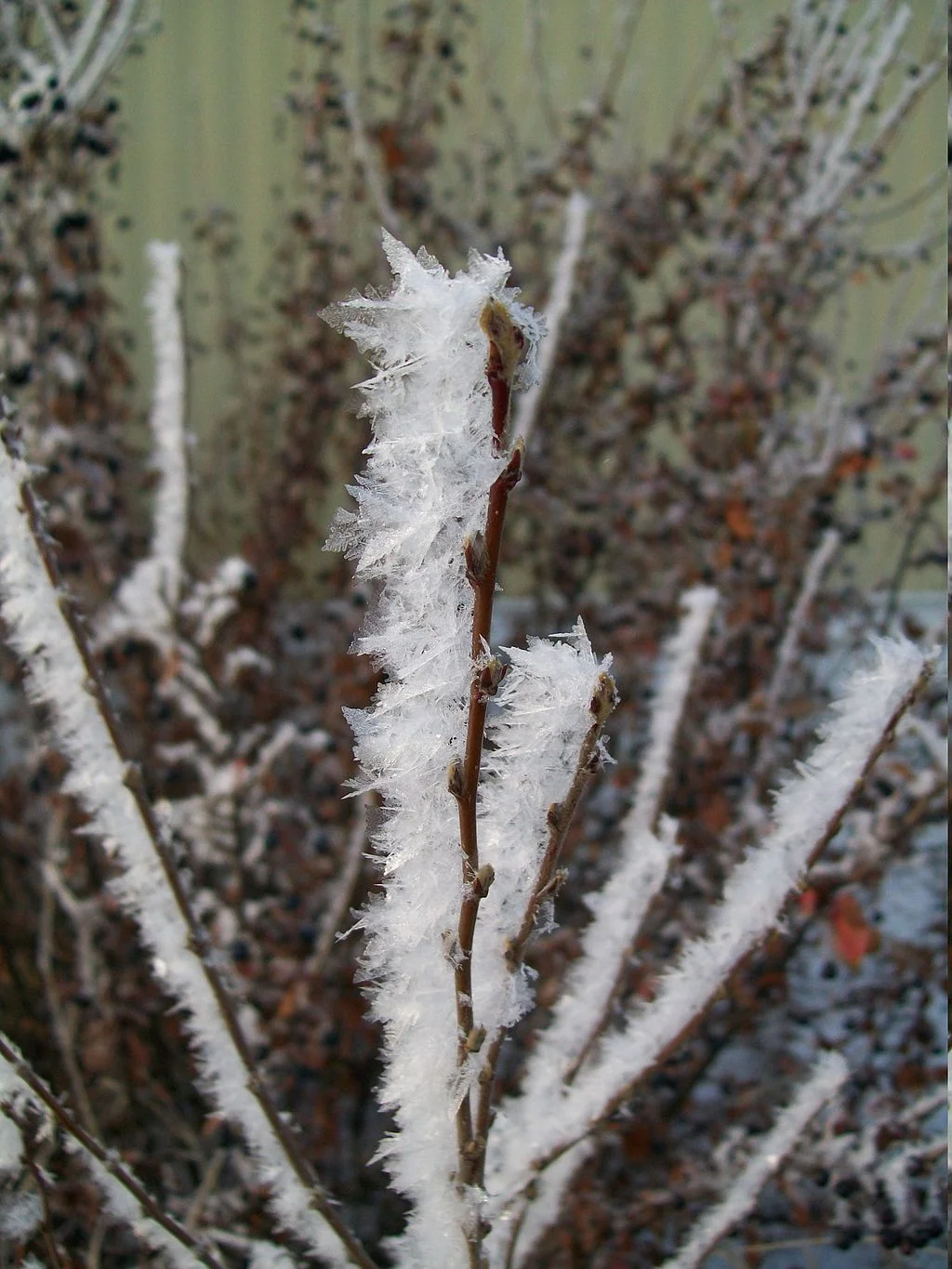
— Photo by Lumulus
“It is deep January. The sky is hard.
The stalks are firmly rooted in ice.
It is in this solitude, a syllable,
Out of these gawky flitterings,
Intones its single emptiness,
The savagest hollow of winter-sound.”
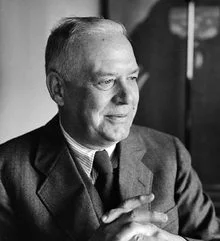
Wallace Stevens.
― Wallace Stevens, (1879-1955) was a Hartford-based poet, insurance executive and lawyer. He’d walk most days to and from his house, below, to his office at the Hartford Accident & Indemnity Co. Another big name in the arts who was an insurance executive was Charles Ives (1874-1954), who was raised in Connecticut and became one of America’s greatest composers.
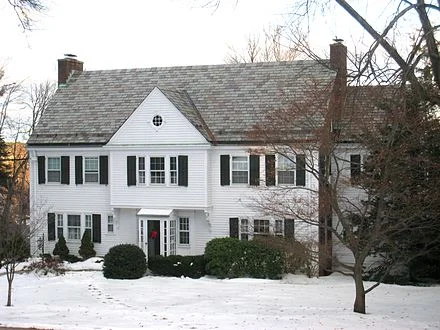
The house of the late Wallace Stevens.
Images from Out West
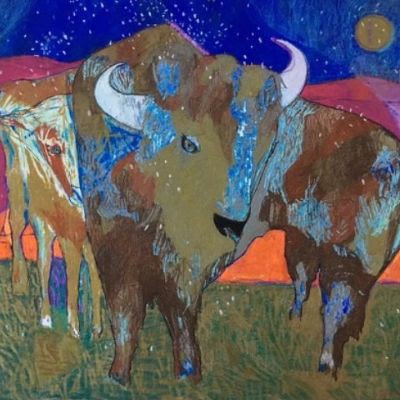
One of the works by Nan Darham in her show at the Russo Gallery at Dartmouth College, Hanover, N.H., through Feb. 9. She is from Bozeman, Mont.
Her artwork and stories chronicle the culture, landscape, wildlife and characters that populate her life in the West. She configures a changing geography that includes immense historical and contemporary issues of the Greater Yellowstone ecosystem.
Move the FDA to Boston?
]
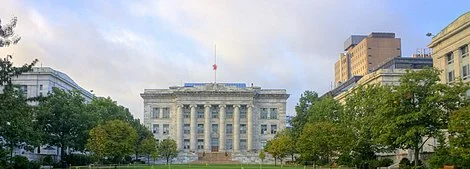
Harvard Medical School quadrangle in Longwood Medical Area, Boston.
Adapted from Robert Whitcomb’s “Digital Diary,’’ in GoLocal24.com:
One of the most intriguing of the ideas in \Philip K. Howard’s new book – Try Common Sense: Replacing Failed Ideologies of the Left and Right -- is to move a lot of federal operations out of Washington to get them away from the entrenched lobbyist-run corruption there and closer to the people and in some cases to outstanding local expertise. Such moves would liberate more federal employees to take decisions in the public interest.
The crux of Mr. Howard’s books is that people should exercise more individual judgment and take on more responsibility instead of turning over so much of their lives to regulations and legalism. They should be encouraged to exercise common sense.
“All the ligaments and tendons of Washington’s permanent apparatus – civil servants, lobbyists, lawyers, contractors, media and politicians – are conditioned to play their roles in its giant bureaucratic apparatus.’’ (I happen to think that the civil servants are the best of the lot….)
So Mr. Howard writes: “How can we govern sensibly or morally when officials in Washington refuse to change direction? The answer is that we can’t. …Why fight this culture head on? Start moving agencies out of Washington to places where people are not afraid of taking responsibility.’’ Big companies move all the time. Why not agencies? And some could be moved to places with considerably lower operating costs than metro Washington.
Mr. Howard suggests, for example, that the Food and Drug Administration’s headquarters could be moved to Boston or California, where there are many, many physicians, biologists and others in health-care-related fields. Or the Department of Housing and Urban Development could go to Detroit. Consider that the Centers for Disease Control and Prevention works well with its Atlanta headquarters.
This redistribution would also more fairly share the vast wealth associated with the federal government, which is so heavily concentrated in the Washington, D.C., region, which vies with San Francisco as the richest metro area in America.
Whether or not you agree with Mr. Howard on this or that policy proposal, you have to give him credit for, as he told me, “trying to change how people think about’’ government and civil society/citizenship in general. That has to be the start.
Oh yes, let’s move all or part of the National Oceanic and Atmospheric Administration to the great ocean research center of Woods Hole.
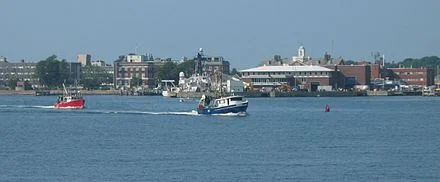
A view of downtown Woods Hole from the water, including Marine Biological Laboratory and the Woods Hole Oceanographic Institution.
'The artifacts within'

Part of the show “Joe Caruso: Gods, Totems and Tricksters,’’ at Laconia Gallery, Boston, Feb. 1-March 24.
The gallery says:
“With references to the field of archaeology, Joe Caruso’s recent work which consists of painting, sculptural assemblage and combinations of both, explores the themes of discovery, time and transformation, and also draws inspiration from ancient mythology.
“In his sculpture, Caruso uses objects reclaimed from the street, from bins on trash day, from thrift shops and from his studio. Some are made of weathered wood or rusted metal, suggesting age and a time gone by and other objects are no longer needed, discarded and perhaps forgotten. They become a starting point for something new and re-emerge, transformed into fresh compositions, given new life and meaning.
“Just as the archaeologist’s exploration involves destruction and reconstruction, the surfaces of Caruso’s paintings and painting/sculpture combinations are worked and reworked over time, a process of applying paint and then scraping it off, digging and finally consolidating and solidifying when heat is applied. Materials in his painting practice include oil, wax, sand, glass, shells and minerals. Sometimes using shards of plaster, remnants from the sculptural assemblages. Some have impressions and indentations that remind one of fossils. The painting surfaces are rough and crude on the one hand and have a hint of sparkle on the other that call to mind weathered walls with flicks of sunlight. Lines crisscrossing the surfaces are dug deep and might be viewed as large drawings.
“A third dimension is sometimes created by adding sculptural elements to the painting surfaces or by placing them on an attached shelf. These combination pieces are often wrapped in wire in the configuration of a grid resembling a window, inviting the viewer to come up close to discover the artifacts within.’’
Close it for trash pickup
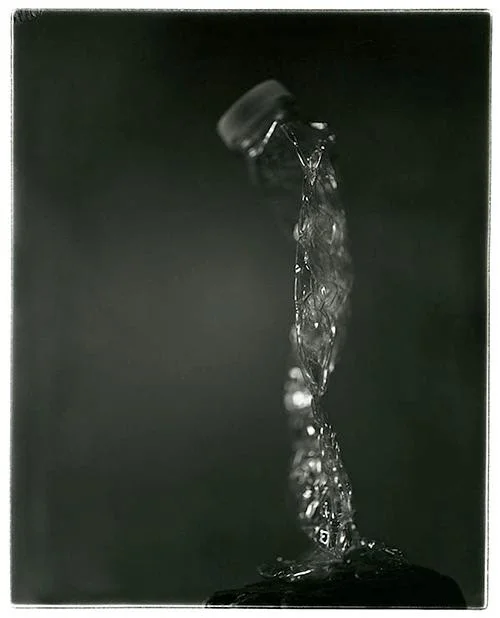
“Closing the Sea 1’’ (black and white silver print), by Patricia Kelliher, in her show "Closing the Sea,’’ which highlights ocean pollution through semi-abstract black and white photos, at Bromfield Gallery, Boston, through Jan. 27.
Patricia Kelliher, Closing the Sea 1, black and white silver print, 20" x 16", 2018.
From January 2⎻27, Bromfield Gallery presents the two winners of the SOLO 2019 competition, juried by Howard Yezerski. "Between the Lines" by Christopher Sullivan uses painting's elements to probe relationships; "Closing the Sea" by Patricia Kelliher highlights ocean pollution through semi-abstract black and white photos. The opening reception is Friday, January 4, from 6:00 p.m.⎻8:30 p.m.

Stephanie Suarez: Foreign students' big economic impact on New England

Source: NEBHE analysis of data from Open Doors: Report in International Educational Exchange, published annually by IIE and the U.S. Department of State’s Bureau of Educational and Cultural Affairs. www.iie.org/opendoors
From The New England Journal of Higher Education (NEJHE), a service of The New England Board of Higher Education (nebhe.org)
New England faces a concerning dip in its higher education enrollment, due in significant part to declines in the region’s birth and high school graduation rates that are both projected to continue through 2029. Despite these trends, New England’s postsecondary institutions continue to attract a large number of international students to the region, according to the 2018 Open Doors report released by the nonprofit Institute of International Education (IIE) and the U.S. Department of State’s Bureau of Educational and Cultural Affairs (ECA). The report shows:
• The number of international students in New England has increased every year since 2012 and the region’s growth on this measure now outpaces the nation. In the 2017-18 academic year (AY), the region enrolled 6.3% more international students than the previous academic year. This figure compares to a national increase of only 1.5% during the same period. Both public and private nonprofit institutions in New England saw a 61% rise in the number of foreign students over a five-year period from AY 2012-13 to AY 2017-18, which is comparable to the national growth in the international student population over the same period.
• In 2018, by far the largest share (31%) of international students matriculating at New England colleges and universities originated from China. Nationally, two-thirds of all foreign students come from Asia, and one-third of the total population of international students are from China alone. The other countries rounding out the students’ top five places of origin in the region include India (14.6%), Canada (5.9%), South Korea (4.4%), and Saudi Arabia (3.4%).
• International students represent a big economic injection for New England. In AY 2017-18, international students contributed $39.4 billion to the overall U.S. economy, with $4.2 billion added to the New England economy alone. Between 2012 and 2018, international students contributed a total of $21.3 billion to the New England economy.
• International students have helped forestall a nationwide enrollment crisis. The total higher education population in the U.S. topped out in 2010 at about 21 million students and has been slowly declining since then. The decline in New England is especially acute. This has been countered to some extent by growth of the foreign student population, coupled with a rise in online enrollment, which together comprise almost a quarter of the nation’s students.
• International students help make college more accessible to Americans. Because international students generally pay significantly higher international tuition and fee rates, the recent influx of foreign students has provided a much-needed boost to many college campuses’ bottom lines. The additional revenue generated by the higher fees paid by foreign students helps subsidize the tuition and fees of low-income domestic students who could otherwise not afford to attend college. As the Washington Post recently reported, “contrary to perceptions that foreign students take spots that belong to Americans, at many schools they’re enabling more American students to get a degree.”
What can we expect in 2019?
Despite the economic and cultural value foreign students add to our college campuses and our workforce, New England’s strong international enrollment figures may be in jeopardy in 2019. In particular, over the next year, the region’s colleges and universities may need to prepare for a potential decline in the number of students originating from China. The fragile dependence on Chinese students may soon crack for a number of reasons.
• China’s deepening economic downturn has begun to raise serious concerns in academic admissions offices, as this slowdown threatens to decelerate the influx of Chinese students who have flocked to American campuses to study and bolstered institutions’ bottom lines for the past decade.
• The federal government has begun targeting and encouraging the closure of Confucius Institutes, Chinese government-funded centers for Chinese language and cultural education hosted by over 500 college campuses worldwide, with more than 100 of them in the U.S. These programs have recently come under intense scrutiny by counterintelligence experts, political figures from both sides of the aisle, and those within academe, who argue that the Institutes constitute a broader effort by the Chinese government to conduct espionage, influence American academics, silence free speech and stifle critical analysis of China. Following the passage of a national defense spending law in late 2018 that prohibits the use of appropriated funds for Chinese language instruction at colleges that house a Confucius Institute, several campuses have terminated the program, including the University of Rhode Island (URI), which in December 2018 became the sixth U.S. institution to announce the end of its partnership with the Confucius Institute. A URI representative linked the decision to terminate the program specifically to the potential loss of federal funding.
• In December 2017, the White House released a National Security Strategy plan that stated the U.S. government would consider “restrictions on foreign STEM students from designated countries” as a measure to protect intellectual property. The new screening instructions, which went into effect June 11, 2018, affect the visas of Chinese students pursuing a graduate degree in robotics, aviation or advanced manufacturing, reducing the periods of validity from five years to one year.
Economic impact by state
Connecticut. There were 15,278 international students enrolled at Connecticut institutions in AY 2017-18, which represents an increase of 4% over the previous year and a 63% increase since 2012. In AY 2017-18, Connecticut ranked second in New England and 24th in the U.S. in terms of international student enrollment. Between AY 2012-13 and AY 2017-18, Yale University and the University of Connecticut took the top spots as the universities with the largest share of international students in Connecticut. Foreign students contributed an estimated $584 million to Connecticut’s economy in the past year.
Maine. There were 1,343 international students enrolled in Maine colleges and universities in AY 2017-18, a 0.2% increase from the previous year, and a 7% increase since 2012. Maine has the lowest number of international students in New England, and it ranks 49th in the nation. Between 2012 and 2017, the University of Maine held the top spot for enrolling the greatest share of international students. International students at Maine’s four-year colleges and universities generated a total of $49 million in economic activity for the state in 2017-18.
Massachusetts. There were 68,192 foreign students enrolled in Massachusetts colleges and universities in AY 2017-18, which represents an 8.4% jump over the previous year and a 65% increase over the past five years. In AY 2017-18, Massachusetts ranked first in New England and fourth in the U.S. in terms of international student enrollment. Northeastern University has consistently enrolled the largest share of international students in the Bay State over the past five years. Foreign students contributed an estimated $3 billion to the Massachusetts economy in the past year.
New Hampshire. There were 4,391 international students enrolled in New Hampshire colleges and universities in AY 2017-18, a 6% decrease from the previous year, and a 33% increase over the past five years. New Hampshire ranks 39th in the U.S. in enrolling international students. Every year between 2012 and 2018, Dartmouth College enrolled the largest share of international students in the state. In 2017-18, international students contributed a total of $155 million in activity for the state.
Rhode Island. A total of 5,748 international students enrolled in Rhode Island colleges and universities in AY 2017-18, which represents an increase in enrollment of 2% over the last year, and an increase of 8% since 2012. Rhode Island ranks 33rd in the U.S. in terms of international student enrollment. Between 2013 and 2015, Johnson & Wales University enrolled the largest share of international students in Rhode Island, and in 2012, 2016, and 2017, Brown University took the top spot. Rhode Island’s economy has received a total impact of $256 million from these students in AY 2017-18.
Vermont. A total of 1,870 international students enrolled in Vermont colleges and universities in AY 2017-18, which represents a 6% increase from the previous year, and a 40% increase over the past five years. Vermont has the second lowest enrollment of international students in New England and is fourth from the bottom nationally. Between 2012 and 2017, the University of Vermont enrolled the greatest number of international students. Vermont’s economy received a total of $88 million from this international enrollment in 2017-18.
Stephanie Suarez is a master’s candidate at the Harvard Graduate School of Education and NEBHE policy intern.
'One long syllable'
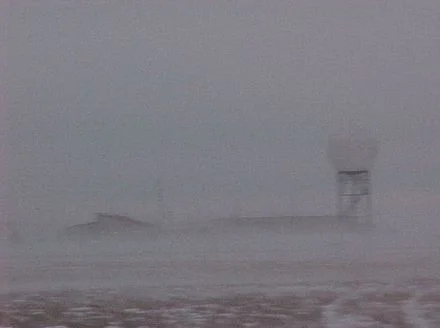
“The language of the howling wind allows an endless
Tale of winter to be told in one long syllable,
Here where this sea of flowing air has become a mere
Glaring of diffuse and mindless light…’’
— From “Grounds of Winter,’’ by John Hollander (1929-2013), a Connecticut-based poet.
Keep manufacturing in New England cities' mix

From Robert Whitcomb’s “Digital Diary,’’ in GoLocal24.com:
‘A healthy economy includes a mix of services, technology and manufacturing. Such a mix of sectors, each with somewhat different business cycles, can better maintain their regions’ stability than if they had to depend on just one type of business.
But rising rents and other local costs can drive out manufacturing from rich regions, as a Jan. 5 Boston Globe story reports in focusing on the challenges of soaring rent facing CommonWealth Kitchen, a Boston food-startup incubator and a food manufacturer. As The Globe’s great Jon Chesto notes:
“Sure, Boston stands to gain when new apartments, offices, and labs sprout out of shabby old industrial properties: more workers to feed the tech economy, maybe, or more taxes for the city’s coffers. But Boston loses something important, too.’’
And, at least until the robots kill the humans, we’re going to need food. So food companies would seem to be a strong part of our economic future and relatively resistant to recessions. Let’s encourage them. All this is a reason why United Natural Foods’s moving its headquarters to Providence from Dayville, Conn., in 2009 was very good news for Providence’s economy.
To read Mr. Chesto’s article, please hit this link.
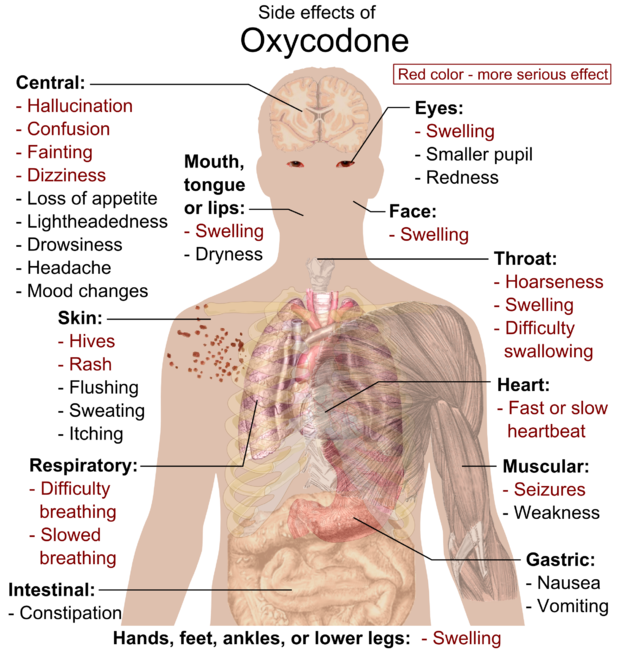
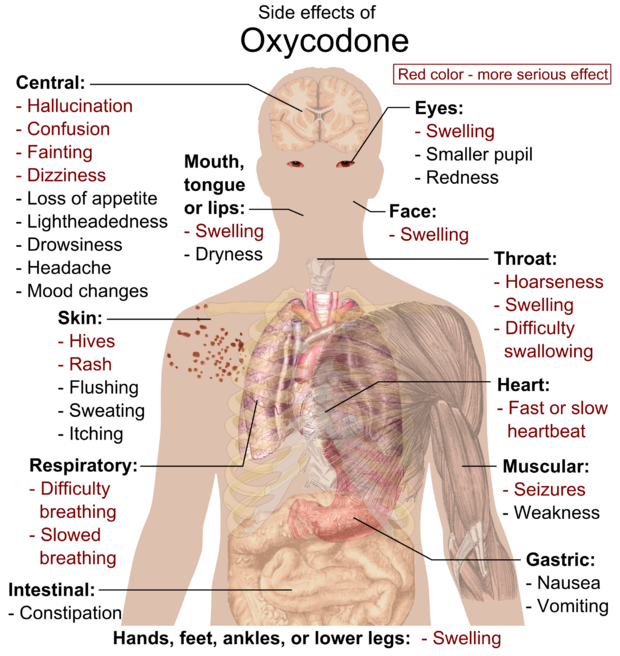
Victoria Knight: The more opioid marketing, the more overdose deaths
By VICTORIA KNIGHT
Researchers sketched a vivid line on Jan. 18 linking the dollars spent by drugmakers to woo doctors around the country to a vast opioid epidemic that has led to tens of thousands of deaths.
The study, published in JAMA Network Open, looked at county-specific federal data and found that the more opioid-related marketing dollars were spent in a county, the higher the rates of doctors who prescribed those drugs and, ultimately, the more overdose deaths occurred in that county.
For each three additional payments made to physicians per 100,000 people in a county, opioid overdose deaths were up 18 percent, according to the study. The researchers said their findings suggest that “amid a national opioid overdose crisis, reexamining the influence of the pharmaceutical industry may be warranted.”
And the researchers noted that marketing could be subtle or low-key. The most common type: meals provided to doctors.
Dr. Scott Hadland, the study’s lead author and an addiction specialist at Boston Medical Center’s Grayken Center for Addiction, has conducted previous studies connecting opioid marketing and opioid prescribing habits.
“To our knowledge, this is the first study to link opioid marketing to a potential increase in prescription opioid overdose deaths, and how this looks different across counties and areas of the country,” said Hadland, who is also a pediatrician.
Nearly 48,000 people died of opioid overdoses in 2017, about 68 percent of the total overdose deaths, according to the Centers for Disease Control and Prevention. Since 2000, the rate of fatal overdoses involving opioids has increased 200 percent. The study notes that opioid prescribing has declined since 2010, but it is still three times higher than in 1999.
The researchers linked three data sets: the Centers for Medicare & Medicaid Services Open Payments database that shows drugmakers’ payments to doctors; a database from the CDC that shows opioid prescribing rates; and another CDC set that provides mortality numbers from opioid overdoses.
They found that drugmakers spent nearly $40 million from Aug. 1, 2013, until the end of 2015 on marketing to 67,500 doctors across the country.
Opioid marketing to doctors can take various forms, although the study found that the widespread practice of providing meals for physicians might have the greatest influence. According to Hadland, prior research shows that meals make up nine of the 10 opioid-related marketing payments to doctors in the study.
“When you have one extra meal here or there, it doesn’t seem like a lot,” he said. “But when you apply this to all the doctors in this country, that could add up to more people being prescribed opioids, and ultimately more people dying.”
Dr. Andrew Kolodny, co-director of opioid policy research at Brandeis University’s Heller School for Social Policy and Management, said these meals may happen at conferences or industry-sponsored symposiums.
“There are also doctors who take money to do little small-dinner talks, which are in theory, supposed to educate colleagues about medications over dinner,” said Kolodny, who was not involved in the study. “In reality this means doctors are getting paid to show up at a fancy dinner with their wives or husbands, and it’s a way to incentivize prescribing.”
And those meals may add up.
“Counties where doctors receive more low-value payments is where you see the greatest increases in overdose rates,” said Magdalena Cerdá, a study co-author and director of the Center for Opioid Epidemiology and Policy at the New York University School of Medicine. The amount of the payments “doesn’t seem to matter so much,” she said, “but rather the opioid manufacturer’s frequent interactions with physicians.”
Dr. , who is the co-director of the Johns Hopkins Center for Drug Safety and Effectiveness and was not affiliated with the study, said that the findings about the influence of meals aligns with social science research.
“Studies have found that it may not be the value of the promotional expenditures that matters, but rather that they took place at all,” he said. “Another way to put it, is giving someone a pen and pad of paper may be as effective as paying for dinner at a steakhouse.”
The study says lawmakers should consider limits on drugmakers’ marketing “as part of a robust, evidence-based response to the opioid overdose epidemic.” But they also point out that efforts to put a high-dollar cap on marketing might not be effective since meals are relatively cheap.
In 2018, the New Jersey attorney general implemented a rule limiting contracts and payments between physicians and pharmaceutical companies to $10,000 per year.
The California Senate also passed similar legislation in 2017, but the bill was eventually stripped of the health care language.
The extent to which opioid marketing by pharmaceutical companies fueled the national opioid epidemic is at the center of more than 1,500 civil lawsuitsaround the country. The cases have mostly been brought by local and state governments. U.S. District Judge Dan Polster, who is overseeing hundreds of the cases, has scheduled the first trials for March.
In 2018, Kaiser Health News published a cache of Purdue Pharma’s marketing documents that displayed how the company marketed OxyContin to doctors beginning in 1995. Purdue Pharma announced it would stop marketing OxyContin last February.
Priscilla VanderVeer, a spokeswoman for the Pharmaceutical Research and Manufacturers of America, or PhRMA, said that doctors treating patients with opioids need education about benefits and risks. She added that it is “critically important that health care providers have the appropriate training to offer safer and more effective pain management.”
Cerdá said it is also important to consider that the study is not saying doctors change their prescribing practices intentionally.
“Our results suggest that this finding is subtle, and might not be recognizable to doctors that they’re actually changing their behavior,” said Cerdá. “It could be more of a subconscious thing after increased exposure to opioid marketing.”
KHN’s coverage of prescription drug development, costs and pricing is supported in part by the Laura and John Arnold Foundation.
Victoria Knight: vknight@kff.org, @victoriaregisk
'A child's imagination'
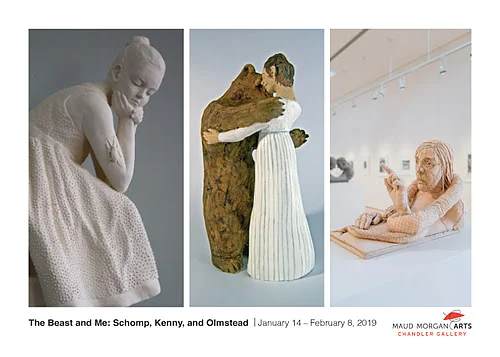
"The Beast and Me," the current show at the Chandler Gallery, in Cambridge, is, the gallery says, ““replete with scenes of a child's imagination. In their execution, the sculptures and drawings by Leslie Schomp, Andrea Scofield Olmstead and Mary Kenny feel lifelike, but their subjects are touched with the whimsy, curiosity and tenderness common in childhood fantasies.
”In one sculpture, a woman in a white gown wraps her arms around the waist of a large brown bear, his claws hovering tentatively over her shoulders; it's an embrace or slow dance frozen in time. In another, a small lion rests gently on a boy's head as he closes his eyes. His expression is so tranquil that he seems lost in a dream. ‘‘
'Try Common Sense'
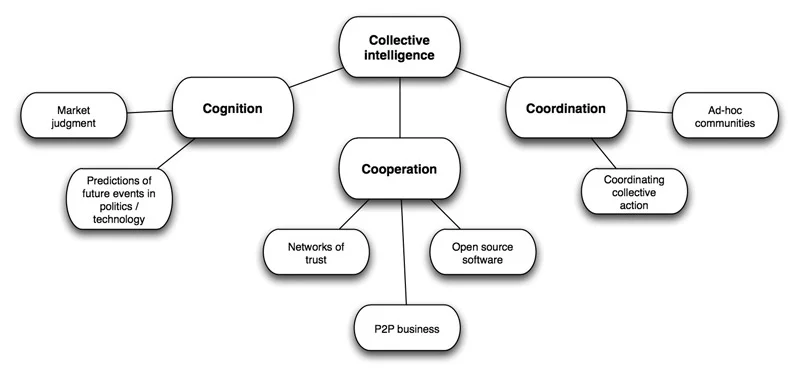
— Graphic by Olga Generozova
Commentary has begun on Philip K. Howard’s new book, Try Common Sense, available Jan. 29.
TIME highlights it as a "Book to Read": "As the rhetoric between American political parties grows more tense, Philip K. Howard offers a solution based in practicality."
Reason.com says the book "offers up concrete proposals not just to reform government but to route around it and get on with our lives." Listen to the recent Reason Podcast interview with Philip here.
Leading thinkers such as Jonathan Haidt, Former Sen. Alan Simpson, Mary Ann Glendon and George Gilder have strongly endorsed the book.
On the other hand...a review by Mark Green in this Sunday's New York Times attacks the book, asking: "Is now really the best time for a jeremiad against 'regulation'?" Because the book attacks left-wing ideologies (as well as those on the right), it's perhaps not surprising that Green, a prominent left-wing partisan, doesn't deal with the actual themes of the book - including how to make regulation practical.
More to come soon...
On Jan. 30, Philip will be discussing Try Common Sense at Politics and Prose in Washington, D.C. The event is free and open to the public.
On Feb. 19, Common Good and The Center on Capitalism and Society at Columbia University will host a morning forum, Bureaucracy vs. Democracy, discussing the need to reboot legacy bureaucracies. Details will follow, but you can RSVP now by emailing rmgiverin@commongood.org.
Tim Faulkner: Trump still pushing for offshore seismic surveying for oil and gas
Via ecoRI News (ecori.org)
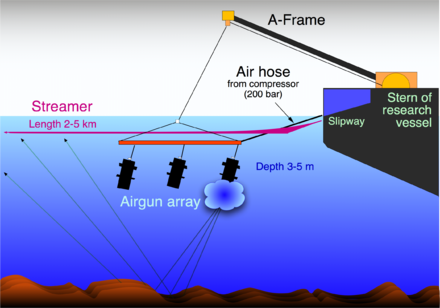
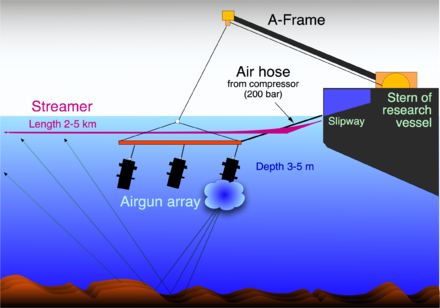
Despite the government shutdown, federal agencies are moving forward with permitting for seismic airgun surveying and the offshore drilling for natural gas and oil that may follow.
Press liaisons are furloughed, so it’s difficult to know the status of pending permits before the Bureau of Ocean Energy Management (BOEM) and the Department of Interior.
Nevertheless, the five exploration companies approved for sonic airgun blasting are still expected to hear from the Department of Interior this month, after which they can immediately begin surveying.
The Bureau of Safety and Environmental Enforcement (BSEE) is processing paperwork, as more than half of the agency’s 803 employees remain on the job, paid by “non-lapsing funds,” according to BSEE.
“During the shut-down BSEE will continue critical permitting and oversight activities associated with energy development on the Outer Continental Shelf, so as to allow the bureau to continue to support the sustained exploration and development of the Outer Continental Shelf during the shut-down,” according to a Dec. 17, 2018 BSEE statement.
Blasts from seismic airguns disrupt many aquatic ecosystems and harm sea mammals such as North Atlantic right whales, dolphins, and sea turtles, according to research. During surveys, ships fire underwater sonic blasts for hours and even days, sending sonic booms with 100,000 times the intensity of a jet engine thousands of miles through the ocean. The noise disrupts feeding, mating, and echolocation used by marine mammals. A 2017 study found that the sonic booms decimate vital sea life such as zooplankton.
Shortly before President Trump took office, in January 2017, BOEM denied the same airgun activity because of potential harm to marine life. But the National Oceanic and Atmospheric Administration (NOAA) reversed the decisions months later, saying that sea animals can recover from any harm.
Several environmental groups are suing NOAA’s National Marine Fisheries Service for allowing fossil-fuel exploration companies to conduct the seismic airgun activities and thereby violate protections like the Endangered Species Act.
In Rhode Island, members of the General Assembly joined elected officials from seven other states by sponsoring legislation that bans offshore drilling. Sen. Dawn Euer, D-Newport, and Rep. Lauren Carson, D-Newport, are expected to introduce matching bills in the Senate and House.
“The state and our institutions have invested incredible resources on forward-thinking coastal policy initiatives. Opening up coastal waters to offshore drilling is short-sighted and puts our economy at great risk,” Euer wrote in a press statement.
The legislation would prohibit oil drilling within state waters, which extends 3 nautical miles offshore. The bill would also ban the construction of oil platforms and port terminals and the installation of any equipment related to oil production within the state. In 2018, the same bill died in committee in both the House and Senate.
Similar legislation is being filed in Georgia, Hawaii, Maine, Massachusetts, New Hampshire, New York, and Oregon.
Massachusetts Rep. Dylan Fernandez, D-Woods Hole, filed a bill that bans oil and gas drilling off the coast of the Bay State.
In Washington, D.C., bipartisan steps were recently taken to stymie Trump’s plans for offshore exploration and drilling. Rep. David Cicilline, D-R.I., introduced a bill that prohibits the Department of the Interior from issuing leases for the exploration, development, or production of oil or natural gas off the New England coast. Other representatives introduced bills protecting the Atlantic and Pacific coasts, the eastern Gulf of Mexico, Alaska, and the Arctic.
“We’re not going to sit by and watch as President Trump plunders our oceans for his friends in the big oil companies,” Cicilline said.
Tim Faulkner is an ecoRI News journalist.
Don Pesci: Hartford is the canary in the Conn. mineshaft
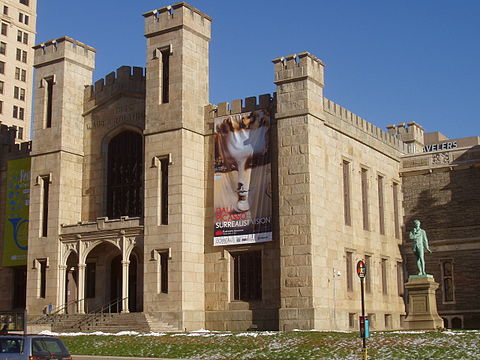
Hartford’s Wadsworth Atheneum, one of America’s oldest and best museums. The financially and sociologically stressed city still has many impressive cultural institutions, mostly dating back to its long economic heyday as a manufacturing center and “The Insurance Capital of the World,’’ when it had a large comfortable middle class and quite a few rich folks, too. Mark Twain probably was its most famous resident.
According to a story in a Hartford paper, the city’s mayor, Luke Bronin, a rising star in state politics, “declined to comment on the dispute” between Hartford teachers and their nominal patron, the Hartford Board of Education. The dispute is about contracts and the inability of the people of Hartford to finance years of overspending.
A few months ago, Bronin, unable to meet his contractual obligations, sought a bailout from state taxpayers. Bronin leapt from the Malloy administration frying pan, where he served as then Gov. Dannel Malloy’s chief counsel, directly into the fire as mayor of a city teetering on the edge of bankruptcy, and his former boss was only too happy to bail out his protege by flooding the city with state tax balm.
The Hartford school board is seeking concession from teacher union representatives, and the concessions will, if ever they bear fruit, make future state bailouts less burdensome to an all-Democrat political hegemon that may, under the enlightened administration of newly elected Gov. Ned Lamont, be less inclined to bail out Connecticut cities teetering precariously on the edge of bankruptcy.
The concessions that the Hartford Board of Education wishes to wrest from its teachers' unions are curative, which is to say they will help in overcoming crippling future deficits, while state bailouts are palliative; they simply put off an effective remedy until a more favorable moment – which, of course, never arrives. “Among the concessions sought by the school board,” we are told, “is a reduction in sick days from 20 to 15, two years of pay freezes, followed by a one percent increase in the third year, and a switch from a preferred provider medical plan to a health savings account.” In addition, “the board suggested eliminating a higher tier of pay for workers who have earned a master’s degree plus 60 additional credits, and reducing the number of union officers who are detached, with pay, from day to day district work from three to one.”
All these remedies reduce the municipal cost of labor, and it is the cost of labor that has made beggars of our state’s larger cities.
The state itself should take a lesson from this moment. The cost of labor in state government also produces the same set of seemingly intractable problems. Connecticut’s recurring deficits cannot be traced to an insufficiency of taxes, which have tripled in the course of four governors.
The crunch is coming, and it may arrive on Lamont’s lap during his first term. He would be wise not to pet the tiger. There was plenty of petting during Lamont’s first speech as governor: “I am a strong believer in labor, and now is the time to show that collective bargaining works in tough times, as well as good times. As our liabilities continue to grow faster than our assets, together we have to make the changes necessary to ensure that retirement security is a reality for our younger, as well as our older, state employees, and do that without breaking the bank.”
There are more curves in those few sentences than there are in the usual Connecticut cow path. Will Lamont present in his budget a straight path to prosperity – or not. The price of government in Connecticut has become too costly; how will Lamont reduce it so that the expenditures of the father will not be visited upon the sons, “yea even to the third and fourth generation.”
Executive director of AFSCME Council 4 Jody Barr and other labor leaders met with Lamont at the governor’s mansion a week after he had been sworn in as governor, and how did that go? Barr emerged from the meeting hopeful, according to an account by Christine Stuart of CTNewJunkie, “Barr said the governor has invited labor to be part of the process… his members have participated in the transition and are offering up ideas on how to improve state government… He said they will be at the table, but that it won’t a table where they negotiate more concessions… We’re all hopeful he’s going to bridge this fiscal thing,” Barr said. “It gives us hope we can get through it.”
One cannot drive a straight line through such oracular pronouncements.
Sometime in mid-February, Lamont will be presenting his budget to the General Assembly. If the governor’s bargaining session with union heads over contract negotiations were to be concluded BEFORE that date, the twists and turns in Lamont’s pre-contractual pronouncements will have been straightened out before the legislature decides to sign off on a budget document that very well may visit the expenditures of the fathers and mothers upon the sons and daughters of Connecticut, yea even to the third and fourth generation.
It’s perfectly reasonable for a state to give a low approval rating to a governor who deals in such budget necromancy. Dannel Malloy’s approval rating on his retirement from office, we now know, was 20 percent, the second lowest in the nation. Lamont tells us that he doesn't to wish to lose his shot. If so, he'd better shoot straight.
Don Pesci is a Vernon, Conn.-based essayist.
Before the snowblowers

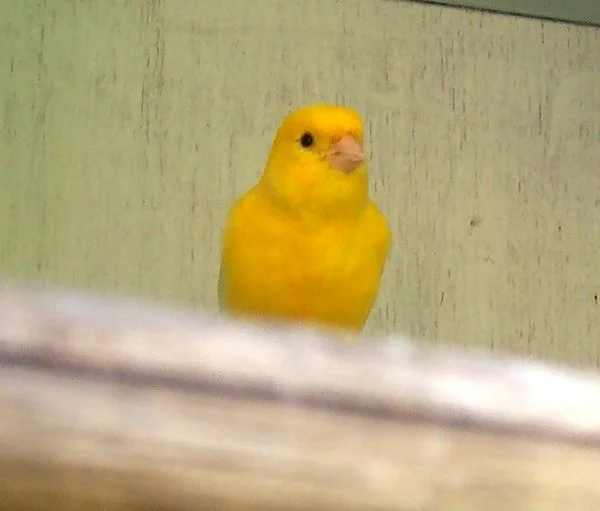
“Winter Blues,’’ by Nancy Spears Whitcomb
“Announced by all the trumpets of the sky,
Arrives the snow, and, driving o’er the fields,
Seems nowhere to alight: the whited air
Hides hills and woods, the river and the heaven,
And veils the farm-house at the garden’s end.
The sled and traveller stopped, the courier’s feet
Delayed, all friends shut out, the housemates sit
Around the radiant fireplace, enclosed
In a tumultuous privacy of Storm.”
— From Ralph Waldo Emerson’s “The Snow Storm’’
“Snow-Bound: A Winter Idyll,’’ by John Greenleaf Whittier (1807-1892)
“The sun that brief December day
Rose cheerless over hills of gray,
And, darkly circled, gave at noon
A sadder light than waning moon.
Slow tracing down the thickening sky
Its mute and ominous prophecy,
A portent seeming less than threat,
It sank from sight before it set.
A chill no coat, however stout,
Of homespun stuff could quite shut out,
A hard, dull bitterness of cold,
That checked, mid-vein, the circling race
Of life-blood in the sharpened face,
The coming of the snow-storm told.
The wind blew east; we heard the roar
Of Ocean on his wintry shore,
And felt the strong pulse throbbing there
Beat with low rhythm our inland air.
Meanwhile we did our nightly chores,—
Brought in the wood from out of doors,
Littered the stalls, and from the mows
Raked down the herd’s-grass for the cows;
Heard the horse whinnying for his corn;
And, sharply clashing horn on horn,
Impatient down the stanchion rows
The cattle shake their walnut bows;
While, peering from his early perch
Upon the scaffold’s pole of birch,
The cock his crested helmet bent
And down his querulous challenge sent.
Unwarmed by any sunset light
The gray day darkened into night,
A night made hoary with the swarm
And whirl-dance of the blinding storm,
As zigzag, wavering to and fro,
Crossed and recrossed the wingëd snow:
And ere the early bedtime came
The white drift piled the window-frame,
And through the glass the clothes-line posts
Looked in like tall and sheeted ghosts.
So all night long the storm roared on:
The morning broke without a sun;
In tiny spherule traced with lines
Of Nature’s geometric signs,
In starry flake, and pellicle,
All day the hoary meteor fell;
And, when the second morning shone,
We looked upon a world unknown,
On nothing we could call our own.
Around the glistening wonder bent
The blue walls of the firmament,
No cloud above, no earth below,—
A universe of sky and snow!
The old familiar sights of ours
Took marvellous shapes; strange domes and towers
Rose up where sty or corn-crib stood,
Or garden-wall, or belt of wood;
A smooth white mound the brush-pile showed,
A fenceless drift what once was road;
The bridle-post an old man sat
With loose-flung coat and high cocked hat;
The well-curb had a Chinese roof;
And even the long sweep, high aloof,
In its slant splendor, seemed to tell
Of Pisa’s leaning miracle.
A prompt, decisive man, no breath
Our father wasted: “Boys, a path!”
Well pleased, (for when did farmer boy
Count such a summons less than joy?)
Our buskins on our feet we drew;
With mittened hands, and caps drawn low,
To guard our necks and ears from snow,
We cut the solid whiteness through.
And, where the drift was deepest, made
A tunnel walled and overlaid
With dazzling crystal: we had read
Of rare Aladdin’s wondrous cave,
And to our own his name we gave,
With many a wish the luck were ours
To test his lamp’s supernal powers.
We reached the barn with merry din,
And roused the prisoned brutes within.
The old horse thrust his long head out,
And grave with wonder gazed about;
The cock his lusty greeting said,
And forth his speckled harem led;
The oxen lashed their tails, and hooked,
And mild reproach of hunger looked;
The hornëd patriarch of the sheep,
Like Egypt’s Amun roused from sleep,
Shook his sage head with gesture mute,
And emphasized with stamp of foot.
All day the gusty north-wind bore
The loosening drift its breath before;
Low circling round its southern zone,
The sun through dazzling snow-mist shone.
No church-bell lent its Christian tone
To the savage air, no social smoke
Curled over woods of snow-hung oak.
A solitude made more intense
By dreary-voicëd elements,
The shrieking of the mindless wind,
The moaning tree-boughs swaying blind,
And on the glass the unmeaning beat
Of ghostly finger-tips of sleet.
Beyond the circle of our hearth
No welcome sound of toil or mirth
Unbound the spell, and testified
Of human life and thought outside.
We minded that the sharpest ear
The buried brooklet could not hear,
The music of whose liquid lip
Had been to us companionship,
And, in our lonely life, had grown
To have an almost human tone.
As night drew on, and, from the crest
Of wooded knolls that ridged the west,
The sun, a snow-blown traveller, sank
From sight beneath the smothering bank,
We piled, with care, our nightly stack
Of wood against the chimney-back,—
The oaken log, green, huge, and thick,
And on its top the stout back-stick;
The knotty forestick laid apart,
And filled between with curious art
The ragged brush; then, hovering near,
We watched the first red blaze appear,
Heard the sharp crackle, caught the gleam
On whitewashed wall and sagging beam,
Until the old, rude-furnished room
Burst, flower-like, into rosy bloom;
While radiant with a mimic flame
Outside the sparkling drift became,
And through the bare-boughed lilac-tree
Our own warm hearth seemed blazing free.
The crane and pendent trammels showed,
The Turks’ heads on the andirons glowed;
While childish fancy, prompt to tell
The meaning of the miracle,
Whispered the old rhyme: “Under the tree,
When fire outdoors burns merrily,
There the witches are making tea.”
The moon above the eastern wood
Shone at its full; the hill-range stood
Transfigured in the silver flood,
Its blown snows flashing cold and keen,
Dead white, save where some sharp ravine
Took shadow, or the sombre green
Of hemlocks turned to pitchy black
Against the whiteness at their back.
For such a world and such a night
Most fitting that unwarming light,
Which only seemed where’er it fell
To make the coldness visible.
Shut in from all the world without,
We sat the clean-winged hearth about,
Content to let the north-wind roar
In baffled rage at pane and door,
While the red logs before us beat
The frost-line back with tropic heat;
And ever, when a louder blast
Shook beam and rafter as it passed,
The merrier up its roaring draught
The great throat of the chimney laughed;
The house-dog on his paws outspread
Laid to the fire his drowsy head,
The cat’s dark silhouette on the wall
A couchant tiger’s seemed to fall;
And, for the winter fireside meet,
Between the andirons’ straddling feet,
The mug of cider simmered slow,
The apples sputtered in a row,
And, close at hand, the basket stood
With nuts from brown October’s wood.
What matter how the night behaved?
What matter how the north-wind raved?
Blow high, blow low, not all its snow
Could quench our hearth-fire’s ruddy glow.
O Time and Change!—with hair as gray
As was my sire’s that winter day,
How strange it seems, with so much gone
Of life and love, to still live on!
Ah, brother! only I and thou
Are left of all that circle now,—
The dear home faces whereupon
That fitful firelight paled and shone.
Henceforward, listen as we will,
The voices of that hearth are still;
Look where we may, the wide earth o’er,
Those lighted faces smile no more.
We tread the paths their feet have worn,
We sit beneath their orchard trees,
We hear, like them, the hum of bees
And rustle of the bladed corn;
We turn the pages that they read,
Their written words we linger o’er,
But in the sun they cast no shade,
No voice is heard, no sign is made,
No step is on the conscious floor!
Yet Love will dream, and Faith will trust,
(Since He who knows our need is just,)
That somehow, somewhere, meet we must.
Alas for him who never sees
The stars shine through his cypress-trees!
Who, hopeless, lays his dead away,
Nor looks to see the breaking day
Across the mournful marbles play!
Who hath not learned, in hours of faith,
The truth to flesh and sense unknown,
That Life is ever lord of Death,
And Love can never lose its own!
We sped the time with stories old,
Wrought puzzles out, and riddles told,
Or stammered from our school-book lore
“The Chief of Gambia’s golden shore.”
How often since, when all the land
Was clay in Slavery’s shaping hand,
As if a far-blown trumpet stirred
The languorous sin-sick air, I heard:
“Does not the voice of reason cry,
Claim the first right which Nature gave,
From the red scourge of bondage to fly,
Nor deign to live a burdened slave!“
Our father rode again his ride
On Memphremagog’s wooded side;
Sat down again to moose and samp
In trapper’s hut and Indian camp;
Lived o’er the old idyllic ease
Beneath St. François’ hemlock-trees;
Again for him the moonlight shone
On Norman cap and bodiced zone;
Again he heard the violin play
Which led the village dance away.
And mingled in its merry whirl
The grandam and the laughing girl.
Or, nearer home, our steps he led
Where Salisbury’s level marshes spread
Mile-wide as flies the laden bee;
Where merry mowers, hale and strong,
Swept, scythe on scythe, their swaths along
The low green prairies of the sea.
We shared the fishing off Boar’s Head,
And round the rocky Isles of Shoals
The hake-broil on the drift-wood coals;
The chowder on the sand-beach made,
Dipped by the hungry, steaming hot,
With spoons of clam-shell from the pot.
We heard the tales of witchcraft old,
And dream and sign and marvel told
To sleepy listeners as they lay
Stretched idly on the salted hay,
Adrift along the winding shores,
When favoring breezes deigned to blow
The square sail of the gundelow
And idle lay the useless oars.
Our mother, while she turned her wheel
Or run the new-knit stocking-heel,
Told how the Indian hordes came down
At midnight on Concheco town,
And how her own great-uncle bore
His cruel scalp-mark to fourscore.
Recalling, in her fitting phrase,
So rich and picturesque and free
(The common unrhymed poetry
Of simple life and country ways,)
The story of her early days,—
She made us welcome to her home;
Old hearths grew wide to give us room;
We stole with her a frightened look
At the gray wizard’s conjuring-book,
The fame whereof went far and wide
Through all the simple country side;
We heard the hawks at twilight play,
The boat-horn on Piscataqua,
The loon’s weird laughter far away;
We fished her little trout-brook, knew
What flowers in wood and meadow grew,
What sunny hillsides autumn-brown
She climbed to shake the ripe nuts down,
Saw where in sheltered cove and bay,
The ducks’ black squadron anchored lay,
And heard the wild-geese calling loud
Beneath the gray November cloud.
Then, haply, with a look more grave,
And soberer tone, some tale she gave
From painful Sewel’s ancient tome,
Beloved in every Quaker home,
Of faith fire-winged by martyrdom,
Or Chalkley’s Journal, old and quaint,—
Gentlest of skippers, rare sea-saint!—
Who, when the dreary calms prevailed,
And water-butt and bread-cask failed,
And cruel, hungry eyes pursued
His portly presence mad for food,
With dark hints muttered under breath
Of casting lots for life or death,
Offered, if Heaven withheld supplies,
To be himself the sacrifice.
Then, suddenly, as if to save
The good man from his living grave,
A ripple on the water grew,
A school of porpoise flashed in view.
“Take, eat,” he said, “and be content;
These fishes in my stead are sent
By Him who gave the tangled ram
To spare the child of Abraham.”
Our uncle, innocent of books,
Was rich in lore of fields and brooks,
The ancient teachers never dumb
Of Nature’s unhoused lyceum.
In moons and tides and weather wise,
He read the clouds as prophecies,
And foul or fair could well divine,
By many an occult hint and sign,
Holding the cunning-warded keys
To all the woodcraft mysteries;
Himself to Nature’s heart so near
That all her voices in his ear
Of beast or bird had meanings clear,
Like Apollonius of old,
Who knew the tales the sparrows told,
Or Hermes, who interpreted
What the sage cranes of Nilus said;
A simple, guileless, childlike man,
Content to live where life began;
Strong only on his native grounds,
The little world of sights and sounds
Whose girdle was the parish bounds,
Whereof his fondly partial pride
The common features magnified,
As Surrey hills to mountains grew
In White of Selborne’s loving view,—
He told how teal and loon he shot,
And how the eagle’s eggs he got,
The feats on pond and river done,
The prodigies of rod and gun;
Till, warming with the tales he told,
Forgotten was the outside cold,
The bitter wind unheeded blew,
From ripening corn the pigeons flew,
The partridge drummed i’ the wood, the mink
Went fishing down the river-brink.
In fields with bean or clover gay,
The woodchuck, like a hermit gray,
Peered from the doorway of his cell;
The muskrat plied the mason’s trade,
And tier by tier his mud-walls laid;
And from the shagbark overhead
The grizzled squirrel dropped his shell.
Next, the dear aunt, whose smile of cheer
And voice in dreams I see and hear,—
The sweetest woman ever Fate
Perverse denied a household mate,
Who, lonely, homeless, not the less
Found peace in love’s unselfishness,
And welcome wheresoe’er she went,
A calm and gracious element,
Whose presence seemed the sweet income
And womanly atmosphere of home,—
Called up her girlhood memories,
The huskings and the apple-bees,
The sleigh-rides and the summer sails,
Weaving through all the poor details
And homespun warp of circumstance
A golden woof-thread of romance.
For well she kept her genial mood
And simple faith of maidenhood;
Before her still a cloud-land lay,
The mirage loomed across her way;
The morning dew, that dries so soon
With others, glistened at her noon;
Through years of toil and soil and care,
From glossy tress to thin gray hair,
All unprofaned she held apart
The virgin fancies of the heart.
Be shame to him of woman born
Who hath for such but thought of scorn.
There, too, our elder sister plied
Her evening task the stand beside;
A full, rich nature, free to trust,
Truthful and almost sternly just,
Impulsive, earnest, prompt to act,
And make her generous thought a fact,
Keeping with many a light disguise
The secret of self-sacrifice.
O heart sore-tried! thou hast the best
That Heaven itself could give thee,—rest,
Rest from all bitter thoughts and things!
How many a poor one’s blessing went
With thee beneath the low green tent
Whose curtain never outward swings!
As one who held herself a part
Of all she saw, and let her heart
Against the household bosom lean,
Upon the motley-braided mat
Our youngest and our dearest sat,
Lifting her large, sweet, asking eyes,
Now bathed in the unfading green
And holy peace of Paradise.
Oh, looking from some heavenly hill,
Or from the shade of saintly palms,
Or silver reach of river calms,
Do those large eyes behold me still?
With me one little year ago:—
The chill weight of the winter snow
For months upon her grave has lain;
And now, when summer south-winds blow
And brier and harebell bloom again,
I tread the pleasant paths we trod,
I see the violet-sprinkled sod
Whereon she leaned, too frail and weak
The hillside flowers she loved to seek,
Yet following me where’er I went
With dark eyes full of love’s content.
The birds are glad; the brier-rose fills
The air with sweetness; all the hills
Stretch green to June’s unclouded sky;
But still I wait with ear and eye
For something gone which should be nigh,
A loss in all familiar things,
In flower that blooms, and bird that sings.
And yet, dear heart! remembering thee,
Am I not richer than of old?
Safe in thy immortality,
What change can reach the wealth I hold?
What chance can mar the pearl and gold
Thy love hath left in trust with me?
And while in life’s late afternoon,
Where cool and long the shadows grow,
I walk to meet the night that soon
Shall shape and shadow overflow,
I cannot feel that thou art far,
Since near at need the angels are;
And when the sunset gates unbar,
Shall I not see thee waiting stand,
And, white against the evening star,
The welcome of thy beckoning hand?
Brisk wielder of the birch and rule,
The master of the district school
Held at the fire his favored place,
Its warm glow lit a laughing face
Fresh-hued and fair, where scarce appeared
The uncertain prophecy of beard.
He teased the mitten-blinded cat,
Played cross-pins on my uncle’s hat,
Sang songs, and told us what befalls
In classic Dartmouth’s college halls.
Born the wild Northern hills among,
From whence his yeoman father wrung
By patient toil subsistence scant,
Not competence and yet not want,
He early gained the power to pay
His cheerful, self-reliant way;
Could doff at ease his scholar’s gown
To peddle wares from town to town;
Or through the long vacation’s reach
In lonely lowland districts teach,
Where all the droll experience found
At stranger hearths in boarding round,
The moonlit skater’s keen delight,
The sleigh-drive through the frosty night,
The rustic party, with its rough
Accompaniment of blind-man’s-buff,
And whirling-plate, and forfeits paid,
His winter task a pastime made.
Happy the snow-locked homes wherein
He tuned his merry violin,
Or played the athlete in the barn,
Or held the good dame’s winding-yarn,
Or mirth-provoking versions told
Of classic legends rare and old,
Wherein the scenes of Greece and Rome
Had all the commonplace of home,
And little seemed at best the odds
’Twixt Yankee pedlers and old gods;
Where Pindus-born Arachthus took
The guise of any grist-mill brook,
And dread Olympus at his will
Became a huckleberry hill.
A careless boy that night he seemed;
But at his desk he had the look
And air of one who wisely schemed,
And hostage from the future took
In trainëd thought and lore of book.
Large-brained, clear-eyed, of such as he
Shall Freedom’s young apostles be,
Who, following in War’s bloody trail,
Shall every lingering wrong assail;
All chains from limb and spirit strike,
Uplift the black and white alike;
Scatter before their swift advance
The darkness and the ignorance,
The pride, the lust, the squalid sloth,
Which nurtured Treason’s monstrous growth,
Made murder pastime, and the hell
Of prison-torture possible;
The cruel lie of caste refute,
Old forms remould, and substitute
For Slavery’s lash the freeman’s will,
For blind routine, wise-handed skill;
A school-house plant on every hill,
Stretching in radiate nerve-lines thence
The quick wires of intelligence;
Till North and South together brought
Shall own the same electric thought,
In peace a common flag salute,
And, side by side in labor’s free
And unresentful rivalry,
Harvest the fields wherein they fought.
Another guest that winter night
Flashed back from lustrous eyes the light.
Unmarked by time, and yet not young,
The honeyed music of her tongue
And words of meekness scarcely told
A nature passionate and bold,
Strong, self-concentred, spurning guide,
Its milder features dwarfed beside
Her unbent will’s majestic pride.
She sat among us, at the best,
A not unfeared, half-welcome guest,
Rebuking with her cultured phrase
Our homeliness of words and ways.
A certain pard-like, treacherous grace
Swayed the lithe limbs and drooped the lash,
Lent the white teeth their dazzling flash;
And under low brows, black with night,
Rayed out at times a dangerous light;
The sharp heat-lightnings of her face
Presaging ill to him whom Fate
Condemned to share her love or hate.
A woman tropical, intense
In thought and act, in soul and sense,
She blended in a like degree
The vixen and the devotee,
Revealing with each freak or feint
The temper of Petruchio’s Kate,
The raptures of Siena’s saint.
Her tapering hand and rounded wrist
Had facile power to form a fist;
The warm, dark languish of her eyes
Was never safe from wrath’s surprise.
Brows saintly calm and lips devout
Knew every change of scowl and pout;
And the sweet voice had notes more high
And shrill for social battle-cry.
Since then what old cathedral town
Has missed her pilgrim staff and gown,
What convent-gate has held its lock
Against the challenge of her knock!
Through Smyrna’s plague-hushed thoroughfares,
Up sea-set Malta’s rocky stairs,
Gray olive slopes of hills that hem
Thy tombs and shrines, Jerusalem,
Or startling on her desert throne
The crazy Queen of Lebanon
With claims fantastic as her own,
Her tireless feet have held their way;
And still, unrestful, bowed, and gray,
She watches under Eastern skies,
With hope each day renewed and fresh,
The Lord’s quick coming in the flesh,
Whereof she dreams and prophesies!
Where’er her troubled path may be,
The Lord’s sweet pity with her go!
The outward wayward life we see,
The hidden springs we may not know.
Nor is it given us to discern
What threads the fatal sisters spun,
Through what ancestral years has run
The sorrow with the woman born,
What forged her cruel chain of moods,
What set her feet in solitudes,
And held the love within her mute,
What mingled madness in the blood,
A life-long discord and annoy,
Water of tears with oil of joy,
And hid within the folded bud
Perversities of flower and fruit.
It is not ours to separate
The tangled skein of will and fate,
To show what metes and bounds should stand
Upon the soul’s debatable land,
And between choice and Providence
Divide the circle of events;
But He who knows our frame is just,
Merciful and compassionate,
And full of sweet assurances
And hope for all the language is,
That He remembereth we are dust!
At last the great logs, crumbling low,
Sent out a dull and duller glow,
The bull’s-eye watch that hung in view,
Ticking its weary circuit through,
Pointed with mutely warning sign
Its black hand to the hour of nine.
That sign the pleasant circle broke:
My uncle ceased his pipe to smoke,
Knocked from its bowl the refuse gray,
And laid it tenderly away;
Then roused himself to safely cover
The dull red brands with ashes over.
And while, with care, our mother laid
The work aside, her steps she stayed
One moment, seeking to express
Her grateful sense of happiness
For food and shelter, warmth and health,
And love’s contentment more than wealth,
With simple wishes (not the weak,
Vain prayers which no fulfilment seek,
But such as warm the generous heart,
O’er-prompt to do with Heaven its part)
That none might lack, that bitter night,
For bread and clothing, warmth and light.
Within our beds awhile we heard
The wind that round the gables roared,
With now and then a ruder shock,
Which made our very bedsteads rock.
We heard the loosened clapboards tost,
The board-nails snapping in the frost;
And on us, through the unplastered wall,
Felt the light sifted snow-flakes fall.
But sleep stole on, as sleep will do
When hearts are light and life is new;
Faint and more faint the murmurs grew,
Till in the summer-land of dreams
They softened to the sound of streams,
Low stir of leaves, and dip of oars,
And lapsing waves on quiet shores.
Next morn we wakened with the shout
Of merry voices high and clear;
And saw the teamsters drawing near
To break the drifted highways out.
Down the long hillside treading slow
We saw the half-buried oxen go,
Shaking the snow from heads uptost,
Their straining nostrils white with frost.
Before our door the straggling train
Drew up, an added team to gain.
The elders threshed their hands a-cold,
Passed, with the cider-mug, their jokes
From lip to lip; the younger folks
Down the loose snow-banks, wrestling, rolled,
Then toiled again the cavalcade
O’er windy hill, through clogged ravine,
And woodland paths that wound between
Low drooping pine-boughs winter-weighed.
From every barn a team afoot,
At every house a new recruit,
Where, drawn by Nature’s subtlest law,
Haply the watchful young men saw
Sweet doorway pictures of the curls
And curious eyes of merry girls,
Lifting their hands in mock defence
Against the snow-ball’s compliments,
And reading in each missive tost
The charm with Eden never lost.
We heard once more the sleigh-bells’ sound;
And, following where the teamsters led,
The wise old Doctor went his round,
Just pausing at our door to say,
In the brief autocratic way
Of one who, prompt at Duty’s call,
Was free to urge her claim on all,
That some poor neighbor sick abed
At night our mother’s aid would need.
For, one in generous thought and deed,
What mattered in the sufferer’s sight
The Quaker matron’s inward light,
The Doctor’s mail of Calvin’s creed?
All hearts confess the saints elect
Who, twain in faith, in love agree,
And melt not in an acid sect
The Christian pearl of charity!
So days went on: a week had passed
Since the great world was heard from last.
The Almanac we studied o’er,
Read and reread our little store
Of books and pamphlets, scarce a score;
One harmless novel, mostly hid
From younger eyes, a book forbid,
And poetry, (or good or bad,
A single book was all we had,)
Where Ellwood’s meek, drab-skirted Muse,
A stranger to the heathen Nine,
Sang, with a somewhat nasal whine,
The wars of David and the Jews.
At last the floundering carrier bore
The village paper to our door.
Lo! broadening outward as we read,
To warmer zones the horizon spread
In panoramic length unrolled
We saw the marvels that it told.
Before us passed the painted Creeks,
And daft McGregor on his raids
In Costa Rica’s everglades.
And up Taygetos winding slow
Rode Ypsilanti’s Mainote Greeks,
A Turk’s head at each saddle-bow!
Welcome to us its week-old news,
Its corner for the rustic Muse,
Its monthly gauge of snow and rain,
Its record, mingling in a breath
The wedding bell and dirge of death:
Jest, anecdote, and love-lorn tale,
The latest culprit sent to jail;
Its hue and cry of stolen and lost,
Its vendue sales and goods at cost,
And traffic calling loud for gain.
We felt the stir of hall and street,
The pulse of life that round us beat;
The chill embargo of the snow
Was melted in the genial glow;
Wide swung again our ice-locked door,
And all the world was ours once more!
Clasp, Angel of the backword look
And folded wings of ashen gray
And voice of echoes far away,
The brazen covers of thy book;
The weird palimpsest old and vast,
Wherein thou hid’st the spectral past;
Where, closely mingling, pale and glow
The characters of joy and woe;
The monographs of outlived years,
Or smile-illumed or dim with tears,
Green hills of life that slope to death,
And haunts of home, whose vistaed trees
Shade off to mournful cypresses
With the white amaranths underneath.
Even while I look, I can but heed
The restless sands’ incessant fall,
Importunate hours that hours succeed,
Each clamorous with its own sharp need,
And duty keeping pace with all.
Shut down and clasp with heavy lids;
I hear again the voice that bids
The dreamer leave his dream midway
For larger hopes and graver fears:
Life greatens in these later years,
The century’s aloe flowers to-day!
Yet, haply, in some lull of life,
Some Truce of God which breaks its strife,
The worldling’s eyes shall gather dew,
Dreaming in throngful city ways
Of winter joys his boyhood knew;
And dear and early friends—the few
Who yet remain—shall pause to view
These Flemish pictures of old days;
Sit with me by the homestead hearth,
And stretch the hands of memory forth
To warm them at the wood-fire’s blaze!
And thanks untraced to lips unknown
Shall greet me like the odors blown
From unseen meadows newly mown,
Or lilies floating in some pond,
Wood-fringed, the wayside gaze beyond;
The traveller owns the grateful sense
Of sweetness near, he knows not whence,
And, pausing, takes with forehead bare
The benediction of the air.’’

The great TV news show expensive-pill push

From Robert Whitcomb's "Digital Diary,'' in GoLocal24.com
A study in the Journal of the American Medical Association discusses an all-too-little noted reason for America’s bad but expensive health-care “system’’.
The research, by two Dartmouth professors of medicine, reports that marketing by drug makers and other health-care companies rose to almost $30 billion a year in 2016 (and is presumably higher now). It’s obvious that the plan was/is to steer ever-more patients and physicians toward treatments that are brand-new or at least still under patent and much more expensive and sometimes less effective, and indeed riskier, than long-established treatments, including generic drugs.
We all end up paying for this directly or indirectly, in co-pays, insurance premiums and taxes (for Medicare and Medicaid). Unfortunately, given how Washington is run, there’s no imminent cure for the greed of the health industry, and, to be fair, their many direct or indirect (pension funds) investors.
Perhaps the best place to see this often misleading marketing is during the nightly broadcast news shows, with their older and generally well-insured viewers. One ad after another for expensive new drugs! Many viewers are persuaded by the advertising to press their physicians to prescribe the new stuff for them immediately, which many doctors are more than happy to do to keep them satisfied.
To read the article, please hit this link.
Make it easier to get to Hollywood

Terminal lobby at T.F. Green Airport, which serves southeastern New England.
From Robert Whitcomb’s “Digital Diary,’’ in GoLocal24.com
Greater Providence has long been hurt by the absence of direct flights to the West Coast from T.F. Green Airport (although there are a few direct flights to Europe). That is especially true for sectors connected with media and tech. Consider Pawtucket-based Hasbro, which has long since become an entertainment business rather than just a toy company. So its creative and executive people need to go back and forth a lot to Los Angeles. L.A. and New York are the media and entertainment capitals. No wonder that Hasbro is reportedly considering moving its headquarters to one of those two cities. Or it might settle for downtown Providence, especially because the Rhode Island School of Design is there.
The Providence area has many animators, filmmakers, illustrators, graphic designers and so on. Many have work that may take them often to and from the West Coast.
And many southern New England companies need to keep connected with the tech hubs of Silicon Valley, in the San Jose/San Francisco area, and Seattle.
Now that T.F. Green Airport’s main runway has been extended, non-stop service to the West Coast is feasible, offering a way to avoid the frustrating congestion you must go through to get to and from Boston’s Logan Airport.
Some see Sun Country Airlines’ announcement that it will start service this spring from Green to Nashville and Minneapolis-St. Paul as an interim step toward those direct flights. The airline has numerous flights from its Minnesota base to the West Coast. Let’s hope that Hasbro, etc., persuades the airline to start non-stop flights from Rhode Island to the West Coast as soon as possible.
xxx
“Creative types’’ want to be near creative types. Thus it’s not surprising that the growing Alex and Ani jewelry company is moving from Cranston to downtown Providence, not coincidentally next to the Rhode Island School of Design (which has produced many jewelry designers) and in a neighborhood crowded with Millennials. Sort of like Amazon setting up new headquarters in New York City and Arlington, Va., right across the Potomac from Washington, D.C.
Alex and Ani is opening new stores on the West Coast, which should encourage the company to join Hasbro, et al., in lobbying for nonstop flights from Green to the West Coast.
Llewellyn King: The real crises facing America -- stubborn belly fat, cellulite, crepey skin

A review of television advertising turns up keys to what is really bothering Americans -- making them grouchy, despairing and causing them to vote in strange ways.
It is nothing short of a pandemic. There has been no word yet from the Republican or Democratic leadership on this debilitating national crisis that is causing more than half of us to act strangely and to seek to alleviate or conceal our affliction.
It is, of course, stubborn belly fat (SBF). We carry around, collectively, millions of pounds of it.
If you are gasping, it is because you know what I mean. You know the misery of that roll below the navel that will not go away despite extreme measures like jogging or eating African berries as recommended by Dr. Oz, who is one of the few men of his age who does not have SBF. Of course, he looks as though he has been in a Turkish prison all his life and has never had enough square meals to get the dreaded SBF.
My own research shows that SBF is followed on the Misery Index by cellulite and, growing in severity but still far behind SBF, crepey skin. Ugh! Happily, cellulite does not have to be shown: Avoid beaches and pools and if you are unsure, undress in the dark. There are myriad creams that offer to banish crepey skin. They may be mildly effective but the surefire fix, never patented, is long sleeves. Hide it.
Sadly you cannot hide that roll around the belly, just below the belly button and above the recreation area. It wobbles in your bathing suit, bulges in pants and dresses when you sit. There are various rubberized garments which will pull it in for as long as you can stand the constriction, but those only flatten: maximum discomfort for minimum concealment.
SBF is pernicious: It is like a tattoo, there for all time.
Now there are those who say that diet and exercise will banish it. Diet and exercise, those two imposters that are prescribed for everything from a broken heart to bankruptcy. The medical profession has an answer: diet and exercise. Lies! Americans have been running since the 1970s, have joined health clubs in the millions and have eschewed everything that tastes good. You know what? SBF is spreading.
Eat only lettuce and you will die of malnutrition, emaciated – except for that ring around the tummy, belly fat. Believe me, it will go with you to the grave, jiggling. The hips may shrink, the thighs contract, the chest disappear inside the rib cage but look down and – Oh, horror! -- it is there wobbling, mocking, and taunting, keeping you from love, happiness at the beach or pool, a job promotion and defying the best tailors and dressmakers to wall it in.
It is even a sore political subject.
Former President Obama did not seem to have any, which depressed his approval ratings. It made it hard for some to trust him. Another former president, Bill Clinton, who is a shadow of his former self and a vegan, knows all about it. I bet that skinny as he is now, compared with his time of serial hamburger intake, below his belt line, there is a strip of protruding fat that harkens back to days of indulgence: the irremovable scar of eating a lot.
As for President Trump, with that front-facing bay window, you know there is a sack of SBF. I know how that feels. Mine wants a doughnut right now.
Llewellyn King is executive producer and host of White House Chronicle, on PBS. His email is llewellynking1@gmail.com. He’s based in Washington, D.C., and Rhode Island.
In the 'Eastern Woodlands'

Pequot Museum exhibit showing a version of a Mashantucket Pequot warrior at the Pequots’ vast Foxwoods casino.
I grew up in the unlikely place of Connecticut. The Eastern Woodlands. It was semi-rural where I grew up. I was fascinated by the Pequot and the Mohegan Indians of that area.
— John Fusco, screenwriter and producer. He was born in Prospect, Conn.
Somewhat bucolic Prospect, Conn., where the “Eastern Woodlands’’ have been turned into exurbia/suburbia.
Keolis to resume MBTA weekend fare program

MBTA Commuter Rail locomotive at South Station.
This is from The New England Council:
“Keolis North America, a New England Council member, has announced that beginning this month it will resume the $10 Commuter Rail weekend fare pilot program in partnership with the Massachusetts Bay Transportation Authority. Keolis is contracted to operate the MBTA’s Commuter Rail system, which provides rail service throughout Greater Boston and into Rhode Island.
This program was first piloted during the summer of 2018, with the goal of increasing Commuter Rail ridership and revenue on the weekends. This initiative resulted in more than 180,000 tickets being sold, and very positive feedback from passengers. Like before, this special fare will cover the first train on Saturday to the last train on Sunday, and will apply across all zones and lines.
David Scorey, general manager and CEO of Keolis, said, “The MBTA’s reduced weekend fare initiative gives passengers a convenient and affordable option to visit a number of great destinations across the greater Boston area. We’re pleased to partner with the MBTA to continue this initiative that encourages new passengers to try Commuter Rail, helps to grow ridership, and promotes an environmentally friendly transit option.”