
Vox clamantis in deserto
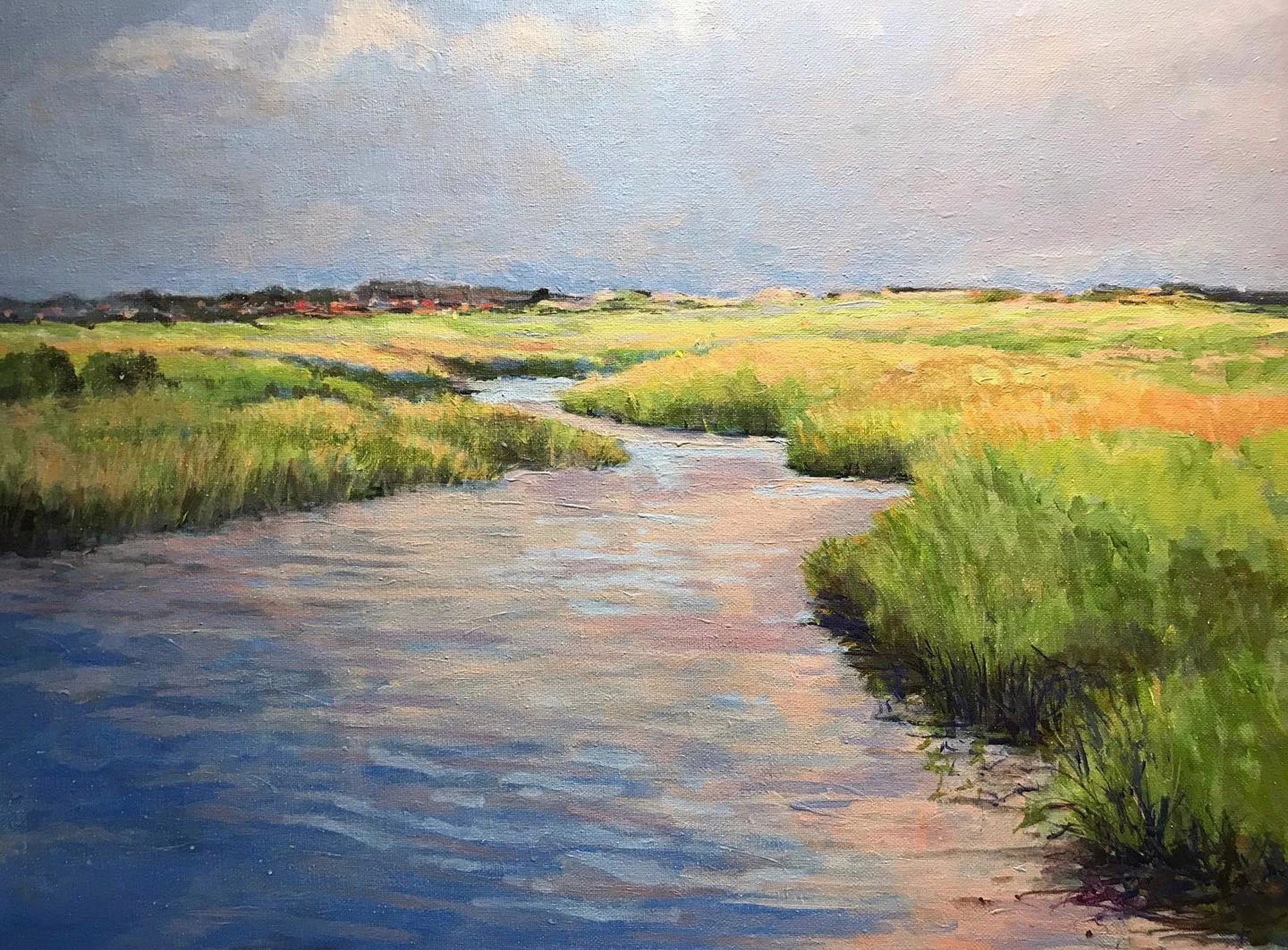
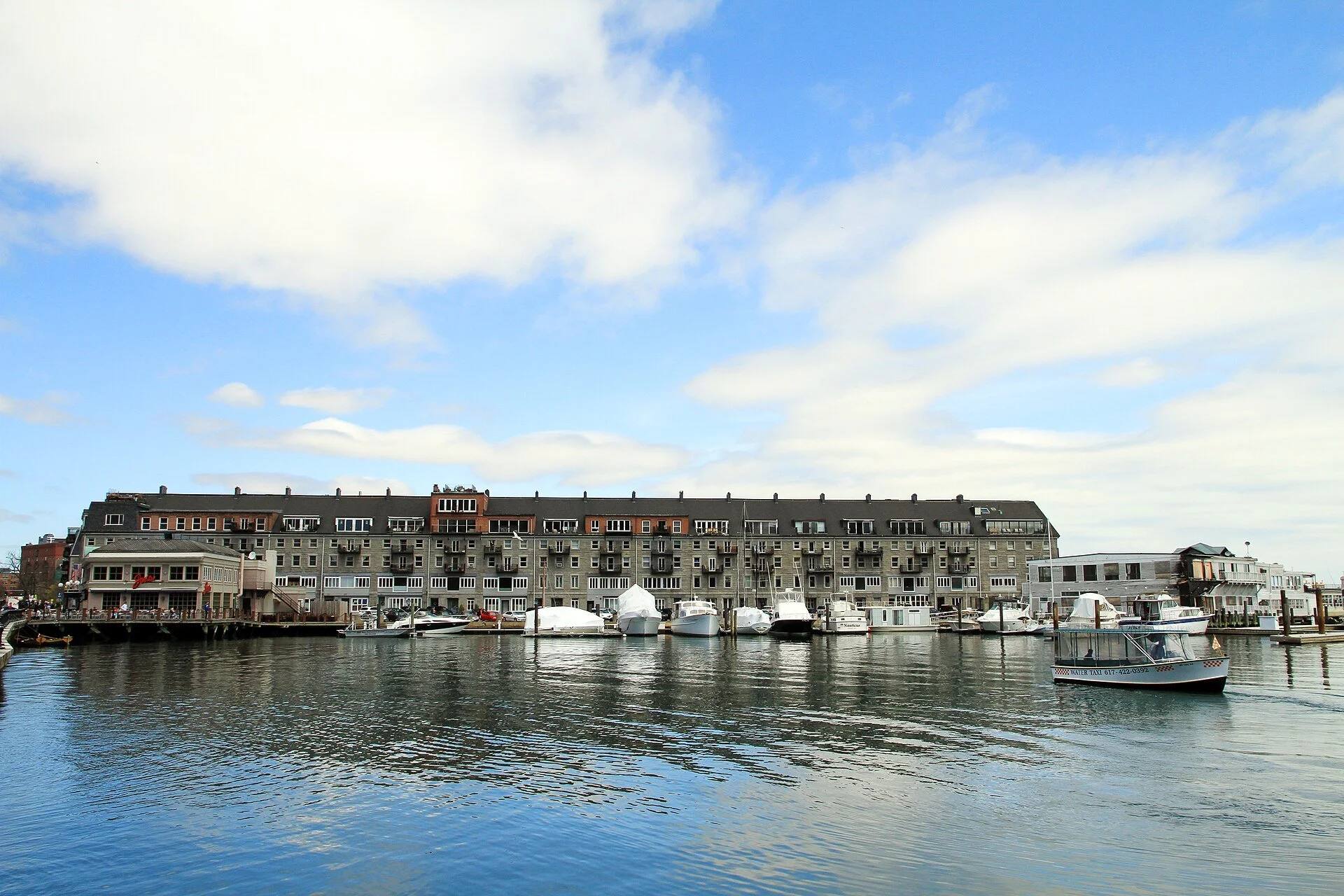

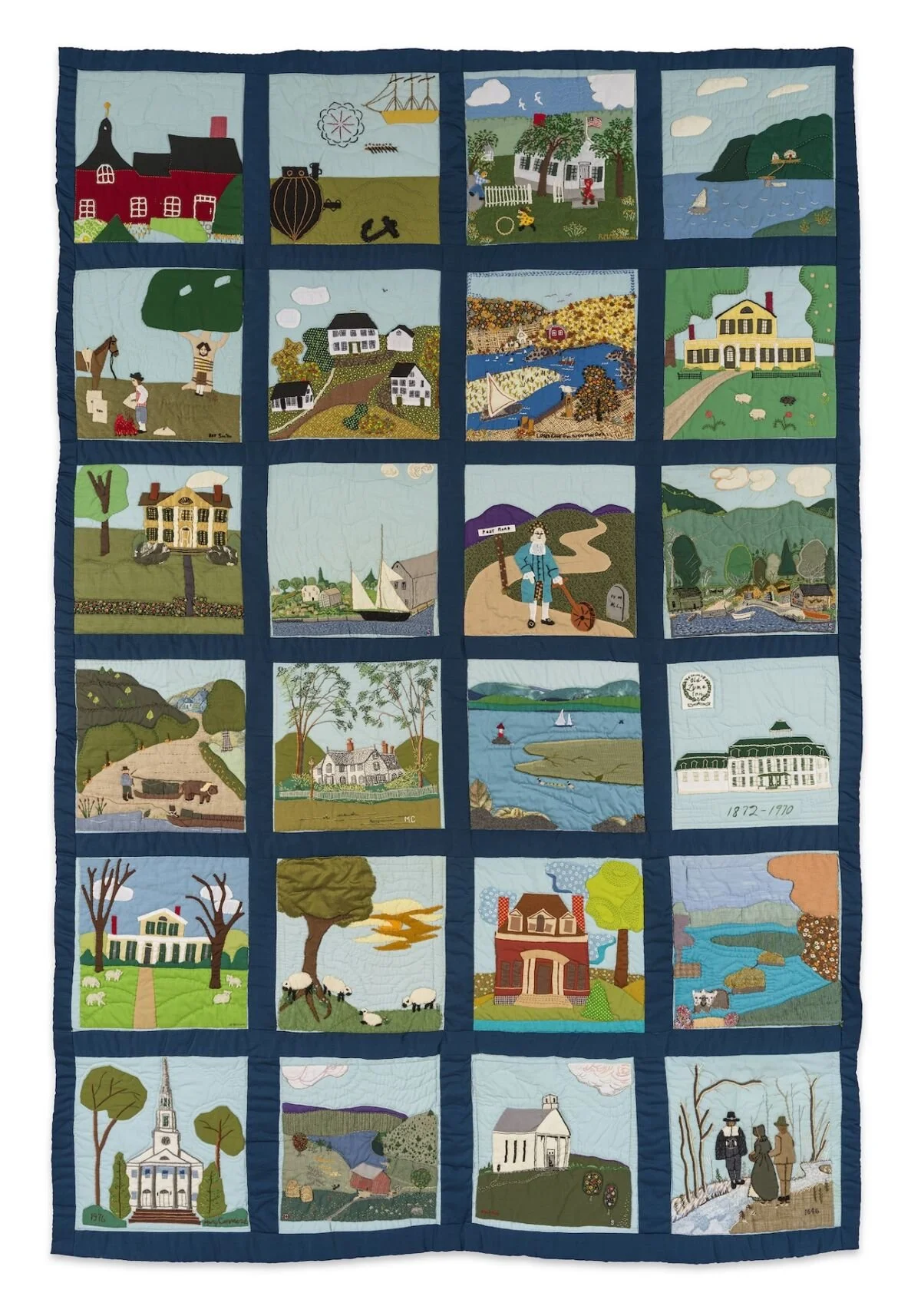
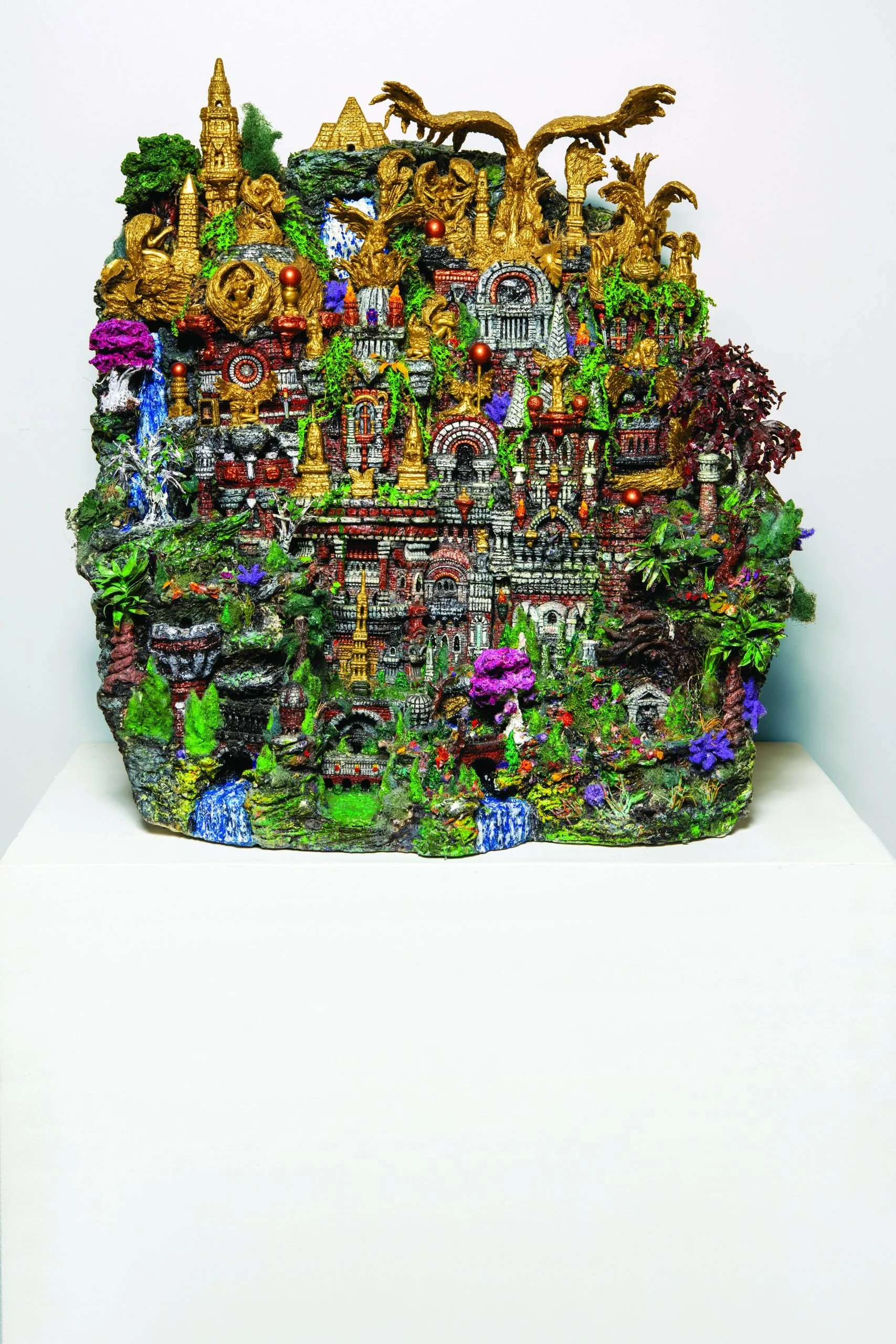
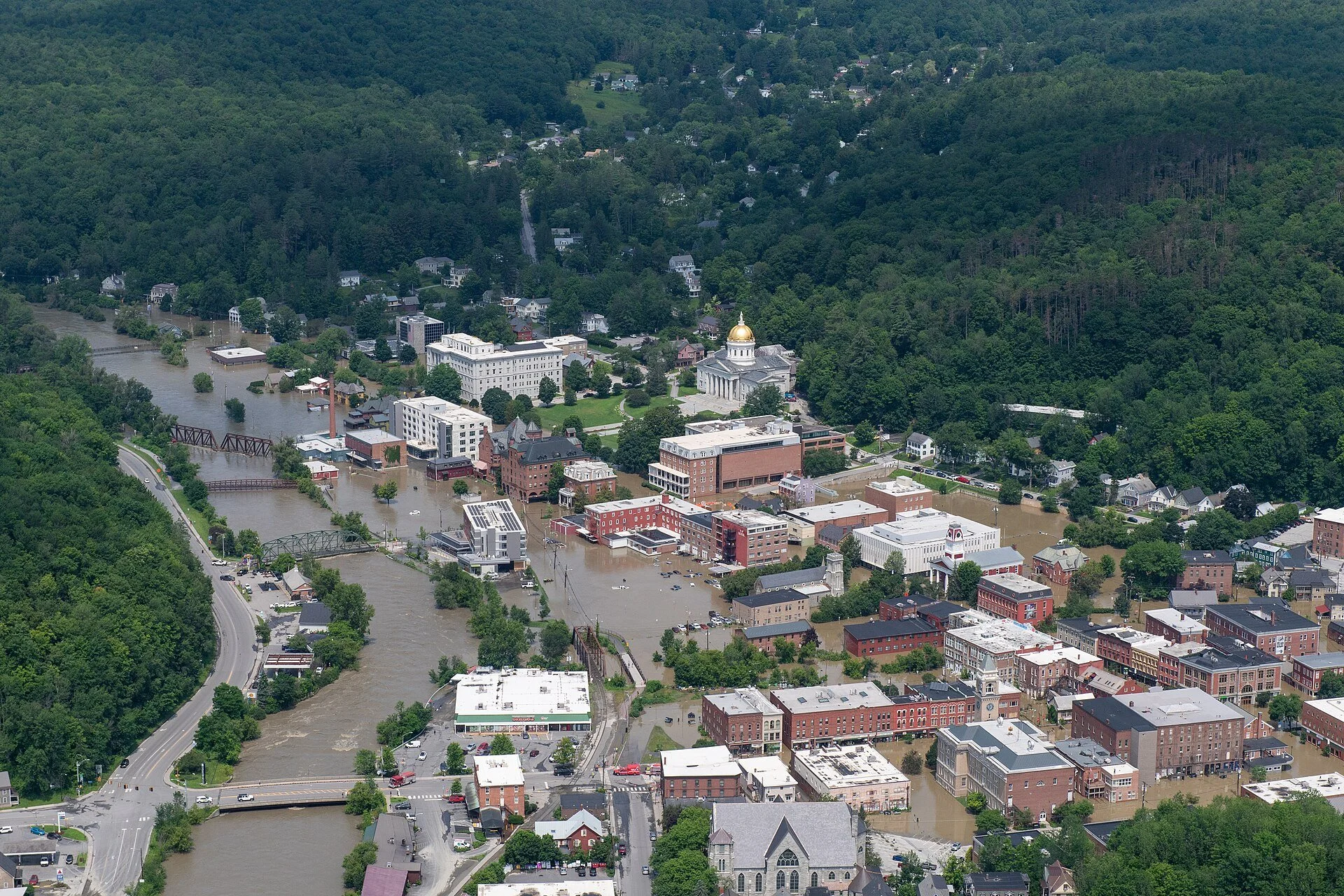
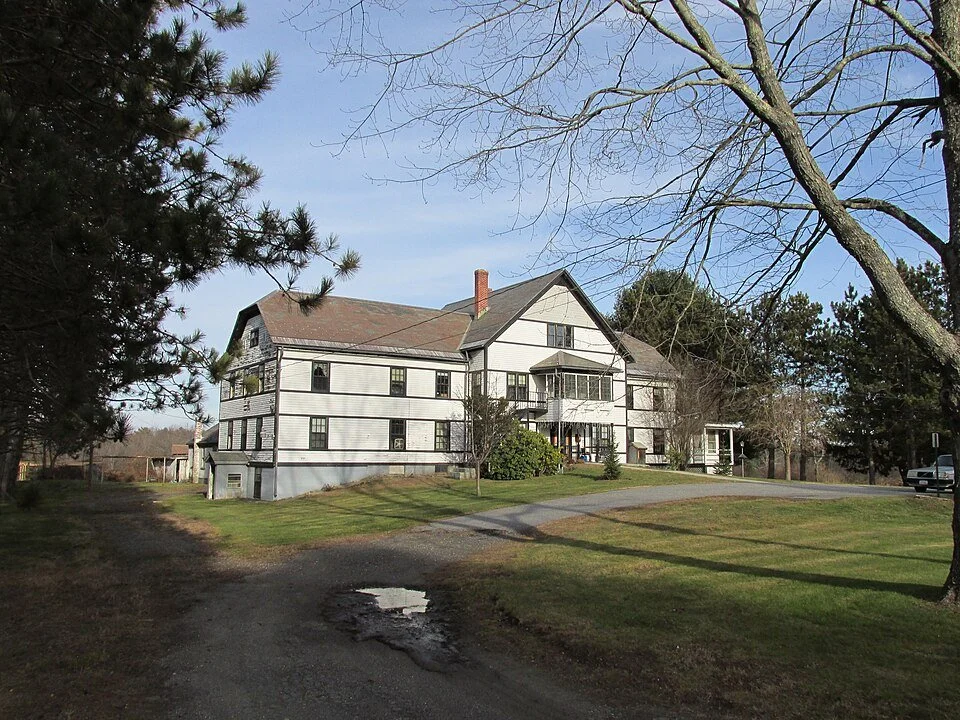
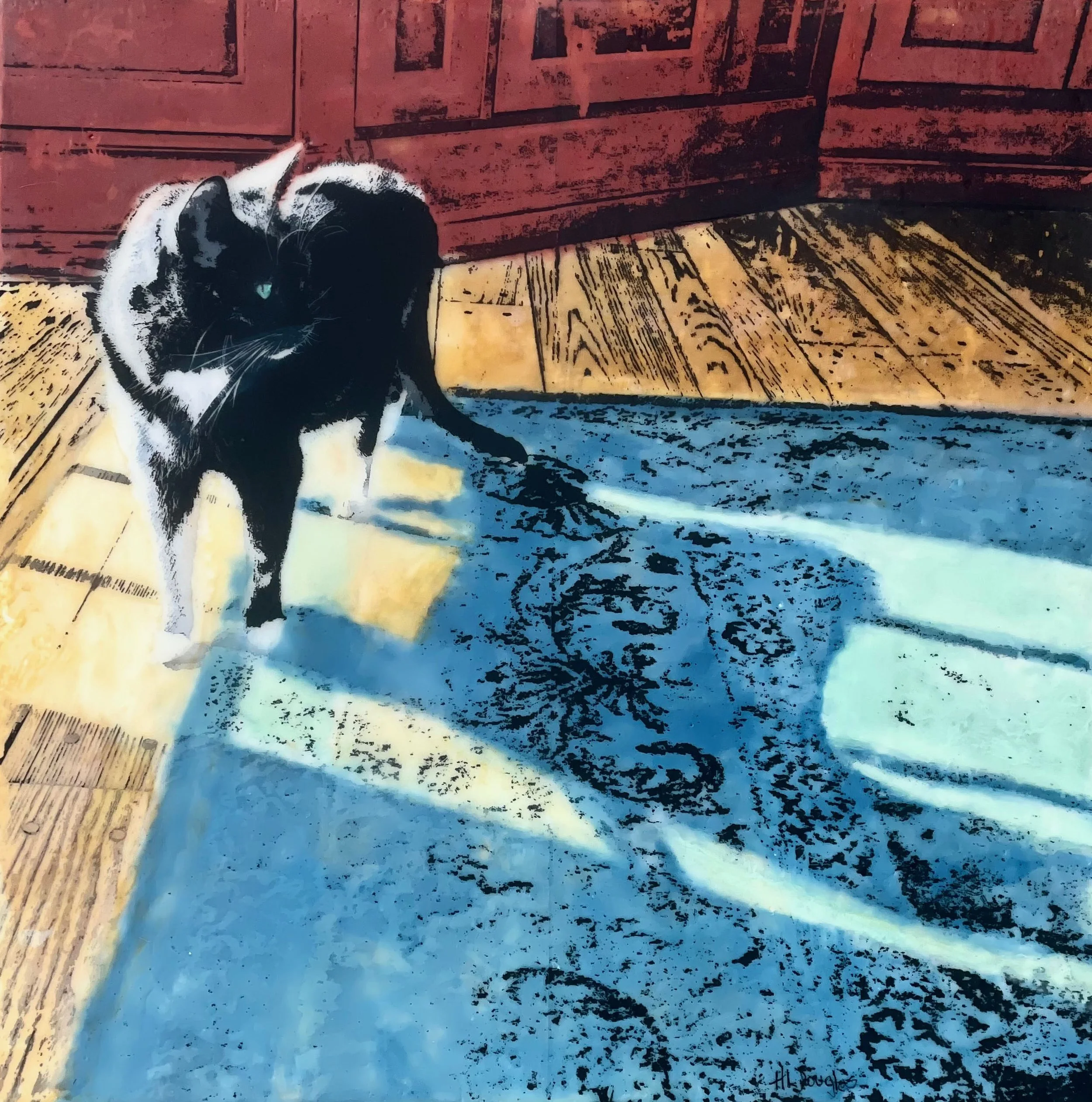


Down in the Delta
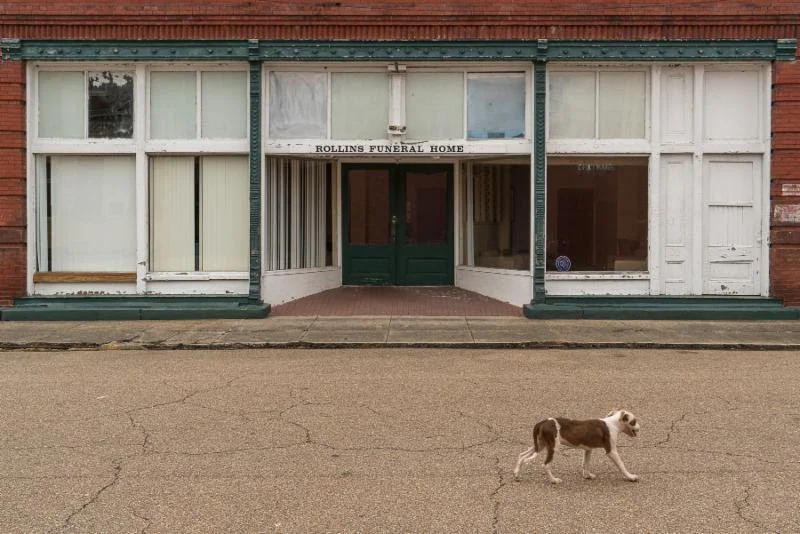
“Mississippi 640,’’ photo by Alan Strassman, in his show “Remembering Emmett Till: Mississippi Delta - Back Roads and Small Towns,’’ at Galatea Fine Art, Boston, Jan. 2-27.
Whither 'high society'?

The mysteriously alluring and exclusive Bailey’s Beach (official name Spouting Rock Beach Association), in Newport. “Rejects’ Beach’’ is in foreground.
From Robert Whitcomb’s “Digital Diary,’’ in GoLocal24.com
GoLocal readers may have read last week of the death of Marion “Oatsie” Charles at the age of (I think) 98. She seems to have been about the last of the great Newport and Washington, D.C., socialite hostesses – a vestige of the old “WASP Ascendancy’’: old money (once stinking new!), clubs (many of them for a long time anti-Semitic and even anti-Catholic), The Social Register, boarding schools, Ivy League colleges and debutante parties.
One thinks of the world parodied in High Society, the 1956 movie, set in Newport and with songs by that world’s poet laureate, Cole Porter.
Marion Charles was apparently a nice, amusing and resilient lady, though her world had plenty of social bigotry and cutting cruelty. So what about the new-money folks (money from, for instance, hedge funds and other Wall Street creatures and Silicon Valley) that are the foundation of the new high society in Newport and other watering holes of the rich, if there is such a high society anymore? I would say that they’re less bigoted, more informal, more impatient, at least as arrogant, and less polite than Oatsie Charles’s crowd.
It will fun to see how they change the mores of such old-money Newport clubs as Bailey’s Beach and the Reading Room. And change them they will: Money wins in the end.
Nicole Braun: The GOP's war on democracy in the Heartland
From OtherWords.org
For millions of Americans, there’s no “making it” if you fall beneath a certain social class line. And the Michigan GOP, which was roundly rejected in the last election, is determined to keep it that way.
In neighboring Wisconsin, Republicans decided to show voters there that their voices, votes, hardships, and pain don’t matter. They passed a series of lame-duck bills making it all but impossible for newly elected Democrats to implement their agenda.
Here in Michigan, the GOP quickly followed suit. Republicans pushed many bills through the legislature in their last days in office that hurt regular folks but benefit the elite, despite election results that show unambiguously what voters want.
Among many other things, these egregious bills ignore voter-approved sick leave protections and minimize wage increases, make it more difficult to vote, restrict campaign finance reform measures, and — for good measure — make it harder for voters to get future proposals on the ballot.
The GOP doesn’t care how tough many folks in Michigan have it, and there’s no apparent logic to their thinking except to make it tougher.
For instance, earlier Medicaid rules passed by Michigan Republicans say that folks need to work 20 hours a week. But often when you work 20 hours a week, you no longer qualify for Medicaid — even if you still can’t afford private insurance.
And when you work 20 hours a week without insurance and get sick, you’re out of luck — because Republicans just gutted a citizen-passed initiative to make sure workers have paid sick leave.
They also pushed forward a bill to drastically slow down minimum wage increases approved by voters. Studies show that no one in America can afford a two-bedroom apartment anywhere working even full-time for minimum wage, but Republicans watered down the voter-approved increase anyway.
Outgoing Republican Gov. Rick Snyder signed those bills. Sadly, many folks I talked to weren’t surprised.
Folks in Michigan have been suffering for years under GOP rule. We’ve seen blatant power abuses, including the undemocratic recall of elected officials. We’ve seen rising inequality, a rampant opioid crisis, poverty, corruption, and egregious failures like the Flint water crisis.
“Our governor has a body count — the kids he killed in Flint,” said Wil Gallivan, who lives outside Flint.
“Expecting him to all of a sudden gain some decency is just wishful thinking. We should all be wearing yellow vests at the Capitol, 100,000 people strong,” he added, referring to the “yellow vest” protests rocking France. “But who can afford to take time off their jobs to do that?”
Recalling Snyder’s purchase of an exorbitantly expensive cake just as news of the Flint water crisis was breaking, former bartender and Flint native Carol Frey reflected: “People who pull that usually lack the compassion and empathy chip.”
I teach sociology. It’s a given that the more inequality there is, the more violence, anger, despair, addiction, and hatred there is too. Inequality produces unhealthy humans and unhappy communities. No one can bloom in such unhealthiness.
By pushing forward these harmful bills even after a progressive wave, Michigan Republicans are saying that the people who voted them out don’t matter. So are their neighbors in Wisconsin and in other states across the country (like Florida, where lawmakers are trying to water down a voter-passed initiative to give people who serve time their vote back).
Still, more protests and acts of resistance are planned. Michigan people are strong, and we fight back — even if we’re broke and tired.
Nicole Braun is a sociologist in northern Michigan.
Jordan Rau: In Vermont, no break after big breaks

Sarah Witter couldn’t get a break even though her leg had gotten several.
As she lay on a ski trail in Vermont last February, Witter, now 63, knew she hadn’t suffered a regular fall because she could not get up. An X-ray showed she had fractured two major bones in her lower left leg.
A surgeon at Rutland Regional Medical Center screwed two gleaming metal plates onto the bones to stabilize them. “I was very pleased with how things came together,” the doctor wrote in his operation notes.
But as spring ended, the wound started to hurt more. In June, Witter returned to the doctor. “He X-rayed it and said it broke,” she said. “And I was thinking, what broke? And he said, the plate. He said they do sometimes.”
The doctor performed another operation, removing the cracked plate and replacing it with a larger one.
Witter said she had been dutifully following all the instructions for her recovery, including going to physical therapy and keeping weight off her leg.
“I was, of course, thinking, ‘What did I do?’” Witter said. “The doctor said right off the bat it was nothing I did.”
Then the bill came.
The two surgeries Sarah Witter had following her skiing accident last February led to almost $100,000 in bills. Witter paid more than $18,000 of that out-of-pocket.
Total bill: $99,159 for emergency services, therapy and hospital care, including $52,587 for the first surgery and $43,208 for the second surgery. Altogether, Witter’s insurer, Aetna, paid $76,783. Witter paid $18,442 — including $7,808 for the second surgery. About half of Witter’s total expenses were copayments; another $7,410 was the portion of hospital charges that Aetna considered unreasonably high and refused to pay.
Service provider: Rutland Regional Medical Center, the largest community hospital in Vermont, performed the surgeries. Emergency services, anesthesia and physical therapy were done by other providers.
Medical service: In February, two metal plates called bone fixation devices and manufactured by Johnson & Johnson’s DePuy Synthes division were surgically attached to two lower leg bones Witter had fractured in a skiing accident. These plates are long, narrow pieces of metal with holes drilled in them at regular intervals for screws to attach them to the bones. A crack had developed in one of the plates running from the side of one of those holes to the edge of the plate. A second surgery was required to remove the plate and replace it.
What gives: When devices or treatments fail and need to be replaced or redone, patients (and their insurers) are expected to foot the bill. That may be understandable if a first course of antibiotics doesn’t clear a bronchitis, requiring a second drug. But it is more problematic — and far more expensive — when a piece of surgical hardware fails, whether it’s a pacemaker, a hip that dislocates in the days after surgery or a fractured metal plate.
Warranties, standard features at an electronic store or a car dealership, are rare for surgeries and in the medical device industry.
Dr. James Rickert, an orthopedic surgeon in Indiana and president of the Society for Patient Centered Orthopedics, said a plate like the one implanted in Witter’s leg can fail if the surgeon does not line it up correctly with the bone, although usually that causes the screws to break or back out. A plate also can fail if the patient puts too much weight on it or doesn’t follow other recovery instructions.
“When the plate breaks, it’s usually from overworking it, or a defect in the plate itself,” Rickert said. “The vast majority of people follow their instructions and are honest about it. If a person comes in and tells you they’ve been following their instructions and the surgery’s done properly, to me that’s a hardware failure.”
Nancy Foster, vice president for quality and patient safety policy at the American Hospital Association, said sometimes hospitals will not charge for a second surgery “if they were aware that it was something they did that caused the patient to need follow-up care.”
Rutland Regional, Witter’s hospital, would not discuss Witter’s care or bills, even though she gave it permission to do so. “The organization is not comfortable in getting into the specifics of an individual patient’s case,” a spokeswoman wrote. The hospital also declined to discuss under what circumstances, if any, it would discount a second surgery’s cost because of the first’s failure.
Hospitals do not consider it their responsibility if a medical device failure is the problem, Foster said. But manufacturers are reluctant to take the blame for an unsuccessful surgery.
Patients are usually out of luck when a second surgery is needed because of the failure of a medical device, like Sarah Witter’s broken plate. “The biggest annoyance with this whole thing, even though it took eight months out of my life,” Witter says, “is I hate to pay for it again, and the doctor clearly said it wasn’t anything I did.”
AdvaMed, the trade group for medical device manufacturers, said some companies will provide replacement devices if theirs failed, but others do not, especially if the failure of a procedure cannot “easily be attributeDed” to the device, the group said in a written statement.
“There are numerous factors outside of a manufacturer’s control — and unrelated to the safety of the device as designed — that could result in a device not performing as intended,” AdvaMed said.
These devices aren’t cheap: Witter’s hospital billed $9,706 for the first set of plates. It billed $12,860 for the replacement and an extra piece of equipment to attach it.
DePuy Synthes, which manufactured Witter’s plates, said in a written response that “in rare circumstances” metal plates “may fracture under normal weight-bearing or load-bearing in the absence of complete bone healing.” Even then, the company said, that is a chance patients have to take.
AdvaMed said it does not keep statistics on device performance, and DePuy did not respond to questions about how often its plates fail.
Resolution: The second surgery delayed Witter’s recovery by four months and prevented her from gardening, golfing, hiking, biking and motorcycling through the summer and fall, as she usually does. “I was pretty much chair-bound for 20 weeks,” she said.
In November, she was not able to join her husband and son on a trip to Iceland. Instead of volunteering at a nearby ski resort, as she had done for six years — and which carries the benefit of a free season pass — Witter said she tried selling hand warmers and lip balm out of a small kiosk and watching the skiers through a window. She said she had to quit after six days because of the pain in her feet.
“The biggest annoyance with this whole thing, even though it took eight months out of my life, is I hate to pay for it again, and the doctor clearly said it wasn’t anything I did,” she said.
Aetna said that while it does not allow providers to charge for indisputably inept medical mistakes such as leaving a surgical sponge in a patient or operating on the wrong limb, a broken plate does not qualify for such protection.
After reviewing Witter’s records, Aetna said it concluded the hospital had billed Witter for the portion of charges Aetna had considered excessive —a practice known as “balance billing.” While Aetna cannot reject those charges because the hospital does not have a contract with it, the spokesman said Aetna would try to negotiate with the hospital on Witter’s behalf to reduce the bill.
Rutland Regional, however, indicated in its statement that the only reason it would discount a bill was for people who had inadequate insurance or were suffering financial hardship from the size of the bills. Witter said she does not meet the hospital’s criteria.
The hospital invited her to meet with her surgeon and its chief financial officer.
The Takeaway: Witter brought up the seeming unfairness of the double charges to the hospital’s billing department as well as to her doctor, who, she said, was “charming,” but told her “he had no wiggle room to do anything.”
Patients are usually out of luck when a second surgery is needed because of the failure of a medical device or a surgeon’s mistake. A few places, most prominently the Geisinger Health System in Pennsylvania, offer warranties for hip and knee, spine and coronary artery bypass surgeries, among other procedures.
AdvaMed says that if a company provides a replacement, the hospital or surgeon is not supposed to bill Medicare or the patient for the equipment — even if the operation incurs charges.
Patients should scrutinize their bills and question their doctor and hospital or surgical center about charges for replacement devices.
If the doctor or hospital is partially at fault for the failure of the first procedure, request that part or all of the costs of the second surgery be waived. Get it in writing so you can make sure the billing department follows through. Also, in a medical market where insurers want to pay only for value-based care, let your insurer or employer’s human resources department know that you are being charged twice for the same surgery. Let them fight the battle for you.
Do you have an exorbitant or baffling medical bill? Join the KHN and NPR Bill-of-the-Month Club and tell us about your experience.
Jordan Rau: jrau@kff.org, @JordanRau

Ski trail in Stowe, Vt.
'Alms house to Gallows Hill'
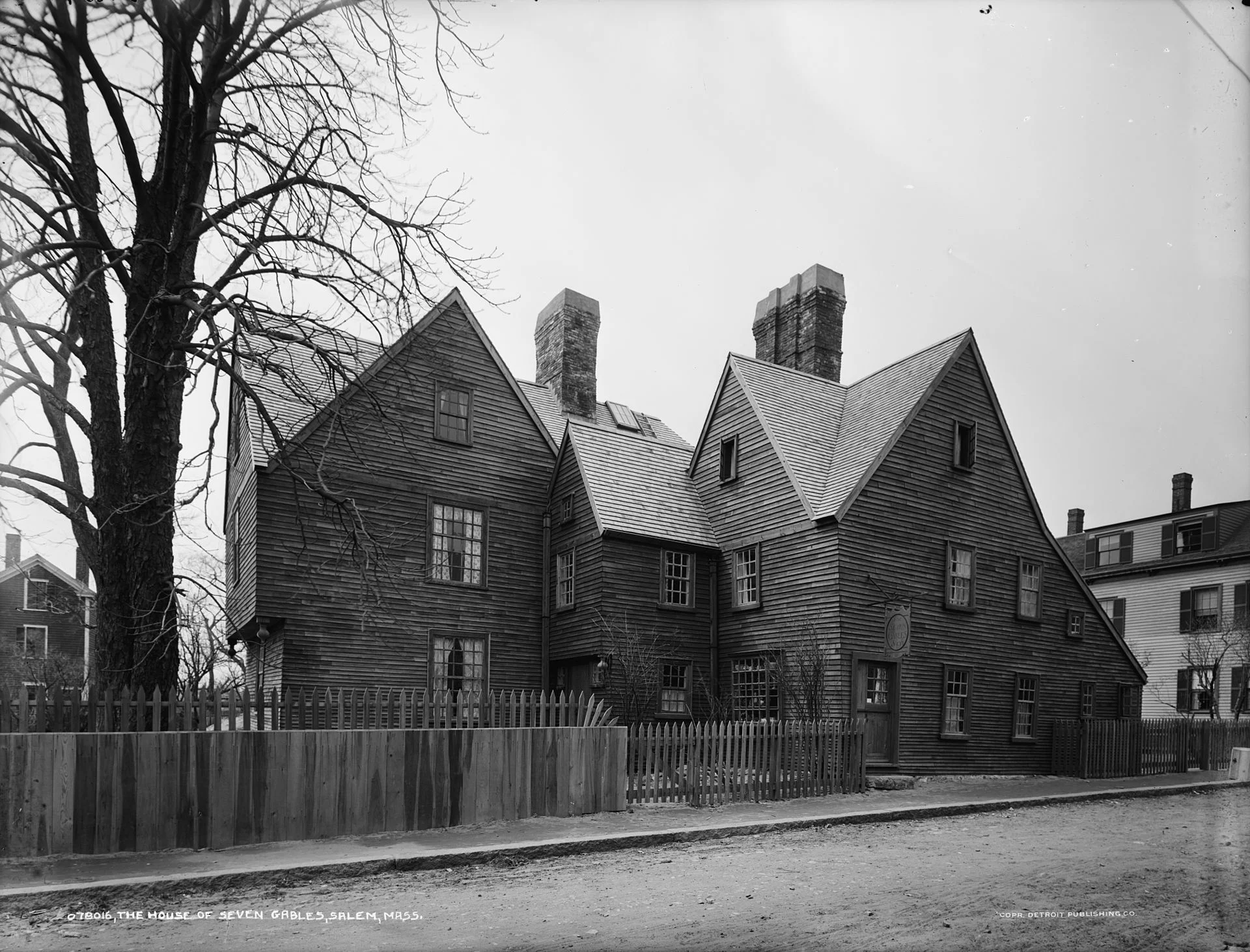
The House of the Seven Gables, built in Salem in 1668, in a 1915 photo. Nathaniel Hawthorne’s famous novel of the same name derives in part from his ruminations on the Puritan past of his family.
“Follow its lazy main street lounging
from the alms house to Gallows Hill
along a flat, unvaried surface
covered with wooden houses
aged by yellow drain
like the unhealthy hair of an old dog.
You’ll walk to no purpose
in Hawthorne’s Salem.’’
— From ‘Hawthorne,’’ by Robert Lowell
Tim Faulkner: R.I. considers statewide plastic-bag ban

— Photo by eco RI News
From ecoRI News (ecori.org).
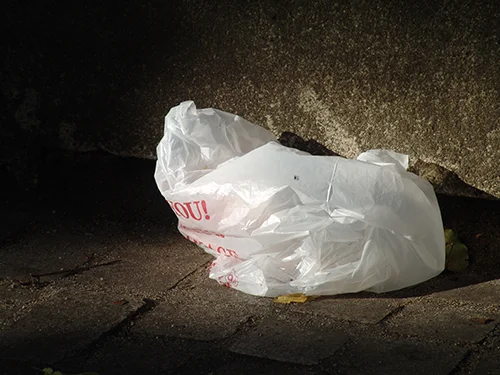
A bill proposing a statewide ban on plastic bags is the likely outcome of Rhode Island Gov. Gina Raimondo’s plastic-waste commission, but it isn’t necessarily the result preferred by environmentalists and even some businesses.
Aside from opponents of the ban — a bag distributor and an American Chemistry Council representative spoke against it — there were calls for substantive reform to waste and pollution in the state at the Dec. 14 meeting of Task Force to Tackle Plastics.
Jonathan Stone, executive director of Save The Bay, called it “a gross omission" if the commission’s final report doesn’t address stormwater.
He said any solution to reduce plastic waste should include incentives coupled with increased enforcement of the federal Clean Water Act to address stormwater runoff, preferably through regional entities to manage and finance stormwater projects, known as a stormwater utility.
“Stormwater delivers everything — waste of any kind, including toxins — into the bay and rivers and streams,” Stone said.
Curt Spalding, former director of the New England office for the Environmental Protection Agency, doesn’t want the report to just be a single “transaction” and instead prefers a long-term strategy that includes working with neighboring states.
“I don’t get any sense from this that people are interested in a strategy,” Spalding said, referring to the governor’s appointees who are facilitating the task force.
Spalding noted that the United States is way behind other countries that address the life cycle of plastic packaging through incentives and regulations.
Other members of the task force remarked that there is no data or study of the economic costs and other impacts of plastic pollution in Rhode Island.
“We can ban plastic bags, and it’s not going to solve the plastics problem in the ocean,” Spalding said.
“No, but it’s what’s doable today,” said Sen. Josh Miller, D-Cranston, a task force member and sponsor of many of the failed statewide bag ban bills.
Miller noted that legislation is a starting point that should lead to other initiatives.
There was other pushback against criticism of a statewide bag ban. Janet Coit, director of the Rhode Island Department of Environment Management, and Raimondo’s deputy chief of staff, Rosemary Powers, reminded the 22-member commission that they only have until Feb. 18 to offer legislation that reflects the consensus of the group.
“There are all sorts of ideas, but focusing on a statewide plastic bag ban is something we might be able to bring in with support from people who have technically testified against it,” Coit said. “Because we have a bill that takes business interests into account. If we could get that done, it would really be something to be proud of.”
Powers said she is expecting two or more bills from the task force, while noting that other initiatives will also be moving forward. She didn’t say if those initiatives would be done through the task force or independently.
Raimondo has plenty of political cover for a statewide bag ban. Although legislation has been defeated in the General Assembly every year for nearly a decade, municipal bag bans are sweeping the state. Since Barrington enacted a ban in 2013, 10 Rhode Island communities have passed similar bans on retail plastic bags. Boston started a high-profile ban on Dec. 14.
The launch of Boston’s bag ban prompted the Conservation Law Foundation (CLF) to advocate for a ban on plastic bags across New England.
At the recent task force meeting, Kirstie Pecci, director of the zero waste program at CLF, said Raimondo called for innovate solutions when she announced the task force in July and therefor the legislation should include a ban on polystyrene, as well as a provision that restaurants only provide plastic straws upon request.
Pecci advocated for a bottle-deposit law and other consumer incentives that encourage manufactures to use sustainable packaging and take back products that no longer work, a concept known as producer responsibility.
“We need to make sure we take care of (pollution) at the source or we are never going to solve this problem,” she said.
CLF has three goals relating to plastic waste: ban items that aren’t recyclable; increase recycling to 100 percent; and shift the costs and clean up from cities, towns, and states to manufacturers.
Amy Moses, director of CLF in Rhode Island, said taking care of the environment is paramount.
“I think it’s important that we take a step back and realize that plastic comes from fossil fuels. And while they may be cheap — you can buy a case of water bottles for a few bucks — we’re not paying for the true cost of that plastic,” Moses said. “We’re not paying for that pollution when we buy the little bit of plastic in the water bottle. And this plastic is everywhere degrading all of our environment. And the fossils fuels these products are derived from are literally destroying our planet. So I don't think we can focus on the narrow little dollars and cents because there are so many externalities and problems with plastics that are not captured in the prices that you’re paying.”
Business representatives at the meeting, such as Chris Nothnagle, senior director of marketing for Toray Plastics, were inclined to support improving current recycling programs and expanding public education. Toray makes plastic bags and containers at its plant in North Kingstown.
Nothnagle said businesses need incentives to use sustainable packaging, otherwise they will buy the least expensive product, which is usually made of plastic.
“There’s an enormous opportunity to knock this problem way, way, way down with existing infrastructure,” he said.
Recycling is the law
Senator Miller, a restaurant owner, wasn’t sure if businesses are aware of the state’s recycling laws. Every business in Rhode Island, including food establishments, are required to recycle, but there is no enforcement. As of 2014, Rhode Island had only one employee dedicated to commercial recycling.
Unlike Massachusetts, Rhode Island doesn’t inspect waste at landfills to find and fine businesses and municipalities that are throwing away recyclables.
Subcommittee reports
The commission’s final report will reflect the top ideas from four subcommittees. It will also include any dissenting views and recommendations for near- and long-term goals. Each group will meet two or three times before the Feb. 14 deadline.
At the full task force meeting on Dec. 14 each group presented its findings to date.
The Lead By Example subcommittee is considering energizing and expanding DEM’s idle Rhode Island Hospitality Green Certification for the Hospitality & Tourism Industry. The group will also send out a survey to the public to gather best practices.
Save The Bay’s Stone urged boosting local stewardship groups, such as neighborhood associations, to work with businesses to monitor waste and implement new clean-up programs.
The Legislative Solutions subcommittee is focused on passing a bag ban bill and whether a fee on alternative bags would be assessed. The group meets Jan. 7.
The Education subcommittee, led by Dave McLaughlin of Clean Ocean Access, is considering a campaign to reduce plastics at restaurants, an educational program for grades K-12, and re-starting the famed Woodsy Owl campaign from the 1970s and ’80s, with its slogan “Give a Hoot, Don’t Pollute!”
Dale Venturi, president and CEO of the Rhode Island Hospitality Association, didn’t like the idea of focusing on the restaurant industry.
“I don’t want it to just be one industry, because that makes me a little uncomfortable, sitting here as the chair (of the Hospitality Association),” Venturi said. “We’re not coming out of this just being focused on our industry.”
The Innovation Committee suggested reconsidering a statewide bottle-deposit law, as Rhode Island is the only state in New England without one. Dennis Nixon suggested mimicking other bag bans, such as the Boston ban. He suggested organizing a local design competition for sustainable packaging. The group also wants support for a fiberglass boat recycling program.
The Task Force to Tackle Plastic is scheduled to meet next on Jan. 9 at DEM headquarters, 235 Promenade St., Room 300, from 11 a.m - 12:30 p.m.
Tim Faulkner is a journalist with ecoRI News.
A gray town

From left to right: Boston City Hall, the West End, the North End, Charlestown, Boston Harbor and East Boston.
“I guess God made Boston on a wet Sunday.’’
— Raymond Chandler, the late mystery writer
Only constant is change
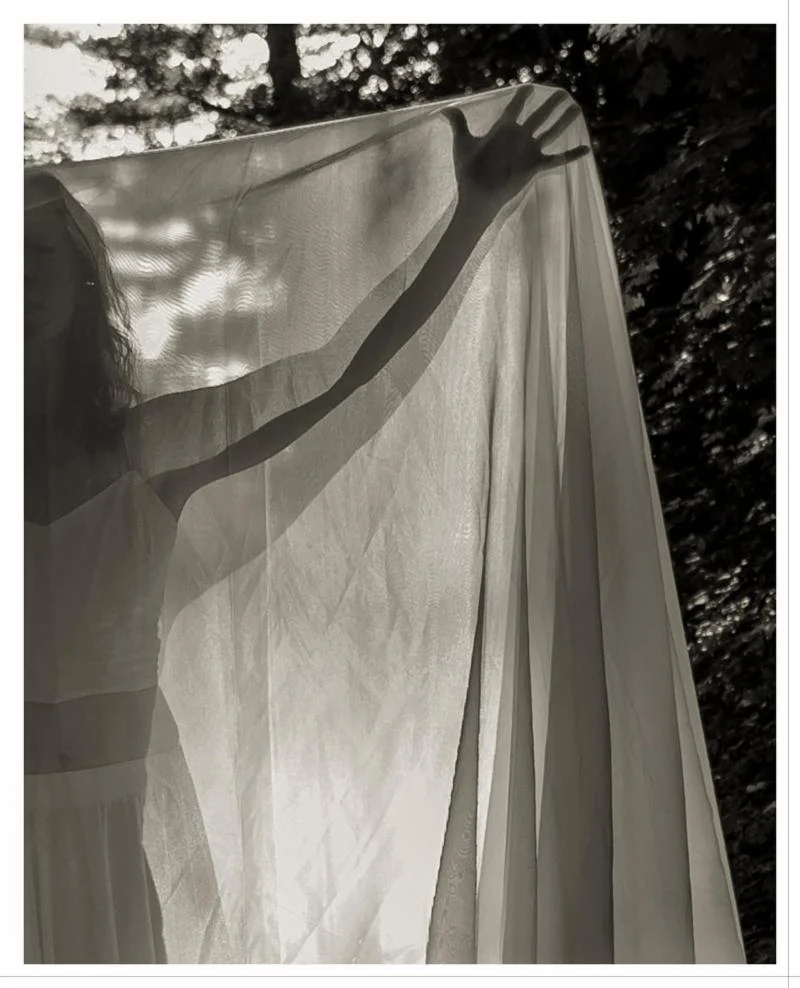
From David Lee Black’s show “Passage,’’ at Galatea Fine Art, Boston Jan. 2-26.
Chris Powell: Native Americans could be pretty nasty, too

A man displaying himself as a Pequot warrior at the Pequot Museum at the Foxwoods casino in Connecticut
MANCHESTER, Conn.
Replacing Columbus Day with "Indigenous Peoples Day" on its school calendar, Manchester's Board of Education has concluded that the Italian navigator sailing for Spain should not be considered such a hero after all, since, in discovering the New World, he began the colonial subjugation of its natives.
This is fair criticism, and people are always free to change their minds about who should be honored with holidays, statues, and such. But the school board does not seem to have explained why "indigenous peoples" are any more deserving of special honor than Columbus himself. After all, these days nearly everyone in the United States is "indigenous," and back in Columbus' time and throughout the colonial era in the Western Hemisphere "indigenous" people weren't the noble savages of romantic myth but carried the same character and cultural flaws as the rest of humanity.
The "indigenous peoples" of old warred against each other as much as the European settlers warred against them. They even made alliances with the Europeans against other aborginals. Though it does not seem to be taught in many schools in Connecticut, this is precisely the state's own story. Indian tribes living here invited the Europeans in Massachusetts to settle among them as allies against the Pequots, an aggressive tribe that had moved into the area and was preying on the other tribes and whose very name is said to have meant "destroyers."
Before long the Pequots were destroyed themselves, nearly all of them exterminated, including noncombatant women and children, in what was essentially genocide committed by the warriors of an alliance of the Europeans and the Mohegan and Narragansett tribes.
Of course tribal wars go back through the Bible to the beginning of human history. There have always been aggressors and victims, and being "indigenous" never automatically conveyed virtue any more than it does today. So while there is a case for demoting Columbus and leaving his day unmarked, the only purpose of putting "indigenous peoples" in his place on the calendar is to advance the politically correct proposition that all of American history has been dishonorable and thereby to induce guilt to intimidate the public in the face of the PC agenda generally.
This political correctness contaminates public education throughout the county and now, with Indigenous Peoples Day, reigns in Manchester's schools as well as Bridgeport's, New London's, and West Hartford's.
But despite its many ugly aspects, American history on the whole exemplifies what used to be called the Ascent of Man, the gradual but steady extension of liberty and democracy and the improvement of living standards. The sacrifices made in pursuit of these objectives are profound though not always well-taught.
There is another reason Manchester's school board has not just erased Columbus Day from its calendar but declared it a different holiday to honor a whole class of people good and bad. That is, Columbus Day remains by law a state holiday for which government employees must be paid without working.
The board can call this paid day off whatever it wants, but until the General Assembly and the governor erase him, Connecticut is still honoring Columbus, and politically incorrect as he may have become, crossing the government employee unions is considered worse than politically incorrect -- politically fatal.
Chris Powell is a columnist for the Journal Inquirer, in Manchester, Conn,
David Warsh: How the press didn't cover the Panic of 2008

The headquarters, in New York, of Lehman Brothers, whose collapse ignited the Panic of 2008.
— Photo by David Shankbone
SOMERVILLE, Mass,.
When John Authers departed the Financial Times for Bloomberg News earlier this autumn, he left behind a couple of bombshell articles that my friends still haven’t stopped talking about. After 29 years as one of the FT’s most admired commentators, the former editor of the paper’s vaunted Lex page, proprietor of the “Short View” column, was leaving Britain for the United States.
In the first article, under a headline “In a crisis, sometimes you don’t tell the whole story,” he wrote:
It is time to admit that I once deliberately withheld important information from readers. It was ten years ago, the financial crisis was at its worst, and I think I did the right thing. But a decade on from the 2008 crisis (our front pages during the period are at ft.com/financialcrisis), I need to discuss it.
It had occurred on Wednesday, Sept. 17, two days after Lehman Brother declared bankruptcy, the scariest day of the crisis, both for Authers, and, to judge from his memoir, for Federal Reserve chairman Ben Bernanke as well. The insurance giant AIG had received an $85 billion government loan the day before. The Reserve Fund, the nation’s largest money market fund, had seen its redemption value dip below $1, thanks to its losses on Lehman bonds. A high rate of withdrawals had begun.
Authers, as it happened, had sold his flat in London not long before. The proceeds were deposited in Citibank, far more than would be covered by government insurance if Citi failed. He went to the bank, intending to withdraw half his money and carry the cash to a rival bank. He found himself standing in a long line. The bank officer he finally reached told him he didn’t need to withdraw his funds in order to protect them. She quickly opened trust accounts for each of his children and a joint account with his wife.
Presto, Authers was insured by the government for the full amount of his deposit. The maneuver had been going on all morning, the officer explained, and the same at Chase bank next door. Neither she nor her competitor had ever performed a single such transaction previously. That day they had undertaken many. Authers wrote,
I was finding it a little hard to breathe. There was a bank run happening, in New York’s financial district. The people panicking were the Wall Streeters who best understood what was going on. All I needed was to get a photographer to take a few shots of the well-dressed bankers queuing to get their money, and write a caption explaining it.
Instead, he went back to his desk and wrote a column about the breakdown of trust among banks, describing the atmosphere as one of panic, but omitting the queue in the bank branch. Authers concluded,
We didn’t do it. Such a story on the FT’s front page might have been enough to push the system over the edge. Our readers went unwarned, and the system went without that final prod into panic…. The right to free speech does not give us the right to shout fire in a crowded cinema; there was the risk of fire and we might have lit the spark by shouting about it.
A month later, in a long contemplative essay headlined “In nothing we trust” ($1 trial subscription may be required), Authers explored the erosion of confidence in the media he had experienced in the thirty years since he had begun. He described the old days of newspapers’ semi-monopoly on advertising and information, the faith invested in the FT’s every word, and the ethic of responsibility that went with it.
He described the stinging backlash to his earlier admission that he and the paper had held back from adding fuel to the fire. There had been hundreds of responses in which opinion was overwhelmingly against him. One reader wrote,
Your decision to save yourself while neglecting your readership is unforgivable and in the very nature of the elitist Cal Hockley of the Titanic scrambling for a lifeboat at the expense of others in need.
He found the feedback “astonishing and wrongheaded.” But gradually he came to view it as a crisis of belief – belief in the news media as an institution that clarifies and sets the agenda. The rise of social media had diluted the privileges of print, including the mystique that relative anonymity conferred. These days his photo accompanied nearly everything he wrote. His mornings turned into a digital talk show with readers. Sometimes they were specialists, thrillingly well-informed. Increasingly they were ignorant and rancorous. Limits on deposit insurance had been raised a few weeks later and the crisis abated, he wrote; ten years later, banks were once again sound, and the threat had moved on to the pension system.
The irony, it seems to me, is that Authers had missed the fact, or at least the significance, of the very real panic already raging thirty floors above that retail branch, and in trading rooms around the world. To judge from the special section devoted to the tenth anniversary of the crisis in which his initial column appeared, so had the FT itself. What would eventually become the Panic of 2008 was not so different from the Panic of 1907, or 1893, as economic historian Gary Gorton wrote a year later, “except that most people had never heard of the financial markets involved.” In Slapped by The Invisible Hand: The Panic of 2007 (Oxford, 2010), Gorton continued,
In the earlier panics, individuals, fearing for their savings and not knowing if their banks would survive the coming recession, rushed to their banks to withdraw their money. Those runs would occur at all banks, usually starting in New York City, and spreading from there. Everyone knew that the panic had happened and then consequences would follow; firms would fail and there would be difficulties making transactions.
The visibility of the earlier panics did not make the event itself explicable, but it did provide clarity about what had happened in a direct sense. In the Panic of 2007 [sic], the “bank run” was invisible to almost everyone because it was a run by banks and firms on other banks. These interbank markets were invisible to the public, journalists, and politicians. Without observing the bank run, what became visible were only the effects of the run and, in many cases, the effects were mistaken for the cause.
Because what happened after Lehman Brothers failed in September 2008 wasn’t framed as a traditional systemic banking panic, the traditional policy response was then widely misunderstood. Instead of being seen as performing their traditional role as “lenders of last resort” (backed by national treasuries), central banks’ emergency loans designed to stem the fear were routinely described as “bailouts,” despite the fact that in most cases loans were fully repaid.
The willingness to engage in self-examination shows why the FT is widely loved, why Authers is respected, at least by most of his readers. By acknowledging the centrality of trust he goes straight to the heart of the matter. But it wasn’t the press that failed to adequately explain the Panic of 2008. It was the economics profession. That story still has a long way to go.
David Warsh, a longtime columnist and an economic historian, is proprietor of Somerville-based economicprincipals.com, where this column first ran.
Da
Frank Robinson: 'Senior Moments, 11'

(Written from a senior community)
By Frank Robinson
This is the place
where old people go,
to visit their parents.
xxx
Work or retirement –
a hard choice
between wasting time doing something
or wasting time doing nothing.
xxx
I wasn’t old
until I went to an old people’s home;
old age is catching.
xxx
Is this a hospital or a home?
A little bit of both.
xxx
Everybody is nobody here,
no matter what you were.
You make yourself
every day.
xxx
In line at our café –
“I’m in a hurry;
My husband is dying.’’
xxx
If this is what life is like when I’m lucky,
God help me when I’m not.
xxx
There are so many exotic diseases these days,
cancer and heart attack
seem kind of safe.
xxx
Christmas here:
a hundred flowers
waiting at the front desk.
xxx
What a perfect marriage!
We take turns being sick.
xxx
This is the world of second chances,
of last chances,
a new beginning at the end.
xxx
Those days when I don’t want to live
and don’t want to die,
it takes a lot
to get out of bed.
xxx
To be old is to worry,
especially when there’s nothing
to worry about.
xxx
From the first,
I knew we owed the gods a death,
but I didn’t know
we owed them two,
yours and mine.
xxx
If someone’s really old,
you hate to waste their time
saying hello.
xxx
We think about the past every day,
that abandoned building
we forgot to tear down.
xxx
These days,
I talk to myself even more,
now that people can’t hear me.
(Did they listen before?)
xxx
This is the test:
Can you be patient and kind
to people who are dying?
xxx
Old age –
when suddenly
everything around you
seems fragile.
xxx
When someone tells you
her husband is doing well,
you know he isn’t
xxx
We use ski poles in every season,
even in summer –
in preparation, I suppose, for winter.
xxx
This is a strange world,
so comfortable and safe,
and yet so close to pain and death.
xxx
This place is such a good subject for poetry,
let’s hope nobody comes up with a miracle cure.
xxx
I forget things I shouldn’t forget
and remember things I shouldn’t remember.
I think too much.
xxx
Watch out for those wheelchairs!
They’re just showing off,
or getting back at us
for walking.
Frank Robinson, an art historian and the former director of the art museums at Cornell University and the Rhode Island School of Design, is a poet and essayist living in Ithaca, N.Y.
'A present of our own'
“Only this evening I saw again low in the sky
The evening star, at the beginning of winter, the star
That in spring will crown every western horizon,
Again… as if it came back, as if life came back,
Not in a later son, a different daughter, another place,
But as if evening found us young, still young,
Still walking in a present of our own.’’
— From “Martial Cadenza,’’ by Wallace Stevens
Closer to spring
‘‘I heard a bird sing
In the dark of December
A magical thing
And sweet to remember.
'We are nearer to Spring
Than we were in September,'
I heard a bird sing
In the dark of December.’’
— Oliver Herford
For spring

“Yearn,’’ by Lissa Banks in the Members Exhibition at Attleboro Arts Museum, through Feb. 1.
Kathy Toler: Trump plan would slash mail service and raise rates in many places

Via OtherWords.org
I’ve been a postal clerk for 23 years, serving my customers in a public post office in Gresham, Ore.
As you might imagine, with the holidays fast approaching, it’s a busy time of year for us. Every day, I help my customers mail letters, cards, and packages across town and across the county. Even when we’re busy, it’s a joy to share a small part in spreading holiday cheer.
Because the U.S. Postal Service charges uniform rates across the country, I don’t need to ask you if a package is being sent to a home or a business, or whether the recipient lives in a big city or a distant rural area.
You can select a flat rate box that goes anywhere for one price, no matter what’s inside. Or if you pack your own gift, we price it based on weight and distance. The post office never charges you more to send your gift just because your grandma happens to live out in the country.
If you took your packages to a private delivery firm, on the other hand, you might be hit with extra charges because of where your grandma lives.
On top of their base rates, UPS and FedEx charge more for deliveries to over half of all U.S. ZIP codes — hitting not just Alaska, Hawaii, and other distant areas, but also many small towns. Even suburbs of major cities — like Laveen, just eight miles from Phoenix, and Whites Creek, eight miles from Nashville — can draw extra charges.
According to new research by the Institute for Policy Studies, these ZIP codes are home to around 70 million people.
These extra costs already range up to $4.45 for a package delivered to a home in a rural area. But my real worry is that these extra costs are just a taste of what would happen if the U.S. Postal Service is sold off to private, for-profit corporations.
Last summer, the White House Office of Management and Budget recommended postal privatization in a report on government restructuring. And just in time for the holidays, a presidential task force just made recommendations that would slow down the mail, privatize large portions of the Postal Service, and lead to other service cuts.
If these privatization efforts succeed, millions of people may well face a return to 19th century standards of expensive, private delivery services and limited USPS access.
For the first 121 years of U.S. history, postal services were limited to those in cities. Farmers and other pioneers had to either travel long distances to cities or pay handsomely for private carriers to deliver their mail periodically.
Without competition from the public Postal Service, for-profit firms would likely jack up delivery fees even higher for the 70 million people who already live in areas hit by delivery surcharges.
And of course, USPS doesn’t just ship gifts. Millions of people rely on us for delivery of prescription drugs, medical supplies, and other essential items.
I think of myself as a public servant. I’m glad that the United States Postal Service treats all Americans fairly, regardless of where they live or work. A privatized, for-profit company won’t do that.
If the armfuls of gifts customers bring into my post office are any indication, that means holiday shipping would be a lot more expensive for millions of people.
Let’s protect the world’s finest public postal network, and together insist that the U.S. Mail is Not for Sale.
Kathy Toler has been a postal clerk in Gresham, Ore. for 23 years. The views expressed here are her own, not necessarily those of her employer’s.
And the other on a neck
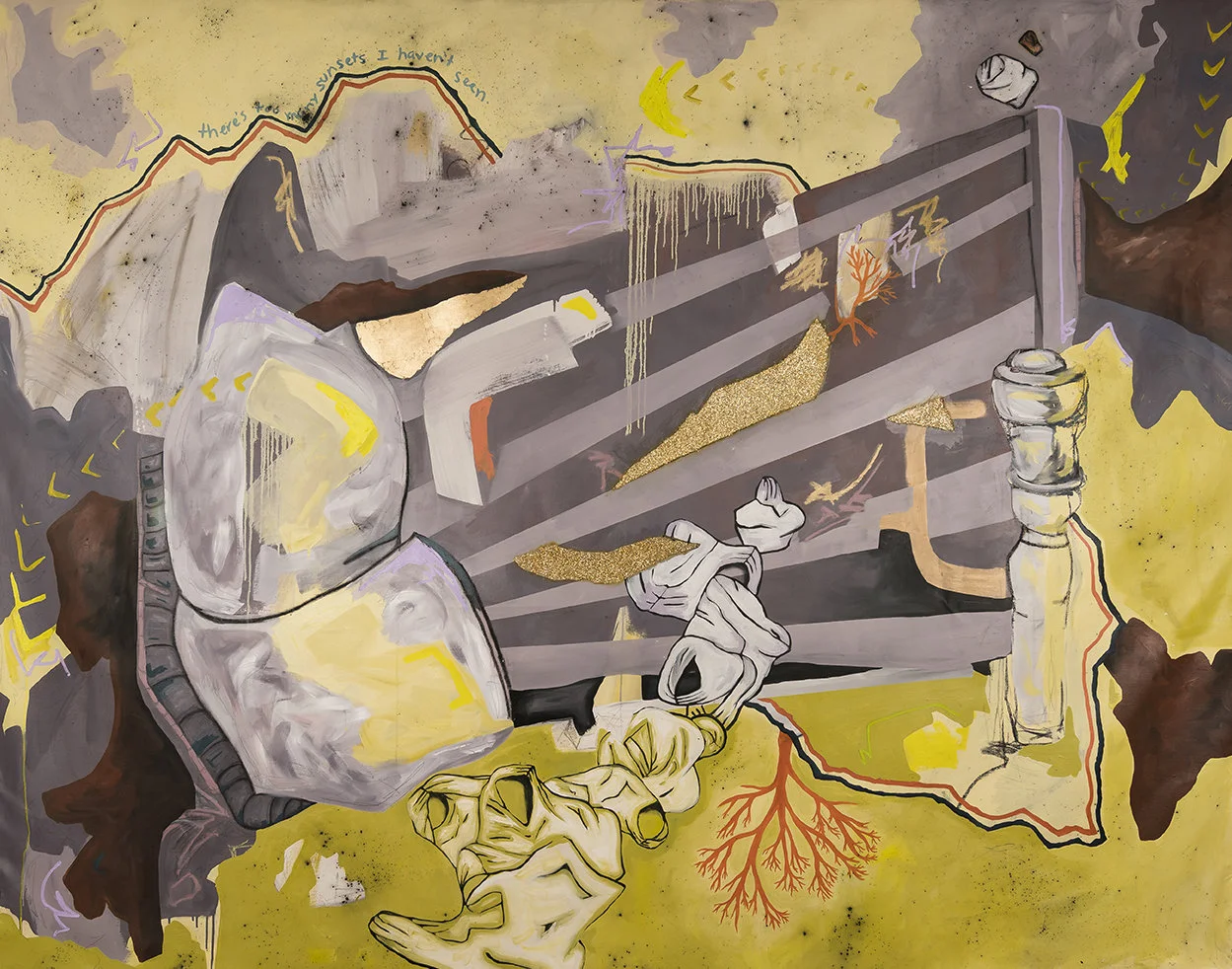
“One Foot On The Floor (oil, charcoal, graphite, gold leaf, glitter on linen), by Hilary Tait Norod, in her show at Workbar Central Square, Cambridge.
N.E. just got a lot more clout on Capitol Hill
Jim Brett, president and CEO of the New England Council (newenglandcouncil.com), says that New England’s congressional clout just got a big boost because Democrats won the House in the mid-terms.
“I would say, today, that our region, our New England congressional delegation is a powerhouse in the new 116th Congress,” Mr. Brett recently told a group in Ipswich.
In New England, all 21 House seats will now be held by Democrats, with the defeat of a Republican in Maine’s Second Congressional District. To read more, including about individual New England congressional movers and shakers, please hit this link.
'But the mountains aren't quite high enough'
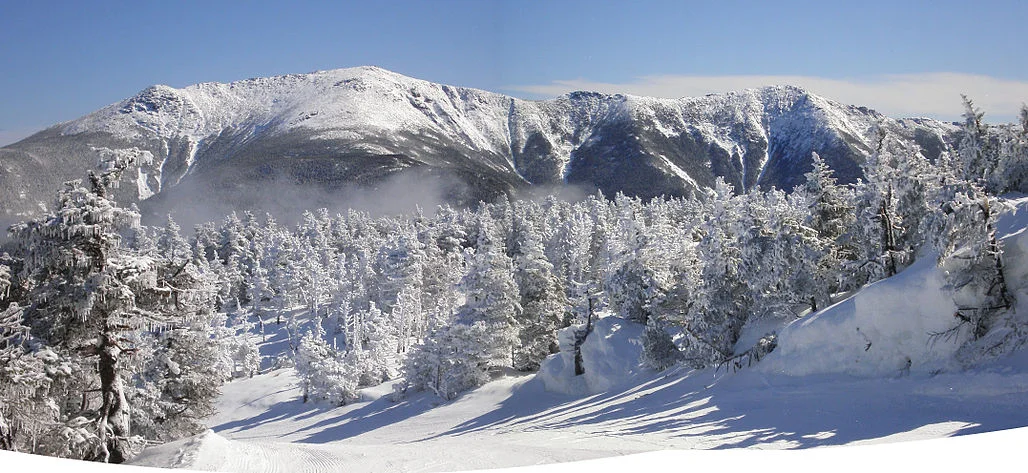
New Hampshire’s Franconia Range, which Robert Frost could have seen from his home.
“I met a lady from the South who said
(You won't believe she said it, but she said it):
"None of my family ever worked, or had
A thing to sell." I don't suppose the work
Much matters. You may work for all of me.
I've seen the time I've had to work myself.
The having anything to sell is what
Is the disgrace in man or state or nation.
I met a traveler from Arkansas
Who boasted of his state as beautiful
For diamonds and apples. "Diamonds
And apples in commercial quantities?"
I asked him, on my guard. "Oh, yes," he answered,
Off his. The time was evening in the Pullman.
I see the porter's made your bed," I told him.
I met a Californian who would
Talk California—a state so blessed,
He said, in climate, none bad ever died there
A natural death, and Vigilance Committees
Had had to organize to stock the graveyards
And vindicate the state's humanity.
"Just the way Stefansson runs on," I murmured,
"About the British Arctic. That's what comes
Of being in the market with a climate."
I met a poet from another state,
A zealot full of fluid inspiration,
Who in the name of fluid inspiration,
But in the best style of bad salesmanship,
Angrily tried to male me write a protest
(In verse I think) against the Volstead Act.
He didn't even offer me a drink
Until I asked for one to steady him.
This is called having an idea to sell.
It never could have happened in New Hampshire.
The only person really soiled with trade
I ever stumbled on in old New Hampshire
Was someone who had just come back ashamed
From selling things in California.
He'd built a noble mansard roof with balls
On turrets, like Constantinople, deep
In woods some ten miles from a railroad station,
As if to put forever out of mind
The hope of being, as we say, received.
I found him standing at the close of day
Inside the threshold of his open barn,
Like a lone actor on a gloomy stage—
And recognized him, through the iron gray
In which his face was muffled to the eyes,
As an old boyhood friend, and once indeed
A drover with me on the road to Brighton.
His farm was "grounds," and not a farm at all;
His house among the local sheds and shanties
Rose like a factor's at a trading station.
And be was rich, and I was still a rascal.
I couldn't keep from asking impolitely,
Where bad he been and what had he been doing?
How did he get so? (Rich was understood.)
In dealing in "old rags" in San Francisco.
Ob, it was terrible as well could be.
We both of us turned over in our graves.
Just specimens is all New Hampshire has,
One each of everything as in a showcase,
Which naturally she doesn't care to sell.
She had one President. (Pronounce him Purse,
And make the most of it for better or worse.
He's your one chance to score against the state.)
She had one Daniel Webster. He was all
The Daniel Webster ever was or shall be.
She had the Dartmouth needed to produce him.
I call her old. She has one family
Whose claim is good to being settled here
Before the era of colonization,
And before that of exploration even.
John Smith remarked them as be coasted by,
Dangling their legs and fishing off a wharf
At the Isles of Shoals, and satisfied himself
They weren't Red Indians but veritable
Pre-primitives of the white race, dawn people,
Like those who furnished Adam's sons with wives;
However uninnocent they may have been
In being there so early in our history.
They'd been there then a hundred years or more.
Pity he didn't ask what they were up to
At that date with a wharf already built,
And take their name. They've since told me their name—
Today an honored one in Nottingham.
As for what they were up to more than fishing—
Suppose they weren't behaving Puritanly,
The hour bad not yet struck for being good,
Mankind had not yet gone on the Sabbatical.
It became an explorer of the deep
Not to explore too deep in others' business.
Did you but know of him, New Hampshire has
One real reformer who would change the world
So it would be accepted by two classes,
Artists the minute they set up as artists,
Before, that is, they are themselves accepted,
And boys the minute they get out of college.
I can't help thinking those are tests to go by.
And she has one I don't know what to call him,
Who comes from Philadelphia every year
With a great flock of chickens of rare breeds
He wants to give the educational
Advantages of growing almost wild
Under the watchful eye of hawk and eagle
Dorkings because they're spoken of by Chaucer,
Sussex because they're spoken of by Herrick.
She has a touch of gold. New Hampshire gold—
You may have heard of it. I had a farm
Offered me not long since up Berlin way
With a mine on it that was worked for gold;
But not gold in commercial quantities,
Just enough gold to make the engagement rings
And marriage rings of those who owned the farm.
What gold more innocent could one have asked for?
One of my children ranging after rocks
Lately brought home from Andover or Canaan
A specimen of beryl with a trace
Of radium. I know with radium
The trace would have to be the merest trace
To be below the threshold of commercial;
But trust New Hampshire not to have enough
Of radium or anything to sell.
A specimen of everything, I said.
She has one witch—old style. She lives in Colebrook.
(The only other witch I ever met
Was lately at a cut-glass dinner in Boston.
There were four candles and four people present.
The witch was young, and beautiful (new style),
And open-minded. She was free to question
Her gift for reading letters locked in boxes.
Why was it so much greater when the boxes
Were metal than it was when they were wooden?
It made the world seem so mysterious.
The S'ciety for Psychical Research
Was cognizant. Her husband was worth millions.
I think he owned some shares in Harvard College.)
New Hampshire used to have at Salem
A company we called the White Corpuscles,
Whose duty was at any hour of night
To rush in sheets and fool's caps where they smelled
A thing the least bit doubtfully perscented
And give someone the Skipper Ireson's Ride.
One each of everything as in a showcase.
More than enough land for a specimen
You'll say she has, but there there enters in
Something else to protect her from herself.
There quality makes up for quantity.
Not even New Hampshire farms are much for sale.
The farm I made my home on in the mountains
1 had to take by force rather than buy.
I caught the owner outdoors by himself
Raking.up after winter, and I said,
“I’m going to put you off this farm: I want it."
“Where are you going to put me? In the road?”
“I’m going to put you on the farm next to it.”
“Why won't the farm next to it do for you?"
"I like this better." It was really better.
Apples? New Hampshire has them, but unsprayed,
With no suspicion in stern end or blossom end
Of vitriol or arsenate of lead,
And so not good for anything but cider.
Her unpruned grapes are flung like lariats
Far up the birches out of reach of man.
A state producing precious metals, stones,
And—writing; none of these except perhaps
The precious literature in quantity
Or quality to worry the producer
About disposing of it. Do you know,
Considering the market, there are more
Poems produced than any other thing?
No wonder poets sometimes have to seem
So much more businesslike than businessmen.
Their wares are so much harder to get rid of.
She's one of the two best states in the Union.
Vermont's the other. And the two have been
Yokefellows in the sap yoke from of old
In many Marches. And they lie like wedges,
Thick end to thin end and thin end to thick end,
And are a figure of the way the strong
Of mind and strong of arm should fit together,
One thick where one is thin and vice versa.
New Hampshire raises the Connecticut
In a trout hatchery near Canada,
But soon divides the river with Vermont.
Both are delightful states for their absurdly
Small towns—Lost Nation, Bungey, Muddy Boo,
Poplin, Still Corners (so called not because
The place is silent all day long, nor yet
Because it boasts a whisky still—because
It set out once to be a city and still
Is only corners, crossroads in a wood).
And I remember one whose name appeared
Between the pictures on a movie screen
Election night once in Franconia,
When everything had gone Republican
And Democrats were sore in need of comfort:
Easton goes Democratic, Wilson 4
Hughes 2. And everybody to the saddest
Laughed the loud laugh the big laugh at the little.
New York (five million) laughs at Manchester,
Manchester (sixty or seventy thousand) laughs
At Littleton (four thousand), Littleton
Laughs at Franconia (seven hundred), and
Franconia laughs, I fear—-did laugh that night--
At Easton. What has Easton left to laugh at,
And like the actress exclaim "Oh, my God" at?
There's Bungey; and for Bungey there are towns,
Whole townships named but without population.
Anything I can say about New Hampshire
Will serve almost as well about Vermont,
Excepting that they differ in their mountains.
The Vermont mountains stretch extended straight;
New Hampshire mountains Curl up in a coil.
I had been coming to New Hampshire mountains.
And here I am and what am I to say?
Here first my theme becomes embarrassing.
Emerson said, "The God who made New Hampshire
Taunted the lofty land with little men."
Another Massachusetts poet said,
"I go no more to summer in New Hampshire.
I've given up my summer place in Dublin."
But when I asked to know what ailed New Hampshire,
She said she couldn't stand the people in it,
The little men (it's Massachusetts speaking).
And when I asked to know what ailed the people,
She said, "Go read your own books and find out."
I may as well confess myself the author
Of several books against the world in general.
To take them as against a special state
Or even nation's to restrict my meaning.
I'm what is called a sensibilitist,
Or otherwise an environmentalist.
I refuse to adapt myself a mite
To any change from hot to cold, from wet
To dry, from poor to rich, or back again.
I make a virtue of my suffering
From nearly everything that goes on round me.
In other words, I know wherever I am,
Being the creature of literature I am,
I shall not lack for pain to keep me awake.
Kit Marlowe taught me how to say my prayers:
"Why, this is Hell, nor am I out of it."
Samoa, Russia, Ireland I complain of,
No less than England, France, and Italy.
Because I wrote my novels in New Hampshire
Is no proof that I aimed them at New Hampshire.
When I left Massachusetts years ago
Between two days, the reason why I sought
New Hampshire, not Connecticut,
Rhode Island, New York, or Vermont was this:
Where I was living then, New Hampshire offered
The nearest boundary to escape across.
I hadn't an illusion in my handbag
About the people being better there
Than those I left behind. I thought they weren't.
I thought they couldn't be. And yet they were.
I'd sure had no such friends in Massachusetts
As Hall of Windham, Gay of Atkinson,
Bartlett of Raymond (now of Colorado),
Harris of Derry, and Lynch of Bethlehem.
The glorious bards of Massachusetts seem
To want to make New Hampshire people over.
They taunt the lofty land with little men.
I don't know what to say about the people.
For art's sake one could almost wish them worse
Rather than better. How are we to write
The Russian novel in America
As long as life goes so unterribly?
There is the pinch from which our only outcry
In literature to date is heard to come.
We get what little misery we can
Out of not having cause for misery.
It makes the guild of novel writers sick
To be expected to be Dostoievskis
On nothing worse than too much luck and comfort.
This is not sorrow, though; it's just the vapors,
And recognized as such in Russia itself
Under the new regime, and so forbidden.
If well it is with Russia, then feel free
To say so or be stood against the wall
And shot. It's Pollyanna now or death.
This, then, is the new freedom we hear tell of;
And very sensible. No state can build
A literature that shall at once be sound
And sad on a foundation of well-being.
To show the level of intelligence
Among us: it was just a Warren farmer
Whose horse had pulled him short up in the road
By me, a stranger. This is what he said,
From nothing but embarrassment and want
Of anything more sociable to say:
"You hear those bound dogs sing on Moosilauke?’’
Well, they remind me of the hue and cry
We've heard against the Mid - Victorians
And never rightly understood till Bryan
Retired from politics and joined the chorus.
The matter with the Mid-Victorians
Seems to have been a man named Joh n L. Darwin."
"Go 'long,"‘ I said to him, he to his horse.
I knew a man who failing as a farmer
Burned down his farmhouse for the fire insurance,
And spent the proceeds on a telescope
To satisfy a lifelong curiosity
About our place among the infinities.
And how was that for otherworldliness?
If I must choose which I would elevate —
The people or the already lofty mountains
I'd elevate the already lofty mountains
The only fault I find with old New Hampshire
Is that her mountains aren't quite high enough.
I was not always so; I've come to be so.
How, to my sorrow, how have I attained
A height from which to look down critical
On mountains? What has given me assurance
To say what height becomes New Hampshire mountains,
Or any mountains? Can it be some strength
I feel, as of an earthquake in my back,
To heave them higher to the morning star?
Can it be foreign travel in the Alps?
Or having seen and credited a moment
The solid molding of vast peaks of cloud
Behind the pitiful reality
Of Lincoln, Lafayette, and Liberty?
Or some such sense as says bow high shall jet
The fountain in proportion to the basin?
No, none of these has raised me to my throne
Of intellectual dissatisfaction,
But the sad accident of having seen
Our actual mountains given in a map
Of early times as twice the height they are—
Ten thousand feet instead of only five—
Which shows how sad an accident may be.
Five thousand is no longer high enough.
Whereas I never had a good idea
About improving people in the world,
Here I am overfertile in suggestion,
And cannot rest from planning day or night
How high I'd thrust the peaks in summer snow
To tap the upper sky and draw a flow
Of frosty night air on the vale below
Down from the stars to freeze the dew as starry.
The more the sensibilitist I am
The more I seem to want my mountains wild;
The way the wiry gang-boss liked the logjam.
After he'd picked the lock and got it started,
He dodged a log that lifted like an arm
Against the sky to break his back for him,
Then came in dancing, skipping with his life
Across the roar and chaos, and the words
We saw him say along the zigzag journey
Were doubtless as the words we heard him say
On coming nearer: "Wasn't she an i-deal
Son-of-a-bitch? You bet she was an i-deal."
For all her mountains fall a little short,
Her people not quite short enough for Art,
She's still New Hampshire; a most restful state.
Lately in converse with a New York alec
About the new school of the pseudo-phallic,
I found myself in a close corner where
I bad to make an almost funny choice.
"Choose you which you will be—a prude, or puke,
Mewling and puking in the public arms."
"Me for the hills where I don’t have to choose.”
"But if you bad to choose, which would you be?"
1 wouldn't be a prude afraid of nature.
I know a man who took a double ax
And went alone against a grove of trees;
But his heart failing him, he dropped the ax
And ran for shelter quoting Matthew Arnold:
"'Nature is cruel, man is sick of blood':
There s been enough shed without shedding mine.
Remember Birnam Wood! The wood's in flux!"
He had a special terror of the flux
That showed itself in dendrophobia.
The only decent tree had been to mill
And educated into boards, be said.
He knew too well for any earthly use
The line where man leaves off and nature starts.
And never overstepped it save in dreams.
He stood on the safe side of the line talking—
Which is sheer Matthew Arnoldism,
The cult of one who owned himself "a foiled
Circuitous wanderer," and "took dejectedly
His seat upon the intellectual throne"—
Agreed in 'frowning on these improvised
Altars the woods are full of nowadays,
Again as in the days when Ahaz sinned
By worship under green trees in the open.
Scarcely a mile but that I come on one,
A black-checked stone and stick of rain-washed charcoal.
Even to say the groves were God's first temples
Comes too near to Ahaz' sin for safety.
Nothing not built with hands of course is sacred.
But here is not a question of what's sacred;
Rather of what to face or run away from.
I'd hate to be a runaway from nature.
And neither would I choose to be a puke
Who cares not what be does in company,
And when he can't do anything, falls back
On words, and tries his worst to make words speak
Louder than actions, and sometimes achieves it.
It seems a narrow choice the age insists on
8ow about being a good Greek, for instance)
That course, they tell me, isn't offered this year.
"Come, but this isn't choosing—puke or prude?"
Well, if I have to choose one or the other,
I choose to be a plain New Hampshire farmer
With an income in cash of, say, a thousand
(From, say, a publisher in New York City).
It's restful to arrive at a decision,
And restful just to think about New Hampshire.
At present I am living in Vermont.
— “New Hampshire,’’ by Robert Frost
Vermont town loses its cops
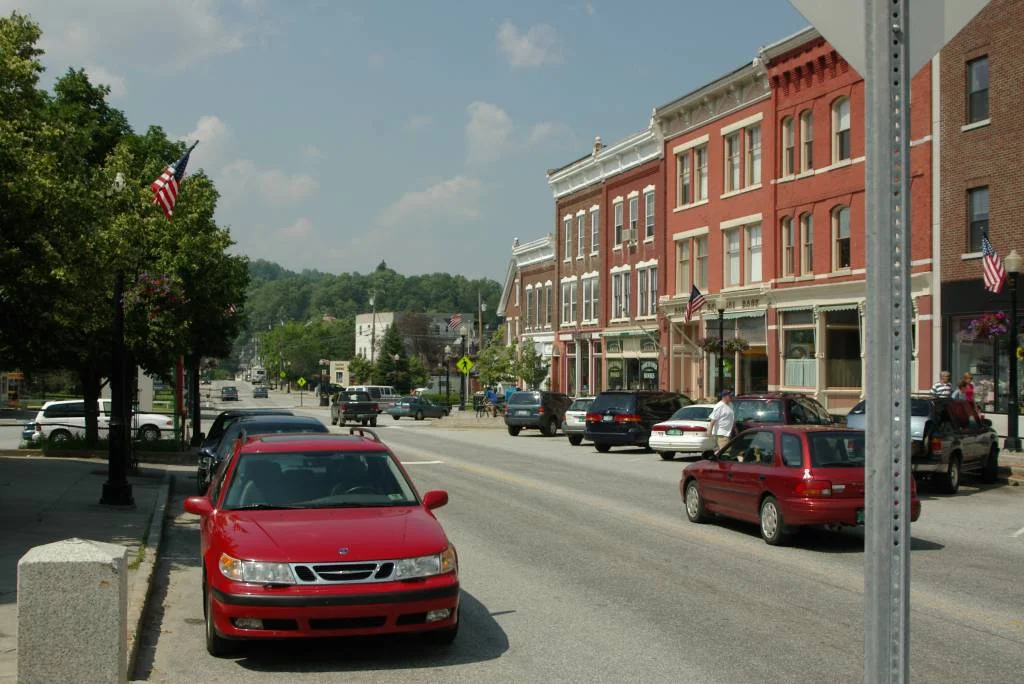
Downtown Randolph, Vt.
Photo by M.S.Maguire Copyright: ©2006 M.S.Maguire
From Robert Whitcomb’s “Digital Diary,’’ in GoLocal24.com
‘The Boston Globe had a rather poignant story Dec. 4 about the perhaps permanent loss of the town police force of Norman Rockwellian Randolph, Vt., in the White River Valley, because of fiscal and other issues. Law enforcement will, at least for the time being, be provided by Orange County. Townspeople are saddened that they’re losing an element of their local identity and some folks seem to feel less secure. It’s important to preserve such local agencies. Not every public service should be outsourced, or privatized.
To read more, please hit this link.
'Shadows and Light'
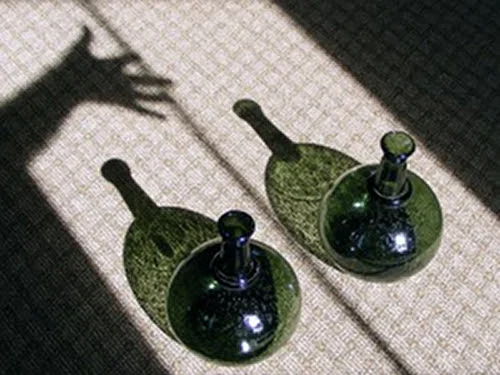
Image from the “Shadows and Light’’ show at The Franklin Gallery at Riverstones Custom Framing, in the very lively and interesting city of Rochester, N.H., through January. The show, coordinated by Peter Abate and featuring 34 artists, is a traveling exhibition. “Shadows and Light’’ is about the interplay and interpretation of shadow and light in art. The pieces in “Shadows and Light’’ explore the technical aspects of light and shadow as well as the symbolic and metaphorical ways these elements are expressed.
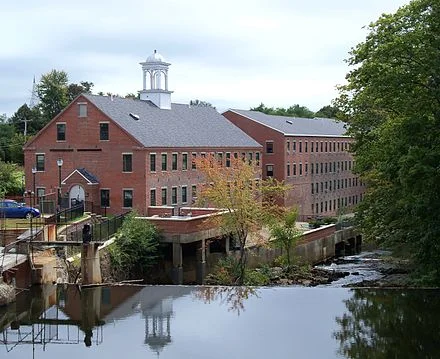
The Cocheco River provided power for Rochester’s early factories and mills, which made it a very prosperous place for many decades, starting in the early 19th Century. Shoes and blankets were among the major products. Prosperity spawned a remarkable degree of cultural energy, which continues to this day and has included the construction of an opera house and the residence of numerous visual artists, albeit some only in the summer.