
Vox clamantis in deserto









Martha Bebinger: Boston nurse denied life insurance because she has naloxone prescription

Isela was denied life insurance because her medication list showed a prescription for the opioid-reversal drug naloxone.
— Photo by Jesse Costa for WBUR
BOSTON
Bloodwork was supposed to be the last step in Isela’s application for life insurance. But when she arrived at the lab, her appointment had been canceled.
“That was my first warning,” Isela said. She contacted her insurance agent and was told her application was denied because something on her medication list indicated that Isela uses drugs. Isela, a registered nurse who works in an addiction treatment program at Boston Medical Center, scanned her med list. It showed a prescription for the opioid-reversal drug naloxone — brand name Narcan.
“But I’m a nurse, I use it to help people,” Isela told her agent. “If there is an overdose, I could save their life.”
That’s a message public health leaders aim to spread far and wide. “Be prepared. Get Naloxone. Save a life,” was the message at the top of a summary advisory from the U.S. surgeon general in April.
But some life insurers consider the use of prescription drugs when reviewing policy applicants. And it can be difficult, some say, to tell the difference between someone who carries naloxone to save others and someone who carries naloxone because they are at risk for an overdose.
Primerica is the insurer Isela said turned her down. (We agreed to use just Isela’s first name because she is worried about how this story might affect her ongoing effort to get life insurance.) The company said it can’t discuss individual cases. But in a prepared statement, Primerica noted that naloxone has become increasingly available over the counter.
“Now, if a life insurance applicant has a prescription for naloxone, we request more information about its intended use as part of our underwriting process,” said Keith Hancock, the vice president for corporate communications. “Primerica is supportive of efforts to help turn the tide on the national opioid epidemic.”
After Primerica turned her down, Isela applied to a second life insurer and was again denied coverage. But the second company told her it might reconsider if she obtained a letter from her doctor explaining why she needs naloxone. So, Isela did contact her primary care physician — and then realized that her doctor had not prescribed the drug.
Isela bought naloxone at a pharmacy. To help reduce overdose deaths, Massachusetts and many other states have established a standing order for naloxone — one prescription that works for everybody. Isela couldn’t just give her insurer that statewide prescription; she had to find the doctor who signed it. As it happens, that physician — Dr. Alex Walley — also works at Boston Medical Center.
Walley is an associate professor of medicine at Boston University; he also works in addiction medicine at Boston Medical Center and is the medical director for the Opioid Overdose Prevention Pilot Program at the Massachusetts Department of Public Health.
“We want naloxone to be available to a wide group of people — people who have an opioid use disorder themselves, but also [those in] their social networks and other people in a position to rescue them,” Walley said.
He said he has written a half-dozen letters for other BMC employees denied life or disability insurance because of naloxone, and that troubles him.
“My biggest concern is that people will be discouraged by this from going to get a naloxone rescue kit at the pharmacy,” Walley said. “So this has been frustrating.”
The life insurance hassle — and threat of being turned down — has discouraged Isela and some of her fellow nurses. She is not carrying a naloxone kit outside the hospital right now because she doesn’t want it to show up on her active medication list until the life insurance problem is sorted out.
“So if something were to happen on the street, I don’t have one — just because I didn’t want another conflict,” Isela said.
BMC has alerted the state’s Division of Insurance, which has said in a written response that it is reviewing the cases and drafting guidelines for “the reasonable use of drug history information in determining whether to issue a life insurance policy.”
But Isela isn’t a drug user. And yet, she is being penalized as if she were.
Michael Botticelli, who runs the Grayken Center for Addiction Medicine at BMC, said friends and family members of patients with an addiction must be able to carry naloxone without fear that doing so will send them to the insurance reject pile.Jewr
“It’s incumbent on all of us to make sure that we try to kind of nip this in the bud,” he said, “before it is any more wide-scale.”
Botticelli said increased access to naloxone across Massachusetts is one of the main reasons overdose deaths are down in the state. The most recent state report showed 20 fewer fatalities through the first nine months of 2018 compared with the same period in 2017.
Botticelli relayed his concerns in a letter to Dr. Jerome Adams, the U.S. surgeon general, who says he contacted the National Association of Insurance Commissioners. That group says it has not heard of any cases of life insurance applicants being denied because they purchased naloxone.
Adams said it’s good to — as Botticelli suggests — nip the problem in the bud.
“Naloxone saves lives,” Adams said, “and it is important that all Americans know about the vital role bystanders can play in preventing opioid overdose deaths when equipped with this lifesaving medication.”
Isela said the second company that rejected her has agreed to let her reapply, in light of Walley’s letter stating that she carries the drug so that she can reverse an overdose. Isela is in the process of reapplying.
This story is part of a partnership that includes WBUR, NPR and Kaiser Health News.
The only cure: Get plenty of sleep

”Insomnia’’ (print), by Mei Fung Elizabeth Chan in the Duxbury Art Association’s Winter Juried Show at the Art Complex Museum, Duxbury, Mass., Feb. 3-April 13.

Llewellyn King: A Christmas cake for the Bakers' Year

WEST WARWICK, R.I.
Christmas is coming. I know this because of indelible evidence in my own home. My wife, Linda Gasparello, has just baked a Christmas cake. If I doubt that this is the month of Christmas, I just have to look at it, cooling on the kitchen counter, declaring itself, in its way, the harbinger of the holidays.
The cake can’t be eaten yet. No, no. Linda, who’s a phenomenon at the range, explains when she sees me circling with a knife, the cake needs to “cure” for at least a week. Rum must infuse the cornucopia of fruit which has bonded with flour and eggs and whatever else makes a cake a cake. I don’t know all the fruits and nuts that go into The Great Christmas Cake, but I do know there are dried apricots. Linda gave me some as a bribe to get out of the kitchen while she was baking the cake.
All year we eat very little cake in our home. Desserts are avoided for the usual reason: keeping down the calorie count. But recently, for a party, Linda made a carrot cake. Not because she’s my wife, but because I adore carrot cake, I can say that hers is the best-ever.
How come I indulge in carrot cake when I eschew sponge, hide from German chocolate and, with a heavy heart, have even shaken my head at Sachertorte (chocolate cake covered with apricot jam and chocolate icing) in Vienna -- a crime against Austria, practically an act of war? (I must confess, though, that I once ate the cake in the Hotel Sacher in Vienna where it was invented.) The answer is carrots sound so healthy. “Good for you,” my mother used to say. She was a frightful cook and so raw carrots were better than anything she tried to do to them, which was mostly boil the life out of them until they were soft and spongy, most of the nutrients gone.
This year I read Hotel Sacher, a novel by Rodica Doehnert which traces the role of the great hotel at the end of the 19th Century -- how it was a kind of headquarters for the events that led to the end of Austro-Hungarian Empire and to World War I. If you want to research this in chilling detail, read Max Hastings’s book Catastrophe 1914: Europe Goes to War.
Back to cakes and Christmas. Linda’s cake has so many things in it I wonder it doesn’t cause a criticality incident or spontaneously ignite.
There seems to be boom in cooking and baking in particular. It all goes back to Julia Child, “The French Chef” starting on television in the 1960s, who whet the nation’s palate for cooking. Julia showed that cooking could be fun (especially if you cook with wine and imbibe as you go) and challenging -- so much so that today we have an abundance of cooking shows.
The ones I hate are those which weaponize cooking — with contestant chefs who are sent home in tears because their sauce separated or, horror of horrors, their soufflé collapsed.
Anyway, it seems 2018 is the Bakers’ Year. Linda is an exception because she bakes and tames meat. She can make a delectable osso buco as easily the tiramisu which follows. Mostly, there’s a divide between the flour people and meat people. Pretty much in the same the way, when I worked at The Washington Post, there was a divide between the pot smokers and the drinkers. Me, the latter.
I can tell baking is in by the number of recipes I find people exchanging, and I put it all down to The Great British Baking Show, on PBS, which entertains and makes baking exciting. Here contestant chefs also are sent home, but with such teary reluctance that if you want a hug from the whole cast and the other amazing chefs, you deliberately add a cup of salt instead of sugar to the cake. Tears and hugs all round.
We’re planning a Great British Christmas Tea at our house with Devonshire clotted cream and jam on scones, little sandwiches and – play the drums and trumpets fortissimo -- the fruited cake, which is curing very nicely, thank you.
And for Christmas itself? We’re going out to a restaurant. Happy holidays!
Llewellyn King is executive producer and host of White House Chronicle, on PBS. His email is llewellynking1@gmail.com. He is based in Rhode Island and Washington, D.C.
Patrick would have been stronger candidate than Warren
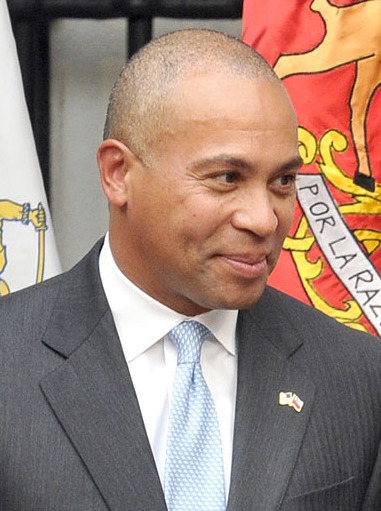
Deval Patrick
From Robert Whitcomb’s “Digital Diary,’’ in GoLocal24.com
So former Massachusetts Gov. Deval Patrick has decided not to run for the 2020 Democratic presidential nomination. As a fine speaker (to me better than Obama) and retail politician with two successful terms as the state’s CEO, he could have been a formidable candidate for the nomination, if not in the general election.
His decision opens the door wider for fellow Bay State Sen. Elizabeth Warren, who, if she decides to run, could draw on some of the financial and other campaign resources that Patrick would have gotten and certainly has an enthusiastic following of progressives. But it’s hard to see how the senator could get elected president.
Tim Faulkner: Opposition mounts to seismic blasting off East Coast to find oil and gas

From ecoRI News (ecori.org)
Sen. Sheldon Whitehouse, D-R.I., and environmental groups intend to resist the recent announcement of plans to commence seismic blasting for offshore oil and gas drilling. But time may be running out to prevent it.
Seismic blasting uses underwater airguns to search for fossil fuels deep beneath the seafloor, a process that endangers marine mammals such as whales and dolphins.
On Nov. 30, the National Marine Fisheries Service issued what is known as incidental harassment authorizations (IHA) to five companies for conducting seismic testing in an area from Delaware to Florida, a region twice the size of California.
The companies are ION GeoVentures, based in Houston; Spectrum Geo Inc. of England; TGS-NOPEC Geophysical Company of Norway; WesternGeco of England, and CGG, based in Paris.
Whitehouse called their approval “a statement” and “just an idea” that could be stalled by Congress. But according to the Bureau of Ocean Energy Management (BOEM), the five authorizations are under final review and seismic surveys could begin as early as January.
The IHA allows the the companies to perform deep-penetration seismic surveys that search thousands of meters below the seafloor for oil, natural gas, and minerals. The federal “incidental take authorization” provision allows the activity to kill, harass, hunt, or capture marine mammals. Harassment is defined as “any act of pursuit, torment, or annoyance which has the potential to injure a marine mammal or marine mammal stock in the wild; or has the potential to disturb a marine mammal or marine mammal stock in the wild by causing disruption of behavioral patterns, including, but not limited to, migration, breathing, nursing, breeding, feeding, or sheltering.”
The federal National Marine Fisheries Service, a division of the National Oceanic and Atmospheric Administration, says the potential to displace or harm marine life is minimal because of brief and limited exposure to survey noise.
According to the environmental advocacy group Oceana, the surveys deliver seismic blasts every 10 seconds, 24 hours a day over days or even weeks. Survey boats use dozens of airguns simultaneously to produce a constant blast that can travel thousand of miles.
The impact on sea life is significant. Airgun blasts cause temporary and permanent hearing loss, abandonment of habitat, disruption of mating and feeding, beach strandings and even death, according to Oceana. Airgun blasts also kill fish eggs and larvae.
“For whales and dolphins, which rely on their hearing to find food, communicate, and reproduce, being able to hear is a life or death matter,” according to Oceana.
According to a 2013 report, catch rates of Atlantic cod, haddock, rockfish, herring, sand eel and blue whiting declined by 40 percent to 80 percent because of seismic testing.
Seismic airgun testing in the Atlantic Ocean could injure 138,000 whales, according to BOEM. The noise is particularly threatening to the endangered North Atlantic right whale.
BOEM offers a list of protective measures to reduce harm to sea life, such as halting airgun use when animals get too close to vessels.
When a similar proposal was advanced under President Obama, more than 90 percent of the coastal communities in the Mid- and South Atlantic passed resolutions opposing the practice. The dissent was known as the Resolution Revolution, organized by Oceana. Shortly before Turmp took office in 2017, the Obama administration denied the applications for seismic testing in the Mid and South Atlantic, citing impacts on marine life. President Trump and Interior Secretary Ryan Zinke reversed that decision in May 2017, with the America-First Offshore Energy Strategy.
In January, Zinke announced plans to open the entire East and West coasts to offshore fossil-fuel exploration, prompting broad public opposition and efforts by coastal governors to meet with Zinke to convince him to halt the initiative.
In February, Gov. Gina Raimondo and Rhode Island’s congressional delegation held a press conference to announce their opposition to offshore drilling. Block Island, Charlestown, Jamestown and Tiverton all passed resolutions opposing offshore drilling and seismic blasting.
During a 45-day comment period on the proposed seismic airgun testing, the National Marine Fisheries Service received 15 petitions with a total of 99,423 signatures. Only one petition, with 595 signatures, supported the seismic surveys. The 14 other petitions with nearly 99,000 signatures opposed seismic blasting, as well as oil and gas drilling in the Atlantic Ocean.
After the recent news of forthcoming seismic testing, Whitehouse said South Atlantic Republicans “would do well to remember the job Oceana did with the Obama administration trying for offside drilling.”
Whitehouse intends to work with the Commerce Committee and Appropriations Committee “to align our folks” to halt the seismic surveys and offshore oil and gas extraction.
On Dec. 11, Whitehouse, Sen. Edward J. Markey, D-MA, and six other senators asked the Department of Commerce to rescind IHA’s and the Department of Interior to deny the seismic survey permits. In a letter, the senators cite environmental threats and economic harm to tourism and fishing. They also noted that the results of the surveys would be kept private by the survey companies and not available for government or public use.
BOEM, however, is already reviewing the survey applications and could approve them by January.
“If they try to move up to the Northeast, they’ll find that the opposition is bipartisan,“ Whitehouse said. “So, I think we have a real prospect of stopping it, but it’s hard to stop something that’s at this point is just an idea, a statement. Once it hits the administrative steps, we’ll figure out what the best way to counterattack is.”
The counterattack is also going through the courts, primarily in the South. On Dec. 11, Oceana and eight other environmental groups filed in U.S. District Court in South Carolina a lawsuit that claims that by issuing the IHA, the National Marine Fisheries Service ignored science and violated the Marine Mammal Protection Act, the Endangered Species Act, and the National Environmental Policy Act. The lawsuit wants the authorizations suspended until environmental assessments are performed.
If and when the seismic blasting get underway, Oceana will track the activity with a real-time map.
Tim Faulkner is a reporter and writer for ecoRI News.

Vertigo in wood

Roller Coaster, (mulbury and plywood), by Andy Moerlein, at Boston Sculptors Gallery.
'Silence knows no direction'

”sleet against the windowpane
or maybe a mouse in the wall…
I listen…
but silence knows no direction
outside,
heavy pine boughs,
deep in the woods
so quiet, so still
a deer steps
inside, warm,
the sound of a cat's paw
disturbs very little
as it hunts in a dream
silent as sleet’’
— “Silent Solstice (Winter Becomes Maine),’’ by Denis Dunn
'Mysterious core of life'

Town meeting in Huntington, Vt.
“Vermont tradition is based on the idea that group life should leave each person as free as possible to arrange his own life. This freedom is the only climate in which (we feel) a human being may create his own happiness. ... Character itself lies deep and secret below the surface, unknown and unknowable by others. It is the mysterious core of life, which every man or woman has to cope with alone, to live with, to conquer and put in order, or to be defeated by.’’
— Dorothy Canfield Fisher (1879-1958), American writer and education reformer
An American enigma

Calvin Coolidge.
Coolidge: An American Enigma, by the late Robert Sobel, published by Regnery, is a very well written look at the life of the Vermont-born Massachusetts lawyer and politician who became our 30th president. I found the stuff about “Silent Cal’s’’ early life particularly engaging. Sobel calls Coolidge our last “Jeffersonian’’ (limited government) president.
A man of integrity and reserve, Coolidge rather incongruously presided over “The Roaring Twenties’’. The well educated and smart Coolidge was, of course, a far more complicated character than many people thought when he was president. He was also a good writer, and sometimes showed flashes of sentiment/emotion in speeches and letters that he usually kept hidden from the public. And he wrote almost all of his own speeches – the last president to do so.
Coolidge would have agreed with this quote from James Madison:
“The infirmities most besetting popular governments…are found in defective laws, which do mischief before they can be mended, and laws passed under transient impulses, of which time and reflection call for a change.’’

The Coolidge Homestead, now a museum, in Plymouth Notch, Vt.

Ross Gittell/Bob Hieronymus: Trying to Improve pipeline from N.E. colleges to N.E. jobs

From the New England Journal of Higher Education, a service of the New England Board of Higher Education (nebhe.org)
England colleges and universities are often presented as a source of economic advantage in the New England states for providing a strong talent pool for regional employers. Yet, many state officials and others are questioning the efficacy of colleges and universities in serving regional labor market needs, as employers across New England are currently experiencing pronounced shortages of skilled workers.
Regional groups such as the New England Board of Higher Education (NEBHE), the Federal Reserve Bank of Boston and the New England Council (NEC) have key roles to play in addressing this challenge.
A so-called brain drain problem is frequently cited. This is cued in part by the relatively low percentages of New England high school graduates going to a college in their home states. All the New England states are in the bottom quintile in the percentages of high school graduates staying in state to go to college, all with percentages well below the national average of 72%–from a low of 36% in Vermont to a high of just 60% in Massachusetts (NICHE, 2017).
Also of concern is that the region’s colleges collectively have a high percentage–more than four of every 10–of their student population from out of state with inherently weaker connection to the state of college attendance and its labor market. The labor market perils are highlighted by data reported in November 2018 by the Chronicle of Higher Education that eight of the 10 four-year nonprofits with the highest out-of-state employment of graduates are in New England, and analysis identifying a strong positive correlation between New England college percentages of students from the region with percentages of graduates employed in the region. (See Figure 1.)
Yet, while New England high school graduates go to college out of state at high rates, they are very likely to stay within the region to go to college. More than three of every four New England high school students stay within the region to go to college, according to data from the labor market analytics firm Emsi on the fall 2016 entering freshman class, the latest figures available. This is well above the U.S. average for staying in state to go to college.
Notably, it is above that for the state of Texas, which, is among the top five states in the retention of high school students going to college but is more than three times the geographic size of the entire New England region (269,000 square miles compared with 72,000). This means that students staying in the New England region to go to college–even when going to college outside of their home state–can be much closer to their home towns and labor markets than a student staying in state in Texas.
Connecting New England college students to careers in the region
With over three-quarters of New England high school grads staying in the region to go to college, and the more than 24,000 students from outside the region starting college in the region as freshmen each year, the most important problem to address is not keeping high school graduates in state to go to college but rather it is more strongly connecting New England college students who are from the region and from outside the region to careers and employers in the region. One challenge, however, is that New England college students are highly dispersed across the region’s large and diverse higher education sector.
There are 33 colleges within the region with more than 1,000 New England high school grads as freshman students each year–from UMass-Amherst with 3,650, to Massachusetts Bay Community College with 1,006. These top destinations for New England college-goers, however, collectively account for less than one-half the total number of New England high graduates at New England colleges, and it is a diverse group.
All but one of the top college destinations for New England residents are public institutions. More than half (17) of the top 33 are community colleges, which are key institutions in connecting New England higher education with the economy. The other approximate half include all the public flagships, nine regional publics and one private college, Southern New Hampshire University (SNHU). Each of the 33 institutions counts over three-quarters of their total entering freshman students from New England, except SNHU, where about one-third are from the region.
Another group of 33 colleges in the region with notable numbers of New England high school grads as freshmen ranges from Johnson & Wales University with 986 to Husson University with 577. This second group is also widely dispersed across the region–from all the states in the region except for Vermont—but in contrast to the top 33 is dominated by private institutions (about two-thirds, 19). It also includes seven state universities and seven community colleges.
At the privates, the intermingling of New England high school graduates with out-of-region students is much higher than at the publics. Some private colleges in this second group have high percentages of their student body from New England (e.g., Worcester Polytechnic Institute and Providence College, each with over two-thirds). A New England-focused recruitment strategy could be effective at these colleges and help address the labor supply challenges that the region’s declining high school graduating classes presents, by working in a focused manner to have more high school graduates from the region stay in the region to work after college graduation.
At other private colleges, such as Harvard University and Boston University, the percentage of students from the region is much lower (21% at Harvard and 31% at B.U.). To add to the skilled labor supply, recruitment efforts at these colleges should have more of a focus on out-of-region student interests and their reasons for job selection, including for example, varied job and career paths and options after first placement.
The diverse and dispersed high education sector in New England means that it is difficult to base talent-recruitment efforts for New England college students from New England at any single college or in any one state or with just privates or publics or just at four-year colleges. The dispersion of the student population from outside the region is even wider absent the concentration at community colleges (99% of students from the region) and public four-year colleges (89% from the region).
Figure 1: Correlation % of Grads Employed in Region and % of Freshmen from Region at Selected New England Higher Education Institutions
Deep and broad regional approach needed
NEBHE convened the Commission on Higher Education & Employability in recognition of the need to take a regional approach to connecting high education to the economy in the region. The Strada-Gallup Education Consumer Survey in 2017 examined the main motivations driving college students’ decisions nationwide to pursue postsecondary education. Employment outcomes were the main motivation for higher education, with 58% reporting job and career outcomes as their primary reason. This is true across all higher education pathways and demographic subgroups. And the focus on work/job market outcomes often intensifies as college students get closer to graduation, and closer to having to pay off student debt and be on their own financially.
The commission appropriately identified as one of its priorities the provision of more robust and relevant New England local labor market information to college students in the region, to inform their career exploration and inform their job search and post-college job placement. This is consistent with higher education’s mission and role, particularly the public institutions.
There are tools available to better inform New England college students about career pathways/opportunities in New England and encourage college graduates in the region to stay in the region and be a stronger talent pool for employers in New England. One example is Emsi’s Career Coach.
Career Coach enables students to start with interest-based career exploration and then identify the programs at colleges that can set them on a path to accomplish their professional goals. As students navigate Career Coach, they are presented with key labor market data specific to their region, including wages, job growth, in-demand skills and live job postings from local and regional employers. For example, if a college student were to explore Career Coach for New England in November 2018, they would have information about occupations specifically in the region with the highest numbers of job postings–including software application developers, registered nurses, marketing managers, industrial engineers, management analysts, sales managers and accountants–and know specific information about the companies in the region recruiting and what the job requirements are and what the jobs pay. This helps New England college students to connect more strongly to the regional economy.
A New Hampshire model
The Community College System of New Hampshire (CCSNH) has adopted Career Coach. As part of its systemwide implementation, each of the state’s seven community colleges received its own website that matches their unique colors and branding. Each site displays labor market data specific to their service area and includes links to the host college’s program pages. Sharing the same core software also means that students across the state benefit from a consistent and familiar interface, regardless of which college’s site they visit. CCSNH also plans to integrate Career Coach with its enrollment and academic planning systems, leveraging the unique strengths of both platforms to provide students a comprehensive solution for challenges from career exploration to course registration.
Deploying technology and Web- and mobile-based info is a good start, but academic changes that will substantively and proactively help students engage with career exploration in New England is essential. For example, several New Hampshire community colleges have adopted an innovative first-year course called “Ethnography of Work,” originally developed by Guttman Community College in New York City.
In this course, students visit local employers, use Career Coach and apply principles of ethnography–observing, recording and analyzing a culture (in this case workplace) to produce a written account of an institution and the role, responsibilities and daily life of people (in this case, workers) at the institution–in their exploration of workplaces and future careers. The course provides strong academic based links of course work to practical career information and exploration and earns students transferable social science credits.
Inspired by the University of Hawaii system, New Hampshire colleges also plan to embed Career Coach into core English composition courses, where students will use it to develop and write about their career goals as they relate to employment opportunities in their local college area. And the CCSNH is also working with the state’s Department of Education, encouraging high school counselors and parents (along with students) to take advantage of this resource as they help students explore opportunities to continue learning and working, right in their own backyard. The goal is to facilitate early and broad adoption of tools like Career Coach that can help create stronger connection of high school and college students to the economy in the region.
New Hampshire’s approach suggests the value of having a central, consistent and comprehensive source of labor market and career-academic program information for all colleges and communities in New England. For the region, this would enable students to explore in detail academic programs aligned with their career aspirations and possibilities. It would help to address the outmigration of young talent to outside the region and strengthen the homegrown workforce pipeline to employment in the region. And it could also strengthen the connection of college students from outside the region to the regional economy as college students from outside the region explore career opportunities and connections with employers in their use of Career Coach and also in their curriculum and coursework.
Potential partnership possibilities with use of regionwide Career Coach could be supplemented with information and programing from NEBHE (for higher education information and Regional Student Program tuition break), the Federal Reserve Bank of Boston (for economic info) and the New England Council (for business engagement and partnership).
There will be a need to complement the career coach-type efforts and related academic programing with business-connecting activities such as internships, apprenticeships and other work-based learning at regional employers. This is where the New England Council and other business organizations in the region could be very helpful.
Creative recruitment efforts–based on what we know about where New England high school grads attend college – are also needed. These efforts could include “New England Patriot” recruiting events and nights by regional employers specifically targeted to students who are from New England. Events could focus on students at different types of institutions, for example events focused on community college students in the region (with a focus on jobs requiring more technical and vocational specific training and education), or students at regional public universities (who are more likely to stay in the region than students attending the public flagships).
And there is the opportunity to make targeted effort to strengthen connections to the regional economy for the many students attending colleges in New England who are from outside the region. This could involve “New England career exploration/information” events targeted to students at New England colleges from outside the region. These events could be focused on the attributes of the region–its cultural and recreational resources–and also its diverse and large number of job and career possibilities in exciting and growing fields including biotech, regenerative medicine, advanced composite materials, robotics, data analytics and artificial intelligence to name just a few. And these events could be used in part on introducing different areas in the region to student populations that might not be aware of the opportunities outside of Boston, for example, in Providence, Portland, Burlington, Manchester, New London, Lowell and other mid- and smaller-sized cities in the region.
Many of these events–to address the diverse and dispersed higher ed sector in New England–should be multi-college, metro- or rural-wide area. It could be helpful if NEBHE, the Federal Reserve Bank or NEC hosted these events (or all three jointly hosted). Even when focusing on students from outside the region, it will be difficult for employers to focus on one college or in one state. For example, the top five destination colleges for students from outside the region (SNHU, B.U., Northeastern, Boston College and Harvard) together account for less than one of every six freshman students from outside the region.
What will remain to be done?
There will remain a need to address intra-regional brain drain as the more rural areas of New England do experience out-migration of young people from rural area college deserts to university and college centers. Special efforts will have to be made to “reconnect” college graduates from rural areas to the economies in their home communities. This could involve bringing talent plus jobs back to rural areas, with targeted effort to support students from rural areas in starting their business and bringing their start-ups “back” to their hometowns. Targeted effort could also be made to connect, students at colleges in rural areas to local economies. Efforts that include promotion of entrepreneurship at rural colleges, such as Dartmouth College’s Entrepreneurial Network, which include having college-launched businesses stay based locally, could serve as good models.
The region’s higher education institutions are only as strong a source of competitive advantage as are the connections among colleges and universities and their students to the businesses and industry in the region. A regionwide career coach with connections type approach, that strengthens the connectivity of college students and programs in the region to regional businesses and jobs, can help bolster the region’s economic future.
Ross Gittell is chancellor of the Community College System of New Hampshire. Bob Hieronymus is vice president of business development and partnerships at Emsi.
Holy Cross lauded for Teach for America role

At Holy Cross, Fenwick Lawn, with Commencement Porch of Fenwick Hall in the foreground and the Chapel beyond.
This is from The New England Council (newenglandcouncil.com
“The College of the Holy Cross, a Council member, was recently ranked as a ‘Top Contributor’ of graduates to Teach for America programs. In 2018, the small private college in Worcester sent 12 students, making it the second biggest contributor among all small schools in the country.
“Under the Teach for America programs, graduates sign on for two years of teaching in under-served schools across the country. Since the program’s inception in 1990, 212 Holy Cross alumni have participated. This year, 3,600 teachers will be sent to 36 different states, with Holy Cross graduates heading to classrooms in Washington, DC, Texas, Louisiana, Massachusetts, New York, Tennessee and Florida.
“Amy Murphy, director of the Center for Career Development at Holy Cross, said, ‘Holy Cross challenges our students to consider the ways they can best use their gifts, talents and passions in service to others. For many of our graduates, that is in our nation’s most under-resourced communities and schools. What’s more, Holy Cross students embody many of the qualifications and traits that Teach for America seeks in candidates: demonstrated leadership skills, high achievement and a commitment to standing in solidarity with those from marginalized or impoverished backgrounds.”’
“The New England Council commends Holy Cross on continuing to foster civically engaged students with a passion for learning and thanks them for their dedication to educating our future leaders.’’

Old churches should diversify functions
From Robert Whitcomb’s “Digital Diary,’’ in GoLocal24.com
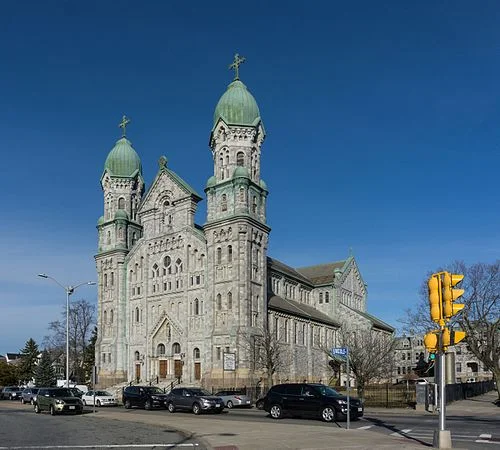
The closing of St. Anne’s Church in Fall River, whose twin towers are a much loved feature of the Spindle City’s skyline, as well as the closing of many other Catholic and mainline Protestant churches across America, make me wonder if many could have remained open if their leaderships had been more able and willing to repurpose parts of their churches for regular non-religious functions to bring in revenue before closings became unavoidable.
Probably most of these old churches will never again have the big congregations they once had in more religious times. But many more of the spacious rooms within old churches could be used for small businesses, exercise studios, co-working spaces, artists’ studios and so on, if churches would market those uses much more – and faster -- than they have. The naves would continue to be dedicated to religious services.
Now how to save beautiful St. Anne’s from being torn down? It sure would be a prettier City Hall than the Brutalist beast that now serves as that function! See below.

Another creepy invasive species enters New England

Longhorned tick.
From ecoRI News (ecori.org)
The longhorned tick, native to China, Japan, Russia and Korea, was recently found for the first time in New England, according to the Rhode Island Department of Environmental Management (DEM). Animal health experts say the longhorned tick poses a serious risk to the region’s livestock.
Working in cooperation with the Animal and Plant Health and Inspection Service (APHIS) of the U.S. Department of Agriculture, DEM is asking livestock producers and wildlife rehabilitators to observe animals for the presence of the tick, which is also known as the bush tick, cattle tick, and Asian tick.
The longhorned tick poses a risk to New England livestock because it can attach itself to various warm-blooded animals to feed. If too many ticks attach to one animal, the loss of blood can kill the animal. The ticks also can affect wildlife, hunters vand their dogs, and spread a variety of diseases, according to DEM.
Dark brown, the adult longhorned tick grows to the size of a pea when it’s engorged with blood. The other life stage of the tick, such as larva and nymph, are very small and difficult to see with the naked eye.
The longhorned tick was detected in Connecticut this fall, marking the first finding of the pest in New England. It also has been confirmed in Arkansas, Maryland, New Jersey, New York, North Carolina, Pennsylvania, Virginia, and West Virginia. The longhorned tick is considered a serious threat to livestock in Australia, New Zealand and eastern Asia.
In late 2017, animal-health experts identified a longhorned tick on a sheep in Hunterdon County, a western New Jersey county bordering Pennsylvania about 35 miles from Trenton. After this finding, officials began examining how and when the tick arrived in the United States. They re-examined tick samples from past years and confirmed a longhorned tick from a sample collected in West Virginia in 2010. Authorities still are investigating exactly how the longhorned tick entered the country. Possible scenarios include being carried by domestic pets, horses, livestock, or humans.
If a suspected longhorned tick is found on persons, pets, horses, livestock or hunter-harvested deer, the public is asked to collect the tick for animal health officials to identify, as follows:
Place the tick in a snack or sandwich-size baggie along with a small stamp-size piece of moistened tissue paper and seal it. Do not use tape to secure the tick.
Call the state veterinarian’s office at 401-222-2781 or the New England APHIS Veterinary Services office at 508-363-2290.
A mess, but at least it's warm

“Urban Canvas’’ (Saint Simons Island, Georgia) (watercolor) by Catherine Hillis, at the Art Complex Museum, Duxbury, Mass,.
In the off-season

“Boat House’’ (found metal and gold leaf), by Charles Gibbs, at the Andover Gallery Frame Shop, in Andover, Mass.

Frank Clemente: GOP tax bill is creating jobs -- abroad

1909 painting “The Worship of Mammon,’’ by Evelyn De Morgan.
Via OtherWords.org
We should have told them to be more specific. When President Trump and his fellow Republicans in Congress called their massive tax overhaul last year the “Tax Cuts and Jobs Act,” most of us assumed the jobs would be in the United States.
Now we know better.
Yes, unemployment in this country is low, but there’s no evidence it’s because of last year’s GOP tax cuts. More likely it’s simply a continuation of an eight-year trend of steady job growth that began under President Obama.
On the other hand, we can reasonably connect specific losses in U.S. employment to the Trump-GOP tax law. For instance, last summer General Motors decided to build its Chevrolet Blazer in Mexico rather than the United States.
Then this November, it announced plans to close five North American assembly plants and lay off nearly 15,000 workers in such states as Ohio, Michigan and Maryland.
The Republican tax law encourages that kind outsourcing because it charges corporations just half the tax rate on foreign profits that it charges on domestic earnings. It’s hard to imagine a stronger lure for corporations to pack up their plant and equipment and ship them offshore.
But you don’t have to imagine, because it’s right there in another part of the law: The more U.S. corporations shift factories and other sources of production overseas, the lower the U.S. taxes are on their foreign profits.
It’s almost as if the GOP law was designed to promote outsourcing.
It certainly isn’t doing much for American workers, despite all the hype and promises from President Trump and other Republicans. Trump claimed his giant corporate tax cut would result in employers giving every working family a $4,000 raise.
Workers are still waiting.
Almost a year after the law was enacted, only 4 percent of them have gotten a raise or even a one-time bonus tied to the tax cuts. Where the tax-cut money is really going — as many of us predicted — is into the bank accounts of CEOs and other senior executives and rich shareholders.
Since Trump’s tax cuts, corporations have announced 117 times more in stock buybacks ($832 billion) than they’ve spent on worker pay hikes ($7 billion). Buybacks pump up the price of shares, further enriching stockholders, including company execs, much of whose compensation is in company stock.
GM is a perfect example. It got a tax cut this year of over $150 million, with more to come in future years. That’s on top of a one-time tax cut probably worth hundreds of millions on the $6.5 billion in profits it stashed offshore.
GM used that money to buy back $100 million of its own shares. It gave nothing to its workers — unless you count pink slips.
And it will undoubtedly continue to lavish its top executives with huge pay packages, such as the $22 million in total compensation chief executive Mary Barra received last year. That’s almost 300 times more than the average GM employee makes.
All this demonstrates a simple truth: Tax cuts for the wealthy and corporations help the wealthy and corporations, not American workers. In fact, those high-end tax giveaways wind up hurting working families and their communities.
Damage doesn’t just come from outsourcing and layoffs. The Republican tax law will eventually cost $1.9 trillion. That digs a deep debt hole that GOP leaders have already admitted they plan to fill with money taken from Social Security, Medicare, Medicaid and other services that the American people rely on.
If we really want to help the laid-off GM workers and towns facing empty factories, we need to reverse the tax cuts for the rich and corporations. We also need to stop the offshoring of American jobs by passing the “No Tax Breaks for Outsourcing Act” now before Congress.
The next time Republicans claim a tax cut slanted towards the wealthy will create jobs, we’ll make sure to ask: Where?
Frank Clemente is executive director of Americans for Tax Fairness.
SeaAhead advances

Over the Atlantic.
From the New England-based SeaAhead project:
”The SeaAhead team continues to move ahead in our efforts to set up a base of operations in Boston — we'll have news on that front shortly. Our recent adventures have taken us events in Newport, New York and Boston, and we've begun mapping out lots of great events of our own for 2019.’’
For more information, hit this link to our site.
“SeaAhead is a Benefit Corporation with the mission of supporting new venture development at the intersection of innovation + sustainability + the oceans. Our ecosystem includes technologists, scientists, startups, corporations, governments and other ocean stakeholders that are coming together to create impact in areas including greener shipping and ports, aquaculture and fishery processes, offshore alternative energy and smart cities.’’
Stayed and got into trouble

A December sunset along the Boston side of the Charles River,
“On the river path in Boston beauty was most expressed as youth and intelligence. That made sense; sixty degree-giving institutions, some three hundred thousand students; that meant at least one hundred fifty thousand more nubile young women than demographics would ordinarily suggest. Maybe that was why young men stayed in Boston when their college years were over, maybe that explained why they were so intellectually hyperactive, so frustrated, so alcoholic, such terrible drivers.’’
— Kim Stanley Robinson, science-fiction writer