
Vox clamantis in deserto

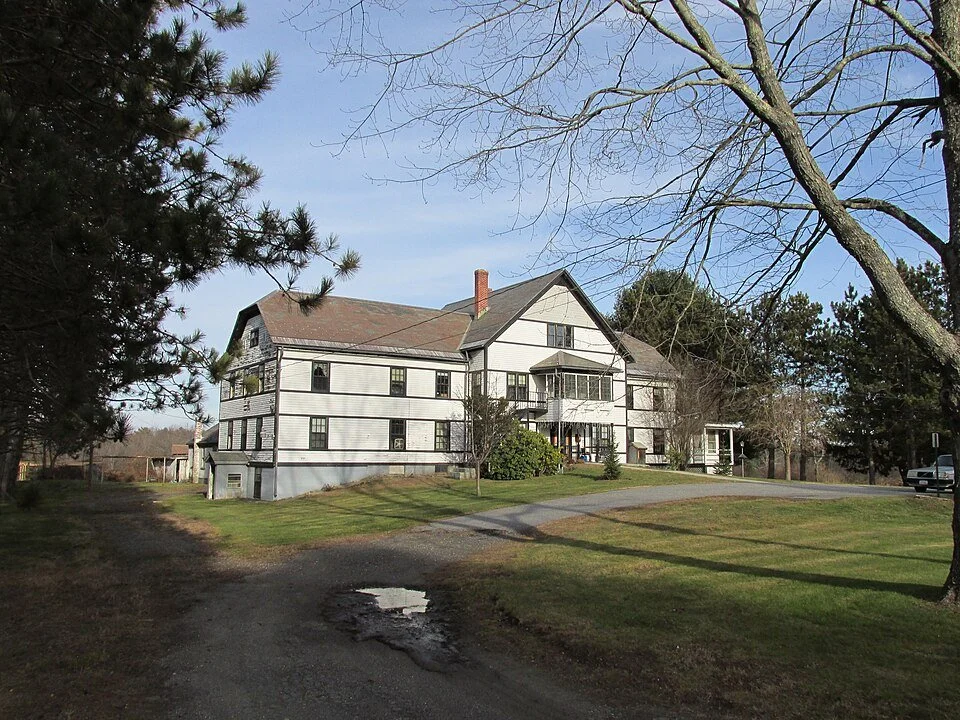
'People love water'
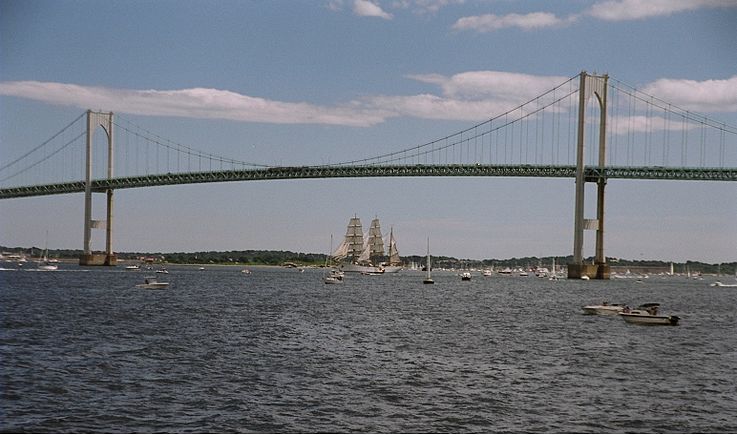
The Pell Bridge, named for Claiborne Pell, the longtime U.S. senator and Newport resident.
Rhode Island, in and around a bay and in part an archipelago, is known for its bridges, with spectacular views. The state should market them more, for the pleasure of locals and out-of-state visitors alike. Buddy Croft, executive director of the Rhode Island Turnpike and Bridge Authority, has discussed ways to do just that. As he told the Newport Daily News, the improvements might include paths for pedestrians and bicyclists on the Pell, Jamestown-Verrazzano and Mount Hope bridges. And he forwards the exciting idea of building an enclosed observation deck, accessible by elevator, on top of one of the Pell Bridge’s towers.
There would be a fee to go up, revenue from which could be applied to bridge maintenance. Given the dramatic vistas, I think that the deck would draw many happy people, albeit mostly in the warm weather.
Meanwhile, work continues on the Providence River pedestrian bridge, in the Route 195 relocation area. The span, connecting the city’s East Side and downtown, is now projected to be ready by next August. I predict that it, too, will become a tourist draw, if not in the winter. People love to look over water.
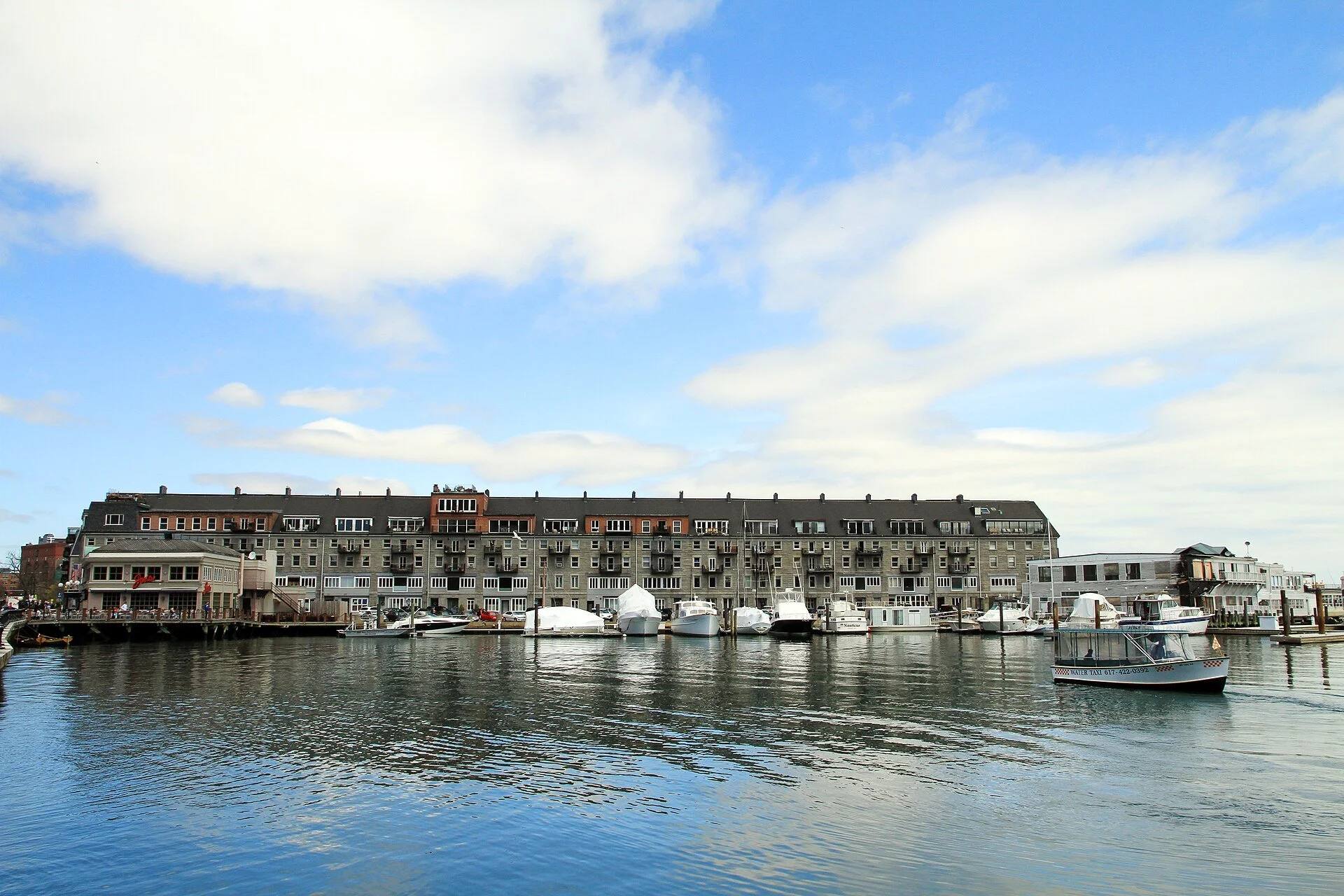
Back in 1982, the late Baltimore developer James Rouse, whose projects included Baltimore’s Harbor Place and the redevelopment of Boston’s Faneuil Hall area, expressed dismay that the downtown part of the Providence River was covered up by “world’s widest bridge’’ – basically a huge parking platform. “People love water. Why have they covered it up here?’’ he was said to have remarked while walking across the platform before climbing College Hill to speak at Brown University.
The platform was torn down, replaced by smaller and very pretty bridges, recalling those in, say, Italy and making the center of the city much more alluring. (I do wish that better materials had been used on the bridges – more stone, less now-flaking concrete.) Rhode Island has extraordinary scenic stretches along its streams and coast. It should take more advantage of them.
To read the Newport Daily News article, please hit this link.

Providence Art Club's famous 'Little Pictures' show

"Duet VII’’ (pastel), by Michele Poirier-Mozzone, in the Providence Art Club's “Little Pictures Show & Sale 2018’’. This is the oldest (this is its 114 year) and largest (with more than 600 works) “little pictures’’ show in the United States.
The works are "cash and carry," Each piece is 16" x 16" or smaller and priced at no more than $300. The works are "cash and carry," meaning that any purchased artwork can be taken home immediately. The work will then be replaced by another piece, resulting in a constantly changing exhibition of paintings, drawings, photos, collages, hand-pulled prints and hand-made artist books, along with sculpture, ceramics, glass and jewelry.
'Pattern in the mind'
The mortal fruit upon the bough Hands above the nuptial bed. The cat-bird in the tree returns The forfeit of his mutual vow. The hard, untimely apple of The branch that feeds on watered rain, Takes the place upon her lips Of her late lamented love. Many hands together press, Shaped within a static prayer Recall to one the chorister Docile in his sexless dress. The temperate winds reclaim the iced Remorseless vapours of the snow. The only pattern in the mind Is the cross behind the Christ.
— “First Communion,’’ by Djuna Barnes
Be creative

A window reused as decoration.
‘In Maine, there is a deeply ingrained sense that you can always get a little more use out of something.’’
— Tim Sample, a Maine humorist
Techno hope for Right Whales?
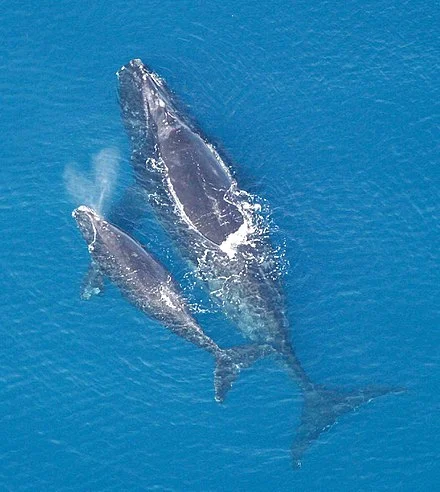
North Atlantic Right Whale with her calf.
From Robert Whitcomb’s “Digital Diary,’’ in GoLocal24.com
‘Man is rapidly wiping out species. Perhaps new technology can help save at least a few of them (though not nearly as a much as stabilizing human population growth). Consider, the Associated Press reports, a new simulator that lets scientists use a joystick “to swim a virtual whale across a video screen’’ as part of efforts to save the close-to-extinction North Atlantic Right Whales that swim off New England. The idea is to better understand how the huge mammals become entangled in fishing lines and then develop such solutions as ropeless fishing gear, an experiment with which is underway with Maine lobstermen.
Tim Werner, a senior scientist at the New England Aquarium’s Anderson Cabot Center for Ocean Life, told the AP: “If we can see how they get entangled, it would help us prevent it. The technology in computers has evolved to a state where we can model these things.”
More than 80 percent of Right Whales, of which there are only about 400 left, become ensnared by fishing lines. Many then die of starvation because they can’t move around to find food. Some drown. The stress of entrapment itself can kill them. It’s probably too late to save this intelligent species, but Mr. Werner holds out a little hope.
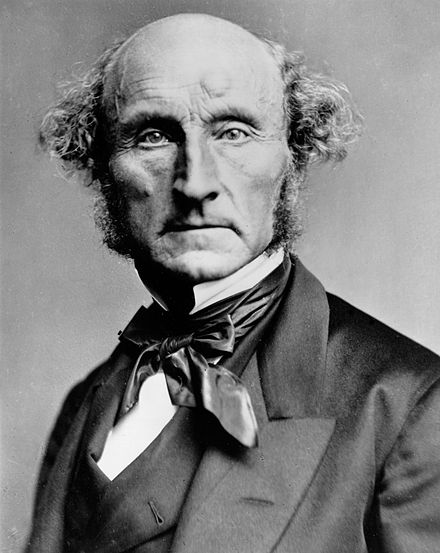
Diana Senechal: A review of 'On Liberty' in today’s context
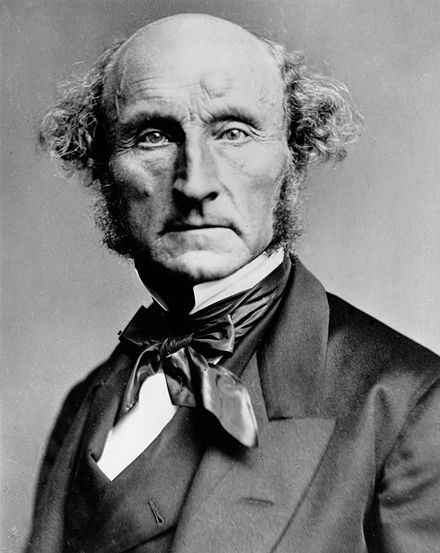
John Stuart Mill (1806-1873).
From The New England Journal of Higher Education, a service of the New England Board of Higher Education (nebhe.org)
When teaching political philosophy to high school juniors in New York City, I would spend evening hours pondering John Stuart Mill’s treatise On Liberty, asking myself how to help students through the difficult syntax and even more difficult ideas. Often, students would say at the outset that they agreed with Mill, but when I pressed them further, I found more differences of thought. Indeed, the principles of liberty that Mill articulates—first, that all opinions have a place in public discussion, and second, that people should be allowed to live as they wish, as long as they do not impinge on others’ rights—are so far from general acceptance today that liberty itself, or at least Mill’s conception of it, remains a distant aspiration. Building it would require not only great dedication but also fear of the alternatives.
We eagerly shut out certain opinions, if only because we believe they have been disproven; we likewise take offense at others’ “wrong” words, movements and gestures. Both the political left and the political right seek out the like-minded and disparage the others. Many of those involved in identity politics—particularly but not only on the left—insist that people do damage not only through overt action, but through microagressions and implicit bias: that they hurt others through tiny gestures, slips of tongue and even hidden thoughts. On the right, conspiracy theories have taken hold, thanks in great part to the ravings of President Trump: for example, the media are full of lies, George Soros has been paying political protesters, and Jews are aiding immigrants who will destroy the white race. On the personal level, public online shaming, even for trivial offenses or private matters, has become quotidian.
But what did Mill say, and why is it difficult? Recognizing the pitfalls of reducing his ideas, I will focus here on two sentences, one about liberty of expression and the other about individuality.
In the second chapter of On Liberty, Mill sets forth a prickly proposition: “If all mankind minus one, were of one opinion, and only one person were of the contrary opinion, mankind would be no more justified in silencing that one person, than he, if he had the power, would be justified in silencing mankind.” He goes on to explain that we can learn from an opinion whether it is right or wrong; if it is right, then we benefit from its truth; if wrong, we come to understand why. But who embraces this idea today? Most of us consider certain opinions a waste of time, if not a threat to humanity. Must we really deal with climate-change deniers, white supremacists, flat-Earthers? Should we not focus on ideas worth considering? Perhaps Mill did not mean this; perhaps he did not foresee such profusion of baseless notions. Yet it is also possible that Mill’s proposition must be taken in its sheer difficulty: that its implementation requires conscience, vigilance and searching.
When it comes to individual freedom, Mill takes an even more provocative stance. After conceding that people should not make themselves a nuisance to others, Mill continues, “But if he refrains from molesting others in what concerns them, and merely acts according to his own inclination and judgment in things which concern himself, the same reasons which show that opinion should be free, prove also that he should be allowed, without molestation, to carry his opinions into practice at his own cost.” Anything short of this, according to Mill, would result in imitation; to have a free mind, one must be able to choose how to live. He goes on to examine the “despotism of Custom”—so strong and overarching, in his view, that liberty is in peril.
Individual liberty is in even greater danger today than in Mill’s time, since people now display their lives online for social approval and censure. It takes discipline and strength of character to keep something to yourself; instead, people continually test the digital waters and adjust their images and lives accordingly. Sometimes online judgments are brutal; a nasty personal comment, made on a Facebook page or comment section, can hurt more than words spoken in person—because it does not go away, because it grows in the imagination, and because it brings humiliation. It takes little effort to ridicule someone online, and for what? Usually for things that the perpetrator has not bothered to understand. People judge each other not for who they are, but for their tokens of social approval, which are imitative and coercive by nature. Gone is the respect for the unknown.
What would it take to reclaim and strengthen liberty as a principle of American life? One must recognize, first of all, the consequences of not doing so. Without liberty and the willingness to strive for it, America has no more reason for existence other than sheer physical survival; the same can be said for other democratic nations. Survival itself would be at risk; without counterbalance and self-questioning, extremist views would harden, and hate rallies and mass shootings would increase. Second, to defend liberty, one would have to recognize its difficulty—which is perhaps Mill’s underlying point. Liberty does not come glibly; it often goes against what we consider necessary or right. It has complications, inconveniences and open questions. Where is the line between private and public life, between opinion and action? How can we listen to all opinions without getting bogged in redundancy? These questions have no final, definite answers; they must be taken up again and again. To reclaim liberty, then, we must wrestle with questions, in our personal lives, writings, schools, political structures and online forums. Finally, while taking personal responsibility for liberty, while building it into our lives, we must come together to elect leaders who support and exemplify this work.
Diana Senechal is the author of Republic of Noise: The Loss of Solitude in Schools and Culture (Rowman & Littlefield Education, 2011) and Mind over Memes: Passive Listening, Toxic Talk, and Other Modern Language Follies (Rowman & Littlefield, 2018) as well as numerous articles. She teaches English, American civilization and British civilization at the Varga Katalin Gimnázium, in Szolnok, Hungary.
Tim Faulkner: Activist decries dark history of farming in America
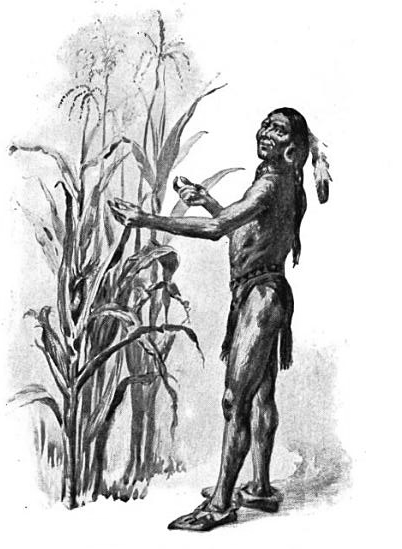
The Wampanoag chief Squanto helped teach the Plymouth Colony how to grow corn.
Via ecoRI News (ecori.org)
Current news about oppressive conditions and discriminatory practices at farms and slaughterhouses stem from centuries of institutionalized farming and land-ownership practices.
It started with a papal decry in 1455 that sanctioned land taking by white Europeans and endures in the United States and elsewhere through laws that restrict wages and protections for agricultural workers.
Southern New England isn’t exempt from this troubled history and is complicit in land and food problems that exist today, according to a farmer, educator, and reformer who spoke Nov. 16 at the Rhode Island Department of Health.
“We are on stolen land of the Narragansett and Wampanoag people,” Leah Penniman said. “It’s important to name, but it’s also important to think, ‘What are we all doing about that?’”
Penniman explained these conclusions to an audience of mostly young people that included African-American and Latinx men and women, many of whom are involved with the local farm and food movement and all shared an appreciation for environmental and social justice causes.
At a farm Penniman co-founded outside Albany, N.Y., she and her team of farmers and social reformers remedy these injustices through advocacy, policy work, education, and farming.
This work at Soul Fire Farm includes advancing programs that repatriate land to indigenous and black people. The nine farmers change policies around food access, such as restricting junk-food marketing. They advocate for food-stamp funding and laws that improve workers’ rights. They support native sovereignty initiatives and show up at protests.
“Giving back land, if we have land, is very important,” said Penniman, who is the author of Farming While Black.
Among its many initiatives, Soul Fire Farm teaches culturally appropriate growing practices to at-risk youth and offers boxes of food to nearby low-income residents.
History also is important to its mission. Penniman explained how Pope Nicholas’s Doctrine of Discovery in 1455 gave Europeans the right to colonize America. Sanctioned by god and justified through manifest destiny, whites appropriated new lands and enslaved and slaughtered native peoples.
This entitlement for white Europeans endured through the doctrine of manifest destiny and the expansion across North America. These beliefs were affirmed by the U.S. Supreme Court in 1823, when treaties with Native Americans were abandoned and indigenous groups lost their right to sovereignty.
Efforts to allow blacks to own land after slavery were undermined by white land owners. In 1910, blacks owned 14 percent of farmland, but new laws, racist groups like the Ku Klux Klan, and favorable lending programs for whites forced most black farmers from their land. Today less than 2 percent of U.S. farmers are black.
“This is not old history,” said Penniman, a Massachusetts native. “We are still on stolen land. We still haven't really reckoned with that. Most of our food is still grown on that land and we have to consider that very carefully anytime we talk about the food system.”
Today, minimum-wage laws and guest-worker programs institutionalized exploitation of farm workers, exposing them to harmful pesticides, wage theft, and harassment.
“The food system is not really broken. It was designed to concentrate power and resource in the hands of a few people,” Penniman said. “And it’s doing that very, very well. And the food system, its DNA, is stolen land and stolen labor.”
Soul Fire farmers not only teach history and lesser-known facts about pioneering African-American farmers, they also practice indigenous farming and grow culturally appropriate food. But their mission goes beyond the farm.
“We’re not obligated to fix the whole world, but we are obligated to take a step in that direction,” Penniman said. “We need to find that intersection of what the world needs and what really makes us come alive. Cause otherwise we are just complicit.”
Tim Faulkner writes for ecoRI News (ecori.org).
The Mass. state poem
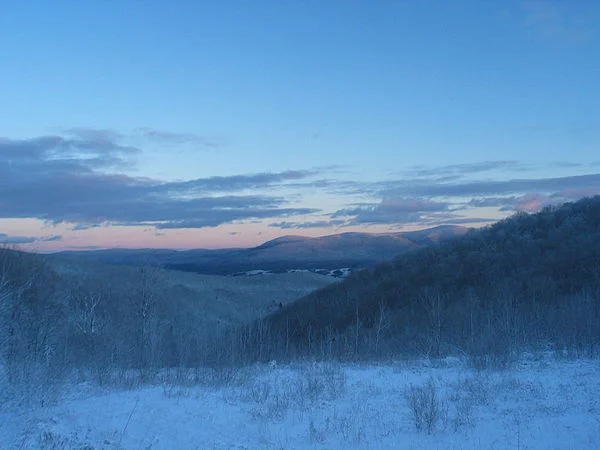
The Berkshires in the winter.
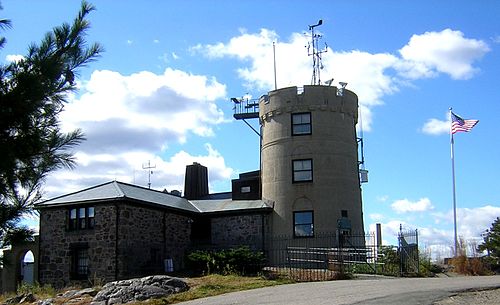
The famous weather station atop Great Blue Hill, south of Boston. Before the wind instrument was disabled by the blow, a gust of 186 miles an hour was recorded in the Sept. 21, 1938 hurricane.
Massachusetts! Massachusetts!
Lovely Bay State by the sea,
Chosen by the Pilgrim Fathers
In their search for liberty.
Massachusetts! Massachusetts!
How we love your Indian name!
Meaning "Great Blue Hill" in Boston,
Named before the white men came.
High locations in the distance,
Are serene, majestic blue,
Like Mount Greylock or Wachusett,
They are fascinating, too.
But from Boston to the Berkshires,
Lesser heights are bathed in blue,
In early dawn or distance,
Like the "Great Hill" Indians knew.
Close to Nature lived the Red Man,
Keen to every form and hue,
Knew the paths, and streams, and wildlife,
And the hills around him, too.
On the wide base of "Great Blue Hill,"
Lived the Massachuset tribe,
Kept their Great Chief's Pilgrim Treaty
While the good man was alive.
Made in faith with Governor Carter,
Sixteen hundred twenty-one,
Kept for forty years, sincerely,
Till his death in sixty-one!
Massachusetts Seal and State Flag
Show the Chief in deerskin brown,
Proudly holding firm his strong-bow,
And one arrow, pointing down.
"Coat of Arms" of Massachusetts,
With our State Star just above,
Tribute to a noble Indian,
Loyal history that we love!
Gentle hillsides and green valleys,
Make our lives so pleasant here,
While the ever-changing seasons
Bring glad contrasts through the year.
Autumn foliage is so brilliant
It is known throughout the world!
Crimson, gold, and blazing orange
In exultant praise unfurled.
But by Christmas time in winter,
There's a wonderland of snow!
Everywhere, a lovely picture
Anywhere that we might go.
And the vigor of the climate
With the challenges we meet,
Make our lives in Massachusetts,
A delightful bitter-sweet!
Massachusetts! Massachusetts!
What a splendid history!
Like our great and glorious Nation,
In its strength for Liberty!
Massachusetts! Massachusetts!
Keep the faith true pride instills!
May our trust in you be steadfast,
As the everlasting hills!
-- “The Blue Hills of Massachusetts,’’ written by Katherine E. Mullen and declared the official state poem in 1981. Politically incorrect now?
The ambiguities of the Amazon mercantile jungle
From Robert Whitcomb’s “Digital Diary,’’ in GoLocal24.com
Boston did well in failing to snare an Amazon “Second (or is it third?) Headquarters’’. The hysterically hyped project would have overwhelmed city services; stolen a lot of tech talent from the startups that are the foundation of the region’s economic future; worsened the city’s traffic woes, and driven up already sky-high housing costs.
And it’s unlikely that Boston and the Commonwealth of Massachusetts would have come up with a bribe to Amazon’s Jeff Bezos that would have been big enough to offset Boston’s drawbacks, especially that it’s probably too small for the likes of Amazon. Despite the company’s show of looking all over America as a place for a “Second Headquarters (which of course turned out to be two “Second Headquarters’’ – New York and metro Washington, D.C.), it probably always planned to set up in cities too big to be overwhelmed by it, and with many, many techies already in residence. The apparently bogus national auction seems to have raised the bribe money that New York and Virginia, whose Washington inner suburb of Arlington, Va., won the prize, were willing to pay. Amazon says it will put 25,000 employees in each place.
Massachusetts Gov. Charlie Baker and Boston Mayor Marty Walsh were unwilling to get into a bidding war with the rest of the country for the projects.
New York State is giving the company a package that includes $1.525 billion in incentives, including $1.2 billion over the next 10 years as part of the state’ s Excelsior tax credit. The state also will help Amazon with infrastructure upgrades, job-training programs and even assistance “securing access to a helipad”. There’s still some confusion about the total package, but by one measurement, it works out to $48,000 per job.
Virginia, for its part, is giving the company an incentive package worth $573 million, including $550 million in cash grants – and a helipad (for Bezos’s convenience to commute to his Washington Post?) in Arlington, right across the river from Washington, D.C. The Old Dominion also pledged $250 million to help Virginia Tech build a campus in Alexandria, near the Amazon site, with a focus on computer science and software engineering degrees. Folks are still trying to figure out the precise total cost.
By one estimate in this rather confusing bag of bribes, the basic package works out to $22,000 per job. We’ll see.
(As sop to the Heartland, Amazon will also put a 5,000-person facility in Nashville, at an estimated $13,000 a job.)
So the individuals and companies already in New York and Virginia will subsidize through their taxes an enterprise that had $178 billion in 2017 revenues and is run by the world’s richest person. And of course it’s impossible to know how well Amazon will be doing in a decade. Might it become the online version of Sears? Nothing lasts.
Think of how much stronger their economic development would be if New York and Virginia had put the bribe money into improving transportation infrastructure, education and other stuff that would make their markets better for everyone!
And will Amazon keep its promise to create all those jobs? Don’t bet on it! Big companies are notorious for breaking employment promises. An irritating recent example:
Wisconsin, with an outrageous $4 billion subsidy, lured Foxconn, the Taiwanese manufacturer infamous for not keeping employment promises, to the state with the promise of 13,000 jobs. But the company now plans to employ only a quarter of that; much of the work will be done by robots. You can bet that Foxconn would like all of the work done by robots! One estimate is that the project works out to $500,000 per Foxconn job.
No wonder that Scott Walker, the Republican governor who pushed for this deal, just lost his re-election bid. But then, Democratic and Republican governors and mayors do these deals with enthusiasm.
The politicians know that such extravaganzas sound great, for a while, and that few citizens look into the fine print or scrutinize these sweetheart deals for their long-term macro-economic effects. And by the time that the full bill comes due, the politicians who initially got credit have moved on to something else.
Anyway, such places as tech-rich Greater Boston (and less tech-rich Providence) would do better to make their communities better places in which to start and nurture companies than to break their banks by trying to get big ones from far away whose loyalty is apt to be remarkably evanescent. That isn’t to say that Boston (which already has a couple of thousand Amazonians) and Providence (with its graphic and other designers) won’t benefit from spillover Amazon jobs from the New York operation. They probably will.
A March 2018 report by the Brookings Institution says that state and local governments give up to $90 billion worth of subsidies to individual businesses each year. How much of this is worth it? To read the report, please hit this link.
Columbus, Ohio, offers an example of how an economic-development policy delighting in diversification, encouraging local startups, and improving local amenities and infrastructure, as opposed to focusing on luring a big, fat famous company, as well as strong civic engagement by a city’s established business community, can pay off.
From 2000 to 2009, Columbus added 12,500 jobs. From 2010 to the present, it has added 158,000!
To read more, please hit this link.
Todd McLeish: An early-warning system for toxic algae

Toxic algae in a “red tide.’’
From ecoRI News (ecori.org)
When a large bloom of harmful algae appeared in lower Narragansett Bay in October 2016, and again in early 2017, Rhode Island’s testing methods weren’t refined enough to detect it before the toxins produced by the algae had contaminated local shellfish.
That scenario isn’t likely to happen in the future, now that the Rhode Island Department of Health’s laboratories have acquired new instrumentation and analytical tests to detect the toxins early and to determine when they have dissipated enough so shellfish harvesting may resume.
“It’s an improved early-warning system so we don’t have to worry about future problems with harmful algae blooms,” said Henry Leibovitz, the chief environmental laboratory scientist at the Department of Health. “We’re trying to safeguard public health, safeguard our shellfish economy, and safeguard the state’s shellfish reputation.”
The new testing system was approved in September by the Food & Drug Administration’s National Shellfish Sanitation Program, which regulates the interstate sale of shellfish.
The 2016 and 2017 blooms, which Leibovitz said were the first harmful algae blooms to occur in Narragansett Bay, forced the closure of parts of the bay to shellfishing and required that some previously harvested shellfish be removed from the market. It was caused by the phytoplankton Pseudo-nitzschia, which, when concentrated in large numbers, can produce enough of the biotoxin domoic acid to contaminate shellfish and cause those who eat the shellfish to contract amnesic shellfish poisoning.
Another kind of plankton, Alexandrium, produces a biotoxin that can cause paralytic shellfish poisoning. Both Pseudo-nitzschia and Alexandrium occur in Rhode Island waters year-round, but they are only harmful when concentrations are high and the toxins they produce reach 20 parts per million.
According to Leibovitz, the state’s previous testing system was “a primitive screening test” somewhat like a pregnancy test: it could determine whether the toxins had reached the limit, but not how far over or below that threshold they were. And it wasn’t sensitive enough to detect the lower concentrations of the toxins that would signal that the bloom had dissipated and shellfish harvesting could begin again. To reopen shellfish beds to harvest, the state had to send water and shellfish samples to a private laboratory in Maine, the only lab in the country capable of conducting the test at the time.
Now that Rhode Island has an FDA-approved lab, it’s offering its services to nearby states.
The state’s Harmful Algal Bloom and Shellfish Biotoxin Monitoring and Contingency Plan directs the Rhode Island Department of Environmental Management to collect weekly water samples from areas of the bay where shellfish are harvested. The samples are tested in the Department of Health laboratory. If large numbers of harmful algae species are found, the plankton are tested to determine the concentration of toxins they are producing. If toxin concentrations are high, shellfish are then tested and a decision is made whether to close particular areas to harvesting.
The problem of harmful algae blooms has been an annual concern along the coast of Maine for many years, and scientists speculate that it could be a more frequent problem in southern New England in coming years, too.
“We think the problem is knocking on our door,” Leibovitz said, “and we need to be prepared for it, not only for public health but to protect our strong shellfish economy. Imagine the damage that would occur to our reputation if contaminated shellfish was identified as coming from Rhode Island. People have a long memory for something like that.”
Public awareness of the risk from harmful algae blooms was raised this year as a result of the months-long red tide in Florida, which killed fish and marine mammals and sickened many people. It was the result of a bloom of a plankton species that produces a toxin called brevetoxin, causing neurotoxic shellfish poisoning in people who eat infected shellfish.
What triggers the algae to bloom is what Leibovitz calls “the $60,000 question.”
“A lot of people are studying it, including some at the University of Rhode Island, and there are a lot of theories behind it, but there’s nothing conclusive. There’s speculation that the cleaner bay means that the harmful species don’t have the competition that they used to have, but that hasn’t been proven,” he said.
The bloom of harmful algae in Narragansett Bay in 2016 and 2017 led Rhode Island Sea Grant to fund research to try to answer some of the questions raised by the bloom. Researchers from URI and elsewhere are investigating whether bacteria that accompany the plankton may influence the amount of domoic acid produced; whether nitrogen from the sediments may fuel the blooms; and whether nutrients from outside the bay played a role.
“The fact that we had our first harmful algae bloom doesn’t mean we’ve had our last,” Leibovitz said, “not with it happening every year in Maine. But now we’ll be way ahead of the curve in recognizing when there’s a problem developing.”
Rhode Island resident and author Todd McLeish runs a wildlife blog.

David Warsh: Economist's worst-case stance on global warming

California’s disastrous Camp Fire as seen from the Landsat 8 satellite on Nov. 8.
SOMERVILLE, MASS.
At first glance, it might have seemed anticlimactic, even crushing. The two young men had arrived together at the Massachusetts Institute of Technology in 1964, one from Swarthmore College, the other from Yale University. They completed their graduate studies three years later and, as assistant professors, taught together at Yale for the next five years. Then one returned to MIT and later moved to Harvard University, while the Yalie remained in New Haven. For the next dozen years, they worked on different problems, one on resource economics, the other on economies in which profit-sharing. as opposed to wages, would be the norm; until sustainability and global warming took over for both, far-seeing hedgehog and passionate fox.
Now the hedgehog had been recognized with a Nobel Prize that the fox had hoped to share, and the newly-announced laureate was speaking at a symposium to mark the retirement from teaching of the fox.
Don’t worry, you haven’t heard the last of Harvard’s Martin Weitzman. William Nordhaus, of Yale, shared the Nobel award this year for having framed the world’s first integrated model of the interplay among climate, growth, and technological change. But unless you believe the problem of global warming is going to go away, you are likely to meet Weitzman somewhere down the road. It just isn’t clear how or when.
At the moment, Weitzman is associated mainly with his so-called Dismal Theorem. The argument concerns “fat tailed uncertainty” or, as he describes it, the “unknown unknowns of what might go very wrong … coupled with essentially unlimited downside liability on possible planetary damages,” The structure of the reasoning was apparently well-known to high-end statisticians. Weitzman applied it first as a way to explain the so-called equity premium (why stocks earn so much more than bonds). Then, in 2009, introduced it to the global warming debate. Others have applied it since to fears about releasing genetically modified organisms.
Those unknown unknowns call for a more expensive insurance policy against their possibility than would otherwise be the case, Weitzman says, in the form of immediate countermeasures, You can hear him expound the case himself in an hour-long podcast with interviewer Russell Roberts. Better yet, read Weitzman and Gernot Wagner’s uncommonly well-written book Climate Shock: The Economic Consequences of a Hotter Planet (Princeton, 2015).
(Copy editor: This seems a bit dashed off. EP: it is, too much so. I did a much better story about Thomas Schelling 25 years ago [“The Phone that Didn’t Ring”]. But I worked for a daily newspaper then, and I had less faith in the prize committee.)
On the other hand, if you have reservations about the worst-case way of framing policy choices, as does Nordhaus (along with many others), Weitzman has made other distinctive contributions, four in particular, which constitute tickets in some future lottery of fame.
The first has to do with a series of conceptual papers on “green accounting,” which involve ways of incorporating depreciation of natural resources into accounts of economic growth. The second involves contributions to the debate about the choice of discounting rates and intergenerational equity. The third concerns pioneering work on the costs and benefits of maintaining species diversity (the Noah’s Ark problem, the contribution Nordhaus gauged his most profound). The fourth has to do with his analysis of the means and risks of deploying various geoengineering measures to combat rapid warming – particularly injecting particles into the upper atmosphere, volcano-style, to shade the Earth from solar rays. And of course there is “Prices and Quantities,’’ from 1974, his most-cited paper, a durable contribution to comparative economics.
Global warming is a problem of staggering complexity. Economic activity caused the problem; economic analysis will be an important part of the response. If you believe the science, expect that this year’s laureates, Nordhaus and Paul Romer, of New York University, are only the first economists whose contributions will be recognized by the Swedes. Fat tails or not, time is God’s way of keeping everything from happening at once.
David Warsh, a columnist and economic historian, is proprietor of economicprincipals.com, based in Somerville.
‘Like smoke’

— Photo by Vinc3PaulS
”In the cloud-grey mornings
I heard the herons flying;
And when I came into my garden,
My silken outer-garment
Trailed over withered leaves.
A dried leaf crumbles at a touch,
But I have seen many Autumns
With herons blowing like smoke
Across the sky.’’
— “Hoar-Frost,’’ by Boston’s Amy Lowell (1874-1925)
'Debris of civilization'
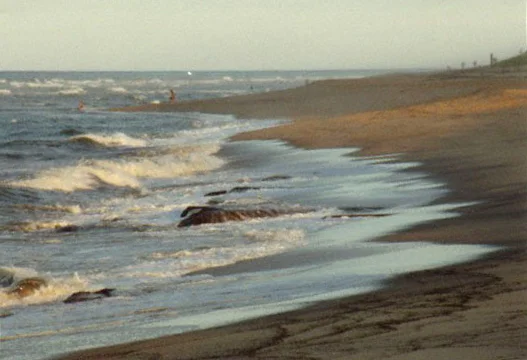
On Nauset Beach.
“Under its shifting sands, the Great Beach {Nauset Beach, on Cape Cod} hides the wrecks of a hundred ships or more, the debris of civilization.’’
— From “Stranded,’’ by John Hay, in the Autumn 1992 issue of Orion magazine.
Democrats' takeover of House might presage greener light for Mass. rail-service expansion

The now-derelict place where the proposed Fall River MBTA station would go.
Adapted from Robert Whitcomb’s “Digital Diary,’’ in GoLocal24.com
Readers notice and maybe complain that I put a lot of public-transportation stuff in these columns. That’s because of its centrality in the prosperity of southern New England.
It’s good news for passenger-train expansion that the Democrats took the House in in mid-terms. Such pro-mass transit Massachusetts congressmen as Richard Neal and James McGovern will be in a position as committee chairmen to push for federal aid to boost such projects as rail service between Boston and Springfield and Boston and Fall River and New Bedford. Those would ease highway traffic and wear and tear on our roads, saving taxpayers time and money, and lift our region’s economy.

Purple lines show routes of proposed new MBTA lines to Fall River and New Bedford.
It will be tough to get anything helping New England through the GOP-controlled Senate, but a foundation (or rail bed) can be laid for when the political environment changes, perhaps after the 2020 elections.
Would Trump and the narrowly GOP Senate cooperate with the Democratic-run House in enacting a bill that would include the aforementioned projects? In his campaign, Trump talked up a huge infrastructure program but once in office pretty much dropped the subject and concentrated on giving himself and his pals a big tax cut and trying to kill the Affordable Care Act. But then the current version of the GOP sees tax cuts, particularly favoring the rich, as virtually their only domestic policy.
Still, a swelling federal deficit, an aging population, crumbling infrastructure and increased military spending pose huge challenges. My guess is that in the next few years, the top marginal federal income tax rate will have to be raised to around 50 percent to pay for the services the public wants (if not needs) and to address the rapidly swelling national debt and associated higher interest rates. The bond and stock markets are without mercy. We can’t live in financial Fantasyland forever.
Readers may email rwhitcomb4@cox.net to make comments.
Felicia Nimue Ackerman: A Narrow Fellow in the Glass
(First appeared in The Emily Dickinson International Society Bulletin)
A narrow fellow in the glass
Is what I yearn to see —
But much I must forgo, alas
To make a slimmer me —
No cookies, brownies, cake, or pie —
I may become unstrung.
The pleasure healthful foods supply
Is zero at the tongue.
— Felicia Nimue Ackerman
William Morgan: Beauty, coziness and an unsettling mystery near Monadnock
Thanksgiving is the quintessential picket-fence New England holiday – Christmas without the gifts and the guilt.
This year my wife and I braved 14º temperatures and barely plowed lanes to spend the holiday with friends in Dublin, N.H., at Mountain View Farm, known for having been the summer rental of Mark Twain in 1906. It sits at the base of the magnificent sleeping-lion form of Mount Monadnock.
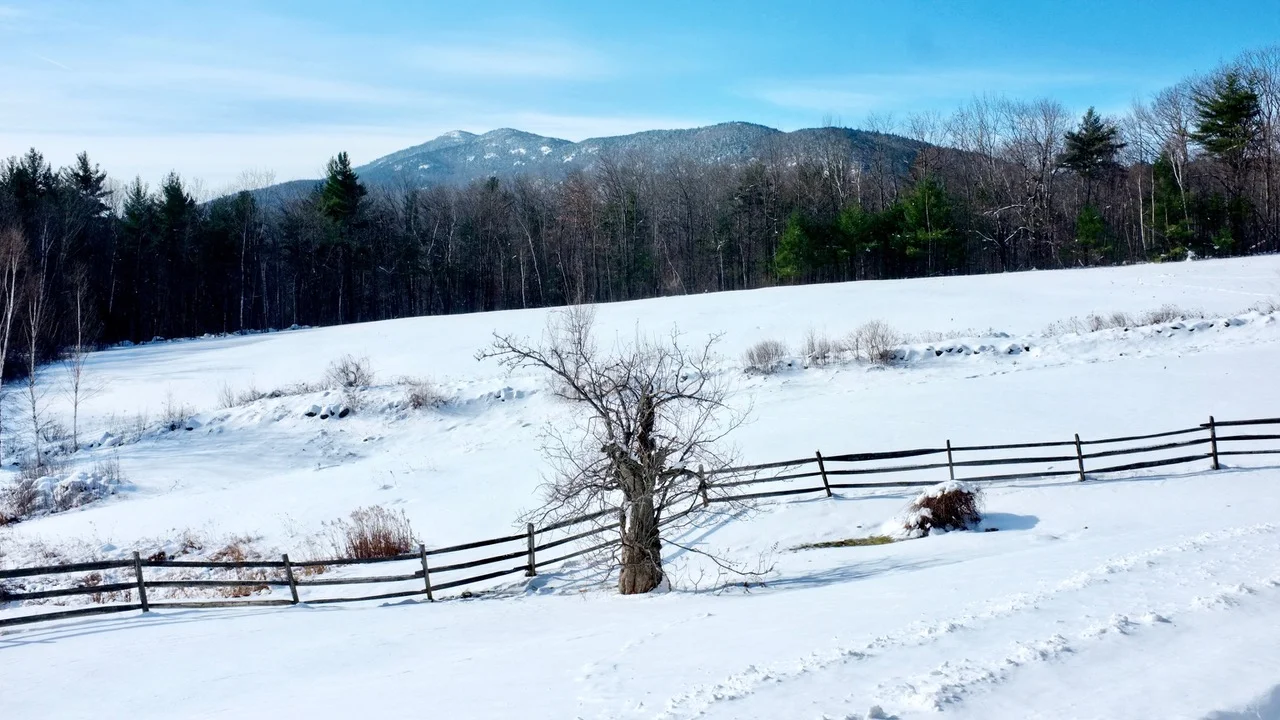
At night, the only lights visible from here are those illuminating the ski slopes at Mount Wachusett on the southern horizon. A city dweller can get reacquainted with seemingly zillions of stars in the firmament.
Inside, burning fires, lots of good books, food and friends tamed the winter.
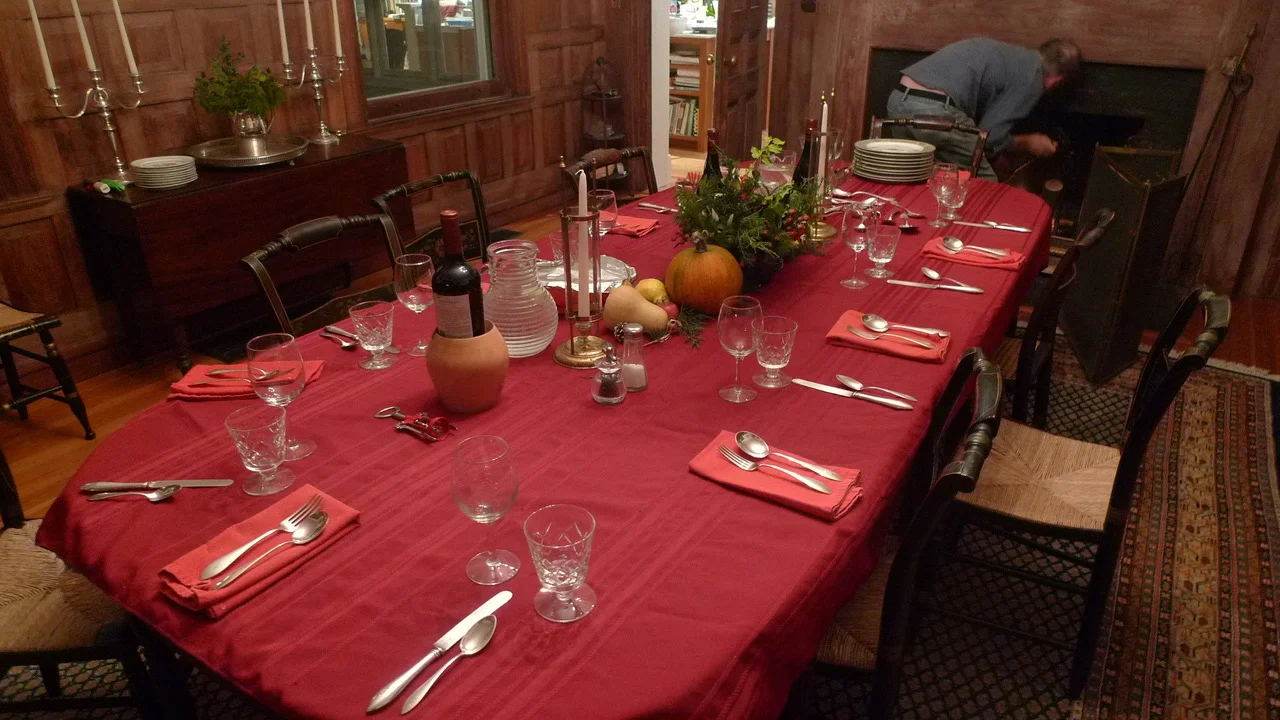
Our tribute to the holiday did include the smallest of Black Fridays in the nearby town of Peterborough, where we bought a book on wooden houses from The Toadstool, one of the region's great independent bookstores.
A further contribution to the local economy was a 50-cent purchase from a box of miscellaneous photographs at Bowerbird, an antiques shop.

This surprisingly bizarre document shows two couples, at the shore of a lake. The women's white dresses tell us that the picture was taken in the summer, and the Sunday-best clothes are from a particular year; "1925" penciled on the back of the photo might be a clue to the identity of these somewhat somber-looking vacationers.
Reminding one of a nearly century-old murder, the face of one of the women has been violently exorcised from the picture with scissors. Beyond the obvious mystery of why the lady was relegated to oblivion – divorce, another kind of breakup, jealousy? – is the creepier fact that the image was saved. Did the picture's owner paste it in an album, to bring out, perhaps on Thanksgiving, as a memory to be shared with family?
William Morgan, an essayist and architectural historian, taught the history of photography at Princeton University and is the author of Monadnock Summer: The Architectural Legacy of Dublin, New Hampshire, among other books.
Readers may comment on this and other New England Diary articles by emailing to:
Rwhitcomb4@cox.net
Nice words for nuclear power
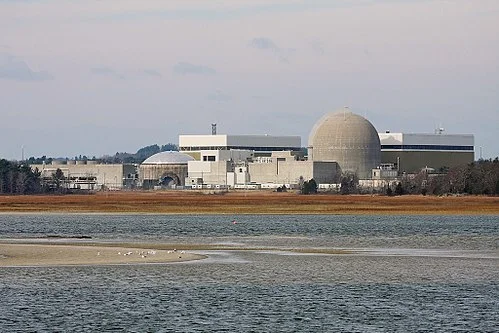
The Seabrook Nuclear Power Plant, in southeastern New Hampshire.
From Robert Whitcomb’s “Digital Diary,’’ in GoLocal24.com
‘That the Union of Concerned Scientists, based in Cambridge, Mass., many of whose members have long opposed nuclear energy, now urges that measures be taken to keep financially troubled nuclear-power plants operating shows the increasing anxiety about global warming. Nuclear-power plants emit very little greenhouse gases.
Fossil-fuel-burning power plants would have to provide most of the electricity generation lost when nuclear power plants close. It will take a long time for wind, solar and other green energy to meet the demand. It’s a serious issue in New England, which gets more than a quarter of its electricity from nuclear-power plants!
Ken Kimmell, the organization’s president, released a statement that said:
“These sobering realities {about global warming} dictate that we keep an open mind about all of the tools in the emissions reduction toolbox — even ones that are not our personal favorites. And that includes existing nuclear power plants in the United States, which currently supply about 20 percent of our total electricity needs and more than half of our low-carbon electricity supply.”
Start swinging

”{While} Walkin' the Dog’’ (watercolor and acrylic on braced birch panel), by Tamara Gonda, at Alpers Fine Art, Andover, Mass.

Stephanie M. McGrath: N.E. colleges -- falling enrollments, higher tuitions

Presque Isle, Maine, site of the most remote state university campus in New England.
From the New England Journal of Higher Education, a service of the New England Board of Higher Education (nebhe.org)
Tuition and fees across New England have risen by 16 percent ($734) at community colleges and 10 percent ($1,001) at four-year public institutions since 2012-13, according to NEBHE’s 2017-18 Tuition and Fees Report.
The report, published annually by NEBHE’s Policy & Research team, takes an in-depth look at the tuition and required fees published by public two- and four-year postsecondary institutions across New England. It explores emerging trends by providing a historical analysis of tuition and fees in the region to shed light on college prices, as well as legislative and institutional initiatives that seek to address affordability challenges.
In New England and across the U.S., it has never been more critical to hold a postsecondary credential to be able to fully participate in the workforce and earn a sustainable wage. Roughly 90 percent of the jobs available in four of the nation’s five fastest growing occupational clusters require some form of education beyond high school, according to research at the Georgetown University Center for Education and the Workforce. The same study estimates that 63 percent of all jobs available nationwide in 2018 require a postsecondary degree. As a result, employers will need approximately 22 million new employees with a postsecondary degree.
However, in recent years the cost of a college degree has risen precipitously resulting in rising tuition and fee charges–often prohibitively expensive for far too many Americans to attend college. As postsecondary education becomes increasingly important for the vitality of New England’s economy and its workforce, the growing cost of higher education has garnered substantial critical attention from the public and from policymakers. New England’s public colleges continue to be the most affordable and financially accessible option for most individuals in the region. Their primary mission is to serve their state’s residents. Tuition and fees at public colleges are of particular interest to both students and state policymakers.
Among other key findings in the NEBHE report:
From 2015 to 2016, enrollment at New England’s public colleges and universities declined by 1.8 percent, or 8,036 fewer undergraduates — a trend that is expected to continue in years to come due to a projected 14 percent decline in the number of new high school graduates in New England by 2032.
On average, in 2017-18, the federal Pell Grant covers approximately 49 percent of tuition and fees at four-year institutions for students in the lowest income quintile ($0-$30,000 annual household income).
Since 2012-13, increases in tuition and fees at New England’s two-year colleges (16 percent) and four-year institutions (10 percent) have outpaced increases in the maximum Pell Grant (6.25 percent), leaving a widening gap for low- and moderate-income families to offset with additional aid and/or family resources.
These trends are putting pressure on institutions and systems to find creative solutions to ensure that college is affordable for students, maintain enrollment and meet the needs of regional employers, who increasingly demand workers with postsecondary credentials.
In Massachusetts, a state known for its high in-state tuition prices, Gov. Charlie Baker announced in his 2018 State of the Commonwealth Address that the Bay State will increase college scholarship funding by $7 million so that the state’s lowest-income community college students with an unmet financial need can have the remaining balance of their tuition and fees fully covered.
Connecticut passed legislation during its 2018 session to allow undocumented students who attend one of its public colleges and universities the opportunity to qualify for the state’s financial aid. Previously, these students were not granted access to the financial aid system by state law but had been offered in-state tuition.
The University of Maine System launched a promise initiative in which, beginning in fall 2018, first-year Maine students who qualify for a federal Pell Grant are able to attend the University of Maine campuses at Presque Isle, Fort Kent, Augusta, and Machias free of having to pay any out-of-pocket tuition and fees. Beneficiaries of the initiative must commit to take a minimum of 30 credit hours each academic year and maintain at least a 2.0 GPA. As of October 2018, the initiative has resulted in a 2.5 percent increase in enrollment at these institutions over the previous year.
Click below to view individual state data used in the report:
Stephanie M. McGrath is NEBHE’s policy & research analyst.
Readers may comment on this and other New England Diary articles by emailing to:
Rwhitcomb4@cox.net