
Vox clamantis in deserto





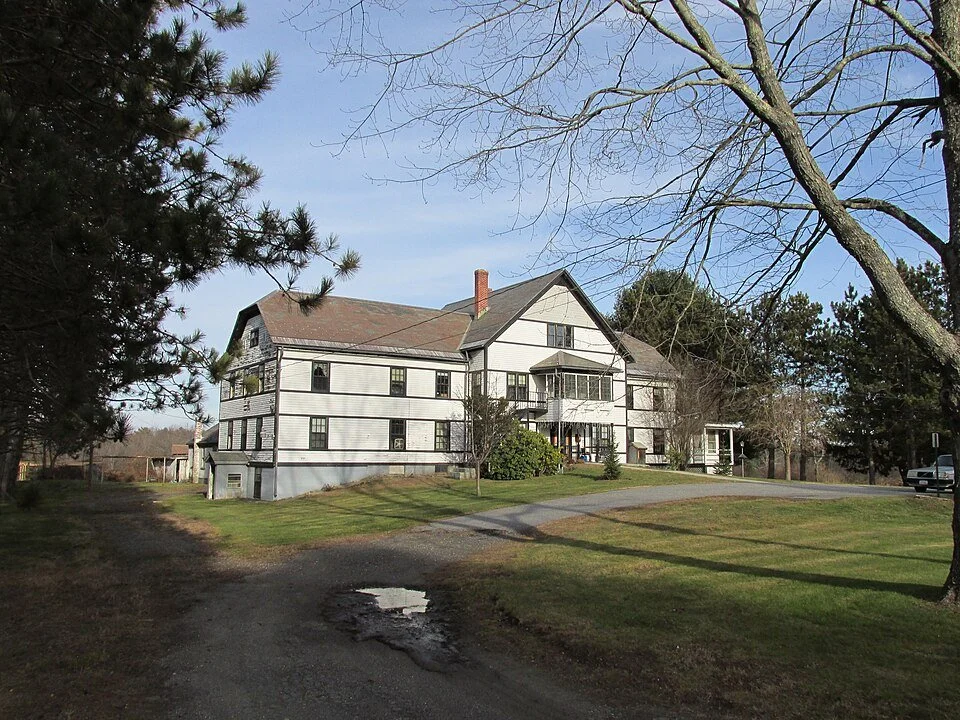
As X-Mass nears, atheists acting up in Bethel, Conn.
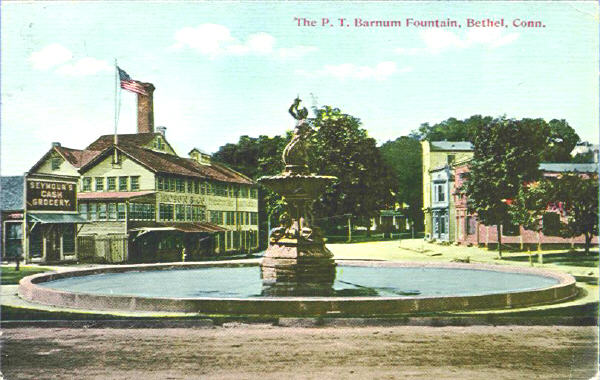
P.T. Barnum Fountain and Square, in Bethal, Conn., circa 1914.
Christmas is approaching, not the discordant commercial enterprise we see all around us at this time of year, but the real Christmas – a celebration of the birth of Jesus Christ, the sovereign lord of the Christian heart. Atheists, those who do not believe in God or religion, have been in the habit of seizing the occasion to celebrate an obverse Christmas by spreading ashes on the joys of the Christian heart and obliterating the season through the application of free and equal graffiti.
In Bethel, Conn., atheists are especially interested this year in ridding the town’s P. T. Barnum Square of its nativity scene. For the benefit of those atheists who do not always follow the niceties of Christianity, it should be noted that the bones of Barnum’s family are buried in the quiet graveyard abutting the Congressional church not a stone’s throw from Barnum Square.
Barnum himself subscribed to the Universalist Church. He told New York Sun reporter in an 1864 interview, “I believe there is a great Creator, infinite in his attributes of wisdom, power, and mercy: that His name is Love. I believe He is a God of all justice, and that He will chasten every person whom He ever created sufficiently to reform him, in this world, or some other." Barnum was not an atheist.
For two years, Barnum edited his own newspaper in Danbury, the Herald of Freedom, and combatted what he viewed as sectarian attempts to bring about a union of church and state.
Barnum’s views on a national or state church mirrored those of the Founders and the First Amendment to the U. S. Constitution, which states, “Congress shall make no law respecting an establishment of religion or prohibiting the free exercise thereof, or abridging the freedom of speech or of the press, or the right of the people peaceably to assemble and to petition the government for a redress of grievances.”
It should be noted that the strictures of the First Amendment are satisfied when the law making body of the federal government refrains from making laws that a) establish a state supported church, and b) prohibit the free exercise of religion. The two clauses are joined together in the amendment. And in matters of constitutional interpretation, courts especially should be mindful that what the Constitution has joined together no judge should “therefore put asunder.” Both clauses should be equally weighed in every judicial finding on the great question of state-religious relations.
Indeed, the clauses “inform” each other: A judicial ruling concerning the meaning of the “establishment clause” cannot, under a just interpretation, effectively repeal the “free exercise” clause. And the balance established between the two clauses is best achieved when the law making body refrains from producing enactments affecting either the establishment of a state church or the free exercise of religion.
It is very clear that the amendment opens a wide door to religious liberty, even as the same amendment opens a wide door of liberty to a free press and the expression of political opinion. Church and state are effectively “separated,” in the true Jeffersonian sense, when the state refrains from making laws or edicts that prohibit the free exercise of religion or constitutionally abuse its secular power for the purpose of establishing a national or state church.
The town’s name, incidentally, has a biblical meaning. Bethel is called “the house of God” because it was in Bethel where “God talked with him” (Hosea 12:4 Hosea 12:5 ), after which Jacob built an altar, calling the place El-beth-el. In times of trouble the Jewish people traveled to Bethel to take council with God. The Ark of the Covenant was kept there for a long time under the care of Phineas, the grandson of Aaron (20:26-28 ). Barnum’s first name, also incidentally, is Phineas.
It is not possible for atheists to drive Christians back to the catacombs, where once they gathered to worship the lord of their hearts far from the murderous glances of pagan emperors. There is no national church in the United States. Under the aegis of the Constitution, the Congregational Church of our forefathers -- in essence a national church -- has been effectively disestablished. Connecticut disestablished the Congregational church in 1818. We are left with a potpourri of religious establishments. Barnum himself drifted from Congregationalism to the Universalist Church.
On a Christmas morning, bells sound from Catholic spires, wounding the ears no doubt of Scrooge-like atheists shouting their humbug in the public square. Firm in their unbelief, we must not suppose atheist demands can be easily accommodated.
But really, the sectarian and constitutional difficulties in “the House of God” will be settled when the good people of Bethel make a distinction between a religious establishment, governed by the First Amendment, and a self-professed irreligious establishment, atheism, that seeks to cover religious displays with atheist graffiti.
One must suppose that Barnum, an avid trickster like his father, might have provided room in his circus for this amusing display of historical revisionism.
Don Pesci is a Vernon, Conn.-based columnist.
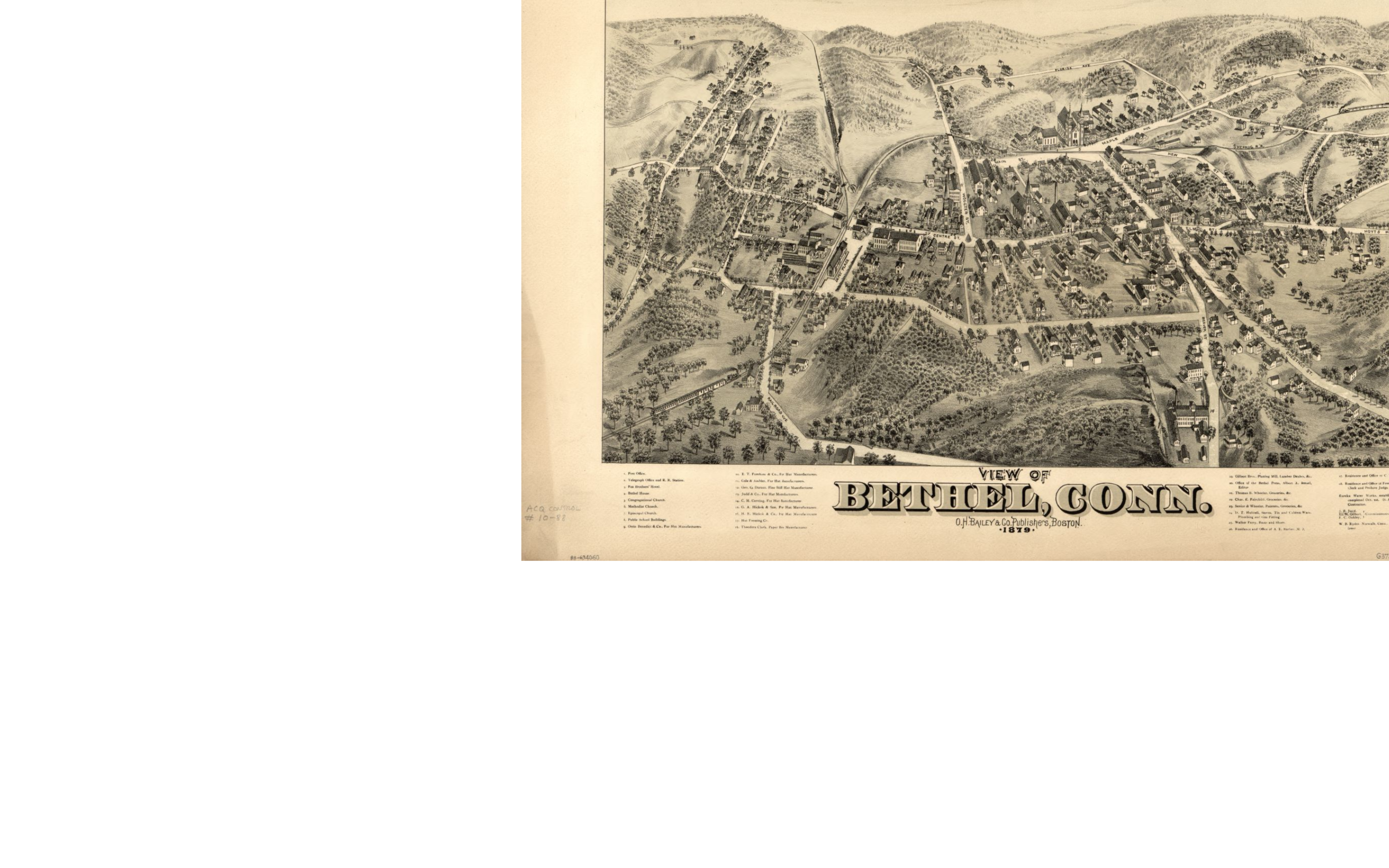
In the 'in between'

“Ascending’’ (oil on panel), by Samantha Morris, at Fountain Street galleries, Boston, through Nov. 25 in her joint show with Marcia Wise (some of whose work can be seen below.)
Fountain Street says:
”Samantha Morris focuses on the idea of an individual traveling through a space; exploring place through architecture and landscape, abstracted through line, shadow pattern, contrast, and negative space. She is interested in dynamics, what can and can’t be seen. The seemingly mundane aspects of everyday life, one light shining through the square of a window frame, or the corner of a plant casting shadow on glass. Influenced by photography and film, her work investigates the stillness of night; the frozen moments before something happens. It exists in the ‘in between’, the time when your eyes adjust to the contrast of natural illuminated light and the depth of darkness. Samantha feels immersed, traveling through such spaces. Each of her pieces has reference to an environment, while existing in its own space.’’
Marcia Wise art and video below

'Like a huge jewel'

Polished moonstone.
‘’The house lit by moonlight
On the snow, glows inside
Like a huge jewel, a moonstone
Or opal.
The whole house
Shimmers with its freight
Of living souls, and the souls
Of disembodied memory’’
-- From “Another Full Moon,’’ by famed Maine poet Kate Barnes (1932-2013). She was the daughter of Henry Beston, whose book The Outermost House, set in Cape Cod’s dunes, is a classic of nature writing. Her mother, Elizabeth Coatsworth, was a distinguished poet, among other writings.
Jim Hightower: Forget Bezos and Cyber Monday -- Shop at local stores
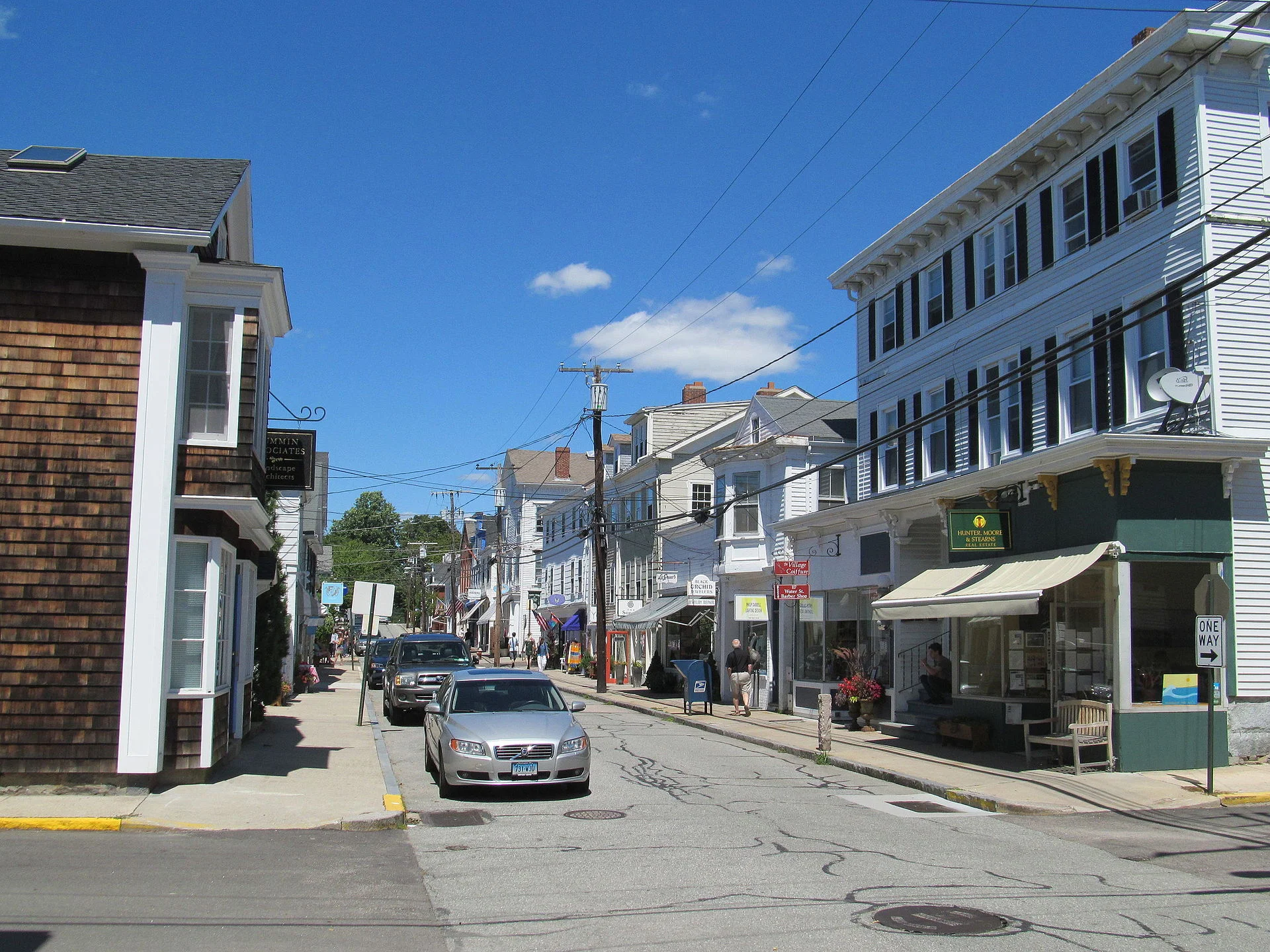
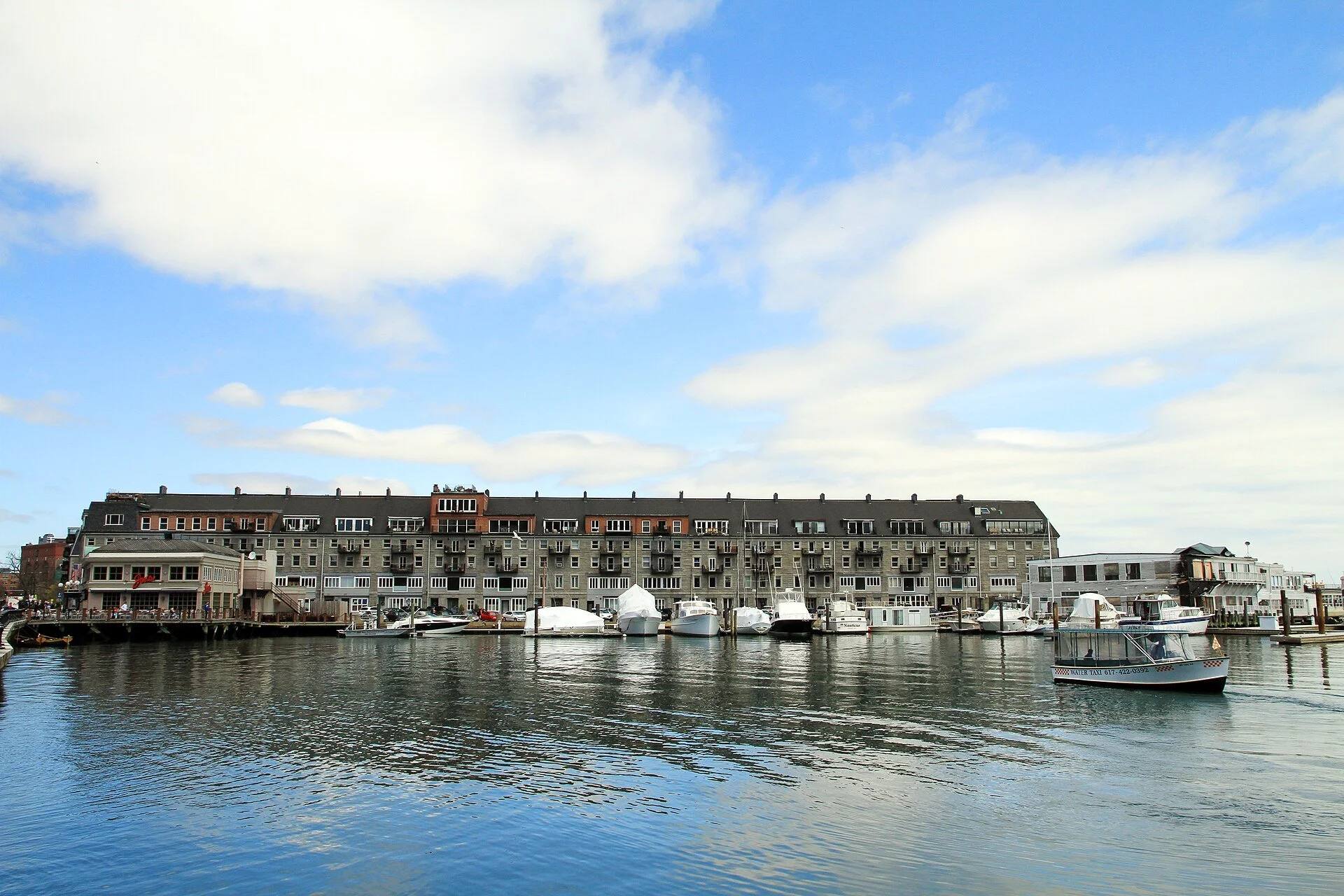
Shops along Water Street in Stonington, Conn.
— Photo by Pi.1415926535
Via OtherWords.org
“Cyber Monday” is coming up — get out there and buy stuff!
You don’t actually have to “get out there” anywhere, for this gimmicky shop-shop-shop day lures us to consume without leaving home, or even getting out of bed. Concocted by Amazon, the online marketing monopolist, Cyber Monday is a knock-off of Black Friday — just another ploy by Amazon CEO Jeff Bezos to siphon sales from real stores.
Seems innocent enough, but behind Amazon’s online convenience and discounted prices is a predatory business model based on exploitation of workers, bullying of suppliers, dodging of taxes, and use of crude anti-competitive force against America’s Main Street businesses.
A clue into Amazon’s ethics came when Bezos instructed his staff to get ever-cheaper prices from small-business suppliers by stalking them “the way a cheetah would pursue a sickly gazelle.”
John Crandall, who owns Old Town Bike Shop in Colorado Springs, is one who’s under attack. He offers fair prices, provides good jobs, pays rent and taxes, and lives in and supports the community.
But he’s noticed that more and more shoppers come in to try out bikes and get advice, yet not buy anything. Instead, their smartphones scan the barcode of the bike they want, then they go online to purchase it from Amazon — cheaper than Crandall’s wholesale price.
You see, the cheetah is a multibillion-dollar-a-year beast that can sell that bike at a loss, then make up the loss on sales of the thousands of other products it peddles.
This amounts to corporate murder of small business. It’s illegal, but Amazon is doing it every day in practically every community.
So, on this Cyber Monday, let’s pledge to buy from local businesses that support our communities. For information, go to American Independent Business Alliance: www.amiba.net.
Jim Hightower is a radio commentator, writer and public speaker.
Looking to build up the kelp crop

From Robert Whitcomb’s “Digital Diary,’’ in GoLocal24.com
Kudos to David Blaney, who’s starting the Point Judith Kelp Co., which, in a saltwater 2.75-acre farm, will grow a seaweed useful as a food, as fertilizer for land crops, for cosmetics and that absorbs nitrogen (which in large doses, such as runoff from lawns, can be a very bad pollutant) and carbon dioxide. In his project, he’s joining other local companies that are growing kelp.
There was a charming profile of Mr. Blaney in ecoRI News on Oct. 13. As man-made climate change warms coastal waters, some fish species will move away. It’s important that we find alternate crops that can thrive in southern New England waters. Mr. Blaney, ecoRI reports, thinks about the water eventually getting too warm for kelp. But such warmer-water plant species as Irish moss and sea lettuce are a hedge. As global warming proceeds, we’ll need all the diversification we can get.
To read the Blaney profile, please hit this link.
It’s such small enterprises that take advantage of Rhode Island’s location and other comparative advantages, that hold out hope for Rhode Island’s long-term prosperity as it tries to recover from its far too long dependence on old manufacturing industries and low-paid service jobs.
Charles Pinning: Family Thanksgiving dynamics on an Aquidneck farm
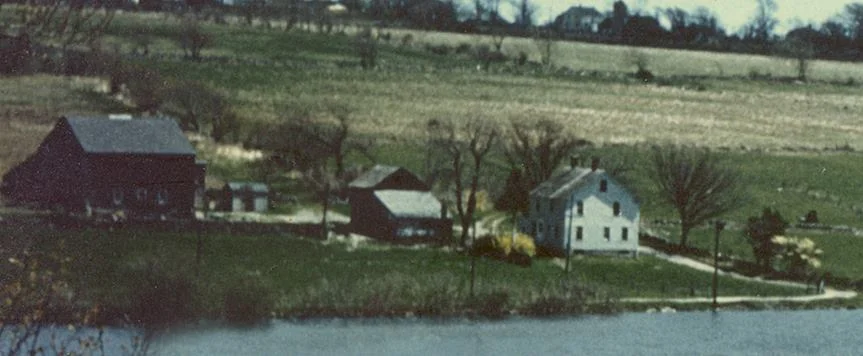
The farm of the author’s maternal grandparents.
The farm overlooked Green End Pond in Middletown on the island of Aquidneck, which also comprised Newport and Portsmouth. It was a place of immigrants new and old, as well as money, new and old, some and none. The same could be said for the levels of education.
It was not unusual at Thanksgiving for a local spinster or educator, or even a black sheep socialite to join the family, happily putting aside their inbred aversion to “kitchen smells,” to wallow in the steaming redolence of Portuguese chourico and caldo verde, fritters, as well as the traditional turkey and blunderbuss load of stuffing and cranberry sauce. More people than you might think have nowhere to go on Thanksgiving and my paternal grandparents welcomed all.
Past willows weeping into the pond and black and white Holsteins the Pontiac shaked, rattled and rolled down the gullied lane and up between the two towering maples to the farmhouse. I’d tried to cajole my father into bringing the .22 to shoot cans and bottles off the stone wall, but my mother scotched that.
In addition to my aunts and uncles and cousins from nearby, and other off-island relatives from Bristol and Warren, there was Madame Soubirous, my French teacher at Miss Collings School as well as Arthur Harrington, a professor of earth sciences at Brown who owned a black Checker, the floor of the rear seat covered with an Oriental rug.
A whiskery Portuguese, five feet tall, who helped my grandfather at hay-bailing time and whom we only knew as “Pachute” arrived by bicycle, and there was the cat, Jelly Bean, who slept under the table on my grandfather’s foot.
“I simply never understood how Hemingway, sensitive as he obviously was, could shoot defenseless wild animals,” said Madame Soubirous.
“Probably because he liked to!” cut in my Uncle Arsenio enthusiastically, a man who’d never read a word of Hemingway, but had seen his picture many times.
I was allowed one glass of wine, made by my Uncle Manuel from his own backyard grape vines in Bristol. He brought it in gallon jugs, and my Nana said it had been blessed for me.
Uncle Freddy saw fit to announce: “I love it when Eileen gets undressed at night and flings her clothes across the room to the chair. I tell her, ‘Eileen, you should have been a stripper!’”
Everyone, except my grandparents, burst out laughing, and Eileen, his wife said, “Thank you for sharing that with everyone, Freddy.”
“Why not sweetheart? You look great!”
My grandfather, my Voo, took the occasion to excuse himself from the table and head out to the barn to check on the cows.
“There’s no need for guns,” said Professor Harrington. “Humans are doing a fine job killing off each other, and it will only get worse. Too many of us to begin with, and when the oil runs out and all the water is polluted, and the air and every piece of land is built upon….”
I slid off my chair and joined some cousins outside kicking a soccer ball around. Professor Harrington came out after awhile and lit one of the long, unfiltered Pall Mall cigarettes he smoked.
“Around and about,” he said watching us, taking a deep drag and exhaling. “Around and about.” Young though I was, I understood his commentary upon our activity encompassed the ongoing efforts of all humanity.
The ball got booted down the slope of the lane and I chased it bouncing toward the placid pond just as the sun slipped below the trees on the far bank and the ball rolled into the water. A swan glided by the ball wondering who-knows-what, and I turned to see if anyone saw, looking back at the white farmhouse that is no longer there. No more barn or cows or Nana, Voo, or Jelly Bean. Just new buildings, businesses. Instead of the narrow lane by the pond, a two-lane highway.
As my mother was fond of saying about her girlhood: “ I thought we were poor growing up on the farm, but I now I know how good we had it.”
Charles Pinning is Providence-based essayist and novelist.
Chris Powell: Liberals embrace war contracting in Conn. They should read Ike
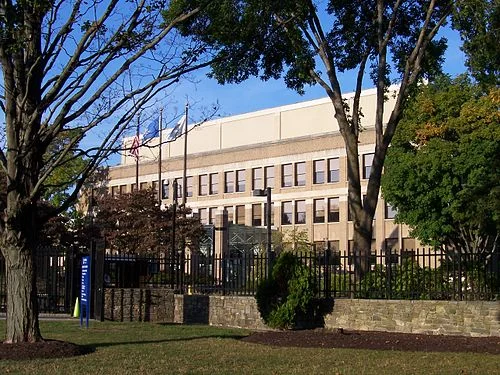
Pratt & Whitney’s headquarters, in East Hartford.
Control of the U.S. House of Representatives by a new Democratic majority is expected to yield a military contracting bonanza for Connecticut, whose House delegation, like its Senate delegation, is entirely Democratic and has much seniority.
The 1st District's Rep. John Larson, first elected to Congress 20 years ago, may gain more military jet engine contracts for the Pratt & Whitney division of United Technologies Corp. in East Hartford.
The 2nd District's Rep. Joe Courtney, who has been in the House for 12 years, may become chairman of a subcommittee on sea power and thereby may arrange still more nuclear submarine business for the Electric Boat division of General Dynamics in Groton.
The 3rd District's Rep. Rosa DeLauro, first elected 28 years ago, will be in a better position to steer military helicopter contracts to the Sikorsky Aircraft division of Lockheed Martin in Stratford.
The 4th District's Rep. Jim Himes, in office for 10 years, has many constituents who work at Sikorsky and likely will help DeLauro help Sikorsky.
Being a new member of the House, the 5th District's Jahana Hayes may have to rely on her Connecticut colleagues to accomplish the contract-mongering ordinarily done by seniority. Since her district has no large military contractor and since she has been a teacher, Hayes may monger for federal grants in the name of education.
But even as Connecticut's military contracting interests are imagining new largesse, a study published the other day by Brown University's Watson Institute for International and Public Affairs estimates that the United States has spent or committed itself to spend nearly $6 trillion on wars in Afghanistan, Iraq and other God-forsaken countries since 2001. These wars are estimated to have killed nearly a half million people and to have displaced 10 million as refugees without achieving victory on the battlefield.
Of course, if victory is calculated instead by the livelihoods drawn from military contracting, Connecticut's members of Congress may be spectacular successes. But they also present themselves as liberals and often complain about unmet human needs at home, from medical care to transportation. The U.S. war in Afghanistan against -- what, exactly? -- is in its 18th year without complaint from those members of Congress, nor any complaint from Connecticut's other leading liberals. They have accepted perpetual war as a normal part of life.
Since much of that estimated $6 trillion cost of war has been extracted from countries that feel compelled to purchase U.S. government bonds to sustain the dollar as the world reserve currency, advocates of perpetual war may dismiss its financial expense. But there is still the human cost, both abroad and at home.
President Dwight Eisenhower, a military hero, described that cost in 1953: "Every gun that is made, every warship launched, every rocket fired signifies, in the final sense, a theft from those who hunger and are not fed, those who are cold and are not clothed. This world in arms is not spending money alone. It is spending the sweat of its laborers, the genius of its scientists, the hopes of its children."
How quaint Eisenhower sounds today as the United States is intervening militarily in more than 70 countries.
Of course the country needs a strong military. But when will its wars and other military interventions be audited for results? And if our supposed liberals won't audit them, who will?
Chris Powell is a columnist for the Journal Inquirer, in Manchester, Conn.
Llewellyn King: Let's hope that blockchain lets us keep our messy humanity

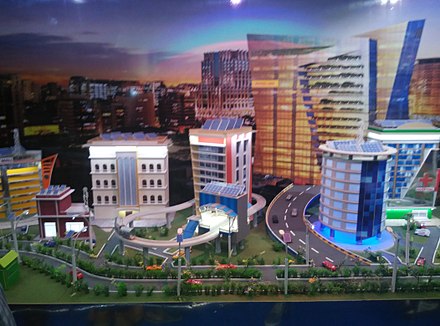
Depiction of a “smart city’’ — an urban area that uses electronic data-collection sensors to supply information that is used to manage assets and resources efficiently.
Blockchain, the decentralized, open-ledger system that can record permanently multiple transactions, is about to come into its own as the world’s cities move towards digitalization. It portends the kind of urban revolution that cities haven’t seen since water-borne sewage enhanced city livability.
These “smart cities” of the future, big and small, will compete to be the most-wired, most-attractive places for high-tech talent and investment. From Orlando to San Antonio and from Boston to Seattle, the race is underway.
The big telephone companies such as AT&T and Verizon want to wire cities for their 5G and universal WiFi, involving new “short towers.”
Smart cities are cities that are getting ready for the future. The infrastructure that needs to be developed and deployed includes:
An electric grid that senses and manages demand instantly; that allows for two-way flows, as from a self-generator into the utility grid or a customer who wants green power only.
5G technology which will operate on any device and carry city communications to a new level, such as knowing the location of every ambulance and which traffic lights must change to speed one through without hitting a firetruck barreling toward the same destination.
Traffic lights that dim when there is no one on a street, or street lighting that dims when the moon is full or when there is no traffic.
Monitors linked to computers that can identify potential failures in old water or sewer pipes.
Holding it all together -- the sinew of smart cities -- will be blockchain. It’ll be the recording system that will tell whether electricity is flowing from a community generating facility (like a solar farm) and how it’s blending with the utility company’s own generators to the amount of power flowing to street lights.
Blockchain is set to become the ledger of everything, from the billing for your local taxes to keeping track of parking tickets. It will also be a data treasure trove for future planning.
Blockchain is associated with bitcoin and other cryptocurrencies. That’s because it’s not only the system on which those cryptocurrencies were based, but it’s also a powerful tool with multiple uses far beyond them. The original developer of bitcoin, believed to be Satoshi Nakamoto, used blockchain to guarantee the integrity of the new money.
Some blockchain enthusiasts, including many in the big tech companies like IBM, believe and have often said that it can be a bigger disrupter than the Internet. They’re passionate about the blockchain future, as are the big financial institutions where use will speed and verify transactions.
Others, working in the trenches of bringing about the blockchain revolution, are more cautious. Chris Peoples, founding and managing partner of the Baltimore-based innovation strategy firm PP&A, says that one must be wary of the hype. Blockchain, he says, “does promise to open new avenues of value for both organizations and the common good. However, with the technology still undergoing rapid development in the areas of speed, consensus and scalability, it will require the continued support from industry and government to reach its full potential.”
The smart city upside: Cities will become more livable, more manageable and the quality of life for all should improve. The downside: All the sensors and electronic surveillance could represent a new and very real threat to privacy.
There are also questions how much of the brave new urban world we want to have. Proponents of smart cities believe that a time will come when, with autonomous vehicles, the family car will disappear in favor of driverless, ride-sharing vehicles. An app on your phone will summon one and off you’ll go, probably reading your emails as you’re driven safely, thanks to artificial intelligence and blockchain, to your destination. Maybe. People haven’t abandoned their own cars for public transportation.
My view is people want their own stuff in a car -- the old newspapers, the box of peppermints and the fury dice hanging from the mirror. A blockchain-enabled future of smart cities is dandy if we can keep our inefficient humanness.
We aren’t all yearning to be efficient in everything. We treasure a bit of muddle. I hope we can teach that to the computers and put it into immutable blockchain.
Llewellyn King is executive producer and host of White House Chronicle, on PBS, and a veteran publisher, columnist and international business consultant. His email is llewellynking1@gmail.com and he’s based in Rhode Island and Washington, D.C.
Art from a priory

White ceramic vase made by a monk at Weston Priory. On view through Nov. 25. at Dedee Shattuck Gallery, Westport, Mass.
Weston Priory is a community of Benedictine monks in Weston, Vt., founded in 1952. They are particularly known for the songs they have contributed to Roman Catholic worship over the decades, missionary work in South America and the pottery produced at the monastery.
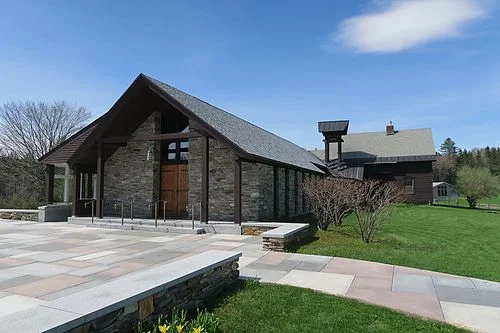
The Weston Priory’s chapel.
The face of lust

'‘Ready for Thanksgiving Feast’' by J.C. Leyendecker, Original painting for cover of The Saturday Evening Post magazine, November 1919. With permission of the National Museum of American Illustration, Newport, R.I.
'Me, too' in the struggle

“Me, too’’ (oil), by Kat Masella, in the show “The Personal Is Political,’’ at the Hess Gallery, at Pine Manor College, Chestnut Hill, Mass., through Feb. 20. The show is named after a 1969 essay by Carol Hanisch. The gallery says: “Each piece tells a different story of female political and social struggle, with the underlying hope of inspiring others to do their own part in working towards equality.’’
Thanks for the extermination
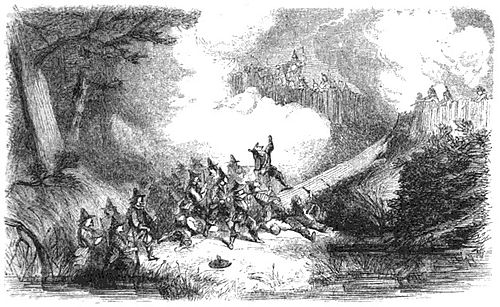
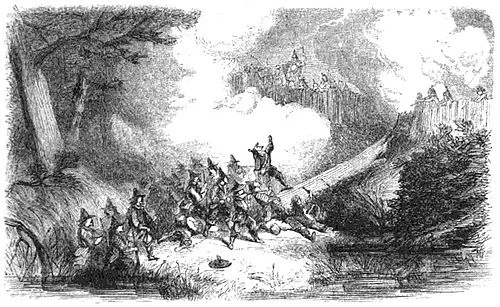
Engraving depicting the colonial assault on the Narragansett Indians’ fort in the Great Swamp Fight, in what is now the State of Rhode Island, in December 1675. It was a massacre, in which about 600 members of the tribe were killed.
“Thanksgiving Day, a function which originated in New England two or three centuries ago when those people recognized that they really had something to be thankful for -- annually, not oftener -- if they had succeeded in exterminating their neighbors, the Indians, during the previous twelve months instead of getting exterminated by their neighbors, the Indians. Thanksgiving Day became a habit, for the reason that in the course of time, as the years drifted on, it was perceived that the exterminating had ceased to be mutual and was all on the white man's side, consequently on the Lord's side; hence it was proper to thank the Lord for it and extend the usual annual compliments.”
― Mark Twain (1835-1910)
Thanksgiving through the years

The Old Ship Church (1681), in Hingham, Mass., the only surviving 17th-Century Puritan meeting house in the U.S., and the oldest church building in continuous ecclesiastical use in the nation
Adapted from Robert Whitcomb’s “Digital Diary,’ in GoLocal24.com
Different species of Thanksgivings. In my past, first there were the long, far-too-complicated and heavy feasts of my childhood, with my four siblings, parents, two or three grandparents, and sometimes a few other relatives from outside our nuclear family, in our house on a hill. It seemed to always be gray and windy that day, with the brown oak leaves swirling. A dull headache after the interminable meal.
Then, after the grandparent generation disappeared, the gatherings shrank, and we often ate in restaurants and sometimes included single friends who may or may not have been lonely. Mediocre food but a crisp couple of hours and it was over.
Much later came our kids and the gatherings grew again for a few years.
Now it’s back to small and quiet as kids and others disperse or disappear. But with holidays, as with so many other things, less can be more. I remember with particular fondness the very quiet and mellow Thanksgiving my wife and I had in the dining room of a hotel in 1975 followed by a nice walk in the old streets around Rittenhouse Square, in Philadelphia.
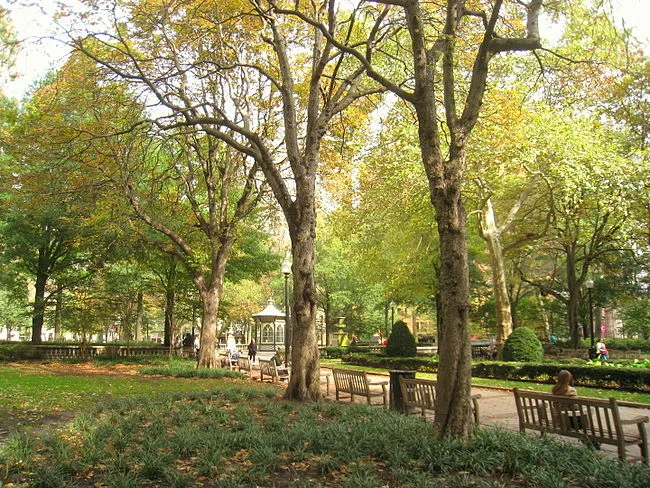
Rittenhouse Square, Philadelphia.
The lyrics and haunting melody of “We Gather Together,’’ the Thanksgiving hymn, although they can be traced back to the late 16th Century as a Dutch Protestant song, have always evoked to me New England’s Puritan origins. “Shining City on a Hill’’ and all that. Two cheers for Calvinism.
1. We gather together to ask the Lord’s blessing;
He chastens and hastens His will to make known;
The wicked oppressing now cease from distressing;
Sing praises to His Name; He forgets not His own.
2. Beside us to guide us, our God with us joining,
Ordaining, maintaining His kingdom divine;
So from the beginning the fight we were winning;
Thou, Lord, were at our side, all glory be Thine!
3. We all do extol Thee, Thou Leader triumphant,
And pray that Thou still our Defender will be;
Let Thy congregation escape tribulation;
Thy Name be ever praised! O Lord, make us free!
Does it have any more seasons in it?

“Off Season” (acrylic on panel), by Jeremy Miranda, in the group show “la famiglia,’’ Dec. 9-30, at Atelier Newport, Newport, R.I.
Linda Gasparello: As in 1986, president has tainted Thanksgiving
Thanksgiving was usually a happy time for the elegant British-American broadcaster Alistair Cooke, whose “Letter from America” series on BBC Radio 4 captivated his millions of listeners for over half a century.
Cooke summed up his talent as “associating something quite tiny with something big. In other words, just looking at the way humans behave.” Every week, in a calming and confiding tone, he would discuss topics ranging from intrigue in the corridors of power in Washington to the significance to Americans of serving cranberry sauce with turkey on Thanksgiving.
But Cooke, in his Nov. 28, 1986 broadcast, had an unhappy story to tell “on the most American of American festivals and the one least tarnished with marketing tinsel.”
Thanksgiving that year, for Cooke, was tarnished by the Iran-Contra Affair, a secret U.S. arms deal that traded missiles and other arms to free some Americans held hostage by terrorists in Lebanon, but also used funds from the arms deal to support armed conflict in Nicaragua. The deal and the ensuing political scandal threatened to bring down the presidency of Ronald Reagan.
“Really the events of the past week have come at us – come at him – with such a tumbling clatter that it would be pointless of me at this stage to try and arrange their chronology. When I first heard about the incredible – every other senator and congressman has been working the word ‘incredible’ overtime – transfer of $30 million by Israel through a Swiss bank to be passed on to the motley band of Nicaraguan democrats, mercenaries and the relics of dictator Somoza’s bully boys, whom the president insists on calling freedom fighters, I found myself verbally paralyzed – a very rare condition with me – and falling back time and again on ‘incredible,’ spoken like a tolling bell,” he said in his broadcast.
Cooke, who was admired for taking the hysteria out of heated subjects, was outspoken on “Irangate,” just as he had been in the McCarthy era, which resulted in his telephone being tapped for two years.
“Two questions come up now, the answers to which will decide if the United States is to regain any credibility with its allies, with the Arab world, not to mention with any Soviet missions they have to deal with. One is the function and the respectability of the National Security Council – an institution set up only after the Second World War, which too often has quarreled with the secretaries of state and defense and, under this administration, evaded and deceived them, and possibly the president, himself.
“The other, more pressing, grave question turns on the honesty of the president, himself. How much did he really know and sanction of these incredible goings-on? It’s the same question whose stony answer brought down President Nixon and we shan’t know the truth until the congressional hearings get underway. They have great powers to subpoena the highest officers of the administration and get at the truth, as we saw with the Ervin Senate committee that probed into Watergate,” he said.
Reagan was hounded by the press, and there were three investigations into the scandal – one by the Tower Commission (led by Texas Senator John Tower), which Reagan himself appointed; congressional hearings in 1987, which were televised nationally; and an eight-year investigation, launched by Independent Counsel Lawrence Walsh, in which 14 people were charged, including National Security Advisor Robert McFarlane and Vice Adm. John Poindexter, his successor in that position, and Lt. Col. Oliver North of the National Security Council.
Ending his broadcast, Cooke said “the sauce that really soured our appetite” for the turkey that Thanksgiving was “the knowledge that, for the moment, the United States has no declared foreign policy that either friends or enemies can believe in.”
If Cooke were alive – he died in March 2004, less than a month after he filed his last “Letter” -- he would’ve been outspoken about what amounts to President Trump’s pardoning of Saudi Crown Prince Mohammed bin Salman for the murder of journalist Jamal Khashoggi. This Thanksgiving, we would’ve heard him say gently and mellifluously that in Trump’s America, the incredible is true.
Linda Gasparello is producer and co-host of White House Chronicle, on PBS. Her email is whchronicle@gmail.com. She is based in Rhode Island and Washington, D.C.
Bring on the wind
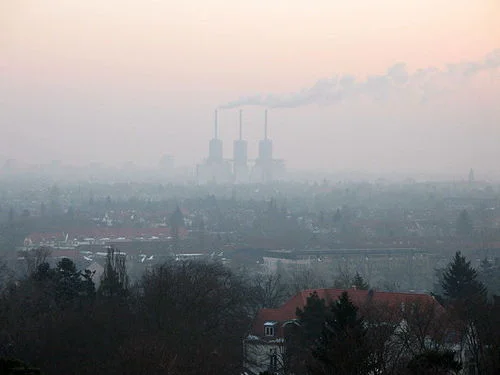
"So dull and dark are the November days.
The lazy mist high up the evening curled,
And now the morn quite hides in smoke and haze;
The place we occupy seems all the world."
— John Clare, ”November’’

Bruce Mallory/Quixada Moore-Vissing/Michele Holt-Shannon: Fueling civic engagement in N.H. through listening

1938 first edition cover from the Library of Congress Rare Book and Special Collections Division of the classic play set in a small New Hampshire town, perhaps based on Peterboro.
From The New England Journal of Higher Education, a service of the New England Board of Higher Education (nebhe.org)
New Hampshire is known not only for its rugged mountains, rocky 19-mile shoreline, one of the largest legislative bodies in the world and its in-your-face Live Free or Die license plate motto. It is also home to the first-in-the-nation presidential primary, the Free State Movement, more voters who register as “unaffiliated” (independent) than either Republican or Democrat, one of the highest income and educational attainment levels in the country, one of the lowest child poverty rates, the second-highest opioid overdose death rate, and in recent years, the fastest growing rate of income inequality, according to federal data.
New Hampshire is one of five states with a median age greater than 42. The rate of population growth among immigrants matched the U.S. average of 9% from 2010 to 2016, according to a Migration Policy Institute analysis of U.S. census data. If New Hampshire had an official state dinosaur, it would be Barney, reflecting the purple nature of our political culture. We currently have a solidly Democratic Congressional delegation and a solidly Republican Legislature and governor. With no sales or income tax and 234 discrete municipal entities, New Hampshire is a highly decentralized state with a long tradition of local control, reliance on local property taxes to fund public services and suspicion of those who are “from away.”
As we have reported in the Civic Health Index, the state ranks relatively high in civic participation, although patterns of inequity are evident with respect to gender, social class, educational level and age. The tradition of annual town meetings to set municipal and school district budgets continues in smaller communities, but the number of residents who attend and the participatory nature of the meetings have declined significantly in recent years thanks to their increasingly contentious nature and changes in state laws that have incentivized written balloting over deliberation and voice votes.
In short, New Hampshire is a place of both traditions and contradictions. Though historically New Hampshire’s demographics have been primarily white, the state is becoming increasingly diverse with respect to racial and ethnic identities.
There are communities with significant wealth adjacent to towns with widespread poverty and devastating rates of addiction. As a report from the New Hampshire Center for Public Policy Studies described it, there are increasingly “two New Hampshires,” one made up of rural communities with scarce public infrastructure, aging populations and shrinking employment opportunities, and one comprising more densely populated areas characterized as more diverse, metropolitan, economically vibrant and attractive to millennials and their young families.
About New Hampshire Listens
These distinctions and contradictions have provided fertile ground for New Hampshire Listens, which we founded in 2009 in response to the growing polarization of political and civic discourse, the severe economic challenges of the Great Recession that were causing disruption and strife in many communities across the state, and a growing consensus among community leaders and activists that new approaches to community problem-solving were sorely needed. Inspired by the success of Portsmouth Listens, our predecessor and prototype established in 1998, the mission of NH Listens is to help people talk and act together to create communities that work for everyone.
New Hampshire Listens is a civic-engagement program within the University of New Hampshire’s Carsey School of Public Policy, but derives its funding primarily through grants or contracts with organizations and municipalities in exchange for engagement support. Since 2010, we have hosted conversations in more than 85 towns and cities, engaging some 4,500 New Hampshire residents in small groups for facilitated dialogue on a wide range of issues (including land use, community-police relations, public school reform, youth engagement and substance-use disorders, as well as other topics).
We support a growing group of Local Listens affiliate organizations led by community leaders in diverse locations across the state. Local Listens affiliates are locally run public engagement groups that are independent of NH Listens but commit to following our core principles, which include bringing people together from all walks of life; providing time for in-depth, informed conversations; respecting differences as well as seeking common ground; and achieving outcomes that lead to informed community solutions. Local Listens groups work within their communities to address regional and statewide challenges and create their own public engagement approaches or draw from NH Listens open-source online tools and templates.
NH Listens is “issue agnostic” and committed to impartial facilitation as a third-party convener whose role is to help others have productive, civil and inclusive conversations. NH Listens collects data on key research interests in the participatory democracy field reflected by our three main goals: engaged and equitable communities, increased participation in public life (especially for those who have historically been disenfranchised), and improved community problem-solving.
As a civic-engagement resource located in a university, we also work with students and faculty through on-campus dialogue to address such complex issues as free speech, gender and racial discrimination, behavioral health, postsecondary admissions policies and the challenge of affordability. For example, in the 2017-18 academic year, we designed and conducted a series of dialogues for the faculty and staff of the College of Health and Human Services at the University of New Hampshire focused on creating an equitable and just community, in classrooms, department offices, internship sites and research centers. We are now partnering with the Department of Communication’s Civil Discourse Lab to support undergraduate curriculum and train students in facilitation for public conversations. For the past several years, we have worked closely with the associate vice president for community, equity, and diversity to design campus-wide dialogues around inclusion and equity, both as a proactive strategy and in response to specific incidents of identity-based harassment or threat.
Conceptual frameworks and core values
We have been inspired by two particular frameworks articulated by colleagues at Harvard’s Kennedy School and MIT’s School of Urban Studies and Planning. Archon Fung, dean of the Kennedy School, in his 2015 article on rationales for increased participation in governance, emphasized the importance of legitimacy, effectiveness and social justice. Fung argues that, “the strongest driver of participatory innovations has been the quest to enhance legitimacy. The hope is that such innovations can increase legitimacy by injecting forms of direct citizen participation into the policymaking process because such participation elevates perspectives that are more closely aligned with those of the general public and because that participation offsets democratic failures in the conventional representative policymaking process.”
Likewise, effectiveness is enhanced when more, and more diverse, voices are engaged in the processes of community problem-solving. Fung claims that, “By reorganizing themselves to incorporate greater citizen participation, public agencies can increase their effectiveness by drawing on more information and the distinctive capabilities and resources of citizens.” Finally, social justice aims are approximated, “when participatory governance reforms successfully incorporate people or views that were previously excluded, [thus increasing] equality by enabling them to advocate more effectively for goods and services, rights, status, and authority.”
NH Listens has increasingly placed equity at the center of our design strategies and community organizing as we work with local and state leaders on specific initiatives. We cultivate approaches to racially equitable engagement in partnership with Everyday Democracy, based in Hartford, Conn. Everyday Democracy works nationally to conduct dialogue and engagement with an explicit “racial equity lens” that acknowledges how effective community policy and practice must pay careful attention to the ways in which historic and contemporary racism affect decisions, and to design engagement to ensure people of color have voice and power at the decision-making table. As New Hampshire has seen increased income inequality and become more ethnically and racially diverse, we have explicitly emphasized the value of racial equity in our work.
To this end, we have established a statewide network of “NH Listens Fellows” who have expanded the range of social identities, geographic representation and expert capacities of our staff. These Fellows work on specific projects depending on topic, availability and funding sources. We have also partnered with the Endowment for Health in New Hampshire, a foundation concerned with health and health disparities, over the past several years to offer intensive workshops for leaders across the state and across sectors who are in positions to create more equitable and inclusive communities and organizations. Understanding their own identities, the effects of implicit bias and structural racism, and their responsibilities and opportunities as leaders who hold power and privilege is at the core of this ongoing effort.
The second framework that affirms our commitments to more equitable and robust civic engagement comes from Ceasar McDowell at the Civic Design Lab at MIT. McDowell identifies six types of “conversations essential for democracy.” These include:
1. Framing, or creating a shared understanding among stakeholders of the definition and elements of the problems or challenges to be addressed;
2. Ideation, or the generation of possible solutions to those challenges;
3. Prioritizing, in which value choices are deliberated and weighed;
4. Selecting, which requires finding some common ground among participants to agree on a path forward;
5. Implementing, when talk becomes action and participants work with decision-makers and those in authority to put recommendations in place; and
6. Monitoring, to be sure that those who are implementing the outcomes of engagement processes are held accountable.
We have found that these essential elements mirror the arc of the engagement and public conversation processes developed by NH Listens over the years. The majority of effort we put into achieving our mission looks more like community organizing and mobilizing than face-to-face deliberation per se. Bringing people together for meaningful and inclusive deliberation requires intensive work with community partners over time. From the first conversation with potential partners, our purpose is to facilitate, not prescribe, possible solutions or ultimate selection of a path forward. We bring an array of tools; community partners select the ones that make the most sense for their specific circumstances. In the past few years, we have increased attention to coalition-building among diverse local partners and organizations as a necessary condition for meaningful and effective engagement. We have found that it is especially important for a third-party convener to support coalition-building processes in order to avoid territorial and competitive behavior that often is associated with well-meaning efforts led by an existing community organization or municipal entity.
All this is not meant to imply that we are neutral about our work. Being impartial about means and ends is not the same as being neutral about the essence of engagement and deliberation. We are deeply committed to democratic practices that include all voices and amplify those that have been traditionally ignored or suppressed. It is not unusual for local organizers to overlook the importance of bringing diverse and previously disenfranchised voices to the table, not due to willful neglect but more often due to a lack of experience and a certain degree of myopia when it comes to taking seriously the views and experiences of those with whom they are unfamiliar.
NH Listens / Concord
We have found that democratic practices that emphasize equity in both input and outcomes lead to more legitimate and effective solutions for everyone. For example, beginning in 2018, NH Listens has been working with a city in the northern reaches of the state (“north of the notches”) to support broad community engagement regarding the future of the community’s public schools. The district is fast approaching a significant funding crisis, as enrollments decline (typical of economically challenged rural communities) and the state’s education appropriations continue to decline.
The situation strikes several deep nerves related to community identity, local taxes, educating and retaining the next generation, and core values rooted in the past and present as well as hopes for the future. It is imperative that all voices be heard in the engagement processes being used to find a path forward. Elderly people on fixed incomes, employers, students and their parents, educators, newcomers as well as multi-generation residents, those with low incomes as well as the wealthy all have a stake in the conversation and its outcomes. On the output side, solutions will need to address the needs and interests of all stakeholders, especially those residents who depend most on public education to open doors to greater economic and social opportunity.
As impartial conveners, we must set aside our own biases about preferred solutions and work to be sure that all voices are heard, especially those that have historically been silenced because of weak economic power or low social standing. And we must work to frame the conversations in collaboration with our local partners to ensure that recommendations for action take into consideration the needs of all members of the community.
Is NH Listens making a difference?
Skeptics could point out that the degree of polarization and uncivil discourse in New Hampshire (like other places) has only increased since we began nine years ago. Incidents of racial harassment among both youth and adults have increased, particularly since November 2016. We have witnessed a significant increase in requests from schools and communities for assistance in organizing difficult conversations about race and racism over the past two years. According to a recent report from the National Institute on Drug Abuse, New Hampshire’s opioid crisis has gotten worse, with overdose deaths tripling from 2013 to 2016. Public schools in smaller cities and many rural communities face constant threats to their fiscal survival as property tax payers fight over teacher contracts and addressing capital expenses.
At the same time, in a range of efforts we have supported, we can document qualitative improvements in the willingness of community leaders to take on the most pressing challenges, including: the need to provide affordable and safe housing; the critical importance of engaging youth in ways that make them feel respected and valued; the benefits of providing accessible and high-quality early education to all young children; the need to strengthen collaborations among schools, families and community leaders; and the urgency of ensuring respectful relationships between local police forces and everyday citizens, especially youth, residents of color and New Americans. These are examples of topics we have worked on at the local, regional, and state level in recent years. In each case, we have seen that carefully framed and facilitated inclusive deliberation can lead to changes in practice and policy.
In the community of Pittsfield, N.H., NH Listens worked with the school and community to create a series of dialogues about school improvement. Pittsfield had been ranked one of the lowest-performing schools in the state in 2010, and there was low community pride and disengagement about its schools. In 2011, NH Listens trained local facilitators who then engaged over 100 Pittsfield stakeholders, including students, parents, community members, teachers, school administrators, municipal and business leaders about how we can make Pittsfield a better place for everyone to live, learn, work and play. From these community conversations and other engagement activities, school leaders compiled recommendations for school change into a grant application to the Nellie Mae Education Foundation, and Pittsfield was awarded $2 million to undergo a shift toward student-centered learning.
What resulted were school policy changes such as restorative justice as a disciplinary measure, a formal school-funded position of “school-community liaison,” who works to connect the schools and the community, and a new middle and high school governance body that works to shape school policy alongside the school board. There were also measurable shifts within the community. The Pittsfield Youth Workshop, an afterschool drop-in center for local youth, created a program called Pittsfield Listens, which was an affiliate of NH Listens and committed specifically to engaging youth, parents, community members about education and youth issues in Pittsfield.
Pittsfield Listens established a civic-education series to inform community members about how to use local government structures such as the school board and town select board, and worked with the Chamber of Commerce to encourage candidates running for local office to engage in small group dialogue with community members about their stance on issues in Pittsfield, rather than delivering their stump speeches on a microphone at the community. Pittsfield has recently been written about by the Atlantic and other news outlets of a national model of school transformation. The U.S. Department of Education sent staff to Pittsfield to observe its success and the NH Education commissioner and governor also paid visits to learn from the Pittsfield schools. What Pittsfield exemplifies is that when communities and institutions are willing to dive into deep, deliberative engagement processes, such processes can stimulate community change at multiple levels.
Such changes in practice and policy typically reflect the common ground that emerges when people come together to solve the problems they face. When community members use deliberative tools to explore values, data and alternative pathways, solutions are generated that reflect concrete needs and circumstances, not ideological positions or the influence of special interests. These findings corroborate the emerging national conversation advanced by James and Deborah Fallows in Our Towns and the concept of Constitutional localism described recently by Mike Hais, Doug Ross and Morley Winograd in Healing American Democracy: Going Local, and advanced by Thomas Friedman, David Brooks and others on both the right and left who see that bottom-up approaches are critical at a time when faith in top-down solutions has gone missing.
We also have seen that the call for civic and civil engagement through deliberative democratic processes is being advanced by leaders in New Hampshire who are aligned with philanthropic, nonprofit, corporate and government sectors. Through participation in various NH Listens initiatives, these leaders are more likely to prioritize civil discourse, strengthened civic infrastructure and the enfranchisement of those whose voices have often not been heard. We don’t take credit for these shifts, but we do know that when everyday citizens, stakeholders and local and state leaders together experience authentic and sustained dialogue, they consistently ask for more opportunities such as those we design and regularly cite the value of this approach to strengthening public life.
Looking to the future
Given the nature of our mission, NH Listens is more responsive than proactive in deciding what community challenges to address. We do not decide what is ailing communities nor what communities need in order to do better by way of public life. We help communities respond to the challenges they identify and define. In that sense, it is not easy to predict which issues or topics we might engage with in the coming years. However, we can see some constant threads that are likely to run through the work in the future.
We place value in youth and schools for several key reasons. Other than public libraries, public schools are one of the few open public spaces in many communities, particularly in the more rural locations our state. It is critically important to all communities, and to the preservation of democracy in general, for youth and young adults to feel they belong and that their voices count. Efforts to support youth and young adult engagement as volunteers, members of governance boards, voters and leaders will be core to the work of deliberation and community development. Second, public schools are very likely to continue to be contested spaces, whether the issue is what should be taught, how it should be taught, who should teach, what kinds of facilities are needed and how (and how much) to pay for public education. We expect to be active in helping schools and their communities form effective, close partnerships for the foreseeable future. Much of this work will be about weighing the need for expert judgment on the part of educators with the values and priorities of everyday citizens who have the biggest stake in what their children learn and how they learn it.
There is interest in taking the NH Listens experience to neighboring states. We are now exploring what that could look like with colleagues in Maine and Vermont and perhaps the wider New England region. Each New England state is certainly unique in its culture and politics; for instance, as Harvard sociologists Kaufman and Kaliner argue in their 2011 Theory and Society article, New Hampshire’s low taxation and small government has attracted hunters, fishers, Boston commuters and motorcyclists, whereas Vermont’s progressive experimental colleges have impacted its left-leaning political activism ethos. Since the NH Listens approach encourages listening to communities and responding to the issues communities identify, such flexibility could be helpful in cultivating engagement networks in other New England states. However, marked similarities across northern New England (decentralized governance, changing demographics, economic struggles, predominantly rural population patterns, uneven access to infrastructure) suggest that the lessons we have learned in New Hampshire would be useful to others in similar contexts. Concerns about youth, public education, substance-use disorders, housing, economic dislocation, welcoming immigrants and transportation, for example, are shared across the region. Authentic and inclusive engagement emphasizing participatory democratic practices can be one way to address these concerns.
Finally, we expect that the need for continued attention to racial, social and political equity will be at the heart of our work. Inequality in income and opportunity are likely to increase in the years ahead, fueling the polarization, fear and resentment that has grown in recent years. We believe that face-to-face conversations that are locally framed and focused on finding a pragmatic common ground will be key to creating communities that work for everyone. Civic engagement practices that reflect local values and democratic ideals will be an important part of both healing past wounds and designing more inclusive futures. The answers lie within us and our communities. We just have to ask the right questions and be willing to have the courageous conversations necessary to find our way forward.
Bruce Mallory is professor emeritus, former provost/executive vice president of UNH and co-founder of NH Listens. He is currently senior adviser to NH Listens. Quixada Moore-Vissing is project manager, Everyday Democracy and NH Listens Fellow. Michele Holt-Shannon is co-founder and director of NH Listens.
David Warsh: Romney for president in 2020?

Utah Sen.-elect Mitt Romney, the former Massachusetts governor and presidential candidate.
A thoughtful reader wrote last week to remind me of a column I wrote in September 2013. He had made a note then to revisit Creating a New Responsibility five years on, after the 2018 mid-term elections.
First he quoted the last paragraph of the piece,
And in the longer term? My guess is that Tea Party dissidents will lose ground in the midterm elections next year; that the GOP will split in the 2016 campaign and that a Democrat will be elected president; that in 2018 the Tea Party will further fade. And by 2020, the Republican governors who are successful in implementing the Affordable Care Act will be running for president, strongly, on the strength of their records.
And then he wrote,
Things haven’t played out exactly that way, but the Tea Party is fading in many respects. (To what degree is Trumpism a version of Tea Partyism?) But assuming the [Boston] Globe isn’t over-editorializing its news, ACA is becoming more popular, and you may well be right regarding 2020.
It is very useful to be reminded of one’s hits and misses. I immediately thought of “The Accidental President, ‘‘ a column I wrote 10 days after the 2016 election. That remains the way I understand the outcome of that dismal campaign, despite Hillary Clinton’s determination to pin her defeat on Vladimir Putin instead of the Congressional Republicans who forced FBI Director James Comey to write his famous letter.
I thought, too, about “Double or Nothing’’ from last summer, in which I declared my conviction that Trump would not run again. With a hat-tip to EP’s faithful copy editor, who first voiced the thought, I stand by that one, too. It is even more apparent now that Donald Trump can’t hope to win re-election. He should take his marbles and go home to obloquy in New York.
(The copy editor now believes Trump will run again, having become addicted to the attention. He may be right, but in either case, as long as the Democrats can field a candidate, there will be no second term.)
And 2020? With Ohio Gov. John Kasich out of the running, the only Republican governor who fits the bill is former Massachusetts governor Mitt Romney, now representing Utah in the Senate, the man who initiated the approach to the insuring the uninsured that, under President Obama, became the Affordable Care Act. A hat-tip to Utah for that, too. Certainly Vice President Mike Pence is not what I had in mind, even before he was permanently soiled by Trump.
Could Romney defeat Pence in a lightning primary season? It is anybody’s guess. Who knows what the Republican Party will stand for in the future? Who knows who the Democrats will put up? Just a reminder that, for all the talk about how Trump has changed the GOP completely, there exists at least one pathway by which it could change again.
David Warsh, a Somerville, Mass.-based columnist and economic historian, is proprietor of economicprincipals.com.
Dream of domesticity

“Neighborhood #12’’ (gouache on cradled panel), by Vicki Kocher Paret, in the group show “Galatea NOW,’’ at Galatea Fine Art, Boston, Dec. 5-30