
Vox clamantis in deserto



Basev Sen: Trump is willing to kill you with coal

Mountaintop removal by coal-mining company in Appalachia.
Via OtherWords.org
In August 1921, sheriff’s deputies in West Virginia — later joined by federal troops — massacred striking mineworkers using machine guns and aerial bombardment, in what’s now known as the Battle of Blair Mountain.
Nearly a century later, the Trump administration is going to war in support of mine owners by deregulating coal-fired power plants. This time, the target of the war isn’t striking workers — it’s the public.
Casualties in this war are projected to be steep. By the government’s own estimate, up to 1,600 people a year are going to die from the additional soot and ozone pollution by 2030, thanks to its proposed rules.
They didn’t mention that in the press release or any of the fact sheets accompanying the proposed new rule. Instead, those estimates are buried in technical tables (on pages 169 through 171 of a 289-page document). But they’re there.
These deaths won’t be equally distributed, either. Consequences of ozone and soot pollution include asthma, and the disparities in who gets asthma — and who dies from it — are striking.
More than 11 percent of people in poor households have asthma, compared to under 8 percent of all Americans. Almost three times as many black people die of asthma as white people. And children are particularly acutely affected.
This doesn’t include the additional deaths from extreme heat or violent storms attributable to planet-warming emissions of carbon dioxide, which are projected to increase by up to 37 million tons a year compared to current regulations.
Yet the document proposing the deregulation mentions the phrase “climate change” only three times, and the press release and fact sheets don’t mention it at all. The estimates of increased carbon dioxide emissions are also hidden in a table (on page 142 in a 236-page document).
Shocking as this sounds, the U.S. government is — by its own admission — willing to kill up to 1,600 Americans a year, and still more Americans in other ways it doesn’t own up to. Since pollution crosses national borders, they will kill people outside the U.S. as well.
Why? The same reason as on Blair Mountain: to benefit the coal industry.
A combination of cheap natural gas, falling renewable prices, and state policies have battered the coal industry. Unable to compete, the industry has turned to the government for help.
Coal billionaires such as Robert Murray, of Murray Energy, and Joseph Craft, of Alliance Resource Partners, have bribed the president (or to sugarcoat reality, given him “campaign contributions“), handed memos with policy prescriptions to the president’s minions, and schmoozed with them at basketball games.
Unsurprisingly, one of the policy prescriptions from Murray was to deregulate emissions from coal-fired power plants. Trump and his team have obliged.
The government claims its motive is to help coal miners. Trump evidently loves photo-ops with them, so he went to West Virginia to promote his coal-deregulation plan.
The propaganda doesn’t match with reality. While many in the audience were supportive, a sizable number weren’t buying it. “Will coal ever be what it was? Hell, no,” a maintenance worker named Charles Busby told E&E News. Busby’s father has black lung.
Indeed, black lung cases among U.S. coal miners have been growing since 2000, even as the industry tries to reduce its responsibility to miners suffering from the debilitating illness. Even after all those photo-ops with miners, Trump hasn’t gone to bat for them.
Trump and his cronies aren’t on the miners’ side — they’re on the side of their bosses. And the U.S. government is willing to kill its own citizens to enrich these billionaires.
This is class war. Unlike in 1921, it’s not being waged with machine guns and aircraft, but it’s just as deadly. Understanding this assault is key for us to organize and fight back.
Basav Sen directs the Climate Policy Project at the Institute for Policy Studies.
Pre-AC cooling
Adapted from Robert Whitcomb's "Digital Diary,'' in GoLocal24.com
We had various strategies for beating the heat at night when I lived as a boy in a Boston suburb on the ocean. There were fans, but their effect was unsatisfying. One option was to move into the cellar, which in our house was deep and with granite walls. Another was to sleep on a porch. You see a lot of sleeping porches, mostly facing the summer prevailing wind from the southwest, in houses built from about 1890 to 1930. Or we’d sleep on the lawn. For kids these options provided minor adventures (seeing fireflies over the lawns, etc.) but they weren’t particularly attractive to adults, most of whom had to get up early and get to work after sleepless nights
We’d sometimes hear dance music coming up through the rustling oak trees from a club on the harbor. This was Big Band stuff; rock n’ roll had not yet become entrenched.
Then came those air conditioners awkwardly installed in windows, which in old houses like the one we live in now seem the only cooling option because you’d have to rip up the house to put in central air.
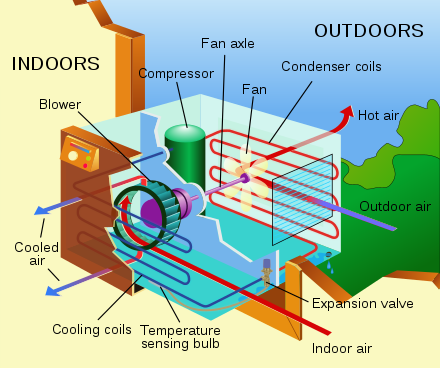
Of course, the central irony of air conditioning is that while it may make you cooler, it makes the world hotter as we burn fossil fuel to generate the electricity to make it work and the damn things release lots of heat –into the great outdoors. And living in air-conditioned spaces makes you less able to tolerate the outside air when you're in it. But it has certainly been good for productivity.
We lived on Massachusetts Bay and so we could go swimming but the water was usually frigid, what with the hot-weather wind – from the southwest – pushing the warm surface water away from the shore and the Labrador Current lurking nearby. We loved visiting our paternal grandparents in West Falmouth, on Buzzards Bay, where the water was almost tropically warm from mid-July to Labor Day. It seemed that the Gulf Stream would send up little eddies to run against the south and west sides of the Cape. It smelled like Florida.
Swans and New Yorkers

“Round the point flotillas of swans come trailing
sunlit V’s and W’s, otherworldy,
but a little corny. When they arrived here
No one remembers.
Nor can we remember the explanation
why the swans are in the ascendant, surging
Even as our own population trickles
Out to the suburbs.
Garbo Lobster’s fleet has been sold; Monsanto,
windows broken whistles an absent air; New
Yorkers long since bought up the nicer houses;
God, it’s depressing….’’
-- From “Neoclassical,’’ by Daniel Hall
Garbo Lobster is based in Groton, Conn., but has a major operation in Hancock, on the Maine coast.
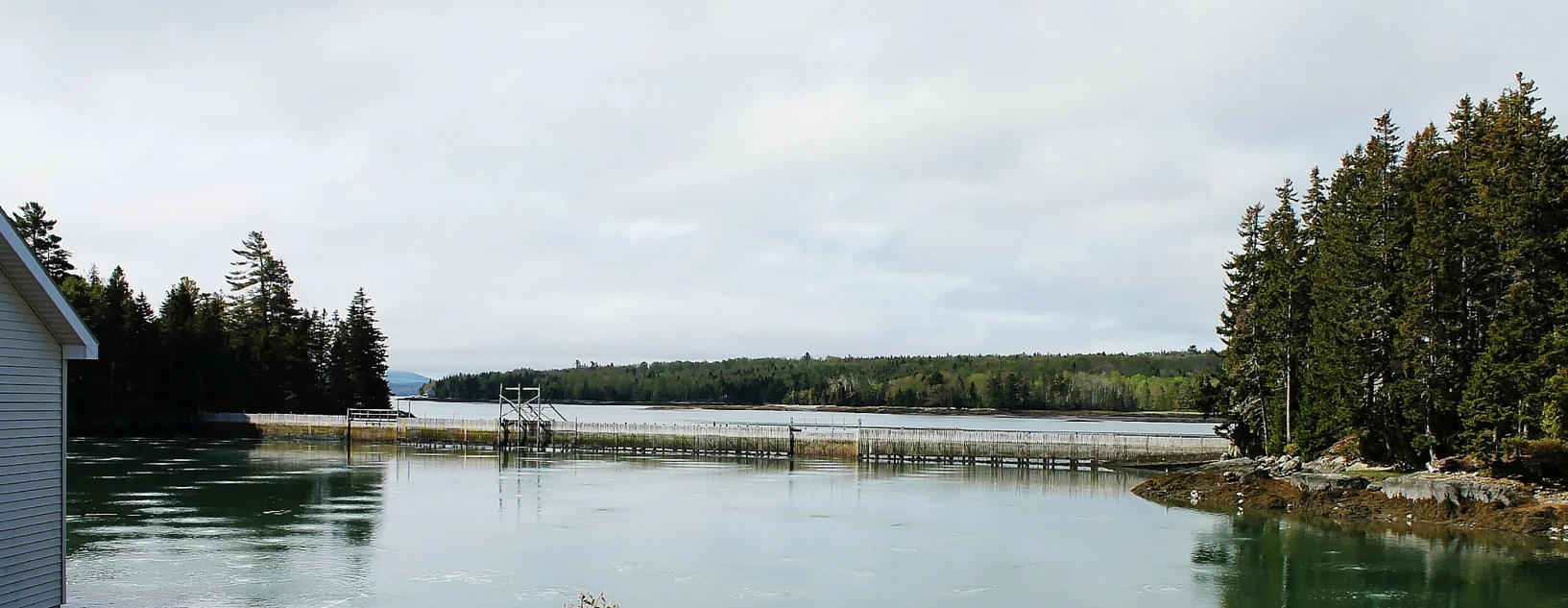
Part of Garbo's lobster pound facility in Hancock, Maine.
Chris Powell: Conn. could use less SALT; McCain a hero but with a very mixed record

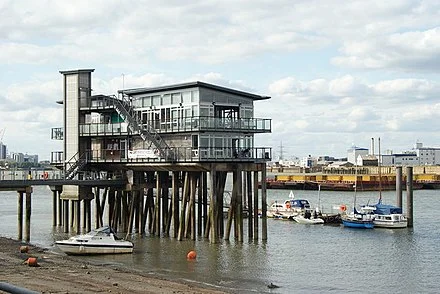
Part of the Greenwich Yacht Club at low tide. Greeenwich is famous as the home of many very rich people, many with connections to Wall Street.
While the Trump administration's new federal tax law is largely irresponsible, running up enormous debt to give breaks to the wealthy, in one respect it is exactly what the country needs. That is, the new law limits to $10,000 the personal income tax deduction for state and local taxes, the SALT deduction.
The deductibility limit is outraging elected officials in high-tax states in the Northeast and California, and in Connecticut the Malloy administration has joined them in a federal lawsuit claiming implausibly that the limit is unconstitutional.
The plaintiffs complain that the limit will depress home prices and economic growth and make it harder for state government to pay for essential services.
This is nonsense because the high spending and taxes of the plaintiff states have already impeded their growth and cost them population. States with lower spending and taxes are growing faster economically and in population.
The real issue here is whether federal policy should make it easier for state governments to overtax their people and be inefficient. Of course the Trump administration is hardly efficient itself, but a state that, like Connecticut, keeps imposing record tax increases while producing huge budget deficits deserves no help from federal policy.
The elected officials running Connecticut and the other high-spending, high-taxing, and population-losing states are desperate to avoid confronting the special interests they have been coddling, particularly government employees. No state that, like Connecticut, maintains collective bargaining for government employees and binding arbitration for their union contracts while its government is effectively insolvent is even trying to put its affairs in order.
Connecticut residents are only starting to understand the burdens and ineffectiveness of their state government. Limiting the federal tax deductibility of state and local taxes will improve their understanding and encourage their overdue resentment.
* * *
President Trump has a talent for contaminating everything he touches, as demonstrated by his disgraceful response to the death of Arizona Sen. John S. McCain. Ironically, Trump's disrespect turned McCain into more of a national hero, particularly for Democrats who want to bring the president down.
Anyone who performed military service and as a result was held for more than five years as a prisoner of war, was tortured by a vicious enemy, and as a result suffered permanent physical injuries is a hero no matter what the president thinks of him. Indeed, it was contemptible for Trump to disparage McCain when Trump obtained a military draft deferment with a case of “bone spurs” that cleared up as soon as the draft ended.
But McCain's political record was mixed at best.
Early in his Senate career he pressured banking regulators to go easy on a crooked financial magnate from whom he had accepted extravagant gifts and campaign contributions. This was corrupt and McCain was criticized for it by the Senate Ethics Committee. At least he came to regret what he had done.
Further, in Congress McCain always supported stupid U.S. military interventions and imperial wars around the world. Thousands died because of these interventions and wars.
But McCain mellowed and in his later years often pursued national and bipartisan interests. While he had a temper, he was also a regular guy without senatorial arrogance. He got along with people despite political disagreement. That's what most should be remembered about him.
Chris Powell is a columnist for the Journal Inquirer, in Manchester, Conn.
Bridge in September
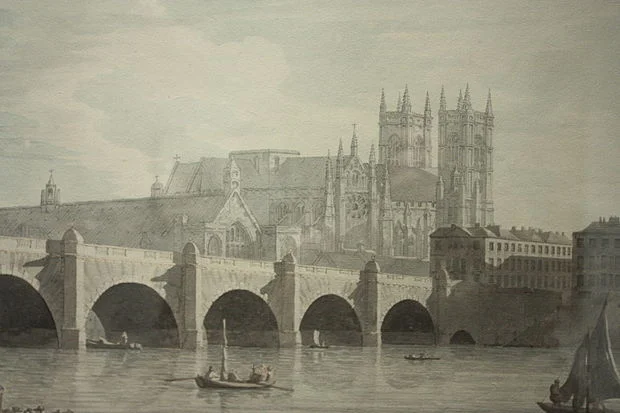
"Westminster Bridge,'' by Joseph Farrington, 1789 (the original bridge, opened in 1750), replaced in 1862.
"Earth has not anything to show more fair:
Dull would he be of soul who could pass by
A sight so touching in its majesty:
This City now doth, like a garment, wear
The beauty of the morning; silent, bare,
Ships, towers, domes, theatres, and temples lie
Open unto the fields, and to the sky;
All bright and glittering in the smokeless air.
Never did sun more beautifully steep
In his first splendour, valley, rock, or hill;
Ne’er saw I, never felt, a calm so deep!
The river glideth at his own sweet will:
Dear God! the very houses seem asleep;
And all that mighty heart is lying still!''
"Composed Upon Westminster Bridge,'September 3, 1802,'' by William Wordsworth
PCFR's exciting fall lineup

The Providence Committee on Foreign Relations
The Providence Committee on Foreign Relations (thepcfr.org) was established in 1928 as one in a network of committees set up across the nation under the aegis of The Council on Foreign Relations (CFR). The PCFR is an independent, 501(c)7 non-profit, private membership organization and remains faithful to its original founding mission to inform citizens about their world. Membership information is available at:
thepcfr.org
The speakers’ talks and the question and answer period following are not for attribution, unless the speaker specifically requests otherwise. Thus, we look for, and usually get, vigorous discussion.
UPCOMING EVENTS
Fred Zilian: The Good Citizen and American Civilization
26 Sep 2018 6:00 PM
The Hope Club, 6 Benevolent Street, Providence, RI 02906
Social Entrepreneurship, Dr. Teresa Chahine
3 Oct 2018 6:00 PM
The Hope Club, 6 Benevolent Street, Providence, RI 02906
Michael Goldfarb: Two Paths to Brexit
17 Oct 2018 6:00 PM
The Hope Club, 6 Benevolent Street, Providence, RI 02906
Geopolitics Underlying US Foreign Policy, Sarah C. M. Paine
8 Nov 2018 6:00 PM

Don Pesci: The role of humor and viciousness in politics

Anti-Jefferson cartoon in the 1800 election campaign depicts him burning the Constitution.
Republicans, we all know, do not know how to campaign -- which is why they lose elections. In the modern period, political jousting is either murderous or feckless. Twitterdom is full of deadly thrusts unleavened by humor, the opposite of wit.
Let’s suppose Connecticut Republican gubernatorial hopeful Bob “The ReBuilder” Stefanowski were Abe Lincoln, sans beard but with a similar sense of humor. Someone at a political rally once accused Lincoln of being two-faced – he was being rather subtle on the issue of slavery– at which point Lincoln stopped his speech and shouted back, “If I had two faces, do you think I’d be wearing this one?”
The audience shivered with appreciative laughter, and laughter in politics is better than votes because it engages the stomach muscles and the thorax. Voting is a public duty most people choose to ignore, particularly in our day of snake oil salesmen. But laughter cleanses the soul and shocks the memory. Remembering a good joke is so much more pleasant that remembering a humorless politician.
So then, here is Lincoln Stefanowski ruminating – from the stump – on a recent Ned Lamont campaign rally in Hartford, Connecticut’s capital city and recently bailed out by the political money lenders under the gold-guilt dome in Hartford:
“I see the Democrats had a rally in Minuteman Park in Hartford. All the usual celebs were there, minus Governor Dan Malloy, who’s in hiding. Democrats do not want the infectious Malloy touching their campaigns''. CTPost reported, “[Democrat candidate for State Treasurer Shawn] Wooden produced an awkward moment during the rally when he introduced Lamont as ‘Governor Malloy’ in an apparent slip of the tongue. Republicans continually paint Lamont as an extension of the unpopular Democratic governor, while Lamont emphasizes his differences from Malloy.” You see, at bottom – THEY KNOW – there are no policy differences between Malloy and Ned Lamont, who I hear is a wealthy businessman with only a smattering of political experience like… well, never mind.
The paper tells us that “Lamont, in his speech, emphasized that the Democratic ticket represented ‘change.’” But Ned favors more taxes and tax hand-outs to corpulent big businesses fleeing the state. All this sounds wearily familiar: Lamont is the Malloy who wasn’t there. And the only real change that can be expected of the man I called “Ned Malloy” is a sweep of change from people’s pockets. My campaign offers real political change, and we won’t assault your wallets or put a regulator under your bed to adjust the pictures in your house.”
A close friend, Philip Clark, noted Lincoln’s 1846 campaign against Peter Cartwright. Lincoln “asked Cartwright if General [Andrew] Jackson did right in the removal – I believe it was – of the bank deposits. Cartwright evaded the question” – no big surprise there; it happens all the time among politicians on the stump – “and gave a very indefinite answer. Lincoln remarked that Cartwright reminded him of a hunter he once knew who recognized the fact that in summer the deer were red and in winter gray, and at one season therefore a deer might resemble a calf. The hunter had brought down one at long range when it was hard to see the difference, and boasting of his own marksmanship had said: ‘I shot at it so as to hit it if it was a deer and miss it if it was a calf.’ This convulsed the audience, and carried them with Lincoln.”
The pundits are telling us that the upcoming gubernatorial campaign will be vicious though, one hopes, not quite a vicious as the John Adams-Thomas Jefferson campaign of 1800. Students of history will recall that all the elements of a modern campaign sprouted from this nursery bed.
Jefferson, it will be recalled, was Adams's vice president. The principals, Jefferson and Adams, were, of course, above campaigning; the slugfest was run by associates. The Jefferson camp boldly asserted Adams was a "hideous hermaphroditical character, which has neither the force and firmness of a man, nor the gentleness and sensibility of a woman." The Adams camp said Jefferson was “a mean-spirited, low-lived fellow, the son of a half-breed Indian squaw, sired by a Virginia mulatto father."
The two contestants viewed the battle from afar. Jefferson was not above hiring a hatchet man, James Callender, a political pamphleteer and newspaper editor, to spread campaign muck, while Adams considered himself above such low tactics. Callender proved effective in convincing dupable Americans – presidents at the time were elected through the Electoral College -- that Adams desperately wanted to attack France, and Jefferson prevailed in the election.
Eventually, the free-roving Callender turned against both Alexander Hamilton, whom he rightly accused of infidelity, and Jefferson, for having produced children by one of his slaves. Callender eventually was undone by his own bitterness and alcoholism. He was seen in drunken stupor in 1803, and later his body was recovered from the James River.
More Lincoln and less Callender would better suit the temperament of non-twittering voters in Connecticut.
Don Pesci is a Vernon. Conn.-based columnist.
Llewellyn King: 'Renewable energy' is a disingenuous phrase

Solar-energy facility in Andalusia, Spain.
-- Photo by BSMPS
I’m a tree-hugger. Yep, an environmentalist, but I wouldn’t care to be known as such. Just the word suspiciously signals virtue, and environmentalists and their movement haven’t always been on the side of the environment.
In the 1970s and 1980s, I sat through many meetings when environmentalists advocated for coal over nuclear. That’s like their original sin.
Today, quite a few who care about the environment realize that that was a mistake – a bad mistake. Reluctantly, many have come to see that nuclear is a carbon-free and a very compact source of a lot of electricity.
But long years of environmental opposition have taken their toll on public acceptance and on the economics of new plants. Delay, obfuscations and untruths about both nuclear safety and nuclear waste came together to hobble the industry over the past 40 years.
Waves of anti-nuclear campaigners, like Ralph Nader and Amory Lovins, have been so keen to oppose nuclear that they’ve allowed the environment to receive untold millions of tons of carbon, which wouldn’t have been the case if they hadn’t chosen to wage war on a single technology.
Blame some of this on the 1960s. It was the decade in which the establishment was under attack as never before.
It was a decade in which the young, faced with the draft and Vietnam, started to look at society and the powers that controlled it. They found that the establishment and its institutions could be held accountable for much that was wrong.
Foremost was the war in Vietnam. Then there was the civil rights movement, where it was seen that large institutions had condoned, if not promoted, racial segregation and oppression. Along the way, there was the start of the women’s movement with books like Betty Friedan’s Feminine Mystique, published in 1963.
And, of course, there was the environmental movement itself, ignited by Rachel Carson’s book Silent Spring, published in 1962. The establishment, the grownups, had been weighed and found wanting.
Meanwhile ,the utility industry was happily buying into nuclear power. Growth rates in electric demand had been at 7.5 percent a year for most of the post-World War II period, and utilities thought they needed a huge amount of new power. Actually, demand was leveling off. Nuclear looked like the solution, and the utilities were unrecognizing of the complexity of the technology. One Atomic Energy Commission member, Lewis Strauss, even predicted electricity “too cheap to meter.”
Proponents of nuclear gave its enemies a devasting advantage, a lethal handle. They created a licensing procedure that gave the public unrestricted access to intervene in nuclear licensing.
Nuclear was a fundraising gift to the environmentalists -- a gift that kept on giving.
The environmental movement, having found the devil back then, has found twin holy grails today: solar and wind. The movement is promoting them with the same fervor, the same blind certainty with which they once opposed nuclear.
Is the movement going too far again? Certainly, improvements in batteries will overcome the intermittent nature of both sources. But they can’t overcome the second law of thermodynamics: You can’t get more electric energy out of a square meter of a solar cell than sunlight falls on it. That’s absolute. Likewise, with wind: No more energy can be extracted from the wind than it contains. More research won’t change that.
On the other hand, more nuclear research will produce everything from better power plants, to ships and submarines, to nuclear waste-eating reactors. That’s saying nothing about medicine or space exploration.
A few windmills are delightful. Thousands of them are terrifyingly ugly. Hundreds of thousands of them are being installed.
Likewise, solar panels. Those on the roof at Walmart are great. Thousands and thousands of acres of Southwest desert or good farmland anywhere going down to solar farms is less appealing.
Low density in electricity production means heavy, possibly abusive land use, as demand for wind and solar is pushed. By contrast most nuclear problems will be solved by science, including waste.
Group-think in the environmental movement severely impacted nuclear as an option. Now the group passion for “renewables” may be another wrong environmental turn.
"Renewable'' is a disingenuous word: All those wind towers, turbines and solar panels will have to be dismantled and disposed at the end of their productive life. That detritus isn’t renewable.
Llewellyn King is executive producer and host of White House Chronicle, on PBS. His email is llewellynking1@gmail.com.
Good luck to Worcester!

Proposed stadium for the Worcester Red Sox.
From Robert Whitcomb's "Digital Diary,'' in GoLocal24.com
I was driving through Pawtucket the other day over its Third World roads and by its decayed-looking public schools. That made me wonder again why the State of Rhode Island and Pawtucket would have wanted to enter into a massive public-borrowing scheme to build a publicly owned stadium that would benefit some very rich businessmen in a sport that seems to be in long-term decline. Instead, why not borrow for such far more important things as transportation infrastructure? What indeed is the opportunity cost in all this?
Wouldn’t the old mill town of Pawtucket improve its economy a lot more by fixing infrastructure to be used by a very wide variety of people? Barely paved roads are not exactly an advertisement to lure companies, nor are crumbling schools.
And if a baseball stadium is such a great economic-development energizer (which it isn’t) how come, even after some expensive McCoy Stadium upgrades over the years, the neighborhood around McCoy still looks like, well, the neighborhood around McCoy?
The whole PawSox thing, in Rhode Island and now in Worcester, bespeaks a sort of bread-and-circuses approach, in which appeals to romanticism – in this case baseball fans’ --- trump economic reality. For that matter, what percentage of the population of Rhode Island and southeastern Massachusetts actually go to PawSox games?
Meanwhile, there’s starting to be some buyers’ remorse in Worcester about the very generous offer to lure the PawSox that was secretly (and no wonder!) negotiated over the last few months by the city, the state and the PawSox owners. The deal includes more than $100 million in city borrowing, not including interest. Some of this is supposed to be repaid by a mix of hoped-for taxes and fees in a new development district around the stadium. Will all that development happen? I doubt it. Note that interest rates are rising and that history suggests that a recession – perhaps a deep one – will start in the next couple of years. The taxpayers’ stadium is supposed to open in 2021.
Robert Baumann, an economist at the College of the Holy Cross (conveniently situated in Worcester) and a nationally known expert on the economics of publicly financed stadiums, gave a hearty thumb’s down to the Worcester deal. Among his remarks in a Worcester Telegram article:
“The summary of {the} research is simple: public money towards stadium construction is rarely, if ever, worth the investment….”
“{The} improvement and increased spending in one neighborhood usually comes at the expense of the rest of the area. … In essence, new stadiums typically trade off concentrated gains in the immediate area with diffuse losses everywhere else.’’
“According to Minor League Baseball, per game attendance at International League games this year is currently about 4.9 percent lower compared to last year and 7.9 percent lower compared to ten years ago. …Usually new stadiums come with a ‘honeymoon’ period of about three years where attendance spikes above its long-run trend…. {W}hat happens after the honeymoon is over?’’
“Simply put, this ownership group has the money {to build a stadium with its own wealth} but pitted two nearby municipalities against each other in order to get the best deal. Given that same public money also funds teachers, cops, and firefighters, this doesn’t strike me as an ownership group that cares much about Worcester or Pawtucket.’’
"The idea that this is going to serve as a catalyst for economic development, which is the hope – and I emphasize the word hope – is misguided," Robert Baade, an economist at Lake Forest College, in Illinois, told the Worcester Business Journal. John Solow, a Massachusetts native and an economist at the University of Iowa, told the publication, "There's a great deal of consensus among sports economists of all political stripes that this is not a good thing for local governments to be doing,"
But they may well do it anyway in Worcester because of the romanticism of the small percentage of the population who actually go to Minor League games and that old wishful suspension of disbelief. If it happens, it will be a wealth transfer from the middle class to the rich. But it will raise the spirits of local baseball fans, if not necessarily most football, hockey, soccer or tennis fans. Money isn’t everything! The owners are, well, hard-working capitalists seeking to maximize their profit by cultivating the romanticism of their fans and the politicians who seek their support.
Rhode Island Public Radio has a useful discussion on the pros and cons of publicly financed baseball stadiums. To read and hear it, please hit this link.
http://www.ripr.org/post/other-cities-stadium-woes-serve-warning-worcester-and-pawsox
Up the Penobscot in search of Norumbega
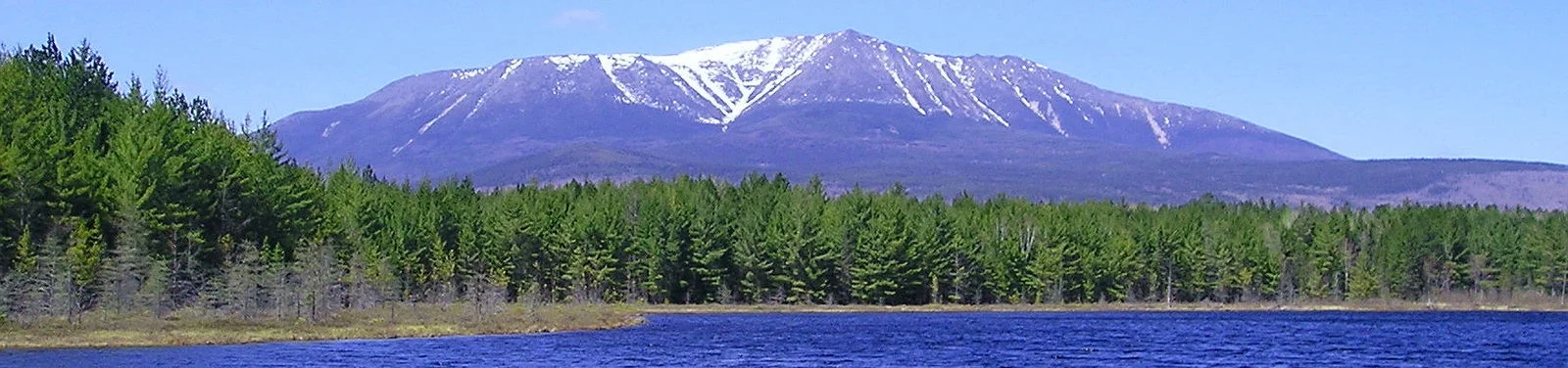
Mt. Katahdin, in Maine's North Woods.
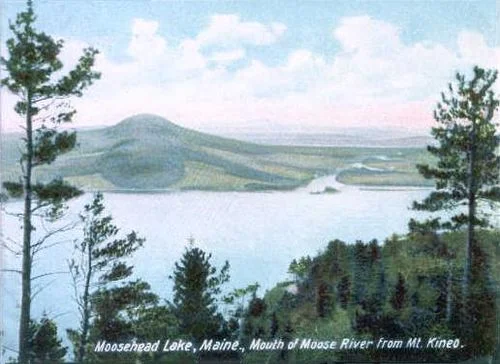
Moosehead, also in the North Woods, is the biggest lake in a state with lots of them.
"The woods come first, then water. The trees are evergreen and endless. They hug the road like an emerald carpet. From the sky, Maine’s twelve-million-acre North Woods extend to the horizon in every direction....
We follow the west branch of the Penobscot River north from Interstate 95 and enter the town of Medway. The Penobscot’s east and west branches merge there. At 264 miles, the river is the second longest in Maine. The watershed it drains is 8,570 square miles. The Penobscot Indians... could once access half the state by paddling and portaging lightweight birchbark canoes.
Europeans had never seen a canoe when they first arrived. They thought the Penobscot was a route to Norumbega, a mythical Indian city of jewel-encrusted turrets, bountiful farms and rivers north of the forty-third parallel. {See poem below.} French navigator Jean Allefonsce reported in 1542 that he found the city along a massive river, presumably the Penobscot. 'The people use many words which sound like Latin,' he wrote in his log. 'They worship the sun. They are tall and handsome..."'
-- From "Maine's North Woods,'' by Porter Fox, in Nowhere magazine
"Not on Penobscot’s wooded bank the spires
Of the sought City rose, nor yet beside
The winding Charles, nor where the daily tide
Of Naumkeag’s haven rises and retires,
The vision tarried; but somewhere we knew 5
The beautiful gates must open to our quest,
Somewhere that marvellous City of the West
Would lift its towers and palace domes in view,
And, lo! at last its mystery is made known—
Its only dwellers maidens fair and young, 10
Its Princess such as England’s Laureate sung;
And safe from capture, save by love alone,
It lends its beauty to the lake’s green shore,
And Norumbega is a myth no more.''
- -"Norumbega Hall,'' by John Greenleaf Whittier
Lost in the clouds

"Clouds" (detail, mixed media installation), by Arevik Tserunyan, in the show "Resiliency and Resistance,'' at Galatea Fine Art, Boston, Sept. 5-30.
Arevik Tserunyan, Clouds (Detail, size varies), mixed media installation, 24 x 24 in., 2018
Call housekeeping

"Earth's Household'' (watercolor and graphite on paper), by Emile Clark, at the Patricia Ladd Carega Gallery, Center Sandwich, N.H.
Mass Insight pushes for more advanced courses
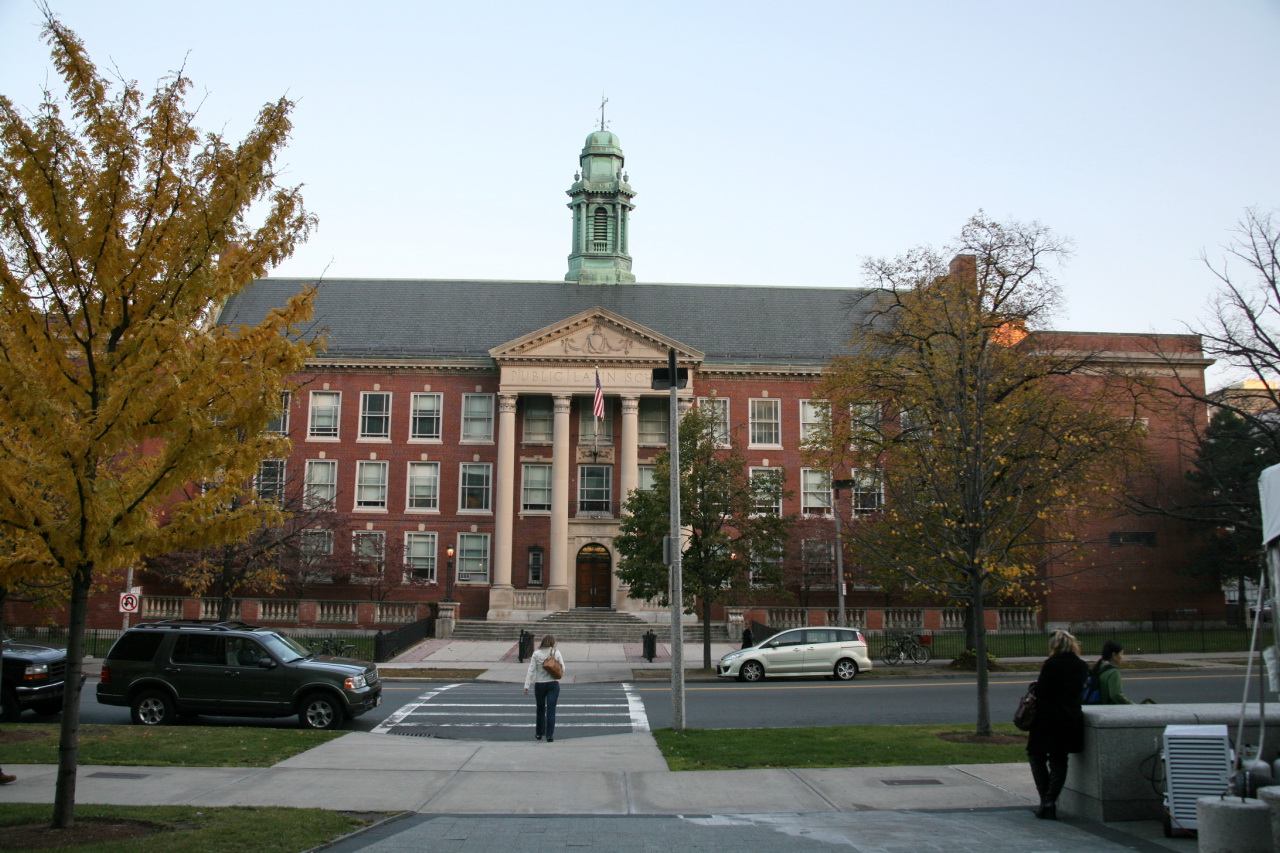
The Boston Latin School, founded in 1635 and the oldest public school in America.
From The New England Council (newenglandcouncil.com)
"Mass Insight Education & Research has released a new report calling for expanding advanced coursework at the high school level in order to better prepare college for college and career success. Mass Insight is a Boston-based nonprofit organization whose mission is to provide leadership in closing the achievement and opportunity gaps for underserved students by focusing on system transformation and student academic success.y,
The study, 'Beyond College Credit: Leveraging AP as and Effective Workforce Strategy,' was authored by Dr. Dana Ansel, and stresses the role of rigorous high school education in addressing workforce demands. The report suggests that Advanced Placement (AP) courses should be offered to more students to better prepare them for college and eventual career success, particularly in STEM-related fields. The study also suggests that such changes are necessary for Massachusetts to maintain its edge as a highly educated state with a highly skilled workforce. Mass Insight notes that it is expected that by 2020, 72 percent of jobs in the Bay State will require training beyond a high school degree, and that 94 percent of the state’s fastest growing STEM jobs will require advanced education.
'Rigorous academics should be seen as a fundamental part of the workforce strategy to prepare for the Commonwealth’s pressing talent needs. We need to tap into the potential of many more high school students – students who currently don’t have access to advanced academics such as AP courses,' said Susan F. Lusi, president and CEO of Mass Insight.''
Tim Faulkner: ExxonMobil exec makes case for offshore drilling

TheConduqtor photo
Via ecoRI News (ecori.org)
NARRAGANSETT, R.I..
There’s no bigger player in the fossil-fuel industry than ExxonMobil. The world’s largest oil company extracts nearly 100 million barrels of fuel daily and has no plans of stopping.
Exxon’s executive in charge of oil and gas drilling around the world, Stephen Greenlee, spoke Aug. 27, not far from the University of Rhode Island Graduate School of Oceanography, where he earned his master’s degree in 1981. Greenlee’s message of “a case for exploration” in “an era of resource abundance,” adapted from a quarterly shareholder report, conflicts with the view shared by many environmentalists and climate scientists who call for a wholesale shift away fossil-fuel exploration and extraction in order to achieve dramatic reductions in greenhouse-gas emissions.
Greenlee used industry terms such as “unconventional technologies” and “tight oil” to describe natural-gas and oil extraction from the relatively new practices of horizontal drilling, fracking shale gas, and tar sands drilling. “Shooting seismic” means sonar surveys for offshore drilling.
Scientists maintain that climate emissions have to cease, while Exxon projects that they will stay flat. Instead of investing in wind and solar energy, Exxon believes that emerging technologies such as algae biofuels and carbon capture will keep the global temperature from reaching the benchmark 2-degree-Celsius increase.
Greenlee described the rebound from losing the drilling project in the Arctic Circle in 2014 because of U.S. sanctions against Russia. Exxon also lost drilling sites in Kurdistan, Iraq, and Liberia due to geopolitical factors.
Most audience members seemed to appreciate Greenlee’s vision for fossil-fuel exploration. However, there were questions about climate change and oil and gas drilling in developing countries such as Guyana and Papua New Guinea.
“I go to jail if there are any bribes,” Greenlee said.
When asked about climate change, Greenlee discussed the struggle between demand for fossil fuels and carbon emissions.
“It’s a super-hard question and none of us can answer that,” he said.
Greenlee made the case for exploration off the coastal United States to know what reserves are available.
“At some point it might be useful to know what's out there,” he said.
Tim Faulkner reports and writes for ecoRI News.
David Warsh: Of the Old Midwest, the New Midwest and the future of the GOP

Soybean field in Ross County, Ohio.
I just spent seven days in the upper Midwest, driving across the states that gave Donald Trump his victory – Michigan, Indiana, Ohio, Pennsylvania – talking to friends as I went. It was mostly vacation, but I carried with me Midwest at Noon, by Graham Hutton (University of Chicago Press, 1946), and read a little every day.
Hutton, for many years an editor of The Economist, spent much of World War II as head of the British Information Service in Chicago. An admirer of Alexis de Tocqueville, a close reader of The American Commonwealth (1888), by James Bryce, Hutton aimed to give a friendly analytic account of a region “mostly unknown, widely misinterpreted, and greatly misunderstood.”
The endpapers of the book tell the basic story: the early routes over the Appalachian Mountains created the Old Midwest, settling Kentucky, Missouri and the southern portions of Ohio, Indiana and Illinois. The impulse came from Virginia; the first governor of Illinois is still listed as having been Patrick Henry. Kentucky joined the Union in 1793, and the other four states had been admitted by 1821.
New York and the New England states remained preoccupied with their Atlantic trade. Only with the Land Ordinance of 1785, with its six-mile-square townships, four of each of their 36 sections reserved to the federal government to provide provide revenue, and a fifth to finance public schools, was the Northern interest in the western lands aroused. The Erie Canal, opened in 1825, was the initial overture.
Hutton writes, “The civilians of the South and the East were largely disillusioned with the more settled and rigid society of the seaboard colonies before they decided to pull out…. These dissenters from Eastern society quickly became anti-colonial, anti-class-society, and anti-Eastern,”
Pioneering and agricultural settlement predominated until 1860; industrial urbanization took over after that. Immigrants from Europe poured in; many farmers of the Old Midwest moved on to the Great Plains and the Far West, taking vagely resentful Midwestern ways with them. Those who remained mixed and mingled, especially in state legislatures.
After 1920, the young and the poor in the Midwest tended to vote Democratic; the well-to-do were Republican for the most part. In 1946, Hutton wrote, “However different they were in their origins, and whatever they brought in with them, [the Midwesterners] all had to adapt themselves to the new and growing life of a of a new and growing region.” The region had become, he wrote, “the greatest single repository in the world of nineteenth century liberalism and the individualism which underlay it.” Little noticed, the economist Milton Friedman returned to the University of Chicago the same year.
It was the New Midwest that I was traveling across last week, and I was struck as I left Indiana for Ohio how different are the accommodations each has reached in the present circumstances. Former Indiana Gov. Mike Pence is Vice President of the United States; Mitch Daniels, another former governor once bruited as a presidential candidate is president of Purdue University. Ohio Gov. John Kasich, who grew up in Pittsburgh, lost the Republican Party nomination to Donald Trump in 2016; after two successful terms, he is ineligible for re-election. He leaves office in January 2019.
Pence’s accommodations are clear; he seems to represent the religious conservatism of Old Midwest. The other two are creatures of the upper Midwest – the Old Northwest, as the region was called after the implications of the Louisiana Purchase sunk in. Their accommodations are of a later vintage.
Columnist Paul Krugman, of The New York Times, wrote last week that the Republican Party, has become a shambles, its commitment to shared political discourse, the pursuit of “objective reality,” a thing of the past. “There is no serious GOP opposition to Trump or his vision,” he wrote.
All the more after reading Hutton, and talking to those I saw last week, high and low, I think he is mistaken. Trump’s influence has become a political bubble, I believe; the pusillanimous present leadership of the GOP to be explained by the adage, “As long as the music is playing, you’ve got to get up and dance.” Eventually, of course, the music stops, the bubble bursts. And at that point those who made the mess are often called upon to repair the damage.
The Trump presidency has come to resemble that of Richard Nixon, not in its particulars but in the growing consensus that the man as not a suitable occupant of the office. No impeachment proceeding is necessary. The next election is only two years away.
What’s needed next is an ameliorative presidency, like that of another Midwesterner, Gerald Ford (See When the Center Held: Gerald Ford and the Rescue of the American Presidency (Free Press, 2018), by Donald Rumsfeld, for an affectionate memoir). I don’t know by exactly what path the Republican Party might get there, but I won’t be surprised if they find a way.
. xxx
Martin Shubik, of Yale University, one of the last of the generation that made modern economics, died last week. He was 92. A student of John von Neumann and, especially, Oskar Morgenstern, a contemporary of John Nash and Lloyd Shapley, Shubik was made a fellow of the American Economic Association in 2010.. He published too much, spent a decade doing applied economics at RAND Corp., General Electric Co and IBM. He joined the Yale faculty in 1963.
He made several crucial contributions to the entry of game theory into classical economics and so helped open the door to a broad new era of interplay between economics and psychology. And towards the end, he completed, with physicist Eric Smith, The Guidance of an Enterprise Economy, an important treatise on macroeconomics, despite a long struggle with inclusion-body myositis.
David Warsh, a longtime economics and political essayist and an economic historian, is proprietor of Somerville, Mass., economicprincipals.com, where this piece first ran.
Augusta gold and Bangor gold
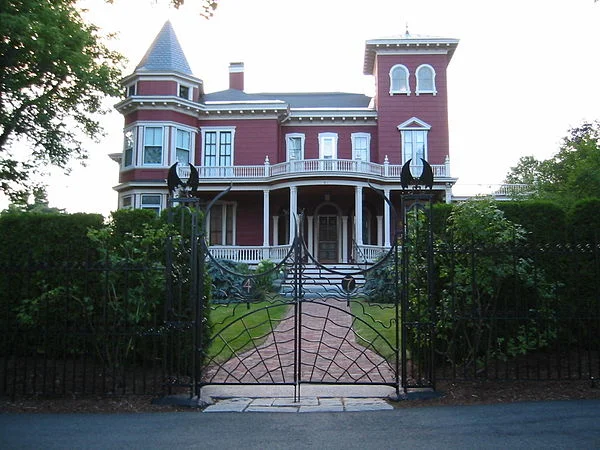
Stephen King's mansion in Bangor, in the Italianate style popular with the city's lumber moguls in the 19th Century. He also has a mansion in Sarasota, Fla. (Robert Frost had a winter house in Miami.) King had a very serious drug problem in the '80s, including with marijuana. He says he's been off all drugs since then, including alcohol. Maine has serious opiate- and amphetamine-abuse problems.
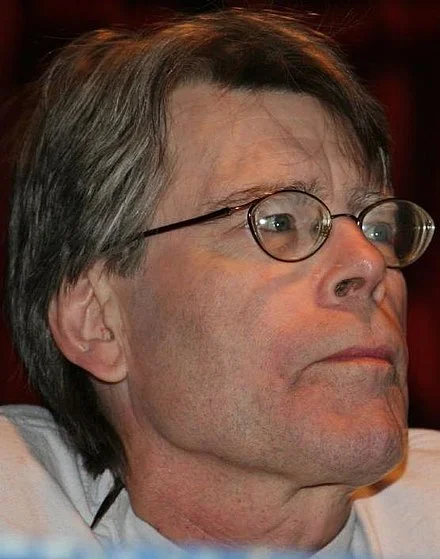
Stephen King.
"My wife says, and I agree with her, that what would be really great for Maine would be to legalize dope completely and set up dope stores the way that there are state-run liquor stores. You could get your Acapulco gold or your whatever it happened to be - your Augusta gold or your Bangor gold. And people would come from all the other states to buy it, and there could be a state tax on it. Then everybody in Maine could have a Cadillac.''
Stephen King, the novelist and part-time resident of Bangor.

''Nature’s first green is gold,
Her hardest hue to hold.
Her early leaf’s a flower;
But only so an hour.
Then leaf subsides to leaf.
So Eden sank to grief,
So dawn goes down to day.
Nothing gold can stay. ''
-- ''Nothing Gold Can Stay,'' by Robert Frost
Trump gives Blue States the Blues
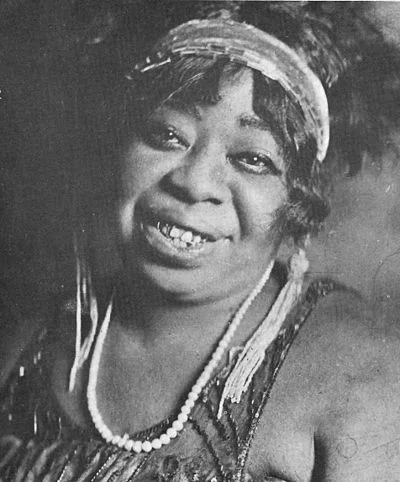
Blues singer Ma Rainey (1886–1939), the "Mother of the Blues"
From Robert Whitcomb's "Digital Diary,'' in GoLocal24.com
It doesn’t take a genius to see that Trump is trying to punish Blue States. After all, he’s never made much of an effort to suggest that he’s president of all the people. Almost all of his big speeches are before screaming hordes of cultists/wishful thinkers (suckers) at MAGA rallies, with opiate- and amphetamine-rich West Virginia a favorite venue. There, many folks have long since stopped reading in favor getting their “news’’ from another New York crook, Sean Hannity.
Paula Dwyer, writing for Bloomberg Business Week, did a nice review of this the other day in “Trump’s War Against Blue States’’.
Among her observations about a few of our mobster-in-chief’s anti-Blue State policies, let’s just concentrate on GOP tax “reform.’’
“His tax overhaul has capped at $10,000 the federal income tax deduction that a homeowner can claim for payment of state and local taxes, affecting taxpayers especially severely in the Northeast and California,’’ which have higher taxes because they generally have, to varying degrees, better and more humane public services than the Red States and because the people in Blue States are bigger wealth creators. Because of the nature of the economies in the aforementioned Blue States, even middle-class taxpayers can reach the $10,000 cap fairly easily.
Red State Republican members of Congress complain that letting Blue State folks deduct their higher state and local taxes results in Red States subsidizing the Blue ones.
In fact, it’s always been the opposite. As Ms. Dwyer notes, and as I said here before, Red States generally have low state and local taxes (except some have high sales taxes, which are regressive) because most have thin public services and generally rely much more than do Blue States on federal money. Consider that in the heart of Trump Country – Mississippi – the state gets about 40 percent of its operating money from the Feds, with much of it coming from the big federal taxes paid by Blue State folks.
Eight of the 10 biggest winner states in getting more money from the Feds than they pay are Red States, seven of the 10 biggest losers are Blue States, notably including the vast sums from New York and New Jersey. (Massachusetts was 13TH biggest loser but poor little Rhode Island was 18th in the states that get more from the Feds than they pay – because of poverty and, more happily, the big Navy-related facilities.) The figures are of course affected by poverty levels, and Red States do less to help the poor than do Blue States, thus necessitating more federal help to make up some of the differences. The presence and absence of military bases (e.g., Naval War College) and federal contracts also play a big role.
I have long thought that Trump especially wants to stick it to New York because he knows how detested he is there.
To read Ms. Dwyer’s article, please hit this link.
Louvre sends Leonardo to New Haven

"The Annunciation'' (oil on panel, detail), circa 1475-79, by Leonardo da Vinci, in the show "Discoveries at Verrocchio's Studio,'' to run through Oct. 7 at the Yale University Art Gallery, New Haven. The painting is on loan from the Louvre. The exhibition looks at the work known to have been created in the teaching studio of the sculptor, painter, and goldsmith Andrea del Verrocchio during da Vinci's early apprentice years.
New Haven has great cultural riches, in visual, musical and literary art, most of them associated with Yale in varying degrees. It also has some of America's finest pizza, and a serious drug-overdose problem.
'The silent spruces' of 'Cold Arse'
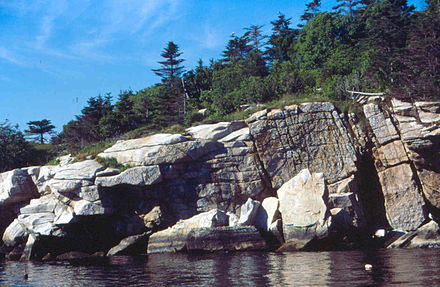
Shore of Ragged Island.
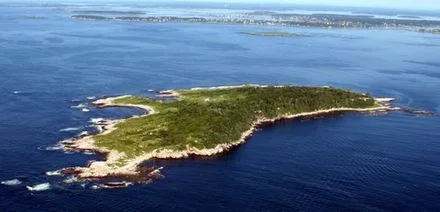
Ragged Island, in Casco Bay, from above.
“There, thought unbraids itself, and the mind becomes single.
There you row with tranquil oars, and the ocean
Shows no scar from the cutting of your placid keel;
Care becomes senseless there; pride and promotion
Remote; you only look; you scarcely feel….
Oh, to be there, under the silent spruces,
Where the wide, quiet evening darkens without haste
Over a sea with death acquainted, yet forever chaste.’’
From “Ragged Island,’’ by Edna St. Vincent Millay
Ragged Island, in beautiful Harpswell, Maine, was the summer home of poet Edna St. Vincent Millay and husband, Eugen Jan Boissevain, from 1933 until her death in 1950. It is now a private residence. Harpswell is the home of the revered Cook's Lobster & Ale House, on Bailey Island.
A 1790 maritime chart identifies Ragged Island simply as Cold Arse.

Sam Pizzigati: No, 'the market' doesn't set astronomical CEO pay

Via OtherWords.org
Back in 1999, no executive personified the soaring pay packages of America’s CEOs more than Jack Welch at General Electric. Welch took home $75 million that year.
Welch credited that exorbitant salary not to his own genius, but to the genius of the free market.
“Is my salary too high?” mused Welch. “Somebody else will have to decide that, but this is a competitive marketplace.”
Translation: “I deserve every penny. The market says so.”
Top executives today are doing even better. In 1999, the Economic Policy Institute reports, CEOs at the nation’s 350 biggest corporations pocketed 248 times the pay of average workers in their industries. Top execs last year averaged 312 times more.
Why? Like Welch a generation ago, today’s CEOs point to the market.
As the University of Chicago’s Steven Kaplan puts it, “The market for talent puts pressure on boards to reward their top people at competitive pay levels in order to both attract and retain them.”
In the world of CEO cheerleaders like Kaplan, corporate boards simply pay their execs what the impartial, unbiased market — supply and demand — says they deserve. If they don’t, they risk losing talent.
But do corporations really face a shortage of qualified CEOs?
In fact, Corporate America has never had more talent to choose from to run their multibillion-dollar companies. America’s graduate schools of business have been graduating, year after year, thousands of rigorously trained executives.
The Tuck School of Business at Dartmouth boasts an alumni network over 10,000 strong. MBAs in the equally prestigious Harvard Business School alumni network total over 46,000. Several hundred thousand more execs have been trained at America’s other top-notch business schools.
Let’s assume, conservatively, that only 1 percent of the alumni from the “best” business schools have enough skills and experience to run a big-time corporation. Even that would give Fortune 500 companies looking for a new CEO several thousand qualified candidates.
That’s not even counting the grads from business schools abroad. INSEAD, perhaps the most prominent of these international schools, now has over 56,000 active alumni. In our celebrated “globalized” economy, executives from elsewhere in the world constitute a huge new pool of talent for American corporations.
By classic market logic, any competition between highly paid American executives and equally qualified but more modestly paid international executives ought to end up lowering, not raising, the higher pay rates in the United States. Yet American executives take home over triple the pay of execs in America’s peer nations.
In short, we have a situation that the “market” doesn’t explain. In the executive talent marketplace, American corporations face plenty, not scarcity — yet the going rate for American executives keeps rising.
Simply put, markets don’t set executive pay.
“CEOs who cheerlead for market forces wouldn’t think of having them actually applied to their own pay packages,” as commentator Matthew Miller has noted in the Los Angeles Times. “The reality is that CEO pay is set through a clubby, rigged system in which CEOs, their buddies on board compensation committees, and a small cadre of lawyers and ‘compensation consultants’ are in cahoots to keep the millions coming.”
If CEOs earned less, the Economic Policy Institute study concludes, we would see “no adverse impact on output or employment.” Instead, we’d see higher rewards for workers, since the huge paydays that go to CEOs today reflect “income that otherwise would have accrued to others.”
Back in 1965, the study notes, America’s top execs only pulled down 20 times more pay than the nation’s average workers, as opposed to over 300 times today. If we want an economy where all of us can thrive, not just CEOs, we’d do well to drive that number back down.
Sam Pizzigati co-edits Inequality.org for the Institute for Policy Studies, where a longer version of this piece first appeared. His latest book is The Case for a Maximum Wage.