
Vox clamantis in deserto


Chris Powell: Power corrupts everywhere, notably in the secretive Catholic Church
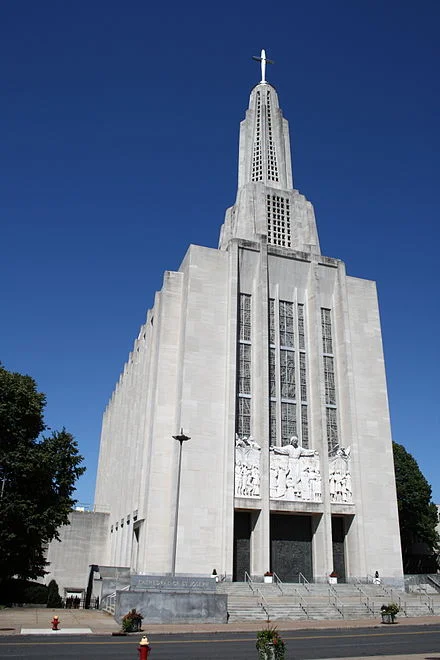
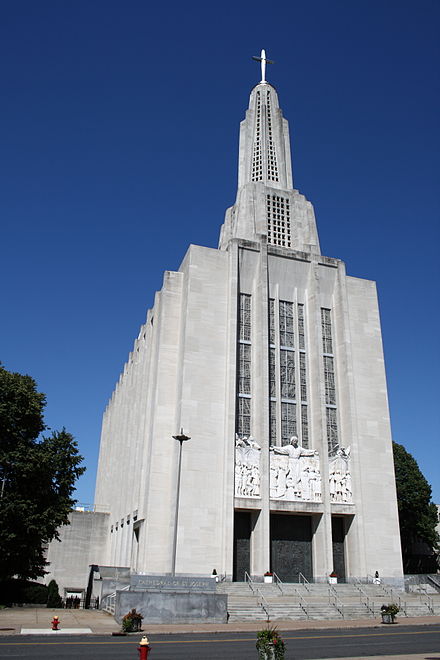
The rather strange Art Deco-looking Cathedral of St. Joseph in Hartford.
Responding to the Catholic Church's latest sex scandal -- the Pennsylvania grand jury report documenting the abuse of hundreds of children and its concealment by the church hierarchy during seven decades -- Hartford Archbishop Leonard P. Blair and other church officials are asking: How could this have happened again?
But the answer is simple and old: Power corrupts, individually and institutionally, and it corrupts everywhere, not just in the church.
Even as the Pennsylvania report was being issued, a prestigious private high school in Lakeville, Conn., the Hotchkiss School, was issuing its own report about the sexual exploitation of students by seven school employees between 1969 and 1992. Recent arrests have disclosed sexual exploitation by Connecticut public school teachers and Correction Department employees. Of course every week brings charges against ordinary people for sexual exploitation of minors. Indeed, it seems entirely possible that during youth nearly everyone is sexually exploited to some extent by an adult.
But it happens more often when no mechanisms are established specifically to guard against it. Even when there are such mechanisms, like surveillance cameras, the tendency is to turn away, as Connecticut has seen recently with scandals of physical abuse in police work and work at the state's criminal psychiatric hospital.
The church's scandals have been worse because it is more secretive and intimidating and less accountable than most institutions and because it is shielded by its sanctity. So if the church ever really wants to diminish abuse, it should establish a mechanism outside its hierarchy for monitoring the hierarchy's conduct with minors and reporting misconduct to both the hierarchy and the police.
Parishioners, preferably parents, could be recruited for this duty and assigned to interview, individually and privately at regular intervals, all minors involved in church activities. Surely the church would gain generally from such a mechanism, quite apart from protection against sexual exploitation.
“The clock is ticking for all of us in church leadership," Boston's Cardinal Sean O'Malley warned last week. "Catholics have lost patience with us and civil society has lost confidence in us.”
That is a problem not just for the church itself but for the whole country, for these scandals jeopardize the many church institutions on which decent society relies -- the hospitals, schools, and charitable offices, the sinew of communities, which already are suffering social disintegration because of destructive government policies. The scandals may even turn people away from spirituality itself.
So no apology has to be made for saving the church if it remains inspired by God, and as the Catholic writer and parliamentarian Hilaire Belloc observed, "no merely human institution conducted with such knavish imbecility would have lasted a fortnight."
Meanwhile, the victims of sexual exploitation deserve more than the pity, coddling and damage awards they have been getting. They must be discouraged from thinking that their lives have been irreparably damaged, for they did nothing wrong and when there is no permanent physical injury, one's emotional distress is only as bad as one makes it.
In these circumstances the old song offers the best advice: "Pick yourself up, dust yourself off, and start all over again." For sexual exploitation in church won't be the last time anyone sees power corrupting. That's life and always will be.
Chris Powell is a columnist for the (Manchester, Conn.) Journal Inquirer.
Chris Powell is a columnist for the Journal Inquirer in Manchester, Connecticut.
After-dinner art
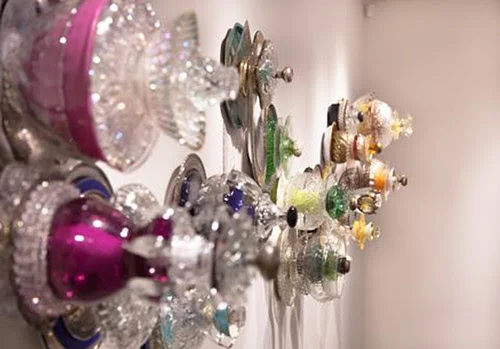
"Occhi'' detail, by Dave Bermingham, part of his site-specific installation based on his "Occhi'' sculptures, at the Brookline (Mass.) Arts Center through Sept. 21. His sculptures, made of discarded plates, platters and other dinnerware, address ideas about superstition and desire. The gallery says he "invites the community to contribute similar objects of their own to be incorporated into the exhibition.'' Bermingham is also working on a new work titled "Cant Slang," pieces that blend poetry, Morse code, beading and sculpture.
Where the world sailed in
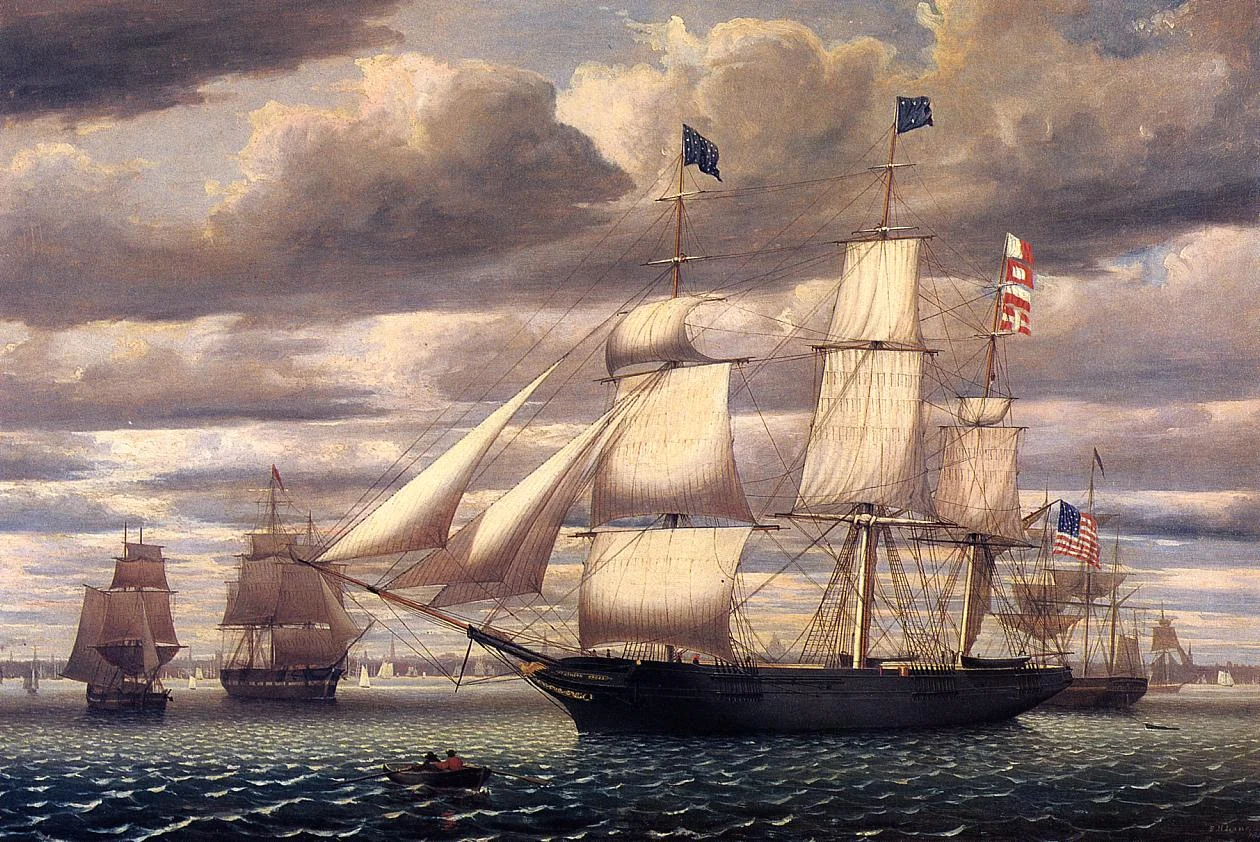
The clipper ship Southern Cross in Boston Harbor in 1851. Painting by FitzHugh Lane.

Meeting-House Square, Boston, in 1895.
“I must be mad, or very tired,
When the curve of a blue bay beyond a railroad track
Is shrill and sweet to me like the sudden springing of a tune,
And the sight of a white church above thin trees in a city square
Amazes my eyes as though it were the Parthenon.
Clear, reticent, superbly final,
With the pillars of its portico refined to a cautious elegance,
It dominates the weak trees,
And the shot of its spire
Is cool and candid,
Rising into an unresisting sky.
Strange meeting-house
Pausing a moment upon a squalid hill-top.
I watch the spire sweeping the sky,
I am dizzy with the movement of the sky;
I might be watching a mast
With its royals set full
Straining before a two-reef breeze.
I might be sighting a tea-clipper,
Tacking into the blue bay,
Just back from Canton
With her hold full of green and blue porcelain
And a Chinese coolie leaning over the rail
Gazing at the white spire
With dull, sea-spent eyes.’’
-- “Meeting-House Hill,’’ by Amy Lowell (1874-1925)
“Meeting-House Hill’’ is an old section of Boston, from which the poet imagined looking down on clipper ships in the China Trade entering Boston Harbor.
'Domestic protectionism'
From Robert Whitcomb's "Digital Diary,'' in GoLocal24.com
The National Review has run a superb piece – “The Scourge of Domestic Protectionism’’ -- by George Will about how local and state laws burden consumers to protect entrenched economic interests. Rhode Island and Massachusetts have plenty of such laws.
Will concludes:
“First, domestic protectionism that burdens consumers for the benefit of entrenched economic interests (e.g., occupational licensing that restricts entry to professions for no reason related to public health and safety) is even more prevalent and costly than are tariffs and import quotas that interfere with international trade. Second ... modern government — that recognizes no limits to its competence or jurisdiction is inevitably a defender of the entrenched, and hence a mechanism for transferring wealth upward. Third, only courts can arrest the marauding of the political class when, with unseemly motives, it pretends to know more than markets do about society’s needs.’’
To read it, please hit this link.
James P. Freeman: Questions for Kavanaugh's kickoff

1908 cartoon, by W.C. Morris, highlighting the dangers associated with the football.
“Football is football and talent is talent. But the mindset of your team makes all the difference.”
–Robert Griffin III, Quarterback, Baltimore Ravens and 2011 Heisman Trophy Winner
As Americans prepare for fall and football, the new political season kicks off the day after Labor Day with public hearings in the Senate Judiciary Committee as part of the confirmation process of Federal Appeals Court Judge Brett Kavanaugh’s nomination to the Supreme Court. Little is known about the judge’s mindset or how he’ll play on the team. And during the upcoming televised stagecraft partisan Senators will likely get bogged down in jurisprudential minutia unintelligible to every day people.
So here are some questions that might elicit better insights:
1. Judge Kavanaugh, on Jan. 22, 1973, the court affirmed the legality of a woman’s right to abortion under the Fourteenth Amendment to the Constitution. Since that time, it is estimated that there have been over 60 million abortions in the U.S. It is still a contentious issue. Much has changed in those 45 years: biological and scientific revelations, legal and economic assumptions, and political and social values. Given all we know today, what are your thoughts on “fetal viability”? Is it time to reconsider that concept as it applies to constitutional law? Why or why not?
2. Since the Supreme Court was established in 1789 there have been a total of 113 people who have served on the high court. Of this elite and select group — among the living and the dead — whom do you most admire and why?
3. You worked in the 1990s on the team (led by Independent Counsel Kenneth Starr) investigating the Whitewater matter. Those efforts eventually, and remarkably, led to the impeachment of President Bill Clinton. In February 1998, you were part of a panel discussion about the future of the Independent Counsel Statute (1978). You raised the question of whether a sitting president could be subject to criminal indictment at all. (You called it a “lurking constitutional issue” that should be “resolved so that we can determine whether the Congress or an independent counsel can investigate a president when his conduct is at issue.”) What are your thoughts on the matter today? What parallels do you see between the investigation of Clinton and today’s investigation using an independent counsel that is edging ever so close into the red zone of President Trump’s presidency?
4. What is the most important opinion you have written as an appeals judge? Why?
5. Here’s a riddle: Which of the following is considered in some circles a violation of state and federal law and hence an affront to individual liberties? (A) Requiring identification to board a plane. (B) Requiring ID to purchase cigarettes and alcohol. (C) Requiring ID to open a bank account. (D) Requiring ID to enter into corporate and government offices. (E) Requiring ID to vote in state and federal elections. If you guessed “E” you are correct! If public officials initiate steps in choice E, are such measures unconstitutional? Why or why not? Might any of these be deemed unconstitutional? Why or why not? On the night President Trump nominated you to the court, did you need to show ID to walk into the White House?
6. Since the inception of the court, there have been 91 Protestant judges named out of 113 justices. Roger B. Taney was the first Catholic to serve on the court, beginning in 1836. In more recent times, Catholics have dominated the court. At one point, when justice Antonin Scalia was alive, there were six Catholic justices on the same court. If you were to be sworn in to the court today you would be the fifth Catholic justice (joining John Roberts, Clarence Thomas, Samuel Alito, and Sonia Sotomayor). How has your Catholic faith shaped and informed your judicial philosophy? Did the court get it right last year in the separation of church and state case Trinity Lutheran v Comer?
7. Are The Federalist Papers still relevant today in terms of interpreting and understanding the original intent of the Constitution? Why or why not?
8. In an October 2016 ruling, PHH v Consumer Financial Protection Bureau, in a case involving the unbridled power of what some would call extra-constitutional congressional creations, you wrote that, “Indeed, other than the President, the Director of the CFPB is the single most powerful official in the entire United States Government, at least when measured in terms of unilateral power.” You added, “The concentration of massive, unchecked power in a single Director marks a dramatic departure from settled historical practice and makes the CFPB unique among independent agencies.” Can you further articulate your philosophy on the separation of powers and overreaching executive authority? What other government entities, in your estimation, resemble those of the CFPB?
It remains to be seen on Sept. 4 if Brett Kavanaugh will fumble the opening kick off or return it for a long touchdown. But it is certain he will be brushing up on the playbook.
James P. Freeman is a New England-based essayist and a former banker.
Malibu on Massachusetts Bay
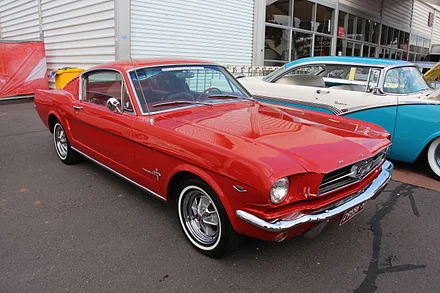
A mid-'60s Mustang.
From Robert Whitcomb's "Digital Diary, in GoLocal24.com
This year’s anniversary of the movie Bullitt, staring Steve McQueen and his famous chase through San Francisco, brought back to me memories of the summer of 1965, when a next-door neighbor friend was given a Ford Mustang convertible, then a brand-new creation. We’d drive along the shoreline of our town on Massachusetts Bay with the Beach Boys on the radio and in a kind of sun-soaked bliss, as if we were at Malibu. Few things were so pleasant then as to have easy access to a car in the summer. With gasoline at 30 cents a gallon, and summer jobs plentiful, cost seemed a minor concern. And I didn’t hear about global warming from burning fossil fuel until three years later when I heard a young assistant professor from MIT give a lecture.
Slow-motion-catastrophe art

"Developing Crack'' (oil on Russian birch), by Holly S. Murray, in her show "Ice to Water,'' Sept. 16 to Oct. 11, at the Hampden Gallery, at the University of Massachusetts at Amherst. Her paintings depict the vast polar ice forms that are turning to water as global warming accelerates.
Makes you duck
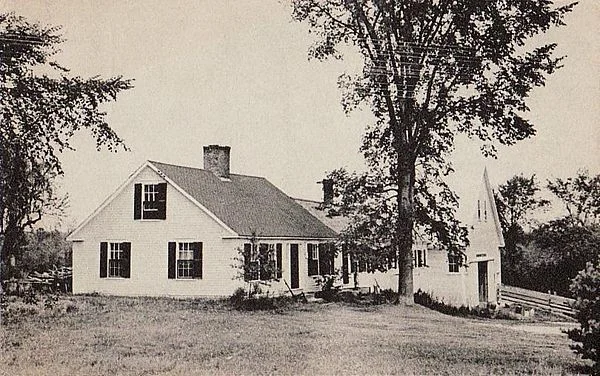
Cape Cod style house.
"I reveled in the smallness, the coziness of an upstairs bedroom in a traditional American Cape Cod house the half-floor that forces you to duck, to feel small and naive again, ready for anything, dying for love, your body a chimney filled with odd, black smoke. These square, squat, awkward rooms are like a fifty-square-foot paean to teenage-hood, to ripeness, to the first and last taste of youth.''
-- Gary Shteyngart, an American writer born in the former Soviet Union.
Boston gobbling up Providence

The Warren Alpert Medical School at Brown University, in Providence's old Jewelry District. The building used to be a factory.
Adapted from Robert Whitcomb's "Digital Diary,'' in GoLocal24.com
Brown University says it will continue its links with Care New England (CNE), which has medical school teaching hospitals, even if Boston-based behemoth Partners HealthCare takes it over. Well, of course Brown would have to: It needs nearby teaching hospitals!
The PR on this is that the medical school would remain Care New England’s primary research and teaching affiliate. Well, maybe. The financial and research clout of Partners (with such world-renowned hospitals as Massachusetts General and Brigham and Women’s hospitals) is such that that we can expect a lot of CNE stuff now being done in Rhode Island – much of it administrative but some of it clinical work and research -- will end up being done in Boston. A lot of jobs will disappear around here, but some might be added, too, maybe even from Boston:
Greater Providence will continue to have the advantages of being a cheaper and easier place to work in.
Next stop: Partners might also buy Lifespan, the biggest Rhode Island hospital system, thus becoming a statewide monopoly. An alluring opportunity to jack up prices.
Nicely heated seawater

View of Ipswich dunes, circa 1920.
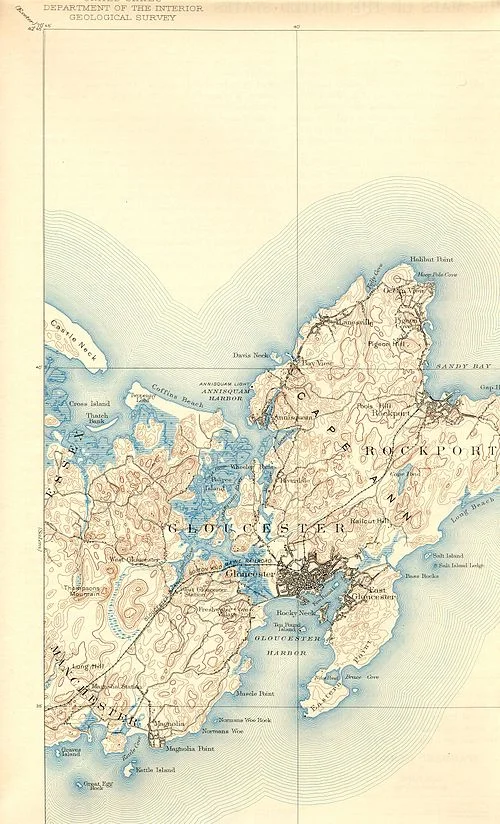
“I could easily leave Manchester [Mass.}, go through the Annisquam Canal and go up the Castle Neck River to enjoy the marvelous seawater that comes in over the hot stones when the tide turns and provides a most wonderful swim because the water is clean and fresh and warm there. The view of the white sand dunes at Ipswich is beautiful to watch while swimming. I believe there is nothing more beautiful in North America.’’
-- The late Henry Cabot Lodge Jr., who served as a U.S. senator, Richard Nixon’s vice-presidential running mate in 1960 and a senior diplomat. He was a Boston Brahmin who was based on the North Shore. This quote is from Arthur Griffin’s New England: The Four Seasons.
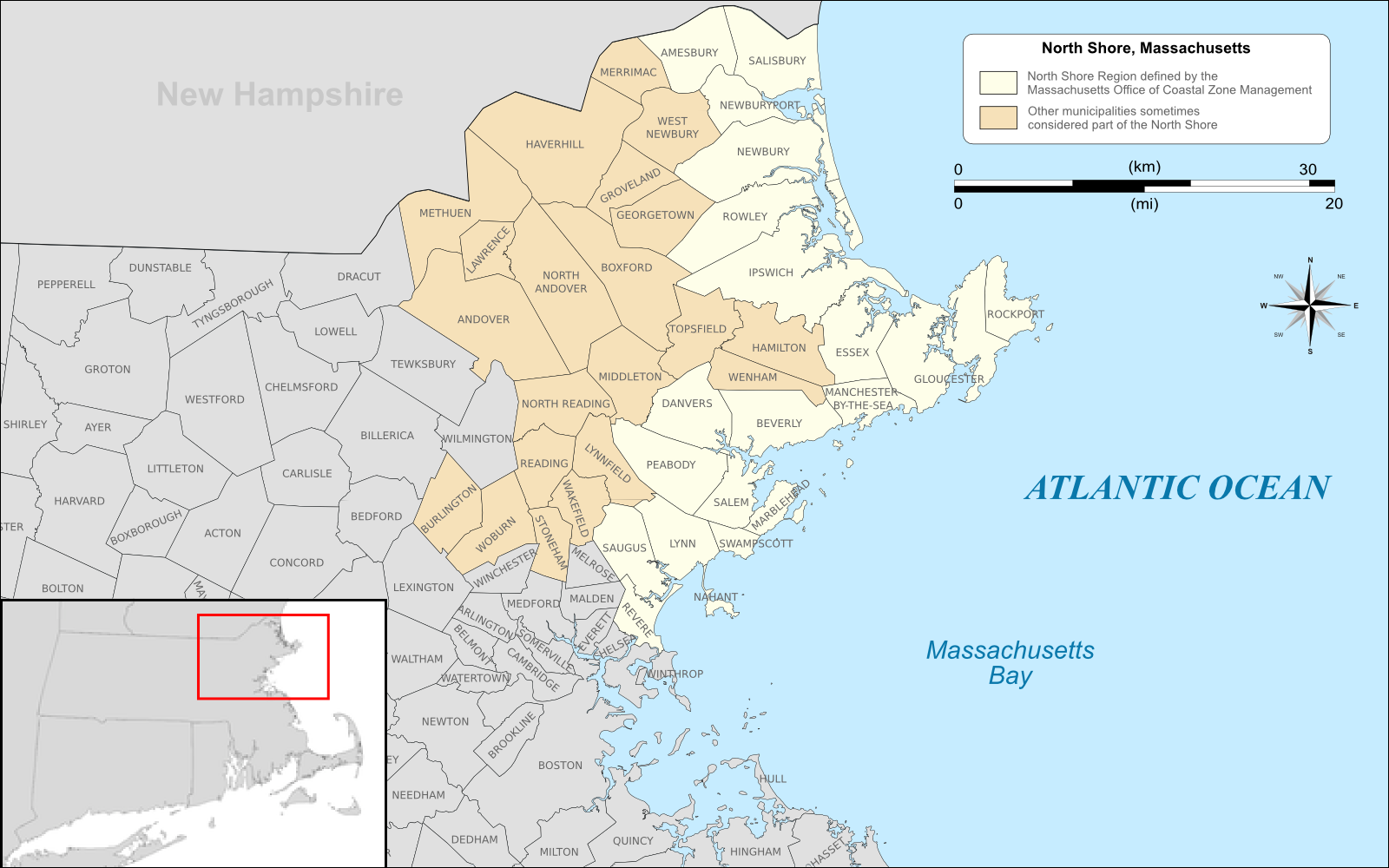
-- By SSWONK
'Glaring still'
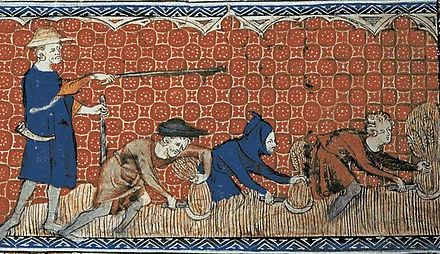
Depiction of harvesting in the August calendar page of the Queen Mary Psalter (fol. 78v), ca. 1310.
\
''No wind, no bird. The river flames like brass.
On either side, smitten as with a spell
Of silence, brood the fields. In the deep grass,
Edging the dusty roads, lie as they fell
Handfuls of shriveled leaves from tree and bush.
But ’long the orchard fence and at the gate,
Thrusting their saffron torches through the hush,
Wild lilies blaze, and bees hum soon and late.
Rust-colored the tall straggling briar, not one
Rose left. The spider sets its loom up there
Close to the roots, and spins out in the sun
A silken web from twig to twig. The air
Is full of hot rank scents. Upon the hill
Drifts the noon’s single cloud, white, glaring, still.''
-- "August,'' by Lizette Woodward Reese
Sculptures in the garden

"Pulse,'' by Fitzhugh Karol, in the show "Beautiful Strangers: Artists Discover the Garden,'' at the Berkshire Botanical Garden, Stockbridge, Mass., through Sept. 30. Stockbridge, where Norman Rockwell lived and worked and the site of the famous mental institution Austen Riggs, is in the heart of the Berkshires.

Llewellyn King: And now for a nuclear engine
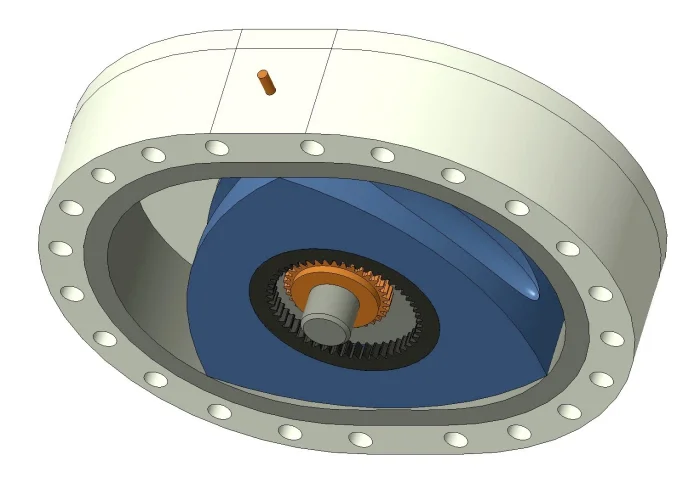
Nuclear engine.
WEST WARWICK, RI
One of the frustrating and intriguing things about nuclear energy is that there is no standard design that is essential. For example, if you want to build a motorcar, you need to start with the idea that it will have four wheels; three is less effective, and two with gyroscopes is something else again.
But when it comes to nuclear reactors, there are seemingly no limits. There are literally hundreds of reactor designs and possibilities. The moderator, which acts like a shock absorber to the reaction, varies too. It is nearly always water, but it can be gas, salt or a liquid metal.
The end, though, is to use fission to produce power to turn a generator to make electricity or to propel a ship, like a submarine or aircraft carrier.
So far, so good. But the limit is that the reactor only produces heat which then must be converted, through steam or some other medium, into shaft horsepower to make electricity or to drive the submarine.
In my many years of writing about nuclear and chronicling its ups and downs, I have always been aware of the apparent weakness here: Huge, sophisticated power plants are only giant kettles; their purpose is to boil water, albeit very effectively.
Periodically, scientists have tried to tackle this issue with thoughts on a direct conversion of heat to useful work in turning a drive shaft for whatever end use. There have been theoretical attempts to make the leap to the direct use of nuclear heat for work without a transfer agent. The great nuclear theorist Leo Szilard, according to his biographer William Lanouette, toyed with an idea but abandoned it.
But there is a way, says Mark Adams, an MIT-educated physicist and former staff member at the Lawrence Livermore National Laboratory, in Livermore, Calif. He has designed an engine which he calls an “internal” rotary engine, rather like the kind of Wankel engine which has been around since the 1950s. Instead of pistons going up and down, the engine has a rotor that rotates around a crank shaft
The rotary engine that Adams envisions looks diagrammatically very like a schematic of the rotatory engine that Mazda introduced to varying degrees of success in its cars in the 1970s.
It works like this: A small amount of gasified “nanofuel,” which contains nuclear material mixed with hydrogen, is ignited by a neutron source to set up a controlled fission reaction, creating heat and propelling the rotor forward and driving the crank shaft. The fuel can be derived from the transuranic parts of spent conventional nuclear fuel or can be created separately.
A company dedicated to energy innovation, Global Energy Research Associates (GERA), is working on design and raising money. The Department of Energy has held back.
Adams, 45, explains his engine this way, “Much like the way your car converts chemical energy into mechanical work, our engine converts nuclear energy directly and safely into useful mechanical work. This eliminates a lot of expensive reactor equipment and paves the way for low-cost nuclear power plants.”
He says his engine would produce 340 megawatts of electric power, if deployed in a combined-cycle configuration. The radioactive byproducts are only cesium and strontium with half-lives of about 30 years -- a great improvement on the nuclear waste from conventional reactors. It would be a high-level waste burner as well as an energy source. Tests to prototype engine components are underway at the Idaho National Laboratory in Idaho Falls.
The nuclear engine would shut itself down automatically if things went wrong. A meltdown accident of the kind seen at Three Mile Island and Fukushima is not possible, according to GERA, which Adams formed to demonstrate and market the engine.
One must have, as one must with all futuristic, high-technology designs, a healthy skepticism and a lot of excitement.
Llewellyn King is executive producer and host of White House Chronicle, on PBS. His email is llewellynking1@gmail.com. He's based in Washington and Rhode Island.
Sculpture circus on the North Shore

"Fruit of Fancy,'' by Phillip Marshall, in "The Flying Horse Outdoor Sculpture Exhibit,'' at the Pingree School, South Hamilton, Mass., Sept. 1-Nov. 4. (South Hamilton is an affluent community on the North Shore.) The organizers say that over the years this show has become one of the largest temporary outdoor displays of sculpture in New England, and that this year's show "will feature more than 50 installations submitted by artists from New England, California and New Mexico. The sculptures are constructed from various types of materials, such as wood, glass, bronze, recycled metal, fiberglass, and many others. Some of the sculptures are even interactive.''
'
Red tide rising
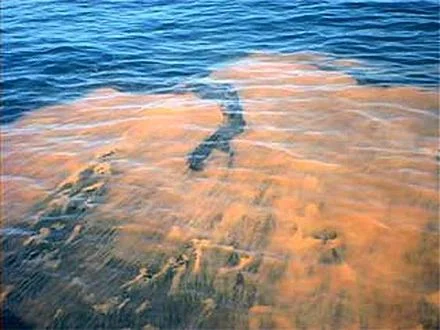
Red ride algae.
From Robert Whitcomb's "Digital Diary,'' in GoLocal24.com
Florida is sending us a warning about the fragility of coastal and other watery places in the face of over-development. Narragansett and Buzzards bays are particularly vulnerable.
On the southwest coast of the Florida peninsula a highly toxic bloom of red algae – aka, red tide -- is killing sea life, making breathing very difficult for humans and scaring away the tourists who fuel much of the region’s economy. The beaches are covered with rotting fish.
I’ve been on that very coast during a red tide, and it’s appalling. Residents flee indoors to get away from the aerosolized toxins from the algae, hoping that air-conditioning will clean out most of them.
Meanwhile, a different kind of algae – green stuff – continues to befoul inland lakes and canals.
Man is the main culprit. The vast quantities of fertilizers and other chemicals dumped on the state for agribusiness, housing-development lawns and golf courses end up in the water, where algae feed on them. Wetlands are filled in, land is paved over and innumerable canals are dug. All this means that much less of this polluted water can be absorbed and filtered by undeveloped land.
Rick Bartleson, a research scientist with the Sanibel-Captiva Conservation Foundation (named for two barrier islands along the southwest Florida coast known for their lovely beaches and sea shells), told The Washington Post that the region’s Lee County used to be 50 percent wetlands (and close to the Everglades). Now it’s 10 percent.
Warming water temperatures also play a role; the Gulf of Mexico now averages about two degrees warmer than it was in the late ‘70s.
Out-of-control development aided and abetted by local and state politicians well taken care of by those businesses has turned much of Florida, with its famous fresh-water wetlands, into a vast sprawl of unrestrained exurban and suburban development. Strip malls in the sunset.
The environmental devastation of this gold rush is unlikely to decrease anytime soon.
Kayla Kitson: Real wages decline after GOP tax 'reform'

The Trump-GOP tax law was sold as a boon for the middle class. But many months after its passage, there are no signs that working Americans are getting the pay raise they were promised.
The Trump administration claimed the corporate tax cuts would eventually lead to wage increases of up to $9,000 a year for ordinary workers. But so far, workers’ wages remain stagnant.
Tracking by Americans for Tax Fairness shows that only about 400 out of America’s 5.9 million employers have announced any wage increases or one-time bonuses related to the tax cuts. That’s about 0.007 percent.
In fact, real wages have actually declined since last year after accounting for higher gasoline prices, prescription-drug prices and other rising costs.
If that weren’t bad enough, Trump and the GOP now want to come after the services that working families rely on.
Shortly after signing the tax cut package that will add nearly $2 trillion to the deficit over a decade, Trump proposed a budget that would cut $1.3 trillion for Medicare, Medicaid and the Affordable Cart Act. The House Republican budget went even further, proposing $2.1 trillion in health-care cuts.
Both budget proposals contained hundreds of billions more in cuts to food assistance, income security, education, and more.
Working families are seeing little benefit from the Trump-GOP tax giveaway — and would be devastated by the cuts to services that have been proposed to help pay for it. But a few people are basking in their new tax-cut windfalls:
President Trump: Though he claimed his tax plan would “cost him a fortune,” the new law will undoubtedly make him one.
Trump refuses to release his tax returns, so we can’t know his exact savings. But he’ll benefit greatly from the lower top individual tax rate, the lower corporate-tax rate, and especially from the 20 percent deduction for “pass-through” business income (income from S corporations, partnerships, limited liability companies, and sole proprietorships that’s taxed at the individual rather than the corporate level).
The Trump Organization, which is a collection of 500 pass-throughs, could save over $20 million a year from that deduction alone. And the law gifted Trump’s industry — real estate — with myriad new loopholes.
Members of Congress: 53 Republican members of Congress who voted for the law could each enjoy $280,000 a year in tax cuts on average.
This includes millions of dollars each for Representatives Vern Buchanan (R.-Fla.) and Diane Black (R.-Tenn.), who serve on the committee that wrote the law. The day that Rep. Buchanan — who could get up to $2.1 million in annual tax cuts — voted in favor of the tax cut bill, he rewarded himself with a multimillion-dollar yacht.
Big Pharma: Prescription-drug companies have profited handsomely in recent years by price-gouging customers and public health programs like Medicare and Medicaid. They also shifted lots of those profits offshore to avoid U.S. taxes.
The Trump-GOP tax law rewards Big Pharma for its years of offshore tax avoidance with a steep discount on the amount due on its stash of offshore profits. Americans for Tax Fairness estimates the 10 largest American drug firms will save a collective $76 billion from this provision alone.
Big Pharma will also benefit from the new lower corporate tax rate and a new international tax regime that taxes future foreign profits at half the domestic profits rate.
While this elite group of tax-law winners are enjoying their tax-cut spoils, the majority of Americans are left holding the bag.
Kayla Kitson is research and policy director at Americans for Tax Fairness.
'Rising Seas, Sinking Cities'
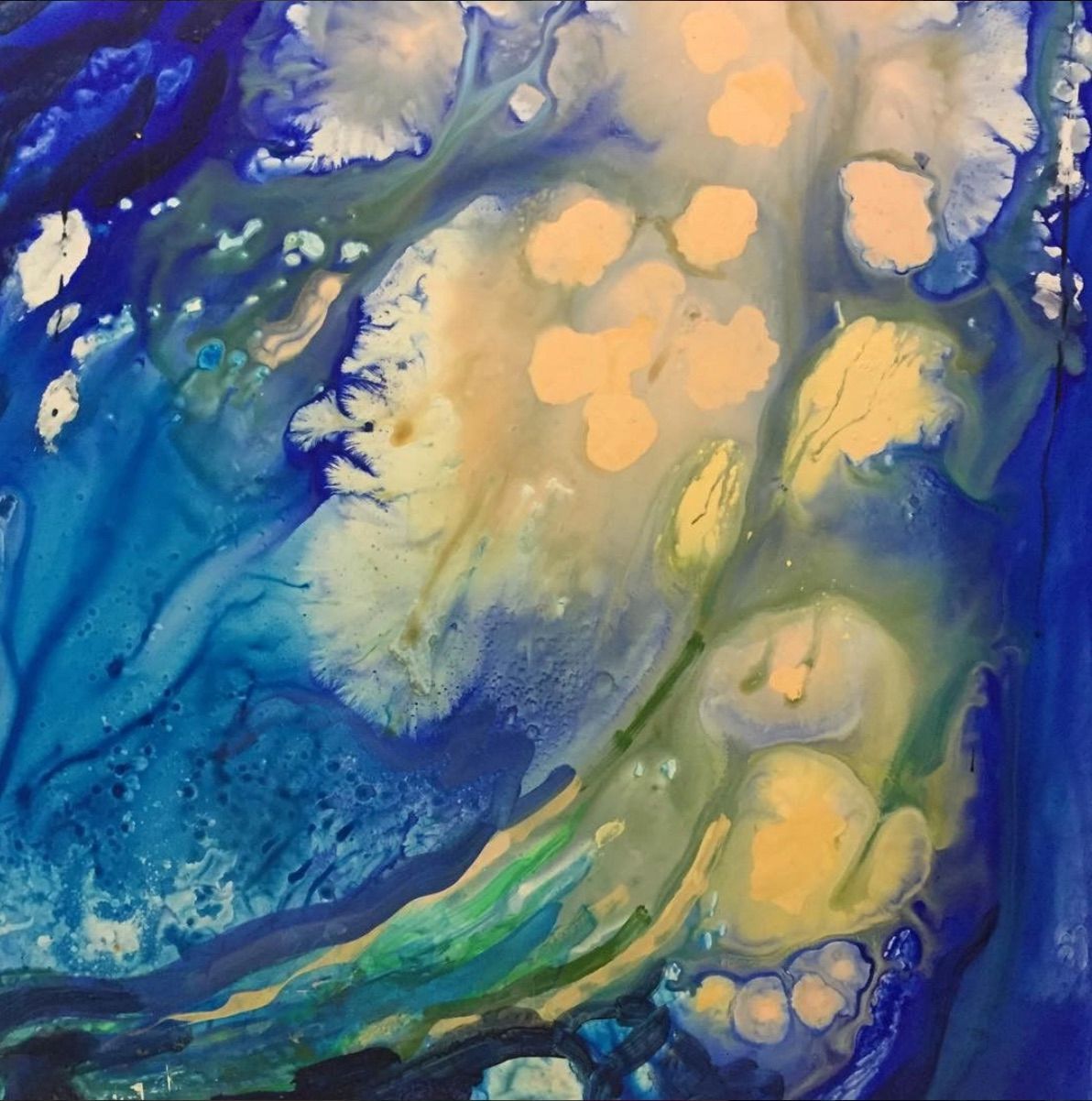
"Sea Monster 3,'' by Lisa Reindorf, in her show "Rising Seas, Sinking Cities,'' at the Granoff Center for the Creative Arts at Brown University starting Sept. 6.
'Organisms swirling around'

The show of Susan Heideman and Michelle Lougee runs through Sept. 7 at the Chandler Gallery at Maud Morgan Arts, Cambridge, Mass.
The gallery says:
"The focus of Michelle Lougee's and Susan Heideman's art is the dazzling interplay of organisms swirling around and within us. Inside/outside; plant/animal/mineral; micro/macro; we explore and confound the connections, contradictions, and borders among organic forms. From the high-speed acrobatic maneuvers of cell proteins to the swelling of larval cocoons, we aim to reveal the drama of these quotidian yet imagination-defying entities.''
Peter Certo: News media ignore scandalous defense budget
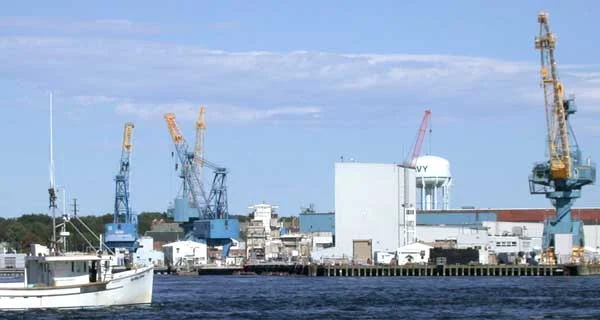
Portsmouth Naval Shipyard, which is actually in Kittery, Maine.
From OtherWords.org
On an otherwise sleepy August day, President Trump signed the John McCain National Defense Authorization Act. Named for the dying Arizona senator who’s championed military budgets for his entire career, the bill increases U.S. military spending to an astonishing $717 billion.
According to my Institute for Policy Studies colleague Lindsay Koshgarian, that’s about double what American taxpayers were spending at the end of the Cold War, and upwards of $300 billion more than what we spent before the War on Terror.
The bill also contains language encouraging a confrontation with Iran, while also making it possible for the administration to continue offering weapons and support to the Saudi-led coalition that’s bombing Yemen. (Where, the very week the bill was signed, they bombed a school bus, killing 51 people — 40 of them children.)
You’d expect a bill of this magnitude to generate lots of critical coverage — and you’d be right! But only kind of.
The most controversial thing about this bill, to hear most of the media tell it, is that the president refused to thank John McCain when he signed it.
Countless outlets, from Newsweek to TIME to the Washington Post, reported the omission as a “snub” against the bill’s namesake senator, an occasional Trump critic. CNN’s Jake Tapper used an entire segment on his show to scold the president about it — and even sanctimoniously thanked McCain himself.
The New York Times ran the numbers: Trump spoke for 28 minutes about the bill, with 0 mentions of McCain.
I ran some numbers of my own: A Google news search on the story turned up nearly 150,000 pieces like this. That’s almost 3 times the number of results I got when I searched the same story, but replaced “John McCain” with the actual price tag of the bill: $717 billion.
To put it kindly, this is garbage.
If the media deems a petty snub more controversial than a massive, war-mongering spending bill, you can be sure Congress will follow. The bill passed by huge bipartisan margins in both the House and Senate.
I can assure you, Trump’s not going to speak more kindly of John McCain as a result of this coverage. But more school buses are probably going to get blown up — and so are more pressing human needs in our own communities.
For instance, my home state of Ohio has, by some measures, the most student debt of any state. According to Koshgarian, taxpayers there spent $15.5 billion on the Pentagon base budget alone this past year. For that money, we could’ve funded nearly 700,000 four-year Pell grants.
For Texas, the most uninsured state in the union, their $45 billion in Pentagon dollars could’ve covered 15 million adults and 16 million kids. That’s the entire state — and then some.
Flint, Mich., taxpayers, Koshgarian calculates, spent some $38 million. That could’ve paid for nearly 700 infrastructure jobs to fix things like, say, lead in their water pipes.
Nationally, that money could’ve provided solar power to the entire country. Or funded universal health care. Or debt-free higher education. Instead, we’ll be shelling out more money on fruitless, destructive wars and boondoggle weapons systems like the F-35 (which McCain himself has called “a scandal and a tragedy”).
The real scandal is that such expenditures aren’t deemed controversial — not by our lawmakers, and not by many of the outlets that cover them. Next time they say McCain’s name, they should report what his bill costs the rest of us.
Peter Certo is the editorial manager of the Institute for Policy Studies and the editor of OtherWords.org.
Driving sober on bumpy roads
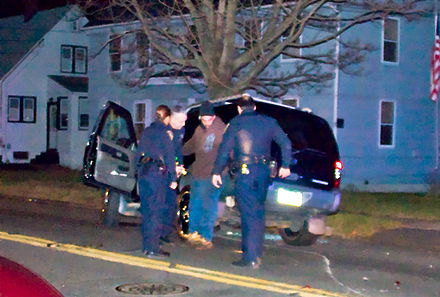
Driver undergoing sobriety test.
From Robert Whitcomb's "Digital Diary,'' in GoLocal24.com
Happy news: Safewise.com, which studies community safety, shows that Rhode Island has the fourth-lowest driving-while-intoxicated fatality rate among the 50 states, despite its reputation for having bad drivers. Just three states – New Jersey, Utah and New York – had lower rates. Massachusetts was the sixth lowest, but Connecticut was only 15th best. Thank good public-education campaigns on the perils of drunk driving, strong policing and in the case of Utah, the fact that Mormons aren’t supposed to drink!
xxx
Wall Street 24/7 reports that Rhode Island has the highest percentage of poor roads in the country, at 24.6 percent, and the highest percentage of states with deficient bridges, at 23.3 percent. And perhaps not coincidentally the 16th lowest percentage of state highway spending per driver a year: $408.
Years of state underfunding have led to this situation, exacerbated by the usually Republican-controlled Congress’s refusal to increase the federal gasoline tax since it was last raised, in 1993, to 18.4 cents per gallon and 24.4 cents per gallon for diesel fuel. That money is supposed to go to build and repair transportation infrastructure.
This anti-tax mania has reduced federal money available to the states for transportation, as have better fuel efficiency and, in the past few years, the arrival of electric cars.
But anti-tax mania when it limits public-infrastructure building and repair ends up costing individuals and businesses a lot, in travel delays and broken equipment.
Gov. Gina Raimondo’s Rhode Works program, which includes new truck tolls – commercial trucks do the lion’s share of damage to roads and bridges -- to help pay for it, is much appreciated. Governors for decades have tried but failed – and then surrendered in efforts to address this serious threat to safety and the state’s economy.