
Vox clamantis in deserto








James P. Freeman: Aided by the U.S., China's hybrid economy looks to continue to surge

As Americans escaped for burgers, barkers and beer over the Fourth of July, they were not only celebrating the nation’s independence. Some well-informed ones might also have been celebrating that the trade war with China had not arrived in their backyards before the fireworks finale. Surely, they are mindful that 99 percent of the fireworks they set off came directly from China.
Maybe President Trump didn’t get the memo that imports of fireworks dwarfed exports by a ratio of more than 40 to 1. As NPR amusingly noted, this “exploding trade deficit” has not prompted the kind of protectionist crackdown that the president has directed at other industries. At least not yet.
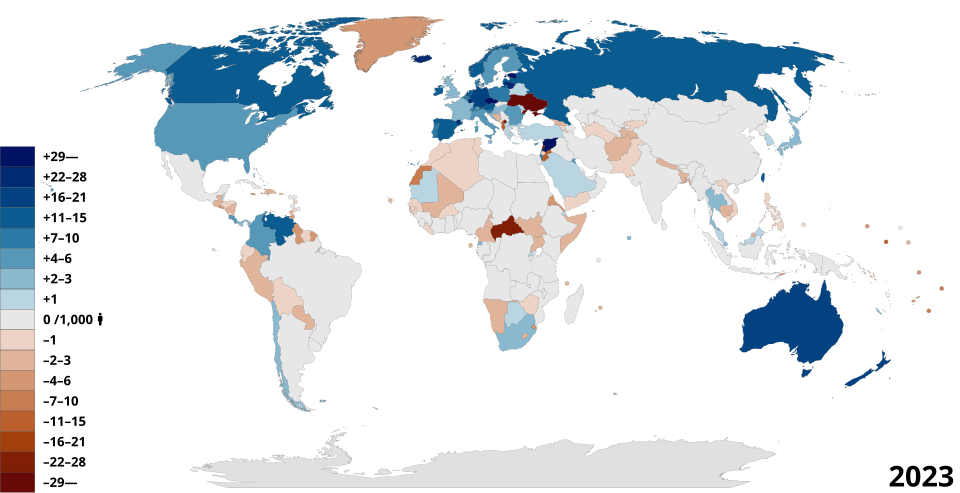
As Trump lights his own bottle rocket of tariffs targeted at China (so far, 25 percent on $50 billion out of $636 billion in total exchange of goods), with threats he may use heavier artillery -- and with China countering, dollar for dollar -- it is particularly timely to revisit a recurring but relevant question: Can China’s economy continue to flourish moving forward with the hybrid (capitalistic/highly controlled) model that the government has implemented?
The answer is a resounding Yes!
Last March, Yukon Huang, senior fellow at the Carnegie Endowment, wrote in The New York Times that “China has never been a normal economy.” He believes that unbalanced growth is a sign of successful industrialization; surging debt is a marker of financial deepening, rather than profligate spending; and, perhaps surprisingly, corruption has spurred, not stalled growth. Future success, he allows, hinges “on whether the Chinese government can strike the right balance between state intervention and market forces.” Huang also says China’s remarkable progress can be credited in part to its leaders’ willingness “to set aside communism for pragmatism.”
Cary Huang, writing for the South China Morning Post last fall, as the centennial of Lenin’s Russian Revolution quietly passed, says that China is now more a “Leninist capitalist state” than a “Marxist socialist one.” Even as China is among the most exploitative nations in the world, (income and wealth inequalities, lack of political and other freedoms), “it is all the more ridiculous to call an economy, the world’s second-largest, ‘socialist’ when 70 percent of it is privately owned, when it hosts the world’s largest army of billionaires, or when it grapples with issues such as a debt crisis, stock market woes and a real estate bubble,” argues Huang.
The creation and embrace of this hybrid capitalism -- state capitalism -- is not entirely new. However, China has fostered (and to a lesser extent Malaysia and Russia also have) the rise of what The Economist called in 2012 a new kind of “hybrid corporation.” It behaves like a private-sector multinational but is backed by the state.
These new economic and corporate alloys of conventional capitalism might confound certain world leaders (and perhaps distract the one with Twitter Tourette’s syndrome) but China’s leaders intend to continue policies that have reaped rewards.
As Americans look to the next quarter, the Chinese look to the next quarter century.
Earlier this year, China’s Communist party cleared the way for President Xi Jinping to rule for life. He has been president since 2012 but the move is seen as a means to consolidate his power and continue his successful policies (not to mention his predecessors'). Richard McGregor, senior fellow at the Lowry Institute, told The Financial Times this past February, “I don’t see any indication of a faster pace of what Westerners see as economic reforms and what Chinese see as tinkering with their hybrid economic model.”
China was the world’s largest economy until it was displaced by Great Britain as the Industrial Revolution swept through Europe. China (aka the Middle Kingdom) then fell behind -- remaining agrarian and poor. But since economic reforms were implemented in 1978, China has roared backed. From that period until 2014, its annual GDP growth averaged 10 percent; now it’s closer to 6.8 percent (U.S. first-quarter annualized GDP growth was calculated at 2.2 percent). China has raised per capita GDP almost 49-fold, from 155 current U.S. oollars (in 1978) to 7,590 U.S. dollars (in 2014), lifting 800 million people out of poverty.
It is expected that in 10 to 20 years this demographic will become a massive middle class.
As China shifts emphasis from heavy industry toward health care, technology, education and entertainment to accommodate a consumer-oriented economy, (and self-reliance) it already is the world’s largest exporter, according to weforum.com. 17 percent of its goods and services head to the U.S., 15.9 percent to the European Union, 15.5 percent to Hong Kong and 6.4 percent to Japan. (As President Trump further agitates trade with North American, Asian and European allies, China will absolutely exploit such frictions.) China is expected to become the world’s largest economy once again by 2030.
With President Trump considering a military Space Force, the Chinese are wisely filling space on earth. In 2013 China launched the Belt and Road Initiative. Having underwritten $900 billion in loans already, China aims to modernize the infrastructure of the ancient Silk Road, linking Europe and Eurasia. With 71 countries participating -- from Poland to Pakistan -- it also promises to revive ex-Soviet states, according The Economist. And strategically important Turkey, where over 1,000 Chinese firms operate.
But America still factors into China’s long-term prosperity. As long as America runs large debts (everything suggests that it will continue) China prospers. It owns $1.19 trillion, or nearly 20 percent, of U.S. debt held by foreign countries. Kimberly Amadeo wrote this past May in thebalance.com that this helps China’s growth by keeping its currency weaker than the dollar. This also keeps its products (hence exports) cheaper than U.S. goods.
As America’s largest foreign creditor, China is able to exert more political and economic influence over America as it unwittingly finances China’s grand hybrid experimentations.
James P. Freeman, a former banker, is a New England-based writer. He is a former columnist with The Cape Cod Times and The New Boston Post.
Warren: Boston Herald case underscores need for bankruptcy law reform
Sen. Elizabeth Warren says that the Boston Herald case underscores the need for bankruptcy law reform. Hit this link to read the State House News Service article on this.
John Peffer: Trump and Putin share hatred of liberal democracy and the E.U.

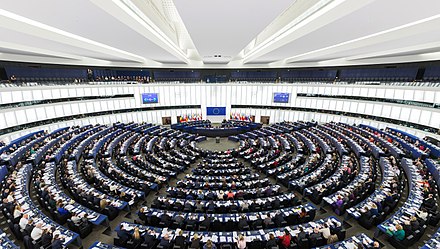
The European Parliament, in Strasbourg, France.
Via OtherWords.org
Donald Trump didn’t fly to Europe to meet with NATO, European leaders, and Russian President Vladimir Putin. He got there by stepping through the looking glass.
Once on the other side, he made a series of extraordinary statements.
He accused Germany of being “totally controlled by Russia.” He declared that the European Union is a “foe” of the United States. He told British Prime Minister Theresa May that she should sue the E.U. instead of negotiate with it.
And, just days after the U.S. intelligence community and special counsel Robert Mueller confirmed once again that the Russian government interfered in the 2016 election with the aim of electing Trump, Trump said that he believed in Vladimir Putin’s claims of Russian innocence.
Why on earth would Trump embark on this surrealistic misadventure in foreign policy? Does Russia have some dirt on him?
Maybe. But whatever else is going on, Trump’s erratic behavior reflects a very specific worldview. Trump is attacking Europe and siding with Russia for political — and not just personal — reasons.
A segment of the U.S. right wing, which has now coalesced around Trump, has always been skeptical about Europe. It hates the social-democratic ideals baked into the European system. Indeed, any U.S. politician that leans in that direction inevitably gets branded a “European socialist.”
Then there are the more pacifist inclinations of Europe. Old hawks like Donald Rumsfeld famously railed against such E.U. stalwarts as France and Germany that opposed the U.S. misadventure in Iraq. (Remember “freedom fries”?)
These trends converge in the Euroskepticism expressed by media outlets like Fox News, a sentiment that heavily influenced the George W. Bush administration. To them, the European Union represented a kind of super-socialism that was spreading and threatening U.S. global dominance.
The other major contribution to Trump’s worldview comes from Europe itself. Right-wing nationalist movements such as the Brexit campaign have tried to unravel the European Union.
These Euroskeptics view Brussels as an outside force trying to impose unwelcome regulations, immigrants, and political customs. For instance, the Polish and Hungarian governments are establishing illiberal regimes that challenge freedom of the press, judicial independence, and the free functioning of civil society the EU demands.
But there’s another strong Euroskeptic voice: Vladimir Putin.
Under Putin, Russia has supplied rhetorical and financial support for far-right wing parties throughout Europe — the National Front in France, the Freedom Party in Austria, the Northern League in Italy. Putin and the Euroskeptics are anti-immigrant and anti-liberal, and they favor nationalist and law-and-order policies.
But Putin also sees opportunity in Euroskepticism. A weaker E.U. won’t be able to attract new, post-Soviet members such as Ukraine or Moldova. A weaker E.U. will be more dependent on Russian energy exports. A weaker E.U. would have less power to criticize Russia’s political and foreign-policy conduct.
Which brings us back to Donald Trump.
The president has declared Europe an enemy because of its trade policies. But that’s just a red herring. He actually has a more systemic critique of the E.U. that coincides with the worldview of Vladimir Putin, Europe’s right-wing nationalists, and Euroskeptics among America’s conservatives.
This is very bad news. If the crisis in transatlantic relations were just about trade, it could be handled by some hardnosed negotiating. If the disputes with the EU and NATO were simply about Trump’s disruptive style, then everything could be resolved by a regime change at the polls in 2020.
But Trump has launched a much larger, ideological assault on European institutions and values. What’s worse: It’s part of the same attack on liberal values here in the United States.
Forget about NATO: Maybe we need a transatlantic alliance against Trump.
John Feffer wrote the dystopian novel Splinterlands and directs Foreign Policy In Focus, where a longer version of this piece appeared.

A lovely killer

"Falco" (oil on canvas), by Karie O'Donnell, at the Art Complex Museum, Duxbury, Mass. This image is based on a Red-tailed Hawk at the New England Wildlife Center, Weymouth, Mass.
'Expansion and containment'

Elspeth Halvorsen, "Mermaid and The Horseshoe Crab'' (box construction), in her show "Constructions, '' at the Berta Walker Gallery, Provincetown, July 28-Aug. 19.
The gallery says:
"Elspeth Halvorsen's mixed media constructions balance expansion and containment, liberty and boundaries, filling her work with found objects gathered in surrealist assemblages. The group of assemblages in this exhibition were created throughout her career, focusing on minimal and abstract space and yin/yang balance. They create the sense of miniaturist surrealistic stage sets - or even temples - wherein her repeating symbols of moon, sphere/egg, mirror/ reflecting surface, draw our attention psychologically inward.''
Before the ski lifts

On the Franconia Ridge Trail, in the White Mountains.
"A visit to New Hampshire supplies the most resources to a traveler, and confers the most benefit on the mind and taste, when it lifts him above mere appetite for wildness, ruggedness, and the feeling of mass and precipitous elevation, into a perception and love of the refined grandeur, the chaste sublimity, the airy majesty overlaid with tender and polished bloom, in which the landscape splendor of a noble mountain lies.''
-- Thomas Starr King, (1824-1864), Unitarian minister and author of The White Hills; their Legends, Landscapes, & Poetry.

Frank Carini: The big environmental benefits of composting toilets

A composting toilet at Crane Beach, in Ipswich, Mass.
-- Clivus New England
Today’s composting toilets are not the equivalent of a port-a-potty stashed away in the basement. In fact, some models look similar to everyday commodes, but they all save water for drinking and showering. And they don’t stink, require chemicals to clean, or flush or discharge human waste into the natural environment.
The average single-family home in the United States uses about 88,000 gallons of water annually, according to a 2016 study. Some 24 percent of the daily usage, or about 30 gallons, is flushed down the toilet.
Despite federal regulations requiring that toilets use only 1.6 gallons of water per flush, toilets made before 1992 may be using up to 7 gallons a flush. Even with the reduced 1.6-gallon standard, however, a single toilet flushed five times a day will waste nearly 2,340 gallons of potable water annually.
“Unfortunately we don’t price or value water the way we should,” said Conor Lally, an ecological sanitation planner and installer with a background in watershed science and ecological design. “Composting toilets just make more sense because you are not creating that wastewater to begin with. It’s a better way of managing that material.”
The Providence resident and New York native co-founded Nutrient Networks to focus on “root cause solutions to the economic and environmental problems associated with conventional water, wastewater, and food systems.”
Those behind this fairly new endeavor, including co-founder Danilo Morales and composting toilet guru and vermicomposter Ben Goldberg, design, build, and install composting and management systems that divert valuable nutrients from the waste stream, reduce pollution, and help close the food-nutrient cycle.
They believe such efforts play a critical role in the larger movement toward localizing energy, water, and food, building soils, and improving public health.
Treating human waste with septic systems and wastewater treatment plants is costly in both energy and resources, contributes to soil and water pollution, contaminates drinking-water supplies, and leads to combined sewage overflows into important water bodies.
As the human population continues to increase — 7.6 billion and counting — planners and public-health professionals are beginning to recognize the need for environmentally sound human waste treatment and recycling methods. The notion of converting human waste to a usable resource, however, isn’t a new concept.
Wasting a resource
Lally’s first job out of college — he graduated from Boston University with a master’s degree in energy and environmental analysis — was working for John Todd Ecological Design doing constructive wetlands for wastewater treatment in Woods Hole, on Cape Cod. His interest soon shifted to dry sanitation and composting toilets. He began working with Goldberg.
Lally said Todd’s ecologically designed wastewater-treatment systems still have a place, “but what we started to realize was it was a smarter way of doing a stupid thing, because at the end of the day we were still facilitating people pooping in their drinking water.”
“It was a sexier way of cleaning it up, but at the basis of it still was maybe not the best option, so I became more interested in not creating the problem to begin with,” he continued. “I think that’s what composting toilets and ecological sanitation is all about.”
The work of Nutrient Networks includes educational workshops, graywater management and rain harvesting, urine diversion planning and installation, and composting toilet planning and installation.
Originally commercialized in Sweden, composting toilets have been an established technology for more than three decades, but there’s still plenty of hesitation when it comes to installing one in a home or making them part of 21st-century building codes. In fact, one of the major obstacles holding back composting toilet use in the United States are regulations geared toward flush systems and their waste of water.
Composting toilet systems — sometimes called biological toilets, dry toilets, or waterless toilets — contain and control the composting of human waste and toilet paper. And, unlike a septic system, composting toilets rely on aerobic bacteria to break down wastes, just as they do in a backyard compost pile.
Lally said the next step for ecological sanitation is taking it to the watershed scale or community scale to have a broader positive impact on the environment, most notably on water bodies.
“That hasn’t necessarily happened yet, but that’s what we are hoping to do,” he said. “To kind of make the next jump with all of this.”
Nutrient Networks travels across New England installing residential composting toilets and designing and building more complex wastewater systems. The company, for instance, has installed two composting toilets at the Listening Tree Cooperative in Chepachet, R.I., and seven at Round the Bend Farm in South Dartmouth, Mass.
Lally has also traveled to New Zealand and the Grand Canyon to work on ecological sanitation projects.
The state of Rhode Island installed its first composting toilet during a major renovation of the Misquamicut State beach pavilion in the 1990s. Today, there are more than 20 composting toilets at state parks, beaches, and campgrounds.
Shoveling humanure
Composting toilets only treat human waste, so a separate wastewater system, either a septic tank or sewer hookup, is needed to handle dish washing, laundry, and bathing.
Composting toilets can be retrofitted into an existing bathroom or incorporated into new construction. They come in many shapes and sizes depending upon the number of users. They can be homemade, custom-built, or manufactured.
The way they work isn’t “dissimilar from your backyard composting,” Lally said. “It relies on the same science, but there is the element of potential pathogens that has to be taken seriously. But with enough retention time it can produce a very safe, nutrient-rich compost that can be worked back into the soil rather than flushed out into our water bodies.”
He said maintenance of most systems isn’t difficult or time consuming, but “very important to do.”
The most important thing when selecting a composting toilet is to choose a system that adequately meets your home or business needs, according to Goldberg, who has been installing composting toilet systems in private residences, businesses, and public facilities across New England since the 1980s.
Lally noted model and system choices come down to preferences.
“There’s a lot of different systems out there so someone might be more interested in being more engaged and want to actually have a very simple bucket-style system where they are more frequently bringing a bucket of humanure out to a secondary compost site,” he said. “Other people might not have any interest in having that level of involvement in managing their own humanure.”
He said some of the more advanced, large-capacity systems such as the Phoenix and Clivus Multrum have very simple maintenance tasks and everything happens within a basement tank. Regular management of most composting toilet systems requires adding carbon-based bulking material such as pine shavings or saw dust.
“I think it’s good for people to be a little bit more aware and engaged in how humanure can be managed,” Lally said. “We see it as a resource not as a waste.”
Frank Carini is editor of ecoRI News (ecori.org), where this piece first ran.

Chris Powell: She tries to inspire by pretending she's oppressed
With her first television commercial in the primary for the Democratic nomination for Congress from Connecticut's 5th District, Jahana Hayes is pitching her inspiring personal story. She is the daughter of an unmarried drug addict, was raised by her grandmother in public housing in Waterbury, became a single mother herself at 17, succeeded in community college, was hired as a teacher in the city, and two years ago was chosen Connecticut's and then the country's teacher of the year.
But inspiring as it is, Hayes's story really isn't so unusual. Indeed, rising from adversity to success may be the oldest story of American politics, going back to Honest Abe the Rail Splitter and beyond, just as the American story generally is the steady democratization of society, a trend of such momentum that it has sparked a war of independence, a civil war, and a civil rights revolution.
Hayes's commercial seems to deny it all.
Hayes is black and in her commercial she says people like her "aren't supposed to run for Congress," adding, "I know the system does not reflect us."
So how come "the system" made her state and national teacher of the year? How did she win nearly half the vote at the 5th District's Democratic convention while having no political record and without most of her own supporters knowing anything about her besides her race and her teaching award? What kind of oppression is that?
Of course it hasn't hurt her candidacy that the teacher unions control state government and Connecticut's Democratic Party and are the party's biggest constituency nationally. There's plenty of oppression in that but none of it is against Hayes. Indeed, it's all in her favor.
Further, if Hayes is elected she will become the second black person elected to Congress from Connecticut, not the first, and not even the first from Waterbury. Twenty-eight years ago that honor went to a Republican, Gary Franks, an alderman whose own background was not privileged either but working-class.
Ironically, the Waterbury congressional district is considered the most politically conservative in the state.
At the end of her commercial Hayes sinks to playing the race and gender cards. "If Congress starts to look like us," she says, "no one can stop us. This is our moment -- to act, to organize, and bring our truth to power."
But other than changing the racial and gender composition of Congress -- while, of course, leaving undisturbed the white Democrats who fill the other places in Connecticut's delegation -- Hayes comes out for nothing more than "better jobs, stronger schools, and affordable health care." Those aren't "truths" at all but empty platitudes.
The recent history of the district Hayes would represent tends to contradict her assertion that changing the "looks" of Congress will change much. For both Franks and the Democrat Hayes aims to succeed, U.S. Rep. Elizabeth Esty, were quickly corrupted by power.
Too impressed with himself, Franks ridiculously began writing an autobiography soon after reaching Congress, lost touch with his district, and was defeated for re-election after three terms. Esty's gender made her a symbol of change and she postured against sexual harassment, but then she coddled and concealed sexual harassment on her own staff. Exposed, she was induced to make her third term her last.
"Put not your trust in princes," the psalm says. Their political ads aren't much more reliable.
Chris Powell is a columnist for the Journal Inquirer in Manchester, Conn.
'Summer selves'
"In that latitude the temperature flirted with a hundred degrees for a few of the dog days, but to a child it can hardly ever be too hot. I liked the sun licking the backs of my legs, and the sweat between my shoulder blades, and the violet evenings, with ice cream and fireflies, wherein the long day slowly cooled. I liked the ants piling up dirt like coffee grounds between the bricks of our front walk, and the milkweed spittle in the vacant lot next door. I liked the freedom of shorts, sneakers, and striped T-shirt, with freckles and a short hot-weather haircut.
"We love easily in summer, perhaps, because we love our summer selves.”
― John Updike
Good for astronauts' sinuses

"Interstellar Eucalyptus" (mixed media on paper), by Jenny Brown, at Galatea Fine Art, Boston, Aug. 2- Sept. 2, in the "New England Collective IX'' show.
'The power of the line'

"Mustard Dollops'' (handwoven textile), by Gabrielle Ferreira, in the group show "Seeking the Line,'' at Dedee Shattuck Gallery, Westport, Mass. The "Line" refers to the mixed media and textile renderings by four exhibiting artists who have created "rich compositions in the process of studying the power of the line,'' the gallery says. Ferrerira is a textile artist influenced by her Cape Verdean and Portuguese heritage.
The steamer crisis

Steamers photographed in Gloucester, Mass.
From Robert Whitcomb's "Digital Diary,'' in GoLocal24.com:
]One of the joys of living near the New England coast used to be eating soft-shelled clams - -called “steamers’’ because that’s how they’re cooked. But they’re getting much harder to find.
Apparently, a major reason is an increase in invasive green crabs, which like the warmer water, associated with global warming, we’ve had along the New England coast the last few decades; these crabs eat the clams.
Perhaps encouraging the development of steamer aquaculture in places that can be protected from green crabs and other predators associated with warming seas will be necessary if we want to continue to enjoy these delicious shellfish. And the heart-stopping butter you dip them in.
David Warsh: The two NATOs
“Disastrous,” was how the Financial Times yesterday described Donald Trump’s visit to Europe. Were you to extend Trump’s influence indefinitely into the future, the North Atlantic Treaty Organization, the bedrock of U.S. foreign policy for the past 70 years, would be finished.
If, on the other hand, Trump is repudiated in 2020 – my guess is that he will be – the future of NATO depends on what happens in the congressional elections of 2018 and 2020, and the presidential elections of 2020 and 2024.
That means the discussion of NATO can go forward, at least tentatively, pretty much without reference to Trump’s boorish behavior in Belgium and Britain last week. That future has relatively little to do with whether member nations will spend more of their gross domestic product on defense.
There are, in fact, two NATOs. The first was cobbled together in a hurry in 1948 in response to a Soviet-sponsored coup in Czechoslovakia and the blockade of Berlin. The second emerged, starting in 1992, after the collapse of the Soviet Union. The first was shepherded into existence by Harry Truman. The second was created by Bill Clinton.
When the Berlin Wall was dismantled, in 1989, the reunification of Germany, a key U.S. foreign policy objective in the years since the end of World War II, was suddenly within reach. First, however, the question of the possibility of a unified Germany’s status within NATO had to be resolved. In exchange for assurances by the administration of George H. W. Bush that NATO would stop there, “would not move an inch” farther east, Russian leaders assented and the armed forces of the former Soviet satellite switched sides.
President Bill Clinton didn’t feel bound by any such promise.. Clinton had visited the Soviet Union in 1970 as a graduate student and had formed his own ideas. He named as Deputy Secretary of State his roommate from those days, former Time Magazine Moscow correspondent Strobe Talbott, and quietly prepared to offer membership to Poland, Hungary and Czechoslovakia, which by then were actively seeking it.
As Clinton’s intention became more widely known, senior figures in his administration, including Secretary of Defense Les Aspin and his deputy William Perry, warned privately of a “train wreck” if NATO enlargement proceeded. Foreign policy intellectuals of both parties, led by Cold War strategist George Kennan, and including Senate Armed Services Committee head Sam Nunn, arms control negotiator Paul Nitze, and Senator Bill Bradley, went public with their opposition in 1996, on the eve of the formal vote.
Clinton and Talbott were undeterred. After the re-election of Russian president Boris Yeltsin, planning began to offer NATO membership to seven more former Soviet satellites: the Baltic republics of Lithuania, Latvia and Estonia, plus Bulgaria, Romania, Slovakia (now separated from the Czech Republic), Macedonia and Slovenia.
George W. Bush replaced Clinton in 2001 and, after 9/11, proceeded with the expansion that the Clinton team had planned, while also invading Afghanistan and Iraq. After the Bush administration quietly supported the “color revolutions” in Georgia and Ukraine, and, the Russians believed, withheld key information about separatist terrorist activity out of sympathy with Chechen independence aims, Russian president Vladimir Putin protested strongly against American’s “unipolar” ambitions in a speech to an international security meeting in Munich in 2007. The next year, Russia briefly went to war against Georgia to make his point.
The Obama administration carried on with NATO enlargement after 2009, overseeing the admission of Croatia and Albania that the Bush administration had planned, adding Montenegro to the list, and bruiting the possibility of membership for Georgia and Ukraine. In 2012 Secretary of State Hillary Clinton criticized Putin’s reelection to a third term as president, enraging him. In 2013, her successor, John Kerry, supported a second “color revolution” in Ukraine. Those events then led in March 2014 to the Russian occupation of Crimea.
This second version of NATO is often lumped together with the first. Enough time has passed that veterans of the Cold War are aged; the policy-makers who would have succeeded them had George H. W. Bush been re-elected in 1992 have been mostly on the sidelines for twenty-five years. Architects of the second NATO dominate the mainstream news. Thus talk show host Rachel Maddow last week introduced Victoria Nuland as “one of the most experienced American diplomats walking the earth.”
In fact Nuland began her governmental career by as Strobe Talbott’s State Department chief of staff for several years. She became Vice President Dick Cheney’s adviser in the Iraq War, served for four years as NATO ambassador, before becoming State Department spokesperson for Hillary Clinton and, eventually, Assistant Secretary for Europeans and Eurasian Affairs. It was Nuland who, while passing out cookies to demonstrators in Kiev’s Maidan Square, was taped by Russian operatives declaiming to the American ambassador “F- the EU's” wishes with respect to the resolution of the crisis. Today she is chief executive of the Center for a New American Security.
Will Trump figure in the future of this narrative? Not much, as long as he isn’t re-elected to a second term. With respect to the future of NATO, there is no alternative to waiting to see how his presidency turns out – and re-examining the history of U.S.-Russia relationswhile we do. Sonorous stories about the Berlin blockade, the Cuban Missile Crisis, and the peaceful collapse of the Soviet Union are no substitute for well-informed debate about the second NATO.
David Warsh, a longtime columnist and an economic historian, is proprietor of economicprincipals.com, where this first ran. He's based in Somerville, Mass.
Rejoice in the river

Mist upstream of the Bissell Bridge over the Connecticut between Windsor and South Windsor, Conn.
"{If} the river is as varied and beautiful as the Connecticut, you can merely look at -- in the long light of a sultry summer evening, under an angry winter sky, in the high color of autumn or the pastel shades of spring -- and derive that sense of peace and uplift of the spirit that most men find in living water.''
-- The late Roger Tory Peterson, Connecticut-based naturalist, ornithologist, artist and educator, whose work is considered one of the founding inspirations for the 20th-Century environmental movement.
This quote is from The Connecticut River, by Evan Hill (1972)
Exciting sculptures

"Swarm'' (mixed media), by Stacy Latt Savage, in the show "Grounds for Play: Sculptures that excite the imagination,'' through Oct. 21, at the Fuller Craft Museum, Brockton, Mass. The museum, in a city that used to be called the "Shoe Capital of the World,'' includes a lovely small lake.
Trump move against colleges' affirmative action on race is good news for affluent white students
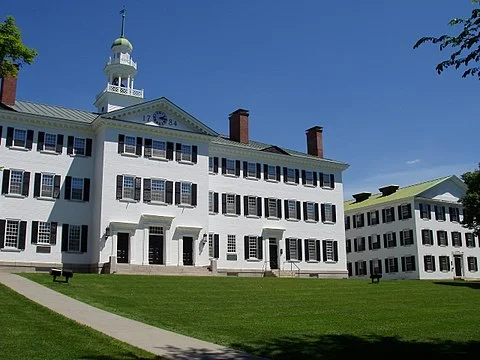
Dartmouth Hall at Dartmouth College, in Hanover, N.H. Dartmouth is one of the four Ivy League universities in New England. The others are Harvard, Yale and Brown.
From Robert Whitcomb's "Digital Diary,'' in GoLocal24.com
That the Trump administration has decided that the federal government will no longer encourage colleges and universities to use race in the admissions process, reversing Obama-era guidance meant to promote diversity, will have the least effect on the nation’s richest, most prestigious and thus hard-to-get-into colleges and universities, of which New England has a lot. They get so many applicants and have so much financial aid to give out that they can easily create very diverse classes. The schools want to show such diversity in part because it reinforces their position as national and even international institutions. They want their students’ faces to look like the, well, world.
Using race as one criterion among others also has socio-economic-diversity effects– e.g., African-American and Hispanic students tend to come from poorer families than white and many Asian families.
Meanwhile, the Feds are investigating Harvard for alleged racial bias after complaints from some Asian-Americans that the admissions process is skewed against them.
Harvard has argued that it “does not discriminate against applicants from any group, including Asian-Americans’’ and notes that this group currently makes up a hefty 22.2 percent of students. But some rejected applicants say that’s too low considering their high marks and other indicators of future success.
We should leave to the colleges what sort of mix they need and want. Barring provable racial bias, the Feds shouldn’t try to manage colleges’ decision-making.
Trump’s policy, which will appeal to his mostly white base, will mean that poorer schools (public and private) will be less likely to offer admission to minorities. They’ll become whiter even as the Ivy League and other highly selective colleges maintain their affirmative-action programs. Poorer, less prestigious schools could try to maintain racial diversity indirectly, especially by providing more financial aid on the basis of a family’s finances – again, African-Americans and Hispanics tend to be considerably poorer than whites – but in a time of fiscal austerity for many colleges and universities and a shrinking number of overall applications because of demographic change, don’t bet on it.
The Trump policy will tend to favor affluent whites and widen the class divide.
Llewellyn King: The case for nuclear and against coal

This is Seabrook Unit 1, a nuclear-power plant in Seabrook, N.H., that’s the largest individual electricity-generating unit on the New England power grid. It is the second-largest nuclear plant in New England, after the two-unit Millstone Nuclear Power Plant, in Waterford, Conn., on Long Island Sound.
Coal and nuclear power have been yoked together for decades. Nuclear power and nuclear science have both paid the price for this double harness. Now it looks as though nuclear will pay again.
The electric utilities in the 1950s and 1960s were faced with runaway demand for electricity as air conditioning was deployed and new home construction boomed. This was before acid rain became a problem and when global warming was just a minor scientific theory.
As the utilities struggled to deal with electricity demand that was doubling every 10 years, nuclear appeared as the brave new fuel of the future. They loved nuclear, the government loved nuclear and the public was happy with it.
So, utilities went hellbent into nuclear: In all, starting in the 1950s, utilities built over well over 100 reactors for electricity production.
Then opposition to nuclear began to appear, at first in the late 1960s and then with intensity through the 1970s.
Horror stories were easy to invent and hard to counter. Being anti-nuclear was good for the protest business. The environmental movement — to its shame — joined the anti-nuclear cavalcade. Indeed, in the 1970s and 1980s, environmentalists were still hard against nuclear. They advocated advanced coal combustion, particularly a form of coal boiler known as “circulating fluidized bed.”
For their part, the utilities defended nuclear, but never at a cost to coal. They were worried about their investments in coal. They would not, for example, sing the safety, reliability and, as it was then, the cost-effectiveness of nuclear over coal.
They said they were for both. “Both of the above” meant that the nuclear advocates in the industry could not run serious comparisons of nuclear with coal.
Now the Trump administration is seeking that history repeat itself. To fulfill the president’s campaign promises to the coal industry and to try to save coal-mining jobs, the administration is invoking national security and “resilience” to interfere in the electric markets and save coal and nuclear plants, which the utility industry is closing or will close.
The predicament of these plants is economic; for coal, it is economic and environmental.
Both forms of electric generation are undermined by cheap natural gas, cheap wind power and cheap solar power. In a market that favors the cheapest electricity at the time of dispatch, measured to the second, these plants do not cut it financially. The social value or otherwise is not calculated.
The fight between coal and nuclear, and more realistically between nuclear and natural gas, misses the true virtue of nuclear: It is a scientific cornucopia.
Nuclear science is reshaping medicine, enabling space travel and peering at the very nature of being. In 100 years, nuclear science will be flowering in ways undreamed of today. A healthy nuclear power industry grows the nuclear science world, brings in talent.
Even without the science argument, there is a case for saving the nuclear plants: They produce about 20 percent of the nation’s electricity without hint of carbon effluent, which gas cannot say.
A fair market allows for externalities beyond the cost of generation and dispatch at that second. Clean air is a social value, scientific progress is a social value, and predicting the life of a plant (maybe 80 years) is a social value.
Natural gas, the great market disrupter of today, does not meet these criteria.
As electricity is unique, the national lifeblood, it deserves to be treated as such. That cries out for nuclear to be considered for a lifeline in today’s brutal market.
If it embraces a long-term solution through carbon capture and use, then coal may hold a place in the future. But the industry is cool to this solution. Robert Murray, CEO of Murray Energy Corporation, denounced it to me.
The administration has put money into a new nuclear through incentives and subsidies for small modular reactors even while linking established nuclear to the sick man of energy, coal.
Electricity is a social value as well as a traded commodity. The administration is working against itself with its coal strategy.
On Twitter: @llewellynking2
Llewellyn King is executive producer and host of White House Chronicle, on PBS. He is based in Rhode Island and Washington, D.C.
Tough customers

The Salem waterfront in the 1770s.
"Remember, seaman, Salem fisherman
Once hung their nimble fleets on the Great Banks.
Where was it that New England bred the men
who quartered the Leviathan's fat flanks
and fought the British Lion to his knees?”
-- From "Salem,'' by Robert Lowell

Salem in 1883, by which time it had become a major industrial town as well as port.
-- Mason, Boston Public Library
Jordan Rau: Thin and erratic staffing levels at many nursing homes
From Kaiser Health News
ITHACA, N.Y. — Most nursing homes had fewer nurses and caretaking staff than they had reported to the government, according to new federal data, bolstering the long-held suspicions of many families that staffing levels were often inadequate.
The records for the first time reveal frequent and significant fluctuations in day-to-day staffing, with particularly large shortfalls on weekends. On the worst-staffed days at an average facility, the new data show, on-duty personnel cared for nearly twice as many residents as they did when the staffing roster was fullest.
The data, analyzed by Kaiser Health News, come from daily payroll records Medicare only recently began gathering and publishing from more than 14,000 nursing homes, as required by the Affordable Care Act of 2010. Medicare previously had been rating each facility’s staffing levels based on the homes’ own unverified reports, making it possible to game the system.
The payroll records provide the strongest evidence that, over the past decade, the government’s five-star rating system for nursing homes often exaggerated staffing levels and rarely identified the periods of thin staffing that were common. Medicare is now relying on the new data to evaluate staffing, but the revamped star ratings still mask the erratic levels of people working from day to day.
At the Beechtree Center for Rehabilitation & Nursing here, Jay Vandemark, 47, who had a stroke last year, said he often roams the halls looking for an aide not already swamped with work when he needs help putting on his shirt.
Especially on weekends, he said, “it’s almost like a ghost town.”
Nearly 1.4 million people are cared for in skilled nursing facilities in the United States. When nursing homes are short-staffed, nurses and aides scramble to deliver meals, ferry bed-bound residents to the bathroom and answer calls for pain medication. Essential medical tasks such as repositioning a patient to avert bedsores can be overlooked when workers are overburdened, sometimes leading to avoidable hospitalizations.
“Volatility means there are gaps in care,” said David Stevenson, an associate professor of health policy at Vanderbilt University School of Medicine, in Nashville. “It’s not like the day-to-day life of nursing home residents and their needs vary substantially on a weekend and a weekday. They need to get dressed, to bathe and to eat every single day.”
Dr. David Gifford, a senior vice president at the American Health Care Association, a nursing home trade group, disagreed, saying there are legitimate reasons staffing varies. On weekends, for instance, there are fewer activities for residents and more family members around, he said.
“While staffing is important, what really matters is what the overall outcomes are,” he said.
While Medicare does not set a minimum resident-to-staff ratio, it does require the presence of a registered nurse for eight hours a day and a licensed nurse at all times.
The payroll records show that even facilities that Medicare rated positively for staffing levels on its Nursing Home Compare website, including Beechtree, were short nurses and aides on some days. On its best-staffed days, Beechtree had one aide for every eight residents, while on its lowest-staffed days the ratio was 1-to-18. Nursing levels also varied.
The Centers for Medicare & Medicaid Services, the federal agency that oversees nursing home inspections, said in a statement that it “is concerned and taking steps to address fluctuations in staffing levels” that have emerged from the new data. This month, it said it would lower ratings for nursing homes that had gone seven or more days without a registered nurse.
Beechtree’s payroll records showed similar staffing levels to those it had reported before. David Camerota, chief operating officer of Upstate Services Group, the for-profit chain that owns Beechtree, said in a statement that the facility has enough nurses and aides to properly care for its 120 residents. But, he said, like other nursing homes, Beechtree is in “a constant battle” to recruit and retain employees even as it has increased pay to be more competitive.
Camerota wrote that weekend staffing is a special challenge as employees are guaranteed every other weekend off. “This impacts our ability to have as many staff as we would really like to have,” he wrote.
New Rating Method Is Still Flawed
In April, the government started using daily payroll reports to calculate average staffing ratings, replacing the old method, which relied on homes to report staffing for the two weeks before an inspection. The homes sometimes anticipated when an inspection would happen and could staff up before it.
The new records show that on at least one day during the last three months of 2017 — the most recent period for which data were available — a quarter of facilities reported no registered nurses at work.
Medicare discouraged comparison of staffing under the two methods and said no one should expect them to “exactly match.” The agency said the methods measure different time periods and have different criteria for how to record hours that nurses worked. The nursing home industry also objected, with Gifford saying it was like comparing Fahrenheit and Celsius temperatures.
But several prominent researchers said the contrast was not only fair but also warranted, since Medicare is using the new data for the same purpose as the old: to rate nursing homes on its website. “It’s a worthwhile comparison,” said David Grabowski, a professor of health-care policy at Harvard Medical School.
Payroll records at Beechtree show that on its best-staffed days, it had one aide for every eight residents, but the ratio was 1-to-18 at the lowest staffing level.
Of the more than 14,000 nursing homes submitting payroll records, 7 in 10 had lower staffing using the new method, with a 12 percent average decrease, the data show. And as numerous studies have found, homes with lower staffing tended to have more health code violations — another crucial measure of quality.
Even with more reliable data, Medicare’s five-star rating system still has shortcomings. Medicare still assigns stars by comparing a home to other facilities, essentially grading on a curve. As a result, many homes have kept their rating even though their payroll records showed lower staffing than before. Also, Medicare did not rate more than 1,000 facilities, either because of data anomalies or because they were too new to have a staffing history.
There is no consensus on optimal staffing levels. Medicare has rebuffed requests to set specific minimums, declaring in 2016 that it preferred that facilities “make thoughtful, informed staffing plans” based on the needs of residents.
Still, since 2014, health inspectors have cited 1 in 8 nursing homes for having too few nurses, federal records show.
With nurse assistants earning an average of $13.23 an hour in 2017, nursing homes compete for workers not only with better-paying employers like hospitals, but also with retailers. Understaffing leads predictably to higher turnover.
“They get burned out and they quit,” said Adam Chandler, whose mother lived at Beechtree until her death earlier this year. “It’s been constant turmoil, and it never ends.”
Medicare’s payroll records for the nursing homes showed that there were, on average, 11 percent fewer nurses providing direct care on weekends and 8 percent fewer aides. Staffing levels fluctuated substantially during the week as well, when an aide at a typical home might have to care for as few as nine residents or as many as 14.
A Family Council Forms
Beechtree actually gets its best Medicare rating in the category of staffing, with four stars. (Its inspection citations and the frequency of declines in residents’ health dragged its overall star rating down to two of five.)
To Stan Hugo, a retired math teacher whose wife, Donna, 80, lives at Beechtree, staffing levels have long seemed inadequate. In 2017, he and a handful of other residents and family members became so dissatisfied that they formed a council to scrutinize the home’s operation. Medicare requires nursing home administrators to listen to such councils’ grievances and recommendations.
Sandy Ferreira, who makes health-care decisions for Effie Hamilton, a blind resident, said Hamilton broke her arm falling out of bed and has been hospitalized for dehydration and septic shock.
“Almost every problem we’ve had on the floor is one that could have been alleviated with enough and well-trained staff,” Ferreira said.
Beechtree declined to discuss individual residents but said it had investigated these complaints and did not find inadequate staffing on those days. Camerota also said that Medicare does not count assistants it hires to handle the simplest duties like making beds.
In recent months, Camerota said, Beechtree “has made major strides in listening to and addressing concerns related to staffing at the facility.”
Hugo agreed that Beechtree has increased daytime staffing during the week under the prodding of his council. On nights and weekends, he said, it still remained too low.
His wife has Alzheimer’s, uses a wheelchair and no longer talks. She enjoys music, and Hugo placed earphones on her head so she could listen to her favorite singers as he spoon-fed her lunch in the dining room on a recent Sunday.
As he does each day he visits, he counted each nursing assistant he saw tending residents, took a photograph of the official staffing log in the lobby and compared it to what he had observed. While he fed his wife, he noted two aides for the 40 residents on the floor — half what Medicare says is average at Beechtree.
“Weekends are terrible,” he said. While he’s regularly there overseeing his wife’s care, he wondered: “What about all these other residents? They don’t have people who come in.”