
Vox clamantis in deserto



Still a fixer-upper

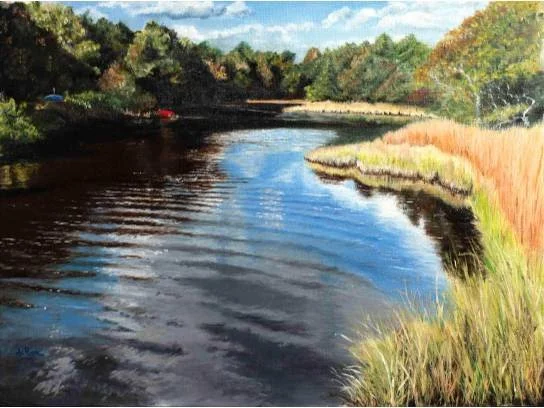
"Entropy #1, North Adams, Massachusetts'' (digital photo, pigment print), by Stephen Wicks, in the show "New England Collective IX,'' at Galatea Fine Art, Boston, Aug. 1-Sept. 2.
North Adams is an old factory town whose current biggest claim to fame is the Massachusetts Museum of Contemporary Art, said to be the biggest contemporary-art museum in the United States. It's in the former Sprague Electric plant. While North Adams is far from a rich town -- indeed has poverty and considerable grittiness --it's next to the rich community of Williamstown, with elite Williams College (which has a well-known museum) and the famed Clark Art Institute, not to mention the house of the late great songwriter Cole Porter. And the beautiful Berkshire Hills are all around.

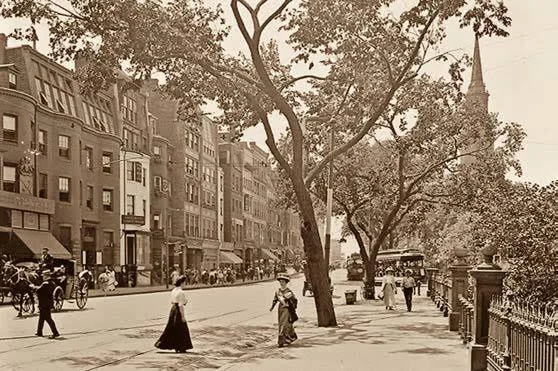
North Adams in 1905, during its industrial heyday.
Freedom and imprisonment

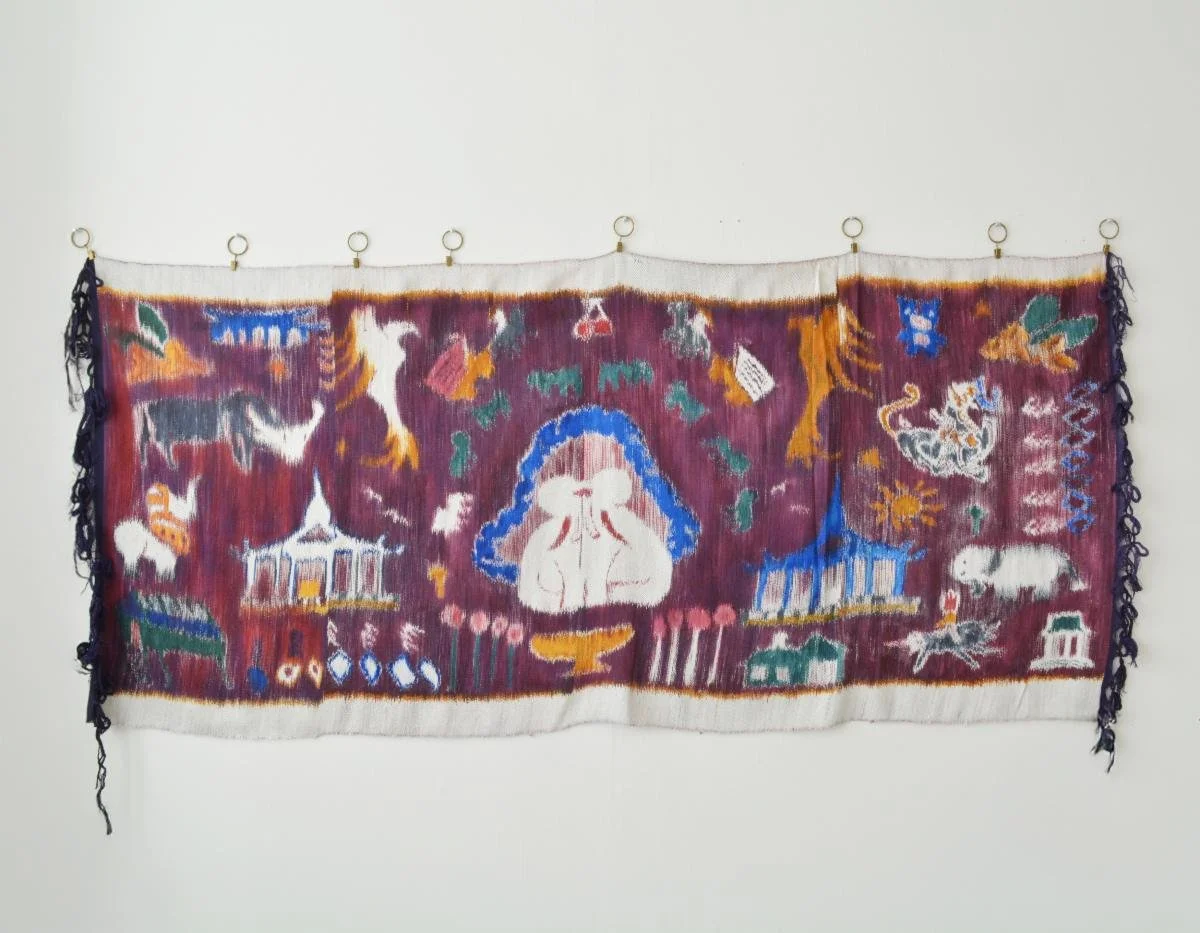
"Can't See the Forest for the Trees'' (oil on canvas), by Heidi L. Johnson, in her show "Bird Brained: New Work by Heidi L. Johnson,'' at the Jane Deering Gallery, in Gloucester, Mass. (the former U.S,. fishing capital and now best known as an arts destination and summer resort -- and Boston suburb.)
The gallery says that Johnson has always used "abundance and color to create lush, beautiful paintings, but her recent works add the elements of flight and freedom to the mix. Her vibrant paintings emulate Dutch still-life paintings, using birds to represent the dichotomy of freedom and constriction. As she says, 'The birds in these paintings are a bit confused. As they look at their reflection in the membrane of a glass dome, they see their brethren frozen from flight forever.' The simultaneous freedom and imprisonment of the birds contradicts and compliments Johnson's experience with a world that tries to over-analyze and pigeon hole her work, yet her colorful, frenzied paintings defy categorization.''
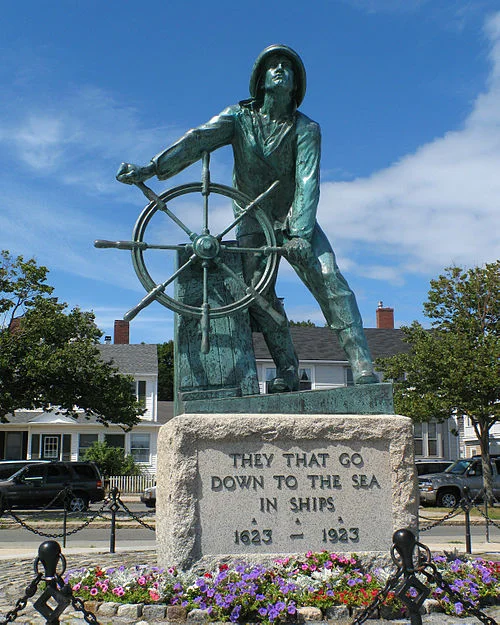
"Man at the Wheel'' memorial to fishermen in Gloucester, on Cape Ann.
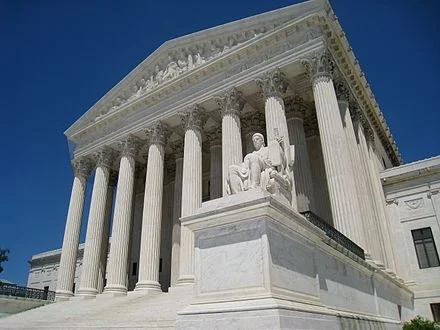
Chris Powell: Liberals extol precedent when it serves them

U.S. Supreme Court Building.
Liberals throughout the country applauded three years ago when, proclaiming that the U.S. Constitution requires states to confer same-sex marriage, the U.S. Supreme Court reversed 44 years of precedent in constitutional law as well as practice going back to the adoption of the Constitution, in 1789.
Liberals in Connecticut also applauded three years ago when the state Supreme Court ruled capital punishment unconstitutional, thereby reversing the state and federal constitutions themselves, which always have explicitly authorized capital punishment and still do.
But a few weeks ago liberals criticized the U.S. Supreme Court for reversing its 41-year-old decision holding that government agencies could require their employees to pay dues to unions they didn't want to join. The precedent should have stood, liberals said, because it was precedent and much policy had grown up around it.
And now that President Trump's nomination of Judge Brett Kavanaugh to the U.S. Supreme Court is suspected of inviting a challenge to the abortion rights declared in the court's 1973 decision in Roe v. Wade, liberals -- including Connecticut Democratic Senators.Richard Blumenthal and Chris Murphy -- again are freaking out about possible disrespect for precedent. But Roe itself also reversed precedent going back to 1789, since prior to Roe abortion law always had been left to the states.
Of course when it comes to the Supreme Court these days respect for precedent doesn't really concern liberals or conservatives. Their concerns are only policy and power. If precedent gives them policy and power, they support it. If it doesn't, they oppose it.
With the court led by Chief Justice Earl Warren Court in the 1950s and '60s liberals began elevating their policy desires to constitutional requirements, since constitutionalizing an issue could push democracy out of the way when it became inconvenient. Now that they are in power nationally, conservatives are playing this game too.
As a result the country is being led to believe that the Constitution is just anyone's wish list, requiring whatever one likes and prohibiting whatever one dislikes, led to believe that there is no distinction between what the Constitution says and what policy should be.
But contrary to the suggestion of Connecticut's senators, Gov. Dannel Malloy, and other leading Democrats, there is no danger that the U.S. Supreme Court will criminalize abortion. For the court has no such power. Even if the court reverses Roe, abortion policy would just return to the states and Congress.
Connecticut generally favors legalizing abortion, at least prior to fetal viability, and so state law permitting abortion likely would be preserved. But state law on abortion goes against public opinion by letting minors obtain abortions without the consent of their parents or guardians, even as this policy has concealed the rape of minors. Ironically, while waiving parental consent for minors getting abortions, Connecticut law requires it for minors getting tattoos.
Startling as it might seem in Connecticut, opinion in some states is hostile to abortion and opinion nationally would prohibit late-term abortion, which the Roe decision itself indicated states could do. Further, many legal scholars who support legal abortion acknowledge that, as a matter of law, Roe was mostly judicial contrivance.
But Democrats seem to think that they can win on this issue only by generating enough hysteria to prevent any honest discussion that recognizes distinctions.
Chris Powell is a columnist for the Journal Inquirer, in Manchester, Conn.
Those vague 'common-law marriages'

No need to buy these.
From Robert Whitcomb's "Digital Diary,'' in GoLocal24.com
The story of Kevin Gaugler, of East Providence, and his former-live in girlfriend, Angela Luis, reported in a July 1 Providence Journal story by Katie Mulvaney headlined “A Cautionary Tale: Long relationship is not a marriage,’’ is a cautionary tale about legal obligations and the lack thereof and the rootlessness of American life.
The five-year-long Gaugler-Luis case (the lawyers must have prospered!) involves Ms. Luis’s assertion that she and Mr. Gaugler were in a common-law marriage. But the Rhode Island Supreme Court ruled in May that his 23-year relationship with Ms. Luis was not a common-law marriage. As Ms. Mulvaney noted: “Rhode Island is one of several states that leave it to the courts to determine whether a long-term relationship constitutes a common-law marriage.’’
Ms. Luis had big economic reasons for wanting the relationship to be declared a (kind of) marriage. It would have given her half the marital assets after they split up, including half the proceeds from selling a house that he had bought as well as his retirement accounts and insurance policy.
Complicating things were that he had helped raise Ms. Luis’s son as his own.
There’s enough disorder in American life. “Common law marriages’’ should be abolished and what we used to call “illegitimacy’’ (which is closely correlated with poverty) discouraged. The states ought to encourage individuals to understand and take on the legal obligations of regular marriage, especially regarding children and property.
Jim Hightower: The Times is wrong: Progressives' Our Revolution is winning
Before major news organizations pronounce someone dead, they ought to check the person’s pulse.
Take, for example, a recent New York Times screed prematurely pronouncing the Our Revolution political organization — launched only two years ago by veterans of the presidential campaign of Vermont Sen. Bernie Sanders — a moribund failure. “The group has repeatedly picked fights with the Democratic establishment in primary elections, losing nearly every time,” the paper barked.
But, lo and behold, the very next day, Our Revolution’s endorsed candidate for governor in the Maryland primary, Ben Jealous, handily defeated the party establishment’s favorite. And in New York, a 28-year-old Our Revolution activist, Alexandria Ocasio-Cortez, shocked the national party’s corporate hierarchy with her resounding grassroots victory over Rep. Joe Crowley, the fourth-highest-ranking Democrat in the U.S. House.
These big scores followed the group’s earlier outsider victories over moneyed insiders in the Georgia and Texas gubernatorial primaries.
In fact, the insurgent group, which The Times ridiculed as “failing,” has been winning dozens of upset victories in down-ballot primary elections from coast to coast, electing 45 percent of its candidates. That’s a huge number is grassroots politics.
Just as significant, these Sanders-inspired progressive rebels have now defined the Democratic Party’s agenda. They’ve enlivened both its supporters and many of its previously lethargic office holders by backing such populist (and popular) proposals as Medicare For All and debt-free higher education.
Apparently, it’s hard to see America’s grassroots reality through the dusty and distant office windows of The New York Times. So before the editors and writers do another hit piece on the people and candidates of Our Revolution, maybe they could come out of their journalistic cubicles.
Jim Hightower, an OtherWords columnist, is a radio commentator, writer, and public speaker. He’s also editor of the populist newsletter, The Hightower Lowdown, and a member of the Our Revolution Board.
Drip art

"Drops of Rain' (detail, platinum print), by Clarence H. White, in the show "Clarence H. White and His World: The Art and Craft of Photography, 1895-1925,'' at the Portland Museum of Art.
The exhibition is the first in over 40 years to examine the work of White (1871⎻1925), a gifted photographer and founding member of the Photo⎻Secession. It aims to examine the scope of his artistic career, from its beginnings, in Newark, Ohio, to its end, in Mexico
Weapon of choice
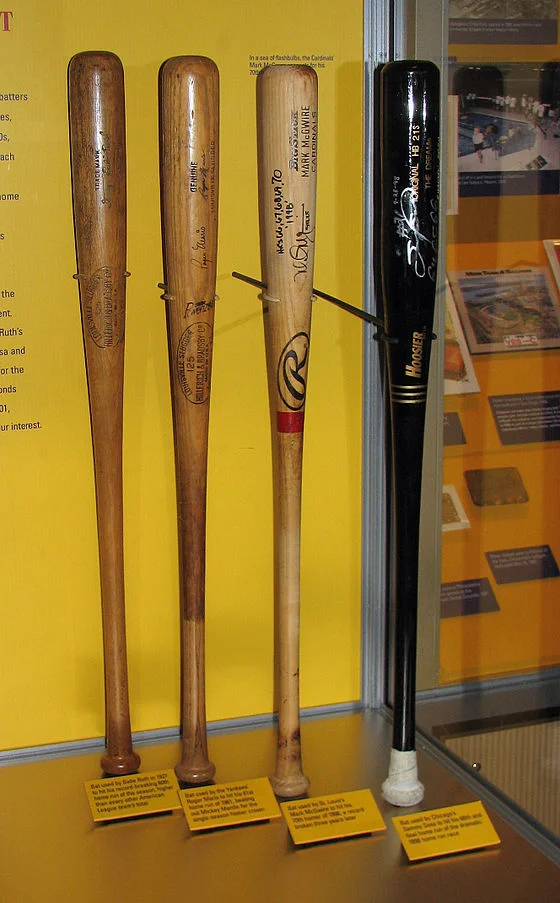
'I'm from Boston, and in Boston, you are born with a baseball bat in your hand. And actually, most of the bats in Massachusetts are used off the field instead of on the field, and we all had baseball bats in our cars in high school.''
-- Eli Roth, director, producer, writer and actor. He's actually from gentle Newton, not tough Boston.
Olivia Alperstein: Right-wing ideologue Kavanaugh threatens much more than Roe v. Wade
Via OtherWords.org
President Trump has nominated federal Appeals Judge Brett Kavanaugh to succeed Supreme Court Justice Anthony Kennedy. Why should you care? Because everything from reproductive rights to voting, education, and health care is now at stake.
Kavanaugh, a judicial ideologue committed to pulling the court further to the right, may also reverse decades of key rulings that uphold the constitutional right to personal liberty and autonomy.
All Americans say they value personal freedom, especially the right to make our own decisions about our private lives. Every day, we take that liberty for granted, from exercising our right to free speech to lighting up sparklers on the Fourth of July. Cherishing our liberties is as American as apple pie — but our right to exercise those liberties could be undone.
Nowhere is the issue more critical than on reproductive rights. Kavanaugh’s nomination will mean a major battle to undo key protections in Roe v. Wade, the landmark 1973 Supreme Court case that firmly established the right to access safe, legal abortion.
Striking down Roe would immediately outlaw abortion in states where pre-Roe anti-abortion laws are technically still on the books. As many as 22 states could be impacted over the course of two years.
That’s bad enough. But it’s also critical to remember the reasoning behind the historic 7-2 ruling: that people have a constitutional right to privacy.
Specifically, the Supreme Court upheld and enshrined the protections included in the First, Fourth, Ninth, and Fourteenth Amendments, holding that those protections applied to decisions a person might make about their own body.
Ultimately, that decision informed several other critical rulings, including cases that forbade bans on same-sex romantic relationships and affirmed the right to same-sex marriage. According to Roe, the right to make your own choices is one of the founding principles that govern this country.
If Roe is overturned, that could set off a chain reaction that upends this critical foundation behind other landmark cases — both those that came before and those that came after.
The constitutional right to privacy informed Loving v. Virginia, which struck down criminalization of interracial marriage, and Griswold v. Connecticut, which enabled the legalization of contraceptives. The constitutional right to privacy also played a key role in Carpenter v. United States, a recent ruling that prohibits warrantless collection of cellphone users’ data without reasonable cause.
Judicial precedent set by the Supreme Court has built a solid foundation for interpretation of the law — but all it takes is a stacked court to have that foundation tumble like a house of cards.
Supreme Court appointments are for life. The rulings these justices make affect the entire judicial system for decades, if not centuries, to come. Each year, dozens of critical cases come before the court that deeply impact people’s rights and daily lives.
While outgoing Justice Anthony Kennedy wasn’t perfect, he was committed to upholding the personal right to privacy as enshrined in U.S. law. Kavanaugh, however, could roll back our hard-won freedoms — and those of future generations.
The Senate will be voting soon on whether to confirm Kavanaugh. A lot more than just a vacant bench hangs in the balance.
Olivia Alperstein is the deputy director of communications and policy at the Congressional Progressive Caucus Center.

On 'Golden Pond'

"Squam Series: Side Porch" (oil on canvas), by Frances Hamilton, at the Patricia Ladd Carega Gallery, Center Sandwich, N.H.

Overlooking Squam Lake.
Beautiful Squam Lake, long a much-loved summer vacation spot, is in the Lakes Region of central New Hampshire and just northwest of much larger Lake Winnipesaukee.
Native Americans called Squam Keeseenunknipee, which meant "the goose lake in the highlands". The white settlers that followed shortened it to "Casumpa," "Kusumpy" and/or "Kesumpe" around 1780. In the early 19th Century, the lake was given another Abenaki name, Asquam, which means "water". Finally, in the early 20th Century, Asquam was shortened to its present version.
The 1981 film On Golden Pond, with Jane Fonda, her father, Henry Fonda, and Katherine Hepburn, was filmed in Center Harbor, on Squam. Two tour-boat services are available on the lake, both based in Holderness (where there’s a prep school of the same name) -- Experience Squam, a private charter company, and the Squam Lakes Natural Science Center. Both show movie locations and items of natural and other significance.
Loons, eagles and great blue herons frequent Squam Lake.
Boston Children's Hospital again ranked first
This is from the New England Council (newenglandcouncil.com)
"Boston Children’s Hospital was recently ranked first for the fifth straight year in the U.S. News and Report’s 12th annual list of best children’s hospitals. The rankings are based on metrics like patient outcomes, patient safety, number of fellowship programs, nurse-to-patient ratio, and availability of specialists and advanced services.
Boston Children’s Hospital ranked first in three of the ten specialties: neurology/neurosurgery, nephrology, and orthopedics. Additionally, the hospital placed second in cardiology and heart surgery, diabetes and endocrinology, and gastroenterology (GI) and GI surgery.
Boston Children’s President and CEO Sandra L. Fenwick said, “In a time when health care is ever-changing, achieving the number one ranking reminds all of us at Boston Children’s what inspires us: it’s about caring for children, digging deeper research, and finding new ways to make our care even better.”
Paradise for predation

Eppur si muove

"The iris wavers as the fox trots by,
mornings in paradise, or what pretends
by any other name to smell of meat.''
-- From "Summer in the Ordinary,'' by William Logan
Offshore wind farm doesn't threaten squid fishery


Squid transformed into calamari.
From Robert Whitcomb's "Digital Diary,'' in GoLocal24.com
'Southern New England squid fishermen worry that Vineyard Wind’s plan to put up as many as 100 wind turbines in 250 square miles south of Martha’s Vineyard will hurt their business. It almost certainly will not. For one thing, most sea creatures thrive near wind turbines, whose supports act as reefs. The Europeans, which have massive offshore and coastal wind facilities, have shown how commercial fishing and such clean energy can co-exist.
And Vineyard Wind has contorted itself to make the big project easy for fishermen to live with, such as by promising to space the turbines eighth-tenths of a mile apart and to create special transit lanes for fishing boats.
With any project in public space as big as this, constituencies will sometimes engage in fierce debate. And ancient industries tend not to like change.
Fishing is an important sector in southeastern New England’s economy. But far more important than fishing for a single species is for the region to gain much more energy independence. It’s dangerous for New England to depend so much on fossil fuel from outside the region. And burning that fossil fuel causes massive pollution, global warming, and acidification of the oceans. The last is already killing some life in the ocean.
Better than October

"Orange Ridge'' (acrylic watermedia on aquaboard), by Randa Dubnick, in the show "Exploring in the Mountains of Color,'' at Galatea Fine Art, Boston, through July 29.
Stonehill College to open a business school via a $25 million bond issue
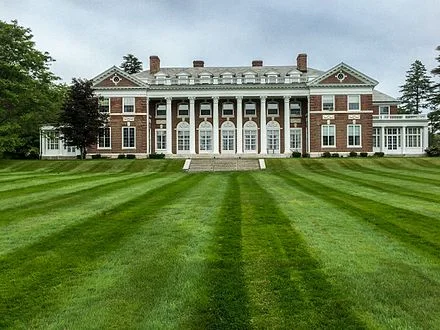
Most of the current Stonehill campus was purchased from Mrs. Frederick Lothrop Ames Jr. on Oct. 17, 1935. The initial purchase included 350 acres and the original Ames mansion, seen here; the Catholic college's remaining 190 acres were bought from Mrs. Ames two years later. Frederick Lothrop Ames Jr. was the great-grandson of Oliver Ames Sr., who came to Easton in 1803 and established the Ames Shovel Company.
From the New England Council (newenglandcouncil.com
"Stonehill College, in Easton, Mass., recently announced that it plans to open a business school using a $25 million bond issue from MassDevelopment, the state’s economic-development and finance agency. The new building will be called the Leo J. Meehan School of Business, named after W.B. Mason (office supplies) CEO and Stonehill alum Leo Meehan. The launch of the business school is part of a broader reorganization at the college, and the restructuring will consist of two main academic programs: The School of Arts & Sciences and the Meehan School of Business.
"Stonehill President John Denning said, 'This is a monumental boost for the college. It will elevate our standing regionally and nationally, allowing us to better compete for the best and brightest students and faculty.'''
Chris Powell: Political correctness can't transform boys into girls
ALICE: "One can't believe impossible things.''
THE WHITE QUEEN: "I daresay you haven't had much practice. When I was your age I always did it for half-an-hour a day. Why, sometimes I've believed as many as six impossible things before breakfast.''
-- From Through the Looking Glass, by Lewis Carroll.
Connecticut lately is getting plenty of practice trying to believe impossible things, not least because of high school sports contests that let boys compete as girls if they insist that they want to be girls. Two such boys, excellent athletes, recently have been finishing first and second in track meets for girls.
There has been some grousing that this is unfair, but on the whole it seems that those most directly aggrieved by the expropriation of the girls events are afraid of coming out as politically incorrect. They fear acknowledging the obvious -- that there are physiological differences between the sexes, starting with the male and female chromosomes, differences that in general give athletic advantages to males, advantages confirmed by the instant success of the boys competing in the girls track meets.
Connecticut law now presumes to deny this basic science by insisting on the right of people who reject their biological gender to use the bathrooms designated for the other gender. The ancient right of sexual privacy has been crushed under the heel of this political correctness.
Biology and science are being discarded in favor of mere individual desire, leaving society with no objective criteria for determining whether someone is male or female. People are to be only what they call themselves, though it used to be understood that, as Lincoln noted, just calling a tail a leg doesn't make it one.
If, as this trend presumes, there are really no differences between the sexes, there no longer will be any rationale for gender divisions in sports, from schools right up through professional leagues. As men who impersonate women begin competing that way, athletic opportunities and recognition for women will be reduced, as the success of the transgendered high school runners in Connecticut already has reduced them. Are women really going to sit quietly through this?
Requiring those runners to compete against their biological gender would deny them no opportunity. As this would remain a free country, the boys could still style and present themselves as girls. No one would have any power to interfere with their personal lives. There would be no need to review their medical histories, as is done elsewhere with claims of transgenderism, nor to psychoanalyze them. They could be themselves and their unconventionality would be no more publicized than it already is. No longer taking advantage of others, they would be less resented.
Indeed, in that case any honors they won might be considered not just more fairly but also more courageously won than honors they won by pretending to be girls.
Political correctness can intimidate people into silence but it can't control what they think, and honors received by able-bodied boys and men competing athletically against girls and women are not likely ever to be considered completely legitimate -- and they shouldn't be, no matter how much the White Queen enjoyed believing impossible things.
Chris Powell is a columnist for the Journal Inquirer, in Manchester, Conn.
Muted Cape color

"Race Point'' (oil on canvas), by Kathleen Jacobs, in her show "Paintings, Monotypes, Wellfleet, MA and Mayo Ireland,'' at Off Main Gallery, Wellfleet, Mass.
Charlie Baker waves the 'red flag'

From Robert Whitcomb's "Digital Diary,'' in GoLocal24.com
'Massachusetts Gov. Charlie Baker’s signing of a “red flag” gun law that will let household members seek a court order to take guns away from people posing a risk to themselves or others means that the Bay State’s gun-death rate, already the nation’s lowest, will probably get lower. Of course, the rate is low because the state has among America’s most restrictive gun laws.
The new law encourages family or household members to ask a judge for an order to remove guns from persons at risk of harming themselves or others and to ban them from having firearms for up to a year, when an extension could presumably be requested.
Massachusetts has become the sixth state to pass such a law, and Mr. Baker the fourth Republican governor to sign the bill into law since the Parkland shooting last winter. But the gun makers, and their lobbying organization, the National Rifle Association, own Congress – especially the House – so don’t expect any such action there anytime soon.
The states with the lowest gun-death rates are, in order, Massachusetts, Rhode Island, New York, Hawaii and Connecticut – all with restrictive (by American standards) gun laws. The NRA and its congressional servants say that “guns don’t kill people, people do.’’ Yeah, but it’s a hell of a lot easier with a gun….
Daniel Regan: Of power walks and other economical ways to improve higher education

The library at Northern Vermont University -Johnson.
From the New England Board of Higher Education (nebhe.org)
I’ve grown tired of reading the literature on innovation in higher education, much less the offers for services, consulting, webinars and infrastructure that flood the inbox daily. So many of the recommended innovations are beyond the fiscal means of even the most venturesome administrators and their institutions. To this generalization, there are happy exceptions of course; but much of the literature and other communications convey the unmistakable sense that improvements in university functioning are more a capital-intensive, than a thought- or labor-intensive enterprise. That message is especially disheartening in these financially strapped times. It’s like being invited to a grand holiday toy exhibit, with a big “Don’t Touch” sign affixed to the shiniest wares. All other ideas, it seems, are relegated to the categories of mere “tips” or “strategies,” rather than the more muscular-sounding “innovations.” More syllables, more dollars, greater perceived value, I guess.
Who doesn’t pine for a gorgeous one-stop student success center or the expensive software to identify your “murky middle”? Don’t get me wrong: Administrators should continue ceaselessly their quest for the external funding, philanthropic gifts or institutional reallocations to fund these (and many other) valuable endeavors. In the meantime, however, a range of modest ideas, if implemented, have the potential to advance an institution’s educational mission. All manner of colleges and universities stand to benefit, but especially the higher educational “have-nots,”—including the small publics among them—which educate a substantial proportion of American students. For these institutions, restoring a sense of forward movement, despite their lack of resources to deal with fiscal adversity, can offer a sorely needed shot in the arm.
What you decide to do differently next year, or tomorrow, requires thought as well as a willingness to abide by the results.
Here are two examples:
Power (of a) walk (leadership and mission): This simple strategy can play a role in bringing a campus together around priorities that are shared widely and a leadership team that is broadly regarded as unified and legitimate. It’s an innovation that has a positive impact upon campus culture and, moreover, costs nothing to implement in either money or planning time.
Presidents, if possible, invite your provost, dean of academic affairs or whoever serves as chief academic officer to walk. That’s it. I don’t mean to or from a meeting, although that may have its virtues too; rather, for regular walks around campus, with a recommended duration of 30-60 minutes.
If your institution is anything like mine, staff and faculty often wonder among themselves whether the CEO and CAO are on the same wavelength. In this highly visible activity, they are—literally—together. If the two of you have difficulty eking out time to meet, this is your chance. All kinds of issues can be discussed, and in relative privacy. Paradoxically the public setting of a campus walk turns out to be more private than any office or conference room where “the walls have ears.” And if you are demonstrably engaged in discussion, you are less likely to be interrupted on the walkways than in the office.
Regular CEO/CAO walks can also shore up a president’s academic cache as well as help a CAO convey the sense that academic priorities have the president’s ear. And finally, with the grill lines in campus dining facilities generally longer than those for healthier dining options, modeling an accessible wellness activity for faculty, staff and students seems an appealing idea.
Although CEO/CAO walks may enjoy maximal effect on smaller campuses, they can also work elsewhere; and as seems desirable, another campus leader, besides the chief academic officer, may participate with the president.
Re-orienting orientation (student life and early success): Everyone seeks a strong start for beginning students, connecting them to one another and the campus as well as ensuring that they are poised for a good academic beginning. Freshman orientation, however, often has the flavor of a summer camp. The team-building and demonstrations of school spirit are all to the good; but they don’t necessarily prepare students for the first day of classes, which looms. A simple step—not no-cost but low-cost—is to create a session on your institution’s "common reading" as a centerpiece of the orientation schedule. Organizing a guided discussion of the common reading or book, in small groups if feasible, takes some effort and coordination, but is not expensive. As long as you’re at it, consider saving the de rigueur visit by the author for later in the semester, when students are better prepared to engage with, and be engaged by, him or her. And finally, also in service to a strong academic beginning, encourage—strongly—that first class meetings are substantive, rather than purely procedural. Too often students are first exposed to a course through a nuts and bolts discussion of syllabus matters, and then are dismissed. What does that convey about priorities? Instead, students should actually engage with some aspect of the course material and get a flavor for how the class will proceed. The “rules of the game” have their place; but we should also convey, and if possible have students get a taste of, the learning that we hope they will go on to experience.
Readers will have their own examples of no-cost or low-cost innovations. What we need is a clearinghouse for them. Entries could be organized by categories such as leadership and mission, planning, governance, academic programs, teaching and learning, student life and success, and financial management. The cumulative effect of modest innovations can make a real difference. Low cost doesn’t mean minimal thought, or low value.
Daniel Regan, a sociologist, is the accreditation officer and former dean of academic affairs at Northern Vermont University-Johnson.
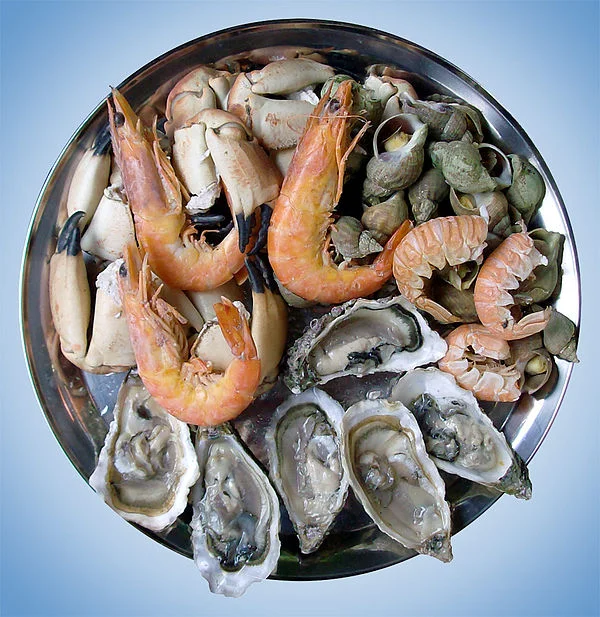
Todd McLeish: There's a scarcity of local seafood in New England

From ecoRI News (ecori.org)
Those looking to buy local seafood at grocery stores and fish markets in New England may have a difficult time finding much, especially if you’re searching for something other than shellfish. Just 15 percent of the seafood available at markets in the region originated in New England, according to a pilot study by the Rhode Island-based nonprofit Eating with the Ecosystem.
“Unfortunately, the results weren’t super surprising to me,” said Kate Masury, the program director for Eating with the Ecosystem who coordinated the project with University of Rhode Island professor Hiro Uchida and student Christina Montello. “We’re a seafood-producing region, it’s a big part of our economy, but we’re not making it available to our own consumers.”
Rhode Island’s results were better than the regional average, though still not as high as one might expect. About 24 percent of the seafood in Ocean State markets was captured in New England waters, which compares favorably to Massachusetts and Connecticut, at 12 percent each, and New Hampshire and Vermont, at 5 percent. Only Maine, at 33 percent, had more local seafood available in the markets surveyed than those in Rhode Island.
The findings are the result of a citizen science project called Market Blitz that took place over a two-week period in March. Volunteers visited 45 supermarkets and seafood markets in all six New England states to identify what species were available and where they were captured.
While the percentage of locally caught species available for purchase was low, the total number of species for sale was unexpectedly high. Ninety-one species of fresh or frozen marine life could be bought during the survey period, including 45 species identified as being landed in the New England region and 85 species from outside the region or unidentified. (The overlap is due to some species being caught both locally and beyond the region.)
Again, Rhode Island was above average, with 50 species available at the 12 markets surveyed, far more than the other five states.
Despite the variety of species available, however, Masury said that New Englanders typically don’t eat a diverse diet of local seafood. Oysters, quahogs and lobsters dominate the markets, followed by four other varieties of shellfish. Farmed salmon is the most popular regional finfish, followed by wild flounder and haddock.
“We eat a lot of a few things, and it’s mostly shellfish,” she said. “When people go out to eat at a restaurant or go to a seafood market, they want traditional New England food. Shellfish is what people are demanding.”
Where does the rest of the New England seafood harvest go, if not to New England consumers? All over the globe.
“Two-thirds of the seafood caught in the U.S. is exported elsewhere, some species more so than others,” Masury said. “In Rhode Island, whiting, also called silver hake, is a fairly big fishery, but most people here have never heard of it. It mostly goes to New York and it’s distributed out of the region from there.”
In a report issued by Eating with the Ecosystem in late June, the authors wrote that the low availability of locally caught seafood “may not necessarily imply that the market is dominated by non-regional seafood. Rather, it may be in part because the markets did not bother to indicate — or advertise — that the seafood is from the region.”
The report also noted that many of the study’s results suggest that Maine and Rhode Island are different than the other New England states.
“Seafood is a bigger part of the economy in those states, they depend on fisheries more than other industries, and people who vacation in both areas want local seafood,” Masury said. “So part of the reason why those states had more availability of regional species is because there is more demand for local species.”
And that, she added, is the take home message of the Market Blitz. The region has plenty of room to improve, but consumers will have to demand it.
“For many businesses, it’s an economic decision,” she said. “If they don’t think people are going to buy it, they’re not going to offer it. So the biggest thing we can do is to show there is demand for local species. Buy the local instead of the imported. And if you don’t see local in your market, ask for it.”
The Market Blitz study will be conducted twice a year for the foreseeable future, to build up a database and demonstrate how seafood availability changes over time. In the next phase of the project, interviews will be conducted with fishermen, seafood dealers, processors, chefs, and consumers about the mismatch between what species are available in the ecosystem and what species are available in the marketplace.
“One of the things we talk about all the time with consumers is eating a diversity of local species in proportion to their natural abundance,” Masury said. “Species more abundant in the local area should be a larger part of our diet. We hear that species like dogfish and sea robin are abundant in local waters, for example, but you don’t realize that because that’s not what’s available in the local market. Our goal with the Market Blitz is to quantify what is available.”
Rhode Island resident and author Todd McLeish runs a wildlife blog.