
Vox clamantis in deserto









Jim Hightower: The Dow doesn't reflect how most Americans are doing

The New York Stock Exchange.
.
Via OtherWords.org
Language matters. For example, the words that corporate and government officials use to report on the health of America’s economy can either make clear to us commoners what’s going on — or hide and even lie about the reality we face.
Consider the most common measurement used by officials and the media to tell us whether our economy is zooming or sputtering: Wall Street’s index of stock prices. The media literally spews out the Dow Jones Average of stock prices every hour — as though everyone is waiting breathlessly for that update.
The thing is, nearly all stock is owned by the richest 10 percent of Americans. So the Dow Jones Average says nothing about economic conditions for 90 percent of us.
For the true economic health of America as a whole, we need to know what I call the Doug Jones Average. How are your average Doug and Dolores doing?)
As we’ve seen, stock prices keep rising to new highs. But wages and living standards for the middle class and poor majority have been held down by the same corporate and political “leaders” telling us to keep our eye on the Dow.
To disguise this decline, they play another dirty language trick on us when they issue the monthly unemployment report. Currently, with the unemployment rate down to 4 percent, they tell us America’s job market is booming.
But that only reflects the number of jobs, not the dollar value of those jobs in terms of wages and benefits. Having lots of people doing poorly paid work is hardly a healthy job market.
Notice that they don’t measure the stock market by the number of stocks out there, but by their value. They should measure our job market the same way.
Of course, they’d only do that if they gave a fig about all of us Dougs and Deloreses. And that speaks volumes about their bias for stock-owning elites.
OtherWords columnist Jim Hightower is a radio commentator, writer, public speaker, and editor of the populist newsletter, The Hightower Lowdown.
'Rumor in the air'

Eastern bluebird.
"In New York and New England the sap starts up in the sugar maple the very day the bluebird arrives, and sugar-making (see below) begins forthwith. The bird is generally a mere disembodied voice; a rumor in the air for two or three days before it takes visible shape before you.''
-- The late John Burroughs, naturalist and essayist.
"

Boiling off maple sap to make syrup in late winter and early spring.

The Green Mountain State is very proud of its maple-syrup sector.
Sleeping through the storm

Surface analysis of the Great Blizzard of 1888, which took place March 11-14. Areas with greater isobaric packing indicate higher winds. This remained New England's most famous snowstorm until the Blizzard of Feb. 6-7, 1978.
"A wintry storm's blown over us while we slept.
The world's no worse for it,
Though a storm-window cracked a bit
When it fell down hard in the middle of the night.
All we value most we've kept.
The tree of life is still upright.''
-- From "March Winds,'' by Alfred Nicol, who lives in Amesbury, Mass.
'Memory and matter'

"See You in Dreams,'' by S. Tudyk, in her show "An Improving View,'' at ArtProv Gallery, Providence, April 4 through May 26. The gallery says that she "draws inspiration from her surroundings as well as her thoughts and memories. In these works, she explores the process of fragmentation, applied to both memory and matter. ''
Memories of the New Haven
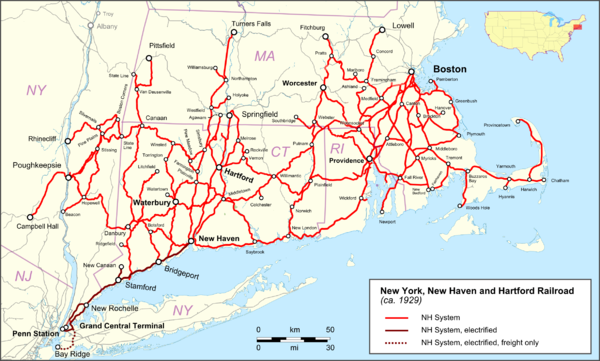
The apogee of the New Haven, right before the Depression.
Adapted from Robert Whitcomb's "Digital Diary,'' in GoLocal24.com
'The other week I took the Shore Line East commuter rail line, which runs between New London and New Haven. I noticed that the cars were from the old New Haven Railroad, which went out of business in 1968! That the cars are so old testifies both to how sturdy (if now rattling) they are, reminding me of those tough old DC 3 prop passenger planes that were flown for decades by numerous airlines, and to how old so much of America’s infrastructure is. (The official name of the the railroad was, as you can see above, a mouthful. But everyone just called it "The New Haven''.)
The old NH cars also reminded me of the old New Haven Railroad itself, with its stuffy smoking cars, itchy upholstery and, on its longer runs, especially Boston to New York, dining cars where you could even get lobster but because of silly labor rules, you had to put your order in writing.
And then I think of the weary and melancholy commuters, such as the Dan Draper character in Mad Men, sitting and smoking in a New Haven Railroad car and looking sadly out at a platform at a suburban station in Westchester or Fairfield County where a sole man, wearing a fedora and a London Fog raincoat, is pacing back and forth in the dusk.
Tim Faulkner: Northern Pass decision delayed again
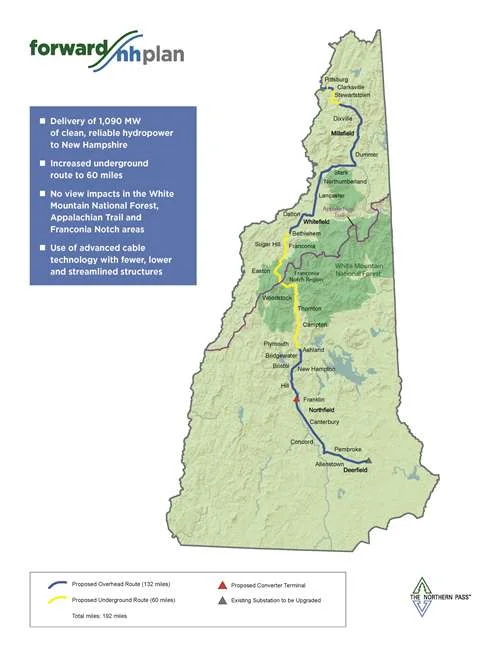
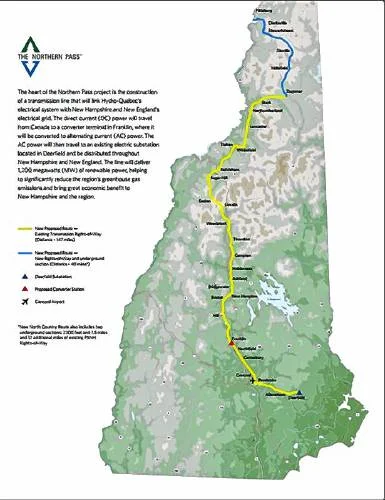
-- Pro-Northern Pass map
Via ecoRI News (ecori.org)
The Northern Pass hydropower transmission-line project isn't dead yet, but time is running short for the $1.6 billion project.
On March 12, the New Hampshire Site Evaluation Committee (SEC) voted, 5-0, to defer a request to reopen the deliberation process. The committee did agree to suspend its Feb. 1 oral vote to deny the project but only until the written decision is released later this month. A decision on whether to restart hearings won’t be made until May.
The March 12 meeting was held at the request of Northern Pass in an effort to somehow convince the SEC to rehear and reverse its Feb. 1 decision to reject the project. Soon after that vote, Massachusetts, the primary buyer of the electricity, gave the developer, Eversource Energy, until March 27 to salvage the proposal.
“This is just really a Hail Mary effort on Northern Pass’s part,” said Melissa Birchard, staff attorney for the Conservation Law Foundation. “It was a long shot and they knew it. But they just wanted to make an effort to satisfy the Massachusetts’ ultimatum.”
Opponents say the project threatens 95,000 acres of forestland and could harm scenic tourist areas. Small towns fear the project would hurt business and disrupt their communities.
New Hampshire Gov. Chris Sununu endorsed the 192-mille high-voltage system for the jobs and the promise of lower electric bills for ratepayers. He was disappointed that the siting board rejectedthe project on Feb. 1.
Massachusetts agreed to buy a portion of the 1.09 gigawatts of so-called "low-carbon energy" to meet its Clean Energy and Climate Plan for 2020.
In the meantime, the Bay State selected a backup plan, the New England Clean Energy Connect, developed by the Central Maine Power Co., to bring Canadian hydropower to Massachusetts.
There has been no response from the Massachusetts Department of Energy Resources regarding the recent SEC decision to postpone any action on the Northern Pass until May.
On Feb. 28, Eversource Energy filed a request to vacate the SEC's decision saying it wanted to elaborate on efforts to address the objections to the project. According to Eversource, the impacts on tourism and property values would be offset through payments from a $200 million state fund. Also, Eversource says alternative construction methods would be used lessen impacts on businesses.
Eversource claims the project will create 2,600 jobs during constriction, save New Hampshire ratepayers $62 million annually, add $30 million to state and local tax revenue annually, and reduce regional carbon emissions by more than 3 million tons a year.
The project received good news March 6 when the Canadian National Energy Board approved the proposal, thereby completing the last of the permits for the construction between Eversource Energy and Hydo-Quebec, a Canadian government-run utility.
Eversource issued the following statement after the March 12 decision by the SEC:
“We hope it is an indication that the SEC will evaluate the required statutory criteria, as well as thoroughly consider all of the conditions that could provide the basis for granting approval. At a time when the region needs new and diverse sources of clean energy, it is vitally important that projects like Northern Pass are considered fully and efficiently and without unnecessary delay.”
Tim Faulkner is a reporter and writer for ecoRI News.
Judge rules Brigham can order nurses to get fly shots

Via Cambridge Management Group (cmg625.com):
The Massachusetts Nurses Association isn't happy that a judge has ruled that Brigham and Women’s Hospital, in Boson, has the right to order its employees to get the flu vaccine
“We are disappointed with the decision and are considering an appeal,” MNA spokesman David Schildmeier told the Boston Herald. “To threaten a nurse with her job for exercising her right under (Department of Public Health) regulations to decline the vaccine, when that vaccine in the last two years has been between 20-35 percent effective, is an unfair and punitive policy.”
Judge Anthony M. Campo, of Suffolk Superior Court, ruled in favor of the Brigham, which last fall began ordering that all employees get the flu vaccine, barring very specific medical or religious reasons. Those who are unvaccinated must wear face masks.
The MNA contends a stringent policy isn't needed, given the Brigham staff’s 98 percent vaccination rate.
To read the entire article, please hit this link.
Bob Lord: When a CEO is far more generous to GOP fundraisers than to his own employees

The Worship of Mammon, by Evelyn De Morgan.
Via OtherWords.org
That America’s income distribution has grown dramatically more unequal in the past 40 years is beyond debate. The share of the top 1 percent has doubled since 1980, to over 20 percent of all income.
Could it get any worse? A look at America’s large, privately held corporations suggests it could.
When Americans think of large corporations, most of us think of corporations like Pepsi or ExxonMobil, whose shares are publicly traded.
We can know a fair amount about these companies from the reports they file with the Securities and Exchange Commission. Thanks to an Obama-era rule that recently went into effect, we even know how much their CEO makes compared to typical workers.
Many large corporations, however, are privately owned. Typically a single shareholder, members of the same family, or perhaps a small group of investors owns all the stock of one of those corporations.
These private owners aren’t required to release much financial information, and few do so voluntarily. So their finances are much more opaque.
According to Forbes, there are over 200 privately held corporations in America with over $2 billion in annual revenue. The largest, Cargill, had $109 billion in revenue in 2016.
Unlike at publicly traded corporations, we don’t know just how unequal things are between the employees of those privately held corporations and their owners. Might those owners be stingier with workers?
I began to wonder about this when I saw an announcement by Ronald Cameron, the owner and CEO of the poultry processing Mountaire Corp., of bonuses he’d decided to give his hourly employees. Those bonuses, he said, were made possible by the tax legislation recently passed by the Republican Congress.
Mountaire, according to Forbes, has 6,000 employees and just over $2 billion in annual revenue. If every employee qualified for the maximum bonus of $1,000 Cameron announced, Mountaire’s employees would receive $6 million in bonuses total.
Cameron, I’d noticed, is also a major Republican donor. He contributed over $14 million to Republican candidates for the 2016 election, including $2.4 million to Trump.
In other words, he was substantially more generous with politicians than with the 6,000 employees whose hard work has made him a very rich man.
What then, I wondered, might the income distribution be for the population at Mountaire — that is, the 6,000 employees and Cameron? What percentage of Mountaire’s profit does Cameron pay to his 6,000 employees, and how much does he keep for himself?
Mountaire doesn’t release that information. But we can make an educated guess based on what we know about similarly sized, publicly traded poultry processing companies.
Based on profit margins from those companies, along with data from a recent salary survey of Mountaire employees, Mountaire likely is paying $180 million or less in wages to its 6,000 employees each year — leaving about $200 million in pre-tax profits for CEO and owner Cameron.
In other words, over half the income at Mountaire may go to one person. That’s 600 times as concentrated as in the country overall.
Mountaire could be an outlier. But consider this: CEOs at publicly traded corporations resisted reporting their ratio of CEO compensation to median worker pay for seven years. Honeywell recently became the first corporation to report its CEO to worker pay ratio, an eye-popping 333 to 1.
That’s how bad it is at the companies we know about. How bad might it be at the companies we don’t?
Bob Lord is a Phoenix-based tax lawyer and an associate fellow at the Institute for Policy Studies. Distributed by OtherWords.org.
'New knowledge of reality'

An American robin, one of the most common New England songbirds.
"At the earliest ending of winter,
In March, a scrawny cry from outside
Seemed like a sound in his mind.
"He knew that he heard it,
A bird’s cry, at daylight or before,
In the early March wind. ..
"Surrounded by its choral rings,
Still far away. It was like
A new knowledge of reality.''
-- From Wallace Stevens's "Not Ideas About the Thing but the Thing Itself". Stevens was arguably, after Robert Frost, the greatest 20th Century American poet. He was also a highly successful insurance executive in Hartford, which for many decades was called
"the insurance capital'' of the world.
Our weather is actually orderly
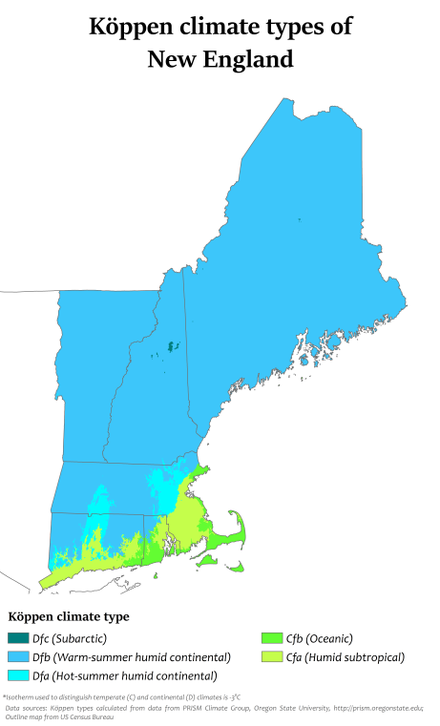
Mark Twain said that "one of the brightest gems in the New England weather is the dazzling uncertainty of of it'' ....It is indeed fickle, severe, unpleasant (Twain goes on to say New Englanders kill a lot of people every year 'for writing about 'Beautiful Spring'') and, quite often, glorious. Yet even in the face of the massive evidence of its unpredictability, I would venture to speculate that New England weather does not occur haphazardly any more than anything else in this complex but orderly universe.''
-- Judson D. Hale Sr., editor-in-chief of Yankee Inc. in an essay in Arthur Griffin's New England: The Four Seasons.
And patience and resignation

"Anticipation" (oil on paper), by David Witbeck, in his joint show with Joan Boghossian at the Providence Art Club through March 30.
Past time to confront the digital duopolists
Adapted from Robert Whitcomb's "Digital Diary,'' in GoLocal24.com:
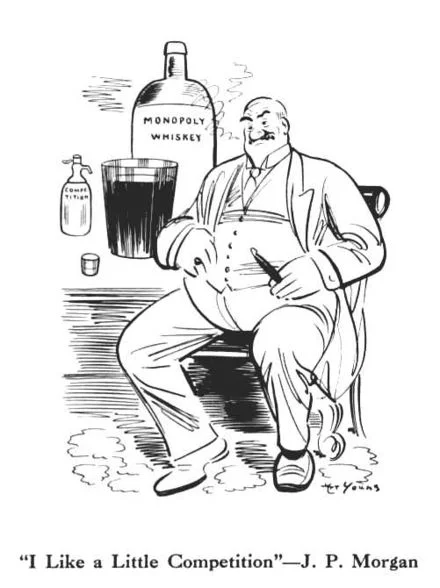
What to do reduce the corrosive power of the rapacious and unregulated duopoly of Facebook and Google?
One of the worst of their effects is that by gobbling up most of the digital advertising revenue in the United States they are destroying many local news organizations, whose work is essential in providing oversight of public and private institutions. Their demise is a green light for corruption.
David Chavern, CEO of the News Media Alliance, which represents about 2,000 newspapers in the U.S. and Canada, in a Feb. 26 Wall Street Journal article (“Protect the News From Google and Facebook’’), touted one way to start rectifying this situation: a bill in Congress sponsored by Rhode Island Congressman David Cicilline. The measure would reform antitrust laws to let newspapers and other news media collectively withhold their products from the duopolists at Facebook and Google to pressure them to give those smaller media an adequate return on their investment so that they can employ enough journalists to adequately cover the news.
Why oh why are antitrust laws applied to little publications and not to the gigantic Google and Facebook? Those two empires are in restraint of trade just as much as was the Standard Oil Trust at the end of the last century.
I’m mostly talking about local media; the big national ones, such as The Wall Street Journal, The Washington Post and The New York Times, will be okay.

David Warsh: On Putin, think of a high-tech Russian 'nesting doll'

Russian nesting dolls; Vladimir Putin is the one on the far left.
Scary Vladimir Putin, Bogeyman to the World, has been on full display in U.S. newspapers this month, most conspicuously on the front page of The New York Times, in a misleading photograph suitable for the cover of a new edition of Nineteen Eight-Four. “Putin Says He Has ‘Invincible’ Nuclear Missile,” was the headline. The hypersonic zig-zag cruise missiles and torpedoes of which he boasted might be a bluff for now, The Times noted. Fully operational, however, such weapons would “travel low, stealthily, far and fast – too fast for defenders to react.”
A week later, The Times reported on the attempted assassination using nerve gas of former Russian military intelligence officer Sergei Skripal, who in the 1990s had become a double agent for the British intelligence service MI6. The Brits all but charged the Russian government with making the attempt. The Russian government denied responsibility and took umbrage.
It was then Russian President Dmitri Medvedev who pardoned Skripal in 2010 and swapped him for a batch of Russian spies. Former KGB officer Vladimir Putin was then serving as prime minister. The business newspaper Kommersant recently reported that Russian authorities considered the damage done by Skripal comparable to that of Oleg Penkovsky, another military intelligence double agent who was caught and tried in the aftermath of the Cuban Missile Crisis, in 1962. Penkovsky was reportedly rolled alive into a crematorium oven in 1963.
What wasn’t on display last week was an analytic account of what else Putin said in what was, after all, his state of the nation address, three weeks before the election in which he is seeking a fourth presidential term. For that I turned to Alexander Baunov, of the Carnegie Moscow Center. I get my Russia news from Johnson’s Russia List — 191 items last week, of which I read perhaps 25 — and from Jonathan Haslam’s blog, "Through Russian Eyes''. Haslam is Kennan professor at the Institute for Advanced Study in Princeton.
Bloomberg’s Andrey Biryukov and Evgenia Pismennaya set the stage for Putin’s hour-long speech. Simon Shuster conveyed its atmospherics in Time, and Mary Dejevsky, of London’s Independent, its production values. But it was Baunov who made sense of it, in A Hi-Tech Russian {"nesting"} Doll: Putin’s Fourth-Term Reboot, on the Carnegie.ru Web site:
"Putin’s goal is now neither to recreate the USSR, nor to become part of the West. Rather, the ambition is to build an economic and technological “West” inside Russia, while continuing an aggressive posture towards the West on the outside….
"Putin’s speech depicts his vision of Russia as a kind of Matryoshka, a Russian {"nesting"} doll. The inside of the doll—the domestic part—is digital, wears hipster glasses and a short trendy jacket. The outside foreign part is dressed in military camouflage fatigues.''
That sounds like something the Chinese are well on their way to achieving: to be like the West, but with a diluted version of its values. But where China has the luxury of a geographic theater with natural boundaries – the “Greater East Asia Co-Prosperity Sphere,” as it was envisaged by Japan – Russia faces much greater difficulties identifying and protecting the boundaries of a natural sphere of influence. Its ambivalent relationship with Western Europe is more than three centuries old and shows no signs of flagging. No wonder, then, that, the day after his speech, Putin told a press conference that he regretted the break-up of the former Soviet Union.
The problems of the Russian economy, interesting though they may be, are for the most part orthogonal to those of the U.S., which at the moment have to do with the prospect of trade wars with its allies. Vladimir Putin is there to stay in a way that Donald Trump probably isn’t. As Princeton University Prof. Stephen Kotkin told The Wall Street Journal last week, 18 years after Boris Yeltsin chose him as successor, Putin is no longer the “arbiter over a scrum of competing interests” but has become instead “the leader of a single faction that controls all the power and all the wealth.”
But Kotkin is simply mistaken when he says that, while Putin didn’t highjack the U.S. election itself, “he high jacked American public discourse.” It is the major newspapers — The Times, The Washington Post, and at least the editorial pages of The Wall Street Journal – as well as The New Yorker magazine that are holding U.S. Russia policy hostage to their disdain for Donald Trump. This proposition wants a separate column. I will write it soon.
David Warsh, an economic historian and long-time columnist on economic, political and media matters, is proprietor of economicprincipals.com, where this columnist first ran.
Get out into it!

"Take long walks in stormy weather or through deep snows in the fields and woods, if you would keep your spirits up. Deal with brute nature. Be cold and hungry and weary.''
-- Henry David Thoreau
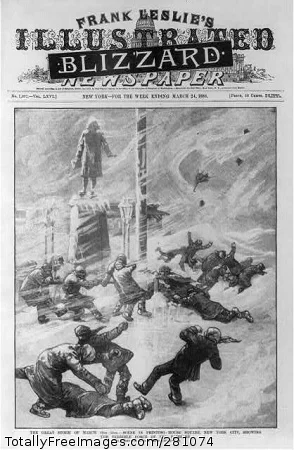
The Blizzard of March 11-14, 1888, paralyzed much of the Northeast.
Don Pesci: Let us now praise a great judge in Hartford
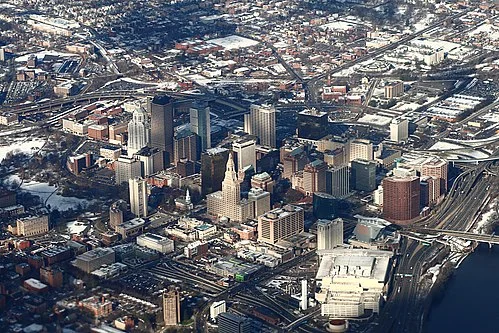
Hartford.
Let Us Now Praise Famous Men is a book written by James Agee containing photographs by Walker Evans. In 1936, they traveled to Alabama to report on three tenant-farming families. Their original story, only recently unearthed, never ran, but Agee continued to work on the project, and in 1941 Agee and Evans published their book, now itself famous as a literary work of art. Poverty and struggle had found a voice.
The title of the book was taken from Ecclesiastics: “Let us now praise famous men, and our fathers that begat us. The Lord hath wrought great glory by them through his great power from the beginning. Such as did bear rule in their kingdoms, men renowned for their power, giving counsel by their understanding, and declaring prophecies: Leaders of the people by their counsels, and by their knowledge of learning meet for the people, wise and eloquent are their instructions.”
Agee had turned the passage on its head. The book he and Evans produced was not about rulers; its subject was the subjects of rulers, the poor of Alabama, the forgotten of the earth, who were in a different sense noble, their pain suppurating through their poverty like the waters of a spring: “The spring is not cowled so deeply under the hill that the water is brilliant and nervy, seeming to break in the mouth like crystals, as spring water can: it is about the temper of faucet water, and tastes slack and faintly sad, as if just short of stale. It is not quite tepid, however, and it does not seem to taste of sweat and sickness, as the water does which the Woods family have to use.”
Judge Raymond Norko, who retired from the bench on March 10, is the opposite of pontifical, as anyone who knows him will testify, and he is slightly uncomfortable in the presence of praise. Yet, for the people in his courtroom who bade him farewell when he left his post as the presiding judge of the Hartford Community Court, Norko is the wise counselor of Ecclesiastics. Wisdom knows that the rich spring of justice, tempered always as it must be by mercy, lies within the heart of the just judge. One acquires wisdom though understanding, and understanding through modesty; one must stoop to enter the door of wisdom that lies always above us. This is the true meaning of understanding.
In a brief farewell message, Norko wrote, “I am writing to let you know that, after thirty-three years on the bench, I am retiring on March 10. It has been my honor to serve the people of Connecticut, in particular the people of Hartford, as a Judge of the Superior Court. Since 1985, I have served on cases ranging from motor vehicle to capital felonies; I’ve seen the very best and the very worst of human nature from my place on the bench. It has been an exciting journey, one that I have learned a great deal from. I am perhaps most proud of my service during the development and continued success of the Hartford Community Court. When I was first asked to lead the development of the Hartford Community Court in 1997, I said no. It was a radical concept, with only two other community courts in the nation at that time, and I wasn’t sure it would work. After thinking about it for a short time, and seeing the commitment of the community, the Judicial Branch and our other partners, I felt that we could make a big difference in our city and our courts, and decided to accept the challenge. Happily, it has been an extremely rewarding experience and, over 18 years since opening, the Hartford Community Court remains vital.”
During a farewell party in the Hartford Community Court building, dozens of people stepped forward to commend Norko, who had shaped the court from its inception. The crowd was an assembly of pilgrims marching toward Canterbury, each bearing a singular tale.
One woman told the famous story of the ice cream truck, an account of which appeared in People Magazine. The ice cream truck was the terror of the neighborhood – loud, insistent, rude, its message and bells tearing the peace of the community. She brought the matter to Norko’s attention. We need a judge who is for us, the woman pleaded. The court intervened and convinced the driver to lower his decibels and reduce the repetitive message to, say, one message per block. Almost two decades later, the lady still marveled that Norko had intervened, quickly and decisively. Sometimes justice marches on cat paws to its appointed destination.
The judge who will preside over the Hartford Community Court now that Norko has resigned, the Honorable Tammy Geathers, told her own story. She first met Norko under stressful circumstances. As a relatively new public defender, a wheelbarrow full of cases was dumped on her desk. She found herself summoned to court to argue a case she thought had been postponed. Silently stewing over the mix up, she was a little abashed and astonished to find that Norko was that day presiding over the case. “Are you prepared to argue this case?” he asked. She briefly explained why she was not prepared. “This case will be postponed,” Norko said, “until you have been given a chance to prepare for it.” Much later in her career, she was asked during an interview to name someone she might wish to emulate as a judge. Instantly she responded – Judge Raymond Norko. Sometimes fate is kind; that is exactly what happened.
The court under Norko’s hand has been very busy. “Since 1998,” Norko wrote in his farewell message, “we have handled more than 154,000 arraignments, more than 568,000 hours of community service has been performed (at a value of $4,389,035 based on minimum wage at the time the work was performed) and tens of thousands of social service referrals have been made.” In addition, the court has had a very long reach: “I am also proud that the Hartford Community Court has become an international model for other communities looking to develop their own community courts. In 2009 and 2014, the US Department of Justice Bureau of Justice Assistance and the Center for Court Innovation selected Hartford as one of four recognized mentor courts. We have hosted visitors from throughout the United States, and we have had visitors from across the globe including Australia, China, Ukraine, France, Japan, Peru, Russia, Cape Verde, Columbia, Sweden, India and the Slovak Republic amongst many more.”
The principal lesson drawn from both Ecclesiastics and the Walker-Evans book is this: Justice seen from the outside and justice experienced from the inside are different. Wisdom and true justice lies in the reconciliation of these differences. The dozens of people who bade farewell to the architect of the Hartford Community Court, all offering their own stories, have good reason to hope that true justice will prevail in a court constructed by so wise a counselor.
Don Pesci, a frequent contributor to New England Diary, is a Vernon, Conn.-based columnist.
They'll only kill you in New Hampshire

''Black bears, though, are not fearsome. I encountered one on the road to my house in Vermont, alone at night. I picked up two stones just in case, but I wasn't afraid of him. I felt a hunter's exhilaration and a brotherly feeling.''
-- Edward Hoagland, famed essayist

Have a nice day, or not




"Vermonters are not only charmless of manner, on the whole; they are also, as far as I can judge, utterly without pretense, and give the salutary impression that they don't care ten cents whether you are amused, affronted, intrigued, or bored stiff by them. Hardly anybody asked me how I liked Vermont. Not a soul said 'Have a nice day!''
-- Jan Morris, the British travel writer
Llewellyn King: Many shades of green, including the morning after

One of the O'Donoghue's pubs in Dublin on the author's 2012 pub crawl.
People who are no more Irish than the King of Siam or the Paramount Chief of the Bumangwato will, come March 17, celebrate an island nation famous for its skill with words and its fondness for drink.
It all began, of course, in the 5th Century with a Romano Christian missionary from Britain, Patrick, who brought Christianity to Ireland. As a bonus, he chased the snakes off the island. Where the fondness for something brewed, distilled or fermented came from is not recorded, but it is an intrinsic part of Irish life.
Life in Ireland often revolves around having a drink. It is treated much as we would treat having a cup of coffee. In Dublin once, I ran into a friend whom I had not seen in a year: a serious man with a big job in government. He thought, in the Irish way, that we should catch up over a glass of something, although it was just after 10 in the morning. “I think Murphy's is open,” he said as naturally as someone in an American city would have said, “There is a Starbucks on the next corner.”
In Ireland St. Patrick's Day was, until recent years, a somber religious festival. It was in America where the idea that the Irish could have a huge craic, as the Irish call a party, took hold.
Even so, the biggest celebrations, to my mind, are in Boston, Chicago and New York. But there are celebrations everywhere the Irish have set foot from Hanoi, Vietnam, to Ushuaia, Argentina, off the tip of South America.
But if you are very lucky, you will celebrate in Dublin. And what better way than with an authentic pub crawl.
I know just a bit about pub crawling in Ireland because I was lucky enough to be involved in a wonderful Dublin pub crawl in 2012. It was not a bunch of celebrants struggling from one pub to another, but rather a work of planning art.
I was in Dublin for an engineering conference that coincided with the 60th birthday of one of our number, Sean O'Neill -- by birth an American, but otherwise through and through Irish.
A pub crawl was organized by the engineers with precision: times, distances, and safety procedures.
There was a map and the 12 pubs were selected with fiendish skill. The early ones were fairly far apart. But as the crawl went on, they grew closer together, and the last two were next to each other -- in consideration of possible loss of mobility.
We were urged to go with a buddy, eat something about halfway and, in case of pub fatigue, to call a taxi.
If you get to Dublin and want to try the engineers’ crawl, here are the pubs in order: Toner's, O’Donoghue's and Doheny & Nesbitt's on Baggot Street; Dawson Lounge on Dawson Street; Kehoe's on St. Anne Street; Davy Byrnes on Duke Street; O’Neill's and another O’Donoghue's on Suffolk Street; The International Bar and Stags Head on Wicklow Street; The Long Hall on Georges Street; McDaid's and Bruxelles on Harry Street.
I think I made it as far as The Long Hall, one of Dublin's most famous bars, before I cried uncle, refused a last drink and hailed a taxi. Others persevered and, amazingly, lived to tell the tale.
You probably know that Ireland is so lush that its flora is supposed to support 40 shades of green.
Well, there is another shade of green not mentioned in the tourist brochures. It is the 41st shade and you see it in the bathroom mirror the day after a pub crawl. Surely, some of you will see it on March 18.
On Twitter: @llewellynking2
Llewellyn King is executive producer and host of White House Chronicle, on PBS.

Postcard postmarked 1912 in the United States.
The old town vs. gown danse macabre

Entrance to Ochre Court, Salve Regina University's first building. Salve is in the middle of the famous mansion district of Newport, R.I. (See Salve news below.)
From Robert Whitcomb's "Digital Diary,'' in GoLocal24.com:
The fierce opponents of Brown University’s plan to tear down four historic houses and move another one to make way for a new performing-arts center have won a victory. The university has decided to move the site of the facility. This would be smaller than the one originally planned and some of it would be underground. Four houses that had been threatened will be unmolested. Meanwhile, the quirky Lucien Sharpe Carriage House Sharpe Building will be moved from its present site to another in the neighborhood.
The people on College Hill want it both ways: They want to live near a prestigious university with a (mostly) beautiful campus but they don’t want to let the institution do some things that a growing university needs or at least wants to do in and around its campus.
It’s Brown, and to a lesser extent the Rhode Island School of Design, that prop up property prices and make College Hill such a vibrant urban neighborhood. But Brown, if it’s to remain competitive with the Ivy League and other institutions it sees as its peers, must continue to build. Expect more battles.
The latest big town-gown battle around here is in Newport, where Salve Regina University wants to build two big dorms to house hundreds of additional students. Some of the neighbors are scared that this would mean a flood of rowdy young people. And the preservationists think that the proposed buildings would be way out of scale for the neighborhood.
But the leaders of even relatively poor colleges like Salve feel that their institutions must grow or die. And even tiny colleges change their name to “university’’ to sound more important.
John O. Harney: The DACA saga in New England
Via The New England Board of Higher Education (nebhe.org):
From 2012 to 2017, nearly 15,000 New England residents participated in the Deferred Action for Childhood Arrivals (DACA) program. DACA students are ineligible for federal financial aid programs, but state and institutional aid can flow to undocumented students. As of March 2017, 20 states, including Connecticut and Rhode Island, offered in-state tuition rates to undocumented students.
It’s a moving target. President Trump announced in September that he would repeal DACA on March 5, charging that President Obama had created it unconstitutionally through executive action. The dynamic raises questions of whether protecting the DACA recipients reflects morality, regardless of its legal beginning. Trump gave Congress until that date to pass legislation addressing the legal status of undocumented immigrants brought to the U.S. as children, including nearly 800,000 approved for DACA.
In February, the U.S. Supreme Court rejected the Trump administration’s request to speed up its appeal of two federal judges’ nationwide injunctions to keep pieces of DACA. As the Chronicle of Higher Education noted, “That’s good news for the so-called Dreamers trying to avoid deportation. But it doesn’t provide what the students and colleges advocating on their behalf want the most: certainty.”
One thing that is certain is that life for immigrants is difficult in the Trump era. In addition to trying to end DACA, the president has brandished anti-immigrant rhetoric and pushed various travel bans—some challenged, some accepted.
The administration’s proposed immigration reform rests on four pillars: 1) creating a path to citizenship for DACA participants, 2) securing the border, including the controversial border wall, 3) eliminating the diversity visa lottery and 4) limiting family-based immigration spouses and minor children. Meanwhile, federal Immigration and Customs Enforcement (ICE) officials asked Boston police to detain 68 suspected illegal immigrants last year, nearly four times as many as in 2016. (Boston’s Trust Act forbids the police from participating unless ICE has a criminal warrant.) Among highly visible matters, the Trump administration has canceled Temporary Protective Status for people from El Salvador, Haiti, Nicaragua and Sudan. Its Office of Refugee Resettlement denied undocumented teenagers their right to end unwanted pregnanciNEBHE confab
Against this backdrop, NEBHE recently hosted a packed session at the College Board’s New England Regional Forum in Boston on the uncertain climate for undocumented students and related state and institution responses. The session moderated by NEBHE Associate Director of Policy & Research Candace Williams, featured: NEBHE delegate and Connecticut state Rep. Gregory Haddad, who has been a leader in supporting immigrant students; Pooja Patel, a former NEBHE policy research intern, now with the National Association for College Admissions Counselors; and Jason Corral, staff attorney at Harvard's Immigration and Refugee Clinic.
Asked about what institutions are doing, Patel noted that while a few respondents to her NEBHE survey of New England colleges and universities reacted defensively (Of course, we wouldn’t accept those students. They are breaking the law.), many are grappling with how best to serve undocumented students, including providing legal representation and advice. Tufts University has tried to actively recruit these students. One institution pointed out that it fully covered undocumented students’ healthcare, Patel noted. And the very day of the NEBHE session, Southern New Hampshire University was unveiling its work with The Shapiro Foundation and TheDream.US to offer full scholarships to DACA students to pursue associate and bachelor's degree programs through one of the university's online programs. Notably, SNHU said its DACA scholarships could follow students out of the country if they were to be deported.
State of DACA
Most undocumented students in New England attend community colleges (because they’re less expensive) or selective private institutions (because they have resources to help), said Patel. Still, she added, many undocumented students face massive obstacles.
California has been among the states that provided both in-state tuition rates and student aid for undocumented students. This year for the first time, applications have gone down because students don’t want their names out there if that could get them deported.
Connecticut state Rep. Gregory Haddad, whose district includes the University of Connecticut, said he felt a moral obligation to support DACA from the beginning. One young woman he spoke with learned she was undocumented when she went to fill out a financial aid form; another saw a story on TV about “dreamers” and found out then that she was one.
In 2011, Connecticut began offering in-state tuition for undocumented students who were Connecticut residents and graduated from a Connecticut high school and required them to file an affidavit that they had or would apply for U.S. citizenship. In 2014, when the rule was renewed with the requirements loosened somewhat, Connecticut considered legislation allowing institutional aid for undocumented students and requiring higher education institutions to create an aid pool with 15% of tuition revenue paid by documented as well as undocumented students.
Haddad notes that DACA and immigration is an economic argument. If DACA ended tomorrow, Connecticut would lose an estimated $315 million, according to the Center for American Progress. (Massachusetts would lose an estimated $606 million.) “Immigration is a way we can grow our economy,” said Haddad, especially as employers such as Electric Boat fret about an outflow of talent.
DACA opponents, on the other hand, dredge up the old arguments that immigrants are taking aid away from “our kids” but these kids are already paying into the pool, Haddad said. Some people bring up illegal activity, added Haddad, yet there’s consensus that dreamers deserve a path to citizenship. As immigration reform moves toward merit-based strategies for citizenship, Haddad said we should start helping young people get on that path now. He also added that the presence of dreamers visiting legislators in the Connecticut State Capitol has been very important.
Jason Corral told the NEBHE session how the 30-year-old Harvard Immigration and Refugee Clinic where he is an attorney is working to prepare and protect undocumented students.
After 9/11, he said, people starting viewing immigrants as people they should fear. Obama was the most efficient enforcer of deportation; Trump is just picking up where Obama left off, but more draconian with attacks on programs such as Temporary Protective Status and proposals for travel bans. What they share in common is creating a feeling that you don’t belong here.
Protecting students
As Trump’s attacks on immigration escalated, Harvard University President Drew Faust resisted a move to make Harvard a sanctuary campus. Corral and a lot of others were upset. But now, Corral sees the genius in Faust’s rationale. The issue was you don’t have to label yourself a sanctuary city to respect the U.S. Constitution and put resources behind protecting students. Those resources included hiring Corral as a special lawyer representing undocumented students, faculty and staff and hiring social work staff.
Corral noted that undocumented status can carry a stigma, whether the immigrant has came over the border from Central America or is more affluent, perhaps overstaying a visa.
Corral’s focus these days: Will undocumented students have housing during breaks in the academic year if they’re afraid to go back to their home countries? What about their parents coming to visit them? Are undocumented students safe to do jobs and internships or medical residencies? The students are confident in their abilities to carve out paths for themselves, Corral said, but they are worried about their families. In the face of threats to “chain migration,” some of the parents say they just want their kids to achieve.
Corral said he was surprised that as an immigrants advocate, he shares many concerns with law enforcement in terms of building alliances to keep communities safe. An audience member asked if immigrant students tended to avoid confrontation given the heightened tension over deportations. Corral said he tells students who are concerned about this that they are their own best advocates. This may be especially true of high achievers at Harvard. But Corral added that he warns them that if a rally includes arrests for trespassing or blocking traffic, for example, that could lead to deportation. Sometimes, he even hesitantly advises them to be anonymous.
The shadows, all over again.
John O. Harney is executive editor of The New England Journal of Higher Education.