
Vox clamantis in deserto






'More bowling than polo'

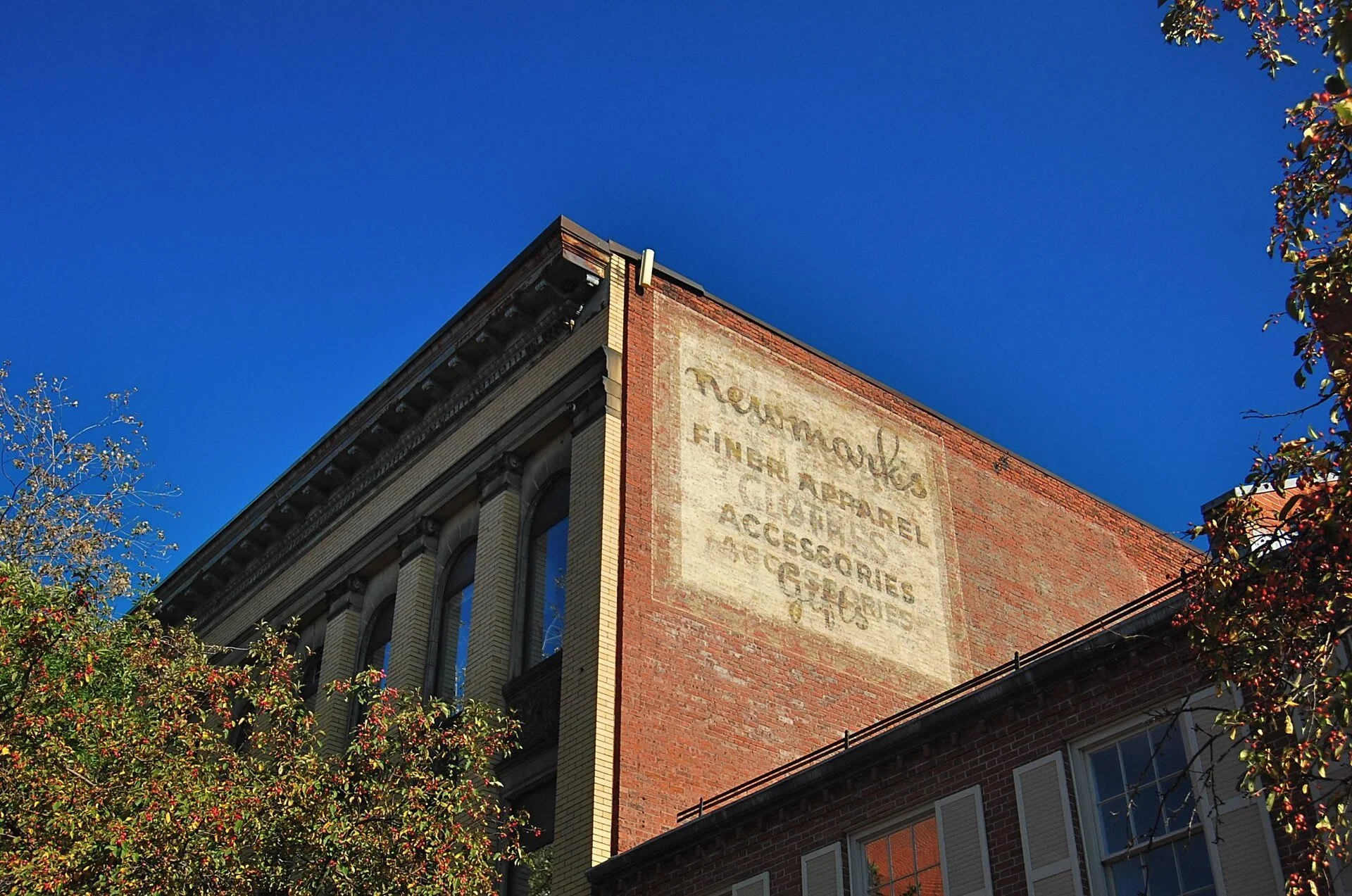
The rather gritty old mill town of Norwich, in inland eastern Connecticut, which, with a few exceptions such as Pomfret and Brooklyn, is poorer than Fairfield and Litchfield counties in the west, which are enriched by New York City money, especially from Wall Street. Wally Lamb is from Norwich.
"Eastern Connecticut is very different from Western; we're more liverwurst than pâté, more bowling than polo."
-- Wally Lamb
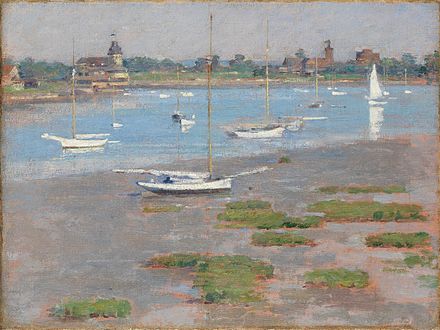
"Low Tide, Riverside Yacht Club" (1894), Greenwich, Conn., in Fairfield, County, by Theodore Robinson. The town is well known for its elite golf and yacht clubs.
Into Africa in Amherst, named after a germ-warfare pioneer

Wooden sculptures by Ere Ibeji, of Yoruba, Nigeria, in the show ''5 Takes on African Art/42 Flags by Fred Wilson,'' through April 29 at the University Museum of Contemporary Art at the University of Massachusetts at Amherst.
This consists of African art drawn from the collection of Charles Derby, a UMass alumnus who has been collecting since the 1970s. Surrounding them are "Flags of Africa,'' by the African-American artist Fred Wilson.
Amherst is named for Lord Jeffrey Amherst, the British commander in the French and Indian War, of the 1760s, in which he led a germ-warfare campaign against the Native American allies of the French. The Brits got blankets infected with smallpox into tribal communities, killing many people.
In 2016, beautiful Amherst College (named for the town it's in, not for Lord Jeffrey) dropped its "Lord Jeffrey" mascot at the demand of students at that elite college, and it will rename the college's snazzy Lord Jeffrey Inn.
Progressive and arty Hampshire College is also in Amherst. The Connecticut River goes through a long valley of colleges.

College Row at Amherst College.

Edress Othman, M.D.: A Syrian city cries out for help

Afrin, Syria, in 2009.
This was sent to us by Edress Othman, M.D., an oncologist with Southcoast Health System, a native of Afrin and an ethnic Kurd.
Over the past six years, the Syrian Civil War has created a vast humanitarian crisis, with more than half a million people killed, almost half of the nation’s population displaced, and many cities destroyed.
The area in and around Afrin, a predominantly Kurdish enclave in northwest Syria, was one of the very few areas that had survived the war intact. The region, about the size of Rhode Island, became a safe zone and welcomed thousands of Syrians fleeing the destruction elsewhere. In 2012, a democratic system based on respect for the environment and gender equality under local administration was created for the area’s burgeoning populations. Since that time one man and one woman were selected by the people to lead every post in the government equally.
The Syrian Democratic Forces (SDF) protected Afrin from ISIS, Jihadi groups and Bashar Assad’s regime. The SDF is the same group that defeated ISIS with the assistance from the United States and coalition forces in northeast Syria. Lt. Gen. Paul Funk, commander of the anti-ISIS coalition, recently praised them as heroes, saying, "I would say that the people who fought to take Raqqa back from ISIS are heroes, no matter what nationality they were, no matter what their beliefs were.”
Since Jan. 20, 2018, however, this peaceful enclave has come under attack. Turkish President Recep Tayyip Erdogan began an aerial assault on the civilians of Afrin, forcing residents into their basements and caves. Since then Turkey has destroyed humanitarian aid stations and infrastructure, including medical facilities and water-treatment centers. Cultural sites that define the Kurdish people have also been targeted. Many villages have been destroyed, forcing an estimated 70,000 people from the region into the city of Afrin, where they now desperately wait for international aid, food and clean water. On Feb. 16, doctors in Afrin reported to their colleagues in other countries that they have begun treating villagers for injuries that they believe are consistent with chemical warfare.
Why is Afrin under assault? It is the belief of the residents living there that the attacks are a direct result of the U.S. declaration of its intention to stay in Syria and support of SDF. Turkey considers the Kurdish elements within SDF as terrorists despite the fact that they have been combating ISIS and have never targeted Turkey.
The United States has not yet stepped forward to defend the Kurdish people of Afrin. While America provides weapons and equipment to the SDF east of the Euphrates, it has repeated that it understands “Turkey’s legitimate security concerns”. On Feb. 16, Secretary of State Rex Tillerson said that the United States recognizes Turkey's legitimate right to secure its borders.
But meanwhile, Turkey’s President Erdogan continues his ethnic-cleansing campaign, publicly promising to kill “every atheist Kurd in Afrin”, thus putting the lives of Christians and Yezidis at stake. With surrounding towns now in rubble, Afrin’s population has increased dramatically as humble farmers have fled into a densely populated area, making them easy targets for aerial attacks. Since the bombing began, more than 200 civilians have been killed (that includes 32 children and 26 women) and hundreds have been injured. And more than a million people remain in the besieged city of Afrin.
Hospitals enriching job offers to nurses
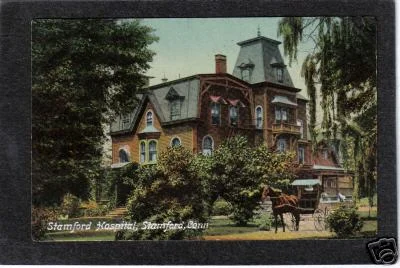
The original Stamford Hospital on a 1911 postcard. Looks like one of the mansions in that long-prosperous community.
From cmg625.com, the Cambridge Management Group Inc. Web site.
Some hospitals are pulling out the stops to address a nurse shortage, reports FierceHealthcare. Many give sign-up bonuses but some institutions have also come up with such new blandishments as offering to pay tuitions for nurses and for their children.
This has become the reality for many of the nation’s hospitals as many experienced RNs retire and too few nurses are in the pipeline to fill those positions as the population ages. The U.S. Bureau of Labor Statistics projects employment of registered nurses will grow 15 percent over the next eight years.
Hospitals are also recruiting nurses via such programs as Stamford {Conn.} Health's 12-week orientation program that pairs them with mentors in medical or surgical units. Stamford Hospital is the system's flagship.
And down Route 95, Greenwich {Conn.} Hospital, part of the Yale New Haven Health System, last year tried out a 12-month operating-room nurse-residency program, with the first five nurses graduating in January.
To read more, please hit this link.
A month for impatience

"Patientia,'' by Jan Saenredam.
"My father was often impatient during March, waiting for winter to end, the cold to ease, the sun to reappear. March was an unpredictable month, when it was never clear what might happen. Warm days raised hopes until ice and gray skies shut over the town again. ''
-- Tracy Chevalier (British-American novelist)
Jim Hightower: On tax law, mission accomplished!

Via OtherWords.org
Remember last year when Donald Trump and his congressional Trumpeteers bragged that their “yuge” tax cut for corporations would spark a “yuge” corporate spending spree to create new jobs and higher wages?
Well, just as they promised, we’re now seeing corporate chieftains spending wildly — on themselves, not on boosting America’s economy.
Mainly, they’re pouring billions into a self-serving scheme called “buybacks” — buying up shares of their own corporation’s stock. Google executives, for example, are spending $8.6 billion from their taxpayer bonanza on buybacks, PepsiCo is in for $15 billion, and Apple for $30 billion.
Why? Because reducing the total number of shares on the market increases the value of each remaining share, giving those lucky shareholders a bigger piece of the company’s profit pie. Yes, less magically means more!
But it’s not magic, it’s manipulation. And the top executives doing the manipulating are primary beneficiaries, since most of their pay comes in the form of millions of dollars’ worth of their corporation’s stock.
If Trump and the GOP Congress had really intended their trillion-dollar giveaway of the people’s tax revenue be spent for the benefit of all, they would’ve required the corporate recipients to plow the bulk of the money into our nation’s grassroots economy.
Instead, once again, our corrupt political officials duped taxpayers into giving away public funds in the name of workers. But they actually stiffed workers, enriched CEOs, increased inequality and diverted tax dollars from urgent national needs — and enabled corporate powers to donate even more corrupting campaign cash to the politicians and party doing this to us.
In other words, the Trump tax scam worked just as the GOP intended.
OtherWords columnist Jim Hightower is a radio commentator, writer, public speaker, and editor of the populist newsletter, The Hightower Lowdown.
Reconceiving feminism in exquisite Exeter, N.H.

Digital photograph by Ella Cooper, in the show "Representing Feminism(s),'' at the Lamont Gallery at Phillips Exeter Academy through April 21.
The gallery says: "This exhibition is an exploration of the nature, utility, and meaning of feminism by over 30 contemporary artists working in a variety of mediums. The intent was "to consider how feminism can be represented and, when necessary, reconceived."
xxx
Exeter is a gorgeous town with a deep pre-Revolutionary War history and close to the vast and beautiful marshes and rocky coast of New Hampshire's small seacoast.


Looking toward Great Bay at low tide.
Billy Graham did very well in the evangelical biz
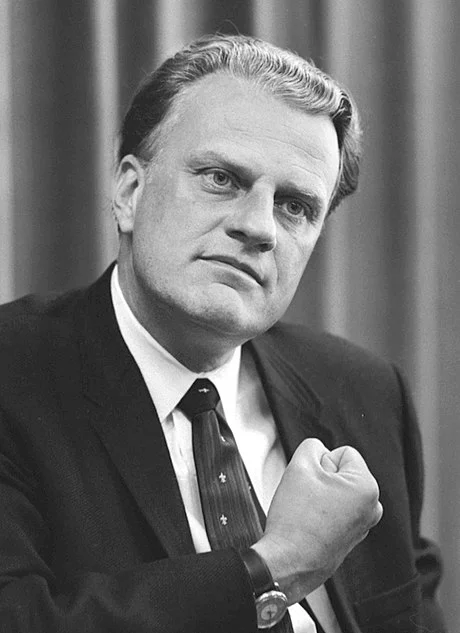
Adapted from Robert Whitcomb's "Digital Diary,'' in GoLocal24.com:
Billy Graham’s death last week at 99 brought back memories of hearing his stentorian voice on radio and TV over the decades. What a set of pipes! Loved it! That voice, his charm and charisma and his ability to curry favor with (and sometimes suck up to) the rich and powerful made him rich and for a long time one of the most famous Americans. He sometimes seemed to forget that Jesus is quoted as saying: “My kingdom is not of this world.’’ dHe
In his rather theatrically self-deprecatory way, he wallowed in luxury celebrityhood. And he used powerful politicians to promote himself and they used him to curry favor with the voters, especially white Southerners.
I found some of his biblical literalism idiotic, along with some of his theology, although who knows how much he really believed in himself. And he rephrased some of his views over the years to keep up with some social and political changes and avoid offending too many potential customers.
I have always found people telling us what God thinks to be a bit, well, presumptuous. But it’s good for business from the millions who want certainty in this crazy world and are terrified by the prospect of death. As one wag put it, the Rev. Mr. Graham promised a nice condo in heaven.
Billy Graham was far from the richest man in the evangelical industry, but died with a net worth of $25 million. The lucrative family business continues: His son Franklin Graham runs an outfit called Samaritan’s Purse that for 2014, the most recent year for which I can find his compensation, paid him a salary of $622,252.
Franklin is also a devoted Republican, and a fan of that Christian gentleman Donald Trump. To think that Billy Graham used to rail against “wickedness, licentiousness and debauchery.” (I have long wondered, by the way, how many abortions the president may have had something to with….)
The best thing about Billy Graham was that he moved earlier than most of his fellow white peers in the evangelical biz to embrace integration and other elements of racial justice, which discomfited many of his Southern white followers. That took some courage. But then it was also good business: It expanded his customer base. He generally became less judgmental, more tolerant and increasingly ecumenical as he aged. Very admirable!
(But I still remember the anti-Semitism he expressed in conversations with Richard Nixon. Or was he mostly just sucking up again to power?)
Meanwhile, it’s predictable that the Republican-controlled Congress would arrange for the preacher/businessman’s body to lie in honor in the Capitol Rotunda. Many, many other Americans, including scientists, physicians, inventors and, yes, politicians, did far more than the Rev. Mr. Graham to improve American lives. But many of those weren’t Republicans. This is all about appealing to the GOP base.
'Hover by this garden bed'

"Wind,'' from TacuinTum Sanitas, a Medieval handbook.
"Ho, wind of March, speed over sea,
From mountains where the snows lie deep
The cruel glaciers threatening creep,
And witness this, my jubilee!
Roar from the surf of boreal isles,
Roar from the hidden, jagged steeps,
Where the destroyer never sleeps;
Ring through the iceberg’s Gothic piles!
Voyage through space with your wild train,
Harping its shrillest, searching tone,
Or wailing deep its ancient moan,
And learn how impotent your reign.
Then hover by this garden bed,
With all your willful power, behold,
Just breaking from the leafy mould,
My little primrose lift its head!''
-- "March,'' by Elizabeth Drew Stoddard
'Nothing to communicate'
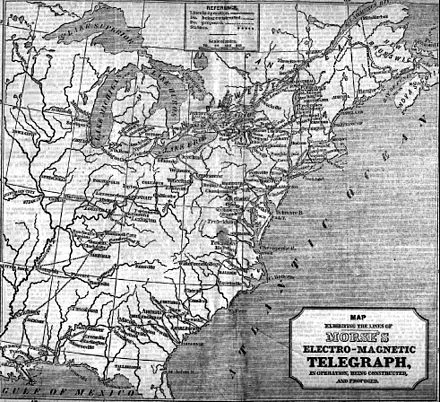
Jan. 22, 1848 map in The New York Herald showing North American telegraph lines.
"Our inventions are wont to be pretty toys, which distract our attention from serious things. They are but improved means to an unimproved end,… We are in great haste to construct a magnetic telegraph from Maine to Texas; but Maine and Texas, it may be, have nothing important to communicate.''
-- Henry David Thoreau, from Walden (1854)
Chris Powell: A liberal state's failed poverty policy
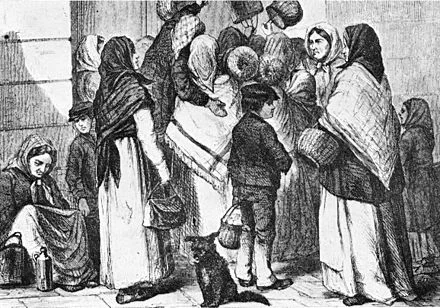
Gov. Dannel Malloy wants to push more low-cost housing into Connecticut's suburbs. He proposed the other day to require suburbs to meet state standards for such housing on pain of losing some state financial aid.
But last year the General Assembly passed a bill weakening requirements for towns to have low-cost housing, enacting it over the governor's veto, so his new proposal seems unlikely to get far.
Connecticut does have a housing problem, since most municipalities obstruct low-cost housing with their zoning regulations. But while the housing problem goes all the way back to the settlement of the state by Europeans, even today nobody can call it by its right name: poverty.
Three centuries ago Connecticut's first towns didn't let just anyone reside in them. People had to apply for residency and were voted on by those adult males who were already "admitted inhabitants." While the early towns were religious communities, they aimed not just to exclude freethinkers but also to avoid the expense of supporting people who could not support themselves, as back then simple survival was a struggle and there wasn't much to spare.
Exclusive zoning has come to replace the "admitted inhabitants" procedure because, while life is infinitely easier today, poverty is still undesirable to be around even as public policy manufactures it by destroying the family and subsidizing indolence and anti-social behavior so much that they can pay more than self-sufficiency and responsibility. Poverty has become such a big and politically influential industry in Connecticut that the failure of poverty policy to diminish poverty cannot even be acknowledged, much less addressed.
Hence Connecticut's political compromise. Those who are not poor agree to keep paying for the poverty industry as long as zoning confines it to the cities and deteriorating old mill villages.
Some people argue that poverty is less a function of poverty policy than tax and school financing policy. But state government long has been financing most of city school budgets without producing any educational or demographic improvement, and taxes are not driving city residents to the inner suburbs once they decide they want better lives any more than taxes have been driving many city parents to remove their children from neighborhood schools to "magnet" schools.
Rather, even many poor people themselves don't want to live around the pathologies of poverty. What is portrayed as the snobbery of the rich is actually widely shared.
Nothing about poverty is likely to improve when deterioration is mistaken for progress, as it was the other day when New Haven's school system announced that it will serve dinner to students in eight schools and study serving dinner in all its other schools. Most city schools already serve breakfast and lunch, and dinner is said to be necessary because many students don’t get it at home.
Once dinner is served at school, what's left but to have the teachers take the kids home with them at night?
Of course kids have to be fed, but ordinarily the inability or refusal of parents to feed their kids might be considered child neglect or abuse. Even so, the state Department of Children and Families declined a request for comment on the New Haven kids not being fed at home. Instead the situation will be legitimized and institutionalized.
The governor is a liberal, and liberalism used to boast that it sought to address the causes rather than just the symptoms of problems. Connecticut's housing disparities are mere symptoms of the failure of poverty policy, as are the state's education, crime, and health disparities, but in government here nothing succeeds -- financially, at least -- like failure.
Chris Powell is a columnist for the Journal Inquirer, in Manchester, Conn., and a frequent contributor to New England Diary.
Stone guideposts for roaming
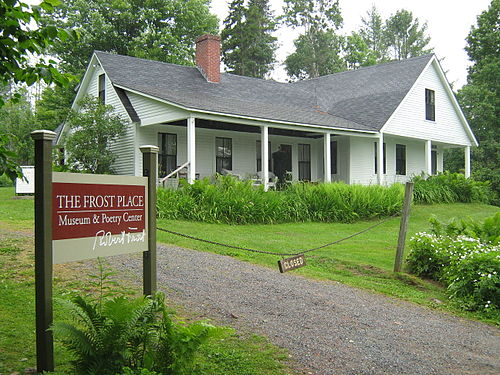
"When Robert Frost passed this stand of birch
each gray curl held his eye at word-point.
No rock but gave him pause. He’d reach to touch
it where it lay. Stones taught him to roam
by showing him where he’d been. Freedom
to go meant knowing when and where to stay.''
-- From “Unlettered,’’ by Edward J. Ingebretsen, based on a walk near Frost’s former home in Franconia, N.H. in the shadow of Franconia Range, the highest peaks of the White Mountains except for the Presidential Range.

Frank Carini: Billionaire capitalist pushes for regulation to address the worsening climate crisis

Global mean surface-temperature change from 1880 to 2017, relative to the 1951–1980 mean. The black line is the global annual mean, and the red line is the five-year local regression line. The blue uncertainty bars show a 95% confidence interval.
Via ecoRI News (ecori.org)
WESTPORT, Mass. — The talk was titled “Race of Our Lives: Trying to Live Successfully with Climate Change,” and it was one of the best presentations about climate change, its impacts, its causes and the solutions that this reporter has attended.
The speaker, Jeremy Grantham, is a billionaire, has been called a “famed investment manager” and a “legendary investor,” and is a self-proclaimed capitalist. He’s also a renowned environmentalist and philanthropist. He spoke with passion, honesty and frustration, all sprinkled with a touch of profanity.
Despite his affinity for capitalism, the venture capitalist had no problem blaming his favorite economic system for many of the climate-related challenges now facing the world.
“Capitalism is mythically good at everything, but there are a handful of things it doesn’t do well,” said Grantham, noting that it has helped orchestrate a tragedy of the commons. “Capitalism will pollute at will. It will always take the cheap route unless mandated not to. To a capitalist, grandchildren have no value.”
He noted that all but a few corporations are “profit maximizers.” He mentioned Unilever as a rare exception to the rule.
The Westport resident co-founded the global investment management firm Grantham, Mayo, van Otterloo four decades ago. Prior to that, Grantham co-founded Batterymarch Financial Management in 1969. That company became a pioneer in quantitative investing.
Grantham has made a fortune for himself and his clients, and 20 years ago he began putting a sizable slice of his own wealth into environmental charities. In 1997, he and his wife, Hannelore, used their shared wealth to create the Grantham Foundation for the Protection of the Environment. The Boston-based organization “seeks to raise awareness of urgent environmental issues” and believes “climate change represents the world’s primary environmental threat today.”
The husband-wife team launched their foundation to concentrate on climate change and agriculture. Their philanthropy has since expanded its areas of focus to include renewable energy. Grantham’s interest in climate change was forged by global travels that exposed him to masses of clear-cut forests.
Grantham called the intersection of climate and finance a “sparsely populated space.” He’s been writing about the implications of climate change and resource scarcity for several years. His writings are published in his quarterly investor letters. He has given climate presentations to the Untied Nations, the Gardening Club of America and at an MIT Climate CoLab conference. On March 4, he was the featured speaker at the Westport River Watershed Alliance’s annual meeting at Bittersweet Farm on Main Road, in Westport.
His climate-change concerns center on the issues of overpopulation and climate emissions/fossil-fuel use. He said overpopulation and climate change have partnered to produce a food-shortage problem that has led to the overuse of fertilizers and the creation of superbugs. He noted that the amount of carbon dioxide in the atmosphere has grown by nearly 40 percent since the Industrial Revolution.
“In a blink of any eye we added 120 parts per million of carbon dioxide to the atmosphere,” Grantham said. “We will add another 120 before we are done.”
The parts-per-million stress point, according to scientists, academics and the Intergovernmental Panel on Climate Change, is 350 ppm of atmospheric carbon dioxide. In 2013, CO2 levels surpassed 400 ppm for the first time in recorded history. Currently, the level is at 408.35 ppm.
Humankind’s appetite for fossil fuels has also made us more productive in bed.
“The Industrial Revolution, the use of coal and oil, hurled us into the future,” Grantham said. “Three hundred hours of human labor were replaced with a gallon of fuel. Fossil-fuel power has carried us farther than is sustainable. ... With surplus food, we began to breed like rabbits. Like rats and beavers, we moved up to the limit of the food supply.”
When Grantham was born, in 1938, the worldwide population was 2 billion. In his lifetime, the 79-year-old has seen the planet’s population more than triple. By 2100, the population is projected to reach between 10 billion and 16 billion. He said female education and family planning, most notably in Africa, are a must if the world wants to adequately address this growing problem.
“A more careful population in Africa is needed,” Grantham said. “It’s the biggest problem we face in regards to overpopulation, but it’s hard to talk about in NGO circles.”
Population, climate change and consumption are inextricably linked in their collective global impact. This triumvirate is stressing the planet’s finite collection of natural resources.
The continuing increase in carbon dioxide and other greenhouse gases, such as methane, are causing a rise in atmospheric temperature, which in turn melts glaciers and ice sheets and raises sea levels.
Grantham said the warming atmosphere holds more water and contains more energy, increasing the likelihood and severity of extreme weather events such as downpours, when an inch or more of rain falls. His PowerPoint presentation showed that the combination of higher temperatures and shifting rainfall patterns, resulting in more droughts and flooding, is decreasing crop yields.
“The climate is moving much faster than anyone would have expected,” he said.
Grantham noted that humans have been around for about 300,000 years and began practicing agriculture some 12,000 years ago. But he points to the past 100 or so years as the period that has accelerated global warming.
He said he is far more optimistic about technology’s ability to solve energy problems than most environmentalists. But he’s pessimistic about our ability to feed a rapidly growing global population.
“If we froze the population at 1.5 billion from 100 years ago, we would have no problems. We’d be cruising right along. We would have solved global poverty,” Grantham said. “With today’s population at 7.5 billion, if we froze the tech from 100 years ago, we’d be absolutely toast. We’d have no chance.”
Besides placing the blame of runaway global warming at the feet of capitalists and human reproduction, Grantham also took at shot an unexpected group: climate scientists. He said for far too long scientists have protected themselves against the risk of making an overstatement rather than accurately noting the true climate danger the planet faces.
“We're making a dreadful mistake by understating climate science,” he said. “Scientists should say what they honestly believe instead of being so damn conservative.”
He noted that during the past year more scientists have begun to admit that climate change is accelerating.
“We’re not just losing the war, but we’re losing at an accelerated rate,” Grantham said. He noted that “the powers of disinformation fueled by fossil fuels” are a big reason why we are now in this predicament. The gutting of environmental regulations is only making the problem more profound, he added.
“Speaking as a capitalist, we need regulation and government involvement,” he said. “Good regulation is a must.”
Frank Carini is editor of ecoRI News.
Exploring natural elements

"2 Out of 4 Elements-Earth Plowed'' (watercolor on paper), by Ed Ferszt, in his show "New Work,'' through March 31 at the Hera Gallery, Wakefield, R.I. He uses art to explore the natural elements of the rural and exurban environment of southern Rhode Island, whose unofficial name is South County.
Mr. Ferszt has long used water-based media, with his most recent work on stretched paper. He creates both small and large watercolors.

Cottages at Roy Carpenter Beach, in Matunuck, in South County, whose southernmost strip consists of beautiful barrier beaches.
-- Photo by Swampyank
'Pocahontas' should take a DNA test

Portrait engraving done in 1616 of Pocahontas.
Adapted from Robert Whitcomb's "Digital Diary,'' in GoLocal24.com:
Massachusetts Sen. Elizabeth Warren, who’s apparently thinking about running for the Democratic presidential nomination in 2020, has been bedeviled by criticism from President Trump (who calls her “Pocahontas’’) and other Republicans about her assertion that she has Native American ancestors. Other than referring to family stories, she hasn’t come up with indisputable proof. Well, she could take a DNA test. Such tests aren’t perfect, but if it does show she has Indian blood that would end the debate.
Some families have myths about their ancestors that last for many generations. For example, there was long a story in part of my father's family that there been in-breeding between their English colonist ancestors in eastern Massachusetts and members of the Wampanoag Tribe. And indeed, some members of my father's family, including himself, looked a bit Native American -- reddish brown skin, etc. My father looked like an Indian brave crossed with the Arrow Collar Man.
But my sister did a DNA on herself and found no evidence of Native American (perhaps more accurately called Siberian American) ancestry. Maybe they just looked Welsh....
After the latest slush storm

"Moving Shadows" (oil and embedded rice paper on braced birch panel), by Fran Busse, at Alpers Fine Art, Andover, Mass.
Boston sucking in the health-care biz; better trains, please

Main entrance of Massachusetts General Hospital, in Boston. MGH is the flagship of Partners HealthCare.
It’s unclear what precisely is going on with the new talks among Partners HealthCare, the giant Boston-based hospital system, and Rhode Island’s Care New England (CNE) and Lifespan. Partners of course has been trying to take over CNE, and now it may be trying to take over Lifespan, too. The participants’ statement that they are assessing how “they might work together to strengthen patient care delivered in Rhode Island’’ is smoke that may camouflage what might really be going on: a plan for Partners to take over most of the Ocean State’s hospitals. (Who knows what might happen with South County Hospital, which is still independent. Westerly Hospital is part of the Yale New Haven Health System.)
The effect of a takeover by Partners would be that much (most?) of Rhode Island’s health care would be run from Boston, one of the most important medical centers on Earth. It would mean that, more and more, complex procedures for Rhode Islanders’ very serious illnesses and injuries would be performed in Boston, because of the efficiencies of scale and the density of specialists there, and not in Rhode Island, which would offer mostly primary and behavioral- and mental-health care.
It’s unclear what the impact would be on the Brown Medical School. Butler, Bradley, Hasbro Children’s, Miriam, Rhode Island and Women & Infants’ hospitals, as well as the VA Medical Center in Providence, are all teaching institutions for Brown. Partners’ facilities are teaching hospitals for the behemoth Harvard Medical School. Tough competition.
A Partners takeover of CNE and Lifespan, besides providing very lucrative golden parachutes for CNE and Lifespan executives – bosses of enterprises being acquired love mergers because they make a personal killing -- would leave an enterprise with huge pricing power. You can be pretty sure that it would take full advantage of this by jacking up prices, just as Partners has done in Greater Boston. That has drawn much scrutiny from Massachusetts regulators and long investigative pieces from The Boston Globe.
Rich and powerful Greater Boston often seems to suck up a lot of oxygen in New England. Still, overall, Rhode Island benefits from being so close to a world city, with its massive wealth creation and cultural richness. Indeed northern Rhode Island is increasingly part of Greater Boston – a cheaper residential and workplace option for people who need to be close to, especially, downtown Boston/Cambridge. Consider that Rhode Islanders will soon be able to apply for some of the 2,000 jobs that the increasingly monopolistic Amazon has just announced it will add in Boston, which is also still a candidate for the company’s much-hyped “second headquarters.’’ (Will the massive coastal flooding that seems to be an increasing threat to Boston’s Seaport District scare them away?)
The improvements in Boston-Providence MBTA commuter rail service promoted by a group called TransitMatters would improve the benefits to Greater Providence of being close to Boston. Few if any projects enrich a metro area like good mass transit.
To read the TransitMatters.org on this, please hit this link:
http://transitmatters.org/regional-rail-doc
Among the organization’s many recommendations is for trains on the Boston-Providence line to run every 15 minutes at peak times and every half hour in off-peak times, as well as free transfers among commuter trains, buses and subways. The aim is also to cut the MBTA train time between Providence and South Station, in Boston, by, say 20 to 25 minutes.
This may all seem pie in the sky until you see that Europe and East Asia already have such service – actually, some of it is even better. A major reason is that they see state-of-the-art passenger train service as crucial for the socio-economic health of their metro regions and are willing to levy the taxes needed to provide it, unlike in private-opulence-public-squalor America.
History and luxury in a surviving grand hotel in the Granite State
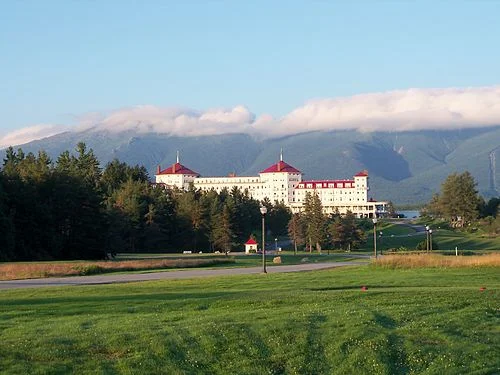
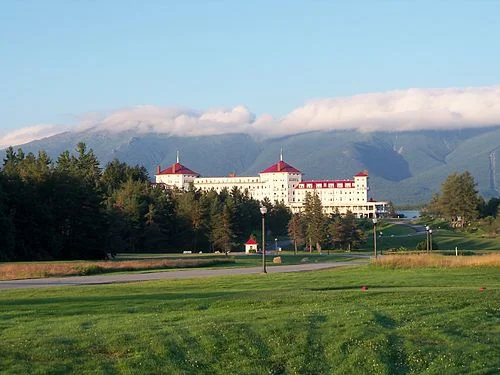
The Mount Washington Hotel, with the Presidential Range looming above.
The Mount Washington Hotel, in Bretton Woods, N.H., is one of the few remaining grand hotels/ resorts from the great age of such institutions, around the turn of the last century. It's expensive to stay there but provides wonderful memories of adventures during each of the White Mountains' dramatic four seasons. Its service is superb and recall being on a luxury transatlantic ocean liner before big jets pretty much ended that business. Just sitting on the hotel's vast porch in good weather is a joy.
New Hampshire's coastal equivalent of the Mount Washington Hotel is Wentworth-by-Sea, in New Castle.
In July 1944, the hotel was the site of the Bretton Woods International Monetary Conference, which helped stabilize the post-World War II economic and political world by establishing the World Bank and International Monetary Fund. (The United Nations was officially funded a year later, at the San Francisco Conference.)
But now the Bretton Woods arrangements are under stress from a revival of short-sighted extreme nationalism, with its accompanist protectionism. Sad. The conference helped make possible the greatest stretch of widely shared prosperity in history.
Moving on from 'snow-mobiling'

1921 Ford Model T snowmobile.
"My sleek, streamlined machine's lying in a drift
Pointed at Ely still,
And there's a shrub I didn't kill
Beside it, and there may be someone miffed
Because I chased his cow.
But I am done with snow-mobiling now.
The scent of spring is heavy in the air...''
-- From "After Snow-Mobiling,'' by Alec Bond