
Vox clamantis in deserto





The Green Party's Dr. Stein; the Russians, and Michael Flynn

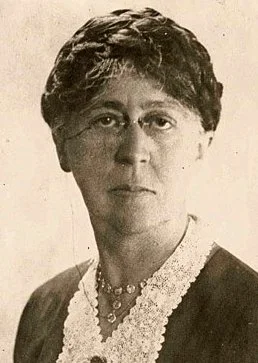
Jill Stein, M.D.
From Robert Whitcomb's "Digital Diary,'' in GoLocal24.com:
It was pleasant to read that the U.S. Senate Intelligence Committee is investigating Jill Stein, M.D., the leader of the leftist Green Party and its 2016 presidential candidate, for possible “collusion’’ with Russia before the election last year.
Among other things, Dr. Stein, who lives in Lexington, Mass., attended a December 2015 tenth anniversary dinner in honor of RT (formerly called in English Russia Today), the Kremlin’s international propaganda TV network. Intriguingly, at the same table that festive night was Michael Flynn, Trump’s former (very briefly) national security adviser, and none other than Vladimir Putin.
The whole thing makes one speculate on whether the Trump campaign, and the Russians, had anything to with propping up the campaign of Stein, who took votes away from Hillary Clinton, who won the overall national popular vote by a substantial margin but lost it narrowly in three states that handed the Electoral College victory to Trump. In any event, Stein and Flynn should be ashamed of themselves for in effect honoring the murderous thug Putin and his most important international propaganda outlet. The GOP-controlled committee also is digging into reports that Clinton’s campaign paid for research in report with allegations about Trump’s behavior during a 2013 business trip to Moscow. That’s generally called “opposition research’’ and is virtually universal in American political campaigns for major offices.
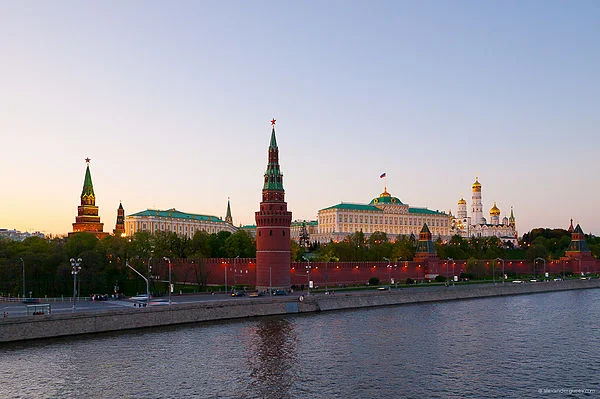
The Kremlin.
Maine's Solar System model

Jupiter, part of the Maine Solar System Model.
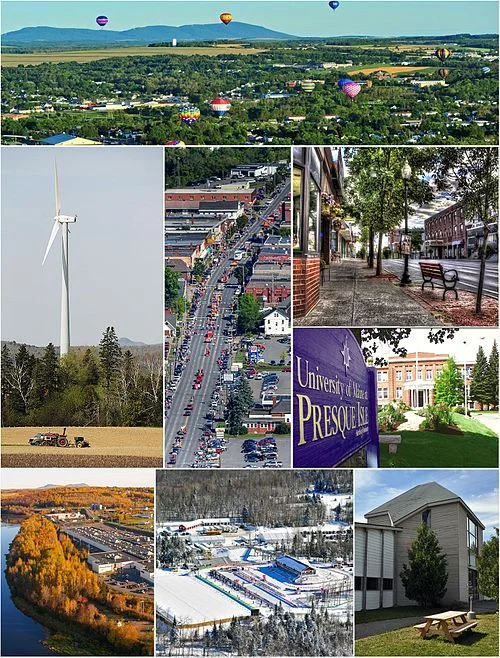
One of New England's more bizarre attractions is the Maine Solar System Model, which extends along 40 miles of Route 1 way up in northern Aroostook County, next to Canada. It's the world's biggest such exhibit.
The center, the Sun, is displayed at the Northern Maine Museum of Science, in Presque Isle. The model is a project of the University of Maine at Presque Isle.
The model is at a scale of 1:93,000,000.
Social conflicts and first principles
Joseph Asch, international businessman and editor/publisher of the always interesting dartblog.com, points to three good articles ''wherein the authors step back and look at ongoing social conflicts from a perspective that evokes first principles,'' especially involving higher education. To read them, please hit this link.
Don Pesci: All hail Chris Powell; Trump tax cuts may lift Conn., too
"Those who can make you believe absurdities can make you commit atrocities
-- Voltaire
Chris Powell would blush to hear someone say it, but his retirement as managing editor of the {Manchester} Journal Inquirer in January will leave a gaping hole in Connecticut journalism. Fortunately, Powell’s voice will still ring out in columns. The press notice announcing his retirement was placed amusingly on the right side of the paper’s obituary page. {Mr. Powell is a frequent contributor to New England Diary.}
Powell’s columns, many of them analytical jewels, always have had in them just enough bite to awaken slumberous readers. Unlike some commentators, he has managed to keep himself out of his writings, which in the age of twitter may be a sign of saintliness. But of course a writer is always present in his work as, say, Cervantes is present in Don Quixote. In the same way, a managing editor of a paper is present in his product. There are a number of fine journalists in Connecticut who have fallen out of Powell’s pockets.
***
President Trump may survive moves to eject him from his presidency, a consummation devoutly wished by two of Connecticut’s fiercest anti-Trumpers, U.S. Senators Dick Blumenthal and Chris Murphy. The state’s junior senator, Murphy, will be up for re-election in the New Year. Connecticut likely will suffer from that provision in the new tax-reform bill that will prevent high tax states – we have the distinction of being the third-highest tax state in the nation, lagging behind New Jersey and New York -- from offering write-off provisions for state taxes.
There may, however, be ancillary benefits to Trump’s tax reforms. Many economists familiar with President Kennedy’s tax reforms, somewhat similar to those of Presidents Reagan and Trump, anticipate increases in job production and GDP growth, a rising tide that will, as Kennedy once put it, lift all the boats – including Connecticut’s seriously damaged dinghy. The one thing Nutmeggers may not see in the New Year is an attempt to recover from the expected consequences of the new tax reforms through a reduction of state taxes.
***
The “Me Too” movement may ebb somewhat in the New Year, because nothing is so temporary as a temporary tax increase or a movement that has become fashionable in Hollywood. Proponents of chivalry will agree the movement has been cleansing in its effects and too long in coming. But Hollywood will survive this temporary setback to libertinism, because Hollywood always survives its breeches of good manners. It is uncertain at this point whether the “Me Too” movement will or will not signal a truce on the unending war between the sexes. Distantly related to the “Me Too'’ movement, some liberal Democrats who were not sufficiently enthusiastic about Hillary Clinton’s failed presidential campaign are now offering guarded apologies. Married to former a president, she too was a Me Too’er.
***
Connecticut Gov. Dannel Malloy, whose approval rating in Connecticut is a few points higher than Hell’s minor devils, will not be with us in the New Year, but he will have left behind, as a memorial of his passing, a load of wreckage. Bets are on whether a gubernatorial library will be erected to preserve Malloy’s destructive tendencies during his two terms on office, including both the largest and the second largest tax increases in state history. In certain quarters, the leave-taking of the most progressive governor in Connecticut since Wilbur Cross – discounting former Maverick Gov. Lowell Weicker -- will be celebrated with a moment of telling silence. Progressivism, which is state-socialism without the Gulag, will survive Malloy’s passing, because progressivism always survives.
Most recently Ben Barnes, Malloy’s budget guru, wrote a letter to his boss doubting whether legislators could restore cuts to a program that helps seniors and the disabled pay for Medicare insurance without seriously damaging a balanced budget that has mysteriously become unbalanced weeks after it had been written into law. Malloy wrote in reply that he was grateful for Barnes’s analysis, which “illustrates the difficulty of realizing significant savings on top of what we’ve already achieved with respect to overtime and ‘other expenses’ accounts. We must avoid a ‘fix’ to the MSP that relies on overly optimistic savings or unrealistic lapses, which would only exacerbate the larger, looming budgetary challenge we face.” The Malloy administration had during its run continually relied upon fanciful budget projections, thefts from this or that “lockbox” to be deposited in the general fund, and temporary “fixes” such as layoffs that Malloy’s SEBAC agreement would deny to future governors until 2027, the year when his union favorable agreement with SEBAC is due to expire.
***
No one on Connecticut’s media laughs at such preposterous posturing. Karl Kraus -- Austrian writer and journalist, essayist, aphorist, playwright, poet, perhaps the most significant European satirist since Jonathan Swift, seriously thought the fate of civilization “may depend upon the placement of a comma.” Asked why he wrote, Kraus said “I have to do this as long as it is at all possible; for if those who are obliged to look after commas had always made sure they were in the right place, then Shanghai would not be burning.”
It is a thought serious journalists might want to bear in mind during the New Year.
Don Pesci is a Vernon, Conn.-based columnist.
'Plenty of elbow room'

Bangor, Maine, which got rich in the 19th Century from the lumber industry.
"Maine out of season is unmistakably a great destination: hospitable, good-humored, plenty of elbow room, short days, dark nights of crackling ice crystals.''
-- Paul Theroux, the novelist and travel writer
'Naked across the calendar'
"All my undone actions wander
naked across the calendar,
a band of skinny hunter-gatherers,
blown snow scattered here and there....''
-- From "December 31st'' by Richard Hoffman
Chuck Collins: Help for struggling rich people and the lucky sperm club; Noem the Dakota hypocrite

Via OtherWords.org
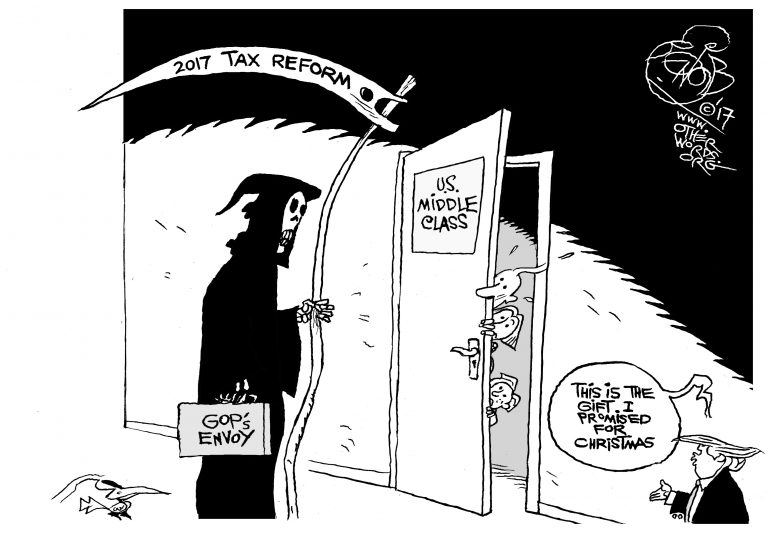
It isn’t easy being a millionaire these days, especially if you’ve got less than $20 million. Fortunately, Congress is watching out for you.
Yes, the Republican tax-cut bonanza targets lower-end millionaires for special relief. Now those struggling to scrape by with $15 million or $20 million can breathe more easily. And even lowly billionaires will be able to keep more of their wealth.
Why? Because Congress just increased the amount of wealth exempted by the estate tax, our nation’s only levy on inherited wealth.
In the bad old days, a family had to have $11 million in wealth before they were subject to the tax. This exempted the 99.8 percent of undisciplined taxpayers who, in the words of Iowa Sen. Chuck Grassley, had squandered their wealth on “booze, women, and movies.”
Now no family with less than $22 million will pay it (or individuals with less than $10.9 million). This gift to “grateful heirs” will cost the U.S. Treasury $83 billion over the next decade.
Gutting the estate tax is a bad idea — the levy raises substantial revenue from those with the greatest capacity to pay.
The estate tax was established a century ago during the first Gilded Age, a period of grotesque inequality. Champions of establishing a tax on inherited wealth included President Theodore Roosevelt and industrialist Andrew Carnegie, who viewed it as a brake on the concentration of wealth and power.
Modern Republicans, however, paint the tyrannical “death tax” as an unfair penalty on small businesses and family farmers. But that’s a myth.
The most vocal champion of estate tax repeal is Rep. Kristi Noem, a South Dakota Republican who became the GOP poster child for farmers touched by the estate tax. House Speaker Paul Ryan appointed her on the tax conference committee to advocate for estate tax repeal because of her compelling story.
Noem says her family was subject to the tax after her father died in a farm accident in 1994, a story she repeats constantly.
The only problem, as journalists recently discovered, is that her family paid the tax only because of a fluke in South Dakota law that was changed in 1995. Her experience has little to do with the federal estate tax, which has been substantially scaled down in recent decades.
And while Noem was complaining about government taxes, the family ranch has collected over $3.7 million in taxpayer-funded farm subsidies since 1995.
Noem attacked the reporting as “fake news,” even though it was based on legal documents she filed herself.
The reality is that the small number of estate tax beneficiaries aren’t farmers at all. They’re mostly wealthy city dwellers.
Still, the fact that the estate tax lives on creates an opportunity to make it better.
Lawmakers should institute a graduated rate structure, so that billionaires pay a higher estate tax rate than families with a “mere” $22 million. And loopholes should be closed so they can’t pay wealth managers to hide their wealth in complicated trusts and offshore tax havens.
Estate tax revenue could be dedicated to something that clearly expands opportunity for everyone else.
Bill Gates Sr. argues that the estate tax should fund “a GI bill for the next generation.” In exchange for military and community service, young adults should be able to get substantial tuition assistance for higher education or vocational training, paid for by a progressive estate tax.
If Congress were concerned about the middle class, that’s the kind of proposal that would become the law of the land.
Chuck Collins directs the Program on Inequality and the Common Good at the Institute for Policy Studies. He’s the author of the recent book Born on Third Base.
The train station may be a better bet
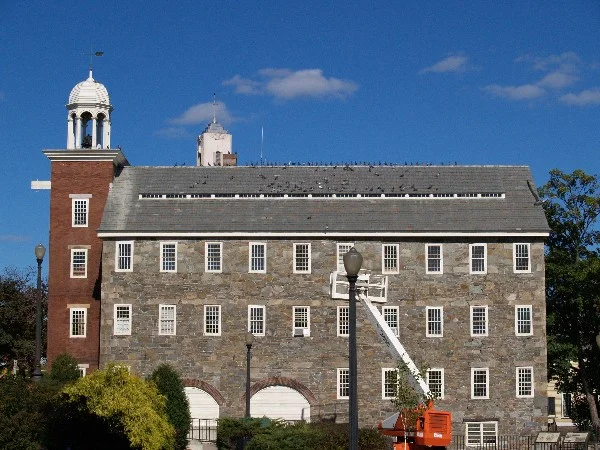
The Wilkinson Mill, one of the beautiful old factory buildings in Pawtucket.
From Robert Whitcomb's "Digital Diary,'' in GoLocal24.com:
There’s something very desperate and sad about Pawtucket Mayor Donald Grebien’s idea that the Rhode Island General Assembly should consider letting the old mill town finance the entire public part of a Pawtucket Red Sox (aka PawSox) new-stadium financing deal. The bonds to be sold would supposedly be paid off by letting the city use all the state sales and income tax revenue to be generated by the ballpark for that purpose.
Thus the city would glued to the fortunes of one company, whose revenues in coming decades are impossible to predict with any precision. (Will Minor League baseball be popular in 10 years?) Of course, whatever such a financing agreement says, if the tax revenue doesn’t meet expectations and so Pawtucket can’t cover the debt, the state would have to come in to try to save the city.
I wish that Pawtucket officials would spend more time trying to find ways to leverage for economic development the coming Pawtucket/Central Falls train station, which will link the old mill city more closely with booming Greater Boston, and less time obsessing about the PawSox as if it’s the only game (so to speak) in town. Better to lure and/or keep dozens of small companies than rely upon one bigger one with very rich out-of-state owners who can easily move their operations.
Llewellyn King: In search of the real Winston Churchill

Why do so many American devotees of Winston Churchill work so hard to play down his drinking? That is a question that has interested me for some time.
One man I know — who owns several of Churchill’s paintings — avers that Churchill didn’t drink much, just sipped frugally on an ever-present glass. He is one of a line of Churchill admirers who don’t want to think that Churchill drank incessantly. But the evidence is there, from the writer Nicholas Monsarrat to his hostess Eleanor Roosevelt.
The revisionists want him sober through the war years. I doubt that he was falling-down drunk, but his consumption of alcohol (especially Scotch and Champagne, which he started on at breakfast) was awesome — as was everything else he touched.
I raise this because, for me, the furniture of the holidays includes a movie. So I went to see Darkest Hour, the biographical story of the first days of Churchill’s premiership, in May 1940. That spring, Germany had invaded Norway, Denmark, Belgium, France, Luxembourg, the Netherlands and France. The British army and allies — 338,000 troops — were trapped on the French coast at Dunkirk.
The movie is remarkable in fidelity, touching on all the high points from Foreign Secretary Lord Halifax’s hope of making peace with Hitler, through the dubious offices of Mussolini, to the last cautious but patriotic endeavors of the deposed prime minister, Neville Chamberlain. Chamberlain is treated as he was: a man up against history forced to bargain with Hitler, while a weak Britain rearmed. The real appeaser was Halifax, who later was sent to Washington, where he endeavored to undermine Churchill. The movie does justice to the booze, too.
I was especially glad to see the movie recognized the genius and courage of the evacuation of the army at Dunkirk by an armada of many hundreds of small boats, some just barely seaworthy. The enormousness of the operation was somehow missed in the movie Dunkirk, which came out earlier in the year.
Joe Wright’s movie jams in many little episodes loved by the Churchill cognoscenti, such as Churchill’s habit of working from bed with terrified dictationists on hand and, of course, always with a glass in reach; his habit of walking around naked, no matter who was there; and his funny encounter with Clement Atlee, the Labor Party leader {and later prime minister}, when Churchill was in the toilet.
I both salute Gary Oldman’s bravura performance and question his interpretation of Churchill as a somewhat doddery, old, old man. He was just 65 and according to his newspaper publisher friends, most notably Brendan Bracken and Lord Beaverbrook, was at his peak.
On YouTube, you can find film of Churchill addressing Congress in April 1943. I submit that he is more robust and spry than in the performance that Oldham gives, even if the great man — maybe the greatest Englishman — had already had a few.
In Praise of Short Books That Do the Job
Many of my friends write books — and I admire them their industry — but not all.
One very literate journalist, when I asked her why she hadn’t tried her hand at authorship, came back with, “You wouldn’t want to lock me up in a room with all those words, would you?” Quite so.
Nonetheless, books are becoming important to journalists in a way they weren’t earlier. There being no magazines left in which large arguments can be advanced, books are the answer.
Gone are the days in which a writer like Stewart Alsop could argue the Vietnam War in 7,000 words in The Saturday Evening Post. If you want to write something weighty these days, write a book.
But publishers insist on a certain number of pages. The result is many books are too long, padded.
I’m grateful to two friends who’ve written short books that make their point. There is Tim McCune’s Smoke Over Bagram, a revealing look at the contractor’s life in the surreal world of Afghanistan after the U.S. invasion, and Kevin d’Arcy’s Adventures in the Gardens of Democracy.
McCune’s can be found on Amazon as a virtual book. D’Arcy’s book, which is about British journalism and the decline of representative democracy, is published by a small British house, Rajah.
I thank them for saying what they have say without padding. No pea of an idea in a haystack of words for either. So I devoured both books with joy and without giving over days of my time.
The Things They Say
“Nothing corrupts a politician as much as friendship. Good politicians don’t bribe; they make us like them.” — Matthew Parris, journalist and former Conservative member of the British House of Commons.
Llewellyn King (llewellynking1@gmaidl.com) is host of White House Chronicle, on PBS, and a veteran publisher, columnist and international business consultant.
Meeting at Miramax

"Grabby, Gropey, Rapey'' (detail) (ink and watercolor on calfskin vellum), by Sharon Lacey, in her show "Lurking in Fleshy Coverings,'' at Bromfield Gallery, Boston, Jan. 3-Jan. 28.
She says her paintings are inspired by medieval manuscript illuminations of "soul battles."
'More mellow' later in the day

"The weather-beaten granite has an individuality which belongs to this corner of the land and marks it as a stone fit for our builder’s purposes. Under every sort of weather – and we have them all in Connecticut – it throws back the light in a warm and friendly glow. Its texture is as rough as homespun, its strength as rugged as the pioneer’s; yet in the late afternoon, its surface seems to glow softer and more mellow, under the slanting rays of the sun, much as a face that is usually a little stern and rigid may melt into more genial lines under the influence of friendship. The character of New England is stamped upon this stone.’’
-- Robert Dudley French
The region's restaurant
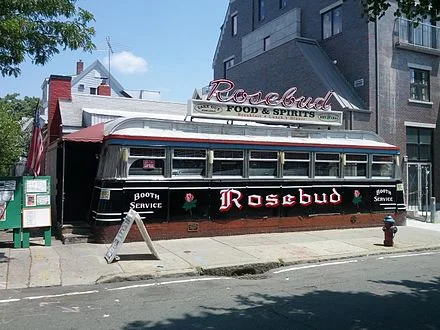
One of the most charming and useful features of New England is the diner, which was invented in the region. This one is in Somerville, Mass.
Protectionism bad for New England lobstermen
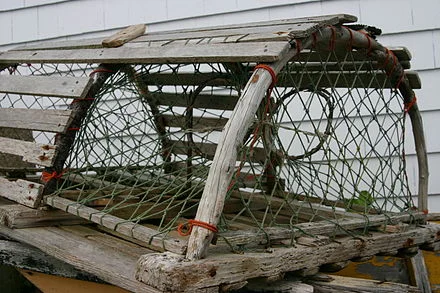
From Robert Whitcomb's "Digital Diary,'' in GoLocal24.com:
Beware of protectionism, especially involving close and traditionally friendly nations. Here’s a little example of what can happen when the United States excludes itself from international trade deals.
The New England lobster industry (which mostly means Maine) is understandably worried about the fact that Canada, whose Maritime Provinces are very big lobster exporters, and the European Union have agreed to end E.U. tariffs on Canadian lobster imports. North American lobsters are very popular, if expensive, food in Europe. The E.U. is the world’s biggest seafood importer.
The lobster deal is part of the Canada-European Union Comprehensive Economic and Trade Implementation Act (CETA). This is the sort of agreement that recalls the proposed Transatlantic Trade and Investment Partnership (TTIP) free-trade agreement between the E.U. and the U.S. Such a pact would strengthen economies on both sides of the Atlantic and make the West better able to confront the economic and security challenges posed by the aggressive, expansionist dictatorships of Russia and China. And, after all, we share basic political, social and economic values with Europe. We’re stronger together. But the Trump administration’s instincts, here and elsewhere, are protectionist, even when it comes to our closest allies, whom we need as much as they need us in a dangerous world.
The TTIP would, of course, be particularly beneficial to New England.
Don Pesci: In New England politics, 'moderate Republican'' is a term of art
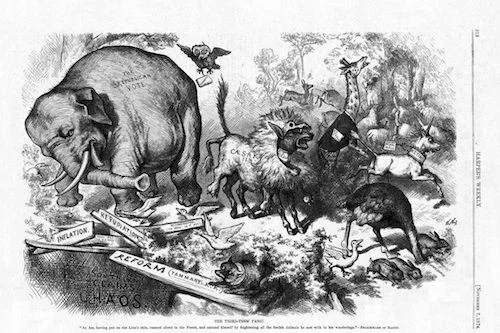
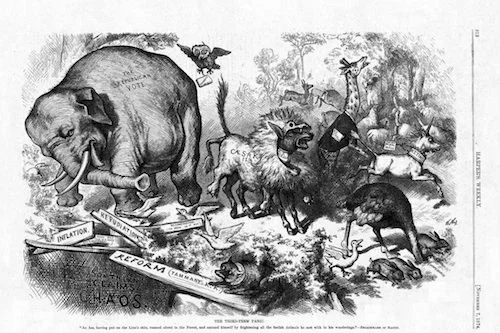
An 1874 cartoon by Thomas Nast in Harper's Weekly.
VERNON, CONN.
A historical repetition, Danish philosopher Soren Kierkegaard reminds us, is not possible, because it is not possible to recreate historically the precise conditions that occasioned the event we wish to replicate. Karl Marx, a poor economist but a passable social critic, put it this way: “History repeats itself; the first time as tragedy, and the second time as farce.”
The shadow of a not too amusing farce hovers over a recent Hartford Courant story.
The central premise of the report is this: Charlie Barker of Massachusetts is a successful Republican governor, his approval rating an astonishing 71 percent. Baker is the usual New England moderate Republican, one who is conservative on fiscal issues but liberal on social issues. If only Connecticut were able to field a Charlie Baker-like gubernatorial candidate in the upcoming 2018 race, the GOP might be able to sweep the boards and restore to the gubernatorial office – held for two terms by Dannel Malloy, a progressive governor with an appalling approval rating of 29 percent, the lowest in the nation -- a “moderate” governor such as John Rowland, Jodi Rell or Lowell Weicker.
Here is the paragraph upon which the proposition precariously rests: “In both style and substance, Baker evokes the New England moderate, a breed that traces its lineage from Leverett Saltonstall and Henry Cabot Lodge Jr. to John Chafee and Lowell P. Weicker Jr. On the federal level, this type of politico has gone largely extinct in Connecticut following losses by former U.S. Reps. Nancy Johnson and Chris Shays. Since 2008, the state has only sent Democrats to Washington.”
Just to begin with, U.S. Sen. Lowell Weicker was by no means a moderate Republican. His eccentric political posture is signaled very clearly in the boastful title to his own autobiography, Maverick. Before Weicker had been dethroned by former state Atty. Gen. Joe Lieberman, his liberal Americans for Democratic Action (ADA) rating was higher than that of U.S. Sen. Chris Dodd, who was neither a Republican nor a moderate. Indeed, during Weicker’s long reign as a U.S. senator, there were many Republicans in Connecticut who seriously doubted that Weicker was a Republican at all.
As governor, Weicker operated as a fiscal progressive, and he strained to the breaking point the compromised affections of fiscally moderate Republicans and Democrats by instituting an income tax. Governors Ella Grasso and Bill O’Neill, both moderate Democrats, were unalterably opposed to an income tax – for the soundest of reasons. They supposed, correctly as it happened, that an income tax would spare legislators in the General Assembly the ordeal of a) reducing spending, and b) disappointing unionized state workers, Connecticut’s fourth branch of government. Following the imposition of an income tax, state spending tripled within the space of three succeeding governors. One can easily imagine Grasso snarling in that portion of Heaven reserved for moderate Democrat Connecticut governors.
Other Republicans mentioned in the paragraph – Governors Rowland and Rell and U.S. House members Nancy Johnson, Rob Simmons and Chris Shays -- were, as advertised, fiscal conservatives and social moderates. But, as the story notes, a doom hung over them, and they were at last displaced by fiscally progressive, socially progressive Democrats.
So then, here is the lesson that ought to be learned by people in Connecticut, both Democrat and Republican, who do not wish to repeat the mistakes of recent history: 1) “moderate” is a term of art deployed by artful politicians who are, in truth, immoderate, and 2) the division between fiscal and social issues is largely imaginary.
Are the urban poor in Connecticut’s larger cities deprived because of economic or social disruption, and which, in this sad turn of events, is the chicken and which the egg? Isn’t it obvious that there are two economies in the state, one urban and one suburban? And there are two social models in the state as well, one urban and one suburban.
But the poor themselves are indivisible; there is not one part of a poor man that is economic and another part that is social. The traditional family in cities as we know it – dad, mom, two and a half children – has been entirely uprooted and destroyed, mostly owing to programs that finance the production and spread of poverty and social disruption. And the consequent pathologies associated with these policies – fatherless families, a high incident of crime, crippling economic dependence on government for the necessities of life, poor educational possibilities – are everywhere apparent for those who have eyes to see and ears to hear.
The politician who claims to be fiscally conservative but socially liberal is a prisoner of a false dichotomy – a willing prisoner, a man or a woman who simply refuses to confront the truth that lies, as George Orwell says, right in front of his nose.
And that is why the fiscally conservative-socially liberal politician has been vanishing from our politics. He will be replaced by demagogues who can lie in such a way that even the stones will believe them.
Don Pesci is a Vernon, Conn.-based essayist.
Into tears

"Dissolve'' (oil on linen), by Louise Bourne, at Alpers Fine Art, Andover, Mass.
'A lineup of isobars'
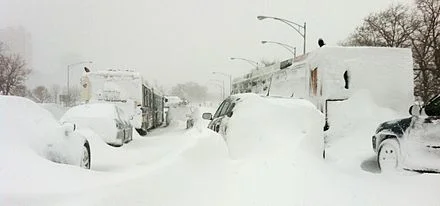
"It’s snowing again.
All day, reruns of the blizzard of ’78
newscasters vying for bragging rights
how it was to go hungry
after they’d thumped the vending machines empty
the weatherman clomping
four miles on snowshoes
to get to his mike
so he could explain
how three lows
could collide to create
a lineup of isobars
footage of state troopers
peering into the caked
windows of cars...''
-- From "New Hampshire, February 7, 2003,'' by Maxine Kumin
'Fundamental structures'

"Cairn in Snow,'' by Caspar David Friedrich.
“After the winds and storms of autumn have lashed the trees to penitence, there sometimes comes a large-flaked and otherwise inconsequential snow which gives to the trees and their landscape the sequel gift of innocence. It was in such a landscape, on the morning of such a fall, that we began having our thoughts about the end of one year and the beginning of another. The snow seemed helpful, in that it blotted out the bright surface shapes of specific recollection in favor of the more enduring and powerfully molded impressions of fundamental structures and meanings.’’
--The late Alan H. Olmstead, a Connecticut essayist and editor, from his book In Praise of Seasons.
Stoned while texting while driving

From Robert Whitcomb's "Digital Diary,'' in GoLocal24.com:
Rhode Island “Medical marijuana’’ dispensers have taken in a total of some $27 million in retail revenues so far in 2017, reports The Providence Journal (“Regulators worried by glut of cultivation,’’ Dec. 20). How many of the customers are actual, sincere patients seeking relief from severe or at least chronic pain and how many are just gaming the system for the simple pleasure of getting stoned is unknowable. In any case, it’s not particularly comforting to know that some of those many motorists driving erratically as they text may also be stoned. It can only get worse; the state hasn’t shown that it can regulate this booming new drug industry.
Susan Sandler Brennan: The rotary that leads to career success

The library of Bentley University, in Waltham, Mass.
Via the New England Board of Higher Education (nebhe.org)
Working in college career services, I see companies recognizing that the path from college to career has shifted from a one-way to a two-way street where employers and students can connect. Truth be told, it’s more of a rotary—with many exits—because it takes a committed community to successfully transition students to their first jobs and beyond. The career-development ecosystem includes not only employers, but also career services, peers, faculty members and alumni. Each “exit” connects students to important voices and learning opportunities.
Part of what will give students the confidence to explore these exits is learning how to build trust with the people who will guide them on their path. It’s my job in career services at Bentley University to present opportunities to students, starting from their first year on campus, that open doors to these career relationships. Here’s how we help students build a career community:
Student career colleagues
Juniors and seniors who are motivated, successful and well-rounded can be positive influences on their peers. Acting as "career colleagues," these juniors and seniors provide a comfortable and welcoming environment for new Bentley students to engage with Career Services in drop-in hours and in the classroom. Students trust their peers because they have more common experiences and believe they will give good advice, since they’ve recently been through the same process. And with this model, professional staff members are able to have more in-depth transformational advising appointments as students advance in their major. During her sophomore year, Caroline Gervais of the Class of 2019, used career colleagues for résumé review and advice about internship searches. She found that talking with her peers about their past career experiences and how they handled situations similar to her own to be incredibly valuable.
Faculty
Higher education institutions have to build curriculum around market demand and faculty need to be aware of the skills that employers are demanding. Bentley’s own market research shows companies want multifaceted employees who have the essential hard and technical skills, but they want those coupled with traditional soft skills like communication and collaboration. It’s no longer enough for a data analytics expert to know the numbers. They also have to be able to communicate the story those numbers tell. Our faculty focus on blending business with the liberal arts to prepare students. For example, we offer a liberal studies major—which allows business majors to add a second major with a liberal arts concentration. Students might combine a major in economics and finance with a liberal arts major in earth environment and global sustainability, leaving them well prepared to develop a business plan for a growing solar power company. Other institutions are following suit.
Scott Latham, vice provost for innovation and workforce development at the University of Massachusetts at Lowell, made this point during a recent event hosted by Bentley about the future of work: “Having discussions where you have faculty and industry in the room is incredibly important … If that doesn’t happen and you don’t have buy-in [from faculty], then you’re not going to be able to align your workforce needs with our curriculum.”
Employers
Open and ongoing communication with recruiters is a key part of what we do in career services. To prepare our students for the workforce, we need to stay on top of market demand and the kinds of skills employers want. Internships that have purpose—with opportunities to contribute to a project and be taken seriously—are good ways to connect students and employers. I also see more recruiters leveraging their best storytellers (employees or student interns) to come to our career fairs and share what it’s really like to work there: culture, growth and what they will be doing day to day. When Gervais heard about a 2018 summer merchandising internship opportunity at TJX, she talked to recruiters at a career fair and applied that same day. She also reached out to two Bentley students who had completed a TJX internship; they counseled her throughout the interview process.
Alumni
Many companies are sending alumni back to their respective campuses to recruit students. In addition to the obvious—instant commonality on each side—this greatly expands an employer’s outreach. Bentley alumni also serve as mentors to our students; examples include participation in the classroom through corporate partnerships, informational interviews as part of our career development seminar, or hosting job shadows, site visits and internships. Prior to applying for the TJX internship, Gervais attended a networking night at Bentley,where she was able to discuss merchandising career opportunities with alumni who work at the company. She was particularly interested in their insights on how their Bentley experience helped them prepare for the positions they now hold, as well as post-internship opportunities in the company’s merchandising track. Now that Gervais has secured the position with TJX, she has found several other alumni connections and mentors who she can refer to for guidance and advice in the future.
What’s important to note about the rotary is that while it presents opportunity at each exit, many students will experience a roadblock if they don’t build the confidence to take new routes that are outside their comfort zone. As educators, mentors and employers, it’s up to us to serve as a personalized GPS system that will help guide them along their journey.
Author and clinical psychologist Meg Jay talks about the fact that successful people have often had to overcome challenges and adversity, which in turn helps build resilience. This demonstrates that we have the power to prepare students for lifelong success regardless of their circumstances. Resilience is also important in the context of the job market. Millennials, for example, change jobs every few years. As rapid technological change affects all generations, we will need the resilience to prove our value and work alongside technology.
When my son first learned how to drive, he told me that when he got to a rotary, he put the music on full blast and pretended he was in the Gladiator movie. His philosophy: “I’m going in and I’m going to get around this thing.” We need to help students build their confidence and build a supportive community so they know they can deal with difficult choices and situations. They learn how to become resilient. They go boldly into the rotary.
Susan Sandler Brennan is associate vice president for university career services at Bentley University. She is a co-chair of NEBHE’s Commission on Higher Education & Employability.
Vessel traffic screwing up cod communication

Atlantic cod.
Via ecoRI News (ecori.org)
National Oceanic and Atmospheric Administration (NOAA) scientists studying sounds made by Atlantic cod and haddock at spawning sites in the Gulf of Maine have found that vessel traffic noise is reducing the distance over which these animals can communicate with each other. As a result, daily behavior, feeding, mating and socializing during critical biological periods for these commercially and ecologically important fish may be altered, according to a study recently published in Nature Scientific Reports.
Three sites in Massachusetts Bay, two inside the Stellwagen Bank National Marine Sanctuary (SBNMS) and one inshore south of Cape Ann, were monitored for three months by researchers at the Northeast Fisheries Science Center (NEFSC) laboratory in Woods Hole, Mass., and at the sanctuary offices in Scituate, Mass. Vocalizations, such as Atlantic cod grunts and haddock knocks, were recorded by bottom-mounted instruments at each site during spawning in winter and spring.
“We looked at the hourly variation in ambient sound pressure levels and then estimated effective vocalization ranges at all three sites known to support spawning activity for Gulf of Maine cod and haddock stocks,” said Jenni Stanley, a marine research scientist in the passive acoustics group at the NEFSC and SBNMS and lead author of the study. “Both fluctuated dramatically during the study. The sound levels appear to be largely driven by large-vessel activity, and we found a signification positive correlation with the number of automatic identification system (AIS) tracked vessels at two of the three sites.”
AIS is an automatic tracking system, used on ships and by vessel-traffic services. It provides information on a vessel, such as its unique identification number, position, course, and speed, which can be displayed on a shipboard radar or electronic chart display.
Ambient sounds — those in the surrounding environment — include animals vocalizing, physical sounds such as wind and water movement or geological activity, and human-produced sound from ships and marine construction. Many marine animals use ambient sound to navigate, to choose where to settle, or to modify their daily behaviors including breeding, feeding, and socializing.
Cod grunts were present for 100 percent of the spring days and 83 percent of the winter days. Haddock knocks were present for 62 percent of the winter days within the three-month sampling period. However, ambient sound levels differed widely at the three sites, both on an hourly and daily time scale. The Atlantic cod winter spawning site, nearest the Boston shipping lanes, had the highest sound levels, while the Atlantic cod spring spawning site inshore south of Gloucester, Mass., had the lowest. Sound levels in the haddock winter spawning site, further offshore in the sanctuary, were in the middle of the range detected in the study.
Study data were also used to calculate the estimated distance a fish vocalization would be heard at each of the spawning sites. The effective radius ranged widely, from roughly 4 to 70 feet, and was largely dependent on the number of tracked vessels within a 10-nautical-mile radius of the recording sites.
Lower-level, chronic exposure to increased ambient sound from human activities is one of the most widespread, yet poorly understood, factors that could be changing fish behavior, according to researchers. If they can’t hear as well as they need to, then sound signals from other fish can be lost, compromised, or misinterpreted in ways that can cause a change in behavior. Since Atlantic cod, for example, vocalize to attract mates and listen for predators, not hearing those signals could potentially reduce reproductive success and survival.
“Anthropogenic sound in certain ocean regions has increased considerably in recent decades due to various human activities such as global shipping, construction, sonar, and recreational boating,” Stanley said. “As ocean sound increases, so does the concern for its effects on populations of acoustic signalers, which range from invertebrates to marine mammals. We don’t know if or to what extent specific species can adapt or adjust their acoustic signals to compete in this environment.”