
Vox clamantis in deserto





Surplus of New Yorkers
"Vermont is a land filled with milk and maple syrup, and overrun with New Yorkers.''
-- John L. Garrison, 1946
'Dallied with the thought of selling'

Christmas Trees
(A Christmas Circular Letter)
''The city had withdrawn into itself
And left at last the country to the country;
When between whirls of snow not come to lie
And whirls of foliage not yet laid, there drove
A stranger to our yard, who looked the city,
Yet did in country fashion in that there
He sat and waited till he drew us out
A-buttoning coats to ask him who he was.
He proved to be the city come again
To look for something it had left behind
And could not do without and keep its Christmas.
He asked if I would sell my Christmas trees;
My woods—the young fir balsams like a place
Where houses all are churches and have spires.
I hadn’t thought of them as Christmas Trees.
I doubt if I was tempted for a moment
To sell them off their feet to go in cars
And leave the slope behind the house all bare,
Where the sun shines now no warmer than the moon.
I’d hate to have them know it if I was.
Yet more I’d hate to hold my trees except
As others hold theirs or refuse for them,
Beyond the time of profitable growth,
The trial by market everything must come to.
I dallied so much with the thought of selling.
Then whether from mistaken courtesy
And fear of seeming short of speech, or whether
From hope of hearing good of what was mine, I said,
“There aren’t enough to be worth while.”
'I could soon tell how many they would cut,
You let me look them over.'
'You could look.
But don’t expect I’m going to let you have them.'
Pasture they spring in, some in clumps too close
That lop each other of boughs, but not a few
Quite solitary and having equal boughs
All round and round. The latter he nodded 'Yes' to,
Or paused to say beneath some lovelier one,
With a buyer’s moderation, 'That would do.'
I thought so too, but wasn’t there to say so.
We climbed the pasture on the south, crossed over,
And came down on the north. He said, 'A thousand.'
'A thousand Christmas trees!—at what apiece?'
He felt some need of softening that to me:
'A thousand trees would come to thirty dollars.'
Then I was certain I had never meant
To let him have them. Never show surprise!
But thirty dollars seemed so small beside
The extent of pasture I should strip, three cents
(For that was all they figured out apiece),
Three cents so small beside the dollar friends
I should be writing to within the hour
Would pay in cities for good trees like those,
Regular vestry-trees whole Sunday Schools
Could hang enough on to pick off enough.
A thousand Christmas trees I didn’t know I had!
Worth three cents more to give away than sell,
As may be shown by a simple calculation.
Too bad I couldn’t lay one in a letter.
I can’t help wishing I could send you one,
In wishing you herewith a Merry Christmas.''
-- Robert Frost
Better than no light

"Winter Light" (oil on board), by Julia Purinton, at Alpers Fine Art, Andover, Mass.

A stressed student? Check out a puppy

From Robert Whitcomb's "Digital Diary,'' in GoLocal24.com:
Bill Nemitz, a very good columnist for the Portland (Maine) Press Herald, had a good piece the other day about the tendency to coddle college students at some campuses; the young people are considered all-so-fragile. He cited a “campus puppy party’’ at the University of Maine at Farmington that used seven golden retriever puppies (criminally cute!) at the student center as part of administrators’ efforts to help students deal with the anxiety associated with final exams and papers.
Meanwhile at Yale, Mr. Nemitz reports, students can “actually check out dogs from both the medical and law libraries because, as one librarian explained to the student newspaper {the Yale Daily News}, ‘For a lot of students, it’s their first time away from home and they do miss their home comfort – families, pets.’’’
All this cosseting, which includes a proliferation of highly paid assistant deans to address a panoply of students’ emotional, psychiatric and sociological worries, and some luxurious spa-like services, has of course helped make college ever more expensive (another cause of anxiety!).
The students will find the world after they leave college remarkably unsympathetic. How to prepare for that? As Mr. Neimitz writes: “Rather than agreeing with hand-wringing undergrads that life is indeed a tough journey and they’d best get about navigating it, we’re validating their ‘suffering’ with adorable little bundles of bliss.’’
To read Mr. Nemitz’s column, please hit this link:
From the Yale "Whiffenpoof Song'':
We're poor little lambs who have lost our way
Baa, baa, baa
We're little black sheep who have gone astray
Baa, baa, baa
Gentleman songsters off on a spree
Doomed from here to eternity
Lord have mercy on such as we
Baa, baa, baa
The Great Marsh

Over the Great Marsh.
One of the most beautiful places in New England is the Great Marsh, an area of marsh, mudflats, tidal rivers and barrier beaches extending from Cape Ann into New Hampshire. It’s an area of great and changeable beauty and a very rich ecosystem, which spawns much of the region's seafood and nurtures numerous other animal species.
Unrequited love

On the Snow
"We're all supposed to love the Earth
And thrill to nature's bold displays.
We're all supposed to be entranced
When nature sends us snowy days.
But I just tumbled on the snow
And gave my knee a nasty whack.
If I'm supposed to love the Earth,
The Earth should try to love me back.''
-- Felicia Nimue Ackerman
Stairs to nowhere

Escher Series #3 (bird's eye walnut and quilted maple, one compartment), by Jay Rogers, in his show "Fantasy Architectures: Sculptural Boxes, at the Society of Arts + Crafts, Boston, through Jan. 6.
Mr. Rogers has been making art for over 30 years, says the gallery. His current series is inspired by M.C. Escher and Giovanni-Battista Piranesi. "Each sculpture differs in size, scope, and medium, but the one thing they seem to have in common is the puzzling nature of their construction. It's difficult to see where a piece begins or ends,'' with ''strange optical illusions.''
Chris Powell: Conn. politicians avoid tough decisions about transport and most everything else

Metro-North train arriving in the Noroton Heights section of Darien, Conn.
MANCHESTER, Conn.
Connecticut, Gov. Dannel Malloy told a business group last week, is being brought low by its political culture of postponing tough choices. As a result, the governor said, the state now is without the revenue to maintain and improve its transportation system. Thus the governor suggested that the state hasn't raised taxes enough. He added that he is proudest of what he considers his toughest decision -- to increase funding of the state employee pension system.
Yes, state government has been avoiding tough choices for a long time but the governor himself may be the worst offender. For raising taxes is always the easy ] choice and the Malloy administration's two record-breaking tax increases have only impoverished the state, feeding more spending and leading to more budget deficits.
Of course this habit hasn't been peculiar to Malloy. Elected governor in 1990 after promising to prevent a state income tax, Lowell P. Weicker Jr. quickly broke his promise upon realizing that preventing an income tax would require tougher choices -- confronting unionized state and municipal employees and restricting welfare benefits to reduce antisocial behavior.
It was the same with Gov. Jodi Rell, who proposed a huge tax increase in the name of solving all the problems of municipal education, as if those problems have anything to do with money. Even Democratic legislators let Rell's proposal fall flat.
The tough choice with state employee pensions isn't to fund them better but to phase them out completely -- not because they are so extravagant for most state employees but because state employee wage and insurance compensation by itself is more than competitive with private-sector compensation and because Connecticut's future governors and legislatures are never likely to have the political virtue to avoid diverting pension fund contributions to general purposes.
The tough choice with education isn't to spend more on it, as Malloy always has been inclined to do, but to stop operating it by social promotion, to act on the miserable student test scores showing that most high school graduates never master math and English because they don't have to master anything to graduate.
The tough choice with government employee labor policy is not to keep making the unions happy because they control the majority political party but to repeal the laws that prohibit controlling labor costs.
The tough choice with poverty policy is to stop doing what only perpetuates dependence.
Disparaging legislators who like to discuss transportation projects, the governor told the business group that it's "really fun to say we're going to spend more money." But the governor has had more such fun than anyone else during his seven years at the top of state government. He repeatedly has celebrated expensive inessentials like the bus highway between New Britain and Hartford and the commuter railroad between New Haven and Springfield and every week he produces excited announcements of state funding for goodies all around the state as if state government isn't running a huge deficit again and as if the governor himself isn't simultaneously warning of financial disaster.
The governor is entitled to his opinion of his proudest moment, but improving the security of government employee pensions may not win him much admiration from most state residents, who get no closer to pensions than the taxes they pay so that government employees can have them.
Chris Powell is managing editor of the Journal Inquirer, in Manchester, Conn.
Negin Owliaei: Proposed law would let employers take the tips of waitstaff
Via OtherWords.org
Thea Bryan is a single mother putting herself through graduate school. She spends her days at an unpaid internship for her social work program. At nights, she bartends for tips.
Sometimes, the pay is lucrative. But around October, her work — and money — started to lag. “When business is slow, as it has been for me lately, I don’t get paid. The managers get paid, the kitchen staff gets paid, the dishwasher gets paid. I don’t,” Bryan said.
The Department of Labor could make things much worse for Bryan. Under a proposed new rule, she might have to hand her tips over to her bosses.
The new rule would let minimum wage employers take over the tips that customers leave for their servers. That’s right: If you serve, your boss would get your tips.
Bryan shared her story at a press briefing put on by Restaurant Opportunities Centers (ROC) United on Dec. 12. “Why is there such an effort to keep people from making decent wages?” Bryan asked. “First they don’t want to pay an decent hourly wage if you get tips. Now they want to take your tips if you make a decent hourly wage!”
The National Restaurant Association, also known as “the other NRA,” frames the proposed rule as a way to allow for tip pooling, to end pay disparities between the front and back of the house.
But ROC United and other groups point out that there’s no provision to ensure that tips stay in the hands of workers and not their bosses.
In fact, the language in proposal suggests that employers could allocate tips to make capital improvements or lower menu prices — or they could just pocket the tips themselves.
That transfer of money from workers up to their bosses is no small change. If the rule is enacted, the Economic Policy Institute says that employers would take $5.8 billion in tips from workers, an estimate they call conservative.
The restaurant industry is already rife with wage theft.
Employers of tipped workers are among the worst offenders in minimum wage violations, especially due to the sub-minimum tipped wage. Employers can pay tipped workers as little as $2.13 an hour as long as their tips bring them up to the full minimum wage.
But enforcement is lax. Bryan says she’s gone two weeks without getting paid a minimum wage, and hasn’t been able to get her employer to make up the difference.
Some employers already steal tips, as ROC United co-director Saru Jayaraman pointed out. ROC United has surveyed nearly 10,000 restaurant workers, Jayaraman said, and one in five reported that employers have taken a portion of their tips, even though that’s currently not legal.
The Department of Labor is already feeling the pressure. Jayaraman said tens of thousands of people submitted comments against the rule in the first three days alone.
The battle over tips is only adding to Bryan’s stress over wages. “My son is 11 years old,” she said. “I would like to know how much money I will be making any given month so I can enroll him in after school activities and maybe take him to the movies every once in a while, or pay my rent.”
That’s why Bryan’s not limiting her advocacy to the fight over owning tips. She says she’d like to see all people in the service industry get a livable minimum wage, just like any other worker would expect. “I’m a restaurant professional,” she declared, “and I deserve a professional wage.”
Negin Owliaei is a researcher at the Institute for Policy Studies. She co-edits Inequality.org, where an earlier version of this op-ed appeared.
Cape mansion and gorgeous gardens now a museum
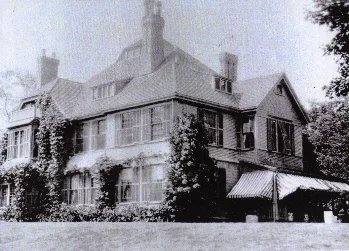
Highfield Hall, in Falmouth, Mass.
An electic art gallery/museum in an old summer mansion, and its gorgeous grounds, in Falmouth on Cape Cod are well worth visiting. It’s Highfield Hall & Gardens, built by the Beebe family, whose fortune was started by James Madison Beebe (1809-1875), an early dry-goods and department-store mogul in Boston. (He helped found the late, great Jordan Marsh, for many years Boston’s biggest department store.)
In the ‘60s, it looked for a time as if the house, gardens and woods around the mansion would be developed, but local citizens banded together to save them.
Interestingly for a former summer place on the Cape, it’s not on the ocean. But when the two Beebe houses -- Highfield and Tanglewood (the latter was torn down in ’77) were built on the property, the structures, on a hill, had views of Buzzards Bay because there many fewer trees around the 1,000-acre property in the late 19th Century. Indeed, much of the Falmouth area then was open ground for crops and for pasturage for cows and sheep.
New Year's apparition
"I saw the New Year coming.
He seemed ancient, tired, and blue
As if he knew so many things
He wished were not so true.
Then as he came nearer,
I saw what everyone knows.
He really is a young man
Wearing an old man's clothes.''
-- The Rev. Roscoe E. Trueblood
How Wall Street ravaged Main Street and democracy and spawned cynical demagogues like Trump
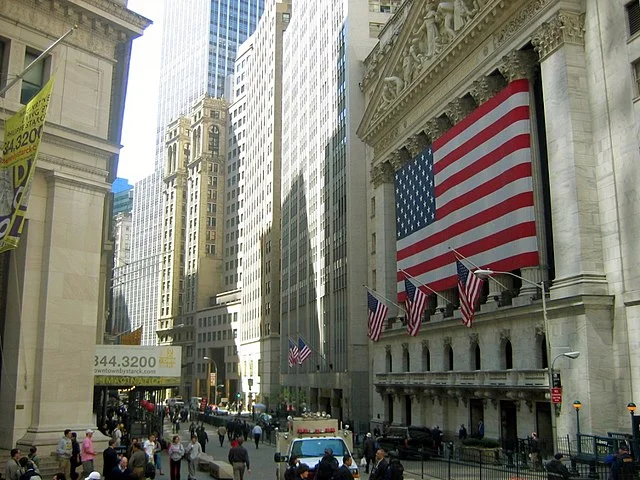
Wall Street, with the flag-bedecked New York Stock Exchange.
Read these books on how a corrupt and hyper-privileged Wall Street ravaged Main Street and undermined democracy. Hit this link.
Llewellyn King: The other side of Christmas; where to get the workers, or will we need them? dog poems
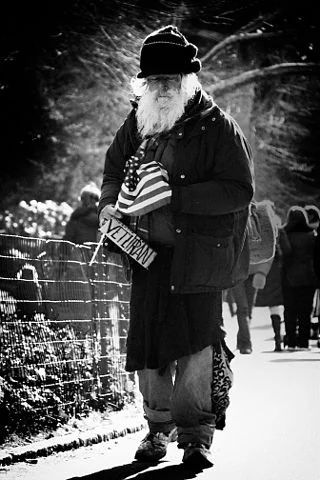
-- Photo by J.M. Suarez
Deck the halls! It’s Christmas and I love the warmth of it: Strangers embracing and goodwill flowing; gorgeous music, particularly the English and German carols; the feasting, and the wondrous excitement of it all. It’s every year’s exuberant moment.
But it isn’t for everyone.
The shut-in and the shut-out have an especially hard time as the rest of us cavort in funny hats, red vests, hugging, laughing, eating (too much) and drinking (a bit too much). My mother, who was a teetotaler all year long, would drink two small glasses of sweet sherry and declare that God would forgive her because it was Christmas.
But it’s also a time when those who are hurting hurt more. When those who are lonely feel their isolation more keenly. And when those who are bedridden feel the bondage of the blankets more acutely.
For those incarcerated at Christmas, the bars press in. For those who have no home, the sidewalks are hard and the shelters are terrible. Homelessness is the workhouse and sleeping in the streets is the debtors’ prison of the 21st Century.
There are no mangers in urban America.
Spare a thought among the jollity and mirth for those who are sick, those who care for the sick, those who are in prison, and those who will lay down their heads on a concrete couch maybe after a dinner handed out by a charity. They weren’t made for that.
Dog Poems That Warm The Heart
If you’re getting a puppy for Christmas, or if you have a dog, it’s time you read the four greatest poems ever written, to my knowledge, about dogs. They are the work of Rudyard Kipling.
My wife, Linda Gasparello, and I routinely send them to friends who have lost a dog or, even more sadly, have had to put one down.
I can’t resist the first two lines of “His Apologies”:
Master, this is Thy Servant. He is rising eight weeks old.
He is mainly Head and Tummy. His legs are uncontrolled.
Or this verse from “The Power of the Dog”:
There is sorrow enough in the natural way
From men and women to fill our day;
And when we are certain of sorrow in store,
Why do we always arrange for more?
Brothers and sisters, I bid you beware
Of giving your heart to a dog to tear.
After Tax Cuts, Where to Get the Workers?
If the tax cuts produce more jobs, as President Trump promises, there will be a labor shortage of gargantuan proportions.
Talking to an executive from a trucking company, I learn that his company is desperate for drivers. Nationwide, there are more than 30,000 vacancies for drivers in a workforce of 3.5 million. Turnover is 90 percent, as drivers seek better jobs and easier work.
A driver makes about $41,000 a year— a wage that hasn’t kept up with living costs. In the glory days, before trucking was deregulated in 1980, a driver made good money and was firmly part of the middle class.
Likewise, the contracting industry is hampered by a lack of workers. An architect in a large practice tells me they can’t get contractors for new projects because the contractors can’t get qualified help.
Next step: Welcome back the undocumented? Considering the severity of the labor shortage, one wonders how soon automated trucks will hit the streets. My friend in the trucking industry says his company is watching Tesla with keen interest and is in touch with Tesla management.
At Harvard, I sit in on a Boston Global Forum session whose participants are talking about massive job displacement by artificial intelligence. Optimists tell you that all past automation has led to an abundance of new jobs. But, avers a friend in industry, in the past, automation produced new products, and AI looks like it will just make old ones better. And there’s the rub.
The Things They Say
“I stopped believing in Santa Claus when I was six. Mother took me to see him in a department store and he asked me for my autograph.”
— Shirley Temple Black
Llewellyn King (llewellynking1@gmail.com), based in Rhode Island and Washington, D.C., is a veteran publisher, essayist and international business consultant who is also executive producer and host of White House Chronicle, on PBS,
He only looks tormented

"Tucson' (graphite charcoal and pencil on paper), by Robert Beauchamp (1923-1995), in the show "Robert Beauchamp: Four Decades of Works on Paper,'' at the Iris & B. Gerald Cantor Gallery at the College of the Holy Cross, Worcester, Jan. 25-March 28. The show, says the gallery, traces his career from his early days in New York to his death, "highlighting a vast array of inventive drawing techniques, a never ending deep engagement with the figure, along with imaginative combinations of personal symbols and narration.''
New England and the American elm
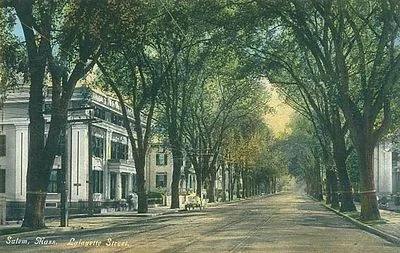
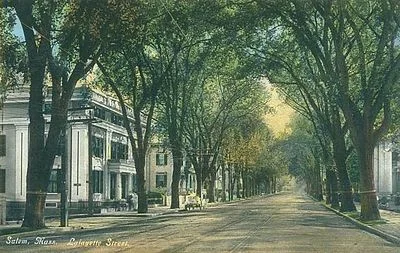
Lafayette Street, Salem, Mass., about a century ago. This is an example of the cathedral effects created by plantings of the American elm, once common in New England.
From Robert Whitcomb's "Digital Diary'' column, in GoLocal24.com:
The Republic of Shade: New England and the American Elm, by Thomas Campanella, a city planner, is a fascinating look at how elm trees were planted and nurtured in American towns and cities to bring together nature and human systems. They have great height, their crowns have a wide fountain shape, and their leaves are small, which lets through a lot of sunlight to dapple the ground below. So wide are their crowns that long rows of elms on both sides of a street create a Gothic cathedral effect. No wonder that there are so many Elm Streets in New England and in the Mid-Atlantic and Upper Midwest states.
The author says that Charles Dickens was very enthusiastic about elms when he visited New Haven, “Elm City,’’ in 1842. Dickens wrote that the trees “bring about a sort of compromise between town and country.’’
Sadly, Dutch Elm disease killed most of these beautiful trees in the 20th Century. But forestry experts have been developing more disease-resistant elms in the past few years. We’re hoping that these elegant trees can make a big comeback and again grace many streets, parks and commons.
My strongest memory of them is from the mid-50’s, when Memorial Day marchers in uniform walked at generally stately paces below their new leaves. Most of those trees were gone in the next decade.
To hear Mr. Campanella discuss his book, please hit this link:
http://archive.ttbook.org/listen/22356Fopem,
Worcester people of color, 1897-1917
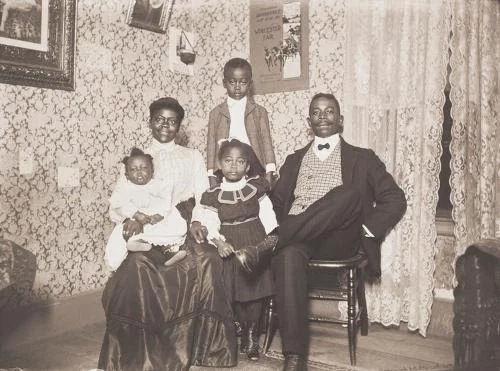
From "Rediscovering an American Community of Color: The Photographs of William Bullard,'' at the Worcester Art Museum, through Feb. 25. Mr. Bullard took pictures of people of African-American and Native-American descent in Worcester in 1897-1917.
Conn. gun crackdown seems to work

Adapted from Robert Whitcomb's "Digital Diary,'' in GoLocal24.com:
After a lunatic young gunman murdered 20 first graders and six adults at the Sandy Hook Elementary School, in Newtown, Conn., in 2012, Nutmeg State legislators in 2013 broadened the definition of “assault rifle’’ and the sale of gun magazines that can hold more than 10 rounds. State law also requires a permit to buy any gun or ammunition. And Connecticut has a registry of weapon offenders and a universal background check system.
Ron Piniciaro, executive director of Connecticut Against Gun Violence, told WNPR that the state had 53 homicides with guns in 2016, way down from the 92 before the new law took effect. But then, southern New England has long had among the lowest gun-death rates in America.
Interestingly, reports WNPR, gun sales are still rising in the state. But Mike Lawlor, Connecticut’s undersecretary for criminal-justice policy and planning, says the rigorous permitting process keeps down the violence.
There have been variants of the Connecticut legislation promoted in Congress but as long as the National Rifle Association, which acts as chief lobbyist for the gun-manufacturing industry, holds sway there, don’t expect anything. Polls suggest that most Americans want tougher gun laws, but that counts for little on Capitol Hill!
Gun-control advocates lack the lobbying and campaign-contribution money of the weapons industry and, whatever the opinion polls show, gun lovers vote more intensely than do gun-control folks. And the gun lobby and its servants in Congress and the White House are far more politically ruthless than are gun-control people. For that matter, on a range of issues from health care to taxes to the environment, the majority of the public seems to favor slightly left-of-center positions, if national opinion polls mean much. But they vote at considerably lower percentages than do people on the right. They get the government they deserve.
'Welcome to Lee, Maine'

See Welcome to Lee, Maine, a beautiful movie about a small Maine town and what happened when a far-away war hit home hard. To see the movie trailer, please hit this link.
'Wants it to be winter'

"Fifty brief summers, fifty northeastern
winters have close to petrified the frames
once carefully recessed and rigged with pulleys, though the ropes have frayed,
the weights like clappers dropped inside the walls.
They're called "eight over twelves,'' my guillotine windows,
that slam themselves on spring,
and the wooden spoons that prompt them up belly like yew bows,
and the empty shampoo bottles woo, and the knives, hair brushes,
shoe trees, books, and jewelry boxes,
all will be ruined soon.
Ring the house that wants it to be winter,
a house for wintering, warn the spirits that they'll lose a hand,
a tail sailing in and out of the bell tower.''
-- From "Guillotine Windows,'' by Deborah Digges
They can teach you something
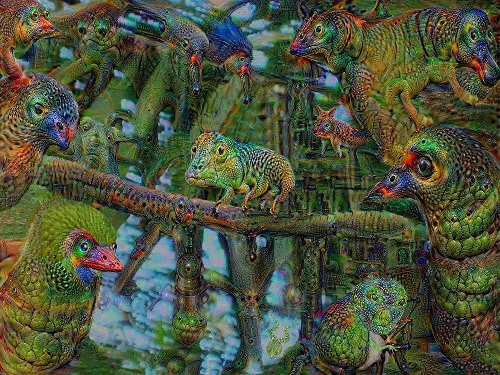
Work by Deirdre Barrett in her show "Exhibition of Digital Dream Art,'' at Darwin's Ltd., Cambridge, Mass., through Jan. 15. Ms. Barrett, a Harvard professor, psychologist, writer and artist, is primarily known for her research on dreams, on which she has published several books.
This exhibit is produced by Cambridge Art Association (CAA) as part of their Satellite Spaces program. CAA exhibits art and offers educational opportunities to facilitate communication among artists, art enthusiasts and collectors.