
Vox clamantis in deserto




Chris Powell: When is character overrated in U.S. politics?
How much does character matter in an elected official? And how broadly is character constituted?
The suggestion of the recent turmoil in Washington, with members of Congress and congressional candidates being accused, investigated, resigning or urged to resign or withdraw, is that character is nearly everything in an elected official but it is narrowly constituted, mainly a matter of sexual conduct rather than worldview.
These premises may be prevailing because most of the politicians accused are representing or seeking to represent districts or states that are safe for their parties. The presumption is that one Democrat or Republican is as good as another.
But would people feel that way if great policy decisions hung on any particular resignation or withdrawal?
Suppose that upon his resignation liberal Minnesota Democratic Sen. Al Franken, accused of buffoonish sexual advances during his career as a comedian before his election, was to be replaced not by another Democrat but by a Republican because his state had a Republican governor who would appoint an interim successor. Suppose also that Franken was to be replaced while the Senate was deciding whether to go to war against North Korea or whether to approve President Trump's nomination of a Supreme Court justice pledged to reverse the court's decision in Roe v. Wade.
How troublesome would a little butt or breast squeezing seem then, and how compelling Franken's would removal from the Senate seem, at least to people opposing such a war or reversal in abortion policy? Surely Franken's misconduct and removal would seem much more compelling to those who favored war and undoing Roe.
Of course, people's politics tempers their moral judgments. They are more likely to forgive their political allies than their political adversaries. Misconduct by the late Sen. Ted Kennedy, D-Mass., left a young woman to die in a car that he had driven off a bridge but he was instantly forgiven by his political allies and never forgiven by his political adversaries.
This tempering of judgments often becomes hypocrisy, of which the country is full these days, what with Republicans, usually advocates of states' rights, advancing federal legislation to force states to yield to the gun regulations of other states, and Democrats, usually opponents of states' rights, defending "sanctuary cities" and thereby advocating nullification of federal immigration law.
Sexual harassment and exploitation are big problems, and stopping them requires complaining about particular incidents contemporaneously in public. But satisfying as it may be to topple the powerful, sexual misconduct is not the country's only problem. Often the country has to choose among its problems, and its characters.
* * *
HAPLESS ON TRANSPORTATION: Connecticut Gov. Dannel Malloy never looked as hapless as he did last week bemoaning the likely exhaustion of Connecticut's special transportation fund and the suspension of many projects. It was as if he had nothing to do with the problem.
But somehow in his two terms he found hundreds of millions of dollars for projects of no urgency, like the bus highway between Hartford and New Britain and the commuter railroad between New Haven and Springfield. With Hartford on the verge of bankruptcy, he failed to stop the city from building a baseball stadium and a few weeks ago even reimbursed the city for half the stadium's cost.
Big changes in policy long have been required to save Connecticut. The governor has failed to make them.
Chris Powell is managing editor of the Journal Inquirer, in Manchester, Conn.
Winter in the City of Light

Painting at M Fine Arts Gallerie, Boston, by Fabienne Delacoix, daughter of the master French artist Michael Delacroix. She's known for her French landscapes and, more recently, Parisian scenes of a century ago.
Anna Meyer: Your tax dollars fund agribusiness propaganda

Via OtherWords.org:
While Congress hasn’t accomplished much in 2017, it did manage to pass a budget resolution — and within that budget, a sum of $3 million stands out.
Congress appropriated that $3 million to fund the Agricultural Biotechnology Education and Outreach Initiative. That’s a partnership between the Food & Drug Administration (FDA) and the Department of Agriculture (USDA) “to provide consumer education on agricultural biotechnology and food and animal feed ingredients derived from biotechnology.”
What they’re really talking about is a promotional campaign for genetically modified organisms, or GMOs.
There are two major flaws with this plan.
First, the FDA is tasked with building a campaign around the “safety and benefits of crop biotechnology.” But what about the risks, concerns, and unknowns?
Leaving those out means using government agencies and taxpayer funds for corporate propaganda. It benefits companies like Monsanto, Dow, Dupont, Syngenta and Bayer, which collectively earn billions of dollars from these technologies, but does little to inform consumers.
Second, the initiative will push forward “science-based” education. The question is: Whose science are they using?
There’s very little independent or government research on GMOs and their corresponding pesticides. The lack of unbiased and comprehensive science on biotechnology is a result of corporations controlling who can do research on biotech products.
Much of the existing research is either industry-funded or straight out of biotechnology companies’ own labs. The existing regulatory framework relies on voluntary reporting and doesn’t require independent verification to prove the safety of new products before they land on dinner plates across the country.
If the government’s going to educate consumers on biotechnology, it must first do its own unbiased studies on the long-term environmental and health impacts of existing GMOs and pesticides. It also needs a much more rigorous — and mandatory — regulatory process.
The government must tell consumers the full truth, presenting balanced and unbiased information on the benefits, risks, and concerns around biotechnology. The FDA must openly address consumer concerns about long-term environmental impacts, corporate influence on government research, and corporate control of our industrialized food system.
We’re at a turning point in history where we can reverse the harm that we’ve done to our communities, farmland, and environment.
Industrialized, chemical-intensive agriculture designed to work around biotechnology is a failed system. It’s increasing herbicide use, exacerbating pesticide resistance, polluting our waterways, soil, and air, and promoting highly processed food and confined animal production.
In order to build a more sustainable food system for our health and our climate, we need to move away from chemical-intensive agriculture. Rather than promoting corporate interests, that $3 million would be much better used to promote the transition to regenerative organic agriculture, to build urban food hubs, and to aid the next generation of farmers in accessing land and resources.
The FDA doesn’t need a biotechnology marketing initiative. It needs an initiative to bring back public trust in federal regulatory agencies, and move the country forward towards truly sustainable agriculture.
Anna Meyer is the Food Campaigns Fellow at Green America.
Tech elite pulls us into chaos
From “How a half-educated tech elite delivered us into chaos, ‘’ by John Naughton, in The Guardian:
“Put simply, what Google and Facebook have built is a pair of amazingly sophisticated, computer-driven engines for extracting users’ personal information and data trails, refining them for sale to advertisers in high-speed data-trading auctions that are entirely unregulated and opaque to everyone except the companies themselves.
“The purpose of this infrastructure was to enable companies to target people with carefully customized commercial messages and, as far as we know, they are pretty good at that…. And in doing this, [Facebook chief Mark} Zuckerberg, Google co-founders Larry Page and Sergey Brin and co. wrote themselves licenses to print money and build insanely profitable companies….
“It never seems to have occurred to them that their advertising engines could also be used to deliver precisely targeted ideological and political messages to voters. Hence the obvious question: how could such smart people be so stupid? ….
“My hunch is it has something to do with their educational backgrounds. …
“Now mathematics, engineering and computer science are wonderful disciplines – intellectually demanding and fulfilling. And they are economically vital for any advanced society. But mastering them teaches students very little about society or history – or indeed about human nature. As a consequence, the new masters of our universe are people who are essentially only half-educated.’’
To read the whole piece, please hit this link:
https://www.theguardian.com/commentisfree/2017/nov/19/how-tech-leaders-delivered-us-into-evil-john-naughton
'Snow slides onto snow'

In the trees near the top of Mount Kearsage.
Mount Kearsage shines with ice: from hemlock branches
snow slides onto snow; no stream, creek, or river
budges but remains still. Tonight
we carry armloads of logs
from woodshed to Glenwood and build up the fire
that keeps the coldest night outside our windows.
Sit by the woodstove, Jane Kenyon,
while I bring glasses of white
From "The Peepers, the Woodshed,'' by Donald Hall, a former U.S. Poet Laureate. The late Jane Kenyon, also a poet, was his wife. He lives in Wilmot, N.H., near Mount Kearsage.
"Romantic scenery'
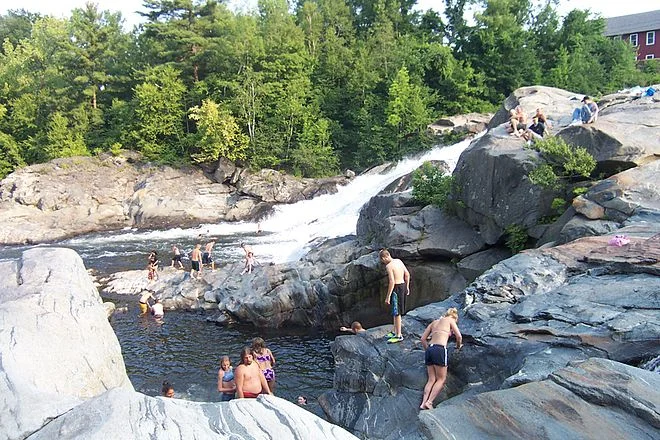
On the Deerfield River at Shelburne Falls, Mass.
‘’The river was a brawling stream, shallow, and roughened by rocks; now we rode on a level with it; now there was a sheer descent down the roadside upon it….Between the mountains there were gorges and defiles that led the imagination away into new scenes of wildness. I have never ridden through such romantic scenery.’’
-- Nathaniel Hawthorne, on the Deerfield River (in southern Vermont and western Massachusetts) in The American Notebooks (1838)
Limited territory

Print from about 1730.
Because Boston Mayor Marty Walsh resoundingly won re-election, aided by the growing wealth of the city, some silly commentators are saying that he could have national ambitions. But no Boston mayor could go beyond being Massachusetts governor, and even that might be a stretch. Walsh is too liberal and some Americans would dislike his accent, too. Boston is a foreign city to many people west of the Hudson.
Boston Children's Hospitals makes big advance against diabetes

This from the New England Council (newenglandcouncil.com):
"Boston Children’s Hospital recently cured type 1 diabetes in mice, bringing them one step closer to finding a cure for the disease in humans. cured type 1 diabetes in mice, bringing them one step closer to finding a cure for the disease in humans.
Researchers at the hospital have been working with mice on an immunotherapy treatment that replaces a genetic defect in blood stem cells with the patient’s own blood cells. The hospital discovered a genetic defect that decreases the PD-L1 protein therefore weakening the patient’s immune system and causing the disease. The mice that were infused with their own blood cells were all cured in the short-term and one third of the mice were cured for the rest of their lives. In initial human trials, the treatment met all FDA requirements and found no adverse effects, but more research is required to establish the ideal frequency of the treatment. Boston Children’s is currently working with Fate Therapeutics to optimize the treatment.
“We think resolution of (this problematic gene) may provide a novel therapeutic tool for the disease,” said Moufida Ben Nasr, a leading researcher with Boston Children’s Hospital.''
News as you move

Where we still read newspapers.
Photo by Philip K. Howard (www.philipkingphoto.com)
Mr. Howard is a New York-based lawyer, civic leader, author (including of the best-seller The Death of Common Sense) and photographer.
Clean your room

"Invisible Energy'' (ink, charcoal and gesso on Tyvek), by Barbara Moody, in her show "New Work,'' at Kingston Gallery, Boston, Jan, 3-28. The gallery says that she's interested in visual complexity and the contrast between density and open space.
Don Pesci: Connecticut's rich Democratic politicians
In politics, including in Connecticut, there are two kinds of riches: personal riches – Democrat Dick Blumenthal, weighing in at $67 million, is among the eight richest senators in Congress – and campaign riches.
Democrat U.S Sen. Chris Murphy, who complains often enough that hustling campaign dollars wastes time that he might otherwise more profitably spend demonizing the National Rifle Association – which recently signaled its support of a bill championed by Murphy and fellow NRA demonizer Blumenthal, the “Fix NICS Act of 2017”, that would reinforce requirements that federal agencies report all infractions to the National Instant Criminal Background Check System -- currently has about $6 million in his campaign kitty. Most people could not name Murphy’s likely Republican challenger. None of them have yet hit the $60,000 mark.
Democrat Rep. Elizabeth Esty has $1.2 million in her campaign bank account. Craig Diangelo, a Republican running against Esty, had $57.16 on hand at the end of September.
So then, all the Democrats in Connecticut’s all-Democrat U.S. congressional delegation are far wealthier than their impoverished Republican challengers. U.S. Rep. Joe Courtney – “two subs Joe” – has tucked away $837,805. Rep. Jim Himes, who has no Republican opponent, boasts $2.3 million. John Larson, representative for life in the gerrymandered 1st District, has pocketed $354,915. U.S. Rep Rosa DeLauro has $64,969 on hand, but that modest figure only hints at a larger story. DeLauro and Larson, both representing gerrymandered districts, have been in the U.S. House for a combined total of 44 years, which suggest that neither of them is reliant on massive campaign war chests to remain in office.
Like Blumenthal, DeLauro is personally rich. Both Blumenthal and DeLauro married well. Blumenthal is married to the daughter of redundantly rich New York real estate magnate Peter Malkin, who owns the Empire State building and other money-making properties. A few years ago, Malkin and his son Anthony took Malkin Holdings public. According to the New York Post, “the company’s initial public offering raised about $754 million.” It takes money to make money, as the one-percenters say.
DeLauro is married to Stan Greenberg, pollster to Democratic stars. Greenberg’s politically high-profile clients have included such political shakers and movers within the Democratic Party as former President Bill Clinton, former Vice President Al Gore, the late Vice President Walter Mondale and a host of both national and international corporations and issue groups.
The CEO of Greenberg Quinlan Rosner, boasts that his firm “is one of the world's premier research and strategic consulting firms. Beyond data, we provide the strategic insight necessary to develop the right messages to achieve our clients' goals. Smarter, faster and committed to our clients' interests: We work harder and think deeper than the rest.”
In off hours, the DeLauro-Greenberg team is The Great Gatsby of Washington, D.C. DeLauro shares her campaign wealth with the Democrat National Committee, which in turn parcels out its contributions, in both money and services, to other worthy and appreciative Democrats, usually incumbents like DeLauro. In turn, Greenberg is showered with business from Democratic politicians, and the bread DeLauro has thrown upon the political waters, as the Good Book says, will be returned to her after many days.
It may be difficult for some to make qualifying distinctions between this profitable loop and self-dealing, but one may be sure the loop is legal. In addition to prime property in Washington DC, where the DeLauro-Greenberg team holds salons for political activists and seasoned politicians, money buys pro-active legal services from accomplished and wealthy law firms.
Among some more slithery politicians, the phrase “it’s all perfectly legal” sometimes precedes ethically questionable dealings, which is why Honoré de Balzac said, “The secret of great fortunes without apparent cause is a crime forgotten, for it was properly done.” Mario Puzo paraphrased the quote and used it to open his novel The Godfather – “Behind every great fortune, there is a crime.”
Because of gerrymandered districts, both DeLauro and Larson will likely keep their seats in Congress in perpetuity. Still, God being just, Ecclesiastics warns us that there will be a final election, a warning that seems to be addressed especially to successful senators from Planned Parenthood:
“As you do not know the way the spirit comes to the bones in the womb[a] of a woman with child, so you do not know the work of God who makes everything …
“Rejoice, O young man, in your youth, and let your heart cheer you in the days of your youth. Walk in the ways of your heart and the sight of your eyes. But know that for all these things God will bring you into judgment.”
Don Pesci is a Vernon, Conn.-based columnist.
Looking for indigenous affirmation

Native American tribes in southern New England as of about 1600.
-- Map by Nikater, adapted to English by Hydrargyrum
From Robert Whitcomb's "Digital Diary,'' in GoLocal24.com:
There was a brief uproar last week when Donald Trump, speaking at a ceremony at the White House to honor Navajo “code talkers,’’ who were very helpful in the U.S. military in World War II, made a joke about Sen. Elizabeth Warren’s claim to have some Native American ancestry. He yet again called her “Pocahontas.’’ Like most of this con man’s jokes, it was stupid and nasty. Still, I, too, doubt if the Massachusetts senator has any Native American blood, though she has suggested she does. How about having your DNA tested, senator? That would clear this up.
(Some of my relatives have insisted that we have Cape Cod Wampanoag blood. Another romantic family myth. Or looking for some casino money….)
More troubling was that on the wall behind Trump and the honorees was a big portrait of the horrible President Andrew Jackson, the thug who helped force thousands of Indians from their homelands in the Southeast to west of the Mississippi. Many thousands died on this “Trail of Tears.’’
Trump has frequently expressed his admiration for Jackson, and indeed had that portrait hung there.
xxx
Speaking of Warren, I wonder if the Democrats will be crazy enough to nominate her or Bernie Sanders for president in 2020. The Dems should be in a strong position to win back the White House in three years because of Trump’s corruption and incompetence and what’s likely to be a recession in the next couple of years. But the stridency of Sanders and Warren is unlikely to be a big hit in the next campaign. And they’d both be too old. By that point, I think, Americans will be looking for a calm and only slightly left-of-center leader, preferably someone who had been a successful governor. (But watch Sen. Kirsten Gillebrand, of New York....)
Or it may be a name that few Americans would recognize now.
Christmas rose in a revolutionary town

Untitled oil on panel, by Joseph Q. Daily, in the "33rd Annual Almost Miniatures Show, at Francesa Anderson Fine Art, Lexington, Mass., through Jan. 13.

Statue of Captain John Parker and Hayes Memorial Fountain, on Lexington Common, by H.H. Kitson. Lexington and Concord were, of course, where the American Revolutionary War got going in earnest.
Llewellyn King: Be scared of whom you kiss, and other big changes in 2017

"The Mistletoe Seller,'' by Adrien Barrère
Some years are indelibly etched into history, like 1941, with the bombing of Pearl Harbor; 1964, with the Civil Rights Act; and 1968, with the anti-war demonstrations.
Such a year may be 2017, not only because of Donald Trump’s presidency but also because of revolutionary changes in the way we live and work that aren’t directly produced or ratified by politics.
Here are some of the takeaways:
The uprising of women against men in power who have harassed them, assaulted them and sometimes raped them. Nothing quite like this has happened since women got the vote. The victims have already wrought massive changes in cinema, journalism and Congress: Great men have fallen, and fallen hard. Can the titans of Wall Street and the ogres of the C-Suite be far behind?
This Christmas, more people will buy online than ever before. Delivery systems will be stretched, from the U.S. Postal Service to FedEx, which is why Amazon and others are looking at new ways of getting stuff to you. There will be bottlenecks: Goods don’t come by wire, yet. The old way is not geared for the new.
The sedan car — the basic automobile that has been with us since an engine was bolted in a carriage — is in retreat. Incredibly, the great top-end manufacturers, from Porsche to Rolls Royce and even Lamborghini, are offering SUVs. They win for rugged feel, headroom and, with all-wheel drive, they’ll plow through snow and mud. In the West, luxury pickups are claiming more drivers every year for the same reasons.
No longer are electric vehicles going to be for the gung-ho few environmentalists. Even as the big automakers are gearing up for more SUV production, they’re tooling up for electrification on a grand scale, although the pace of that is uncertain. Stung by the success of Tesla, the all-electric play, General Motors is hoping to get out in front: It is building on its all-electric Volt. Volvo is going all-electric and others want to hedge the SUV bet. The impediments: the speed of battery development and new user-friendly charging.
The money we have known may not be the money we are going to know going forward. In currency circles, there is revolution going on about a technology called “blockchain.” Its advocates, like Perianne Boring, founder and president of the Chamber of Digital Commerce, believe it will usher in a new kind of currency that is safe and transparent. A few are making fortunes out of bitcoin, which has risen 1,000 percent in value this year so far. A fistful of new currencies are offered — and even bankrupt Venezuela is trying to change its luck with cryptocurrency. For those in the know, blockchain is the new gold. Will it glitter?
The proposed merger between CVS, a drugstore chain, and Aetna, an insurance giant, may be one of the few mergers that might really benefit the consumer as well as the stockholders and managers. It will lower drug prices because both the drug retailer and the paymaster will be at the same counter. Expect this new kind of health provider to drive hospital charges toward standardization.
This holiday season, consider the changes in the way you live now. Watch out for whom and how you kiss under the mistletoe, and for how Internet purchases get to you. If a new car is in store for you in 2018, a difficult choice may be to venture electric, go SUV or stay with a sleek sedan. And will you pay for it with the old currency or the new-fangled cryptocurrency?
Happy holidays!
On Twitter: @llewellynking2
Llewellyn King (llewellynking1) is executive producer and host ofWhite House Chronicle, on PBS.
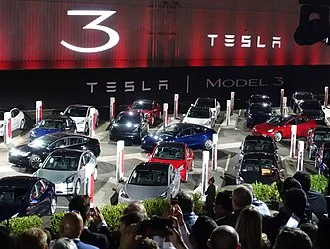
The Tesla Model 3 first deliveries event took place on July 28, 2017.
Down to basics up in Vermont

"Five Trees'' (in Vermont), photo by Jon Olsen, at Alpers Fine Art, Andover, Mass.
In Octavia's arms at the N.E. Aquarium

Octavia the Octopus.
"When I would visit my octopus friend, Octavia, at the New England Aquarium, usually she would look me in the face, flow right over to see me, and flush red with emotion when she took my arms in hers. Often when I'd stroke her she'd turn white beneath my touch, the color of a relaxed octopus.''
-- Sy Montgomery, a writer about animals and author of The Soul of an Octopus (2015).
Beware the holiday health police
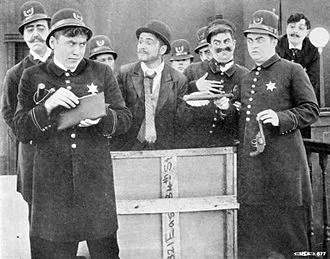
Christmas is Coming
Christmas is coming, beware of getting fat.
Keep in mind that vegetables are where it's at.
If you haven't got a carrot, a cucumber will do.
If you disobey the health police, then God help you!
--- Felicia Nimue Ackerman
James P. Freeman: Taylor Swift shows herself as a coldly calculating capitalist and techno tyrant

Taylor Swift

Fans of Taylor Swift (a part-time resident of Watch Hill, R.I.) should prepare themselves for despair. In youthful vernacular, Hundo P will dissolve to Sus and Salty AF. Girls will cry. Fingers will point. Ticketmaster will shrug … And Taylor Swift will need a bigger bank. A databank.
In early November, Swift, America’s biggest and most influential pop sensation, announced a massive new world tour beginning next May (stopping at Foxboro’s Gillette Stadium on July 28). She is employing Ticketmaster’s Verified Fan, a new process to purchase tickets, where Swift and Ticketmaster are committed “to getting tickets in the hands of fans. Not scalpers or bots.” Their collaboration, they say, will help fans — mostly teenage girls — get the best access to tickets “in a really fun way.”
Those efforts will fail. Badly.
On Dec. 5, many Swift fans felt Swiftboated. That date marked the beginning of her Presale (a ticket-buying window usually limited to fan clubs and corporate sponsor clients, but prone to ticket-buying bots masquerading as humans). The date also marks the time when young fans will learn a bitter lesson in economics and literature that no school can teach. A date — an early Pearl Harbor Day for “Tay” fanatics — when dollars, disappointment, and Orwell collide. Even non-fans should take notice.
Ticketmaster, America’s largest primary ticket distributor, conceived Verified Fan last year after Adele’s 2016 world tour.
When tickets first went on sale, in December 2015, 10 million people initially attempted to purchase 750,000 tickets. The market acted supremely efficiently with this vicious demand-supply imbalance: Prices rose dramatically (face value is not necessarily indicative of market value). Conveniently, though, Ticketmaster and ticketless fans blamed high-speed computer programs (called bots) and scalpers for market disruptions (price gouging). So, Ticketmaster created Verified Fan with this noble goal: ensuring more so-called “true fans” secure valid tickets at reasonable prices.
But Verified Fan is troubling on a practical and philosophical level.
Just ask U2 and Bruce Springsteen fans.
Last August, Springsteen on Broadway, a limited engagement, used the new system that, in the words of observer.com, “wasn’t born to run properly.” Fans were subjected to a “confusing” and “complicated” process. To make matters worse, “Verified Fan didn’t stop bots and scalpers from reselling tickets.” In fact, seats were “listed on StubHub for $2,500 before tickets even went on sale to the general public.”
More recently, U2 fans (for whom, or perhaps against whom, Verified Fan is being used for the first time on a full-scale arena tour) expressed loud Irish stage whispers over the new process anticipating the band’s 2018 tour. Malfunctioning codes (read on) and miscommunication, among other problems, greeted Presale and General Sale participants seeking tickets for next year. So bad was the global reaction that U2’s manager felt compelled to respond to numerous fan sites. On Twitter, there is a thread #Verified Scam. It is sure to grow more active.
But Taylor Swift and Ticketmaster take “Taylor Swift Tix Powered by Ticketmaster Verified Fan” to a whole new devious and disingenuous level.
Unlike hyperventilating analog Beatles fans in 1964, hyperactive digital Swift fans in 2017 had to register on her official Web site and further register (linking) on Ticketmaster’s website to become a “verified fan” (and further register with a given concert venue).
It sounds simple enough. However, unlike U2 and Springsteen fans, Swift fans were encouraged to participate in “unique activities” to bolster their verified fan status. For unsuspecting young people, the euphemistic and purposely vague phrase “unique activities” (which sounds like it came straight out of a Cold War-era espionage enterprise) means, in ticket industry parlance, “boosting.”
This disturbing practice was explained on Swift’s Ticketmaster FAQ site. Boost activities “come in all shapes and sizes.” Her fans were implored to “watch the latest music video on the portal, purchase the album, post photos, and engage on social media to boost your opportunity to unlock access to tickets.”
Even before boosting began, there was reasonable skepticism about the entire initiative. Some accused the entertainer of scamming her most dedicated fans. Those sentiments gain credible strength given the preposterous activities fans were instructed to indulge.
There were music boosts, merchandise boosts, UPS boosts (where fans could spot and track — Seriously! — the exclusive Taylor Swift UPS Truck), friends and family boosts, video boosts, and social media boosts. Theoretically, more activity meant more opportunity to move up the virtual electronic line to get tickets. “While boosts are optional, we hope you’ll play along with the Taylor community and to help you unlock the best opportunity to access tickets!”
Ticketmaster isn’t Sesame Street. But it still wanted you to “come on down …” A series of Swift-sanctioned YouTube videos — examples of strategic marketing — targeted her young fan base with animated kitten cartoons. One tells fans Ticketmaster’s new approach is “better” and “fun.” In another, the female announcer says, “you’re the best fans” “doing the best things” “to get the best seats possible.” And, the voice continues with sinister serenity, “it was easy to do, because who doesn’t love boosting their faith?”
Place not your faith in boosts.
Throughout the entire marketing campaign Swift and Ticketmaster strongly implied that all the boosting aerobics would result in true fans actually purchasing face value tickets. They won’t. And many fail to understand this crucial point. Just like popsugar.com. It mistakenly asserted on a Nov. 18 posting, “dedicated fans will be able to purchase tickets in advance through the Ticketmaster …” Potentially millions won’t. Simply registering for Verified Fan guaranteed fans absolutely nothing. Fans only had the opportunity for access. They are guaranteed neither access nor tickets.
This all smacks of false advertising. And pay to play. Or, more precisely, pay to prey.
More dangerous is that while fans are paying Swift for swag, they are also unwittingly paying both Ticketmaster and Swift for the privilege of obtaining lots of their personal information (cell phone, email, credit card, and social media — Twitter and Facebook). They are not only custodians of this information, but they actively monitor and track that sensitive information. And they determine if you are a true fan or even a living human.
Even if this strategy is a “brilliant scheme,” Elana Fishman writes in racked.com, “challenging fans (and their parents) to assert their loyalty by spending the most money possible feels problematic, particularly considering how expensive concert tickets are in the first place.”
For Ticketmaster and Swift, Big Brother and Big Sister, the new thought police of entertainment, big fan data collection is more important than ticket distribution and fan satisfaction. What happens to all this data? Who will have access to this data, after the last song is sung? Will tracking continue indefinitely? The tour begins in Arizona but will likely end in Oceania.
For now, though, Ticketmaster will use “data science technology,” a software program, to determine winners and losers. Boosting activities for the Swift tour closed on Nov. 28, the last day for fans to register as Verified Fans. Afterwards, recode.com explains, “Ticketmaster [will] take time to figure out if [you’re] human, looking for clues like past ticket-buying history and social posts, and lets ticket-buyers know if they’ve made the cut.”
After all this, inquisitive young minds will be asking this question: “When will I know my final spot in line?”
The answer is inadequate: Sometime after the 28th. Certain fans (not all) who are certified as “verified” will receive an email message with further instructions about the Presale. Early on Tuesday, Dec. 5 (the start of the Presale, “T-Day”), verified fans got a text message with a link to search for tickets and a second text message with a unique code to access tickets. Even with access, tickets are not guaranteed. Remember, fans will never be told where their final spot in line lies. If anyone knows, it’s Ticketmaster.
Verified Fan and boosting have never been used in tandem on something as big as Swift’s new stadium tour. Dave Brooks, executive editor of the concert-industry trade magazine Amplify, estimated in August that demand for Swift tickets is at five to 10 times the amount of available seats. And boosting probably created added levels of artificial demand. December 5 promises mountainous chaos.
All entertainers want to capture hearts and minds. Now they want to capture data.
Swift’s cuddly embrace of Verified Fan and Boosting means she has shed her quirky, feel-good, girl-power persona. In its place is a new calculating capitalist and tenacious technologist. A cold character.
Legions of disappointed fans will learn a painful lesson. At school, everyone gets an award. At Taylor Swift Presale, not everyone gets a ticket. Ticketmaster and Swift will eventually learn a lesson, too. Passion is an emotion, not a metric, and devotion can not be measured by bits and bytes. True fans are humans, not data points.
This piece first appeared in The New Boston Post. James P. Freeman, a former banker, is a New England-based writer and a former columnist with The Cape Cod Times. His wortk
Hidden and obvious sightlines

"The Louvre'' (mixed media), by Donna Ingemanson, in the "Sightlines'' group show at the South Shore Art Center, Cohasset, Mass., through Dec. 22. The gallery says that while this piece has no obvious "sightline," unlike some other work in the show, it has a layering of various elements to draw eyes down to the bottom of the piece, where there sits a sketch of the Louvre itself. (See the famous I.M. Pei pyramid in front of the museum.) The show's works offer many different conceptions of sightlines and horizons.
Hotels as economic indicators?
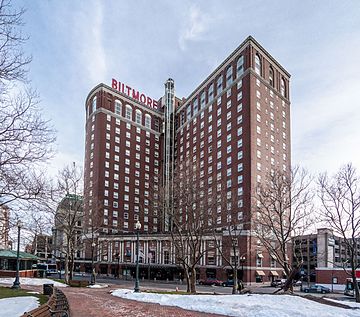
Providence's grand Biltmore Hotel, built in 1922.
From Robert Whitcomb's "Digital Diary,'' in GoLocal24.com:
For some reason, news of the recent proliferation of hotel projects in Providence recalled to me the late film mogul Sir Alexander Korda’s remark that you should “always go to the best hotel…{because} sooner or later someone will appear who will give you money.’’
At last count, there were a total of eight hotels being built or planned in Providence. I have to think that this suggests that there’s more business confidence in the future of the city and Rhode Island than most citizens think. Hotels, after all, cater to businesspeople and tourists.
Presumably the hotel developers believe that there will be more economic activity in the city in the next few years. It’s hard to figure out how much of this is due to the Raimondo administration’s relentless courting of companies to get them to move to Providence, how much to firms’ interpretation of general national and regional business cycles and how much to Providence’s proximity to booming Greater Boston.
The new hotels will boost the city in some rather indirect ways. Hotels, especially their lobbies, function rooms and restaurants, are natural meeting places for businesses. Thus they make cities more dynamic for deal-making. Airbnbs and bed and breakfasts don’t quite do that.
Some old hospitals can be turned into very nice hotels, as a recent Washington Post article reported. Many more hospitals are likely to close as outpatient institutions and home care provide services, even acute-care services, that used to be only available in hospitals, and as new pharmaceuticals and medical devices make it easier to avoid hospitalization. To read The Washington Post article, please hit this link:
As I’ve written before, Pawtucket’s Memorial Hospital’s attractive and very solid buildings could be turned into a large assisted living center, condos, apartments or even, yes, a hotel.