
Vox clamantis in deserto





Four tough customers
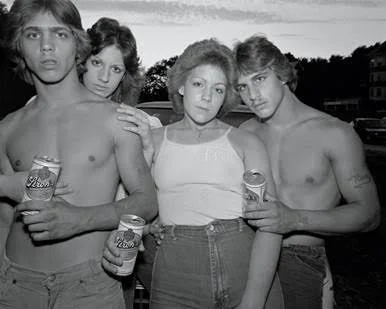
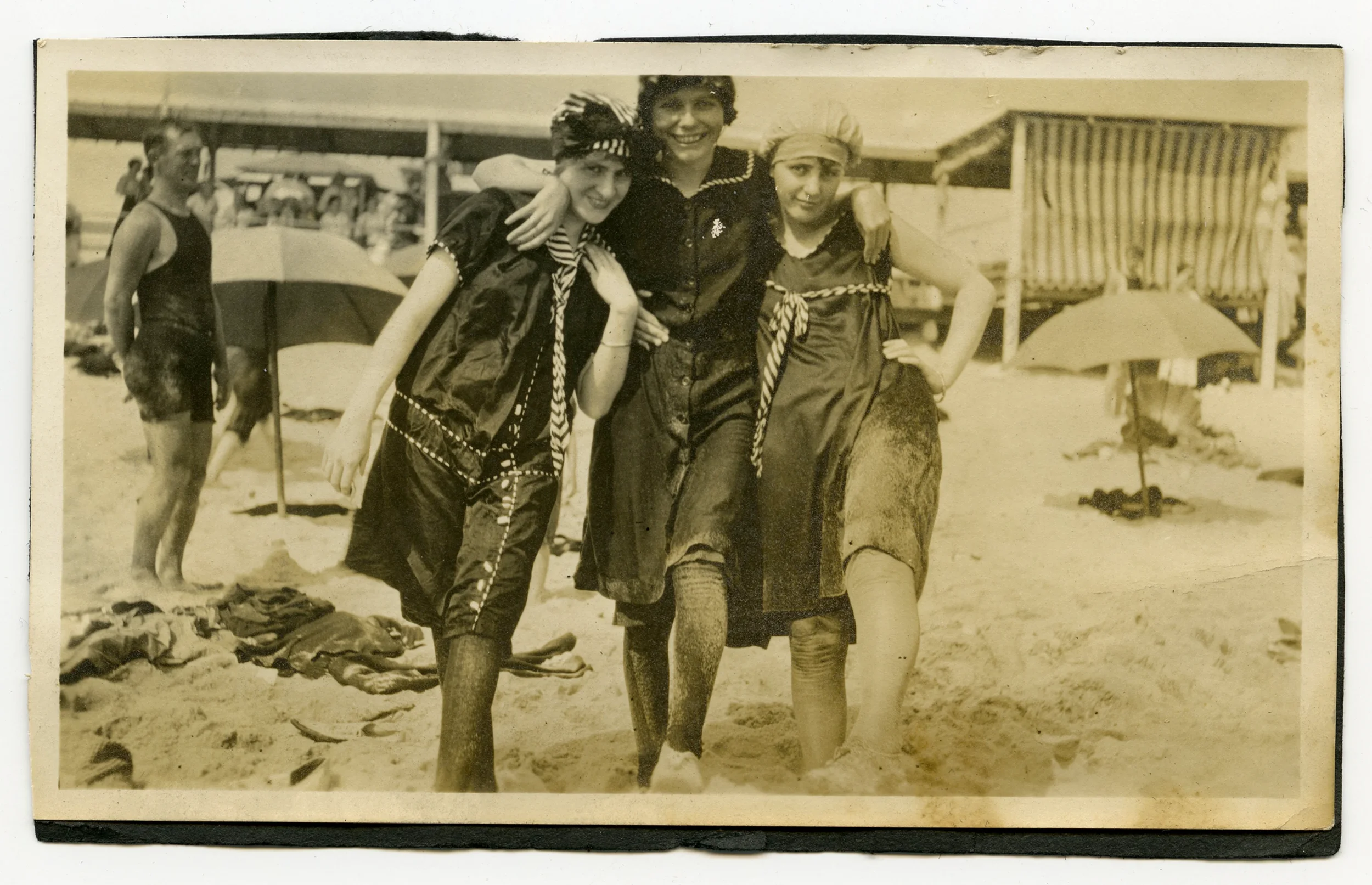
"Butch, Natasha, Krissy and Tony, August 25, 1983'' (silver gelatin print), in the "Bell Pond Series' by Stephen DiRado, in his show "A Photographer's Embrace,'' at the Museum of Art at the University of New Hampshire, Durham, through Dec. 15.
The gallery explains: "Stephen DiRado highlights the artist’s thirty-five-year artistic career as a photographer. Known for his humanistic outlook, DiRado’s work evolved from straight photography of people and places to intimate, empathetic images made in collaboration with his subjects. Using a large-format camera and a black and white silver-gelatin photographic process, his long-term documentary projects explore the structures and identities of communities, families, couples, groups and individuals.
"Works on display include several from DiRado’s series, such as 'Bell Pond,' a series documented during the summer of 1983 of a densely populated community of new and old immigrants residing on Belmont Hill in Worcester, Mass. Bell Pond is a public park and pond, a magnet for families, individuals and teen gangs. Other series included in the exhibition are "Mall Series,'' and DiRado’s 'Martha's Vineyard, Jump Series, ' which depicts people in the midst of their leap of faith from a bridge into the waters....''
So far from but so near to industry
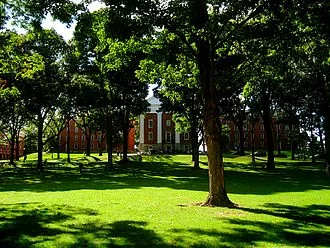
The Main Quad at Amherst College, Amherst, Mass.
"Life, {my mother} felt, should be everywhere as it was in Amherst, where poverty was an accident and great fortunes unknown. We lived so far from industry that we didn't know the industrial revolution had happened. Yet within a few miles of us were the manufacturing towns of Holyoke, Chicopee and Springfield.''
-- From "A Footnote to Folly'' (1935), by Mary Heaton Vorse.
A behemoth company and democracy

"Amazon preparing for a battle,'' by Pierre-Eugène-Emile Hébert, at the National Gallery of Art, in Washington, D.C.
Adapted from "Robert Whitcomb's "Digital Diary,'' in GoLocal24com:
Rhode Island Gov. Gina Raimondo promised in her well-intentioned pitch to Amazon to build its “second headquarters’’ in the state that “You’d {Amazon} have the access, influence and impact that comes from being a dominant employer in our state.’’
This (along with a bizarre rendering showing Amazon buildings taking over much of the area around the State House) is a tad chilling. Does a tiny state want to take orders from some huge company?
Of course it would be very nice to get some Amazon jobs. With Boston a leading (and perhaps the leading) candidate to get the company’s second headquarters, perhaps Greater Providence could get some spillover employees from the behemoth online retailer, especially in such specialties as design, in which Rhode Island has particular strengths. But it’s dangerous for democracy and long-term, steady economic growth to be at the beck and call of one huge company. Better 50 small and medium size companies than one huge quasi-monopoly. Big company means big hiring but also eventually big layoffs.
Some Amazon executives are reportedly pushing hard for Boston to be the second headquarters. To learn more, please hit this link:
https://www.cnbc.com/2017/09/12/amazon-execs-want-second-hq-in-boston-says-report.html

Tim Faulkner: Solar-energy batteries and big storm outages

Many trick-or-treaters ventured through southern New England neighborhoods afflicted by the latest widescale power outages, caused by the big storm of Oct. 29-30. Some houses were lit by generators, others arbitrarily spared from the blackout. To grown-ups at least, the Halloween displays were far less scary than the darkened homes with spoiling food and a lack of heat.
After a string of blackouts in recent years, it’s hard to blame homeowners for wanting backup power such as portable generators. The noisy, gas engines are more common since storms such as Sandy and Nemo have hit the region during the past five years. Some homeowners have even installed large, permanent standby units fueled by a direct hookup to a natural-gas line.
Property owners have reason to look for backup energy. Extended power outages are more common, in part because of higher winds and more powerful storms fueled by climate change.
Generator choices and prices vary widely. Portables start at $150. Quieter, cleaner and more powerful models can be as much as $5,000 or more. Permanent, standby units are priced upwards of $4,000 to as much as $25,000.
Adding backup battery storage to a solar array costs about $12,000, or about $8,400 after a federal tax credit. That’s on top of the price of panels and equipment, which typically cost between $12,000 and $25,000 for the average home. Current rebates and incentives cut the expense by about 40 percent.
While the price may be high for the solar + storage, consumers are looking.
“There is huge interest for energy storage. We get calls all the time,” said Doug Sabetti, owner of Newport Solar, based in North Kingstown, R.I.
The first thing that residential customers want to know is whether they can go off the grid. Sabetti explained that cutting ties with the power grid is complicated and expensive. Several renewable incentives require a grid connection. So far, Sabetti has installed one solar + battery unit, but as incentives improve and hardware cost drop, the option of solar backup with grid connection will become more common.
Nationally, Tesla launched the solar + storage movement with the release of its Powerwall lithium battery storage pack in 2015. Sales have been slow and Tesla has shifted its focus to commercial customers, who use batteries to lower energy costs during peak demand. Tesla still offers solar + storage to residential customers through its SolarCity subsidiary. Other national installers such as Sunrun are expanding into the residential market using the Tesla Powerwall.
These systems are grid-connected, allowing for financial discounts and other benefits. In principal, the systems sell excess power back to the grid. And, of course, when the power goes out, the lights and refrigerator stay on.
However, not all states are prepared for permitting new solar + storage systems. Massachusetts and Rhode Island support the model and regulators are clarifying the rules.
One problem: solar regulations don’t state whether battery storage can be coupled with net metering, the process of taking and sending electricity to the grid at the regular retail price for power. Utilities such as National Grid don’t want customers charging their batteries off the grid when prices are low and selling the electricity back to the grid when prices are higher.
In September, the Massachusetts Department of Public Utilities issued a temporary ruling allowing net metering solar + storage systems while it further investigates the implications of those systems.
Sunrun and Tesla have a petition before the Rhode Island Public Utilities Commission (PUC) that limits the size of eligible solar + storage systems to 25 kilowatts or smaller and batteries can only be charged by the sun and not from the power grid. The docket is supported by the Office of Energy Resources and the Northeast Clean Energy Council. National Grid generally favors the concept but wants the rules clarified. The PUC may rule on the petition at its Nov. 27 meeting.
Another approach to ensuring that the power stays on is to create municipally owned electric utilities. The U.S. Energy Information Administration reports that public utilities have fewer power outages. National Grid, a for-profit company, was criticized for its response to the recent lengthy power outages in the region.
Rhode Island state Rep. Aaron Regunberg (D.-Providence) plans to introduce legislation when the General Assembly convenes in January that would allow more public, nonprofit utilities to operate in the state. Currently, the Pascoag Utility District is the only municipal electric utility in Rhode Island. Massachusetts has 41 municipally owned electric utilities. None have been created since the 1920s, and bills allowing new ones to form have stalled for years in the Legislature.
Proponents of public utilities say they invest in community projects, including renewable energy.
Tim Faulkner reports and writes for ecoRI News.
'Cutting off the sky'
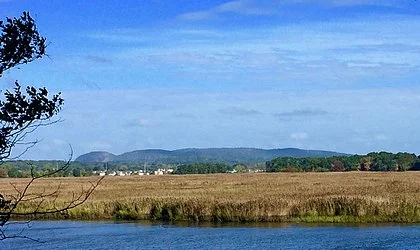
The Sleeping Giant, in Hamden and Wallingford, Conn.
"The whole day long, under the walking sun
That poised an eye on me from a high floor,
Holding my toy beside the clapboard house
I looked for him, the summer I was four.
I was afraid the waking arm would break
From the loose earth and rub against his eyes
A fist of trees, and the whole country tremble
In the exultant labor of his rise;
Then he with giant steps in the small streets
Would stagger, cutting off the sky, to seize
The roofs from house and home because we had
Covered his shape with dirt and planted trees....''
-- From "The Sleeping Giant: a hill in Connecticut,'' by Donald Hall
Ready for the next recession?

Wall Street during the Panic of October 1907.
From Robert Whitcomb's "Digital Diary,'' in GoLoca24.com
Stock and other economic indices have been rising for years in the U.S. and in much of Europe and Asia, whether they have right- or left-wing governments. The economic expansion is getting very old. Eventually the markets will tank and we’ll have another recession. (My guess is that it will start next year, but it’s impossible to predict booms and busts with any precision. Too many variables.)
Maybe a world credit crunch will start the crash, or an unexpected string of lower corporate earnings, a Russian invasion of another European nation, a war with North Korea, the popping of the Chinese property bubble, Chinese aggression aimed at controlling the trade routes through the South China Sea, a Chinese, Russian or North Korean assault on Western electrical grids. The list goes on. Then what?
Deutsche Bank analysts have warned:
"With Government debt levels spiking since the last recession, are politicians able to act as aggressively as they might need to {when the next recession comes}?"
"Could the next recession be the one where policy makers are the most impotent they’ve been for 45 years or will they simply go for even more extreme tactics and resort to full on monetization to pay for a fiscal splurge? It does feel that we’re at a crossroads and the next downturn could be marked by extreme events given the policy cul-de-sac we seem to be nearing the end of.’’
What makes prospects more exciting is that the U.S. may soon substantially expand its debt with big tax cuts. That’s not to say there aren’t some very good things in the GOP tax plan announced last week, especially cutting back the mortgage-interest deduction. There are also some very bad things, such as getting rid of the estate tax. More to come, such as the fact that the tax bill would most benefit outfits like the Trump Organization. Surprise!
In any event, Americans are undertaxed for the public services and infrastructure they say they want. The United States of Wishful Thinking.
'Collaborative Collage'
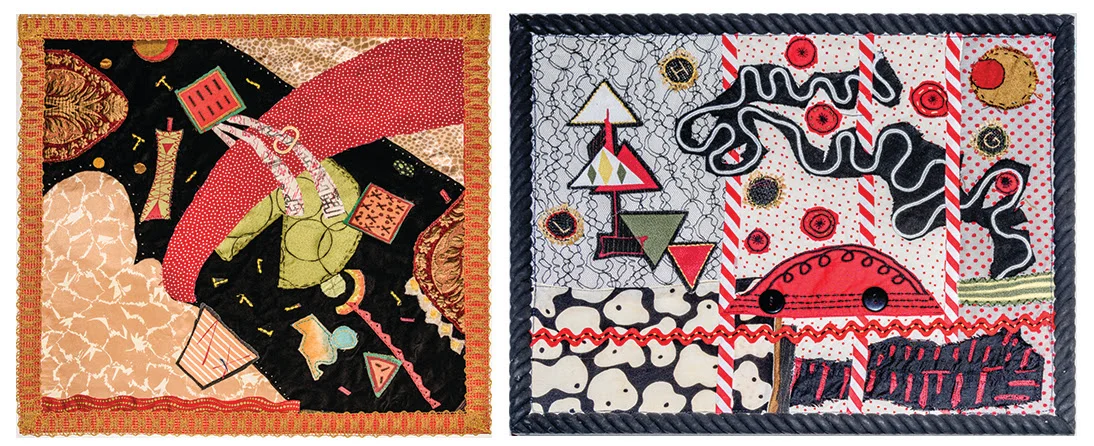
From left, "After Kandinsky'' (textile, fiber, embroidery); "Sunday Drive'' (textile, fiber, embroidery), by the husband and wife team of Grey and Leslie Held, in their show "Evoking Stories: Explorations in Collaborative Collage,'' Dec. 8-Jan. 4 at the New Art Center (NAC), Newton, Mass.
The gallery says: "This exhibition features fabric collages made collaboratively by Grey Held, Collaborative Drawing instructor at NAC, and his wife Leslie Held, an "award-winning theatrical costume designer. Leslie’s collection of fabric scraps, ribbons, and salvaged sections of embroideries are the basic materials Grey and Leslie use to construct their various fabric collages, each with its own color palette and emotional temperature. The pair describe their work as something that emerges and evolves through the process of collaboration; they never know how a piece will turn out, but must surrender to the collaborative process that has its own trajectory, its own unfolding story.''
Living well off the religion racket

Home of televangelist/con man/right-wing politician Pat Robertson in Virginia Beach, Va.

Frank Carini: Debating the future of 'the most important fish in the sea'

Atlantic menhaden.
Via ecoRI.org (ecori.org)
Even though menhaden are a fish that few people eat, they are currently at the center of a heated dispute between the commercial fishing industry and environmental organizations. The two sides are pushing contradictory narratives about the importance of menhaden to the marine food web.
During its two-day meeting, Nov. 13-14 in Baltimore, the Atlantic States Marine Fisheries Commission(ASMFC) is expected to vote on Amendment 3 — a proposal to provide stronger protections for Atlantic menhaden.
Rhode Island’s three representatives on the commission are Sen. Susan Sosnowski, D-South Kingstown, David Borden, representing Gov. Gina Raimondo, and Robert Ballou, assistant to the director at the Rhode Island Department of Environmental Management, who also serves as chairman of the Atlantic Menhaden Management Board.
Conservationists often refer to the species as “the most important fish in the sea” — after the title of a 2007 book by H. Bruce Franklin. They note that menhaden deserve special attention and protection because so many other species, such as bluefish, dolphins, eagles, humpback whales, osprey, sharks, striped bass and weakfish, depend on them for food.
In a recent press release, The Nature Conservancy called the species a “small fish with outsized importance for ocean health.” The conservancy also sent a letter to the ASMFC outlining the organization’s recommended management changes, such as adjusting coast-wide total allowable catch allocations to better reflect the current distribution and abundance of menhaden from Maine to Florida.
Menhaden are often referred to as ‘the most important fish in the sea.’
Save The Bay has also come out in favor of better protecting the menhaden population. The Providence-based organization favors a more ecosystem-based management approach.
“Atlantic menhaden play a central role in the ecological and economic vitality of the Atlantic coastal ecosystem as an essential food for whales and important commercial and game fishes and a host of other marine wildlife,” according to a Save The Bay press release. “Menhaden are also a key force in the regulation of regional water quality by filtering phytoplankton, which are the menhaden’s food source and a major cause of algae blooms and brown tides.”
The Nature Conservancy and Save The Bay, along with the Audubon Society and some scientists and fishermen, have urged the ASMFC to establish a new management approach that accounts for marine wildlife forage needs when menhaden harvest limits are annually set.
“Abundant menhaden is good for fish and wildlife ... and good for the economy,” John Torgan, The Nature Conservancy’s Rhode Island state director, said. “Rhode Islanders care about menhaden because they are critical to the health of Narragansett Bay and the larger coastal ecosystem, and have an enormous effect on other vital industries, like fishing and tourism.”
During the past five years, the menhaden population has rebounded, according to The Nature Conservancy, as indicated by ASMFC stock assessments and reports of large menhaden schools at numerous locations along the Atlantic Coast, including Narragansett Bay.
Prior to 2012, however, the Atlantic menhaden fishery was managed without a total annual harvest limit. Amid concerns about the health of the population, the ASMFC passed Amendment 2 that year, capping annual harvests at about 20 percent less than average landings from 2009-11.
The Nature Conservancy, concerned that the fate of continued menhaden recovery still remains uncertain, teamed up with Red Vault Productions to produce a video that captured the perspectives of five New York stakeholders on why abundant menhaden is good for New York’s ecology and economy.
While people rarely eat menhaden — an oily fish often called “pogies” or “bunkers” by New Englanders — more pounds of the fish are harvested each year than any other in the United States except Alaska pollock.
Last year, for example, the Atlantic menhaden harvest totaled some 400 million pounds, with about 76 percent used for livestock, pet and aquaculture feed, for various fish-oil products, and added to fertilizers. Much of the remaining supply was sold as bait in recreational and commercial fisheries.
“Rhode Island’s saltwater anglers, who spend millions of dollars pursuing their interest, believe this is the most important fisheries issue to come up for a vote in years,” said Rich Hittinger, vice president of the 7,500-member Rhode Island Saltwater Anglers Association. “It is clear that the vast majority of those with an interest in menhaden support ecological management of this fish.”
The commercial menhaden fishing industry, however, has a vastly different take. The Menhaden Fisheries Coalition claims widespread misconceptions about Atlantic menhaden, saying “the science shows a healthy and sustainable fishery” and noting that the ASMFC found in its 2017 stock assessment that Atlantic menhaden is neither overfished nor experiencing overfishing.
“It is true that menhaden serve as ‘forage’ for larger predators, but their importance in marine food webs is frequently overstated,” according to a Menhaden Fisheries Coalition press kit.
The coalition points to a study published in April in Fisheries Research by Ray Hilborn that claims fishing for forage species such as menhaden likely has a lower impact on predators than previously thought.
There seems to be little correlation between the number of predator species in the water and the number of forage fish, making it nearly impossible to determine a catch level that is appropriate for forage fish as a whole, according to the study. Other variables include the natural variability of forage fish, which is different from species to species, and relative locations of predators and forage species.
The Menhaden Fisheries Coalition teamed up with industry-funded Saving Seafood to produce two videosand a 27-page booklet titled “Faces of the Menhaden Fishery" to support their stance.
Menhaden is the second-largest U.S. fishery, and two states, New Jersey and Virginia, control about 96 percent of the coast-wide quota.
Since last November, the ASMFC has received more than 126,000 public comments concerning Atlantic menhaden, the most the commission has ever received regarding the management of a fishery.
Frank Carini is editor of ecoRI News.
Bearing away the bird food

Photo and comment sent the other day by Thomas Hook, New England Diary's distinguished Southbury, Conn.-based wildlife photographer.
"Over the weekend, I spent a few hours buying fresh seed for the feeders, washing the feeders themselves and finally filling them and hanging them up yesterday afternoon. This morning, I looked out and saw the whole setup destroyed. The strong and solid steel arms that held up the feeders were torqued off their base and in one case completely disengaged. Was the bear watching from the woods waiting for me to finish so he or she could come into the yard and have a proper meal before settling down for a long winter nap?
''Meanwhile, the bear hunter (below) looked calmly from his inside perch at the messy remains of the assault. He seemed concerned but I’m not sure why.''

Once the crutch capital

Sawmill in Rumney around the turn of the 20th Century.
"Rumney, New Hampshire (pop. 1,400) is a quiet little town nestled along the Pemigewasset River Valley. A century ago. the dense timber of the surrounding White Mountains made it a prominent logging center. That same abundance of quality hardwood once made the town famous for something else, too. For a period during and after World War I, little Rumney...was the world's biggest producer of wooden crutches....In time, cheaper, foreign-made aluminum crutches displaced Rumney, and ultimately killed off its sole industry.''
From The New England Notebook, by Ted Reinstein (2013)
'Companions in adversity'
"When shrieked
The bleak November winds, and smote the woods,
And the brown fields were herbless, and the shades
That met above the merry rivulet
Were spoiled, I sought, I loved them still; they seemed
Like old companions in adversity."
- - William Cullen Bryant, "A Winter Piece''
James P. Freeman: With Halperin scandal, etc., time to pull the plug on NBC
“Perhaps the surest test of an individual’s integrity is his refusal
to do or say anything that would damage his self-respect.”
— Thomas S. Monson, president of The Church of Jesus Christ of Latter-day Saints
The NBC Peacock is no longer fanning its colorful plumage.
It is now cowering and no longer proud, given the news of sexual misconduct by a contributor at its affiliate, MSNBC. Trouble is an ongoing program at the cable network. Left-leaning viewers — and all serious students of politics -- should be looking to pull the plug on MSNBC.
Mark Halperin is the latest collateral damage in the wake of the Harvey Weinstein sexual harassment/sexual predator scandal. Halperin is a former political director of ABC News, former co-managing editor of Bloomberg Politics, host of Showtime’s The Circus (a politics-focused documentary series), an author (Game Change), and, since 2010, a political analyst at MSNBC. He is also accused by multiple women of sexual harassment during the time he worked at ABC.
One woman, Lara Setrakian, wrote about her ugly Halperin experience for The Washington Post. And another, Eleanor McManus, did the same, writing on cnn.com. After acknowledging his “inappropriate” behavior, MSNBC and NBC have terminated Halperin’s contract. (Other media enterprises have also severed relationships with him.)
The Halperin case is troubling on several levels — most importantly, of course, about the well-being of the affected women. But also troubling are issues surrounding Halperin’s — and, particularly, MSNBC’s — integrity and character.
Halperin said, “I now understand from these accounts that my behavior was inappropriate and caused others pain.” Now? This suggests that, until recently, Halperin considered and understood his lewd actions to be acceptable behavior.
It is not far-fetched to suggest, then, that a man unable to distinguish between fundamental basics of right and wrong behavior on a personal level, is also unable to distinguish between right and wrong on a journalistic level, too. Notably, Halperin was suspended in 2011 by MSNBC about a vulgar comment he made regarding President Obama on the show Morning Joe. He was encouraged to “take a chance,” ironically, by hosts Joe Scarborough and Mika Brzezinski. That episode explains a lot. Especially about MSNBC.
Just as disturbing for MSNBC — and, for that matter, the larger media industry — Halperin’s boorish behavior was well known to many people long before last week’s revelations. As thedailybeast.com reported, “According to numerous sources at NBC, MSNBC, ABC and Bloomberg, the private allegations of Halperin’s sexual misconduct were an open secret, particularly in New York City and D.C. political media, for many years.” One prominent cable-news host told The Daily Beast, “Everybody knew.” Except, apparently, the Morning Joe hosts. And MSNBC executives.
Still, it is hard to believe that the normally sanctimonious Brzezinski (along with her pugnacious fiancé, Scarborough; they are the penultimate politically connected, media-savvy power couple; the “In-Crowd”) did not know. In her on-air statement last Friday, Brzezinski seemed almost surprised by the serious charges against Halperin. (She said, with trembling voice “Now, ah, we’re looking at it, we’re talking about it …” and added, “We need to know what happened …”) Now? How did they not know of this “open secret” before last week?
What isn’t surprising is this: Readers of this column are likely subject to more intense scrutiny and vetting for their jobs than Halperin was when passing through the sieve-like gates of talent acquisition at MSNBC.
Sexual harasser? Check.
In 1996, Microsoft and the National Broadcasting Co. formed a partnership with the goal of fusing branded content and state-of-the-art technology for both television and online distribution. The collaboration became MSNBC. It was launched nearly three months before Fox News and was seen, at first, as an alternative to CNN. But with the rise in ratings of Fox News over more than a decade, MSNBC turned decidedly left, attracting a definitively progressive audience. Today, long after Microsoft divested its interests, the network is competing with Fox News for cable news and commentary supremacy (and ratings).
Morning Joe, incidentally, occupies the same time slot that was held by Imus in the Morning, the radio program simulcast on MSNBC. The Imus cable program was dropped in 2007 after Don Imus uttered a racial slur against the Rutgers University women’s basketball team.
At MSNBC it seems that personal integrity is not linked to professional integrity.
Halperin joined a roster of misfits and malcontents — poseurs of serious journalism — at MSNBC where standards seem fluid, if unnecessary. Mike Barnicle, unrepentant, is still a frequent contributor to Morning Joe and is opaquely listed as “Veteran Columnist,” despite resigning from The Boston Globe in 1998 amid plagiarism charges as a columnist. Another MSNBC veteran, the Rev. Al Sharpton, unapologetic in his role as inflamer of racial tensions in New York City during the incendiary Tawana Brawley incident in the 1980s, has had longstanding issues of unpaid taxes; since 2011, he has hosted the now weekly PoliticsNation. And Brian Williams, was removed as anchor of NBC’s Nightly News in 2015 after embellishing several stories (called “inaccurate statements”) that were “ego-driven.” His time in Purgatory was brief; he is now host of The 11th Hour With Brian Williams. As the in-house advertisement on MSNBC says: “This Is Who We Are.”
And who can forget past contributors to journalistic excellence at MSNBC?
Keith Olbermann, former host of The Countdown, was suspended in 2010 for apparently violating an NBC News ethics policy by making campaign donations to Democratic congressional candidates. He left in 2011. Ed Schultz, former host of The Ed Show, was suspended in 2011 for calling Laura Ingraham a “right wing slut.” His show was cancelled in 2015. And Melissa Harris-Perry, professor at Wake Forest University, and former host of MHP, apologized in 2013 for comments on her show about Mitt Romney’s African-American adopted grandchild. Mercifully, she and the network parted ways last year. Truth, justice and the MSNBC way.
True journalists must be lonely at MSNBC and its parent, NBC. One of them was Ronan Farrow, a former MSNBC contributor and former freelancer at NBC News. While at NBC, after months of scrupulous research and on-the-record sourcing, he had an iron-clad explosive exposé on Harvey Weinstein’s exploits. But NBC News President Noah Oppenheim killed the story, which ultimately appeared in The New Yorker. (Raising legitimate conflict-of-interest concerns as Oppenheim also moonlights as a Hollywood screenwriter.)
On a daily basis, though, NBC reporters use anonymous sources without hesitation for negative stories about President Trump. Such are the tribulations of intrepid journalists at a national media conglomerate with many layers of hierarchical management (MSNBC, NBC News, NBC Universal, Comcast).
Earlier this year, Ted Koppel, an elder statesman of journalism and a former host of ABC’s Nightline, said, in a feature segment for CBS Sunday Morning during an interview with Sean Hannity, that the Fox host and his show were “Bad for America,” lamenting the political polarization of American life. Especially regarding cable news programs. Koppel’s sentiments are understandable and largely correct. For Fox is hardly "fair and balanced''.
But Fox has also cleaned its house of the likes of Roger Ailes and Bill O’Reilly — and, most recently, Eric Bolling — before the Weinstein scandal broke. In retrospect, it is highly probable that Halperin would still be at MSNBC had the Weinstein story not been made public. Ironically, MSNBC is the biggest beneficiary of Fox’s personnel problems. For this year's third quarter, MSNBC had its most-watched quarter ever, it was reported in September. And, remarkably, the network is in the closest competitive position to Fox News in 17 years. Just imagine what new viewers are being exposed to every day. When will Koppel dwell on MSNBC?
Next June will mark the 10-year anniversary of the death of NBC’s well-respected Tim Russert, the longest-serving moderator of Meet The Press. NBC and MSNBC would be unrecognizable to him today, and his journalistic excellence and impeccable integrity are unrecognizable to those who reduce such attributes to parody at NBC and MSNBC.
Meanwhile, the Peacock scampers, searching for the giants. But the ghosts of Huntley-Brinkley, John Chancellor and Tim Russert are long gone.
James P. Freeman is a New England-based writer, former columnist with The Cape Cod Times and former banker. His work has also appeared in The Providence Journal, newenglanddiary.com and nationalreview.com.
Greek island confronts the Syrian refugee crisis

Lesbos (in red), right off the Turkish coast.
Next at the Providence Committee on Foreign Relations (thepcfr.org; pcfremail@gmail.com:
On Thursday, Nov. 16 (note change from the previously announced Nov. 15), Maria Karangianis will speak on the refugee crisis in the Aegean:
In May 2015, she traveled to the Greek Island of Lesbos, within sight of Turkey. At that time, hundreds of thousands of refugees were spilling onto the beaches in leaky boats, many of them dying, trying to find freedom from war-torn Syria. The Greek people of the island, who have been nominated for a Nobel Peace Prize for their generosity, have faced an economic catastrophe with tourism, their main source of income. Maria is currently a Woodrow Wilson visiting fellow and has traveled across the United States speaking at colleges and universities. She is a former guest editor and an award-winning writer on the editorial board of The Boston Globe.
The Trump mafia's smoke machine
From Robert Whitcomb's "Digital Diary,'' on GoLocal24.com:
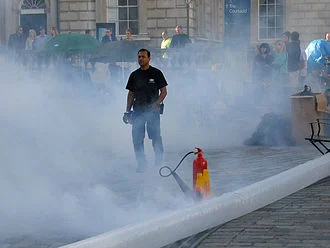
President Trump has been an expert operator of smoke machines during his entire career as a crooked businessman, “reality TV’’ star and demagogic politician.
He and his accomplices have done much with the weapon of false equivalency. The latest is trying to make Hillary Clinton look like a crook regarding the purchase in 2010 by Rosatom, the Russian nuclear agency, of a piece of the Canadian company Uranium One, which held rights to some U.S. uranium deposits. The Committee on Foreign Investment in the United States cleared the deal with a laborious process of vetting.
As has been widely reported, the Trump gang, including their spokespeople on Fox News, cooked up a conspiracy theory that because Uranium One had donated funds to the Clinton Foundation, mostly before the 2008 presidential election, that Mrs. Clinton somehow pushed the deal through. Fox & Friends, et al., alleged that this would mean that America would export a lot of uranium to a nation that even back then was widely considered (though not by the Trump gang) more foe than friend.
No, she didn’t push through the deal, and she didn’t control the committee that approved it . And it was and is illegal to export the uranium anyway. And as secretary of state, she harshly criticized the regime of Russia’s cold and murderous dictator Vladimir Putin.
Her campaign also hired an opposition-research firm to do a dossier on the Trump gang’s collusion with Russia. Sounds like a good idea, especially given the contacts between the Trump Organization and Russia going back more than two decades.
What seems clear is that the Trump mob collaborated very closely with Putin’s regime to wreak havoc in the Clinton campaign. It won Trump the Electoral College. (I myself wrote in Jim Webb’s name on the November ballot.)
For a handy review of how the Kremlin’s folks used social media to sow division and help elect their boy Trump, please hit this link:
https://www.washingtonpost.com/news/the-switch/wp/2017/11/01/how-russian-trolls-got-into-your-facebook-feed/?utm_term=.cc58e6a5a910&wpisrc=nl_rainbow&wpmm=1
Despite the fact that Trump’s, er, colorful, career leaves Hillary Clinton’s looking like Rebecca of Sunnybrook Farm, the Russians only pushed anti-Clinton stuff.
This quote from Donald Trump Jr. in 2008 may explain some of Trump’s affection for the Kremlin: “Russians make up a pretty disproportionate cross-section of a lot of our assets. We see a lot of money pouring in from Russia.” (Contacts between the Trump mob and the Russians go back to about 1990.)
It’s too early to know how much of this involves out-and-out treason, to be explained by Russian blackmail of Trump for his private behavior and/or by the Trump mafia's financial debts to Putin and other Russian oligarchs. We do know that Trump likes dictators -- they know how to take advantage of his pathological narcissism and his astounding ignorance and intellectual sloth.
David Warsh: The sleazy Sacklers' lethal painkiller promotions and the need for a 'Health Fed'
President Trump has declared the opioid crisis a public health emergency, rather than a national emergency, since the Federal Emergency Management Agency is over-extended in dealing with storm relief. Unfortunately, the Hospital Preparedness and Public Health Emergency Funds are equally strapped for cash, running respectively at 50 percent and 30 percent below their peak levels of a decade ago. Congress will have to act.
It was, therefore, an especially good time for “The Family that Built an Empire of Pain,” to appear last week in The New Yorker. You can read Patrick Radden Keefe’s remarkable story about the wellsprings of the crisis for free online, more easily, if less pleasurably, than in the magazine itself. The sub-head states, “The Sackler dynasty’s ruthless marketing of painkillers has generated billions of dollars – and millions of addicts.”
Others have worked on the Sackler family story over the years, documenting its leading role in producing the opioid epidemic, including Barry Meier, of The New York Times, who first uncovered the extensive marketing efforts for OxyContin, and the Los Angeles Times team that documented the "12-Hour Problem '' that Keefe describes. But none has achieved anything like the rhetorical force of Keefe’s article. Once it is reworked as a book, I expect that “Empire of Pain” will eventually attain the status of Rachel Carson’s Silent Spring, Jane Jacobs’s The Death and Life of Great American Cities, and other classics of social criticism. It is an astonishing story. You might as well read it now.
The three brothers of the Sackler family — Arthur (1913-87), Mortimer (1916-2010), and Raymond (1920-2017) – are far better known as philanthropists than as pharmaceutical entrepreneurs. All three attended medical school and subsequently worked together at Creedmoor Psychiatric Center, in Queens, N.Y. Arthur put himself through medical school working for William Douglas McAdams, a small advertising agency specializing in medical markets, then bought the business. In 1952, the three physicians bought Purdue Frederick, a little manufacturer of patent medicines in Greenwich Village (and no relation to the famous university). Each owned a third.
While Mortimer and Raymond built the company, Arthur took a more distant role, concentrating on medicine as editor in chief of the Journal of Clinical and Experimental Psychopathology from 1950-1962. In 1960, he founded a biweekly newspaper, Medical Tribune, which eventually reached 600,000 subscribers.
The Sackler family grew tolerably rich on the sale of Valium, which between 1969 and 1982 was the top-selling pharmaceutical drug in the United States. When Sen. Estes Kefauver (D.-Tenn.) investigated the rapidly growing pharmaceutical industry in the early 1960s, a staff member prepared a memo that read, in part,
"The Sackler empire is a completely integrated operation in that it can devise a new drug in its drug development enterprise, have the drug clinically tested and secure favorable reports on the drug from various hospitals with which they have connections, conceive the advertising approach and prepare the actual advertising copy with which to promote the drug, have the clinical articles as well as the advertising copy published in their own medical journals, [and] prepare and plant articles in newspapers and magazines.''
Enter Raymond’s son Richard Sackler (b. 1945), in 1971, fresh out of medical school. Starting as assistant to his father, during the next 30 years he presided over efforts to develop OxyContin and turn it into the best-selling pain medicine in the world. How the company, re-named Purdue Pharma, managed that forms the bulk of Keefe’s 13,000-word account.
Simply put, thanks to massive marketing efforts, the long-lasting narcotic came to be widely prescribed, not just for severe pain associated with surgery or cancer, but for almost any discomfort, including arthritis, back pain and sports injuries – despite its obviously addictive properties. Early versions turned out to be ruinously easy to abuse; later editions turned out to be a gateway to the use of cheaper heroin. More than 300,000 lives have been lost to overdoses of opioid drugs since 2000; perhaps 10 times as many have been shattered.
Arthur’s heirs sold their father’s share of the company to his brothers sometime after 1987. Mortimer moved to Europe to spend and save his dividends Raymond ran the company day-to day for many years, and died only last July. Nine family members are among the directors of the private company. Past president Richard Sackler was deposed last year, as part of Kentucky’s complaint that many of Purdue’s marketing methods were illegal. A battle to unseal his testimony has ensued. Many more lawsuits are in train; their tactics resemble the campaign to rein in the use of tobacco. Congress can be expected to again hold hearings.
The editorial board of The Wall Street Journal also addressed the topic, uncharacteristically ignoring the supply side in favor of demand factors, in a piece headlined "The Opioid Puzzle'' (subscription required). The editorial board’s interest was piqued by “the government’s role is allowing too-easy access to painkillers, particularly among society’s poor and vulnerable.”
Medicaid recipients receive prescriptions for twice as much pain medication as those not covered by the government’s low-income plan, the editors wrote, citing government figures. And one out of every three Medicare beneficiaries received opioid prescriptions last year, half a million of them in extravagant doses. “The only way to explain this cascade of pills is an epidemic of fraud,” the editors concluded.
Better to put the two analyses together. OxyContin sales are estimated to have been around $35 billion over the last 20 years. An enormous portion of that was surely paid by the government as insurance subsidies. Only when you see the two programs unfolding together do you begin to comprehend the nature of the problem – the entrepreneurial genius of the Sackler family on the one hand, developing and marketing popular mood-altering and painkilling drugs since the 1950s; on the other, the rise of government medical insurance since 1966, when the Medicare program went into effect.
Throw in the mostly unrecognized extent to which big pharmaceutical manufacturers have discouraged all manner of research on the painkilling applications of medical marijuana, and you have a real witches’ brew.
The U.S . health-care industry may be, in certain respects, the best in the world; certainly it is the most expensive. As the opioid epidemic demonstrates, it offers a colossal field for mischief. The editorial board of the WSJ is right about this much: innovation is the answer, to the opioid crisis, and much else among the medical sector’s many other ills. In this case the desideratum is regulation – not Pentagon-style hierarchy, but rather the decentralized and consensual decision-making represented by the Federal Reserve System.
The blueprint developed 10 years ago by former Senate Majority Leader Tom Daschle (D.-South Dakota) in his run-up to a presidential campaign that was ultimately overtaken by that of the junior senator from Illinois, Barack Obama, is still the only model that make sense. Daschle imagined a dozen or so regional health-care authorities, sharing power among regulators, physicians, hospitals, insurers, device and pharmaceutical providers, governed by a federal board of governors insulated as much as possible from politics.
A Health Care Fed eventually will deliver efficiency – and diminish freebooting – in the enormous sector, in much the same way the Federal Reserve Board stabilized the similarly turbulent banking industry a hundred years ago. It’s just going to take more time – another generation or two, I would guess.
David Warsh, a long time financial columnist and an economic historian, is proprietor of economic principals. com, where this first appeared.
Chris Powell: A gun lover and Conn. State Police's 'cover our ass' scheme
Michael Picard is a provocateur in support of gun rights and opposition to drunken-driving checkpoints. Whatever people think of his politics, he has acted within the law, as he did one night in September 2015, when, standing near an entrance ramp for Interstate 84 in West Hartford, Conn., he carried a sign alerting motorists to a checkpoint ahead. In a holster on his hip was a pistol for which he had a permit. He was also carrying a video camera.
Before long Picard was swarmed by some of the state troopers operating the checkpoint. One tried to intimidate Picard by telling him he needed permission to record a trooper -- a stupid lie. Then the troopers quickly plunged deeper into dishonesty.
They took Picard's gun and camera but apparently were unaware that it continued to record them. They retreated to do some checking and found to their shock and dismay that Picard was licensed to carry his gun. Whereupon the troopers began to fabricate evidence and criminal charges against him.
"Gotta cover our ass," one trooper said as they inadvertently recorded themselves on Picard's camera. Another trooper suggested that they could "claim" that passing motorists said Picard had waved his gun at them, though no such motorists gave or were asked for their names. Another trooper, apparently recognizing that Picard had undertaken similar protests in Hartford, asked if he should call a Hartford police lieutenant about any "grudges" he had against Picard.
Picard was given several tickets for contrived infractions even as his gun and camera were returned. Weeks later he put the video of the incident on the Internet and filed a complaint against the troopers with the state police department.
The resulting investigation took many months and then the state police refused to disclose the resulting report, citing the objection of the troopers. The report was released only the other day when the state Freedom of Information Commission called a hearing on complaints brought by the Journal Inquirer and the Associated Press.
It's no wonder that the state police sought to conceal the report, for it is a silly whitewash exonerating the troopers of their obvious conspiring to arrest an innocent man because he had been politically troublesome. Prosecutors wanted no part of the troopers' scheme; the charges against Picard were dismissed in court.
The report construes "gotta cover our ass" and "claim" not as the building blocks of conspiracy but as terms of law-enforcement art for following police procedure. The report does not address the lie about needing permission to record a trooper. Nor does it address the trooper's comment about soliciting the Hartford department's "grudges" against Picard.
These omissions in the report demolish its credibility.
Now the troopers' union says it wanted the report disclosed all along, though the union never disputed the state police department's assertion that the troopers wanted the report suppressed. That's another blow to the credibility of the troopers.
With the help of the Connecticut chapter of the American Civil Liberties Union, Picard has sued the state police in federal court.
The state attorney general's office may be no more enthusiastic about the case than the prosecutors were, and eventually Picard may be offered a substantial financial settlement rather than have the state risk a roll of the dice with a jury trial.
If so, such a settlement will be just another cost of state government's chronic refusal to hold its employees accountable.
Chris Powell is managing editor of the Journal Inquirer in Manchester, Conn.
Llewellyn King: Roll up in your Rolls
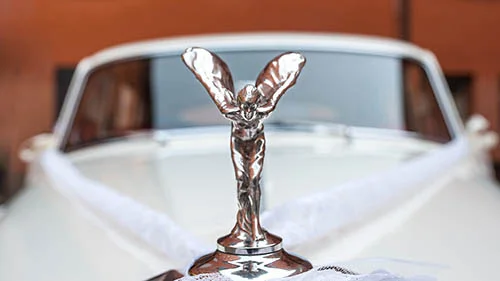
Rolls-Royce Motor Cars has a new Phantom on the market. It’s just the eighth model with that marque to be produced since Henry Royce himself designed the car way back in 1925. It has been the top of the Rolls line ever since. The big, beautiful one: a land yacht of a car.
Once a “Roller” was somehow able to signal prudence as well as wealth. After World War II, when Britain was getting back on its feet, the big cars (usually black) pulled up at Claridge’s, The Connaught, The Dorchester, The Savoy, or one of the other great London hotels, and declaimed Britain’s returning health, quietly suggesting “Britain is back.”
In Hollywood, they signaled status. When they pulled into the Beverly Hills or the Beverly Wilshire hotels, the message was not subdued. It shouted, “I am someone in this town!” There were cheaters, of course: Those who rented a Rolls for a premiere or some other must-be-seen-at event.
Things went somewhat off the rails when the newly minted plutocrats of the Middle East took to treating the great cars as though they were no more than Volkswagen Beetles, sometimes just abandoning them in the desert as a new toy came along.
Even in the days when a Rolls was intended to convey solidity as well as wealth, there were exceptions, like Nubar Gulbenkian, the heir to the original Middle East oil fortune. He broke from tradition and owned an ostentatious yellow Rolls. In the Swinging Sixties, there were more colored Rolls — even a movie, The Yellow Rolls Royce, written by Terence Rattigan, starring Ingrid Berman and Rex Harrison.
To get the full Rolls effect, you want to be chauffeured and lounge in the back: It’s as big a tiny house in the Phantom.
Alexander Korda, the Hungarian-born British film producer and director, used to sit in the front next to his chauffeur. Upper-class London eyebrows were raised — but then he was in show business.
But the bucks-to-burn oil crowd of the ’70s didn’t really help the prestige quotient of the car. They became a sign of flamboyance and a target for social activists. Gauche vulgarians took over: oil sheiks and rock stars.
Owning a Rolls has its own challenges. People who own them and don’t have a driver to stay with the car when out and about — whether in Hollywood, New York or London — find the Roller is a liability. Do you entrust this mobile bank vault to a parking lot? People steal the famous hood ornament, Spirit of Ecstasy, as a challenge.
Well, if you still want to get into the 2018 Phantom VIII, you can get the ready-to-drive-away model, complete with 12 cylinders of thirsty power and, allegedly, the quietest ride ever in a car for about $435,000. That’s with sumptuous carpets, wonderful leather and wood to get you tree-hugging all over again. Also, it’s pretty fast for a car that weighs nearly 6,000 pounds. It’s regulated to 150 mph. But if you take the regulator off, you can get 186 mph out of it.
Yet there’s something sad, about this latest luxury-and-engineering extravaganza: It seems designed for another time.
BMW, which now owns Rolls-Royce Motor Cars, is about to launch a Rolls-Royce SUV and it may eclipse its sedans. It should claim the market for the fun-in-the-desert crowd as well as those from LA, who like to tool around the canyons east of Malibu.
Worse, the writing is on the wall for internal-combustion engines in China (a big, new Rolls market), Britain, Germany and France, which have threatened to ban them by mid-century.
Budget note: You can get into a lesser Rolls, like the entry-level Silver Ghost, for half the price of the Phantom VIII. But if you want to signal that you have Trumpish wealth, a Rolls-Royce coupe Sweptail was custom-built for $13 million.
Just the car to go with the $92 million condo in New York.
I drive a Kia Soul. It cost $15,000 new and it does what the Rollers do: It goes from place to place, just like the Phantom VIII.
Llewellyn King is executive producer and host of White House Chronicle, on PBS.
Patty Wright: Maine governor puts brakes on Medicaid expansion
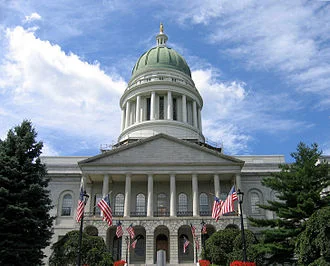
Maine State House, in Augusta.
Just hours after Maine voters became the first in the nation to use the ballot box to expand Medicaid under the Affordable Care Act, Republican Gov. Paul LePage said he wouldn’t implement it unless the Legislature funds the state’s share of an expansion.
“Give me the money and I will enforce the referendum,” LePage said. Unless the Legislature fully funds the expansion — without raising taxes or using the state’s rainy day fund — he said he wouldn’t implement it.
LePage has long been a staunch opponent of Medicaid expansion. The Maine Legislature has passed bills to expand the insurance program five times since 2013, but the governor vetoed each one.
That track record prompted Robyn Merrill, co-chair of the coalition Mainers for Health Care, to take the matter directly to voters Tuesday.
The strategy worked. Medicaid expansion, or Question 2, passed handily, with 59 percent of voters in favor and 41 percent against.
“Maine is sending a strong and weighty message to politicians in Augusta, and across the country,” Merrill said. “We need more affordable health care, not less.”
Medicaid expansion would bring health coverage to about 70,000 people in Maine.
As a battle now brews over implementation in Maine, other states will likely be watching: groups in Idaho and Utah are trying to put Medicaid expansion on their state ballots next year.
With passage of the ballot measure, Maine is poised to join the 31 states and the District of Columbia that have already expanded Medicaid to cover adults with incomes up to 138 percent of the federal poverty level. That’s about $16,000 dollars for an individual, and about $34,000 for a family of four.
Currently, people in Maine who make too much for traditional Medicaid and who aren’t eligible for subsidized health insurance on the federal marketplace fall into a coverage gap. It was created when the Supreme Court made Medicaid expansion under the Affordable Care Act optional.
That’s the situation Kathleen Phelps finds herself in. She’s a hairdresser from Waterville who has emphysema and chronic obstructive pulmonary disease. She said she has had to forgo her medications and oxygen because she can’t afford them. “Finally, finally, maybe people now people like myself can get the health care we need,” she said.
Medicaid expansion would also be a win for hospitals. More than half of those in Maine are operating in the red. Across the state, hospitals provide more than $100 million a year in charity care, according to the Maine Hospital Association. Expanding Medicaid coverage will bolster their fiscal health and give doctors and nurses more options to treat their formerly uninsured patients, said Jeff Austin, a spokesman with the association.
“There are just avenues of care that open up when you see a patient from recommending a prescription drug or seeing a counselor,” he said. “Doors that were closed previously will now be open.”
But voter approval may not be enough. Though a legislative budget analysis office estimates Medicaid expansion would bring about $500 million in federal funding to Maine each year, it would also cost the state about $50 million a year.
The fate of the Medicaid expansion will now be in the hands of the Legislature, where lawmakers can change it like any other bill. Four ballot initiatives passed by Maine voters last year have been delayed, altered or overturned.
But state Democratic leaders pledge to implement the measure. “Any attempts to illegally delay or subvert the law … will be fought with every recourse at our disposal,” Speaker of the House Sara Gideon said. “Mainers demanded affordable access to health care yesterday, and that is exactly what we intend to deliver.”
Patty Wright is a journalist for Maine Public.
This story is part of a partnership that includes Maine Public, NPR and Kaiser Health News.
'Ethnics in their own land'

"Vermonters, it seems to me, are like ethnics in their own land. They are exceedingly conscious of their difference from other Americans, and they talk a great deal about outsiders, newcomers, and people from the south.''
-- The British writer Jan Morris