
Vox clamantis in deserto




Frank Carini: Facing the population explosion of coyotes in New England


From ecoRI News (ecori.org)
MIDDLETOWN, R.I.
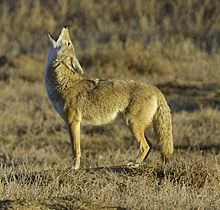
During her decade of tracking coyotes on Aquidneck and Conanicut islands, in Narragansett Bay, Numi Mitchell has discovered humans have a lot to learn. The pervasiveness of Canis latrans — Latin for “barking dog” — in Portsmouth, Middletown, Newport and Jamestown, R.I., can largely be attributed to people’s carelessness with food and their compulsion to feed wild animals.
Since 2004, when Mitchell began studying local coyote behavior, she has found an Aquidneck Island Council member who was feeding coyotes, believing that would keep them from eating neighborhood cats; a gentleman who fed coyotes submarine sandwiches; an elderly woman who was feeding some 100 feral cats, not knowing much of the “kibble” she was leaving out was actually being devoured by coyotes — most of the cats were then eaten by the coyotes when the woman moved on; and Newport residents who left chicken carcasses out, across the street from a playground, to attract coyotes.
Coyotes eat whatever is easy, Mitchell told an audience of 20 or so people during an Aug. 20 presentation at Newport Vineyards. Without the direct or indirect help of humans, the wildlife biologist said coyotes dine on woodchucks and field mice. She noted that 20 percent of the coyote diet, especially for pups, is fruit such as blueberries.
But once coyotes get a taste of human food, that’s when the problems start. “Coyotes eat deer, but they’ll also whack neighborhood pets,” Mitchell said. That happens when they begin to associate the presence of humans with food. “They won’t eat pets if there’s no subsidized food from people,” Mitchell said, “because they wouldn't be that bold.”
The Narragansett Bay Coyote Study was born out of one pet’s mauling by a coyote. After Aquidneck Island resident Diana Prince’s dog was killed, she contacted Mitchell about how to exterminate the island’s population of coyotes. However, once Prince's anger subsided and Mitchell had explained coyote behavior, the Prince Charitable Trusts decided to fund a one-year study. Mitchell’s study is now entering its 11th year.
Coyote smart
Coyotes were first documented in Rhode Island, in Warren in the 1960s, and are now found in all parts of the state except Block Island. They first reached Aquidneck and Conanicut islands in the mid-1990s, according to Mitchell.
The Narragansett Bay Coyote Study tracks, with expensive collars and equipment, the local coyote population to develop science-based co-existence and management strategies. Mitchell noted that the study — and her work — aren’t pro or anti-coyote. She said the program is “straight science.”
CoyoteSmarts, in partnership with the study, is a public-information initiative of the Potter League for Animals, The Conservation Agency, Rhode Island Natural History Survey, Aquidneck Land Trust and the Norman Bird Sanctuary to address the growing presence of coyotes in Jamestown and on Aquidneck Island and to educate humans to coexist with these wild animals.
The mission of the group is to work with municipalities, local police and school departments, and state agencies to raise public awareness about coyotes, encourage best management practices and promote effective strategies for keeping pets, families and communities safe.
Coyotes are a native species, according to Mitchell. She said they are hard to catch, and clever, creative and opportunistic. Their numbers and range across North America are growing, she said, because the wolf population has been “blasted away.”
Their numbers also grow when large amounts of food are provided to coyotes intentionally or unintentionally by people. These “easy pickin’s” create coyote problems — and problem coyotes.
Mitchell said the most effective way to reduce human-coyote conflict is to reduce the animal’s food supply. The more food available, she said, the more pups they have and the smaller the territory they have to defend, which results in more coyotes per square mile and more risk of contact with humans.
Coyotes live in a family group, usually in packs of seven to 10 members, and typically take ownership of 7 or so square miles, according to Mitchell. She has counted an Aquidneck Island pack with 21 members.
Seven to eight packs roam Aquidneck Island and there are another three to four in Jamestown, according to Mitchell. As for the total number of coyotes on the two islands, she said she doesn't really know.
“We don’t call them wily for nothing,” Mitchell said.
However, unlike deer, which will keep breeding until they starve, coyotes manage their population. Female coyotes will have fewer pups if the pack is stressed by a lack of food.
On Aquidneck and Conanicut islands, improperly discarded livestock carcasses and roadkill, especially deer, dragged into the woods are easy pickin’s for coyotes. Their numbers grow.
Mitchell said she found a dumping ground of dead animals, including sheep and deer, on Peckham Brothers Quarry property in Middletown. It was feeding a large coyote pack that lived in a small territory.
She showed a nighttime video of a coyote pack feeding on cow carcasses not properly buried on a Jamestown farm. She said that a coyote pack can feed on a deer carcass for three to five days.
“An area that would be able to handle one pack can now hold three,” she said. “With easy food resources, coyotes don’t increase their territory.”
Feeding pets outside, unsecured trash cans, poorly managed compost bins/piles, fish guts left on piers, docks and rocks, and restaurant food scrap left out in the open, as a Middletown pig farmer has done, help create “super small coyote territory,” Mitchell said. She said these practices, which can include doughnuts left behind at a construction site, also make coyotes see people as food providers.
“As soon as coyotes get a taste for these subsidized food sources, they go for it,” Mitchell said. “The pack could have gone ten years without coming in contact with people, but now they are no longer afraid of people.”
Coyotes are always on high alert when it comes to sniffing out subsidized food sources, like unsecured trash cans and poorly secured livestock feed.
No lethal solution
Removal of coyotes by lethal means — though it may be necessary for some problem animals — doesn't control their population, according to Mitchell.
“Shooting them isn’t effective, because they are impossible to get rid of,” she said. “You can’t get rid of them with lethal control. Passive management is the most effective method.”
Lethal methods such as hunting, trapping or poisoning, especially in neighborhoods, are generally more dangerous to pets and the community than to the coyotes, Mitchell said.
She also noted that eliminating an entire group of coyotes, rather than solving the problem, simply creates a vacuum that other coyotes will quickly fill. Also, if a resident pack is removed, she said, it will likely be replaced by transient coyotes, which are often even less desirable.
In Rhode Island, you can hunt coyotes year-round, but relocating them is illegal.
Mitchell said recreational hunting of coyotes is fine and keeps them fearful of humans. However, a kill campaign, she said, accomplishes nothing. She said eliminating subsidized food sources can drop pack numbers by two-thirds.
Ecosystem and community impact
Coyotes play an important ecosystem role. As the top predator in Jamestown and on Aquidneck Island, the presence or absence of coyotes has a major impact on the surrounding biological community, according to Mitchell.
They help control pests such deer, rodents and geese, and with some 40 feral-cat colonies in the four island municipalities, coyotes help keep those numbers under control.
And while coyotes can benefit bird populations by preying on many of the small mammals that eat birds, their young and/or their eggs, it's possiblethat coyotes also kill piping plovers, which are listed as threatened under the Endangered Species Act.
Mitchell is studying coyote impact on the islands’ natural environments.
Coyote attacks on humans are rare and seldom result in serious injuries, according to Mitchell. Only two deaths have ever been documented — a toddler in California, in 1981, and a 19-year-old woman hiking alone in Nova Scotia, in 2009. Children are more at risk than adults, and attacks are more common in urban areas where coyotes have lost their fear of humans thanks to intentional or unintentional feeding.
Coyotes are sometimes mistaken for dogs and may at times act like dogs. They’ve even been known to beg for food. Despite this disarming behavior, however, they are a wild and dangerous animal, especially when they’ve lost their fear of humans, according to Mitchell.
Coyotes run with their tails down and dogs run with their tails up. Coyotes are more adaptable than wolves and have learned to thrive near humans, especially the ones who feed them.
Frank Carini is editor of ecoRI News.
'Until the tree could bear no more'

"Birches" (encaustic painting), by Nickerson Miles.
When I see birches bend to left and right
Across the lines of straighter darker trees,
I like to think some boy's been swinging them.
But swinging doesn't bend them down to stay
As ice-storms do. Often you must have seen them
Loaded with ice a sunny winter morning
After a rain. They click upon themselves
As the breeze rises, and turn many-colored
As the stir cracks and crazes their enamel.
Soon the sun's warmth makes them shed crystal shells
Shattering and avalanching on the snow-crust—
Such heaps of broken glass to sweep away
You'd think the inner dome of heaven had fallen.
They are dragged to the withered bracken by the load,
And they seem not to break; though once they are bowed
So low for long, they never right themselves:
You may see their trunks arching in the woods
Years afterwards, trailing their leaves on the ground
Like girls on hands and knees that throw their hair
Before them over their heads to dry in the sun.
But I was going to say when Truth broke in
With all her matter-of-fact about the ice-storm
I should prefer to have some boy bend them
As he went out and in to fetch the cows—
Some boy too far from town to learn baseball,
Whose only play was what he found himself,
Summer or winter, and could play alone.
One by one he subdued his father's trees
By riding them down over and over again
Until he took the stiffness out of them,
And not one but hung limp, not one was left
For him to conquer. He learned all there was
To learn about not launching out too soon
And so not carrying the tree away
Clear to the ground. He always kept his poise
To the top branches, climbing carefully
With the same pains you use to fill a cup
Up to the brim, and even above the brim.
Then he flung outward, feet first, with a swish,
Kicking his way down through the air to the ground.
So was I once myself a swinger of birches.
And so I dream of going back to be.
It's when I'm weary of considerations,
And life is too much like a pathless wood
Where your face burns and tickles with the cobwebs
Broken across it, and one eye is weeping
From a twig's having lashed across it open.
I'd like to get away from earth awhile
And then come back to it and begin over.
May no fate willfully misunderstand me
And half grant what I wish and snatch me away
Not to return. Earth's the right place for love:
I don't know where it's likely to go better.
I'd like to go by climbing a birch tree,
And climb black branches up a snow-white trunk
Toward heaven, till the tree could bear no more,
But dipped its top and set me down again.
That would be good both going and coming back.
One could do worse than be a swinger of birches.
"Birches,'' by Robert Frost
The outsiders move in
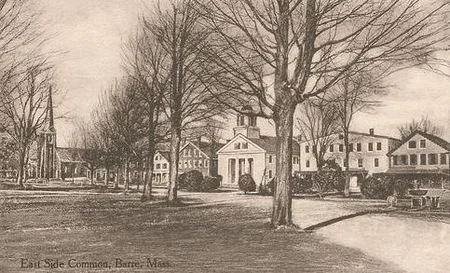
The Barre, Mass., town green in the late 19th Century.
"Who cared enough for the town to take these pictures,
blueprint or sepia, with their fading dates --
eighteen-seventy, say, or eighteen-eighty?
did he guess that there was an enemy at the gates?
As he stood on the green (it is there today, but smaller,
with fewer trees) to record the the new hotel,
he could hardly suspect that, so, he was recording
some of the vanguard of that army as well.
They had breached the gates unheralded, unnoticed.
not in disguise, not creeping like scout or spy
on this hardly-more-than-a-village, with its cobweb
of straggling streets called Chestnut or Church or High....''
-- From "The Taken Town,'' by Constance Carrier
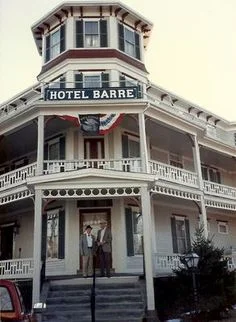
The Barre Hotel, in Barre, Mass. It opened in 1889 and burned down in 1990.
Honoring artists in publicly owned places

Studio at the Saint-Gaudens National Historical Park.
Adapted from Robert Whitcomb's "Digital Diary,'' in GoLocal24.com:
In Europe, it’s very common to name streets, bridges, parks and other public infrastructure after scientists, visual artists, writers, actors and directors. But in the United States, very few pieces of public infrastructure are named after these creative types.
So it was pleasant to learn that Congress might turnone of the rare public places in America named for an artist --- the Augustus Saint-Gaudens National Historical Park, in Cornish, N.H. -- into a full-scale National Park, the first one in New Hampshire. Saint-Gaudens (1848-1907) was a famous American sculptor and a major figure in the Cornish Art Colony, which also included such luminaries as the painter Maxfield Parrish. The buildings (including studio) and grounds are gorgeous.
Across the Connecticut River in Vermont can be seen Mt. Ascutney, the subject of many paintings done by members of the Cornish colony. (See photo below.) The fame of the Cornish Art Colony may have led writer J.D. Salinger to move to the small town and became a famous recluse. I was in a class with his ex-wife Claire at nearby Dartmouth College; we never talked about Salinger.
And in Providence, there’s a move underway to make Megee Street, on College Hill, Bannister Street instead, after a distinguished 19th Century African-American painter and (of course) abolitionist Edward Bannister and his wife, Christiana, a businesswoman and philanthropist. The street is now named for the early 19th Century slave trader (one voyage) William Fairchild Megee, who was also involved in the China Trade (think opium). The latter business was Providence’s first great source of Big Money. (A lot of it was then invested in the city’s new textile, metal-related and other factories.)
Mr. Bannister was a co-founder of the venerable Providence Art Club and served on the board of the Rhode Island School of design.
So renaming the street would serve at least two good symbolic missions. I realize the name change would inconvenience people living on Megee, whose mail would probably be disrupted for months.
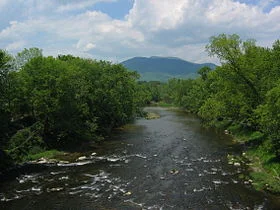
Mt. Ascutney as seen from Claremont, N.H.
Jim Hightower: Trump protects huge tax break for hedge funders

"Avarice,'' by Jesus Solana.
Via OtherWords.org
These are hard times for America’s gold miners. They’re scrambling to get ahead, but seeing their pay dropping.
Take Bob Mercer, who’s been a top miner for years, but last year even Bob was down. He pulled in only $125 million in pay. Can you feel Bob’s pain?
Well, these aren’t your normal miners. They’re hedge-fund managers, digging for gold in Wall Street. Indeed, if you divided Mercer’s pay in his “bad year” among 1,000 real miners doing honest work, each would consider it a fabulous year.
Nonetheless, hedge funds are figurative gold mines, although they require no heavy lifting by the soft-handed, Gucci-wearing managers who work them. These gold diggers are basically nothing but speculators, drawing billions of dollars from the über-rich by promising that they’ll deliver fabulous profits.
But the scam is that Mercer, whose hedge fund is Renaissance Technologies, and his fellow diggers get paid whether they deliver or not.
Their cushy set up, known as 2 and 20, works like this.
Right off the top, they take 2 percent of the money put up by each wealthy client, which hedge fund whizzes like Mercer keep even if the investments they make are losers. Then, if their speculative bets do pay off, they pocket 20 percent of all profits.
Finally, hedge-fund lobbyists have rigged our nation’s tax code so these Wall Street miners pay a fraction of the tax rate that real mine workers pay.
Last year, the 25 best paid hedge-fund operators totaled a staggering $11 billion in personal pay — even though nearly half of them performed poorly. Meanwhile, Donald Trump, who promised last year to close that special hedge-fund tax break, has mysteriously omitted that vow from the “tax reform” framework that the White House released this fall.
Guess who was one of Trump’s most generous funders last year? Bob Mercer.
Jim Hightower is a radio commentator, writer, and public speaker. He’s also the editor of the populist newsletter, The Hightower Lowdown.
Dressing fancy is the best revenge

Photo by Hector Mediavilla, in his show "Society of Tastemakers and Elegant People,'' at the Cantor Art Gallery, at the College of the Holy Cross, Worcester, through Dec. 15.. Spanish photographer Mediavilla's images capture the art form of Congolese men known as ''Sapeurs,'' who have used dress and performance to counter the realities of political and economic hardship in postcolonial Africa.

James P. Freeman: Turning to the private sector to stop Mass. opioid epidemic

With swift vivacity and vulgar duplicity, the Massachusetts legislature — and, as expected, the executive branch — effectively signaled that “bump stock” accessories to rifles, rarely used in crimes, pose a greater threat to commonwealth residents than fentanyl-laced heroin, killing daily. Demands are made incessantly for so-called “common sense gun control.” But corresponding calls to action for “common sense opioid control” have been largely unanswered, as government has been largely ineffectual. So, action and answers are arriving on the latter front from the private sector, with the likes of the SAFE Coalition. And recovery angels.
As creators and custodians of public policy, public officials have, it must be emphasized, resoundingly failed in arresting the opioid crisis here because of a lack of seriousness. Consider:
Last week, as New Boston Post reported, the legislature overwhelmingly and uncourageously passed bills to outlaw bump stocks. The state already has the lowest rate of gun deaths in the United States (3.13 per 100,000 residents); there were 135 homicides in Massachusetts in 2016. It is likely in this relatively low homicide environment, nevertheless, that zero deaths occur as a result of bump stocks.
Conversely, Massachusetts has one of the highest rates of death for opioid abuse in the country (30.9 per 100,000 residents); there were 2,107 fatalities attributable to opioid-related-overdose in Massachusetts in 2016, where nearly six people died every day. Opioid deaths are 10 times higher than gun deaths here; and opioids kill far more people than guns. Yet efforts to provide consistent funding and full-scale commitment to eradicate the epidemic are regularly stymied. Consequently, public safety remains compromised.
In Massachusetts, where progressive hubris accelerates the pileup of legislative detritus, it is easier to codify in perpetuity the prospect of life in prison for a highly nearly nonexistent threat than it is to allocate multi-year appropriations for a clear, present and continuing danger.
Gov. Charlie Baker cut $1.9 million in substance-abuse-prevention programming in December 2016 to helpmaintain a balanced budget for fiscal 2017. But he touted increases in key funding to address opioid addiction for the current fiscal budget. State Representatives Randy Hunt (R.-Sandwich) and Diana DiZoglio (D.-Methuen), among the courageous few, were rejected in their efforts to seek a dedicated funding stream from the state’s Marijuana Regulation Fund for substance-use education, prevention, and treatment. But the fiscal 2018 state budget includes $2 million for start-up costs for the newly minted Cannabis Control Commission, created to regulate recreational marijuana. (The legalization of another controlled substance amid a controlled-substance emergency is both lurid and ludicrous.) More dollars for fun, fewer for death-prevention. Not many question such obvious misplaced prioritization. But someone does.
Enter Jim Derick.
He is president and a founder of SAFE — Support for Addicts and Families through Empowerment — a coalition of volunteers that provides support, education, treatment options, and coping mechanisms for those affected by substance abuse disorder. While erasing the social stigma placed on addicts is important, reducing the barriers to treatment is paramount.
SAFE was formed in 2015 under the leadership of state Rep. Jeffrey Roy (D.-Franklin), Franklin Town Councilor Bob Delorco, and former Franklin resident and Franklin High School graduate Jennifer Knight. They were frustrated by what Derick calls the “rapid escalation” of the carnage of opioids affecting Franklin and its neighboring communities in Norfolk County. No one was taking about it, he recalled. And there was little evidence of progress in arresting the scourge. As he says, with justifiable exasperation, “The U.S. consumes 85 percent of all opioid pain pills. Are we in more pain than the rest of the world?”
Believing that public policy is actually “driving this epidemic,” especially on a federal level (see the recent damning 60 Minutes segment on opioids), Derick is also dismayed by the ebb and flow of state funding to groups such as SAFE (it received a state grant of $50,000 in 2015, for which Derick is grateful, but none in 2016). And don’t get him started on the lack of “insurance parity,” where families are too often denied life-saving coverage. So, he is channeling his frustrations as a megaphone of local advocacy. He rightly believes that private-sector solutions, coupled with dedicated public contributions, are the best means to success.
Defining success is simple: zero overdoses and zero deaths. Achieving success is far more challenging: preventing overdoses and saving lives. SAFE does it one life at a time.
SAFE began offering a resource line and community outreach in 2016. Since then, its volunteers (some of whom weekly give 25-40 hours of their time) have engaged over 300 people. Last week seven families reached out for assistance. The resource line gets calls ranging from addicts looking for detox and treatment options, to a parent/spouse/other loved one requesting information on Section 35 (the civil process to effect involuntary commitment), to, sadly, families seeking bereavement services.
“At any given moment, I’d say we are actively working with 20 to 25 people,” Derick says. The coalition is “absolutely stretched extremely thin” as call volume is increasing monthly as overdoses are rising precipitously. But the coalition is motivated by these grim statistics: In 2000, Norfolk County reported just 29 opioid-related overdose deaths; by 2016, that number rose to 205 deaths.
SAFE maintains no offices. Instead, meetings are held at local businesses and forums at schools. Much of its work is modeled after the Plymouth County Outreach (it serves and links 27 towns and is pioneering data-driven recovery methodology). As an incubator of ideas, SAFE brings together diverse stakeholders, mindful of avoiding “silo thinking.” They include elected officials, school members, clergy, mental health experts, police and other first responders, and recovery angels.
Increasingly, to positive effect, recovering addicts are acting as so-called recovery angels, meaning that they are trained for intervening and mentoring during post-opioid episodes. The advent of trained angels and recovery coaches is a welcome development in the opioid battle. Ideally, this new form of intervention will lead to successful rehabilitation. Both are seen as more efficacious alternatives to incarceration, as prison has proven to be expensive and ineffective regarding substance-abuse disorders. Time should tell.
Derick’s anger melts into more hopeful animation when talking about the organic and myriad initiatives being tested and adopted throughout the commonwealth. He praises fellow advocates who travel the state, searching for creative ideas and better solutions. He is excited by PAARI (Police Assisted Addiction and Recovery Initiative), originally begun as the “Gloucester Initiative,” and funded by philanthropists. And he is encouraged by a new creation, Private Sector Cares. It aims to assemble a board of prominent business leaders throughout the state to “collaborate and help fund some of the coalition’s initiatives across the commonwealth.”
Inadequate and inconsistent funding is an impediment to progress, warns Derick.
Understandably, there are costs. “As we have grown and become known as a resource, we have been asked to assist towns, many outside our county, with some of our services.” Fund raising competes with, but is a necessary bi-product of, providing critical services. Seeking state grants is a gargantuan effort: paperwork, red tape, narrow line items. It’s a process that, Derick says, “we literally have to rely on a hundred hours of accounting time to get it.” That’s less time for emergencies.
What can Massachusetts do?
The legislature can redeem itself from desultory distractions by streamlining this process and increasing funding to these grass-roots groups. Funding should include dedicated, multi-year allocations, based on need. SAFE serves a population of well over 100,000 but currently is only granted $100,000.
It is altogether fitting that Derick provided his thoughts for this column on Oct. r 13. That date marked the centennial commemoration in the Catholic Church of the last Fatima Apparitions, where believers witnessed the Miracle of the Sun. One has to believe that, given their unsung and yeomen work, Derick, the volunteers at SAFE, and similar organizations across the state, are producing miracles every day. The opioid epidemic is among the sorrowful mysteries of this troubled age.
James P. Freeman is a New England-based writer, a former columnist with The Cape Cod Times and a former banker. His work has also appeared in The Providence Journal, newenglanddiary.com and nationalreview.com.

Llewellyn King: Electric revolution to upend transportation

An electric-vehicle charging station, powered by solar panels, in Segovia, Spain
Bright boys and girls are flooding into transportation. It is the place of cutting-edge invention: not cell phones, they were so last year; not computers, they were, er, so last century. The smartest students leaving university may well find the adventure of creating in transportation.
A science-led revolution is in the making in transportation. Leading this revolution is the electric car. It is no longer a drawing-board dream. It is here and gaining market share, albeit miniscule at present.
The surge to electric-powered transportation goes beyond the Tesla and Elon Musk — although Musk has been a catalyst. All manufacturers are now making or investigating electric cars. But the electric car is only a beginning: buses, trucks, trains, small boats, ships and even airplanes are in the mix.
China is throwing government and private resources into an electric future. France, Britain and eight other countries have declared that they will ban the internal- combustion engine by mid-century. Volvo has said that it will stop making fossil- fuel-powered cars.
At the extreme end of the electric-car excitement are automated vehicles. These have caught the imagination — and the dollars — of Google and Uber. But Detroit is also is coming to realize that it has to go electric. General Motors has paved its way with the EV1 and the Volt. Others are scrambling.
The political pressure behind the urge to go electric is clean air, reduced noise and, for many countries, the end of a huge oil bill.
One hundred and forty years after Thomas Edison first perfected a light bulb, electricity is once again a major disruptive technology – and not just on the surface of the Earth. Electric aircraft are in design with short-haul, small-load passenger versions flying in Dubai. Mighty Boeing has teamed up with innovative JetBlue to work on an electric-powered aircraft, although these might have to wait for much better electric-storage batteries than now exist.
Naysayers are quick to point up the inadequacy of batteries — lithium ion are the workhorses in this revolution — and the difficulty of charging them.
These arguments point up a fork in the road for electric enthusiasts: Will the future depend on today’s charging technology where a car has to be tethered to the charging apparatus by a wire, or will electromagnetic fields be used in inductive charging, eliminating the wire? This is known as Wireless Power Transfer (WPT).
Enthusiasts see WPT charging in two ways: either a plate set in a driveway or parking lot with the vehicle at rest or a strip in a roadway which can charge vehicles in motion – a grander idea. If the latter is successful, it opens the way to smaller batteries in lighter vehicles, cheaper trucking.
The disruption is going to be very large.
Gas stations would largely disappear or be very few. Automobile technicians might want to look for alternative employment, as will, eventually, many truck drivers.
The search for new batteries is frenetic and international. New, longer-lived batteries will, in large measure, determine the rate of growth in the more advanced electric vehicle applications.
Another big imponderable is who will provide the electricity? There is a general assumption in the electric utilities that they will do this. But will they? The new owners of the charging networks may choose to make their own with wind, solar and small modular nuclear reactors.
What will the role of government be? Local government will have to deal with the road-use issues. But what of the federal government? It has always been involved in transport. As Peter Morici, the economist and columnist, points out, it stimulated the railways with right-of-way grants and the airlines with mail-hauling contracts. Will it find a similarly elegant way to stimulate the flow of electrons into transportation, and a whole new way of getting ourselves and our stuff around? Maybe it will be led by the military: the Navy wants electric ships.
No wonder the best minds out of colleges and universities are getting wanderlust.
On Twitter: @llewellynking2
Llewellyn King is executive producer and host of White House Chronicle, on PBS.
Don Pesci: Two roads diverge widely in the Nutmeg State
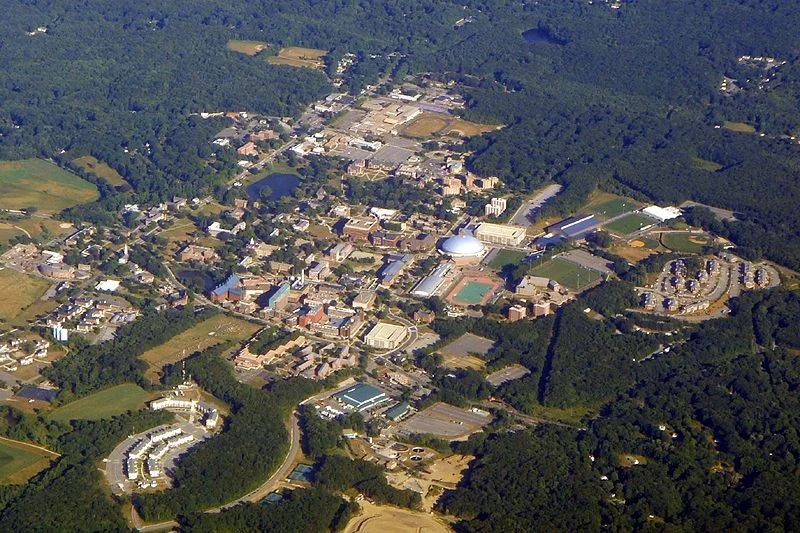
-- Photo by Global Jet
The ever-expanding main campus of the University of Connecticut, in Storrs.
“When the enemy is making a false movement we must take good care not to interrupt him” -- Napoleon
That the Connecticut compromise budget is predominantly a Democrat production should come as a surprise to no one. Weighing gains and losses in the scales, the left in Connecticut, best represented by House Speaker Joe Aresimowicz, a union employee, has prevailed over its opponents.
The state’s capital, Hartford, teetering on the brink of bankruptcy, will receive a bailout from state taxpayers, at best a temporary solution to long-brewing, unresolved problems centering on the city’s hegemonic political structure, and a virtual guarantee that the city’s political shakers and movers will be bellying up to the bailout bar again in the not too distant future. University of Connecticut funding, cut in the Republican budget that had passed both Houses of the General Assembly, has been restored. Major changes in employee pensions, a prominent feature in the Republican budget, were dropped – but not, Republicans remind us, as a campaign issue.
Democrats yielded on shifting teacher pension costs to municipalities, a major feature of Gov. Dannel Malloy’s rule by executive order regime. Republicans did succeed in imposing a cap on state spending as well as limits on the bonding of long-term capital projects, though they would be wise to make certain that proper enabling legislation is attached to the measures. Some months ago, state Atty. Gen. George Jepsen advised that the constitutional cap on spending, a feature of the Gov. Lowell Weicker income-tax measure, was unconstitutional because the General Assembly had never supplied definitions necessary to enable the bill.
Taxes, a litmus test issue for Republicans, will be increasing – again. Malloy, the outgoing Democratic governor has now, with the concurrence of the dominant Democratic General Assembly, raised taxes three times. The lame-duck governor is the author and inspiration of the largest and second largest tax increases in state history, one of the reasons his approval rating is in the tank.
In a pot calling the kettle black political strategy, much will be made by Democrats in upcoming campaigns of Republican duplicity on the matter, although it will be obvious to all that Republicans yielded to a superior political force wielded by Democrats. Not sweet reason -- Democrats were never interested in palavering with Republicans on budget matters -- but superior force and numbers wielded by Democrats shaped the final budget product.
Malloy’s reaction to the compromise budget was, some think, bitter – possibly because he was excluded from deliberations on what many hope may be the final budget product in Connecticut – but perfectly in keeping with his overbearing nature. General Assembly members wanted a budget they could live with; which is to say, they wanted a budget they could campaign on. Malloy, who bade goodbye to future campaigns months ago, need no longer struggle to run on his lamentable record in office. Had he chosen to run again, he doubtless would have sunk the re-election prospects of his fellow Democrats.
The compromise budget – such as it is – should be considered a prelude to the upcoming 2018 elections.
Most savvy Democrats instinctively understand they need to put some distance between non-lame duck Democrat legislators and Malloy, Connecticut’s self-immolating governor. And it is this perception that has made them amenable to compromise, even as it has raised Malloy’s hackles.
If Malloy does veto the compromise budget, “the bad” will be on Democrats. If the budget in its current form is not vetoed or passes as a result of a successful veto override, both Republicans and Democrats will be able to run in the upcoming elections as pragmatic compromisers.
In the seemingly endless prelude to the budget, both parties had staked out positions on the economy and society that are widely divergent, the cause, some commentators have said, of the long budget standoff. With the passage at last of a compromise budget, divergence between both parties will increase rather than diminish – because this divergence is rooted in two competing and opposite visions of government.
Never in Connecticut history has it been more true that the destination of the state will depend on the road taken as determined by upcoming elections, which is simply a way of saying that votes will determine Connecticut’s now precarious future. And this time there will be no retreat from the road that will, in Robert Frost’s formulation, “make all the difference.”
Don Pesci is a Vernon, Conn.-based journalist.
An old hill town

"Up at the crest of the heights, the ridge is sometimes simply forest, broken only by a wide field of stacked lumber, high cones of sawdust, and the bustle of trucks hauling in logs to the sawmill. Here only a line of old oaks and a decaying cemetery marks an old hill town.
"If life has not abandoned the hilltops, clear pastures roll down each side, giving panoramas of the valley far below. The old village centers, their white church, signposts, and geometric green (denoting an earlier era of optimistic town planning) occasionally survive....
"Plain, empty, and silent, these remnants of forgotten hope have an astringent beauty found nowhere else in the world.''
-- From the ending of Mountain New England: Life Past and Present, by William F. Robinson.
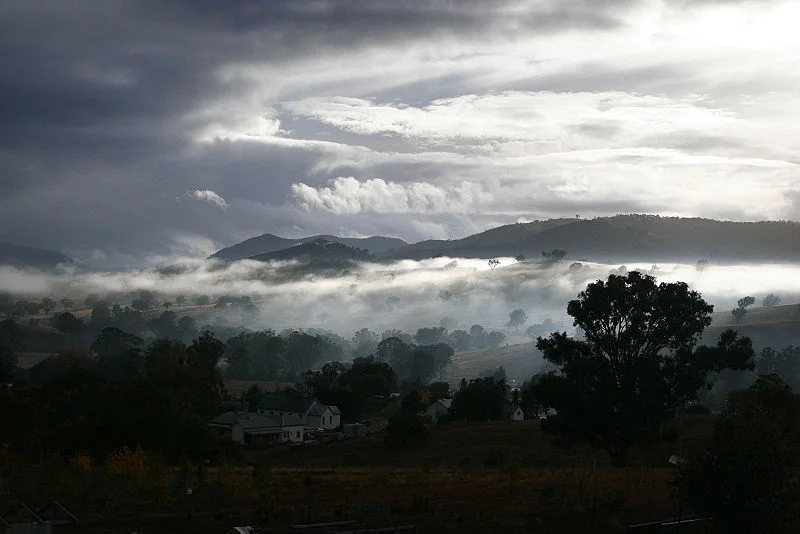
'All of paradise that we shall know?'
Taken by fir0002 | flagstaffotos.com.au
Complacencies of the peignoir, and late
Coffee and oranges in a sunny chair,
And the green freedom of a cockatoo
Upon a rug mingle to dissipate
The holy hush of ancient sacrifice.
She dreams a little, and she feels the dark
Encroachment of that old catastrophe,
As a calm darkens among water-lights.
The pungent oranges and bright, green wings
Seem things in some procession of the dead,
Winding across wide water, without sound.
The day is like wide water, without sound,
Stilled for the passing of her dreaming feet
Over the seas, to silent Palestine,
Dominion of the blood and sepulchre.
II
Why should she give her bounty to the dead?
What is divinity if it can come
Only in silent shadows and in dreams?
Shall she not find in comforts of the sun,
In pungent fruit and bright, green wings, or else
In any balm or beauty of the earth,
Things to be cherished like the thought of heaven?
Divinity must live within herself:
Passions of rain, or moods in falling snow;
Grievings in loneliness, or unsubdued
Elations when the forest blooms; gusty
Emotions on wet roads on autumn nights;
All pleasures and all pains, remembering
The bough of summer and the winter branch.
These are the measures destined for her soul.
III
Jove in the clouds had his inhuman birth.
No mother suckled him, no sweet land gave
Large-mannered motions to his mythy mind.
He moved among us, as a muttering king,
Magnificent, would move among his hinds,
Until our blood, commingling, virginal,
With heaven, brought such requital to desire
The very hinds discerned it, in a star.
Shall our blood fail? Or shall it come to be
The blood of paradise? And shall the earth
Seem all of paradise that we shall know?
The sky will be much friendlier then than now,
A part of labor and a part of pain,
And next in glory to enduring love,
Not this dividing and indifferent blue.
IV
She says, “I am content when wakened birds,
Before they fly, test the reality
Of misty fields, by their sweet questionings;
But when the birds are gone, and their warm fields
Return no more, where, then, is paradise?”
There is not any haunt of prophecy,
Nor any old chimera of the grave,
Neither the golden underground, nor isle
Melodious, where spirits gat them home,
Nor visionary south, nor cloudy palm
Remote on heaven’s hill, that has endured
As April’s green endures; or will endure
Like her remembrance of awakened birds,
Or her desire for June and evening, tipped
By the consummation of the swallow’s wings.
V
She says, “But in contentment I still feel
The need of some imperishable bliss.”
Death is the mother of beauty; hence from her,
Alone, shall come fulfilment to our dreams
And our desires. Although she strews the leaves
Of sure obliteration on our paths,
The path sick sorrow took, the many paths
Where triumph rang its brassy phrase, or love
Whispered a little out of tenderness,
She makes the willow shiver in the sun
For maidens who were wont to sit and gaze
Upon the grass, relinquished to their feet.
She causes boys to pile new plums and pears
On disregarded plate. The maidens taste
And stray impassioned in the littering leaves.
VI
Is there no change of death in paradise?
Does ripe fruit never fall? Or do the boughs
Hang always heavy in that perfect sky,
Unchanging, yet so like our perishing earth,
With rivers like our own that seek for seas
They never find, the same receding shores
That never touch with inarticulate pang?
Why set the pear upon those river-banks
Or spice the shores with odors of the plum?
Alas, that they should wear our colors there,
The silken weavings of our afternoons,
And pick the strings of our insipid lutes!
Death is the mother of beauty, mystical,
Within whose burning bosom we devise
Our earthly mothers waiting, sleeplessly.
VII
Supple and turbulent, a ring of men
Shall chant in orgy on a summer morn
Their boisterous devotion to the sun,
Not as a god, but as a god might be,
Naked among them, like a savage source.
Their chant shall be a chant of paradise,
Out of their blood, returning to the sky;
And in their chant shall enter, voice by voice,
The windy lake wherein their lord delights,
The trees, like serafin, and echoing hills,
That choir among themselves long afterward.
They shall know well the heavenly fellowship
Of men that perish and of summer morn.
And whence they came and whither they shall go
The dew upon their feet shall manifest.
VIII
She hears, upon that water without sound,
A voice that cries, “The tomb in Palestine
Is not the porch of spirits lingering.
It is the grave of Jesus, where he lay.”
We live in an old chaos of the sun,
Or old dependency of day and night,
Or island solitude, unsponsored, free,
Of that wide water, inescapable.
Deer walk upon our mountains, and the quail
Whistle about us their spontaneous cries;
Sweet berries ripen in the wilderness;
And, in the isolation of the sky,
At evening, casual flocks of pigeons make
Ambiguous undulations as they sink,
Downward to darkness, on extended wings.
- "Sunday Morning,'' by Wallace Stevens, the late great Hartford-based poet -- and insurance executive.
Strong women

"A Weight Bearing Exercise'' (stoneware and steel rod), by Claudia Olds Goldie, in the group show "The Female Form: Go Figure,'' at the Christopher Brodigan Gallery at the Groton School, Groton, Mass., through Nov. 14. The womenshe sculpts aren't beautiful in a traditional sense but do have the beauty of their quiet dignity.
Maybe city managers can govern better than mayors
From Robert Whitcomb's "Digital Diary,'' in GoLocal24.com:
Worcester’s bonds are rated Aa3 while Providence’s are a much lower Baa1. Worcester is in most ways a considerably less important city than Providence, and with a smaller economic and institutional base.
So what explains the rating difference? I’d guess Providence’s continuing failure to get its pension and other employee costs under control is the biggest factor. That’s at least in part because Worcester has a city manager system, which encourages professional (“technocratic’’) administration with far more insulation from political and special-interest pressures (e.g., municipal unions) than you get in a traditional mayoral system like Providence’s. The lower the bond rating, the higher the interest rate that a city must pay and the higher the taxes to pay the bond interest.
Small-town N.H. place-lovers
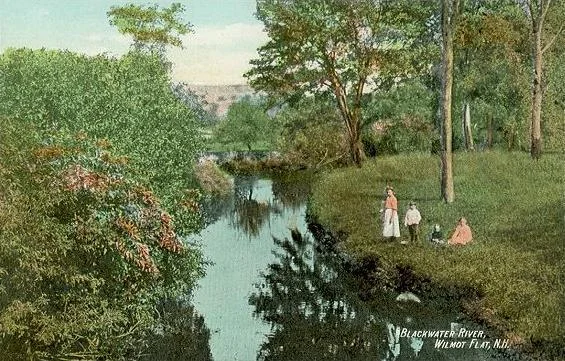
"For more than a hundred years, anyone willing to leave this countryside has been rewarded for leaving it by more money, leisure, and creature comforts. A few may have stayed from fecklessness or lack of gumption; more have stayed from family feeling or homesickness; but most stay from love. I live among a population, extraordinary in our culture, that lives where it lives because it loves its place. We are self-selected place-lovers. There's no reason to live here except for love."
From Seasons at Eagle Pond, by Donald Hall, Wilmot, N.H.-based poet and essayist.

Chuck Collins: A guide to the coming tax heist
-- Bundesarchiv, Bild 102-12762 / CC-BY-SA 3.0
Via OtherWords.org
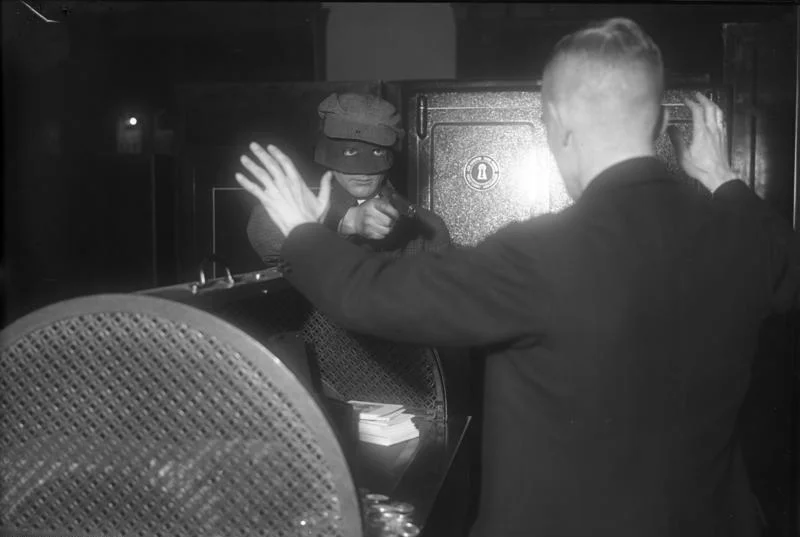
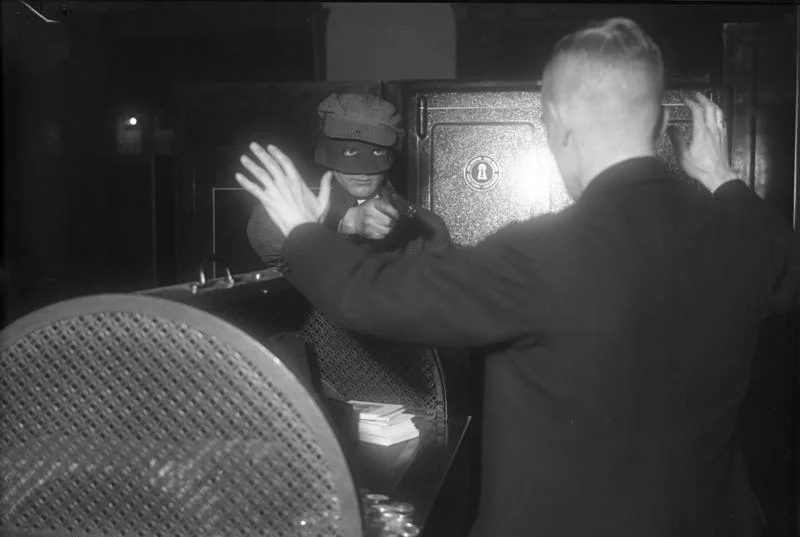
For 40 years, tax cutters in Congress have told us, “we have a tax cut for you.” And each time, they count on us to suspend all judgment.
In exchange, we’ve gotten staggering inequality, collapsing public infrastructure, a fraying safety net, and exploding deficits. Meanwhile, a small segment of the richest one tenth of 1 percent have become fabulously wealthy at the expense of everyone else.
Ready for more?
Now, Trump and congressional Republicans have rolled out a tax plan that the independent Tax Policy Center estimates will give 80 percent of the benefits to the richest 1 percent of taxpayers.
The good news is the majority aren’t falling for it this time around. Recent polls indicatethat over 62 percent of the public oppose additional tax cuts for the wealthy and 65 percent are against additional tax cuts to large corporations.
Here’s the independent thinker’s guide to the tax debate for people who aspire to be guided by facts, not magical thinking. When you hear congressional leaders utter these claims, take a closer look.
“Corporate tax cuts create jobs.”
You’ll hear that the U.S. has the “highest corporate taxes in the world.” While the legal rate is 35 percent, the effective rate — the percentage of income actually paid — is closer to 15 percent, thanks to loopholes and other deductions.
The Wall Street corporations pulling out their big lobbying guns have a lot of experience with lowering their tax bills this way, but they don’t use the extra cash to create jobs.
The evidence, as my Institute for Policy Studies colleague Sarah Anderson found, is that they more often buy back their stock, give their CEOs massive bonuses, pay their shareholders a bigger dividend, all the while continuing to lay off workers.
“Bringing back offshore profits will create jobs.”
Enormously profitable corporations such as Apple, Pfizer and General Electric have an estimated $2.64 trillion in taxable income stashed offshore. Republicans like to say that if we give them a tax amnesty, they’ll bring this money home and create jobs.
Any parent understands the folly of rewarding bad behavior. Yet that’s what we’re being asked to do.
When Congress passed a “repatriation tax holiday” in 2004, these same companies gave raises to their CEOs, raised dividends, bought back their stock, and — you guessed it — laid off workers. The biggest 15 corporations that got the amnesty brought back $150 billion while cutting their U.S. workforces by 21,000 between 2004 and 2007.
For decades now, those big corporations have made middle class taxpayers and small businesses pick up the slack for funding care for veterans, public infrastructure, cyber security, and hurricane mop-ups. Let’s not give them another tax break for their trouble.
“Tax cuts pay for themselves.”
Members of Congress who consider themselves hard-nosed deficit hawks when it comes to helping hurricane victims or increasing college aid for middle class families are quick to suspend basic principles of math when it comes to tax cuts for the rich.
The long discredited theory of “trickledown economics” — the idea that tax cuts for the 1 percent will create sufficient economic growth to pay for themselves — is rising up like zombies at Halloween. As the economist Ha Joon Chang observed, “Once you realize that trickle-down economics does not work, you will see the excessive tax cuts for the rich as what they are — a simple upward redistribution of income.”
“Abolishing the estate tax will help ordinary people.”
This is the biggest whopper of them all. The estate tax is only paid by families with wealth starting at $11 million and individuals with $5.5 million and up. There is no credible economic argument that this will have any positive impact on the economy, but it would be a huge boon for billionaire families like the Trumps.
This tax cut plan is an unprecedented money grab. Whether the heist happens, is entirely up to the rest of us.
Chuck Collins directs the Program on Inequality at the Institute for Policy Studies and co-edits Inequality.org.
Showing the fragility

A creation of David Katz in his show "Flextime,'' at the Museum of Art at the University of New Hampshire (in Durham), through Nov. 7. The show is a collaboration between the museum and 3S Artspace, in nearby Portsmouth.
In his site-specific works, sculptor and ceramicist Katz, in the museum's words, "exploits the properties of wet clay to create complex web-like installations that push and pull against architectural elements, constructed spaces, and scaffolding. As the clay dries, cracks develop, exposing the fragile nature of the structural systems.''
Chris Powell: Skip school for a few years, but keep pensions
As "Obamacare" long has been on the verge of repeal, financial collapse, or sabotage, people in Connecticut are afraid of losing their medical insurance while others are dealing with big premium increases caused by "Obamacare" itself.
But why should people complain about medical insurance when they still have the war in Afghanistan, which is entering its 17th pointless year?
Connecticut's nominally liberal congressional delegation doesn't complain about the war, apparently because the federal budget is full of money for military contractors in the state. Complaints about the war might get in the way of those contracts.
At least the employees of the military contractors have good medical insurance, even if the money spent on the war in one week might provide good insurance for everyone in Connecticut for a year or two.
As Connecticut's state government enters its fourth month without a budget, people here are also afraid that local school systems will be crippled by state government's failure to deliver the usual financial aid, depriving some schools of as much as half their money.
But why should people complain about schools when state employee jobs, salaries, benefits, and pensions have been guaranteed for years to come? What's a little education compared to the security of those who work for the government?
Indeed, since a Superior Court judge and the immediate past executive director of the state school superintendents association have acknowledged that Connecticut's lower education system operates by social promotion rather than academic achievement, and since, according to standardized test results, most of the state's high school seniors never master high school math and English, why not just cancel school for a few years and put the school money into the state employee and teacher pension funds until they are made sound?
Governor Malloy and the Democratic majority in the General Assembly have signified that state government's pension obligations have priority over every other public purpose, so how much is the mere pretense of education really worth?
SLOSSBERG'S BIG MISTAKE: What a mistake was made the other day by state Sen. Gayle Slossberg, D-Milford.
She accepted an invitation to address the college Democrats at the University of Connecticut to explain her vote for the Republican state budget, which sharply reduces spending on the state university system. Introducing herself, Slossberg said she began her involvement in public life as a member of a parent-teacher association seeking to remove from elementary school libraries books containing derogatory racial terms. She spoke one of them, the "N word."
Whereupon the college Democrats exploded in outrage, as if the word can't be discussed even in the context of its reprehensibility and as if the students did not understand Slossberg to be repudiating it.
Slossberg immediately apologized for giving offense, but it wasn't enough. The college Democrats distributed a statement about the incident, seeking to embarrass the senator in news reports throughout the state and causing her to issue a written apology as well.
Of course the age at which people should be prepared to discuss derogatory racial and ethnic terms is arguable, but at some point everyone should come across the "N word" in what may be the most profound and moving passage in American literature -- in Mark Twain's Huckleberry Finn, when the title character reflects on whether he should betray his friend, a runaway slave.
Slossberg's mistake wasn't to use the "N word" with those college Democrats. It was to assume they were adults.
Chris Powell is managing editor of the Journal Inquirer, in Manchester, Conn.
'She is tired'

"Beauty has a tarnished dress,
And a patchwork cloak of cloth
Dipped deep in mournfulness,
Striped like a moth.
Wet grass where it trails
Dyes it green along the hem;
She has seven silver veils
With cracked bells on them.
She is tired of all these--
Grey gauze, translucent lawn;
The broad cloak of Herakles.
Is tangled flame and fawn.
Water and light are wearing thin:
She has drawn above her head
The warm enormous lion skin
Rough red and gold.''
-- "October,'' by Elinor Wylie
Always a surplus of brutality
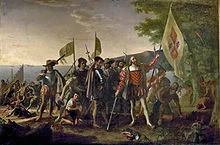
"Landing of Columbus '' (12 October 1492), by John Vanderlyn.
From Robert Whitcomb's "Digital Diary,'' in GoLocal24.com:
Columbus Day this year predictably included denunciations of the explorer and the colonialists who accompanied and followed him. Columbus, et al., were presented as world-historically brutal and are blamed for presiding over a huge genocide. This aroused a lot of backlash in southern New England, with its many proudItalian-Americans. (But I have always wondered why someone would be proud, or ashamed, of what a distant ancestor did.)
But members of Native American tribes were just as brutal to members of other tribes and to European usurpers. They just didn’t have the equipment (particularly guns) to defeat the far more technologically advanced Europeans, and, of course, their numbers rapidly declined after the European arrival because they didn't have immunity from the diseases brought over from Europe.
As for the African slaves brought over to the Americas by Europeans, we ought to remember that it was African chiefs who captured these poor souls and sold them to the Europeans. For that matter, slavery still exists in Africa.
People of all shades and nationalities are brutal.