
Vox clamantis in deserto



Checking in
"One more arrival. Parking in the drive
of our house that too much of the time is yours,
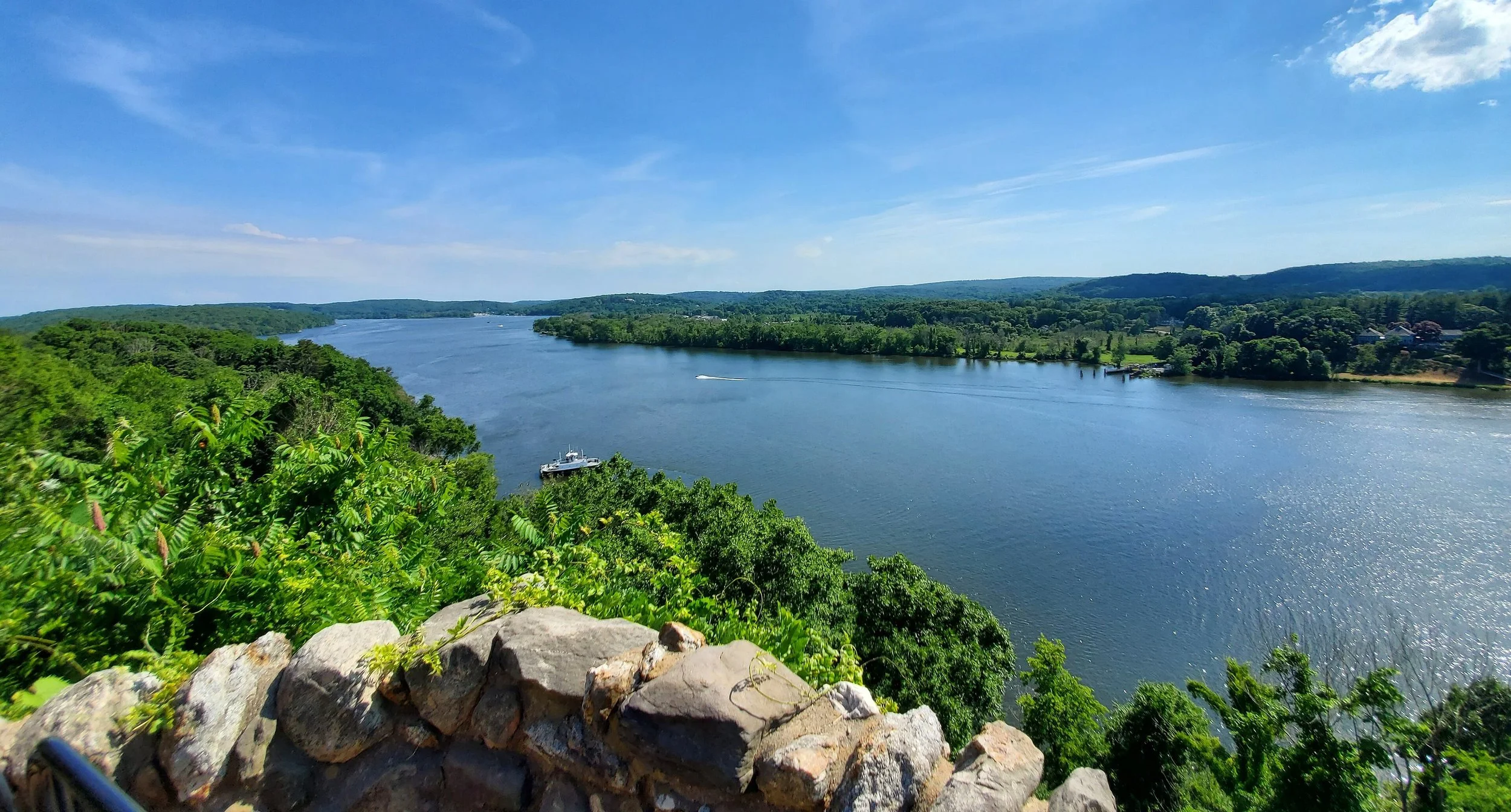
I think of an evening down at Holbrook's Wharf
when I glanced up from supper to speak to you,
but stopped my breath as a motor launch slid in....''
-- From "Commuter Marriage: Homecoming,'' by Henry Taylor
That special light

“She ran into the early-October afternoon. The light came at a low slant through the oaks across the street, gold and green, and how she loved that light. There was no light in the world like you saw in New England in early fall.”
-- Joe Hill, book author and comic-book writer and a son of Bangor, Maine-based novelist Stephen King.
Entrepreneurial New Hampshire
"In New Hampshire, we know that small businesses and entrepreneurs are the engines of economic growth in the 21st-Century economy, and our state has long been defined by the entrepreneurial spirit of our people. ''
-- U.S. Sen (and former Gov.) Maggie Hassan
Chris Powell: Lies and betrayal from Vietnam through today; rich school employees
With their 10-part series The Vietnam War just broadcast on PBS, documentary makers Ken Burns and Lynn Novick have done a great service not only to history but also to contemporary public policy.
The documentary emphasizes that the famous Tet offensive of Communist North Vietnam and its guerrillas in South Vietnam, launched in January 1968, was actually a military triumph for the United States and South Vietnam but also a political disaster for them. For it exposed the U.S. government's years of lies that the war was close to won.
Indeed, President Lyndon B. Johnson and his political associates libeled the anti-war movement as disloyal and Communist even as they confessed to each other in private that the war was going poorly and was ill-conceived. So the war was continued for another seven years just to save face.
The series also brilliantly contrasted the astounding courage and heroism of U.S. soldiers with the equally astounding stupidity of the strategy that their generals pursued.
A former soldier summarized that strategy this way: Walk into the jungle and see if you can draw fire. Of course, our soldiers did draw fire, suffered terrible casualties, and then withdrew to remote and poorly defended fire bases without ever holding the territory that they had won with so much blood. The United States dropped more bomb tonnage on the Vietnam War theater than it dropped on Europe during World War II, but that didn't hold territory for long either. That former soldier said he especially resented having to fight to take the same ground multiple times.
Of course, this is pretty much the "strategy" now being used in the 17th year of U.S. military intervention in Afghanistan: Draw fire and then retreat with your casualties.
At least the Trump administration, unlike the Johnson administration, doesn't pretend that the war is going well. But like the Johnson administration, the Trump administration continues the war anyway without any plausible plan for winning it -- and this time the American people and even supposedly humane members of Congress are indifferent to another endless war of attrition in Asia.
So maybe in a decade or so Burns and Novick will be able to make a documentary called The Afghanistan War. They could quote the quatrain from Kipling that belongs at the graves of Johnson and Nixon and will belong at Kissinger's:
And the end of the fight is a tombstone white
With the name of the late deceased,
And the epitaph drear: "A Fool lies here
Who tried to hustle the East."
LUXURIOUS EDUCATION: A community activist in Hartford, Kevin Brookman, notes that the city's school system employs about 70 people with salaries of $100,000 or more, many of them above the governor's salary, $150,000, not counting insurance and retirement benefits. The city's new school superintendent is paid $260,000.
If the Connecticut General Assembly doesn't quickly pass a state budget he likes, the governor, operating the state by executive order, may divert to Hartford and a few other cities all the education money state government has been giving to the rest of the state's municipalities.
What will Hartford do with it all? Create more $100,000-a-year positions? Build another stadium?
If experience is any guide, the city won't improve education with it, since student educational performance is almost entirely a matter of family cohesion, of which Hartford has little.
Chris Powell is managing editor of the Journal Inquirer, in Manchester, Conn.
Boston Guardian has an opening for reporter
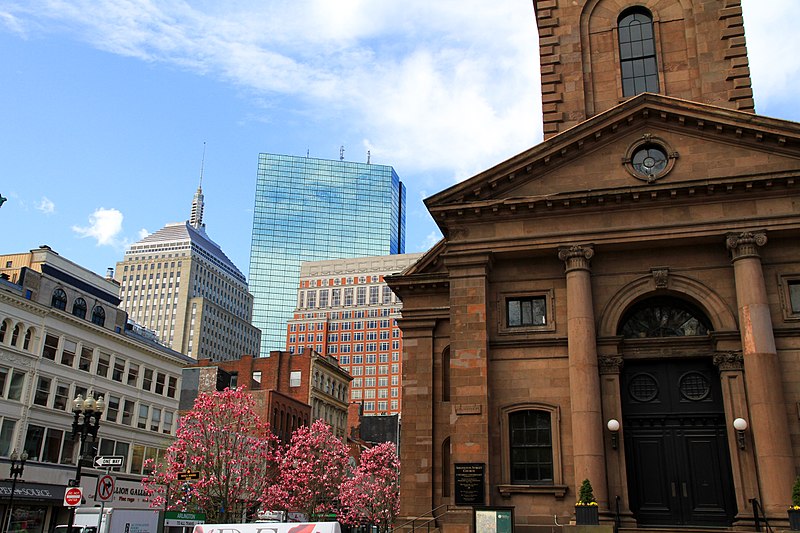
The Arlington Street Church, very close to the headquarters of The Boston Guardian.
The Boston Guardian, the city's biggest weekly and covering the most dynamic parts of Boston, has an opening for a reporter with two or three years experience. If interested, please contact David Jacobs, publisher, at:
djacobs@thebostonguardian.com
Fall fashion

"The morns are meeker than they were,
The nuts are getting brown;
The berry's cheek is plumper,
The rose is out of town.
The maple wears a gayer scarf,
The field a scarlet gown.
Lest I should be old-fashioned,
I'll put a trinket on.''
-- "Autumn,'' by Emily Dickinson
Mysterious African minimalism at UMass

Untitled painting by Fred Wilson, in his show "5 takes on African Art,'' at the University Museum of Contemporary Art, at the University of Massachusetts at Amherst, through Dec. 17.
A fearsome place
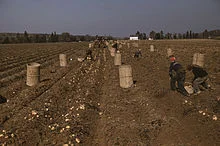
Children gathering potatoes on a large farm in Aroostook County in 1940. Schools did not open in those days until the potatoes were harvested.
-- Photo by Jack Delano for the WPA
"This is big country, larger than Connecticut and Rhode Island combined, nearly the equal of Massachusetts; its vastness more suggestive of the West than of New England. Its winters, people will tell you, are fiercer, its forests thicker, its rivers wilder than anywhere else in the East.''
-- Mel Allen on Aroostook County, Maine, in "There's No Easy Way to Pick Potatoes,'' in the September 1978 issue of Yankee magazine.
Jill Richardson: Whites should consider what it's like being black
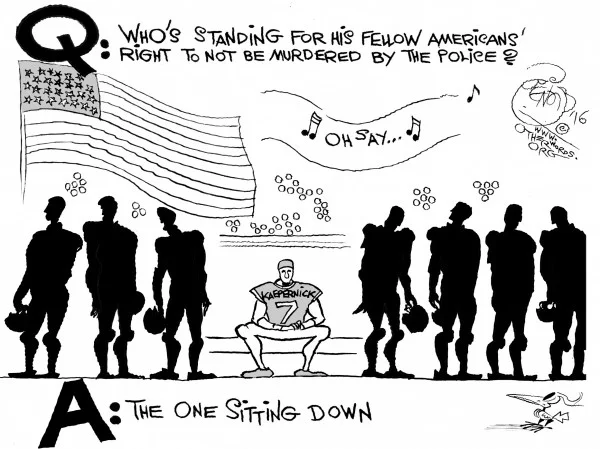
Via OtherWords.org
As white people across the nation criticize Colin Kaepernick and other NFL players who “take a knee” for the national anthem, they ought to know something first.
White people in America have no idea what life is like for black people in America.
How can I make such a broad statement? How would I possibly know?
For one thing, I’m white. I grew up in a mostly white town. Like many white people, I was raised to oppose racism, at least as I understood it then. I celebrated Rosa Parks and Martin Luther King, Jr.
I wasn’t quite sure who Malcolm X was — I’d heard the name, but we never studied him in school. I’d never heard of other black leaders like Marcus Garvey or Bayard Rustin.
I never used the N-word. I wouldn’t even write it in my essay on Huckleberry Finn in ninth grade English. And I’d never even heard of most other racial slurs for African Americans — or any other race for that matter. Nobody used language like that.
But that was the extent of my background when, three years ago, I found myself assigned to be a teaching assistant in a sociology class on race. The professor would give the lectures; I would lead the discussions.
To say it was terrifying is an understatement. I didn’t know any of the material I now had to teach, and I was flying by the seat of my pants.
Fortunately, I did know how to listen. And I know how to empathize.
In the years since, I’ve taught hundreds of students of all races — first as a teaching assistant and now as an adjunct professor.
And it’s funny. When you start listening, you learn things.
I learned that being black in America means people who aren’t black think it’s OK to touch your hair whenever they want — often without asking, even if they don’t know you.
When my students inadvertently made racist remarks, it didn’t hurt me as a white person. If I weren’t white, it would’ve stung. And I would’ve had to remain cool and professional while continuing to do my job — something I learned nonwhite people have to do all the time.
I learned that decades of housing discrimination robbed black people of wealth as most whites bought homes and built equity. The effects of those disparities live on.
Long after segregation was legal, we continue to live in racially segregated neighborhoods, and students like Michael Brown attend schools so poor I couldn’t even fathom that such a place would be called a school.
How can anyone succeed in college or find a good job if they barely even have one class a day where a teacher shows up and teaches using, as was the case in a district detailed in a 2015, This American Life, the NPR show?
Each year, I face the same conundrum: My students inhabit different worlds. The white students think that they know all there is to know about life in America. My job is to gently show them they have no idea — as I had no idea — what it’s like not to be white in America.
I can’t speak for black people, and I wouldn’t try to. They speak very well for themselves. I’ll just say that those of us who are white should listen when they do.
And to do that, white people must overcome their defensiveness. Not every protest against racism is a personal attack against them, the flag, the country, or whatever else.
So if you’re white, next time you see black football players take a knee and don’t understand, take it as a sign you have something to learn.
Jill Richardson is an OtherWords,org columnist.
America's training deficit
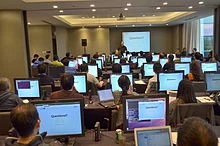
A computer-skills training class.
From Robert Whitcomb's "Digital Diary,'' in GoLocal24.com
It appears that the recent lethal ship collisions involving the Navy may be attributable in part to excessive work hours, rushed training and an over-emphasis on cheaper, online training, as opposed to teaching in person. The U.S. military has been overstretched for a long time: The collisions may be yet another example.
This reminds me of an intensifying problem in much of American business over the past few decades – major cutbacks intraining. The reason is simple: Doing a thorough job of training your people, while it helps build the long-term strength of an enterprise, cuts into quarterly profits.
I saw this inthe newspaper business. When most newspaper companies were closely held, and often family-controlled, in the ‘70s and ‘80s, many of these enterprises spent a great deal of time and money training their people, especially in new computer and other production-related systems. But then it became clear that many of the larger newspaper companies would eventually go public, whereupon many were then quickly sold to other public companies.
As this happened, there was less and less training because that would have cut into quarterly earnings and thus the stock price – a key metric for senior execs as well as shareholders (the most important of which were usually pension funds and other institutions).
I saw this happen at the old Providence Journal Co. Costs were slashed to dress up the company for sale.
But in, for example, such very successful economies as Germany’s andthe Scandinavian nations’, managements take amuch longer view and expend much more money and time in training on a per-capita basis than found in short-term-focused America.
Daniel Regan: The benefits and challenges of 'Early College' programs
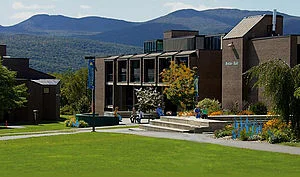
Bentley Hall at Johnson State College, with the Sterling Mountain Range in the background.
From The New England Board of Higher Education (nebhe.org)
JOHNSON, Vt.
Look around your campus this semester for some students who look unusually young, eager and attentive. It may not be, as faculty sometimes say, that “the students are looking younger every year” or that you yourself are aging rapidly. They may be students in an “Early College” program. Less evident at first gaze may be the multiple types of students within the ranks of Early College goers, as well as the challenges they, their parents and their colleges face in sustaining and navigating their academic endeavors.
Several factors have increased the popularity of these programs, though a proactive push from higher education to expand them has not been a primary one. The impetus for the growth of such programs has come from legislators as well as from high school students and their families, for reasons that will surprise no one: concern about the cost of a college education; national publicity about student debt at graduation; and questions about the quality of U.S. secondary education and thus college readiness.
A form of dual enrollment
Traditional Early College has long existed in the form of dual enrollment, in which high school students get a jumpstart on college, by taking a few courses on campus, online or at their high school (but taught by instructors certified as equivalent to part-time or adjunct college faculty). A growing trend is for colleges and universities to host full-blown freshman years for high school students, most often seniors. At least 28 states possess versions of these full-time programs, whose genesis in the U.S. traces back to 2002 with funding from the Bill & Melinda Gates Foundation, among others. Such programs make it possible for students to earn a high school diploma along with college credits. The students spend their school day at college, as full-time students, and may go to their high school for selected events, services and activities.
Vermont’s Legislature passed its version of Early College in 2013, as part of Act 77, “An act relating to encouraging flexible pathways to secondary school completion.” In the legislation, one of several “flexible pathways” is an Early College Program, which simultaneously serves as a student’s senior year of high school and provides a full year of college credit. For each accepted high school senior, the State of Vermont pays 87 percent of the tuition rate to an approved postsecondary institution, which accepts the amount as full payment.
Early College has proven popular. My own college exceeded its quota in the first year of the program, and was forced to seek supplementary legislation to redirect and gain seats unused elsewhere in the state system. Our local legislators provided strong and effective support.
Who are the students?
Several types of students may be part of an institution’s Early College population. Some programs began with a specific emphasis on attracting underserved, first-generation or low-income students. Otherwise, an Early College program’s earliest recruits will tend to be academic high flyers. They are the high performers who make for happy professors and delight in their campus’s outreach to high schools. At my institution, for instance, they help account for Early College students’ consistently outperforming the general student population, at least by the measure of GPA. In a recent fall semester, for instance, the average GPA for Early College students was 3.6, while for all freshmen, it was 2.9. As the latter group includes Early College, the actual difference is greater still.
Although academic high flyers may be in the first wave, they are not the only Early College constituency. Other student participants may prove similarly rewarding, though perhaps in different ways. Economic pragmatists—some academically proficient, others less so—may also be early adopters. In this era of academic cost-consciousness on the part of education “consumers,” these students and their families know how to spot a good deal. They quickly grasp that tuition for Early College courses is generally borne by the school system, not the individual family. Good high school advisors also play a major role, helping students from modest (and other economic) backgrounds become aware of opportunities to earn college credits inexpensively.
Besides academic high performers and economic pragmatists, there are secondary students who seek a new learning environment different from the one in their high schools. And finally, there are those who simply want to get out of their buildings. Early College programs would seem particularly good places for those high school students who, after a while, grow tired of fighting identity battles over issues such as sexual orientation or gender identity. Trading a high school classroom or lunchroom for a college or university campus can come as a relief.
Building credits and confidence
That these programs are likely to succeed will come as no surprise. They convey many benefits. Students earn transferable credits and build confidence in their college-going capacity. (According to one report, 86 percent of Early College students enroll in college the semester after high school graduation.) They enhance their readiness for higher education through early exposure to the intangibles of collegiate culture: getting used to few class hours and lots of homework (instead of the reverse, as in traditional high schools), learning how to read a syllabus and how a college class is conducted, even how a college dining service works. The institution benefits from enhanced professorial satisfaction and good will in the community. An unanticipated benefit--the retention of some students after their Early College year—may be a godsend for tuition-driven institutions, in some parts of the country, that are struggling to maintain a critical mass. Even the high schools that have surrendered these students get to proclaim their commitment to individualized instruction. They also avoid the problem of accommodating bored seniors who have maxed out what their high school can offer them.
Several problems remain, however, and are fairly predictable. While none negates the value of an Early College program, each deserves consideration and may merit a concrete solution, especially in the interests of ensuring equity of access.
Costs: Parents and students will face costs that, while routine for college, will be unprecedented for most high school families. Although tuition is free, fees may attach to particular courses. Even when communications are crystal clear, in the excitement of the Early College opportunity, parents will likely ignore the fine print and be surprised by course and activity fees. College books will be an additional expense. Then there is food, during the days on campus. In my local high school, for instance, half the students qualify for free or reduced lunch; none of that transfers to Early College. (Luckily, the director of our food services recognized the problem and created a cost-effective option for program participants.) Students may have to cover other costs, too, including health insurance and parking permits.
Commuters vs. residents: Transportation may be a concern, either the cost of public bus or train service or the commuting distance to campus for students from multiple high schools. These are generally 17-year-old drivers. Given Vermont’s long winters and snowy roads, we felt compelled to offer Early College students a residential possibility.
Staffing: Even in situations where space is available and room costs are bearable, youthful dorm residents may pose special challenges to the college or university that hosts them. Certainly, these students will require additional staff time and supervision, however academically prepared they may be. Additional staff resources may also have to be expended on recruitment and admissions work as well as on academic advising. And college advisers will have an additional responsibility: making sure that students are poised to satisfy all their high school graduation requirements. “What about that gym class that Sabrina needs to satisfy state requirements?”
Balancing act: It requires a deft touch for colleges and universities to address the unique needs of Early College students, but not segregate them from the general student body. Modest steps to create an identifiable cohort would seem advisable—perhaps, for example, an ice cream social at the start, followed by occasional meetings throughout the first semester (at least). A recognition event at the conclusion of the Early College year provides a good opportunity to celebrate their achievement.
Assurances: Considerable time may be required to devise an Early College Program, complete the paperwork and provide the assurances that state Departments of Education will likely require.
Transferable credits: Early College students are unlikely to be concerned about the acceptance of Early College credits at their eventual degree-granting institutions; but if they are not, they may be in for a surprise later on. Transfer credit policies and practices vary widely. Courses accepted for graduation credit, but not toward particular requirements—which is sometimes the case—may not accelerate the pace of college graduation, which is a key promise of Early College.
Time management: Also from a student perspective, a new kind of time juggling will be at a premium: how to perform in your high school play, play on the soccer team, all the while carrying a full roster of college courses as well as extra- or co-curricular involvements on campus?
High school concerns: From a secondary school perspective, there are a number of concerns. Administrators may be understandably reluctant to lose these students. They may be giving up significant public funding, computed per-capita, to surrender some of their best students. Even teachers’ work schedules may be affected, if they no longer have a sufficient number of students to teach a smaller, more advanced class they were counting on. And beyond all that, is exiting the building any real solution to deficits in secondary education, especially the senior year?
Despite these challenges, Early College programs provide very positive experiences for many participants, satisfaction for their families, benefits to the host colleges and universities, and the ability for sending high schools to claim—rightly so—a commitment to individualized learning.
Daniel Regan is accreditation liaison officer and former dean of academic affairs at Johnson State College, in Vermont.
The delightful Boston Harbor
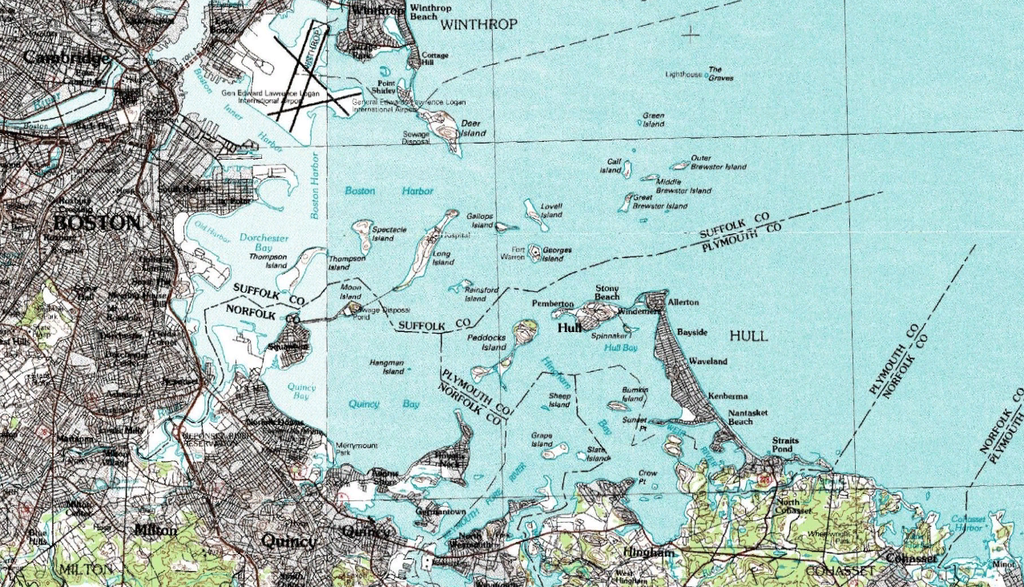
America, the new world, compares in glamour and romance with the old, and Boston Harbor is one of the most delightful places in America.
-- Edward Rowe Snow, in The Islands of Boston Harbor (1935)
David Warsh: The great productivity stagnation
Economic Principals had a pretty good topic in mind this week – the proposition that good ideas are becoming harder to find. That’s the conclusion contained in an important new paper by Nicholas Bloom, Charles I. Jones, John Van Reenen and Michael Webb. But there was too much background to tell and the piece sprawled out of control. Here’s what Stanford’s news service had to say about their account.
The authors’ punchline:
“Our robust finding is that research productivity is falling sharply everywhere we look. Taking the U.S. aggregate number as representative, research productivity falls in half every 13 years – ideas are getting harder and harder to find. Put differently, just to sustain constant growth in GDP per person, the U.S. must double the amount of research effort searching for new ideas every 13 years to offset the increased difficulty of finding new ideas.’’
The team is suitably cautious in whatever surprises may be in store. Who knows what else there is out there to know? Not engineering feats like hyperloops and better batteries, but basic breakthroughs such as quantum computing, genetic editing techniques and artificial intelligence.
Still, for a decade or more, an intuition has been taking hold that the familiar rate of increasing plenty was slowing down, at least in the United States. This was not simply a matter of resources strained by soaring population. The basic mechanism that Thomas Malthus missed 225 years ago, of increasing know-how and economic growth, was thought to be involved as well. In this view, an age of widespread affluence is not in coming to end, but perhaps it is stabilizing.
Economist Robert J. Gordon, of Northwestern University, argued strongly that “a special century” of rapid growth had occurred that would not be repeated. In The Rise and Fall of American Growth: The US Standard of Living Since the Civil War (Princeton, 2016), he described the many very basic inventions – steam, electricity, motors, communications, modern agriculture, public health – that could only happen once. Others, he said, others reached natural limits. Tyler Cowen, of George Mason University, put it more colorfully a little earlier in The Great Stagnation: How America Ate All the Low-Hanging Fruit of Modern History, Got Sick, and Will (Eventually) Feel Better (Penguin eSpecial, 2011)
For 30 years, this argument has been slowly working its way forward within technical, which is to say, scientific, university-based economics. Jones, in particular, has been at the center of it. It is hard to find a vein in economics that has made more progress recently than this one. It will make an interesting story someday.
David Warsh, a veteran economics and political columnist, is proprietor of Somerville, Mass.-based ec
Saving coastal farm is biggest land-conservation project along Buzzards Bay
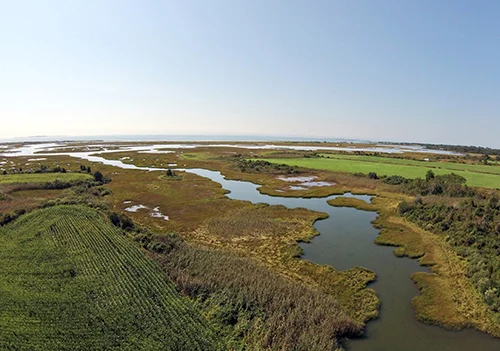
This 115-acre farm was one of the last undeveloped and unprotected areas of coastal farmland on Buzzards Bay. (Dartmouth Natural Resources Trust)
By ecoRI News staff (ecori.org)
DARTMOUTH, Mass.
The Buzzards Bay Coalition and its partners, the Dartmouth Natural Resources Trust and Round the Bend Farm, recently celebrated the permanent protection of 115-acre Ocean View Farm on Allens Pond, the largest land-conservation project ever completed along the coast of Buzzards Bay.
Completed this past summer, the protection of Ocean View Farm was an $8.1 million component of a larger land-conservation initiative on Allens Pond, which has been recognized as one of southern New England’s most significant coastal habitats. The larger Allens Pond Conservation Completion Project is expected to protect an additional 100 neighboring acres of forests, wetlands and active farmland.
“Visionary landowners and conservation organizations have worked together over decades to protect and preserve Allens Pond,” Buzzards Bay Coalition president Mark Rasmussen said. “But the fate of one landholding on the pond still threatened this landscape’s extraordinary agricultural and natural values. Ocean View Farm narrowly missed being covered with new homes, roads, and septic systems several times in recent years. With the support of so many levels of government and generous neighbors coming together to raise the money needed to save this place, this jewel of Buzzards Bay will now be protected forever.”
Ocean View Farm was one of the last undeveloped and unprotected areas of coastal farmland on Buzzards Bay.
“Ocean View Farm had long been one of the top conservation priorities in the town of Dartmouth due to its large size, prime location, outstanding agricultural land and abundant natural resources,” Dartmouth Natural Resources Trust (DNRT) executive director Dexter Mead said. “Without the remarkable support of so many public and private donors, we never could have accomplished our goal.”
Round the Bend Farm will put the deep, rich soils on the northern 55 acres to work as an all-organic farm, and DNRT will eventually open a new public trail on a 60-acre waterfront portion of Ocean View Farm.
“Our mission is to create a restorative community. The newly acquired 55 acres will bring our farm to 94 acres; expand our realm into focused, sustainable food production; and increase our impact on providing nutritious food for people of all socioeconomic demographics,” said Desa Van Laarhoven, executive director of Round the Bend Farm. “On this land, we intend to cultivate a community that is diverse in race, gender and culture. Our vision is opening this land to a new generation of farmers, specifically targeting women and people of color, those who have historically worked the land but have been locked out of long-term leasing and ownership.”
The Buzzards Bay Coalition holds a permanent conservation restriction on the northern portion of the farm and co-holds a conservation restriction on the southern portion, along with the Dartmouth Conservation Commission, ensuring that this land will never be developed.
During the past year, the coalition spearheaded assembly of a patchwork of federal, state and local government funding and private fundraising to protect this land for future generations. The U.S. Department of Agriculture awarded the project nearly $2 million, and the U.S. Fish & Wildlife Service provided $1.1 million.
“Public-private partnerships are essential in protecting the nature of our nation’s coastal wetlands,” said Mark Cookson, regional coastal program coordinator for the U.S. Fish and Wildlife Service. “These marshes provide us with clean water, and are important areas for wildlife including the federally endangered roseate tern.”
Last fall, Dartmouth residents voted to contribute $600,000 in Community Preservation Act funding to save 60 acres of Ocean View Farm. The Massachusetts Department of Conservation and Recreation also provided the project with a $400,000 grant.
The project was also supported by more than $2.92 million in private donations from 365 individuals and families. The Bromley Charitable Trust also contributed $2 million to the project in support of Round the Bend Farm. The Buzzards Bay Coalition and DNRT are seeking $70,000 in private donations to complete the project.
We seek out wet and expensive places
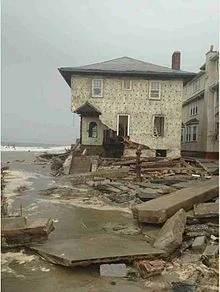
Damage from Superstorm Sandy in Brooklyn on Oct. 29, 2012.
From Robert Whitcomb's "Digital Diary,'' in GoLocal24.com:
The Coast Guard does a terrific job in protecting Americans from storms, drug smugglers and other perils. The recent rash of hurricanes has provided more reminders of that. But the Trump administration has proposed cutting funding for the service by 2.4 percent.
That comes as the Coast Guard has been spending millions on protecting Donald Trump’s for-profit Mar-a-Lago club in Palm Beach, Fla. It spent $6.6 million just on six presidential weekend trips last spring! By the way, after Donald Trump was elected, the club jacked up its initiation fee to $200,000. But anything to be a jet-setter and make some more money for our monarchical First Family.
Meanwhile, let’s watch how rising sea levels and more coastal flooding might affect the Coast Guard’ s mission and activities.
President Trump has called globalwarming a hoax but on that issue and most others, he turns out to have no fixed positions. He just takes whatever position seems the best political sale at the time, especially to his base.
He announced in June that the U.S. would leave the Paris Climate Accord. But now, says Secretary of State Rex Tillerson, we might stay in it after all. Tillerson said last Sunday: “The president said he is open to finding those conditions where we can remain engaged with others on what we all agree is a challenging issue.’’ Eh?
Tillerson said that Gary Cohn, Trump’s top economic adviser, was overseeing the issue. Why him?
“So I think the plan is for director Cohn to consider other ways in which we can work with partners in the Paris Climate Accord. We want to be productive. We want to be helpful,” said Tillerson. Translation, please.
Would a couple of bad hurricanes hitting the U.S. mainland in the past few weeks have anything to do with this apparent change? Trump is media-obsessed and the Irma and Harvey damage photos weren’t particularly good optics for global-warming skeptics.
So perhaps the president can be persuaded to rescind his reversal ofan Obama executive order that had required the Feds to consider climate change and accompanying sea-level rise when building/rebuilding such public infrastructure as highways, bridges and levees – an order that some seaside developers have sought to quash because it might ultimately depress real-estate sales on properties that shouldn't be built on.
Some of the challenge of addressing global warming can been seen in a couple of statistics: The population of U.S. coastal counties has grown 5.6 percent since 2010 while that of inland counties rose just 4 percent. People love to be near water, but they don’t want to think about the fact that they or at least their seaside property could end up underwater.
There’s the threat of rising seas to life and property on irresponsibly developed coastal strips. But poorly regulated coastal development also destroys such natural barriers to flood disasters as marshes, which are also essential places for the life cycles of fish and other wildlife. The sort of virtually uncontrolled seaside development we’ve seen poses very broad ecological threats.
An epicenter of rude drivers
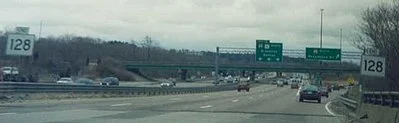
"6. "That Masshole just cut me off!"
''The 'Masshole' takes pride in his aggressive and illegal driving habits. The King of Road Rage, he drifts between lanes with reckless abandon, tailgates hard, is too cool to use turn signals, and has demonstrated an inability to yield, merge, observe road signs and speed limits, and function like a human being behind the wheel of a car.''
From a list of observations about New England by Business Insider.
More than normal

"Normalcy of Beauty'' (encaustic painting (which uses beeswax), by Kimberly Curry, in the"Shifts Exhibition,'' of New England Wax members at the Fuller Museum, Brockton, Mass., through Nov. 26.
Graham Allison to speak at the PCFR: Are China and America destined for war?
Coming up at the Providence Committee on Foreign Relations (thepcfr.org; pcfremail@gmail.com):
On Wednesday, Oct. 11, comes Graham Allison, who will talk about, among other things, Chinese expansionism in the South China Sea. He'll discuss his new book Destined for War: Can America and China Escape Thucydides's Trap?
Graham Allison was director of Harvard's Belfer Center for Science and International Affairs from 1995 until July 2017. Allison is a leading analyst of U.S. national security and defense policy, with a special interest in nuclear weapons, terrorism and decision-making.
On Wednesday Nov. 15, comes prize-winning journalist Maria Karagianis, who will talk about the refugee crisis on the Greek island of Lesbos.
In May 2015, she traveled to Lesbos, which is within sight of Turkey. At that time, hundreds of thousands of refugees were spilling onto the beaches in leaky boats, many of them dying, trying to find freedom from war-torn Syria. The Greek people of the island, who have been nominated for a Nobel Peace Prize for their generosity, are now facing an economic catastrophe with tourism, their main source of income, which is now destroyed. She is currently a Woodrow Wilson visiting fellow and has traveled across the United States speaking at colleges and universities. She is a former guest editor and award-winning writer on the editorial board of The Boston Globe..
On Wednesday, Jan. 27, comes Victoria Bruce, who will talk about China's near monopoly of rare-earth elements.
She is the author of Sellout: How Washington Gave Away America's Technological Soul, and One Man's Fight to Bring It Home. This is about, among other things, China’s monopolization of rare earths, which are essential in electronics.
Victoria Bruce holds a master's degree in geology from the University of California, Riverside, where she researched the chemistry of volcanic hazards on Mount Rainer in Washington State. She has directed and produced four documentary films, earning the Alfred I. duPont-Columbia University Award for excellence in broadcast journalism for her film, The Kidnapping of Ingrid Betancourt. She also received the Duke University Human Rights Book Award for Hostage Nation.
On Wednesday, Feb. 21, comes Dan Strechay, who will talk about the environmental and socio-economical effects of the vast palm-oil agribusiness.
He is the U.S. representative for outreach and engagement at the Roundtable on Sustainable Palm Oil (RSPO). He'll discuss, among other things, the massive deforestation associated with producing palm oil in the Developing World and what to do about it. Prior to joining the RSPO, he was the senior manager for Sustainability Communications for PepsiCo.
Our Vietnam War -- now and then
Adapted from Robert Whitcomb's "Digital Diary,'' in GoLocal24.com:
I watched the first part of the latest Ken Burns/Lynn Novick series, The Vietnam War. It was well done – vivid visuals and rigorous research. But as someone who was smack in the middle of the Vietnam War generation (the older Baby Boomers) and who edited news stories about the war in the ‘70s, I quibble with the assertion that after the war ended (for America), in May 1975, that neither Vietnam vets nor the public wanted to talk about it for years. In fact, from that time and through the ‘70s, there was nonstop talk, writing, TV shows and movies about it, which, of course, goes on to the present.
Another quibbleis about the distracting cutting back and forth between deeper history (French colonial days, World War II, the French war with the Vietnamese Communists, etc.) and the American war. It would have worked better, in my opinion, as straight chronological history, from before the French to 1975. Indeed, the series would have done well to have included stuff about Vietnam's fraught relations with China over the centuries, which would have provided useful context.
Something I particularly remember from those times was the huge role of chance. A good friend of mine, Steve Perry, was #7 in the Selective Service lottery, was drafted and sent to Vietnam, where he was killed near Danang a month after arrival. I had #361, and so barring a war with the Soviets, I was safe. And by the time I got out of college, in 1970, President Nixon had started to pull troops from that gorgeous if battered little nation.
There was also the role of class. Young men from middle-class and affluent families, who could afford to go to college, usually got higher-education deferments from their local draft boards; poorer people, however, who were less able to go to college, were much more likely to be drafted and sent to Vietnam. We were very aware and uncomfortable about this in the late ‘60s.
The series reminded me of my late father and me watching CBS News in the summer of ’65 as the war was heating up. My dad, a combat veteran of World War II(North Africa, Europe and the Pacific) who retired from the Navy as a lieutenant commander, looked at me, and very quietly said: “I don’t think you’d look good in uniform.’’ Like many conservatives, he thought that the war was a fool’s errand – an extreme overreaching into a swamp, literal and otherwise.
'Slow, slow'
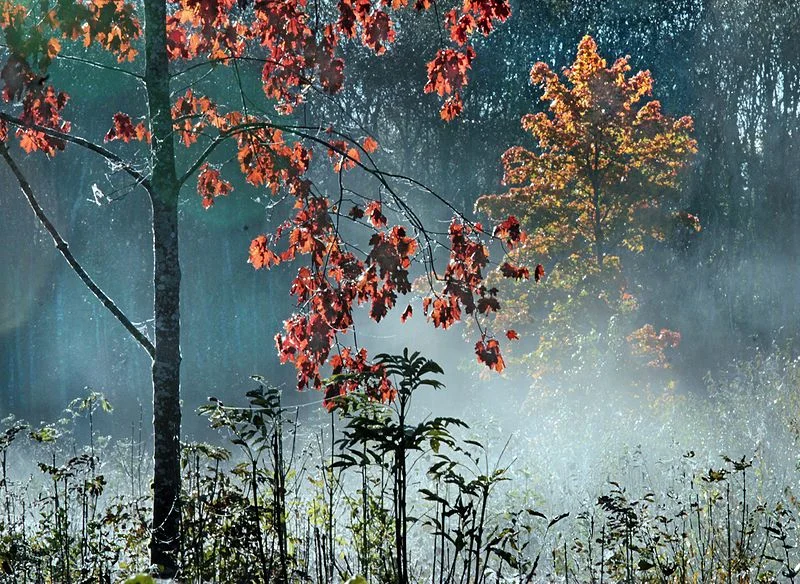
-- Photo by Aleksander Kaasik
"O hushed October morning mild,
Thy leaves have ripened to the fall;
Tomorrow’s wind, if it be wild,
Should waste them all.
The crows above the forest call;
Tomorrow they may form and go.
O hushed October morning mild,
Begin the hours of this day slow.
Make the day seem to us less brief.
Hearts not averse to being beguiled,
Beguile us in the way you know.
Release one leaf at break of day;
At noon release another leaf;
One from our trees, one far away.
Retard the sun with gentle mist;
Enchant the land with amethyst.
Slow, slow!
For the grapes’ sake, if they were all,
Whose leaves already are burnt with frost,
Whose clustered fruit must else be lost—
For the grapes’ sake along the wall.
-- "October,'' by Robert Frost