
Vox clamantis in deserto




Land of Pilgrims and motels
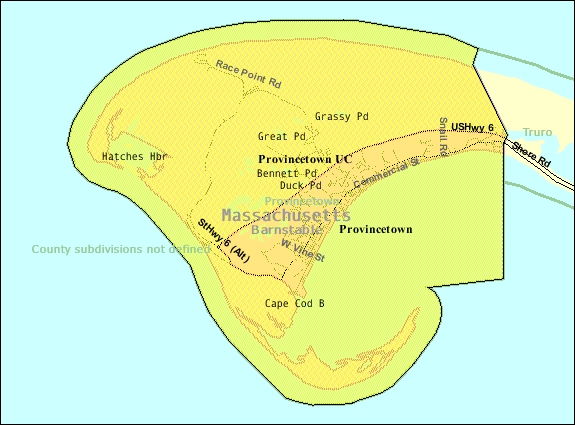
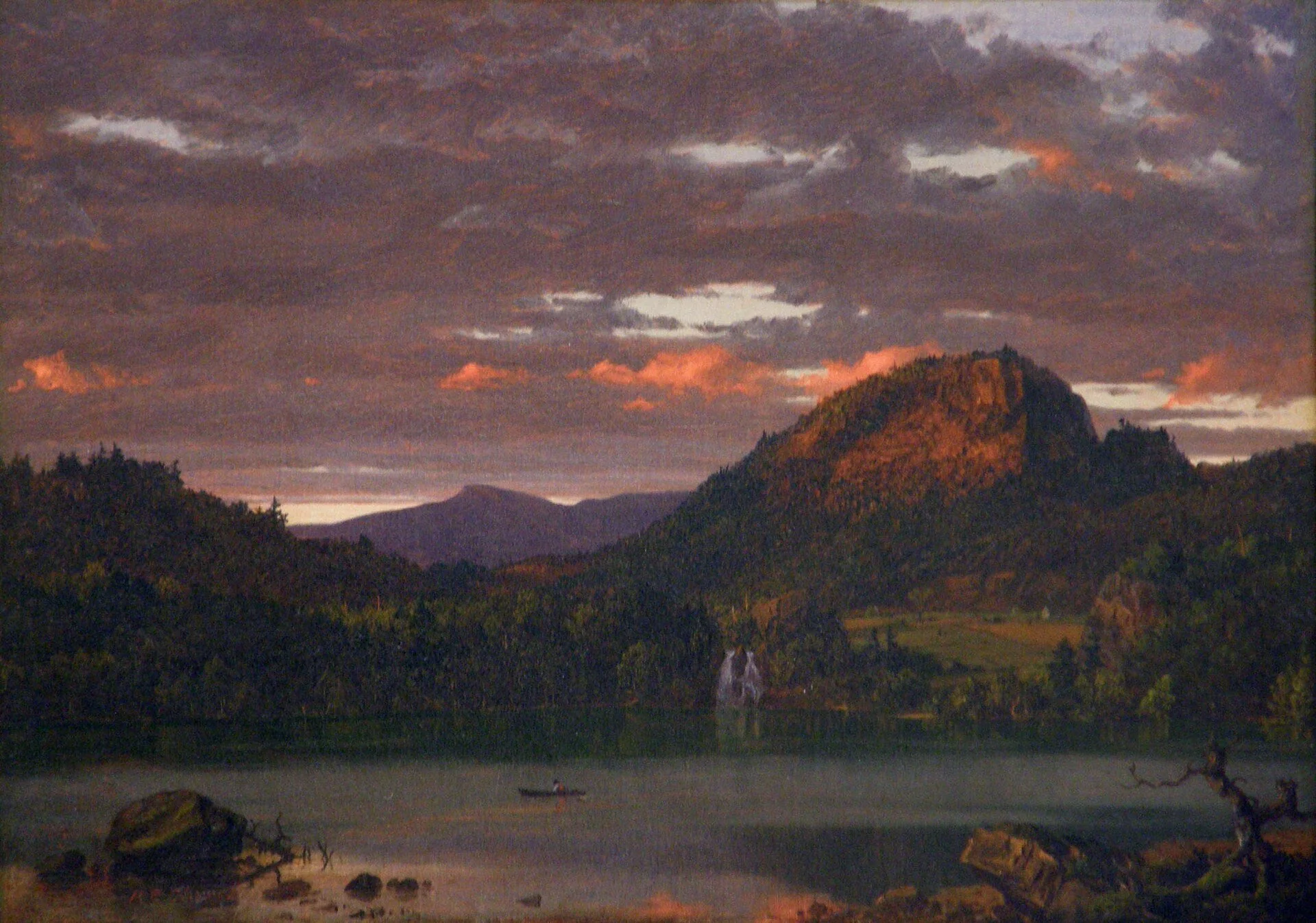
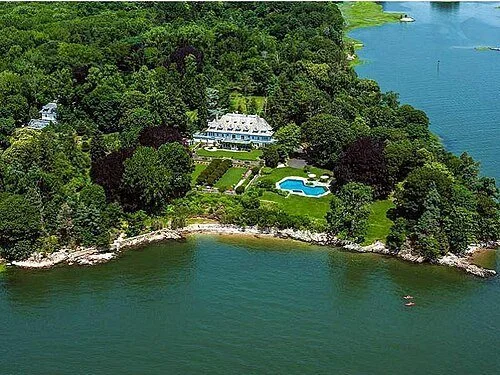
‘’I think of the Pilgrims whenever I walk to these emerald-green marshes at the end of town (Provincetown}….If I have a drink in me, I begin to laugh, because across from the plaque to the Pilgrims {whose first stop in America was at what was to become Provincetown}, not fifty yards away, there where the United States began, stands the entrance to a huge motel….Its asphalt parking is as large as a football field. Pay homage to the Pilgrims.’’
-- From Norman Mailer’s novel Tough Guys Don’t Dance
PCFR dinner on March 8 about the condition and the future of the oceans
To members and friends of the Providence Committee on Foreign Relations (thepcfr.org; pcfremail@gmail.com).
Our next guest will be Dr. Stephen Coan, on Wednesday, March 8.
Dr. Coan is president and chief executive officer of Sea Research Foundation, Inc., a 501c3 non-profit organization which operates Mystic Aquarium, Institute for Exploration and Immersion Learning. He is also chief executive officer of The JASON Project, an internationally acclaimed science program for classroom students, also managed by Sea Research Foundation in partnership with the National Geographic Society.
He’ll talk about the condition and future of the oceans in a time of global warming and other environmental challenges, especially the manmade ones.
Sam Pizzigati: Taxpayers heavily subsidize heavily endowed colleges that serve the rich elite
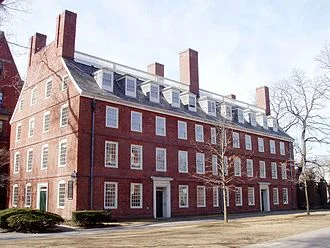
Massachusetts Hall (1720) Harvard's oldest building. Harvard's endowment is about $35 billion.
Via OtherWords.org
Most of us know folks who owe everything they have in life to education. That explains, I suspect, why we nod in agreement whenever we hear somebody describe education as the ultimate antidote to inequality.
Education certainly can serve as a brake on our widening divides. But education, if structured the wrong way, can also reinforce inequality — and perpetuate privilege.
We saw this unfortunate dynamic at work most blatantly back in the days of legal school segregation. “Separate but equal” kept children of color distinctly unequal.
Legally segregated schools no longer scar our nation. But our educational systems are still, in many different ways, perpetuating privilege. And the most powerful perpetuating of all may be taking place at the tippy top of America’s educational order, on the campuses of our nation’s most prestigious elite universities.
We tend to view these elite schools {many of them in New England} — such places as Harvard, Yale, MIT, Dartmouth, Brown and Princeton — as national treasures. One thing’s for sure: These private universities certainly sit atop treasures. They all boast endow In 2012, Harvard, Yale Princeton and five other elite schools had endowments worth a combined $112 billion. For this enormous nest egg, elite private schools owe the American people a debt of gratitude. Without us, their endowments wouldn’t be anywhere near as large.
Elite universities, keep in mind, get the bulk of their contributions from wealthy alumni. These alumni — thanks to the generosity of the American taxpaying public — get to deduct charitable contributions off their taxes. This generous tax break gives the wealthy a mighty incentive to donate to dear old ivy. The more they give, the more they can deduct.
With this tax break in place, elite universities get to accumulate vast endowments, and the phenomenally rich get to pay taxes at bargain basement rates — and stay phenomenally rich.
But these same endowments are also creating fabulous wealth — for the money managers and hedge fund kingpins that universities hire to invest their endowment dollars. These money manipulators rake off enormous fees, often many millions of dollars a year.
What about us, the general public? What’s our return on investment for the hefty tax breaks we extend to wealthy people for their college contributions?
University PR staffers have a ready answer. Elite private universities, they assure us, are serving the public interest. Those billion-dollar endowments, these flacks note, fund scholarships that enable students from families of modest means to get the finest educations available anywhere in the world.
Elite universities, the claim goes, are broadening opportunity.
But not by much, a new landmark study makes clear. The academics behind this new research — economists from Stanford, Berkeley, and Brown — examined data for over 30 million students who attended college in the United States between 1999 and 2013. They found that students from lower-income families make up a shockingly paltry proportion of the enrollments at elite private universities.
In fact, 38 elite institutions have more students from families making over $650,000 a year — our top 1 percent — than from the under-$65,000 ranks of the low- and middle-income families who make up America’s entire bottom 60 percent.
We do have colleges in the United States, the researchers also found, that do a good job reaching large numbers of lower-income students and helping them succeed. The vast majority of these colleges happen to be public institutions — places like the City University of New York.
These public schools aren’t sitting on billion-dollar endowments subsidized by tax breaks for mega millionaires. These colleges depend on our tax dollars for their support. What do you think? Maybe they should get more of those tax dollars — and mega millionaires less.
Sam Pizzigati, an Institute for Policy Studies associate fellow, co-edits Inequality.org. His latest book is The Rich Don’t Always Win.
But won't get you through the winter

"Logjam'' (maple, wisteria, bittersweet, willow, cedar, wood dyes and oil paint), by Susan Lyman, at Boston Sculptors Gallery.
Candy store of tax breaks to lure companies

-- Photo by Brian Snelson
Adapted from Robert Whitcomb's "Digital Diary'' column in GoLocal24.com
Economic development by deal continues apace in Rhode Island. The latest example that we know of: State officials have been considering whether to award up to $4.1 million in state tax credits to Agoda Company, a Singapore-based online travel agency that’s part of Priceline, in return for opening an office in downtown Providence. The quid pro quo is said to be the creation of up to 200 jobs in the Ocean State.
Of course, these tax credits must be made up by businesses and individuals who are not getting such goodies. As I have often notedbefore, the argument is that the state’s promotional position gains by its bringing in high-profile companies, which will then presumably get others get excited about moving to the paradise on Earth that is Rhode Island. But measuring the economic benefits of subsidizing individual companies to move to a jurisdiction is, to say the least, an uncertain science. And corporate promises about the number of jobs to be created have the transience of snow in March in New England. That is not to say that all or most states in varying degrees don’t do "economic development' by deal.
Perhaps this is technologically impossible, but it would be nice if some computer genius would figure out a way to compare the macro-economic benefits of only changes that would affect most everyone in the state – such as better schools, better roads, lower or at least simpler taxes and clearer and fewer regulations -- with the effects of subsidizing individual companies to come. Implementing broad changes that gradually make a state more attractive to a wide range of businesses isn’t as sexy and doesn’t grab the headlines of snaring one company (and often for only a few years) but it would seem to make more sense.
And let’s not forget that Rhode Island has splendid comparative advantages in location (oneof the best in the world), in such long-recognized sectors as design and boatbuilding and insome famed educational institutions. These qualities are very saleable, especially if the broad-based improvements noted above were made. Too often, it seems that paying a company to come to the state is the first approach to economic development.
Former Rhode Island Gov. and Sen. Lincoln Chafee told WPRO; “I’ve traditionally been opposed to what I call the candy store. I’d rather treat all the companies in Rhode Island equally, rather than pick favorites, and shovel the candy at them, as I call it: taxpayer dollars.”
This race to lure famous companies can also be seen as a race to to the bottom.
This may be politically impossible, but he has the right idea. (His naïve and/or wishful-thinking remarks about how to deal with Russia deserve comment some other time.)
Then you live in New England

“If you've worn shorts and a parka at the same time, you live in New England.''
“If you have switched from 'heat’ to 'A/C' the same day and back again, you live in New England.''
“If you carry jumpers in your car and your wife knows how to use them, you live in New England.''
“If driving is better in the winter because the potholes are filled with snow, you live in New England.''
“If you find 10 degrees 'a little chilly', you live in New England.''
‘’If there's a Dunkin' Donuts on every corner, you live in New England.''
-- Jeff Foxworthy

Chris Powell: With casinos now everywhere, who needs Indian casinos?

-- Photo by Ralf Roletschek
MANCHESTER, Conn.
Casino gambling could make an argument in Connecticut a few decades ago when itcould prey on more people from out of state than on the state's own residents. That is no longer the case, with casinos opening in neighboring states andthroughout the Northeast and with one soon to open in Massachusetts just overthe border in Springfield.
Indeed, the "interceptor" casino now being proposed by Connecticut's twocasino-operating Indian tribes would prey exclusively on the state's ownresidents, diverting some of them from heading north on Interstate 91 to thecasino planned by MGM Resorts.
With the "interceptor" casino the tribes would preserve the monopoly stategovernment has given them on casinos in Connecticut. The tribes would pay newgambling royalties to the state and millions in property taxes to East Windsor, whose town government is supportive and where the tribes have secured land alongthe highway.
The tribes say the "interceptor" casino will reduce the gambling revenueConnecticut loses to Springfield and preserve hundreds of jobs in the state. More likely the casino will create a few hundred jobs and relocate hundreds morefrom the two Indian casinos in southeastern Connecticut as gambling trafficturns north.
There are a couple of problems with this plan. The first is that the pathologies of the increased gambling will be borneentirely by Connecticut itself -- the addiction, the theft and theconcentration of wealth, its transfer from the public to the government and thetribes and the weakening of nearby businesses.
The second is that if casino gambling is to become pervasive, and not a specialthing in special places -- first Las Vegas, then Atlantic City, thensoutheastern Connecticut, then Indian reservations throughout the country, andsoon nearly everywhere -- why should Connecticut let any group monopolize it? That is, for casino purposes, who needs Indians anymore? (Really, who ever did?)
As New London Day columnist David Collins writes, last week the general counselof MGM Resorts, Uri Clinton, told a General Assembly committee that his companywill pay Massachusetts and Springfield far more for its casino rights thanConnecticut's Indian tribes are paying state government. That is, stategovernment continues to sell itself short for the benefit of the tribes.
The MGM Resorts executive also noted that if it really wants to compete withcasinos in other states, Connecticut is forfeiting its most lucrativeopportunity, which is not near the Massachusetts line but in Fairfield County, since a casino in Bridgeport, rejected years ago, might draw heavily from theNew York metropolitan area.
Indeed, instead of opening a mere "interceptor" casino near Massachusetts, whynot open a full-fledged casino, entertainment, and sports venue in thenorth-central part of the state?
After all, Connecticut just happens to have a bankrupt capital city whosedowntown is adjacent to both a big arena whose expensive renovations stategovernment can't afford and a new minor-league baseball stadium the city can'tafford. If such a venue could be competently operated, it might overshadow MGM'soperation in Springfield and push some of the burden of gambling's pathologiesback out of state.
Instead of increasing gambling, it would be far better for state government toeconomize by questioning the premises of its most expensive, mistaken, andfailing policies -- government labor contracting, welfare and child protection, and education. But that would require more political courage than Connecticut has musteredsince the Civil War. If it can't bring itself to stand up to a few rent-seekingIndians, state government will never stand up to anyone else.
Chris Powell is managing editor of the Journal Inquirer, in Manchester, Conn.
Llewellyn King: Six flawed assumptions by Trump
Trainee pilots, during that phase of training known as pilotage, are taught to navigate by ground reference. The danger is the students will assume things: The river, the golf course or any other landmark they see may not be the one near the destination. Assumptions are dangerous. My flight instructor warned me years ago, “Assumptions will kill you.”
But assumptions control everything, from the expectation that your car will start in the morning to the belief this or that party will govern better.
In their turn, political leaders are governed by their own world of assumptions; assumptions which morph in to beliefs and which, in turn, become in their proprietors’ minds facts and, in turn, policies.
Here are six of the motivating assumptions that underlie the presidency of Donald Trump to this point. They are flawed in different ways.
First: There is a huge unemployment problem. There isn’t. There is a shortage of workers which is beginning to affect productivity in everything, from new home building to new infrastructure construction.
If Trump is able to find a lot of new money for new infrastructure building and refurbishment, this skilled labor shortage will get worse. If you are a carpenter, crane operator, dump truck driver, electrician, plumber or welder, there is work aplenty. Just ask the electric utility industry or those building pipelines. The “help wanted” signs are out.
One caveat: The absolutely unskilled are close to being absolutely unemployable.
Second: The infrastructure is in deplorable shape and needs immediate attention. Here, the president is right. The question is, how will he fix it? In short, who will pay?
While the relevant committees of Congress have worked on the problem for years, they have been stymied by the lack of discretionary money in the budget. Every year, the highway bill makes it through with less money than its sponsors know that it needs. Ditto state spending.
Public-private funding, part of the presidential mantra, is tricky and only applies in certain circumstances where, eventually, the private investor can get the money out and make a profit. There is no magic formula. Sorry.
Third: Illegal immigrants are prone to committing crime. The evidence is not there, and study after study shows the opposite. This belief erroneously feeds the widespread animus against immigrants, legal and illegal.
Fourth: The economy is a “disaster.” It isn’t and it wasn’t when the president was elected. There is growth, but it is modest.
Fifth: The United States can unilaterally banish radical Islam the from the face of the earth. Religions and their extremes are, at best, contained not vanquished. Time and fatigue will put the evil genie back in the bottle, not American might.
Religions love martyrs – and Islam more so than most. Martyrdom is the sustaining force of today’s Islamic terrorism. Minting more martyrs will be counterproductive.
Sixth: Regulation has the U.S. trussed up and bound: a great giant cannot get up and produce goods and services and well-being for the people. Trump says that regulations should be reduced by two-thirds. But our regulatory burden is not as heavy as, say, that in Europe, and regulations do protect the public health and safety, among other things. That is why they were enacted in the first place.
Corporations complain and some regulations may be onerous. I have personally experienced the good and the bad. Two examples: when I was publishing magazines and I wanted them displayed on the streets of New York City, I had to offer the same incentives to 95,000 other newsstands, where I had no readers. On the other hand, disposing of solvent used in a small printing plant was bothersome and slightly expensive but necessary. Without the EPA goad, the solvent would go into the sewers, with cumulative bad environmental and public-health effects.
Bad assumptions make bad policy. Bad assumptions mostly come from hearsay and it would seem that the president hears many things from his friends: the time-honored New York City practice of schmoozing. It is a great tradition, but can lead to dubious assumptions, ergo beliefs and policies.
Llewellyn King is executive producer and host of White House Chronicle, on PBS. His e-mail is llewellynking1@gmail.com. A veteran publisher, broadcaster, columnist and international business consultant, he's based in Rhode Island and Washington, D.C. and a frequent contributor to New England Diary.
.
Gotta go way up into the North Country to see this scene this year

"Iced'' (oil on aluminum panel), by Sue Charles, at Alpers Fine Art, Andover, Mass.
As winter flows down the hills
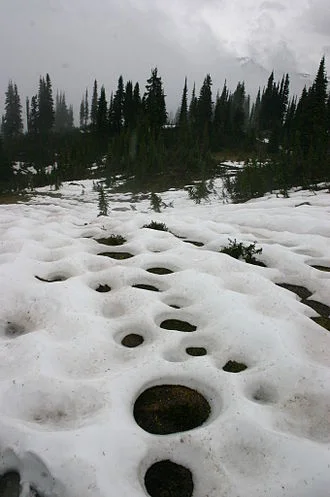
Despite March's windy reputation, winter isn't really blown away; it is washed away. It flows down all the hills, goes swirling down the valleys and spills out to sea. Like so many of this earth's elements, winter itself is soluble in water.... It is a wet world, winter's harsh grip beginning to relax.... An outcropping ledge on the hillside sheds its beard of icicles and becomes a seep spring that drips into a shallow pool that feeds a growing runlet.
-~"Washing Winter Away," from New York Times editorial on March 17, 1964
'A day of humiliation and prayer'
Town of Montague seal
“The important point of this report [Montague, Massachusetts; July 7, 1774] may be summed up in six resolutions: 1. We approve of the plan for a Continental Congress September 1, at Philadelphia. 2. We urge the disuse of India teas and British goods. 3. We will act for the suppression of pedlers and petty chapmen (supposably vendors of dutiable wares). 4. And work to promote American manufacturing. 5. We ought to relieve Boston. 6. We appoint the 14th day of July, a day of humiliation and prayer.”
― Edward Pearson Pressey, in History of Montague {Mass.}; A Typical Puritan Town
The Chinese love Boston
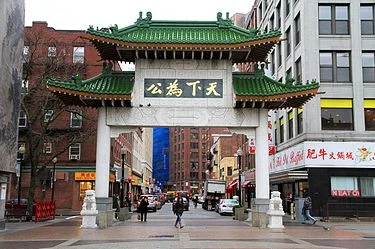
The gate at the entrance of Boston's Chinatown.
From Robert Whitcomb's "Digital Diary'' in GoLocal24.com
The Chinese were the number one source of foreign tourists in Greater Boston last year, taking first place from the British. The Greater Boston Convention & Visitors Bureau estimated that 230,000 Chinese visited the area last year (compared to 224,000 Brits), drawn particularly by its history and its great educational institutions (and maybe by the opportunity to do a little industrial espionage in the region’s huge high-tech sector). The Chinese are especially eager to see MIT and Harvard, which many Chinese attend.
It’s too early to tell how much the Trump administration crackdown on immigrants might reduce the flow. Meanwhile, The Boston Globe reported that a U.S.-China climate summit slated to be held in Boston this year has not been scheduled, raising suspicions that that’s because of the Trump administration’s opposition to doing anything about global warming.


Jill Richardson: Regulation should favor certain businesses and penalize others
Via OtherWords.org
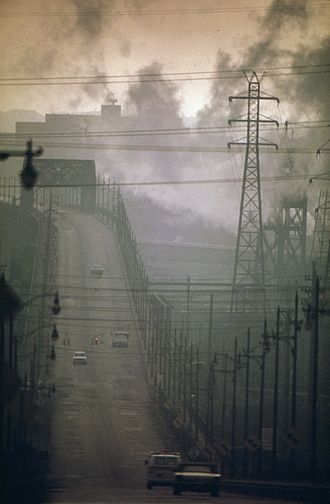
As the Trump regime’s anti-environment onslaught begins, there are several terms used by men (and in the case of Trump’s cabinet, it’s nearly all men) attempting to turn us against protecting the air we breathe and water we drink.
Polluting industries become “job creators,” and the policies that allow them to pollute are “pragmatic,” “balanced,” and “common sense.” Meanwhile, the rules put in place to keep Americans safe and our environment clean become “government abuse” or “overreach.”
These are buzzwords, developed by polluting industries and their political allies, to convince us to let them keep trashing our planet.
Another favorite, already uttered by Trump’s new head of the Environmental Protection Agency, Scott Pruitt, is “picking winners and losers.” Any time the government attempts to rollback pollution, fossil-friendly politicians trot this phrase out.
Generously speaking, they mean this: New environmental rules allow some corporations to keep doing business profitably (the “winners”), while requiring others to make costly renovations or even shut down (the “losers”).
Sounds unfair, right?
Only, the “winners” are the responsible companies with cleaner business practices, and the “losers” are companies that profit by making Americans sick. Say, for example, an old coal-fired power plant spewing mercury into the atmosphere.
In fact, any government decision could be said to “pick winners and losers.”
Suppose the military drops a supplier making expensive, faulty weapons and instead gives its business to a company making equipment the military actually needs. Most of us wouldn’t criticize the government for dropping the dead-weight supplier.
Why should we apply different standards to environmental safety? Do we, the American people, have a responsibility to breathe polluted air and suffer the resulting illnesses in order to keep a polluting industry in business?
Of course not. Especially when the industry in question could have upgraded to cleaner equipment but refused to do so, in order to save money for themselves while sickening us.
Let’s re-frame the idea of picking winners and losers.
When the government allows companies to profit by polluting, they’re also picking winners and losers. The winners are companies that don’t have to invest in cleaner technologies, and the losers are the American people, who get sick from breathing dirty air.
No matter what the government does, whether it regulates or not, somebody wins and somebody loses. The only important question is who comes out on which side.
Oh, and a word about “job creators,” too. Drug cartels employ all kinds of people. That doesn’t mean what they’re doing is good for the rest of us.
Do we want policies that allow irresponsible corporations to win while the American people lose? Instead, I’d propose an ultimatum for dirty industries: Clean up your act or go out of business.
For ordinary Americans and responsible businesses, that sounds like a win-win to me.
Jill Richardson, an OtherWords.org columnist, is the author of Recipe for America: Why Our Food System Is Broken and What We Can Do to Fix It.

Wind and taxes

“Indoors or out, no one relaxes in March, that month of wind and taxes, the wind will presently disappear, the taxes last us all the year.”
-- Ogden Nash
Honor Ms. Quimby's gift

"The Knife Edge'' atop Mt. Katahdin.
Adapted from Robert Whitcomb's "Digital Diary'' column in GoLocal24.com
Maine Gov. Paul LePage, a very Tea Partyish politician, has asked President Trump to reverse President Obama’s designation of 87,500 acres given by businesswoman Roxanne Quimby to the National Park Service as the Katahdin Woods and Waters National Monument. Presidents have long had considerable power to protect such federally owned scenic and otherwise important areas by designating them as National Monuments.
Mr. LePage, an entertainingly grumpy Republican elected twice by a minority of voters because of Maine’s hoary tradition of having strong third-party candidates, wants the acreage to be returned to private ownership and opened for big recreational developments, resort hotels, snowmobilers and so on.
It would be nice if Mr, LePage, et al., would focus on economic development on, say, the vast expanses of vacant parking lots around empty big box stores.
That could despoil a gorgeous area just to the east of Baxter State Park, where rises spectacular Mt. Katahdin, the highest mountain in the Pine Tree State at 5,267 feet. (I have climbed it and walked along the Knife Edge at the top. Bring your anti-vertigo pills if you try it!)
Let us hope that President Trump respects Ms. Quimby’s intentions and the precedent that presidents have the authority to set aside such land.
They only look friendly

Work by David Dauer, in his show at Colo Colo Gallery, New Bedford, Mass., through March 2.
David Warsh: Kenneth Arrow, a kindly giant of economics
SOMERVILLE, Mass.
Kenneth Arrow died last week, at 95, as modestly as he lived. He had survived his economist wife of 70 years, Selma Schweitzer Arrow, by 18 months. Of what I read in the obituaries, the most telling glimpse was one that his son David afforded the Associated Press.
“He was a very loving, caring father and a very, very humble man. He’d do the dishes every night and cared about people very much. I think in his academic career, when people talk about it, it often sounds like numbers and probabilities. But a large focus of his work was how people matter.’’
Arrow’s nephew, former Treasury Secretary, Harvard University president, and himself an economist, Lawrence Summers, also provided an intimate view.
The next most germane observation could be ascribed to many persons over the years: if Nobel Prizes were awarded solely to recognize dominant contributions to economic theory, the Stanford University economist would have won four or five. As his friend Paul Samuelson once said, he was the foremost economic theorist of the second half of the twentieth century.
Arrow’s eminence is frequently ascribed, James Tobin-fashion (“don’t put all your eggs in one basket”) to the short summary of social choice, a sub-discipline he and Duncan Black more or less founded in 1948 (“No voting system is perfect”). But he also fundamentally shaped the price theory applications, decision making under uncertainty, growth economics and the economics of information.
Indeed, with his appropriation of the terms “moral hazard” and “adverse selection” from the insurance industry (he trained one summer to be an actuary), Arrow introduced psychology and strategy into a fledgling science that to that point had understood itself as the study of prices and quantities.
He later sought, without success, to rename the problems he had identified as those of “hidden action” and “hidden information.” But the deed was done. After the appearance of “Uncertainty and the Welfare Economics of Medical Care,” in 1963, economics gradually came to concern itself with the information differences that are absolutely ubiquitous in life – and with the incentives they create.
Arrow’s centrality to the present age is not well understood. My Web site, Economic Principals, among many others, has worked away on it for years. Among his contributions, perhaps the least known, is what happened after he moved to Harvard University from Stanford, in 1968.
Since the late 19 Century, Harvard had long been, with Columbia University and the University of Chicago, one of three main centers of economic learning in the United States. With the Russian Revolution and rise of Nazi Germany, Princeton became a late starter after 1933.
After the loss of two brilliant graduates to the Massachusetts Institute of Technology – Paul Samuelson, in 1940, Robert Solow, in 1950 – the Harvard economics department entered a long period of relative decline. Excellent faculty (Howard Raiffa, Thomas Schelling, Hendrik Houthakker, for example) continued to attract excellent students (Vernon Smith, Robert Wilson, Richard Zeckhauser, Samuel Bowles, Thomas Sargent, Christopher Sims, Robert Barro among them, and, by extension, Fischer Black) but not the critical mass of National Science Foundation grant recipients who flocked to MIT.
The latter would become the rising generation; familiar names today include Robert Merton, Joseph Stiglitz, Robert Hall, Eytan Sheshinski, George Akerlof, William Nordhaus, Martin Weitzman, Stanley Fischer, Robert Shiller, Paul Krugman, Ben Bernanke, and Jean Tirole. Relating the history of the Harvard department from its founding to the outbreak of World War II, Prof. Edward Mason pleaded with his editors, toward the end of the article, to permit him to delay the writing of the next chapter “until we are up again.”
By the early 1960s, Harvard economics had sloughed off the methodological conservatism and residual anti-Semitism that had cost it ITS leadership 20 years before. After losing a third brilliant graduate, Franklin Fischer, to MIT, the university resolved to reverse the course of events (about the same time they bet big on molecular biology). Successive chairmen John Dunlop and Richard Caves, hired three Clark Medal winners – Arrow (1957), Zvi Griliches (1965), and Dale Jorgenson (1971) – tenured Martin Feldstein, and brought John Meyer back from Yale (and, with him, from Manhattan, the National Bureau of Economic Research).
During the next 11 years, Arrow (and fellow theorist Jerry Green) taught many of the leaders of the generation that initiated the revolution in information economics. They included Michael Spence, Elhanan Helpman, Eric Maskin, Roger Myerson, Jean-Jacques Laffont, and John Geanakoplos (not to mention scores of stellar undergraduates, including Jeffrey Sachs, James Poterba, and Robert Gibbons). Feldstein taught Summers and dozens of others. Harvard once again was among the top departments, this time in the world – especially after Maskin returned from MIT, followed by several others. Someone will write up the story of those remarkable years someday.
All the while, Arrow returned to Stanford every summer, to preside over conferences at the Institute for Mathematical Studies in the Social Sciences, organized by Stanford professor Mordecai Kurz. It was at the IMSSS that many developments of the next generation took place. By 1980, Arrow was ready to return to Stanford. But that’s a story for another day.
After he left, Harvard University Press published six volumes of his collected papers – Social Choice and Justice; General Equilibrium; Individual Choice under Certainty and Uncertainty; The Economics of Information; Production and Capital; and The Economics of Information.Earlier, he had published a volume of papers on planning written with his friend Leo Hurwicz, Studies in the Resource Allocation Process.
In 2005, Arrow attached an addendum to his autobiography on the Nobel Foundation site, to reflect a subtly changing reappraisal, his own and that of others, of the significance of his work. In 2009, he became founding editor, with Timothy Bresnahan, of The Annual Review of Economics. And in recent years, he began thinking of the next volumes of collected papers – perhaps as many as another six or even eight, including one on economics and ecology. Much more time will be required to see Kenneth Arrow in perspective.
David Warsh, a veteran financial journalist and economic historian, is proprietor of economicprincipals.com.

From grand house to greenie inn, with maybe a speakeasy along the way
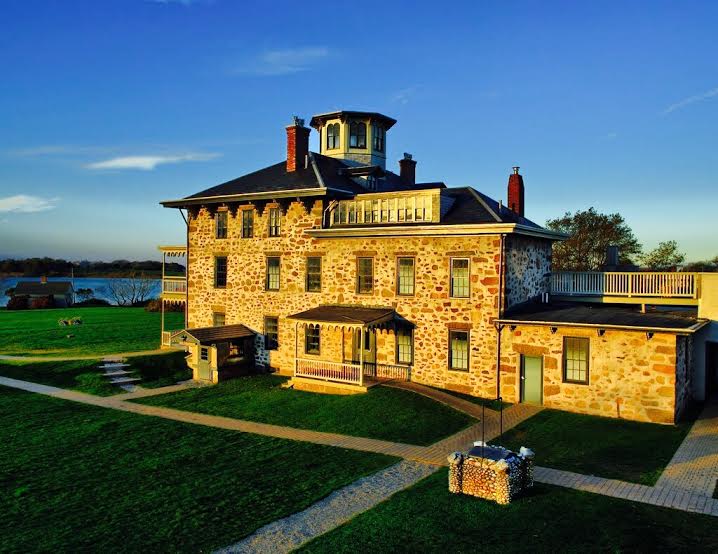
The Stone House, in Little Compton, R.I.
-- Photo by Lydia Davison Whitcomb
The Stone House, a gorgeous inn on Sakonnet Point, in the bucolic town of Little Compton, R.I., is like many such establishments in summer resort communities on the New England coast: It started as a large private house.
The four-story structure was built in 1854 by David Sisson, an iron and textile manufacturer as New England’s Industrial Revolution really got cooking. It was also home to his son Henry Tillinghast Sisson, a Civil War hero and Rhode Island lieutenant governor in 1875-77.
The house became an inn in the early 20th Century. In its basement is a very cozy and inviting tap room, rumored to have been a speakeasy during Prohibition, where you can now have meals as well as drinks. The booze for the speakeasy might well have been offloaded from lobster boats sent out a few miles offshore to pick it up from distributors. Lots of cat and mouse with the Coast Guard.
The Stone House is on the National Registry of Historic Places but it also has some green technologies, including heating and cooling systems that rely on geothermal technology.
Robert Whitcomb: 1938's vast wine-pine-lumber surplus
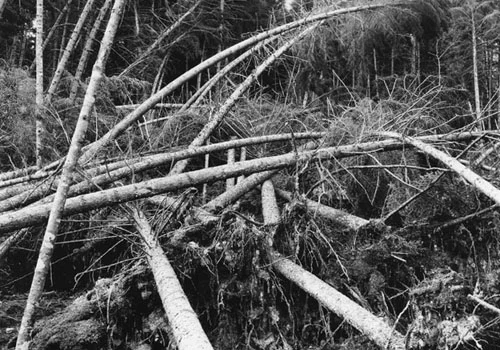
Forest damage after the 1938 Hurricane.
Thirty-Eight: The Hurricane That Transformed New England, by Stephen Long (Yale University Press) 272 pages, as various prices.
This piece first ran in The Weekly Standard.
When I was a boy living in coastal Massachusetts, I frequently heard stories about the great hurricane that crashed into Long Island and New England on Sept. 21, 1938. Most of the people who described it to me—my father and some of his friends—were only in their 30s and early 40s when they told me about it, and had very vivid stories, especially after a few drinks. What the 1906 earthquake is to San Francisco, the 1871 fire is to Chicago, and Hurricane Katrina is to New Orleans, the '38 Hurricane (aka "The Long Island Express'') is to New England and Long Island.
Seeking relief from my humdrum world, I once longed to experience such an event. What I didn't appreciate at the time was how long the mess and inconvenience from such a storm could last—in the case of the '38 storm, for decades in some places. Given the scale of the catastrophe in one of the most populous and richest parts of the country, the 1938 Hurricane at first got surprisingly little attention from the rest of the country because attention was riveted on the Munich crisis; many assumed that war was about to break out in Europe. (Of course, that wouldn't be for another year.) But the storm killed around 700 people and destroyed many buildings, bridges, and miles of road. Its tidal surge altered long stretches of the southern New England and Long Island coasts.
Stephen Long clearly and dramatically, and sometimes with droll humor details the mayhem produced by torrential rain followed by winds that gusted to nearly 200 miles an hour on Blue Hill, south of Boston. He serves up a mix of regional history, meteorology, botany, ecology, politics, economics—all seasoned with anecdotes. But his book is mostly about the trees that the storm took down, especially in New England's large and well-established second-growth forests and in "the pastoral combination of farm field and forest [that] adorned'' the region, interspersed by villages with steepled white churches. That's the (unrepresentative) scene that many tourists most associate with the region; the storm's massive blowdowns (including of steeples) altered the views in many places.
As a boy, I saw evidence of this damage in the woods next to our house, where there were numerous pits where the roots of uprooted trees had been. From the pits' shape you could tell which direction the strongest wind came: from the southeast, at more than 100 miles an hour. And there were still many gaps in the woods where tall trees had once stood. Long, founder and former editor of Northern Woodlands magazine, focuses on the ecological, economic, and sociological effects of the storm's destruction of mature trees in a wide swath of New England.
"The roaring wind toppled forests in every New England state," he writes, "with New Hampshire and Massachusetts [east of the eye of the storm] hit particularly hard. The path of destruction spanned ninety miles across.'' And "70 percent or more of the toppled timber was Pinus strobus—eastern white pine''—the most valuable and vulnerable tree crop in New England because of its height, straightness, and its many uses, from lumber to houses, furniture, and cheap shipping boxes. All this devastated many landowners, already brought low by the Great Depression, who depended on pine sales from their wood lots to make ends meet. Also torn up were many maple-tree stands, the sap from which provided a lot of extra income to New England farmers and other landowners. Long writes accessibly about why certain trees sustained far more damage than others: "The taller the tree the longer the lever and the greater force it can exert on the ground where it's anchored.'' Trees on southeast-facing slopes were particularly vulnerable.
Enter the Roosevelt administration, in an example of what perhaps only government can do: clean up damage from natural disasters that extends over many square miles. Much praise was due the U.S. Forest Service as well as FDR's Works Progress Administration (WPA) and the Civilian Conservation Corps (CCC) in responding to a disaster as huge as the '38 Hurricane.
The first imperative, state and federal officials and an anxious public thought, was to reduce the chances of massive forest fires from the downed, and thus drying, trees and branches. Indeed, some of the forests were closed to the public for long stretches after the hurricane for fear of fire. That the hurricane had made many of the firewatch towers inaccessible—roads were blocked by fallen trees—made it that much scarier. And so, Long explains, federal officials, led by the Forest Service, pulled together the resources of various organizations, but especially thousands of otherwise unemployed men working for the CCC (young men) and the WPA (which had older men as well). They opened roads and helped clean out much of the
But what to do with the fallen timber taken out of the woods, which could flood the market and lower the already-low price of the wood? To address this issue, the federal government invaded the private market with a vengeance: "The Forest Service saw the need for a stabilizing influence on the price of logs and the flow of lumber to market," Long writes, "so it put the power of the federal government to work'' by establishing "a fair price for logs,'' buying up all it could, and then gradually selling it as "demand required." At the heart of this reasoning was that the purchasing program would allow thousands of local landowners to realize a decent return from what could have been a nearly total economic loss. The cost of the salvage program was $16.3 million (in 1938 dollars), of which 92 percent was recovered by the government.
It's doubtful that such market intervention by government will happen after the next big hurricane blows through, but then, Roosevelt saw the hurricane response as another way of fighting the Depression. The cleanup also showed, in private-public collaborations, just how good Americans can be at addressing an emergency—as they were soon to prove after Pearl Harbor. A lot of that hurricane wood was used in war-related products and, later, in the postwar building boom.
Meanwhile, with the continuing disappearance of farmland, New England is now more forested than at any time in the past 200 years. Some year, the Northeast will again have a record surplus of lumber on the ground after another huge hurricane. And we may even long for another CCC and WPA.
Robert Whitcomb is editor of New England Diary.