
Vox clamantis in deserto



David Warsh; Trump is no Putin
SOMERVILLE, Mass.
One thing you should know about Vladimir Putin: He gives a good speech. Probably you don’t know that he does. Here are three brief excerpts, from occasions that presumably most Russians remembers, more vividly than snippets in translation can convey.
In September 2004, after the Beslan massacre, in which 334 hostages were killed by Chechen terrorists, 186 of them children:
“Today we are living in conditions formed after the disintegration of a huge great country, the country which unfortunately turned out to be nonviable in the conditions of a rapidly changing world…. [D]espite all the difficulties, we managed to preserve the nucleus of that giant, the Soviet Union. We called the new country the Russian Federation. We all expected changes, changes for the better, but found ourselves absolutely unprepared for much that changed in our lives.… We live in conditions of aggravated internal conflicts and ethnic conflicts that before were harshly suppressed by the governing ideology. We stopped paying attention to issues of defense and security…. [O]ur country which once had one of the mightiest systems of protecting its borders, suddenly found itself unprotected from either West or East.’’
In February 2007, at the Munich Security Conference, after the American invasion of Iraq (which he, the Germans, and French had opposed) erupted in sectarian violence, sending an estimated 2 million Iraqis out of the country:
“The unipolar world that had been proposed after the Cold War did not take place…However one might embellish this term, at the end of the day it refers to one type of situation, namely one center of authority, one center of force, one center of decision-making. It is a world in which there is one master, one sovereign. And at the end of the day this is pernicious not only for all those within this system, but also for the sovereign itself because it destroys itself from within….’’
‘’Today we are witnessing an almost uncontained hyper use of force – military force – in international relations, force that is plunging the world into an abyss of permanent conflicts. … [I]ndependent legal norms are, as a matter of fact, coming increasingly close to one state’s legal system….First and foremost, the United State has overstepped its national borders in every way. This is visible in the economic, political, cultural, and educational policies it imposes on other nations. Well, who likes that?’’
In 2008, Russia briefly went to war with Georgia, in order to discourage Georgian ambitions to join the NATO alliance. In 2011, NATO launched airstrikes in Libya to prevent Muammar Qaddafi from attacking insurgents in eastern Libya, greatly irritating the Russian government. In 2013, the U.S. nearly went to war with Syria, before Putin persuaded Bashar al-Assad to surrender some ofSyria’s stocks of chemical weapons.
And in March 2014, after Russia annexed Crimea, not long after the flight to Moscow of Ukrainian President Viktor Yanukovych, following three months of demonstrations joined by, among others, U.S.S Assistant Secretary of State for Eurasian Affairs Victoria Nuland and Sen. John McCain:
“They are constantly trying to sweep us into a corner because we have an independent position, because we maintain it and because we call things like they are and do not engage in hypocrisy. But there is a limit to everything. And with Ukraine, our western partners have crossed the line, playing the bear and acting irresponsibly and unprofessionally.
“After all, they were fully aware that there are millions of Russians living in Ukraine and in Crimea. They must have really lacked political instinct and common sense not to foresee all the consequences of their actions. Russia found itself in a position it could not retreat from. If you compress the spring all the way to its limit, it will snap back hard.’’
I spent
week re-reading The New Tsar: The Rise and Reign of Vladimir Putin (Knopf, 2015), by Steven Lee Myers, New York Times correspondent in Moscow for seven years during the period that the Russian president consolidated his power. It is a superb book, knowledgeable, thorough, candid, readable, and well-organized. It provides an incisive account of Putin’s youth in Leningrad; his years as a young officer in the KGB, the Soviet security service; his riseto power as a junior member of reform clique that Boris Yeltsin recruited from the re-christened St. Petersburg.
It treats all the familiar domestic stories of the Putin years: his fierce conduct of the second Chechen War; his surprising elevation by Yeltsin; his gradual suppression of private media; the loss of the nuclear submarine Kursk; the Khodorkovsky trials; the Orange and Rose Revolutions in Ukraine and Georgia; the Alexandr Litvinenko, Anna Politkovskaya, and Boris Nemtsov murders; the Sochi Olympics and the trial of the Pussy Riot punk rock band. It gives a brief but even-handed account of Putin’s successful economic reforms. Like all good books, it has a narrative structure and a point of view, and that view is conveyed by the cover photograph, Putin looking haughty, powerful and sinister.
As Putin prepares to run for afourth term next year, Myers concludes:
“After returning to power in 2012 with no clear purpose other than the exercise of power for its own sake, Putin now found the unifying factor for a large, diverse nation still in search of one. He found a millenarian purpose for the power that he held one that shaped his country greater than any other leader had thus far in the twenty-first century. He had restored neither the Soviet Union nor the tsarist empire, but a new Russia with the characteristics and instincts of both, with himself as secretary general and sovereign, as indispensable as the country was exceptional. … He had unified the country behind the only leader anyone could now imagine because he was, as in 2008 and 2012, unwilling to allow any alternative to emerge. ‘’
There is only a fleeting examination of the fundamental issue that has shaped Putin’s view of the U.S. over the past twenty-five years – not American interventions abroad, not its arms placements, not even its enthusiasm for regime change in Russia, but rather the enlargement of NATO over increasingly strong Russian objections, undertaken by the Clinton administration in 1993, and pursued under presidents George W. Bush and Obama. Myers writes, axiomatically, “Most American and European officials accepted as an article of faith that NATO’s expansion would strengthen the security of the continent by forging a defensive collective of democracies, just as the European Union had buried many of the nationalistic urges that had caused so much conflict in previous centuries.”
Why is this The New Tsar’s default view? The Times has habitually viewed itself as an extension of the U.S. State Department in matters large and small, and in this case, the logic of NATO enlargement has been asserted by three presidents whose service has spanned 24 years. Of course, U.S. foreign policy hasn’t always worked out well. TheTimes editorial page supported U.S. intervention in South Vietnam in the early 1960s, and, with aggressive reporting, the invasion of Iraq in 2003. In each case, subsequent events provoked editors to undertake an extensive retracing of their steps. No such soul-searching has yet begun in the matter of NATO enlargement.
Which brings us to the current situation. The Trump-Putin equivalence that is currently all the rage –it was the cover story in The Economist earlier this month – is profoundly misleading. Putin, with consistently high approval ratings, is headed for a fourth term as president. Despite having overplayed his hand in the hacking business, he has a case to make: the US has treated Russia much too casually in the years since the Soviet empire collapsed. Like it or not, we live in a multi-polar world.
Meanwhile, Donald Trump is back on the campaign trail, hoping to salvage his first term. He has a case for better relations to make, too, but, for reasons of temperament, intellect, and his business interests, he is profoundly unsuited to make it. The U.S. debate about U.S.-Russian relations should go forward without equating the leaders of the two countries.
David Warsh is a veteran business and political columnist and economic historian. He is proprietor of economicprincipals.com, where this first ran.
'Poor dull Concord'?
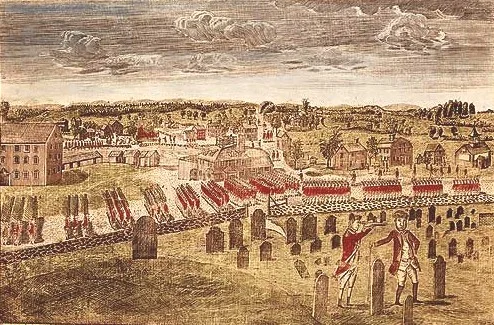
The British Redcoats entering Concord
“Poor dull Concord. Nothing colorful has come through here since the Redcoats.”
-- Louisa May Alcott (1832-1888), author of Little Women and resident of Concord, Mass.
What an amusing thing to say about a town famed as the heart of New England Transcendentalism (Ralph Waldo Emerson, et al.) and the location of Walden Pond as well as being the site of one of the first battles of the American Revolution.
Chris Powell: Conn. governor wants to put heavy fees on a constitutional right
MANCHESTER, CONN.
What if a conservative Republican state tried to put a $700 tax on abortions, purportedly to defray the costs of the state's licensing of medical personnel? Of course people would scream that the state was using tax policy less to raise money than to impair a constitutional right.
Connecticut Gov. Dannel Malloy, a liberal Democrat, is doing the same thing in regard to another constitutional right with his budget proposal to raise gun permit fees by more than 400 percent so that obtaining a permit might cost as much as $745. The governor's office says the increased fees are meant to offset the increased workload placed on the state police by increased demand for gun permits.
But this is as much nonsense as has been spouted lately by the governor's budget director, Ben Barnes, who insists that the governor's plan to cancel hundreds of millions of dollars in state financial aid to most municipal school systems and to require municipalities to start contributing hundreds of millions of dollars to the state teacher pension fund every year won't risk property-tax increases. For the State Police already have computer access to state and national criminal records databases and can quickly determine whether a gun-permit applicant has a disqualifying record. The time and expense of reviewing these databases are minimal.
Since a constitutional right is involved, licensing fees should cover only actual costs and not be used to raise revenue. The governor is persecuting gun owners as much as President Trump is persecuting Muslims, the governor disrespecting the constitutional rights of the former, the president disrespecting the constitutional rights of the latter. While both the governor and the president have taken oaths to uphold the Constitution, they would prefer to pander to their hateful political bases.
THE MINIMUM-WAGE FALLACY: Woody Allen's best parody of political liberalism comes in one of his first movies, Bananas, in which the revolutionary leader who has just taken over a Latin American country and been driven mad by power declares that henceforth the national language will be Swedish, that underwear will be changed every hour and worn on the outside "so we can check," and that all children under 13 years old are 13 years old.
The same delusion can be seen in the campaign in Connecticut and throughout the nation to raise the minimum wage to $15 per hour. For mere declarations by government that wages must be higher do not guarantee that the value produced by labor will be higher too. Raising wages by government decree easily can raise prices, but raising the market's ability and willingness to pay higher prices is something else.
The main problem behind the campaign for $15 an hour is the large number of low-skilled adults, many of them single women with children, who in recent years have displaced the young people who traditionally dominated entry-level jobs, particularly in the fast-food industry. These adults note that they cannot support their families on their low-skill incomes, as if anyone ever could. Of course most of the kids in such jobs were and are living at home with their parents or working part-time while in college and living there.
This problem is not really one of wages for the low-skilled but rather the failure of adults to learn marketable skills, and in Connecticut it's not hard to see where that problem comes from, since the state's public education system has become mostly social promotion and as many as two-thirds of its high school graduates never master high school work.
But elected officials at both the state and municipal level lack the political courage to correct these gross deficiencies. They would prefer to blame McDonald's. Besides, since the primary consumers of fast food are the poor themselves, a higher minimum wage may not be such a gift to them if it just confronts them with higher prices.
Chris Powell is managing editor of the Journal Inquirer, in Manchester, Conn.
Shadow and sun
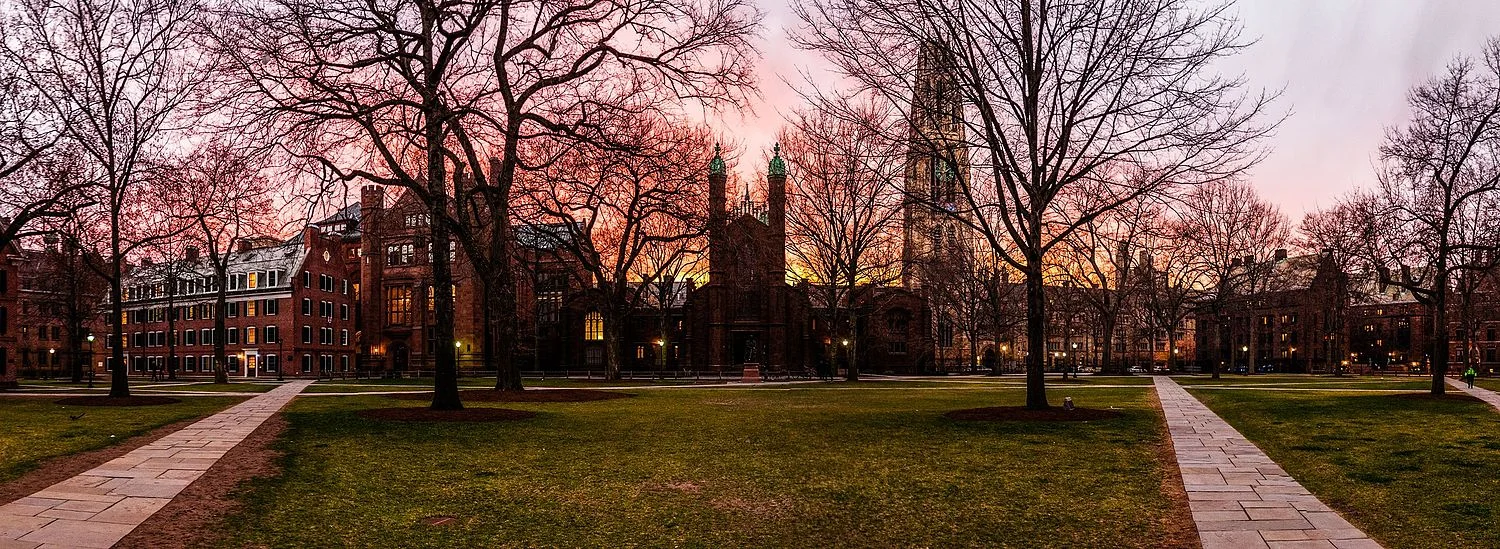
On the Yale campus.
I experienced, first, very dark shadow, and then seven days later, bright, warm sunlight on the last two Saturdays. On the first I drove to a little suburb in Connecticut to attend a memorial service for a woman who had taken her own life a week and a half before after several years of severe mental illnesses, which caused her, and her family, much agony. She was 26 and, just a few years earlier had seemed to have immense promise -- and the ambition to become a physician. She started to get very sick halfway through college.
The panorama of her lost promise was vivid in the eulogies at the partly glass-walled church, which was closely surrounded by beautiful, if, given the season, austere woods. She had been a person of such intelligence, energy and charm.
Her mental illnesses were of the type that tend to diminish in severity after age 30. If only she could have made it until then. God knows, her family and friends had spared no effort to try to help her.
But then, as a late neurologist friend of mine, Stanley Aronson, M.D., once observed to me: “We probably don’t know more than 5 percent of what we need to know about the human mind.’’
Then, on this past Saturday, I saw and heard a very different aspect of the human condition when my wife and I drove to New Haven to hear a harpsichord recital at the Yale School of Music. The recital, one of the requirements for obtaining a master’s degree on music at Yale, was by a young man, of the same age as the woman above, of great ability, confidence and stability, including in the face of occasional serious outside challenges.
There he was, already seemingly headed for the broad sunlit uplands of being a scholar and performer of an art of great beauty. As he performed amidst the Neo Gothic and Georgian brick buildings of Yale that symbolize ambition and success (sometimes tinctured with pretension), I ruminated on whether life should be called unfair or just arbitrary.
-- Robert Whitcomb
-
Until then, keep swimming
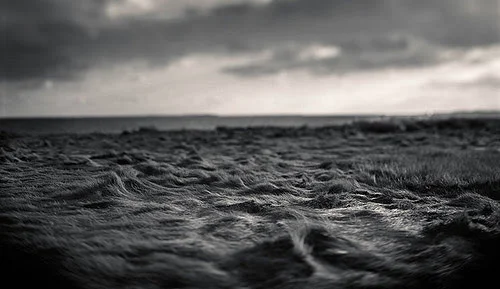
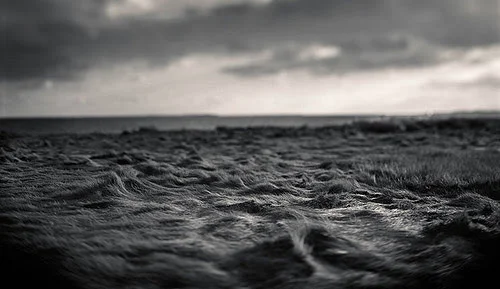
"Where There Is No Boat, I Will Put a Boat'' (photo using a large-format camera and printed in platinum, a style popular in the 19t Century), by Ron Cowie, in the group show "New Light Through Old Windows,'' at the Newport (R.I.) Art Museum through April 16.
Some of Trump's Russian connections
The art under your wheels
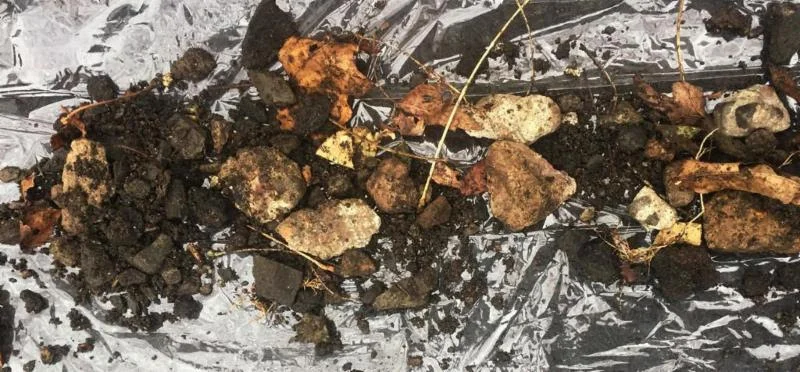
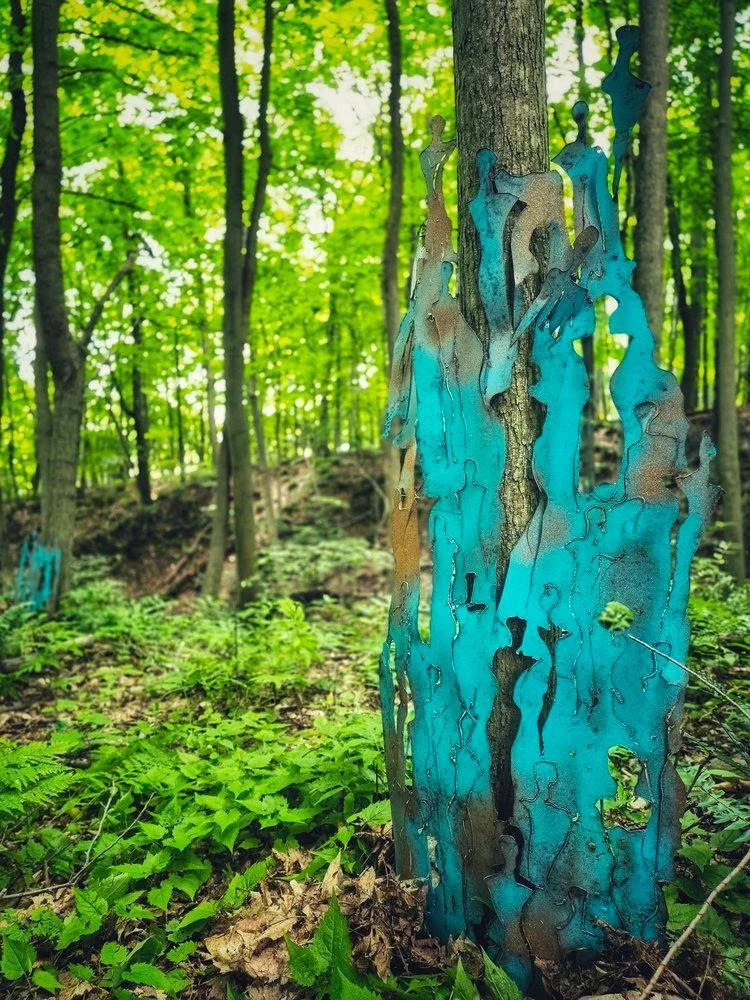
From Elif Soyer's show "Membrane,'' at Kingston Gallery, Boston, through Feb. 26.
The gallery says that Ms. Soyer “experiments with a range of materials, many gathered from nature, to bring into focus images seen on a daily basis that attract her eye with texture and pattern. In this body of work the artist plays with filtering images through a membrane of time and material, bringing to the foreground three-dimensional objects that her brain initially identified as background.’’
Panorama of liability insurance
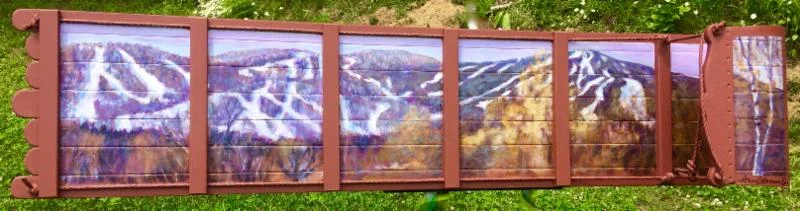
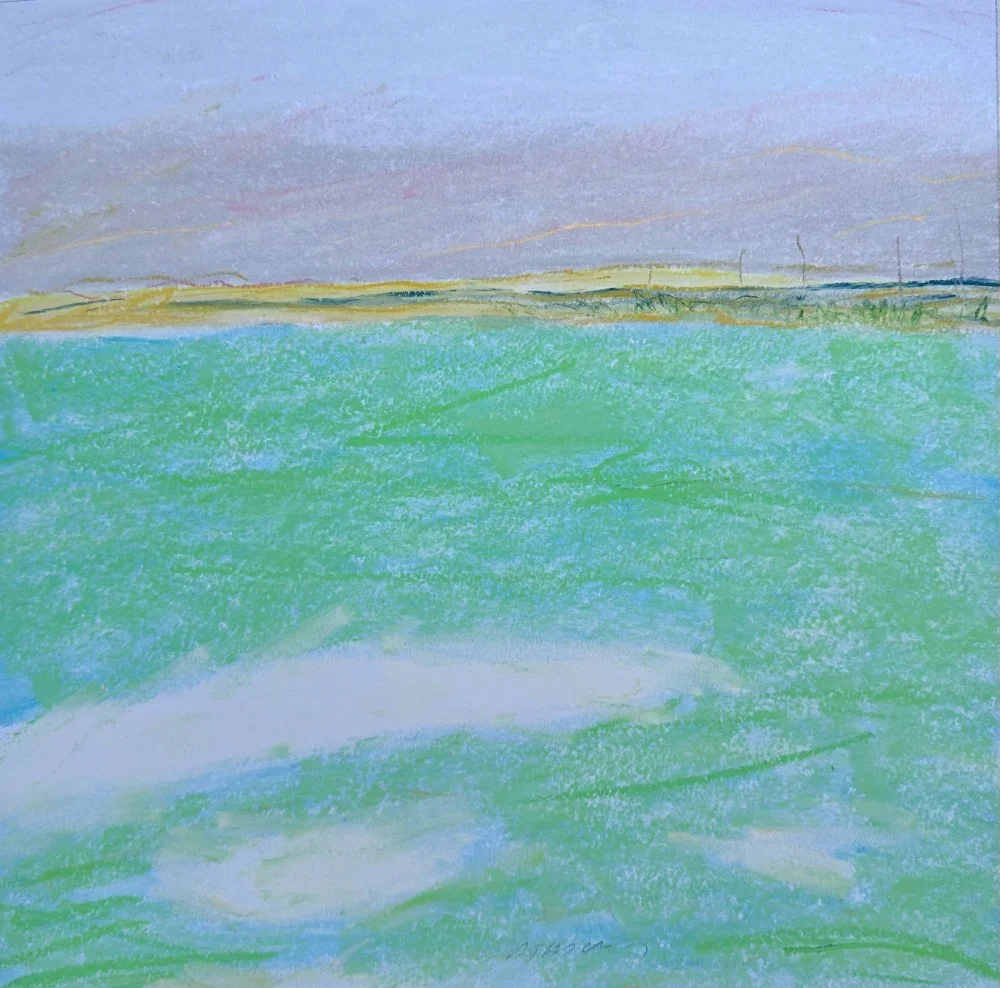
"Haystack to Mount Snow," painted on a toboggan, by Ann Coleman, at Ann Coleman Gallery, Wilmington, Vt.
Frank Carini: The fragmentation of forests
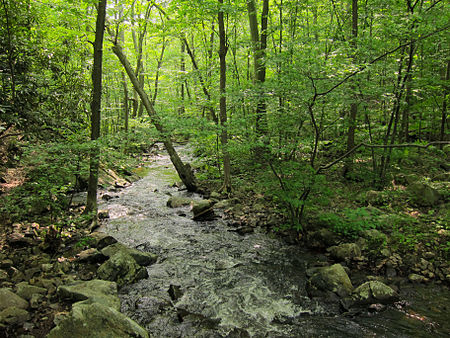
Via ecoRI News (ecori.org)
Despite being the second-most urbanized state, Rhode Island remains more than 50 percent forested. That fact is further obscured by the state’s 400 miles of renowned coastline.
“It’s called the Ocean State for a reason, but our forests play an important role,” said Christopher Riely, coordinator of the all-volunteer Rhode Island Woodland Partnership. “It’s amazing how quickly it drops off to a terrific forested landscape that supports a wide variety of wildlife. Much of this forestland is privately owned, as families are the ones pulling together the tapestry.”
Before European settlement, Rhode Island’s landscape looked vastly different, as about 95 percent of the state was forested, according to a history posted on the Rhode Island Woodland Partnership Web site. For Native Americans, this landscape provided sources of food — the American chestnut tree, for instance, which has since been stricken from its dominant overstory presence because of introduced disease — and materials for living.
When settlers arrived, Rhode Island’s forests were quickly converted to agricultural land, leaving only 31 percent of the state forested by 1767. Since the 1940s, Rhode Island has lost more than 80 percent of its farmland to development.
Insects, disease and weather also have influenced forest successional patterns, “but the biggest threat to our forests is now development and urban sprawl because they restrict new growth and regeneration,” according to the Rhode Island Woodland Partnership.
Forest fragmentation is the biggest issue facing Rhode Island’s forests, according to Riely, forest supervisor for Providence Water. “To keep forests forested we need to stop fragmentation,” he said.
Riely said the Rhode Island Woodland Partnership began in April 2013 as an informal gathering of foresters, conservationists, arborists, loggers and artisan woodworkers. People, he said, who cared about forest health but were largely working independently.
Some four years later, this now-formal partnership is working to increase the scale and pace of forestry in Rhode Island. It’s also an active participant in the New England Regional Conservation Partnership Network.
The Rhode Island Woodland Partnership recently finished a yearlong crafting of its first strategic plan — a 31-page effort made possible by a $9,500 grant from the Rhode Island Foundation.
Riely said awareness of Rhode Island’s rural and urban woodlands and their many contributions is often overshadowed by higher-profile natural-resource concerns. He noted, for example, that the forest around the Scituate Reservoir protects the drinking-water supply of some 60 percent of the state. He said that Rhode Island’s woodlands help filter runoff that eventually enters Narragansett Bay.
The partnership and its website, he said, has created a networking space for Rhode Island’s conservation community to stay abreast of issues impacting the region’s forests. The group’s working mission is to “advance the stewardship and long-term protection of Rhode Island’s woodlands to benefit the local economy, ecological values, and community enjoyment and health.”
To increase the impact of forest-conservation efforts, the partnership has identified three goals: increased support for working forest viability and health benefits; a higher level of management activities that enhance the forest; and renewed commitment to “keeping forests as forests.”
Although a number of member organizations, such as Rhode Island Land Trust Council and the local chapter of the Society of American Foresters, collaborate on land-protection projects, the Rhode Island Woodland Partnership decided it would be most viable to concentrate its activities in three focus areas: education; stewardship; and policy and economics.
Moving forward, a critical part of the partnership’s work will be geared toward leveraging new funding sources and hiring a paid, part-time coordinator who can help increase the organization’s capacity.
Editor’s note: Anyone interested in joining the Rhode Island Woodland Partnership, is encouraged to e-mail Christopher Riely at christopher.riely@gmail.com.
Frank Carini is editor of ecoRI News.
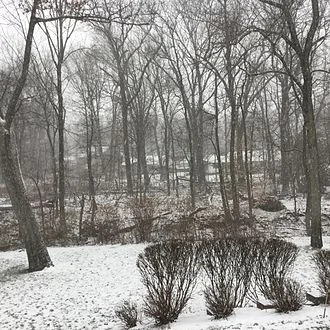
'In February'

"Rich meanings of the prophet-Spring adorn,
Unseen, this colorless sky of folded showers,
And folded winds; no blossom in the bowers;
A poet's face asleep in this grey morn.
Now in the midst of the old world forlorn
A mystic child is set in these still hours.
I keep this time, even before the flowers,
Sacred to all the young and the unborn."
-- Alice Meynell, "In February''
Sarah Anderson: To save Main Street, tax Wall Street
All too often these days, large U.S. corporations and Wall Street banks seem more interested in tapping overseas markets than in growing a customer base at home. When local communities in America’s heartland suffer, it’s no skin off their backs.
By contrast, our nation’s small businesses depend on the health of their communities. When young people don’t have the opportunity to get an education and a good job, these Main Street businesses take a direct hit.
Unfortunately, this up and coming generation is entering a job market with too few opportunities to earn enough money to make a down payment on a house, eat in restaurants, or support local merchants.
Times are especially hard for the millions of young people who are saddled with crushing student debt. Last year’s college graduates owed an average of more than $37,000, a historic high.
The lack of affordable education for middle-class families limits young Americans’ prospects for the future and undermines the health of our economy. The small business sector, which needs local customers with strong buying power to survive, especially suffers.
For our long-term prosperity, it’s critical that we help current student borrowers reduce their debts and start moving on a path towards debt-free college. The question is how we pay for it.
Many people claim our national coffers are empty. We have no choice, they say, but to accept that affordable higher education is simply beyond our means.
In reality, this country — the richest in the world — has abundant resources to ensure a world class college education for all. The problem is that too great a share of our resources is going into too few pockets.
Congress deserves much of the blame. Under pressure from lobbyists, lawmakers have filled the tax code with loopholes that benefit many of our country’s wealthiest individuals and corporations. If we simply eliminated these perverse loopholes, we could raise massive revenues for education and other urgent economic needs.
One of the most extreme examples of tax privilege is the so-called “carried interest” loophole. This allows private equity and hedge fund managers to claim the bulk of their income as capital gains, which is taxed at only 20 percent, instead of the top marginal income tax rate of 39.6 percent.
This means some of the wealthiest Americans pay a lower tax rate than millions of our country’s teachers, firefighters, and nurses.
Getting rid of this unfair loophole would raise at least $15.6 billion over 10 years, and some tax experts believe it could raise more than 10 times that amount. A strong majority of Americans are opposed to the carried interest loophole — by 68 percent to 17 percent, according to Bloomberg. On the campaign trail, Donald Trump also called for closing it.
In areas that are home to many Wall Street financiers, some elected officials are considering closing the carried interest loophole at the state level. Such proposals are moving forward in New York, Massachusetts, Connecticut, New Jersey, and Rhode Island as part of a regionally coordinated effort.
The carried interest loophole is just one example of a rampant tax avoidance problem among our wealthiest individuals and largest corporations. Their tax-dodging sucks wealth out of local communities, leaving the customers that are the lifeblood of small businesses to absorb a larger share of our mutual tax responsibility.
We need new rules that rein in the excesses of our financial industry and hold corporations and wealthy individuals accountable to pay their fair share in taxes. Only then can we create the opportunities our young people deserve and return community wealth to the hands of local consumers.
Sarah Anderson directs the Global Economy Project at the Institute for Policy Studies and is a co-editor of Inequality.org. Distributed by OtherWords.org.
Resupplying caviar for Trump Tower?
This story came in today from Rhode Island Public Radio (ripr.org)
"A Russian spy ship has been spotted near the U.S. Navy submarine base in Groton, Conn.
"The ship is in international waters about 30 miles from the Connecticut coast. U.S. Congressman Joe Courtney, a Democrat, discussed the sighting on the House floor Wednesday.
"“The folks in Connecticut woke up this morning with that news about the spy ship off the coast. As you can imagine, it’s created a lot of consternation and questions,” said Courtney.
Though he says he is confident that Navy leadership will monitor the situation with vigilance, Courtney urged the Trump administration to start treating Russian President Vladimir Putin as a threat.
"We need to just disavow ourselves of any naive assumptions that somehow the Putin government is somehow something that we can trust and shows any regard for international norms or international law," he said.
"Lawmakers from Connecticut and Rhode Island have called for an investigation into the Trump administration's ties with Russia, following revelations that National Security Advisor Mike Flynn discussed sanctions with a Russian diplomat before Trump took office. Flynn resigned from his post this week."
"Trump administration officials have denied any questionable relationships with Russia.''
Aren't we all these days

"Coming Undone'' (encaustic painting), by Nancy Whitcomb, in the show "Making Her Mark: A celebration of the Providence Art Club as a cultural force for women artists,'' at the Providence Art Club (founded in 1880), through April 22. Mrs. Whitcomb won the Mary Castelnova Painting Award in the show.
Linda Gaparello: Where scientists rest
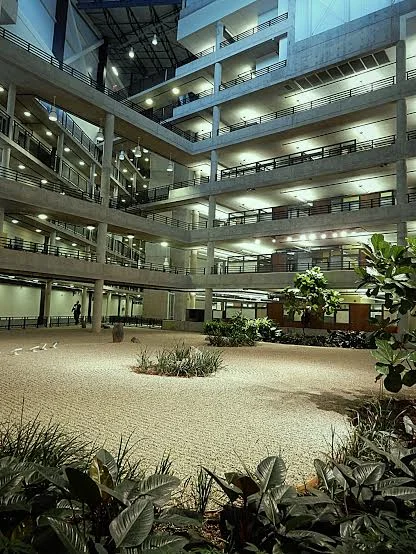
-- Photos by Linda Gasparello
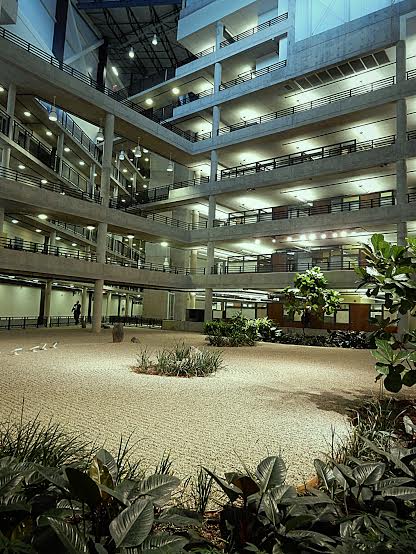
The Zen garden in the seven-story Theory and Computing Sciences Center in the Argonne National Laboratory, outside of Chicago.
Last week my husband, Llewellyn King, and I abandoned the delights of West Warwick, R.I., to visit a part of Chicagoland that few visitors get to see.
Llewellyn was a speaker at a conference held at Argonne National Laboratory, in Downers Grove Township, Ill., just outside of Chicago. Argonne is the multidisciplinary science and engineering research center, born out of the University of Chicago's work in the 1940s on the Manhattan Project, which created the first atomic bombs.
The facility, which occupies 1,500 acres, came as a total surprise for our Uber driver, a Chicago native who used to drive trucks professionally. “I've driven past this place many times, but I never knew what was goin' on,” he said.
We had some difficulty finding Argonne's Main North Gate and delay getting our ore-arranged passes. Once cleared for entry, we had to drive behind a security vehicle to our hotel: the Argonne Guest House, which is Building 240 on the “campus.” It is where most people stay for conferences, short research visits and invited tours of the site, thus avoiding the main security gate rigamarole.
Our driver thought all this cloak-and-dagger stuff was a hoot, but Llewellyn, who has visited Argonne many times, wasn't entertained. He wanted his dinner and a glass, or two, of red wine.
The guest house is a fine example of 1970s university dormitory architecture, more Brutalist than humanist. But what the building lacks in design, it more than makes up for in setting: It backs onto some of the Argonne site's wooded acres.
The lobby and the guest rooms don't inspire one to linger. But you might want to hang out with colleagues in the elevator lobby on any of the guest floors. Each has comfortable club chairs, equipped with wooden swivel trays and a huge whiteboard hanging on a wall – perfect for a pre-breakfast solving of isotope burn-up equations.
A Zen surprise
As you drive up to the Theory and Computing Sciences Center on the Argonne site, your heart will beat a little faster: This building – Building 240 -- with its jutting, pierced concrete slabs and glass walls, houses state-of-the-art supercomputing systems. You sense from its great, gray exterior that the interior would be filled with floors of sensory-deprivation cubbies for techies.
It isn't. The building, according to the lab, “was designed to be an open and flexible workspace to encourage the free flow of ideas between scientists at Argonne as well as the technology to connect researchers across the globe.” Its seven stories wrap around a Zen garden.
There are cloth-lined cubicles with whiteboards -- on some of which I saw scrawled equations. But on the ground floor no glass walls separate them from the garden. Surely, gazing at the garden and ambling around it through the open hall must reduce workers' stress; unless you're a worker who is stressed by the thought of a snake curled up in your cubicle.
The garden's raked, gray gravel sits upon dirt and occasionally critters – frogs, rodents and even garden-variety snakes -- break through the garden's surface and can be found among its plants and rocks.
“We like 'em. They're engineers,” one ground-floor worker told me.
Behavioral Science
“Scientists are literal.” That's how Gilbert Brown, director of the nuclear engineering program at the University of Massachusetts at Lowell, explained why the Theory and Computing Sciences Center's bathrooms are called “toilet rooms.”
“The rooms have toilets but no baths,” he said.
Makes sense to me.
When I pointed out to another nuclear engineer that all the push pins on a bulletin board outside the center's conference room were placed in a rectangle, he said unhesitatingly, “Scientists are neat as pins.”
Doe, Oh, Dear
The white fallow deer herd that had roamed the Argonne site since the lab's inception, in 1946 – and has caused visitors sometimes to speculate on the nature of the experiment that produced their unusual coloring – has dwindled to one doe.
“Prior to 1946, part of the land that is now Argonne was the country estate of Gustav Freund, inventor of 'skinless' casings for hot dogs. Freund had a small herd of the deer on his estate for several years. The naturally light-colored species – Dama dama – are native to North Africa, Europe and parts of Asia.
“When the federal government purchased the property, it was believed all of the herd had either been given away to parks and zoos or destroyed by the local game warden. It turned out there still were two does on the property, and one gave birth to a buck. The herd created from these three deer became a fixture on the Argonne property and a topic of interest and conversation for employees and visitors alike,” Donna Jones Pelkie wrote in Argonne Today, a lab publication.
Unfortunately, the white fallow deer didn't reproduce at a normal rate because of a lack of genetic diversity; even when they do reproduce, they only give birth to one fawn per year – unlike the fecund, native white-tailed deer that also roam the site. The fawns were prey to coyotes, which have become city slinkers.
Efforts to preserve or replenish this historic herd were stymied by state regulations, which not only would've required any new white fallow deer brought onto the site to be deemed “livestock,” but also would've made Argonne responsible for the herd's maintenance, including penning, feeding and veterinary care.
So the lab opted for natural attrition, which comports with “its thinking of keeping natural areas in balance with the native ecosystem,” according to the Jones Pelkie story.
Linda Gasparello is co-host and general manager of White House Chronicle (whchronicle.com), on PBS, and an occasional contributor to New England Diary. She is based in Rhode Island and Washington. D.C.
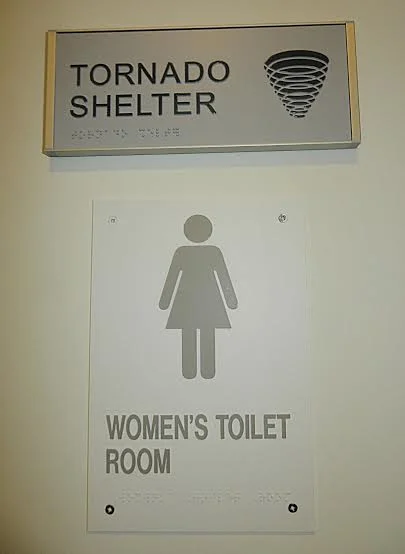
Door sign in the Theory and Computing Sciences Center. The warning is a reminder that Chicagoland is, after all, in the Midwest.
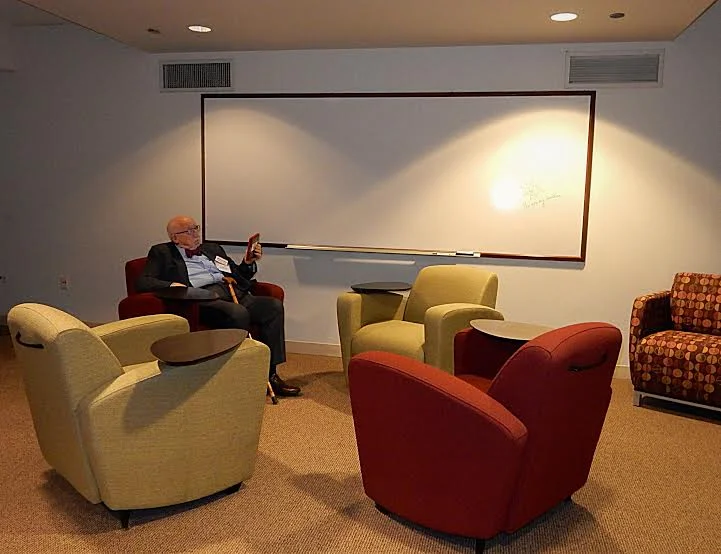
Llewellyn King ensconced in one of the elevator lobbies of the Argonne's guest house.
'Some blessed hope'
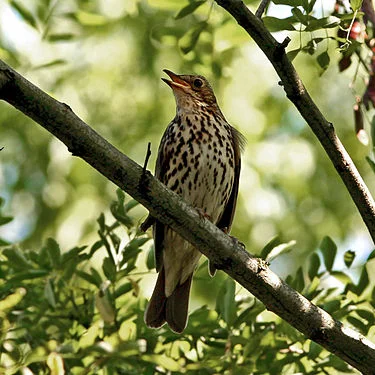
A song thrush, a species that's common in Europe.
"I leant upon a coppice gate
When Frost was spectre-gray,
And Winter's dregs made desolate
The weakening eye of day.
The tangled bine-stems scored the sky
Like strings of broken lyres,
And all mankind that haunted nigh
Had sought their household fires.
The land's sharp features seemed to be
The Century's corpse outleant,
His crypt the cloudy canopy,
The wind his death-lament.
The ancient pulse of germ and birth
Was shrunken hard and dry,
And every spirit upon earth
Seemed fervourless as I.
At once a voice arose among
The bleak twigs overhead
In a full-hearted evensong
Of joy illimited;
An aged thrush, frail, gaunt, and small,
In blast-beruffled plume,
Had chosen thus to fling his soul
Upon the growing gloom.
So little cause for carolings
Of such ecstatic sound
Was written on terrestrial things
Afar or nigh around,
That I could think there trembled through
His happy good-night air
Some blessed Hope, whereof he knew
And I was unaware."
-- Thomas Hardy, "A Darkling Thrush''
Despite Ringling's closing, Brattleboro, Vt., circus school staff is very upbeat
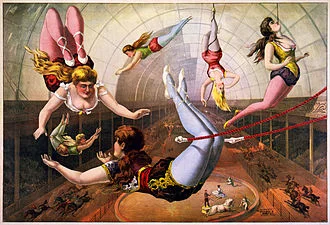
Ringling Bros. and Barnum & Bailey Circus is closing after 146 years but as a Vermont Public Radio story reports, at the New England Center for Circus Arts, in Brattleboro, Vt., "aspiring circus performers continue to train. And in many ways, the staff there say the future of circus arts has never been brighter.''
To hear and read the story, please hit this link.

Well-constructed woods
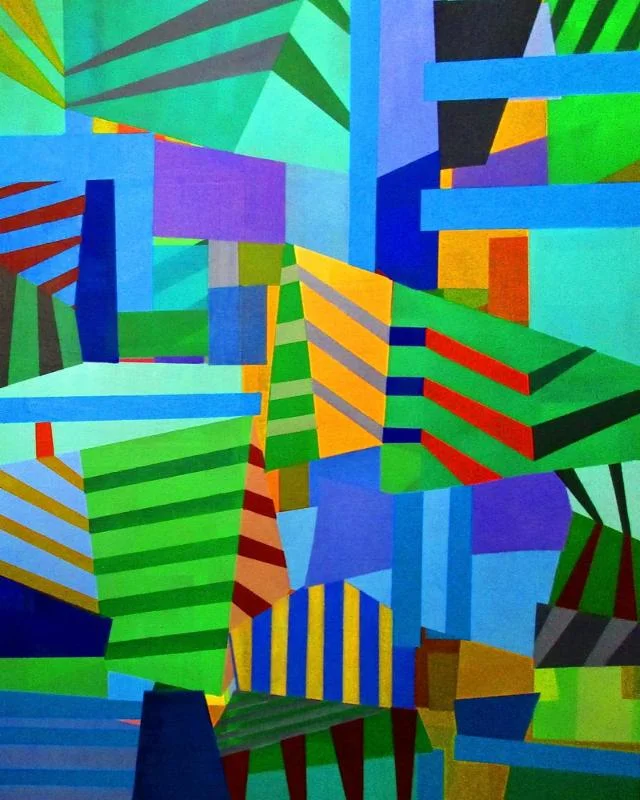
"Into the Woods'' (acrylic on canvas), by Francis Domec, in his show "The Purring of the Soul,'' at Galatea Fine Art, Boston, March 1-29.
He says: ''{M}y paintings utilize abstract optical illusion....With my cubes, straight lines, rectangles and rounded shapes, I also invent a new reality....{P}hilosopher and writer Francois de Witt...mentions in one of his books that when his soul was happy he had the pure sensation that his heart was 'purring' like cat having a pure bliss. I like the idea and used it for the title of my exhibit.''
Didn't miss her in Maine
“There was a young lady from Gloucester
Who complained that her parents both bossed her,
So she ran off to Maine.
Did her parents complain?
Not at all -- they were glad to have lost her.”
― John Ciardi, from"The Hopeful Trout and Other Limericks''
A fine greenhouse effect
Adapted from an item in Robert Whitcomb's "Digital Diary'' column in GoLocal24.com
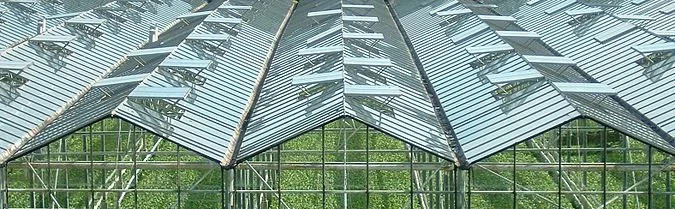
The Newport (R.I.) Daily News reports that a major producer of hydroponic lettuces based in Quebec might build a two-story greenhouse in the city’s North End.
The paper said that the company, Hydroserre Mirabel Inc., claims to have a proprietary growing technique that it says provides the highest production performance in such settings achieved to date, making it possible to produce 16 to 18 crops a year.
It sure beats casinos or another doomed big-box store. If Iceland can grow a lot of vegetables in greenhouses, so can comparatively tropical Rhode Island. How nice it would be to see all that green through the glass on a cold and gloomy winter’s day. And wouldn’t it bedandy to have a bunch of greenhouses atop some of those big old mills in Providence, Pawtucket and elsewhere around here– local, year-round agriculture.
Track to the sea
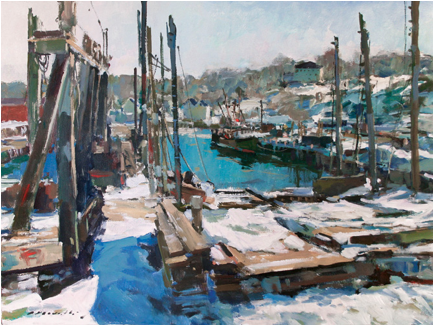
"Marine Railways, 2014'' (acrylic on canvas), by Charles Movalli (1945–2016), in the show "Charles Movalli; Cape Ann & Beyond,'' at the Cape Ann Museum, Gloucester, Mass. March 4-May 21.