Running Latin American agriculture from Boston
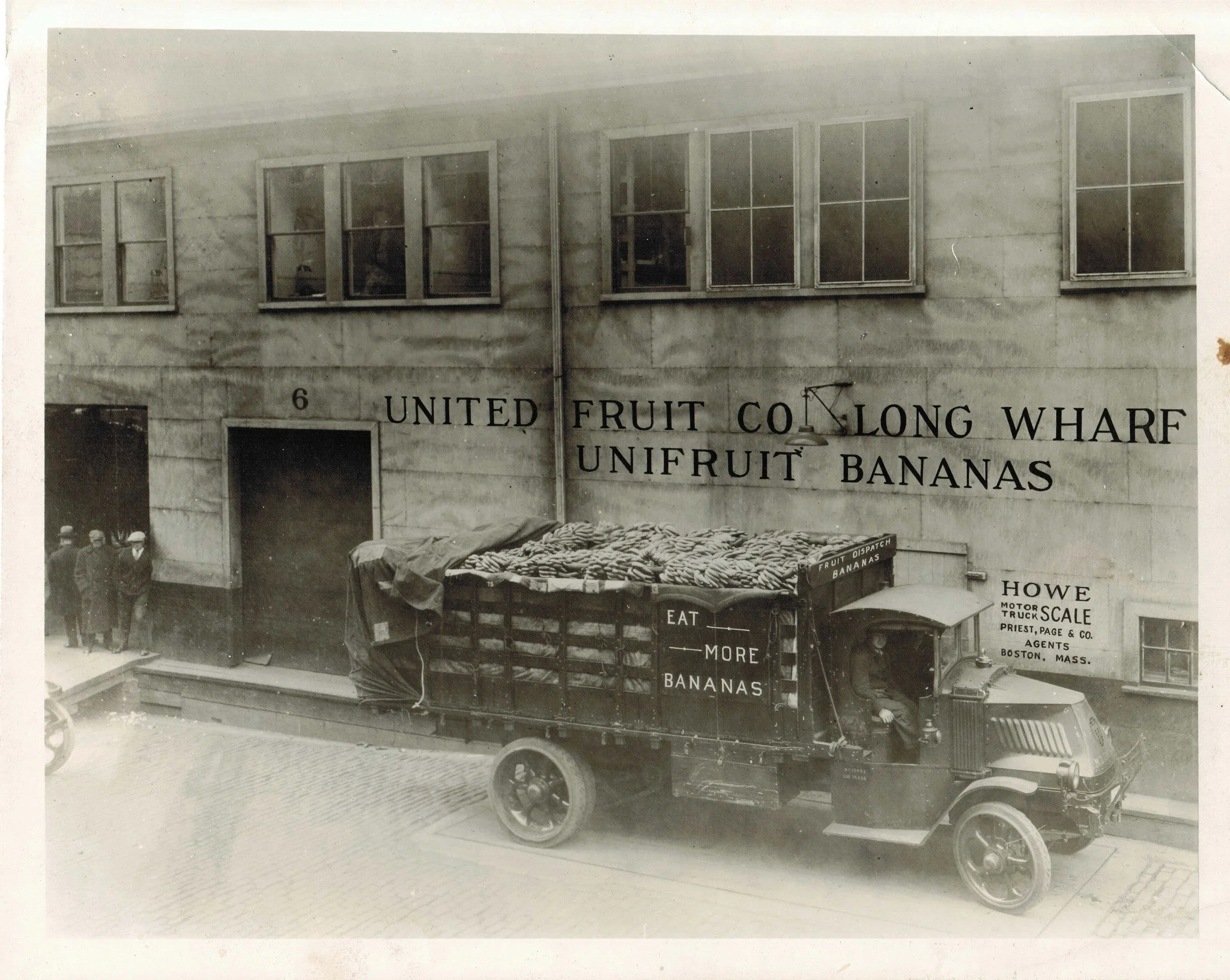
Trucking bananas off ships in Boston in the 1920’s, when Boston-based United Fruit Co. was effectively running several Latin American nations.
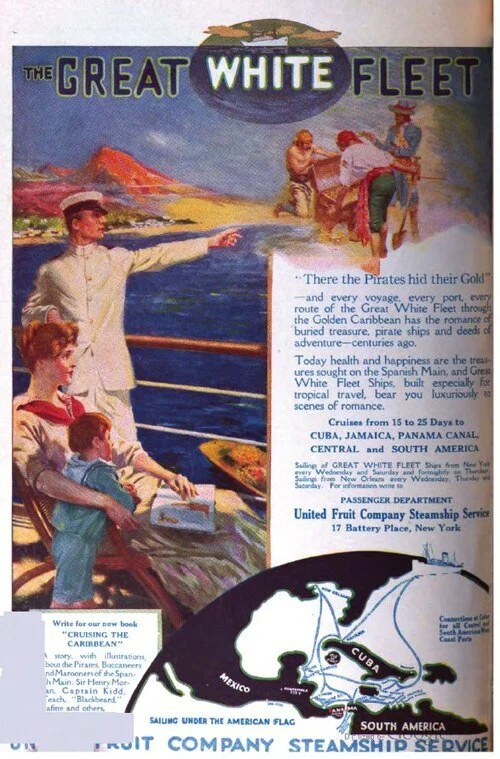
Many well off New Englanders in the first 40 years of the 20th Century took winter cruises on these United Fruit ships. Originally designed to transport tropical fruit without ripening them prematurely, the ships doubled as luxury passenger liners.
Adapted from paragraphs in Robert Whitcomb’s “Digital Diary’’ in GoLocalProv.com
Trump likes to threaten countries too small to seriously fight back. So it is with the crumbling Communist dictatorship of Cuba, which he threatens to invade.
This is another big “what if’’ of history.
Fidel Castro seized power in 1959 from the gangster-style dictator (the kind the Trumps like to do business with) Fulgencio Batista, which had helped turn the island nation into a paradise for the American Mafia. And Cuba had long been a kind of American economic colony, providing sugar, fruit, tobacco (especially for cigars) and coffee.
Because it was based in Boston, I grew up learning about the United Fruit Co., especially its bananas. That company, along with other large U.S. large enterprises, had big power on the island, including politically, and basically ran Central America.
And refining Cuban sugar was for many years very important in Greater Boston. I heard a little of this because of my relatively poor-boy father’s friendship with members of the extended Snare family, who were major economic and social powers on the island. The power of American capitalists naturally caused a lot of resentment, even if, like Frederick Snare, the founder of the family’s business empire, they weren’t rapacious.
American visitors tended to see Cuba, especially around Havana, as romantic, recalling lyrics about “tropical splendor” and swaying palms in 1935 song “Begin the Beguine”.
Of course, things weren’t particularly romantic for those toiling in the sugar-cane plantations.
Here’s an offbeat memoir about pre-Castro and later.
Castro came in promising to get better deals for his people after the long very inequitable economic relationship with America. His regime pressed for reform (based on a section of the 1940 Cuban constitution) and the expropriation of many American assets, with U.S. owners to be compensated via 20-year bonds.
But this depended mostly on Cuba making money on sugar exports to pay American companies. However, the U.S., wanting a return to the quasi-colonial relationship that existed under Batista, launched an embargo and made plans to overthrow the Castro regime. It’s unclear to what extent Castro was a Communist or just socialist when he gained power, but there’s no doubt that U.S. policies tended to push him into the arms of the Soviets. So Moscow became the island’s main economic supporter.
And then there was the usual problem of power corrupting: Castro loved being dictator of what he turned into a sometimes Orwellian police state.
After the collapse of the Soviet Union, in 1991, aid from abroad fell off sharply but some Russian help continued, and to this day is one of the few things staving off Cuba’s complete collapse and starvation in the face of U.S. sanctions, which Trump has turned into a merciless blockade. It’s hard to believe that this hasn’t killed some vulnerable Cubans.
Meanwhile, consider the, er, paradox: Russia continues to economically aid Cuba and militarily aid Iran even as Trump remains a Russian asset undermining Western democracies.
Craig Unger has done a splendid job investigating Russia’s hold on Trump.
The Trump 0rganization would like nothing better than to return Cuba to something like the land presided over by Batista, with, say, lots of casinos and beach resorts.