
Vox clamantis in deserto



Sun on snow

Photo by THOMAS HOOK
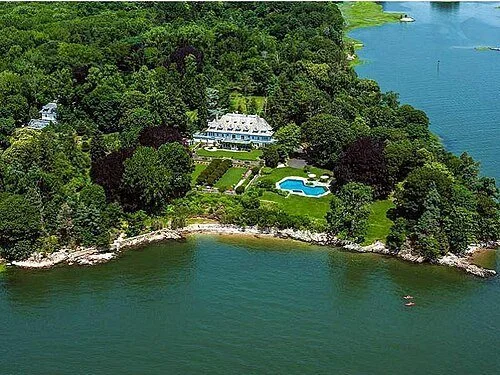
The afternoon light reflecting on the snow as the sun shined through the bare winter trees in a backyard in Southbury, Conn.
Hollywood: Enough with the Boston bathos, please

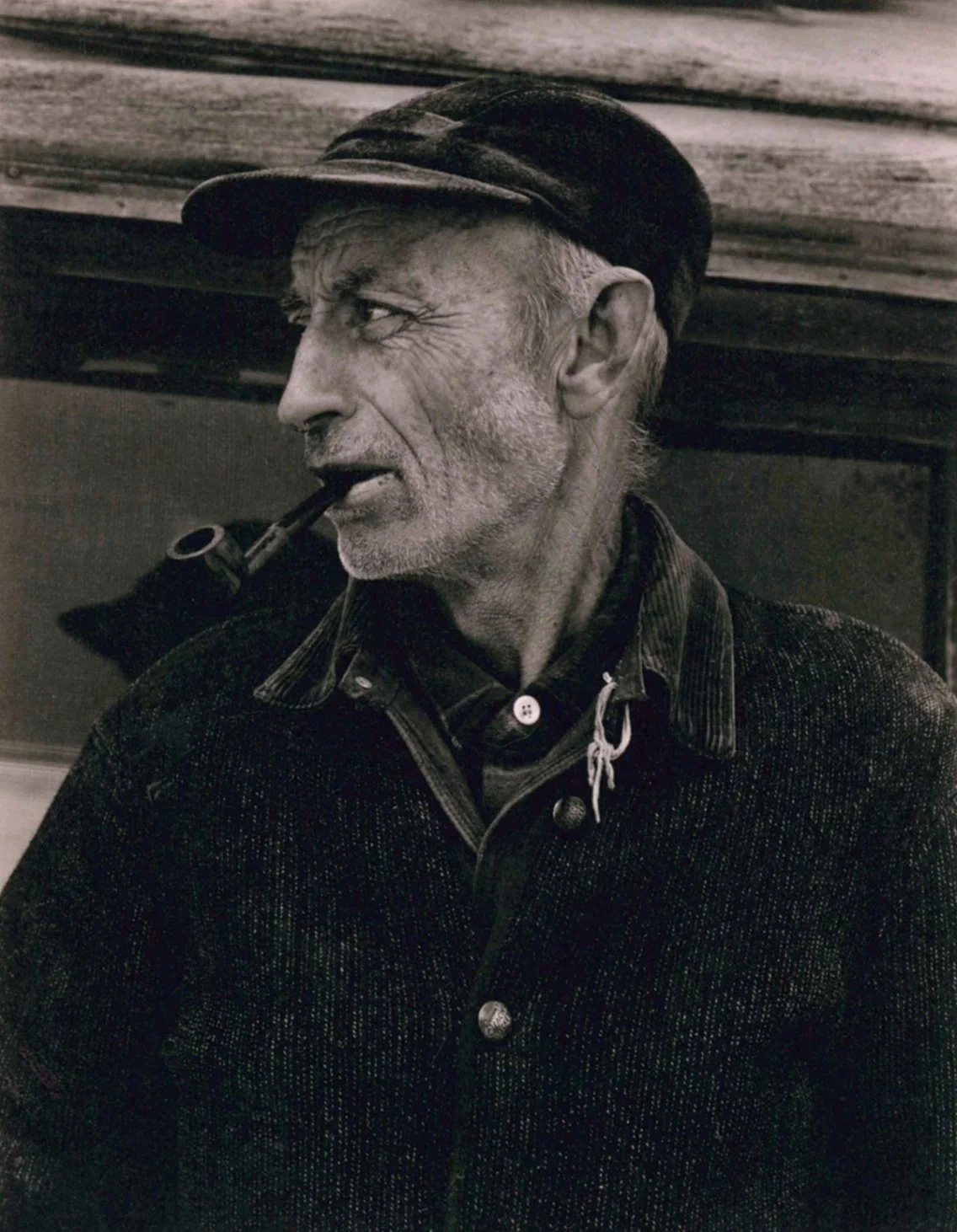
Fort Point Channel, Boston. Film noirish photo hy Mr. duPont from Boston below.
-- Photos by Russell duPont (copyright Russell duPont Photography)
Adapted from an item in Robert Whitcomb's "Digital Diary'' column in GoLocal24.com.
There was a funny column in The Washington Post the other day headlined “Too Much Boston’’ about excess movies being made about what the headlines used to call “The Hub’’. These films, replete with real or badly done “Boston accents’’ (which basically means the speech of Irish- or Italian-Americans there and almost never of the famous upper-crust “Boston Brahmins,’’ usually focus on the seamy, violent, crime-ridden underbelly of the city and its environs (including, for example, the town in Manchester-by-the-Sea, much of which is actually rich). It is almost always cloudy and dark in Hollywood Boston, and there's menace around each corner.
You’d think that Boston was the most dangerous, forbidding burg in America rather than the generally safe, internationalized and prosperous (for many residents) place that it is --- world-famed for research, education, medicine, finance and high and popular culture. Indeed, much of downtown Boston has become positively glitzy, as have such formerly rather forlorn nearby places as Cambridge's Kendall Square (now home to Google and many other fancy companies).
I suggest that the screenwriters, producers and directors give up the Boston bathos and make more use of, say, Chicago --- a much more dangerous place. That’s not to say that there aren’t some sour, gritty and indeed dangerous places in Boston. It is to say that its film noir aspects are getting overdone. And could we also get off the grossly outdated presentation of Providence as a Mob town!
New England is usual among American regions in having such a strong sense of regional identity and coherence (excluding Connecticut’s Fairfield County, which is glued to metro New York City). This came out, of course, with the frenzied six-state celebrations of the Patriots’ astonishing Super Bowl win. And part of that identity is having one major city, Boston, that’s not only the capital of its leading state but also the psychic, economic and cultural capital of the whole region. People in the Canadian Maritime Provinces used to call New England “The Boston States.’’
This will continue. The other good-sized cities in the region – Providence, Worcester etc., --- will never be able to ‘’compete’’ in a big way with Boston. Rather, they should present themselves as interesting, livable and less expansive urban satellites of “The Hub.’’
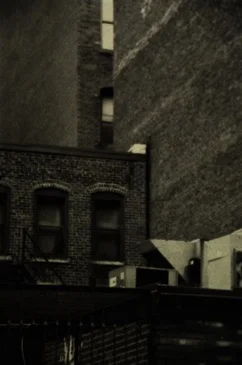
Near North Station, Boston.
A "psychogeography of place and memory'

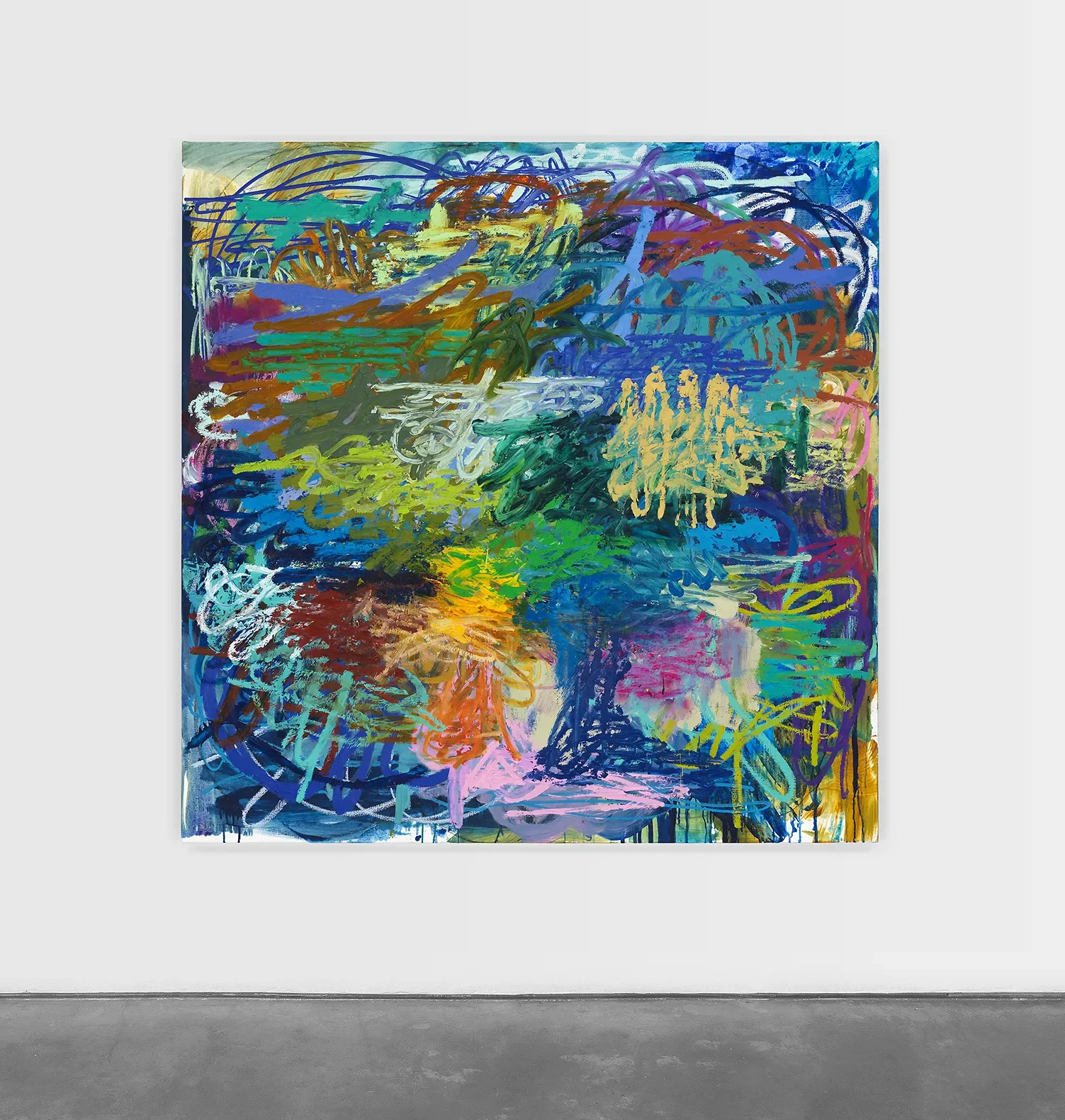
'Adorned with Pillars,'' by Bahar Behbahani, in her show "Let the Garden Eram Flourish'' at the Hood Museum of Art, at Dartmouth College, Hanover, N.H., through March 12.
The Hood reports:
"After her first visit to the United States from Iran, in 2003, Bahar traveled between Tehran and the United Stated before permanently locating to New York in 2007, where she currently resides.''
"Let the Garden Eram Flourish'' features paintings, installations and videos that capture what she calls the "psychogeography of place and memory," using both historical references and personal memory, the Hood says.
"Behbahani creates work that is not only reflective but is challenging for both herself and an audience.''
''I'm hoping my work raises questions without clear answers. I'm very interested in challenging our perceptions,'' she told the Hood.
''Rather than creating a utopian fantasy or confirming an orientalism that the Western world hopes for in the gardens. Incorporating eastern, Persian and Iranian aesthetic traditions are all found within Behbahani's work as well as mirage, structures, memory, fantasy and the power of imagination, Using layers of paint and mixed media, each piece certainly gives off the feel of a garden, while leaving room for various forms of interpretation and space to question the piece.''
A perplexing 'ironic pessimism'
“What New England is, is a state of mind, a place where dry humor and perpetual disappointment blend to produce an ironic pessimism that folks from away find most perplexing”
― Willem Lange, a writer based in the Upper Connecticut Valley.
Don Pesci: In the thug competition, Trump is no Andrew Jackson
VERNON, Conn.
"We're careening, literally, toward a constitutional crisis. And he's [Judge Neil Gorsuch] been nominated by a president who has repeatedly and relentlessly attacked the American judiciary on three separate occasions, their credibility and trust is in question" -- U.S. Sen. Richard Blumenthal on CNN
President Trump is irascible and prone to childish fits of personal outrage, but his dealings with the judiciary are not quite as bloodcurdling as those of President Andrew Jackson, the founder of the modern Democratic Party.
Following the Battle of New Orleans, which he won, lofting him into celebrity status, Jackson declared martial law. A prominent Louisiana state legislator, Louis Louaillier, vented his displeasure anonymously in the Louisiana Courier. Discovering the identity of the author, Jackson had Louaillier arrested. When his lawyer applied for a writ of habeas corpus, an outraged federal district judge, Dominick Augustin Hall, signed the writ, further inflaming Jackson, who ordered his troops to arrest Hall. The judge was hustled off to the pokey and placed in Louaillier’s cell, where no doubt they commiserated with each other. Yet another judge, Joshua Lewis, issued a writ of habeas corpus demanding Hall’s release.
Andrew McCarthy writes in National Review, “As night follows day, Jackson had Lewis arrested, too. The plenipotent general then had five soldiers escort Judge Hall out of town, marching him four miles upriver.”
The judge was lucky that he was not hanged on the first oak tree available upon his release, the punishment that President Jackson threatened to inflict on John C. Calhoun for having defied one of his orders.
The question whether the Supreme Court was constitutionally authorized to declare state laws unconstitutional was much debated during Jackson’s time. Jefferson’s view was that the court had no such power; his comrade in arms, James Madison, argued that it did. Jackson wavered between the two disputants, adopting each view to accommodate his own policies.
When Chief Justice John Marshall ruled in Worcester v. Georgia that the state of Georgia could not unconstitutionally seize Cherokee lands on which gold had been found because such laws violated federal treaties, Jackson is reputed to have said, "John Marshall has made his decision, now let him enforce it." Jackson’s retort may be apocryphal, but it typifies his cruel arrogance. Commenting on the case, Jackson wrote in a letter to John Coffee, "...the decision of the Supreme Court has fell still-born, and they find that they cannot coerce Georgia to yield to its mandate.”
Associate U.S. Supreme Court Justice Joseph Story thought that Marshall’s decision in Worcester might have been an attempt to mitigate Marshall’s earlier opinions in Fletcher and Johnson, which had been deployed by Georgia to justify the seizure of Cherokee lands. “Thanks be to God,” Story wrote to his wife in 1832, “the Court can wash their hands clean of the iniquity of oppressing the Indians and disregarding their rights.
Worcester provided the juridical backbone for future treatment of Indian tribes as independent nations subject to treaties conducted by federal agencies rather than states, but because Marshall did not ask federal marshals to enforce his decision in Worcester, Jackson proceeded with Cherokee removal. Jackson’s forced relocation of the Cherokees and other tribes from their native land led to the “Trail of Tears,” which closely followed the “Indian Removal Act” passed by Congress, in 1830.
While intemperate, Trump’s ill-conceived remark concerning a judge whose decision postponed a presidential measure that is constitutional and clearly authorized by statute does not signal a threat to constitutional order. Trump, now redrafting his order, had not jailed the judge or threatened to hang him from an oak tree.; nor has he threatened to disregard a Supreme Court decision, as had Jackson.
In an interview following his presidency, Jackson expressed regret that he hadn’t shot Henry Clay, one of his more vocal political opponents. Though Trump did say during his primary campaign that he could probably shoot someone on Main Street and get away with it, this was press-baiting, an art that rump has perfected during his years in the media floodlights.
During his 20 years as attorney general in Connecticut, Blumenthal was no stranger to hyperbole. It has often been said of him “There is no more dangerous spot in Connecticut than the space between Blumenthal and a TV camera.” Blumenthal – though he does not have the military record of a Jackson – lusts after media attention, knowing that notoriety is one among many tickets to election, and here he is in competition with two masterful media manipulators – Jackson and Trump.
Just as Trump is no Jackson, so it must be said of Blumenthal – he is no Trump. Following Blumenthal’s hysterical notion that Trump’s comments on judges amounted to a constitutional crisis, Trump questioned whether anyone should take seriously the word of a man who had several times claimed he had served as a marine in Vietnam when in fact, having exhausted his deferments, Blumenthal served in Washington, D.C., delivering Toys to Tots and ingratiating himself with The Washington Post.
Since Blumenthal is not a judge but a senator in need of smelling salts, the remarks cannot be said to have triggered a constitutional crisis.
Don Pesci (donpesci@att.net) isa political writer who lives in Vernon, Conn.

Tim Faulkner: Projected sea-level rise looks scarier

Via ecoRI News (ecori.org)
A stitch in time saves nine. A cat has nine lives. Baseball legend Ted Williams wore No. 9. Unfortunately for Rhode Island, nine is also the new number for the feet of projected sea-level rise.
Just a few years ago, the upper estimate for sea-level rise was 3 feet. More recently, it was 6.6 feet. But a recent assessment by the National Oceanic and Atmospheric Administration (NOAA) projects sea-level rise to increase in Rhode Island by 9 feet, 10 inches by 2100.
“To put in perspective we’ve had 10 inches (of sea-level rise) during the last 90 years. We’re about to have 10 feet in the next 80 years,” said Grover Fugate, executive director of Rhode Island’s Coastal Resources Management Council (CRMC).
Fugate made the remarks during a recent environmental business roundtable featuring the state’s top energy and environment officials: Fugate; Janet Coit, executive director of the Department of Environmental Management; and Carol Grant, commissioner of the Office of Energy Resources.
Coit and Grant highlighted the positive trends in Rhode Island's “green economy,” such as growth in renewable energy and the fishing industry. Fugate spoke last and, referring to himself as the “Debbie Downer” of the meeting, straightaway delivered the bad news facing the state from climate change.
“I’ve been director here for 31 years and the numbers we are seeing are staggering to me,” Fugate said of the NOAA report. “The changes we are going to see to our shoreline are profound, dramatic, and there is going to be a lot of economic adjustment going forward."
The major upward revision in sea level-rise projections, he said, will be transformative to life in Rhode Island, particularly along the coastal region of Washington County and much of Bristol County and Warwick.
To drive the point home, Fugate showed photographs of severe beach erosion along Matunuck Beach in South Kingstown. The shoreline there has been eroding at a clip of 4 feet annually since the 1990s. Recently, the rate climbed to 8 feet a year. That level was calculated before NOAA released the latest projected increase in sea-level rise.
Higher seas, Fugate said, create a multiplier effect that intensifies coastal erosion and flooding. Tides and storm surges reach further inland. Climate change also produces stronger wind and rain events. Thus, a storm classified as a 50-year event can cause the same damage as a 100-year event, according to Fugate.
The recent NOAA report says the principal cause for higher seas is the melting of land-based ice sheets in Greenland and Antarctica. Since 2009, the region from Virginia north to the Canadian Maritime Provinces has experienced accelerated sea-level rise due to changing ocean currents in the Gulf Stream. NOAA expects that trend to continue.
According to the report, the impact of prolonged sea-level rise will be loss of life, damage to infrastructure and the built environment, permanent loss of land, ecological transformation of coastal wetlands and estuaries, and water-quality impairment.
Those impacts, Fugate said, are already here and being felt. He showed slides of storm drains flowing backwards and flooding parking lots during regular high tides, and buildings that are becoming islands. Coit noted that wetlands and marshes are essentially drowning in this higher water.
“The future is here now,” Fugate said. “It’s here and we are seeing profound changes.”
To combat climate change, coastal buildings are being elevated thanks to federal incentives. The CRMC also has permissive policies that allow for the rebuilding of sea walls damaged by these more forceful storms and accelerated erosion.
Several environmental engineers and municipal planners at the recent meeting raised questions about the need for policies and regulations to address threatened infrastructure, such as septic systems, utilities, and spoke about the risk of inland river flooding. Their queries suggested that the state is taking a piecemeal approach to a vast problem.
The environmental group Save The Bay has criticized an Army Corps of Engineers plan to provide funding to elevate homes along the Rhode Island coast from Westerly to Narragansett, R.I. Fugate said that plan has flaws, but endorses the concept as the best solution for protecting property owners.
Save The Bay, however, wants greater consideration given to migration away from the coast. Retreat from a receding shoreline, it argues, protects people, as well as the ecological health and resilience of the natural resource that defines the Ocean State.
“Are we going to elevate homes that can’t be reached because the roads are under water?” asked Topher Hamblett, Save The Bay’s policy director. “I think the state needs a long-term strategy about moving back from the coast.”
Hamblett portended that coastal retreat would greatly impact the real-estate market and present enormous challenges for policymakers and elected officials.
“But this is so big on so many levels that unless and until we start really seriously planning to move back out of harms way, we are going to inflict a lot of otherwise avoidable damage on ourselves,” Hamblett said.
Fugate and Coit said elevating buildings may not be the best option, but it's the only one currently with funding. If approved, it would provide about $60 million of federal relief money apportioned after Hurricane Sandy.
“Yes, the money would be better spent in another way,” Coit said. “Could we protect more land on the shore and in the flood plains? Could we help people move out all together through a buy-out program? Could we look at infrastructure that helps the whole public instead of the individual homeowner?”
Fugate said the problem is compounded by federal flood-insurance maps that created immense controversy in 2013, when the Federal Emergency Management Agency released inaccurate flood-zone maps. Those maps led to astronomically high insurance premiums for some and rampant confusion among others living on or near the water.
Fortunately, Fugate said, the CRMC and the University of Rhode Island have designed interactive maps forecasting the impacts of sea-level rise, coastal flooding and storm surge. The modeling behind those maps is helping remedy the flood-map problem. Nevertheless, Fugate encouraged anyone with property in a flood zone to buy flood insurance.
Coit said the state is in a good position to address sea-level rise and climate change by following the same model that led to the development of the Block Island Wind Farm. The Ocean Special Area Management Plan (Ocean SAMP) brought together federal, local and private stakeholders to craft a plan for mapping out public and private uses for offshore regions. CRMC is working on a similar Shoreline SAMP to address long-term coastal planning.
Coit said the state Executive Climate Change Coordinating Council (EC4) is already addressing comprehensive climate-change planning for the state. The EC4 recently released an assessment of Rhode Island's greenhouse gas-emissions reduction plan. It’s now scrutinizing flooding at wastewater treatment facilities, among other threats from climate change.
“I think we are in a good place for Rhode Island to really look holistically at a resiliency and adaptation plan that takes into account all of the issues,” Coit said.
Most of the EC4’s funding comes from the Environmental Protection Agency. CRMC gets half of its budget from the Department of Commerce. But Coit, Grant and Fugate say President Trump’s hostility toward climate change won’t curtail state planning efforts, much less the realities of sea-level rise and global warming.
While the NOAA report doesn’t offer its own solutions, it concludes that sea-level rise is unrelenting.
“Even if society sharply reduces emissions in the coming decades, sea level will most likely continue to rise for centuries,” according to NOAA.
Tim Faulkner writes for ecoRI News.
David Warsh: Democrats and the carbon tax
Amid the widespread vandalism in Washington over the last month – committed about equally by the White House and the Republican Congress – the carbon-tax initiative propounded last week by a small group of centrist Republicans stands like Parnassus above a swamp.
George Shultz and James Baker III (secretaries of state to Ronald Reagan and George H.W. Bush, respectively) billed their proposal as a “conservative” response to climate change, presumably because it calls for returning the proceeds of $40-a-ton carbon tax to citizens in the form of quarterly “dividends,” rather than turning over its enormous new revenues to the government to spend.
Sponsoring the measure would “be good for the long-term prospects of the Republican Party,” wrote Baker and Shultz in The Wall Street Journal.
It would be even better for the Democrats.
There are two broad approaches to reducing atmospheric pollution – the carbon tax, and the current regulatory approach. The former prices the carbon content of fossil fuels, at the well-head or the mine, and expects corporations to find efficient ways to reduce their energy bills. The latter sets emission quotas, and requires companies to buy permits from the government, which they may then trade among themselves (“cap-and-trade.”)
Democrats are facing a stark choice in 2020. They can hope that a suitable candidate appears out of the mists, and risk the kind of circular-firing-squad primaries that produced President Trump. Call this the Lochinvar strategy
Or they can seek to persuade some centrist figure to accept a draft from the party, a fusion candidate who might govern from the center in the White House while both major parties reorient themselves. Call this the receivership approach.
Receivers usually are appointed; elected trustees are rare. But receivership worked well for the Republican Party, and for the nation, in 1952. Fragmented after 20 years of Democratic rule, shocked by Harry Truman’s victory in 1948, GOP leaders offered the party’s nomination to Dwight David Eisenhower. Having served, among other big jobs, as president of Columbia University and as commander of the Western European theater in World War II, Eisenhower had no strong party affiliation. He defeated Illinois Gov. Adlai Stevenson, twice, and served two mostly successful terms.
There’s even a plausible candidate at hand today: former Defense Secretary and CIA Director Robert Gates, a thorough-going Midwesterner who served as defense secretary in the administrations of George W. Bush and Barack Obama. Gates would be 77 upon taking office, presumably a one-term president. An Eagle Scout in his youth, he is currently president of the Boy Scouts of America.
Both major parties are deeply divided. The White House after 2020 probably belongs to whichever succeeds in fashioning some strong appeal to the center. Polls show that climate change is the logical place to begin.
The Republican Party is dominated by climate-change skeptics; former Vice President Al Gore and major oil companies already prefer the carbon tax. It wouldn’t take much for an outsider among the Democrats to embrace the idea of revenue neutrality.
David Warsh, a veteran financial journalist and economic historian, is proprietor of economicprincipals.com, where this first appeared.
Llewellyn King: Remembering when airlines cared; mills better to live in than to work in
Notebook
One expects the weather in Chicago in winter to disrupt travel plans, if you have to go through the city or are destined to visit there. However, one doesn’t expect to be trapped in clear but windy weather in Chicago because New England is having a winter convulsion.
But that is just what happened to me last Thursday. You get that sinking feeling when you get to the airport and you are told your flight has been canceled. Expletives escape otherwise elegant mouths, like air out of a punctured tire.
It seems to be somewhat worse than it used to be because the airlines no longer feel responsible for you. If a flight had to be canceled in times past, the airline would find you an hotel; reschedule your flight, possibly on another carrier; and, well, treat you as though you were a valued customer.
Deregulation put paid to that. Not all at once, but bit by bit to the point where you are of no interest to the carrier.
You can huff, puff, tweet (it is part of huffing and puffing circa 2017), but you might as well rage at a Northeaster. It does what it does, and airlines do what they do. They have shifted the responsibility of force-majure cancellations on to you: To be the customer of any large organization is to be inconsequential.
Do what you have to do: suck it up.
Snow, Let It Snow
The snows of New England are one of the joys of New England to me.
My love affair, in the way of love affairs, came to me when I was a young man, just turned 20, who had moved from balmy, weather-unchallenged Southern Rhodesia, now Zimbabwe, keen to see all of the wonders of the British Isles – and snow. I had imagined it, but I had never seen the stuff.
As it was, my imagining had got it about right. So it is hard for me to understand why people would desert the wonders of the Northland for the heat of the flat, hot Southland – Florida, in particular.
For my first snow, when I should have been editing at the old United Press International in London, I was to be found glued to a window watching my snow fall. Man, that was living!
All these years later, snow still thrills. You might think I ski. No, I just like snow, good, honest, New England snow -- like its lobster rolls, its snow can’t be beat.
Nostalgia for Hard Times
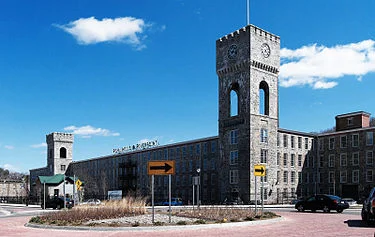
The Royal Mill, in West Warwick, R.I., home of Llewellyn King and his wife, Linda Gasparello, and where Fruit of the Loom fabric used to be made.
There is nostalgia loose in the land for the days when factories hummed, belching smoke and steam and, incidentally, other pollutants, and men and women clocked in three shifts a day.
If you ride the train south from Boston to Washington, D.C., you can see the debris of that time: deserted red brick factories with their broken windows, like tears, lamenting their fall; beautiful mill buildings, begging for a second chance to serve.
The nostalgia is for a time when the sign you see from the train in New Jersey -- “Trenton Makes, the World Takes” -- was incontrovertibly true.
I live in a converted mill in Rhode Island, once the proud home of one of the great names in garment manufactures -- Fruit of the Loom. The result of the grand days of mills is, converted, a grand place to live. High ceilings and big rooms over a river are the stuff of realtors’ brochures. Big windows let in scads of light and the workmanship, mostly by Italian stonemasons, is a reminder of how it was when craftsmen “built things to last.”
It also, like most of those mills and factories, those stone or red brick tombs stuffed with memories of another time, must have been a hellish place to work. Freezing, unheated in winter, broiling in summer, filled with noxious fumes from the dyes and fibers from the cotton, where men and women -- near slaves -- had traded the misery of agriculture for the misery of repetitive, ghastly labor.
A sense of the horror of the mills can be got by visiting the museum at the Slater Mill, which opened in Pawtucket in 1793. A little shop of horrors!
Work is good, but factory work less so. Automation is confining repetitive manual labor largely to the dust heap, and is doing so even in China.
Your correspondent would much rather live in a mill today than have worked in one back in the day. One hopes that new technologies and materials will make for new work, better work.
Car Experts: The Luxury Surprise
Sitting through a hearing in Washington on infrastructure revitalization, an area where I am a recognized bore, a surprising bit of news surfaces: the head of BMW North America, Ludwig Willisch, tells the House Committee on Transportation and Infrastructure that BMW, not Detroit’s American brands, is the largest exporter of cars from the United States.
Note that for future arguments about trade.
Llewellyn King (llewellynking1@gmail.com), a frequent New England Diary contributor, is host of White House Chronicle (whchronicle.com), on PBS. He is veteran broadcaster, publisher, columnist and international business consultant, especially in energy matters.
Bravo bottle bill, sort of

Deposit notice on a bottle sold in continental U.S. indicating the container's deposit value in various states; "CA CRV" means ''Cash Redemption Value.''
Adapted from Robert Whitcomb's "Digital Diary'' column in GoLocal24.com:
I was reading an article the other day about Connecticut’s ‘’bottle bill,’’ which mandates that when you buy a container of soda, water and beer, etc., you are charged 5 cents on top of the price of the container – a nickel that you get back when you return the container to a redemption center to be recycled. That’s a very effective law (which Rhode Island should have) because it helps reduces litter.
In the Nutmeg State, the bottle bill has become a bonanza for the state because there are so many too-busy or too-lazy people who just toss their containers in the trash or a recycling bin and don’t claim the nickel at redemption centers.
See this story from WNPR: http://wnpr.org/post/has-connecticuts-bottle-bill-changed-environmental-law-cash-cow
If you toss a can into your trash or recycling bin, instead of redeeming it for the 5- cent deposit -- your unclaimed nickel goes to the state with nothing to the private redemption centers that are charged with collecting the stuff in return for a slice of the nickel. That’s been happening more and more. Tough for these small businesses.
I have long wondered about the full environmental efficacy of recycling. How much of the value of recycling plastic, metal and plastic is offset by the energy and water (often hot) used to clean it up a bit before it goes into the recycling bin and to transport and process it? Still, again, recycling and bottle bills, discourage littering. Besides its demoralizing effects on the public, litter, especially the plastic stuff, kills some wildlife.
So bless bottle bills and recycling.
Get over it
"Wan February with weeping cheer,
Whose cold hand guides the youngling year
Down misty roads of mire and rime,
Before thy pale and fitful face
The shrill wind shifts the clouds apace
Through skies the morning scarce may climb.
Thine eyes are thick with heavy tears,
But lit with hopes that light the year's."
- Algernon Charles Swinburne, A Year's Carols: February
At this time of year, we might prefer green

''Mellow Yellow'' (oil on canvas), by Mia Cross, in the show "Yellow,'' in the annual
''core member'' exhibition at Fountain Street Fine Art, Framingham, Mass., through March 5.

Chris Powell: Complexity, hypocrisy, ambiguity in school-choice issue; sieg heil Trump?

-- Photo by David Shankbone
Public high school class in Colorado.
Democratic legislators are always most conscientious when they are playing stooges for the teacher unions, perhaps the most powerful component of the party's base. Hence the all-nighter that Democratic U.S. senators pulled on the Senate floor to posture against President Trump's nomination of Betsy DeVos for U.S. education secretary.
Yes, DeVos has no experience in administration of public education, but then no one who has ever tried to get a straight answer out of a school superintendent will hold that against her. The real objection to DeVos has been her advocacy of school choice -- that is, giving public schools some competition from charter schools and private schools. Speaking against DeVos during that all-nighter, Connecticut Sen. Chris Murphy said she had sought to "undermine" public schools.
School choice is a complicated issue. It can divert resources from the poor to the financially comfortable, who already have a large degree of choice through their ability to move away from urban poverty to the suburbs. But most advocacy of school choice aims to empower the poor, though even that can rob struggling schools of their best students.
In any case insofar as the U.S. Education Department long has represented the education establishment and particularly the teacher unions, the department could use an outsider's perspective, as could all of primary education in the country. For in many states, including Connecticut, two-thirds of high school students graduate without ever mastering high school work, most of public education in this country having collapsed into social promotion.
Further, a big problem with public education in Connecticut particularly is that it's not really public at all. For example, since 1984 teacher evaluations have been exempted from disclosure under Connecticut's freedom-of-information law, an amendment to the law having been demanded by the teacher unions in response to a finding by the Freedom ofInformation Commission that the law required disclosure. Among all state and municipal employees in Connecticut, only teachers enjoy this exemption.
A few weeks ago The Hartford Courant reported that about a third of Connecticut's school boards evaluate their superintendents only by discussion in private meetings to avoid generating any records that would become public. State law requires towns to elect school board members for staggered terms so that even if townspeople are unanimous in wanting to replace every school board member, this cannot be accomplished in fewer than three elections over six years.
Then there is Connecticut's "minimum expenditure requirement," the state law that forbids towns from reducing school spending even if student enrollment goes to zero. The law's purpose has been to ensure that all financial savings from declining enrollment go straight into teacher salaries and benefits, with taxpayers recovering not a cent.
None of these provisions serves the public any more than the Democratic senators, in opposing DeVos, served the public. These provisions serve only those employed in education, and the Democratic senators have been only verifying Ambrose Bierce's definition of politics: "A strife of interests masquerading as a contest of principles; the conduct of public affairs for private advantage."
xxx
IS PRESIDENT TRUMP A FASCIST? One swallow may not make a summer, but Trump's ugliest approach to fascism happened last week, when, at a meeting at the WhiteHouse with sheriffs from around the country, he was told of a state senator in Texas who has proposed legislation to prohibit police from seizing the assets of people who are only suspected but not convicted of crime.
The legislation would uphold ordinary due process of law. But Trump's response was: "We'll destroy his career." The sheriffs laughed. They should have shouted: "Sieg heil!"
Chris Powell is managing editor of the Journal Inquirer, on Manchester, Conn.
Feminine faces of art

"Bodies of Work'' (encaustic), by Angel Dean, featuring, among other things, images of Mary Cassatt, Georgia O'Keefe, Frida Kahlo and Kara Walker. It's part of a show called "Celebrating Women Artists: Making Our Mark,'' with 104 artworks by Exhibiting Artist Members of the Providence Art Club, to be on view through Feb. 24. This painting won the "Best in Show'' award for this exhibition.
'the landscape listens'
"There’s a certain slant of light,
On winter afternoons,
That oppresses, like the weight
Of cathedral tunes.
Heavenly hurt it gives us;
We can find no scar,
But internal difference
Where the meanings are.
None may teach it anything,
’T is the seal, despair,—
An imperial affliction
Sent us of the air.
When it comes, the landscape listens,
Shadows hold their breath;
When it goes, ’t is like the distance
On the look of death."
- Emily Dickinson, "#82''
Empathy with our threatened 'next of kin'

Photo of exhibit in "Next of Kin: Seeing Extinction through the Artist's Lens,'' by Christina Seely of the Canary Project, in a perspective on the biodiversity extinction crisis, at the Harvard {University} Museum of Natural History, in Cambridge, through June 4.
The museum says that "special photography techniques and rare specimens from Harvard's collections evoke empathy with our 'next of kin.'''
Llewellyn King: Transport infrastructure urgency brings some comity to Washington

By the current standards on Capitol Hill, there is astounding comity in the House Committee on Transportation and Infrastructure. The committee, which held its first hearing of the new Congress recently, exhibits a kind of good humor, of give and take, which largely ceased with the Gingrich Revolution of 1994.
What makes this committee different is that Republicans and Democrats are staring into the jaws of hell together, so to speak. Disparate as they are, from super-liberal Democrat Eleanor Holmes Norton, of the District of Columbia, to the committee’s conservative chairman, Bill Shuster, R-Pennsylvania, the members know that the nation’s infrastructure is in deplorable condition.
They know, too, that in the current Congress, with its GOP aversion to new taxes, there is not enough money to fix the deteriorating infrastructure. They know all too well the old saw about immovable objects and irresistible forces.
A panel of heavy infrastructure users, headed by business celebrity Fred Smith, founder and CEO of FedEx, laid out the choke points for his industry: air traffic control and the interstate highway systems.
One of Smith’s ideas for improving the nation’s highways, bridges and public transit systems is to raise the gasoline and diesel tax, which has languished since 1994. But he warned this might not be the whole answer when new forms of propulsion, like electricity and compressed natural gas are changing or threatening to change the transportation mix.
No one on the panel objected to the idea of taxes for infrastructure. The overriding concern was from committee members who wondered whether the money would be spent where it was planned or diverted to general revenue needs.
It interested me that it was Smith who recommended greater taxation. His panel colleagues, including Ludwig Willisch, CEO of BMW of North America, and David MacLennan, CEO of Cargill, did not demure. More important, Republican members of the committee swallowed the tax poison without visible physical effect. No retching, trembling or detectable palpitations.
The elephant in the room, of course, was the Trump administration. Candidate Trump promised a massive infrastructure leap forward.
No one seemed confident that spending hawks in the Congress would support such athletics. It is hard to be hopeful that President Trump will get all or any of the new money out of a Congress that is looking at escalating deficits.
Talking to people involved in infrastructure, one gets this picture: user fees are not enough and toll roads, favored in principle by many, do not raise enough money to attract and keep private investors. Philip White of the global law firm Dentons, points out that many of these have failed in Texas — ground zero for private enterprise — and have had to be taken over by government entities. Similar fates have befallen toll roads elsewhere.
The big initial boost for the infrastructure under Trump will not come from new money, but rather from authorizing previously delayed projects and easing regulations. There is also the current highway fund spending, which has risen somewhat.
But nobody, especially on the House committee, believes it is enough to reverse the relentless crumbling of roads and bridges. The real infrastructure funding need has been estimated to be as high as $6 trillion.
Back to FedEx’s Smith and what he thinks will work: a mileage tax, congestion pricing and high-access lanes on highways; a revised tax code, which would eliminate some of the anomalies that hamper strategic planning; privatizing air traffic control; and upgrading runways.
He pointed to Memphis, FedEx’s “SuperHub,” where there has been a huge gain in productivity with air traffic improvements financed by his company.
Cargill, for its part, sang the song of barges, shipping containers, trucks and railcars. “It is the interconnected nature of waterways, railways and highways — the three-legged stool of domestic transportation — that is important to keeping the United States competitive. When one mode of transportation is troubled, it affects the entire system,” MacLennan said.
All is not lost for infrastructure spending. Trump, it appears, is keen to say he has honored his campaign promises. And he promised big.
Get ready for taxes, fees and congestion charges. The need is great, the means slim and taxes, by another name, will come.
The House Transportation and Infrastructure Committee will need all of its evident camaraderie as it takes its shovel to the legislative tarmac.
Llewellyn King (llewellynking1@gmail.com), host of White House Chronicle on PBS, is a veteran publisher, columnist and international business consultant. He is also a frequent contributor to New England Diary. This piece first ran on Inside Sources.

Todd McLeish: List of endangered plants in Rhode Island is growing

Purple mikweed is one of the endangered species.
VIa ecoRI News (ecori.org)
The official list of Rhode Island’s rare and endangered plants has been updated for the first time in a decade, and the picture is somewhat grim. A total of 81 species were added to the Rhode Island Natural Heritage Database, bringing the total to 414, and 13 from the previous list were found to have disappeared from the state entirely.
Conversely, several species thought to have been extirpated were rediscovered, and a handful of others were found to be less rare than earlier surveys had indicated.
“Things are changing rapidly with the climate, and there is ongoing development pressure that affects plants,” said David Gregg, executive director of the Rhode Island Natural History Survey, which played a key role in updating the database. “New observations are being made all the time that change our opinion of the relative rarity of species.”
The Natural Heritage Database categorizes rare plants as either endangered, threatened or of special concern in the state, and a fourth category called “historic” indicates those species that once grew in the state but are no longer present.
Among the plants added to the database in the recent update are trumpet honeysuckle, a species common in the horticultural trade but which has declined in the wild; Canada dwarf-dogwood, also called bunch berry, which has struggled due to warming temperatures; and yellow blue-head lily, a northern species found more commonly on the mountain slopes of Vermont and New Hampshire.
Orchids are in especially dire straits in Rhode Island. Seven orchid species were added to the database, including yellow ladies’-tresses, large whorled pogonia, and north wind bog-orchid. Of the 36 species of orchids native to Rhode Island, 33 of them are now on the rare species list, and 10 of those are considered historic. The only orchids native to Rhode Island that are not on the list are the pink lady slipper and two kinds of rattlesnake plantain.
“Orchids are always rare on the landscape, but they’re also eaten by deer — they’re apparently really tasty — and they have very specific pollinator relationships and habitat specificity that make them at risk,” said Hope Leeson, a botanist for the Natural History Survey who participated in updating the database. “We’ve talked about adding the pink lady slipper, but it hasn’t made the list yet.”
Leeson said many of the changes to the database were the result of increased efforts by a large number of volunteer botanists such as Rick Enser, Doug McGrady and Francis Underwood spending time searching for particular species. A population of waxy-leaved meadow-rue was discovered by volunteers in Westerly, for instance, and purple milkweed was found in West Warwick and South Kingstown. Both species had been considered historic but have been moved to the endangered category.
Among the 10 species that volunteers were unable to find and, as a result, are now considered historic are lily-leaved wide-lipped orchid, dwarf burhead, three kinds of sedge, and budding pond weed, an aquatic plant that requires pristine water quality to survive.
Just three species were removed from the list because their population status in the state improved. Five others moved down the list from endangered to threatened or threatened to concern because they were found to be in less danger of extinction than previously believed. One of those, tall beaksedge, is considered a conservation success story because it benefitted from active monitoring efforts and habitat protection.
“We debated moving other species off the list entirely, but part of our reluctance was that even though we may have found more populations, they are still at risk from things that are going to continue happening in the future — climate change, habitat fragmentation, deer browse,” Leeson said. “Those are impacting rare species, and since rare species have such a specific habitat type that they have an affinity for, if you lose the habitat you lose the species.”
According to Gregg, the database is used in decisions by state and local environmental officials about land management and conservation, and by regulators and developers when properties are being considered for development. For instance, applications for permits to disturb wetlands must include a list of rare species found on the property.
Electric utilities often seeks information about rare species found on their transmission corridors as they make upgrades to power lines.
Many groups and individuals were involved in updating the list, including representatives from the Rhode Island Department of Environmental Management, U.S. Fish & Wildlife Service, Audubon Society of Rhode Island, Rhode Island Wild Plant Society and the New England Wildflower Society. The updated list was included in the state’s 2015 Wildlife Action Plan, which was reviewed by scientists and the public and approved by DEM in late 2016.
The database of rare animals in Rhode Island is being updated and should be completed by the end of the year.
Rhode Island resident and author Todd McLeish runs a wildlife blog
'This understated land'
New England Mind
My mind matches this understated land.
Outdoors the pencilled tree, the wind-carved drift,
Indoors the constant fire, the careful thrift
Are facts that I accept and understand.
I have brought in red berries and green boughs—
Berries of black alder, boughs of pine.
They and the sunlight on them, both are mine.
I need no florist flowers in my house.
Having lived here the years that are my best,
I call it home. I am content to stay.
I have no bird's desire to fly away.
I envy neither north, east, south, nor west.
My outer world and inner make a pair.
But would the two be always of a kind?
Another latitude, another mind?
Or would I be New England anywhere?
Robert Francis
Recognizing bad actors
Feb. 9, 2017
To members and friends of the Providence Committee on Foreign Relations (thepcfr.org; pcfremail@gmail.com).
Here’s our updated schedule through June. Please note that there might be a couple of additional speakers.
Our next speaker comes on Thursday, Feb. 23, with Carl Maccario, an expert on international security issues involving terrorists and other bad actors. He's an internationally known specialist in behavior recognition, evaluating truthfulness and detecting deception, and nonverbal communication.
He has provided behavior recognition training to virtually every part of The Department of Homeland Security and as well as to various branches of the Department of Defense entities and to foreign nations.
He’ll have some exciting visuals to show us.
From the ponds and streams to the slopes

Adapted from an item in Robert Whitcomb's "Digital Diary'' in GoLocal24com.
Wachusett Mountain Ski Area, in Princeton, Mass., has, so far in this puny winter, used more than 95 million of gallons of water to make snow! I can imagine how much the really big northern New England areas have used. The Wachusett president, Jeff Crowley, says that’s about the amount it usually uses in an entire season, reports the Worcester Business Journal. I wonder what effect putting so much water on a little mountain has on the area’s environment
Not only does snow-making equipment let ski areas get through poor real-snowfall seasons, but man-made snow is said to last longer than the natural stuff. I suppose that having all that slow-melting “snow’’ on the mountain late in the season might stretch out local streams’ spring run. But snow-making also causes erosion, which washes sediment into streams, which among other things hurts trout and other fishing. And running the machines uses a lot of energy.