
Vox clamantis in deserto


Why Trump sucks up to Putin?
Donald Trump, unlike other presidents is the past 40 years, refuses to release his tax returns or other data related to his conflicts of interest, The information below suggests some reasons why:
Why did Putin order hacking to help Trump get elected? Stacey W. Porter posted to Facebook as follows:
1) Trump owes Blackstone/ Bayrock group $560 million (one of his largest debtors and the primary reason he won't reveal his tax returns)
2) Blackstone is owned wholly by Russian billionaires, who owe their position to Putin and have made billions from their work with the Russian government.
3) Other companies that have borrowed from Blackstone have claimed that owing money to them is like owing to the Russian mob and while you owe them, they own you for many favors.
4) The Russian economy is badly faltering under the weight of its over-dependence on raw materials which as you know have plummeted in the last 2 years leaving the Russian economy scrambling to pay its debts.
5) Russia has an impetus to influence our election to ensure the per barrel oil prices are above $65 ( they are currently hovering around $50)
6) Russia can't affordably get at 80% of its oil reserves and reduce its per barrel cost to compete with America at $45 or Saudi Arabia at $39. With Iranian sanctions being lifted Russia will find another inexpensive competitor increasing production and pushing Russia further down the list of suppliers.
As for Iranian sanctions, the 6 countries lifting them allowing Iran to collect on the billions it is owed for pumping oil but not being paid for it. These billions Iran can only get if the Iranian nuclear deal is signed. Trump spoke of ending the deals which would cause oil sales sanctions to be reimposed, which would make Russian oil more competitive.
7) Rex Tillerson (Trump's pick for Secretary of State) is the head of ExxonMobil, which is in possession of patented technology that could help Putin extract 45% more oil at a significant cost savings to Russia, helping Putin put money in the Russian coffers to help reconstitute its military and finally afford to mass produce the new and improved systems that it had invented before the Russian economy had slowed so much.
8) Putin cannot get access to these new cost saving technologies OR outside oil field development money, due to US sanctions on Russia, because of its involvement in Ukrainian civil war.
9) Look for Trump to end sanctions on Russia and to back out of the Iranian nuclear deal, to help Russia rebuild its economy, strengthen Putin and make Tillerson and Trump even richer, thus allowing Trump to satisfy his creditors at Blackstone.
10) With Trump's fabricated hatred of NATO and the U.N., the Russian military reconstituted, the threat to the Baltic states is real. Russia retaking their access to the Baltic Sea from Lithuania, Latvia and Estonia and threatening the shipping of millions of cubic feet of natural gas to lower Europe from Scandinavia, would allow Russia to make a good case for its oil and gas being piped into eastern Europe.
Sources: Time Magazine, NY Times, The Atlantic, The Guardian UK.
Sent from my iPhone
Slob/celebrity culture puts a threat to national security in the White House
That Donald Trump is a sociopath has long been clear. He’s a volatile, astonishingly greedy and corrupt narcissist and quasi-fascist who lies nonstop. That the Republican Party nominated him and that a minority of voters swimming in rage, wishful thinking and willful ignorance elected him says something about America’s steep decline into a slob culture.. (I wrote in Jim Webb’s name for president on Election Day, by the way.)
But what is even scarier is that someone who might be a traitor, working closely with a foreign power, Russia, now has access to the most secret U.S. intelligence information. What will the leaders of a mostly supine Republican Party do to protect America from the grave security threat posed by having this sleazy man as our head of state? If they don’t do anything, how can they call themselves “conservatives’’? But for most of them, fear and opportunism will out.
From the federal statute on treason:
“Whoever, owing allegiance to the United States, levies war against them or adheres to their enemies, giving them aid and comfort within the United States or elsewhere, is guilty of treason and shall suffer death, or shall be imprisoned not less than five years and fined under this title but not less than $10,000; and shall be incapable of holding any office under the United States.”
-- Robert Whitcomb
Baffling blue

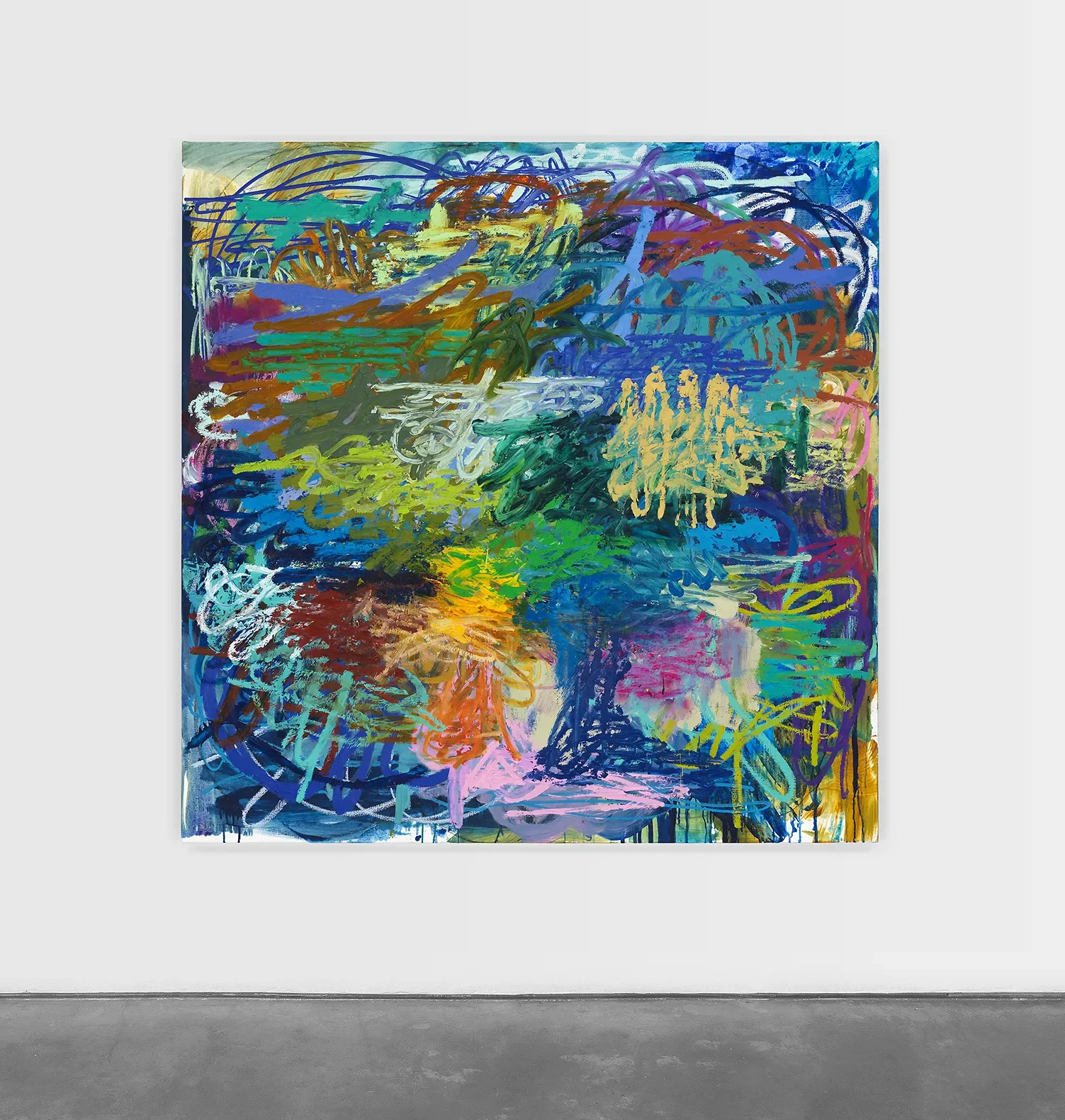
"Maragalle'' (mixed media on wood), by Deborah Barlow, in the group show "Clew: A Rich and Rewarding Disorientation,'', at the Lamont Gallery, at Phillips Exeter Academy, Exeter, N.H., Jan. 20-April 15.
The gallery writes:
“Clew: The word can mean variously a ball of yarn, part of a ship's sail, and an expanse of wings. The most famous clew in Western culture was the ball of thread given to Theseus by Ariadne, used to guide the hero back through the labyrinth of the Minotaur. Over time clew has come to mean “a fact, circumstance, or principle which, being taken hold of and followed up, leads through a maze, perplexity, difficulty, intricate investigation” (Oxford English Dictionary). The labyrinth in that famous story is often a metaphor for what is baffling, complex and unfathomable. But a labyrinth can also suggest the mysterious and uncanny. Wandering through a maze—to be in a state of ‘amazement’—can be a rich and rewarding disorientation. When sailing in uncharted waters, the clew we need is one that brings us into proximity to the unknown and then back out again. Wings open and expand.
“’Clew: A Rich and Rewarding Disorientation’ is an artistic collaboration that emulates the labyrinth with its confluences and unexpected turnabouts. Using overlays of music, poetry and visual arts, four artists give viewers and listeners new ways to see, hear and navigate a tripartite, intricately layered world. Within the setting of a physical gallery space, all three formats intermingle freely, and scheduled events shift the central focus from poetry to sound to the visual. Experienced individually or collectively, Clew compounds and expands into a journey of multidimensionality and surprise.’’
His summer within
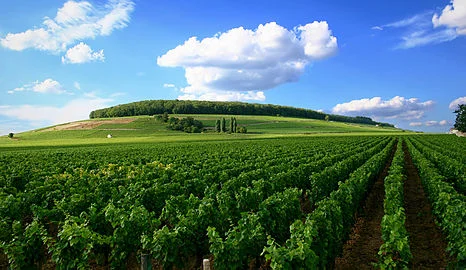
"In the depths of winter I finally learned that within me there lay an invincible summer."
-- Albert Camus
German general consul to speak on Jan. 11 about post-Brexit Europe
To members and friends of the Providence Committee on Foreign Relations (thepcfr.org; pcfremail@gmail.com).
Happy New Year. Here’s our updated schedule through June.
Our next speaker comes on Wednesday, Jan. 11, with German General Consul Ralf Horlemann on the role of Germany in the post-Brexit world and facing a more aggressive Russia.
Internationalepidemiologist Rand Stoneburner, M.D., had been scheduled for Jan. 18. He has asked to resked to the spring in order to, among other things, have more information on Trump administration public-health policies and to be nearer to the start (in the Northern Hemisphere) of the Zika season. So we have reskedded him to Tuesday, May 2.
.
On Thursday, Feb. 23, we’ll have international security and anti-terror expert Carl Maccario, who runs the Center for Nonverbal Communication. (He’s a tough guy who will have some exciting visuals for us!) He replaces Indian Navy Admiral Nirmal Verma, who was to be our February speaker but has had to resked because of an unexpected duty in Asia.
Dr. Stephen Coen, director of the Mystic Aquarium, will speak on the condition of the oceans, Wednesday, March 8.
Brazilian political economistand commentator Evodio Kaltenecker, who had been skedded for April, has been moved to Thursday, March 16, to talk about the crises facing that huge nation.
On Wednesday, April 5, famed French journalist, novelist and broadcaster Jean Lesieur will speak on the global order being turned upside down by the advances of dictators, the retreat of democracies and the presidency of Donald Trump, not tomention the existential crisis of the European Union.
As noted above. Dr. Rand Stoneburner, the international epidemiologist, is now scheduled to speak onTuesday, May 2.
James E. Griffin, an expert on ocean fishing and other aspects of the global food sector, will speak to us on Wednesday, May 17.
Joining us on Wednesday, June 14, will be Laura Freid, CEO of the Silk Road Project, founded and chaired by famed cellist Yo-Yo Ma in 1998, promoting collaboration among artists and institutions and studying the ebb and flow of ideas across nations and time. The project was first inspired by the cultural traditions of the historical Silk Road.
Meanwhile, we’re trying to keep some flexibility to respond to events. Everything in human affairs is tentative. ”We make plans and God laughs….’’

Carolyn Morwick: Some New England election results in review

Via the New England Board of Higher Education (nebhe.org)
All six New England states voted for Hillary Clinton in the race for the White House, despite her loss nationally in the electoral college. It's unclear how the 115th Congress and President-Elect Donald Trump will act on proposals by Clinton and her Democratic rival Bernie Sanders for free college and reduced student debt. Among highlights of the 2016 elections:
New Hampshire and Vermont elected Republican governors, increasing the slate of GOP governors in New England to four
Maggie Hassan’s election to the U.S. Senate gave women Democrats control of New Hampshire’s congressional delegation; women are also slated to fill House speakers’ posts in Maine and Vermont
Republican gains in the Connecticut state Senate produced an 18–18 tie
Maine voters approved a hike in the minimum wage and new income tax for those with incomes of $200,000 or higher to fund public education
Maine voters also made a national splash by approving "rank choice" voting which would allow voters to rank their choices of candidates in elections
Massachusetts voters rejected a call for more charter schools
Maine, Massachusetts voters approved recreational use of marijuana.
Connecticut election results
All six Democratic congressional incumbents easily defeated their challengers, as the state voted handily for Clinton in the race for president.
It was a different story In the Connecticut General Assembly. In the state senate, the election produced an 18-18 tie. Republicans picked up three seats by unseating two Democrats and winning an open seat. Sen. Dante Bartolomeo (D) lost her re-election bid to Republican Len Suzio; veteran legislator Sen. Joseph Crisco Jr. (D) lost his race to Republican George Logan. In the contest for an open seat, Republican Heather Somers beat former Democratic State Rep. Timothy Bowles.
Republicans also gained eight seats in the House, where Democrats held on to a 79 – 72 majority. Republicans unseated six Democrats and won two open seats.
Maine election results
In a rematch in the 2nd Congressional District, incumbent Congressman Bruce Poliquin (R) defeated challenger Emily Cain 54% to 45%. In the 1st Congressional District, incumbent Chellie Pingree easily won re-election, defeating Republican challenger Mark Holbrook.
In a close race for the White House, Clinton beat Trump 47% to 45%.
In the Maine Legislature, Senate Republicans maintained control by a one-vote margin, 18–17. In the House, Democrats have the majority, 76-72 with two Independents.
In the House, lawmakers chose Democrat Rep. Sara Gideon of Freeport to succeed outgoing speaker, Mark Eves. Senate President Republican Micheal Thibodeau was re-elected to his post.
Ballot questions
Question 1: Legalization and Regulation of Recreational Marijuana. Passed
Question 2: New income tax for household incomes higher than $200,000 to fund public education. Passed
Question 3: Require background checks before the sale or transfer of firearms between individuals not licensed as dealers. Failed
Question 4: Raise the minimum wage to $12 in increments by 2020. Passed
Question 5: Rank choice voting which would allow voters to rank their choices of candidates in elections and to have ballots recounted at the state level in multiple rounds in which last place candidates are eliminated until a candidate wins by majority. Passed
Question 6: Allows $100 million in bonds for transportation projects. Passed
Gov. Paul LePage remains opposed to ballot questions 2 and 5, saying they would hurt the Maine economy.
Massachusetts election results
Nationally, all nine Democratic congressional incumbents were re-elected while Clinton trounced Trump, 61% to 34% in the race for president.
In the Massachusetts legislature, Democrats continued to hold a wide majority over Republicans. In the House, Democrats had a supermajority, 124–33 while in the Senate, Democrats retained control, 34 to 6Ballot questions
Question 1: Expand slot machine gaming (allow at tracks) Failed
Question 2: Expand charter schools (up to 12 new approvals) Failed
Question 3: Improve farm animal confines (space to stand, turn) Passed
Question 4: Legalize marijuana (regulate and tax) Passed
New Hampshire election results
In a closely watched race, Clinton narrowly edged Trump 46.8% to 46.5% ,while former Governor and Democra, Maggie Hassan squeaked by incumbent Republican Kelly Ayotte 48% to 47.9% in the race for U.S. Senate. Democrat Carol Shea-Porter defeated incumbent Frank Guinta in their fourth matchup. Incumbent Democrat Annie Kuster was re-elected, defeating Jim Lawrence 50% to 45%.
In the race for governor, Republican Chris Sununu defeated Democrat Colin Van Ostern 49% to 48%. In the legislature, Republicans kept control of the House—the largest state chamber in America—220 to 180. Both Speaker Shawn Jasper and Senate President Chuck Morse were re-elected to their posts.
Rhode Island election results
Both Democratic congressmen, David Cicilline and James Langevin easily defeated their opponents. Democrat Clinton soundly defeated Trump in the race for president, 55% to 39%.
Ballot questions
The following ballot questions were all approved.
Question 1: Restores Ethics Commission’s full authority over state lawmakers Passed
Question 2: Twin River Proposal to build a new casino (pending local approval) Passed
Question 3: Proposal to borrow $27 million for new veterans home Passed
Question 4: Proposal to borrow $45 million to fund building new engineering school and new innovation center at University of Rhode Island Passed
Question 5: Proposal to borrow $70 million to fund new port projects at Quonset and Providence ports Passed
Question 6: Proposal to borrow $35 million for various environmental projects Passed
Question 7: Proposal to borrow $50 million for housing Passed
In throwing her support behind Question 4, Gov. Gina Raimondo said: "This bond builds on our success, and it positions us for greater, more sustainable success in the years ahead. By voting 'yes' on 4, you're going to be voting for a stronger economy. You're going to be voting for the innovative jobs that will position Rhode Island to lead a new industrial revolution in advanced industries and advanced manufacturing."
Vermont Election Results
U.S. Democratic Sen. Patrick Leahy easily defeated his challenger, Republican Scott Milne 60% to 32%. Democratic Congressman Peter Welch handily defeated his challenger, Erica Clawson of the Liberty Union Party, 77% to 9%. Clinton beat Trump, 56% to 29%.
In the race for governor, Lt. Gov. Republican Phil Scott defeated Democrat Sue Minter 51% to 43%.
In the Vermont General Assembly, Democrats control the House by a 98 to 52 margin, while in the Senate Democrats maintain a 23 to 7 margin. Democrats have chosen a new speaker, Rep. Mitzi Johnson and Sen. Tim Ashe is the new president of the Senate.
Carolyn Morwick directs government and community relations at the New England Board of Higher Education and former director of the Caucus of New England State Legislatures.
'A charlatan's successful selling of his fabulousness'
Adapted from a recent item in Robert Whitcomb's "Digital Diary,'' in GoLocal24.com
"To argue with a man who has renounced the use of reason is like administering medicine to the dead."
-- Thomas Jefferson, letter to the Danbury Baptists (1802)
Donald Trump Jr. in 2008: "Russians make up a pretty disproportionate cross-section of a lot of our assets. ... We see a lot of money pouring in from Russia." Loans, perhaps?
“The larger the mob, the harder the test. In small areas, before small electorates, a first-rate man occasionally fights his way through, carrying even the mob with him by the force of his personality. But when the field is nationwide, and the fight must be waged chiefly at second and third hand, the force of personality cannot so readily make itself felt, then all the odds are on the man who is, intrinsically, the most devious and mediocre — the man who can most adeptly disperse the notions that his mind is a virtual vacuum.
“The Presidency tends, year by year, to go to such men. As democracy is perfected, the office represents, more and more closely, the inner soul of the people. We move toward a lofty ideal. On some great and glorious day the plain folks of the land will reach their heart’s desire at last, and the White House will be adorned by a downright moron.
-- H.L. Mencken, in The Baltimore Sun, July 26, 1920
Democratic republics are doomed by the inevitable decay and corruption of civic culture. For a while, enough of the electorate is willing to learn real facts, study the issues, reflect on the lessons of history and bestir themselves enough to take a few minutes to vote to usually prevent deeply corrupt and incompetent people from achieving high office.
But as time goes by, a growing proportion of the citizenry loses its civic enthusiasm as the education system ceases to teach them how their political and governmental institutions work and to remind them how precious and fragile those institutions are. Meanwhile, society’s leaders become increasingly corrupted by self-interest, usually economic, and expend most of their political energies on strengthening the (mostly hereditary) plutocracy that nurtures them. (Read The Sunday New York Times’s wedding section for the zoology of the plutocracy.)
The rise of the bread-and-circus-and-cute-kitten machines of the Internet and cable television accelerates this decline, encouraging citizens to stay within self-referential and escapist echo chambers where lie-based but comfortingly simple and engaging stories are told by employees of the powerful and facts are treated as irritating distractions.
Most people have always preferred well-told stories, including ones based on lies, over facts and reason anyway. And now the electronic media give them such tailored stories 24/7.
To think that most citizens operate on the basis of reason, as opposed to wishful thinking and fear and other visceral emotions, is naïve. And they want a leader who can convince them that he/she will take care of them and make all the hard decisions in the public square for them.
For a while – and the U.S. has had quite a run -- the ruling class in an officially democratic republic is proud to be considered relatively thoughtful, selfless and civic-minded. But corrupted by addiction to money and power, the proportion of such people in our leadership groups inevitably declines. The rise of the 24/7 electronic media demagoguery machine accelerates this byintentionally distributing falsehoods, devaluing public probity and sowing confusion. As bad money drives out good, so bad (fraudulent) information tends to drive out accurate information.
In the end, democracies end and dictatorships return; the latter is the natural default. Nothing lasts. You can see this around the world now, where frustrated citizens in democracies are increasingly looking to tough men to address their nations’ problems, if need be with extra-legal means.
The conservative columnist George Will wrote during the election campaign:
“The beginning of conservative wisdom is recognition that there is an end to everything: Nothing lasts. If Trump wins, the GOP ends as a vehicle for conservatism.’’
“Pessimism need not breed fatalism or passivity. It can define an agenda of regeneration, but only by being clear-eyed about the extent of {civic} degeneration, which a charlatan's successful selling of his fabulousness exemplifies.’’

Artist as anthropologist

"Fahrenheit 451 Revisited: Conceptual Construction of Found Objects,'' by Ruth T. Segaloff, at Galatea Fine Art, Boston, Feb. 1-26.
She writes:
“’Precious Legacies’ is a retrospective across time and generations. These artworks focus on three questions: ‘Who Am I?,’ ‘Where Did I Come From?’ and ‘Why Am I Here?’ George Santayana explained why this is important: ‘ Those who cannot remember the past are condemned to repeat it.’ Never has this danger been so close at hand.
“Thanks to my parents, I realized at a young age that objects hold our stories andour stories matter. I’ve been collecting things ever since, and I incorporate many into my art: family memorabilia and knickknacks from desk drawers and estates; baby shoes from antiques shops or gifts; wisdom written on coffee mugs and refrigerator magnets. The Modern Artist as anthropologist. Baby shoes over 70 years old are displayed in Holocaust museums across the world. They provide silent testimony that these shoes belonged to real children who most likely didn’t survive to adulthood.
‘’’Fahrenheit 451 Revisited’ incorporates many themes of the show. It is based on Ray Bradbury’s 60-year-old science fiction novel of that name, referring to the temperature at which paper burns. A demagogue declares books illegal and that owning them invites harsh punishment. In this climate of suspicion, family and neighbors betray each other. Firemen become burn squads instead of firefighters, wielding blow torches, not water hoses. Dissidents safely hide and each memorizes a favorite book, then shares it with the others. Thus they keep alive the history of civilization, culture and values, all the qualities that make us decent human beings.
‘’The Trojan Horse pull toy updates this story. It’s a cautionary tale, especially for us today, because what appeared to be a gift was actually a weapon of mass destruction. ‘’
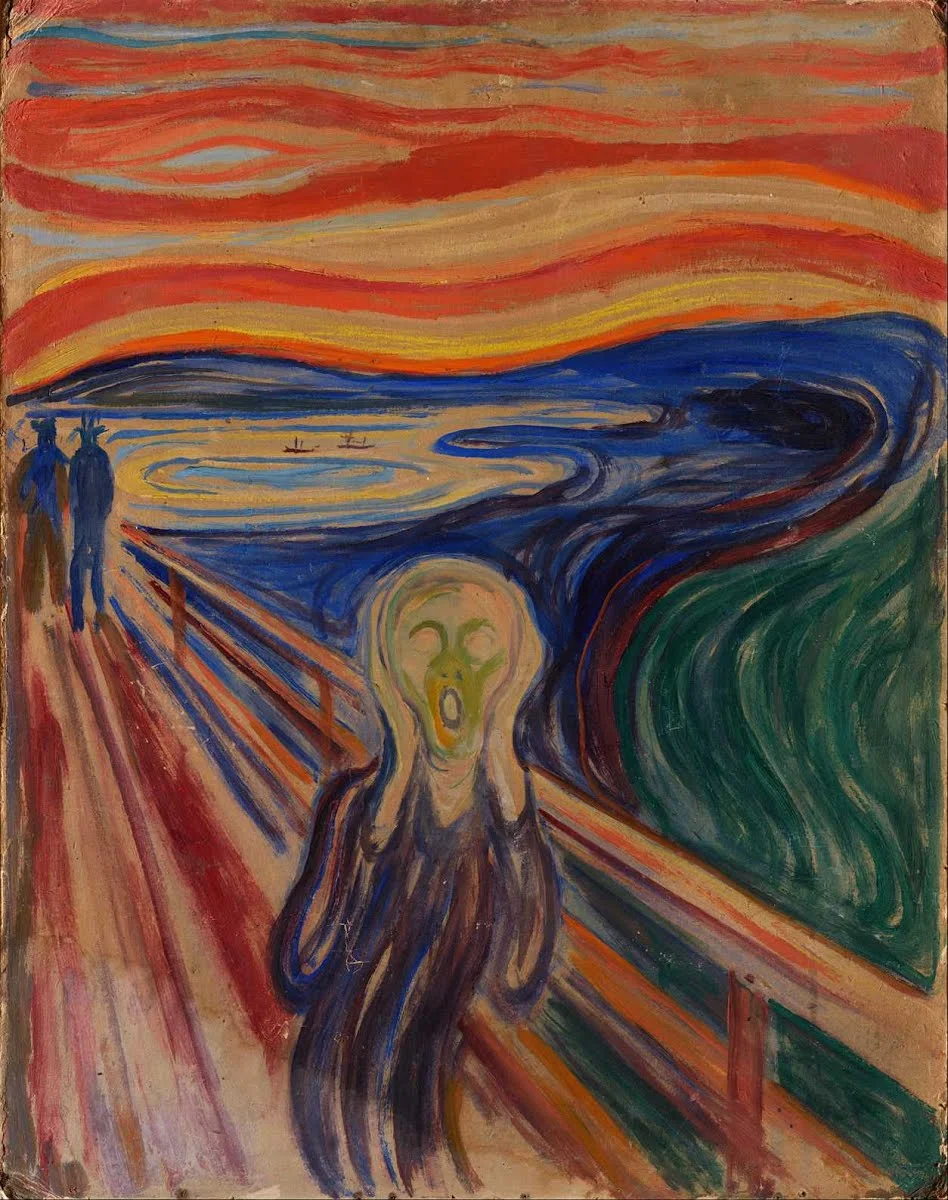
Llewellyn King: America's, and the world's, 'quaking hour' starts with Trump's threateningTweets
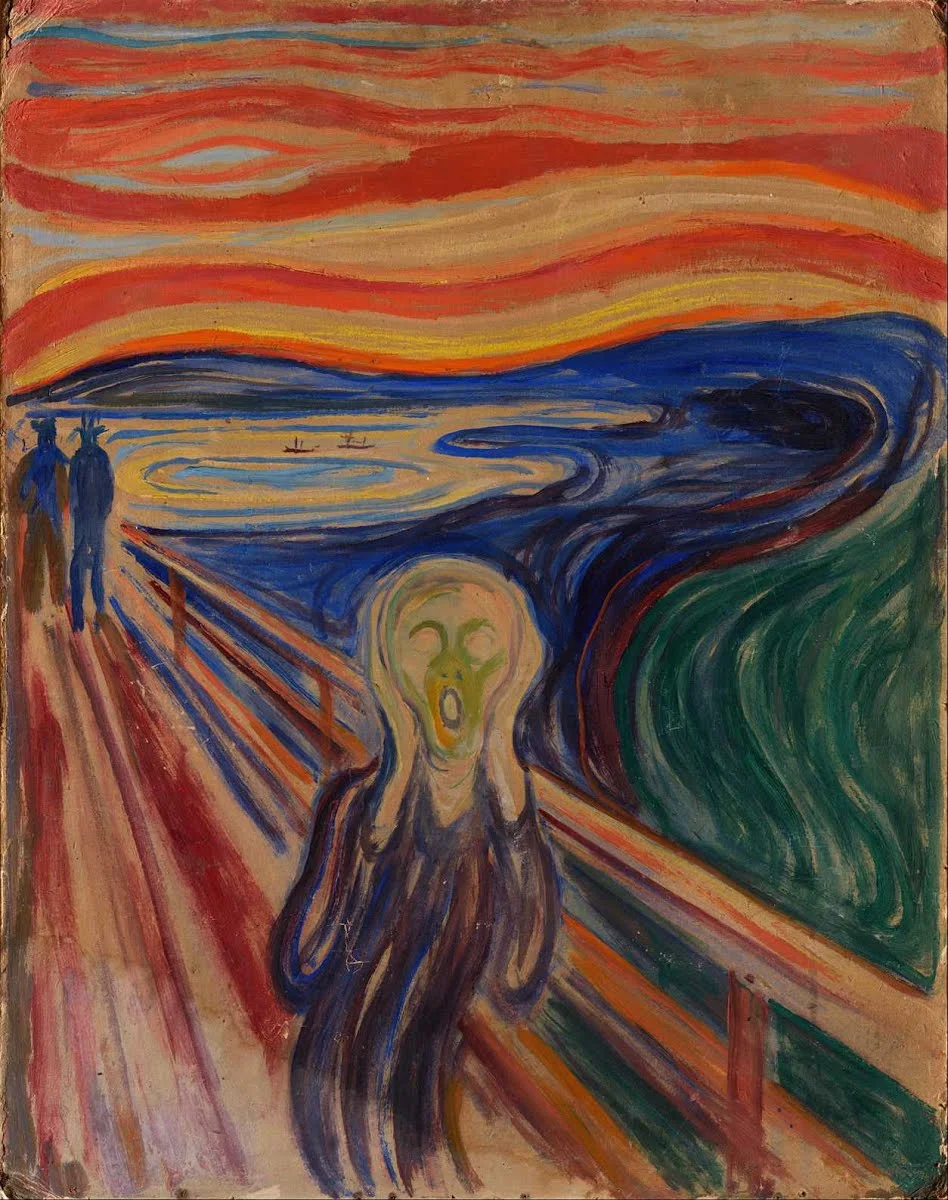
"The Scream,'' by Edvard Munch.
One can only imagine what it is like to be a Republican member of Congress in the Age of Trump. What should be a time of harmonious playing, with both houses secure with a GOP majority and a Republican about to assume the presidency, instead is one of jarring orchestration.
The problem is the score written by President-elect Donald Trump. It is discordant and inspires fear among them.
Senate Republicans are not afraid of their leader, Mitch McConnell, and their House counterparts do not quake when their leader, Paul Ryan, speaks. But when it comes to the president-elect, there is unspoken fear.
Republicans are not waking to the bright morning of governance, but rather to the “quaking hour” when they find out what Trump did to them overnight by Twitter or some other unplanned communication.
Did Trump ridicule one of them personally, attack a collective Republican action (like the attempt to close the Office of Congressional Ethics) or take aim against a heretofore Republican orthodoxy (like free trade)?
Has he promoted the interest of Russia over the well-grounded suspicions that Republicans on Capitol Hill have of Russia in everything, from hacking to aggression in Syria and Ukraine?
Has he offended 27 European countries in the European Union by supporting Britain’s plans to exit?
Has he, perchance, committed the United States to military action on the Korean Peninsula without consulting Congress or our reliable allies in South Korea. Does he know that the South Korean capital, Seoul, lies just 35 miles from the heavily fortified border with North Korea?
There is surely more to come that will cause heartburn with breakfast.
Not all Republicans are climate deniers, even though they may not have liked Democratic prescriptions. Most Republicans are free-traders, and the North American Free Trade Agreement was passed with Republican support. Are they going to be asked to throw in their lot with dismantling it? And what might they get in NAFTA Mark II?
The known points of stress between the Republicans and their leader-elect are now joined -- almost nightly -- by random pronouncements with huge policy implications.
Trump is exempt from the normal disciplines of politics. He is comfortable with his paranoia, therefore all criticism is the work of “enemies” or fools. He seems to have no icons, no heroes, and no respect for the institutions of U.S. governance or the history that underlies them -- hence giving the back of his hand to the intelligence agencies over Russian hacking.
If Trump does not like the message, he trashes the messenger.
This must sit badly but privately with congressional Republicans. They have fought hard over long years to protect the CIA, the NSA and the rest of the intelligence apparatus from being hobbled by the Democrats. So Trump’s cavalier dismissal of their findings must rankle, if not darn right alarm. The links between the intelligence community and leading Republicans are strong and enduring.
Trump will get his honeymoon. Republicans on Capitol Hill will support and explain and excuse the new president. But, in time, there will be a breaking point; a time when the music will change, when Republicans will speak up again for conservative orthodoxy and the going will get rough for Trump.
Tweeting is not governing, and the presidency is not reality television -- particularly when you are threatening to upend the world order on midnight caprice.
Beware the quaking hour. It breaks with the first keystroke of the morning, when the GOP finds out what its leader might have done to it and its verities overnight. It breaks for the person who has spoken up and has been ridiculed, singled out as weak.
This is not what was expected from a party winning both houses of Congress and the White House. It is a new dimension in American politics. And the quaking is not just for Republicans.
Llewellyn King is executive producer and host of White House Chronicle, on PBS. His e-mail is llewellynking1@gmail.com.
Raising tuna at URI
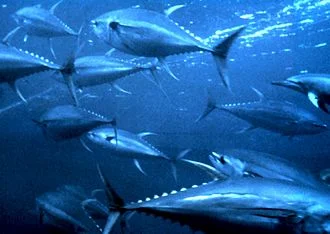
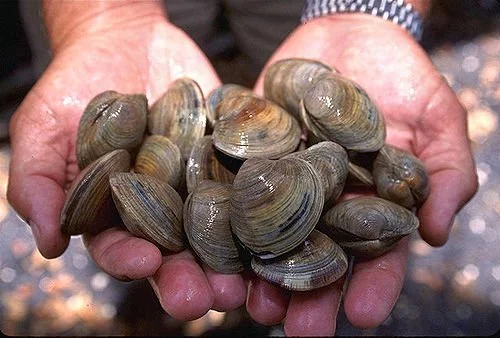
These yellowfin tuna are schooling in the ocean. Other yellowfin tuna are schooling in a giant tank at URI's School of Oceanography. It's exciting to watch.
Expanded from an item in Robert Whitcomb's Dec. 31 '"Digital Diary'' column in GoLocal24.com
Thank God for scallops. These shellfish have been a boon for New England fishermen– an offset to the tendency of fishermen to fish to near-extinction finfish, such as as cod, off New England to meet the world’s rapidly growing appetite for seafood.
But there may soon be big reinforcements for New England's fishing sector and they start on land. Experts in a facility on the campus of the University of Rhode Island School of Oceanography are raising yellowfin tuna in an exciting and potentially very lucrative aquaculture experiment. I recently had a tour of the URI Bay Campus facility, which has a giant tank where this is taking place. To see the tuna school in the tank is, well, neat.
If this experiment works, it could mean a lot of money for URI and for businesses, based, let us hope, in New England. Most of the aquaculture in southern New England has been with shellfish; there's been some salmon aquaculture in Maine. It’s nice to see more diversification.

At least the roof is still there

"Shine On'' (photo on aluminum), by Rebecca Skinner, in the current "Divergent Thinking'' show at Fountain Street Fine Art, Framingham, Mass.
David Warsh: The gapping Clinton-Obama differences on policy toward an aggressive Russia
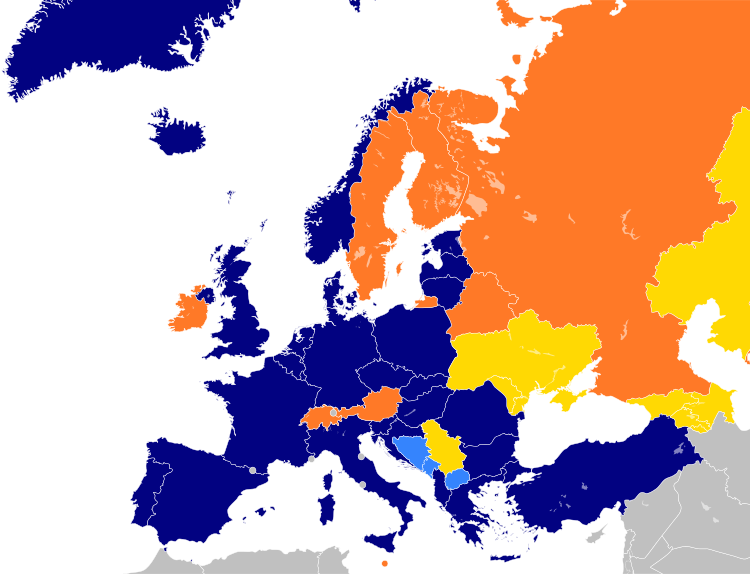
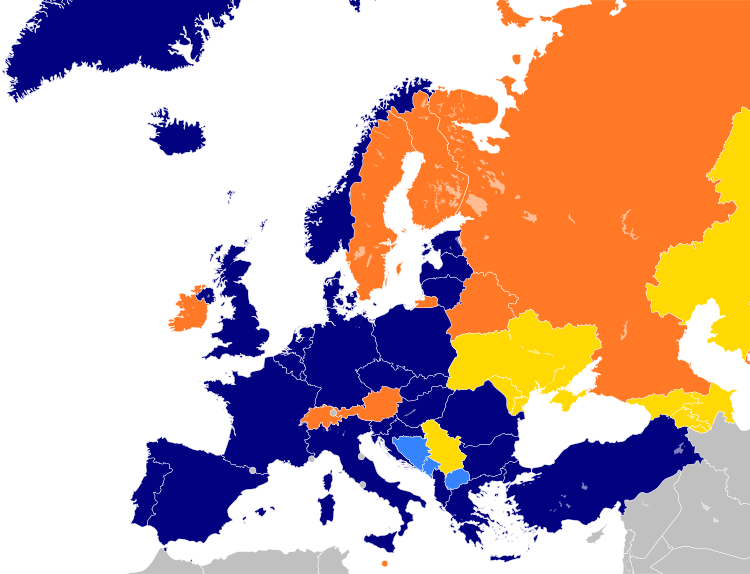
Blue nations are in NATO.
Given the high degree of partisan divide following the U.S. election, a discomfiting fact is that Donald Trump is likely to espouse many responsible positions in his role as president, even if he can’t make the case for them himself. This confusing state of affairs has not become obvious yet. But it is inevitable, and we will get used to it. A case in point is the current confusion about Russia.
Trump campaigned throughout the last year and a half on a promise to roll back the Viktor Yanukovych’s pro-Putin government in Ukraine in 2014. He never mentioned the much larger issue that lies behind it, the enlargement of the North Atlantic Treaty Organization to Russia’s southern borders, but that is likely what he meant.
In contrast, Hillary Rodham Clinton was equally clear throughout that she intended to increase the pressure on the Russian Federation. She now blames Putin (and FBI Director James Comey) for her loss.
As it happens, Mark Landler, White House correspondent of The New York Times, earlier this year gave us a very good account of her foreign policy views. Alter Egos: Hillary Clinton, Barack Obama, and the Twilight Struggle over American Power (Random House 2016) was written when Clinton was concerned to burnish her credentials as a hawk in anticipation of the general election.
The climax of the book is worth quoting at length. It comes in September 2014, when Obama invites a dozen foreign-policy experts to a dinner at the White House that has been “planned down to the minute”: an hour of discussion on the Islamic State; another on Russia, and, in particular, the proposal to supply Javelin antitank missiles to Ukrainian troops then fighting the Russian army. Mr. Landler writes:
“As the second hour began, Obama threw down a startling gauntlet.
“’Will somebody tell me, What’s the American stake in Ukraine?’ he asked his guests.
“Strobe Talbott [Deputy Secretary of State for seven years under President Clinton], who spent much of his professional life studying the Soviet threat during the Cold War, was slack-jawed. Preserving the territorial integrity of states liberated from the Soviet Union was an article in faith in Washington, at least for those of Clinton’s generation, who had watched the Soviets invade Hungary in 1956. Talbott argued that the West couldn’t simply stand by while Russia had its way with one of its neighbors. Stephen Hadley, who had been George W. Bush’s national adviser, echoed him. ‘Well, I see it somewhat differently than you do,’ Obama replied. ‘My concern is it will be a provocation and it’ll trigger a Russian escalation that we’re not prepared to match.’ That was a legitimate concern, Talbott granted, but not a reason to give Russia a free pass. ‘Having known Hillary for a long time,’ he told me [Landler wrote],’ I’m pretty sure she would have seen the invasion of Ukraine in a different way, mainly as a threat to the peace of Europe.”’
‘’A year and a day after that dinner, Talbott’s assumption was borne out. Standing on a stage of the Brookings Institution, of which he is president, Talbott introduced Clinton for the first major foreign policy speech of her 2016 presidential campaign. During a question-and-answer period afterward, she was asked how the West could put more pressure on Vladimir Putin. The United States, Clinton said, needed to dial up the sanctions and bring other pressure to bear. Though she didn’t specify it that day, her aides said that would include providing defensive weapons to the Ukrainians…
‘’Clinton wasn’t just talking about guns and butter. Washington, she said, urgently needed a new mindset to deal with an adversary that was going to plague the United States for years to come. It wasn’t so much new as back to the future: The White House would have to recruit old Soviet specialists –‘and I’m looking right at you, Strobe Talbott,’ she said – to dust off their playbooks and devise new policies for fighting Russian aggression. Like the Soviets, the Russians planned ‘to stymie and confront and to undermine American power whenever and wherever they can.”’
On this and many other issues, Landler writes, Obama and Clinton were the product of the experiences of their very different childhoods. She grew up in a middle-class suburb of Chicago, the daughter of a conservative Methodist businessman. Obama grew up in Hawaii, the son of a single mother who moved with him to Indonesia in fourth grade. That, and his “Kenyan roots,” created “a carapace of suspicion,” Landler writes. “Clinton viewed her country from the inside out; Obama from the outside in.” Maybe so, but Trump, who is mentioned twice, fleetingly, in the book, is president-elect.
Obama’s own instincts have served him well enough in foreign policy – in Iraq, Afghanistan and Syria. But the two secretaries of state he appointed, both of them frustrated presidential candidates, have gone on pursuing the agenda of an enlarged NATO military alliance as devised by Bill Clinton, which they inherited intact from George W. Bush. This is, of course, the deepest source of Russia’s grievance at the United States –Russian leaders thought they had received assurances from James Baker, secretary of state to George H. W. Bush, that there would be no expansion east if Germany was permitted to re-unite under the NATO banner. But the enlargement of the alliance that began in 1997 with Poland, Hungary and the Czech Republic admitted to membership, that precipitated a short war in Georgia in 2008, and another in Ukraine in 2014, is still going forward, zombie-like, in the present day.
NATO enlargement never became an issue in the presidential campaign. In a 10-part “Blueprint for Donald Trump to Fix Relations with Russia,” national security expert Graham Allison, former dean of Harvard University’s Kennedy School of Government, goes as far as he dares. “NATO is the greatest alliance in history and played an essential role in America’s Cold War victory. But today it stands in need of substantial reform.” Its expansion is not mentioned.
Leaders of the United States are henceforth going to have to become accustomed once again to living in a multi-polar world. That won’t be easy to explain, but Trump is going to have to try. Here is Graham Allison again, this time on the likelihood of war with China, from his article last year in The Atlantic, “The Thucydides Trap” (soon to be a book). He is reflecting on the vision of China’s role in the world that President Xi Jinping presented to a meeting of its political and military leadership in 2014:
“The display of self-confidence bordered on hubris. Xi began by offering an essentially Hegelian conception of the major historical trends toward multi-polarity (i.e. not U.S. unipolarity) and the transformation of the international system (i.e., not the current U.S.-led system). In his words, a rejuvenated Chinese nation will build a ‘new type of international relations through a ‘protracted’ struggle over the nature of the international order. In the end, he assured his audience that ‘the growing trend toward a multipolar world will not change.’’’
The nerve of those guys!
Obama is preparing to give a farewell address in Chicago on Jan. 10. Here’s hoping the explainer-in-chief leads with foreign affairs. As good an overall job as he has done in the the past eight years, he still has a lot of explaining to do.
David Warsh, a longtime economic historian and business journalist, in proprietor of economicprincipals.com, where this first ran.
Quite enough people
.From Robert Whitcomb's Dec. 29 "Digital Diary'' column in GoLocal24.com.
SomeNew Englandpublic-sector economic-development officials and business leaders say that they’re worried about slow population growth in New England; in Connecticut the population has actually slipped a bit in recent years. Well, we can always use more highly trained people to staff the many sophisticated enterprises in our region, and we need more young adults, but I have heard these tales of woe about New England’s sluggish population growth –among the lowest of any states in America – for decades and yet New England continues to be among the the richest parts of the U.S.
And it’s hard to argue that the world needs more people! Indeed, the swelling human population is destroying the planet’s eco-system at an accelerating rate. One of the nice things about New England is that it has less of the new sprawl and mess of the rapidly growing South, most of which remains the poorest part of the country and whose sparse social services are heavily subsidized by the richer, better run and more humane Northeast.
Rhode Island, for its part, is likely to lose a congressional seat because of its sluggish population growth. That’s just as well. The state would be better off merged with Massachusetts anyway.
Can respond via:
rwhitcomb4@cox.net

An open winter?

"Beaver Pond'' (oil on panel), by Sue Charles, at Alpers Fine Art, Andover, Mass.
That is, a beaver pond in an "open winter,'' with little snow. It has been open in most of southern New England so far this winter. Will we get clobbered soon? Or maybe we'll get most of our snow in March, as happened in 1956, after a very open winter until then? In any case, innumerable surprises lie ahead.
Meanwhile, "live every day as if it's your last, and someday you'll be right'' -- a line from the great movie Breaker Morant, set in the Second Boer War.

A time to repurpose

"Accumulations #4'' (mostly shredded household mail), by Jaynie Crimmins, in the group show "Reclaim Reprocess.'' at Flinn Gallery, Greenwich, Conn., through Jan. 18. The show brings together five contemporary artists' works "using discarded byproducts to repurpose materials and bring light to today's consumer culture and environmental waste,'' says the gallery.
This morning was still, clear and mild for this time of year in southeastern New England. Birds were singing as if it's April. Perfect conditions for walking your dog along deserted streets and clarifying your thoughts about what to do in this new year. That might include throwing away stuff that has outlived its usefulness or, as above, "repurposing'' it, or, for that matter, repurposing your entire life.
-- Robert Whitcomb
Response to:
rwhitcomb4@cox.net
Commuter rail for skiiers

This winter picture of (mighty?) Mt. Wachusett makes it seem considerably more impressive than it actually is: only 2,006 feet high. But this monadnock (a geological term for a single mountain on a relatively flat landscape -- named after southern New Hampshire's famed Mt. Monadnock) is impressive for its neighborhood.
Adapted from Robert Whitcomb's Dec. 22 "Digital Diary'' column in GoLocal24.com.
A special ski train now provides service to and from Boston’s North Station to Wachusett Mountain Ski Area, in Princeton, Mass., for a round-trip fare of $23; children under 12 ride free. The ticket includes a free shuttle from the recently opened Wachusett Station, in Fitchburg, to the mountain. What a nice idea: Bringing commuter rail service to skiing.
The trains have ski and snowboard racks. For more information, please see this page of the MBTA Web site:
http://www.mbta.com/riding_the_t/whats_new/?id=14107
More trains to more places in our tight little region, please. But at least New England has far more train service than most of this car-dependent country.

Jill Richardson: Fasten your seat belt: 2017 may be led by a man with Narcissistic Personality Disorder

Via OtherWords.org
If you thought 2016 was bad, I have bad news: Buckle up.
Hopefully 2017 won’t bring the deaths of more beloved celebrities, and I doubt we’ll see the killing of any more famous gorillas.
But one element that made 2016 terrible isn’t going anywhere. It’s actually getting worse.
You can call it the Trump phenomenon, polarization among Americans, or whatever you want to call it. From my vantage point, Trump’s transition team is making some troubling decisions that are going to reverberate well into next year, and the ones to come after it.
Even before the man’s in office, Trumpocracy is already beyond my worst nightmares. It’s so awful that it’s hard to even keep track of everything I need to be angry about. But here’s my best attempt.
First, there’s the strange personal behavior of the man himself.
Already some psychiatrists have raised alarm that he exhibits traits seen in people with Narcissistic Personality Disorder. (See picture below.) They cannot ethically diagnose him without examining him, but they’ve called for him to be evaluated. One area of concern to them is his thin skin and impulsiveness. Instead of paying attention to the tragedy in Aleppo, for example, he took to Twitter to attack a comedy show and a magazine that gave his restaurant a lousy review.
Second, he isn’t bothered by facts, or perhaps cannot tell the difference between truth and lies. When the FBI and CIA agreed that Russia interfered with our election, he refused to believe them.
But meanwhile he claims that millions of people voted against him illegally, which got a “pants on fire” rating from Politifact.
Perhaps if he’d attended those boring intelligence briefings, he’d have the facts about Russian hacking, but he claims he’s too smart to bother with those.
This is a security threat. The Russians didn’t just hack the Democrats — according to more recent reports, they hacked the Republicans, too. They have leverage against Trump’s own party. Trump needs to know about information that could possibly be used against him, or against our country.
Third, there are his conflicts of interest. Since Trump has so far refused to put his assets in a blind trust, there’s the risk that Trump will use the presidency to enrich himself and his family.
Instead, he’s placed his children at the helm of his business empire, even as he also includes them in official government business. That’s not OK.
Previous presidents went to great lengths to avoid even the appearance of conflicts of interest. Trump doesn’t care. He’ll continue to do as he pleases up to the point of breaking the law, and perhaps beyond it if he thinks he can get away with it.
After all, he knows his Republican Congress probably won’t impeach him, no matter what he does.
Fourth, there are his appointments. They run the gamut from white supremacists to anti-environment extremists. He so often places someone who wishes to destroy an agency in charge of that very agency that Saturday Night Live joked he picked Walter White, the meth dealer from TV’s Breaking Bad, to lead the Drug Enforcement Administration.
As we enter 2017, I’m not among the crowd cheering the end of 2016. Whatever comes next, it’s not going to be good. Let’s prepare to fight our way through this thing
Jill Richardson is a columnist for OtherWords.org.

"Narcissus, '' by Caravaggio, shows the Greek mythological youth looking at his own reflection.

Will these deals raise economic 'animal spirits'

“The Proposition,’’ by William-Adolphe Bougureau (1825-1905).
From Robert Whitcomb's Dec. 22 "Digital Diary'' column in GoLocal24.com.
I admire the very hard and patient labor of Rhode Island Gov. Gina Raimondo and her colleagues (presumably working with Providence Mayor Jorge Elorza’s administration) to bring some highly respected companies and quite a few jobs to Rhode Island.
The biggest recent employee hauls, all slated for Providence, will be hundreds of jobs (to start) coming to Wexford Science & Technology’s project in the 195 relocation area; 300 at Virgin Pulse (maybe in the Providence Journal Building); 100 at General Electric, and 75 at Johnson & Johnson. The hope is that those well-paid employees will be just the beginning of thousands of well-paying ones arriving over the next couple of years. (City and state official are apparently still working to bring in some Pay Pal operations, too.
We’ll see.
It was gratifying that J&J cited the presence of Brown and RISD as a reason for the project. The state hasn’t gotten nearly enough leverage from its higher-education establishments, or from its proximity to(and lower costs than) the brainiac center of Greater Boston.
A lovely change from the 38 Studios approach.
Of course, the new arrivals will each get millions of dollars in “tax incentives’’ to come to Rhode Island -- incentives that everyone else must pay for. Such incentives are the rule in every state to varying degrees. Two big recent examples – Indiana (pressed by Donald Trump) bribing the Carrier Corp. to not send 800 jobs to Mexico and Massachusetts giving many millions of dollars in goodies to General Electric to move its headquarters to Boston’s waterfront.
Companies that have loyally stayed in their states and paid taxes there without special favors must be irritated. But life is indeed unfair – and probably getting more so. The rich get richer and the poor get…. Get used to it, especially over the next four years.
The idea behind the legal bribery is that not only will these big, rich companies bring in new jobs in themselves but they’ll give many local vendors a lot of work and thus incentives to hire more people. That means not only vendors already in the area but also new ones coming in to serve the big shots. The old “multiplier effect’’.
And just by having such prestigious enterprises in Rhode Island as the ones lured by the Raimondo administration, it is argued, will boost the “animal spirits’’ of local and other business people and investors about Rhode Island. The hope is that such optimism/local pride will then help create, or lead to the import of, more enterprises, in a virtuous circle.
Will this work enough in all too cynical and negative Rhode Island to turn around the state for the long term? Who knows for sure, but I give a lot of credit to Ms. Raimondo and her staff for their labors while being denounced from all sides by those who provide few if any practical alternatives.
Seeds of hope

"There are two seasonal diversions that can ease the bite of any winter. One is the January thaw. The other is the seed catalogues."
-- Hal Borland