
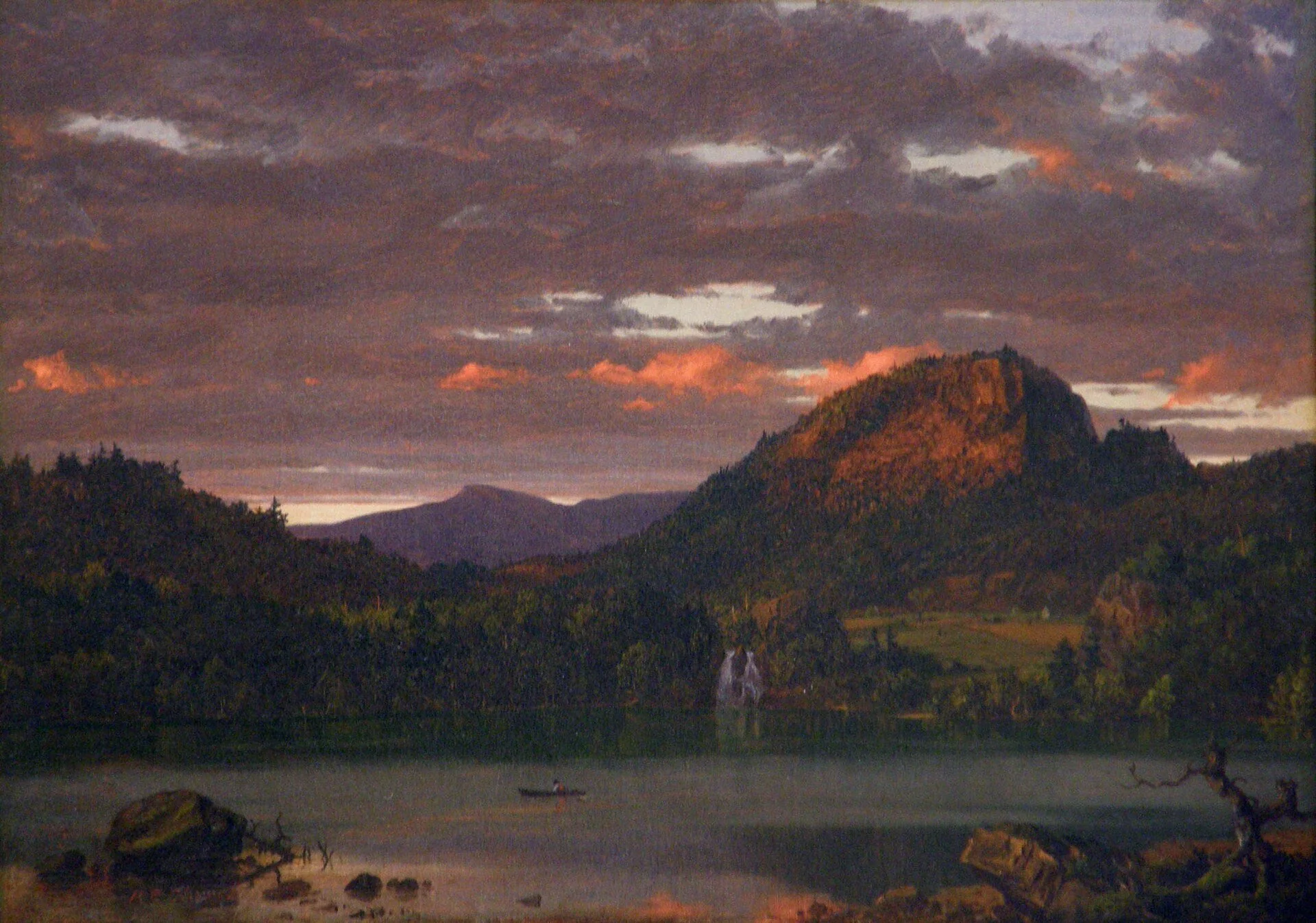
Vox clamantis in deserto



Retired still a hero
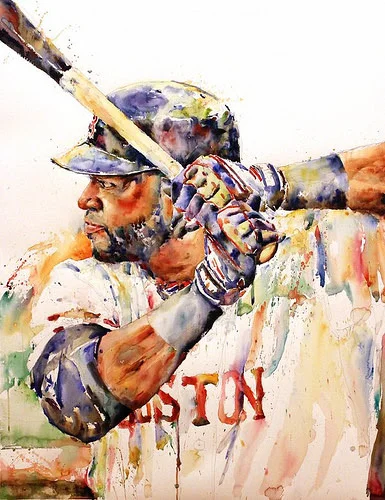
"Big Papi'' (David Ortiz) (watercolor), by Richard Sullivan, in "New Members Show 2017'' at Copley Society of Art, Boston, Jan. 12-Feb 9.
Llewellyn King: 2016's big lies, myths and narratives
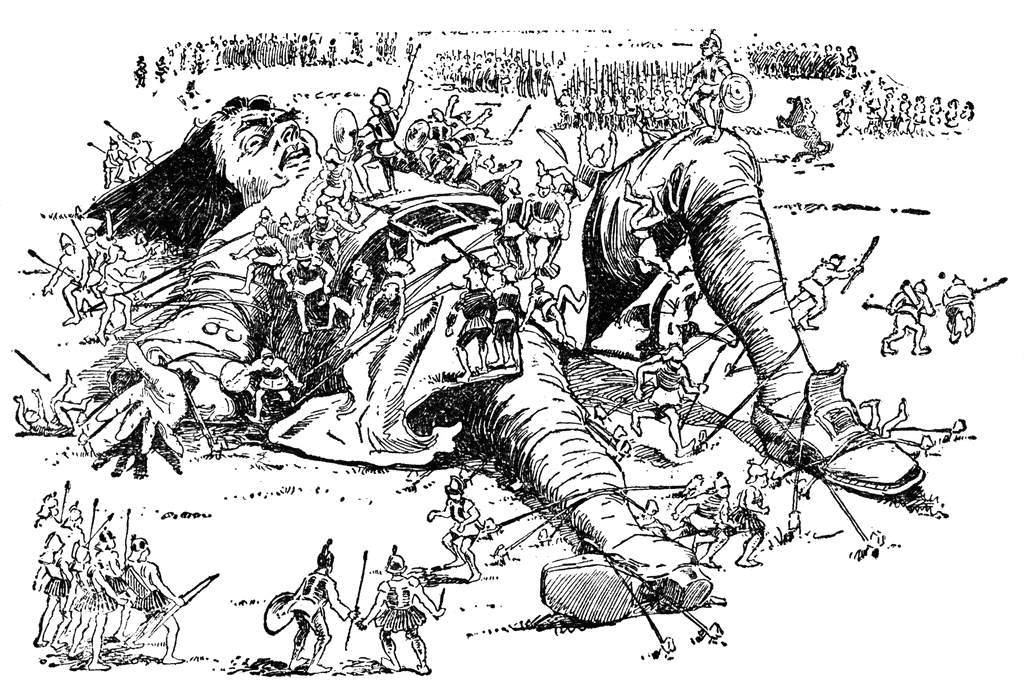
Gulliver tied down by the Lilliputians.
So what then were the big ideas of 2016?
The great, world-changing actions are the decision of Britain to leave the European Union – Brexit -- and the election of Donald Trump as president of the United States. Both pointed to electorates that had had it with the status quo and the elites who run things.
The victors in these elections relied on and triumphed with a simple strategy: a propaganda coup. They told the electorate that things were worse than they actually were.
Start with Britain. Those who campaigned to take Britain out of Europe took an ancient, maybe primal, desire of an island people to remain unattached and exploited it with cunning, disinformation and suspect numbers.
Britons were, this narrative claimed, suffering under the yoke of European bureaucrats. Yet if you ask people in Britain -- let us remember that this was primarily an English and (less so) Welsh issue and not a Scottish or Northern Ireland one -- to tell you how they have been hurt by the European Union, they cannot tell you.
Britain is one of the most successful nations in Europe and inmany ways the most influential. From architecture to banking to theater, Britain leads the way. Now that is to be ended for small-nation status and mythology about sovereignty.
The nation that has given so much to the world has voted to be insignificant and poorer, all because of leaders telling them that they were oppressed by Europe in unquantifiable ways.
A further mystery: Why have American conservatives, almost en masse, applauded Britain’s decision to embrace irrelevance?
During his presidential campaign, Trump used the same argument as those who wanted Britain to vote to roll back history: Things are awful and getting worse. This postulated that the government has fallen into the hands of people who cannot administer, and that the United States has crushing unemployment.
When it came to foreign relations and trade, Trump averred that our negotiators are feckless pushovers, always ready to cave. Not so. Around the world, we are respected for our powers of negotiation and the depth of expertise we bring to the table.
The Hobbesian Trumpian view of things contrasts with unambiguous facts: The nation's economy has been growing, unemployment is below 5 percent and there are shortages in many blue-collar fields, and manufacturing is growing.
Like the Leave campaign in the United Kingdom, Trump has emphasized the role of regulation in holding back economic expansion. This is the Gulliver’s Travels vision of the economy; that there is an economic giant yearning to be free and to lift economic growth when the pesky regulations that keep him tied up are ditched.
Well, perhaps some. The historical picture of deregulation is mixed.
Deregulation of oil and natural gas -- particularly with gas – led to an increase in supply even before the hydraulic fracturing (fracking) boom.
While airline deregulation resulted in many more cheaper -- and more unpleasant -- flights, it also left many small cities with fewer and more expensive ones.
Electric utility industry deregulation has been a mess, resulting in weaker companies, stranded investment and no consumer dividend.
Drug regulation needs streamlining but remains essential.
Banks howl at regulations and go off the rails when they are slackened, as with the savings and loan scandal and the mortgage debacle. Maybe when greed is a profession, regulators are needed.
Regulation is not across-the-board deleterious. Relaxing some will help some national goals, like building more pipelines to move the hydrocarbon bounty to market. But keeping pipelines safe is a regulatory necessity.
The Trump administration will come to power burdened with weight of expectations that it has ignited.
This was the year where shaded facts, political myth and old-fashioned lies dominated the discourse.
Expectations levitated in 2016 will fall to earth in 2017 -- softly one hopes. As for the big idea? It has not yet been Tweeted to us.
Llewellyn King is executive producer and host of White House Chronicle, on PBS. His e-mail isllewellynking1@gmail.com.
App will tell you if you're drunk
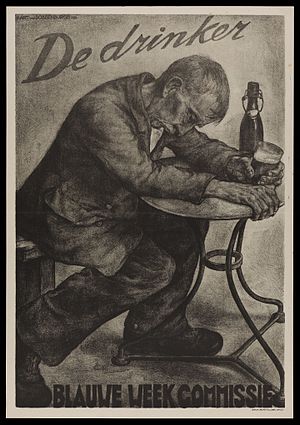
The Worcester Telegram reports:
“Brainiacs at Worcester Polytechnic Institute have developed a first-of-its-kind smartphone app that can tell its user if he or she has had too much alcohol to drink without the use of blood, breath or sobriety tests.
“WPI associate professor of computer science Emmanuel Agu conceived of the app idea, which predicts a person's blood alcohol content with 90 percent accuracy, on average, and will actually ‘buzz when you're buzzed."’
“Dubbed AlcoGait, the app runs in the background on the user's smartphone, continuously analyzing the person's walking pattern, or gait, for anomalies. Users can track their intoxication level to decide when to stop drinking, and the app will send a text message and make the phone buzz when the user's gait indicates he or she has likely exceeded the legal limit.’’
We all hope that this device will be on the market by New Year’s Eve next year.
Robert Whitcomb: Reporting in pre-glitz Boston
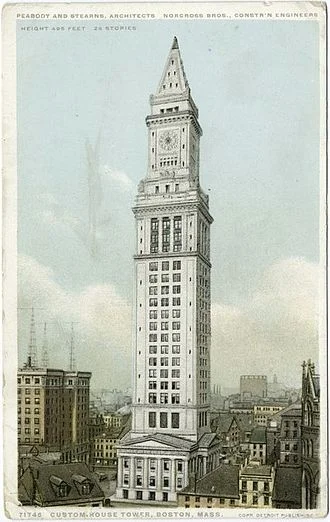
Soon after I had graduated from college, in June 1970, a friend suggested that I try to get a job at the Boston Herald Traveler (RIP), an old Yankee establishment newspaper that also had a lucrative TV and radio station. I applied, but first, the city editor, the always unflappable and wry Bob Kierstead, said that I should report and write a research project -- a little book -- for the paper to prove I could report. The book, on Boston politics, history and demographics, was meant to help the paper’s reporters cover the next mayoral and other local elections.
Mr. Kierstead found the little book useful enough to hire me a reporter. I wish that I could find what I wrote and compare the reporting in it with the very different (much glitzier and more Manhattanish) Boston of today. Back then, Boston had a down-at-the-heels quality that evoked the Thirties, or even Dickens’s London.
Then began a crazy year of covering all kinds of stuff – from train derailments, murders, industrial-strength arson, potheads lost in the White Mountains, race and student riots, the start of Boston’s busing/desegregation crisis and the opening of Walt Disney World. It was one of my most vivid periods and showed me what I could do on deadline and often in considerable chaos on the road.
I thought that it would be just an occupational side trip, whence I would return to school to perhaps get a doctorate in history or start a small business. But I found I had a talent for quickly if roughly understanding people, places and situations and concisely writing down fast what I had so quickly learned. What’s more, back then, I liked to travel (much more than now). Journalism spoke to these things. A college history major, I looked on my work as writing current history. Or, as the late editor of The Washington Post, Ben Bradlee, put it, “history on the run.’’
But I knew I couldn’t stay at the Herald Traveler because it was likely soon to lose its FCC license for its very profitable TV station, which, with its sister radio station, had been subsidizing the newspaper. The case went up to the U.S. Supreme Court, where the owners lost for good; the paper's assets were sold shortly thereafter to Hearst, for whose sensationalist Boston tabloid, the Record American, I had worked in a summer job as an editorial assistant/gofer.
So I applied to the Columbia University Graduate School of Journalism, was admitted, got an economics fellowship and off I went, at the end of the summer of 1971, to New York. This was just after the Pentagon Papers were printed and Nixon took America off the gold standard. The latter led me to interview for the Herald Traveler a covey of famous economists, most notably Milton Friedman and John Kenneth Galbraith, shortly before I left for Manhattan.
It was fun to have such access to celebrities.
And it was a relief to leave the stuffy walkup apartment I was renting on the Cambridge-Somerville line from the brother of a former girlfriend.
Robert Whitcomb is editor of New England Diary.

Chris Powell: Of nullification in stoned America; don't fish for immigrants from the Middle East

Under legislation proposed by Connecticut state Senate Majority Leader Martin Looney, the Nutmeg State would legalize and tax marijuana.
Of course, marijuana is barelyillegal in the state now, possession of a half ounce or less having been reducedin 2011 to a mere infraction liable to a small fine, while charges of possessinglarger amounts are eligible for resolution through probation. Indeed, marijuanause in Connecticut has become so common that police, prosecutors, and courtsreally don't want to bother with it anymore, though sale and cultivation of thedrug remain felonies, at least technically.
Looney, a Democrat from New Haven, is a big-government liberal and his mainobjective with the marijuana bill seems to be taxation, as he advocates themarijuana-business system recently adopted in Colorado, which is raising morethan $100 million a year for state and local government there. That kind ofmoney could finance golden parachutes for a few more failed football coaches atthe University of Connecticut.
But legal marijuana is giving Colorado more than tax money. It is also producinga huge increase in students coming to school stoned, since, as with liquor andcigarettes, limiting sales to adults doesn't keep young adults from procuringstuff for those under 18.
With legal marijuana Colorado also has built a state-sanctioned and closelyregulated industry on the violation of federal drug law, which still classifiesmarijuana with the most powerful of the illegal drugs.
While President Obama, violating his constitutional obligation to execute the law faithfully, has toldhis Justice Department to suspend marijuana-law enforcement in states that don'twant it, a different president could take his obligations more seriously.
Nothing obliges Connecticut to criminalize any drugs; the state is free todecriminalize marijuana and anything else and leave the issue to the federalgovernment, which maybe someday will wise up and simply medicalize the wholedrug problem, the "war on drugs" having long been only a fantastically costlyemployment program for police, prosecutors, criminal-defense lawyers, prisonguards, parole and probation officers, and social workers.
But basing a retail industry and tax system on the violation of federal law goesfar beyond mere decriminalization and becomes nullification -- the sort of thing that New Haven has been doing for years by issuing identification cards to illegalaliens to facilitate their violation of federal immigration law --"state'srights" stuff that impairs national unity, stuff that liberals used to deplore whenconservatives did it to thwart the Constitution and federal civil-rights laws.
In coming months states governed by conservatives may note the success ofliberal nullification in Colorado, Connecticut and elsewhere and implore thenew president, who is suspected of having conservative if not reactionaryinstincts, to ignore laws that he doesn't like, starting with abortionrights. The next step will be secession, though in light of how much liberals andconservatives have come to hate each other lately, maybe this time the country willagree to divide peacefully.
xxx
FISH ELSEWHERE FOR IMMIGRANTS: The mass murder committed at the Christmas marketin Berlin by a Tunisian immigrant is not quite the vindication claimed byPresident-elect Trump for banning immigration by Muslims per se.
For government to restrict people according to their religion isplainly unconstitutional. But the atrocity in Berlin is a reminder of the civil war raging in Islambetween modernity and medievalism, a cultural war as much as a religious war, and a reminder that immigration law must protect the United States againstcountries with benighted cultures.
The United States can fish for immigrants in ponds with or without alligators. It can have all the Latin Americans and Asians it wants, or lots of MiddleEastern religious crazies, fascists, and terrorists. The country needn't repeatEurope's deadly mistake.
Chris Powell is managing editor of the Journal Inquirer, in Manchester, Conn., and an essayist.
Allan Klepper: Down with Uptalk
Though not my intention to preach,
A most annoying pattern of speech
Is uptalk; an upward inflection,
Takes voice in a questioning direction.
It’s high rising terminals in the U.K.,
In California, how Valley Girls say,
Or Aussie question intonation for sure,
Or just by the excessively insecure.
Many speech pathologists agree,
Uptalk lacks in authority!
Not in U.S. Exec. Boardrooms as yet:
When millennials take over – you bet!
-- Allan Klepper
Jim Hightower: Perry to run Energy Dept. for crony capitalism
Via OtherWords.org
Rick Perry has taken quite a tumble since being governor of Texas. He was a twice-failed GOP presidential wannabe and then ended up being a rejected contestant on Dancing with the Stars, the television show for has-been celebrities.
But now, having kissed the ring of Donald Trump, Perry is being lifted from the lowly role of twinkle-toed TV hoofer to — get this — taking charge of our government’s nuclear arsenal.
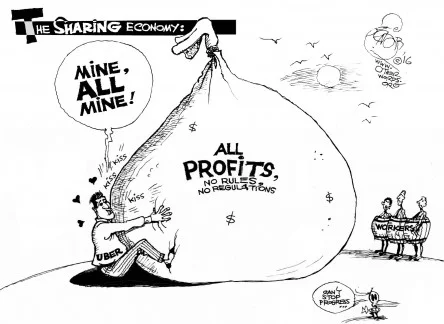
That’s a position that usually requires some scientific knowledge and experience. But as we’re learning from Trump’s other Cabinet picks, the key qualification that Trump wants his public servants to have is a commitment to serve the private interests of corporate power.
That’s why Perry — a devoted practitioner of crony capitalism and a champion of oligarchy — has been rewarded with this position.
As governor, Perry went to extraordinary lengths to let the fossil-fuel giant Energy Transfer Partners run a pipeline through the ecologically fragile, natural wonders of Texas’s pristine Big Bend region. In fact, he rammed it right down the throats of local people, who were almost unanimously opposed.
Perry then accepted a $6 million campaign donation — i.e., a payoff — from the company’s corporate boss, who later made Perry a paid member of the corporation’s board of directors.
Perry also privatized a state-run, low-level nuclear-waste facility, turning it over to Waste Control Specialists, a firm owned by a major campaign contributor. Then he let the corporation double the amount of waste dumped there, while reducing its legal liability for damages.
Finally, after taking even more cash from the owner, Perry pushed to let him put high-level nuclear waste in the dump.
Rick Perry has zero expertise or experience for the job of energy secretary, but he has plenty at stiffing the American people and our environment.
Jim Hightower is a radio commentator, writer, public speaker, editor of the populist newsletter The Hightower Lowdown and a member of the Public Citizen board.

Feeding our color hunger

A Red-Bellied Woodpecker in Southbury, Conn.
-- Photo by Thomas Hook.
We thirst for color in the winter, and many birds give it to us. That's a big reason that we set out bird feeders -- to feed our color hunger. Of course, in the process we also end up feeding the squirrels, but they put on a manic show that can also help alleviate our seasonal affective disorder. And the ability of so many creatures to survive the brutality of winter may remind us that we, who have it so much easier, can do so too.
Rock is the Maine thing

"Toward Cranberry'' {Island, Maine} (oil on Lexan panel), by James Mullen, at Alpers Fine Art, Andover, Mass. The Maine Coast must be among the most beautiful coasts in the world. If only the water were a little warmer.

Maggie Kimball: Tree of heaven's hellish effects on the environment

The tree of heaven, known also as stinking sumac, (USDA photo)
Adored for its beauty and ease of growth, and despised for its harmful, everlasting effects, the tree of heaven truly is glorious. Although it's deserving of our admiration for its aesthetics, New England statesmust hop on board to regulate the distribution of this invasive tree, to combat its negative impacts within diverse ecosystems.
With a name like “tree of heaven,” one could form a mental picture of a gorgeous, heavenly tree. One with luscious budding flowers, attractive bark and magnificent leaves extending from a sky-piercing trunk. These imaginative assumptions are true for tree of heaven’s appearance. Its godly strength and resistance to disturbance lets it stand out as a glimpse of a lifeform within a concrete jungle.
While in a city setting this tree is able to thrive, but its ability to also thrive in environments holding an abundance of native plants makes this tree destructive. What lacks from its physical appearance is this species’ inner demons that are far more damaging than its exterior suggests.
Within a diverse ecosystem, this tree will not only outcompete surrounding species for resources, it will actually poison and kill them.
The tree of heaven, known also as Chinese sumac and stinking sumac, is an aggressive invasive species taking over the United States state by state. According to the U.S. Department of Agriculture, tree of heaven has invaded 41 of the 50 states and has extended its reach through much of Canada, since its introduction, in 1784.
First planted on an estate in Pennsylvania by William Hamilton, it was introduced to New York City some 40 years later. Since its preface to city streets, tree of heaven has been able to establish itself as a pioneer species, successfully surviving amongst minimal resources where other species cannot. It has the ability to tolerate saline soils, air pollution, a range of soil pH and drought, making it a perfect tree for city habitat.
Where air pollution is highly concentrated and natural flora is scarce, it's incredibly important to find a species that can withstand such conditions. In a flourishing, diversified area with optimal resources for many species to live in, such as southern New England, this plant becomes a noxious invader. A characteristic of some highly invasive species is allelopathy: a host of chemicals a plant releases into the environment that act as a germination and growth inhibitor.
According to The Nature Conservancy, the bark, roots and leaf litter of tree of heaven contain an allelopathic chemical known as ailanthone. The tree uses this biochemical to prevent other plants from establishing and also disrupts the growth rates of existing native plants.
Like many invasive species, tree of heaven likes to establish itself in disturbed areas such as forest edges, roadsides and wastelands. This is a cause for concern because if it has established itself in an area such as a forest edge, it will most certainly encroach on the native flora, and over time reduce the diversity of plant life in the area.
A change in plant diversity will alter the abundance and diversity of wildlife within the area, because natural food sources will be removed. Not only will it kill the surrounding species, by releasing up to 400,000 wind-dispersed seeds a year, according to the U.S. Forest Service, this tree will be able to further establish itself in the disturbed open areas where it had previously killed off native plants.
Although tree of heaven is registered as an invasive species, Rhode Island has failed to prohibit the human distribution of this invasive species. The state of Rhode Island is in essence allowing greater potential for the tree to invade vital ecosystems that Rhode Islanders hold dear, and putting native species in danger.
I urge the Rhode Island Department of Environmental Management to list the tree of heaven as not only an invasive and noxious plant, but to also prohibit the possession, transport, planting and propagation of the tree to further ensure the safety of Rhode Island’s native plants.
Maggie Kimball is a University of Rhode Island student studying wildlife conservation and biology.

But how to store it?

About 10 percent of New England’s electrical power now comes from renewables and it’s growing at a good clip, mostly thanks to wind and solar power. That means less reliance on fossil fuel from outside the region, including the gas produced by fracking (that kind of drilling does poison some water supplies, by the way.)
The big problems in accelerating this push toward clean power are that the region’s 20th Century power grid is not set up well for the variability of electricity from solar and wind; it lacks large-scale ways to store electric power from such fluctuating sources.
If engineers and scientists can figure out how to efficiently store massive quantities of electric energy from renewables, aided by, for example, better forecasts of sunshine and wind, the region could finally become electricity-independent. Until then, we’ll have to take the natural gas that we can, despite the complaints of gas-pipeline NIMBYs who offer no plausible suggestions on how to keep the lights on and a functioning local economy without it.
David Warsh: The principle of reciprocity
SOMERVILLE, Mass.
I learned the Golden Rule as a child from the New Testament of the Bible. It was among the chief teachings of Jesus: Treat others how you yourself want to be treated. Soon I learned its prohibitive form as well: Don’t do things to others that you yourself would resent. Since then I’ve learned that the rule was nearly universal in early civilizations: Egypt, China, India, the Near East, Greece, Persia, Rome.
Religion has retreated considerably since I was young – Christianity in particular. New disciplines have advanced from the social sciences to fill in some of the resulting gaps; arts & letters and, of course, the entertainment industry, fill others. The field with which I am most familiar is called, somewhat misleadingly, game theory, or, more plainly, strategic thought. The science-minded among us long ago translated the Golden Rule into the Law of Reciprocity. Thomas Schelling, one of its major prophets in the years since 1945, died earlier this month.
Schelling was one of those who showed that applications of the principle of reciprocity lay at the heart of relations among nations, tribes, neighborhoods, as well as persons. Conflicting interpretations of it today are at the heart of tensions among the United States, Russia and China. It was 38 years ago that China embarked on an ambitious program of economic reforms, and 25 years ago that the Soviet Union ceased to exist. Fifteen new nations, including Russia, emerged instead. To be reminded of what happened then, see this concise and wise account of that complicated event by Mary Dejevsky in London’s Independent.
It might be said that the communist experiment failed because it violated the Golden Rule in so many different ways, from horrific to banal. Equally well it might be said that the Russian Revolution succeeded because a highly motivated cadre of citizens imagined putting into practice another biblical injunction by replacing a constitutional monarchy with authoritarian rule. This religious norm was translated into social science “law” by Karl Marx, in the early years of the escape from religious authority in the Europe.
“From each according to his ability, to each according to his need” is a basic principle of sharing that animates much of human family life, and has been generalized with great restraint to other social circumstances, though hardly all. You have only to look at this Wikipedia entry to see how little progress has been made in understanding the project.
2017 is going to be a banner year for exegesis. Congress is planning to probe U.S. relations with Russia. Russia is planning to probe itself, in connection with the centenary of the October Revolution. Something will be learned in each case. If you’re among those becoming bored with Trump News All the Time, stay tuned here for developments in social science.
David Warsh, a veteran business journalist and economic historian, is proprietor of economicprincipals.com.
'Longing for the tomb'
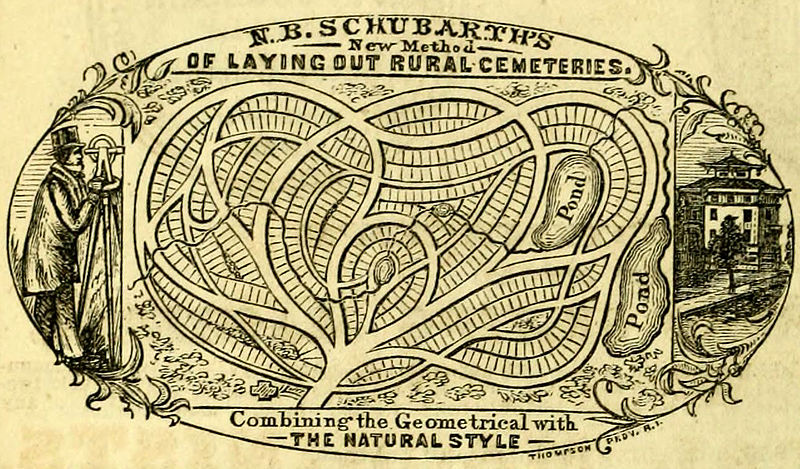
"Through winter-time we call on spring,
And through the spring on summer call,
And when the abounding hedges ring
Declare that winter's best of all:
And after that there's nothing good
Because the spring time has not come--
Not know that what disturbs our blood
Is but its longing for the tomb."
-- W. B. Yeats
Charles Pinning: Christmas amongst the chosen in R.I.
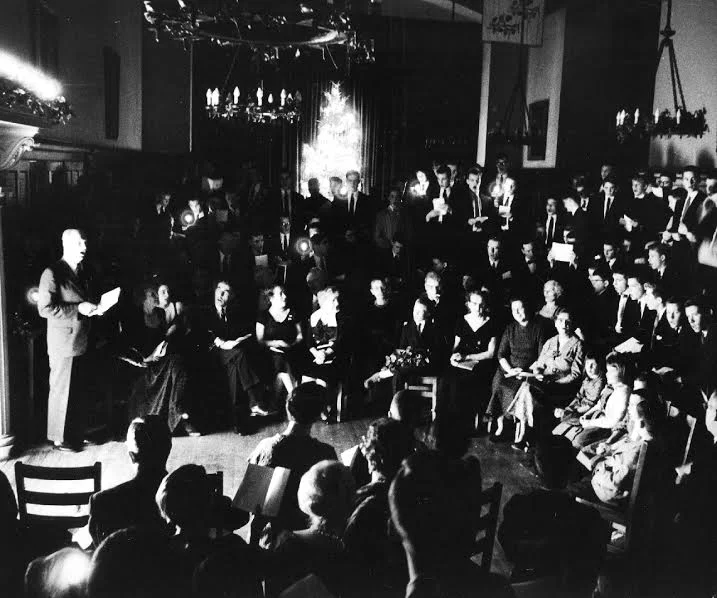
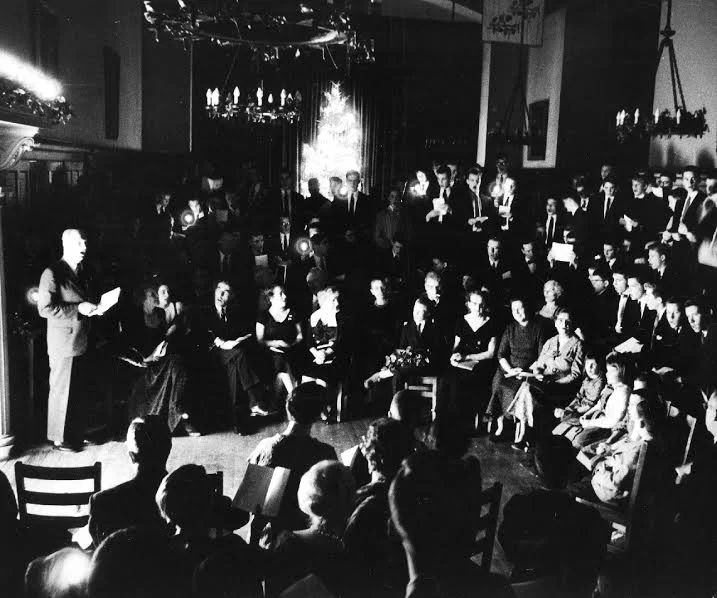
Yule Night in King Hall at St. George's School circa 1960. (Photo courtesy of St. George's School Archives.)
There was no mistaking now that it was winter at St. George's School, in Middletown, R.I. The trees bare against a streaked pewter sky, the cold of frozen ground passing through your leather heels. Up the hill from the ocean came the salt air. Snow crystals gathered on bare spots in the grass and blew across the walkways.
But we were adolescent blast furnaces, roaring through the night, the tips of our wet hair freezing as we whisked coatless across the quadrangle in ties and sport coats toward the Gothic chapel that loomed above our world.
We took our places in the dark wood pews, looking at each other across the aisle, snuffling and glistening in the sudden warmth. We made faces and shot spitballs. We indulged in vile sign language.
Two nights earlier, the Christmas festivities had begun here with the singing of hymns and the appearance of Mary and Joseph and the Baby Jesus placed in a manger in front of the altar, surrounded by shepherds and angels.
But tonight was our more usual 15 minutes of chapel prayers before repairing to the medieval majesty of King Hall dining room, decorated with garlands and wreaths for Yule Night – an ancient and more pagan ritual before we were set free for vacation the next morning.
A faux boar’s head with an apple in its mouth was borne into the hall by boys costumed as Elizabethan pages. Following them, the Master and Mistress of the Feast. The Jester followed with a squirt gun. A Christmas tree glowed on the Head Table’s platform.
Beneath a ceiling of vaulted wood from which hung the colorful silken flags of the original Thirteen Colonies, we boys and faculty families dined by candlelight on roast beef with Yorkshire pudding. Surrounding us on the wood-paneled walls were the engraved names of the graduates in each class dating back to the 1890s.
After dinner, tables were moved away and a space cleared in front of the massive fireplace and the Yule Log was lit. We gathered ’round, forming a crescent in front of the hearth. A Mummers play of St. George and the Dragon was performed, the violent shadows playing upon the wall-carved names of Astors and Vanderbilts and the faces of their heirs that tonight stood side-by-side.
The Dragon slain, as was his eternal fate, our headmaster stood in front of the leaping flames and lead us in song. “Hark the Herald Angels Sing…” and I gazed upon the faces of my friends, many of whom would leave tomorrow for fancy vacations in Bermuda or the Bahamas, or skiing in Vail or Chamonix.
I saw faces that were young and healthy, wan and worried. I saw faculty members who made us do our lessons and wives who poured our tea. I saw boys who were confident and strong and others, so unsure; so young and lost. I saw rich boys who would go home to sumptuous apartments on Park Avenue and not see their parents, not even once. I saw a Black scholarship student who would go home to a Harlem tenement just a few blocks from others’ Park Avenue addresses.
I saw our star hockey player who just two weeks before had had a puck knock out both front teeth.
I saw Freddy, a Third-Former from Auchincloss Dormitory, where I was a prefect, responsible for making sure that he was in his room by nine; that he did his studies and kept his room straightened. I looked at his face in the glow and thought about his older sister, whom I’d gazed upon longingly when the family had visited him over Parents Weekend. How could I work this?
I didn’t think about Vietnam and the draft that could soon take me. Nor did I think about what a lucky duck I was to be a micro dot of privilege.
It ended with “Silent Night.” It all crumbled with singing “Silent Night,” as it does for everyone, always.
I fought back tears, weeping inside for I don’t know what. Everything. My Mom and Dad and brothers. For all of us, rich and poor and in between. For we are all in need, even if it doesn’t look that way.
Charles Pinning, an occasional contributor, is an essayist and novelist who lives in Providence.
A painterly use of photography

Work from Cree Bruins's show "Drawn to Light'' through Jan. 1, at Kingston Gallery, Boston.
Cate McQuaid write in The Boston Globe; "In her series 'Drawn to Light,' Bruins makes jazzy collages from bits of cut-up slide film, which she has exposed and chemically processed to derive a soft, smoky palette....
"A century ago, photographers sought to re-create paint's materiality, making brush strokes in the darkroom. In Bruins's work film comes full circle, just as it fades in the face of digital photography. It becomes the material.''
Chris Powell: The big political question for the day after Christmas
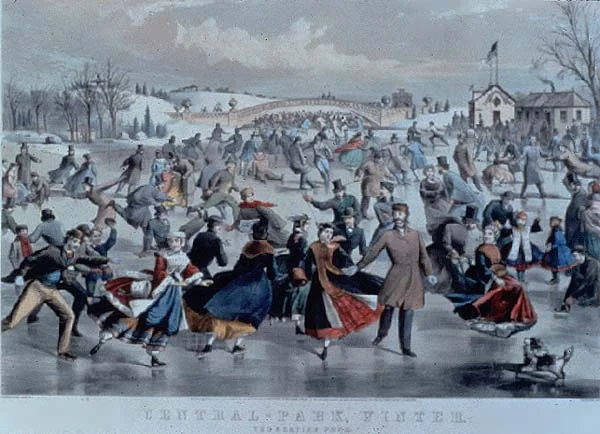
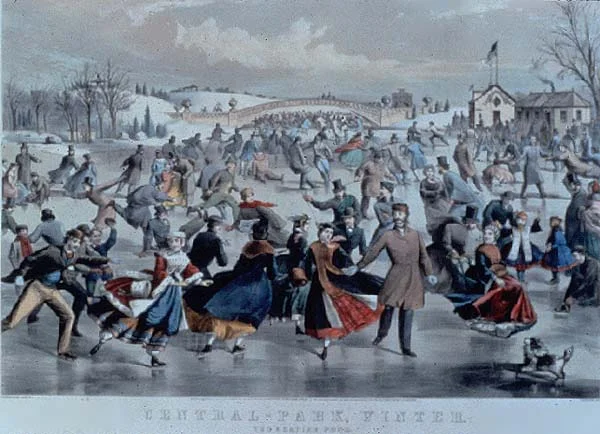
By Charles F. Parsons for Currier & Ives, 1862.
Frank Capra's 1946 film, It's a Wonderful Life, to be broadcast again tonight at 8 by NBC television, is loved most for its personal message of discovery at Christmas: that its hero's life has been, unbeknownst to him, crucial to his family, friends, community and even his country.
Such general encouragement may seem more needed than ever these days; indeed, this may be, sadly, the cause of the film's popularity. But It's a Wonderful Life may be more important still for its overlooked lesson in democratic economics, a lesson arising from the struggle for survival of a combination credit union and savings bank, the Bailey Building & Loan in the Everytown of Bedford Falls.
The Building & Loan's founder and chief executive, Peter Bailey, has died and its board of directors is deciding the institution's future. The richest man in town, Potter, a misanthropic banker, ruthless landlord and board member, played by Lionel Barrymore, proposes to dissolve the Building & Loan, and his callousness angers Bailey's elder son, George, played earnestly by Jimmy Stewart, who has been working as assistant to his father.
POTTER: Peter Bailey was not a businessman. That's what killed him. Oh, I don't mean any disrespect to him, God rest his soul. He was a man of high ideals -- so-called. But ideals without common sense can ruin this town. Now you take this loan here, to Ernie Bishop. You know, the fellow who sits around all day on his ... brains, in his taxi. I happen to know the bank turned down this loan. But he comes here, and we're building him a house worth $5,000. Why?
GEORGE BAILEY: Well, I handled that, Mr. Potter. You have all the papers there -- his salary, insurance. I can personally vouch for his character.
POTTER: A friend of yours.
BAILEY: Yes, sir.
POTTER: You see, if you shoot pool with some employee, you can come and borrow money. What does that get us? A discontented, lazy rabble instead of a thrifty working class. And all because a few starry-eyed dreamers like Peter Bailey stir them up and fill their heads with a lot of impossible ideas. Now I say. ...
BAILEY: Now hold on, Mr. Potter. Just a minute. Now you're right when you say my father was no businessman -- I know. Why he ever started this cheap, penny-ante building-and-loan I'll never know. But neither you nor anyone else can say anything against his character, because his whole life was. ... Why, in the 25 years since he and Uncle Billy started this thing, he never thought of himself. Isn't that right, Uncle Billy? He didn't save enough money to send Harry to school, let alone me, but he did help a few people get out of your slums, Mr. Potter. Now, what's wrong with that? Why, you're all businessmen here. Doesn't it make them better citizens? Doesn't it make them better customers? You said that ... what did you say a minute ago? "They have to wait and save their money before they even think of a decent home." Wait? Wait for what? Until their children grow up and leave them? Until they're so old and broken-down that they. ... Do you know how long it takes a working man to save $5,000? Just remember this, Mr. Potter: that this "rabble" you're talking about, they do most of the working and paying and living and dying in this community. Well, is it too much to have them work and pay and live and die in a couple of decent rooms and a bath? Anyway, my father didn't think so. ...
xxx
At the board's insistence, George Bailey takes over in his father's place to keep the Building & Loan going, and soon he forestalls a run on it, part of a general financial panic, by putting up the money he has saved for his honeymoon and by preaching to a mob of frightened depositors about how they should not withdraw their money but instead have faith in the institution, because their money isn't kept in cash in the safe but rather is invested in the houses, the mortgages, the very lives of their neighbors.
Of course this is Capra's metaphor for politics and the world: that there is progress when everyone is given a chance, a little capital and credit, when people play by the rules, look out for each other, and don't take too much more than they need, and that selfishness is the ruin of everything.
Something like this -- more or less a policy of helping to make middle-class everyone who aspired to it and would indeed play by the rules, a policy of democratizing capital and credit -- made the United States the most prosperous country and the most successful in elevating the human condition.
But for a few decades now the price of obtaining and maintaining those "two decent rooms and a bath" and the middle-class life to go with it has risen as real wages have fallen for most, largely under the pressure of government's unrelenting taxes in the name of services that have not really been rendered, a welfare system that has subsidized what somehow is not permitted to be called the antisocial behavior it is, and a plutocracy that has gained control of both major political parties.
There seem to be more people who, if too confused or demoralized to be dangerous, are still closer to being a "rabble" than the country saw even during the Great Depression.
Even at its best now Christmas is seldom more than an itinerant charity that, necessary as it may seem, tends to suppress the great political question of the day after Christmas, the question of how things can be organized to ensure that everyone has a good chance to earn his way in decency. But the great joy of Christmas is that the answer has been given, that we are not lost, that the country has been shown the way and can recover it -- that society can work for all, that it really can be a wonderful life if enough selfless people make it a political one.
Chris Powell is managing editor of the Journal Inquirer, based in Manchester, Conn., and an essayist.
'Nearer to spring than we were in September'
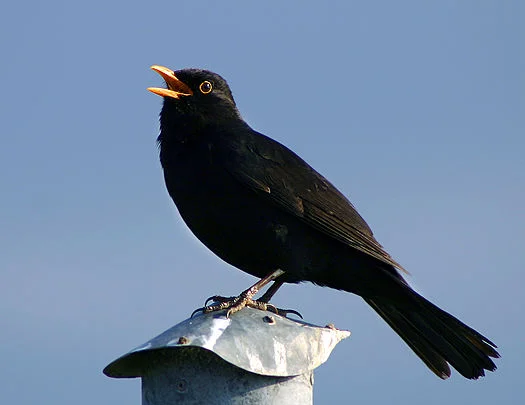
"I heard a bird sing
In the dark of December
A magical thing
And sweet to remember.
'We are nearer to Spring
Than we were in September,'
I heard a bird sing
In the dark of December."
-- Oliver Herford, “I Heard a Bird Sing’’
Allan Klepper: Erev Xmas 2016
By Rechteinhaber und eigenes Foto
Erev Xmas 2016
It’s Christmas Eve, again time to believe
In that jolly fellow Santa Claus.
A tumultuous year, but we are still here
To reflect upon events gives us pause.
Nobel Literature Prize to poet/singer Bob Dylan.
Invited to attend to accept; wasn’t willin’.
Perhaps underlying reason won’t state,
To me, it appears he’s a simple ingrate.
The Galaxy Note 7; smart phone to desire
Can no longer fly for fear of a fire.
The Flint, Michigan, lead-in-the-water crisis,
And homegrown terrorists patterning ISIS.
A Google computer aptly named Alphago
Beat Korean master champ at the game of GO.
And war continues in Syria with no peace.
While attacks on police officers increase.
Most Russians banned from the Rio Olympics,
Caught red-handed using illegal doping tricks.
Exit European Union, the Brits have voted.
National, self-interest feelings were noted.
Notice no mention of the elephant in the room,
Half the country thinks we’re headed for doom!
Time named Trump person of the year
Of a divided nation, so many still fear.
Hillary Clinton had her server from hell.
Thomas Jefferson had server problems as well.
While Hillary email confidentiality abused,
Sally Hemings was the server ole Thomas used.
Senator Sanders gave Democrats a real Bern!
Though Millennials didn’t vote Clinton in turn.
Feds agree: Our election Russians did hack.
Obama has promised that we will byte back!
The Internet gave fake-newsers what they desire;
The absolute right in a theater to yell “FIRE!”
In Rhode Island, all was not great.
‘Cooler & Warmer’: loser logo for our state.
We’re getting closer to tolling of trucks
New super computer can’t deliver needy bucks.
Ethics Commission now State House oversees.
A move shenanigan-watchers doth please!
And will promised legislative legal attacks
Remove the onerous annual car tax?
But Gov. has something about which to crow:
New businesses to RI: the workforce to grow!
Hamilton was the Broadway Musical Show
Kindled desire of U.S. History to know.
Unless you’re planning a pregnancy tonight,
Don’t worry about a ZIKA mosquito bite.
Autonomous vehicle tests get the nod.
We’ll soon be riding in a driverless pod.
VW diesel auto pollution
Resulted in vigorous EPA prosecution
Calling for diesel owners’ restitution
And VW company executives' execution.
Latest research: amyloid brain plaques the target;
Details of this Alzheimer’s cure; somehow I forget…
Tom Brady’s deflategate suspension from hell
By NFL Commissioner Roger Goodell.
It’s said success is the revenge that’s best,
So far the Patriots are meeting the test.
Despite injuries and aches, they’re on their game.
While Brady sets NFL records for the Hall of Fame.
Let’s take a moment to reflect on the year.
Some impactful celebs that’re no longer here:
A final goodbye to Fidel Castro,
Famous Cuban Communist foe.
Antonin Scalia, court’s right-as-can-be.
And, To Kill a Mockingbird’s – Harper Lee.
Arnold Palmer – head of Arnie’s Army.
And boxing legend Muhammad Ali.
Elie Wiesel – Laureate for Holocaust pain!
Singer “Prince” for song Purple Rain.
Robert Vaughn, Man from Uncle’s Napoleon Solo,
Janet Reno – A.G. when Feds torched WACO.
Shimon Peres – Israeli Minister Prime,
Morley Safer – 60 Minutes reporter sublime.
Grant Tinker – TV’s Mary Tyler Moore,
Gene Wilder – Young Frankenstein’s gore.
Who’s Afraid of Virginia Woolf? Edward Albee wrote.
John Glenn – ace, astronaut, and senator of note.
Nancy Reagan, Pete Fountain, Gwen Ifill, it’s a crime.
Florence Henderson, Garry Marshall, Gordie Howe, didn’t rhyme.
Zsa Zsa Gabor was a great housekeeping spouse.
Eight divorces, claims she always kept the house…
Tonight we select tomorrow’s movie to see,
Then on a Chinese Menu: Column “A” or Column “B”.
Our lunar calendar takes holidays for rides,
A few years ago Thanksgiving coincides.
Then we celebrated our Thanksgivakah,
Tonight, a single light, Merry Chrismannakah!
And a Joyous Kwanzaa with no animus,
Finally, A Festivus Just For The Rest of Us!!!
The Fat Ladies Sing

We revel in our candy bars
And cookies, cake, and pie.
That vegetables taste wonderful
Is one humongous lie.
But now we face admonishment.
Our size sets off a fuss.
The war against obesity
Includes a war on us.
We know our girth is plentiful,
But listen to our voice.
When thinking of our corpulence,
Why can't you be pro-choice?
-- Felicia Nimue Ackerman