Vox clamantis in deserto





Jill Richardson: No, let's not play nice with this authoritarian abuser
As Donald Trump plans his transition into the White House, some have called for “unity.” Let’s “come together,” they say. Let’s “give him a chance.”
I say no.
When a man abuses his wife, you don’t tell her to give him a chance. You don’t tell her to try to talk things out with him. Meet him halfway. Hear his side of it. Believe him when he says he loves her and he won’t hit her again.
Why? Because it won’t work.
The rules of normal social conduct don’t apply in such a case. Nor do they apply in this one. As I’ve said before, Trump exhibits textbook emotional abuse tactics.
If you give him a chance, he’ll walk all over you. If you go into any negotiation ready to meet him in the middle, he’ll demand it isn’t enough, that he must get his way entirely. And he’ll strong-arm you to get it.
We already have evidence that Trump does absolutely everything he can get away with.
He walked in on naked teenage beauty queens while they were changing, just because he could. Twelve women have accused him of sexual assault. He openly admits that he kisses and gropes them without consent.
He doesn’t pay contractors for their work. During the campaign, he even stiffed his own pollster. And his lawyers had to meet with him in pairs to prevent him from lying about their meetings.
This is a man who’ll do anything he can get away with. And he’s about as ready to change as a man who beats his wife would be.
So we can’t roll over and let him. We fight.
That’s what we must do now. We must make it absolutely as hard as possible for this man to wreck our democracy. And that’s not a partisan statement.
At this point, it’s not about whether you’re a Democrat or a Republican. It’s not about whether you prefer to repeal NAFTA or Obamacare, or about whether you think same-sex marriage should be legal.
It’s now about whether you think the democracy the United States has had for over 200 years should remain in existence. If the answer to that question is yes, then it’s time to fight. Because that’s what’s under threat.
The pain of this bitter election hurts. For the second time in recent years, the Electoral College is on track to install a president who received fewer votes from the American people than his opponent--- in this case more than a million fewer.
We’re all dealing with difficult emotions in different ways. I’m listening to audiobooks and knitting. Okay, and ugly crying. Others are protesting. And some are trying to handle their anger and fear by “thinking positive.”
It’s not the time for that. Not when thinking positive means denying reality.
It’s been only days since the election and Trump has already appointed Steve Bannon, a white supremacist and “alt-right” media kingpin, as a top adviser. If you wanted to give Trump a chance, there. He’s had one. He blew it.
The next four years are going to be hard. But now is the time to start mobilizing. The continuation of our very democracy depends on it.
OtherWords columnist Jill Richardson is the author of Recipe for America: Why Our Food System Is Broken and What We Can Do to Fix It. Distributed by OtherWords.org.
David Warsh: Now what after newspapers' colossal business mistakes?
Bridges, roads, airports, the electricity grid, pipelines, food and fuel and water systems: all of these are underfunded to some degree. So are the myriad new arrangements, from satellites and ocean buoys to emission scrubbers and ocean barriers, required to keep abreast and cope with climate change. Which wheels will begin to get the grease in coming months? We’ll see.
At the moment I am even more interested in the well-being of social information systems Last week The Wall Street Journal announced it would reduce its print edition from four sections to two on weekdays, bringing it into line with the Financial Times. Should that be an occasion for concern? On the contrary, let me try to convince you that it is welcome news.
Although newspapers still carry crossword puzzles, comics, agony aunts, and churn out all manner of fashion magazines, they are mainly in the business of producing provisionally reliable knowledge. What’s that? I have in mind propositions on which every honest and knowledgeable person can agree.
Not so much big judgment, such whether climate change is occurring or whether Vladimir Putin is a despot, but rather ascertainable facts, beginning with what parties to various debates are saying about themselves and each other and about their pasts. These are the foundations on which big judgments are based
A case in point: almost all of what the world knows about Donald Trump, that is, that we consider that we really know, we owe to The New York Times, The Wall Street Journal, The Washington Post, the Financial Times, and various newspaper-like organizations, Bloomberg News, Politico, and The Guardian in particular. The Associated Press, Reuters and the BBC contributed a little less; magazines still less; the rest of radio and television, hardly anything at all, with the notable exception of Fox News anchor Megyn Kelly’s lead off question in the first presidential debate. Someone will prepare a list of the fifty or a hundred of the best stories of the last year, I expect. I’ll only mention a few memorable examples:
The Post’s coverage of the Trump Foundation; the Times’ many investigations, including those of his tax strategies and his practices as a young landlord; a Politico roundtable of five Trump biographers; the WSJ’s pursuit of the George Washington bridge closing, coverage that changed the course of the campaign; and the FT’s continuing emphasis on the foreign policy implications of the America election. The same thing could be said about newspapers’ coverage of Hillary Clinton.
Newspapers exist to process and assess the rival claims of experts – politicians, governments, corporations, the professoriate, pollsters, authors, whistleblowers, filmmakers, and denizens of the blogosphere. When its own claims to authority are misplaced – a spectacular example having been the Monday before the election, when newspapers were still expecting a Clinton victory – the print press and its kith and kin correct themselves (the next day) and investigate the prior beliefs that led them to error. A free and competitive press resembles the other great self-correcting systems that have evolved over centuries – democracy, markets, and science.
And as for social media, the new highly decentralized content producers, to the extent they are originators of new information, the claims made there are slowly becoming subject to the same checking and assessment routines as are claims advanced in other realms. (No, the Pope did not endorse Donald Trump.) As for intelligence services, in which the experts’ job is to know more than is public, it is the newspapers that make them less secret. More than any other institution in democratic industrial societies, newspapers produce a provisional version of the truth. So the condition of newspapers should concern us all.
In “What If the Newspaper Industry Made a Colossal Mistake?,’’ in Politico, Jack Shafer speculated recently the newspaper companies had “wasted hundreds of millions of dollars” by building out Web operations instead of investing in their print editions, “where the vast majority of their readers still reside and where the overwhelming majority of advertising and subscription revenue still come from.” As perspicacious a press critic as is writing today, Shafer was reporting on an essay by a pair of University of Texas professors, H. Iris Chyi and Ori Tenenboim, in Journalism Practice.
Chyi and Tenenboim overstated their case, I think. Those dollars invested in Web operations weren’t wasted; they had to be spent. Most newspapers, all but the WSJ, made the mistake of making their content free on the Web for several years. Only gradually did they come round to the approach the Journal had pioneered: a paywall, with some sort of a metering technology designed to encourage online subscriptions.
More serious has been the lack of thinking-out-loud about the future of those print editions. No one needs to be told that smart phones have replaced newspapers, radio, and television as the tip of the spear of news. It appears that Facebook and Twitter have supplanted cable television and radio talk shows as the dominant forum for political discussion. But newspapers haven’t gone away; indeed, by establishing beachheads for the content they produce on social media platforms, they have become more influential than ever.
The immense prestige associated with newspapers arose from the fact that for centuries they were reliable money machines, thanks to their semi-monopoly on readers’ attention. It is no longer news that the revenue model has turned upside down, Advertisers used to pay two thirds or more of the cost of publishing a successful newspaper; today it is more like a third, if that. Attention was slowly eroded away by radio, broadcast and pay television, until the invention of search-based advertising in 2002 turned decline into a seeming rout. The basic business model is still the same, as Tim Wu explains in The Attention Merchants; The Epic Scramble to Get Inside Our Heads (Knopf, 2016): “free diversion in exchange for a moment of your consideration, sold in turn to the highest-bidding advertiser.” It’s the technology that has changed.
In a world in which the gas pump starts talking to you when you pick up the hose and video commercials are everywhere online, the virtues of print are many-sided, for readers and advertisers alike. In “Why Print Still Rules,’’ Shafer laid out the case for print’s superiority as a medium – “an amazingly sophisticated technology for showing you what’s important, and showing you a lot of it.” It’s finite. It attracts a paying crowd, which is why advertisers are willing to pay more – much more – for space.
The fancy newspapers are in good shape to refurbish their printed editions. Three of the four have new owners with deep pockets. Rupert Murdoch, a maverick Australian, now a U.S. citizen, bought the WSJ in 2007; Amazon’s Jeff Bezos, thought to be the second richest American, after Bill Gates, bought the Post, in 2013; the Japanese newspaper group around Nikkei bought the FT in 2015. The NYT is the shakiest of the four, but there seems little doubt that the cousins of the Sulzberger/Ochs clan will find a suitable partner, the oft-expressed enmity of President-elect Trump notwithstanding.Fav
Pricing, meanwhile, is all over the map, as is the appropriate size of the paper edition itself. The FT delivers two sections of tightly written no-jump news over five days and a great weekend edition for $406 a year. The WSJ costs $525 a year for six days, including a first-rate weekend edition. The Times charges $980 a year for seven days a week, including a Sunday edition that contains much more content than most readers need. (Its ads bring in a ton of money.) That’s why the WSJ decision to cut back to from four to two daily sections is significant: it acknowledges the reduced but still very powerful claim of print on consumers’ ever-more stretched budget of time. It puts more pressure on the Times’s luxury brand.
It’s the regional papers that worry me, as much for their roles as distributors of news as producers of it. When the Times, WSJ and FT are placed on the stoop in the morning, my old paper, The Boston Globe, is not among them. At around $770 a year, it simply costs too much, especially considering the meager local content it provides.
Assume that the “right” price for a year of a fancy paper today is somewhere between the FT and the WSJ, at around $500 a year. At around half as much, or even $300, a print edition of the Globe would be highly attractive. My hunch is that circulation would again begin to increase, and, in the process, shore up the metropolitan area’s home-delivery network. Instead I buy digital versions of the Globe (for $208) and the Post (for $149). Want to know what a year of the print Post costs? So does the copy editor. But I stopped looking after interrogating the Web page for five minutes. Newspapers are notorious for gulling their subscribers. Not even the FT is straightforward about it.
Like the other leading papers – the Chicago Tribune, Los Angeles Times, Philadelphia Inquirer, and Baltimore Sun – the Globe was sold for a song to a non-newspaper owner in the course of the panic that followed the advent of search advertising in 2002.
These publishers no longer seem to see themselves as part of an industry that was quite tight-knit before the fall. That’s another disadvantage with which the big national dailies must cope. For many years, newspaperfolk considered that their businesses were mostly exempt from the laws of supply and demand. Price cuts play a big part in the lore of its past. Today, the future of the industry depends on the recognition that price/performance is everything.
. xxx
Around two years ago, I began to think it was fairly likely that a Republican would win the election in 2016. So I am not altogether surprised that this has turned out to be the case. I am, however, astonished that it is Donald Trump who has been selected to provide the zig to President Obama’s zag. The Republicans found their crossover voters elsewhere.
Trump breaks promises as easily as he makes them. Look past his odious qualities (not easy to do) and you’ll see that among the policies he seems likely to embrace are several that GOP conservatives have refused to permit the Democrats to carry out. Trump apparently favors a big jobs bill, a $1 trillion stimulus; let’s see what the Tea Party-goers say now about the national debt. He is a realist in foreign relations, likely to stop baiting Russia with NATO enlargement and the threat of intervention in Syria. At least in his personal views, he has been a social liberal. His position will probably swing round even on climate change, as the trends continue to become more clear. The Supreme Court? He could challenge his uneasy Republican allies in Congress by re-nominating Judge Merrick Garland if he were interested in governing instead of showing off.
Trump has reinvented himself several times before. Now that he is president-elect, he will try to do it again. This time I very much doubt that he will be successful. Nothing in his background prepared this dubious projector for the presidency. This time Trump won’t escape his past.
David Warsh, a longtime financial columnist and economic historian, is proprietor of economicprincipals.com, where this originated.
Program to help fix Mass. dams
Massachusetts officials recently announced $10 million in funding to assist communities and groups statewide in addressing deteriorating dams and refurbishing critical coastal infrastructure. The money will support engineering and construction phase work for seven dam repair projects, five dam removal projects and eight coastal protection reconstruction projects.
The program will award $2.91 million to Attleboro, Fall River, Gardner, Gloucester, Holbrook, the Jones River Watershed Association, the Kestrel Land Trust, The Nature Conservancy, Scituate, the Sherwood Forest Lake District, Westfield and Weymouth for dam projects, and nearly $7.7 million to Marshfield, Plymouth, Quincy, Salem, Scituate and Yarmouth for coastal-protection projects.
The following are the dam projects:
Gloucester ($500,000, $500,000 low-interest loan)
The Haskell Pond Dam is owned and managed by the city as part of its water supply network. The dam is a high-hazard structure in poor condition. This 43-foot-high, 480-foot-long structure was built in 1902. This award will provide funding for the construction work necessary to refurbish the structure to ensure compliance with state law. This project was previously funded with $175,000 to support engineering, permitting and the development of construction documents.
The Nature Conservancy ($257,055)
The Carver Cotton Gin Mill Dam in East Bridgewater on the Satucket River, a tributary of the Taunton River, is rated a significant hazard in unsafe condition. The concrete structure is 10 feet high and 44 feet long. It’s the first dam from the ocean without fish passage, and removal is part of a multi-partner effort to connect major tributaries of the Taunton River with the main stem, Narragansett Bay, and the ocean. Removal of this dam will enhance public safety, create a navigable waterway for small boats and re-establish connections to large spawning areas for numerous fish species.
Attleboro ($250,000)
The Dodgeville Pond Dam is a significant-hazard structure in poor condition. This award will support the rehabilitation of the structure. While the structure is privately owned, the city is committed to having this structure refurbished as part of a larger master plan for improvements. The impoundment that it creates and the backwater along the Ten Mile River provide recreational opportunities. The city recently received a state grant from the Gateway Cities Parks Grant program to provide riverside walking and biking paths along the Ten Mile River. Preserving and Dodgeville Dam/Pond is needed to maintain water depths along this section of the Ten Mile River that will be part of the Riverwalk.
Scituate ($225,000)
The Hunters Pond Dam, also known as the Mordecai Lincoln Road Pond Dam, is the first dam on the Bound Brook system and is located at the head of tide in the Gulf River estuary. The dam is in poor condition and rated as a significant hazard. The Hunters Pond Dam is the primary impediment to fish passage on the Bound Brook system and its removal will promote the recovery and increase in diadromous fish populations by restoring access to spawning and rearing habitat.
Jones River Watershed Association ($223,000)
The Elm Street Dam is owned by the town of Kingston, and this project will plan for its removal. The dam is a significant hazard in fair condition. The dam forms the head of tide on the Jones River creating an obstruction to tidal flow into upper reaches of the river. This creates a backwater of tides below the dam resulting in an increase of downstream bank overtopping. The dam contributes to poor water quality and even with a fish ladder, this dam blocks fish from passage upstream to historic spawning grounds. The removal of the dam will improve conditions for river herring, rainbow smelt, eastern brook trout, American shad and American eels.
Kestrel Land Trust($215,000)
The Lake Warner Dam in Hadley is owned by the land trust. The dam is classified as a significant hazard and is in poor condition. The dam at Lake Warner, also known as North Hadley Pond, has been part of the historic village center of North Hadley for more than 350 years and is greatly valued by local residents. This project will restore the structural integrity of the dam.
Holbrook ($207,750)
The Lake Holbrook Dam is a 300-foot earthen dam with a paved roadway across the crest. The dam is classified as a significant hazard and is in poor condition. The dam has numerous deficiencies that compromise the safety of the roadway and homes and businesses downstream. This project will help bring the dam back into compliance with safety standards.
Westfield ($163,800)
The Tekoa Reservoir Dam, built in 1873, is on Moose Meadow Brook in Montgomery. The dam impounds a reservoir that can provide water for the city of Westfield but hasn’t been used for this purpose for many years. The city has determined that the reservoir is no longer needed as a potential water supply; therefore removal of this 32-foot-tall, 200-foot-wide dam is in the best interests of the city and its residents by reducing the costs of owning and operating unnecessary structures.
Weymouth ($150,000)
The Weymouth Great Pond Dam was built in 1884 and is a key component of the city’s water supply. The structure retains a 450-acre reservoir and is classified as a significant hazard and is in fair to poor condition. This award will support the engineering and design for a series of repairs and improvements.
Fall River ($119,853)
The Rattlesnake Brook Dam is owned by the Fall River Water Department and is located in Freetown. The dam doesn’t provide benefits for water supply and is now a liability for the city. The dam is in unsafe condition and has created a downstream situation where there are multiple unmanaged stream channels. There is currently no operational way to control water level. A partial breach has also been reported. Removal of this dam will create a more stable downstream channel configuration and protect Narrows Road 500 feet below the dam. The project will also naturalize stream processes and open the brook to migration to trout from Assonet Bay for miles upstream to cold-water habitat in the upper watershed.
Gardner ($67,400)
The Wrights Reservoir Dam impounds Mahoney Brook to form Wrights Reservoir. The dam is classified as a high hazard. The structure is part of the Gardner Local Protection Project flood-management system built by the Army Corps of Engineers in the 1960s for flood protection of important industrial properties along the Mahoney and Greenwood brooks. The project will repair the dam and bring the structure into compliance.
Sherwood Forest Lake District ($52,500)
The Lancelot Lake Dam in Becket is classified as high hazard and is in poor condition. This award will support the planning and engineering phase of the project to return the dam to safety standards.
The following are the coastal protection projects:
Marshfield ($2,500,000, $500,000 low-interest loan)
The money will be used for Phase II of a seawall repair project along the shoreline of Massachusetts Bay in the Fieldston section of Marshfield. Phase I of the project, completed in 2015 and funded through a prior grant, included design and permitting for the entire Foster Avenue Seawall and implemented the replacement of the existing seawall between Old Beach Road and 9th Road. The Phase II project includes updating the existing design package, bidding and replacing the existing concrete seawall along Foster Avenue between 9th Road and 3rd Road. The structure is deteriorated and this section of the Foster Avenue Seawall is assigned a condition rating of poor and a high priority. This project addresses the last remaining portion of the original 1931 structure and will complete the reconstruction of the seawalls protecting this densely populated area.
Marshfield ($139,000)
The money will be used to design and obtain regulatory approvals for the reconstruction and improvements to an approximately 600-foot-long section of deteriorated seawall on Ocean Street near Brant Rock. The structure protects Ocean Street, adjacent residential areas and associated utilities from storm damage. The existing structure has become increasingly deteriorated. Ocean Street is the primary access through the area connecting the communities of Brant Rock and Ocean Bluff with major state highways and is also an evacuation route during storms.
Scituate ($2,500,000, $500,000 loan-interest loan)
The money will support the construction phase of a 640-linear-foot section of the seawall and revetment. During major storm events, this area of Oceanside Drive is heavily flooded and inundated with overwash consisting of large cobbles and sand, which in turn results in compromised public access and safety and the temporary closure of the roadway and cross streets. In recent years, there have been occurrences where first responders have been unable to respond to house fires and other emergencies in the area bevcause of extreme flooding.
Plymouth ($810,993)
The money will repair and reconstruct portions of the 720 linear feet of retaining wall fronting a vertical concrete seawall about 2.5 miles southeast of Plymouth Center. A series of severe northeast storms caused continued lowering of the fronting beach and moderate damage to the revetment. Although the seawall and retaining wall have remained intact, previous repairs didn’t return the structure to its “as-built” condition. More recent work re-established the retaining wall to design conditions; however, portions of the revetment have settled over the past 10-plus years as the beach continues to lower, allowing wave action to destabilize portions of the revetment.
Plymouth ($93,563)
The grant will support design and environmental permitting services for the reconstruction/upgrading of about 900 linear feet of retaining wall primarily fronting the Plymouth Long Beach parking lot and Route 3A. The existing vertical concrete seawall has failed at several locations and doesn’t provide an appropriate design for the lowered condition of the beach.
Quincy ($441,000)
The grant will support the final design and permitting costs for repairs and improvements to about 6,000 linear feet of seawall along the northern shore of Adams Shore and Houghs Neck. These structures protect the shoreline, residential homes, public utilities, and critical transportation and evacuation routes. The seawalls will be repaired and raised to accommodate future sea-level rise and impacts from the changing climate, including increased frequency and intensity of storms.
Salem ($143,625)
The grant will support the design and permitting for the repair/replacement of an approximately 60-year-old deteriorating, concrete seawall at the eastern boundary of Forest River Park. The existing seawall is part of the city’s Canal Street Flood Mitigation Project. The Canal Street Flood Mitigation Project is a $20 million project that has received funding from the Federal Emergency Management Agency with a goal of reducing flooding in the Canal Street and Salem State University O’Keefe Parking Lot.
Yarmouth ($77,500)
The grant will support the design and permitting for an approximately 500 linear foot section of deteriorating revetment at Bass River Beach. The structure protects the adjacent dunes and provides public access via a parking lot, boat ramp, and fishing pier. The structure also protects the western shore of the river from the Bass River Beach as well as the eastern edge of the Bass River entrance channel.
'Earth sinks to rest'
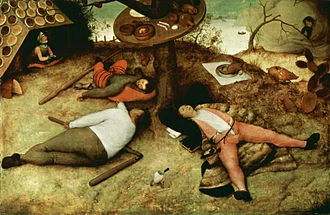
"November comes
And November goes,
With the last red berries
And the first white snows.
With night coming early,
And dawn coming late,
And ice in the bucket
And frost by the gate.
The fires burn
And the kettles sing,
And earth sinks to rest
Until next spring."
- Elizabeth Coatsworth

Chris Powell: Taking down a tower of election misconceptions
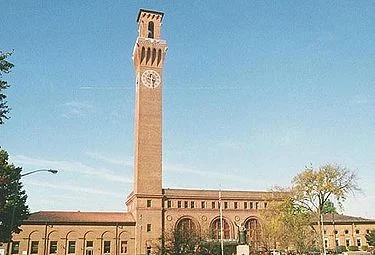
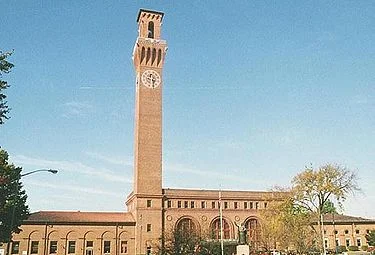
The daily newspaper in Waterbury, Conn., spent $800,000 to repair this landmark tower. See item at bottom.
Having lived by executive orders during President Obama's administration, disregarding consensus with Congress, the left now may die by executive orders under Donald Trump's administration if the new president really believes some of the things he said during his campaign.
The left will deserve as much, but having received only 47 percent of the popular vote, about a million fewer votes than Democratic nominee Hillary Clinton received, Trump should not just try to fulfill his campaign platform, such as it was, but also try to build consensus rather than deepen division.
Democrats still have enough votes in the Senate to obstruct legislation and Supreme Court nominees, and the political margin in the House of Representatives is close enough that moderate Republicans who were appalled by Trump's campaign and character can still make trouble too.
But just as Republicans are claiming for Trump a mandate he did not win, Democrats are making too much of Trump's running second in the popular vote. For this doesn't necessarily mean that Clinton was the country's first choice.
Rather, Clinton so far has received only about 47.6 percent of the popular vote, with more than 5 percent having gone to minor-party candidates, mainly Gary Johnson of the Libertarian Party and Jill Stein of the Green Party, who received 3 percent and 1 percent respectively.
Libertarians lean Republican, Greens Democratic. In a "ranked voting" system that transfers the votes of minor-party candidates to the second-choice candidates of minor-party voters, Trump might have come out first in the popular vote after all, if not by much. The failure of a major candidate to win half the popular vote makes the Electoral College look more undemocratic than it really is.
Indeed, while the country is in a rotten mood and this election may result in profound changes in policy, the popular vote contradicts claims that there has been a political revolution. Instead the Democrats lost the election for a very narrow reason — the alienation of part of their core constituency, working-class whites, in one part of the country, the swath from Pennsylvania to Michigan and Wisconsin. A shift of only 60,000 votes altogether in those states would have given Clinton the Electoral College as well as the popular vote and thus the presidency.
The claim that Trump's election disproved the opinion polls is also false, though it is being used to discredit national news organizations for what seemed like their prejudice against Trump. (Actually until it was too late the national news organizations largely gave Trump a pass about his grotesque business operations and potential conflicts of interest.)
On the whole the polls in the final days of the campaign were correct, showing a tightening race with Clinton still holding a measurable lead.
It was the uneven distribution of the vote, especially the huge and wasted Democratic plurality in California, approaching 3 million votes there, that skewed the Electoral College.
SAVING HISTORY IN WATERBURY: The Waterbury Republican-American, which for more than 60 years has occupied the city's grand former railroad station downtown, has just spent $800,000 repairing the station's 240-foot clock tower, the city's defining landmark, built in 1909 and modeled on the tower of Siena, Italy.
The tower produces no income for the newspaper, but, as the Republican-American's editor and publisher, William J. Pape II, said the other day, it's important to the city and is listed on the National Register of Historic Places, so "we just had to spend the money."
Now the tower should be ready for another century.
Of course in their ordinary operations newspapers are also very much about preserving local history, even if not all of them are as civic-minded as Waterbury's.
Chris Powell is managing editor of the Journal Inquirer.

Tim Faulkner: Trump vs. the biosphere?

The day after Donald Trump’s surprise election win, the mood among environmentalists was, as expected, glum.
During his campaign, Trump, a climate-change denier and fossil-fuel proponent, vowed to withdraw from global climate treaties and neuter the Environmental Protection Agency. All told, his candidacy was considered a colossal threat to the biosphere.
Now that he’s two months away from taking office, it’s mostly guesswork as to which of Trump’s grand proclamations of environmental ruin will become reality.
Nationally, environmentalists expect that, at least, the goal of limiting temperature rise to 2 degrees is a lost cause, as is limiting atmospheric carbon dioxide to less than 400 parts per million.
To deal with their anxiety, environmental groups such as 350.org are encouraging environmentalists to partake in peaceful protesting. The National Resources Defense Council hosted a conference call for the aggrieved Nov. 10 titled “Defending Our Environment from the Trump Presidency.”
The consensus response from local government officials is to embrace autonomy.
“(Trump's win) puts an even greater burden on states to take action and be creative,” Rhode Island Gov. Gina Raimondo said during a Nov. 9 meeting of the Rhode Island climate council.
Raimondo received an update on Rhode Island’s long-term emissions-reduction plan. She and agency and department officials gave no indication of changing course on climate adaptation and mitigation efforts.
Raimondo said it's not known what Trump will do with President Obama’s Climate Action Plan. But Trump’s unexpected victory creates urgency to move forward with local initiatives, she added.
“Norms change in times of crisis, and I do believe we are facing a climate-change crisis, so we do have to get people to take action,” Raimondo said.
The governor confirmed that she isn't changing her neutral-to-favorable position on the proposed fossil-fuel power plant in Burrillville, a project that would be the state’s largest emitter of greenhouse gases.
Janet Coit, director of the Rhode Island Department of Environmental Management, told ecoRI News that Trump’s victory was sobering. “It means we have to work all the harder.”
Fortunately, Rhode Island is surrounded by states with shared regional and local environmental goals, Coit said.
If federal support and guidance declines, she said, “Now we have to stop, regroup and guess that the leadership will have to come from the state level. I guess we have to look to ourselves more.”
Ken Payne, chair of state renewable energy committee, as well as food and farm programs, said the election means that progress on these issues will not only have to come from the state, but from communities and neighborhoods. Before the election, he and Brown University Prof. J. Timmons Roberts announced plans to launch a new, non-government affiliated group to advance green initiatives.
Roberts wasn't at the recent climate council meeting; he's in Morocco with students researching the United Nations Framework Convention on Climate Change negotiations.
In an article for Climate Home, he echoed the wait-and-see refrain put forth by environmental experts who wonder if the country and climate policy will be governed by Trump the negotiator or Trump the tyrant.
“So which Trump will govern? There is cause for both hope and fear,” Roberts wrote.
To others, fear caused by the election affirms reality. Morgan Victor of the Pawtucket-based environmental activist group The FANG Collective, said Trump’s win is evidence of American ongoing legacy of colonialism and slavery.
“It’s a reality that white supremacy runs in this country both overtly and covertly,” Victor said.
The Providence resident and member of the Wampanoag tribe participated in the ongoing Standing Rock Sioux pipeline protests taking place in North Dakota.
Having Trump in office will justify more attacks against indigenous groups and their land, Victor said.
“It’s scary. I hope it wakes people up, especially white people, to take care of the ones they love,” she said.
Tim Faulkner writes for ecoRI News.
William Morgan: First Communion
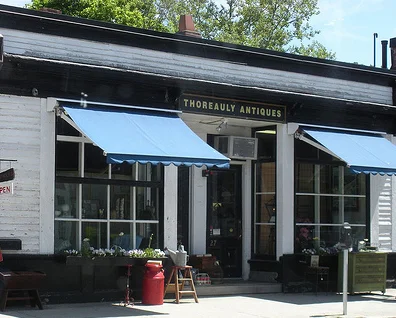
A bit of kitsch in the town where Henry David Thoreau made Walden Pond world-famous.
Despite its trite name, Thoreauly Antiques, on Walden Street, in Concord, Mass., remains a fertile hunting ground for old photos that suggests many a tale of everyday New Englanders.
Maybe with computers and their sophisticated photo programs, a lot of images are being stored for future generations – knowing that all my floppy disks are unreadable, perhaps not. Maybe the shoebox of treasured images was just as good a storage system.

For 50 cents I was able to recapture the day of this young woman's first confirmation three quarters of a century ago. The Regal Magic-Eye Enlargement was made in Quincy. The girl's name and other information may have been in the scrapbook in which this memory was pasted. But one does not want to contemplate the demise of the scrapbook or the journey of this snapshot of one of life's landmark moments to a junk shop.

May 19, 1942 was a Tuesday, so we can guess the confirmation took place on May 17. On that day, German and Soviet forces were battling for Kharkov, American submarines were chasing their Japanese counterparts following the Battle of the Coral Sea, while in the Atlantic U-boats sunk almost a dozen Allied ships.
But back in Boston, the day was sunny and full of hope.
William Morgan is a Providence-based writer and architectural historian. He has taught the history of photography, and co-authored the book Bucks County with the late RISD photography professor Aaron Siskind.
Western Civ at Providence College
From Robert Whitcomb's Nov. 10 "Digital Diary'' in GoLocal24.
Prof. Anthony Esolen, who teaches Renaissance English Literature and the Development of Western Civilization at Providence College, a Catholic institution, has questioned the college being a "committedly and forthrightly Catholic school" and has been denounced for his remarks.
"Is not diversity, as currently promoted, at odds with the foundational diversity built into the nature of the human race, the diversity of male and female, to be resolved most dynamically and creatively in the union of man and woman in marriage?" wrote Mr. Esolen for Crisis Magazine. "Is not that same call for diversity, when Catholics are doing the calling, a surrender of the Church to a political movement which is, for all its talk, a push for homogeneity, so that all the world will look not like the many-cultured Church, but rather like the monotone non-culture of western cities that have lost their faith in the transcendent and unifying God?’’
Inevitably, he was denounced for his remarks by some PC faculty members. What they should have criticized – maybe -- is the seeming opaqueness of some of his phrasing. In any event, a faculty letter against him reads, in part:
“As PC Faculty, we pledge to break the silence around systemic racism and discrimination on Providence College’s campus. While we vigorously support free expression, recent publications on the part of PC faculty have involved racist, xenophobic, misogynist, homophobic, and religiously chauvinist statements. The use of this type of language by people with power over students runs counter to the Catholic mission of Providence College, which aims ‘to reflect the rich diversity’ of our world, and ‘extend a loving embrace to all."’
“As a diverse coalition of students have consistently highlighted, such statements are part of a broader pattern of racism, sexism and other forms of hate that are all too common not only on campus, but in the broader public culture. As professors who care deeply about the well being, safety, and growth of our students, we are committed to combating racism and overcoming the hostile learning environment for too many of our students, while creating spaces where all of our students can engage in meaningful ways.’’
Oh, come on! The statement, which sounds like a call for censorship by the college or at least self-censorship by the likes of Mr. Esolen, makes mild-mannered PC sound like a 24/7 Ku Klux Klan meeting!
Note such empty words as “meaningful’’ and “diversity’’ (of what?). And of course they treat the poor little lambkins students as if they’re far too fragile to hear an opinion that might lower their comfort levels or make them reconsider the received wisdom that now rules on most American campuses. And, as usual in such cases, they accuse Professor Esolen of writing things he never wrote. Their rhetoric recalls the rhetorical dreck of dictatorships such as Stalin’s Soviet Union in which “class enemies’’ are singled out in language contorted to fit the political lies needed to help the likes of Stalin stay in power.
The response from the Rev. Brian Shanley, PC’s president, was the usual stuff you get from college presidents these days, many of whom lack intellectual and cultural self-confidence:
Father Shanley wrote:
“He {Mr. Esolen} certainly does not speak for me, my administration, and for many others at Providence College who understand and value diversity in a very different sense from him.’’
So what precisely does “diversity’’ mean to the PC administration? Is it just about skin color, varieties of sexual desire, surname, ethnic cuisine….? Are intellectual and political diversity also encouraged?
Meanwhile, let’s put in a good word for Western Civilization, which Professor Esolen reveres and his presumed preference for which over other cultures is presented as making him an enemy of “diversity’’.
It’s a civilization that has permitted students and faculty at colleges in the West to speak freely and pursue their dreams as in no other place in the world. Refugees want to flee to the West because of its freedom of expression and of inquiry, and how it protects what Jefferson memorably called “the pursuit of happiness.’’ Those freedoms are key drivers in creating the prosperity that also leads people to flee to the West. If it is so awful, why is the flight one way? And where are things more “diverse’’ than in nations within what many of usstill call Western Civilization?
The complainants can easily resolve their issues by transferring to a non-Catholic college. Since we’re in Western Civilization (or what’s left of it), they have the freedom to move.
'Economic performativity'
Donald MacKenzie, of the University of Edinburgh, came through Boston last week, presenting a welcome opportunity to stop thinking about the U.S. presidential election for a day. The author of An Engine, Not a Camera: How Financial Models Shape Marketsv (MIT, 2006) is the most interesting historian of the advent of modern finance since Peter Bernstein (Capital Ideas: The Improbable Origins of Modern Wall Street (The Free Press, 1990) laid down his pen.
MacKenzie is a sociologist, not a journalist like Bernstein, which means his account comes somewhat encumbered by theory. His background is that of science studies, the broad approach to the history of science, headquartered in Edinburgh, deliberately skeptical of various claims of science to authority: cultural, social, political, philosophical and so on.
His Inventing Accuracy: A Historical Sociology of Nuclear Missile Guidance (MIT, 1990) unpacked the astonishing suite of instrumentation that was developed to guide intercontinental ballistic missiles in the days before GPS. But like Bernstein, MacKenzie had done an enormous amount of interviewing of participants, and it makes for deeply interesting reading.
An Engine Not a Camera is concerned with the relationship between financial markets and the emergence of modern financial theory since the 1950s, at first in Cambridge, Mass., and Chicago, and then in universities and business schools around the world. The title comes from a phrase originally employed by Alfred Marshall to describe the difference between static and dynamic theories — timeless snapshots of the world at a given moment, as opposed to developmental and therefore potentially generative accounts.
The path that modern finance has taken has been amply highlighted by a series of Nobel Prizes – Harry Markowitz, Merton Miller, William Sharpe, Robert Merton, Myron Scholes, Eugene Fama, Robert Shiller, Lars Hansen (and the equally revealing omission of Fischer Black). Peter Bernstein filled in around the edges. MacKenzie is more interested in the shadows between the pools of light, specifically the relation between theory and practice.
He recognizes that participants have been building markets for millennia. What happens, he asks, when theory starts catching up with practice and, in some cases going beyond? When theory becomes prescriptive to a world which to that point has been a matter of trial and error? When analytical and mathematical methods replaced descriptive scholarship in finance after the 1950s, was it all pure triumph? Or were unexpected new risks and other costs incurred as well?
This aspect of economic ideas that affects the world he calls their “performativity,” following the linguistic philosopher J. L. Austin, who distinguished between utterances that actually do something and those that simply report on an already existing state of affairs. Austin:
If I say “I apologize” or “I name this ship the Queen Elizabeth” or “I bet you sixpence it will rain tomorrow,” then, in saying what I do, I actually perform the action.
MacKenzie considers three degrees of economic performativity: the most basic sort, as when an idea (a theory, model, concept, procedure, or data set) is used by participants as a tool; effective performativity, meaning when the use of the tool makes something happen; and, most interesting, what he calls “Barnesian” performativity, after Edinburgh sociologist S. Barry Barnes, who in a 1988 book, The Nature of Power (anticipated in 1983 by his article “Social Life as Bootstrapped Induction”) identified “self-validating feedback loops” as the fundamental building blocks ofboth practice and theory. Barnes:
If an absolute monarch designates Robin Hood an “outlaw,” then Robin Hood is an outlaw. Someone is a “leader” if followers regard him or her as such. A metal disc, a piece of paper, or an electronic record is “money,” if, collectively we treat it as a medium of exchange and a store of value.
Thus we are in the realm of the social construction of everything social. The example MacKenzie gives of Barnesian performativity: widespread adoption of index funds has made “less untrue” William Sharpe’s troubling conjecture that one day everyone would simply buy the market (meaning a broad index fund). For those interested in finance, MacKenzie’s book is edifying reading. Recently he has begun writing regularly on financial topics for the London Review of Books.
It is, of course, equally possible to approach “performativity” from the other end, as a matter of the evolution of practice. That’s what Lawrence Busch, of Michigan State University, does in Standards: Recipes for Reality (MIT, 2011). What is a standard, after all, if not a Barnesian “self-fulfilling prophecy”? Standards are ubiquitous in social life, Busch says: there are standards for professional accreditation, the environment, consumer products, animal welfare, healthcare, education, acceptable stress on highway bridges, all of them the subject of intense and continuing negotiation.
Busch writes, “While standardization can be traced back to the origins of civilization, it was given an enormous boost by the grand universalizing project known as the Enlightenment.” And while his capsule description of the rise of the tendency to standardization in science, military affairs and, horrifyingly, colonization, is eye-opening, it pales in comparison to the persuasive power of Deidre McCloskey’s 2,000 page Bourgeois trilogy.
I have read only a fraction of each book (Bourgeois Virtue: Ethics for an Age of Commerce (2006); Bourgeois Dignity: How Ideas, Not Capital or Instructions, Enriched the Modern World).(2010); and Bourgeois Equality: Why Economics Can’t Explain the Modern World; (2016). You can read as much as you like about the project here. In the introduction to the final volume, McCloskey writes:
The modern world was made by a slow-motion revolution in ethical convictions about virtues and vices, in particular by a much higher toleration than in earlier times for trade-tested progress – letting people make mutually advantageous deals and even admiring them or doing so, and especially admiring them when, Steve Jobs-like, they imagine betterments.
McCloskey may give short shrift to democracy as one of the critical institutions of the modern world, along with science and the market (the topic doesn’t rate an index entry in the last volume). But note that we are back at the U.S. elections. My day of thinking about inductive boot-strapping passed quickly.
xxx
Devlin Barrett and Christopher Matthews, of The Wall Street Journal, did an excellent job of reporting on the dissension that exists within the Federal Bureau of Investigation with the respect to Bureau investigations of Hillary Clinton. Beyond her e-mail practices, it turns out that field agents in the New York office had aggressively advocated for a second probe, previously unreported, this one of the Clinton Foundation. On Nov. 2, Barrett and Matthews wrote:
Secret recordings of a suspect talking about the Clinton Foundation fueled an internal battle between FBI agents who wanted to pursue the case and corruption prosecutors who viewed the statements as worthless hearsay, people familiar with the matter said.
Agents, using informants and recordings from unrelated corruption investigations, thought they had found enough material to merit aggressively pursuing the investigation into the foundation that started in summer 2015 based on claims made in a book by a conservative author called Clinton Cash: The Untold Story of How and Why Foreign Governments and Businesses Helped Make Bill and Hillary Rich, these people said.
I speculated last week that a desire to mitigate the effects of bitter and widespread controversy within the FBI lay behind Director James Comey’s decision to disclose to Congress the existence of a new and unexamined trove of Hillary Clinton’s e-mails, over the objections of the Justice Department. Comey’s motive may be open to interpretation, but the existence of dissention has been confirmed. Then, of course, a few days before the election, he said there was no smoking gun in the latest e-mails.
David Warsh, a longtime economic historian and financial columnist, is proprietor of Boston-area base economicpri
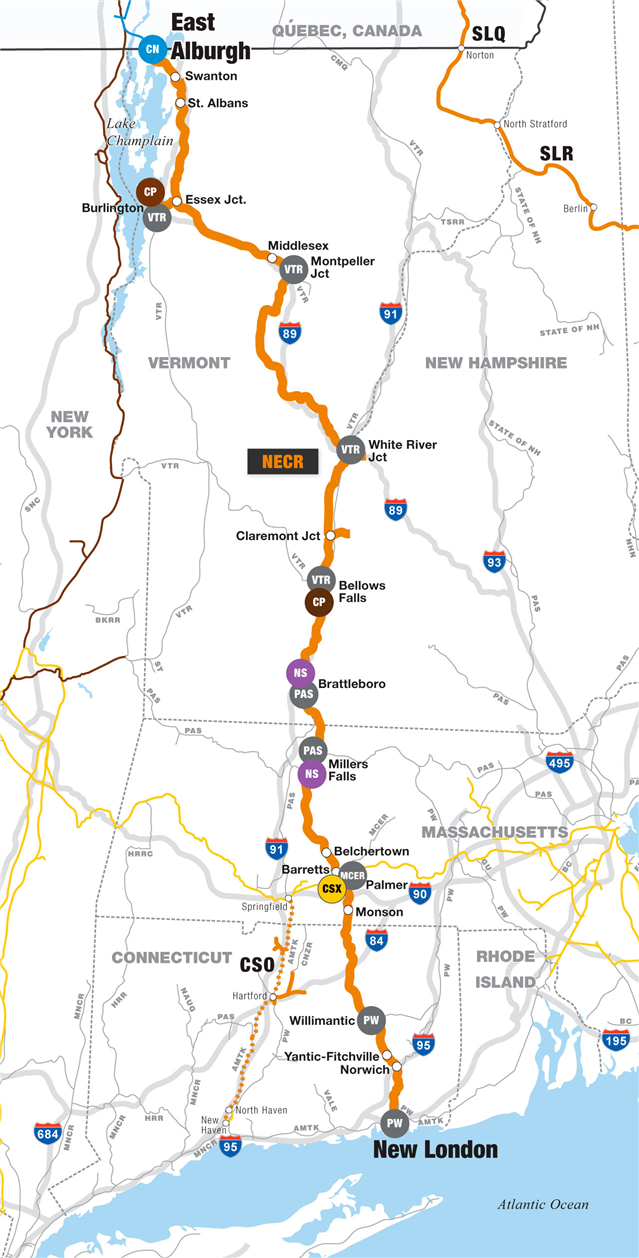
Training through the middle of New England
This first ran in Robert Whitcomb's "Digital Diary'' column in GoLocal24.com
New England, unlike most of America, has passenger-train service and with some vision can soon have a lot more to boost its economy, better protect its environment and make life easier.
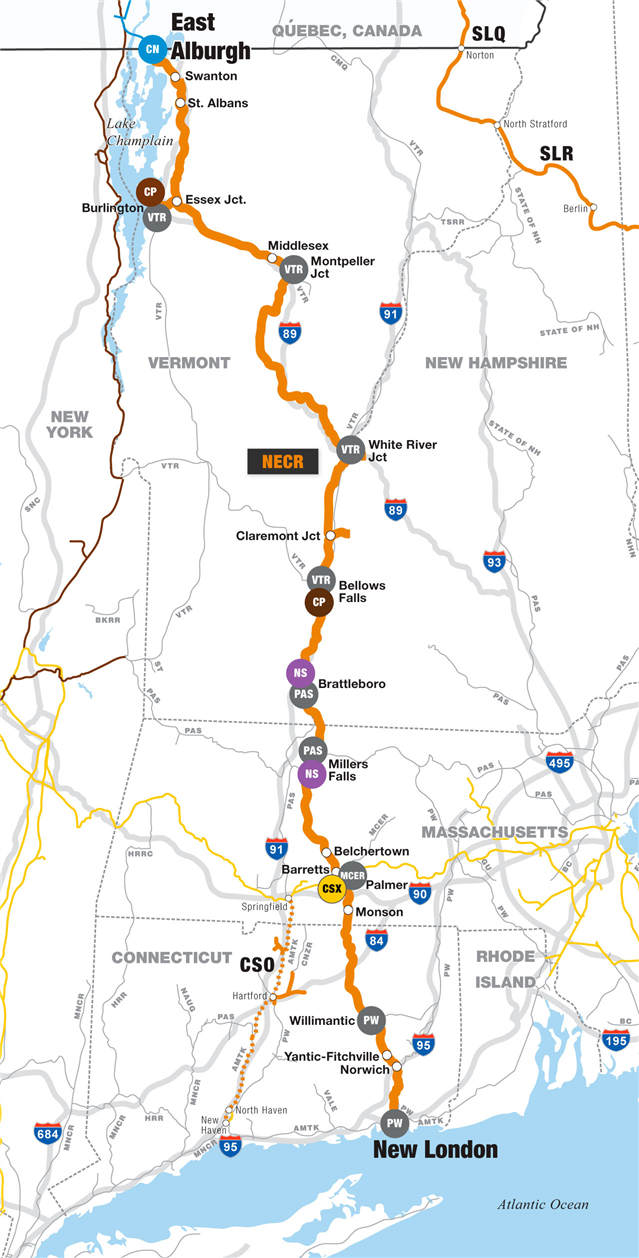
Consider the New England Central Railroad, a freight line that runs from Alburgh, Vt., at the U.S.-Canadian border, through the middle of our region and terminates at New London, Conn., on Long Island Sound. The owner of the line, Genesee & Wyoming (sounds like something from Mark Twain!), has been spending millions to improve the route by putting in new welded rails where needed, upgrading bridges and road crossings, getting new and refurbished rolling stock and adjusting schedules. It will spend a lot more, supplemented with some federal funds to improve sections of the line.
All the towns and cities along the way will benefit, but particularly New London, with its deepwater port. New London’s mayor, Michael Passero, said: “This is one of the greatest things to happen for New London in decades. An investment in this rail line that goes directly to the state pier is going to allow New London to tap into one of its greatest unused assets.’’ Watch out, Quonset and Providence: It might steal some of your business.
But with the Genesee & Wyoming planning to buy the Woonsocket-basedProvidence and Worcester Railroad, which exchanges freight with the New England Central, we can expect that Rhode Island will also be brought more tightly into this rail system.
The New England Central’s improved service is helping the many communities along its route. It may even boost manufacturing in some old factory towns by cutting the cost of receiving and shipping goods. The improvements should let interior New England share in more of the wealth now heavily concentrated near the coast. Rhode Island Public Radio quoted Connecticut Transportation Commissioner Jim Redeker as noting:
“Connecticut has the distinction of, on the highway side, three of the top 10 worst congested locations in the nation for truck freight. This {rail-improvement} project is the solution to that problem.’’ Well, “a’’ partial solution anyway by getting more freight off the roads and onto tracks.
But I also want to tout proposed passenger service on the New England Central between Brattleboro, Vt., and New London. The proposed service, to be called the Central (as in central New England) Corridor Rail Line, would run from Brattleboro, Vt., to New London. This would provide the only long-distance (by New England standards) north-south service rail service in the middle of New England except for Amtrak’s Vermonter service.
Backers note that it would provide a rail link between 13 colleges and universities, including the University of Connecticut and the University of Massachusetts, and link up with Amtrak at Brattleboro to take travelers to Burlington, home of the University of Vermont. That means, among other things, connecting people working on research and development at those schools, as well as at businesses along the way.
And given the hill, valley and riverine beauty ofmuch of the route, the passenger service should attract many tourists, too, especially in the fall foliage season.
The idea is that initially the rolling stock would be refurbished Budd Rail Diesel Cars (aka Buddliners), which used to be heavily used by commuters and on spur routes and recall the days of Mad Men in the New York City suburbs. They can go up to 80 miles an hour, a lot faster than you can drive legally in New England. This, again, could be a particular boon to Connecticut by taking many drivers off its famously crowded and slow roads.
The aging of the population and that young adults drive less than their predecessors are other reasons to get this service going.
Electoral College must name Trump the winner; ignore the petition
A Democratic Party outfit called change.org has me erroneously listed (unless it has been removed) as signing a petition asking the Electoral College members to name Hillary Clinton as the presidential election victor. While I wish very much that Donald Trump were not the president-elect, I do not support this petition.
I favor the current Electoral College system and will say why in my next column.
-- Robert Whitcomb
Peter Certo: The KKK is but part of America's new ruling racist coalition
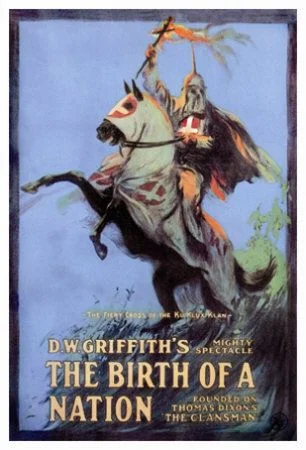
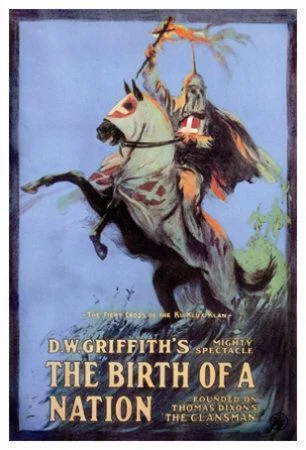
Movie poster in 1915. The movie is often cited for reviving the Ku Klux Klan.
An election that might have marked the ascension of America’s first woman president has instead proven historic for an altogether different reason. Namely, that Americans voted for the unabashedly anti-democratic alternative offered by her rival.
And they did it despite his almost cartoonish shortcomings.
Trump didn’t just offend pious liberals with his hard line on immigration, disdain for democratic norms, and disinterest in policy. He transgressed standards of decency across all political persuasions.
He bragged about sexually assaulting women. He disparaged injured war veterans. He was endorsed by the KKK. And now he’s America’s voice on the world stage.
How could that happen? Here’s one theory you might’ve heard:
After years of seeing their jobs outsourced, their incomes slashed, and their suffering ignored, the white working class threw in their lot with the candidate who cast aside political niceties and vowed to make their communities great again.
It’s a nice story — I even used to buy a version of it myself. But while Trump surely did clean up with white voters, the evidence simply doesn’t support the idea that they were as hard-up as the story goes.
For instance, pollster Nate Silver found during the GOP primary that Trump supporters pulled in a median income of $72,000 a year — some $10,000 more than the national median for white households. And while many did come from areas with lower social mobility, they were less likely to live in the stricken manufacturing communities Trump liked to use as backdrops for his rallies.
So if it wasn’t the economy, was it Hillary?
Clinton was clearly unpopular, in many cases for defensible reasons. She was cozy with Wall Street. She backed poorly chosen wars. Apparently people didn’t like the way she e-mailed.
But when you consider that we chose to give the nuclear codes to a man whose own aides refused to trust with a Twitter account over a former secretary of state, it hardly seems like Trump voters were soberly comparing the two candidates.
Instead, Vox writers Zack Beauchamp and Dylan Matthews poured through scores of studies and found a much more robust explanation — and it isn’t pretty.
It’s what pollsters gently call “racial resentment.”
That is, Trump’s core supporters were far more likely than other Republicans to hold negative views of African Americans, Latinos, and Muslims. They overwhelmingly favored the mass deportation of immigrants. And they were the most likely Republicans to agree that it would be “bad for the country” if whites comprised a smaller share of the population.
What’s more, another study found, racially resentful voters flocked to the GOP candidate regardless of their views about the economy. Their views on race drew them to Trump, not their job prospects.
Scores of other data back this up. Despite years of job growth and the biggest one-year bump in middle-class incomes in modern history, another researcher found, Republicans’ views of both African Americans and Latinos nosedived during the Obama years.
Not even a slowdown in immigration itself staunched the venom. Net migration between the U.S. and Mexico fell to 0 during the Obama years, yet Trump still launched his campaign with an infamous tirade against Mexican “rapists” and “murderers.”
None of that is to accuse all Trump voters of racism. But even if the bulk of them were just Republicans following their nominee, the social science strongly suggests that one of our major parties has been captured by whites so anxious about the changing face of America that they were willing to vote alongside the Klan.
That fringe has turned mainstream. The Trump years to come may herald any number of horrors, but the scariest part may be what we’ve learned about ourselves.
Peter Certo is the editorial manager of the Institute for Policy Studies and the editor of OtherWords.org. Distributed by OtherWords.org.
A New England November
Today is one of those windy, cool-to-cold days that seem the quintessence of November in New England. I see that most of the leaves are now stripped off the trees across the street, finally.
-- Robert Whitcomb
But beware extreme introspection

"Arcology: Mulling Things Over'' (watercolor), by Ilona Anderson, in her show "Ilona Anderson: Neon Network,'' at Kingston Gallery, Boston, through Nov. 27.
Chris Powell: Democrats underestimated the rage that has given us a repellent president-elect

Storming the Bastille.
Donald Trump has been vile, a megalomaniac, and ignorant when he has not been vague or incoherent, and has been distrusted even by many people who voted for him. So now that he has been elected president, what does that say about Hillary Clinton?
Probably it says that the Democratic Party managed to nominate the only candidate who could lose to someone of Trump's character -- managed to nominate a candidate who had spent decades as part of the country's political establishment and who was manifestly corrupt and a robotic campaigner but who was offered to the country anyway just when it seethed with resentment of declining living standards and wanted change.
Indeed, Trump's platform was little more than contempt for the establishment and even for the decencies themselves. But the more contemptible his demeanor became, the more support he gained.
Trump himself was the first to figure this out. Campaigning in Iowa in January he marveled, "I could stand in the middle of Fifth Avenue and shoot somebody and I wouldn't lose voters." Nor, as it turned out, did he lose voters -- or at least not too many of them -- even for boasting about his career of grabbing women by the crotch.
Clinton, the Democrats, the elites, and many national news organizations never appreciated the rage to which Trump appealed, even when, toward the end of the campaign, opinion polls showed him rising. The polls still underestimated his support because people who were surveyed feared being perceived as politically incorrect.
But then Clinton, the Democrats, the elites, and national news organizations never understood, or at least never admitted, that for years now most economic figures issued by the federal government have been lies or deliberately misleading. Most of what national news organizations report about the economy has been mere spin meant to please the government.
The collapse of the labor-participation rate is not just a political scandal but a journalistic one, given the refusal of most national news organizations to examine and emphasize it. The federal government's constant and surreptitious intervention in the financial markets to keep them from falling and thereby exposing the decline of the real economy is also both a political and journalistic scandal.
In telling people that the economy is improving when they see it deteriorating in their daily lives, the government and national news organizations only deepened people's political rage.
The gamble taken by Gov. Dan Malloy, U.S. Sen. Chris Murphy, and other leading Connecticut Democrats with their constant attacks on Trump and his running mate, Indiana Gov. Mike Pence, might have paid off well if Clinton had won. Instead these attacks likely will prove costly, depriving Connecticut of any sympathy from the new national administration for the next four years.
Now no federal appointment will rescue Malloy from the perpetual disaster of his budgeting. Connecticut's congressional delegation, all Democrats, will spend another two years in the minority in Washington, though maybe the shock of Trump's election will make the Republican majorities a little less rabid and more inclined to work reasonably with the other side.
In their travels in support of Clinton the governor and the congressmen don't seem to have noticed the political rage of "flyover America." But while Connecticut went comfortably for Clinton, the gains made Tuesday by the Republican minority in the General Assembly hint at the possibility of rage even in this state, whose elites may be the most smug, especially since state government's finances keep deteriorating, compelling more tax increases or spending cuts.
State government's financial problems are not going to be fixed in two years; pension underfunding, among other things, will only make them worse. By then the rage may be explosive here too.
Chris Powell is managing editor of the Journal Inquirer, in Manchester, Conn.

The West should circle the wagons.

Adapted from Robert Whitcomb's Nov. 3 "Digital Diary'' column in GoLocal 24.
In one of the nuttier episodes in the trade wars, the government of Wallonia, the poorer, French-speaking part of Belgium, held up for days a trade deal between the European Union and Canada. Finally, concessions were made to the Walloons aimed at protecting their farmers and Rust Belt-style businesses from being hit hard by competition with multinational companies, and the pact was signed.
The Comprehensive Economic and Trade Agreement (CETA), which backers predict will boost trade by 20 percent between Canada and the E.U., will now go into effect.
I can understand the opposition of many people in Europe and the U.S. to international trade that seems to have benefited the elite and not the middle class, but we should be expanding trade within the West as much as possible to strengthen the world’s core of democracy, human rights (including labor rights) and environmental protection. It’s trade with police state China that has done the most damage. Cut U.S. trade with China, Russia and other dictatorships as much as possible and boost it with Western Europe, Canada, Australia, NewZealand, as well as with India, Japan and Taiwan and a few other non-Western nations that share many of our democratic values.
Western nations need to circle the wagons and do as much as they can to better compete with China and other dictatorships. We need a free-trade zone with all the Western democracies. That doesn’t mean a larger version of the European Union, which, with its noneconomic elements, is quite something else. Rather we need, first off, what used to be called the “European Common Market’’ expanded to include the U.S. and Canada while boosting NATO to stop Russian aggression.
Will Putin admirer (and debtor?) and "free-trade'' foe President-elect Donald Trump come to recognize this?
Walking, drawing and painting

"Poet's Walk'' (acrylic and ink on paper, mounted on board), in the show of the same name by Patty Adams, at Bromfield Gallery, Boston, through Nov. 27. Her work for the show was inspired by her walks in parkland in Rhinebeck, N.Y. The gallery says her "initial drawings in ink and charcoal explored a connection to the landscape which she intensified with color in her studio.''
Small N.E. hospital focuses on care transitions
This first ran on the Web site of Cambridge Management Group (cmg625.com).
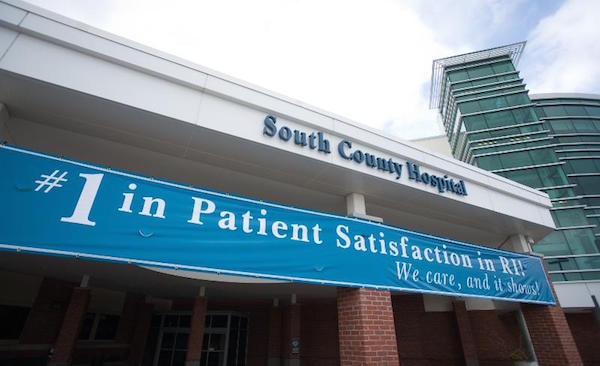
South County Health, a small nonprofit system in bucolic southern Rhode Island, owes a large part of its success to its ability to manage transitions of care – an increasingly urgent imperative as healthcare moves from fee-for-service to value-based reimbursement.
The system’s flagship is South County Hospital, a 100-bed community hospital. The system also includes South County Home Health Services (a home health agency); South County Surgical Supply (home medical supplies); South County Medical Group, with 65 physicians and advanced-practice providers, and two Medical and Wellness Centers, one in Westerly and the other in East Greenwich, with urgent-care facilities and an array of primary-care and specialist physicians.
South County Hospital has long had very high marks for quality and patient satisfaction. Indeed, surveys have often called it the best hospital in its state and one of the best in New England. It was recently awarded a five-star rating by the Hospital Consumer Assessment of Healthcare Providers and Systems (HCAHPS), putting it in the top 2 percent of those surveyed nationwide.
Louis R. Giancola, the system’s president and chief executive, attributes much of the hospital’s success in patient satisfaction — and fiscal stability — to the strong engagement of its staff, which “we keep in the know’’; a “supportive board’’; the long-term loyalty of people in the service area, and the “nimbleness of a community hospital’’. Having a relatively affluent market with many well-insured people hasn’t hurt either, he acknowledged.
A particular point of pride is: “We’re good at transitions of care. Maybe that’s a result of our being small.’’
South County Hospital, like virtually all health systems these days, faces many challenges in dealing with the rewards and penalties involved in the forced-march transition to value-based reimbursement. Mr. Giancola notes:
“Medicare incents us to improve patient satisfaction, reduce hospital infections and avoid various patient injuries. Most commercial payers (insurers) have followed suit. I believe the threat of reduced payments has focused our attention on these measures even though we sometimes complain that the measures are not always fair.’’ (See below.)’’
“It’s all about blocking and tackling. The biggest issue is readmissions within 30 days. {South County has long had lower readmission rates than most hospitals.}
We’ve really focused on managing the transition from the hospital to another level of care. The important element is good communication between the hospital providers and the skilled-nursing facility, home health and the doctors caring for the patients in the community.’’
Part of South County’s recognized success in overseeing clinically successful and financially efficient transitions – and, in so doing, reducing costly readmissions — has been its emphasis on using, when possible, home health care instead of nursing centers to save money and improve care, Mr. Giancola said.
The Centers for Medicare & Medicaid Services and other regulators and payers have been pushing hard for better patient-care management, especially since the Affordable Care Act took full effect. Much of South County Health’s work in this area involves helping primary-care physicians to be better traffic managers of their patients’ care.
Another transition success story he cites is medication reconciliation. “Often patients are confused about their drugs and that can lead to readmission because they take drugs that are contra-indicated or they take two meds designed to address the same problem. We’ve hired pharmacists that review meds in the hospital to ensure they are reconciled and the patients get clear advice on discharge.’’
He notes as an example of what might sometimes be unfair pressure from the Feds: CMS’s making hospitals put many patients who have to stay in the hospital for a night or two into “observation’’ status instead of as inpatients, thus slashing potential hospital reimbursement.
Bundled payments, Medicaid and an ACO
An increasingly important strategy for controlling costs and improving care is bundled payments.
South County Health participates in a bundled-payment program for joint-replacement patients with Blue Cross for their Medicare Advantage and commercial-insurance members. (Cambridge Management Group has been doing a lot of work in bundled-payment programs and so this particularly caught our eyes.)
With older-than-average market demographics, the joint-replacement business is a major contributor to the system’s bottom line. (However, while the system is financially stable, its operating margin is only about 2 percent; the system is closely managed.)
Mr. Giancola said that, as with many things in the brave new world of value-based medicine, it’s unclear what sort of savings may come out of the move to bundled payments. However, he thinks that the clinical benefits are clear:
“The bundling process helps us to get a better handle on the clinical process. Having to report quality throughout the entire episode of care makes for better transitions and final outcomes.’’
South County Hospital’s leaders are happy that the Affordable Care Act has put so many uninsured people into Medicaid. While Medicaid reimbursements lag those of Medicare it’s a lot better than no insurance for low-income people. Many of those people, of course, have long used the emergency room as their major source of “free’’ (to them) medical care.
But, perhaps surprisingly, Mr. Giancola told us, Medicaid expansion has not yet cut the flow of people into South County Hospital’s ER, despite efforts encouraged by public and private insurers to promote more and better preventive care to keep people out of the ER. “ERs are too handy for lots of people,’’ he observed.
South County Hospital has had to deal with many other changes, whose long-term fiscal effects are difficult to predict. One is the rising number of employed physicians, hired, Mr. Giancola says, to ensure that the hospital can maintain the range of services that patients want and need in an acute-care facility, such as obstetrics.
Mr. Giancola notes that’s expensive. “Hiring doctors away from private practices to be based in the hospital puts them in more expensive places, with expensive support staffs, equipment and technology. The jury is out on whether the increase in hospital-employed physicians will save money in the long run.’’
Also unknowable at this point is whether South County’s participation in an Accountable Care Organization with Blue Cross & Blue Shield of Rhode Island (BCBSRI) and Integra Community Care Network will ultimately save money. Integra is a partnership of Care New England Health System and its network physicians, Rhode Island Primary Care Physicians Corporation and South County Health and its network physicians. Focused on population-health management, the ACO provides incentives for Integra’s providers to proactively manage patient health, with a heavy emphasis on prevention of illness, while trying to restrain costs.
South County Health, as befits a, well, beloved local institution is big on promoting community-wide collaboration of institutions that can help improve not just healthcare in a clinical sense, but population health.
Toward that end, it has brought together such diverse agencies as the YMCA, the five Federally Qualified Health Centers in its area, school systems, the local Community Action Program and community members to harness the resources of the community. Whatever happens to the ACA, the move toward community and population health will continue, and South County Health will help lead it in southern Rhode Island.
Mr. Giancola has written: “Our long-term goal is to inspire the broader community to see health as a community issue and to mobilize government, schools, businesses and citizens at large to rally around efforts to ensure a healthy community.’’

Philip K. Howard: Start rebuilding America's crumbling infrastructure now

This from our friend Philip K. Howard, who runs Common Good, a reform group:
American voters have rejected the ways of Washington. The challenge is to channel that populist force for positive change.
Here are two initiatives that could enjoy broad support:
1. Start rebuilding infrastructure now. Trump is committed to this, as are Democratic leaders, but he will be stymied unless Congress passes a simple bill creating clear lines of authority to make needed decisions. Otherwise projects will languish in bureaucracy for years as experts write foot-thick reports. (See Common Good’s report “Two Years, Not Ten Years”). The upside here is YUGE: Cut costs in half, build a greener footprint, and create 1.5 million new jobs.
2. Begin simplifying government. Red tape is choking America, including government itself. Trump should announce a new approach to regulating: Simplify law into goals and principles, so that it is understandable and people have room to use their common sense. He should also appoint an outside commission to recommend radically simplified structures. Governing sensibly is impossible in today’s red tape jungle.
If you agree, pass this note along. We have a vision to reconnect Washington to the rest of America.
Copyright © 2016 Take-Charge.org, All rights reserved.
A campaign brought to you by commongood.org.