
Vox clamantis in deserto

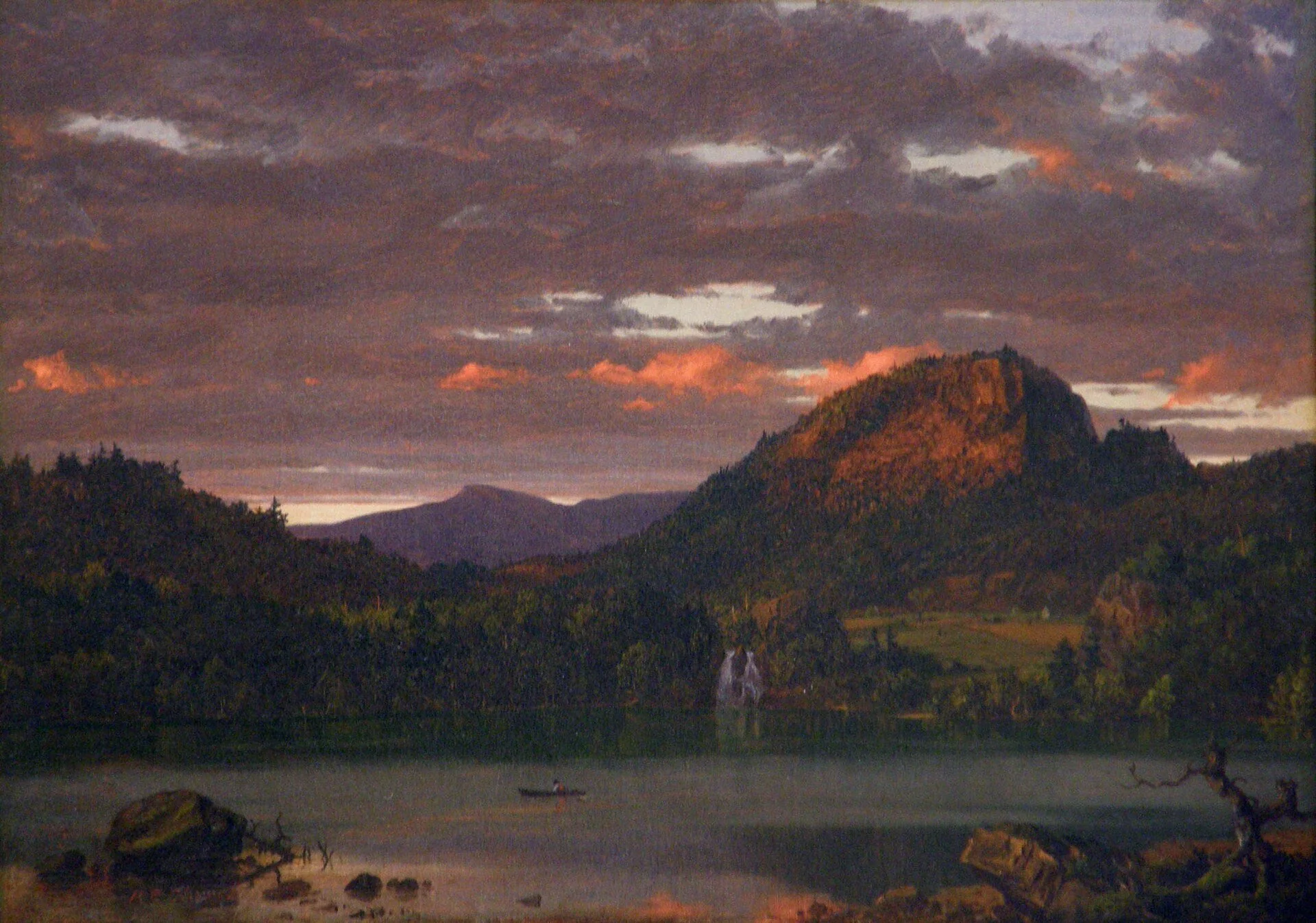
Mission accomplished
''As democracy is perfected, the office of the President represents, more and more closely, the inner soul of the people. On some great and glorious day, the plain folks of the land will reach their heart’s desire at last and the White House will be occupied by a downright fool and complete narcissistic moron.”''
H.L. Mencken, in 1920
Living with uncertainty

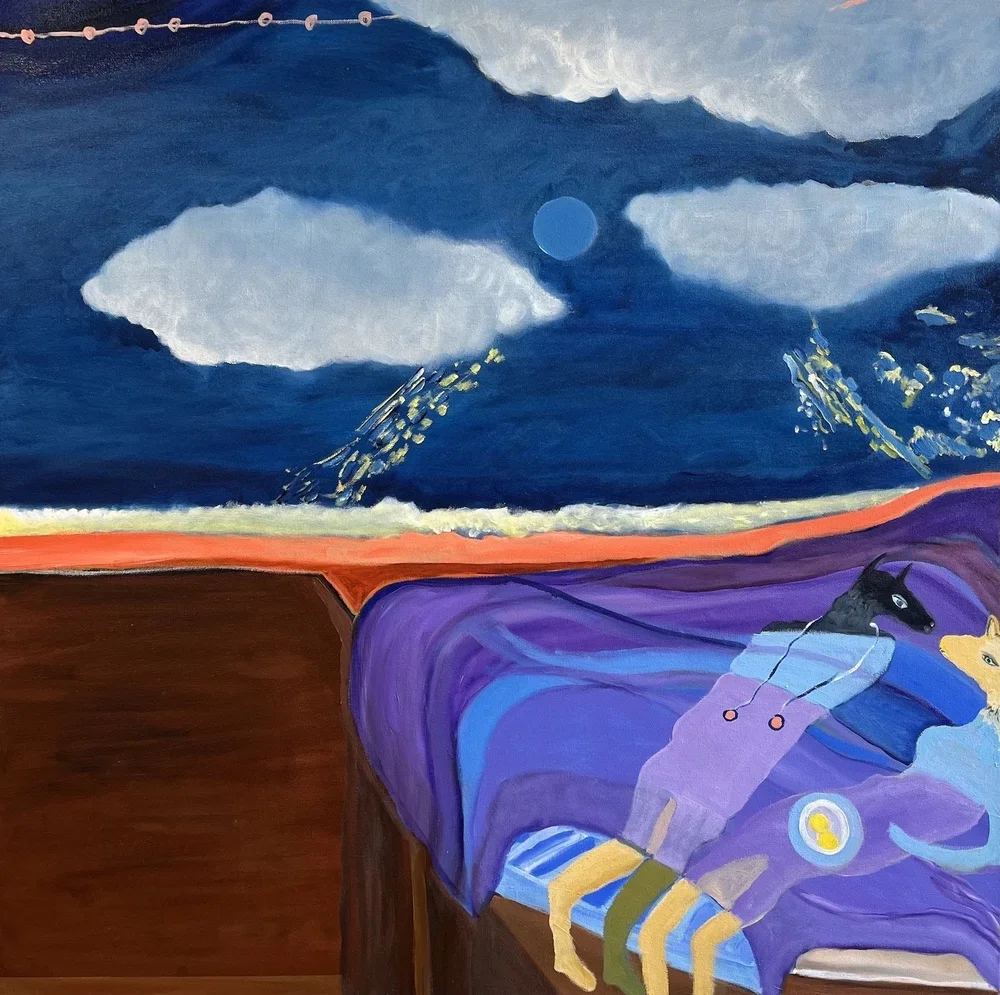
"Side by Side'' (encaustic), by Carol Odell, in the "Almost Miniatures'' show at Francesca Anderson Fine Art, Lexington, Mass., Nov. 17-Jan. 14.
“When you’re young you prefer the vulgar months, the fullness of the seasons. As you grow older you learn to like the in-between times, the months that can’t make up their minds. Perhaps it’s a way of admitting that things can’t ever bear the same certainty again.”
-- Julian Barnes, in "Flaubert's Parrot''
Post-election notes
Four fast observations after Trump's victory:
1. Perhaps in the next presidential primaries, more people will get off their rear ends and bother to vote so we don't end up with the general-election choices we had this year.
2. Look for an amusingly rapid drop in donations to the Clinton Foundation.
3. Trumpists are going to be mighty angry in about a year when all those promises about swiftly returning America to "greatness'' look hollow. I wonder where they will turn then.
4. This has been Mrs. Clinton's last political campaign. The Clintons are history.
-- Robert Whitcomb
Inviting or ominous?

"Interior With Stairs,'' painting by Gretchen Dow Simpson, the famed Providence-based painter and magazine illustrator. Stairs can look inviting, drawing you up or down to, you hope, happiness-evoking spaces, or evoke dread.
The weight of war
From the show "Atrocity Landscapes,'' large black and white photos by Sondra Peron, at Hampden Gallery, at the University of Massachusetts at Amherst, Nov. 13-Dec. 7. The curators say the photos "reveal our collective historical memory as it inhabits our landscape today.''
Llewellyn King: A government of strangers
Prepare for a government of strangers: people we don’t know and haven’t met.
That government, those strangers, or mostly strangers, will shape the presidency of Donald Trump -- not the slogans, not the declarations of intentions, not the hopes of those who threw in with Trump, but the merging of those interests represented by officeholders who aren’t well known in Washington or the nation.
In the short time between now and Jan. 20, the Trump transition team has to come up with some very key players, who eventually will have to be confirmed by the Senate -- an easier prospect with a Republican-controlled Senate, but not a slam-dunk.
In relations with the world’s nations, some of whom Trump has vigorously unfriended during the campaign, these jobs will be of first importance, including secretary of state; secretary of defense; national security adviser; secretary of the Treasury, and secretary of energy (often forgotten as a defense agency), who is the keeper of our nuclear arsenal.
Domestically, Trump needs to name quickly staff at the White House, especially the Office of Management and Budget, which, within short weeks of climbing aboard, must prepare a budget for him to send to Capitol Hill. That budget will be, in many ways, the first indication of how Trump plans to govern. Republicans as much as Democrats will be leery of what it contains.
After those critical positions, there are 4,000 additional positions to filled, 100 of which require Senate confirmation.
The conservative think tanks in Washington stand ready to heed the call, and maybe to provoke it, if they have an in. The think tanks are sounding boards for political ideas, like what to do about healthcare, foreign policy and trade, but they also represent something of a government in exile.
When a party is defeated, the ranks of the think tanks sympathetic to that party swell. Expect to see the Brookings Institution, the Progressive Policy Institute, the Economic Policy Institute and the New America Foundation find places for those leaving the Obama administration.
Likewise, the American Enterprise Institute, the Heritage Foundation, the Center for Strategic and International Studies and the newer Foreign Policy Initiative will be ready to disgorge their best to serve in government.
It is a changing of the guard that takes place with each election that results in a change of party.
After the think tanks, or maybe in lockstep, come the universities. Look for Obama refugees to show up at places like Harvard’s John F. Kennedy School of Government: a kind of halfway house for politicos. MIT and Stanford expect to have their faculty raided for the top jobs in the department of defense, energy and homeland security. Whether Trump and his people will raid these larders of talent is unknown.
Normally, White House watchers have a trail of crumbs to follow. They can say so-and-so was at college with the president, that professor so-and-so helped him form a position on nuclear power, or some think-tanker may have had a role in the campaign.
The Trump the clues are meager. Only four names stand out: Steve Bannon, of Breitbart News, the campaign’s chief executive; Kellyanne Conway, his campaign manager; New Jersey Gov. Chris Christie, his transition-team head, and Sean Hannity of Fox News. Another clue: Many on the campaign staff once worked for Bob Dole (R.-Kan.) when he was in the Senate.
Journalists will be watching the Trump camp just as Kremlin watchers in the days of the Soviet Union watched for hints out of Moscow. How will Trump govern? Who will staff his administration?
While Trump and his administration get settled in, while they find out how enormously complicated and far-flung the responsibilities of the U.S. government are, the day to day running of the country will be with the disparaged civil service: the bureaucrats so despised by Trump the campaigner, now his vital aides in transition.
Llewellyn King is executive producer and host of White House Chronicle, on PBS. His e-mail address is llewellynking1@gmail.com.
'As beautiful as days can be'
My Sorrow, when she's here with me,
Thinks these dark days of autumn rain
Are beautiful as days can be;
She loves the bare, the withered tree;
She walks the sodden pasture lane.
Her pleasure will not let me stay.
She talks and I am fain to list:
She's glad the birds are gone away,
She's glad her simple worsted grey
Is silver now with clinging mist.
The desolate, deserted trees,
The faded earth, the heavy sky,
The beauties she so truly sees,
She thinks I have no eye for these,
And vexes me for reason why.
Not yesterday I learned to know
The love of bare November days
Before the coming of the snow,
But it were vain to tell her so,
And they are better for her praise.
-- Robert Frost, "My November Guest''
Next summer, if we're lucky
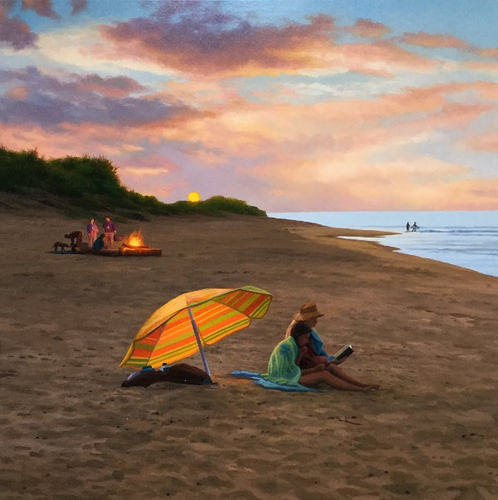
"Beach at Sunset'' (oil on panel) by Scott Prior, in the show "Scott Prior's New Paintings,'' at Alpha Gallery, Boston, through Nov. 30. His work includes paintings from every season in New England.

Welfare for the rich? In R.I., Feds probably will pay people to elevate coastal houses

By TIM FAULKNER for ecoRI News
Homes and business across the southern shore of Rhode Island will likely be offered money to elevate their houses and buildings to protect against sea-level rise and flooding from coastal storms.
In all, 341 structures between Westerly and Narragansett were identified by the Army Corps of Engineers for its fortification program. The study concluded that buying out or moving the buildings was too expensive to warrant funding.
“It’s not cheap to pick up a house and move it,” said Christopher Hatfield, project manager for the Army Corps office in Concord, Mass.
Grover Fugate, executive director of the Rhode Island Coastal Management Council (CRMC), said the Army Corps estimates on sea-level rise are too conservative and therefore wants more buildings to qualify for the adaptation program.
“We believe there could be more houses eligible for that project,” Fugate said.
The Army Corps estimates that sea level will rise 4.44 inches in the next 50 years. Fugate defers to the more recent estimates by the National Oceanic and Atmospheric Administration (NOAA) of 2 feet by 2050 and up to 7 feet by 2100.
Hatfield said time constraints of about 18 months prevented the study from using more recent data on sea-level rise.
“We went with what we had and did the best modeling we could and that’s what your seeing in the report,” Hatfield said.
Fugate said the project is nonetheless warranted because, “it will obviously improve the survivability of those structures ... it will reduce their flood insurance.”
Flood insurance rates, he said, are expected to rise significantly, as the federal program reduces its subsidies. Fugate said he has been working with Gov. Gina Raimondo to help lower local flood-insurance costs in the state.
The public is being asked to provide feedback on the program through Nov. 21. Property owners along the 28-mile stretch of shoreline must reach out to the Army Corps to find out if they own one of the targeted buildings. If so, and the program is approved, the Army Corps will offer to pay 65 percent of the cost to elevate the home or building. The property owner must pay the remaining 35 percent. Participation is voluntary. Fugate said the state may offer no-interest or low-interest loans to help property owners pay their share.
Most of the targeted Rhode Island structures are homes. Depending on the location, the building will be elevated between 12 and 18 feet. An additional 46 at-risk buildings, mostly commercial structures, aren't suited for elevation but will be eligible for other flood-protection measures, according to the Army Corps. Tide walls and flood gates were considered for parts of Westerly and Narragansett, but were deemed too costly.
The CRMC was one of 15 Rhode Island agencies and environmental groups to coordinate with the Army Corps on the study. The study’s $800,000 cost was funded through the federal Disaster Relief Appropriations Act of 2013 for Hurricane Sandy impacts. A more detailed study from the Army Corps will examine other issues such as what happens to the septic systems of the homes being elevated, according to CRMC.
The Army Corps examined 4,000 properties, valued at $600 million, along the shoreline in Washington County. The cost to elevate the 341 structures is estimated at $58 million.
The large-scale coastal threat adaptation program is one of the first of its kind in the country. Similar studies are underway in Virginia and Maryland. Some 2,500 homes affected by Hurricane Katrina are undergoing similar construction projects.
Buildings on Narragansett Bay may also be considered for a future project, but Hatfield said the result might be different because the southern region has a higher risk of erosion from storms and sea-level rise.
“It doesn’t mean we’ll end up with the same recommendations," he said. "These communities are very different than those along the south coast."
Unless there is public demand, there are no plans for hearings on the proposal. Any feedback or questions should go to Christopher Hatfield, of the Army Corps New England District, via e-mail at cenae-ep@usace.army.mil or by calling 978-318-8520.
Chris Powell: Alarming signs that Muslim immigration threatens Americans' rights
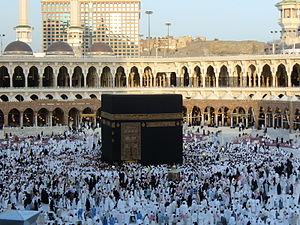
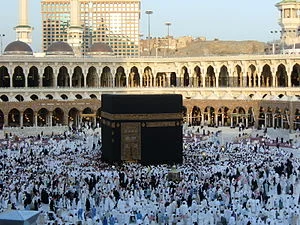
The Kaaba in Mecca, the holiest site in Islam.
Political correctness tells Connecticut that Muslims here want only to live normal lives in the state's pluralistic society, and surely some do. Based on this assumption, Gov. Dan Malloy and other leaders support admission of more refugees from the religious and tribal wars of the Islamic world.
But even the politically correct may acknowledge, as President Obama does, that there is a war within Islam between modern and medieval factions, and that the medieval faction construes Islam to require the oppression of women and homosexuals, even the murder of the latter. So which side are Connecticut's Muslims on?
Journal Inquirer reporter Anthony Branciforte recently tried to find out, and the results were disturbing
South Windsor Town Council member Saud Anwar, a candidate for state representative, readily proclaimed himself in favor of equal rights for all. But two Muslim clerics, Kashif Abdul-Karim, of the Muhammad Islamic Center of Greater Hartford, and Hafiz Saeed Ul Hassan, of the Al-Noor Islamic Center in Ellington, were equivocal, expressing situational morality.
Abdul-Karim said Muslims should follow the laws of their country but that, in countries with Muslim majorities, oppressing women and homosexuals in the name of Islam is OK. Ul Hassan was OK with oppressing homosexuals and would not respond to a question about women’s rights under Islam.
Thus the imams implied that more Muslim immigration to the United States indeed would jeopardize the rights of women and homosexuals and religious liberty generally.
More disturbing still, 10 Islamic organizations in Connecticut would not respond at all to the newspaper's questions about Islam's application to women and homosexuals: the Islamic Center of Connecticut, Bayt Ui Mamur Mosque, the Muslim Coalition of Connecticut, the Connecticut chapter of the Council on American Islamic Relations, the Islamic Association of Greater Hartford, the Islamic Association of Southern Connecticut, United Muslim Mosque, Al-Madany Islamic Center, Daar-ul-Ehsaan, and the Islamic Center of Vernon.
Of course, Judaism and Christianity, preceding Islam by centuries, went through their own long fascist phases, and any modernizing of Islam may take more centuries of butting up against liberty, a struggle in which the United States should assist Islam's reform faction.
But when most Muslim leaders either oppose or refuse to commit themselves to the basic norms of a democratic, pluralistic, and secular society, there already has been far too much Muslim immigration. The United States doesn't need to import more religious fanatics; it has enough of the domestic kind.
xxx
Justice Peter T. Zarella, who will retire from the Connecticut Supreme Court at the end of the year, is being described as the court's most "conservative" judge because of his dissent from its decisions that overthrew capital punishment and required the state to recognize same-sex marriage.
That description is false insofar as it implies that Zarella supported capital punishment and opposed same-sex marriage by themselves. Rather, like others who were appalled by these particular decisions, Zarella held that the issues were properly to be decided by ordinary legislation and were not pre-empted by Connecticut's Constitution.
Indeed, the state constitution explicitly recognizes capital punishment, the decision overthrowing it was a crude contrivance, and if, when the current constitution was adopted in 1965, anyone had suggested that it required same-sex marriage, he would have been urged to commit himself to a mental hospital.
No, while Zarella's politics may be conservative, on the court he was conservative mainly insofar as he followed the law, precedent, the plain meaning of words, and the separation of the powers of government. Unfortunately the term for that now is "antique."
Chris Powell is managing editor of the Journal Inquirer, in Manchester, Conn.
See how he does business: www.trumpthemovie.com
Last chance before the election to see this thrilling film (and museum piece) of how Donald Trump operates. To see it, hit this link.
'Condone the world'
"Let confusion be the design
and all my thoughts go,
swallowed by desire: recess
from promises in
the November of your arms.
Release from the rose: broken
reeds, strawpale,
through which, from easy
branches that mock the blood
a few leaves fall. There
the mind is cradled,
stripped also and returned
to the ground, a trivial
and momentary clatter. Sleep
and be brought down, and so
condone the world, eased of
the jagged sky and all
its petty imageries, flying
birds, its fogs and windy
phalanxes . .. ."
-- William Carlos Williams, "Design for November''
More opportunities to watch you
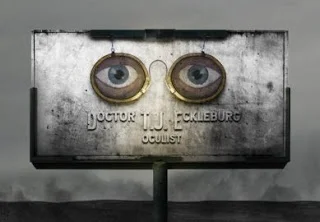
The billboard eyes of Dr. T.J. Eckleburg, watching the bad behavior in The Great Gatsby. The novel's author, F. Scott Fitzgerald, wrote of the fictional optician: ''{H}is eyes, dimmed a little by many paintless days, under sun and rain, brood on over the solemn dumping ground'' through which the book's characters drive to and fro between Long Island and New York City.
Adapted from Robert Whitcomb's Nov. 3 ''Digital Diary'' column in GoLocal24.
And so EZ Pass has replaced the toll booths with humans (remember them?) on the Massachusetts Turnpike. This will presumably reduce congestion, speed up traffic, save the state money and reduce air pollution (from idling vehicles). It will also give law-enforcement personnel the opportunity to monitor the travel of suspicious people but, also, when EZ Pass is hacked (which of course it will be), it will let bad actors obtain what honest drivers might think is personal information about their activities.
For convenience and security's (of a sort) sake, we’ve signed into an ever more pervasive surveillance society.
Of course, one aim in all this is to lay off people. I wonder if some of the laid-off toll collectors might be rehired by the state to work at those turnpike rest stops with restaurants and gas stations to provide guidance for lost or curious travelers. Few people know a region’s roads and interesting sites and services as well as turnpike toll collectors.

A world washing away

"Flooding Pyramids,'' by Jane Eccles, in the group show "Saving Gaia: The Seven Thunders,'' at Miller White Fine Arts, South Dennis, Mass., through Dec. 30. The show focuses on fears of global warming, including such manifestations as increasing beach erosion on low, sandy Cape Cod.
Author: Vote suppression and computerized-voting fraud alive and well
Prof. Mark Crispin Miller, of New York University, asserts that "corporate Democrats'' and right-wing Republicans are stealing elections, thus ignoring the generally progressive wishes of the public and keeping America in the control of the plutocracy.
Professor Miller is the author of numerous books and articles on computerized election fraud. To hear/watch a video of him discussing what he sees as America's corrupt election system, please hit this link.
To see the bone structure
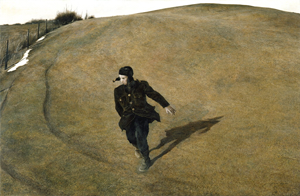
"Winter 1946'' (tempera), by Andrew Wyeth.
"I prefer winter and fall, when you feel the bone structure of the landscape - the loneliness of it, the dead feeling of winter. Something waits beneath it, the whole story doesn't show."
-- Andrew Wyeth
Mr. Wyeth was famous for his paintings set in Maine and Pennsylvania.
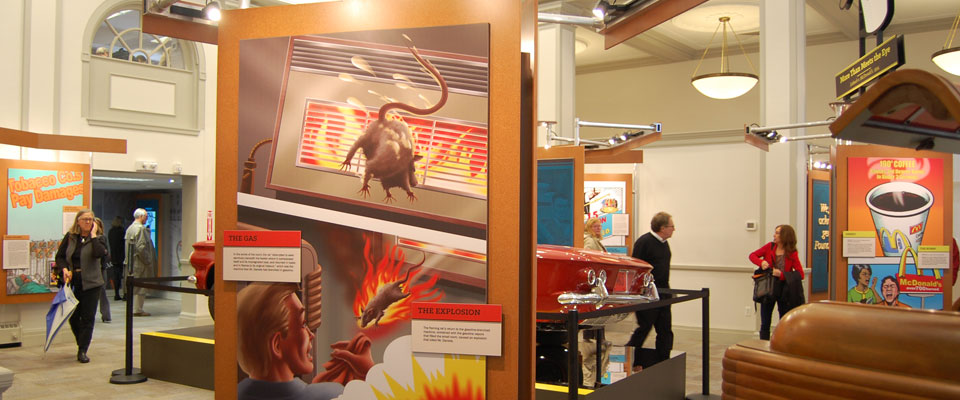
The tort museum and other N.E. small-town thrills
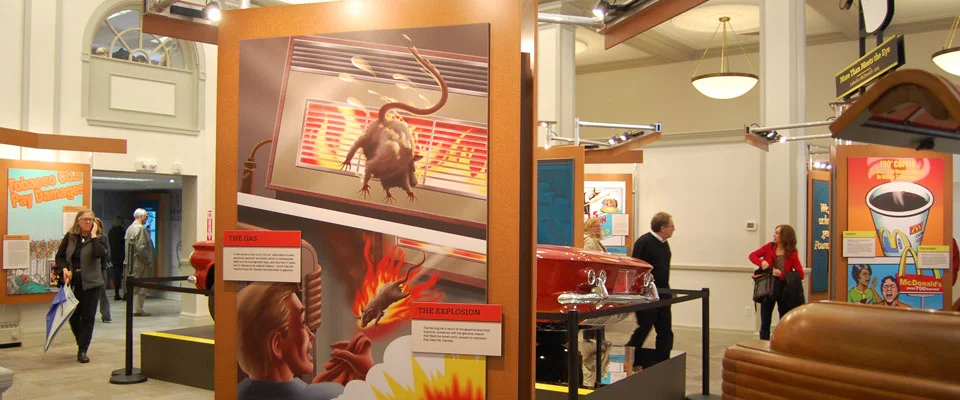
Inside the American Museum of Tort Law, in an old bank building in Winsted, Conn.
From Robert Whitcomb's Nov. 3 "Digital Diary'' column in GoLocal24.
In Winsted, Conn., there’s a new temple to one of America’s best known characteristics – its litigiousness. In that small city in the Litchfield Hills, famous consumer litigator Ralph Nader has founded the American Museum of Tort Law, which involves cases of wrongful injury. Winsted is Mr. Nader's hometown and he has been very loyal to it.
In the museum are such exhibits as the dangerous Chevrolet Corvair, which Mr. Nader helped drive off the road (see his book Unsafe at Any Speed), unsafe toys and the Dalkon Shield IUD.
The museum shows how tort law evolved within English Common Law and American law up to the present, including (to me) such silly cases as that brought against McDonald’s after someone scalded herself with its hot coffee. And the plan is to build a replica of a courtroom.
As the pyramids were tributes to pharaohs, so the museum, in a beautiful old bank building, will be to the 82-year-old Mr. Nader.
By the way, Winsted, a small former factory city in the Litchfield Hills, is famous for having the buildings on one side of its Main Street swept away in 1955 by the surging Mad River in torrential rains produced by Hurricane Diane, giving the downtown a slightly surreal quality, which the tort museum will intensify.
xxx
In other Nutmeg State news, 1,300 fans of a TV show called Gilmore Girls last month descended on the town of Washington, which is supposed to have inspired the improbably quaint and pretty town called “Stars Hollow’’ in the show. Steven Kurutz, of The New York Times, noted: {T}hey {the fans} wanted to do the impossible: to experience in a waking life a dream town built on a studio backlot.’’
I know Washington, Conn., having gone to school in nearby Watertown, Conn. It’s very pretty, but of course not nearly as Norman Rockwellian as the TV show. Will the new publicity about Washington cause it to be overrun for a long stretch to come? No. There are even prettier towns in Connecticut.
The story reminded me of the invasion of Cohasset, Mass., on the ocean about 45 minutes east southeast of Boston, when some of the movie The Witches of Eastwick, based on the eponymous Updike novel, was shot in the ’80s after the folks in the also lovely town of Little Compton, R.I., decided that they didn’t want a Hollywood invasion. I grew up in Cohasset and can testify that there was a full quota of bad and sad behavior there by the then Greatest Generation’s young to middle aged adults – adultery, alcoholism, suicide. The cuteness of Cohasset wasn’t enough to ward off evil spirits. It’sa good place for witches.
Finally, the Gilmore Girls case reminds me of how nice Providence looked in the NBC show of the same name back in the ‘90s. Indeed, virtually perfect.
My wife and I have a friend, Vicki Mercer, M.D., a pediatrician and former TV scriptwriter who was the adviser on medicine for the show, which revolved around a young and attractive female doctor prospering in the “Providence Renaissance’’. Vicki took us to the studio in Los Angeles where the interior scenes, including of the physician’s house, were shot. Somewhat eerily, I discovered that the outside shot of the doctor’s house was of the house of a late aunt and uncle of mine on the East Side of Providence.
The show would have been more interesting if it had included more scenes of the tougher aspects of Providence but the producers were, after all, pushing escapism, not education.

Green and black: 'Nature, art and humanity'

''Mountain Temple Skyscraper'' (asphalt, mirror-tinted Plexiglass, plastic and topiary installation) by Robert Andrade, in his show "To Move an Obelisk,'' at the Hunt-Cavanagh Gallery at Providence College.
The gallery notes that this show “features sculpture that intertwines modern art, aspects of public space and Modernist architecture. His works consist of unique construction materials to create life-like sculptures of images in nature.’’ The image above, despite its eccentric mix of media, “has a sense of realism from both up close and afar…. The sculptures are seemingly built into the exhibition space, giving the viewer a new sense of perspective on how nature, art and humanity intertwine.’’
Mr. Andrade also “notes his interest in certain political structures by alluding to the town square in which a democratic public would gather to discuss, debate or protest, among other activities. ‘To Move an Obelisk’ speaks to the ways in which humanity interacts with nature and the importance of those two forces working together.’’
'Faking of quickness'
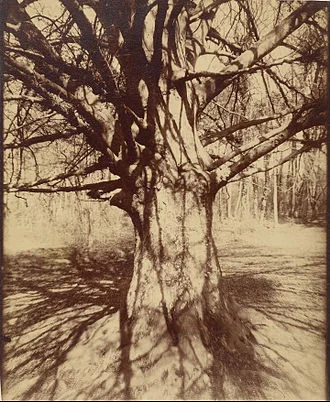
"On this bleary white afternoon,
are there fires lit up in heaven
against such faking of quickness
and light, such windy discoursing?
''While November numbly collapses,
this beech tree, heavy as death
on the lawn, braces for throat-
cutting ice, bandaging snow."
-- Edwin Honig, ''November Through a Giant Copper Beach''
Never a shortage of suckers
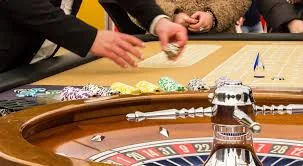
The idea, of course, in all this is to avoid having to get public revenue honestly by imposing and when necessary raising taxes. It’s far easier to get a slice of a casino’s take, much of which comes from low-and-moderate-income people and much of which goes out of the region to distant owners even as it drains money from local business and increases bankruptcies and crime (especially embezzlement).



Adapted from an item in Robert Whitcomb's Oct. 27 "Digital Diary,'' in GoLocal24.com.
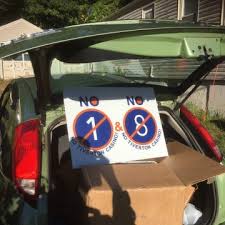
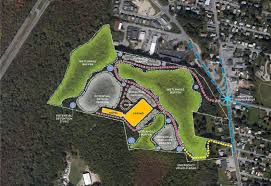
And so the casino cannibalization will continue in New England, as Connecticut officials will probably put one or two small casinos in the northern Nutmeg State to reduce the loss of revenue to Massachusetts when the MGM Resorts International casino opens in poor old Springfield. The Connecticut officials worry about the losses to the two Indian casinos in eastern Connecticut caused by incoming eastern Massachusetts casinos and a proposed second Rhode Island casino, in Tiverton.

The idea, of course, in all this is to avoid having to get public revenue honestly by imposing and when necessary raising taxes. It’s far easier to get a slice of a casino’s take, much of which comes from low-and-moderate-income people and much of which goes out of the region to distant owners even as it drains money from local business and increases bankruptcies and crime (especially embezzlement).
Casinos are bogus economic development, but as the tele-evangelists and P.T. Barnum knew well, you can always bet on a surplus of suckers. Let the public get what it wants, good and hard.


-- Robert Whitcomb