
Vox clamantis in deserto





Small-town political parade in sweet smoke
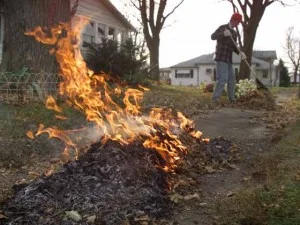
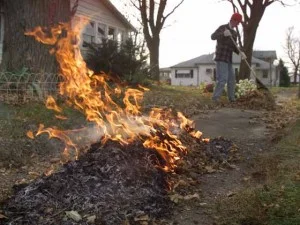
In 1956, a flag-filled "We Like Ike'' parade in Cohasset, Mass. A cool, fresh day, with the northwest wind pulling the remaining red and orange leaves off the maples and the muted yellow ones off the hour-glass-shaped elms, of which we still had many, although Dutch elm disease was rapidly killing them off. Many kids and their young parents cheering alongside the road.
We proceeded in our station wagon over a little bridge near the harbor and headed toward the town common with the little pond with a fountain on a tiny island in the middle. On two sides of the common were the very white (in two senses of the word) Unitarian and Congregational churches. Nearby, on top of a granite outcropping, presided the neo-Gothic St. Stephen’s Church, a monument of the WASP upper-middle and upper class in the town. The local family who owned Dow Jones & Co. had financed much of its building.
The more liberal and, for that time and place, “Bohemian,’’ folks attended the Unitarian Church – for which the joke motto was “the fatherhood of God, the brotherhood of man and the neighborhood of Boston.’’ The Unitarians removed as much as they could any assertions about the divinity of Jesus from their hymns and liturgies. As the years passed, even references to God diminished. General, diffuse celebrations of the glories of nature and plugs for the Civil Rights Movement replaced them. In the '80s, it was in The Witches of Eastwick.
The rich sweet smell of fallen leaves being burned. That's now illegal.
Some kid, slightly older than me, sang “Whistle while you work, {Adlai} Stevenson is a jerk’’. It already seemed to me that politics was a tad harsh.
--- Robert Whitcomb
Don Pesci: '600,000 e-emails from heaven'
VERNON, Conn.
It strains credulity to imagine the Clintons – Bill and Hillary, who was Bill’s co-president for eight years – as victims, and yet there it is.
James Carville, for many years the Clinton’s backyard attack dog, really does think that FBI Director James Comey has victimized Mrs. Clinton. After having declined to prosecute (persecute?) Mrs. Clinton for having placed thousands of unsecured confidential e-mails on her private unauthorized server, exposing America’s underwear to anonymous hackers, Mr. Comey’s FBI team discovered thousands of additional unsecured e-mails while rifling through Anthony Weiner’s hamper. Mr. Weiner, married to Huma Abedin, Mrs. Clinton’s closest aide, was kicked to the curb by Ms. Abedin for sending salacious emails to Internet paramours.
It was Ms. Abedin’s habit to “’routinely forward e-mails from her state.gov account to either her clintonemail.com or her yahoo.com account,’’ the agents wrote. Why? ‘’So she could print them’’ at home and not at her State Department office.” Ms. Abedin was, agents have said, “the only person at DOS (Department of State) to receive an e-mail account on the (clintonemail.com) domain....”
Since a good many of Mrs. Clinton’s e-mails had been destroyed, many after Mrs. Clinton had received from Congress a subpoena instructing her to preserve them for a future hearing, the FBI team must have been pleasantly surprised to stumble upon a new cache of 600,000 e-mails.
Mrs. Clinton was once a U.S. senator from New York and, as such, was intimately familiar during her tenure as secretary of state with congressional subpoenas. As senator, she also was well versed in the protocol relating to top-secret information. She decided to ignore all this and set up her own unsecured server, and the rivers of difficulties that issued from her very nearly divine arrogance are all traceable to her poor judgment.
Yet here she is stretched on a cross fashioned by Mr. Comey – and, of course, the Russians – according to Mr. Carville. The rules of victimology now require us to offer her pity, the political version of holy water. But there is an insuperable problem: Mrs. Clinton is not a pitiable creature, nor are her minions, some of whom are refuges from the Obama administration, while others have long been associated with her. She is, instead, ruthless, greedy, self-serving and lacking in pity for those of her friendly political acquaintances who have taken bullets for her in the past.
Mrs. Clinton’s faithful body-tender, Huma Abedin, and her campaign director, John Podesta, have both been much in the news lately. Eventually, someone close to Mrs. Clinton will be pushed out of the campaign boat into shark-infested waters, a politically necessary media sacrifice to draw attention away from America’s answer to Lucretia Borgia. Some are guessing it might be Mr. Podesta but, in a pinch, any warm body will do.
Almost two years ago, when America awoke to find Mrs. Clinton was chatting with the world on a private unsecured server, Mr. Podesta wrote to Cheryl Mills, chief of staff under Mrs. Clinton at the State Department, “Not to sound like Lanny [Davis], but we are going to have to dump all those e-mails so better to do so sooner than later.’’
Ms. Mills later would be given immunity from prosecution by Mr. Comey, after having turned over to FBI investigators her own computer (was it wiped?) which later was destroyed by the FBI. Ms. Mills was given immunity, as were others who might have been squeezed by the FBI for valuable information. But Mr. Comey already had decided that a prosecution of Mrs. Clinton could not successfully be pursued.
Following his announcement that he could not establish “intent,” the roof fell in. “Intent,” it was discovered, was not necessary for prosecution, according to the relevant statutes. Mr. Comey’s wife was badgering him; FBI agents were handing in their resignations; walking through the hallways of the J. Edgar Hoover F.B.I. Building in Washington D.C., Comey was snubbed by underlings; the ghost of J. Edgar was laughing behind his back.
And then 600,000 e-mails fell like manna from Heaven.
Mr. Carville is a hard-boiled political operative, a survivor of the Clinton’s bruising internecine battles. So, he is lost to sound sense. But one finds, even among journalists for whom a Trump Presidency is regarded as a disaster, a sense that although Trump is wrong about pretty much everything, he is right about the Clintons – a couple of crooks, those two.
Now we are advised by Britain’s Daily Mail, there are no fewer than “five investigations underway involving Anthony Weiner, Huma Abedin's estranged husband allegedly sexting a 15-year-old; the handling of classified material by Clinton and her staff on her private e-mail server; questions over whether the Clinton Foundation was used as a front for influence-peddling; whether the Virginia governor broke laws about foreign donations; and whether Hillary's campaign c chairman's brother did the same.”
Don Pesci is a Vernon, Conn.-based political essayist.

'In the bare woods'

Photo by Lydia Davison Whitcomb
"The body is like a November birch facing the full moon
And reaching into the cold heavens.
In these trees there is no ambition, no sodden body, no leaves,
Nothing but bare trunks climbing like cold fire!
"My last walk in the trees has come. At dawn
I must return to the trapped fields,
To the obedient earth.
The trees shall be reaching all the winter.
"It is a joy to walk in the bare woods.
The moonlight is not broken by the heavy leaves.
The leaves are down, and touching the soaked earth,
Giving off the odors that partridges love."
-- Robert Bly, ''Solitude Late at Night in the Woods''
Politics in the Green Mountains
Here's an edifying example of a low-key, old-fashioned Vermont political campaign, albeit with good TV production values. Hit this link to see the ad.

The Mayflower is moved to Mystic

-- Photo and text by Bobby Baker. Copyright Bobby Baker Photography.
On a beautiful afternoon, the Mayflower II, the full-size reproduction of the ship that carried the Pilgrims to Massachusetts in 1620, passed through the Cape Cod Canal on Tuesday, Nov. 1. In this photo, pulled by the tug Jaguar, it's entering the canal's eastern entrance on its way from Plymouth, Mass., to retrofitting and restoration at Mystic Seaport, in Connecticut.
Once at Mystic Seaport, the vessel will undergo a 30-month restoration. The ship is expected to return to Plymouth in 2019, in time for the 400th anniversary of the Pilgrims' arrival in America.
Raimondo, Burns, D'Agostino and Immelt named 'New Englanders of the Year'
The New England Council, the nation’s oldest regional business organization, presented its “New Englanders of the Year” awards at its 2016 Annual Dinner at the Seaport Hotel/World Trade Center in Boston on Nov. 1. This year’s recipients were former Ambassador R. Nicholas Burns (now at Harvard); U.S. Olympic Track & Field team member, Topsfield, Mass., resident and Dartmouth College graduate Abbey D’Agostino; Jeffrey R. Immelt, chairman and CEO of Boston-based GE and another Dartmouth graduate, and Rhode Island Gov. Gina M. Raimondo, a graduate of Harvard and Yale Law School.
At the PCFR: Global warming and international security

To members and friends of the Providence Committee on Foreign Relations (thepcfr.org; pcfremail@gmail.com).
Our next dinner comes on Nov. 15, with U. S. Naval War College Prof. James Holmes talking about the geopolitical and security issues presented by global warming,
Then on Dec. 14:
Jeffrey Frankel, James W. Harpel Professor of Capital Formation and Growth at Harvard and former member of the President’s Council of Economic Advisers. He will talk about international trade and when and if it’s good for national economies.

His research interests include international finance, monetary policy, regional blocs, East Asia and global climate change. His publications include "Does Trade Cause Growth?" in the American Economic Review, and “Regional Trading Blocs.’’
German General Consul Ralf Harlmann on Wednesday, Jan. 11, on the role of Germany in the post-Brexit world and facing a more aggressive Russia.
International epidemiologist Rand Stoneburner, M.D., on Zika and other burgeoning threats to world health, Jan. 18.
Indian Admiral Nirmal Verma, on military and geopolitical issues in South and Southeast Asia, Feb. 15.
Dr. Stephen Coen, director of the Mystic Aquarium, on the condition of the oceans, March 8.

Brazilian political economist and commentator Evodio Kaltenecker on April 5 to talk about the crises facing that huge nation.
James E. Griffin, an expert on ocean fishing and other aspects of the global food sector, will speak to us on Wednesday, May 17.
Joining us on Wednesday, June 14, will be Laura Freid, CEO of the Silk Road Project, founded and chaired by famed cellist Yo-Yo Ma in 1998, promoting collaboration among artists and institutions and studying the ebb and flow of ideas across nations and time. The project was first inspired by the cultural traditions of the historical Silk Road.
See 'Remember Pearl Harbor' film at the Vets
There will be a preview showing of a new documentary by the World War II Foundation, Remember Pearl Harbor: December 7, 1941, at 1 p.m. Sunday, Nov. 13 at the Veterans Memorial Auditorium in Providence.
The film, narrated by Tom Selleck, will be followed at 2:30 with a Q&A with director Tim Gray (a Rhode Islander) and World War II veterans. Special guests will include Pearl Harbor survivors.
The film’s official premiere will be held Dec. 4 in Hawaii as part of the official
75th anniversary ceremonies marking the Japanese attack on Pearl Harbor, which put America into World War II.
For more information, including how to get tickets to the Nov. 13 event, please hit this link.

Llewellyn King: Pick ignorant sleazeball or truth-trimming social engineer
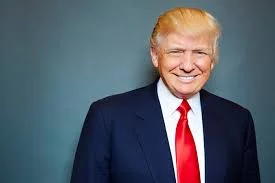
On Tuesday, I’ll apprehensively, haplessly, hesitatingly, joylessly, morosely and reluctantly cast my vote for president.
I don’t subscribe to the journalistic piety that journalists should conceal their preferences and not vote, or that having a point of view makes it impossible to be fair. This is the kind of virtue signaling favored by the former editor of The Washington Post, Leonard “Len” Downie, and by CNN host Anderson Cooper. I don’t think that it’s altogether bad for the public to know where their writers and broadcasters are coming from.
But the truth is, I can’t decide for sure this election.
After watching all the debates, having read hundreds of thousands of words and wasted hundreds of hours in conjecture with friends and colleagues, I can’t say I’ve decided so completely that I’ll go with certainty into the booth.
Yes, I lean ever so slightly toward Hillary Clinton. I know her, so to speak; and there’s the rub. I know she is ambitious, hardworking, micro-managing, secretive and that she has no commanding vision for America at home or abroad. I also know that she’ll try and turn the country into an experimental social-science laboratory.
My uncertainty went up a few notches with her declaration that she wants at least half her cabinet to be women. I did my time in the trenches of the women’s movement in the 1960s: I’m for equality everywhere and redress where it is needed. But to be told in advance that half the cabinet would be women is playing gender politics with the national well-being.
So, I veer toward Donald Trump: a man who has led a life as reprehensible as it has been lucky. Here we have a scoundrel, a sleaze, a sexual cad and a braggart of Olympian proportions. Yet the fascination is there; the hope that he is a man on a horse who will shake up the elites in Washington, from the cozy foreign policy establishment to the education lobby, which demands more money for worse outcomes.
The rot starts in the universities: high tuitions, self-regarding professors and irrelevant courses. Trump says he can fix everything so, for a moment, I think he can fix the universities, too.
Napoleon fixed almost everything: the educational, economic and legal systems. But Trump is no Napoleon: He is a man of organic ignorance, apparently sustained by his own slogans.
Even if Trump were eminently desirable, as an outsider, he’d be faced with huge challenges in appointing a government: 4,000 jobs, 100 of which need Senate confirmation.
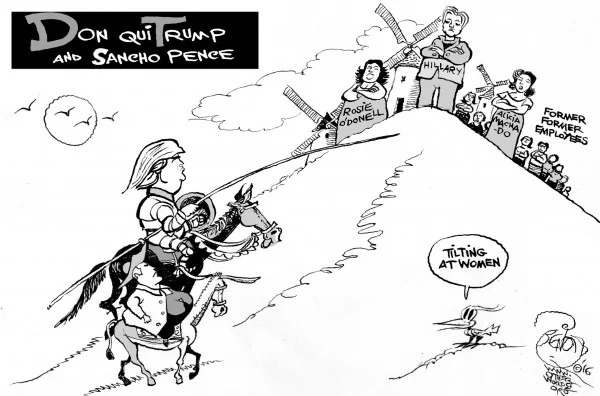
In Trump’s case, knowing no one and nothing of the myriad responsibilities of the government, his vice president, Mike Pence, could become the de facto president.
But Pence is a man of rectitude and Trump is the opposite. They’re bound to clash; thereafter, Pence would be exiled to the official vice presidential residence at Number One Observatory Circle.
Hence vacuums everywhere and eager, shady people to fill them. People we’ve never heard of before; the first of whom will be recruited by the Trump transition team, led by New Jersey Gov. Chris Christie. One can just imagine the names in his Rolodex.
The fiefs will spring up, secure in the knowledge that the president isn’t interested or doesn’t know how his administration works.
In a Trump government, things would shake, rattle and wobble.
Like millions of Americans I must decide whether I want Clinton with her record of challenged veracity, stretching back to the Rose Law firm in Little Rock, Ark., or the monstrously awful Trump, whose appeal is that he’s not Clinton. Vote wisely, won’t you?
Llewellyn King is executive producer and host of White House Chronicle, on PBS. His e-mail is llewellynking1@kingpublishing.com.

Northeast's Great Thicket National Wildlife Refuge

Via ecoRI News
The U.S. Fish & Wildlife Service recently finalized the creation of the Great Thicket National Wildlife Refuge, which, according to the federal agency, is dedicated to conserving and managing shrubland and young forests for wildlife in New England and eastern New York.
The approval of the refuge enables the Fish & Wildlife Service (FWS) to now work with willing and interested landowners to acquire land in 10 target areas of Rhode Island, Connecticut, Massachusetts, Maine, New Hampshire and New York. The goal is to acquire up to 15,000 acres through various methods, including conservation easements, donations or fee-title acquisition.
The nation’s newest National Wildlife Refuge would join the largest network of lands in the nation dedicated to wildlife conservation, with 565 other National Wildlife Refuges — at least one refuge in every state — and other protected areas covering more than 150 million acres.
Since 2009, the Obama administration has established 17 new National Wildlife Refuges, from the first urban refuge in the Southwest — Valle de Oro National Wildlife Refuge in New Mexico — to refuges that protect working lands and the important habitat of the tallgrass prairie of Kansas’s Flint Hills, the Dakota Grasslands and the Everglades Headwaters.
“National Wildlife Refuges provide Americans with incredible opportunities to experience nature at its finest,” Secretary of the Interior Sally Jewell said in a prepared statement. “Great Thicket National Wildlife Refuge will give New Englanders and New Yorkers the chance to conserve important habitat in the region, ensuring current and future generations can experience the rich variety of animals and plants that call these special places home.”
During the past century, many shrublands and young forests across the Northeast have been cleared for development or have grown into mature forests, according to FWS. As this habitat has disappeared, populations of more than 65 songbirds, mammals, reptiles, pollinators and other wildlife that depend on it have fallen alarmingly, according to agency officials.
Despite significant efforts by many agencies, organizations and landowners to manage existing lands, conservationists have determined that more permanently protected and managed land is needed to restore wildlife populations and return balance to Northeast woodlands, according to the FWS. The Great Thicket National Wildlife Refuge will preserve and manage land to benefit shrubland-dependent wildlife, such as the ruffed grouse, golden-winged warbler, box and spotted turtles, whippoorwill, blue-winged warbler and Hessel’s hairstreak.
This past summer, Rhode Island resident Rick Enser, who spent 28 years as the coordinator for the Rhode Island Department of Environmental Management’s now-defunct Natural Heritage Program, told ecoRI News that the planned refuge would hurt mature forestland, which is also an important wildlife habitat.
Enser even wrote a lengthy letter to the agency questioning the idea of the new refuge, writing that the management actions planned within the targeted acres in Rhode Island would create smaller forest blocks and that at least 17 of the 23 priority birds of mature deciduous forest habitat in southern New England currently nest within the plan’s focus area.
The creation of the new refuge is expected to take decades, as the FWS will work strictly with willing sellers only and depends on funding availability to make purchases. Lands within an acquisition boundary wouldn’t become part of the refuge unless their owners sell or donate them.
National Wildlife Refuges are also strong economic engines for local communities and provide intrinsic value to all Americans, say FWS officials. A 2013 national report, Banking on Nature, found that refuges pump $2.4 billion into the economy and support more than 35,000 jobs. They are also excellent venues to hunt, hike, bike and boat, according to the FWS.

Abstracted self-absorption
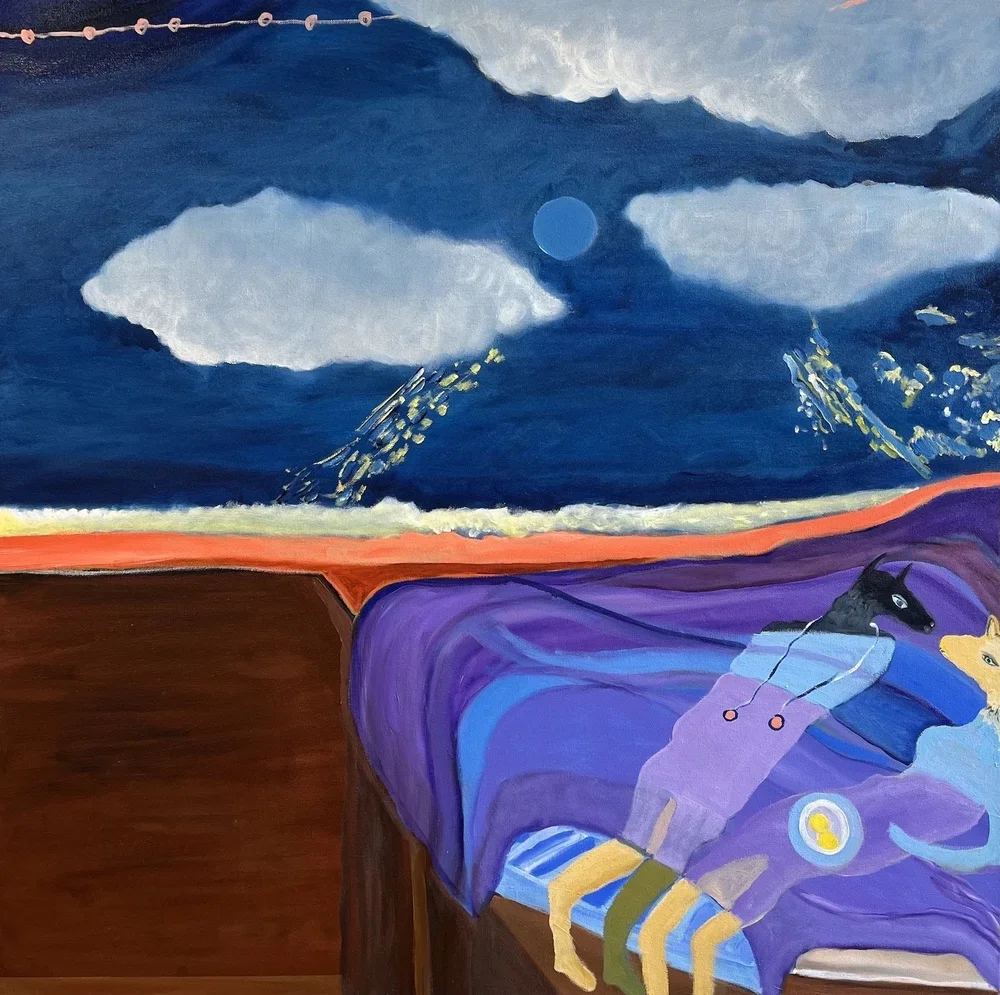
"Me, Myself and E'' (oil on wood panel), by Jennifer Moses, in her show ''Jennifer Moses: Elbow Room,'' at the Kingston Gallery, Boston, through Nov. 27.

"Me, Myself and E'' (oil on wood panel), by Jennifer Moses, in her show ''Jennifer Moses: Elbow Room,'' at the Kingston Gallery, Boston, through Nov. 27.

The implosion of the U.S. Election Day
Adapted from Robert Whitcomb's Oct. 27 "Digital Diary'' in GoLocal24.com.
“Though many in the modern age have the will to bury their heads in the sand when it comes to political matters, nobody can only concern themselves with the proverbial pebble in their shoe. If one is successful in avoiding politics, at some point the effects of the political decisions they abstained from participating in will reach their front door.’’
-- George Orwell



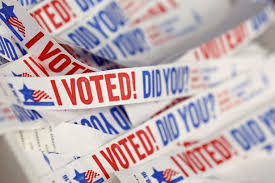


It's remarkable what can happen after millions of people vote before Election Day.
In an effort to make voting as easy as drinking a cup of coffee, an increasing number of jurisdictions are letting people vote in person weeks before the election, on the Internet and, more than ever, by absentee ballot. These represent a trend that threatens our democracy, already degraded by the celebrity culture and the lies and demagoguery on radio, cable TV and the Internet, and threatened by online sabotage by foreign actors and homegrown crooks.
Early voting lets people vote without crucial information about candidates and their policies that might come to light in the last few weeks of a campaign. It makes a lot of sense in a democracy to have as many people as possible come to the polls on the same day and with the same general information. Certainly there are some cases, such as with shut-ins, of people who can’t get to the polls; they must be accommodated. But the overwhelming majority of citizens can easily take the 20 minutes or half an hour required to show up and vote – and yes, photo IDs should be required of everyone to avoid fraud.
Going to the polls on the same day is a celebration of, and reminder of, the preciousness of the right to vote. We’re degrading that by making the voting experience more superficial, in the Slob Culture that has taken over America. It’s interesting that voting for many offices has declined even as we have made it easier and easier. We have devalued it.
Internet voting is a huge menace. Nothing, repeat nothing on the Internet is secure from hackers, be they homegrown hackers, including many thieves, those working for the Russian and Chinese dictatorships or such terrorist groups as ISIS. Such individuals, nations and groups are constantly engaging in cyber-war against the U.S. and its citizens. Thus, Internet voting should be banned by all states.
Beyond that, it’s past time for Americans to wake up and push back on attempts by business and governments to get us to do virtually all our transactions on the Internet. Of course most business executives like the Internet because it lets them lay off more people, rewarding those executives with even more money. And governments like it because it lets them, too, cut staffs and because it tends to keep pesky citizens with their complaints and questions at more distance.
But this relentless push to make everyone live on the Internet puts citizens in ever-increasing danger of having their information, their privacy and their money stolen and their reputations sullied. They could start their pushback by as much as possible avoiding online banking and other routine financial transactions and become far more careful about their use of social media. As I have often said, paper is looking better and better.
Meanwhile, the swelling Internet of Things (e.g., printers, thermostats and power systems connected to the Web) poses a wide range of new threats to governments at all levels, businesses and individuals.
The World Wide Web expandedfar faster than security and now we’re all in peril.
Companies have been ever more heavily selling computer-connected hardware without thinking through the ramifications of what they were doing, such as letting the Chinese and Russians turn off our power.
We already have much reason to rue our over-reliance on the Internet. Much of that over-reliance has been involuntary but some of it is a voluntary and myopic quest for convenience above all else.
James P. Freeman: Schilling could destroy the Mass. GOP
Tracing the “psychologies” and “pathologies” of this season’s presidential election in her new book, The Year of Voting Dangerously, New York Times columnist Maureen Dowd writes that the “fury” of the 2016 electorate is spawning a number of “wildly improbable candidates [for down ballot races] in both parties.” Here in the Commonwealth of Massachusetts, one such improbable candidate just announced his intention to seek public office.
Curt Schilling, the former Red Sox pitcher and an avid Trump supporter, has announced he plans to challenge U.S. Sen. Elizabeth Warren in 2018.
What has Schilling been up to lately? Since his Red Sox days, Schilling has become – wait for it — an entrepreneur and entertainer. His disastrous foray into business, the doomed 38 Studios, is but one piece of fodder for Warren to feast upon. Purportedly a limited government and small business conservative, Schilling was lured to Rhode Island by a $75 million taxpayer-backed loan guarantee to launch a video-game company. It went bankrupt in 2012 and four years later is still scandal plagued. His insincere and insipid explanation of the matter in The Providence Journal last week is reminiscent of Trump’s explanations of his sexual shenanigans: Deny it and blame another party.
Like the Republican presidential nominee, Schilling has taken to Facebook and Twitter and blogging as a means of distributing his often rambling and incoherent thoughts. But this gem from an April 19 posting can be taken earnestly: “I’m loud, I talk too much, I think I know more than I do, those and a billion other issues I know I have.”
This past April, Schilling was fired from ESPN as a baseball analyst for a meme he posted on Facebook “that appeared to mock transgender people,” noted The Atlantic. Before this incident, in August of 2015 he was suspended by ESPN for posting an anti-Muslim meme.
Last month Schilling debuted a new radio program. Describing him as an “outspoken conservative,” The Boston Globe underscored that he “solidified the show’s right-leaning reputation” when he interviewed commentator Ann Coulter. And the hits keep on coming… It has been announced that Schilling is joining Breitbart with an online radio show, giving him national exposure. As nymag.com posted: “‘He got kicked off ESPN for his conservative views. He’s a really talented broadcaster,’ Breitbart editor in chief Alex Marlow said.”
But Mass. Republicans beware. What Trump has done to national politics — reducing the once respectable national Republican Party to rubble — his Massachusetts Mini-Me just may do to the state GOP.
Just as the state party has regained its respectability with the 2014 election of Gov. Charlie Baker, a Schilling candidacy would mark its sure death-knell in 2018. State Republican leaders should be mindful that Schilling would appear on the same 2018 ballot as Baker, should the governor run for reelection.
Baker, popular and pragmatic, has proven that a Republican can be successful in campaigning and governing in a state where he is vastly outnumbered by Democrats. Baker, therefore, should be the party’s primary concern and should not have to effectively compete with the incendiary Schilling, a probable Great Distractor, and a likely formidable Democratic challenger. State GOP Chair Kirsten Hughes will hopefully understand this now, seeing as how National GOP Chair Reince Priebus surrendered to Trump; Priebus never understood the Trump effect and allowed Trump to pillage the party.
Senator Warren should almost be allowed to run unopposed as a national and local beacon of the bankrupt ideas and principles of progressivism, and her crowning achievement, the Consumer Financial Protection Bureau. In an imagined superpower summit between Hillary Clinton and Warren in her book, Dowd envisions the senator saying, “I only loaned Bernie [Sanders] my progressive hordes. I’m the real leader of that movement.” But that is art imitating life.
Nevertheless, it will be ugly watching Warren make mincemeat out of Schilling.
James P. Freeman, a friend of New England Diary, is a New England-based essayist and former banker. This first ran in the New Boston Post.
Dull and then dramatic
"Dull November brings the blast,
Then the leaves are whirling fast."
-- Sara Coleridge
China to an appeasement-minded U.S.: 'You die, I live'
These words by my friend of 54 years, Arthur Waldron, as published in the Oct. 31 Wall Street Journal, have rightfully gotten a lot of attention. They come from his remarks at an Oct. 2 conference in New York.
Today the People’s Republic has decided to abandon even talk of liberalization. She wants a Party dictatorship without end. She has no interest now in the United States.
We Americans do not yet entirely recognize that this change of course has been determined in China. . . . We believe other cultures will understand our gestures as we mean them: our hand proffered for a handshake, our attempt to walk a mile in their moccasins, our gestures of restraint, will signal desire for peace and understanding, even friendship. That is the message we are trying to send.
How does the Chinese government receive it? Not at all as intended, but as the opposite.
The official Chinese reaction will be, “We have successfully intimidated Washington to the point she won’t even mention us. The Americans are weak, irresolute, and when it comes to it, craven. We can deal with them and drive them out of Asia.”
“Compromise” is a scarce concept in Chinese theories of conflict. Rather the phrase they use is ni si wo huo—“you die, I live.” That is not “win-win.” …
Let me conclude with my deepest worry, which is the {U.S.} acceptance and normalization, as it were, of the …hideously oppressive PRC.
The Dalai Lama comes in past the garbage cansto the White House. We are the United Bloody States of America, as Churchill might have put it. …So since when does Beijing get to tell us how to treat our guests? We should tell them—write a protest, hand it to our deputy under assistant secretary and we will file it. And the Dalai Lama should go in from the front door and into the Oval Office.
Acrid autumn
"The acrid scents of autumn,
Reminiscent of slinking beasts, make me fear"
--- D. H. Lawrence, "Dolor of Autumn"
Politics in a well-mannered micropolitis
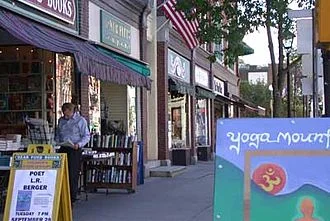
Shops in downtown Montpelier.
Adapted from Robert Whitcomb's Oct. 27 "Digital Diary,'' in GoLocal24.com
Politics in Rhode Island, where I live, can be pretty dispiriting because of excessive identity politics, some local corruption and a low level of intelligence, education and integrity and a high level of provincialism among too many politicians. (That’s partly due to local journalists and demagogic radio talk show hosts discouraging good people from running for office and very low voter turnout in primary elections.)
So I drove to Vermont last week to see a little bit of Norman Rockwell-style politicking.
The drive to and from Montpelier was a trip up and down memory lane. I headed west on Route 2 through northern Massachusetts’s by turns pretty and depressing villages and mill towns. The foliage was at its most colorful and the sky was azure. I took a slightly different route than usual, turning off Route 2 well before Greenfield and heading north through unexpectedly high and steep hills and deep countryside near Northfield before getting on Route 91, which runs north up the gorgeous Connecticut River Valley, through which I had driven so many times before.
The farther north I went, the less vivid the foliage; the North Country’s maximum color was about three weeks ago. But much of the landscape still glowed.
In Montpelier, I had dinner with two old friends, Josh Fitzhugh and his wife, Elizabeth. Josh is running as an anti-Trump Republican state Senate candidate for Washington County. We ate in an excellent restaurant called Sarducci’s in downtown Montpelier, which was crowded and cheery. Indeed, the city, although America’s smallest state capital, was surprisingly lively with lots of people on the sidewalks on a mild night.
After dinner we strolled to a small cable-TV studio, where Josh and some rivals had a “debate,’’ though it was really just a discussion, on such big local issues as preventing dirty water from entering Lake Champlain. Everyone was civil. The candidates had grown to know each other over the years in the intimate and generally friendly and honest atmosphere of the Green Mountain State.
Elizabeth (nicknamed “Wibs’’) and I sat in the waiting room outside the studio but we only heard a little of the “debate’’ on the big screen in front of the room because of technical problems. Sitting with us was a nice man called Jerome Lipani, like many Vermonters from New York City, who promoted some Bernie Sanders-style reforms to us.
Mr. Lipani, artist, was polite and good-humored and, I inferred, pragmatic, as was now-Senator Sanders, a socialist, when he was mayor of Burlington. Indeed, with a few exceptions, such as outgoing Gov. Peter Shumlin’s overreaching for a single-payer healthcare plan, pragmatism rules. Thus the same state will elect such moderate Republicans as the late Gov. Richard Snelling, such Democrats as former Gov. Howard Dean (who ran state government as a middle-of-the road fiscal conservative) and a professed (but realistic) socialist such as Bernie Sanders. Vermont candidates are judged by their records and characters far more than by their party labels. Given the increasing tendency in the U.S. to vote strictly by party and not by individual this was heartening.
Reliving again the state’s tradition of civility and civic-mindedness was a tonic, and I rather dreaded driving back to the nastiness of megalopolis. By the way, I discovered that Montpelier along with Barre, form something called a "micropolitan area'' and that tiny Barre and Montpelier are called the Twin Cities. Vermont cute!
xxx
An old book by Joseph Wood Krutch, The Twelve Seasons: A Perpetual Calendar for the Country, might help you get through the New England winter, especially in beautiful but, er, rigorous Vermont, New Hampshire and Maine. He sees each month as a season.
Indeed, every day is a season, emotionally speaking.
Isaiah J. Poole: In Maine, fighting racism where many white workers also hurt
Since 2011, Maine’s bombastic Republican Gov. Paul LePage has given America a taste of what it might be like to live under a Donald Trump presidency.
Like Trump, LePage has made outrageous comments against immigrants and communities of color. They include telling the NAACP to “kiss my butt,” publicly complaining about “guys with the name D-Money, Smoothie, Shifty” selling drugs and impregnating “young, white” girls, and blaming “illegals” for spreading diseases like HIV — all while cutting funding to cities that offered health care and other assistance to undocumented immigrants.
After five years of LePage practicing an extreme form of wedge politics, people like Ben Chin are working to heal the resulting divisions in Maine.
Chin, the 31-year-old grandson of an undocumented Chinese immigrant, has been working with the Maine People’s Alliance to rally support from white working class neighborhoods for a series of progressive ballot measures this November.
Countering the racist and nativist appeals of candidates like LePage and Trump, their goal is to get people to reject the politics of scapegoating immigrants and people of color and to instead focus on the real causes of — and solutions to — their economic distress.
“We’re starting out a conversation in which we’re making it clear we’re on their side,” Chin said in a recent phone interview. “That’s the foundation that gets laid for whatever comes next.”
These conversations are based on the research and experience of a broad range of grassroots organizations that have been struggling to get working-class white voters across the nation to see beyond the color line.
Chin got a personal taste of division politics when he was racially caricatured during his 2015 run for mayor of Lewiston, Maine. During his campaign, a local businessman paid for billboards that said, “Don’t vote for Ho Chi Chin. Vote for more jobs not more welfare.”
Since then, Chin’s turned his political focus to ballot initiatives that include increasing the state’s minimum wage and levying a 3 percent tax on household incomes over $200,000 a year.
Chin and his fellow Maine People’s Alliance members don’t have a “silver bullet” set of talking points that disarms the people they encounter with racist or anti-immigrant attitudes. Instead, they focus on questions that get people to think about their economic anxieties in a deeper way.
One question they ask is, “Why do you think some people are poor and other people are rich?”
That opens up a discussion about the ways a small group of the wealthy and powerful are stacking the economic deck against ordinary people of all colors, with their black and brown neighbors feeling it the most because of America’s history of systemic racism.
Chin said he was particularly struck by a recent conversation with a voter in Auburn, Maine. The voter was undecided about whether to support a referendum that would increase the state’s wage to $12 an hour by 2020.
“One of his ideas was that ‘certain people’ were going to get a wage increase,” Chin said. “We tried to unpack that.”
They talked about his life experiences and whether he really believed that increasing the minimum wage was about helping some “certain” group of undeserving freeloaders.
Chin said that though this voter wasn’t a “raging justice activist” by the end of their conversation, he was more thoughtfully considering the minimum wage.
Conversations like these are happening in many states around the country this election season, as progressives grapple with the mainstreaming of racist and nativist appeals by Trump and other far-right politicians.
These types of empathetic conversations are the nemesis of the conservative-corporate elite who have engineered extreme wealth inequality and, for too many, the disappearance of the American dream.
The last thing that politicians who benefit from wedge politics want to see is working people across the nation transcending racial and cultural lines, and realizing those same politicians are the common source of their pain.
Isaiah J. Poole is the communications director at People’s Action (peoplesaction.org). Distributed by OtherWords.org.
Angel B. Perez: Race, class and 'uncomfortable learning'
Colleges and universities have a significant role to play in shaping the future of race and class relations in America. As exhibited in this year’s presidential election, race and class continue to divide us. Black Lives Matter movements, campus protests and police shootings are just a few examples of the proliferation of intolerance. It seems like we understand each other less each day. Higher education has a moral imperative to become the training ground for issues that students will face throughout their lives. Given the increasing diversity of higher education, there has never been a greater opportunity to address race and class.
According to the National Center for Education Statistics, 20.5 million students are expected to attend college this year. These students will be entering a postsecondary landscape unlike any other; 14.5% of students in college are Black and 16.5% Hispanic. While low-income students still enroll at lower rates, the U.S. Census Bureau reports that 46% of America’s traditional college-age people who are low-income are now enrolled in college. Colleges are beginning to reflect America’s diversity and this presents an opportunity for cultivating understanding.
Universities are microcosms of the world we inhabit. However, campus interactions can be more intense than those outside academia. For many, stepping through the doors of higher education could be the first time they are confronted with engaging difference. Low-income students will now be eating, working, living and playing with wealthy students. Students who grew up in predominantly white communities will now live in residence halls with students from all over the globe. While it’s an incredible opportunity for exchange, it’s also easy for misunderstandings to lead to conflict.
The first thing higher education must do is help students understand that life in college is challenging. What’s often lost in conversations about safe spaces and trigger points is the acknowledgement that college is where students go to leave their comfort zones. Being uncomfortable actually helps them grow. In fact, former Williams College Prof. Robert Gaudino, a political scientist and experiential educationalist, dedicated most of his career to helping students engage “uncomfortable learning.” He believed that putting students in uncomfortable situations and forced to confront their own beliefs, values and “habits of mind” was the key to their growth and success.
Confronting race and class in college is hard, but the results can be transformative. Recently, I hired a young African-American student as a research assistant. She told me about a powerful experience she had in college when called the “N” word by a white peer. Her outrage was evident, but given the small size of our institution, she ironically ended up in a class about race with this student. Through intentional class discussions and heated debates, the two have now reconciled and are friends. The young man acknowledged his own ignorance and has been transformed by the experience. While their journey was unpleasant, both students were forced to deal with the implications. The structure that college provided them created a space for them to turn anger, and bias into learning and mutual understanding.
Administration plays a significant role in setting the stage for dialogue. In fact, much of their work impacts issues of race and class each day. They can use the admissions and financial aid process to socially engineer a campus that represents the diversity of the nation. They can create orientation programs that cultivate cross-cultural interactions and engage students in conversations that challenge beliefs. The way colleges construct everything from their residential life policies to extracurricular activities, can have an impact on how students engage difference.
I recall my own experience as a first-generation low-income student who was placed in a dorm room with a wealthy, white male (the first I had ever met). We spent a year engaged in interactions about our differences. We both made so many assumptions about each other, (often wrongly so), but we learned so much because of the way the college provided a platform and support for us to do so.
Faculty also play a pivotal role in campus conversations. Addressing issues of race and class are often delegated to sociologists, anthropologists and historians, but campuswide change happens when all faculty see race and class as an opportunity for pedagogical engagement. Race and class are omnipresent and its realities don’t go away when a student walks through a classroom door. The willingness of faculty to incorporate these issues into curriculum and navigate conversations when they arise could also change how students engage difference.
Last semester, I taught a course with a mix of students of color and majority students, as well as low-income and wealthy students. One day, they were visibly upset about the fact that some students had written “Trump 2016” in chalk around campus. This created a lot of emotion for students of color and confusion for majority students. I immediately went “off script,” and moderated a difficult conversation. I passed over the day’s planned course content, but the issue was important. There was no solution, but the greatest gift of the conversation was when students on both sides of the argument admitted they had never thought of the issue from the other’s perspective.
As the demographics of the U.S. change, that of those who walk through the doors of higher education also shifts, and we have a moral imperative to socially construct the platform for students to learn how to engage difference. The 20.5 million students in higher education will impact our future. In his book The Uses of the University, Clark Kerr, former president of the University of California, reminds us that “as society goes, so goes the university.” He believed the university has a responsibility to meet the urgent demands of society. The deliberate creation of platforms that support students through cultivation of spaces and interactions about difference can shape our nation’s future. This is no small task, but society has spoken. It’s now higher education’s turn to respond.
Angel B. Perez is vice president of enrollment and student success at Trinity College.