
Vox clamantis in deserto







A lovely down-to-earth downtown
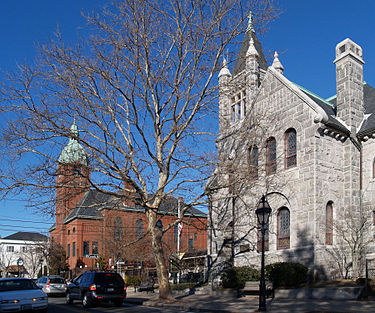
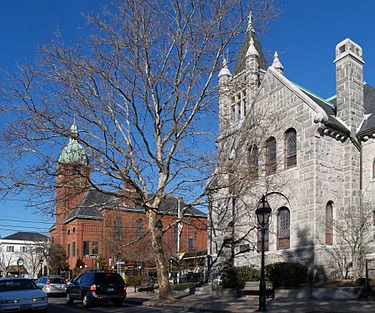
On Main Street in Warren, R.I.
Excerpted from GoLocal24's "Digital Diary'' column.
Congratulations to downtown Warren, R.I., for being named one of “America’s 5 Great Neighborhoods’’ by the American Planning Association for the town’s “foresight, innovation, and cooperation” in building a better place.
It has always seemed to me a bit of a miracle that downtown Warren has been able to maintain its shops, restaurants and other signs of being a healthy old-fashioned, pre-mall downtown. That Warren is not a rich town and that its downtown is not an all-too-precious place like, say Stockbridge, Mass. (where Norman Rockwell worked) or Nantucket makes it all the more attractive.
-- Robert Whitcomb

'Watch the people dance'

“Ah, well, for a while I’d just like to sit in the shade with a glass of wine in my hand and watch the people dance”.
-- Two-time Democratic presidential nominee Adlai Stevenson, shortly before he died, in 1965.
Don Pesci: The old-time party bosses are looking better and better
VERNON, Conn.
A shrewd political observer once said that Americans rarely solve their most pressing political problems; instead, they amicably bid them goodbye.
Take the primary system by way of example. The primary system itself has been attended, especially during the current presidential election campaign, with glaring problems that pretty nearly everyone has studiously ignored. It is the primary system that has given us two of the most unpalatable presidential candidates in U.S. history. Nearly 50 percent of voters on either side of the political spectrum this year will be voting against the presidential candidates, according to a September Pew Research poll.
Primaries lengthen the political season, an unintended result of a “participatory democracy” that benefits news producers, editors and candidates but few others.
The current primary season began on the Republican side 18 months ago when Texas Sen. Ted Cruz announced his candidacy for the presidency. In due course, 16 other Republican hats were thrown into the ring. After the Republican Nominating Convention dispersed 16 months and millions of dollars later, Donald Trump, whose conservative bona fides and political affiliation still remain in question, emerged with the Republican nomination clenched in his teeth. Among the vanquished also-rans were three anti-establishment Republicans – Ted Cruz, Marco Rubio and Ron Paul – all Tea Party favorites and thorns in the side of the ancient Republican Party regime.
On the Democratic side, former Secretary of State Hillary Clinton was almost defeated by Socialist Democratic senator from the People’s Republic of Vermont, Bernie Sanders. Votes tallied at the Democratic Nominating Convention showed Sanders winning a not inconsiderable 1,865 delegates before he put forward a motion to nominate by voice vote Hillary Clinton, who, hacked e-mails later disclosed, had turned her efforts to subverting Sanders’s presidential bid.
During his primary campaign, Sanders refused to dwell on Clinton’s e-mail scandal, remarking to a smugly smiling Hillary Clinton during one of their debates that America was “sick of hearing about your damn e-mails," in hindsight a fatal strategic mistake. Sanders did mention that his campaign had been subverted by the Democratic National Committee, a charge later confirmed by hacked e-mails that Sanders thought tedious and not worth mentioning.
Almost everyone, except true-believers on both sides of the current political barricades, will agree that both Republican and Democratic Party nominees are scarred with defects that would not have made it past the jeweler’s eyes of the party bosses of yore.
The last real Democratic Party boss in Connecticut, John Bailey, would not have failed to notice both Mrs. Clinton’s glaring defects, not the least of which was her husband, and Mr. Sanders’s leftist drift from what used to be called among Democrats the “Vital Center” of American politics.
Mr. Bailey would have allowed liberalism, but not libertinism, and he would have put the kibosh on Democratic candidates who favored an administrative repeal of any of the first 10 Amendments to the U.S. Constitution. Pragmatic to the bone, Mr. Bailey almost certainly would not have sanctioned a measure to force The Little Sisters of the Poor, first brought to the East Coast of the United States by Abraham Lincoln, to dispense condoms to fellow workers who were not nuns or priests. He also would have counseled against any polity that refused adamantly to make reasonable accommodations with Evangelicals and members of the Catholic Church.
America began to experiment with presidential primaries as early as 1901. From 1936 to 1968 only 20 states deployed primaries, which were useful, progressives realized, in wresting political power and influence from party bosses like Mr. Bailey – and vesting political power… in what?
We now know the answer to this question. Political power and money is now controlled by political party outliers. We have got rid of John Bailey, and replaced him with political PACs that furnish negative ads and dark money in the service of political actors who, petite parties themselves, are independent of either of the major two parties.
Because incumbent politicians are able to tap into money and power resources unavailable to their competitors, the political campaign table has been tilted in favor of incumbents favored by the county’s left of center media – which means that the correlation of forces pushes moderate Democratic candidates off center and, in some cases – c.f. Bernie Sanders and Elizabeth Warren – very far left. These correlations of force have produced an ever widening, unbridgeable gap between the two major parties.
What Mark Twain said of the weather in New England – everybody talks about it, but no one wants to do anything about it – is also true of the modern primary system, which had been put in place long ago by progressives to mitigate what they felt were the defects of a strong two-party political system.
A party system that once depended upon sometimes corrupt party bosses for financing and direction now depends upon PACs that operate outside campaign-financing laws, provided they do not engage in promoting specific candidates. These party outliers are the wellspring of vicious ads that have only a nodding connection with the truth. The parties themselves are poor.
Primaries have reduced national conventions to rote political thought and action, breaking the indispensable live connection between state and national politics, which is now run by the whimsical nominal heads of parties. In November, the nation will reap what it has sown. This time around, the primary system has allowed access to the presidency of two of the most unloved candidates for the presidency in modern times. And dark politics has produced nation-wide cynicism, dark thoughts and dark deeds.
Don Pesci is a Vernon, Conn.-based essayist, mostly on political topics.
Joseph W. Ambash: Unionization of grad students will hurt education
The recent decision by the National Labor Relations Board (NLRB) in the Columbia University case granting students who serve as teaching or research assistants at private universities the right to unionize dealt a major blow to private higher education as we know it. The NLRB’s cavalier disregard for the complexities of a university education is breathtaking.
In a long-anticipated decision, the NLRB ruled that any student who performs services for an institution, under its control, for compensation, is a “common-law” employee entitled to unionize under the National Labor Relations Act. The NLRB’s sweeping decision lumped together undergraduates (who may serve, for example, as graders and discussion leaders), master’s degree candidates and Ph.D. candidates in its definition of employees. The decision ignored that many students must serve as teaching assistants or research assistants as part of their master’s or Ph.D. degree requirement, even if they would otherwise not want to do that “job.”
The decision’s lone dissenter, Republican Philip A. Miscamarra, anticipated that the strikes and other economic weapons that often accompany collective bargaining “will wreak havoc” and may have “devastating consequences” for higher education, particularly for the students who are trying to earn their degrees.
His dire prediction is not a case of crying wolf. Experience tells us that the adversarial process that is baked into the structure of collective bargaining will profoundly change the culture of campuses whose students are organized by unions. Unlike public-sector collective bargaining that is governed by individual state laws that typically prohibit strikes, the National Labor Relations Act anticipates that the process of collective bargaining will be fraught with adversarial positions that, if not settled amicably, often lead to strikes, lockouts and the replacement of workers.
The U.S. Supreme Court long ago stated that that “the principles developed for use in the industrial setting cannot be ‘imposed blindly on the academic world,’” because the interests at stake in the academy are different than those in an industrial workplace. Despite this observation, the NLRB ruled that the industrial model of the National Labor Relations Act is appropriate for private-sector campuses.
The consequences of this decision cannot be underestimated:
For the first time in our nation’s history, students at unionized campuses who are given the opportunity to teach or do research as part of their degree program or university experience will have to join a union or pay an agency fee in order to obtain their degree. This will transform an educational experience into a mere job.
Also for the first time in our history, research assistants—virtually all of whom in the hard sciences are required to engage in research and produce original results in order to write their dissertation—will be considered employees whose wages, hours and other “terms and conditions of employment” will be subject to bargaining on unionized campuses. This will transform the very purpose of their education into a job about which an outside union can insist on bargaining.
Disputes about what constitutes “wages” will require years of litigation, since the NLRB’s decision identified the stipends typically awarded to graduate students at elite institutions as wages where the requirement of teaching or research is embedded into the curricular requirement for such students.
The identification of proper subjects of bargaining will produce lengthy and complex litigation that will typically last far beyond the tenure of the students affected by those disputes. Will issues such as how many papers a teaching assistant has to grade; who will be awarded assistantships; and how many students should be in a section be considered “terms and conditions of employment” that must be bargained with a union?
The distinction between mandatory subjects of bargaining and the strictly academic issues about which universities would not have to bargain will test the limits of universities’ academic freedom. The often-Byzantine rules imposed by the NLRB on employers will now be engrafted onto unionized campuses. The NLRB has aggressively invalidated typical work rules, such as civility rules, because they allegedly chill employee rights to engage in “concerted” activity.
NLRB decisions also routinely find that employees may lawfully insult and demean their supervisors and managers as part of concerted activity. As a result, many standard campus rules may become unlawful if applied to unionized student assistants. Identification of who is an “employee” will inevitably morph into claims by unions that members of sports teams on scholarships, members of orchestras who receive stipends to go on tours, and similar student groups should be entitled to bargain about their stipends and terms and conditions of employment because they are “common-law employees.” Although the NLRB sidestepped this issue in 2015 when it declined to assert jurisdiction over Northwestern University football players, the Columbia University decision is broad enough to encompass these activities.
Private university administrators have a new, unfortunate landscape confronting them. Hopefully the NLRB’s decision will eventually reach the courts, who may bring common sense to this misguided result. Congress also may have a role in limiting the harm that will likely result from the decision. But make no mistake: This stunning decision will, if unchecked, forever change our private universities. Like it or not, applicants will no longer be “admitted” to unionized institutions; they will be new hires, no different in many respects from hourly workers in industry.
Joseph W. Ambash is the regional managing partner of the national labor and employment law firm Fisher Phillips. This first ran in the Web site of the New England Board of Higher Education (nebhe.org).
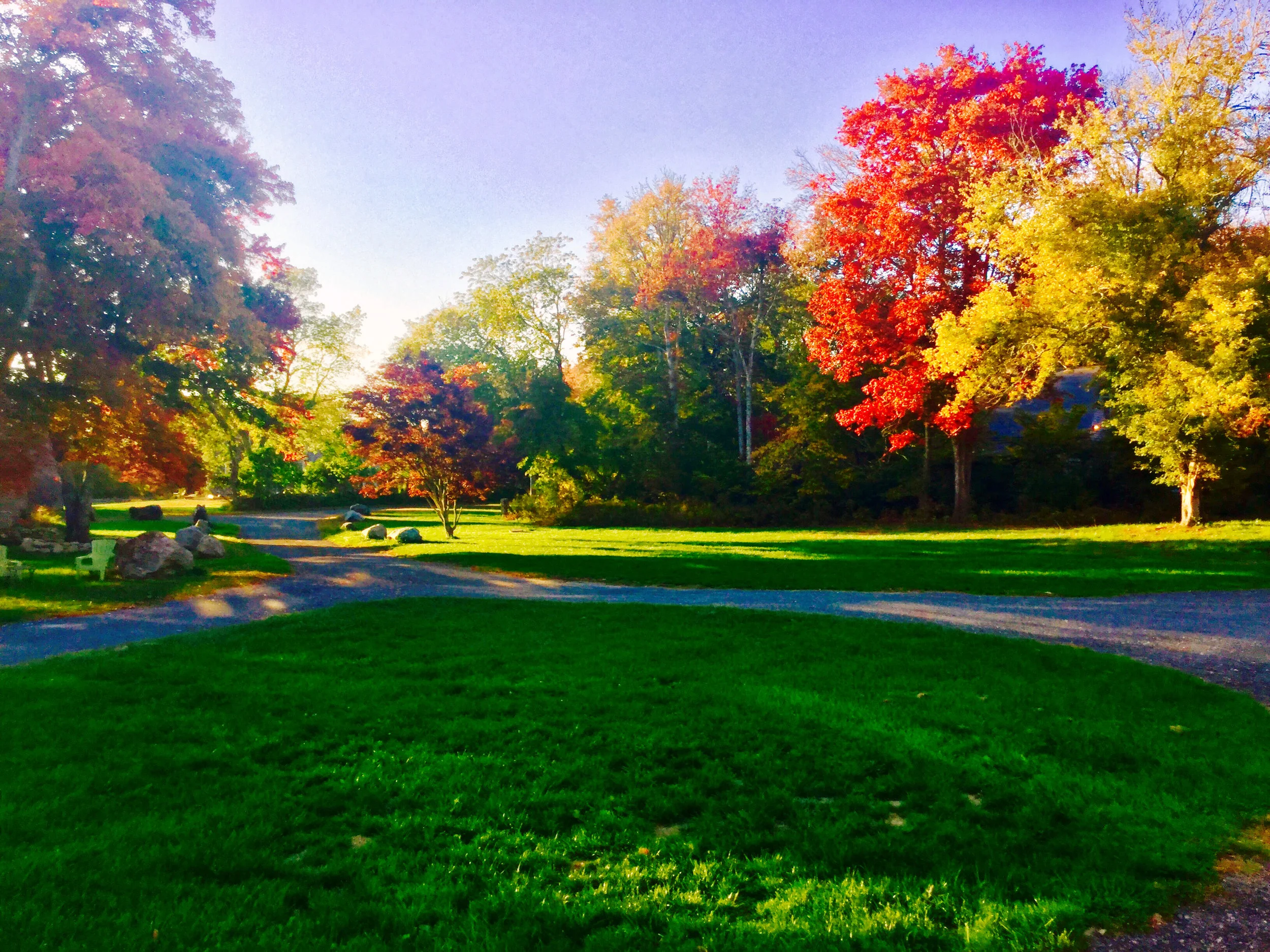
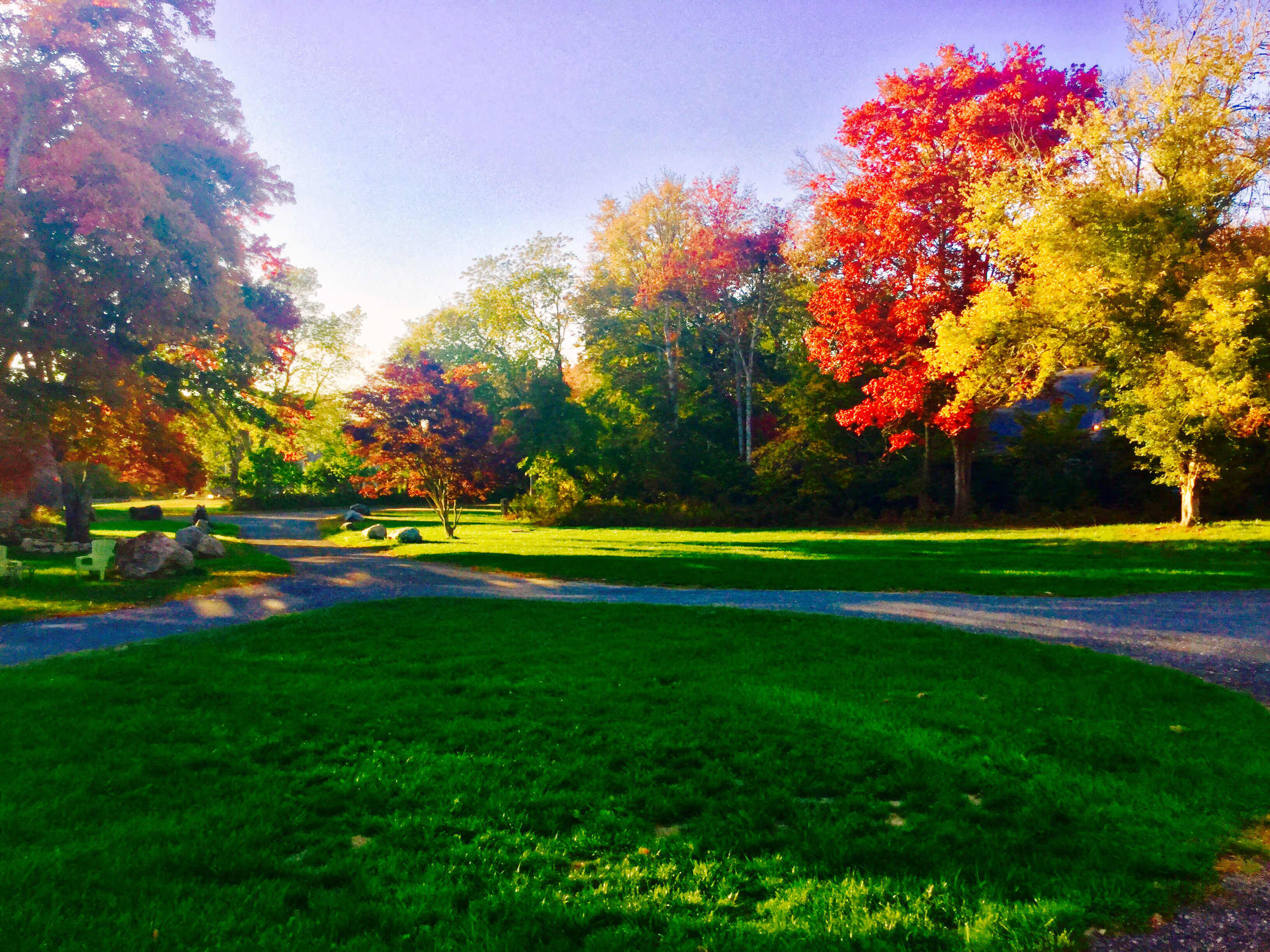
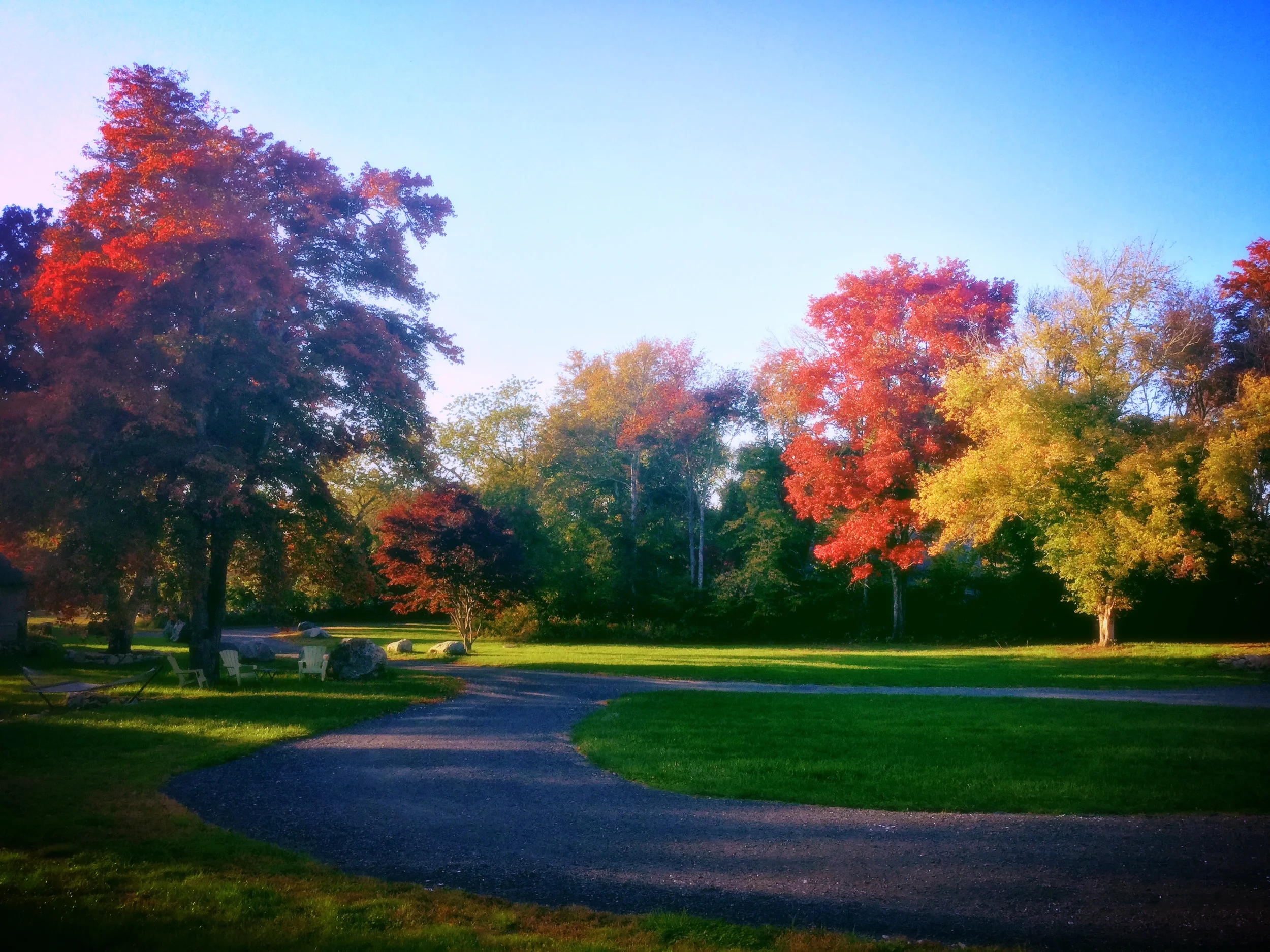
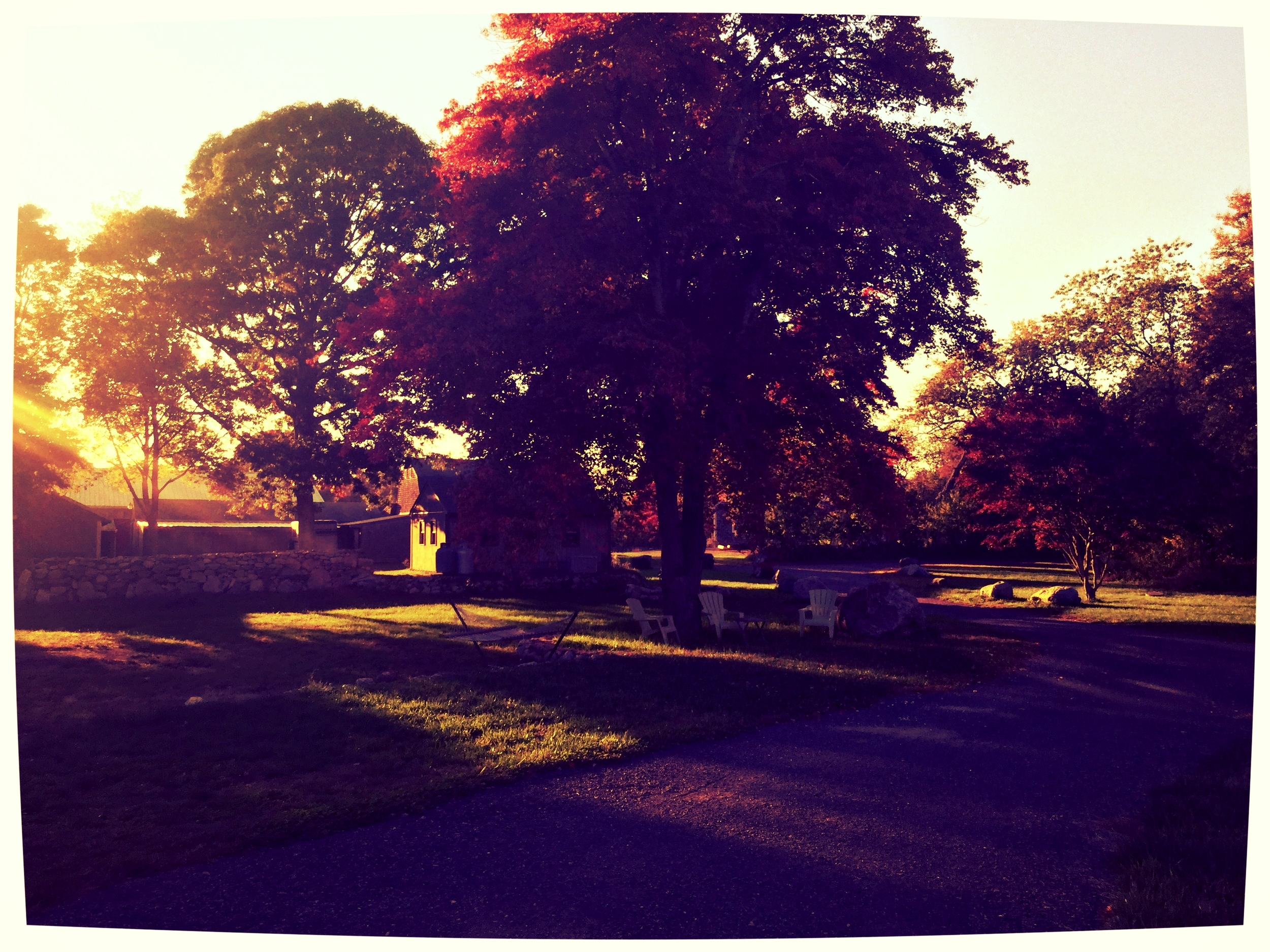
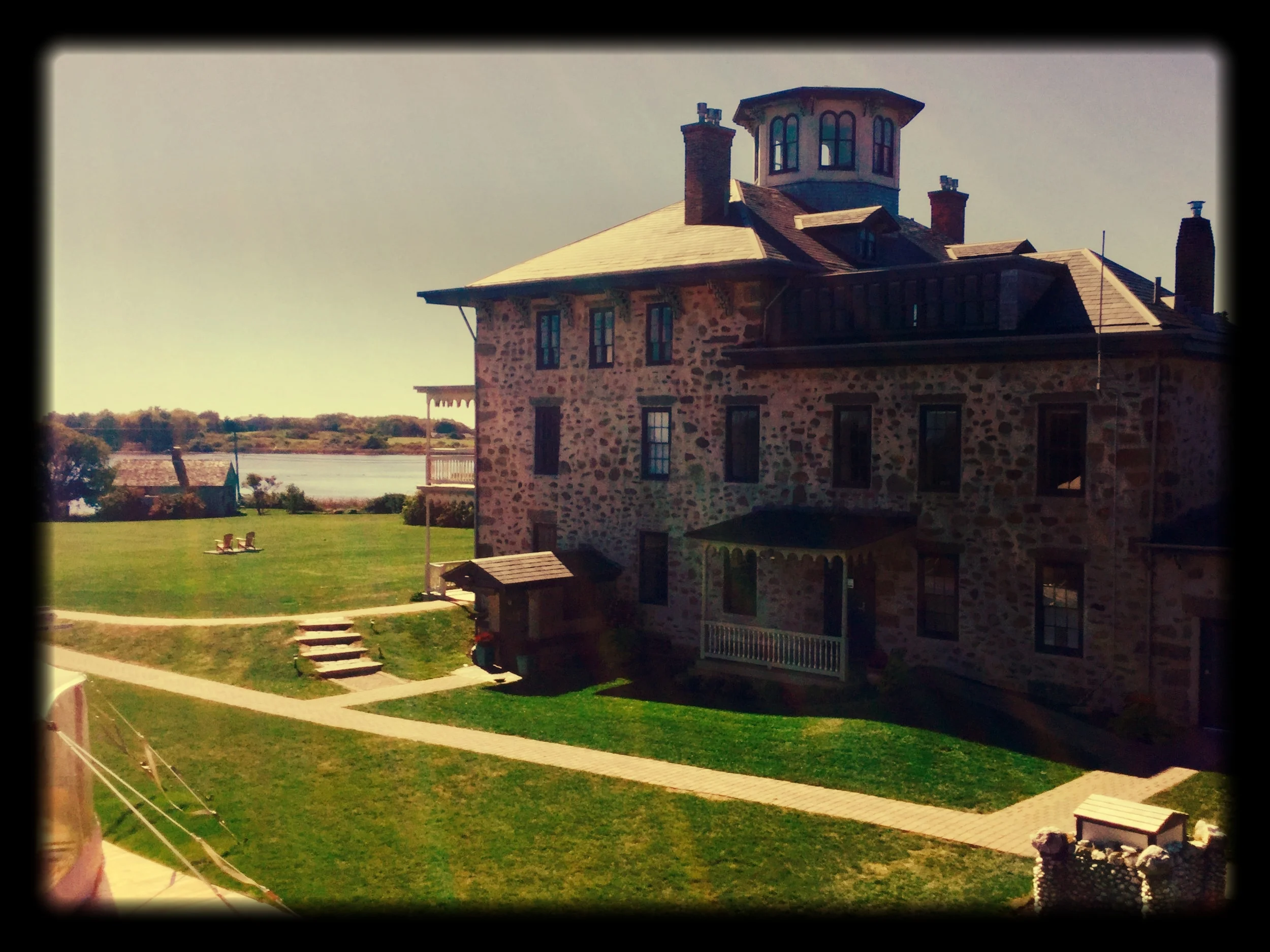
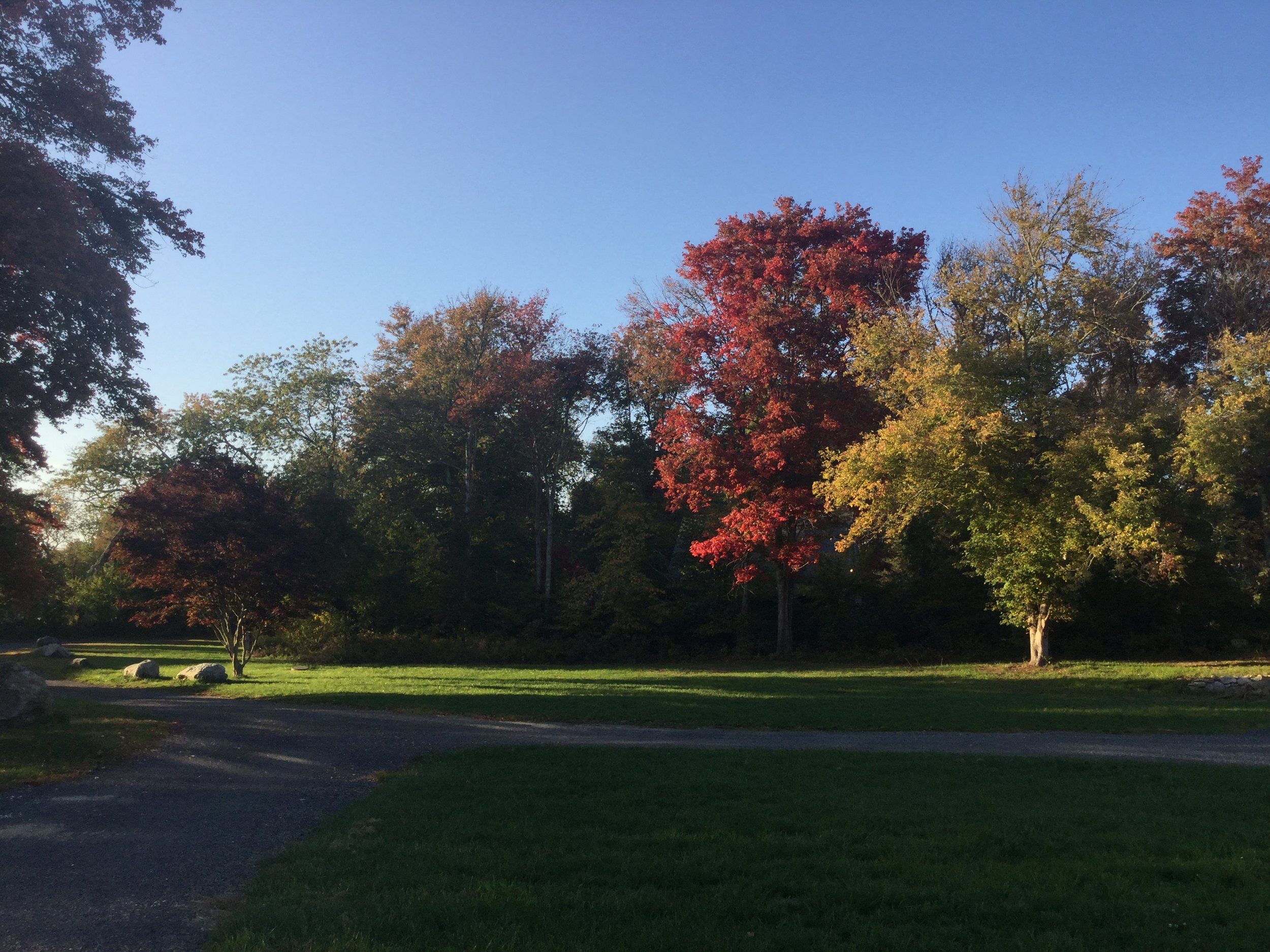
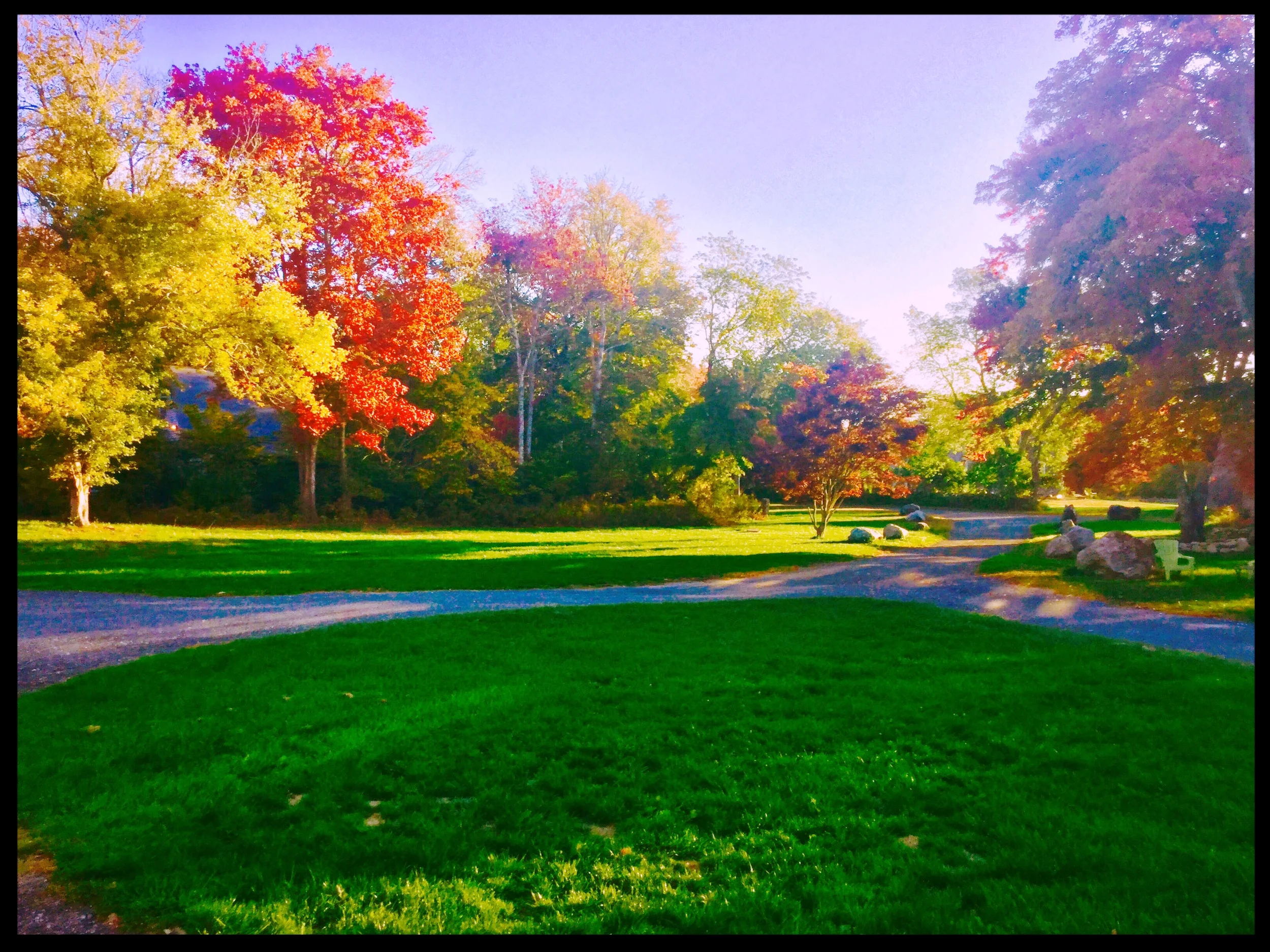
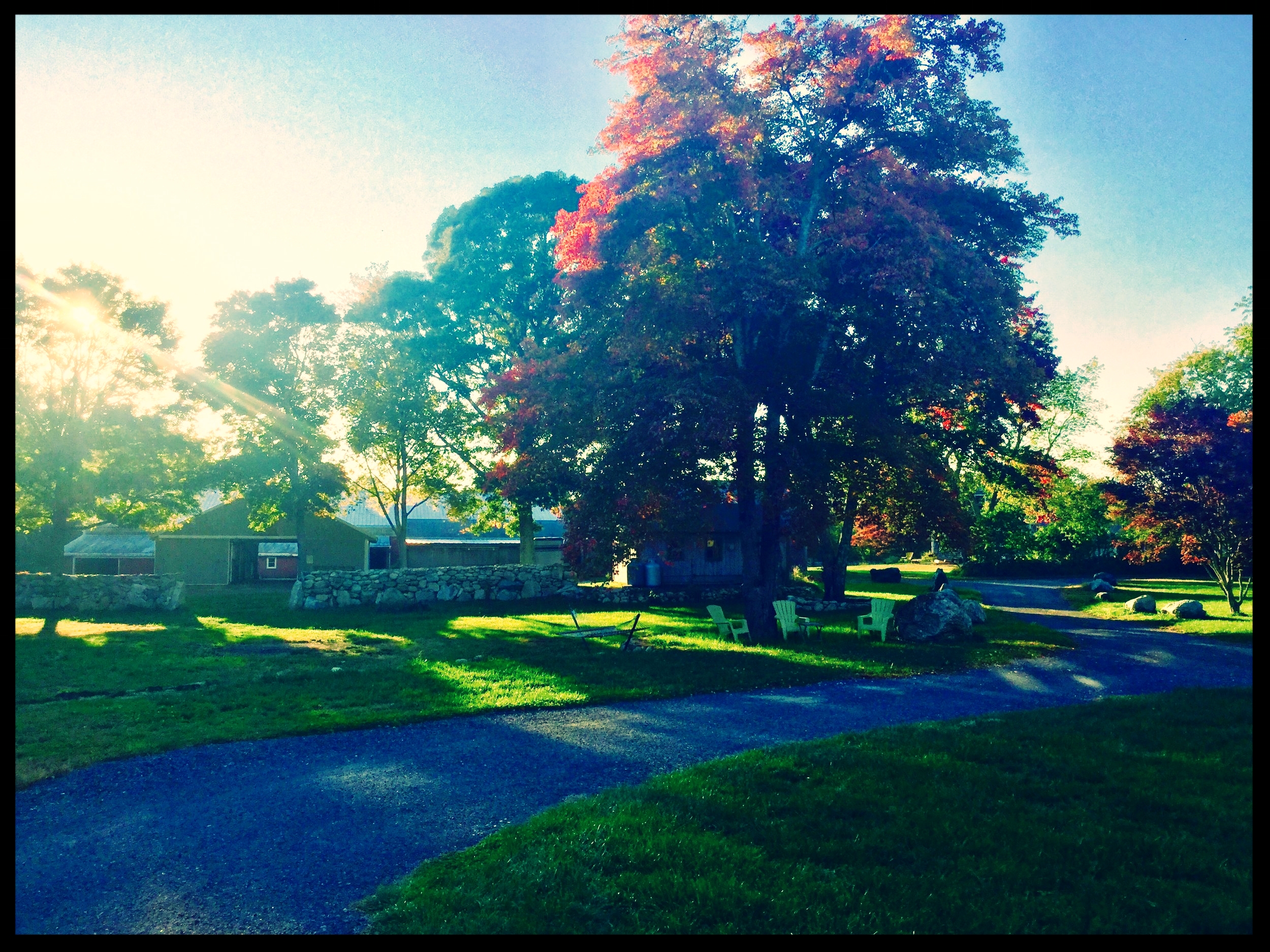
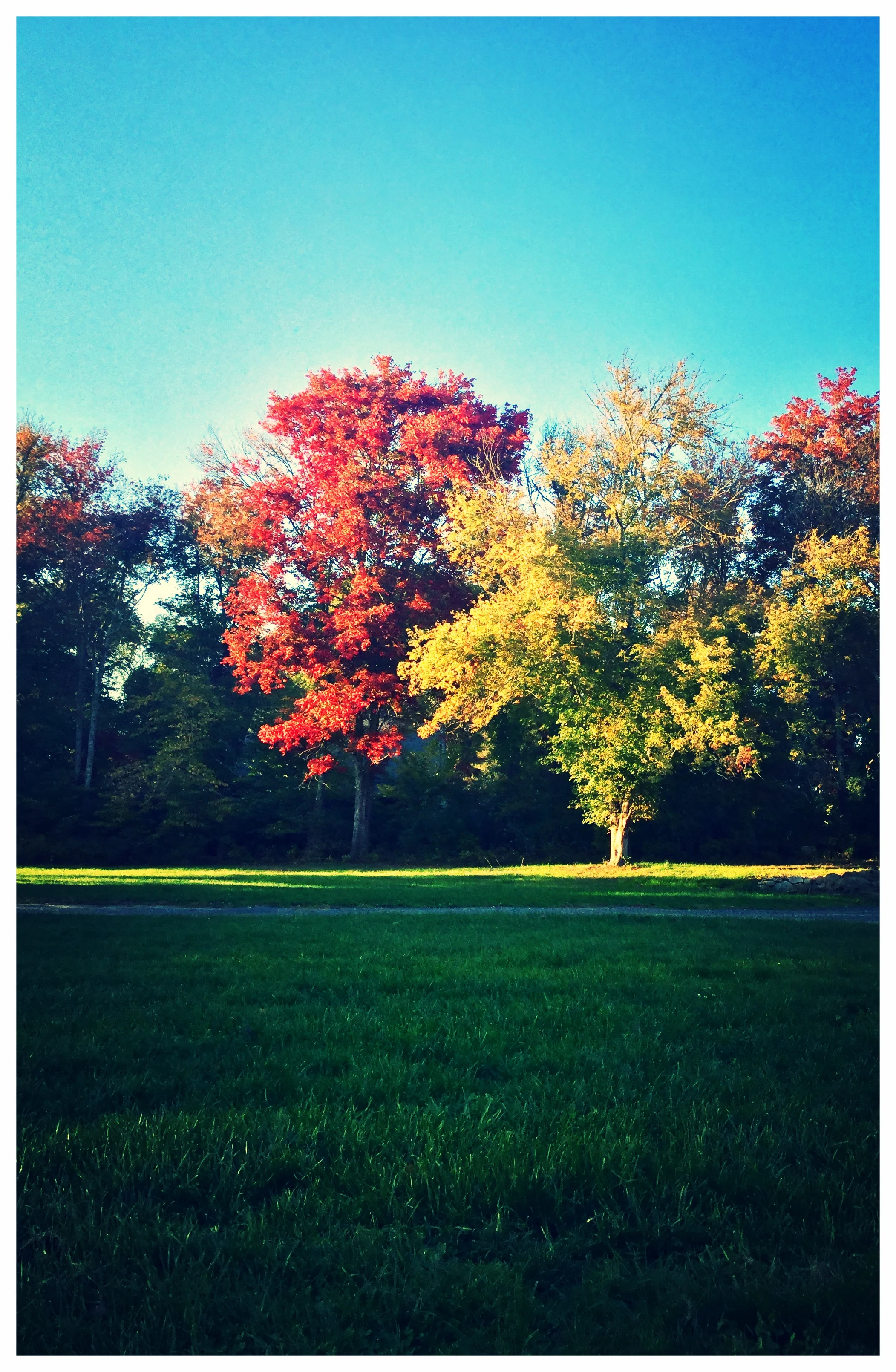
October, the extravagant sister, has ordered an immense amount of the most gorgeous forest tapestry..."
The foliage has been losing its freshness through the month of August, and here and there a yellow leaf shows itself like the first gray hair amidst the locks of a beauty who has seen one season too many.... September is dressing herself in showy dahlias and splendid marigolds and starry zinnias. October, the extravagant sister, has ordered an immense amount of the most gorgeous forest tapestry for her grand reception.






![[#Beginning of Shooting Data Section]
Nikon D100
2004/05/08 10:48:19.9
RAW (12-bit) Lossless
Image Size: Large (3008 x 2000)
Lens: 70-300mm f/4-5.6 D
Focal Length: 270mm
Exposure Mode: Programmed Auto*
Metering Mode: Multi-Pattern
1/80 sec](https://images.squarespace-cdn.com/content/v1/561446cce4b094b629347f8d/1476764756712-BFWNB94NB73V3X6B4FOI/fullsizeoutput_10d27.jpg)


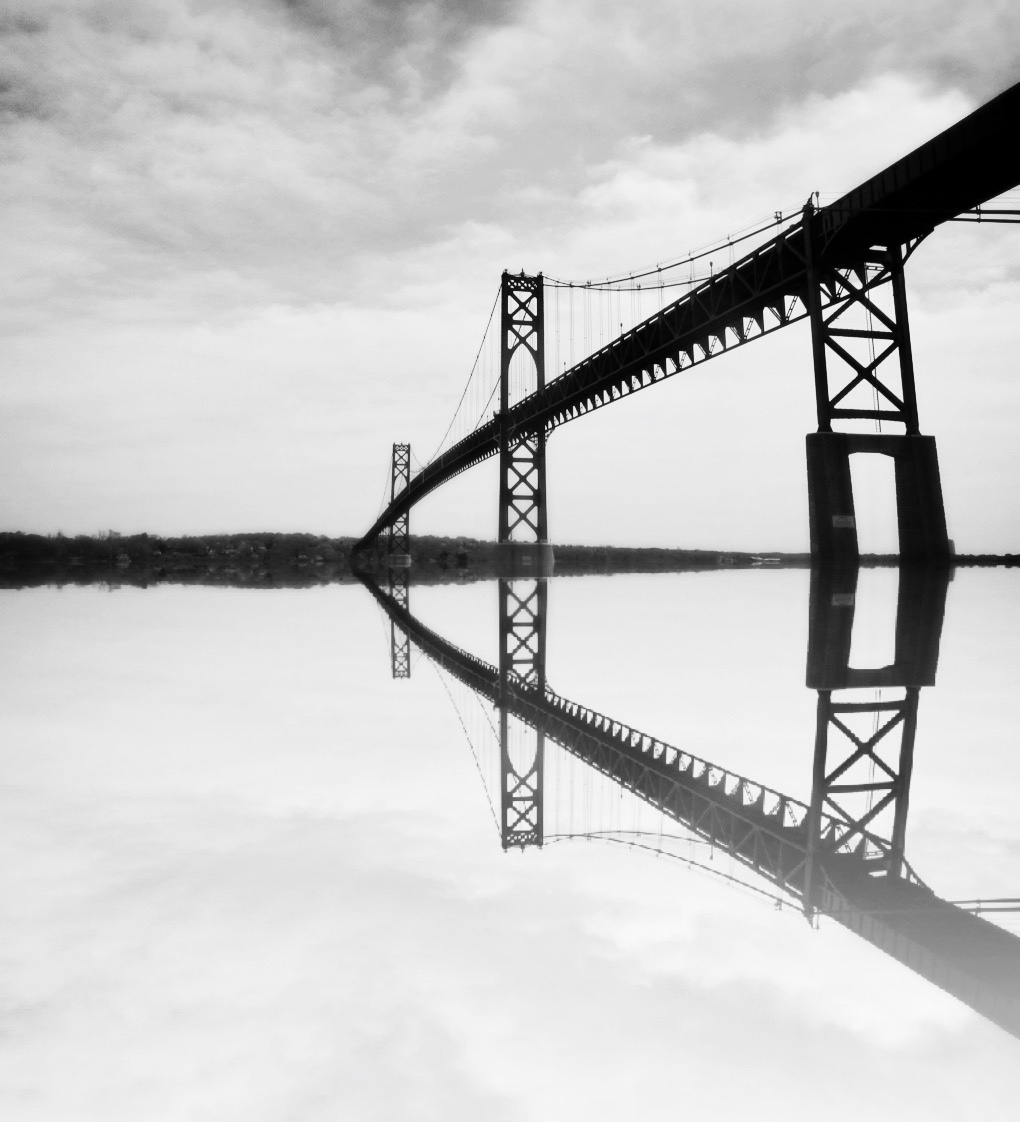

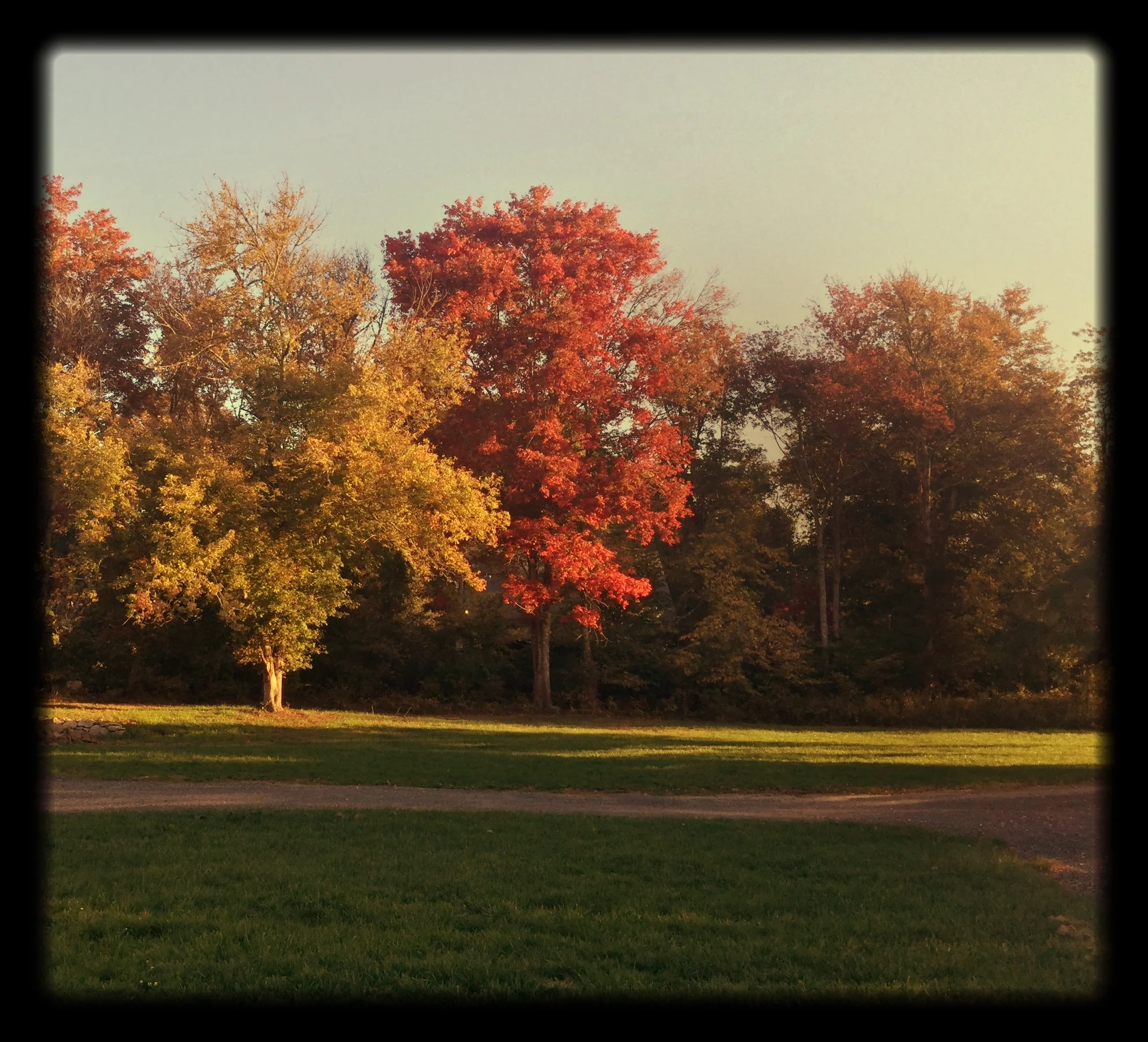
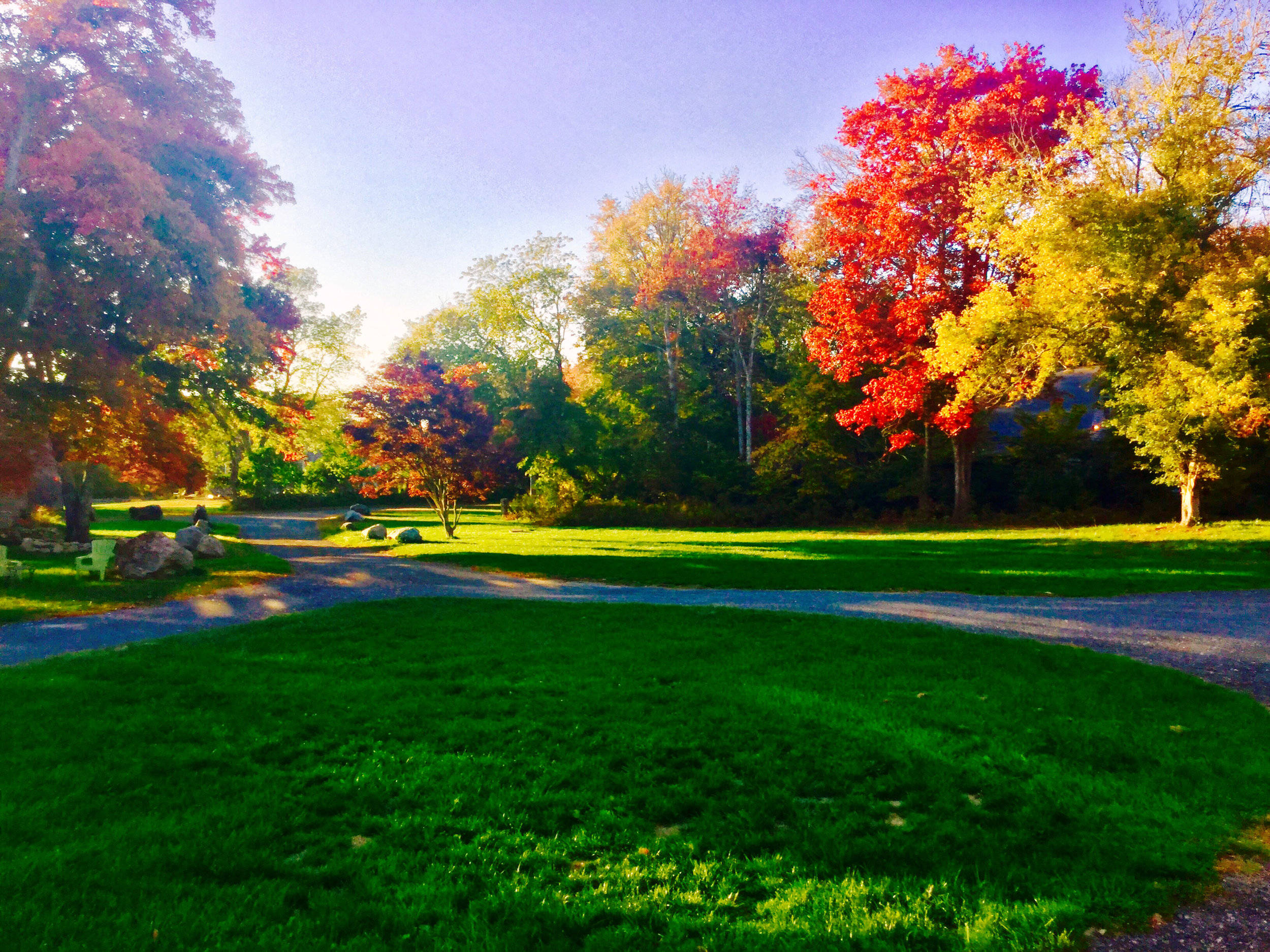
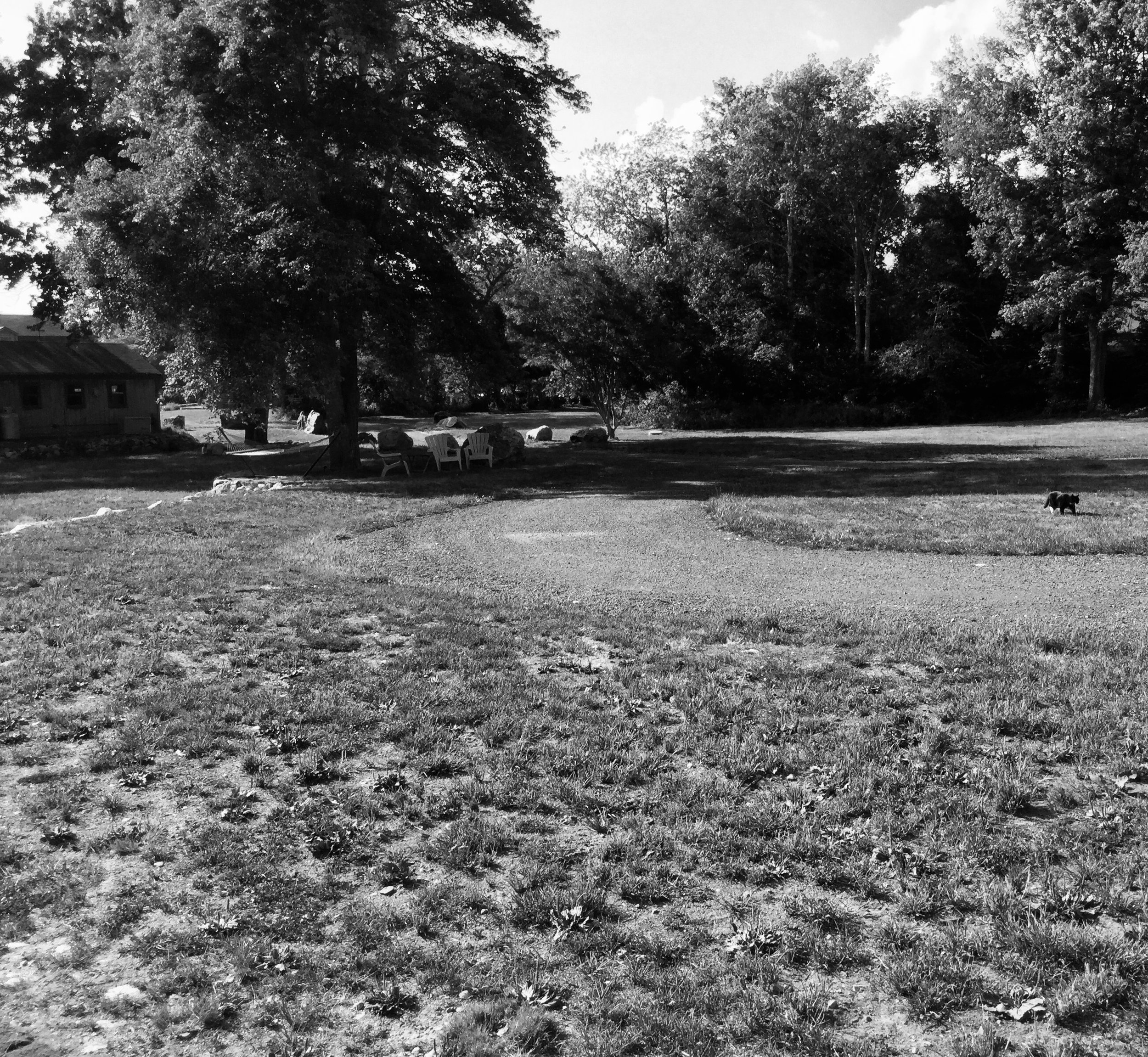



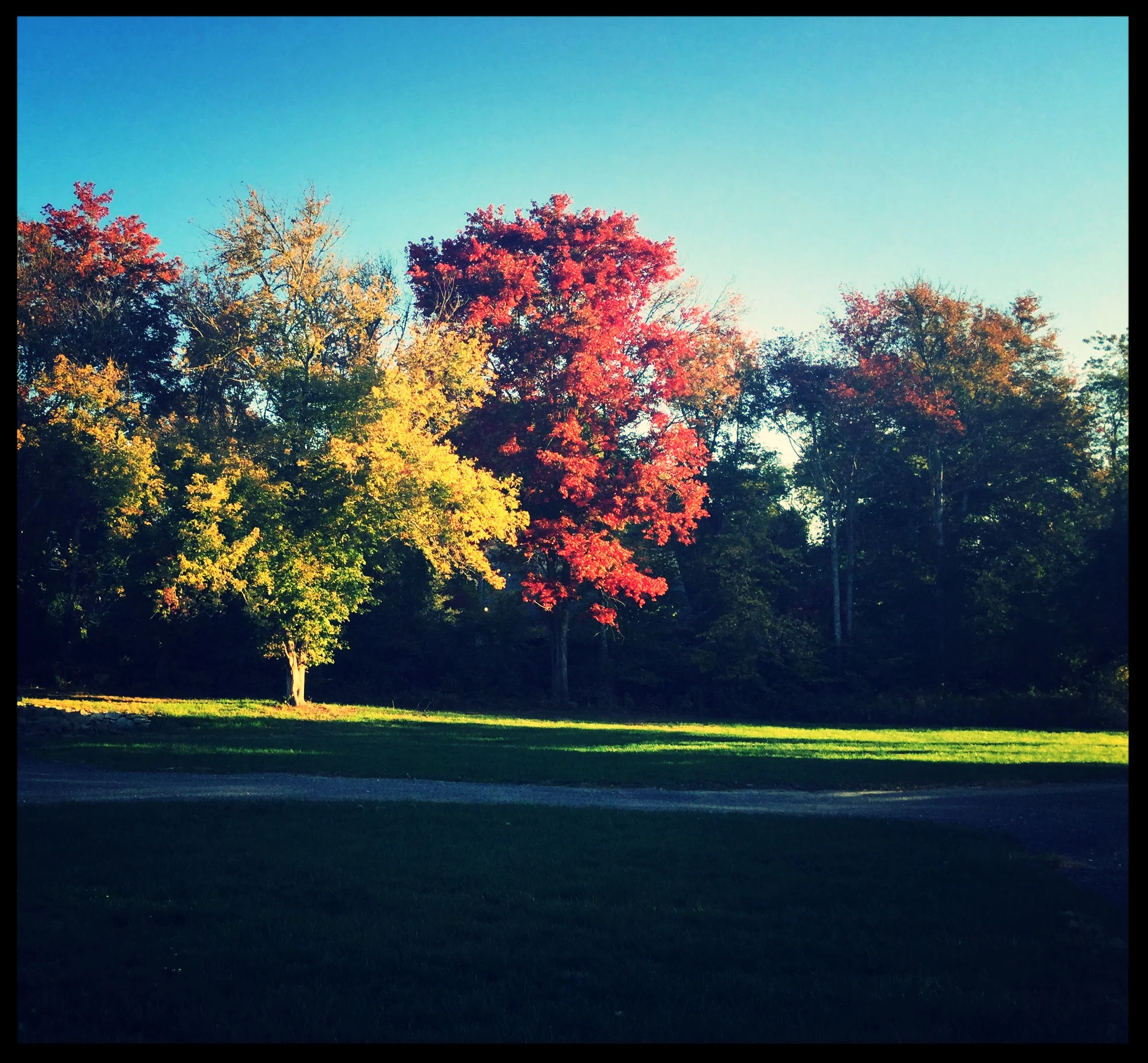
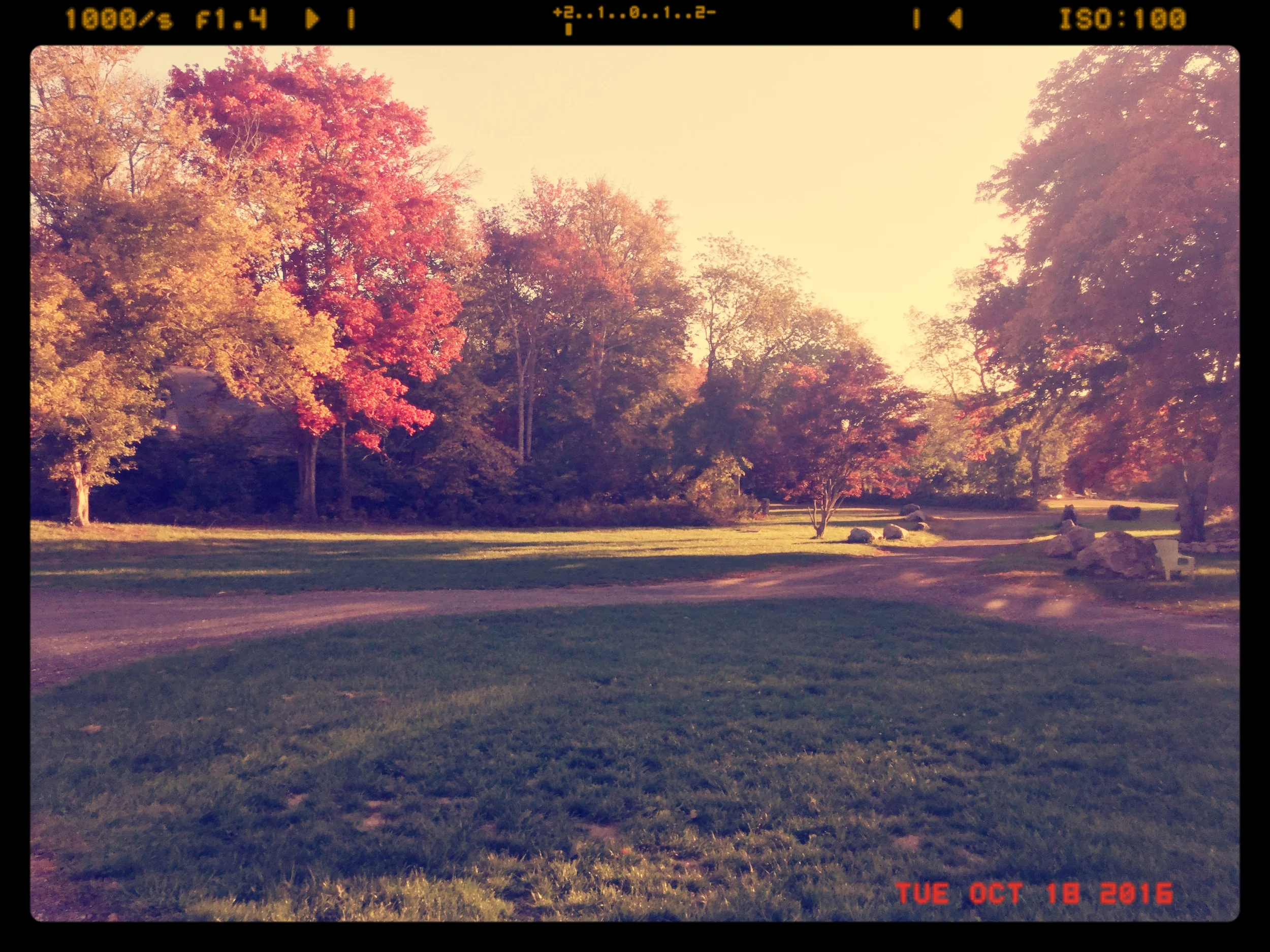
Photography by Lydia Davison Whitcomb
The foliage has been losing its freshness through the month of August, and here and there a yellow leaf shows itself like the first gray hair amidst the locks of a beauty who has seen one season too many.... September is dressing herself in showy dahlias and splendid marigolds and starry zinnias. October, the extravagant sister, has ordered an immense amount of the most gorgeous forest tapestry for her grand reception.
~Oliver Wendell Holmes (1809–1894), "Autumn," The Atlantic Almanac, 1868
'Like beauty from a face'

"The stillness of October gold
Went out like beauty from a face."
-- Edwin Arlington Robinson

'From void to life'

"Bearing'' (saturated resins on linen), by Lynda Michaud Cutrell, in her show "Genesis,'' at Galatea Fine Art, Boston, Nov. 2-27.
She cites in the show her study of genetics and "the sequence of creation events {that} mirror present-day research. How was the same sequence understood, from void to life?''
Sam Pizzigati: U.S. income inequality and youngsters' poor physical fitness
The United States, anyone could reasonably argue, has the most accomplished elite athletes in the world. The best evidence? In Rio this past summer, young American men and women finished at a comfortable first place in the Olympics final medal tally.
But what if we compared nations on the fitness of average young people, not elite athletes? How would the United States stack up then?
Not too well, concludes a global study just published in the British Journal of Sports Medicine. This new research — conducted by a team of academics from Canada, the United States, and Australia — looked at the fitness levels of 1.1 million young people aged 9 to 17, from 50 different nations.
In this competition, young people in the United States didn’t finish first. They finished an appalling 47th out of 50.
“If all the kids in the world were to line up for a race,” report author Dr. Grant Tomkinson summed up, “the average American child would finish at the foot of the field.”
How could the United States, a nation that prides itself on nurturing Olympic champions, have an overall population of young people so unfit?
The new study doesn’t answer that question directly. But it does make a fascinating connection. In nations with smaller gaps between rich and poor, young people show higher levels of fitness.
Income inequality, as the study puts it, appears to be a “strong structural determinant of health” in children and youth.
This linkage won’t surprise anyone who’s been following research on inequality. In recent years, investigators have detailed that people in societies with lower levels of inequality live longer than people in nations with high inequality, like the United States.
Residents of more equal nations also trust each other more, bully each other less, and enjoy better mental health.
But why should social indecency and ill health thrive in unequal places? And, more pointedly, what explains the link between inequality and youth fitness?
No one knows for sure, but analysts have some ideas.
Some lean toward a fiscal explanation. In unequal nations, they point out, wealth and political power tend to concentrate in the hands of an awesomely affluent few. These privileged individuals typically don’t use public services and often resent having to pay taxes to help fund them.
In deeply unequal nations, this combination of political power and resentment ends up generating government budgets that gut public services the rich seldom use — everything from public parks to public education.
Amid the resulting fiscal austerity, public parks start closing. Public schools start charging parents hefty fees if their kids want to play school sports.
As a result, fewer kids get to play and exercise. A top-heavy distribution of wealth translates, in effect, into less-active childhoods.
Other analysts take a more physical approach and focus on the stress that inequality inevitably generates. This ongoing stress pounds relentlessly on our immune systems. And the things we take for relief from that pounding — drugs or sugar-packed snacks, for instance — typically leave us less fit.
Both these fiscal and physical explanations have merit. And both help us understand the importance of doing all that we can to reduce inequality.
If we want to see all kids have the chance to become champions in life, we’ll need to start adopting, as the authors of the new global fitness study conclude, “policies aimed at reducing the gap between rich and poor.”
Sam Pizzigati, an Institute for Policy Studies associate fellow, co-edits Inequality.org. His latest book is The Rich Don’t Always Win: The Forgotten Triumph over Plutocracy that Created the American Middle Class, 1900-1970.
Distributed by OtherWords.org.

Llewellyn King: The lure of the linemen

From across America an army of men, and a few women, has been on the move. They are deployed with tools and gauges, maps and their own know-how in a critical battle. They are shock troops fighting the flooding in North and South Carolina.
They are electricity linemen.
When disaster strikes, the nation’s electric utilities spring into action, sending equipment — which can range from temporary lighting to the familiar bucket trucks — hundreds and thousands of miles to the battle.
When these first responders reach the site of disaster, they go to work down manholes and up poles, struggle with knotted wires and fallen trees.
The work is hard and the conditions are dangerous, but there is a camaraderie that binds linemen from different localities in a common purpose and danger. Those who more usually might rely on a bucket truck, in fine conditions, take out their climbing gear and up the pole they go.
The constant danger is electricity itself: the threat of electrocution. Up the pole, there are many other dangers. The pole may be weakened and critters seeking safety may be up there, from raccoons to venomous snakes.
When the lights go off, life as most of us know stops. It does not grind to a slow halt, it stops. Elevators, air conditioners, heating systems, ovens, refrigerators, televisions and computers are stranded. Even the pumps for removing water from a flooded basement need electricity.
Everyone knows that in an emergency, it is vital to restore the juice. The linemen, often several sleeping in a single motel room or in their trucks, are the heroes who work as many as 19 hours straight to do that.
It is rewarding, exacting and well-paid work. A spokesman for the American Public Power Association explains that pay varies, depending on the part of the country, but $100,00 a year is common and earnings shoot up with overtime, as in emergencies. The association represents more than 2,000 publicly owned utilities, serving about 14 percent of the nation’s electricity consumers.
So it is astounding that for a number of years both the publicly owned and the large, investor-owned utilities, which the Edison Electric Institute represents and account for 80 percent of the power supply, have been having a devil of a time finding workers prepared for a generally very secure life that has its moments of high drama — as is the case right now with the crews restoring power to areas devastated by Hurricane Matthew.
The problem is that even the most enthusiastic young person cannot just go up a pole without a lot of training: four years of training.
In the world of labor, electric utilities are not the only ones gasping for help. There is an artisan labor shortage and it is worsening. One truck operator reckons there are vacancies for at least 50,000 truck drivers. Similar shortages exist for electricians, pipe-fitters, sheet metal workers, stone masons, welders and many other skilled artisans.
If all the manufacturing jobs that politicians say that they would like to bring back to the United States were to arrive next year, there would be no workers to build the factories, nor a trained workforce to make the goods. The unemployment crisis — so emphasized in this election year — is with the unskilled.
Part of the artisan problem may be that too many young men and women are being herded into colleges without any knowledge of alternatives for which they might have more aptitude and interest. More college is always seen as a virtue. But who needs four years of college to become an Uber driver?
When the APPA tried recruiting in high schools with a video, they found that teachers trashed the video. Schools are rated on how many graduates go on to college, not on to training in trades offering job security and satisfaction.
There is a future up the pole.
Llewellyn King (llewellynking1@gmail.com) is host and executive producer of White House Chronicle, on PBS, and a long-time publisher, columnist and international business consultant. This piece first ran in Inside Sources.
Sonya Gurwitt: Former harbormaster cleans up a cove

Horace Field points to his handwork.
Photo by JOANNA DETZ, for ecoRI News (ecori.org)
By SONYA GURWITT, for ecoRI News (ecori.org)
MATTAPOISETT, Mass. — Horace Field has lived only meters from Brandt Island Cove for nearly two decades. The water’s edge is connected to Field’s backyard by a short, grassy path.
He now navigates the well-worn path bordered by trees and bushes with his black lab puppy, Piper, who bounds along close to his side, circling his knees. The path leads out onto the salt marsh, where water laps at the edge of spongy ground covered in tall, thin grass.
Field wanders through the grasses along the shoreline, untangling the occasional piece of plastic or bit of Styrofoam from vegetation. Piper follows his lead, rocketing back and forth around the marsh collecting sticks and shells to chew on briefly, before losing interest and running off again in search of a new prize.
Field pinches a a small piece of dirty Styrofoam between his fingers, examining it. This, he said, is a small reminder of the pollution that used to cover the salt marsh — Styrofoam everywhere.
“With your bare eyes right now as far as you can see that way and that way, what looked like almost junk and snow,” Field said, gesturing around him. “Big chunks and pieces of this and that.”
Now, though, the salt marsh is pristine. Thanks to Field’s efforts and persistence, the Styrofoam that once covered the cove has been almost entirely cleaned up.
The 83-year-old stares out across Brandt Island Cove, pointing out Brandt Island across the water. “Beyond the causeway there going over to Brandt Island is Nasketucket Bay,” he said. He also identified Leisure Shores Marina, just across the cove from his property, the culprit of the pollution. The place where the Styrofoam originated.
Field is protective of his 20-acre domain, which spans the shoreline between two white rocks. Though he has only lived here full time for 20 years, his attachment to the place goes back much further.
“I was born and brought up in Mattapoisett,” he said. “My father inherited a bunch of land up in Northfield (Mass.) moved the whole family up to the mountains. I was 12. Too late, I liked boats and water and that sort of thing. So when I earned my first monies ever, I came down and purchased this land. And then I just sat on it until I could afford to do something with it.”
In 1968, he built a small cottage on the land that he used as a vacation home.
“I was an international guy at work,” he said. “Whenever I got time off, I’d come back. I said, ‘Well, when I do retire that’s where I’m going to go.’”
He did just that, in 1998, building a house on the property, which he finished in 2000. Though retired, Field felt he needed something to occupy his time. He put his love of boats and water to use and became the Mattapoisett harbormaster, a post he held for the next 12 years.
It was during his tenure as harbormaster that he noticed more and more pieces of Styrofoam cropping up on his property and along the rest of the Mattapoisett shoreline, from small beads to large chunks.
The source of the pollution was no mystery — Field knew that the Leisure Shores Marina used uncovered Styrofoam blocks to keep its docks afloat. These were beginning to break down, allowing pieces of foam to float away.
“We’re on the prevailing wind side,” Field said. “And whatever comes out of that marina, which is right across the way, ends up here. We find everything. Oil cans, coke bottles ...”
He said the Styrofoam had always been here, “but the longer it went the worse it got.” He noted that over the years oil and age break the foam floats down.
In 2005, Field wrote a letter to the Board of Selectmen. He didn’t receive a response or even an acknowledgement of its receipt. Undeterred, Field kept at it — attending town meetings and talking to various committees and boards.
He told anyone who would listen that allowing these Styrofoam flotation blocks to break down and pollute the surrounding area shouldn’t be permitted. But nobody else seemed as willing to fight for a change.
It wasn’t until early 2013, after Field retired from the position of harbormaster, that he began to make progress. Fed up with the lack of response from the town and other government agencies, Field contacted theBuzzards Bay Coalition (BBC), a nonprofit “dedicated to the restoration, protection, and sustainable use and enjoyment” of Buzzards Bay and its watershed.
Field said the BBC took action immediately, sending a team to examine the problem. Korrin Petersen, senior attorney for the coalition, led that team. Petersen has been working for the BBC for more than a decade years, handling their local, state and federal advocacy at town halls and in the courts.
“From that moment on,” Field said, “I had a real ally. (Petersen) ended up sort of leading this team. I get all the credit, but I don’t deserve all the credit. It was a team effort. She did just an excellent job of garnering the right people and getting the word to the right places.”
Petersen also had high praise for Field. He made it easy to help, she said, like any good citizen watchdog should. He came to the coalition with plenty of pictures of the Styrofoam — from tiny pieces to ones 8 feet long, rolled up into the salt marsh — allowing the Petersen and the BBC to understand the problem right away.
“Horace’s documentation of the problem and his involvement from very early on was critical and so important to the ultimate success of the issue,” Petersen said. “That’s key, for citizens to know that they have to stay involved.”
She noted that having a paper trail to illustrate the extent and time frame of the damage eventually made legal and policy arguments to the town and to the state much easier.
Still, even with documentation, Petersen said she was shocked by what she and her team observed on the first visit to Field’s property.
“It was winter,” she recalled, “and the grasses weren’t growing, so we were really able to get out into the marsh and see the extent of the pollution that was occurring. I don’t think I’ve seen anything quite like it in my time here.”
With the help of the Harvard Law School’s Emmett Environmental Law and Policy Clinic, she began to research which laws the pollution might violate. Petersen said they discovered that the saltwater marsh is a protected resource under the Massachusetts Wetlands Protection Act. This meant that the Styrofoam debris altering the salt marsh was a violation of that law.
With this information, they wrote a letter to the Mattapoisett Conservation Commission, to notify it of the violations. The commission then requested that the marina, the BBC and Field all come to a commission meeting to discuss the problem.
Petersen said the main problem was the unprotected Styrofoam floats that the marina was using. Best-management practices require floats to be covered in black plastic to prevent them from breaking down.
During the next two years, the parties argued back and forth during conservation commission hearings. Initially, the debate centered on the legality of the marina’s use of the Styrofoam blocks. The marina said it was legal. However, it soon became clear that its permit stated it was to use “encapsulated flotation.”
The debate then turned to the time frame for replacement of the blocks. Though the marina claimed it needed five years to replace all of the blocks, Petersen said, it ended up replacing all of the floats before the commission even came to its final resolution, in summer 2015.
Together with the state Department of Environmental Protection, the Conservation Commission also issued an agreement between the marina and the state requiring that marina clean up within 300 feet of mean high water and to retrieve and remove any Styrofoam within a 2,500-foot radius of the marina, Petersen said. That included the salt marsh in front of Field’s house.
“I would say that this was a victory,” Petersen said. “It was a great example of a citizen blowing the whistle and a regional advocacy organization coming together with the town to clean up a pollution source.”
Field said the process taught him some important lessons. “Be persistent, and be honest. Have a cause that is bulletproof, and don’t let up on it until you get satisfactory results,” he said.
'Nothing remembers or grieves'
"The leaves fall patiently
Nothing remembers or grieves
The river takes to the sea
The yellow drift of leaves."
- Sara Teasdale
James P. Freeman: The political and economic bankruptcy of Occupy Boston
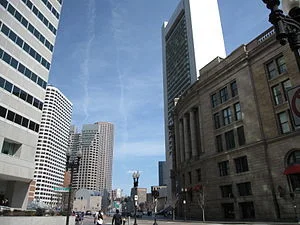
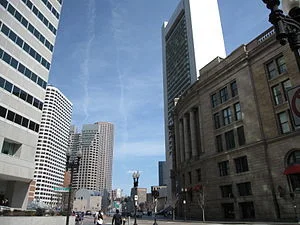
Dewey Square; South Station is on the right.
“Ba de ya, say do you remember
Ba de ya, dancing in September”
-- Earth Wind & Fire, “September”
Dancing with debauchery and disorder, despite projecting a message of harmonious dissension, “Occupy Boston” first pillaged Dewey Square, Boston, on Sept. 30, 2011. For 72 days its participants appeared to be darlings of left-leaning media and left-leaning office holders until the lawless occupation of public space was finally dismantled. Today, remarkably, the Occupy movement is a fast-fading memory, its professed “cause” aimless and irrelevant. What happened?
The so-called “contagious protest,” better known nationally as Occupy Wall Street (eventually spreading to eighty-two countries), began in New York City’s financial district on Sept. 17, 2011. It spawned mini movements across America, including Boston, as a means to express outrage over social and economic inequality.
Remember the random “General Assemblies,” “people’s mics” (individual: “We…!” echoed by group: “We…!,” repeating the rude call and response ad nauseam…) and nefarious public behavior (Bella Bond was conceived in a tent in the Occupy Boston encampment)?
In a post-mortem, The Boston Globe determined that Occupy attracted “populist dreamers, anti-corporate crusaders, and street-weary homeless people to the site near South Station.” And further concluded that “city officials embraced much of the message, but eventually tired of the methods.”
Suffolk Superior Court Judge Frances A. McIntyre initially let the lawlessness to continue before allowing an “orderly dispersal.” For a group without permit, the late Thomas Menino, Boston’s Mayor, cited “patience” and “respect” regarding their repeated intransigence. It is hard to imagine that judges and politicians would allow conservative groups -- like the Tea Party -- such leniency, given that past decisions were largely political reactions, not legal imperatives.
Wired.com even went so far as to write that Occupy changed “Americans’ political and social dialogue.” Really? Occupy was mostly devoid of ideas and dialogue. That may explain why it is largely confined now to social-media meanderings. Today, @Occupy_Boston (boasting “we are the wicked pissah 99%”) and occupyboston.org seem more interested in the Dakota Access Pipeline than local matters involving social justice.
Then, as now, scattershot Occupiers commanded little attachment to policymakers, had no vertical or horizontal governance and no inclination to create a structure that would allow greater integration into the political process. In New York, an internal battle erupted at one point between incessant drummers and speakers interfering with one another’s “space” and “respect” (today, those same people would consider such acts as microagressions). It was an unsustainable, ungovernable morass.
Just two weeks before Occupy Boston began, Elizabeth Warren announced her candidacy for the U.S. Senate seat that was “occupied” by Scott Brown. Brazenly, Warren said, “I created much of the intellectual foundation for what they [Occupy] do,” adding that, “I support what they do.” If anyone was going to be its leader, Warren surely was that person. It never happened. But that is a reflection on Occupy, not Warren.
Where was Occupy when Warren the other week rightly and publicly rebuked Wells Fargo CEO John Stumpf over the bank’s illegal and unethical behavior (creating as many as two million bogus bank and credit-card accounts without its customers’ authorization, resulting in 5,300 Wells bankers being fired) that continued for years? Where are the demonstrations in front of Wells Fargo Boston offices? (Mr. Stumpf has since been forced to resign.)
Undeterred, diminished prestige notwithstanding, Occupy Boston still believes that it is a viable political project, as apparently do local mainstream media.
Barely concealing its enthusiasm, Boston Magazine recently reported that Mike Connelly (a self-described “proud, progressive Democrat”), “will almost certainly be the first member of Occupy elected to the State House.” The community organizer, lawyer and activist “vanquished” (according to boston.com) incumbent state Rep. Tim Toomey in a primary contest. Toomey, who has held a seat on Beacon Hill for over 23 years and believes that too much government is not enough, will still continue holding a seat on the Cambridge City Council. Just what Massachusetts needs, more progressive, big-government advocates.
Its ephemeral legacy still intact, Occupy still possesses an enduring lust for believing that more and larger government is the solution to correcting all unfair social and economic inequality. Not a thriving private sector.
Occupy was, and still is, an out-of-tune, undisciplined political cacophony that lacked, and is lacking, a needed conductor. Martin Luther King Jr., Lech Walesa and Ronald Reagan with Margaret Thatcher, were serious leaders for whom a movement could attach an emotional and intellectual connection; they produced lasting results.
Occupy failed to remember that statues and monuments are built in remembrance of great men and women, their ideas, their leadership and their noble achievements. For those anonymous roving circles clattering in hoodies in 2011 -- where artificial rebellion and flimsy political construct was a form of hobby -- their movement’s memorial was always going to be discarded power-washed cardboard signs and kitschy cyber junk, fitting codas.
After five years, the ideas are still bankrupt, the dialogue is dying and Dewey Square is once again a public place of grandeur.
James P. Freeman is a New England-based writer and a former Cape Cod Times columnist. This piece firstran in The New Boston Post.
Automation's assaults: Listen to Woody Allen
Excerpted from the Oct. 15 "Digital Diary'' on GoLocal 24
Many politicians, most notably Donald Trump, have talked about international trade’s destruction of American jobs. But there’s been far too little discussion of how to respond to automation’s assault on well-paying jobs. The losses have been concentrated in such places as factories and many other places employing blue-collar workers, as well as in office support staffs and middle management. But now computerization and such sidekicks as artificial intelligence and algorithms are destroying work further up the chain, including in such places as the law, retailing, travel and the news media. (Of course, even in heavily automated factories, you need a few highly skilled people to run “smart machines.’’ For now.)
The automation greatly benefits the holders of capital, which include the people in company C-suites who are richly rewarded for laying off as many people as possible.
What to do about the many millions of workers who either lose their jobs or, to stay employed, must take frequent pay cuts?
Do we tax the holders of capital more in order to do such things as giving everyone a base income whether or not they work and/or to help pay for training for new jobs? Of course at the rate that automation is going, those jobs might soon be destroyed by automation, too. (Uber has been one way for otherwise unemployed people to make money in the past couple of years. Will self-driving cars soon eliminate that option?)
The idea, promoted by Hillary Clinton and many other politicians, that we can cure many of these problems by creating expensive newfederal programs to send lots more people to college in delusional. Bigger and more vocational apprenticeship programs, not only for young people starting out but also for workers every few years in their careers to keep them competitive in the world economy, might help but as automation rolls on, perhaps not all that much.
Complaining about trade deals is good politics, touching as it does on elements of patriotism and even xenophobia. But as much as globalization, in which American workers are pitted against much lower-paid workers abroad, especially in China, gets attention, automation poses the bigger problem. It’s past time for politicians and other policymakers to come up with some fresh ideas to address its effects.
So what sectors are safe? Among them will probably be nursing (to which will flow a lot of work now done by physicians), food service, house repair, personal service, such as maids andbabysitters for the affluent, some graphics work and such trades as plumbing and electrical work. Plumbers and electricians should continue to do very well. And as Woody Allen said: “Not only is God dead, but try getting a plumber on Sunday.’’
-- Robert Whitcomb
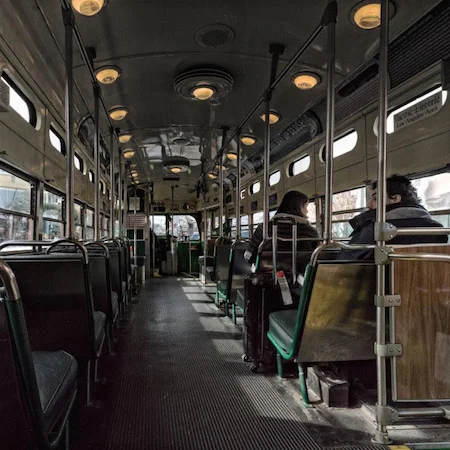
The loneliness of mass transit
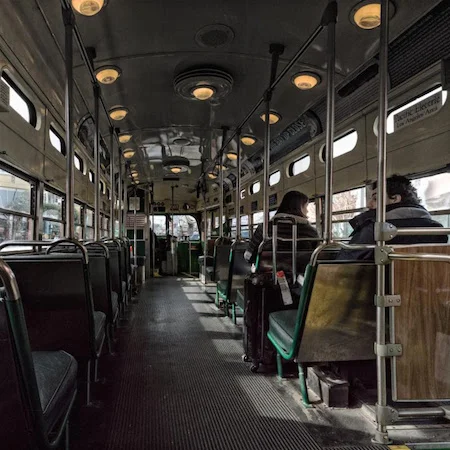
"Near The End" (photo), by Peter Michael Miller, in the group show "3 Artists, 3 Visions,'' with Bill Comeau and Nick Paciorek, at the Providence Art Club.
Seeing red in Vermont
![By Jim from Lexington, KY, USA - [1], CC BY-SA 2.0, https://commons.wikimedia.org/w/index.php?curid=2758370](https://images.squarespace-cdn.com/content/v1/561446cce4b094b629347f8d/1476472907672-RZEVOWWNECIDSTY2VE18/image-asset.jpeg)
By Jim from Lexington, KY, USA - [1], CC BY-SA 2.0, https://commons.wikimedia.org/w/index.php?curid=2758370
"The clump of maples on the hill,
And this one near the door,
Seem redder, quite a lot, this year
Than last, or year before;
I wonder if it's jest because
I love the old state more!"
- David L. Cady, "October in Vermont
New England Diary on WADK
New England Diary's overseer, Robert Whitcomb, will be chatting with Bruce Newbury on most Fridays at 9:30 A.M. on WADK, at 1540-AM. We'll review the week and God knows what else that might come up. Besides via the broadcast version, you can hear the conversation at wadk.com.
...followed by empty malls with windswept parking lots
Excerpted from "Digital Diary'' column in GoLocal24
On Donald Trump’s tax avoidance and business failures:
Donald Trump has often been a terrible businessman except later in his career, when he turned himself into a TV star. Far from being a “genius,’’ as described by Rudy Giuliani, who is displaying as many signs of serious mental illness as is Mr. Trump, much of the latter’s real-estate and casino career has been one disaster after another. What launched him was his father’s connections and money and what kept him going was an impressive amorality and narcissistic drive.
The nearly $1 billion losshe reported on his tax forms (but hid from the public) in the early ‘90s showed him as a grossly incompetent entrepreneur and executive. Given his record of pathological lying, it could be that the lossesthen were even worse. And since he has hidden his tax returns, one suspects his later losses could be huge, too.
But his accountants and tax lawyers (not Mr. Trump) had the ‘’genius’’ to know how to very aggressively game the tax code to near its breaking point to avoid paying federal or state income taxes even as his lenders put him on a monthly “budget” of $450,000 to maintain his show-off lifestyle.
For many years, lobbyists have gotten Congress (mostly controlled by Republicans in the past couple of decades), and presidents of both parties have gone along, to give astounding tax breaks to such favored groups (and big campaign contributors) as real-estate developers. These breaks let them protect their personal assets even if their projects collapse and their creditors are stiffed.
All this is yet another display of how America’s profoundly corrupt tax code favors money manipulation over honestly earning money, the latter by, for example, making, growing and inventing things and providing useful services. Unearned income trumps (so to speak) earned income.
The tax breaks granted to real-estate developers encourage them to build big projects, and then let the corrupt ones like Donald Trump walk away from their creditors and others scot-free if the projects don’t work. This helps explain in part why there are so many windswept abandoned shopping malls.
-- Robert Whitcomb
Not yet genetically modified

"Seed" (gouache on paper), by Boriana Kantcheva, in the show "The Sublime, Koans, and Myths Explored' 'this month at the Bromfield Gallery, Boston. Kantcheva aims to explore the natural world of myths.
Jay M. Brotman/Thomas Carlson Reddig: Colleges thinking small on housing students
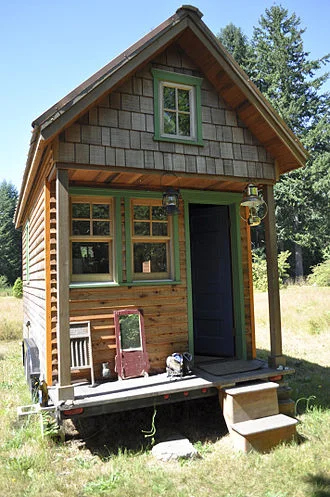
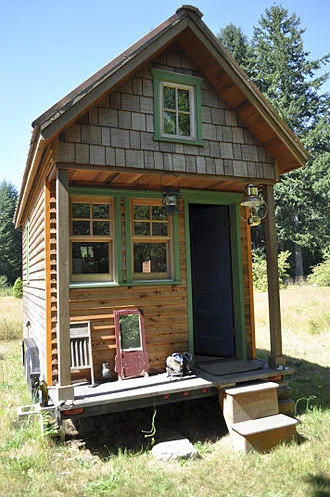
Looking at the housing and living challenges facing U.S. communities, one thing is clear: Smaller things are coming our way. Even in regions where open space is plentiful, living quarters are shrinking as more people simplify and economize. New houses are being built that are strikingly small, with some totaling less than 500 square feet, about a fifth of the average 2,600 square feet for American single-family homes. Some new apartment units are even smaller.
This growing trend, often called tiny living, is driven largely by two very different demographic groups: Millennials and retirees. Both are sensitive to the cost of living and respond positively to dwelling arrangements with a focus on shared social spaces and amenities. The broad-based movement offers a reexamination of the essential aspects of housing and home life. The trend toward micro-housing is also coming soon to a university near you.
As the national discussion about the affordability of U.S. higher education has become a pressing social topic, more university leaders are considering ways to reduce debt burdens and even tuition for today’s college students. Housing is a big contributor and often an influence on cost increases for campus life. According to the College Board, the average annual cost of housing, transportation, books and fees at four-year, in-state public institutions is more than twice that of tuition itself.
As universities are looking to more affordable approaches to student housing, an increasing number see value in reducing the footprint of housing or increasing the density of residential buildings.
This has led to a nascent movement among some innovative universities of applying unique and often unexpected approaches to housing. These schools emphasize quality over quantity and focus on creating places for activities, rather than underutilized rooms.
Examples include the Gault Schoolhouse adaptive-reuse project at Ohio's College of Wooster, where an old schoolhouse has been converted into student housing that flips the usual arrangement: sleeping areas are located toward the building interior, while social spaces are placed along the building’s exterior wall and big windows. The sleeping pods with built-in study zones are as small as is practical (and allowed by codes)—about 7 feet wide by 12 feet long—while the living rooms are ample, open and shared.
The initial reaction from parents is typically concerning, but when they see their children’s positive reactions to the sleeping pods and the added benefit of larger, well-lit living rooms that build community, their concerns are somewhat allayed.
They see that smaller, more carefully crafted and designed can be better than larger and generic. One parent told his daughter at Wooster that “she better enjoy it because when she graduates, she likely won’t have a place as nice.”
While the design is economical, green and resourceful, it also reflects the institution’s beliefs in education and residential life. “This is probably the finest, most interesting college residential space that you are going to find on any campus, anywhere,” says Grant Cornwell, president of College of Wooster. “The design fosters our mission.”
This is not to say that quantity does not matter; to the contrary, providing sufficient beds to accommodate the student population is critical. When South Carolina's College of Charleston faced the challenge of updating its Rutledge Rivers Residence Hall in order to meet code and ADA compliance, initial studies projected a 15% to 35% net loss in the number of beds. When the project team introduced a tiny living model for the upgrade, the project actually gained six beds, increasing the number from 103 to 109.
The design used lofted built-in single and double bedrooms as well as custom-designed sleeping pods to maximize space. Apartments accommodating four to six students each include a private bath, a living room and a kitchenette. In some cases, the pods are located on interior walls to borrow light from the living space—a strategy that decoupled the limit on the number of beds from the number of windows in the existing structure. Meanwhile the design team was able to program shared amenities on the ground floor that were not in the original building: a large community space, a laundry room, a public bathroom and a resident assistant's program room. The update not only represents a way to increase the number of beds, but is a model for an enhanced student living experience.
Many others have begun testing the tiny living concept, too. In 2019 the University of British Columbia in Vancouver will debut a residential project with 70 units of 140-square-foot, single-occupancy student apartments—fully furnished, with a small kitchen and a bed that converts into a desk—at about CDN $675 to $695 per month. This beats their on-campus average of CDN $1,000, and is half the typical rent for a Vancouver apartment. European schools have also led by example: In Lund, Sweden, a 94-square-foot residential unit has been tested and the pilot is now expanding to 22 units, although they will expand to about 110 square feet each. Facing a national shortage of university housing, Sweden exempted the “BoKompakt” project from legal minimum size requirements. The units rent for about $375 a month.
In the U.S., cost is just one factor. More institutions see tiny living as an answer to changing demographics and a way to be more sustainable. And as at College of Wooster, the concepts can energize student life. In fact, the benefits of student micro-residences have inspired new conversations among housing officers and university life leaders, many hoping to adopt the ideas to simply boost overall enjoyment and quality of campus experience.
In New England, the organization University Student Living has projects with efficient-sized units in planning or underway, as part of its national rollout. One project is slated for Boston University.
In fact, one way to incorporate these new housing initiatives is to partner with developers or to encourage private builders to create more compact and economical off-campus housing. These models carry advantages for both the property developers and the universities, while simultaneously tapping an adjacent market: short-term renters. In fact, micro-units can address gaps in local rental housing markets as well as for student housing. A five-story example currently under construction in New Haven, Conn., has been conceived by Mod Equities to offer fully furnished, 400-square-foot studios that can be leased for any length of time—from one day to a full year.
An alternative to options like hotels, unfurnished apartments or on-campus rooms, flexible-term furnished micro-apartments can offer an enhanced experience for off-campus students at a reasonable rent. The Mod Equities building also offers high-quality shared amenities including a communal kitchen, fitness center and roof deck, encouraging exploration and informal interactions. Some developers and higher-education leaders are looking to similar models for off-campus housing, especially when the future campus populations might swing up or down.
The New Haven project is designed to accommodate graduate students and international students who come for fellowships and other academic programs. These students are sometimes older and may have spouses that have employment in other locals and do not want to make the major move to a new city. Residents will not have to buy a whole new set of household items for their short term residence—they only need to arrive at the beginning of the term and leave when their studies are complete. They don't need to go to eBay or CraigsList to buy and then sell. In addition, for many universities have a large number of fellows, postgraduate researchers and visiting faculty who also are interested in such accommodations. As for the graduate students, the full-service model serves their needs as they will continue to maintain their primary residences.
So how should a university or college approach the question of whether to consider a tiny housing experiment? The first consideration is the demand for beds measured against the budget. Administrators may also want to consider the university's stated commitments to sustainability and reduction of energy and resource consumption, as well as the availability of land for building new housing. Last, the institution must find new ways to be responsive to students struggling with housing costs or seeking alternatives to conventional dormitory models. Not only are they looking for better and more stimulating campus experiences, but they are also watching their costs.
Jay M. Brotman, AIA, is managing partner of the global architecture, art and advisory firm Svigals + Partners, based in New Haven, Conn. Thomas Carlson Reddig, AIA, LEED AP, is community global practice leader, with the international firm Little Diversified Architectural Consulting, Charlotte, N.C. This piece first ran on the Web site of the New England Board of Higher Education (nebhe.org), where the overseer of New England Diary, Robert Whitcomb, used to serve on the editorial board.